Tag Archives: Forgiveness

Matthew 9: 9-13 The Nature of Discipleship Part 2A

Carvaggio, The Calling of St. Matthew (1599-1600)

Matthew 9: 9-13

Parallels Mark 2: 13-17, Luke 5: 27-32

 9 As Jesus was walking along, he saw a man called Matthew sitting at the tax booth; and he said to him, “Follow me.” And he got up and followed him.

10 And as he sat at dinner in the house, many tax collectors and sinners came and were sitting with him and his disciples. 11 When the Pharisees saw this, they said to his disciples, “Why does your teacher eat with tax collectors and sinners?” 12 But when he heard this, he said, “Those who are well have no need of a physician, but those who are sick. 13 Go and learn what this means, ‘I desire mercy, not sacrifice.’ For I have come to call not the righteous but sinners.”

Matthew composes his gospel for both the scribes who can read and the hearers who hear, and while we have lost the sensitivity to the rhythmic patterns that Matthew uses (especially when we break it up into small sections like is frequently done in worship) it is a skill that can be learned. Like a composer using a set of triplets to set up the following note (think for example of the beginning of Beethoven’s fifth symphony) and what comes before prepares us for what happens next. This interweaving of the narratives that highlight the identity and authority of Jesus with narratives that highlight what it means to follow Jesus prepare us for the next major block of instruction in chapter ten and connect us back to the Sermon on the Mount.

We are finally introduced to the disciple whose name is associated with this gospel, Matthew. Matthew’s name in Greek (Matthion) is closely related to the word translated followed him in verse 9 and disciples in verse 11 (mathetais) as well as the word translated learn in verse 13 (mathete). Ultimately a disciple is a learner, pupil or student of master who learn by listening and by following. Just as the name Matthew for the gospel gives us a clue of the purpose of the gospel, to form followers and learners from Jesus, also here in this central reflection on the nature of discipleship we continue to learn not only what it means to follow Jesus, but who our fellow followers might be. I’ve argued earlier in the Sermon on Mount against a perfectionistic reading of Jesus’ first sermon, here we find tax collectors and sinners reclining at the table with Jesus while the Pharisees protest this arrangement.

Matthew as a skilled editor places this text immediately following a story where Jesus has demonstrated he has the power to forgive sins. Jesus has authority over the elements, over the demons and over sins, stepping into a role that was presided over by the priests in the temple. Jesus claims for himself authority that the priests in the sacrificial system had mediated for the people of God. The sacrificial system was originally intended to be a means of reconciliation between God and the people and a way of restoring relationships within the community. Yet, we see in this story that there are those who by their vocation of by some previous action have been excluded from the reconciliation that the temple was to mediate. Matthew and the fellow tax collectors and sinners are those who, like the leper in Matthew 8: 1-4, would be assumed to be unclean and like the Centurion in 8: 5-13 would be viewed as emmisaries of a hostile empire. Any religious group has the potential to become exclusive with the insiders composing the righteous and the outsides consisting of the ‘sinners’ and yet we are encountering in Matthew a different understanding of what righteousness will consist of than the Pharisees or even the disciples of John the Baptist would conceive.

Matthew quotes Hosea 6:6 twice, once here and later in Matthew 12:1-8 in the context of plucking grain on the Sabbath. In both places we encounter one whose role is greater than the role of the temple. Jesus invites Matthew, and the other tax collectors and sinners to recline with him at the table, to break bread with them and invite them into the circle of followers invited to the banquet. The removal of the barrier for the sinners and tax collectors to gather with Jesus raises concerns among some other watchers of Jesus.

The Pharisees in this text refer to Jesus as ‘teacher’ like the scribe in Matthew 8: 19, and as I mentioned in discussing that scribe, when someone refers to Jesus as teacher in Matthew they are almost always challenging his authority. These Pharisees probably believe that one who shares bread with sinners becomes like them. They may point to a text like Proverbs 4: 14-17

14 Do not enter the path of the wicked, and do not walk in the way of evildoers. 15 Avoid it; do not go on it; turn away from it and pass on. 16 For they cannot sleep unless they have done wrong; they are robbed of sleep unless they have made someone stumble. 17 For they eat the bread of wickedness and drink the wine of violence.

But the way of interpreting scripture and the meaning of righteousness that Jesus embodies centers around mercy, and the use of Hosea 6:6 becomes a key verse to understanding the practices of Jesus. Jesus who has authority to forgive the sins of the paralytic has authority to welcome the sinner who is forgiveable. Jesus who can heal Peter’s mother-in-law, the paralytic, the Centurion’s child, and the Gadarene demoniacs is the physician who can heal the sick (literally the bad/evil ones, Greek kakoos). This the cumulative effect of this narrative in the string of preceding stories illuminates a different way of perceiving the relationship between God and those who have been excluded. As Richard B. Hays can state:

Thus, if the Pharisees go to learn what Hosea 6:6 means, they will need to read more than one verse. Once they search the wider context of God’s scriptural intentions, they will find there, in the midst of a judgment oracle against the people, a call for repentance and a portrayal of a merciful God who wants his people to show mercy, not contempt to those who have gone astray. (Hays, 2016, p. 126)

This merciful reading of scripture points to a merciful God welcoming those who have gone astray. Righteousness is not a perfectionistic bar which sinners and tax collectors can never clear, but instead is an invitation to be a part of a community of disciples like Matthew who recline with Jesus around the table amazed at their inclusion in this community of learners who are learning that it is blessed to be merciful because they to have received mercy.

Matthew 6: 5-15 Exploring Prayer, Forgiveness and Righteousness

James Tissot, The Lord’s Prayer (1896-1894)

Matthew 6: 5-15

Parallels : Mark 11: 25-26, Luke 11: 1-4

5 “And whenever you pray, do not be like the hypocrites; for they love to stand and pray in the synagogues and at the street corners, so that they may be seen by others. Truly I tell you, they have received their reward. 6 But whenever you pray, go into your room and shut the door and pray to your Father who is in secret; and your Father who sees in secret will reward you.

7 “When you are praying, do not heap up empty phrases as the Gentiles do; for they think that they will be heard because of their many words. 8 Do not be like them, for your Father knows what you need before you ask him.

9 “Pray then in this way:
Our Father in heaven, hallowed be your name.
10 Your kingdom come. Your will be done, on earth as it is in heaven.
11 Give us this day our daily bread.
12 And forgive us our debts, as we also have forgiven our debtors.
13 And do not bring us to the time of trial, but rescue us from the evil one.

14 For if you forgive others their trespasses, your heavenly Father will also forgive you; 15 but if you do not forgive others, neither will your Father forgive your trespasses. 

This second practice of righteousness is prayer, but the prayer is between the disciple and their heavenly Father and is not done to either impress the surrounding community or God with their piety or eloquence. As mentioned above, the righteousness that we are encountering in Matthew has little to do with the way we often think of religious piety. Instead it is based upon the security of the individual and the community in their covenant with their heavenly Father. The disciple’s actions may be done in secret, but the community who trusts in God’s provision and attention will be visible.

Jesus, like the law, the prophets and psalmists, viewed the relationship between the people and God as founded on their righteousness as practiced in mercy toward their neighbors and prayer is an important part of maintaining that relationship. As Samuel Ballentine when writing about prayer in the Hebrew Scriptures can state:

prayer is a principal means of keeping the community bound to God in an ongoing dialogue of faith. I suggest that the church is summoned to a ministry that both promotes and enables this dialogue. (Ballentine, 1993, p. 275)

Prayer is, in Ballentine’s language, “a service of the heart” which breaks into the mundane reality of daily life with the presence of the sacred. (Ballentine, 1993, p. 274) Prayer can happen in the public places, the synagogue and the street corners for example, and prayer led in the community has a long-standing place within the community’s worship. Yet, the community is made up of disciples who can also have the private and unseen places interrupted as the language of the heart encounters the heavenly Father who knows the needs of the heart.

Instead of prayer being fashioned around rubrics and phrases that are piled one upon another, prayer for the followers of Jesus is simple because it lifts up to God what God already knows. One is not in prayer to appease a god with one’s eloquence or to impress the divine with one’s piety, for with the heavenly Father one’s righteousness is already seen. It is not for public display and recognition, but this wise prayer recognizes and honors the already existing relationship between the disciple and their God who sees.

The Lord’s Prayer, as given in the gospels, is slightly different than most Protestant Christians learned through worship. The most notable difference is the deletion of the final phrases about “the kingdom and the power and the glory” being God’s. Ultimately this change comes from the tools available to scholars and translators that were not available when the influential King James Version, and other early English translations were produced. The King James version of the Bible used a simple majority of early texts to determine what was translated, while later translations (like the NRSV which I’m using as a basis for this reading) are able to use technologies like carbon dating to determine the age of a manuscript and privilege the oldest manuscripts. It appears that the addition of the phrases attributing glory to God appear later and are then incorporated into later copies of the gospels, perhaps reflecting an already existing practice in the early church.

The language of this prayer is familiar to most Christians, addressing God as the heavenly Father and asking God to make holy the name of God. From a scriptural perspective there is the commandment that the people of God are not to profane the name of God, but the relationship also allows the one praying or in dialogue with God to declare than an action by God would bring God’s name dishonor. For example, during the dialogue between God and Moses after the construction of the golden calf by Israel, Moses’ appeal to God not to destroy the people hangs upon this understanding:

Moses appeals to God’s own character by reminding God that God has already taken an oath (v. 13: nisba’ta lahem bak, “You have sworn to them by your own self”), the violation of which would jeopardize trust in the divine character. (Ballentine, 1993, p. 138)

The book of Psalms and Jeremiah also frequently uses this tactic in appealing to God to act in accordance with maintaining the sanctity of God’s name and honor.

The prayer continues with the prayer for the coming of the kingdom of heaven where God’s will is done on earth as well. The community and the disciple trust in God for the provision of the things they need. Like the people of Israel in the wilderness, where God provided mana, now the followers of Jesus can trust that God will provide the bread they need, even when their physical ability to provide resources is unable to sustain the crowds that gather around Jesus (see for example Matthew 14: 13-21 and Matthew 15: 32-39).

Forgiveness is lifted up within the prayer and immediately following the prayer and in both occurrences divine forgiveness and the practice of forgiving others is linked.  The link with the Apocryphal book of Sirach (sometimes called the Wisdom of Sirach or Ecclesiasticus) is often noted:

Forgive your neighbor the wrong he has done, and then your sins will be pardoned when you pray. (Sirach 28:2)

While Jesus and Matthew may or may not have been familiar with the book of Sirach, both are pulling on a long tradition of wisdom literature interpreting both law and righteousness to the hearer, and here the wise and righteous one forgives the neighbor in the context of prayer and in their actions. The practice of forgiving debts goes back to the practice of remitting debts every seventh year (see Deuteronomy 15: 1-18). Additionally, it is important to note that in Matthew both the practice of forgiving economic debts (see also Matthew 18: 23-35) and trespasses (wrongdoing or sin, see also Matthew 18: 21-22 where a question about forgiving sin is answered with a parable about economic justice). Both cases, economic and trespasses link the disciple’s forgiveness with their reception of divine forgiveness. This is a community where justice is practiced, but the merciful receive mercy (Matthew 5:7). Ultimately a community where reconciliation is practiced, and anger is addressed will need to be a community of forgiving disciples.

Finally, the prayer concludes with a prayer not to be brought to the time of testing and deliverance from the evil one. The disciple’s life rests in their heavenly Father’s hands and it is God who can deliver them in the times when their trust in God is tested. Following Jesus may involve suffering, but that does not mean that one prays for that suffering to enter one’s life. The presence of the evil one is assumed throughout Matthew. The devil and those who are actively or passively working for him will resist the approach of the kingdom of their heavenly Father.  Ultimately God is the one who can deliver from both temptation and the evil one.

Prayer and forgiveness, along with acts of mercy (almsgiving) are all ways in which righteousness is practiced for the individual within the community of the faithful. It is a community where thoughts and prayers are also surrounded by actions of justice and personal piety involves commitment to the good of the neighbors in the community. It is a place where the kingdom of heaven approaches the community of the faithful and God’s will is done in these places where earth and heaven meet. Prayer and forgiveness are practiced as a part of the relationship between the God of the disciples and the community they share. Everything is done in the confidence of God’s provision for the needs of the community as a whole and the disciples as individuals. The heavenly Father is the one they trust to rescue them from the temptation and persecution they will encounter.

Psalm 38 A Cry for Forgiveness and Healing

Psalm 38

<A Psalm of David, for the memorial offering.>
1 O LORD, do not rebuke me in your anger, or discipline me in your wrath.
2 For your arrows have sunk into me, and your hand has come down on me.
3 There is no soundness in my flesh because of your indignation; there is no health in my bones because of my sin.
4 For my iniquities have gone over my head; they weigh like a burden too heavy for me.
5 My wounds grow foul and fester because of my foolishness;
6 I am utterly bowed down and prostrate; all day long I go around mourning.
7 For my loins are filled with burning, and there is no soundness in my flesh.
8 I am utterly spent and crushed; I groan because of the tumult of my heart.
9 O Lord, all my longing is known to you; my sighing is not hidden from you.
10 My heart throbs, my strength fails me; as for the light of my eyes — it also has gone from me.
11 My friends and companions stand aloof from my affliction, and my neighbors stand far off.
12 Those who seek my life lay their snares; those who seek to hurt me speak of ruin, and meditate treachery all day long.
13 But I am like the deaf, I do not hear; like the mute, who cannot speak.
14 Truly, I am like one who does not hear, and in whose mouth is no retort.
15 But it is for you, O LORD, that I wait; it is you, O Lord my God, who will answer.
16 For I pray, “Only do not let them rejoice over me, those who boast against me when my foot slips.”
17 For I am ready to fall, and my pain is ever with me.
18 I confess my iniquity; I am sorry for my sin.
19 Those who are my foes without cause are mighty, and many are those who hate me wrongfully.
20 Those who render me evil for good are my adversaries because I follow after good.
21 Do not forsake me, O LORD; O my God, do not be far from me;
22 make haste to help me, O Lord, my salvation.

This is a song for a broken heart, a broken body or a broken spirit. The psalm cries to the LORD for mercy, for reconciliation and for renewed presence. We never hear in this psalm the sin which the author believes they are suffering from but this sin which is mentioned but never named is the perceived cause of the psalmist’s suffering. Something has come between the singer of these words and the LORD whom they cry out to. Something has, in the poet’s mind, caused God to turn away in anger and indignation. Something they believe has caused God’s disposition to them to change dramatically. They are no longer at peace with God. Their relationship with their creator has been fractured and they stand in the position of helplessness and weakness. They feel the weight of God’s judgment and perhaps their own as well upon them.

 While there is no easy or direct correlation between sin and sickness in the bible, the psalmist’s cries do ponder a connection between their physical, emotional and spiritual health. Sin can cause suffering in body and mind and the feeling of abandonment or shame can manifest in physical and emotional ways. While the psalmist language is probably in some senses metaphorical it doesn’t mean that the language of the psalm doesn’t base itself upon the actual pain that the psalmist feels. As Beth Tanner can say, “The burden of sin burns inside, and the whole body feels the strain (v.7) The insides feel faint, and the spirit is crushed (v.8); even if quiet on the outside the mind roars over the torment in one’s heart (v.8)” (Nancy deClaisse-Walford, 2014, p. 358) The poet has something they feel intensely that has separated them from the protection and provision of their God, some unspoken sin that is seen by God and makes itself known in their body and spirit. They stand in need of forgiveness and reconciliation which will also begin the healing of their mind and flesh.

The poet’s plight is heightened by the distance and judgment they now feel from their community. Friends and neighbors who one relies upon now stand at a distance. Perhaps they feel like a leper who is cut off from the community for fear of contagion or perhaps, like the friends in Job’s narrative, the neighbors and friend have decided the sickness must be a judgment of God. Friends and neighbors stand aside while enemies perceive an opportunity. The weakness of the psalmist becomes a reason for their increased isolation from the community which they also rely upon. They have no words to answer the whispers they imagine being spoken of them as the lie (actually or metaphorically) prostrate and crushed unable to rise.

Though God may have turned away in indignation, at least in the psalmist’s perception, and they feel that God is just in God’s anger they plead for mercy and restoration. They trust that God will not ultimately forsake them. They have reached the point where they are ready to let go of the sin they conceal in their breast and the burden they have carried. They wait upon the LORD for their strength to be renewed. The psalm ends with the cry for the LORD’s steadfast love to overcome the indignation rightly felt. Where the poet feels distance from God and community they call for God’s return and healing. They call out in urgency for their case is dire. They end with the cry for their salvation and we, with the psalmist, enter their time of waiting for the LORD’s action.

Psalm 32- A Psalm of Restoration

Sunrise on Halekulani, image from https://www.halekulani.com/packages/sunrise

Psalm 32

<Of David. A Maskil.>
1 Happy are those whose transgression is forgiven, whose sin is covered.
2 Happy are those to whom the LORD imputes no iniquity, and in whose spirit there is no deceit.
3 While I kept silence, my body wasted away through my groaning all day long.
4 For day and night your hand was heavy upon me; my strength was dried up as by the heat of summer. Selah
5 Then I acknowledged my sin to you, and I did not hide my iniquity; I said, “I will confess my transgressions to the LORD,” and you forgave the guilt of my sin. Selah
6 Therefore let all who are faithful offer prayer to you; at a time of distress, the rush of mighty waters shall not reach them.
7 You are a hiding place for me; you preserve me from trouble; you surround me with glad cries of deliverance. Selah
8 I will instruct you and teach you the way you should go; I will counsel you with my eye upon you.
9 Do not be like a horse or a mule, without understanding, whose temper must be curbed with bit and bridle, else it will not stay near you.
10 Many are the torments of the wicked, but steadfast love surrounds those who trust in the LORD.
11 Be glad in the LORD and rejoice, O righteous, and shout for joy, all you upright in heart.

This Psalm has often been categorized as a psalm of penitence but it would probably be better to think of this as a psalm of restoration or a psalm of grace. This psalm deals with forgiveness and the difference between carrying around a hidden sin and the freedom of that sin being confessed and forgiven by the LORD. The psalm begins, like Psalm 1, with the declaration that happy are those (the Hebrew word ‘aŝrê translated as happy has the connotation of blessed and is probably the Hebrew idea that Jesus would use in the Sermon on the Mount to express blessedness). The psalmist begins with two beatitudes declaring that the one who is forgiven and the one who the LORD does not declare immoral or wicked. Here the LORD is the one who covers the sin of the person, where the same word translated as hide in verse five talks about the individual covering up their sin. The psalm puts before the hearer the choice of the freedom of the LORD hiding the transgression and the bondage of hiding the transgression within oneself.

Verses three and four poetically describe the experience of hiding one’s iniquity within oneself. There is a physical and a psychological impact for the psalmist of this sin which they hold inside and the conceal from God and the world. There is a weight that the poet carries, a weariness that saps their energy and strength, a consuming silence that they have imposed on themselves which is slowly consuming them. The weight of the guilt becomes too great and the psalmist moves to the moment of confession where they are immediately set free. They dwell on the impact of the sin hidden, but God’s action at the sin confessed is quick and immediate in the psalm, “and you forgave the guilt of my sin.”

There is no movement of penitence, no assigned task of making the relationship right between the sinner and their God, the forgiveness is sudden, graceful and complete. We don’t know the sin that the psalmist confesses but we do sense the joy of the restored relationship in the poetic joy that follows the action of forgiveness. The reception of forgiveness becomes the reason the writer encourages faithful prayer and has a renewed sense of the LORD as their safe place and refuge. Whether the psalmist becomes a teacher giving a proverb in verse eight and nine or perhaps the voice changes to God’s voice, but either way there is a new chance to go in the correct paths without the need for harsh correction or guidance. The psalmist doesn’t need to be led like an animal ridden or pulling a cart for they are now free in their relationship. They are once again among the righteous for their iniquity has been hidden away by God. They now stand in the place of trusting the LORD and they rejoice at the restoration they have felt and received, in the gracious place they now stand within and the forgiveness given once their sin was no longer concealed by them. As Beth Tanner can state, “Just as in Psalm 1, this psalm makes a way of life outside of trust in God the foolish choice. Really, would you rather drag around all your sorrows or be surrounded at all times by God’s hesed? There hardly seems to be a choice at all” (Nancy deClaisse-Walford, 2014, p. 309) While Psalm 1 presents a choice between the way of the righteous and the wicked, Psalm 32 presents us with the choice between guilt and forgiveness. Within the world of this gracious psalm of restoration the choice is clear.

Exodus 32: The Golden Calf Threatens the Covenant

 Exodus 32: 1-6 The People Ask for Gods

When the people saw that Moses delayed to come down from the mountain, the people gathered around Aaron, and said to him, “Come, make gods for us, who shall go before us; as for this Moses, the man who brought us up out of the land of Egypt, we do not know what has become of him.” 2 Aaron said to them, “Take off the gold rings that are on the ears of your wives, your sons, and your daughters, and bring them to me.” 3 So all the people took off the gold rings from their ears, and brought them to Aaron. 4 He took the gold from them, formed it in a mold and cast an image of a calf; and they said, “These are your gods, O Israel, who brought you up out of the land of Egypt!” 5 When Aaron saw this, he built an altar before it; and Aaron made proclamation and said, “Tomorrow shall be a festival to the LORD.” 6 They rose early the next day, and offered burnt offerings and brought sacrifices of well-being; and the people sat down to eat and drink, and rose up to revel.

Being the people of God involves learning patience: patience with the LORD and patience with the leaders who mediate between the people and their God. While Moses has been up with the LORD receiving the instructions for the tabernacle where God can dwell among the people, the people and Aaron go against the covenant they have made and cast the golden calf and prepare to worship it. This is a pivotal scene in the relationship between the people and God. The covenant has been broken by the people and the next couple chapters must reconcile the brokenness of relationship between God and the people.

The people heard the prohibition of creating an idol at the head of the decalogue in Exodus 20 and in Exodus 24 they sealed the covenant ritually as the people when the blood of the sacrificed oxen was dashed on them. The people have heard the LORD’s commandments and agreed to them and yet the absence of Moses creates a crisis of faith for them. Whether the cast image of the calf was meant to represent the LORD the God of Israel whose voice they had heard or whether the calf is not clear, it could be read either way. In either case the people have either, with Aaron the high priest’s assistance, abandoned the LORD their God or attempted to make an image for the God who refuses to be limited to any image on the earth or above the earth or under the earth.

One of the threads in this reading is control. The people and Aaron want an image for god, something they can carry and use as a symbol but there is also a limiting function to having a god in the image of a calf or any other form. Yet, fundamentally the LORD refuses to be limited or controlled by an image. Images of the LORD or any other god were not to be made by the Israelites, even the name of the LORD was only spoken in the greatest of care. From chapters 25-31 we have seen how God has worked with Moses to set aside a space where a little bit of heaven can come down to earth and where the LORD would meet with the people. In contrast the people have attempted to create an earthly god to replace the LORD of heaven and earth.

The golden calf is an incredible resonant image. It can become in any age and time the safe gods we choose instead of the LORD the God of Israel that Exodus presents us with. Even in our time the image continues to hold power. It is perhaps the height of irony that the largest amount paid to a living author for a piece of art was to Damien Hirst for ‘the Golden Calf’ a week before the financial collapse of 2008. (Sacks, 2010, p. 259) During the time while the initial draft of this sat these lines were written by me:

Security may be the golden calf we sacrifice to and worship
We dance in the glow of the images of fertility and strength
Following the masses in the shadow of Sinai as they celebrate
That which they can cast and control, tame gods that don’t speak
Metallic beings of the valley rather than the master of the mountain

There will always be the temptation to worship that which we can see or to model the things we worship upon that which we value. As a religious leader there is the temptation to provide that which the crowd desires rather than to be the prophet in the uncomfortable position of standing between a wounded God and a stiff-necked people. Yet, the golden calves of every age tend to lead to our fragmenting into tribes of like-minded worshippers and sometimes to intertribal warfare like we see at the end of this chapter as Moses and the Levites attempt to bring the people back to the LORD and the LORD’s ways.

Exodus 32: 7-14 Moses Between God and the People

7 The LORD said to Moses, “Go down at once! Your people, whom you brought up out of the land of Egypt, have acted perversely; 8 they have been quick to turn aside from the way that I commanded them; they have cast for themselves an image of a calf, and have worshiped it and sacrificed to it, and said, ‘These are your gods, O Israel, who brought you up out of the land of Egypt!'” 9 The LORD said to Moses, “I have seen this people, how stiff-necked they are. 10 Now let me alone, so that my wrath may burn hot against them and I may consume them; and of you I will make a great nation.”

11 But Moses implored the LORD his God, and said, “O LORD, why does your wrath burn hot against your people, whom you brought out of the land of Egypt with great power and with a mighty hand? 12 Why should the Egyptians say, ‘It was with evil intent that he brought them out to kill them in the mountains, and to consume them from the face of the earth’? Turn from your fierce wrath; change your mind and do not bring disaster on your people. 13 Remember Abraham, Isaac, and Israel, your servants, how you swore to them by your own self, saying to them, ‘I will multiply your descendants like the stars of heaven, and all this land that I have promised I will give to your descendants, and they shall inherit it forever.'” 14 And the LORD changed his mind about the disaster that he planned to bring on his people.

Moses stands between the people and the LORD and he is the one unbroken strand in the covenant. For the LORD this is a betrayal that threatens not only the relationship of the people and their God, but a betrayal that threatens to overcome the people with God’s anger. The LORD takes this relationship seriously! There are many things that can be said about the portrayal of the LORD the God of Israel depending on one’s perspective but this God is never the enlightenment’s unmoved mover. The LORD is engaged in the redemption of the people of Israel from slavery and is invested in this people and the people’s actions can wound God emotionally. Yet, the LORD’s tie to Moses also remains strong and the LORD considers starting over with Moses and even presents this offer to Moses, the same offer that Abraham received.

Moses stands between the people and the LORD, that is where the prophet stands. In the coming verses we will see Moses’ anger but in this time before God Moses is the logical one calling to mind not only God’s honor but also God’s promises to Abraham, Isaac, and Israel. Moses calls upon God, even in God’s anger and grief, to honor the promises that have been made. Moses calls God back to the covenant, even though the covenant has been broken in a spectacular way by the people. Prophets stand between God and the people and God listens even when God wants to be left alone. When the LORD desires silence, for the sake of the people the prophet speak so that they might change God’s mind and avert disaster for the people.

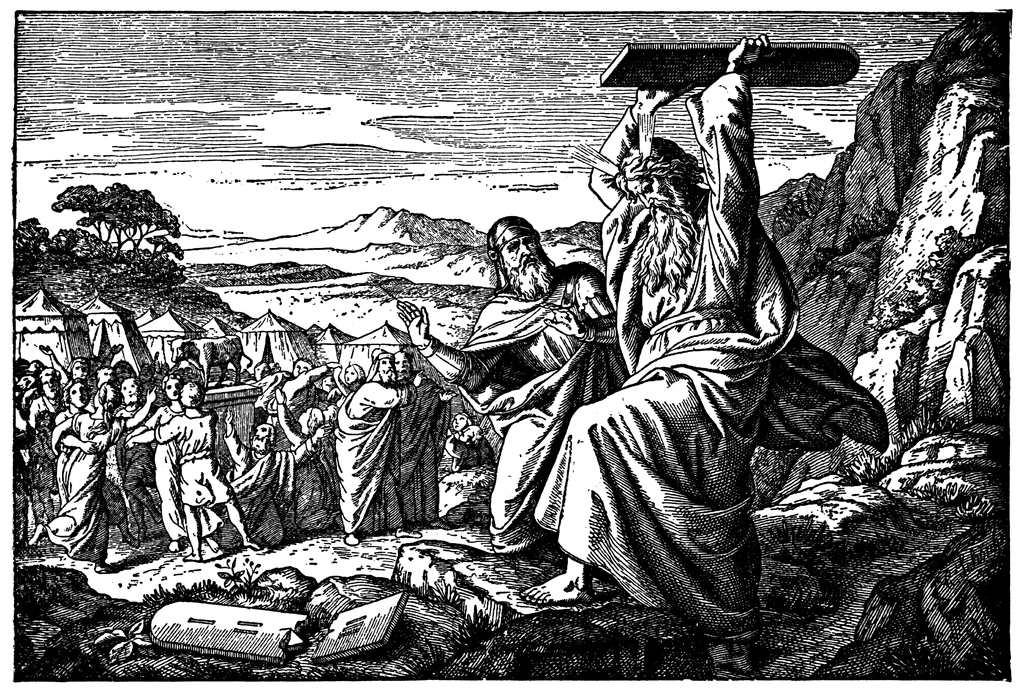
Image from Rt. Rev. Richard Gilmour, Bible History Containing the Most Remarkable Events of the Old and New Testaments, with a Compenduim of Church History (1904)

Exodus 32: 15-24 Broken Covenant, Broken Relationships

15 Then Moses turned and went down from the mountain, carrying the two tablets of the covenant1 in his hands, tablets that were written on both sides, written on the front and on the back. 16 The tablets were the work of God, and the writing was the writing of God, engraved upon the tablets. 17 When Joshua heard the noise of the people as they shouted, he said to Moses, “There is a noise of war in the camp.” 18 But he said, “It is not the sound made by victors, or the sound made by losers; it is the sound of revelers that I hear.” 19 As soon as he came near the camp and saw the calf and the dancing, Moses’ anger burned hot, and he threw the tablets from his hands and broke them at the foot of the mountain. 20 He took the calf that they had made, burned it with fire, ground it to powder, scattered it on the water, and made the Israelites drink it.

21 Moses said to Aaron, “What did this people do to you that you have brought so great a sin upon them?” 22 And Aaron said, “Do not let the anger of my lord burn hot; you know the people, that they are bent on evil. 23 They said to me, ‘Make us gods, who shall go before us; as for this Moses, the man who brought us up out of the land of Egypt, we do not know what has become of him.’ 24 So I said to them, ‘Whoever has gold, take it off ‘; so they gave it to me, and I threw it into the fire, and out came this calf!”

Moses risked entering the furnace of the LORD’s anger for the people but now his own anger burns hot. Moses knows the danger the people have put themselves into, he knows the consequence of the broken covenant with the LORD. He has seen not only the LORD’s hopes but his own hopes dashed in this sudden act of rebellion. The tablets, the work of God, have been made worthless by the work of the people. A broken dream and a shattered covenant. The object which Moses had waited to bring to the people now lies shattered at the base of the mountain.

The tablets are broken, the calf is destroyed and scattered on the waters for the Israelites to drink in the bitter taste of their betrayal. Yet, it is Aaron who in this moment receives Moses’ first attention. Aaron who will be the high priest of the people, whose role will be to atone for the people has been active in their betrayal. In a manner like Adam and Eve in Genesis 3, Aaron immediately attempts to deflect Moses’ anger onto the people. Yet, Moses and Aaron here are in strong contrast: Moses interceded for the people while Aaron blamed them. In one way this is oversimplified since Aaron is down the mountain with the people and feels pressured by them, yet the role of leaders is to restrain the people from a path that would lead to their destruction. Aaron minimizes his role within the creation of the golden calf (I threw the gold into the fire and out popped the calf). Atonement will need to be made for Aaron before he can make atonement for the people. The only one able to make the needed atonement is Moses.

Exodus 32: 25-35 Sin, Brokenness and Consequences

25 When Moses saw that the people were running wild (for Aaron had let them run wild, to the derision of their enemies), 26 then Moses stood in the gate of the camp, and said, “Who is on the LORD’s side? Come to me!” And all the sons of Levi gathered around him. 27 He said to them, “Thus says the LORD, the God of Israel, ‘Put your sword on your side, each of you! Go back and forth from gate to gate throughout the camp, and each of you kill your brother, your friend, and your neighbor.'” 28 The sons of Levi did as Moses commanded, and about three thousand of the people fell on that day. 29 Moses said, “Today you have ordained yourselves1 for the service of the LORD, each one at the cost of a son or a brother, and so have brought a blessing on yourselves this day.”

 30 On the next day Moses said to the people, “You have sinned a great sin. But now I will go up to the LORD; perhaps I can make atonement for your sin.” 31 So Moses returned to the LORD and said, “Alas, this people has sinned a great sin; they have made for themselves gods of gold. 32 But now, if you will only forgive their sin — but if not, blot me out of the book that you have written.” 33 But the LORD said to Moses, “Whoever has sinned against me I will blot out of my book. 34 But now go, lead the people to the place about which I have spoken to you; see, my angel shall go in front of you. Nevertheless, when the day comes for punishment, I will punish them for their sin.”

35 Then the LORD sent a plague on the people, because they made the calf — the one that Aaron made.

Moses and the sons of Levi violently restore order to the camp. I struggle with the violence unleashed in this scene even though I can appreciate the seriousness of the situation. For Moses this is a struggle of life or death. If order cannot be restored he knows the consequences of the LORD’s wrath continuing to burn and break out against the people. The Levites here are set aside for their future ministry in the service of the LORD. The cost of the earlier celebrations has been high indeed. This is nothing short of intertribal warfare and its conclusion determines the direction of the people of Israel.

In what, to me, is one of the most courageous scenes in the book of Exodus and perhaps in all of scriptures, Moses returns to the LORD and still stands with the people. He dares to ask God to forgive the people, but if God cannot forgive the people then Moses stands with them and asks for his own name to be removed. Moses refuses to give the LORD the option of starting over with him. There is consequence to this sin and brokenness but it is not immediate. God has turned aside from the threat of letting God’s anger consume the people, even though there is the plague which comes at the end of the chapter. There is judgment but not annihilation. The relationship and the promise of the land continue but trust has been broken and the relationship is not the same.

Deuteronomy 15: A Life of Covenant Generosity

Roman collared slaves-Marble relief from Smyrna (Izmir, Turkey), 200 CE

Roman collared slaves-Marble relief from Smyrna (Izmir, Turkey), 200 CE

Deuteronomy 15: 1-18 Forgiveness of Debts

1 Every seventh year you shall grant a remission of debts. 2 And this is the manner of the remission: every creditor shall remit the claim that is held against a neighbor, not exacting it of a neighbor who is a member of the community, because the LORD’s remission has been proclaimed. 3 Of a foreigner you may exact it, but you must remit your claim on whatever any member of your community owes you. 4 There will, however, be no one in need among you, because the LORD is sure to bless you in the land that the LORD your God is giving you as a possession to occupy, 5 if only you will obey the LORD your God by diligently observing this entire commandment that I command you today. 6 When the LORD your God has blessed you, as he promised you, you will lend to many nations, but you will not borrow; you will rule over many nations, but they will not rule over you.

 7 If there is among you anyone in need, a member of your community in any of your towns within the land that the LORD your God is giving you, do not be hard-hearted or tight-fisted toward your needy neighbor. 8 You should rather open your hand, willingly lending enough to meet the need, whatever it may be. 9 Be careful that you do not entertain a mean thought, thinking, “The seventh year, the year of remission, is near,” and therefore view your needy neighbor with hostility and give nothing; your neighbor might cry to the LORD against you, and you would incur guilt. 10 Give liberally and be ungrudging when you do so, for on this account the LORD your God will bless you in all your work and in all that you undertake. 11 Since there will never cease to be some in need on the earth, I therefore command you, “Open your hand to the poor and needy neighbor in your land.”

12 If a member of your community, whether a Hebrew man or a Hebrew woman, is sold to you and works for you six years, in the seventh year you shall set that person free. 13 And when you send a male slave out from you a free person, you shall not send him out empty-handed. 14 Provide liberally out of your flock, your threshing floor, and your wine press, thus giving to him some of the bounty with which the LORD your God has blessed you. 15 Remember that you were a slave in the land of Egypt, and the LORD your God redeemed you; for this reason I lay this command upon you today. 16 But if he says to you, “I will not go out from you,” because he loves you and your household, since he is well off with you, 17 then you shall take an awl and thrust it through his earlobe into the door, and he shall be your slave forever. You shall do the same with regard to your female slave.

                18 Do not consider it a hardship when you send them out from you free persons, because for six years they have given you services worth the wages of hired laborers; and the LORD your God will bless you in all that you do.


There is a narrative that is heard frequently in some political circles and among many conservative religious groups that reflects a privatized view of reality. The belief that an individual’s prosperity is possible without any obligation to the neighbor or the safety net for the vulnerable among us. Sometimes this privatized view of reality and faith is endorsed with the idea that, “there will never cease to be some in need on the earth,” (see verse 11) or Jesus’ saying in John’s gospel, “You always have the poor with you, but you do not always have me.” Pastors who preach with an emphasis on social justice issues, or who advocate for legal protections for vulnerable portions of the society are often accused of being too political. And perhaps this is on my mind after seeing several of my colleagues in Houston who were brokenhearted at the failure of the Houston Equal Rights Ordinance after actively working to assist with addressing some of the fear based misinformation that often was circulated by other Christian groups. Perhaps this particular ordinance may not align with what Deuteronomy 15 is talking about, but Deuteronomy’s call for a society that practices debt forgiveness is opposite of a community that can endorse a privatized view of economics or of a religion that is uninvolved in advocating on behalf of those who are economically and politically at risk.

The type of economic forgiveness that is outlined here in Deuteronomy challenges the privatized world of economic gain. The people are called to live a life that is generous towards their neighbors, lending to them and providing for them in the time of need but not allowing for people to become bondservants into perpetuity. The life of the community is not to be tied to the ability of the people to acquire more property and wealth at the neighbor’s expense or parsimoniously trying to address the need of the neighbor because a time of remission of debt is near. Their identity is tied to the story of the Exodus, they were once enslaved and were liberated by the LORD of Israel and now they are not to return to the economic system of Egypt that they were liberated from but rather are to liberate their fellow Hebrews every seventh year. Also they are not to send them out empty handed but rather to give them the resources they need to not immediately be returned into slavery.

The demands of Deuteronomy 15 were a challenge for the people of Israel to enact. The enticement of being able to secure one’s own wealth and future by increasing one’s holdings or having more slaves to bring in more agricultural produce in ancient times (or the ability to keep people perpetually indebted through high interest in many people’s lives today) are difficult issues to address. An example from the book of Jeremiah tells about the people of Judah releasing their slaves only to enslave them once again during the days leading up to the exile in Babylon (Jeremiah 34: 8-22). It is much easier to allow amnesia to set in and believe that “My power and the might of my own hand have gotten me this wealth.” (Deuteronomy 8:17). Yet for the people of Israel, and Christians who are also bearers of this story and message it is the LORD who provides. As the Lord’s Prayer can remind us we are to forgive our debtors as we want our debts to be forgiven.

What does this look like in a contemporary secular setting? This is a challenging question since the society that Deuteronomy envisions is not a secular society but a unified society where the people shared in a common covenantal identity. But perhaps in the secular and privatized society there is a great need for people of faith who take seriously the need to advocate for a just society. There will be disagreements about what this type of society might look like and there will be those who advocate for similar things for non-religious reasons. Yet, this vision that Deuteronomy shares (which may or may not have every been realized) is a vision that echoes throughout both the Old and New Testament and still continues to come back into public discourse today.  Yet even more than advocating for humane policies, which is important, perhaps we need to learn to be humane people. Rather than giving up because “there will never cease to be some in need on the earth,” as people of faith perhaps the first response is learning to “Open your hand to the poor and needy neighbor in your land.”


Deuteronomy 15: 19-23 Giving the Best To God

19 Every firstling male born of your herd and flock you shall consecrate to the LORD your God; you shall not do work with your firstling ox nor shear the firstling of your flock. 20 You shall eat it, you together with your household, in the presence of the LORD your God year by year at the place that the LORD will choose. 21 But if it has any defect– any serious defect, such as lameness or blindness– you shall not sacrifice it to the LORD your God; 22 within your towns you may eat it, the unclean and the clean alike, as you would a gazelle or deer. 23 Its blood, however, you must not eat; you shall pour it out on the ground like water.


Sometimes working in a church you get used to receiving castaways. A friend told a story how a woman drove up to church, dropped off a box and was irritated when they flagged the woman down to find out what was going on. The woman had dropped off a large box of water damaged books and very ratty toys figuring they could go in the church library or nursery. They were not good enough to be in her own home anymore but maybe they were good enough for the church. Yet, one of the reasons this discussion about sacrifices comes up multiple times throughout the book of Deuteronomy is to address various issues around the eating of these animals. While the animals are to be eaten together in community as a part of the festival, it is also not to be done with the ‘runt of the liter’ or the animal that is damaged in some way. The people were charged to bring their best to God and the community. Their actions in celebration and worship were to model their calling to love the Lord their God with all their heart, soul and might. (Deuteronomy 6:5)


Forgiveness

There is no better future without letting go of the sins of the past
Without being willing to see others not as a summation of debt unpaid
For we all walk around carrying the burdens and baggage of our lives
Fearing that someone might see the scarlet letter we cover with a coat
Or the identity we hide behind the masks we wear for the world to see
Pinned within boxes far too small to fit our frames constricting our freedom
And our shame is a garment that makes it too hard to breathe the thin air of life
For until we learn to forgive and love ourselves we will be enslaved to shame
Unable to feel the love we desire or the compassion we seek
 
Forgiveness is such a simple word to say and a hard life to live
Love would be so easy if only it didn’t involve letting down my walls
And when one has pierced my heart to let them close again
To offer peace to one who acted in war, to offer friendship to an enemy
To love one who I would rather label as unloveable, unforgiveable
And yet rather than picking up the blade that pierced my heart
Turning once again to use it on its previous wielder,
To demand an eye for an eye and a heart for a heart
Perhaps I can learn to see the wounds they already carry
And in my own healing begin to point the way to a new future
Where swords are put aside in favor of the surgeon’s needle
As lives become stitched back together and hearts are make whole again.
Neil White, 2014

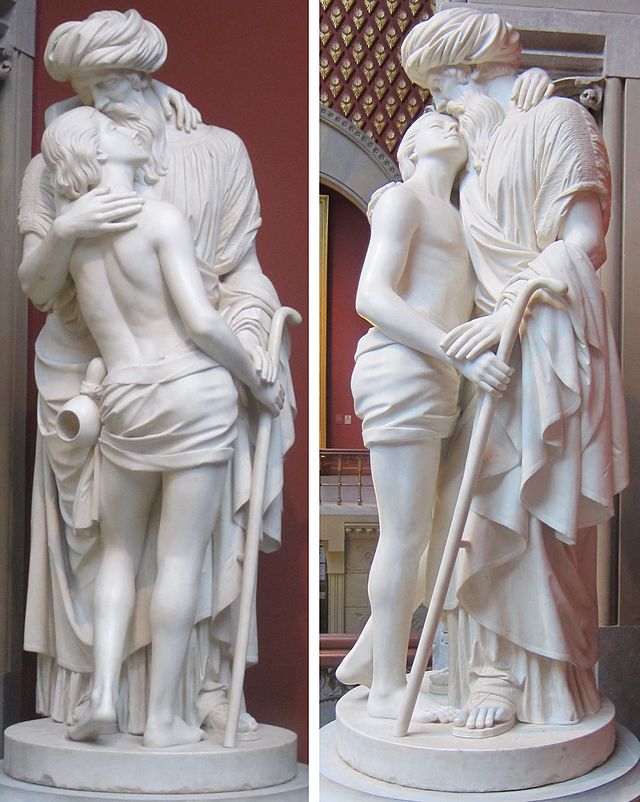
The Prodigal Son, Marble Statue by Joseph Mozier (1857)

The Prodigal Son, Marble Statue by Joseph Mozier (1857)

The Need to Remember Rightly

170px-911_Tribute_(perspective_fixed)

On a day when there will be a number of calls to ‘Never Forget’ I want to add a caution that we need to be willing to remember rightly. The destruction and violence of September 11, 2001 cost the 19 hijackers and 2,977 victims their lives and impacted the lives of many others physically, emotionally and economically. Remembering rightly we can pause and remember the emotions of the day, the sadness the confusion, the fear and the desire to put things right that many people felt, in fact you cannot remember an event rightly without the emotion that goes with the event. However, sometimes the call to ‘Never Forget’ can be transformed into a call to ‘Never Forgive’ and as a follower of Christ that is a place that I cannot remain. In Christ I am called to love my enemies, to pray for those who persecute me so that I may live into my identity as a child of God. (Matthew 5.44f) ‘Never Forget’ can also become transformed into ‘Never Again’ where any numbers of actions are justified by the fear of some other entity or individual causing harm or destruction. Remembering may have the function of a shield to protect us from easily allowing harm to come to us again, but as Miroslav Volf insightfully says:

It is because they remember (emphasis original) past victimization that they feel justified in committing present violence. Or rather, it is because they remember their past victimization that they justify as rightful self-protection what to most observers looks like violence born of intolerance of even hatred. So easily does the protective shield of memory morph into a sword of violence. (Volf 2006, 33)

If we are to remember, to grieve, to mark the day then let us also remember who we were on that day. The events in our life matter to our identity but we should never allow an act of senseless violence to transform our identity into something different. We have had a dozen years of acting on the memory of September 11, 2001 and having the memory act upon us, of stealing our attention for both good and ill. But we do not need to allow the beast of this tragic memory to shape us in its image or allow it to impact our own ability to interact with others, to love and to trust. If we do that terror has won, and in attempting to ‘Never Forget’ we become trapped into a cycle of violence. If we remember September 11, 2001 we also need to reflect upon our own reactions to that day as a people. In our responses in many ways (militarily, economically, security, etc.) we need to examine: are we allowing the fear that the events of that day to transform our identity as a people into something different?

Our memories and stories define us as individuals and as a people and as important as the events of September 11, 2001 are they are not the central events in either our nations’ story or specifically to me as a Christian and as a pastor to the story of our lives in Christ. To allow the memories of September 11, 2001 to take over that central part of our identity would be to neglect the other central stories of our identity. Within my own calling I follow a God who is both just but who justifies the ungodly, who can love me and my enemy, who meets me most concretely at the very point of injustice and rejection (in the crucifixion). As Martin Luther said in The Freedom of a Christian:

A Christian lives not in himself (sic), but in Christ and his neighbor. Otherwise he is not a Christian. He lives in Christ through faith, in his neighbor through love. By faith he is caught up beyond himself into God. By love he descends beneath himself into his neighbor. Yet he always remains in God and in his love. (Volf 2006, 198)

So as we remember this day may we remember in the light of love and reconciliation. May we remember rightly in light of our own identities and not allow the terror of the day to redefine who we are.

purple rose 01 by picsofflowers.blogspot.com

What I Learned About Myself, Life and God from My Divorce Part 3

Apophysis-Betrayal (1footonthedawn at deviantart.com)

Apophysis-Betrayal (1footonthedawn at deviantart.com)

This is the final reflection on this at this point in my journey.

7. The Place of Ritual and the Value of a Worshipping Community- I know that many people have had bad experiences in churches, synagogues and places of worship after a divorce, which is sad but a very real experience of many people-but not every place is like that. For myself, as a pastor I found myself in a new community, where I knew the pastor as one of my colleagues and I showed up with my kids each Sunday and as much as I could be I was anonymous. I did have a few people ask where their mother was in an inquiring and not an accusing way (to which I answered that she had chosen not to be there) and since I was still at the process of trying to save the marriage initially and later going through the divorce I didn’t want to close any doors, but I needed a place to just be. I knew that when I needed I could talk to the pastor as a friend and as a person who knew more of what was happening but mostly I just needed to be around the rituals and around a worshipping community. I needed someone else to sing when there were no songs coming out of my heavy heart. I needed something that was familiar and known in the midst of all the changes. I needed to be reminded that in the bigger picture that I mattered. I needed to hear about forgiveness, that I was valued, that I mattered. I needed to be in a place where I could begin my journey of healing.

8. The Gift of Limitations-For years in my life I would always find a way to dig a little deeper, to draw on some reserve of physical, spiritual or emotional strength and continue to do whatever needed done. In my relationship with my ex, in my work or school, in my life failure was never an option. The time leading up to the divorce pushed me for the first time in my life beyond the breaking point, where I reached a point where my spiritual and emotional strength were exhausted and depression began to sap even my physical strength. At the time, nothing about this seemed like a gift but it forced me to begin to pay attention to my own body and mind for the first time. To accept that my energy had limitations, that I needed to take breaks and pay attention, that there were times that I would need to say no to a commitment because I simply was not in a state of mind to deal with things. I began to listen more closely, to recapture some of the parts of myself that had been lost in pushing so hard for so many years. I began to recommit to listening and paying attention which eventually turned into poetry and writing, and I made space to listen to stories, to read, to listen to music and to make time for myself and not feel guilty about it. In accepting my own limitations I was able to find strengths that I had long forgotten about.

9. Seeing Myself as Worthy of Being Loved Again-I never imagined how deeply the rejection I felt from my ex-wife would reach into my sense of self-worth, but it challenged the core of my identity. I had always been pretty confident, in at least decent physical shape, considered myself fairly attractive and charismatic, emotionally resilient, intelligent and I had done a lot of things in my life that I was pretty proud of. The things that happened in this time caused me to question all of this, through both words and actions everything that I was felt rejected. I felt ugly, emotionally flat, I questioned whether anyone would find me interesting, I wondered whether everything I had done in the past was merely me managing to get through rather than really achieving anything. I wondered what type of future I might have in relationships, I was also wondering what I would do as far as work. Everything seemed in a period of months to have gone away and I really began to wonder who I was. I’m not sure exactly when it happened, and it probably didn’t happen all at once, but slowly I began to see that I really was pleased with the way I had lived my life, that I genuinely was happy with who I was. That I was worthy of being loved again, that I was still creative and intelligent (and in fact the experiences had opened up new avenues of creativity) and that I was OK with who I was. Not that every moment and every day I remembered this, there were occasional dark times and still are every once in a while, but  the emotional resilience did return and that I was able to see myself as worthy of being loved again.

10. The Process of Forgiveness and Reconciliation– Until you’ve really been hurt you don’t understand how difficult forgiveness and reconciliation really are. Even when you have made the choice to forgive there will be times where past actions are reenacted in your mind and you need to let go of them to move forward. It was a journey from the point where I had made the initial decision to forgive my ex (while we were still married) and work towards reconciliation and the possibility of a new beginning, to realizing that the reconciliation which occurred (which involved the divorce which I didn’t want) was much different than what I hoped for, to continually having to commit to trying not to allow things that happened in the past to determine the relationship going forward. It was a journey and not a one-time decision, and yet it was a journey that ultimately led me towards healing.

In the midst of the many challenges and lessons I have changed and grown. It took time and I have been able to walk with several others through their own journeys through broken relationships and divorces. It was not a skill I was seeking or an experience I wanted but you can learn to find the gift in even the most challenging of times.

purple rose 01 by picsofflowers.blogspot.com

Forgiveness in a Graceless World-A Sermon

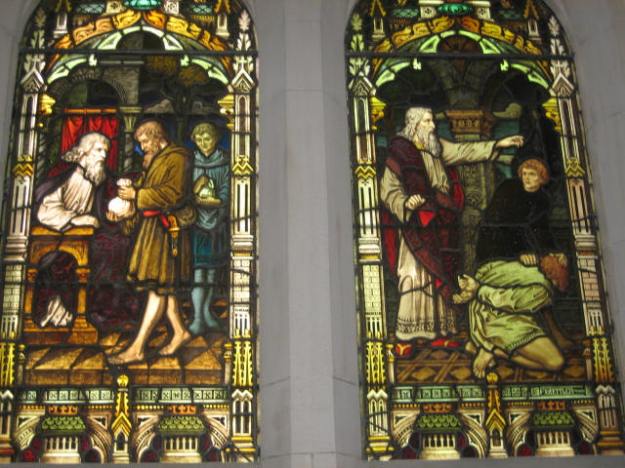
Depiction of the Parable of the Unmerciful Servant, Scot's Church Melbourne

Depiction of the Parable of the Unmerciful Servant, Scot’s Church Melbourne

Ernest Hemmingway tells in one of his short stories called “The Capital of the World” an episode about forgiveness which goes like this:

Madrid is full of boys named Paco, which is the diminutive form of Francisco, and there is a Madrid joke about a father who came to Madrid and inserted an advertisement in the personal columns of El Liberal which said: PACO MEET ME AT HOTEL MONTANA NOON TUESDAY ALL IS FORGIVEN PAPA and how a squadron of Guardia Civil had to be called out to disperse the eight hundred young men who answered the advertisement.

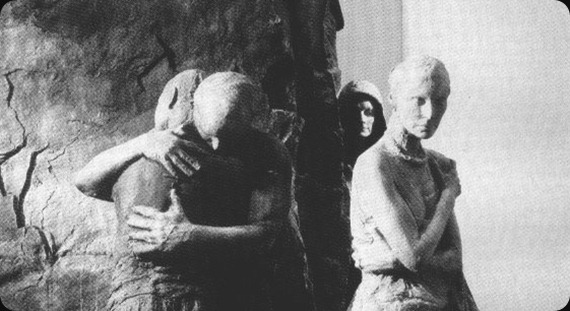
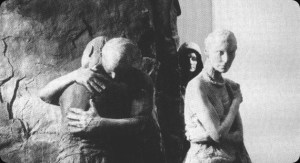
Now the joke is all about the ubiquity of the name Paco in Spain, but it also expresses a deep seeded truth that I think many of us can relate to about our desire for forgiveness to be received. For I think we all have those times where we wish we could change an action that hurt someone in the past, or to be able to take back the words that we said. We wish those words could be like the cartoon bubbles that we could pull back into our mouth to where they were never uttered in the first place. SFC Rubley who was my platoon sergeant while I was a platoon leader in the army used to talk about wanting to be able to lasso the words and say come back. But there is no bringing them back, there is no undoing the past, there is no way to go back and take back the words that were said or put in words that needed to be said. And the reality is that there is truly no future without forgiveness, there is no way forward without a new start. In fact, while forgiveness is one of the hardest things we are called upon as followers of Christ to do it is also at the very heart of our faith. It is right up there with loving the Lord your God with all your heart, mind, soul and strength and loving your neighbor as yourself, in fact it is necessary for both of these for there is no way to love one’s neighbor without forgiveness. We might think that the world of the bible it might be easier to live into forgiveness, but that would be mistaken for you see the bible is written in the same world that we live in. The Old and New Testaments are full of stories of brokenness, unreconciled differences, and woundedness. Even very early in Genesis (Genesis 4) we encounter the story of Lamech which is the opposite of forgiveness, “I have killed a man who attacked me, a young man who wounded me. If someone who kills Cain is punished seven times, then the one who kills me will be punished seventy-seven times!” Or the very first family we follow for a long journey in Genesis, Abraham and Sarah or Abram and Sarai as they start out, is a story of brokenness-yet we don’t often think of it that way. God’s promised child had been a long time in coming and Sarai says to Abram ‘we’re not getting any younger, why don’t you sleep with my servant Hagar and have a child through her and that can be the child we have been waiting for.’ And so Abram does and Ishmael is born, and yet later-after God has changed their names to Abraham and Sarah and the promised child Isaac is born there is no longer, at least in Sarah’s view, anyplace in the household for Ishmael and Hagar and the image is from a sculpture of Abraham saying goodbye to Ishmael, Hagar is facing away and Sarah is watching from behind the rock to ensure this son of Abraham from Hagar will be sent away. Ishmael will never return until both Sarah and Abraham are dead and only then will Isaac and Ishmael be reunited to mourn the death of their common father. But just because the people that God works through in the bible don’t live out God’s vision of forgiveness-that doesn’t mean that is who God is.
Abraham_thumb

As Psalm 103 says:

6 The LORD gives righteousness and justice to all who are treated unfairly.

 7 He revealed his character to Moses and his deeds to the people of Israel.

 8 The LORD is compassionate and merciful, slow to get angry and filled with unfailing love.

 9 He will not constantly accuse us, nor remain angry forever.

 10 He does not punish us for all our sins; he does not deal harshly with us, as we deserve.

 11 For his unfailing love toward those who fear him is as great as the height of the heavens above the earth.

 12 He has removed our sins as far from us as the east is from the west.

 13 The LORD is like a father to his children, tender and compassionate to those who fear him.

 14 For he knows how weak we are; he remembers we are only dust.

The God who removes our sins as far as the east is from the west, who doesn’t remember them anymore and who is tender and compassionate as a father is to his children. This is the God that the bible points to again and again and again and yet it is so easy to try to transform God into something different, something less gracious and more judgmental. One of the things I find interesting is that there are a number of Christian theologies out there that try to understand God as somehow bound to a system of rules and laws that God must act in accordance with- and if anything the bible contrast God against the rulers of the nations around them that are like that.

Unlike King Xerxes in the book of Esther, who while he is drunk summons his wife Vashti to appear before him, a summons which Vasti refuses, and so he passes an edict that she shall never again appear before him. Then he wakes up the next day realizing what he has done, but it is now a law and he cannot break it-God is not like that. Unlike King Darius in the book of Daniel who loves Daniel and yet is tricked by his advisors to pass an edict where everyone is to pray to King Darius and when Daniel is caught praying to God, Darius has no choice-he is bound by the law to throw Daniel into the lion’s den. But God is not like that, no God is like a shepherd who has 100 sheep, and then when one is missing leaves the 99 in the wilderness in search of the one, or like a woman who has 10 coins and losing one searches the house until the one is found and then calls all her neighbors to rejoice. Or like a father who has two sons, and one of the sons, the younger one, says to his father in effect, ‘dad I wish you were dead, give me what is mine after you will be gone so that I may go away from you, away from my family, and away from all that has defined me.’ And the father grants him his request and when the younger son finds himself in a foreign land starving, feeding pigs (doing that which is completely against what he was before) and wishing for what the pigs eat and no one gives him anything and he says to himself, ‘you know my father’s servants are better off than I am’ and so he goes back home and he is expecting to be a servant-but the father seeing the son rushes out to meet him, wraps his arms around him, puts a robe on him and a ring on his finger, slaughters the fattened calf and throws a party to reestablish this son with the community. And welcomes him home not as a servant, but as a son-against every rule of the way things should be. Yet there is another son in the story, the older son, who knows the way things should be, the way the rules say they should be and so he stands on the outside of the party refusing to go in and enter the celebration. So the father goes out to this son who says in effect, ‘father, I wish you were dead, for welcoming back in this younger brother who brought so much dishonor, who broke all the rules, who did everything I haven’t done” and yet the father loves both sons. The son who has gone away, who was lost-who went away and who came home again and the son who never left but now stands on the outside of the party unwilling to go in, dealing with his own anger and unwillingness to forgive and his own woundedness.

Pompeo Batoni, The Return of the Prodigal Son (1773)

Pompeo Batoni, The Return of the Prodigal Son (1773)

We serve a God who relationships are always more important than rules and people are more important than ideas. Unfortunately, sometimes the very people who should be most receptive to this are the ones who understand this the least. Take for example the story of Jonah, Jonah is sent by God to go to Nineveh-but Jonah hates the Ninevites and doesn’t want them to turn but wants them to receive God’s wrath and so Jonah goes on a ship in the opposite direction towards Tarshish. But Jonah cannot escape the God who won’t give up and so in the midst of the storm Jonah asks the sailors to give him death, to throw him into the sea because Jonah would rather die than see mercy given to the Ninevites, and yet God refuses to allow that to happen and so God sends the fish and then places him back on land and Jonah goes to Nineveh and the people turn and Jonah pouts.

In the story of les Mis, whether you’ve read it in the novel or seen it as a musical or on the big screen there are two major characters throughout the story. There is Jauvert, the lawman whose life is bound to his dependence on the law for order. The main character though is Jean val Jean who begins the story in a prison camp having served twenty years for stealing a loaf of bread. Upon Jean val Jean’s release from prison he is defined by the reality that he has been a prisoner and that there is no one who will hire him, he is a thief-and to everyone it seems he will always be a thief until when he actually does steal from a bishop and after being captured the bishop says, ‘but you left the best’ and gives him the golden candlesticks as a part of the gift. A gift which allows him to start a new life with a new identity as Misseur le Mer, and yet in the eyes of Jauvert who continues to track him throughout the story he is always the thief, and even at the end of the story when Jean val Jean spares Jauvert’s life-Jauvert cannot live this new story, he would rather die than to forgive and live in a world where the law fails him and so he does die, he commits suicide rather than forgive.

There are many people who would rather die than forgive, who would rather carry their enmity to their grave rather than let go of it, rather than let something that they have that they can hold over someone else be given up. For that is what forgiveness is, forgiveness states that I refuse to let the actions which caused me harm in the past to define our relationship going forward. Forgiveness gives us freedom from having to seek a better past. It allows us not to be defined by the things that we have done, but rather to be defined by the relationships that have been opened to us. That’s what God does, God comes and brings that forgiveness that we need even before we are ready to accept it, in the hope that we will begin to live into it. But forgiveness is not easy for us, I know a person who is a Lutheran pastor now but she didn’t grow up in the Lutheran church and going for the first time to a Lutheran church she heard at the end of the brief order of confession and forgiveness, “as a called and ordained minister of the church of Christ and by his authority I therefore declare to you the entire forgiveness of all of your sins,” and she turned to the person next to her and said, ‘that’s it!’ For God indeed, yes that is it, God has already made the journey of forgiveness, but for us many times the journey still lies ahead.

In our gospel today we hear Peter wrestling with this forgiveness that Jesus is talking about:

 Matthew 18 21 Then Peter came to him and asked, “Lord, how often should I forgive someone who sins against me? Seven times?” 22 “No, not seven times,” Jesus replied, “but seventy times seven!

At seven times Peter probably thinks he is being generous, but Jesus’ response of seventy times seven takes the world of power and revenge and retribution and turns it on its head. The world of Lamech is reversed. And it is not a point of counting up to 490, the calling is to forgive.

and then Jesus also answers with this parable (Matt 18: 23-30)

23 “Therefore, the Kingdom of Heaven can be compared to a king who decided to bring his accounts up to date with servants who had borrowed money from him. 24 In the process, one of his debtors was brought in who owed him millions of dollars.

Now the millions of dollars is actually downplaying the size of the debt owed, in modern conversion we are probably talking billions, it was as one scholar put it the amount of money a worker could expect to make in 150,000,000 days-and if you want to figure out how many years that is-it is far more than you will ever live. It is a debt that is so large it could never be paid and this man find himself in a crisis. The story continues on:

 25 He couldn’t pay, so his master ordered that he be sold– along with his wife, his children, and everything he owned– to pay the debt. 26 “But the man fell down before his master and begged him, ‘Please, be patient with me, and I will pay it all.’ 27 Then his master was filled with pity for him, and he released him and forgave his debt.

He didn’t do what the man asked for, the man asked for more time ‘give me more time and I’ll pay it back’ but the master released him from this debt and gave him a chance to start over

 28 “But when the man left the king, he went to a fellow servant who owed him a few thousand dollars. He grabbed him by the throat and demanded instant payment. 29 “His fellow servant fell down before him and begged for a little more time. ‘Be patient with me, and I will pay it,’ he pleaded. 30 But his creditor wouldn’t wait. He had the man arrested and put in prison until the debt could be paid in full.

So many times I believe that is the way we may want to react, what’s in my best interest. It allows me to be the insider and the other person to be the outsider. Frequently the biggest critique of Christians is that they act, not like God, not like the Father in the parable of the prodigal son, but rather like the older brother or the forgiven slave. Forgiveness is good for me but these other people are still sinners, they still owe me, the things they have done still define them as people who need to be punished, shunned, set aside. I’ve got to be honest that in a lot of my conversations with people outside the church the most common reason they are no longer a part of the church has nothing to do with any philosophy, or anything on TV, radio or the internet and everything to do with how they were not met with forgiveness by others within the church. Somehow they were marked as the sinner, the outcast, the untouchable. And so it shouldn’t be surprising that the story continues with Matt 18:31-33 and the horror of the other slaves seeing how this forgiven slave acted in light of the incredible forgiveness he received.


31 “When some of the other servants saw this, they were very upset. They went to the king and told him everything that had happened. 32 Then the king called in the man he had forgiven and said, ‘You evil servant! I forgave you that tremendous debt because you pleaded with me. 33 Shouldn’t you have mercy on your fellow servant, just as I had mercy on you?’

You see God wants to meet us in grace, God wants to meet us in justice and it goes back to us not living out the love and grace we have been given. And I think it wounds God when we abuse the gifts that have been given to us, when we set ourselves up as better than everyone else. When we receive grace and turn to the rest of the world in judgment. And I think God wants to meet us in grace, but I also have come to believe that if the only place we can meet God is in law, justice and judgment, then God will meet us there as well. The parable concludes:

 34 Then the angry king sent the man to prison to be tortured until he had paid his entire debt. 35 “That’s what my heavenly Father will do to you if you refuse to forgive your brothers and sisters from your heart.”

I’ve got to be honest, I don’t like the end of this, it makes me uncomfortable. Yet, I know that there are times where God has to come to me and remind me, ‘Neil this is not the life you are called to.’ ‘This is not who you are called to be, you are called to be on the journey of forgiveness.’ And it is a journey, and there are times where you may say ‘I forgive something’ and then something comes up and you realize you are still viewing your neighbor in terms of things they have done in the past. I had to learn this in my own life and journey, and I still bear scars from where I have been wounded. The reality is that there is a risk that comes with forgiveness, that you are opening yourself up to the possibility of being hurt again. And what happens if the other person doesn’t accept the forgiveness you offer. That doesn’t exempt you from the calling to be forgiving, and to be on that journey yourself. Forgiveness opens the possibility of reconciliation happening. And I know that there are wounds that may be too deep to forgive at that moment, but we are called to be on that journey. A person who I’ve learned a lot from is a man who grew up in the former Yugoslavia and is Croatian in background, a man named Miroslav Volf, and those who know a little of the history of Europe in the 1990s, this was the area of Bosnia and Kosovo where the Serbians and Croatians were in a conflict, an ancient conflict that had its roots hundreds of years earlier that was brought to the forefront in the 1990s when the Serbians were in power and began to move towards wiping out the Croatians, destroying entire villages, committing incredible atrocities and killing thousands while displacing tens of thousands. Sometime shortly after the events in Bosnia, Miroslav was working on his PhD in Germany working through the idea of forgiveness and embracing the enemy when another well known scholar, Jürgen Moltmann, said to him Miroslav could you embrace a chětnik, the very soldiers who had done all this to your people? And Miroslav’s answer was I believe an honest one, “No, but I don’t believe that is where God calls me to be.” Even genocide requires forgiveness. Doesn’t mean it is an easy journey and there may be something that is so horrible where our answer is also, “No, but I don’t believe that is where God calls me to be.” As Archbishop Desmond Tutu could say in the midst of the Truth and Reconciliation committees after Apartheid in South Africa, ‘There is no future without forgiveness’.

Forgiveness is the one thing we are called upon to do in the midst of the Lord’s prayer: to forgive us our trespasses as we forgive those who trespass against us, or forgive us our sins as we forgive those who sin against us. Or as one of my friends who is a pastor in Washington State related a story to me of a young girl learning the Lord’s prayer, and not knowing what trespassing was she said, “Forgive us our trash-passing as we forgive those who trash-pass against us.” The wisdom of children, so forgive us our trash-passing as we forgive those who trash pass against us.

purple rose 01 by picsofflowers.blogspot.com