Tag Archives: Covenant

Psalm 105 Give Thanks to the Faithful God of Our Story

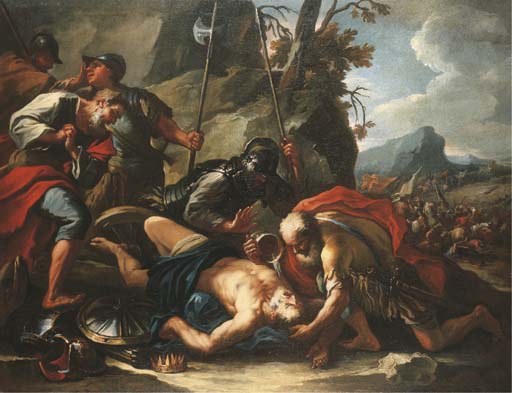
Grigory Mekheev, Exodus (2000) artist shared work under Creative Commons Attribution-Share Alike 3.0

Psalm 105 

1O give thanks to the LORD, call on his name, make known his deeds among the peoples.
 2Sing to him, sing praises to him; tell of all his wonderful works.
 3Glory in his holy name; let the hearts of those who seek the LORD rejoice.
 4Seek the LORD and his strength; seek his presence continually.
 5Remember the wonderful works he has done, his miracles, and the judgments he has uttered,
 6O offspring of his servant Abraham, children of Jacob, his chosen ones.
 7He is the LORD our God; his judgments are in all the earth.
 8He is mindful of his covenant forever, of the word that he commanded, for a thousand generations,
 9the covenant that he made with Abraham, his sworn promise to Isaac,
 10which he confirmed to Jacob as a statute, to Israel as an everlasting covenant,
 11saying, “To you I will give the land of Canaan as your portion for an inheritance.”
 12When they were few in number, of little account, and strangers in it,
 13wandering from nation to nation, from one kingdom to another people,
 14he allowed no one to oppress them; he rebuked kings on their account,
 15saying, “Do not touch my anointed ones; do my prophets no harm.”
 16When he summoned famine against the land, and broke every staff of bread,
 17he had sent a man ahead of them, Joseph, who was sold as a slave.
 18His feet were hurt with fetters, his neck was put in a collar of iron;
 19until what he had said came to pass, the word of the LORD kept testing him.
 20The king sent and released him; the ruler of the peoples set him free.
 21He made him lord of his house, and ruler of all his possessions,
 22to instruct his officials at his pleasure, and to teach his elders wisdom.
 23Then Israel came to Egypt; Jacob lived as an alien in the land of Ham.
 24And the LORD made his people very fruitful, and made them stronger than their foes,
 25whose hearts he then turned to hate his people, to deal craftily with his servants.
 26He sent his servant Moses, and Aaron whom he had chosen.
 27They performed his signs among them, and miracles in the land of Ham.
 28He sent darkness, and made the land dark; they rebelled against his words.
 29He turned their waters into blood, and caused their fish to die.
 30Their land swarmed with frogs, even in the chambers of their kings.
 31He spoke, and there came swarms of flies, and gnats throughout their country.
 32He gave them hail for rain, and lightning that flashed through their land.
 33He struck their vines and fig trees, and shattered the trees of their country.
 34He spoke, and the locusts came, and young locusts without number;
 35they devoured all the vegetation in their land, and ate up the fruit of their ground.
 36He struck down all the firstborn in their land, the first issue of all their strength.
 37Then he brought Israel out with silver and gold, and there was no one among their tribes who stumbled.
 38Egypt was glad when they departed, for dread of them had fallen upon it.
 39He spread a cloud for a covering, and fire to give light by night.
 40They asked, and he brought quails, and gave them food from heaven in abundance.
 41He opened the rock, and water gushed out; it flowed through the desert like a river.
 42For he remembered his holy promise, and Abraham, his servant.
 43So he brought his people out with joy, his chosen ones with singing.
 44He gave them the lands of the nations, and they took possession of the wealth of the peoples,
 45that they might keep his statutes and observe his laws. Praise the LORD!

Although there is no superscript to introduce Psalm 105, verses 1-15 of this psalm appear in the mouth of King David in 1 Chronicles 16: 8-22 combined with several other psalms. This quote of this psalm at the arrival of the ark of the covenant in the tent David set up for it in Jerusalem is one possible background for the composition of this psalm narrating God’s gracious actions on behalf of the covenant people. Within book four of the psalter this psalm pairs with Psalm 106 which closes book four as well as Psalm 103 and 104 which preceded it. Psalm 103 gives thanks to the LORD because God is good (hesed), Psalm 104 gives thanks to the God who is great in relation to the creation, and now Psalm 105 celebrates the covenant faithfulness of God to God’s people in a narration of their history. Psalm 105 and Psalm 106 form complementary narrations of the history of God’s faithfulness. Throughout Psalm 105 there is no mention of the faithless moments in Israel’s history with the LORD the God of Israel, nor is there any moment of reflection upon God’s reaction to those moments of faithlessness. Unlike the other historical psalms[1] that is not the purpose of this psalm. Psalm 106 will contrast the faithfulness of God with the faithlessness of the people.

Once again, the people are summoned to give thanks and praise the LORD for the things that God has done and to remember the works, miracles, and judgments. The covenant throughout this Psalm appears to be the covenant with Abraham in relation to God giving the people the land of Canaan. Even though the second half of the psalm will deal with God’s mighty works in the Exodus narrative the Sinai covenant is never mentioned. Instead the focal point of the promise is the covenant with Abraham confirmed with Jacob (aka Israel) and the statute here and everlasting covenant is one sided. God promises protection and the land as an inheritance for this family set aside by God.

The people in the time of Abraham, Isaac, and Jacob wander this land as strangers (Hebrew gerim) who are reliant upon the LORD for protection. Abraham would claim before the Hittites that he was a “stranger and alien residing among them”[2] and this reality of the patriarchs and the people in Egypt being ‘strangers’ forms the ethical reaction to ‘strangers’ in Deuteronomy: “You shall also love the stranger, for you were strangers in the land of Egypt.[3] Yet here the focus of the narrative is not upon the ethical responsibility of the people, but the gracious protection of God. God does not allow the settled nations to touch his anointed people or to harm the prophets.[4]

The backstory of the psalm continues through the narrative of Genesis, arriving to the story of Joseph who is sent ahead by God to Egypt to provide bread for the people in a time of famine. Even here, although Joseph is sold as a slave, the mention of the role of the brothers of Joseph in his sojourn in Egypt is obscured. Instead, it is the LORD who tests him through these ordeals. Joseph becomes a heroic figure who endures slavery and imprisonment only to rise to become the lord of the house of Pharoah. Yet, even at the end of this brief retelling of the Joseph story Jacob/Israel is an alien in the land of Ham.[5]

At the midpoint of the psalm the narrative shifts from the stories of Genesis to the stories of Exodus. Exodus remembers the duration of the sojourn of the people in Egypt as four hundred thirty years[6] and during this time they had not only been protected by God but prospered, emerging as a people great in number and feared by their Egyptian overlords. Moses and Aaron are sent to be God’s voice to the people and to Pharoah. The number and order of the plagues are different from the narration of Exodus 7-12 and Psalm 78:44-51. It is possible that this is a separate tradition recounting the Exodus narrative, but I believe it is also likely that the constraints of the poetic form of this psalm are responsible for the truncated nature of this retelling.

Yet, the truncated nature of the retelling of the signs and miracles performed in Egypt are extravagant compared to the narration of the journey from Egypt to the promised land. As mentioned above, the giving of the covenant at Sinai as well as the disobedience of the people is omitted. The forty years of wandering in the wilderness is reduced to eight verses or one stanza of the psalm and as throughout the psalm the focus is on God’s presence, protection, and provision for the people. God provided protection by the cloud and the fire, provided mana from heaven, quails for the camp, and water from the rock, and brought them to the long-promised land of the covenant.

Songs can play a crucial role in helping people to remember their story, and this Psalm helps to remind the people where they come from. Throughout this psalm they are sustained by protection and provision of the LORD through works, miracles, and judgments which demonstrate the faithfulness of the LORD to the people. Any narration of a story makes choices about what to include and what to exclude based upon the intent of the story, or in this case poem or song. The focus upon God’s continual faithfulness and provision may choose to exclude the faithless moments of the people, and yet this psalm stands within a collection of psalms and narratives which reinforce, strengthen, and complete its narration. Yet, the focal imagery of the past three psalms of God being a God of goodness and steadfast love, God being a God of greatness in relation to the creation, and finally God being a God of steadfast love and greatness towards the covenant people mutually reinforce each other.


[1] Psalm 78, 106, 136.

[2] Genesis 23:4.

[3] Deuteronomy 10:19.

[4] Presumably for the purpose of the Psalm the patriarchs are the prophets.

[5] The tradition of Egypt coming from Noah’s son Ham is traced back to Genesis 10:6 where Cush (Ethiopia), Egypt, Put, and Canaan trace their lineage to this survivor of the ark in the Hebrew telling of their history.

[6] Exodus 12:40.

Ezekiel 20 Retelling Israel’s Story in a Negative Light

Ezekiel 20: 1-32

1 In the seventh year, in the fifth month, on the tenth day of the month, certain elders of Israel came to consult the LORD, and sat down before me. 2 And the word of the LORD came to me: 3 Mortal, speak to the elders of Israel, and say to them: Thus says the Lord GOD: Why are you coming? To consult me? As I live, says the Lord GOD, I will not be consulted by you. 4 Will you judge them, mortal, will you judge them? Then let them know the abominations of their ancestors, 5 and say to them: Thus says the Lord GOD: On the day when I chose Israel, I swore to the offspring of the house of Jacob — making myself known to them in the land of Egypt — I swore to them, saying, I am the LORD your God. 6 On that day I swore to them that I would bring them out of the land of Egypt into a land that I had searched out for them, a land flowing with milk and honey, the most glorious of all lands. 7 And I said to them, Cast away the detestable things your eyes feast on, every one of you, and do not defile yourselves with the idols of Egypt; I am the LORD your God. 8 But they rebelled against me and would not listen to me; not one of them cast away the detestable things their eyes feasted on, nor did they forsake the idols of Egypt.

Then I thought I would pour out my wrath upon them and spend my anger against them in the midst of the land of Egypt. 9 But I acted for the sake of my name, that it should not be profaned in the sight of the nations among whom they lived, in whose sight I made myself known to them in bringing them out of the land of Egypt. 10 So I led them out of the land of Egypt and brought them into the wilderness. 11 I gave them my statutes and showed them my ordinances, by whose observance everyone shall live. 12 Moreover I gave them my sabbaths, as a sign between me and them, so that they might know that I the LORD sanctify them. 13 But the house of Israel rebelled against me in the wilderness; they did not observe my statutes but rejected my ordinances, by whose observance everyone shall live; and my sabbaths they greatly profaned.

Then I thought I would pour out my wrath upon them in the wilderness, to make an end of them. 14 But I acted for the sake of my name, so that it should not be profaned in the sight of the nations, in whose sight I had brought them out. 15 Moreover I swore to them in the wilderness that I would not bring them into the land that I had given them, a land flowing with milk and honey, the most glorious of all lands, 16 because they rejected my ordinances and did not observe my statutes, and profaned my sabbaths; for their heart went after their idols. 17 Nevertheless my eye spared them, and I did not destroy them or make an end of them in the wilderness.

18 I said to their children in the wilderness, Do not follow the statutes of your parents, nor observe their ordinances, nor defile yourselves with their idols. 19 I the LORD am your God; follow my statutes, and be careful to observe my ordinances, 20 and hallow my sabbaths that they may be a sign between me and you, so that you may know that I the LORD am your God. 21 But the children rebelled against me; they did not follow my statutes, and were not careful to observe my ordinances, by whose observance everyone shall live; they profaned my sabbaths.

Then I thought I would pour out my wrath upon them and spend my anger against them in the wilderness. 22 But I withheld my hand, and acted for the sake of my name, so that it should not be profaned in the sight of the nations, in whose sight I had brought them out. 23 Moreover I swore to them in the wilderness that I would scatter them among the nations and disperse them through the countries, 24 because they had not executed my ordinances, but had rejected my statutes and profaned my sabbaths, and their eyes were set on their ancestors’ idols. 25 Moreover I gave them statutes that were not good and ordinances by which they could not live. 26 I defiled them through their very gifts, in their offering up all their firstborn, in order that I might horrify them, so that they might know that I am the LORD.

27 Therefore, mortal, speak to the house of Israel and say to them, Thus says the Lord GOD: In this again your ancestors blasphemed me, by dealing treacherously with me. 28 For when I had brought them into the land that I swore to give them, then wherever they saw any high hill or any leafy tree, there they offered their sacrifices and presented the provocation of their offering; there they sent up their pleasing odors, and there they poured out their drink offerings. 29 (I said to them, What is the high place to which you go? So it is called Bamah to this day.) 30 Therefore say to the house of Israel, Thus says the Lord GOD: Will you defile yourselves after the manner of your ancestors and go astray after their detestable things? 31 When you offer your gifts and make your children pass through the fire, you defile yourselves with all your idols to this day. And shall I be consulted by you, O house of Israel? As I live, says the Lord GOD, I will not be consulted by you.

This chapter in Ezekiel is one of the most uncomfortable passages I have wrestled with in the twelve years since I began this discipline of working through scripture on signoftherose. My goal was to pay particular attention to the passages of scripture I was less familiar with. For me this was more difficult than Ezekiel 16 with its portrayal of Jerusalem as God’s faithless bride because that imagery has resonance with imagery used in Jeremiah, and I was able to view it through my personal experiences of heartbreak and the emotions that evoked. I was glad to find I was not alone in my assessment of this passage, for example Katheryn Pfisterer Darr states:

Ezekiel 20: 1-44 is one of the Bible’s most troubling texts. What are we to make of an oracle that intentionally portrays a people’s history in the most pejorative of terms, in order utterly to erode any sense of integrity, any basis of hope? (NIB VI: 1290)

This text goes against many modern notions of independence. Israel cannot be Israel without living in the covenantal relationship with God. God chose them and the critical verse which forms the pivot for this chapter is verse thirty-two, “What is in your mind shall never happen — the thought, “Let us be like the nations, like the tribes of the countries, and worship wood and stone.”  Ezekiel has throughout the previous nineteen chapters attempted to demonstrate the apostasy of Israel as the cause for the LORD’s just action of condemnation. Now this rhetorical retelling of the history of Israel attempts to portray the total depravity of Israel throughout its history.

The prophet Ezekiel may be a poet, but he has little interest in ideas expressed in Emily Dickinson’s poem “Tell All the Truth But Tell It Slant”

Tell all the truth but tell it slant —

Success in Circuit lies

Too bright for our infirm Delight

The Truth’s superb surprise

As Lightning to the Children eased

With explanation kind

The Truth must dazzle gradually

Or every man be blind —[1]

Ezekiel’s message to a people who no longer have ears to hear is not told with an explanation kind, instead it is a brutally direct confrontation with the long running patterns of disobedience which have, in Ezekiel’s view, characterized the relationship between the people and their God. Or as Daniel Block states:

Far from being a story of election and salvation, Israel’s story is one of apostasy…Ezekiel’s “theology of history” is revisionist in the extreme. Other prophets had recognized the historical roots of Israel’s sins, but Ezekiel perceives the nation as corrupt as no other prophet did. (Block, 1997, p. 614)

Nor is Ezekiel’s primary concern at this point repentance, from early on God has communicated to Ezekiel that his role is to communicate the message so that, “Whether they hear or refuse to hear (for they are a rebellious house), they shall know that there has been a prophet among them.” (Ezekiel 2:5)

The prophecy is dated August 14, 591 BCE based on the information in verse one. This is two years before the siege of Jerusalem, almost a year after the prophecy in chapter eight, and two years after Ezekiel’s initial call. (Ganzel, 2020, p. 146) There have been several suggestions for why the elders approach Ezekiel at this point. One suggestion is that words of the false prophet Hananiah’s prophecy[2] had reached the exiles which suggested that the exile would be ending at this point. This is possible, but it is also possible that the elders are attempting to seek the LORD as mentioned in Deuteronomy 4:29, “From there (exile among the nations) you will seek the LORD your God and you will find him if your search after him with all your heart and soul (nephesh-life).” Yet, in Ezekiel’s view these elders are not wholeheartedly turning to the LORD. Like in chapter fourteen when certain elders come and the LORD considers whether he will answer them, only to answer in judgment, now the prophet is commanded to judge or arraign[3] the elders and the people.

The narrative begins in Egypt when the LORD chose (Hebrew bahar) Israel, swears to them and makes Godself known to them. The use of the Hebrew bahar reflects the language of Deuteronomy 7: 6-8:

For you are a people holy to the LORD your God; the LORD your God has chosen you out of all the peoples on earth to be his people, his treasured possession. It was not because you were more numerous than any other people that the LORD set his heart on you and chose you — for you were the fewest of all peoples. It was because the LORD loved you and kept the oath that he swore to your ancestors, that the LORD has brought you out with a mighty hand, and redeemed you from the house of slavery, from the hand of Pharaoh king of Egypt.

Being chosen by the LORD involves casing away the detestable things and the ‘idols’[4] of Egypt but from the very beginning they failed, in Ezekiel’s retelling of the story, to change their practices or to turn away from the idols they had in Egypt.

Throughout the narrative, their disobedience evokes a strong reaction from the LORD and God considers pouring out his wrath and spending his anger against them but refrains so that the name of God will not be profaned among the nations. The idea of God acting so that God’s name may be recognized and honored among the nations is reflected in the aftermath of the golden calf when Moses interceded for the people (Exodus 32: 11-14) and in the LORD’s declaration of identity in the thirteen attributes of God (Exodus 34: 1-9). A similar pattern is repeated when the people refuse to enter the promised land for fear of its occupants and Moses again has to intercede with the LORD (Numbers 14: 13-25). Throughout this retelling of history, the refrain reoccurs, Then I thought I would pour out my wrath upon them and spend my anger against them in the wilderness. But I withheld my hand, and acted for the sake of my name, so that it should not be profaned in the sight of the nations, in whose sight I had brought them out. This points to the LORD’s continual forbearance with the people in the past, but also highlights the anger and pain that the LORD bears from this continued pattern of disobedience.

Ezekiel’s retelling of Israel’s story continues from God’s choosing of the people in Egypt, even in their disobedience, to the leading of the people out of Egypt into the wilderness to give them the law and to lead them to the promised land. Ezekiel views this period as a time of continued rebellion[5] but now as the LORD makes the covenant expectations clear the rebellion takes on a more strident stance. The LORD has provided the statutes and ordinance by which everyone should live and gave them the practice of sabbath as a sign between God and the people. The people did not observe the statutes, rejected the ordinances, and greatly profaned the sabbath. In addition to the pursuit of idols and detestable things they have now added disobedience to the laws, decrees, and practices that are a part of the covenant. Yet, God’s anger is once again restrained by acting for the sake of the name of the God. Even though one generation never emerges from the wilderness their children inherit the promised land. Yet, the LORD warns them in the wilderness, probably referencing Deuteronomy where Moses warns the people before entering the land, to not follow the ways of their parents or to defile themselves with idol. Instead, they are charged to live by the law (statutes and ordinances) and to hallow the sabbath day.

The children who enter the promised land and the generations that follow fail in these practices. Ezekiel’s narration of God’s response produces a passage that, “Students of Scripture have struggled with…through the centuries.” (Block, 1997, p. 637)

because they had not executed my ordinances, but had rejected my statutes and profaned my sabbaths, and their eyes were set on their ancestors’ idols. Moreover I gave them statutes that were not good and ordinances by which they could not live. I defiled them through their very gifts, in their offering up all their firstborn, in order that I might horrify them, so that they might know that I am the LORD. (v. 24-26)

This is a difficult group of verses, and we are going to slow down and spend some time with this discomfortable passage. As Ellen Davis explains,

The statement resists all attempts at domestication. Its power lies precisely in the fact that it cannot be conformed to human reason. The verse reasserts, indeed, carries to its illogical extreme what is Ezekiel’s constant theme: the indisputable authority of God to determine and interpret the course of human history. (Davis, 1989, p. 114)

As I mentioned in my reflection A Split in the Identity of God, one of the difficult things for most Christians readers of scripture to reconcile is the all-encompassing view of the prophetic witness of God being responsible for all things. The adoption of idolatrous practices and non-covenant rules, and even the offering of children are now placed within the divine purview. The law was a gift, and now these not good laws become an anti-gift. The accusations of Ezekiel 16:20 of child sacrifice are now a way in which the LORD can horrify[6] the people. Throughout the narration of the Deuteronomic history[7] the people of Israel adopt idolatrous practices, fail to live according to the covenant, and at some points appear to engage in child sacrifice to Molech. It is impossible to know whether child sacrifice is occurring in the context of the exile in Babylon or in Jerusalem at the time. Yet, the theological implication of assigning the disobedience of the people, even to the point of, in the best light, misreading the provision for redeeming firstborns in Exodus 13: 11-16 or Exodus 22:29 to God is theologically troubling. Ezekiel is not a systematic theologian, nor is his message one of logical coherency. Ezekiel is providing a way to make sense of the future cataclysm for the people of Jerusalem while attempting to maintain God’s justice. Yet, most readers throughout history have struggled to reconcile these verses.

One of the insights I had in studying Jeremiah was that the God of Jeremiah, and by extension Ezekiel, is a brokenhearted God. The God portrayed in the bible has a surprisingly human set of emotions including anger, pain, desire, and loss. The LORD loves deeply and hurts deeply at the unfaithfulness of the people, and this hurt has been constrained by the concern for the honor of the divine name. Yet, generations of pain have compounded and the release of the pain—at least in words—is not always logical or easy to understand. The prophet stands between the wounded God and the wounding people and is the mediator of that pain from God to the people. The language of pain is attempting to shake the people from their long pattern of disobedience, or at least to give them language to explain the consequences when the LORD no longer saves them from the consequences of their actions. As modern people we might narrate this history differently from a different theological perspective, but Ezekiel (like his contemporary Jeremiah) has no choice but to pour out the emotion he receives from a brokenhearted God to a people who refuses to hear.

Deuteronomy 12 states to the people when they enter the land that they were to destroy the high places and shrines that the nations they pushed out created. Yet here Ezekiel narrates that instead of destroying these high places and shrines they adopted them for their own idolatrous practices. The play on words of “What is the high place (bamah) to which you go? So it is called Bamah to this day” adds one more way the people give the honor due to the LORD to the other gods of the nations.  Ezekiel argues that all the practices of the past continue to be built upon and practiced by the people in the present. The narration of the story of Israel has gotten progressively worse until the LORD’s anger can no longer be contained and the consequences of disobedience can no longer be averted.

There is no hope, at this point in Ezekiel, that the people will repent and save Jerusalem, the temple, the king, and the land from the consequences of this long pattern of disobedience. He is attempting to help the people understand their current crisis. His rhetorical retelling of the story of Israel as a story of continual and progressive disobedience and depravity is a difficult piece of scripture, but it is also a window into the pain of a brokenhearted God who has long delayed the consequences of the disobedience of the people.  Yet, Israel does not have the free will to choose to follow the gods of Egypt, Canaan, or Babylon. As we will see in the section that follows this will never happen. Israel can only be Israel in relation to the LORD the God of Israel.

Ezekiel 20: 33-44

32 What is in your mind shall never happen — the thought, “Let us be like the nations, like the tribes of the countries, and worship wood and stone.”

33 As I live, says the Lord GOD, surely with a mighty hand and an outstretched arm, and with wrath poured out, I will be king over you. 34 I will bring you out from the peoples and gather you out of the countries where you are scattered, with a mighty hand and an outstretched arm, and with wrath poured out; 35 and I will bring you into the wilderness of the peoples, and there I will enter into judgment with you face to face. 36 As I entered into judgment with your ancestors in the wilderness of the land of Egypt, so I will enter into judgment with you, says the Lord GOD. 37 I will make you pass under the staff, and will bring you within the bond of the covenant. 38 I will purge out the rebels among you, and those who transgress against me; I will bring them out of the land where they reside as aliens, but they shall not enter the land of Israel. Then you shall know that I am the LORD.

39 As for you, O house of Israel, thus says the Lord GOD: Go serve your idols, everyone of you now and hereafter, if you will not listen to me; but my holy name you shall no more profane with your gifts and your idols.

40 For on my holy mountain, the mountain height of Israel, says the Lord GOD, there all the house of Israel, all of them, shall serve me in the land; there I will accept them, and there I will require your contributions and the choicest of your gifts, with all your sacred things. 41 As a pleasing odor I will accept you, when I bring you out from the peoples, and gather you out of the countries where you have been scattered; and I will manifest my holiness among you in the sight of the nations. 42 You shall know that I am the LORD, when I bring you into the land of Israel, the country that I swore to give to your ancestors. 43 There you shall remember your ways and all the deeds by which you have polluted yourselves; and you shall loathe yourselves for all the evils that you have committed. 44 And you shall know that I am the LORD, when I deal with you for my name’s sake, not according to your evil ways, or corrupt deeds, O house of Israel, says the Lord GOD.

There is no free will for Israel. They do not get to opt out of being the people of God or self-select into being a different people. As Ellen Davis states,

Israel cannot be like the nations, no matter how assiduously it seeks to deny the association with YHWH by departing from anything recognizable as the law of God. (Davis, 1989, p. 114)

On the one hand this is the gracious promise that they will be brought out from the people to be gathered. On the other hand, there is no escape from their identity as the people of God and the judgment that they will endure. They will be brought back under the covenant and the rebels among the people will be purged. The only future is as a people obedient to the LORD. They will be sanctified, and in the future they will practice the laws and statutes and ordinances in a way that brings honor to the name of God. They will remember and regret their practices of the past. Everything hangs on the LORD’s control over history and the future of Israel. There is hope in the future, but it does not rest upon the practices of faithfulness of the people. As Ezekiel has narrated the story of Israel is a story of apostasy and depravity. Yet, with the LORD there is the promise of a gracious new beginning where a purified people will return to the land and properly honor their God. God is remaining faithful to God’s promises for the sake of God’s name. It is a difficult justice for most modern people to comprehend, but it is still gracious. Israel will have a future as Israel because of God’s action to make that future manifest.

Ezekiel 20: 45-49

45 The word of the LORD came to me: 46 Mortal, set your face toward the south, preach against the south, and prophesy against the forest land in the Negeb; 47 say to the forest of the Negeb, Hear the word of the LORD: Thus says the Lord GOD, I will kindle a fire in you, and it shall devour every green tree in you and every dry tree; the blazing flame shall not be quenched, and all faces from south to north shall be scorched by it. 48 All flesh shall see that I the LORD have kindled it; it shall not be quenched. 49 Then I said, “Ah Lord GOD! they are saying of me, ‘Is he not a maker of allegories?'”

These final five verses of chapter twenty are related to the imagery that will come in chapter twenty-one and set the stage for a new set of imagery organized around a sword. Yet, since in our bible they are a part of chapter twenty I will address them as they stand in the chapter. Now Ezekiel is to set his face[8] towards the south. He is to set his face toward Teman (either a place name for a northern district of Edom or may simply refer to south), Darom (either a place name between Beersheba and Beth-Gubrin or another term for south), and the ‘scrubland’[9] of the Negeb (negeb as a common noun also means south, or dry) (NIB VI: 1294) and declare that a blazing fire is coming upon these lands and it will scorch the land from south to north. Ezekiel answers the LORD that he is being accused of being a “maker of allegories.” The Hebrew doubling of the word masal (proverb, parable) probably indicates to Ezekiel that his message is not being received as seriously as he believes it merits. He may feel that the people are failing to understand his message, or that perhaps they view his words and actions as entertainment, but they do not yet understand that a prophet has been among them. The people may be taunting Ezekiel because his words have not come to pass and that his view of reality seems too divergent from the views of others, even others who claim the title of prophet, in his time and previously. It is difficult to walk through the first twenty-four chapters of Ezekiel, and it is only in the aftermath of the destruction of Jerusalem and the temple, the ending of the line of Davidic kings, and the exile that the prophet’s words make sense. Even those in exile with Ezekiel are looking forward to a homecoming to Jerusalem rather than the extension of their exile to the entire nation. Ezekiel’s words are difficult to stomach in the aftermath of the Babylonian exile and were probably unpalatable beforehand. It is only afterwards that people will understand that this maker of allegories was the prophet in their midst they failed to listen to.


[1] https://www.poetryfoundation.org/poems/56824/tell-all-the-truth-but-tell-it-slant-1263

[2] Jeremiah 28:1-4.

[3] “The interrogative particle often conveys an indignant affirmation.” (Block, 1997, p. 618)

[4] Ezekiel’s frequently used term gillum which is a derogatory term best rendered as something like ‘shit gods.’

[5] Daniel Block notes that Jeremiah views the Exodus romantically while Ezekiel views this time in Israel’s story as a continued example of their total depravity and abandonment to sin. (Block, 1997, p. 630)

[6] Hebrew samen is actually harsher than horrify. Katheryn Pfisterer Darr suggests, “that I might desolate them.” (NIB VI: 1284)

[7] The books between Joshua and 2 Kings in the bible. Referred to as the Deuteronomic history because they share the theological perspective of Deuteronomy.

[8] Which indicates judgment.

[9] It is doubtful the Negeb, which is desert-like, was ever in its history forested.

1 Kings 9 Solomon’s Second Vision and Continued Reign

Isaak Asknaziy, Vanita vanitatum et omnia vanitas (19th Century)

1 Kings 9: 1-9 Solomon’s Second Vision of the LORD

1 When Solomon had finished building the house of the LORD and the king’s house and all that Solomon desired to build, 2 the LORD appeared to Solomon a second time, as he had appeared to him at Gibeon. 3 The LORD said to him, “I have heard your prayer and your plea, which you made before me; I have consecrated this house that you have built, and put my name there forever; my eyes and my heart will be there for all time. 4 As for you, if you will walk before me, as David your father walked, with integrity of heart and uprightness, doing according to all that I have commanded you, and keeping my statutes and my ordinances, 5 then I will establish your royal throne over Israel forever, as I promised your father David, saying, ‘There shall not fail you a successor on the throne of Israel.’

6 “If you turn aside from following me, you or your children, and do not keep my commandments and my statutes that I have set before you, but go and serve other gods and worship them, 7 then I will cut Israel off from the land that I have given them; and the house that I have consecrated for my name I will cast out of my sight; and Israel will become a proverb and a taunt among all peoples. 8 This house will become a heap of ruins; everyone passing by it will be astonished, and will hiss; and they will say, ‘Why has the LORD done such a thing to this land and to this house?’ 9 Then they will say, ‘Because they have forsaken the LORD their God, who brought their ancestors out of the land of Egypt, and embraced other gods, worshiping them and serving them; therefore the LORD has brought this disaster upon them.'”

This second appearance of the LORD to Solomon echoes the covenantal themes that have recurred throughout the initial eight chapters of 1 Kings. Although the consequences for turning aside from keeping the commandments and statutes of the LORD is spoken in more ominous tones directly from the mouth of God, we’ve seen the necessity of obedience in David’s words to Solomon (2:2-4), in the LORD’s first appearance to Solomon (3:14), the word of the LORD during the construction of the temple (6: 11-13), and from Solomon’s own mouth in the extended prayer of dedication (8:22-53). The dedication of the temple and the sacrifices offered there are not enough, nor are they primary to the LORD. The timing of this divine visitation and its charge and warnings should alert us to the danger that Solomon faces as his material prosperity continues. Knowing the failures of the end of Solomon’s reign this warning at the apex of his success may help the attentive reader begin to see that Solomon, “did not fail overnight; darker strands and shadows are revealed, indicating the deep flaws that threatened the impressive national enterprise.” (Israel, 2013, p. 113)

The LORD’s response to Solomon indicates that God is listening to the prayers offered at the temple and that God continues to fix God’s vision and God’s will upon this place where the people can come to offer their petitions and their sacrifices. Yet, it is not Solomon who has consecrated the temple but the LORD. The covenant is once again restated and Solomon who earlier asked for wisdom is again offered the path of wisdom. In stark language the cost of disobedience is spelled out and the presence of the temple is not a guarantee of God’s protection if the people and their king do not practice obedience. The city, the temple and the nation of Israel are all contingent on the provision of the LORD and if they turn away they will be an example that others will ‘hiss’ at to avoid sharing their curse as they pass by.[1] Solomon is asked to navigate the uneasy tension between his consolidation of power and wealth in his ‘royal growth economy’ (Brueggemann, 2000, p. 128) and the principles of the Law of God.

1 Kings 9: 10-14 Entanglement with the Ways of Tyre and Egypt

0 At the end of twenty years, in which Solomon had built the two houses, the house of the LORD and the king’s house, 11 King Hiram of Tyre having supplied Solomon with cedar and cypress timber and gold, as much as he desired, King Solomon gave to Hiram twenty cities in the land of Galilee. 12 But when Hiram came from Tyre to see the cities that Solomon had given him, they did not please him. 13 Therefore he said, “What kind of cities are these that you have given me, my brother?” So they are called the land of Cabul to this day. 14 But Hiram had sent to the king one hundred twenty talents of gold.

15 This is the account of the forced labor that King Solomon conscripted to build the house of the LORD and his own house, the Millo and the wall of Jerusalem, Hazor, Megiddo, Gezer 16 (Pharaoh king of Egypt had gone up and captured Gezer and burned it down, had killed the Canaanites who lived in the city, and had given it as dowry to his daughter, Solomon’s wife; 17 so Solomon rebuilt Gezer), Lower Beth-horon, 18 Baalath, Tamar in the wilderness, within the land, 19 as well as all of Solomon’s storage cities, the cities for his chariots, the cities for his cavalry, and whatever Solomon desired to build, in Jerusalem, in Lebanon, and in all the land of his dominion. 20 All the people who were left of the Amorites, the Hittites, the Perizzites, the Hivites, and the Jebusites, who were not of the people of Israel — 21 their descendants who were still left in the land, whom the Israelites were unable to destroy completely — these Solomon conscripted for slave labor, and so they are to this day. 22 But of the Israelites Solomon made no slaves; they were the soldiers, they were his officials, his commanders, his captains, and the commanders of his chariotry and cavalry.

23 These were the chief officers who were over Solomon’s work: five hundred fifty, who had charge of the people who carried on the work.

24 But Pharaoh’s daughter went up from the city of David to her own house that Solomon had built for her; then he built the Millo.

25 Three times a year Solomon used to offer up burnt offerings and sacrifices of well-being on the altar that he built for the LORD, offering incense before the LORD. So he completed the house.

26 King Solomon built a fleet of ships at Ezion-geber, which is near Eloth on the shore of the Red Sea,1 in the land of Edom. 27 Hiram sent his servants with the fleet, sailors who were familiar with the sea, together with the servants of Solomon. 28 They went to Ophir, and imported from there four hundred twenty talents of gold, which they delivered to King Solomon.

Many readers of 1 Kings will see chapters nine and ten as a testament to Solomon’s wise management of the kingdom of Israel, but on closer inspection it is clear that something is amiss in the administration of Solomon. Solomon has become entangled in the ways of King Hiram of Tyre and the Pharaoh of Egypt. In this and the following chapter the word gold is written seventeen times and this gold standard illustrates Solomon’s focus on indulgence and extravagance.  (Israel, 2013, p. 116) The arrangement with King Hiram was dependent on the continued agricultural prosperity of the land of Israel, but now Solomon has either fallen in arears in his payments to Hiram or is so desperate for gold that he hands over twelve towns in the northern part of the kingdom. The area which the displeased King of Tyre labels ‘Cabul’ is an agriculturally prosperous region, and we have no indication of why Hiram is unhappy with the transaction. It is possible that Hiram is continuing to attempt to manipulate the deal in his favor or that the recording of this being unpleasing land softens the domestic blow for Solomon. Regardless, the ceding of a portion of the land to another nation in exchange for gold (and perhaps debt relief) indicates that the land and the people are less important to Solomon than gold.

We return to the use of forced labor again, and now (in contrast to 5:27-30) the text indicates that it is only other conquered people who are used in forced labor. Yet, the scale of these projects would probably be impossible without the employment of the people of Israel in all these projects. Even if it is only the Canaanites who are now placed in forced labor, this casts Solomon in a similar light as Pharaoh. In addition to the temple and Solomon’s houses there are several other major projects listed: the Millo (likely a terrace system on the eastern side of Jerusalem), walled cities (the primary defensive structure of the time), cities for storage, and for his military garrisons. The last two again parallel Solomon and Pharaoh. The word for ‘storage cities’ (arei miskenot)[2] recalls Israel’s enslavement in Egypt, but now Solomon is the king. (Israel, 2013, p. 117) Solomon’s adoption of an army built around chariots and cavalry also is adopting the primary weapons utilized by Egypt, and this is the item a king of Israel is not to go to Egypt to acquire (Deuteronomy 17: 16). In addition we are reminded of this connection by the mention of Pharaoh’s daughter who Solomon has already constructed a house for.

Finally Solomon continues his alliance with Tyre and learning the ways of this seafaring and trading nation. It is interesting that Solomon constructs his fleet in Ezion Geber in Edom which gives him access to the Gulf of Aqaba and the Red Sea to the south instead of the Great Sea ‘what we call the Mediterranean) in the west. Solomon may no longer be in control of the Philistine territories that his father David subdued, or it may be in Tyre’s best interest to have access to the southern passage which leads to Ethiopia (Cush) and Eastern Africa. Once again the adoption of the ways of Tyre brings Solomon additional wealth from Ophir, but Solomon’s use of wisdom for the acquisition of larger quantities of gold and other objects of luxury, his emulation of the ways of Pharaoh and King Hiram, and his continual employment of forced labor placed alongside his continued piety at the temple suggest the deep flaws in this national enterprise. Solomon seems to have gained the world but to have sold his soul of the nation for gold.

[1] This is a phrase used in Jeremiah 18:16 and 19:8 as Jeremiah attempts to warn the people of God’s coming judgment. (Cogan, 2001, p. 296)

[2] Only used here and in Exodus 1:11 (Cogan, 2001, p. 303)

Psalm 80 A People Waiting For God’s Forgiveness

By Hans Peter Feddersen – anagoria, Public Domain, https://commons.wikimedia.org/w/index.php?curid=47028911

Psalm 80

<To the leader: on Lilies, a Covenant. Of Asaph. A Psalm.>
1 Give ear, O Shepherd of Israel, you who lead Joseph like a flock! You who are enthroned upon the cherubim, shine forth
2 before Ephraim and Benjamin and Manasseh. Stir up your might, and come to save us!
3 Restore us, O God; let your face shine, that we may be saved.
4 O LORD God of hosts, how long will you be angry with your people’s prayers?
5 You have fed them with the bread of tears, and given them tears to drink in full measure.
6 You make us the scorn of our neighbors; our enemies laugh among themselves.
7 Restore us, O God of hosts; let your face shine, that we may be saved.
8 You brought a vine out of Egypt; you drove out the nations and planted it.
9 You cleared the ground for it; it took deep root and filled the land.
10 The mountains were covered with its shade, the mighty cedars with its branches;
11 it sent out its branches to the sea, and its shoots to the River.
12 Why then have you broken down its walls, so that all who pass along the way pluck its fruit?
13 The boar from the forest ravages it, and all that move in the field feed on it.
14 Turn again, O God of hosts; look down from heaven, and see; have regard for this vine,
15 the stock that your right hand planted.
16 They have burned it with fire, they have cut it down;  may they perish at the rebuke of your countenance.
17 But let your hand be upon the one at your right hand, the one whom you made strong for yourself.
18 Then we will never turn back from you; give us life, and we will call on your name.
19 Restore us, O LORD God of hosts; let your face shine, that we may be saved.

Over the years I have done a lot of work with couples preparing for a marriage or dealing with conflict in a marriage. One of the things I will remind them is that for a relationship to work it takes both parties working on the relationship. Both parties have to be willing to enter the dance, to move in complement to one another. In a time where forgiveness is needed and where trust is broken, both parties have to be willing to reenter into the relationship and enter into the hard work of offering and receiving forgiveness. Although the metaphor of marriage is not one of the images used in this psalm, these words revolve around a call to God to restore the relationship. It is a commitment that the people turned away from. In the aftermath of God’s act of turning away from the people and removing their protection they call upon God for forgiveness and a renewal of the relationship. Yet, the repentance of the people is not enough. They ask for a change in God’s stance towards them because there is no renewing of the relationship without God’s participation.

Psalm eighty deploys several images for God’s relationship with the people. God is the shepherd of Israel who leads the people like a flock, the one seated among the cherubim, the God of hosts, and the vintner who cultivates a vineyard. Shepherds are those responsible for the care and feeding of the flock and in the poetic dualism of the poem the feeder of Israel is now allowing it to be consumed. God who has been the faithful shepherd has turned away from caring for the flock as Ephraim, Benjamin, and Manasseh now wander in the wilderness unprotected. Being a shepherd in the bible is also a common metaphor for kings/rulers. The flock stands in desperate need of God’s protection and provision as a shepherd or king. God as one seated among the cherubim is an image often associated with the ark of the covenant, which has two cherubim on the lid. Within the space of worship or within the tabernacle (or temple) God’s absence has been felt where God’s presence is expected. The LORD God of hosts is an image of God’s military might. The common translation of ‘God of hosts’ often obscures that what is being referred to is the God of armies.[1] The power of the ‘God of hosts’ is contrasted to the weakness of the ‘child of humanity’[2] Finally a second agricultural image is introduced as God is the vintner who transplants the vine from Egypt to the land of Canaan, clears the ground and allows for it to grow only to remove the walls protecting it allowing travelers and wild animals to leave it fruitless.

The reference to Ephraim, Benjamin, and Manasseh may refer to a time when the northern kingdom of Israel is encountering a crisis where they feel abandoned by God, perhaps the conquest of Assyria in 721 may form the backdrop of this psalm, but the words would provide language to call upon God to renew the relationship with the people of God in multiple situations. The psalmist asks three times for people to be restored with the full understanding that any reconciliation in the relationship now rests in God’s hands. The image of the vine transplanted, tended, and now abandoned calls attention to all the work God has put into the people as a motivation to resume God’s care. As Beth Tanner skillfully distills the question of these verses: “Why have you, God, destroyed what you have worked so hard to build?” (Nancy deClaisse-Walford, 2014, p. 634) Now God must decide whether the sunk cost into this relationship and the promise of faithfulness in the future is enough to overcome God’s broken heart and grief.

This psalm exists in the space between the confession and repentance of people of God and the broken heart of God. The people have begun to experience the consequences of the sins of the past as God’s countenance has turned away from them. They are fruitless without God’s protection, they are vulnerable without God’s guidance, and they are powerless without the might of the God of hosts. Yet in the aftermath of the broken covenant the congregation’s actions can only wait for a response in God. They can only hope for a turning in God: a turning back to them in grace, an assumption of the mantle of shepherd to the flock, returning to the space of worship, resuming the protection of the children of humanity and the rebuilding of the wall of the vineyard. They long, in the words of the priestly blessing given to Aaron, for a time when:

The LORD bless you and keep you; the LORD make his face to shine upon you and be gracious to you; the LORD lift up his countenance upon you, and give you peace. Numbers 6:24-26

But they speak from an experience where God’s countenance has turned away and they wait for God’s gracious turning towards them again.

[1] This is what ‘hosts’ refers to. God as a leader of military might whether heavenly or earthly. The divine warrior is expanded to the divine general.

[2] Hebrew ben’adam literally ‘son of Adam, son of humanity, or son of man.’ Like the usage of the ‘son of man’ imagery in Daniel and the New Testament it is in the recognition of God that the ‘one’ is given authority or power.

Judges 2 The Pernicious Cycle of Disobedience

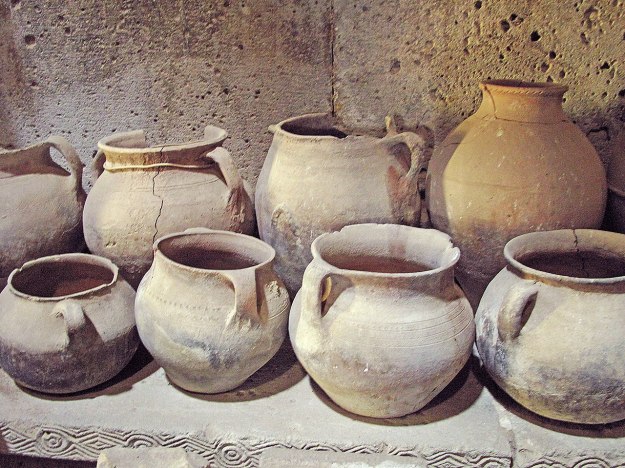
Cracked pots, Picture taken by Enric from the Monestary of Sanahin, Armenia shared under creative commons 4.0

Judges 2:1-5 The Messenger of God

1 Now the angel[1] of the LORD went up from Gilgal to Bochim, and said, “I brought you up from Egypt, and brought you into the land that I had promised to your ancestors. I said, ‘I will never break my covenant with you. 2 For your part, do not make a covenant with the inhabitants of this land; tear down their altars.’ But you have not obeyed my command. See what you have done! 3 So now I say, I will not drive them out before you; but they shall become adversaries  to you, and their gods shall be a snare to you.” 4 When the angel of the LORD spoke these words to all the Israelites, the people lifted up their voices and wept. 5 So they named that place Bochim, and there they sacrificed to the LORD.

The book of Judges begins with Israel inquiring of God, “who will go up?” but in the aftermath of Israel’s failure to expel the inhabitants of the land now a messenger of God “goes up” to confront Israel. The messenger can be read as a prophet or an angelic messenger, but in either case they speak for the God of Israel. This is the first of three times in Judges that the LORD will either send a messenger or directly confront Israel with their unfaithfulness.[2] The location that the ‘messenger’ goes up from is important, even though it is causally dropped into the opening verse. Gilgal is near Jericho. It is where the Israelites celebrate Passover for the first time in the promised land (Joshua 5: 10-12) but it is also where Joshua meets the commander of the army of the LORD. (Joshua 5: 13-15) It is possible that Judges intends us to hear this messenger as the same commander of the army of the LORD who was neither ‘one of us or one of our adversaries’ but who, at the LORD’s command, had come. Previously this ‘man’ was sent by God to go up against the Canaanites, now a ‘messenger’ goes up against the Israelites to confront them with their failure to maintain the covenant their God established with them.

This messenger speaks with the authority and voice of God. God promised to never break the covenant God made with the people, but the people have failed to uphold their side of the covenant by entering into covenants with the people of the land. The LORD their God is faithful but will not be taken for granted and the consequence of their disobedience is the discontinuation of God’s assistance in driving out the remaining inhabitants of the land. Canaan will not become a new Eden: a land of milk and honey free of temptations. Instead, “Canaan will be for Israel a land like any other, with other nations, other cultures, other values, and other gods constantly gnawing at Israel’s heart and allegiances.” (NIB II: 748) The vision of what could have been has been shattered by the broken covenant. Judges accepts this judgment as justified but also a cause for weeping and as the people offer God sacrifices they name the place ‘weepers.’

Judges is a book of weeping. Jephtah’s daughter will weep over the life she will lose to her father’s rash promise. (11: 37-38) Samson’s wife will weep because she is caught in a broken world where she is caught between her people and her husband. (Judges 14: 16-17) But the book ends with the people of Israel weeping to God at Bethel (20:23, 26; 21:2) over the brokenness of the people that ends with the near extermination of the tribe of Benjamin in response to the wickedness they exhibit. It is likely that Bochim is Bethel, and that the place where the Israelites weep at the beginning of the story of Judges becomes the place where the story ends in tears. The people can lament the covenant that they have not fulfilled, but the book of Judges also turns upon the faithfulness of God to this people even in the midst of their unfaithfulness. In this generation still knows the actions of God to bring them out of Egypt and into the land. Future generations will forget their story and their identity, and yet God will continue to hear and respond to their oppression.

Judges 2: 6-23 The Pernicious Cycle

6 When Joshua dismissed the people, the Israelites all went to their own inheritances to take possession of the land. 7 The people worshiped the LORD all the days of Joshua, and all the days of the elders who outlived Joshua, who had seen all the great work that the LORD had done for Israel. 8 Joshua son of Nun, the servant of the LORD, died at the age of one hundred ten years. 9 So they buried him within the bounds of his inheritance in Timnath-heres, in the hill country of Ephraim, north of Mount Gaash. 10 Moreover, that whole generation was gathered to their ancestors, and another generation grew up after them, who did not know the LORD or the work that he had done for Israel.

11 Then the Israelites did what was evil in the sight of the LORD and worshiped the Baals; 12 and they abandoned the LORD, the God of their ancestors, who had brought them out of the land of Egypt; they followed other gods, from among the gods of the peoples who were all around them, and bowed down to them; and they provoked the LORD to anger. 13 They abandoned the LORD, and worshiped Baal and the Astartes. 14 So the anger of the LORD was kindled against Israel, and he gave them over to plunderers who plundered them, and he sold them into the power of their enemies all around, so that they could no longer withstand their enemies. 15 Whenever they marched out, the hand of the LORD was against them to bring misfortune, as the LORD had warned them and sworn to them; and they were in great distress.

16 Then the LORD raised up judges, who delivered them out of the power of those who plundered them. 17 Yet they did not listen even to their judges; for they lusted after other gods and bowed down to them. They soon turned aside from the way in which their ancestors had walked, who had obeyed the commandments of the LORD; they did not follow their example. 18 Whenever the LORD raised up judges for them, the LORD was with the judge, and he delivered them from the hand of their enemies all the days of the judge; for the LORD would be moved to pity by their groaning because of those who persecuted and oppressed them. 19 But whenever the judge died, they would relapse and behave worse than their ancestors, following other gods, worshiping them and bowing down to them. They would not drop any of their practices or their stubborn ways. 20 So the anger of the LORD was kindled against Israel; and he said, “Because this people have transgressed my covenant that I commanded their ancestors, and have not obeyed my voice, 21 I will no longer drive out before them any of the nations that Joshua left when he died.” 22 In order to test Israel, whether or not they would take care to walk in the way of the LORD as their ancestors did, 23 the LORD had left those nations, not driving them out at once, and had not handed them over to Joshua.

Before beginning the narrative of the judges that would be God’s response to the cries of the people, the book of Judges look at the sweep of time from the ending of Joshua’s leadership in the initial conquest of the promised land through the duration of the book. We are introduced to the pernicious cycle which will play out continually throughout the book of Judges. In the absence of a charismatic leader like Joshua it only takes one generation for the people to adopt the gods and the practices of the nations that surround them. The cycle begins when the generation that occupied the land were unable to hand on a practice of faith to the generation that came after them, and now we have a generation that does not know the LORD the God of Israel or the work that God did for them. In the absence of the worship of the LORD and the practice of the law the people adopt the practices of the nations around them and worship their gods.

This short preparation for the narration of the story of the judges gives us an insight into the character of the LORD the God of Israel. The LORD will not be taken for granted. The expectation of the LORD the God of Israel is that the people is to ‘have no other gods before me.’ This God of Israel is ‘a jealous God’ (Exodus 20: 3-6) who desires to show steadfast love for a thousand generations, but in the absence of fidelity will punish the iniquity of the people for several generations. We see this characteristic of God which is spelled out in the first commandment given narrative form when the people abandon God provoking God to anger and God both removes God’s protection (gave them over to plunders who plundered them and sold them into the power of their enemies) but also actively resists them (whenever they marched out the hand of the LORD was against them). Yet, the LORD is a God who is moved to pity and continues to have compassion on the people. The God of Israel is, throughout the Hebrew Scriptures, a God who hears the groaning of the people in their oppression and a God who feels compelled to provide a way that the people can find relief from their oppression. Yet the actions of the judges also fail to provide for a sustainable practice of faith and the book of Judges narrates a pernicious pattern of unfaithfulness and a spiral into a dark period of decline where the identity and continuation of Israel is under threat from external groups like the Canaanites and the Philistines, but also from the tribes failure to adopt the practices that were supposed to distinguish them from the nations around them.

Baal with a Thunderbolt (15th-13th century BC) found in the ancient city of Ugarit Public Domain, https://commons.wikimedia.org/w/index.php?curid=931147

The Baals and the Astartes apparently provided an attractive alternative to the monotheistic  and covenant formed practices demanded by the LORD the God of Israel. Although we do have some archeological evidence that show Baal as a god of storms and Ashtoret as a goddess of fertility, it is important to note that both are denoted as plurals and Baal is often used in conjunction with another name and is used as a common noun like ‘god’ or ‘lord.’ This pluralistic Canaanite culture probably worshipped several local storm and fertility related ‘gods’ which were worshipped in various ways among the Canaanite people. In a community that raised grain, crops, and livestock these local gods were probably associated with local planting and harvesting practices. The practice of a monotheistic worship of an imageless God who not only expected worship but also obedience throughout one’s life was a strong contrast to the manner in which most ancient religions viewed their interactions with their gods. The people of Israel may have viewed the engagement with these practices pragmatically as appealing to multiple gods to attempt to secure a good harvest and good animal husbandry, but the LORD the God of Israel was not willing to be one among a pantheon of gods.

The failure of the tribes and families of Israel to maintain their identity and faithfulness to the God of Israel in the presence of other people who lived and worshipped differently illustrates the fragility of the community without leadership to unite them in their practices. The judges will be able to temporarily end the turmoil of the people under the oppression of the nations or to bridge the conflict between the tribes and people but they are unable to create within the people a way of life that is nurtured and nourished by their worship or the LORD. Instead of the people of Israel being an alternative to the practices of Egypt or Canaan, the book of Judges portrays them quickly conforming to the local practices including adopting the worship of the gods of the land of the people they were supposed to displace.

[1] The Hebrew here is mal’ak-Yahweh which is literally ‘the messenger of The LORD.’ The messenger could be angelic or human. Most English versions assume the messenger is an angel because of the association with Gilgal discussed above.

[2] Judges 6: 7-10 and 10:10-16

Psalm 50 Recalled to the Covenantal Life

The Temple by Radojavor@deviantart.com

Psalm 50

<A Psalm of Asaph.>
1The mighty one, God the LORD, speaks and summons the earth from the rising of the sun to its setting.
2 Out of Zion, the perfection of beauty, God shines forth.
3 Our God comes and does not keep silence, before him is a devouring fire, and a mighty tempest all around him.
4 He calls to the heavens above and to the earth, that he may judge his people:
5 “Gather to me my faithful ones, who made a covenant with me by sacrifice!”
6 The heavens declare his righteousness, for God himself is judge. Selah
7 “Hear, O my people, and I will speak, O Israel, I will testify against you. I am God, your God.
8 Not for your sacrifices do I rebuke you; your burnt offerings are continually before me.
9 I will not accept a bull from your house, or goats from your folds.
10 For every wild animal of the forest is mine, the cattle on a thousand hills.
11 I know all the birds of the air, and all that moves in the field is mine.
12 “If I were hungry, I would not tell you, for the world and all that is in it is mine.
13 Do I eat the flesh of bulls, or drink the blood of goats?
14 Offer to God a sacrifice of thanksgiving, and pay your vows to the Most High.
15 Call on me in the day of trouble; I will deliver you, and you shall glorify me.”
16 But to the wicked God says: “What right have you to recite my statutes, or take my covenant on your lips?
17 For you hate discipline, and you cast my words behind you.
18 You make friends with a thief when you see one, and you keep company with adulterers.
19 “You give your mouth free rein for evil, and your tongue frames deceit.
20 You sit and speak against your kin; you slander your own mother’s child.
21 These things you have done and I have been silent; you thought that I was one just like yourself. But now I rebuke you, and lay the charge before you.
22 “Mark this, then, you who forget God, or I will tear you apart, and there will be no one to deliver.
23 Those who bring thanksgiving as their sacrifice honor me; to those who go the right way I will show the salvation of God.”

There is a lot of debate among scholars as to the original use of this psalm: whether it was a liturgy of covenant renewal or the words of a priest in a sermon but ultimately the original setting has faded far into the background and what remains is a psalm which lifts up a challenge to live one’s life according to the vision of God’s covenant. The book of Deuteronomy was a challenge for the people of God to live according to the covenant and commands of the God of Israel and the prophets frequently exhorted people to reorient their lives around the covenant. This Psalm, in concert with several of the prophets, places the worship of the LORD conducted in the temple in its proper perspective. The sacrificial and religious actions of the temple are not enough to appease the God of Israel, this God expects the people’s lives and their society to be ordered around God’s covenantal vision.

The psalm begins by preparing the hearer to listen to the words that God will speak through the speaker, most likely a priest addressing the community. Psalm 50 is the first psalm attributed to Asaph who is recorded as a Levitical singer in the time of King Solomon (2 Chronicles 11-13).  Asaph begins by declaring the power and might of the LORD whose voice covers the breadth of the day, whose words are preceded by fire and a mighty tempest and calls on heaven and earth so that God may judge God’s people. While there are some thematic parallels to the speaking of God to Elijah at Mount Horeb where the great wind, earthquake and fire proceed the voice of God; this is not the voice of God which comes to Elijah in the sheer silence (1 Kings 19: 11-18) but instead this is the voice of God going out before the world to testify before not only God’s people but all of creation. The people of God are placed into a conversation which the whole world can overhear and judge them by as they are gathered in Zion to hear what God will speak.

Covenant making in the bible is a serious business which took place in the context of sacrificing an animal. The covenant that God makes with Abram (Abraham) in Genesis 17 is probably the best-known example of a covenant making ceremony where the animals are cut open and the parties (God and Abram) pass between the portions of the animals obligating themselves to one another. Therefore, the phrase translated ‘made a covenant’ is literally ‘cut a covenant.’ Earlier in the psalms we have seen times where the psalmist has testified that God needs to act to keep the covenant but here the focus is on the people needing to do their part to fulfill the covenant. The covenant is not about ritual worship or sacrifices but instead is about the way of life that God expects the people to embrace- a way of justice to others and faithfulness to God.

These words were probably spoken in the context of worship, but worship is not enough. In many ancient cultures worship and sacrifice were to appease or entice the god being worshipped to grant favor to the worshippers. The God of Israel has different expectations. God will not be bribed by sacrifice or be satisfied by attendance in worship. The words of the Apostle Paul echo the content here when he appeals to the church in Rome:

I appeal to you therefore, brothers and sisters, by the mercies of God, to present your bodies as a living sacrifice, holy and acceptable to God, which is your spiritual worship. Do not be conformed to this world, but be transformed by the renewing of your minds, so that you may discern what is the will of God—what is good and acceptable and perfect. Romans 12: 1-2

As master of all creation, the LORD has no need of any animal for food. God is not reliant upon the faithful ones for nourishment or life but instead is the provider of all things. What God desires is a transformed life and society which could ultimately renew the world. The people are commended to come to God in thanksgiving and to uphold their vows and the covenant and in return God will deliver and provide for them.

Knowing the right words to recite or knowing the content of the statutes, commandments and the covenant are not enough. One can worship properly and live as the wicked. The way of the wise is the way of God’s discipline. One’s company is indicative of the type of actions a person will commit and one’s words can cause deep harm to brothers and sisters. One’s words, one’s deeds and one’s associations matter in life. The wicked one may have avoided judgment and may have, by their worship and sacrifices, masqueraded as one of the righteous but God promises an end to God’s silence and inaction. To make a covenant with God and to fail to live in accordance with that covenant is viewed as a matter of life and death. There is no one to deliver the wicked from God’s words and justice. Conversely there is nothing that can separate the righteous ones from the salvation of God.


Psalm 44 Demanding a Fulfillment of God’s Covenant Promises

Love is Not a Victory March by Marie -Esther@deviantart.com

Psalm 44

<To the leader. Of the Korahites. A Maskil.>
1 We have heard with our ears, O God, our ancestors have told us,
what deeds you performed in their days, in the days of old:
2 you with your own hand drove out the nations, but them you planted;
you afflicted the peoples, but them you set free;
3 for not by their own sword did they win the land, nor did their own arm give them victory;
but your right hand, and your arm, and the light of your countenance, for you delighted in them.
4 You are my King and my God; you command victories for Jacob.
5 Through you we push down our foes; through your name we tread down our assailants.
6 For not in my bow do I trust, nor can my sword save me.
7 But you have saved us from our foes, and have put to confusion those who hate us.
8 In God we have boasted continually, and we will give thanks to your name forever. Selah
9 Yet you have rejected us and abased us, and have not gone out with our armies.
10 You made us turn back from the foe, and our enemies have gotten spoil.
11 You have made us like sheep for slaughter, and have scattered us among the nations.
12 You have sold your people for a trifle, demanding no high price for them.
13 You have made us the taunt of our neighbors, the derision and scorn of those around us.
14 You have made us a byword among the nations, a laughingstock among the peoples.
15 All day long my disgrace is before me, and shame has covered my face
16 at the words of the taunters and revilers, at the sight of the enemy and the avenger.
17 All this has come upon us, yet we have not forgotten you, or been false to your covenant.
18 Our heart has not turned back, nor have our steps departed from your way,
19 yet you have broken us in the haunt of jackals, and covered us with deep darkness.
20 If we had forgotten the name of our God, or spread out our hands to a strange god,
21 would not God discover this? For he knows the secrets of the heart.
22 Because of you we are being killed all day long, and accounted as sheep for the slaughter.
23 Rouse yourself! Why do you sleep, O Lord? Awake, do not cast us off forever!
24 Why do you hide your face? Why do you forget our affliction and oppression?
25 For we sink down to the dust; our bodies cling to the ground.
26 Rise up, come to our help. Redeem us for the sake of your steadfast love.

Psalm 44 is an audacious psalm of a community that dares to articulate their disappointment with God’s perceived faithfulness. The psalm moves sequentially from the plural voice of the speaking community to the singular voice of a leader in a responsive plea as we move through the psalm. The community remembers the past, the stories they heard of how God did act in powerful ways in the days of their ancestors and contrasts the promises of their ancestors with their experience of God’s inattention to the covenant God made with the people. The people, amid their crisis, have expected more of God in the present and boldly demand more of God for the future.

Working through books like the Psalms and Jeremiah have made me realize how impoverished much Christian spirituality is because of our unfamiliarity with the protests of the prophets and the laments of the psalmists. Our Jewish ancestors and contemporaries in the faith tend to speak more openly in protest to God when unjust suffering is felt by the individual or by the nation. The Hebrew scriptures have the entire book of Job which wrestles with, but never truly answers, the question of unjust suffering. The faithful need a way to express their anger, disappointment and perplexity when the unfairness of the world causes the faithful to suffer when they have done nothing to merit that suffering. They need to trust that God can hear and will act on these audacious cries of the community.

As I was reflecting on this Psalm I was reminded of the powerful and painful words of Zvi Kolitz’s fictional Jewish man dying in the Warsaw Ghetto uprising in Yosl Rakover Talks to God:

I die at peace, but not pacified, conquered and beaten but not enslaved, bitter but not disappointed, a believer but not a supplicant, a lover of God but not His blind Amen-sayer.

I have followed Him, even when he pushed me away. I have obeyed his commandments, even when He scourged me for it. I have loved him, I have been in love with Him and remained so, even when He made me lower than dust, tormented me to death, abandoned me to shame and mockery…

Here, then, are my last words to You, my angry God: None of this will avail you in the least! You have done everything to make me lose my faith in You, to make me cease to believe in You. But I die exactly as I lived, an unshakable [sic] believer in You. (Davis, 2001, p. 134)

In this psalm the Jewish ancestors, who handed on their tradition and faith to Zvi Kolitz, have continued to believe and trust in God when God appears to have abandoned them to shame and mockery. The psalmist can love God but is not pacified and will not be God’s blind amen speaker. They call upon the traditions and stories of their people, the resilience of their faith and their covenant with God and demand that God be the God that the covenant promised.

The first three verses of the psalm are spoken in the assembled voice of a community demonstrating that the actions of God in the past have been handed on from generation to generation to the present community. The specific memory recalled is the memory of the book of Joshua when the people of Israel is brought into the promised land by the strength of God’s action rather than their own military prowess. God is remembered as the one who uprooted their enemies and planted them in a land that they now consider their home. God acted on their behalf and against their enemies. In the fourth verse an individual speaks of their allegiance to God and their reliance upon the strength of God. In verse five the community responds that it is through God’s power that they can triumph over their foes and adversaries. Verse six returns to the voice of an individual stating that their own weapons of war cannot deliver them. Verses seven and eight conclude this liturgical back and forth in the voice of the people stating that God has saved them, confused those who hate them and in response they have boasted and given thanks. The first eight verses echo with the sounds of remembrance, praise and thanks but something has changed in the community’s life that will reverberate in the remaining two thirds of the psalm. Something has turned the community that boasts in God and gives thanks into a community that will accuse God.

Yet becomes the pivot point of the psalm. In verse nine we abruptly pivot from adoration to abandonment. God was the one who was trustworthy in the past for the ancestors of the psalmist, but God seems to have left the people on their own in their current crisis. In a conversation when you have a string of compliments followed by a ‘but’ or in this case a ‘yet’ everything before recedes into the background. In the psalm the ‘yet’ allows the action of God for God’s people in the past to recede from view as the current experience of rejection and abandonment comes forward to occupy the central position in the community of the speaker. The present has overwhelmed the past. The experience of God’s absence at this critical time in the community’s life highlights several difficult questions.

Rabbinic tradition links Psalm 44 to the time of the persecutions of Antiochus IV Epiphanes, who reigned as a part of the Seleucid Empire between 168 and 164 BCE. (Nancy deClaisse-Walford, 2014, p. 409) If this is the case it would make it one of the later pieces of the Hebrew Scriptures, written in a similar time to the book of Daniel in most scholars estimation. The reason this time period would be significant in the story of the people of Jerusalem is that it also marks one of the points when a foreign empire would attempt to disrupt the worship of the God of Israel and force the Jewish people to conform to the Hellenistic beliefs and practices of the empire. Those who remained faithful were subject to persecution or execution as Antiochus IV Epiphanes attempted use military force to enforce conformity. The Jewish uprising in 167 or 168 BCE would eventually be successful allowing the reestablishment of the temple and a brief period of independence for the Judean people. The rededication of the temple after this revolt is celebrated in Hanukkah each year and is told in the narratives of 1 and 2 Maccabees, which is a part of the apocrypha for many Christians.

Whether the situation in the psalm refers concretely to the persecution under Antiochus IV or another situation of crisis it brings the community to the point where they wrestle with the perceived absence of God in a critical situation. The psalm moves beyond lament and into accusation. As Walter Brueggemann and William Bellinger, Jr. can state insightfully: “Verses 9-12 describe the defeat of Israel with a series of “you” statements that fix the blame singularly on YHWH, from whom better had been expected.” (Brueggeman, 2014, pp. 209-210) The accusations are told in terms of a military defeat with the language of plunder, in the agricultural language of sheep led to slaughter, in the language of the marketplace where the people are sold for a small price showing their insignificance to their master, and finally in the language of honor where the people’s honor is mocked by their neighbors and they have become a byword, a pithy example, of shame among the nations. In this psalm their God has failed to be the warrior they could trust in, the good shepherd who would lead them faithfully, the God who held them as a treasured possession, and the one who by honoring the name of God would allow them to be honored among the nations. At this critical moment God has failed to live up to the terms of the promises God made to the people. The pain and disappointment of the moment has transformed into a “moral claim against God.” (Brueggeman, 2014, p. 211)

Even though it appears that God has broken faith with the people the people have not broken faith with God. As the poet and their community wrestle with why they are suffering unjustly they look and examine if they have turned away from God in some manner and their answer is ‘No.’ They have not forgotten, they have remembered. The psalmist is confident that they have remained faithful to the covenant that God made with them and so they utter these words in protest at the way God appears to have defaulted on the covenant. Yet, even during the accusations and disappointment the psalmist knows that the resolution relies upon God’s action. They demand God rouse, awake, cease hiding, remember and redeem. They have been sold yet they can be bought again, they have experienced death, but they trust that God can bring life, they have experienced defeat but if God again fights for them, they will experience victory. They call upon the hesed (steadfast love) of God as their only hope of redemption.

This experience of isolation is brought into one of the great expressions of God’s unwavering faithfulness when the twenty second verse of this psalm is placed in the middle of the Paul’s triumphal statement that nothing will separate us from the love of God in Christ Jesus our Lord in Romans 8: 31-39. Paul argues to the early Christians that even when they experience situations where they may perceive their own weakness and their distance from God that God’s steadfast love, experienced in Christ, will not be broken. One of the gifts of having both Psalm 44 and Romans 8 is being able to hold faith and experience in tension. There may be times where it feels like God is absent or has failed to uphold God’s promises to the individual or the community and yet the faith insists that God’s steadfast love will ultimately overcome the separation. If this is the psalm of a community that endured the persecution of Antiochus Epiphanies IV it would also be the psalm of a community that would see that tyrants reign end and their redemption come. They saw God’s redemption and could see their circumstances transformed from dishonor to honor. Yet, not every situation has a happy ending and there may be some within the people of faith who can utter at the end the fictional words quoted above:

You have done everything to make me lose my faith in You, to make me cease to believe in You. But I die exactly as I lived, an unshakable [sic] believer in You

One of the gifts of the scriptures we have is that they are broad enough to accommodate the various experiences of the faithful ones and give language for their prayers in the times of isolation and celebration. Psalm forty-four is a prayer from the place of isolation that boldly demands that God uphold God’s promises and has the courage to accuse God based upon the faithful one’s experience of suffering.

Exodus 24: Sealing the Covenant and Approaching God at Sinai

David Roberts, Mount Sinai (1839)

Exodus 24: 1-8 Sealing the Covenant

Then he said to Moses, “Come up to the LORD, you and Aaron, Nadab, and Abihu, and seventy of the elders of Israel, and worship at a distance. 2 Moses alone shall come near the LORD; but the others shall not come near, and the people shall not come up with him.”

 3 Moses came and told the people all the words of the LORD and all the ordinances; and all the people answered with one voice, and said, “All the words that the LORD has spoken we will do.” 4 And Moses wrote down all the words of the LORD. He rose early in the morning, and built an altar at the foot of the mountain, and set up twelve pillars, corresponding to the twelve tribes of Israel. 5 He sent young men of the people of Israel, who offered burnt offerings and sacrificed oxen as offerings of well-being to the LORD. 6 Moses took half of the blood and put it in basins, and half of the blood he dashed against the altar. 7 Then he took the book of the covenant, and read it in the hearing of the people; and they said, “All that the LORD has spoken we will do, and we will be obedient.” 8 Moses took the blood and dashed it on the people, and said, “See the blood of the covenant that the LORD has made with you in accordance with all these words.”

Moses has taken the words of the LORD and the ordinances, presumably the content of the previous four chapters, and returned to the people to communicate and teach them these commandments and laws. The people again answer that “All the words the LORD has spoken we will do.” But now there is a liturgical sealing of the acceptance of the words of God. The covenant is cut, to use the Hebrew phrasing, and these pacts or covenants were often sealed by sacrifice or blood of some type. Genesis 15 is an example of this type of ceremony where God makes a covenant with Abraham and both pass through the pieces of the sacrificed animals, passing through the blood and in effect saying that faithfulness to the covenant is a deadly serious business. Here the blood of the oxen is sprinkled on the people and dashed against the altar binding both parties.

The place of sacrifice is very simple with an altar and twelve pillars. The pillars here correspond to the people rather than some representation of God, the prohibition against forming images of God holds here, although in later times these places with pillars will come to represent the idolatry of the people. Here an altar or earth or uncut stones (see Exodus 20: 22-26) along with the pillars at the base of the Mount Sinai becomes the only things necessary on this holy place. The mountain itself is a holy space, a place where God has come down to dwell among the people. Much of the rest of the book of Exodus will be concerned with the construction of a mobile place that God can come down to dwell with the people, but here, like when God speaks to Moses in chapter three, the people are on holy ground.

The blood of the covenant seals the relationship between the people and their God. They have now received some initial guidance from God on the type of community they are to construct and how they are to live into their identity as a ‘treasured possession, a priestly kingdom and a holy nation.’ (see Exodus 19: 5-6) They are now marked and set aside for their calling. Within Christianity this type of liturgical language of covenant sealing gets echoes both in relation to baptism and in communion. The wine in communion is the ‘blood of the new covenant’ and baptism is a point where the individual is ‘baptized into the death of Christ’ so that they might be dead to sin and alive to Christ.

Jean-Leon Gerome, Moses on Mount Sinai (1895-1900)

Exodus 24: 9-18 Meeting with the LORD on the Mountain

 9 Then Moses and Aaron, Nadab, and Abihu, and seventy of the elders of Israel went up, 10 and they saw the God of Israel. Under his feet there was something like a pavement of sapphire stone, like the very heaven for clearness. 11 God1 did not lay his hand on the chief men of the people of Israel; also they beheld God, and they ate and drank.

 12 The LORD said to Moses, “Come up to me on the mountain, and wait there; and I will give you the tablets of stone, with the law and the commandment, which I have written for their instruction.” 13 So Moses set out with his assistant Joshua, and Moses went up into the mountain of God. 14 To the elders he had said, “Wait here for us, until we come to you again; for Aaron and Hur are with you; whoever has a dispute may go to them.”

 15 Then Moses went up on the mountain, and the cloud covered the mountain. 16 The glory of the LORD settled on Mount Sinai, and the cloud covered it for six days; on the seventh day he called to Moses out of the cloud. 17 Now the appearance of the glory of the LORD was like a devouring fire on the top of the mountain in the sight of the people of Israel. 18 Moses entered the cloud, and went up on the mountain. Moses was on the mountain for forty days and forty nights.

We are given multiple views of the theophany on Mount Sinai. There is the perspective of the majority of the people at the base of the mountain which is described in a way that the closest analogy would be a volcano. To the people on the ground the approach of God is terrifying and dangerous, a devouring fire on the top of the mountain. For the seventy elders and the three priests there is the appearance of a dwelling place of God, beautiful in its description and an appearance of God that is only modestly described. There is a physical manifestation of the LORD, whose feet rest upon a pavement of sapphire stones of great clarity and the LORD is described anthropomorphically (using human features even when done metaphorically like when it states God did not lay his hands on the chief men). Yet, unlike in Isaiah 6 or Ezekiel 1 (and even these theophanies are very reticent to discuss the actual appearance of the LORD) there is no description of the LORD. Unlike other religions where there are vivid representations of the gods and goddesses, Judaism’s aniconic relationship with their God also extends to descriptions of God’s appearance with words. Yet, within the book of Exodus, there are multiple times where there is a tangible presence of God, even if it is not something to be described or even fully seen (as in Exodus 33). Finally, there is the experience of Moses who will spend extended periods of time in God’s presence.

The scene also sets the stage for the drama that will come in Exodus 32. Moses departs up the mountain for forty days and forty nights in the cloud with the LORD. The people remain at the base of the mountain waiting on Moses and Aaron and Hur are left to hear the disputes of the people. The next several chapters will have God describe to Moses the vision for the tabernacle where God can come down to dwell with the people. Yet, during this absence the people will come to Aaron and move away from God’s command not to create an image of God by creating the golden calf which they will worship. Yet, for a time we get to ascend with Moses into the cloud and see the vision of the tabernacle and enter into this time away from the people and with God.

Deuteronomy 30 – Hope Beyond the Curse

Water original image from splashhttp://www.ripples.ca/

Water original image from splashhttp://www.ripples.ca/


Deuteronomy 30: 1-10 Returning to the LORD

1 When all these things have happened to you, the blessings and the curses that I have set before you, if you call them to mind among all the nations where the LORD your God has driven you, 2 and return to the LORD your God, and you and your children obey him with all your heart and with all your soul, just as I am commanding you today, 3 then the LORD your God will restore your fortunes and have compassion on you, gathering you again from all the peoples among whom the LORD your God has scattered you. 4 Even if you are exiled to the ends of the world, from there the LORD your God will gather you, and from there he will bring you back. 5 The LORD your God will bring you into the land that your ancestors possessed, and you will possess it; he will make you more prosperous and numerous than your ancestors.

 6 Moreover, the LORD your God will circumcise your heart and the heart of your descendants, so that you will love the LORD your God with all your heart and with all your soul, in order that you may live. 7 The LORD your God will put all these curses on your enemies and on the adversaries who took advantage of you. 8 Then you shall again obey the LORD, observing all his commandments that I am commanding you today, 9 and the LORD your God will make you abundantly prosperous in all your undertakings, in the fruit of your body, in the fruit of your livestock, and in the fruit of your soil. For the LORD will again take delight in prospering you, just as he delighted in prospering your ancestors, 10 when you obey the LORD your God by observing his commandments and decrees that are written in this book of the law, because you turn to the LORD your God with all your heart and with all your soul.

Deuteronomy 30 is one of those passages whose images will have a ripple effect in both the prophets, particularly Jeremiah, and later in the words of the apostle Paul. Whenever these words are spoken, they speak to the context of the Babylonian exile where the land, Judean king, and the temple which formed the central parts of the identity of the Jewish people prior to the exile are all lost. It is in the midst of this experience of desolation that the prophetic hope arises, but it is always a hope that is not easily won. It only comes after all the curses have been exhausted, or in the experience of the exile once the nation has been conquered multiple times and not only with the elite being carried off into exile but rather after continued rebellion and failed cheap solutions like those presented by false prophets like Hananiah in Jeremiah 28 which promised a quick and easy end to judgment. There is hope in the midst of what may seem like hopelessness. In exile there is the promise of return and the primary actor is the LORD.

The prophets will spend a lot of ink talking about the return from exile. Isaiah 40-55, Jeremiah 30-33, Ezekiel 36-37 and several of the minor prophets all address this. The poetic and prophetic hope emerges out of this place of desolation and destruction. The promise is again the land and prosperity and this becomes a central image for the people. Their lives and stories are linked to the land, but their prosperity in the land is linked to their ability to live out of the covenant. We are linked back to Deuteronomy 6:5 by the echo of loving the LORD with all of their heart and soul. If the people return to the LORD, then the words of Isaiah echo the sentiment of this passage:

Do not fear, I am with you, I will bring your offspring from the east, and from the west I will gather you; I will say to the north, “Give them up,” and to the south, “Do not withhold; bring my sons from far away and my daughters from the ends of the earth—everyone who is called by my name, whom I created for my glory, whom I formed and made.” Isaiah 43:5-7

The image of circumcision is now used metaphorically in relationship to the heart. Just as the physical act of circumcision became a mark of the covenant for the Jewish people, now the LORD circumcises the heart of the renewed people. In Deuteronomy 10: 16 the people are commanded to circumcise the foreskin of their hearts so that they would no longer be stubborn and would be receptive to the commandments of the LORD. Now in this period of renewal God is the primary actor and the one enabling the people to love the LORD with their heart and soul. In Jeremiah 4:4 this image re-appears in language similar to Deuteronomy 10, in the sense of a warning to turn towards the LORD prior to the experience of exile:

Circumcise yourselves to the LORD, remove the foreskin of your hearts, O people of Judah and inhabitants of Jerusalem, or else my wrath will go out like fire, and burn with no one to quench it, because of the evil of your doings. Jeremiah 4:4

But for the apostle Paul, who has to justify his ministry among the Gentiles before those who expect Gentiles to undergo physical circumcision, he is able to use these passages to reflect his ministry in a different light:

For a person is not a Jew who is one outwardly, nor is true circumcision something external and physical. Rather, a person is a Jew who is one inwardly, and real circumcision is a matter of heart—it is spiritual and not literal. Such a person receive praise not from others but from God. Romans 2: 28f.

The condition of exile, much like the captivity in Egypt, creates the space where the covenant can begin again and God hears the cries of the oppressed people. Just as in the exodus from Egypt, in the return from exile the primary actor will be God. Yet, in this condition where God has acted on behalf of the people, the people still have the obligation to live in obedience to the commands and decrees and that begins with loving and turning to the LORD their God with all their heart and soul.

Deuteronomy 30: 11-20 Obedience is Possible

 11 Surely, this commandment that I am commanding you today is not too hard for you, nor is it too far away. 12 It is not in heaven, that you should say, “Who will go up to heaven for us, and get it for us so that we may hear it and observe it?” 13 Neither is it beyond the sea, that you should say, “Who will cross to the other side of the sea for us, and get it for us so that we may hear it and observe it?” 14 No, the word is very near to you; it is in your mouth and in your heart for you to observe.

 15 See, I have set before you today life and prosperity, death and adversity. 16 If you obey the commandments of the LORD your God that I am commanding you today, by loving the LORD your God, walking in his ways, and observing his commandments, decrees, and ordinances, then you shall live and become numerous, and the LORD your God will bless you in the land that you are entering to possess. 17 But if your heart turns away and you do not hear, but are led astray to bow down to other gods and serve them, 18 I declare to you today that you shall perish; you shall not live long in the land that you are crossing the Jordan to enter and possess. 19 I call heaven and earth to witness against you today that I have set before you life and death, blessings and curses. Choose life so that you and your descendants may live, 20 loving the LORD your God, obeying him, and holding fast to him; for that means life to you and length of days, so that you may live in the land that the LORD swore to give to your ancestors, to Abraham, to Isaac, and to Jacob.

The people to this point in the story have not demonstrated that they have a mind to understand, or eyes to see, or ears to hear as Deuteronomy states in Deuteronomy 29: 4, yet for Deuteronomy obedience is not only possible, it is easily within the people’s reach. The Jewish people were not to view the law as a heavy burden but rather as Psalm 1 can state that for the faithful the law of the LORD is their delight. To live in accordance with commandments, decrees and ordinances is to choose life and to fail to do so is to choose death for the people. The earth, who we have seen at previous points, bears some of the consequences of the disobedience of the people of God is called to witness against them. The people are urged once more to choose life, just as at the end of the book of Joshua they will be charged to choose to serve the LORD (Joshua 24).

The apostle Paul in his letter to the Romans demonstrates how for the followers of Jesus the focus of this obedience changes. In Romans 10: 5-8 now Christ takes the place of this word that is near you and on your hearts.

Moses writes concerning the righteousness that comes from the law, that “the person who does these things will live by them.” But the righteousness that comes from faith says, “Do not say in your heart, ‘Who will ascend into heaven?'” (that is, to bring Christ down) “or ‘Who will descend into the abyss?'” (that is, to bring Christ up from the dead). But what does it say? “The word is near you, on your lips and in your heart” (that is, the word of faith that we proclaim); Romans 10: 5-8

Much as John’s Gospel can refer to Jesus as the Word of God (John 1) or Matthew’s Gospel can refer as Jesus as the fulfillment of the Law (Matthew 5: 17) it shows how this concept becomes completely transformed in a Christian worldview. Even though Jesus will echo the greatest commandment being Deuteronomy 6: 4-5 which comes down to loving the LORD with all the heart. These texts become transformed with now Jesus occupying the place of the law, and the righteousness of faith takes the place of the righteousness of the law. It is not surprising that Paul was frequently in trouble with other Jewish people over a transformation that affects such a central thing as the law, and that is probably why he spends much of Romans (in addition to Galatians) trying to re-interpret the scriptures in light of his experience of the risen Christ.

Deuteronomy 29: A Final Address

Deuteronomy 29: 1-9 Restating the Covenant

James Tissot, Moses (1896-1902)

James Tissot, Moses (1896-1902)

1 These are the words of the covenant that the LORD commanded Moses to make with the Israelites in the land of Moab, in addition to the covenant that he had made with them at Horeb.

                2 Moses summoned all Israel and said to them: You have seen all that the LORD did before your eyes in the land of Egypt, to Pharaoh and to all his servants and to all his land, 3 the great trials that your eyes saw, the signs, and those great wonders. 4 But to this day the LORD has not given you a mind to understand, or eyes to see, or ears to hear. 5 I have led you forty years in the wilderness. The clothes on your back have not worn out, and the sandals on your feet have not worn out; 6 you have not eaten bread, and you have not drunk wine or strong drink– so that you may know that I am the LORD your God. 7 When you came to this place, King Sihon of Heshbon and King Og of Bashan came out against us for battle, but we defeated them. 8 We took their land and gave it as an inheritance to the Reubenites, the Gadites, and the half-tribe of Manasseh. 9 Therefore diligently observe the words of this covenant, in order that you may succeed in everything that you do.


In a world of legal contracts where a signature is binding until such time as a legal contract that supersedes the previous contract is agreed upon it seems strange for us to see the need to go back within the same document multiple times to the same story and to restate the covenant. Yet, the way that Deuteronomy is shaped owes to its oral structure and possible origination. Just as in Deuteronomy 6 with its continual recitation of the central statement of faith when a person enters the house or leaves, when they rise up or when they lay down, so the re-iteration of the covenant multiple times serves to reinforce its binding nature upon the people. Chapter 29 begins what is often referred to as the third address of Moses and it begins by restating in a concise way the narrative laid out in Deuteronomy 1-3 as well as reminding them, as in Deuteronomy 8 of how the LORD provided for them on their journey to this point.

The covenant is always connected with the narrative. The people are the people of God because of the LORD’s action to bring them out of Egypt, through the wilderness and to the promised land. The Exodus becomes the central story of who they are as a people and their life flows out of the LORD’s provision for them. The great fear of Deuteronomy is that in the midst of abundance the people will become complacent. Yet, the people always lives in response to God’s action to free them from their captivity. Their life flows from the ways in which they embrace or turn away from the therefore of God’s action to give them freedom. As we have seen in the previous chapters the people have the ability to choose blessing or curse, and the fear is that they will choose by their actions the curse.

Within the prophetic imagination of Israel, the people will have to wrestle with their inability to remain faithful in the covenant. Is free will only a partial option, do they lack eyes that see, ears that hear and minds that understand? Will they become the embodiment of the people Isaiah is sent to in Isaiah 6:

Keep listening, but do not comprehend; keep looking, but do not understand.’ Make the mind of this people dull, and stop their ears, and shut their eyes, so that they may not look with their eyes, and listen with their ears, and comprehend with their minds, and turn and be healed.” Isaiah 6: 9-10

Yet as we will see in Deuteronomy 30, even with the inability of the people to remain faithful the LORD will, even though it is painful, remain in a relationship with them. There will be a place for those with eyes to see and ears to hear and a trust that eventually that the LORD will write the law on their hearts and they will all know the LORD (Jeremiah 31: 33)

Deuteronomy 29: 10-29 The Danger of Complacency

 10 You stand assembled today, all of you, before the LORD your God– the leaders of your tribes, your elders, and your officials, all the men of Israel, 11 your children, your women, and the aliens who are in your camp, both those who cut your wood and those who draw your water– 12 to enter into the covenant of the LORD your God, sworn by an oath, which the LORD your God is making with you today; 13 in order that he may establish you today as his people, and that he may be your God, as he promised you and as he swore to your ancestors, to Abraham, to Isaac, and to Jacob. 14 I am making this covenant, sworn by an oath, not only with you who stand here with us today before the LORD our God,

 15 but also with those who are not here with us today. 16 You know how we lived in the land of Egypt, and how we came through the midst of the nations through which you passed. 17 You have seen their detestable things, the filthy idols of wood and stone, of silver and gold, that were among them. 18 It may be that there is among you a man or woman, or a family or tribe, whose heart is already turning away from the LORD our God to serve the gods of those nations. It may be that there is among you a root sprouting poisonous and bitter growth. 19 All who hear the words of this oath and bless themselves, thinking in their hearts, “We are safe even though we go our own stubborn ways” (thus bringing disaster on moist and dry alike)– 20 the LORD will be unwilling to pardon them, for the LORD’s anger and passion will smoke against them. All the curses written in this book will descend on them, and the LORD will blot out their names from under heaven. 21 The LORD will single them out from all the tribes of Israel for calamity, in accordance with all the curses of the covenant written in this book of the law. 22 The next generation, your children who rise up after you, as well as the foreigner who comes from a distant country, will see the devastation of that land and the afflictions with which the LORD has afflicted it– 23 all its soil burned out by sulfur and salt, nothing planted, nothing sprouting, unable to support any vegetation, like the destruction of Sodom and Gomorrah, Admah and Zeboiim, which the LORD destroyed in his fierce anger– 24 they and indeed all the nations will wonder, “Why has the LORD done thus to this land? What caused this great display of anger?” 25 They will conclude, “It is because they abandoned the covenant of the LORD, the God of their ancestors, which he made with them when he brought them out of the land of Egypt. 26 They turned and served other gods, worshiping them, gods whom they had not known and whom he had not allotted to them; 27 so the anger of the LORD was kindled against that land, bringing on it every curse written in this book. 28 The LORD uprooted them from their land in anger, fury, and great wrath, and cast them into another land, as is now the case.” 29 The secret things belong to the LORD our God, but the revealed things belong to us and to our children forever, to observe all the words of this law.


After the previous chapter it may seem like overkill to return again to the possibility of disobedience, yet this is a pressing concern of Deuteronomy and this is also set up as a later address. As the people reaffirm the covenant there is both consequence, but there is also hope beyond consequence that is to come. In our world where we are hesitant to talk about God’s activity within our lives and within the movements of the world this may seem odd. In Deuteronomy’s world faithfully living out of their covenant identity is the meaning of life and peace and there is the trust that if they are faithful the LORD will provide. Yet, the danger is that they will become complacent or begin to place their trust in other things or gods. The LORD has invested in the people of Israel and for them to turn away rejecting God’s blessings grieves God. If you have read any of my writing on Jeremiah, you would see I approach the wrath in that book from the perspective of a wounded God crying out in pain at the loss of a relationship. Addressing this passage Deanna Thompson makes a similar point:

Amid the anger and fury, however, we also catch glimpses of an expression of rejected and wounded divine love similar to what we see in Hosea when it talks about Israel’s rejection of God. Israel’s disobedience leads to a portrait of God who is not just angry and wrathful but wounded as well. (Thompson, 2014, p. 207f.)

Time and time again Deuteronomy and the prophets of later times will try to speak to a people who do not hear on behalf of a wounded and grieved God.  The people cannot rest upon any special status, on kings or temples or walled cities or land. They are a people whose lives are bound into this covenantal relationship with a God who takes these bonds seriously. They have been given the law and the covenant, they are witnesses of the way the LORD has provided for them and now they live in the therefore. They may not know all the secrets of the universe, but their God has revealed enough for their life of faith as a people.

The other theme that re-emerges here is the way that the people and the land are linked. Much as in Genesis 3: 17-19 where the ground is cursed for the disobedience of Adam, here the land becomes a witness to the people’s unfaithfulness for generations to come. The soil becomes unable to support life and mirroring the lifelessness around Sodom and Gomorrah. Yet, the wrath articulated here in its fierceness seems to not be the first response of their God. The LORD will deal with the anger, woundedness, and rage but will continue to hope for a turn in the midst of the people. Moses is preparing to relinquish his position between the people and their LORD. It may seem like judgment takes a lot of the text of Deuteronomy or that wrath is the primary emotion, but as we will see in the coming chapter love always outlasts any wrath, and that even in desolation there is a way forward. As in Jeremiah there is a hard won hope that emerges out of the broken and exiled people, and here as well there is always the opportunity to return to the LORD their God who is gracious and merciful.