After the long drought of summer turned the fields to faded gold
The rains of fall return to refresh the dried skin of the parched earth
And the tears of the heavens work their healing magic upon the ground
Life briefly returns to the sun baked soils underneath the canopy of color
A flourish of colors adorn the trees and fields as the earth renews its raiment
Greens become mixed with jewels of flowers and the colorful patches of leaves
A season of dirt and dust are washed away by the long awaited water
And the earth emerges from its fall shower renewed and refreshed
Robed in the gold and red of the falling leaves that provide it a covering
As it prepares for the coming chill of the winter that will soon arrive
Deuteronomy 14: Boundary Markers and Celebrations

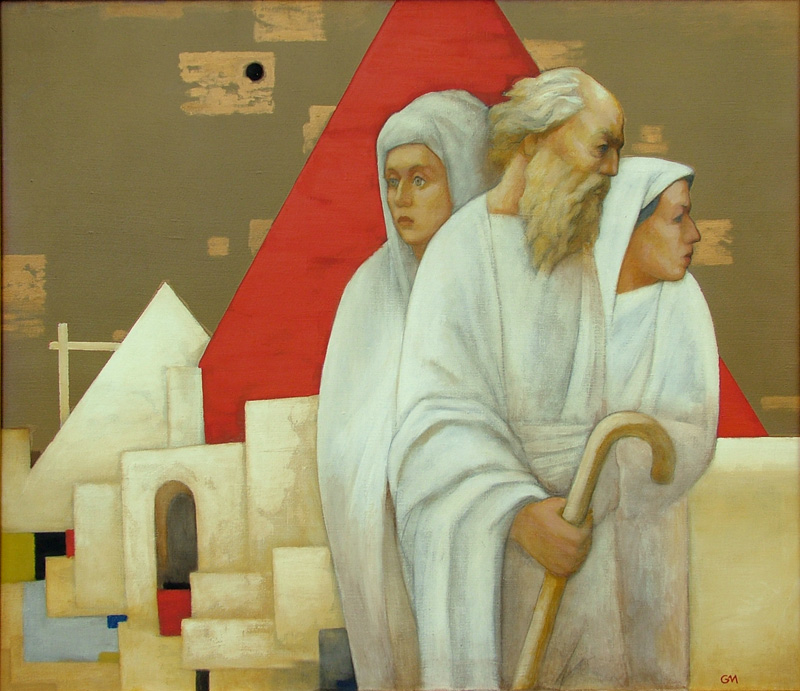
Grigory Mekheev, Exodus (2000) artist shared work under Creative Commons Attribution-Share Alike 3.0
Deuteronomy 14
1 You are children of the LORD your God. You must not lacerate yourselves or shave your forelocks for the dead. 2 For you are a people holy to the LORD your God; it is you the LORD has chosen out of all the peoples on earth to be his people, his treasured possession.
3 You shall not eat any abhorrent thing. 4 These are the animals you may eat: the ox, the sheep, the goat, 5 the deer, the gazelle, the roebuck, the wild goat, the ibex, the antelope, and the mountain-sheep. 6 Any animal that divides the hoof and has the hoof cleft in two, and chews the cud, among the animals, you may eat. 7 Yet of those that chew the cud or have the hoof cleft you shall not eat these: the camel, the hare, and the rock badger, because they chew the cud but do not divide the hoof; they are unclean for you. 8 And the pig, because it divides the hoof but does not chew the cud, is unclean for you. You shall not eat their meat, and you shall not touch their carcasses.
9 Of all that live in water you may eat these: whatever has fins and scales you may eat. 10 And whatever does not have fins and scales you shall not eat; it is unclean for you.
11 You may eat any clean birds. 12 But these are the ones that you shall not eat: the eagle, the vulture, the osprey, 13 the buzzard, the kite, of any kind; 14 every raven of any kind; 15 the ostrich, the nighthawk, the sea gull, the hawk, of any kind; 16 the little owl and the great owl, the water hen 17 and the desert owl, the carrion vulture and the cormorant, 18 the stork, the heron, of any kind; the hoopoe and the bat. 19 And all winged insects are unclean for you; they shall not be eaten. 20 You may eat any clean winged creature.
21 You shall not eat anything that dies of itself; you may give it to aliens residing in your towns for them to eat, or you may sell it to a foreigner. For you are a people holy to the LORD your God.
You shall not boil a kid in its mother’s milk.
22 Set apart a tithe of all the yield of your seed that is brought in yearly from the field. 23 In the presence of the LORD your God, in the place that he will choose as a dwelling for his name, you shall eat the tithe of your grain, your wine, and your oil, as well as the firstlings of your herd and flock, so that you may learn to fear the LORD your God always. 24 But if, when the LORD your God has blessed you, the distance is so great that you are unable to transport it, because the place where the LORD your God will choose to set his name is too far away from you, 25 then you may turn it into money. With the money secure in hand, go to the place that the LORD your God will choose; 26 spend the money for whatever you wish– oxen, sheep, wine, strong drink, or whatever you desire. And you shall eat there in the presence of the LORD your God, you and your household rejoicing together. 27 As for the Levites resident in your towns, do not neglect them, because they have no allotment or inheritance with you.
28 Every third year you shall bring out the full tithe of your produce for that year, and store it within your towns; 29 the Levites, because they have no allotment or inheritance with you, as well as the resident aliens, the orphans, and the widows in your towns, may come and eat their fill so that the LORD your God may bless you in all the work that you undertake.
If we look upon this chapters as merely a set of prohibitions of a couple practices and a lot of animals the people of Israel were not to eat we would miss the point. If we try to come up with rational explanations for why they shouldn’t eat certain things or imagine that the only reason these animals and practices are forbidden is because the Canaanites and other nations around them did it we would also miss the point. For the Israelites these are a part of bearing the identity of being a treasured possession or a people holy to God. As a people who bear the place where God’s name will dwell these practices also become a people whose identity is formed around certain practices that set them apart as holy. Part of being holy for Israel is living out of these practices for no other reason than they have been asked. As the Jewish writer Ruth Sohn can state:
According to Torah, God asks that we abstain from eating certain foods, not because they are unhealthy or intrinsically problematic, but simply as an expression or our devotion…These prohibitions are like the requests of a beloved; we may not understand them, but we are, in essence, asked to follow them purely as an expression of our love. (Thompson, 2014, p. 122f.)
The practices become boundary markers between the people of Israel who are called to be holy in a special way and who are to enjoy a special relationship with the LORD their God and the rest of the people. They are not called to impose these practices on others, in fact even within this section here we see ways in which these allowances can be used for mercy for the outsider, the provision that an animal that has died on its own may be used to feed the aliens residing in their town. It doesn’t mean that these are painless for the people who are living out of them. In a culture where meat was a luxury, as it is in most ancient agrarian communities, the prohibition of certain food sources that may have been readily available would have proved a constant temptation. Yet these eating practices proved to be one of the distinctive marks of Jewish identity for hundreds, even thousands of years. For example much later 2 Maccabees refers to the Jewish struggle against persecution under the Seleucid Empire in the reign of Antiochus IV with a specific reference to diet:
Eleazar, one of the scribes in high position, a man now advanced in age and of noble presence, was being forced to open his mouth to eat swine’s flesh. But he, welcoming death with honor rather than life with pollution, went up to the rack of his own accord, spitting out the flesh, as all ought to have the courage to refuse things that it is not right to taste, even for the natural love of life. (2 Maccabees 6: 18-20)
These practices of what to eat and what not to eat may seem strange to people who are not Jewish and have been a way in which others sought to get the Jewish people to relax their boundaries, yet for many Jewish people the food rules remain in practice in some form today.
The tithe, which is discussed in the final seven verses of the chapter is also a distinctive practice of the people but it is more about celebration than a burdensome requirement. The practice is in a sense a tax and a way to acknowledge the sovereignty of their God, yet God doesn’t need the grain and the wine and the animals. They are to bring them together and to enjoy together in God’s presence the produce of their flocks and fields. To take the ten percent of an accounting of the field and the firstlings of the flock are to be used to celebrate. Acknowledging the spread out nature of the community there is the provision to be able to convert the produce into money and then come and spend the money for whatever the family wants to use to celebrate. Meat in the ancient world would be eaten primarily at celebration times when a large group is gathered because there is no refrigeration to preserve the meat and so it would be an invitation for a large number of people to gather together around an ox that had been slaughtered. God allows for the people to purchase wine and strong drink as a part of the celebration as well. This is not a burdensome practice but rather a joyous one.
Within the celebration is also the provision for the needs of the unsupported ones of the community. The Levites who have been set aside for the operation of the tabernacle or temple need to be provided for so out of every third year’s tithe they are to be taken care of. Those who are the vulnerable of the community are also to be cared for out of this third year tithe: the resident alien, the orphan and the widow. They are to be the beneficiaries of this practice as well. As the claimed ones of God the people are to be the ones claiming responsibility of caring for those no one claims.
Sounds and Syllables
What power lies within the syllables and sounds?
Do they merely describe a reality fully formed?
A mimetic act of the glorification of creation
Reflecting upon a completed picture imperfectly
A flawed simulacrum of what sense can comprehend
Or is there something more in the words?
Do they reflect or recreate?
In these syllables and sounds is there the power of creation?
Do the songs and poetry open up new worlds of possibilities?
Can a statement or the stroke of a pen start a reality?
Can the sounds dance along the chaotic creative waters
Or commands give shape to the formless clay
Or is it something less contained in the words?
Do they reinvent or refract?
And perhaps the answer isn’t in the words at all
For maybe it is the potential of the creation already latent
And words may describe the reality that is already present
Or serve as a key that opens up some preexisting door
Echoing the preordained syllables that resonate among the stars
Copying the creative wisdom that predates the cosmos
And perhaps they are only words and yet, they are words
Resurrecting, retelling, recasting and realizing
Extracting Wisdom
They sat me in a chair today
My wisdom teeth they pulled away
And though my jaw may swollen be
The wisdom it remains with me
For pulling teeth is a painful thing
But extracting wisdom has far more sting
Lying deep within its sheltering host
And to pull it out one creates a ghost
And yet there is another way
To bring wisdom to the light of day
To take the time to lend an ear
As wisdom is shared by mouth to hear
To listen close to stories told
To things once learned, to lessons old
To ask the questions that bring out
The wisdom we cannot live without
Neil White, 2015
Have to have a little fun with the experience.
Banished Monsters
Maybe there was once a time when magic ruled the world
When wizards and witches cast their spells upon their watchers
Where dragons flew beyond the mountains and wild children lived in the forest
Giants and trolls and goblins inhabited the wilderness beyond the safety of town
And brace heroes marched out into the wild lands to defend our boundaries
But no longer, the dragons are gone, the giants of old are dead,
and the children of the forest forgotten
Lost to the fog of some long forgotten time
beyond the shade of our parents’ or our parents parents’ memory
The demons that once dwelled in the wilderness now have only our minds to haunt
And the devils live among us wearing our own skins
For in arming ourselves to conquer the dangerous world of monsters
We became that which we sought to banish, the reflection of our nightmares
For where else will the monster roar if not within the heart of man?
Neil White, 2015
Deuteronomy 13: The Challenge of Exclusivity

Willem de Poorter, ‘De afgoderij van konig Solomo’-Solomon’s decent into idolatry (between 1630 and 1648)
Deuteronomy 13
1 If prophets or those who divine by dreams appear among you and promise you omens or portents, 2 and the omens or the portents declared by them take place, and they say, “Let us follow other gods” (whom you have not known) “and let us serve them,” 3 you must not heed the words of those prophets or those who divine by dreams; for the LORD your God is testing you, to know whether you indeed love the LORD your God with all your heart and soul. 4 The LORD your God you shall follow, him alone you shall fear, his commandments you shall keep, his voice you shall obey, him you shall serve, and to him you shall hold fast. 5 But those prophets or those who divine by dreams shall be put to death for having spoken treason against the LORD your God– who brought you out of the land of Egypt and redeemed you from the house of slavery– to turn you from the way in which the LORD your God commanded you to walk. So you shall purge the evil from your midst.
6 If anyone secretly entices you– even if it is your brother, your father’s son or your mother’s son, or your own son or daughter, or the wife you embrace, or your most intimate friend– saying, “Let us go worship other gods,” whom neither you nor your ancestors have known, 7 any of the gods of the peoples that are around you, whether near you or far away from you, from one end of the earth to the other, 8 you must not yield to or heed any such persons. Show them no pity or compassion and do not shield them. 9 But you shall surely kill them; your own hand shall be first against them to execute them, and afterwards the hand of all the people.10 Stone them to death for trying to turn you away from the LORD your God, who brought you out of the land of Egypt, out of the house of slavery.11 Then all Israel shall hear and be afraid, and never again do any such wickedness.
12 If you hear it said about one of the towns that the LORD your God is giving you to live in, 13 that scoundrels from among you have gone out and led the inhabitants of the town astray, saying, “Let us go and worship other gods,” whom you have not known, 14 then you shall inquire and make a thorough investigation. If the charge is established that such an abhorrent thing has been done among you, 15 you shall put the inhabitants of that town to the sword, utterly destroying it and everything in it– even putting its livestock to the sword.16 All of its spoil you shall gather into its public square; then burn the town and all its spoil with fire, as a whole burnt offering to the LORD your God. It shall remain a perpetual ruin, never to be rebuilt.17 Do not let anything devoted to destruction stick to your hand, so that the LORD may turn from his fierce anger and show you compassion, and in his compassion multiply you, as he swore to your ancestors, 18 if you obey the voice of the LORD your God by keeping all his commandments that I am commanding you today, doing what is right in the sight of the LORD your God.
As modern people the language of Deuteronomy, particularly the voices heard in sections like this can be difficult to hear. This does come from a different set of experiences and a very different time and culture and so I’m going to deal first with what it says and then reflect on how we might engage this within our own time, culture and struggles in a modern (or postmodern), secular and pluralistic world. If Deuteronomy reaches its final form in the aftermath of the Babylonian exile, which many scholars believe, as the people are wrestling for answers for how they retain their identity in a foreign land then Deuteronomy provides a voice arguing strongly against accommodation with the surrounding culture and provides a blame on the previous generations’ unfaithfulness to this as the reason for their current desolation. Deuteronomy is not the only voice in this conversation but among the scriptures that make up the Hebrew Bible they form one of the dominant voices.
We often think of decisions in terms of individual choices in a disenchanted world, but that was not the worldview of the people in the ancient world who received the book of Deuteronomy and who passed it on from generation to generation. This was a world in which belief was a communal activity which kept the demonic forces at bay, some of these forces like disease or famine would be looked upon today as a part of the measurable scientific worldview but in ancient times they were either ‘acts of God’ or acts of some other divine or demonic forces. If one person either turns away from or refuses to participate in the communal worship, beliefs and practices then it endangers everyone. As Charles Taylor says about the ancient worldview, “Villagers who hold out, or even denounce the common rites, put the efficacy of those rites in danger, and hence pose a danger to everyone.” (Taylor, 2007, p. 42) In more recent history this may be some of the paranoia behind witch hunts, or why the church as it entered into the crusades or the conquest of the new world often had a ‘convert/be baptized or die’ mentality. It may be alien to our time and as Walter Brueggemann states:
Church readers of this text might conclude that a large measure of accommodation is preferable to even a small amount of brutalizing vigilance. Deuteronomy of course is unpersuaded by such a judgment, unpersuaded but not self-critical about its own urgings. (Brueggemann, 2001, p. 156)
The text begins with prophets or dreamers who lead the people astray both by their words and by the actions that come to pass. No longer is merely the efficacy of a prophecy the measure of a prophet’s truthfulness but also now is introduced the reality that they must also remain faithful to the LORD. This leading astray is treason, and in a world where the religious and political authorities are merged as they are in Moses and the judges that will follow him, betrayal of God is also betrayal of the people. There is an interesting interpretation that the LORD is testing the faithfulness of the people through these false prophets, and throughout the telling of Israel’s story in Joshua, Judges, 1&2 Samuel and 1&2 Kings (commonly known as the Deuteronomic history because these books share a common perspective with Deuteronomy) there are numerous times where military leaders, religious leaders and kings will lead the people into the worship of other gods, which is the ultimate betrayal in Deuteronomy’s perspective. The penalty for this is harsh, it is death. That these decisions of loyalty for the people of Israel are matters of life and death for them as individuals and for them as a nation.
In the ancient world the closest bond is family, and so the second set of instruction in verses 6-11 involve a family member or a friend who tries to introduce unfaithful practices. The two examples that come to mind immediately is Solomon who begins to practice what his foreign wives practice and Ahab and Jezebel in their struggle with the prophet Elijah. Deuteronomy is unyielding even toward these closest of relationships and enhances the closeness by highlighting with terms like ‘the wife of your embrace’ or ‘your most intimate friend.’ In a culture where a husband may have many wives it is highlighted that even the favorite must be shown no accommodation, nor any child or intimate friend. In an uncompromising set of negative commands: do not yield, do not listen, do not pity, do not have compassion and do not shield; the family member is commanded to not only participate with the community in the execution of the offender but to throw the first stone. The peoples’ loyalty to the LORD is to be stronger than their loyalty to blood or companionship.
Finally the situation is discussed where a village or a community turns away from following the LORD to following other gods. The people who lead others astray and those led astray are together to bear the judgment of the broader community. Yet, with a village or community there is to be a thorough investigation to discover the truth of the charges, but if true the entire village, all of its people, animals and wealth are to be destroyed. On the one hand this seems harsh, especially to the animals who had no choice in the matter but perhaps there is a gracious edge in this. If the spoils of the destruction of the village, both the animals and the wealth, are denied to the ones carrying out the destruction perhaps there is less incentive to make an accusation of unfaithfulness. Especially if they are also unable to rebuild the cities but are expected to leave them as a perpetual ruin. The reality is that if this sentence was ever carried out the city probably did not remain a perpetual ruin, and there are many stories in the book of Joshua and throughout the story of Israel where the people are to consign everything to destruction and hold back taking either the livestock and wealth or the women as a part of their conquest. This will be an ongoing struggle in the story of the people.
As modern people, who can look back upon the Salem witch trials, the Crusades and conquest of the new world, and countless other events where the practice of an exclusivist faith led to a betrayal of the practice of faith that would be consistent with many people’s reading of the person of Jesus, passages like this are difficult to read. We live in a world where faith is an individual decision and we can look upon people of different faiths or no faith and not see them as traitors or uneducated and so this exclusivist world of Deuteronomy seems alien to us, so how do we approach it in our time? Part of the answer for Christians I think does rely on the understanding that not all scripture holds equal weight. Different traditions approach this differently, but as a Lutheran Christian what lifts up Christ becomes central as a revelation of the character of God. For the Jewish people the first five books of the Bible may occupy a central place but for Christians there is the mutual flow of the New Testament interpreting the Hebrew Scriptures but the Hebrew Scriptures also helping us to understand the New Testament. That does not mean we can cast aside the parts or either set of books we disagree with, but it does give us a different set of tools to engage and wrestle with them. As Martin Luther could understand correctly that the first commandment does mean that “We are to fear, love and trust God above all things.” But we no longer live in a society where killing a person because they are of another faith is acceptable. We live in a much more secular world. Yet, I do think the wisdom that is present in texts like this is to highlight the seductiveness of alternate worldviews which encourage us to trust in other gods, which may not have a religious system associated with them in our time. We live in the constant struggle for where our trust and allegiance will lie and the temptation can come from others whose words seem to be trustworthy in other things, or a close friend or family member, or from the community around us. It is perhaps more challenging to live a faithful life in a secular world where the plethora or alternatives are paraded before us in diverse media and the ancient struggle of the people now becomes the internal struggle of the individual to live a faithful life. Yet, we need the communal aspect and I believe this is where the community of faith comes in to help and support us in our struggle to be faithful to the God who calls us.
Deuteronomy 12: Expounding on the Law

Grigory Mekheev, Exodus (2000) artist shared work under Creative Commons Attribution-Share Alike 3.0
Deuteronomy 12
1 These are the statutes and ordinances that you must diligently observe in the land that the LORD, the God of your ancestors, has given you to occupy all the days that you live on the earth.
2 You must demolish completely all the places where the nations whom you are about to dispossess served their gods, on the mountain heights, on the hills, and under every leafy tree. 3 Break down their altars, smash their pillars, burn their sacred poles with fire, and hew down the idols of their gods, and thus blot out their name from their places. 4 You shall not worship the LORD your God in such ways. 5 But you shall seek the place that the LORD your God will choose out of all your tribes as his habitation to put his name there. You shall go there, 6 bringing there your burnt offerings and your sacrifices, your tithes and your donations, your votive gifts, your freewill offerings, and the firstlings of your herds and flocks. 7 And you shall eat there in the presence of the LORD your God, you and your households together, rejoicing in all the undertakings in which the LORD your God has blessed you.
8 You shall not act as we are acting here today, all of us according to our own desires, 9 for you have not yet come into the rest and the possession that the LORD your God is giving you. 10 When you cross over the Jordan and live in the land that the LORD your God is allotting to you, and when he gives you rest from your enemies all around so that you live in safety, 11 then you shall bring everything that I command you to the place that the LORD your God will choose as a dwelling for his name: your burnt offerings and your sacrifices, your tithes and your donations, and all your choice votive gifts that you vow to the LORD. 12 And you shall rejoice before the LORD your God, you together with your sons and your daughters, your male and female slaves, and the Levites who reside in your towns (since they have no allotment or inheritance with you).
13 Take care that you do not offer your burnt offerings at any place you happen to see. 14 But only at the place that the LORD will choose in one of your tribes– there you shall offer your burnt offerings and there you shall do everything I command you.
15 Yet whenever you desire you may slaughter and eat meat within any of your towns, according to the blessing that the LORD your God has given you; the unclean and the clean may eat of it, as they would of gazelle or deer. 16 The blood, however, you must not eat; you shall pour it out on the ground like water. 17 Nor may you eat within your towns the tithe of your grain, your wine, and your oil, the firstlings of your herds and your flocks, any of your votive gifts that you vow, your freewill offerings, or your donations; 18 these you shall eat in the presence of the LORD your God at the place that the LORD your God will choose, you together with your son and your daughter, your male and female slaves, and the Levites resident in your towns, rejoicing in the presence of the LORD your God in all your undertakings. 19 Take care that you do not neglect the Levite as long as you live in your land.
20 When the LORD your God enlarges your territory, as he has promised you, and you say, “I am going to eat some meat,” because you wish to eat meat, you may eat meat whenever you have the desire. 21 If the place where the LORD your God will choose to put his name is too far from you, and you slaughter as I have commanded you any of your herd or flock that the LORD has given you, then you may eat within your towns whenever you desire. 22 Indeed, just as gazelle or deer is eaten, so you may eat it; the unclean and the clean alike may eat it. 23 Only be sure that you do not eat the blood; for the blood is the life, and you shall not eat the life with the meat. 24 Do not eat it; you shall pour it out on the ground like water. 25 Do not eat it, so that all may go well with you and your children after you, because you do what is right in the sight of the LORD. 26 But the sacred donations that are due from you, and your votive gifts, you shall bring to the place that the LORD will choose. 27 You shall present your burnt offerings, both the meat and the blood, on the altar of the LORD your God; the blood of your other sacrifices shall be poured out beside the altar of the LORD your God, but the meat you may eat.
28 Be careful to obey all these words that I command you today, so that it may go well with you and with your children after you forever, because you will be doing what is good and right in the sight of the LORD your God.
29 When the LORD your God has cut off before you the nations whom you are about to enter to dispossess them, when you have dispossessed them and live in their land, 30 take care that you are not snared into imitating them, after they have been destroyed before you: do not inquire concerning their gods, saying, “How did these nations worship their gods? I also want to do the same.” 31 You must not do the same for the LORD your God, because every abhorrent thing that the LORD hates they have done for their gods. They would even burn their sons and their daughters in the fire to their gods. 32 You must diligently observe everything that I command you; do not add to it or take anything from it.
In the first eleven chapters of Deuteronomy we heard the story of the people of Israel re-narrated, the Ten Commandments re-stated and some of the central practices highlighted for the people to hear and know. Beginning in chapter twelve we begin to see these practices expanded upon and within these commandments the practices that form the people to live out of this command are expressed. The exposition of chapters 12-26 roughly follows the pattern of the Ten Commandments with twelve and thirteen referring back to having no other Gods. As the author of Deuteronomy reflects upon how the people of Israel will live out these commandments in the Promised Land they will impact the everyday life of the community. As Deanna Thompson can state, “These laws concern practical matters of worship, politics, economics, business and judicial practices, sexuality and marriage, family life and relationships.” (Thompson, 2014, p. 113) The people of Israel were not attempting to create a community that happened to have a few religious practices but rather a community shaped by the covenant with their God and practices deriving from the Ten Commandments and the Shema where their lives are oriented around serving and loving their LORD. This is the beginning of a contextual theology where they try to understand how to form a people around these principles.
Part of covenant loyalty is celebration and feasting. It may seem strange to us that a chapter which is oriented on not worshipping other gods is so heavily concerned with eating together as a community but this is part of where identity is formed. The people are to come together for their offering and the offerings are not just burned up, they are eaten together with the priests and with others around the gathering place. Much like people gather together and tailgate before sporting events and they celebrate their common identity around a sports team, eating has always been a part of the celebrations around worship. One of the struggles of religious communities in a secular world has been the displacement of festival eating to other places, but it is not something that is gone from every religious tradition. My congregation is located next to a Hindu temple and they gather together to eat together frequently, especially on Saturdays. Orthodox Jews have a festival almost every month where they come together as community and part of that celebration is eating. Rather than allowing family and friendships to be the only places where people gather to eat if this is going to be a community that is able to love God and love their neighbor they need to come together to worship and eat together.
Priests for the Hebrew people also served a functional role as butchers in the land. Their job was not isolated from the dirty aspects of life, they may not have had farms and flocks to manage but they were woven into the agricultural system through their cultic role of preparing and offering the sacrifices of the flocks and fields. There will be stories of wandering Levites throughout the Hebrew Scriptures and while a part of their role was probably as story teller, the other part of their role is to make sure that the meat is properly prepared.
Deuteronomy also recognizes the struggle of distance in a larger community prior to the advent of motorized transportation. Most people probably did not make it in to the tabernacle or later temple for more than the occasional festival. People who lived in the rural areas certainly could not worship weekly at the tabernacle once the people were dispersed in the land. Distances made the journey impossible on foot very frequently while managing fields and flocks. So people are allowed to eat meat at times other than celebrations if it is available, and they are given only the restriction that they are not to eat the blood. These practices had less to do with health concerns and were about a recognition of their lives dependence upon the provision of the LORD. These actions have meaning assigned to them: “Only be sure that you do not eat the blood; for the blood is the life, and you shall not eat the life with the meat.” (Deuteronomy 12: 23) The blood is to be poured out before the LORD since the LORD is the source of life, but the people are not to consume the life since their life is derivative not of the animals that are killed but on the LORD their God.
The worship of the LORD is contrasted with the worship of other gods in relation to their practices as well. They are to come together, to offer their first fruits, their goodwill offerings and other offerings and to eat together and enjoy they bounty of the LORD in their land. The worship is primarily a gift to the gathered people and a celebration of their unity under the LORD. The worship of other gods may have been attractive in many aspects to the Hebrew people, but ultimately those practices are not to be followed. Especially the practice of child sacrifice is lifted up as something abhorrent to their LORD. In many cases the offering of a child was viewed as offering the very best to the deity which it was offered to, but the LORD is not a God who demands child sacrifices. Even the troubling story of Genesis 22 where the LORD commands Abraham to offer Isaac ends with the angel of the LORD providing the lamb instead of Isaac for the offering.
Often our identity is formed by the things we don’t do and the things we consciously do. As people of the LORD they do:
- Gather together at a common place of worship and offer sacrifices
- Gather together to eat and celebrate around this worship and sacrifice
- Bring their donations to the LORD
- Eat meat in their communities when they desire
But there are also things they do not do:
- They do not allow other worship sites to remain in their land
- They do not eat blood
- They do not worship other deities
- They do not sacrifice children.
The Limit of Words
Sometimes in the deep wounds of the world
Those places where the spirit is reduced to groans
Where words only have the power to inflame and incite
And the cry of lament is still unspeakable
Living in the shock of the brutality of reality
Seeing the pain that you cannot stop
Or reeling from the hole that resides in your soul
Where the limit of words are reached
And tears speak a language of their own.
Those places where logic fails and poetry perishes
Where death steals away life too soon
And violence destroys the beauty of the ages
Where trust is overcome in betrayal
The deep wounds of the world that cry out
In sobs that surpass the limit of words
Minding the Flow
There was a time when the words flowed from the pen
Like rivers of inky thought rushing toward the paper sea
And the flow revealed the gems and minerals buried
Within the rumbling currents of thought.
One day the waters stopped flowing
Dammed up by the constraints of time and productivity
Caught up behind the logjams of life
Too long untended and they quickly grew stagnant
But I’m learning to mind the flow again
Clearing away the detritus that prevented the flow
Slowly finding the silence to hear the water’s song
To prospect again in the sediment deposited on the shore
Rather than acting as if the waters need to be contained
Shutting them inside as if mindful of a drought
Instead to let the flow down and fill up the vacant pages
Not expecting that every exploration will yield up new surprises
Learning to merely enjoy the rhythm of the river again
Minding the flow, mining the shore, swimming in the shallows
Diving into the depths and sharing in the experience
Letting the words flow again and take their own course
As the paper seas begin once again to be filled with images
Neil White, 2015
Deuteronomy 11: Blessings and Curses
Deuteronomy 11
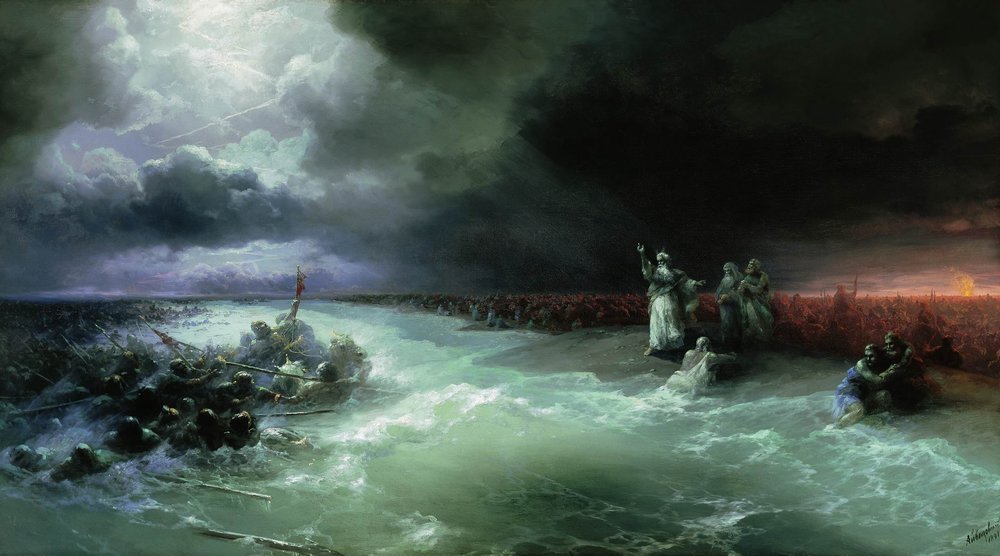
1 You shall love the LORD your God, therefore, and keep his charge, his decrees, his ordinances, and his commandments always. 2 Remember today that it was not your children (who have not known or seen the discipline of the LORD your God), but it is you who must acknowledge his greatness, his mighty hand and his outstretched arm, 3 his signs and his deeds that he did in Egypt to Pharaoh, the king of Egypt, and to all his land; 4 what he did to the Egyptian army, to their horses and chariots, how he made the water of the Red Sea flow over them as they pursued you, so that the LORD has destroyed them to this day; 5 what he did to you in the wilderness, until you came to this place; 6 and what he did to Dathan and Abiram, sons of Eliab son of Reuben, how in the midst of all Israel the earth opened its mouth and swallowed them up, along with their households, their tents, and every living being in their company; 7 for it is your own eyes that have seen every great deed that the LORD did.
8 Keep, then, this entire commandment that I am commanding you today, so that you may have strength to go in and occupy the land that you are crossing over to occupy, 9 and so that you may live long in the land that the LORD swore to your ancestors to give them and to their descendants, a land flowing with milk and honey. 10 For the land that you are about to enter to occupy is not like the land of Egypt, from which you have come, where you sow your seed and irrigate by foot like a vegetable garden. 11 But the land that you are crossing over to occupy is a land of hills and valleys, watered by rain from the sky, 12 a land that the LORD your God looks after. The eyes of the LORD your God are always on it, from the beginning of the year to the end of the year.
13 If you will only heed his every commandment that I am commanding you today– loving the LORD your God, and serving him with all your heart and with all your soul–14 then he will give the rain for your land in its season, the early rain and the later rain, and you will gather in your grain, your wine, and your oil; 15 and he will give grass in your fields for your livestock, and you will eat your fill. 16 Take care, or you will be seduced into turning away, serving other gods and worshiping them, 17 for then the anger of the LORD will be kindled against you and he will shut up the heavens, so that there will be no rain and the land will yield no fruit; then you will perish quickly off the good land that the LORD is giving you.
18 You shall put these words of mine in your heart and soul, and you shall bind them as a sign on your hand, and fix them as an emblem on your forehead. 19 Teach them to your children, talking about them when you are at home and when you are away, when you lie down and when you rise. 20 Write them on the doorposts of your house and on your gates, 21 so that your days and the days of your children may be multiplied in the land that the LORD swore to your ancestors to give them, as long as the heavens are above the earth.
22 If you will diligently observe this entire commandment that I am commanding you, loving the LORD your God, walking in all his ways, and holding fast to him, 23 then the LORD will drive out all these nations before you, and you will dispossess nations larger and mightier than yourselves. 24 Every place on which you set foot shall be yours; your territory shall extend from the wilderness to the Lebanon and from the River, the river Euphrates, to the Western Sea. 25 No one will be able to stand against you; the LORD your God will put the fear and dread of you on all the land on which you set foot, as he promised you.
26 See, I am setting before you today a blessing and a curse: 27 the blessing, if you obey the commandments of the LORD your God that I am commanding you today; 28 and the curse, if you do not obey the commandments of the LORD your God, but turn from the way that I am commanding you today, to follow other gods that you have not known. 29 When the LORD your God has brought you into the land that you are entering to occupy, you shall set the blessing on Mount Gerizim and the curse on Mount Ebal. 30 As you know, they are beyond the Jordan, some distance to the west, in the land of the Canaanites who live in the Arabah, opposite Gilgal, beside the oak of Moreh.
31 When you cross the Jordan to go in to occupy the land that the LORD your God is giving you, and when you occupy it and live in it, 32 you must diligently observe all the statutes and ordinances that I am setting before you today.
The author of the book of Deuteronomy approaches the same topics multiple times in similar ways over the first eleven chapters, and throughout the rest of the book. Because of this, on a topical level, there is not a lot of new material in this eleventh chapter, yet I also think it is important to consider the implied narrative that the book of Deuteronomy is set within. The book of Deuteronomy opens by telling us, “These are the words that Moses spoke to all Israel beyond the Jordan.” And the book portrays itself as primarily an oral speech rather than a written text. For most people in a literate or even post-literate context (post literate coming from the assumption that most people now receive information more through digital images rather than written text) our attention span for a spoken text is fairly short, but this is written for an aural culture (aural-information is received through hearing) where the majority of the hearers are not literate. Speech in an aural culture is repetitive so that is can be remembered and just as the words are connected to concrete actions to enhance remembrance (binding the words upon the forehead and on the hands, writing them on doorposts as a visual reminder of the spoken word) the repetition of certain critical words and phrases should continue to enhance the memory of the speech event. Music does this all the time by repeating a chorus or using certain patterns to fit words within. So while Deuteronomy may be an unwieldy written text as an aural presentation its continual re-narrating of the story, emphasis on the commandments, statutes and ordinances laid down for the people to live by serve to enhance its effectiveness.
There strong contrast set throughout Deuteronomy, and particularly here in chapter eleven between the people of Israel and the land they are to enter and their former masters and land in Egypt. Part of the story of their people is their being exploited as slave in the nation of Egypt. Egypt is the first major power and they are able to be a successful people because of the waters of the Nile. Yet to provide for food in this hot and arid land it required the irrigation of crops and this is a very labor intensive process. The Israelite people were probably a part of the slave labor force that used foot pumps to pull water out of the Nile to irrigate the fields of the Egyptians and to pull from a hot and unforgiving environment by the exertion of human will a harvest each year. Yet the system in Egypt was dependent upon slave labor and provided great agriculture riches for the owners and the elite on the backs of the enslavement of others. The Israelites are not to have this type of economic relationship where their culture is dependent upon the enslavement of other people. They are also entering a land of milk and honey, a land of abundance. The availability of water is not dependent upon the exertion of human labor but instead is dependent upon the God of Israel who provides the rains in their season and allows the waters of the heavens to provide for the crops of the Promised Land. In this land of abundance they are called to be attentive to the commands of their God, for the eyes of the LORD are always on the land but also always watching them as a people in their obedience.
The obedience to the commandments and to the words spoken here are a matter of blessing and curse for both the people and the land. They do not have a great river like the Nile that they can utilize to irrigate in the drought years, instead they are dependent upon their God granting them rain at the appropriate time. Obedience, as continues to be stressed over and over in Deuteronomy, means blessing for the people and their children and their children’s children. Disobedience means the loss of prosperity and ultimately the loss of the land. The book of Deuteronomy constructs a world of sharp alternatives in a tightly ordered universe. It is a matter of life or death importance that the people of Israel hear again their story, remember who they are and remember their LORD, and then live out of the commandments, statutes and ordinances of their God. They are to be a people who live in justice, not taking advantage of the exploitable to form a new class of slaves. They have this story and these words read to them again and again to reinforce the imperatives that Moses is putting before them in speech. It is speech that is reinforced by not only the emblem on their foreheads or sign on their hands but by the sight of Mount Gerizim and Mount Ebal where blessing and curse symbolically reside.