Category Archives: Psychology and Philosophy

Reflections on The End of Men and the Rise of Women by Hannah Rosin

This is a part of a selection of readings I gathered to reflect on what a healthy approach to masculine identity would look like. I navigated my own journey into a version of manhood in my late teens and early twenties successfully, but now in middle age I see a lot of young men struggling to navigate this journey and for a variety of reasons failing to launch into life. I come to this with humility and curiosity seeking those who may be able to articulate more clearly the journeys that may lead young men to discover a fulfilling life of work and relationships and to help those moving into the space of elders to support and guide them in this journey.

There are some startling quotes in this book, but the one that stopped me in my tracks as we look at the future was this:

This script has played out once before in American culture. Starting in the 1970s, black men began leaving factory jobs; by 1987 only 20 percent of black men worked in manufacturing. The men who lived in the inner cities had a hard time making the switch to service jobs or getting the education needed to move into other sectors. (88)

There has been a lot of attention paid to the incarceration, unemployment, and the lack of young black men in raising children and the factors behind these men not being successful in society but when you expand the script to the plight of black men being predictive of the future of men as a whole that is bleak. I do believe that especially for men so much of their identity is tied to work and the loss of job opportunities for men without a college degree is a major factor in the failure of men in both the economy and life. Hannah Rosin’s book in 2012 was one the first one that I am aware of to notice the drastic changes occurring in the education and work space of America and she covers a wide range of impacts from the changes. From the changing dynamic of ‘hook-up culture’ in colleges, to the way the upper class still holds onto marriage as an economic advantage, the economic mobility of women and the economic stagnation of men, the drastic change in the makeup of college campuses, the increase in female violence, and the way women are breaking into the top of the job market.

I valued the combination of personal stories gained from interviews placed in the context of the seismic shift in the job and education market. As Hannah Rosin notes about the 2008-2009 Recession:

In the Great Recession, three-quarters of the 7.5 million jobs lost were lost by men. The worst-hit industries were overwhelmingly male, and deeply identified with macho: construction, manufacturing, high finance. (4)

I appreciated her candor in talking about the ‘hook-up culture’ on college campuses where women are also using it to avoid relationships which could derail their progression through college and into the workforce. Women are more educated and doing better economically in their late twenties than their male counterparts. Although college educated men and women were more likely to remain married and to ‘see-saw’ in their primary breadwinning roles, among men with only a high-school diploma the change was drastic. “In 1967, 97 percent of American men with only a high school diploma were working; in 2010, just 76 percent were.” (86) It has been common to note that this generation is not doing as well as the previous generation, but particularly for men:

In 2009, men brought home $48,000 on average, roughly the same as they did in 1969 after adjusting for inflation. In fact, as a recent report written by former White House economist Michael Greenstone discovered, the truth is even more dismal. Calling it stagnation fails to take into account the fact that fewer men are working full-time now or making any salary at all, and many more are incarcerated. If you add in those factors, the median income for men ages twenty-five to sixty-four has not only stagnated, but fallen sharply by almost $13,000 since 1969—a reduction of 28 percent. (125)

There is beginning to be an awareness of the change in the makeup of college classes, now dominated by women, but Hannah Rosin was one of the early voices who noted the vastly larger number of female applicants to college and the beginning of colleges attempting to balance the classes by giving preferential treatment to attract enough men.

What Hannah Rosin does a good job of doing is narrating the change that has occurred in society and how women have adapted while many men have failed to adapt. This is a story that need to be told, but it is also an uncomfortable story that undercuts one of the narratives I hear frequently where men are still assumed to be the ones with political and economic power. I have heard voices that refuse to believe that men are struggling, particularly from women who blazed the trail for the current generation. As Rosin states,

The closer women get to real power, the more they cling to the idea that they are powerless. To rejoice about feminist victories these days counts as betrayal. (272)

Women have made a lot of progress in my lifetime and that should be celebrated and there are still places where progress continues to be needed. Yet, we can want our young women to be successful and reach out to young men who are struggling to find a foothold in the rapidly changing geography of the job and education marketplace.

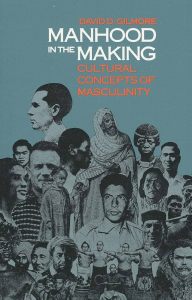
Reflections on Manhood in the Making: Cultural Concepts of Masculinity by David D. Gilmore. (1990)

This is a part of a selection of readings I gathered to reflect on what a healthy approach to masculine identity would look like. I navigated my own journey into a version of manhood in my late teens and early twenties successfully, but now in middle age I see a lot of young men struggling to navigate this journey and for a variety of reasons failing to launch into life. I come to this with humility and curiosity seeking those who may be able to articulate more clearly the journeys that may lead young men to discover a fulfilling life of work and relationships and to help those moving into the space of elders to support and guide them in this journey.

David Gilmore is an anthropologist who taught at the State University of New York whose book Manhood in the Making examines manhood as it is expressed through a number of representative cultures which have been studied by anthropologists. The groups included in the collection of studies are primarily from tribal and traditional societies which are geographically separate from larger cultural influences. With a couple of exceptions, there are expectations of a passage into manhood in these cultures and the possibility of a male child failing to navigate the expectations of manhood and being “unmanly” and unreliable in their society.  As Gilmore states,

there is a constantly recurring notion that real manhood is different from simple anatomical maleness, that it is not a natural condition that comes about spontaneously through biological maturation but rather it is a precarious or artificial state that boys must win against powerful odds. This recurrent notion that manhood is a problematic, a critical threshold that boys must pass through testing, is found at all levels of sociocultural development regardless of what other alternative roles are recognized. (11)

Or more simply, boys through culturally appropriate preparation and testing must be made into men. Simply being physically mature is not enough for the mantle of manhood. Men are made, not born. And although “being a good man” may have less focus than “being good at being a man” (30) there is in most cultures an expectation that “being good at being a man” involves providing for both kin and the larger society. “If a man rejects this provider’s role, he is said to be useless and to be dependent like a woman or like a child (Caughey 1970:69).” (73)

There are two exceptions listed in this study where the men are passive, the Tahiti and Semai. These societies with men who are conditioned to be more passive and peaceful are highlighted by some readers as an ideal for a modern society, but I don’t think these men would function well in modern society. As David Gilmore surmises as he wraps up the study, “When men are conditioned to fight, manhood is important; where men are conditioned to flight, the opposite is true.” (221) He concludes with two long statements which I will quote in their entirety because I find them very helpful:

When I started researching this book, I was prepared to rediscover the old saw that masculinity is self-serving, egotistical, and uncaring. But I did not find this. One of my findings here is that manhood ideologies always include a criterion of selfless generosity, even to the point of sacrifice. Again and again we find that “real” men are those who give more than they take; they serve others. Real men are generous, even to a fault, like the Mehinaku fisherman, the Samburu cattle-herder, or the Sambia or Dodoth Big Man. Non-men are often those stigmatized as stingy and unproductive. (229)

Men adopting the provider role provide more for their society than they take, and they will often do without so that others may have enough. One final quote from Manhood in the Making on the sacrifices men are expected to make for kin and society:

Men nurture their society by shedding their blood, their sweat, and their semen, by bringing home food for both child and mother, by producing children, and by dying if necessary in faraway places to provide safe haven for their people. This too, is nurturing in the sense of endowing or increasing. However, the necessary personal qualities for this male contribution are paradoxically the exact opposite of what we Westerners normally consider the nurturing personality. To support his family, the man has to be distant, away hunting or fighting wars; to be tender, he must be tough enough to fend off enemies. To be generous, he must be selfish enough to amass goods, often by defeating other men; to be gentle, he must first be strong, even ruthless in confronting enemies; to love he must be aggressive enough to court, seduce, and “win” a wife. (230)

I found Gilmore’s work to be helpful. At times he and his fellow anthropologists were a little overdependent on a Freudian framework, but the highlighting of the processes in these cultures to transform boys into men, something missing in any formal way in our society, and the expectation of a competent but generous masculinity in culture was helpful.

Gilmore, D. D. (1990). Masculinity in the Making: Cultural and Concepts of Masculinity. New Haven: Yale University Press.

Cooperating with Creativity: A Reflection

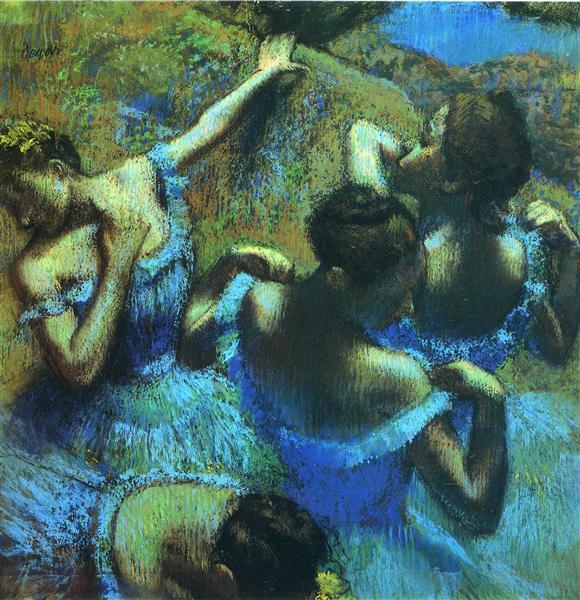
Blue Dancers by Edgar Degas, 1899

“Creativity is the relationship between the human being and the mysteries of inspiration” Elizabeth Gilbert, Big Magic, Creative Living Beyond Fear

There are times where creativity seems like a divine gift, something external and strange and magical that comes from some unknown space in the cosmos. Normally these are times where I let creativity take the lead, where I allow curiosity around a phrase or an idea to lead the way. During these times the providential provision of resources and words can be delightful if a little scary. There are times where my words both reflect me and something that is not like me at all, even when there is truth in the strangeness. I enjoy cooperating with creativity whatever spirit it may be, letting it flow through me and guide me, surprise and startle. Sometimes I can almost stand back and watch it dance and spin and leap and all I can do is simply try to record the joy or lament of the dance. As one who is not a dancer, I am at best an uninformed commenter on the art and yet sometimes the comments themselves capture some of the beauty whether dark or savage or light or joyous or somber.

There are times where creativity seems like some strange reserve of energy within me, like the old Polynesian idea of mana or the Chinese concept of qi. Feeling like some vital energy that is a part of me and that expending it in a forced manner leaches strength from the very marrow of my being. When it feels like a time-constraints force me to be creative in an urgent matter it almost feels like I am doing violence to creativity and to myself at the same time. It is like this thing which can be separate from me is somehow conjoined, that we feed off the same energy. Not like some unwelcome parasite that simply leeches its victim for its own purposes but some type of symbiotic relationship where the creativity, genius, daemon, muse or whatever name you give it cannot do its work without your participation in the dance with it. When it is forced to dance a dance it no longer wants to dance or is not ready for, then I, as its partner, am the one whose head pounds, whose muscles burn and whose soul aches.

Creativity can be elusive but she can be a delight. Sometimes she stays away for days on end, or perhaps it is me who has been away on some other journey, too distracted by the alluring entertainment on some screen or some pressing task at work or home. Sometimes she comes when the time is not right and by the time I can give her my full attention she is off dancing somewhere out of site. I’m not sure what creativity is or how it works, I’m just trying to learn how to cooperate with it. To be attentive to its call, to listen to the music it chooses, to observe the dance, to do my part as a recorder of these mysteries of inspiration. I try to work diligently but not to force or bend it to my will, that seems to do damage to both of us. Perhaps it is something deep within me, perhaps it is something else, perhaps it is in some strange way both. I may never know, and perhaps to know would steal away the magic and delight, like knowing some illusionist’s trick. So, for now I’ll let this dance end as the music fades and leave this reflection for others to see. Perhaps serendipity may allow this to be that providential provision that another curious observer needs as their creativity calls its tune.

The Suburbs of Hell

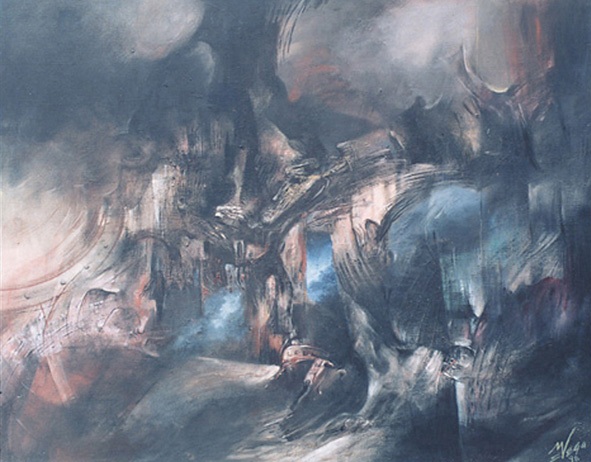
Mauricio Garcia Vega “Visita al infierno’ shared by artist under Creative Commons 3.0

All those eyes intent on me. Devouring me. What? Only two of you? I thought there were more; many more. So this is hell. I’d never have believed it. You remember all we were told about the torture-chambers, the fire and brimstone, the “burning marl.” Old wives’ tales! There’s no need for red-hot pokers. HELL IS OTHER PEOPLE!” Jean-Paul Sartre, No Exit

“Hell is a state of mind – ye never said a truer word. And every state of mind, left to itself, every shutting up of the creature within the dungeon of its own mind – is, in the end, Hell.” C.S. Lewis, The Great Divorce

What if the existentialists were wrong seeing in others eyes the mirror that condemns themselves?
That their self-directed focus loosed the bonds of the compassion experienced in community
Their desire to liberate themselves from the plight of humanity became their own chains
Which they forged like Marley in Dickens’ Christmas Carol when their neighbor no longer mattered
Their revelation became the great unseeing of their place within the covenant of the commonwealth
Where they looked at the unenlightened with disdain seeking to isolate themselves in their suffering
As they moved into the suburbs of hell to discover what one slowly but inexorably uncovers
That the mirror that condemns oneself is the looking glass of one’s own crafting they gaze into
Discovering in their loneliness that hell is a dungeon of one’s own mind that they are locked within
And the only key to salvation, though it goes against every practice they’ve embraced, every dogma
Is the other people they feared would see them as they are and would deem them unlovable

Perhaps they, like the denizens of C.S. Lewis’ vision, looked with disgust and moved themselves
Further and further away from the city, further away from the possibility of looking into another’s eye
As they move further and further into the wilderness to build their utopias in their grey worlds
Building the walls higher around their stately grounds along roads that no one travels
Locking themselves inside their places of paranoia and safety, hoarding their treasure like dragons
And still Amazon delivers to these unmapped places all the possessions which come to possess
Houses full of unopened boxes with smiles upon the side for people who no longer smile
“I think therefore I am” proclaimed their apostle Descartes as they declared the world outside false
No need for the flames of the lake of fire nor demonic torturers and devilish prison wardens
They in their own self-flagellation willingly wield the red-hot pokers unwilling to accept forgiveness
Remaining locked inside their self-imposed sentence of solitary confinement for unknown offenses

Wisdom of Story: Reflection 4 Daring to Imagine a Bigger Story

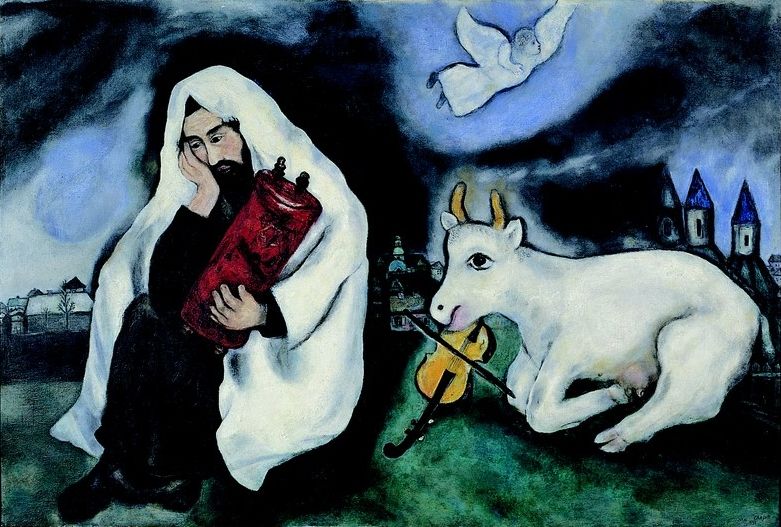
Marc Chagall, Solitude (1933)

Marc Chagall, Solitude (1933)

So, this is the final of the Wisdom of Story reflections after working through this course with Brené Brown and Glennon Doyle Melton (reflection 3 is The Rules which is more of a poetic reflection on the content) and it ended with a profound challenge: what is a community challenge or a global story that you want to write yourself into? This was a hard question because it forced me to think of what are the things going on in my community and in the world, that breaks my heart and to pay attention to that. Where I ended up was highlighted by several conversations I have had over the past weeks and I think it is an area where I need to spend some time both reflecting and creating opportunities to imagine a different big story.

There are so many places where I have seen a growing cultural anxiety paired with malaise in the church, in the communities around us and in the nation. There are so many pieces of this: I believe that we have become addicted to anxiety, almost like a drug, by the continual presence of news and information constantly throughout our lives. Anxiety sells even if it is not an accurate representation of reality- news programs present the worst aspects of the world continually before our eyes and we believe we no longer live in a safe place, even though statistically we are significantly safer than 20 years ago. Like many I have gone through our current election cycle with a bad taste in my mouth because of the ways the candidates have been portrayed. While character matters when elections become primarily about tearing down another person’s character or even demonizing one’s opponent we all lose. I am dismayed by the loss of civility in our public square, where one whose ideas may be different from our own are not only dismissed out of hand but may even be considered ‘un-American’ and in a digital age it is easier to become a troll out to destroy the other person. We live in a polarized and anxious world where there is less of an American dream and more alternate versions of an American nostalgia for a time and place that never truly existed. We become so consumed with work, with taking care of ourselves, with the desire for the next new thing that never quite satisfies that I’m not sure we know what a good life looks like.

That is a huge bundle of tightly wound knots and so how do I begin to untangle it? Well for me it begins with understanding so I can try to imagine a different story. There is a self-reflective component: It will mean thinking critically on my own life and its incessant business and what a good life means for me. There will be a time to listen to other people’s stories and their fears and concerns as well as their hopes and dreams, which is one of the gifts of what I do. As a reflective person, it will also mean that I go back and ask questions both in reading and research but also to question some of the narratives I hear around me.  Honestly not sure where it will ultimately go or look like but I’ve got lots of questions and I’m curious enough to see where they might lead.

The Wisdom of Story Reflection 2: Modern Crises and the Balance of Work, Rest and Play

When I started the Wisdom of Story I had no idea that the session on act 2 of the story, the part of the story where the conflict comes in and changes things around would coincide with an actual set of minor crises (predominantly around a building project at my congregation) and the stress that would be added by that to an already full schedule. So I am thankful for thinking about crisis and the practices that sustain me immediately before needing to call upon many of these practices. There is ancient wisdom in the practice of Sabbath, which is not primarily about worship but about rest. For me one of my natural reactions to stress is to work harder and to attempt to plow through the crisis and outlast it. Yet, while this is one of my defaults it also tends to be an unhealthy reaction for me because it impacts my creativity, my joy, my relationships and it cuts me off from the support I need.

As an introvert I require space and time to recharge, but beyond the space and time there are things that recharge my batteries faster than other things. These include music, stories, exercise, eating well, learning, playing, solitude or time with people I love, and working with my hands. Music has always been a source of joy for me and whether I am singing along with a CD, attending a concert, drumming on the steering wheel as I drive or jamming to the air guitar alone in the house by myself, music is one of the things I love. Unfortunately, when I overwork I tend to put myself in places where I can’t enjoy music in the same way. A lot of my work is either talking with other people or things that require more concentration and often silence is beneficial. But I need the balance of music to bring richness into my life.

I am a person who feeds off stories. Stories come in many forms, in books, in a movie, sometimes I just make them up in my head. I’ve always been able to let stories take me into their world for a moment and to get caught up with the actors or characters. I often find things in the world of the story that bring insight into situations in my own world, and then there is also simply the joy of a well told tale. Perhaps one of the other gifts of stories goes back to the gift of Sabbath, it forces me (or allows me) to have an excuse to step away from that drive to work through my struggles and instead to sit in another place at some distance from my own crises and to come back to them re-energized from being away in a distant land or time or world through the story.

I’m thankful that early in my life I learned the benefit of staying fit and eating a healthy diet. Through my time at Texas A&M and the Army physical fitness was a daily part of my work day and my enjoyment of running endured well after my time in the Army ended. Physical exertion is a great stress relief for me and my body just feels better and I am more creative when I make the time to run and workout. When I am stressed I am more likely to miss workout and I also have one less method to work through stress. Diet also affects me greatly. I enjoy cooking and I cook pretty fresh food using very little preservatives. If my diet changes through eating out frequently or even eating at church potlucks then I notice it rapidly. Caffeine also has a stronger effect on my body than it does for many people and again it is another thing that is readily available and tastes good at the moment but when I am stressed it contributes to that stress.

For a long time I didn’t give enough credence to the need to play. I was simply too busy doing ‘important’ things to give myself permission to do something as unnecessary as that. I always enjoyed playing, whether it was sports or a computer game or doing puzzles of various kinds but I never made time for it. Sometimes it goes back to my love of story (which video games often do immerse you into a story world) other times it feeds that need for physical activity but in the midst of all of it is the need to bring fun and joy into one’s life. I’m still not great at making time to play but I’ve learned it is an enjoyable part of my life and very healing.

Being an introvert doesn’t mean that I shun opportunities to be around other people, but it often doesn’t recharge my batteries. People who I love and trust can help me recharge but I also need my times of solitude. I’m not cut out to be an hermit, I need other people but social situations (like parties) take a lot more energy than they give to me.

Finally, I do enjoy working with my hands. Whether it is working in the soil in my garden or building something or just trying to be creative.  So much of what I do requires my intellectual side to be engaged but I also have the need to use the tactile side of my personality. I like being able to problem solve and being able to see something created or improved through working on it.

Wisdom of Story Reflection 1: The Roles and Rules of the World

When an author tells a story one of the first things they have to do is place their characters in roles and in a world that has rules. The rules and roles will be different based upon the character and the world. A young wizard in a world where magical things are possible will have different roles and rules than an old cowboy riding into the old West. Even within the same world the rules can be different. A private in the army, for example, operates under different rules and certainly a different role than a general. Rules and roles work in a story because it imitates our life. Often the roles we play are second nature, like the feel of clothing on top of our skin that we no longer notice and the rules are as much a part of the environment we live in as the air we breathe.

The rules that we live within are dependent on the numerous roles we play within our lives. Some are gender determined: there are different cultural expectations for men and women. Men are shown from a young age to put their work above everything else (even family), to not express pain or weakness, and that the cultural expected role is for them to be the provider. Some rules come out of one’s place within a family: a young son or daughter should have different rules and constraints than a teenager or a young adult. Some rules come from the organizations and work that one is a part of. In my life the expectations as a military officer and later as a pastor were very different, for example language that was assumed to be a part of the life in the military are no longer considered appropriate in a more ‘holy’ calling by many.

Rules are not bad, we need rules to make sense of our lives and world. However, there are times where they can become stifling. Roles may fit us like a second skin or we may feel like we are continually wearing a mask that covers up our true self. Often these parts of our lives are invisible until a major change comes that changes the rules and roles. Things that we may have assumed to be true about our lives no longer hold up under the stress of the changes that go on within our lives.

So what do we do when the rules no longer work and the role we once played no longer fits. That is where the hard part of the story begins. Much like the people of Israel on their long Exodus from Egypt we may long to return to the places we knew and the security we once had (even though it might have been its own type of enslavement). Yet, in a story this is act 2, the challenging part of the story where a crisis pushes the protagonist to find our something new about themselves. If a person is in that part of their life it doesn’t feel like a story, it may feel like chaos or freefall. Yet all stories have a beginning point, a Launchpad so to speak and the rules and initial roles are that solid ground that retreats away on the expedition into the scary unknown frontier.


These meditations are based upon the Courageworks course, the Wisdom of Story taught by Brené Brown and Glennon Doyle Melton. This is my reflections after session 1.

Living Brave Reflection 11- Integrating Stories

Mosaic from the parish church of Saint Michael and Saint Peter, Antwerp

Mosaic from the parish church of Saint Michael and Saint Peter, Antwerp

I’ve often joked that the pieces of my story don’t easily fit together in one life. I was a civil engineering major in college, an officer in the military, a seminarian and later a pastor. I lived in seven states in my adult life (which means I’ve moved frequently) am a father to two kids both very bright. I had to figure out how I would raise my son who is high functioning autistic and be a long distance father to my daughter after my divorce. I had to figure out how to date again in my late 30s and early 40s and then learn how to be married again after being single for five years. I’ve had to go back to the moments of crisis and learn from them, seeing the ways in which they knit together all the different pieces of the story. How the heartbreaks could lead to a new place of wholeness and healing and how the transitions became the opportunity for new beginnings and adventures. It hasn’t always been easy but overall it has been good. I wouldn’t be the person that I am today without any one piece of my story, but my story is (hopefully) far from over and I have a lot I still want to write.

In many respects I am amazed at how far I have come. The journey has changed me in drastic ways but I am proud of who I have grown to be. I may not always be the hero in my own narrative, life is more complex than that, but I feel like I have grown wiser in the joy and suffering of my life. There are times where I regret the opportunities to show kindness that I turned away from but I am also cherish the times where I was compassionate enough to see another’s need and not to turn away. There may be times where I was an easy mark, where forgiveness left me vulnerable to being hurt again and yet, I wouldn’t change that. That is a part of the person I want to be, a person who can see the best in others and can hope to make a difference in some small way.

Perhaps the learning comes from the way in which I have allowed myself the grace to be the complex mosaic of stories and experiences and feelings that I am. Rather than trying to mold myself into some monolithic image to allow the plurality of facets of myself to be seen. Perhaps a part of the difference between the immediate emotion and the later understanding of the broader story comes in the forgiveness I can extend to others and me, in learning to be open to not just giving help but receiving it. Perhaps in learning the story of my own heart and claiming it I have found the courage to own my stories and to enjoy living with them not in some nostalgic way, longing to return to the past, but more as pieces of a journey that brought me to the place I am today.


Living Brave Reflection 10- The Stories we Tell Ourselves

The Storyteller by andrianart@deviantart.com

The Storyteller by andrianart@deviantart.com

The most dangerous stories we make up are the narratives that diminish our inherent worthiness. We must reclaim the truth about our lovability, divinity and creativity. (Brown, 2015, p. 82)

As a pastor I have learned the power that stories have in peoples’ lives. We all look to different sources to make sense of our lives, whether in popular culture, in religion, in politics, in science and work or in many other sources we are searching for frames and stories that help make meaning of our lives and experiences. We all tell ourselves stories to make sense of our experience of the world and some of those stories are true, others are conspiracies and some become confabulations. As the quote above from Brené Brown indicates frequently those initial stories may be told at our own expense or at the expense of someone else.

A recent, light-hearted example of this story telling at work happened this past weekend for myself and my wife. On Friday morning, during my day off, I was working on the lawn while I had the laundry going. My washing machine was replaced in the past year but my dryer is getting older and I knew from the noises it was making that it was having some issues (and most likely a belt). So on Friday I came in from working outside, change a load of laundry and start the dryer and while I walk away I hear a loud ‘Thunk’ and the drum is no longer spinning. I decided to finish the lawn while I think about what to do next and I imagine several stories (calling someone to repair the dryer, purchasing a new dryer, trying to fix it myself) and so when I finished the lawn I searched on the internet for instructions on how to fix a belt on a dryer. The good news was that there were lots of instructions but there were none for my dryer specifically. I started trying to figure it out, initially with a set of directions that took me in the wrong direction. I invested a couple hours into opening up the dryer until I reached a point where I was stuck. I knew I needed to take a shield off so that I could get to where the belt was but I couldn’t figure out how to do it and I was telling myself several stories. The first story was that I had just made things worse and that who was I to think I could tackle a project like this where I didn’t have any expertise. Surely a technician could have had this project done within an hour. I also told myself that even if I could get this fixed that the dryer would surely not work right afterwards and that I really should just go out and purchase a new one (an expense I really didn’t want to have at the moment). My concerns about finances started to surface at that point (I had an $800 car repair just the week previous even though financially I am OK, it is just one of the things that triggers anxiety for me). I finally resolved that the worst case scenario was that the dryer was broken and that me continuing to take it apart wasn’t going to make it run any worse so I went back, found some instructions that were more helpful and within the hour I had the machine disassembled (with pieces strewn throughout the hallway) and ready to change the belt, if only I had one. The nearest place I could find that carried the part (after driving to a appliance repair parts store that was now closed in the local area) was around 45 minutes away and because I had to pick up my son from school I didn’t have the time to make the trip until after he would be picked up. I had moved through the initial stories, but now came another set of stories for someone else.

So my wife was working that day and around 3:30 I text her, “What time do you get off work?” Now this is unusual text from me without any additional information but she replies back, “4” but I later learned she was beginning to wonder what is going on? So my next text was, “How close are you to Garland?” and she was working from a different location than normally so she asks her co-workers and they told her about 15-20 minutes but she is wondering what is going on and trying to make sense of these two texts. She shared, later,  that she wondered if I had found someplace that I wanted to meet for supper and that maybe I was thinking of a nice date night for the two of us (a good story, unfortunately at that moment not a true one). So when she texted back that she was 15-20 minutes away, my next text gave her all the information she needed for a true story, “Can you go by the Sears parts and repair center at 1617 Kings Rd in Garland. I will order the dryer belt I need but that is the closest place to pick it up.” Fortunately she was a good sport, picked up the part (knowing now that it had nothing to do with a date night and that the dryer had broken) and within an hour of her being home I had the dryer fixed and it was running beautifully and we could later laugh about the miscommunication and the stories that were made up.

Frequently the stories we tell ourselves are not as light-hearted as the one above. I know there are many times where I have taken the limited facts I knew and created a story centered upon my own fears of failure or perceived weaknesses. There are times where I have interpreted the actions of another person in a way that may have nothing to do with their intentions or desires but instead are the remnants or scars from when other people have treated me in the past.  Sometimes the stories I tell are simply not true, or not the whole truth, and I’ve had to learn to challenge the stories, to get curious to see if they are true, to try not to get trapped in a story that sounds an awful lot like my fears and insecurities coming to the front.


Living Brave Reflection 9: Learning to Pay Attention (and Making Space for Good Habits)

One of the bad habits I developed in working out is holding my breath. When you run you can’t do this, but when I lift weights or do pushups I have a bad habit of holding my breath until I need to gasp for air and then I hold it again as the bar or my body goes up and down. The proper technique would be to breathe in while you are letting the weight come down and to exhale while the weight goes up. Holding my breath may give me a temporary boost, since I’m less concerned about breathing and form, but for any type of endurance proper breathing is essential. The muscles rely upon oxygen to convert sugar into energy and when they are denied sufficient energy they begin to utilize a process called anaerobic glycolysis which is a very efficient way of transforming sugar into energy, but there is a cost. This process generates lactic acid which will eventually slow your performance and lead to cramps and other symptoms of your body telling you to slow down.

One of the bad habits I never developed, thankfully, was smoking. Smoking would be genetically a very bad decision for me, lots of history of lung related cancers in my family, but something I learned while in the military was an unexpected benefit to smokers. Smokers are typically allowed several smoke breaks throughout the day where they get to break from their work and one of the added benefits was a couple minutes of deep breathing. Deep breathing, even though they are inhaling a harmful substance, lowers the heart rate, reduces anxiety and it also probably reinforces the behavior. As a person who doesn’t drink coffee or smoke (the two acceptable reasons for breaks in most business environments) I tend to work non-stop. Yet, I know that I’m more effective when I can find times to take breaks. I know I am calmer when I take time to pay attention to things as simple as breathing.

Since 2009 (and those who are interested in the significance of 2009 can read more about that here) when I crashed emotionally and my body began to fail after years of chronic stress, I’ve become much more aware of my emotions and the signs my body gives me. Some things are the result of the wisdom and challenges of getting a little older (the body just doesn’t respond to things the way it did at 22) but it is also the gift of learning to be more mindful. Of becoming curious about the emotions I might feel, particularly the emotions in the anger and sadness spectrum, and what is going on. I often discover that when I am feeling angry or sad or frustrated there is some place where I have begun pushing through things and not taking care of myself. Working at a short term pace on a long term project. Not taking the time to do simple things like read or watch a movie that provide me a recharge as an introvert or, on the other hand, seeking out the connections that are beneficial to me and spending time with people and activities that bring me joy.

I’m wondering what it would look like to have a non-smoker, non-coffee break. Some intentional time where I force myself to take 15 minutes away from my work to pause, reflect and wonder. To breathe deeply and pay attention for a few minutes before re-engaging what I do with my usual fervor. To make more space for some of the good habits that would be beneficial to me in my life and work.