Category Archives: Biblical Reflections

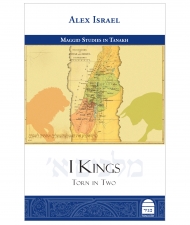
Review of 1 Kings: Torn in Two by Alex Israel

kings for web1 (1)

1 Kings: Torn in Two, by Alex Israel. Jerusalem: Maggid Books, 2013. Pp 350. $29.95 (Hardcover)

1 Kings is the second volume in the Maggid Studies in Tanakh series, and both works have proven to be clear written and insightful approaches to the portions of the Hebrew Scriptures that they address. Rabbi Alex Israel’s skillful opening of the book of 1 Kings provides the reader multiple frames to view the characters, events and historical context of this narrative which moves from the end of the reign of King David through the splitting of the nation of Israel in two and to the end of 1 Kings at the reigns of Jehoshaphat in Judah and Ahaziah in Israel. In a very easy to read style, Rabbi Israel narrates the struggle between kings and prophets, the uneasy relationship between the tribe of Judah and the tribes of Joseph, and with a sympathetic eye paints each of the kings and prophets as people caught within conflicting allegiances. 1 Kings: Torn in Two takes the theological narrative of the history of Israel in 1 Kings and tells it as a compelling story full of struggles and questions and invites the reader into a deeper engagement of the complicated story of the people of God.

1 Kings is roughly half of the original book of Kings, which we now have divided into both 1 and 2 Kings. The book of Kings looks back on the period of the First Temple and attempts to answer the question of what went wrong during this period that eventually led to the destruction of the temple and the people of both the northern Kingdom of Israel and the southern Kingdom of Judah being conquered by the Assyrians and Babylonians respectively. It is a spiritual evaluation of the era rather than a history book and it evaluates each ruler on how they either accelerated the nation of Israel’s path to destruction or reversed the tide by returning to God. The core problem that underlies the evaluation of the leaders in the Book of Kings is the spiritual issue of idolatry. (2)

1 Kings begin with the political intrigue caused by the approaching death of King David and the struggle for power between two of his sons, Adonijah and Solomon. Rabbi Israel skillfully narrates both a political and theological reading of this story of political intrigue. Through his close reading of the movements and alliances of each son of King David we see how both attempt to grasp for power at the end of David’s reign. In a time of uncertainty both groups attempt to consolidate their grasp on their reign through various methods, and ultimately when Solomon emerges the anointed king and consolidates his power it begins a new period of the time of Israel. A time of peace and prosperity begins the age of the first temple.

King Solomon’s reign will demonstrate a pattern of competing allegiances that will continue with all the kings that will follow him. Solomon’s reign and projects will demonstrate an openness to the world beyond the borders of the nation of Israel, even the construction of the temple is designed to spread the name of God beyond the Jewish people. (86) Yet, with this outward looking policy are sown the seeds of future conflicts. From Solomon’s marriage to the daughter of Pharaoh, as well as his other wives and concubines, to a policy of taxation to fund the building of the temple and many other houses which are all done in a time of peace and agricultural prosperity. It is a time of tension, as Rabbi Israel states it, “a tale of Solomon’s two conflicting loves—that of the Temple and that of Pharaoh’s daughter” It is an era that begins with the hope and promise of Solomon asking for wisdom to judge the people that transitions to that same wisdom being turned to become a source of revenue. The affluence of Solomon’s reign also begins to point to a spiritual decline as the accumulation of spices, wealth and building materials become more central to the narrative than the king’s ability to bring justice to the nation. Solomon’s reign of peace ends with his policies of taxation placing a huge internal strain on the already fragile bond between the tribes of Judah and the tribes of the rest of the nation and Solomon establishing a pattern of divided loyalties between the God of Israel and the Temple in Jerusalem and the his building worship sites for his foreign wives and his devotion to them. The end of Solomon’s reign sets the stage for a nation torn in two in his son’s reign.

When Rehoboam ascends to the throne the seam between Judah and the other tribes unravels. By the end of Solomon’s reign the resistance to the taxation policies of the king are already beginning to meet resistance and Jeroboam emerges as one of the challengers of Solomon and later to his heir Rehoboam. Rabbi Israel paints a nuanced portrait of both Jeroboam and Rehoboam where they are both faithful and unfaithful. Jeroboam’s revolt is portrayed as an anti-elitist, people-based movement where priestly service in the two new worship sites (Dan and Bethel) is opened up to all the people. While Jeroboam’s revolt receives divine sanction his institution of new worship sites and the use of images to mediate the people’s worship comes under condemnation of the book of Kings. In Judah, Rehoboam is willing to listen to the prophets that tell him not to go to war with the rest of Israel, however he too continues in the sin of idolatry of his father Solomon. The sin of idolatry is the one defining action that drives the evaluation of each king’s reign according to the book of Kings.

The time after the kingdom unravels is a time of numerous conflicts between Judah and Israel as well as turbulence as leadership as one dynasty is replaced by another. 1 Kings: Torn in Two narrates this complex time of interlocking reigns and conflict from both a northern and southern perspective and is able to highlight both the perspective of the author of 1 Kings on this time period but also brings in a historical and inter textual perspective, utilizing in particular the book of Chronicles to provide an additional voice on this time. Particularly in the North it is a time where different royal dynasties reign for a couple generations only to be replace by another dynasty when they are overthrown.

1 Kings conclude in the time of the Omri dynasty, Kings Omri and Ahab in the north. The reign of Kings Omri and Ahab in the north is one of economic prosperity but spiritual decline. King Omri and later his son Ahab base their foreign policy on an alliance with Phoenicia. This economic and political alliance with Phoenicia also bring Ball worship deep into the life of the Northern Kingdom. Particularly when King Ahab is married to Jezebel who become an ardent missionary of the religion of Phoenicia. (221) In a time where Ahab abandons God and his kingdom flourishes there seems to be no contradiction between his personal and national fortune and his religious orientation.

It is into this time of King Ahab and Jezebel and the continued influence of the religion and policies of Phoenicia that the prophet Elijah enters the story and the conflict begins for the spiritual identity of the Northern Kingdom. Rabbi Israel highlights several important readings of this story and how it reflects on both Elijah and God. In a more traditional reading Elijah is acting as God’s agent and God seems indifferent to the epidemic and famine caused by the three years of drought, but he also lifts up the position of Rabbi Samet in which God attempts to dislodge Elijah from his refusal to end the drought, and so finally in chapter 18 God orders Elijah to explicitly end the famine. (237) Ahab is also presented in a compassionate way as drawn between competing allegiances: after the events on Mt. Carmel where Elijah challenges the prophets of Baal and Ahab appears to return, briefly, to trusting the God of Israel, yet Jezebel continues to hold a strong sway over his policies and is able to threaten Elijah’s life immediately afterwards. The conflict between Elijah and Jezebel also demonstrates a conflict between two value systems: the democratic land culture of Torah and ancient Israel (where land remains in a family) and the monarchical Phoenician system where the king has the ability to take whatever the king wants. Yet even King Ahab, who has done more evil than any of the kings before him according to 1 Kings makes a sudden repentance at the end of the story and God enthusiastically accepts his repentance delaying any condemnation during his lifetime.

Rabbi Israel’s reading of the narrative of 1 Kings highlights the continuing pattern of competing allegiances that the leaders and people of Israel and Judah struggled with. His ability to tell the story in a compelling way allows the tensions of the time and the personalities of the leaders to come forward. The story points to the struggle that people live out our society between competing allegiances based on economic, political, relational and religious authorities. This is an illuminating journey into the time of the kings of Israel and Judah and resonates with themes and struggles found throughout the Hebrew Scriptures and in the relationship between God and God’s people.

Jeremiah 27: The Yoke of Babylon

Weigel Engraving, Hananiah and Jeremiah

Weigel Engraving, Hananiah and Jeremiah

In the beginning of the reign of King Zedekiah son of Josiah of Judah, this word came to Jeremiah from the LORD. 2 Thus the LORD said to me: Make yourself a yoke of straps and bars, and put them on your neck. 3 Send word to the king of Edom, the king of Moab, the king of the Ammonites, the king of Tyre, and the king of Sidon by the hand of the envoys who have come to Jerusalem to King Zedekiah of Judah. 4 Give them this charge for their masters: Thus says the LORD of hosts, the God of Israel: This is what you shall say to your masters: 5 It is I who by my great power and my outstretched arm have made the earth, with the people and animals that are on the earth, and I give it to whomever I please. 6 Now I have given all these lands into the hand of King Nebuchadnezzar of Babylon, my servant, and I have given him even the wild animals of the field to serve him. 7 All the nations shall serve him and his son and his grandson, until the time of his own land comes; then many nations and great kings shall make him their slave.

 8 But if any nation or kingdom will not serve this king, Nebuchadnezzar of Babylon, and put its neck under the yoke of the king of Babylon, then I will punish that nation with the sword, with famine, and with pestilence, says the LORD, until I have completed its destruction by his hand. 9 You, therefore, must not listen to your prophets, your diviners, your dreamers, your soothsayers, or your sorcerers, who are saying to you, ‘You shall not serve the king of Babylon.’ 10 For they are prophesying a lie to you, with the result that you will be removed far from your land; I will drive you out, and you will perish. 11 But any nation that will bring its neck under the yoke of the king of Babylon and serve him, I will leave on its own land, says the LORD, to till it and live there.

 12 I spoke to King Zedekiah of Judah in the same way: Bring your necks under the yoke of the king of Babylon, and serve him and his people, and live. 13 Why should you and your people die by the sword, by famine, and by pestilence, as the LORD has spoken concerning any nation that will not serve the king of Babylon? 14 Do not listen to the words of the prophets who are telling you not to serve the king of Babylon, for they are prophesying a lie to you. 15 I have not sent them, says the LORD, but they are prophesying falsely in my name, with the result that I will drive you out and you will perish, you and the prophets who are prophesying to you.

 16 Then I spoke to the priests and to all this people, saying, Thus says the LORD: Do not listen to the words of your prophets who are prophesying to you, saying, “The vessels of the LORD’s house will soon be brought back from Babylon,” for they are prophesying a lie to you. 17 Do not listen to them; serve the king of Babylon and live. Why should this city become a desolation? 18 If indeed they are prophets, and if the word of the LORD is with them, then let them intercede with the LORD of hosts, that the vessels left in the house of the LORD, in the house of the king of Judah, and in Jerusalem may not go to Babylon. 19 For thus says the LORD of hosts concerning the pillars, the sea, the stands, and the rest of the vessels that are left in this city, 20 which King Nebuchadnezzar of Babylon did not take away when he took into exile from Jerusalem to Babylon King Jeconiah son of Jehoiakim of Judah, and all the nobles of Judah and Jerusalem– 21 thus says the LORD of hosts, the God of Israel, concerning the vessels left in the house of the LORD, in the house of the king of Judah, and in Jerusalem: 22 They shall be carried to Babylon, and there they shall stay, until the day when I give attention to them, says the LORD. Then I will bring them up and restore them to this place.


The NRSV corrects the text since the context set for Jeremiah’s actions are almost universally accepted to be during the reign of King Zedekiah after the exile of Jeconiah and many of the elites in the land. In this context where Zedekiah is ruling over the remnant in the time before the much larger Babylonian exile of 586 BCE, so the prophets actions are in the time of Zedekiah rather than Jeconiah. At some time during this ten year span there is some type of regional meeting of the envoys of the nations of Edom, Moab, the Ammonites,Tyre and Sidon with the king of Judah, most likely to discuss how they are going to respond to the continued domination of the Babylonian empire. Would the regional kings perhaps ally themselves with a resurgent Egypt, would they rebel against Babylon or would they submit to the reign of King Nebuchadnezzar? We know from a viewpoint removed from history that Judah would set a policy that would rely on Egypt and eventually provoke the wrath of Babylon leading to the destruction of Jerusalem and the exile of the nation.

In a symbolic act Jeremiah wears a yoke around his neck commanding not only Judah, but the other representatives at the regional summit to submit to Babylon’s rule. The message goes to the nation, to the king of Judah and then to the priests and all the people. The strong claim that God is behind the power of the empire of Babylon and that at least for this time to oppose Nebuchadnezzar is to oppose God’s will and to invite disaster.  Nebuchadnezzar is given control of not only the nations but even the wild animals of the field as for the time being all creation seems to have a pro-Babylonian tilt. Yet, this is not an unqualified endorsement of the Babylonian or any other empire since God’s favor is only for a time, yet to the generation in this time prior to the final exile it must have seemed like an eternity. Apparently, as we have seen elsewhere in Jeremiah, there are other prophets declaring that even after this first defeat the time is rapidly approaching where the furnishings of the house of God will represent a return to power for the people of Judah. These other prophets are saying hope is on the horizon, but for Jeremiah even now hope is a long way off. The hope of these false prophets is a false hope, that rather than things getting better Jeremiah is trying to prevent what remains of the temple from being taken as the spoils of yet another Babylonian invasion. Jeremiah’s voice goes unheard, the temple and the city a sacked, and the people like the remaining treasures of the Lord’s house are taken to Babylon where they stay until the end of the exile as appointed by the Lord.


Jeremiah 26 The Prophet, the Temple and the Elders

Jeremiah 26: 1-19 The Prophet, the Temple and the Elders

Ilya Repin, Cry of the Prophet Jeremiah on the Ruins of Jerusalem (1870)

Ilya Repin, Cry of the Prophet Jeremiah on the Ruins of Jerusalem (1870)

At the beginning of the reign of King Jehoiakim son of Josiah of Judah, this word came from the LORD: 2 Thus says the LORD: Stand in the court of the LORD’s house, and speak to all the cities of Judah that come to worship in the house of the LORD; speak to them all the words that I command you; do not hold back a word. 3 It may be that they will listen, all of them, and will turn from their evil way, that I may change my mind about the disaster that I intend to bring on them because of their evil doings. 4 You shall say to them: Thus says the LORD: If you will not listen to me, to walk in my law that I have set before you, 5 and to heed the words of my servants the prophets whom I send to you urgently– though you have not heeded– 6 then I will make this house like Shiloh, and I will make this city a curse for all the nations of the earth.

 7 The priests and the prophets and all the people heard Jeremiah speaking these words in the house of the LORD. 8 And when Jeremiah had finished speaking all that the LORD had commanded him to speak to all the people, then the priests and the prophets and all the people laid hold of him, saying, “You shall die! 9 Why have you prophesied in the name of the LORD, saying, ‘This house shall be like Shiloh, and this city shall be desolate, without inhabitant’?” And all the people gathered around Jeremiah in the house of the LORD.

                10 When the officials of Judah heard these things, they came up from the king’s house to the house of the LORD and took their seat in the entry of the New Gate of the house of the LORD. 11 Then the priests and the prophets said to the officials and to all the people, “This man deserves the sentence of death because he has prophesied against this city, as you have heard with your own ears.”

 12 Then Jeremiah spoke to all the officials and all the people, saying, “It is the LORD who sent me to prophesy against this house and this city all the words you have heard. 13 Now therefore amend your ways and your doings, and obey the voice of the LORD your God, and the LORD will change his mind about the disaster that he has pronounced against you. 14 But as for me, here I am in your hands. Do with me as seems good and right to you. 15 Only know for certain that if you put me to death, you will be bringing innocent blood upon yourselves and upon this city and its inhabitants, for in truth the LORD sent me to you to speak all these words in your ears.”

 16 Then the officials and all the people said to the priests and the prophets, “This man does not deserve the sentence of death, for he has spoken to us in the name of the LORD our God.” 17 And some of the elders of the land arose and said to all the assembled people, 18 “Micah of Moresheth, who prophesied during the days of King Hezekiah of Judah, said to all the people of Judah: ‘Thus says the LORD of hosts, Zion shall be plowed as a field; Jerusalem shall become a heap of ruins, and the mountain of the house a wooded height.’ 19 Did King Hezekiah of Judah and all Judah actually put him to death? Did he not fear the LORD and entreat the favor of the LORD, and did not the LORD change his mind about the disaster that he had pronounced against them? But we are about to bring great disaster on ourselves!”

This passage is traditionally linked with the ‘Temple Sermon of Jeremiah’ in Jeremiah 7 and into chapter 8 based on the dating and the circumstances lined out in the first lines. Jeremiah goes into the temple, the heart of the royal and priestly justification of the people’s favored status and compares the temple to Shiloh, which was an earlier site of the tabernacle site in the time of 1 Samuel. The prophet calls the people back to the two sided covenant of Deuteronomy, ‘If you will do these things, then you will be blessed, if you will not do these things you will be cursed.’ Since the construction of the temple by Solomon there has been a critique of the possibility of relying solely on the temple for maintaining the people’s status with God. For example when God answers Solomon’s prayer in 1 Kings 9, it relates the answer as this:

2 the LORD appeared to Solomon a second time, as he had appeared to him at Gibeon. 3 The LORD said to him, “I have heard your prayer and your plea, which you made before me; I have consecrated this house that you have built, and put my name there forever; my eyes and my heart will be there for all time. 4 As for you, if you will walk before me, as David your father walked, with integrity of heart and uprightness, doing according to all that I have commanded you, and keeping my statutes and my ordinances, 5 then I will establish your royal throne over Israel forever, as I promised your father David, saying, ‘There shall not fail you a successor on the throne of Israel.’

 6 “If you turn aside from following me, you or your children, and do not keep my commandments and my statutes that I have set before you, but go and serve other gods and worship them, 7 then I will cut Israel off from the land that I have given them; and the house that I have consecrated for my name I will cast out of my sight; and Israel will become a proverb and a taunt among all peoples. 8 This house will become a heap of ruins; everyone passing by it will be astonished, and will hiss; and they will say, ‘Why has the LORD done such a thing to this land and to this house?’ 9 Then they will say, ‘Because they have forsaken the LORD their God, who brought their ancestors out of the land of Egypt, and embraced other gods, worshiping them and serving them; therefore the LORD has brought this disaster upon them.'” (1Kings 9:2-9)

Yet in the time of King Jehoiakim this way of understanding the covenant with God is either forgotten or neglected. For the prophet claims of obedience to God’s law/Torah are more important than any human authority. This undercuts the certitude of not only Jehoiakim, but particularly here the priests in the temple where Jeremiah makes his proclamation. Their lives are invested in the maintaining of the centrality of the temple worship and the proclamation of the prophet threatens not only their temple with its words but their livelihood. The react quickly and harshly demanding the death of Jeremiah because he has spoken against the temple and the city and bring him before the leadership of the city. It is a tense picture painted where the priest and temple authorities and the crowd have surrounded the prophet and the city leaders quickly move to bring calm to the situation and hold judgment in the case of this troublesome prophet.

For his part, Jeremiah denies nothing that he is accused of and yet he claims his role as a prophet of God speaking on God’s behalf and still in the hope of both the prophet and God that the people will hear and turn from their ways. What the priests have heard as condemnation is from Jeremiah’s perspective a hope for turning and rescue by God, but the words have fallen on unreceptive ears.  Jeremiah knows that his life rests in these officials’ hands and yet he warns them that if they take his life they will be liable for innocent blood.

The elder’s rely on the precedence of Micah, one of the examples of intertextuality in the Bible. This instance refers back to the prophet Micah who a century earlier had spoken harsh words against the city, and yet Micah was not killed by the leadership then. The ‘elders’ override the ‘priest’ and the historical memory of prophetic witness and Torah piety hold out in this case and the elders too are able to see this as an opportunity for repentance rather than a certain doom. Unfortunately for the people the repentance does not come as the priestly and royal authority are hostile to this message that Jeremiah proclaim.

Jeremiah 26:20-24 The Risk of the Prophetic Challenge


                20 There was another man prophesying in the name of the LORD, Uriah son of Shemaiah from Kiriath-jearim. He prophesied against this city and against this land in words exactly like those of Jeremiah. 21 And when King Jehoiakim, with all his warriors and all the officials, heard his words, the king sought to put him to death; but when Uriah heard of it, he was afraid and fled and escaped to Egypt.22 Then King Jehoiakim sent Elnathan son of Achbor and men with him to Egypt, 23 and they took Uriah from Egypt and brought him to King Jehoiakim, who struck him down with the sword and threw his dead body into the burial place of the common people.

 24 But the hand of Ahikam son of Shaphan was with Jeremiah so that he was not given over into the hands of the people to be put to death.

King Jehoiakim is not receptive to Jeremiah’s message, and while Jeremiah apparently has some protection from Ahikam son of Shaphan another prophet, Uriah son of Shemaiah does not. The words of Uriah infuriate the king enough to send men into Egypt to capture, bring the prophet to the king and then to be killed by the king. This is not a welcome time for prophets and death and torture are real possibilities to ensure the message of King Jehoiakim is the dominant message heard.

Jeremiah 25- Drinking the Cup of Wrath

Jeremiah 25: 1-14- The Voice of Frustration

The Prophet Jeremiah by Michelangelo

The Prophet Jeremiah by Michelangelo

1 The word that came to Jeremiah concerning all the people of Judah, in the fourth year of King Jehoiakim son of Josiah of Judah (that was the first year of King Nebuchadrezzar of Babylon), 2 which the prophet Jeremiah spoke to all the people of Judah and all the inhabitants of Jerusalem: 3 For twenty-three years, from the thirteenth year of King Josiah son of Amon of Judah, to this day, the word of the LORD has come to me, and I have spoken persistently to you, but you have not listened. 4 And though the LORD persistently sent you all his servants the prophets, you have neither listened nor inclined your ears to hear 5 when they said, “Turn now, everyone of you, from your evil way and wicked doings, and you will remain upon the land that the LORD has given to you and your ancestors from of old and forever; 6 do not go after other gods to serve and worship them, and do not provoke me to anger with the work of your hands. Then I will do you no harm.” 7 Yet you did not listen to me, says the LORD, and so you have provoked me to anger with the work of your hands to your own harm.

                8 Therefore thus says the LORD of hosts: Because you have not obeyed my words, 9 I am going to send for all the tribes of the north, says the LORD, even for King Nebuchadrezzar of Babylon, my servant, and I will bring them against this land and its inhabitants, and against all these nations around; I will utterly destroy them, and make them an object of horror and of hissing, and an everlasting disgrace. 10 And I will banish from them the sound of mirth and the sound of gladness, the voice of the bridegroom and the voice of the bride, the sound of the millstones and the light of the lamp. 11 This whole land shall become a ruin and a waste, and these nations shall serve the king of Babylon seventy years. 12 Then after seventy years are completed, I will punish the king of Babylon and that nation, the land of the Chaldeans, for their iniquity, says the LORD, making the land an everlasting waste. 13 I will bring upon that land all the words that I have uttered against it, everything written in this book, which Jeremiah prophesied against all the nations. 14 For many nations and great kings shall make slaves of them also; and I will repay them according to their deeds and the work of their hands.


After going through Jeremiah for the past several months, for whatever reason writing this chapter I wanted to stop. Twenty five chapters of darkness with little hope is difficult to go through intentionally and I can only imagine the pain that Jeremiah went through in not only bearing the difficult message he is given to bear but also the constant rejection and persecution by his people. Yet, after letting sit for a couple days I was ready to return again to hearing Jeremiah’s words and trying to understand them. This is a chapter that is filled with frustration, broken dreams and lost hope. For twenty three years Jeremiah has spoken the message given to him and for twenty three years it has not been heard and so the time of change is coming. In the frustration there is the promise of an everlasting disgrace, of a falling never to rise again, of a complete loss of joy and gladness. It is a picture of the exile to come, and yet even in the language of everlasting in English comes from the Hebrew ‘olam which doesn’t refer to a timeless future but rather the forseeable future. Regardless the judgment is harsh and at the beginning of the time of exile the prospect of being alienated from one’s homeland and all one knows for seventy years must have seemed like an eternity.

                Jeremiah probably seemed like a traitor to his people and his faith in saying that Nebuchadrezzar was a servant of the Lord, and yet he gives theological significance to the rise of the Babylonian empire and its king. Jeremiah gives voice to what others will not, that God is at work in the movement of nations and that even this pagan empire can be a tool that the Lord is using, and that the chosen people can be the recipients of both the Lord’s blessing and curse. The land and people that were meant to be a light will become darkness, the land of milk and honey will become a waste and ruin, and hope of a new light will have to come at some other time. In this time of the prophet’s heartbreak it is not here.

Jeremiah 25: 15-38- The Cup of Wrath

cup-of-wrath

15 For thus the LORD, the God of Israel, said to me: Take from my hand this cup of the wine of wrath, and make all the nations to whom I send you drink it. 16 They shall drink and stagger and go out of their minds because of the sword that I am sending among them.

                17 So I took the cup from the LORD’s hand, and made all the nations to whom the LORD sent me drink it: 18 Jerusalem and the towns of Judah, its kings and officials, to make them a desolation and a waste, an object of hissing and of cursing, as they are today; 19 Pharaoh king of Egypt, his servants, his officials, and all his people; 20 all the mixed people; all the kings of the land of Uz; all the kings of the land of the Philistines– Ashkelon, Gaza, Ekron, and the remnant of Ashdod; 21 Edom, Moab, and the Ammonites; 22 all the kings of Tyre, all the kings of Sidon, and the kings of the coastland across the sea;23 Dedan, Tema, Buz, and all who have shaven temples; 24 all the kings of Arabia and all the kings of the mixed peoples that live in the desert; 25 all the kings of Zimri, all the kings of Elam, and all the kings of Media; 26 all the kings of the north, far and near, one after another, and all the kingdoms of the world that are on the face of the earth. And after them the king of Sheshach shall drink.

27 Then you shall say to them, Thus says the LORD of hosts, the God of Israel: Drink, get drunk and vomit, fall and rise no more, because of the sword that I am sending among you.

28 And if they refuse to accept the cup from your hand to drink, then you shall say to them: Thus says the LORD of hosts: You must drink! 29 See, I am beginning to bring disaster on the city that is called by my name, and how can you possibly avoid punishment? You shall not go unpunished, for I am summoning a sword against all the inhabitants of the earth, says the LORD of hosts.

30 You, therefore, shall prophesy against them all these words, and say to them:

The LORD will roar from on high, and from his holy habitation utter his voice;

he will roar mightily against his fold, and shout, like those who tread grapes,

against all the inhabitants of the earth.

                31 The clamor will resound to the ends of the earth,

for the LORD has an indictment against the nations;

he is entering into judgment with all flesh,

and the guilty he will put to the sword, says the LORD.

                32 Thus says the LORD of hosts:

See, disaster is spreading from nation to nation,

and a great tempest is stirring from the farthest parts of the earth!

                33 Those slain by the LORD on that day shall extend from one end of the earth to the other. They shall not be lamented, or gathered, or buried; they shall become dung on the surface of the ground.

                34 Wail, you shepherds, and cry out; roll in ashes, you lords of the flock,

for the days of your slaughter have come—

and your dispersions, and you shall fall like a choice vessel.

                35 Flight shall fail the shepherds, and there shall be no escape for the lords of the flock.

                36 Hark! the cry of the shepherds, and the wail of the lords of the flock!

For the LORD is despoiling their pasture,

                37 and the peaceful folds are devastated, because of the fierce anger of the LORD.

38 Like a lion he has left his covert; for their land has become a waste because of the cruel sword, and because of his fierce anger.

In this vision of the cup of wrath, where Jeremiah takes it to all the nations beginning in Jerusalem and eventually ending with Babylon which seems as unforgiving a passage as one will find in scripture. The language is so angry it almost spits when it is said and yet perhaps it is precisely this language of cursing that is needed to move beyond the woundedness. As the cup and its wrath and curse pass among all the nations of the region no one is exempted. The sovereignty of God is completely and utterly unquestionable to the prophet. What is the pot to say to its creator when it is used in a way that the pot might find objectionable? To be honest I find this a very distasteful passage, it reveals a dark side of God in Jeremiah’s view that I have difficulty coming to terms with at times. It is a picture of God who is so wrapped up in God’s anger that the wrath must be spread over every nation, that each people is now being held to the same curse as the chosen people. Perhaps it only the language of brokenheartedness, the rage that needs to be given vent. Perhaps it is Jeremiah and others trying to assign theological meaning to the crisis and destruction going on around them. Regardless of where it comes from I know that as a 21st Century American I stand in a very different place than Jeremiah and there are times where I cannot faithfully place myself in his shoes nor give voice to the pain and anger in his words about the brokenness of his people and of all the nations.

Jeremiah 24-Exile, Figs and Reversals

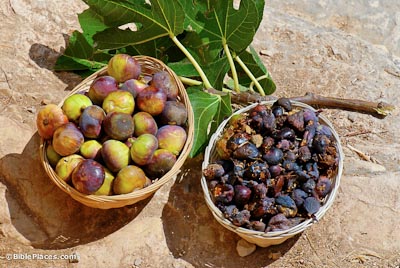
Baskets-of-good-and-bad-figs,-Jeremiah-24,-tb092506048-bibleplaces

1 The LORD showed me two baskets of figs placed before the temple of the LORD. This was after King Nebuchadrezzar of Babylon had taken into exile from Jerusalem King Jeconiah son of Jehoiakim of Judah, together with the officials of Judah, the artisans, and the smiths, and had brought them to Babylon. 2 One basket had very good figs, like first-ripe figs, but the other basket had very bad figs, so bad that they could not be eaten. 3 And the LORD said to me, “What do you see, Jeremiah?” I said, “Figs, the good figs very good, and the bad figs very bad, so bad that they cannot be eaten.”
4 Then the word of the LORD came to me: 5 Thus says the LORD, the God of Israel: Like these good figs, so I will regard as good the exiles from Judah, whom I have sent away from this place to the land of the Chaldeans. 6 I will set my eyes upon them for good, and I will bring them back to this land. I will build them up, and not tear them down; I will plant them, and not pluck them up. 7 I will give them a heart to know that I am the LORD; and they shall be my people and I will be their God, for they shall return to me with their whole heart.
8 But thus says the LORD: Like the bad figs that are so bad they cannot be eaten, so will I treat King Zedekiah of Judah, his officials, the remnant of Jerusalem who remain in this land, and those who live in the land of Egypt. 9 I will make them a horror, an evil thing, to all the kingdoms of the earth– a disgrace, a byword, a taunt, and a curse in all the places where I shall drive them. 10 And I will send sword, famine, and pestilence upon them, until they are utterly destroyed from the land that I gave to them and their ancestors.

This vision takes place in the time between the initial exile of 598 BCE and the final massive deportation of 587 BCE. In 598 BCE, when the Babylonians come and deal with the people of Judea and the city of Jerusalem without the Judeans being able to effectively oppose them they take the elite of the land into exile leaving Zedekiah to reign in place of the removed Jeconiah. For the elite taken into exile it seems like the ending of everything they know, but they are the basket of good figs. This is the same exile spoken of, for example, in the beginning of the book of Daniel:

3 Then the king commanded his palace master Ashpenaz to bring some of the Israelites of the royal family and of the nobility, 4 young men without physical defect and handsome, versed in every branch of wisdom, endowed with knowledge and insight, and competent to serve in the king’s palace; they were to be taught the literature and language of the Chaldeans. (Dan 1:3-4)

With the officials, the artisans and the smiths taken into exile with King Jeconiah, what remains to surround the newly appointed Zedekiah are those who have risen to fill the void of power left by the removal of the elite. As Binyamin Lau describes it:

Whereas the exiled leaders had the capacity for leadership, their replacements come from the dregs of society, seizing the leadership vacuum as an opportunity to accumulate power. Violence and aggression prevail as paupers become princes overnight. Might makes right. King Zedekiah, young, weak, and bankrupt, cannot control the situation. (Lau, 2013, p. 131)

To those in exile there is now a word of hope. With their homes, wealth, position and status gone now God will act on their behalf to bring them back, to plant and to give them a new heart. Perhaps in the exile they will again find what it means to be the people of God. But for those still in Judah, the new officials of Zedekiah, the city of Jerusalem and the people of the land the nightmare is not over. Zedekiah will be led once again into conflict with Babylon and Babylon’s answer will be decisive. At this time where the people remaining in the land probably look upon those in exile as cursed and themselves as blessed, Jeremiah points to the opposite reality. Their horror still remains to come, they are not yet ready to receive a word of hope. Their course will still rely upon Egypt rather than the Lord. Just as the Assyrians became the instrument of judgment for the northern kingdom of Israel according to the prophets of that time, Babylon is the instrument of God’s judgment for Jeremiah. To oppose Babylon is to oppose God’s will at this time. The baskets of figs, good and bad point to a reality that defies the reality the people are experiencing at the time. The first harvest of the people out of the land become the first-ripe figs and in Jeremiah’s world of absolutes those left on the tree have spoiled and the time when they are swept away is quickly approaching.

Jeremiah 23-A Righteous Branch and Unrighteous Prophets

Jeremiah 23: 1-7: The Righteous Branch

rootofjessebranch

1 Woe to the shepherds who destroy and scatter the sheep of my pasture! says the LORD. 2 Therefore thus says the LORD, the God of Israel, concerning the shepherds who shepherd my people: It is you who have scattered my flock, and have driven them away, and you have not attended to them. So I will attend to you for your evil doings, says the LORD. 3 Then I myself will gather the remnant of my flock out of all the lands where I have driven them, and I will bring them back to their fold, and they shall be fruitful and multiply. 4 I will raise up shepherds over them who will shepherd them, and they shall not fear any longer, or be dismayed, nor shall any be missing, says the LORD.
5 The days are surely coming, says the LORD, when I will raise up for David a righteous Branch, and he shall reign as king and deal wisely, and shall execute justice and righteousness in the land. 6 In his days Judah will be saved and Israel will live in safety. And this is the name by which he will be called: “The LORD is our righteousness.”
7 Therefore, the days are surely coming, says the LORD, when it shall no longer be said, “As the LORD lives who brought the people of Israel up out of the land of Egypt,” 8 but “As the LORD lives who brought out and led the offspring of the house of Israel out of the land of the north and out of all the lands where he had driven them.” Then they shall live in their own land.

Anyone who reads Jeremiah has to make educated guesses about the context that Jeremiah is writing to, especially when the time period is not made explicit. I see this as an extension of what comes before at the end of chapter 22 which is addressing the beginning of the exile (the first exile where the leadership is taken into exile but the people are left primarily in the land) in the time of Jechoniah and so this passage comes very late in the story of Jeremiah. The chapter verse delineations in scripture come much later and probably reflect an effort to highlight the messianic hope of this passage rather than see it buried at the end of a long chapter of judgment against the king, yet this passage probably belongs as an extension of chapter 22. Rabbi Lau has a different perspective, that it comes much earlier in the time of Josiah and contrasts between Josiah and the local leaders of his time (Lau, 2013, p. 28ff.) but this is an area where I think both Walter Brueggemann and Patrick Miller, who I have been reading as I have gone through Jeremiah, are correct. (Brueggemann, 1998, p. 205) (Elizabeth Actemeir, et. al., 1994, p. VI:744)

The themes of these verses are full of echoes throughout the prophets and in the gospels as well. The verses about the shepherds and the ways they have not been faithful is echoed in Ezekiel 34:
2 Mortal, prophesy against the shepherds of Israel: prophesy, and say to them– to the shepherds: Thus says the Lord GOD: Ah, you shepherds of Israel who have been feeding yourselves! Should not shepherds feed the sheep? 3 You eat the fat, you clothe yourselves with the wool, you slaughter the fatlings; but you do not feed the sheep. 4 You have not strengthened the weak, you have not healed the sick, you have not bound up the injured, you have not brought back the strayed, you have not sought the lost, but with force and harshness you have ruled them. 5 So they were scattered, because there was no shepherd; and scattered, they became food for all the wild animals. 6 My sheep were scattered, they wandered over all the mountains and on every high hill; my sheep were scattered over all the face of the earth, with no one to search or seek for them.
7 Therefore, you shepherds, hear the word of the LORD: 8 As I live, says the Lord GOD, because my sheep have become a prey, and my sheep have become food for all the wild animals, since there was no shepherd; and because my shepherds have not searched for my sheep, but the shepherds have fed themselves, and have not fed my sheep; 9 therefore, you shepherds, hear the word of the LORD:
10 Thus says the Lord GOD, I am against the shepherds; and I will demand my sheep at their hand, and put a stop to their feeding the sheep; no longer shall the shepherds feed themselves. I will rescue my sheep from their mouths, so that they may not be food for them. 11 For thus says the Lord GOD: I myself will search for my sheep, and will seek them out Ezekiel 34: 2-11
And is echoed in John chapter 10 where Jesus talks about being the good shepherd in contrast to the previous shepherd, or in Mark 6: 34 where the people are discussed as sheep without a shepherd. Here in Jeremiah at the end of verse four the promise is for a new and faithful shepherd who will come. After a long passage of judgment now comes the hope of the coming days.
Again the passage about the righteous branch has echoes in other places as well, for example in Isaiah 11:
A shoot shall come out of the stump of Jesse, and a branch shall grow out of his roots. Isaiah 11:1
And the hope is that out of the defunct lineage of David which seems to be coming to an end that the God of Israel will maintain the commitment to the line of David and from that line will raise up a righteous branch who will live out of the vision of the Lord’s peace. And the renewal that the Lord will bring will make even the paradigmatic event of the Jewish people’s story, the Exodus, take second place to the new renewal that the Lord will do when the people are returned from exile. This is a story of hope for at least two sets of people: for the Jewish people it was a hope of renewal and return with a righteous and faithful king where God would gather from all the lands of the diaspora God’s people once again, and for Christians is also is an image of hope for from the story of Jesus we cannot help but hear that story in the hope of the righteous branch that arises out of the line of David. One passage can bring hope in two different ways, and hearing the hope of one another should also help us to see our dependence upon the Hebrew Scriptures to understand the life and ministry and hope of Jesus and his followers.

Jeremiah 23: 9-40: The Failure of the Prophets

The Breaking of Jeremiah's Yoke by Hananiah, Cathedral of Notre Dame, Amiens, France

The Breaking of Jeremiah’s Yoke by Hananiah, Cathedral of Notre Dame, Amiens, France

9 Concerning the prophets:
My heart is crushed within me, all my bones shake;
I have become like a drunkard, like one overcome by wine,
because of the LORD and because of his holy words.
10 For the land is full of adulterers; because of the curse the land mourns,
and the pastures of the wilderness are dried up.
Their course has been evil, and their might is not right.
11 Both prophet and priest are ungodly;
even in my house I have found their wickedness, says the LORD.
12 Therefore their way shall be to them like slippery paths in the darkness,
into which they shall be driven and fall;
for I will bring disaster upon them in the year of their punishment, says the LORD.
13 In the prophets of Samaria I saw a disgusting thing:
they prophesied by Baal and led my people Israel astray.
14 But in the prophets of Jerusalem I have seen a more shocking thing:
they commit adultery and walk in lies;
they strengthen the hands of evildoers, so that no one turns from wickedness;
all of them have become like Sodom to me, and its inhabitants like Gomorrah.
15 Therefore thus says the LORD of hosts concerning the prophets:
“I am going to make them eat wormwood, and give them poisoned water to drink;
for from the prophets of Jerusalem ungodliness has spread throughout the land.”
16 Thus says the LORD of hosts: Do not listen to the words of the prophets who prophesy to you; they are deluding you. They speak visions of their own minds, not from the mouth of the LORD. 17 They keep saying to those who despise the word of the LORD, “It shall be well with you”; and to all who stubbornly follow their own stubborn hearts, they say, “No calamity shall come upon you.”
18 For who has stood in the council of the LORD so as to see and to hear his word?
Who has given heed to his word so as to proclaim it?
19 Look, the storm of the LORD! Wrath has gone forth, a whirling tempest;
it will burst upon the head of the wicked.
20 The anger of the LORD will not turn back
until he has executed and accomplished the intents of his mind.
In the latter days you will understand it clearly.
21 I did not send the prophets, yet they ran;
I did not speak to them, yet they prophesied.
22 But if they had stood in my council,
then they would have proclaimed my words to my people,
and they would have turned them from their evil way,
and from the evil of their doings.
23 Am I a God near by, says the LORD, and not a God far off? 24 Who can hide in secret places so that I cannot see them? says the LORD. Do I not fill heaven and earth? says the LORD. 25 I have heard what the prophets have said who prophesy lies in my name, saying, “I have dreamed, I have dreamed!” 26 How long? Will the hearts of the prophets ever turn back– those who prophesy lies, and who prophesy the deceit of their own heart? 27 They plan to make my people forget my name by their dreams that they tell one another, just as their ancestors forgot my name for Baal. 28 Let the prophet who has a dream tell the dream, but let the one who has my word speak my word faithfully. What has straw in common with wheat? says the LORD. 29 Is not my word like fire, says the LORD, and like a hammer that breaks a rock in pieces? 30 See, therefore, I am against the prophets, says the LORD, who steal my words from one another. 31 See, I am against the prophets, says the LORD, who use their own tongues and say, “Says the LORD.” 32 See, I am against those who prophesy lying dreams, says the LORD, and who tell them, and who lead my people astray by their lies and their recklessness, when I did not send them or appoint them; so they do not profit this people at all, says the LORD.
33 When this people, or a prophet, or a priest asks you, “What is the burden of the LORD?” you shall say to them, “You are the burden, and I will cast you off, says the LORD.” 34 And as for the prophet, priest, or the people who say, “The burden of the LORD,” I will punish them and their households. 35 Thus shall you say to one another, among yourselves, “What has the LORD answered?” or “What has the LORD spoken?” 36 But “the burden of the LORD” you shall mention no more, for the burden is everyone’s own word, and so you pervert the words of the living God, the LORD of hosts, our God. 37 Thus you shall ask the prophet, “What has the LORD answered you?” or “What has the LORD spoken?” 38 But if you say, “the burden of the LORD,” thus says the LORD: Because you have said these words, “the burden of the LORD,” when I sent to you, saying, You shall not say, “the burden of the LORD,” 39 therefore, I will surely lift you up and cast you away from my presence, you and the city that I gave to you and your ancestors. 40 And I will bring upon you everlasting disgrace and perpetual shame, which shall not be forgotten.

First the critique goes towards the ruling elite, the shepherds, the king but now it turn on the religious authorities and in particular the other prophets. There are several points in the book of Jeremiah where we hear about other prophets who are proclaiming a different message than Jeremiah is called to proclaim and the people hear different religious authorities proclaiming a very different message, or more likely they hear Jeremiah as a voice that is so different from the message others are saying that he goes unheard. In giving the people a false message they have prevented the people from having a realistic hope of turning. The narratives from the political and religious elites are going in the opposite direction of the proclamation given to Jeremiah. They proclaim an unconditional peace which serves the people rather than the covenantal shalom which calls the people to live in justice.
Perhaps these other prophets feel compelled to live into their roles, prophets are supposed to have a message from the Lord, dreams to dreams and visions to tell and so in the absence of these visions they have kept up the appearance, or perhaps the prophets have been coopted into the royal and priestly power systems to be additional mouthpieces for these authorities. Whatever the case they have failed in their calling, according to Jeremiah they are producing only lies and false visions and they are leading the people astray. They have become worse than the prophets of northern Israel which led Israel to worship Baal, for they perhaps are constructing a misleading image of the Lord. God’s judgment is on the prophets who have misled the people. Their condemnation will be harsher, everlasting disgrace and perpetual shame, and unlike the promise of a righteous branch that will arise out of the stump of Jesse, there is no promise for the prophets-they are also to be cast out of the city.

purple rose 01 by picsofflowers.blogspot.com

Jeremiah 22: Justice, the King and Judgment

Justice and the Covenant

Gustav Dore, Jeremiah Preaching (1865)

Gustav Dore, Jeremiah Preaching (1865)

1 Thus says the LORD: Go down to the house of the king of Judah, and speak there this word, 2 and say: Hear the word of the LORD, O King of Judah sitting on the throne of David– you, and your servants, and your people who enter these gates. 3 Thus says the LORD: Act with justice and righteousness, and deliver from the hand of the oppressor anyone who has been robbed. And do no wrong or violence to the alien, the orphan, and the widow, or shed innocent blood in this place. 4 For if you will indeed obey this word, then through the gates of this house shall enter kings who sit on the throne of David, riding in chariots and on horses, they, and their servants, and their people. 5 But if you will not heed these words, I swear by myself, says the LORD, that this house shall become a desolation. 6 For thus says the LORD concerning the house of the king of Judah:
You are like Gilead to me, like the summit of Lebanon;
but I swear that I will make you a desert, an uninhabited city.
7 I will prepare destroyers against you, all with their weapons;
they shall cut down your choicest cedars and cast them into the fire.
8 And many nations will pass by this city, and all of them will say one to another, “Why has the LORD dealt in this way with that great city?” 9 And they will answer, “Because they abandoned the covenant of the LORD their God, and worshiped other gods and served them.”
10 Do not weep for him who is dead, nor bemoan him;
weep rather for him who goes away, for he shall return no more to see his native land.

Two conflicting views of reality are coming into conflict between the prophetic and the royal ideologies of the day. Jeremiah’s worldview comes out of the Mosaic and particular the Deuteronomic covenant where the covenant is conditional, if the people live into the vision that God has set before them they will be bless and if they do not they shall be cursed. For example the structure of Deuteronomy 28 illustrates this well:
If you will only obey the LORD your God, by diligently observing all his commandments that I am commanding you today, the LORD your God will set you high above all the nations of the earth; 2all the blessings shall come upon you and overtake you, if you obey your God:….
But if you will not obey the LORD your God by diligently observing all his commandments and decrees, which I am commanding you today, then all these curses shall come upon you and overtake you:
Deuteronomy 28: 1,2,15
And the prophetic voice interprets these obligations primarily not in terms of cultic actions but in terms of living in justice/righteousness (justice and righteousness are the same word families in both Hebrew and Greek). In contrast the royal ideology views God’s commitment as unconditional, so long as there is a Davidic king and a temple God will not forsake God’s people. The prophet Jeremiah tries again and again to call the people and the rulers back to the vision of justice and righteousness. They are charged again to not shed innocent blood, to care for the weakest of the society, the widows and orphans, and their success is conditional upon their living out of this justice. In contrast to the desire to accumulate more and more wealth among the elite as a way of securing their position, Jeremiah points to the practice of justice and righteousness as a condition for their security which ultimately comes from God. Numerous passages throughout the prophets echo this sentiment, perhaps one of the most well known being from Amos:
But let justice roll down like waters, and righteousness like an ever-flowing stream. Amos 5: 24

The King Of No Account

Vultures around a Dead Donkey

Vultures around a Dead Donkey

11 For thus says the LORD concerning Shallum son of King Josiah of Judah, who succeeded his father Josiah, and who went away from this place: He shall return here no more, 12 but in the place where they have carried him captive he shall die, and he shall never see this land again.
13 Woe to him who builds his house by unrighteousness, and his upper rooms by injustice;
who makes his neighbors work for nothing, and does not give them their wages;
14 who says, “I will build myself a spacious house with large upper rooms,”
and who cuts out windows for it, paneling it with cedar, and painting it with vermilion.
15 Are you a king because you compete in cedar?
Did not your father eat and drink and do justice and righteousness?
Then it was well with him.
16 He judged the cause of the poor and needy; then it was well.
Is not this to know me? says the LORD.
17 But your eyes and heart are only on your dishonest gain,
for shedding innocent blood, and for practicing oppression and violence.
18 Therefore thus says the LORD concerning King Jehoiakim son of Josiah of Judah: They shall not lament for him, saying, “Alas, my brother!” or “Alas, sister!” They shall not lament for him, saying, “Alas, lord!” or “Alas, his majesty!” 19 With the burial of a donkey he shall be buried– dragged off and thrown out beyond the gates of Jerusalem.
20 Go up to Lebanon, and cry out, and lift up your voice in Bashan;
cry out from Abarim, for all your lovers are crushed.
21 I spoke to you in your prosperity, but you said,
“I will not listen.” This has been your way from your youth,
for you have not obeyed my voice.
22 The wind shall shepherd all your shepherds,
and your lovers shall go into captivity;
then you will be ashamed and dismayed because of all your wickedness.
23 O inhabitant of Lebanon, nested among the cedars,
how you will groan when pangs come upon you, pain as of a woman in labor!
24 As I live, says the LORD, even if King Coniah son of Jehoiakim of Judah were the signet ring on my right hand, even from there I would tear you off 25 and give you into the hands of those who seek your life, into the hands of those of whom you are afraid, even into the hands of King Nebuchadrezzar of Babylon and into the hands of the Chaldeans. 26 I will hurl you and the mother who bore you into another country, where you were not born, and there you shall die. 27 But they shall not return to the land to which they long to return.
28 Is this man Coniah a despised broken pot, a vessel no one wants?
Why are he and his offspring hurled out and cast away in a land that they do not know?
29 O land, land, land, hear the word of the LORD!
30 Thus says the LORD: Record this man as childless,
a man who shall not succeed in his days;
for none of his offspring shall succeed in sitting on the throne of David,
and ruling again in Judah.

Much of the ire of the prophets is directed at the kings, and we need to remember that this is a time much different from our own. In an age where the vast majority of the population was illiterate and relied on the kings and the elites of the society to establish the systems of justice that the society operated within. As Brueggeman accurately states, “The conduct of the king is decisive for the weal or woe of the entire social system.” (Brueggemann, 1998, p. 194) and so here at the end of the Davidic monarchy, at the point where the elites are being taken into exile, including King Jehoiakim and his son Jeconiah (here referred to as Coniah) who is contrasted to his well respected father/grandfather Josiah. He is of no account, he will not have the honors he desires, instead of an honorable death Jeremiah declares he will have the death of a donkey—simply thrown beyond the gates. God is done with Jeconiah, ready to cast him off. In contrast to Josiah who rebuilt the temple, his son and grandson are accused with surrounding themselves with luxury far greater. This is not a new critique, it goes at least as far back as Solomon when the amount of resources placed into the temple is compared with the amount of time and resources that go into the construction of Solomon’s houses. Yet in contrast to Jeremiah’s words at the end of this chapter about his being recorded childless, when the people return to Jerusalem under the Persian empire it will be Zerubabbel, the grandson of Jeconiah will be leading the people home. The grandson of the one who if he was a signet ring on the LORD’s finger he would be cast off will experience the reversal of being the signet ring that is put back on after the exile is over.

On that day, says the LORD of hosts, I will take you, O Zerubbabel my servant, son of Shealtiel, says the LORD, and make you like a signet ring; for I have chosen you, says the LORD of hosts. Haggai 2: 24

And the harsh words of Jeremiah about the type of death Jehoiakim (or Jehoiachin) would receive seem also not to come to pass as the ending of 2 Kings points to:

27 In the thirty-seventh year of the exile of King Jehoiachin of Judah, in the twelfth month, on the twenty-seventh day of the month, King Evil-merodach of Babylon, in the year that he began to reign, released King Jehoiachin of Judah from prison; 28 he spoke kindly to him, and gave him a seat above the other seats of the kings who were with him in Babylon. 29 So Jehoiachin put aside his prison clothes. Every day of his life he dined regularly in the king’s presence. 30 For his allowance, a regular allowance was given him by the king, a portion every day, as long as he lived. 2 Kings 25: 27-30

Jeremiah 21: The Kingdom Laid Low

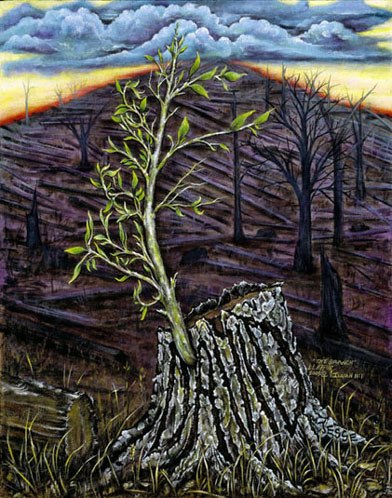
stump_by_abstractmatter-d5c3key

Jeremiah 21

This is the word that came to Jeremiah from the LORD, when King Zedekiah sent to him Pashhur son of Malchiah and the priest Zephaniah son of Maaseiah, saying, 2 “Please inquire of the LORD on our behalf, for King Nebuchadrezzar of Babylon is making war against us; perhaps the LORD will perform a wonderful deed for us, as he has often done, and will make him withdraw from us.”

 3 Then Jeremiah said to them: 4 Thus you shall say to Zedekiah: Thus says the LORD, the God of Israel: I am going to turn back the weapons of war that are in your hands and with which you are fighting against the king of Babylon and against the Chaldeans who are besieging you outside the walls; and I will bring them together into the center of this city. 5 I myself will fight against you with outstretched hand and mighty arm, in anger, in fury, and in great wrath. 6 And I will strike down the inhabitants of this city, both human beings and animals; they shall die of a great pestilence.

 7 Afterward, says the LORD, I will give King Zedekiah of Judah, and his servants, and the people in this city– those who survive the pestilence, sword, and famine– into the hands of King Nebuchadrezzar of Babylon, into the hands of their enemies, into the hands of those who seek their lives. He shall strike them down with the edge of the sword; he shall not pity them, or spare them, or have compassion.

 8 And to this people you shall say: Thus says the LORD: See, I am setting before you the way of life and the way of death. 9 Those who stay in this city shall die by the sword, by famine, and by pestilence; but those who go out and surrender to the Chaldeans who are besieging you shall live and shall have their lives as a prize of war. 10 For I have set my face against this city for evil and not for good, says the LORD: it shall be given into the hands of the king of Babylon, and he shall burn it with fire.

                11 To the house of the king of Judah say: Hear the word of the LORD, 12 O house of David! Thus says the LORD:

Execute justice in the morning,

and deliver from the hand of the oppressor

anyone who has been robbed,

or else my wrath will go forth like fire,

and burn, with no one to quench it,

because of your evil doings.

                13 See, I am against you, O inhabitant of the valley,

                O rock of the plain, says the LORD;

you who say, “Who can come down against us,

or who can enter our places of refuge?”

14 I will punish you according to the fruit of your doings, says the LORD;

I will kindle a fire in its forest, and it shall devour all that is around it.

A little context helps to make sense of this passage. So many times people had not wanted to hear Jeremiah’s words but now the king sends Passhur, a different Passhur from the previous chapter, and Zephaniah to seek the prophet’s words. King Zedekiah was appointed in the time between the two exiles as a puppet king of the Nebuchadrezzar, a child of Josiah was left to rule over a bankrupt kingdom with most of its leaders taken into exile into Babylon after the first time the Babylonians conquered the city, and as Rabbi Lau paints the picture

Whereas the exiled leaders had the capacity for leadership, their replacements come from the dregs of society, seizing the leadership vacuum as an opportunity to accumulate power. Violence and aggression prevails as paupers become princes overnight. (Lau, 2013, p. 131)

In the nine years between 597 and 586 BCE the majority of the people of the land remain in Judea, but there are many who long for Judea’s former status as an independent nation. In 594 BCE there is a regional summit of the nations in the region in which the leadership sets a pro-Egypt and anti-Babylonian policy. When Judea begins to delay making its payments of dues to the Babylonian empire they are slow to respond, trying to resolve things diplomatically, but by 588 BCE it is clear to the Babylonians that more drastic measures are called for and they launch a punitive campaign against Judah. Every hope seems dashed, the support they desired from Egypt has not been delivered, the Babylonians are rolling over the fortified cities to the north of Jerusalem and nothing seems to be stopping their advance, so Zedekiah sends to Jeremiah in a last gasp of hope.

This is the time immediately before the final exile in 586 BCE the king and his entourage see the writing on the wall and hope for a rewrite, but God is not giving them the answer they seek. There is no undoing the bad decisions of the past, the ways they have trusted in their own strength or their alliances with other nations and not in God and no eleventh hour return is going to stay the consequences of their actions at this point. Even beyond surrendering the people to the consequences of their own actions, God is against the people at this point. The only way out the prophet gives is surrender, to abandon the city and beg for the mercy of the Babylonians. There is a way to life, but it leads through the death of all that is known before. The last sprout of the Davidic line of kings is about to be chopped down, the city left as a waste and the people of the land will soon be landless. They are entering the time of broken dreams and hopes were all that is to be seen in the immediate future is desolation and despair. This is not the end of the story, but it is the hell that the people and the prophet will endure in their immediate future and their only hope is that, as in ages past, their God will look down and see their oppression in a foreign land and bring them out once again with a mighty hand.

purple rose 01 by picsofflowers.blogspot.com

Jeremiah 20: The Abused Prophet

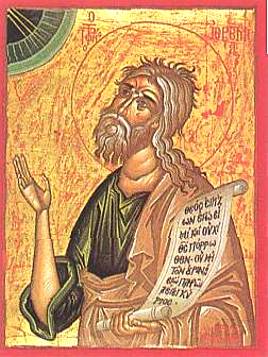
Orthodox Icon of the Prophet Jeremiah

Orthodox Icon of the Prophet Jeremiah

Jeremiah 20: 1-6

Now the priest Pashhur son of Immer, who was chief officer in the house of the LORD, heard Jeremiah prophesying these things. 2 Then Pashhur struck the prophet Jeremiah, and put him in the stocks that were in the upper Benjamin Gate of the house of the LORD. 3 The next morning when Pashhur released Jeremiah from the stocks, Jeremiah said to him, The LORD has named you not Pashhur but “Terror-all-around.” 4 For thus says the LORD: I am making you a terror to yourself and to all your friends; and they shall fall by the sword of their enemies while you look on. And I will give all Judah into the hand of the king of Babylon; he shall carry them captive to Babylon, and shall kill them with the sword. 5 I will give all the wealth of this city, all its gains, all its prized belongings, and all the treasures of the kings of Judah into the hand of their enemies, who shall plunder them, and seize them, and carry them to Babylon. 6 And you, Pashhur, and all who live in your house, shall go into captivity, and to Babylon you shall go; there you shall die, and there you shall be buried, you and all your friends, to whom you have prophesied falsely.

To be a prophet means that you will challenge the way things are, that you will incur the wrath of those who disagree with you, and that there will be consequences.  People don’t want to hear bad news, they often don’t want to hear what they are doing wrong, and especially within the context of the Temple or a church there can be a certain self-righteousness that looks down and says, “how dare you challenge me in this way.” Jeremiah is struck and placed in the stocks overnight, not a fun proposition but not one that is probably a significant deterrent, it is like spending overnight in jail for participating in a protest. Jeremiah is not deterred, he immediately turns to curse Pashhur, who struck him and placed him in stocks. Pashhur is:

Renamed to be identified with the horror that is coming
He will be a terror to himself and those he cares about
He will have to watch the destruction of his homeland and go into exile
He will watch his friends die, the things he trusted in destroyed
He will die, his friends will all die not here but in exile and their bodies will not return home
If this isn’t a curse, I don’t know what is. Jeremiah has endured much and has more to endure but we see him giving vent to one of his persecutors. Next we’ll see him vent to God.

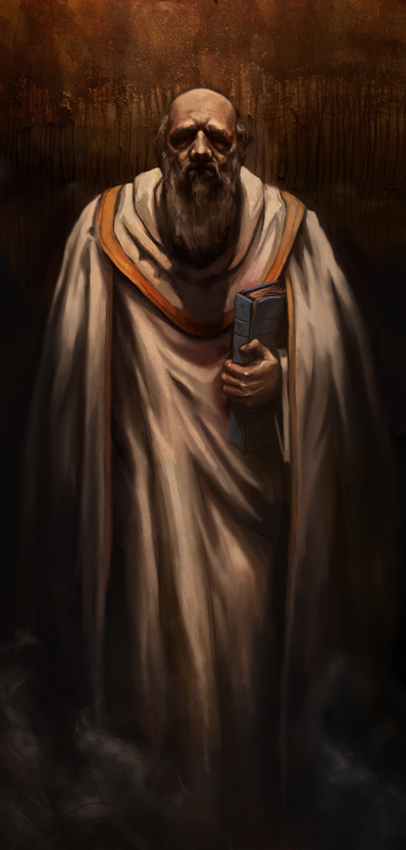
The Prophet (nogard86 at deviantart.com)

The Prophet (nogard86 at deviantart.com)

Jeremiah 20: 7-18

7 O LORD, you have enticed me, and I was enticed;
you have overpowered me, and you have prevailed.
 I have become a laughingstock all day long; everyone mocks me.
 8 For whenever I speak, I must cry out, I must shout, “Violence and destruction!”
 For the word of the LORD has become for me a reproach and derision all day long.
 9 If I say, “I will not mention him, or speak any more in his name,”
 then within me there is something like a burning fire shut up in my bones;
I am weary with holding it in, and I cannot.
 10 For I hear many whispering:
 “Terror is all around! Denounce him! Let us denounce him!”
 All my close friends are watching for me to stumble.
“Perhaps he can be enticed, and we can prevail against him, and take our revenge on him.”
                11 But the LORD is with me like a dread warrior;
 therefore my persecutors will stumble, and they will not prevail.
They will be greatly shamed, for they will not succeed.
 Their eternal dishonor will never be forgotten.
                12 O LORD of hosts, you test the righteous, you see the heart and the mind;
 let me see your retribution upon them, for to you I have committed my cause.
 13 Sing to the LORD; praise the LORD!
For he has delivered the life of the needy from the hands of evildoers.
 14 Cursed be the day on which I was born! The day when my mother bore me,
let it not be blessed!
 15 Cursed be the man who brought the news to my father, saying,
“A child is born to you, a son,” making him very glad.
 16 Let that man be like the cities that the LORD overthrew without pity;
 let him hear a cry in the morning and an alarm at noon,
 17 because he did not kill me in the womb;
 so my mother would have been my grave, and her womb forever great.
 18 Why did I come forth from the womb to see toil and sorrow, and spend my days in shame?

This is pathos (suffering) laced language, and while some would want to break apart these verses between 7-10 where Jeremiah complains, 11-12 when Jeremiah turns to hope, 13 which bursts into praise and then 14-18 where self hatred and the desire for death come up I think they are all connected and need to be held together. This is a faithful monologue, it is difficult to hear, much less to find yourself needing to utter words like this, but it is the story of a faithful one abused, trying with everything within himself to trust God, to believe as he once did, and yet in the end there is the wish for it all to be over. The language is strong, stronger even than the NRSVs translation. As Brueggemann states: “The verb rendered “deceived” (NRSV enticed) could be rendered more strongly as “harassed,” “taken advantage of,” “abused,” even “raped.””[i] Jeremiah actually says either God you abused me or God you raped me (which fits well with the language of overpowering in the following verse). God has violated the prophet’s trust with the message he has been given, with the abuse he has endured, with the pain of announcing death and destruction. A person would have to be sick to want to be the bearer of a message of death. No doctor comes out cheerfully to tell a mother their child has died, no officer wants to write to a family their son or daughter will never return home, and yet Jeremiah is given the unwanted message that not only will many people die, but the temple and the city will be destroyed, that those who survive will be taken away as exiles to a foreign land. Jeremiah wants out, he no longer wants to speak, he no longer wants to be a prophet. “Just let me be like everyone else!” and yet God will not allow him to stay silent. Jeremiah is tired, ready to be done, ready to announce a message people want to hear and yet that is not his calling, at least not yet. The time of disaster is approaching.

Jeremiah cries for revenge on those who are persecuting him, and probably most painfully former friends. Jeremiah wants God to act, and yet on the other hand probably doesn’t because he knows at least in some shadowy way the disaster that is rapidly approaching and has no power to stop it. He desperately wants to believe and hope in God, desperately wants God to deliver him from this moment. He wants to sing, he tries to talk himself into it and quickly slides into a question of “what is it all for?” Wishing he was never born, even though earlier in Jeremiah 1 he was shaped in his mother’s womb now he wishes he died there.

What do we do with laments like this, with the heartbroken language of the wounded and weeping prophet? First I think we need to realize this is faithful language and that there may be those in our midst who can all too easily identify with what the prophet is saying. I know I find some resonance and can point to times in my life where the words I said were different but the feelings were essentially the same: I wanted to believe, and I felt abused, I wanted to hope and yet right now I just wanted it all over with. Jeremiah is given a hard task and he feels abandoned by God, and no simple statements of God’s presence will cure the broken heart in the moment. But Jeremiah does not give up on God any more than I believe God wants to give up on God’s people.


[i] Brueggemann, Jeremiah, 181.

Jeremiah 19: Broken Jugs

Jeremiah 19

Jeremiah by James Tissot

Jeremiah by James Tissot

Thus said the LORD: Go and buy a potter’s earthenware jug. Take with you some of the elders of the people and some of the senior priests, 2 and go out to the valley of the son of Hinnom at the entry of the Potsherd Gate, and proclaim there the words that I tell you. 3 You shall say: Hear the word of the LORD, O kings of Judah and inhabitants of Jerusalem. Thus says the LORD of hosts, the God of Israel: I am going to bring such disaster upon this place that the ears of everyone who hears of it will tingle. 4 Because the people have forsaken me, and have profaned this place by making offerings in it to other gods whom neither they nor their ancestors nor the kings of Judah have known; and because they have filled this place with the blood of the innocent, 5 and gone on building the high places of Baal to burn their children in the fire as burnt offerings to Baal, which I did not command or decree, nor did it enter my mind. 6 Therefore the days are surely coming, says the LORD, when this place shall no more be called Topheth, or the valley of the son of Hinnom, but the valley of Slaughter. 7 And in this place I will make void the plans of Judah and Jerusalem, and will make them fall by the sword before their enemies, and by the hand of those who seek their life. I will give their dead bodies for food to the birds of the air and to the wild animals of the earth. 8 And I will make this city a horror, a thing to be hissed at; everyone who passes by it will be horrified and will hiss because of all its disasters. 9 And I will make them eat the flesh of their sons and the flesh of their daughters, and all shall eat the flesh of their neighbors in the siege, and in the distress with which their enemies and those who seek their life afflict them.

10 Then you shall break the jug in the sight of those who go with you, 11 and shall say to them: Thus says the LORD of hosts: So will I break this people and this city, as one breaks a potter’s vessel, so that it can never be mended. In Topheth they shall bury until there is no more room to bury. 12 Thus will I do to this place, says the LORD, and to its inhabitants, making this city like Topheth. 13 And the houses of Jerusalem and the houses of the kings of Judah shall be defiled like the place of Topheth– all the houses upon whose roofs offerings have been made to the whole host of heaven, and libations have been poured out to other gods.

 14 When Jeremiah came from Topheth, where the LORD had sent him to prophesy, he stood in the court of the LORD’s house and said to all the people: 15 Thus says the LORD of hosts, the God of Israel: I am now bringing upon this city and upon all its towns all the disaster that I have pronounced against it, because they have stiffened their necks, refusing to hear my words.

What do you do with texts like this, where God’s heart is so broken that God rhetorically lashes out. How do you encounter the Lord who is so caught in God’s own pain over the abandonment of the people of God, how does the prophet react? This is rhetorical overkill and it is challenging to see the God of love present in the midst of cannibalism, horror, disaster, and slaughter. Is God so mad that, to use the language of Jeremiah in this section God is willing to pay back the sacrifices of some sons and daughters with filling Topheth with corpses that lie unburied for the animals to eat? Is this God we find in Jeremiah really what the ancient heretic Marcion would have called the evil demiurge, or is there perhaps something else we need to consider? For myself I believe there is.

In the time of Jeremiah life in Jerusalem has become ordered in such a way, a way that was so counter to the desire of shalom that the city was named for (Jeru-shalom- city of peace) that it is now a place where the Lord feels an outcast. Whether the idolatry was as drastic as the prophet announces is difficult to know, but life was no longer oriented around the Lord-and for the people of God when God’s power of life is absent death comes quickly (to paraphrase Brueggeman in his commentary on Jeremiah). Perhaps this rhetorical overkill is something like the effect of commercials turning up the volume to attempt to get a viewer or listener lulled into complacency to sit up and take notice. I am sure that for many in Jerusalem the thought of Babylon coming, laying siege to the city and taking the people into exile could never happen there. They are Jerusalem, they have a Davidic king, they have the temple, God turned away the Assyrians before: siege, plunder, exile, cannibalism-it can’t happen here.

Yet, one thing that is noticeable is that it never says the prophet delivers this over the top rhetoric, rather he tones it down “all the disaster that I have pronounced” is substituted for 13 verses of horror, and the court of the Lord’s house substitutes for Topheth, but the prophet in a very real way serves as a shock absorber for the message. Either the prophet endures the rhetoric of wrath on behalf of the people or the prophet spares us, the readers from reading the horror once again.

Jeremiah, like all the prophets do not attempt to be systematic theologians, rather they are more like poets and their language while powerful and evocative should not be read as legal treatises on the nature of God. Jeremiah allows us to see into the pain of God, and to endure with the wounded God the loss of a people and God’s struggle with how to deal with the abandonment by God’s people. If you want to find a God of wrath, the material is certainly there in scripture-but as a Lutheran I come from the perspective of a God who is love and so I have to wrestle with the rhetoric of Jeremiah and the woundedness of God. There may not always be easy answers, but like the Psalms this is more the poetic language of emotion rather than the language of logic.

purple rose 01 by picsofflowers.blogspot.com