Category Archives: Biblical Reflections

Psalm 6- How Long, O LORD

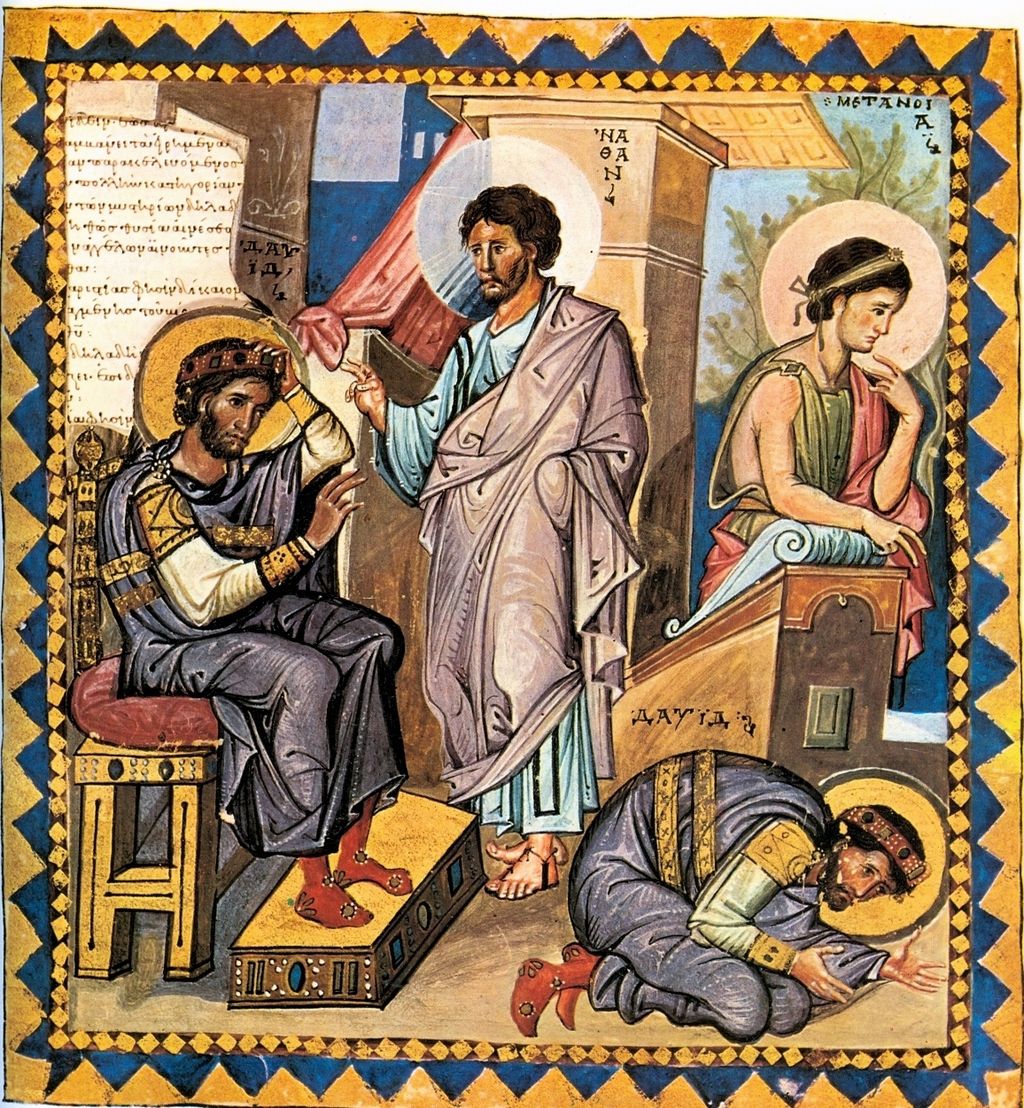
Paris Psalter, folio 136v  'Reproched de Nathan a David, David penitent

Paris Psalter, folio 136v ‘Reproched de Nathan a David, David penitent

  Psalm 6

<To the leader: with stringed instruments; according to The Sheminith. A Psalm of David.>
O LORD, do not rebuke me in your anger, or discipline me in your wrath.
 2 Be gracious to me, O LORD, for I am languishing;
O LORD, heal me, for my bones are shaking with terror.
 3 My soul also is struck with terror, while you, O LORD– how long?
 4 Turn, O LORD, save my life; deliver me for the sake of your steadfast love.
 5 For in death there is no remembrance of you; in Sheol who can give you praise?
 6 I am weary with my moaning; every night I flood my bed with tears;
 I drench my couch with my weeping.
 7 My eyes waste away because of grief; they grow weak because of all my foes.
 8 Depart from me, all you workers of evil, for the LORD has heard the sound of my weeping.
 9 The LORD has heard my supplication; the LORD accepts my prayer.
 10 All my enemies shall be ashamed and struck with terror;
they shall turn back, and in a moment be put to shame.
 

We will never know the situation that any particular Psalm is spoken originally from, except perhaps in cases where the Psalm itself gives us clues. Psalm 6 cries out in terms that reflect in turn a sense of alienation from God’s steadfast love, physical ailment or illness, anxiety and depression, and persecution by enemies and it is possible that all of these were afflicting the Psalmist at one particular moment or that the Psalmist may have used language and memory of these experiences to speak to the distress they feel in the moment as they cry out to the LORD. The Psalmist views their life as resting in the LORD’s hands and begins the appeal directly to God, crying out the name of the LORD. The Psalmist appeals for God’s graciousness not for the Psalmists own merit or worthiness but out of God’s hesed (steadfast love). In language that appears frequently through the psalter, the Psalmist speaks of their anguish and asks for God to end it. God’s anger may not be the only struggle of the Psalmist but it is the decisive one, for God’s anger is what the Psalmist is crying out for God to set aside so that they may be healed and their enemies may be put to shame.

The Psalmist cries out ‘how long’ and pleads for God to turn and relieve the poet’s suffering. Whether the poet is literally suffering in their bones (vs. 2) soul (vs. 3) and eyes (vs.7) there is a connection between external stresses and physical symptoms. As Rolf Jacobson aptly states, “anguish can dehumanize a sufferer, so that one’s sense of self is reduced to pain in one’s bones, body skin.” (Nancy de Clarisse-Walford, 2014, p. 105) Crying out how long while a traditional cry of lament also may indicate that the “pain described is no longer bearable and the speaker is at the breaking point. The intent of the phrase is to mobilize YHWH in a moment of desperate need.” (Brueggemann, 2014, p. 48) And perhaps if the question how long can be answered the Psalmist can endure until the LORD’s anger has passed.

This is one of the first Psalms we deal with the anger of God in relation to the faithful one, the Psalmist who cries out in lament. God’s anger is a necessary corollary of God’s love or as Jim Nieman, my preaching instructor years ago put it, “God’s anger is not the opposite of God’s love, God’s indifference would be the opposite of God’s love.” God’s love is not a sweet sentimentality to the Psalmist or throughout the Bible. God may care for and love me, but God also loves my neighbor and when my actions result in suffering or death to my neighbor then God’s anger arises from that love. Yet God’s steadfast love is always stronger than God’s anger and God’s anger is always connected to that love. (Nancy de Clarisse-Walford, 2014, p. 107)

The Psalmist trusts that in going to the LORD in lament that the Psalmist words are heard. Faith is far more than an optimistic state of mind for the Hebrew people, it is an active calling upon God to act according to God’s steadfast love precisely from the position of suffering. Even though God’s ways may be unknowable at times and mysterious there is still potent power in crying out to the LORD and that God actively hears and intervenes in their lives and in their world. And from my own experience it is often these times of questioning and suffering and anguish where later we can see the faith of the one who endures and cries out deepened. It is a fuller faith that trusts in a God who is present in the midst of the times of joy and the times of tears. A life which can endure the times where our bed is flooded with tears because we know in God’s mysterious time that God’s steadfast love will show itself and that God’s steadfast love will last longer than the suffering or the anger.  That eventually the LORD does hear the sound of the Psalmist, ancient and contemporary, weeping and that the LORD does act upon these pleading words.

One final note on the Psalm in verse 5 where it mentions “for in death there is no remembrance of you; in Sheol who can give you praise?” In ancient Israel there is not yet a hope for a resurrection of the dead or anything more than a shadowy existence in the afterlife. Thinking about the resurrection is something that emerges much later and is up for debate at the time of Jesus. In the New Testament this will be a part of the disagreement between the Sadducees and the Pharisees. At the time the Psalms are written they are written with a very earthly understanding of God’s blessings and God’s anger. God’s steadfast love was a worldly reality that unfolded in the ways God took care of God’s people (or disciplined God’s people) and this may be hard for us to approach in the same way today in a secular world where we no longer think of unseen forces moving on our world but part of the Christian and Jewish understanding of reality is that God does act upon our world. For Christians it becomes a part of the Lord’s Prayer when we pray, ‘thy will be done on earth as it is in heaven.’

Psalm 5- The God Who Hears and Protects

Gustave Dore, David Mourning Absalom (1866)

Gustave Dore, David Mourning Absalom (1866)

Psalm 5

<To the leader: for the flutes. A Psalm of David.>
 Give ear to my words, O LORD;give heed to my sighing.
 2 Listen to the sound of my cry, my King and my God, for to you I pray.
 3 O LORD, in the morning you hear my voice; in the morning I plead my case to you, and watch.
 4 For you are not a God who delights in wickedness; evil will not sojourn with you.
 5 The boastful will not stand before your eyes; you hate all evildoers.
 6 You destroy those who speak lies;the LORD abhors the bloodthirsty and deceitful.
 7 But I, through the abundance of your steadfast love, will enter your house,
 I will bow down toward your holy temple in awe of you.
 8 Lead me, O LORD, in your righteousness because of my enemies;
 make your way straight before me.
 9 For there is no truth in their mouths; their hearts are destruction;
their throats are open graves; they flatter with their tongues.
 10 Make them bear their guilt, O God;let them fall by their own counsels;
because of their many transgressions cast them out, for they have rebelled against you.
 11 But let all who take refuge in you rejoice;let them ever sing for joy.
Spread your protection over them,so that those who love your name may exult in you.
 12 For you bless the righteous, O LORD;you cover them with favor as with a shield.


The God of the Psalmist, and the God presented throughout the bible, is a God who takes sides and values certain things and does not like others. This is not the impassive, unmoved mover of the philosophy of the 1700s-1900s who set the world in motion and then allowed it to move through time like a machine. The passionate cries of the Psalmist assume a God who not only hears but actively responds to the complaints and needs of the poet. Again and again God is named, implored to hear, listen, heed and ultimately to act. One of the courageous acts of the Psalmist and those who pray the Psalms is calling on God to be the God they expect God to be. They remind God of the contrast between the situation they perceive and the things they understand God to value.

In Psalm 5 the contrast is stated in terms of wickedness, lies, bloodshed, deceit and evil. The Psalmist is one who seeks righteousness, and as in Psalm 1 trusts, “for the LORD watches over the way of the righteous, but the way of the wicked will perish” (Psalm 1.6) and so the poet reminds the LORD again that “you are not a God who delights in wickedness.” Yet the complaint of the Psalmist arises out of the situation where the wicked, the evil, the boastful, liars, bloodthirsty and deceitful are the ones who the Psalmist perceives as their troublemakers. The Psalmist calls on God to act and to do something about this. Perhaps there are those by flattery who are obtaining power or who are accusing the writer of the psalm and the Psalmist asks for the guilt to fall upon them. As in Psalms three and four the Psalmist calls out for protection and for the LORD’s deliverance from the situation that the Psalmist finds themselves caught up within.

There is also the reality that the Psalmist, while attempting to be faithful, relies upon God’s steadfast love. The word translated steadfast love is hesed which also can be translated as grace. This is one of the many places in the Psalms where Martin Luther and others could find evidence of the gracious God who met the hearer in the midst of their own unworthiness. As in the reformation where the response to God’s grace was to love, serve, worship, and obey the LORD, so in the Psalm the steadfast love of the LORD is cause for awe and worship. The LORD is the Psalmist’s refuge and the refuge of all who seek the LORD. In language that would be familiar to many the LORD is refuge and shield, protection in the midst of their trouble and a safe place where the faithful may sing for joy and rejoice.

Psalm 4: Finding A Space in the Blessing

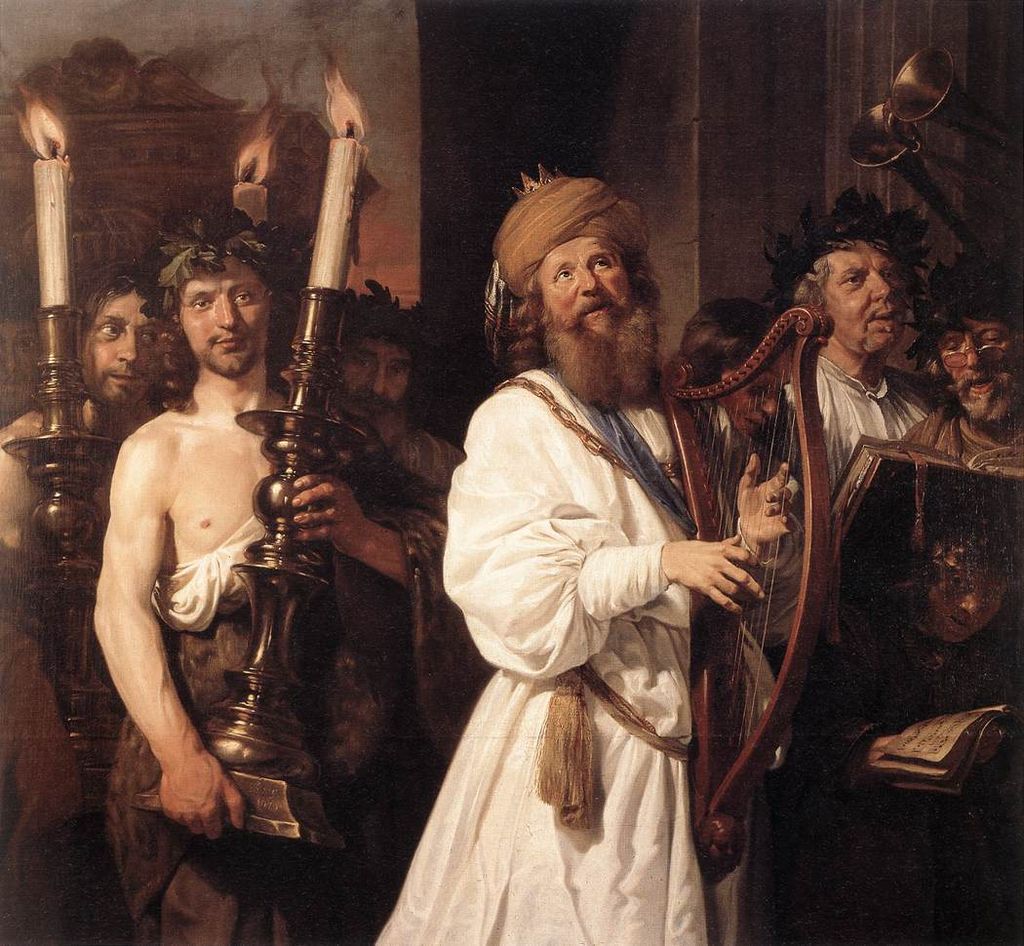
Jan de Bray, David Playing the Harp (1670)

Jan de Bray, David Playing the Harp (1670)

 Psalm 4

<To the leader: with stringed instruments. A Psalm of David.>
Answer me when I call, O God of my right!
You gave me room when I was in distress.
Be gracious to me, and hear my prayer.
2 How long, you people, shall my honor suffer shame?
How long will you love vain words, and seek after lies? Selah
3 But know that the LORD has set apart the faithful for himself;
the LORD hears when I call to him.
4 When you are disturbed, do not sin;
ponder it on your beds, and be silent. Selah
5 Offer right sacrifices, and put your trust in the LORD.
6 There are many who say, “O that we might see some good!
Let the light of your face shine on us, O LORD!”
7 You have put gladness in my heart more than when their grain and wine abound.
8 I will both lie down and sleep in peace;
for you alone, O LORD, make me lie down in safety.

One of the gifts of the Psalter is the range and depth of emotions that it shows as the various Psalmists struggle and rejoice and lament and celebrate their lives with the LORD. Faith is rarely, if ever, a linear progression of growth or a static unmoving reality but a relationship that endures times where one party has moved away or is no longer hearing and times of incredible closeness and intimacy. Psalm 4 is to me a good example of this movement within the life of faith as the Psalmist moves from complaint to reassurance, from question into faith and from need into safety. It begins with a cry, “Answer me when I call” and directs that call to the God who is the source of the Psalmist’s righteousness and identity. The Psalmist reflects back upon the way God has been present: listening, making a space for the petitioner, responding in grace instead of judgment. There is a dissonance between the Psalmist and the people, somehow the Psalmist has fallen out of favor, their name has been dishonored and they are following the words they want to hear rather than the truth. Perhaps the positioning of this psalm encourages us to hear it in the same circumstances as the previous Psalm, while David is fleeing after the rebellion of his son Absalom has taken over Jerusalem. Yet the Psalmist find comfort in their identity.

It is in this identity, the Psalmist considers himself one of the righteous, one who has been set apart, one whom the LORD listens to. In a time when the Psalmist words go unheard by the people, they are heard by the LORD. In a time where the identity of the Psalmist in the eyes of the people is that of the unrighteous in God’s eyes they remain the righteous one. Much as Job can appeal to God’s judgment as he endures the questioning of his friends, or Paul can state in the letter to the Romans 8.31 “If God is for us, who is against us?” the Psalmist can hold tight to the identity they have in the LORD. So the Psalmist returns to the practices of how they will live, not sinning, offering right sacrifices, pondering on one’s bed but not losing sleep over it. And the Psalmist rapidly moves in this brief prayer from complaint into resting in peace and safety, from the moment of anxiety to the gladness and reassurance of the LORD’s blessing. In an echo of the Aaronic blessing from the book of Numbers:

 The LORD bless you and keep you;
the LORD make his face shine upon you and be gracious to you;
the LORD lift up his countenance upon you, and give you peace Numbers 6: 24-26

The Psalmist can say “let the light of your face shine upon us and finds strength and trust in their identity as they continue in their journey as one of God’s set apart ones.

Psalm 3- Hope in the Heart of Brokeness

Gapare Traversi Die Erordung Amnons beim Gastmahl Absaloms (1752)

Gapare Traversi Die Erordung Amnons beim Gastmahl Absaloms (1752)

 Psalm 3

<A Psalm of David, when he fled from his son Absalom.>
 O LORD, how many are my foes! Many are rising against me;
 2 many are saying to me, “There is no help for you in God.” Selah
 3 But you, O LORD, are a shield around me, my glory, and the one who lifts up my head.
 4 I cry aloud to the LORD, and he answers me from his holy hill. Selah
 5 I lie down and sleep; I wake again, for the LORD sustains me.
 6 I am not afraid of ten thousands of people who have set themselves against me all around.
 7 Rise up, O LORD! Deliver me, O my God! For you strike all my enemies on the cheek;
 you break the teeth of the wicked.
 8 Deliverance belongs to the LORD; may your blessing be on your people! Selah

Psalm 1 begins with happy/blessed are those and Psalm 2 ends with happy/blessed are all who take refuge in the the Lord, and then we begin a series of laments in Psalm three and four as well as six and seven. There is something more to this than some simple sort of life and a blessed life (my preferred translation of the word in Psalm one and two) is not an easy life. In my experience some of the people who have the strongest faith are those who have been through the most difficult and harrowing struggles. To be a person ‘after God’s own heart’ does not grant one an untroubled life and there is a need for an expression of desperation, a faithful cry for help in the midst of the struggle.

The superscription of the Psalm takes us back to one of the dark moments in the story of King David and in the narrative this is a part of a series of dark times for the king which so many have placed their trust in. After 2 Samuel narrates the story of David and Bathsheba, where David has sex with Bathsheba and conspires to have her husband Uriah the Hittite killed and the immediate after effects of this with God sending the prophet Nathan to David, the child dying and then a new hope with the birth of Solomon (2 Samuel 11 and 12) we reach a story of a deeply broken royal family. Absalom and his sister Tamar of children of one of David’s wives while Ammon is his son by another wife. Ammon conspires to bring Tamar into his room and then rapes her and King David does nothing to Ammon, his oldest son. Furious with his brother and the king’s inaction Absalom takes vengeance himself and during a banquet murders Ammon, his brother. Absalom flees, but is later welcomed home and forgiven. Once Absalom is home he begins to create his own power base and several years later leads a coup which forces David from Jerusalem and leads to Absalom’s eventual death. (2 Samuel 13-18). In the heart of the brokenness where families have failed, where forgiveness has been turned away, where power has been seized and life is at risk, the superscription places the words within that story.

In a world where we think God helps those who help themselves, the Psalm points to a different reality. God helps those who cannot help themselves. (Elizabeth Actemeir, et. al., 1994, p. IV: 692f). In the narrative world of the story of David evoked in the superscription and in the opening verses the surrounding people believe there is ‘no help for you in God.’ But for the Psalmist, the Lord is shield, refuge and strength. Even in the times where it seems like hope is lost the persistent faith of the Psalmist calls out to God and trusts that there will be an answer. The petitions of the Psalmist are great and their foes are many and yet the confidence that the petitioner holds to comes from the God who has sustained them. There is the trust that even in the crisis that the Psalmist can entrust deliverance into the Lord’s hands and the even as their name may be uttered as a curse, the deeper reality is that they are a part of the people the Lord has set apart as a blessing.

Psalm 2 – The LORD’s Messiah

  Psalm 2

Why do the nations conspire, and the peoples plot in vain?
 2 The kings of the earth set themselves,
and the rulers take counsel together,
against the LORD and his anointed, saying,
 3 “Let us burst their bonds asunder, and cast their cords from us.”
 4 He who sits in the heavens laughs; the LORD has them in derision.
 5 Then he will speak to them in his wrath, and terrify them in his fury, saying,
 6 “I have set my king on Zion, my holy hill.”
 7 I will tell of the decree of the LORD: He said to me,
“You are my son; today I have begotten you.
 8 Ask of me, and I will make the nations your heritage,
and the ends of the earth your possession.
 9 You shall break them with a rod of iron,
and dash them in pieces like a potter’s vessel.”
 10 Now therefore, O kings, be wise; be warned, O rulers of the earth.
 11 Serve the LORD with fear, with trembling
 12 kiss his feet, or he will be angry, and you will perish in the way;
for his wrath is quickly kindled. Happy are all who take refuge in him.
  

Psalms 1 and 2 introduce the Psalter and while Psalm 1 highlights one of the major foci of the Jewish people, God’s law the Torah, Psalm 2 focuses on the Messiah, the Davidic King.  Perhaps this Psalm was at one point used in coronations or in some other ritual setting within the nation of Israel or later the kingdom of Judah, and it reflects back upon some mystical time when Israel was an empire that ruled over vassal kings. There is an idealization of the dominion and power of the Davidic kingship which reached its peak under Solomon and would from that point forward be a small kingdom caught among the rise and falls of empires in Egypt, Assyria and Babylon. Even with the focus on the Lord’s anointed (literally the Lord’s messiah) the focus, as through out the Psalter, is taking refuge in the Lord.

For Christians this is one of the Psalms that has often been read through the image of Jesus, particularly verse 7 “You are my son; today I have begotten you” and while Christians should not forget that this Psalm originally refers back to a Davidic king part of the living witness of scriptures allows people to hear the words echoed in a new way in a new era. Yet if one is going to listen to this Psalm in terms of Jesus one does have to wrestle with the militaristic language of verse 9 (You shall break them with a rod of iron, and dash them in pieces like a potter’s vessel) and yet this is not that much different from some of the triumphal language lifted up by Paul and others in the New Testament.

Bible paintings in the Castra center, Haifa-Samuel Annointing David and David and Goliath

Bible paintings in the Castra center, Haifa-Samuel Annointing David and David and Goliath


Psalm 1 and 2 taken together lift up the Torah and the Davidic King as two of the foci of the way of life outlined within the meditations contained within the Psalter and yet both Torah and King are to point back to the LORD. The linkage at the beginning of Psalm 1 (Happy are those who do not follow the advice of the wicked) and the end of Psalm 2 (Happy are those who take refuge in him) joins the king and the law together as ways in which God establishes God’s rule among God’s people. As in many of the other Psalms the LORD will laugh at the movements of the nations and empires and for a nation that frequently found itself under duress from other kings and rulers perhaps this Psalm was its own revelation of God’s rule in, with and under the movements of the kings and empires around them. Perhaps like King Arthur for the Anglo-Saxon time it reflects back to the time of the once and future king, the one who was a ‘man after God’s own heart.’ To a simpler or perhaps better time. Perhaps it is a part of the imagination and story that allows the people to maintain their identity in the midst of dispersion and exile, of disillusioned hopes of rebuilding the temple and their loss of power and status in the world. Perhaps this was one more way in which they were able to see the shade pulled back and trust that the LORD was the one who was in control rather than the other gods and lords and powers. And perhaps it is wise to remember that the Psalter is poetry which attempts to express truth that transcends the situation that the people may have found themselves in. Or perhaps a more cynical approach would look at this as a form of self-aggrandizement of the Davidic kings, granting themselves divine authority and  granting themselves a position of ‘sons of God’ in a way that the Caesars in Rome would later do in a different way.

I choose to read this in a non-cynical way. I am certainly influenced by the post-modern hermeneutic of suspicion but at a certain level I have had to learn to trust. To let the words wash over and to listen deeply for the wisdom in the poetry. The God of the Hebrew people, the same God the Christian people would come to know, was deeply involved in the world. Politics and power were not separate things but a part of the engaged and sacred reality of their God who engaged the world.  A God who can laugh at the movement of armies and empires and who is their refuge and strength as Psalm 46 and other places will remind them. Who when the kings of the earth seem to be taking counsel against the chosen people in Zion or in all times and places throughout the world, who still reigns and holds those who rebel against God’s rule in derision. The one who reads and approaches and meditates on the Psalter as a way of understanding how God approached them in the earth find the blessedness (happiness) by taking refuge in this hope, this poetry and this narrative.


Psalm 1 Poetry and the Law

The Reading of Torah in Synagogue

The Reading of Torah in Synagogue

Psalm 1

Happy are those who do not follow the advice of the wicked,
or take the path that sinners tread, or sit in the seat of scoffers;
2 but their delight is in the law of the LORD,
and on his law they meditate day and night.
 3 They are like trees planted by streams of water,
which yield their fruit in its season, and their leaves do not wither.
In all that they do, they prosper.
4 The wicked are not so, but are like chaff that the wind drives away.
5 Therefore the wicked will not stand in the judgment,
nor sinners in the congregation of the righteous;
 6 for the LORD watches over the way of the righteous,
but the way of the wicked will perish.
 

 Psalm one introduces what Dietrich Bonhoeffer called “the Prayerbook of the Bible” and Martin Luther once called the “little Bible”. Here in these one hundred and fifty little (and occasionally long) poems and songs we encounter the breadth of emotion and dedication put into poetic form. Many scholars believe that Psalm 1 was added as a forward to the entire collection of Psalms and gives a summary of what is to lie ahead and the structure of the Psalm itself encourages this thought. The Psalm begins with the first letter of the Hebrew Alphabet with the word translated ‘Happy’ (‘aŝrê) and ends with the last word beginning with the last letter forming an inclusio, a device frequently seen in wisdom literature and denotes a completion of a thought or idea.

So why write poetry about the law? Seems strange or foreign to us and why introduce the Psalms with a meditation on the law? For many people poetry and rules are antithetical, but to a Hebrew way of life the law is at the center for their view of a life in harmony with God’s will. The simple dichotomy between the righteous and the unrighteous, the wicked and the law delighters may seem odd. This was a Psalm I never really enjoyed until recently because it seemed to pretentious, to easy to place oneself in the position of the righteous and not in the place of the wicked, but as an introduction to the Psalter and as a way of looking at the law not as something to be dreaded but something to delight in has changed my mind. It is not a coincidence that the Psalter begins with a meditation of the delight of the law and that the longest Psalm (Psalm 119) is a meditation on the law. That in knowing how one is to live, what it means to be in harmony with God’s will for the people and the world is joy. For the Hebrew people the law of the LORD is life and to ignore the way of the LORD is to undercut one’s own life. In a world of easy expedients that may bring short term prosperity the people are called to a way of life that is in harmony with the creator’s desire for the world.

The word translated happy, probably is better translated ‘blessed’ (this Hebrew word would be translated into Greek Septuagint (the Greek Translation of the Hebrew Scriptures) as markarios which is the first word of each of the beatitudes in Matthew 5) and in entering into the poetry and the struggle of the Psalmists (since there are multiple composers of the Psalms) it is also an entry into the meditation on how one is to live in the continual meditation on the law of the LORD. Poetry and wisdom, life and the law, the way of the righteous and the blessed may not be simple and it may be something that continues to be a dialogue between the LORD and the LORD’s people, but entering into the meditation of the law of the LORD may not be an invitation to prosperity but it is an invitation into a blessed life.

Jeremiah 52 Ending the Journey

Jeremiah Lamenting the Destruction of Jerusalem by Rembrandt van Rijn 1630

Jeremiah Lamenting the Destruction of Jerusalem by Rembrandt van Rijn 1630

                Zedekiah was twenty-one years old when he began to reign; he reigned eleven years in Jerusalem. His mother’s name was Hamutal daughter of Jeremiah of Libnah. 2 He did what was evil in the sight of the LORD, just as Jehoiakim had done. 3 Indeed, Jerusalem and Judah so angered the LORD that he expelled them from his presence. Zedekiah rebelled against the king of Babylon.

 4 And in the ninth year of his reign, in the tenth month, on the tenth day of the month, King Nebuchadrezzar of Babylon came with all his army against Jerusalem, and they laid siege to it; they built siegeworks against it all around. 5 So the city was besieged until the eleventh year of King Zedekiah.

 6 On the ninth day of the fourth month the famine became so severe in the city that there was no food for the people of the land. 7 Then a breach was made in the city wall; and all the soldiers fled and went out from the city by night by the way of the gate between the two walls, by the king’s garden, though the Chaldeans were all around the city. They went in the direction of the Arabah. 8 But the army of the Chaldeans pursued the king, and overtook Zedekiah in the plains of Jericho; and all his army was scattered, deserting him. 9 Then they captured the king, and brought him up to the king of Babylon at Riblah in the land of Hamath, and he passed sentence on him. 10 The king of Babylon killed the sons of Zedekiah before his eyes, and also killed all the officers of Judah at Riblah. 11 He put out the eyes of Zedekiah, and bound him in fetters, and the king of Babylon took him to Babylon, and put him in prison until the day of his death.

12 In the fifth month, on the tenth day of the month– which was the nineteenth year of King Nebuchadrezzar, king of Babylon– Nebuzaradan the captain of the bodyguard who served the king of Babylon, entered Jerusalem. 13 He burned the house of the LORD, the king’s house, and all the houses of Jerusalem; every great house he burned down. 14 All the army of the Chaldeans, who were with the captain of the guard, broke down all the walls around Jerusalem. 15 Nebuzaradan the captain of the guard carried into exile some of the poorest of the people and the rest of the people who were left in the city and the deserters who had defected to the king of Babylon, together with the rest of the artisans. 16 But Nebuzaradan the captain of the guard left some of the poorest people of the land to be vinedressers and tillers of the soil.

 17 The pillars of bronze that were in the house of the LORD, and the stands and the bronze sea that were in the house of the LORD, the Chaldeans broke in pieces, and carried all the bronze to Babylon. 18 They took away the pots, the shovels, the snuffers, the basins, the ladles, and all the vessels of bronze used in the temple service. 19 The captain of the guard took away the small bowls also, the firepans, the basins, the pots, the lampstands, the ladles, and the bowls for libation, both those of gold and those of silver. 20 As for the two pillars, the one sea, the twelve bronze bulls that were under the sea, and the stands, which King Solomon had made for the house of the LORD, the bronze of all these vessels was beyond weighing. 21 As for the pillars, the height of the one pillar was eighteen cubits, its circumference was twelve cubits; it was hollow and its thickness was four fingers. 22 Upon it was a capital of bronze; the height of the one capital was five cubits; latticework and pomegranates, all of bronze, encircled the top of the capital. And the second pillar had the same, with pomegranates. 23 There were ninety-six pomegranates on the sides; all the pomegranates encircling the latticework numbered one hundred.

 24 The captain of the guard took the chief priest Seraiah, the second priest Zephaniah, and the three guardians of the threshold; 25 and from the city he took an officer who had been in command of the soldiers, and seven men of the king’s council who were found in the city; the secretary of the commander of the army who mustered the people of the land; and sixty men of the people of the land who were found inside the city. 26 Then Nebuzaradan the captain of the guard took them, and brought them to the king of Babylon at Riblah. 27 And the king of Babylon struck them down, and put them to death at Riblah in the land of Hamath. So Judah went into exile out of its land.

 28 This is the number of the people whom Nebuchadrezzar took into exile: in the seventh year, three thousand twenty-three Judeans; 29 in the eighteenth year of Nebuchadrezzar he took into exile from Jerusalem eight hundred thirty-two persons; 30 in the twenty-third year of Nebuchadrezzar, Nebuzaradan the captain of the guard took into exile of the Judeans seven hundred forty-five persons; all the persons were four thousand six hundred.

 31 In the thirty-seventh year of the exile of King Jehoiachin of Judah, in the twelfth month, on the twenty-fifth day of the month, King Evil-merodach of Babylon, in the year he began to reign, showed favor to King Jehoiachin of Judah and brought him out of prison; 32 he spoke kindly to him, and gave him a seat above the seats of the other kings who were with him in Babylon. 33 So Jehoiachin put aside his prison clothes, and every day of his life he dined regularly at the king’s table. 34 For his allowance, a regular daily allowance was given him by the king of Babylon, as long as he lived, up to the day of his death.


In its own strange way the book of Jeremiah as we have it today comes to an end. In an almost words for word parallel of 2 Kings24:18-25:30 , with the addition of the comments about the number of people deported in verses 28-30 and the omission of the appointment and execution of Gedeliah in 2 Kings 25:22-26 (which is dealt with at length in Jeremiah 40-41). There is a tradition that the Book of Kings (which we divide into 1 & 2 Kings) and the Book of Jeremiah both originate with Jeremiah and do share a similar theological judgment to explain why the Kingdoms of Israel and Judah collapsed, but regardless of who composed or edited each work the ending of 2 Kings and Jeremiah almost certainly share a common source. So why end here, even going back and retelling once more in a short summary narrative the collapse of Jerusalem.

The book of Jeremiah attempts to make sense of the what seems senseless, the ending of the world as the people of Judah and Jerusalem knew it in the emergence of the Babylonian empire and the conquering multiple times and eventual decimation of the land, the city, the people, the temple and all the markers that made them who they are. The pride of the people is shattered, the riches of the temple are cut up and carried off, the items that the false prophet Hananiah said would be returned in Jeremiah 28 are not only not returned but everything else is carried off. So much time is spent dwelling on the vessels of the temple which are carried away perhaps to catalog the way things were for some future day when they can be reclaimed, but the volume of description for the vessels and articles of the temple vastly outweigh the sparcity of the description of those taken into exile.

Those who go into exile is another puzzling feature. The decimation of Judah and Jerusalem must have led to many, many deaths by war, starvation and pestilence (as we heard echoed throughout the book) and certainly seventy four Judeans, many if not all bearing specific titles or ranks, who were executed is an act which created horror among the people as well as the arrest, blinding and public shaming of Zedekiah, would have created a trauma among many of the people, but to look at the numbers talked about in the deportation(a total of 4,600 people and only 832 in the deportation of the story immediately providing context) seems like a very small part of the Judean population or even the population of Jerusalem. The Babylonian exile is one of the defining events of the Jewish identity and yet the numbers don’t seem to match the impact or the number of people that would become dispersed in the diaspora. It is from those who are deported and go into exile in Babylon that the future will come out of, and yet to me this number seems smaller than I had expected to see.

The story does end on a small note of hope, Jehoiachin the first king deported is eventually shown favor and perhaps there is an entry of hope for the rest of those in captivity in Babylon. Perhaps the people who heeded Jeremiah’s plea to settle in the land where they find themselves allows for the birth of a new hope and a new beginning. It is during this time that many of the writings of the Hebrew Bible will be compiled and collected and brought together to be used to continue to form the identity of this people now in exile in a foreign land.

So my long journey with the book that bears Jeremiah’s name comes to an end. It has been at times a challenging journey and it means walking through the depression and questions that come with the ending of all the things that once defined a people. The very things that occupy space in this last chapter, the humiliation and imprisonment of the Davidic king, the loss of the land and the city of Jerusalem, the loss of the temple built under Solomon no longer provide identity and meaning for the people and now as they go into exile they have to find a new way to construct their identity as the chosen people of the LORD. The anguished cries of Jeremiah are a part of that process of reconstruction as are the process of collecting together the stories and memories of the kingdoms of Israel and Judah. For the people to understand who they are going forward it appears they first have to look back into the past and evaluating their story theologically determine what went wrong in the past to make a way for a new future after the exile.


Jeremiah 50-51 The Cry Against Babylon


Detail from the Ishtar Gate (Reconstruction in Berlin's Pergamon Museum)

Detail from the Ishtar Gate (Reconstruction in Berlin’s Pergamon Museum)

I am going to break with my normal pattern with Jeremiah and put the text after the reflections. It didn’t make sense to me to cover these two chapters as separate because they are both a part of a long conglomeration of oracles against Babylon, set by the text in the fourth year of King Zedekiah (in the time between the first exile where leadership are taken into exile and the main exile where the largest group is taken into exile in Babylon). To place this oracle against Babylon coming from the mouth of Jeremiah combined with the sign act of throwing the scroll into the Euphrates by Seraiah seems to run against everything else Jeremiah is saying at this time. Many historical critical scholars would argue against this being composed by Jeremiah but the reality is that we have this massive book which we now receive as the book of Jeremiah and there is no way to go back to the ‘authentic words of Jeremiah’ or to tell exactly what Jeremiah the prophet wrote and some later compiler.

I take this long scream against the Babylonian empire about its coming destruction much the same way I take Psalm 137 which is a cry out of pain. The people of Judah after encountering the destruction of all that they know need some hope that God has not abandoned them to their fate, that Babylon is far from blameless and must also answer for its sins. The images and idols of Babylon are not more powerful than the LORD of hosts and will be put to shame and the armies which were viewed as an instrument in the LORD’s hands throughout the rest of the book now will have other armies from the north that come an terrorize them. The poetic language of disasters follows patterns seen throughout Jeremiah: beasts, arrows, clubs, violence. Warriors in misogynistic language become women, walls become leveled, honor becomes dishonor. Just as there was no balm for Judah and Jerusalem, now there is no balm for healing Babylon.

Babylon would fall to the Persian empire under Cyrus the Great, who the book of Isaiah lifts up as a messiah-which literally means anointed one as it is typically translated in English (see Isaiah 45:1).  It is in the continuing movement of armies and the realignment of power in the Middle East that the people in Babylon would be able to return to rebuild the city of Jerusalem, the temple and re-settle Jerusalem. Perhaps a part of this oracle which encourages people to leave Babylon also speaks to the reality of those born and raised in Babylon that have become accustomed to life in the Babylonian empire and an encouragement to return back to Judah.

Things are never as neat and tidy as they come out in oracles. Babylon would be conquered, but like Judah it never truly becomes a haunt of jackals, a place uninhabited that people avoid for all times. Babylon will be integrated into the next empire and the chain continues. Jerusalem and Judah are never the same again as well with the majority of the Jewish people being dispersed across the region from Egypt to Babylon to Asia Minor. In these chapters a powerless people hope for powerful actions by their God to deliver them again from their captivity. Much as in the founding story of the Exodus, now the hope is that God will see and hear God’s people’s plight in a foreign land and act to bring them back home again.

Jeremiah 50
The word that the LORD spoke concerning Babylon, concerning the land of the Chaldeans, by the prophet Jeremiah:
 2 Declare among the nations and proclaim, set up a banner and proclaim,
do not conceal it, say: Babylon is taken, Bel is put to shame, Merodach is dismayed.
Her images are put to shame, her idols are dismayed.
            3 For out of the north a nation has come up against her; it shall make her land a desolation, and no one shall live in it; both human beings and animals shall flee away.
 4 In those days and in that time, says the LORD, the people of Israel shall come, they and the people of Judah together; they shall come weeping as they seek the LORD their God. 5 They shall ask the way to Zion, with faces turned toward it, and they shall come and join themselves to the LORD by an everlasting covenant that will never be forgotten.
 6 My people have been lost sheep; their shepherds have led them astray, turning them away on the mountains; from mountain to hill they have gone, they have forgotten their fold.7 All who found them have devoured them, and their enemies have said, “We are not guilty, because they have sinned against the LORD, the true pasture, the LORD, the hope of their ancestors.”
8 Flee from Babylon, and go out of the land of the Chaldeans, and be like male goats leading the flock. 9 For I am going to stir up and bring against Babylon a company of great nations from the land of the north; and they shall array themselves against her; from there she shall be taken. Their arrows are like the arrows of a skilled warrior who does not return empty-handed. 10 Chaldea shall be plundered; all who plunder her shall be sated, says the LORD.
11 Though you rejoice, though you exult, O plunderers of my heritage,
though you frisk about like a heifer on the grass, and neigh like stallions,
12 your mother shall be utterly shamed, and she who bore you shall be disgraced.
Lo, she shall be the last of the nations, a wilderness, dry land, and a desert.
13 Because of the wrath of the LORD she shall not be inhabited,
but shall be an utter desolation; everyone who passes by Babylon
shall be appalled and hiss because of all her wounds.
14 Take up your positions around Babylon, all you that bend the bow; shoot at her,
spare no arrows, for she has sinned against the LORD.
 15 Raise a shout against her from all sides, “She has surrendered;
 her bulwarks have fallen, her walls are thrown down.”
For this is the vengeance of the LORD: take vengeance on her, do to her as she has done.
 16 Cut off from Babylon the sower, and the wielder of the sickle in time of harvest;
because of the destroying sword all of them shall return to their own people,
and all of them shall flee to their own land.
17 Israel is a hunted sheep driven away by lions. First the king of Assyria devoured it, and now at the end King Nebuchadrezzar of Babylon has gnawed its bones. 18 Therefore, thus says the LORD of hosts, the God of Israel: I am going to punish the king of Babylon and his land, as I punished the king of Assyria. 19 I will restore Israel to its pasture, and it shall feed on Carmel and in Bashan, and on the hills of Ephraim and in Gilead its hunger shall be satisfied. 20 In those days and at that time, says the LORD, the iniquity of Israel shall be sought, and there shall be none; and the sins of Judah, and none shall be found; for I will pardon the remnant that I have spared.
21 Go up to the land of Merathaim; go up against her,
and attack the inhabitants of Pekod and utterly destroy the last of them, says the LORD;
do all that I have commanded you.
 22 The noise of battle is in the land, and great destruction!
 23 How the hammer of the whole earth is cut down and broken!
How Babylon has become a horror among the nations!
 24 You set a snare for yourself and you were caught, O Babylon,
but you did not know it; you were discovered and seized,
because you challenged the LORD.
 25 The LORD has opened his armory, and brought out the weapons of his wrath,
for the Lord GOD of hosts has a task to do in the land of the Chaldeans.
 26 Come against her from every quarter; open her granaries;
pile her up like heaps of grain, and destroy her utterly; let nothing be left of her.
 27 Kill all her bulls, let them go down to the slaughter.
Alas for them, their day has come, the time of their punishment!
28 Listen! Fugitives and refugees from the land of Babylon are coming to declare in Zion the vengeance of the LORD our God, vengeance for his temple.
            29 Summon archers against Babylon, all who bend the bow. Encamp all around her; let no one escape. Repay her according to her deeds; just as she has done, do to her– for she has arrogantly defied the LORD, the Holy One of Israel. 30 Therefore her young men shall fall in her squares, and all her soldiers shall be destroyed on that day, says the LORD.
31 I am against you, O arrogant one, says the Lord GOD of hosts;
for your day has come, the time when I will punish you.
32 The arrogant one shall stumble and fall, with no one to raise him up,
and I will kindle a fire in his cities, and it will devour everything around him.
33 Thus says the LORD of hosts: The people of Israel are oppressed, and so too are the people of Judah; all their captors have held them fast and refuse to let them go. 34 Their Redeemer is strong; the LORD of hosts is his name. He will surely plead their cause, that he may give rest to the earth, but unrest to the inhabitants of Babylon.
35 A sword against the Chaldeans, says the LORD,
and against the inhabitants of Babylon, and against her officials and her sages!
36 A sword against the diviners, so that they may become fools!
A sword against her warriors, so that they may be destroyed!
37 A sword against her horses and against her chariots,
and against all the foreign troops in her midst, so that they may become women!
A sword against all her treasures, that they may be plundered!
38 A drought against her waters, that they may be dried up!
For it is a land of images, and they go mad over idols.
39 Therefore wild animals shall live with hyenas in Babylon, and ostriches shall inhabit her; she shall never again be peopled, or inhabited for all generations. 40 As when God overthrew Sodom and Gomorrah and their neighbors, says the LORD, so no one shall live there, nor shall anyone settle in her.
41 Look, a people is coming from the north;
a mighty nation and many kings are stirring from the farthest parts of the earth.
42 They wield bow and spear, they are cruel and have no mercy.
The sound of them is like the roaring sea;
they ride upon horses, set in array as a warrior for battle, against you, O daughter Babylon!
43 The king of Babylon heard news of them, and his hands fell helpless;
anguish seized him, pain like that of a woman in labor.
44 Like a lion coming up from the thickets of the Jordan against a perennial pasture, I will suddenly chase them away from her; and I will appoint over her whomever I choose. For who is like me? Who can summon me? Who is the shepherd who can stand before me? 45 Therefore hear the plan that the LORD has made against Babylon, and the purposes that he has formed against the land of the Chaldeans: Surely the little ones of the flock shall be dragged away; surely their fold shall be appalled at their fate. 46 At the sound of the capture of Babylon the earth shall tremble, and her cry shall be heard among the nations.
 
 Jeremiah 51
Thus says the LORD:
I am going to stir up a destructive wind against Babylon
and against the inhabitants of Leb-qamai;
2 and I will send winnowers to Babylon, and they shall winnow her.
They shall empty her land when they come against her from every side on the day of trouble.
3 Let not the archer bend his bow, and let him not array himself in his coat of mail.
Do not spare her young men; utterly destroy her entire army.
4 They shall fall down slain in the land of the Chaldeans, and wounded in her streets.
5 Israel and Judah have not been forsaken by their God, the LORD of hosts,
though their land is full of guilt before the Holy One of Israel.
6 Flee from the midst of Babylon, save your lives, each of you!
Do not perish because of her guilt, for this is the time of the LORD’s vengeance;
he is repaying her what is due.
7 Babylon was a golden cup in the LORD’s hand, making all the earth drunken;
the nations drank of her wine, and so the nations went mad.
8 Suddenly Babylon has fallen and is shattered; wail for her!
Bring balm for her wound; perhaps she may be healed.
9 We tried to heal Babylon, but she could not be healed.
Forsake her, and let each of us go to our own country;
for her judgment has reached up to heaven and has been lifted up even to the skies.
10 The LORD has brought forth our vindication;
come, let us declare in Zion the work of the LORD our God.
 11 Sharpen the arrows! Fill the quivers!
The LORD has stirred up the spirit of the kings of the Medes, because his purpose concerning Babylon is to destroy it, for that is the vengeance of the LORD, vengeance for his temple.
12 Raise a standard against the walls of Babylon;
make the watch strong; post sentinels; prepare the ambushes;
for the LORD has both planned and done what he spoke concerning the inhabitants of Babylon.
13 You who live by mighty waters, rich in treasures, your end has come,
the thread of your life is cut.
14 The LORD of hosts has sworn by himself:
Surely I will fill you with troops like a swarm of locusts,
and they shall raise a shout of victory over you.
15 It is he who made the earth by his power, who established the world by his wisdom,
and by his understanding stretched out the heavens.
16 When he utters his voice there is a tumult of waters in the heavens,
and he makes the mist rise from the ends of the earth.
He makes lightnings for the rain, and he brings out the wind from his storehouses.
17 Everyone is stupid and without knowledge;
goldsmiths are all put to shame by their idols;
for their images are false, and there is no breath in them.
18 They are worthless, a work of delusion; at the time of their punishment they shall perish.
19 Not like these is the LORD, the portion of Jacob, for he is the one who formed all things,
and Israel is the tribe of his inheritance; the LORD of hosts is his name.
20 You are my war club, my weapon of battle: with you I smash nations; with you I destroy kingdoms;
21 with you I smash the horse and its rider; with you I smash the chariot and the charioteer;
22 with you I smash man and woman; with you I smash the old man and the boy; with you I smash the young man and the girl;
23 with you I smash shepherds and their flocks; with you I smash farmers and their teams; with you I smash governors and deputies.
24 I will repay Babylon and all the inhabitants of Chaldea before your very eyes for all the wrong that they have done in Zion, says the LORD.
 25 I am against you, O destroying mountain, says the LORD, that destroys the whole earth;
I will stretch out my hand against you, and roll you down from the crags,
and make you a burned-out mountain.
26 No stone shall be taken from you for a corner and no stone for a foundation,
but you shall be a perpetual waste, says the LORD.
27 Raise a standard in the land, blow the trumpet among the nations;
prepare the nations for war against her, summon against her the kingdoms, Ararat, Minni, and Ashkenaz; appoint a marshal against her, bring up horses like bristling locusts.
28 Prepare the nations for war against her, the kings of the Medes,
with their governors and deputies, and every land under their dominion.
29 The land trembles and writhes, for the LORD’s purposes against Babylon stand,
to make the land of Babylon a desolation, without inhabitant.
30 The warriors of Babylon have given up fighting, they remain in their strongholds;
their strength has failed, they have become women;
her buildings are set on fire, her bars are broken.
31 One runner runs to meet another, and one messenger to meet another,
to tell the king of Babylon that his city is taken from end to end:
32 the fords have been seized, the marshes have been burned with fire, and the soldiers are in panic.
33 For thus says the LORD of hosts, the God of Israel:
Daughter Babylon is like a threshing floor at the time when it is trodden;
yet a little while and the time of her harvest will come.
34 “King Nebuchadrezzar of Babylon has devoured me, he has crushed me;
he has made me an empty vessel, he has swallowed me like a monster;
he has filled his belly with my delicacies, he has spewed me out.
35 May my torn flesh be avenged on Babylon,” the inhabitants of Zion shall say.
“May my blood be avenged on the inhabitants of Chaldea,” Jerusalem shall say.
36 Therefore thus says the LORD: I am going to defend your cause and take vengeance for you.
I will dry up her sea and make her fountain dry;
37 and Babylon shall become a heap of ruins, a den of jackals,
an object of horror and of hissing, without inhabitant.
38 Like lions they shall roar together; they shall growl like lions’ whelps.
39 When they are inflamed, I will set out their drink and make them drunk,
until they become merry and then sleep a perpetual sleep and never wake, says the LORD.
40 I will bring them down like lambs to the slaughter, like rams and goats.
41 How Sheshach is taken, the pride of the whole earth seized!
How Babylon has become an object of horror among the nations!
42 The sea has risen over Babylon; she has been covered by its tumultuous waves.
43 Her cities have become an object of horror, a land of drought and a desert,
a land in which no one lives, and through which no mortal passes.
44 I will punish Bel in Babylon, and make him disgorge what he has swallowed.
The nations shall no longer stream to him; the wall of Babylon has fallen.
45 Come out of her, my people! Save your lives, each of you, from the fierce anger of the LORD!
46 Do not be fainthearted or fearful at the rumors heard in the land– one year one rumor comes,
the next year another, rumors of violence in the land and of ruler against ruler.
47 Assuredly, the days are coming when I will punish the images of Babylon;
her whole land shall be put to shame, and all her slain shall fall in her midst.
48 Then the heavens and the earth, and all that is in them, shall shout for joy over Babylon;
for the destroyers shall come against them out of the north, says the LORD.
49 Babylon must fall for the slain of Israel, as the slain of all the earth have fallen because of Babylon.
50 You survivors of the sword, go, do not linger!
Remember the LORD in a distant land, and let Jerusalem come into your mind:
51 We are put to shame, for we have heard insults; dishonor has covered our face,
for aliens have come into the holy places of the LORD’s house.
52 Therefore the time is surely coming, says the LORD, when I will punish her idols,
and through all her land the wounded shall groan.
53 Though Babylon should mount up to heaven, and though she should fortify her strong height,
from me destroyers would come upon her, says the LORD.
54 Listen!– a cry from Babylon! A great crashing from the land of the Chaldeans!
55 For the LORD is laying Babylon waste, and stilling her loud clamor.
Their waves roar like mighty waters, the sound of their clamor resounds;
56 for a destroyer has come against her, against Babylon; her warriors are taken,
their bows are broken; for the LORD is a God of recompense, he will repay in full.
57 I will make her officials and her sages drunk, also her governors, her deputies, and her warriors;
they shall sleep a perpetual sleep and never wake, says the King, whose name is the LORD of hosts.
58 Thus says the LORD of hosts: The broad wall of Babylon shall be leveled to the ground,
and her high gates shall be burned with fire.
The peoples exhaust themselves for nothing, and the nations weary themselves only for fire.
59 The word that the prophet Jeremiah commanded Seraiah son of Neriah son of Mahseiah, when he went with King Zedekiah of Judah to Babylon, in the fourth year of his reign. Seraiah was the quartermaster. 60 Jeremiah wrote in a scroll all the disasters that would come on Babylon, all these words that are written concerning Babylon. 61 And Jeremiah said to Seraiah: “When you come to Babylon, see that you read all these words, 62 and say, ‘O LORD, you yourself threatened to destroy this place so that neither human beings nor animals shall live in it, and it shall be desolate forever.’ 63 When you finish reading this scroll, tie a stone to it, and throw it into the middle of the Euphrates, 64 and say, ‘Thus shall Babylon sink, to rise no more, because of the disasters that I am bringing on her.'”
Thus far are the words of Jeremiah.


Jeremiah 49: Judgment on the Other Surrounding Nations

Edvard Munch, The Scream (Der Schrei der Natur) 1893

Edvard Munch, The Scream (Der Schrei der Natur) 1893


Concerning the Ammonites.
Thus says the LORD: Has Israel no sons? Has he no heir?
Why then has Milcom dispossessed Gad, and his people settled in its towns?
 2 Therefore, the time is surely coming, says the LORD,
when I will sound the battle alarm against Rabbah of the Ammonites;
it shall become a desolate mound, and its villages shall be burned with fire;
 then Israel shall dispossess those who dispossessed him, says the LORD.
 3 Wail, O Heshbon, for Ai is laid waste! Cry out, O daughters of Rabbah!
Put on sackcloth, lament, and slash yourselves with whips!
For Milcom shall go into exile, with his priests and his attendants.
 4 Why do you boast in your strength? Your strength is ebbing, O faithless daughter.
You trusted in your treasures, saying, “Who will attack me?”
 5 I am going to bring terror upon you, says the Lord GOD of hosts,
from all your neighbors, and you will be scattered, each headlong,
with no one to gather the fugitives.
 6 But afterward I will restore the fortunes of the Ammonites, says the LORD.
 
 7 Concerning Edom.
Thus says the LORD of hosts: Is there no longer wisdom in Teman?
Has counsel perished from the prudent? Has their wisdom vanished?
 8 Flee, turn back, get down low, inhabitants of Dedan!
For I will bring the calamity of Esau upon him, the time when I punish him.
 9 If grape-gatherers came to you, would they not leave gleanings?
If thieves came by night, even they would pillage only what they wanted.
 10 But as for me, I have stripped Esau bare, I have uncovered his hiding places,
and he is not able to conceal himself.
His offspring are destroyed, his kinsfolk and his neighbors; and he is no more.
 11 Leave your orphans, I will keep them alive; and let your widows trust in me.
 12 For thus says the LORD: If those who do not deserve to drink the cup still have to drink it, shall you be the one to go unpunished? You shall not go unpunished; you must drink it. 13 For by myself I have sworn, says the LORD, that Bozrah shall become an object of horror and ridicule, a waste, and an object of cursing; and all her towns shall be perpetual wastes.
 14 I have heard tidings from the LORD, and a messenger has been sent among the nations:
 “Gather yourselves together and come against her, and rise up for battle!”
 15 For I will make you least among the nations, despised by humankind.
 16 The terror you inspire and the pride of your heart have deceived you,
you who live in the clefts of the rock, who hold the height of the hill.
Although you make your nest as high as the eagle’s,
from there I will bring you down, says the LORD.
 17 Edom shall become an object of horror; everyone who passes by it will be horrified and will hiss because of all its disasters. 18 As when Sodom and Gomorrah and their neighbors were overthrown, says the LORD, no one shall live there, nor shall anyone settle in it. 19 Like a lion coming up from the thickets of the Jordan against a perennial pasture, I will suddenly chase Edom away from it; and I will appoint over it whomever I choose. For who is like me? Who can summon me? Who is the shepherd who can stand before me? 20 Therefore hear the plan that the LORD has made against Edom and the purposes that he has formed against the inhabitants of Teman: Surely the little ones of the flock shall be dragged away; surely their fold shall be appalled at their fate. 21 At the sound of their fall the earth shall tremble; the sound of their cry shall be heard at the Red Sea. 22 Look, he shall mount up and swoop down like an eagle, and spread his wings against Bozrah, and the heart of the warriors of Edom in that day shall be like the heart of a woman in labor.
 
23 Concerning Damascus.
Hamath and Arpad are confounded, for they have heard bad news;
they melt in fear, they are troubled like the sea that cannot be quiet.
 24 Damascus has become feeble, she turned to flee, and panic seized her;
anguish and sorrows have taken hold of her, as of a woman in labor.
 25 How the famous city is forsaken, the joyful town!
 26 Therefore her young men shall fall in her squares,
and all her soldiers shall be destroyed in that day, says the LORD of hosts.
 27 And I will kindle a fire at the wall of Damascus,
and it shall devour the strongholds of Ben-hadad.
 
28 Concerning Kedar and the kingdoms of Hazor that King Nebuchadrezzar of Babylon defeated.
Thus says the LORD: Rise up, advance against Kedar!
Destroy the people of the east!
 29 Take their tents and their flocks, their curtains and all their goods;
carry off their camels for yourselves, and a cry shall go up: “Terror is all around!”
 30 Flee, wander far away, hide in deep places, O inhabitants of Hazor! says the LORD.
For King Nebuchadrezzar of Babylon has made a plan against you and formed a purpose against you.
 31 Rise up, advance against a nation at ease, that lives secure, says the LORD,
 that has no gates or bars, that lives alone.
 32 Their camels shall become booty, their herds of cattle a spoil.
I will scatter to every wind those who have shaven temples,
and I will bring calamity against them from every side, says the LORD.
 33 Hazor shall become a lair of jackals, an everlasting waste;
no one shall live there, nor shall anyone settle in it.
 
 34 The word of the LORD that came to the prophet Jeremiah concerning Elam, at the beginning of the reign of King Zedekiah of Judah.
 35 Thus says the LORD of hosts: I am going to break the bow of Elam, the mainstay of their might; 36 and I will bring upon Elam the four winds from the four quarters of heaven; and I will scatter them to all these winds, and there shall be no nation to which the exiles from Elam shall not come. 37 I will terrify Elam before their enemies, and before those who seek their life; I will bring disaster upon them, my fierce anger, says the LORD. I will send the sword after them, until I have consumed them; 38 and I will set my throne in Elam, and destroy their king and officials, says the LORD.
 39 But in the latter days I will restore the fortunes of Elam, says the LORD.


As I have gone through these chapters where we hear the judgment of the nations being place in the mouth of the prophet Jeremiah and proceeding from the voice of the LORD, I have to admit that these passages are deeply unsettling to me. Perhaps it is because I stand in such a different place that the hearers of these words, I am a white middle class male who lives in the relative security and comfort of the United States and the hearers of these words would’ve been Jewish people taken into exile and perhaps needing a word of vengeance. Perhaps in their powerlessness they were willing to endure if the could trust that their suffering would have meaning and they would be avenged. As St. Paul could say in his letter to the Romans:

Beloved, never avenge yourselves, but leave room for the wrath of God; for it is written, “Vengeance is mine, I will repay, says the Lord.” Romans 12.19

And I can identify with what Miroslav Volf can discuss in the last chapter of his incredible work Exclusion and Embrace where he discusses the need for God’s judgment as he writes from his own experience of trying to discuss reconciliation in the contexts of his native Bosnia. I can understand the need to give a voice to the pain that one encounters and the loss of identity, and even to use the language I’ve used throughout this blog of the wounded God who is grieving the loss of God’s relationship to Judah because of their inability or refusal to live in the covenant. I can understand all these things and yet still this is an uncomfortable section to work through, and it isn’t that Jeremiah in general is easy to work through, there is the language of judgment and the ending of the world the Jewish people knew which continually makes the book a challenge, but I think it hit me hear in these last chapters because it is directed towards the outsiders. Most of Jeremiah is directed inwardly towards the people of Judah and trying to get them to return to their covenant relationship, but in these final chapters Jeremiah turns towards all the other nations, in Chapter 49 it rails against Ammon, Edom, Damascus (and by extension Syria), Kedar and Hazor (Arabia), and Elam. This is a consistent pattern among the prophets which also occurs in Isaiah, Ezekiel and Amos and yet to me it is still uncomfortable.

The primary reason for my discomfort is its external direction. The judgment that each of these nations is no greater than what Judah/Israel receives, but these are not nations that were ever in a covenant with God. I’m always a little uncomfortable when a group, a community or a congregation identifies all the evil or all the judgment that is going to occur on everyone but themselves. Certainly there has been plenty of judgment on Israel and in particular with all these nations there is no way to know what sins, real and perceived, they perpetrated against the nation of Judah, the exiles in Babylon or Egypt, how they played in the political intrigue that led Judah into its confrontation with Babylon or really anything. Perhaps they are innocent bystanders, perhaps not. I am troubled by the quick and easy resolution of each section how afterwards God will restore the fortunes as if after all the bloodshed and destruction it suddenly makes it all better.

One of the struggles in the Bible is it is not one picture of God but more like a mosaic of pictures from different people at different times with different experiences. Christians from very early have always had a struggle reconciling the judgment of God with the love of God and several of the earliest heresies of the church wanted to separate the judging God they perceived in the Old Testament from the God of love in the New Testament, but things are rarely that simple. I value Jeremiah and the picture of the passionately engaged and wounded God he portrays even if at times that picture makes me uncomfortable and I know there are times where my own perspective needs to be stretched.

One of the nice things about writing reflections rather than a verse by verse commentary is that while I can talk about the individual judgments and go into greater detail, I think for the few people who read this far into Jeremiah they are pretty familiar with this type of language. Others can probably do more justice to the relatively sparse historical references we have to these verses, and at this point it is not where my heart is. Walking with Jeremiah for the last year and a half has been insightful but I also am aware that as I near the end of this long walk into the destruction of Judah and the convulsions of the struggles of empires that I come to the end longing for an end to the cycle of destruction and judgment and to enter into the long process that the people of Judah will go through of reconstructing their identity as the people of God.

Jeremiah 48: Against Moab

William Blake, Naomi Entreating Ruth and Orpah

William Blake, Naomi Entreating Ruth and Orpah

Concerning Moab.
Thus says the LORD of hosts, the God of Israel:
Alas for Nebo, it is laid waste!
Kiriathaim is put to shame, it is taken;
the fortress is put to shame and broken down;
 2 the renown of Moab is no more.
In Heshbon they planned evil against her:
“Come, let us cut her off from being a nation!”
You also, O Madmen, shall be brought to silence;
the sword shall pursue you.
 3 Hark! a cry from Horonaim,
“Desolation and great destruction!”
 4 “Moab is destroyed!” her little ones cry out.
 5 For at the ascent of Luhith they go up weeping bitterly;
for at the descent of Horonaim they have heard the distressing cry of anguish.
 6 Flee! Save yourselves! Be like a wild ass in the desert!
 7 Surely, because you trusted in your strongholds and your treasures, you also shall be taken;
Chemosh shall go out into exile, with his priests and his attendants.
 8 The destroyer shall come upon every town, and no town shall escape;
the valley shall perish, and the plain shall be destroyed, as the LORD has spoken.
 9 Set aside salt for Moab, for she will surely fall;
 her towns shall become a desolation, with no inhabitant in them.
 10 Accursed is the one who is slack in doing the work of the LORD;
and accursed is the one who keeps back the sword from bloodshed.
 11 Moab has been at ease from his youth, settled like wine on its dregs;
he has not been emptied from vessel to vessel, nor has he gone into exile;
therefore his flavor has remained and his aroma is unspoiled.
 12 Therefore, the time is surely coming, says the LORD, when I shall send to him decanters to decant him,
and empty his vessels, and break his jars in pieces. 13 Then Moab shall be ashamed of Chemosh,
as the house of Israel was ashamed of Bethel, their confidence.
 14 How can you say, “We are heroes and mighty warriors”?
 15 The destroyer of Moab and his towns has come up,
and the choicest of his young men have gone down to slaughter,
says the King, whose name is the LORD of hosts.
 16 The calamity of Moab is near at hand and his doom approaches swiftly.
 17 Mourn over him, all you his neighbors, and all who know his name;
say, “How the mighty scepter is broken, the glorious staff!”
 18 Come down from glory, and sit on the parched ground, enthroned daughter Dibon!
For the destroyer of Moab has come up against you; he has destroyed your strongholds.
 19 Stand by the road and watch, you inhabitant of Aroer!
Ask the man fleeing and the woman escaping; say, “What has happened?”
 20 Moab is put to shame, for it is broken down; wail and cry!
Tell it by the Arnon, that Moab is laid waste.
 21 Judgment has come upon the tableland, upon Holon, and Jahzah, and Mephaath, 22 and Dibon, and Nebo, and Beth-diblathaim, 23 and Kiriathaim, and Beth-gamul, and Beth-meon, 24 and Kerioth, and Bozrah, and all the towns of the land of Moab, far and near. 25 The horn of Moab is cut off, and his arm is broken, says the LORD.
 26 Make him drunk, because he magnified himself against the LORD; let Moab wallow in his vomit; he too shall become a laughingstock. 27 Israel was a laughingstock for you, though he was not caught among thieves; but whenever you spoke of him you shook your head!
 28 Leave the towns, and live on the rock, O inhabitants of Moab!
Be like the dove that nests on the sides of the mouth of a gorge.
 29 We have heard of the pride of Moab—
he is very proud– of his loftiness, his pride, and his arrogance, and the haughtiness of his heart.
 30 I myself know his insolence, says the LORD; his boasts are false, his deeds are false.
 31 Therefore I wail for Moab; I cry out for all Moab; for the people of Kir-heres I mourn.
 32 More than for Jazer I weep for you, O vine of Sibmah!
Your branches crossed over the sea, reached as far as Jazer;
 upon your summer fruits and your vintage the destroyer has fallen.
 33 Gladness and joy have been taken away from the fruitful land of Moab;
I have stopped the wine from the wine presses; no one treads them with shouts of joy;
the shouting is not the shout of joy.
 34 Heshbon and Elealeh cry out; as far as Jahaz they utter their voice, from Zoar to Horonaim and Eglath-shelishiyah. For even the waters of Nimrim have become desolate. 35 And I will bring to an end in Moab, says the LORD, those who offer sacrifice at a high place and make offerings to their gods. 36 Therefore my heart moans for Moab like a flute, and my heart moans like a flute for the people of Kir-heres; for the riches they gained have perished.
 37 For every head is shaved and every beard cut off; on all the hands there are gashes, and on the loins sackcloth. 38 On all the housetops of Moab and in the squares there is nothing but lamentation; for I have broken Moab like a vessel that no one wants, says the LORD. 39 How it is broken! How they wail! How Moab has turned his back in shame! So Moab has become a derision and a horror to all his neighbors.
 40 For thus says the LORD:
 Look, he shall swoop down like an eagle, and spread his wings against Moab;
 41 the towns shall be taken and the strongholds seized.
The hearts of the warriors of Moab, on that day, shall be like the heart of a woman in labor.
 42 Moab shall be destroyed as a people, because he magnified himself against the LORD.
 43 Terror, pit, and trap are before you, O inhabitants of Moab! says the LORD.
 44 Everyone who flees from the terror shall fall into the pit,
and everyone who climbs out of the pit shall be caught in the trap.
For I will bring these things upon Moab in the year of their punishment, says the LORD.
 45 In the shadow of Heshbon fugitives stop exhausted;
for a fire has gone out from Heshbon, a flame from the house of Sihon;
it has destroyed the forehead of Moab, the scalp of the people of tumult.
 46 Woe to you, O Moab! The people of Chemosh have perished,
 for your sons have been taken captive, and your daughters into captivity.
 47 Yet I will restore the fortunes of Moab in the latter days, says the LORD.
Thus far is the judgment on Moab.


Moab is Judah’s neighbor and has had its role to play in the region. Unlike the Philistines, the Moabites are mentioned as one of the players in the regional conference mentioned in Jeremiah 27. Perhaps Moab has been one of the forces manipulating the opinions in Israel toward the pro-Egyptian/anti-Babylonian policy that led to so much destruction, but we will never know how exactly the politics and promises played in the events around the exile. Moab receives more direct condemnation than any of the other nations in this long and winding and repetitive poem. Moab is not a regional powerhouse and so it too finds themselves caught up between the two major players (Egypt and Babylon). But as is always the case in Jeremiah it is not just the movement of armies, but it is the LORD of armies, the God of Israel that is behind all the movements in the region around Judah. Jeremiah sees the LORD as not just the LORD of Israel but the LORD of nations.

This judgment on Moab utilizes a repetitive usage of images around Viticulture. Moab is wine, Moab is a vine, Moab is the vessel to hold the wine, and Moab is drunk. The wine presses and the merriment around them have stopped and Moab who has been spared from the consequences of exile and destruction in the past now shares with everyone else in the region in the destruction both at the hands of Babylon, and ultimately in Jeremiah’s view, at the hands of the LORD.

Coming up to the end of Jeremiah, these last judgments on the kingdoms around Judah are both similar to the judgment that Judah receives and the probably does serve a need to vent around the frustration of their own nation’s powerlessness. How these were used and what purpose they serve is  hard to know, but they stand here at the end of the book and are probably a part of how the people of Jeremiah make sense of their world. The God of Jeremiah is wild and uncontainable, incredibly powerful and in contrast to the people of Judah’s weakness this God is passionate and strong. Even though it makes me a little uncomfortable, and the entire direction of this unrelenting judgment is difficult as I have made my way through Jeremiah, it is a part of the people’s experience of God and their world and we continue to wrestle today with how active God is in our world and identifying where things are chance or destiny, divine providence or divine judgment or a series of causes and effects in the natural world.