Category Archives: Biblical Reflections

Psalm 30- The Life of Praise

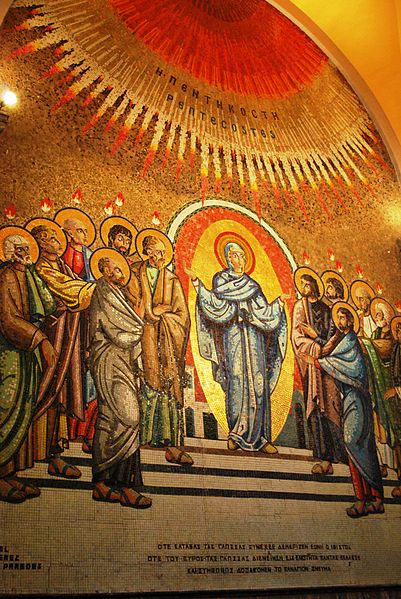
Mosaic Mural of Pentecost by Manuel Perez Paredes in Nuestro Senor del Veneno Temple, Mexico City

Mosaic Mural of Pentecost by Manuel Perez Paredes in Nuestro Senor del Veneno Temple, Mexico City

Psalm 30

<A Psalm. A Song at the dedication of the temple. Of David.>
 1 I will extol you, O LORD, for you have drawn me up, and did not let my foes rejoice over me.
 2 O LORD my God, I cried to you for help, and you have healed me.
 3 O LORD, you brought up my soul from Sheol, restored me to life from among those gone down to the Pit.
 4 Sing praises to the LORD, O you his faithful ones, and give thanks to his holy name.
 5 For his anger is but for a moment; his favor is for a lifetime. Weeping may linger for the night, but joy comes with the morning.
 6 As for me, I said in my prosperity, “I shall never be moved.”
 7 By your favor, O LORD, you had established me as a strong mountain; you hid your face; I was dismayed.
 8 To you, O LORD, I cried, and to the LORD I made supplication:
 9 “What profit is there in my death, if I go down to the Pit? Will the dust praise you? Will it tell of your faithfulness?
 10 Hear, O LORD, and be gracious to me! O LORD, be my helper!”
 11 You have turned my mourning into dancing; you have taken off my sackcloth and clothed me with joy,
 12 so that my soul may praise you and not be silent. O LORD my God, I will give thanks to you forever.

This is a Psalm of praise but as Rolf Jacobson also can state it is a Psalm about praise. (Nancy deClaisse-Walford, 2014, p. 298) Psalm thirty with its poetic polarities looks at what a life of praise might look like and how one’s experience of God’s deliverance can lead to a life where one’s soul can praise and not be silent. The Psalm also moves beyond the individual Psalmists praise to the community’s experience of the deliverance of God and the attribution of the Psalm as a song at the dedication of the temple can let us wonder how the words originally written by one speaker now gets echoed to the faithful ones through their testimony and becomes reflective of a communal faith at the dedication of a place of worship. Praise leads the person not to remain silent, to proclaim their life before the gathered community and ultimately to dedicate a place where God’s name can be praised.

The superscription which lists the Psalm as being used in the dedication of a temple has two possibilities in ancient Israelite and Jewish writings: the dedication of the second temple in 515 BCE (as described in Ezra 6) or the rededication of the temple after the Maccabean revolt in 165 BCE after it had been defiled by Antiochus Epiphanes (which Hanukah and the books of Maccabees talk about). (Nancy deClaisse-Walford, 2014, p. 289) In either case the community has come out of a time where the LORD appeared to hide his face and remove the protection from the people and yet ultimately the people stand in the position of being renewed and redeemed from either captivity or persecution. In using these words in the position of praising God with the dedication of a new (or renewed) temple the people take the experience of the Psalmist and the words of praise and relate them to the experience of the Jewish community as they emerge from the shadow of oppression and the threat of death.

The Psalm itself bursts with praise from the writer’s experience of redemption. From the very beginning the poet show how their LORD saved them from the point of death. The language is full of images reflecting a struggle for life against the possibility of death. Being drawn up, brought up from Sheol, having one’s life restored from among those who have gone down to the Pit: these are all ways of representing the near-death experience that the Psalmist trusts that God has redeemed them from. So, the Psalmist feels compelled not only to tell and praise but to command others to praise and give thanks as well. In sharing their experience and song they begin to teach the community how to sing praises to the LORD and to give thanks to his holy name.

In the center of the psalm is the testimony of a life that has forgotten praise and which became comfortable in its complacency. The Psalmist, like many in our own time, made security their idol and they began to trust in their own strength rather than the LORD who had provided for them. They began to believe that they would never be moved. Yet, this is where the LORD hides the protecting and benevolent face of God. To many people who believe God only brings prosperity and blessing this may indeed feel like what Martin Luther would call ‘the alien work of God’: the actions of condemnation, judgment or punishment. Or as Dietrich Bonhoeffer could say in a 1944 letter to Eberhard Bethge,

Thus our coming of age leads us to a truer recognition of our situation before God. God would have us know that we must live as those who manage their lives without God. The same God who is with us is the God who forsakes us (Mark 15: 34!) (DBW 8:479)

The Psalmist describes the descent into the Godforsaken place that leads them to pleading for life. The Psalms come from a time before the Jewish people would even begin thinking of a resurrection and so the ending of life is the ending of praise. Death silences the songs of the faithful but even at the edge of the abyss the faithful can cry out. They know that God’s anger will pass, that joy will come in the morning. That God can and will act to bring life out of death, hope out of despair, turn mourning into dancing and brokenness into healing.

So, the Psalmist and the community that can echo these words learn to praise and not be silent. They participate in a faith in a redeeming God who delivers the faithful ones in their time of trouble. Having participated in the renewal of life after the brush with death, persecution or destruction they learn that it is because of the LORD that they shall never be moved. As St. Paul could echo this idea in a later time, talking to the early followers of Jesus, ‘that neither death, nor life, nor angels, nor rulers, nor things present, nor things to come, nor powers, nor height, nor depth, nor anything else in all creation, will be able to separate us from the love of God in Christ Jesus our LORD.” (Romans 8.38f.) And as the faithful gather together in the places dedicated to praising and giving thanks to God forever as the old song says, “How can they keep from singing.”


 

Psalm 29- The Thundering Voice of God

Supercell Thunderstorm over Chaparral, New Mexico on April 3, 2004

Supercell Thunderstorm over Chaparral, New Mexico on April 3, 2004

Psalm 29

<A Psalm of David.>
 1 Ascribe to the LORD, O heavenly beings, ascribe to the LORD glory and strength.
 2 Ascribe to the LORD the glory of his name; worship the LORD in holy splendor.
 3 The voice of the LORD is over the waters; the God of glory thunders, the LORD, over mighty waters.
 4 The voice of the LORD is powerful; the voice of the LORD is full of majesty.
 5 The voice of the LORD breaks the cedars; the LORD breaks the cedars of Lebanon.
 6 He makes Lebanon skip like a calf, and Sirion like a young wild ox.
 7 The voice of the LORD flashes forth flames of fire.
 8 The voice of the LORD shakes the wilderness; the LORD shakes the wilderness of Kadesh.
 9 The voice of the LORD causes the oaks to whirl, and strips the forest bare; and in his temple all say, “Glory!”
 10 The LORD sits enthroned over the flood; the LORD sits enthroned as king forever.
 11 May the LORD give strength to his people! May the LORD bless his people with peace!
 
What language do we use to praise God and where does it come from? I know for many contemporary Christians there is a fear of using the secular language or language that may come from a mythological or another religion’s background. Yet, here is Psalm 29 which uses the language that the Canaanites used to talk about their god Baal and repurposes that praise in a way to explicitly and repetitively talk about the LORD. In our desire to ascribe to the LORD glory and strength what words, what language and what images shall we use? How do the metaphors capture some piece of what the LORD’s strength and power is? One of the gifts of the Psalms is the way in which it stretches and challenges the ways in which we can poetically allow ourselves to talk about God.

The metaphorical exploration of the power of God’s voice as a thunderstorm is a potent image on its own. The powerful image also takes on a polemical context when paired in a Canaanite environment when their primary god Baal is a storm god who battles the chaotic sea (Yam). In a bold move the poet who puts these words on paper takes the primary image of strength of the god of the surrounding nation and usurps the image to talk about the voice of the LORD. All the other heavenly beings are summoned from the beginning to honor the LORD and to assume their proper subservient positions. The unimaginable power of the mighty storm which can strip the forests are or which can break the mighty cedars of Lebanon is now one attribute of the LORD’s strength.

To use the language of the surrounding world as a part of the language we use to praise God is necessary and yet like all metaphors it has its limits. The Psalms never pretend to be a systematic theology but rather a window into the ways in which God has been experienced. The metaphors can capture our imaginations as ways, as in this Psalm, to give praise to God. In a Psalm where the voice of the LORD is emphasized seven times the only word spoken is reserved for those in the temple. We, like those in the temple, use our own limited words to try to proclaim, “Glory!” The bible wants to use the language it can muster to bring honor and praise to the LORD, and if it means redirecting language which the people of the LORD believed was misused to worship other gods then they would repurpose and recast those words to bring honor and praise to their God. To echo another poet quoted by Paul in Philippians they wanted to see that time when “every knee should bend, in heaven and on earth and under the earth.” (Philippians 2. 10)

Psalm 29 celebrates the power of the LORD with all its destructive might but ultimately that power is wielded so that the people may be at peace. As in Psalm 46 where the bows are broken and spears are shattered and shields burned to make wars cease, so here the incredible powerful voice of the LORD is wielded to bring the people peace. As Rolf Jacobson can state, “God’s strength quells the warring madness of the children of Adam and Eve. (Nancy deClaisse-Walford, 2014, p. 286) Until the days to come that the prophet Isaiah could dream of when swords are turned into plowshares and spears into pruning hooks (Isaiah 2.4) and where the voice of the LORD blesses the people with peace and all the nations stream to the house of the LORD we live in the expectation for the time when the voice of the LORD’s immense power thunders across our world, strengthens the people, blesses us with peace and all can proclaim, “Glory!”

Psalm 28- Can You Hear Me Lord?

Can You Hear Me by jinzilla@deviantart.com

Can You Hear Me by jinzilla@deviantart.com

Psalm 28

<Of David.>
 1 To you, O LORD, I call; my rock, do not refuse to hear me, for if you are silent to me, I shall be like those who go down to the Pit.
 2 Hear the voice of my supplication, as I cry to you for help, as I lift up my hands toward your most holy sanctuary.
 3 Do not drag me away with the wicked, with those who are workers of evil, who speak peace with their neighbors, while mischief is in their hearts.
 4 Repay them according to their work, and according to the evil of their deeds; repay them according to the work of their hands; render them their due reward.
 5 Because they do not regard the works of the LORD, or the work of his hands, he will break them down and build them up no more.
 6 Blessed be the LORD, for he has heard the sound of my pleadings.
 7 The LORD is my strength and my shield; in him my heart trusts; so I am helped, and my heart exults, and with my song I give thanks to him.
 8 The LORD is the strength of his people; he is the saving refuge of his anointed.
 9 O save your people, and bless your heritage; be their shepherd, and carry them forever.
 
There is an intensity and beauty to this Psalm in its movement from crying to be heard to blessing the LORD who has heard. We can never enter the original Psalmist’s world and know who their enemies are or what is the crisis they are experiencing or how long they cry before they know that the LORD hears and responds, and yet we have their words which can echo our own crises and cries. The life of faith can inhabit this wide space between the desperate cry and the confident trust of one who has been answered. Faith does not exempt the faithful one from these times of crisis, but it does give the faithful petitioner a Faithful One who they trust will hear and answer their calls.

The intensity of the petitioner’s prayer is carried by the verbs focused on hearing: “I call, do not refuse to hear (literally do not be deaf), if you are silent” and the additional contrast between the LORD’s role as the petitioner’s rock and their destination if their rock proves untrustworthy, the pit. The psalmist cries out to the LORD, their rock, because the LORD is the only one who can deliver them. This cry is both an individual cry for help but also has the connotation of worship with lifting up hands toward the sanctuary. The Psalm doesn’t bargain with God but instead attempts to lift up the desperate reality that the Psalmist finds themselves within. If God does not rescue them from the wicked their life will end. The words of the Psalm 28 point to a life or death reality and wait upon the LORD for deliverance.

In contrast to the words of the Psalmist are the words of the wicked who speak peace while plotting mischief. The wicked often masquerade as the righteous and yet the Psalmist can point to the “fundamental disjunction between words, intentions and deeds.” (Nancy deClaisse-Walford, 2014, p. 276) The wicked here are portrayed as those who do not ‘regard the work of the LORD,’ who seem to easily inhabit that space of God’s perceived silence with their own certainty that their words will go unpunished. They fill the pause in God’s perceived works with their own evil works and while the Psalmist wants the LORD to repay the evildoers for their works he also wants to ensure that he is not swept away along with them. Do not mistake my words for those of the evildoers who oppress me, do not mistake my work for their work or my deeds for their deeds. The work of the wicked is contrasted with the work of the LORD and the trust is that their disregard for the LORD’s working will result in their own destruction.

The space between verse five and six, the space between the LORD will break them down and blessed be the LORD who has heard is unknown. During that time the one praying holds onto the promise of the LORD’s hearing and the remembrance of the way the LORD has acted for the faithful ones in the past. Yet, the Psalm takes us across the unknown span of time to the resolution where God has acted, where the Psalmist can rest because God has provided them safety and strength, God did hear and act and save. It is this space where the Psalmist can utter the words of praise for the LORD who is faithful to the promises that were made. Now the Psalm moves beyond the individual to the community that calls upon God for their inheritance as well as guidance. The LORD is called upon to be their shepherd (which also has royal/kingly connotations in the Hebrew Bible) and to watch over and lead them forever. Perhaps, like in Psalm 23, the people will again find themselves in the darkest valley needing to cry out for the LORD to hear and rescue them again and then once again the intensity of the beginning of this Psalm may be a part of the movement again to that time when the LORD has heard and acted.

Psalm 27- Faith in an Age of Anxiety

The Temple by Radojavor@deviantart.com

The Temple by Radojavor@deviantart.com

Psalm 27
<Of David.>
 1 The LORD is my light and my salvation; whom shall I fear? The LORD is the stronghold of my life; of whom shall I be afraid?
 2 When evildoers assail me to devour my flesh– my adversaries and foes– they shall stumble and fall.
 3 Though an army encamp against me, my heart shall not fear; though war rise up against me, yet I will be confident.
 4 One thing I asked of the LORD, that will I seek after: to live in the house of the LORD all the days of my life, to behold the beauty of the LORD, and to inquire in his temple.
 5 For he will hide me in his shelter in the day of trouble; he will conceal me under the cover of his tent; he will set me high on a rock.
 6 Now my head is lifted up above my enemies all around me, and I will offer in his tent sacrifices with shouts of joy; I will sing and make melody to the LORD.
 7 Hear, O LORD, when I cry aloud, be gracious to me and answer me!
 8 “Come,” my heart says, “seek his face!” Your face, LORD, do I seek.
 9 Do not hide your face from me. Do not turn your servant away in anger, you who have been my help. Do not cast me off, do not forsake me, O God of my salvation!
 10 If my father and mother forsake me, the LORD will take me up.
 11 Teach me your way, O LORD, and lead me on a level path because of my enemies.
 12 Do not give me up to the will of my adversaries, for false witnesses have risen against me, and they are breathing out violence.
 13 I believe that I shall see the goodness of the LORD in the land of the living.
 14 Wait for the LORD; be strong, and let your heart take courage; wait for the LORD!

The fear of the LORD is the antidote to the fear of the things that produce anxiety in the world around the Psalmist. One of the most common commands when there is a divine revelation through a dream, an angel or a prophecy is “Do not be afraid.” Often these words come in situations that would produce fear and yet the one who calls the Psalmist, the prophets and poets, the kings and the shepherds, the young women like Mary and old men like Zechariah becomes their light and salvation throughout their life and journey. As the apostle Paul can write to the church in Rome, “What then are we to say about these things? If God is for us, who is against us?” Or as Martin Luther could explain when talking about what it means to follow the first commandment of having no other Gods, “We are to fear, love and trust God above all things.” The Psalmists faith in God becomes such a central part of their life that they can enter into the darkest valleys without being paralyzed by fear because their LORD is indeed guiding them through those places and times.

The fear of the LORD is not an immunization against bad things happening to the faithful one, the Psalms and even the theology of books like Deuteronomy are not some simple prosperity gospel where trust in the LORD guarantees a return on investment in wealth, happiness, children, flocks and fields. There is a sense in which that trust is rewarded and validated but the Psalmist and those throughout scripture who are lifted up as models of faith often live challenging lives. Job, for example, would continue to believe that he would be vindicated by the LORD even when his household and health were all destroyed and yet, defiantly, Job would trust that God would answer his plea. The martial imagery of enemies that attack in cannibalistic fashion or an army that encamps around the faithful one may be metaphors for the great struggles or, if the Psalm refers backwards into David’s experience, it may reflect the reality of being one who is hunted for. Faith doesn’t make life easy but it may make the incredible struggle that one goes through bearable because faith becomes the antidote to the overwhelming fear and anxiety that may be present otherwise in the Psalmist’s life.

Worship becomes a foundational piece of the faithful life. The desire of the Psalmist is to live their life in the house of the LORD. The temple or tabernacle becomes a place to seek God’s presence, God’s voice and guidance, to reaffirm one’s trust in their God and a place where prayers can go forth. It is a place where defiant shouts of joy and joyous songs and praises can be offered. It becomes a continual reminder that the Psalmist does not journey alone, but that the LORD their God and other faithful ones, perhaps many other faithful ones also join in these defiant shouts and songs. Faith is strengthened in the continual dwelling in the house of the LORD.

Their God to the faithful one becomes shelter, the one who conceals them under the cover of the tent and the one who sets them upon a rock. Shelter, while used only here in the Psalms, reflects a common idea of the LORD sheltering the people of Israel and is the word behind the Feast of Sukkoth (Festival of Booths) remembering how the LORD cared for the people during their Exodus journey. The LORD has been the rock and foundation before, as in Psalm 18, but now the LORD places the Psalmist upon a rock where they are safe and sheltered from their enemies. As Rolf Jacobson can point out the tent can be a reference to the tabernacle or temple but it also has the element of being God’s protective presence. (Nancy deClaisse-Walford, 2014, p. 269) Within the hospitality culture of the ancient world being concealed under the cover of the tent may also allude to the expectation of protection provided for the guest that has been welcomed into one’s home and there are numerous stories throughout the bible, probably the most famous being that of Lot and the two angels that he shields within his house in Genesis 19 (a text often misinterpreted). In the ancient world if someone comes to your house and you extend them hospitality then their lives are entrusted to your care.

Yet, even the faith that knows that the LORD is their light and salvation may have to convince itself to trust in the midst of the challenges of life. For me verses eight through fourteen may be this type of internal dialogue of faithfulness in the midst of challenge. There is the plea to be heard and the reminder spoken to oneself to seek the face of the Lord and a reaffirmation of this seeking followed by a plea not to hide or turn away, a plea not to cast one off or forsake. There is the continual struggle to remember the character of God and yet the falling back into the language of commitment, deeper commitment to the faithful one than even a parental bond may yield. This Psalm has been a Psalm of commitment and trust and the Psalmist calls upon God in the midst of their struggles to uphold that trust: not to give them up to their adversaries and to lead them on the level paths. The Psalm ends on that note of trust as the wait for the LORD and the belief that in the midst of their time of trial the LORD will somehow deliver them or give them the strength and courage to endure.

Psalm 26- A Liturgy for the Falsely Accused

The Temple by Radojavor@deviantart.com

The Temple by Radojavor@deviantart.com

Psalm 26

<Of David.>
 1 Vindicate me, O LORD, for I have walked in my integrity, and I have trusted in the LORD without wavering.
 2 Prove me, O LORD, and try me; test my heart and mind.
 3 For your steadfast love is before my eyes, and I walk in faithfulness to you.
 4 I do not sit with the worthless, nor do I consort with hypocrites;
 5 I hate the company of evildoers, and will not sit with the wicked.
 6 I wash my hands in innocence, and go around your altar, O LORD,
 7 singing aloud a song of thanksgiving, and telling all your wondrous deeds.
 8 O LORD, I love the house in which you dwell, and the place where your glory abides.
 9 Do not sweep me away with sinners, nor my life with the bloodthirsty,
 10 those in whose hands are evil devices, and whose right hands are full of bribes.
 11 But as for me, I walk in my integrity; redeem me, and be gracious to me.
 12 My foot stands on level ground; in the great congregation I will bless the LORD.

Many have stood in times where they felt unjustly accused by those in authority or those with power in their lives (whether friends, family, or perhaps in an educational, work or legal setting). In a familiar pattern from the Psalms in this part of the book of Psalms the petitioner and God stand against the judgment they experience from the forces around them. Martin Luther, for example, could reference his own struggles in attempting to be faithful to God’s Word and the persecution he is feeling in 1525 when he expounds upon the Psalm, (LW 12: 184) The Psalm invites us into that struggle with the difference between the life one expects in attempting to be faithful to God and the reality that the faithful one may experience.

The first two verses call upon God to act: to vindicate and to prove. Ultimately the crux of the Psalm is the trust that the speaker has for the LORD. They have tried to walk in a manner that reflects that faith and trust and it is that walk that has led them into this time of trial. The LORD is the one they call upon to act in setting the tables right and restoring the things that have been lost in this time where their way of life has been called into question. In parallel with this prayer to be vindicated is a parallel prayer to be evaluated. They cry on the LORD to weigh their life on the scales of justice and to see if their punishment is just. In the psalmist’s view the struggles they are going through do not fit the life they have tried to live and they open themselves up to God’s evaluation. This is perhaps a terrifying place for many people who are painfully aware of their sins or times they have not been completely faithful but as Beth Tanner can state about this text, “The point here is not to prove oneself, but to demonstrate one’s trust in God’s power of hesed and grace.” (Nancy deClaisse-Walford, 2014, p. 263)

It would be easy to become critical of the tone of this and many other Psalms where the psalmist places themselves in the position of the righteous one who is judged and yet that would miss the point in this Psalm. The Psalms are experienced theology put into prose rather than some type of systematic theology which needs to be consistent throughout. The freedom of the Psalms is the ability to give voice in a faithful way to the world one is experiencing. There will be moments where the Psalms will focus on the writer’s guilt or their need of redemption, but there are also times in the Psalms and in life where the speaker feels unjustly persecuted. The Psalms can provide us a ‘Liturgy for the Falsely Accused’ in the words of William Bellinger and Walter Brueggemann. (Brueggeman, 2014, p. 137) There are times where we need to know that we are innocent, or at least justified if we want to be dogmatic, where we haven’t associated with the wrong people or done the wrong things. Where our life has attempted to closely follow our values and where we do need a God who can judge between us and our persecutors. We want God to discriminate between us and the ones who we feel have acted unjustly. Maybe in the space of the prayer God acts, maybe in the space of the prayer our enemy changes, or maybe in the space of the prayer we are tested in heart and mind and we need to change. Yet, the speaker trusts that God will do something with their words and with their life. God will not remain silent and inactive.

Most of the prayer calls upon God to act on the psalmist’s behalf: to vindicate and to prove and not to sweep them away with the sinners. Yet, in the final two verses we return to the life the speaker is trying to live, a life that is in harmony with the trust they have in their LORD and the integrity in which they have attempted to walk. Even before God’s redemption they will continue to walk in integrity, and to bless the LORD in the worshipping community. They will continue to try to live the life they feel called to live, a life faithful to their calling as a person of the LORD.

Psalm 25: The Struggle of Faith From Aleph to Tav

The Hebrew Alphabet. Hebrew reads right to left so it begins with Aleph and ends with Tet

The Hebrew Alphabet. Hebrew reads right to left so it begins with Aleph and ends with Tav

Psalm 25

<Of David.>
1 To you, O LORD, I lift up my soul.
 2 O my God, in you I trust; do not let me be put to shame; do not let my enemies exult over me.
 3 Do not let those who wait for you be put to shame; let them be ashamed who are wantonly treacherous.
 4 Make me to know your ways, O LORD; teach me your paths.
 5 Lead me in your truth, and teach me, for you are the God of my salvation; for you I wait all day long.
 6 Be mindful of your mercy, O LORD, and of your steadfast love, for they have been from of old.
 7 Do not remember the sins of my youth or my transgressions; according to your steadfast love remember me, for your goodness’ sake, O LORD!
 8 Good and upright is the LORD; therefore he instructs sinners in the way.
 9 He leads the humble in what is right, and teaches the humble his way.
 10 All the paths of the LORD are steadfast love and faithfulness, for those who keep his covenant and his decrees.
 11 For your name’s sake, O LORD, pardon my guilt, for it is great.
 12 Who are they that fear the LORD? He will teach them the way that they should choose.
 13 They will abide in prosperity, and their children shall possess the land.
 14 The friendship of the LORD is for those who fear him, and he makes his covenant known to them.
 15 My eyes are ever toward the LORD, for he will pluck my feet out of the net.
 16 Turn to me and be gracious to me, for I am lonely and afflicted.
 17 Relieve the troubles of my heart, and bring me out of my distress.
 18 Consider my affliction and my trouble, and forgive all my sins.
 19 Consider how many are my foes, and with what violent hatred they hate me.
 20 O guard my life, and deliver me; do not let me be put to shame, for I take refuge in you.
 21 May integrity and uprightness preserve me, for I wait for you.
 22 Redeem Israel, O God, out of all its troubles.

The Psalms are poetry and many types of poetry rely upon certain forms. One of the forms that Hebrew Poetry seems drawn to is the acrostic, where the poem divides by line or verse by descending letters of the alphabet. Psalms 9 and 10  together form an acrostic poem as do several other Psalms, yet it is a form that lies unseen in the English translations of this Psalm. One of the reasons for using an acrostic is to express a complete thought from A to Z (or from Aleph to Tav in Hebrew).

Many commentators remark upon the disjointed structure of the petitions in this prayer and conclude that the disjointedness comes from the form of the poem (having to start a petition with the next consonant in the alphabet) and divide the Psalm up into distinct units that share themes. Yet, spending some time with Psalm 25, I think the form, content and vocabulary of the Psalm point to a larger picture of the struggle of faith in the space of the ambiguity of life. The Psalm wrestles with the difference between the experience of the faithful one who is praying and their own experience of being put to shame, seeing others who are treacherous succeeding, and wondering about the promises of God’s steadfast love in the concrete experiences of life where that love may seem distant. It is a conversation of faith, not a cheap faith which sprouts up quickly when everything is going right, but the more complex examined faith that still continues to call out to God in the experiences of struggle, guilt and shame.

The petitions begin with the cry out to God and the perceived distance between the life the Psalmist is living and their expectation of what the covenant life would bring. It is a psalm of waiting for the LORD to act and experiencing a time where the Psalmist feels they are, at least for the time, on their own. Their place within the community is threatened by their enemies and their honor and standing is threatened by shame. They have trusted in the LORD and the treacherous ones seem to be prospering. The long struggle of how bad things can happen to good people and the wicked can prosper continues to play out in this Psalm and it is a question of fairness and justice that the scriptures never settle. Yet, the scriptures allow a place for this struggle and for the protest against reality as they are experiencing it.

The petitions in verse four begin to take a new direction within this struggle of reality. The Psalmist cries for God to show them the path they are to walk. They come from the perspective of not understanding the way the world is unfolding before them so they turn their questions back to God, “make me know your ways, teach me your paths, lead me in truth.” The petitioner now moves to being the one requesting guidance, like a student or disciple seeking their master’s wisdom. There is a more introspective tone that emerges as the sins of the past are brought to the seekers mind and they are now the sinner seeking guidance. The petitioner brings to voice their own failings and sins and once again it is to the LORD that they turn, this time for forgiveness. The Psalmist captures the paradox that encompasses life, where in Luther’s famous terms we can at the same time be the sinner and the righteous one calling out for help. So often in the Psalms the life of the poet encompasses the paradoxical reality of being a steadfast one seeking the LORD’s path, the shamed one seeking the LORD’s vindication, the forgiven one who wrestles with guilt and the one who can trust in the LORD’s covenant love even when the treacherous are prospering and causing trouble for the righteous.

In verse twelve the petitions go back to the promises: that God will teach, that God will grant not only prosperity but friendship and will deliver those in trouble from the troubles of the heart and their physical distress. It lifts up before the LORD the promises that have been made and calls upon God to act upon those promises. It presents the difference from the covenant promised and the covenant experienced and asks for God’s intervention to guard and deliver the faithful ones from their foes. The foes may be the foes of the individual petitioner or the foes of the people of God, and yet the trust is that God can and will deliver the faithful ones in their time of need, that the covenant promised will someday become the covenant experienced, and that ultimately the treacherous will not prosper forever. The life of the Psalmist is a life of prayerfully and honestly struggling with the world as they experience it, with their own shortcomings, with their confusion about what God asks of them in their life, with the promises of God and yet holds fast to the trust that God hears and acts. The Psalms allow a space to wrestle with the entire messy reality of life with all of its paradoxes from A to Z (or Aleph to Tav).

Psalm 24- The Coming of the LORD

Altar Paraments created for Easter Lutheran Church in Eagen Minnesota by Linda Witte Henke

Altar Paraments created for Easter Lutheran Church in Eagen Minnesota by Linda Witte Henke

Psalm 24

<Of David. A Psalm.>
1 The earth is the LORD’s and all that is in it, the world, and those who live in it;
2 for he has founded it on the seas, and established it on the rivers.
3 Who shall ascend the hill of the LORD? And who shall stand in his holy place?
4 Those who have clean hands and pure hearts, who do not lift up their souls to what is false, and do not swear deceitfully.
5 They will receive blessing from the LORD, and vindication from the God of their salvation.
6 Such is the company of those who seek him, who seek the face of the God of Jacob. Selah
7 Lift up your heads, O gates! and be lifted up, O ancient doors! that the King of glory may come in.
8 Who is the King of glory? The LORD, strong and mighty, the LORD, mighty in battle.
9 Lift up your heads, O gates! and be lifted up, O ancient doors! that the King of glory may come in.
10 Who is this King of glory? The LORD of hosts, he is the King of glory. Selah

This Psalm, which uses the language of the approach of the Creator to the creation and the approach of the faithful to the hill of the LORD where the worshipper and the worshipped one meet taps into the creation narrative and the wonder of Psalm 8 with the questioning nature of Psalm 15 about who may dwell in the LORD’s presence. Power and promise and presence all come together in the prose of this Psalm. We a poetically brought into the presence of the triumphal approach of the Creator’s return to the earth and the joyous reception of the faithful ones.

The Psalm begins with describing the approaching LORD not as an invader or alien to this world but instead as its founder, shaper, creator and rightful owner. In language, like Genesis 1, where the deep with its chaotic waters are moved over by the Spirit of God and the speaking of God pulls life and land out of the seas and rivers. God is the one who places limits upon the seas and the waters as the book of Job can poetically echo:

Or who shut in the sea with doors when it burst out from the womb?—
when I made the clouds its garment, and thick darkness its swaddling band,
and prescribed bounds for it, and set bars and doors,
and said, ‘Thus far shall you come, and no farther,
and here shall your proud waves be stopped’? Job 38: 8-11

Once the Psalm had used the language of praise to testify to the immense power of the Creator whose dominion extends over all the earth and all its creatures it moves to the place where the creature can meet the Creator. The first two verses are pointing to the descent of the LORD to come to the world God created, but now the pivot turns to the worshipper ascending the hill of the LORD to the tabernacle or temple to participate in the celebration of the LORD’s advent. How does one prepare to receive the ultimate honored guest? As in Psalm 15 the preparation is not cultic but ethical. There are no rituals, no prescribed sacrifice but instead what is called for is a life that is ethically right. Clean hands and pure hearts and lives oriented toward God and not towards other gods and finally words spoken truthfully. Approaching the LORD in worship in the Psalm is connected to a life lived authentically. If anything is left on the altar to be sacrificed it is one’s life, as the apostle Paul can state in his letter to the Romans:

I appeal to you therefore, brothers and sisters, by the mercies of God, to present your bodies as a living sacrifice, holy, and acceptable to God, which is your spiritual worship. Do not be conformed to this world, but be transformed by the renewing of your minds, so that you may discern what is the will of God—what is good and acceptable and perfect. Romans 12: 1-2

Yet, if one is offering up to the LORD a life of clean hands, pure hearts, rightly oriented soul and truthful speech what one receives in return is a blessing and vindication. The Creator sees and honors the gift of the created one and as we heard in Psalm 23 provides for and grants the shelter of a shepherd and the protection of a host even amid conflict.

The Psalm concludes with the image of a King returning to their walled city in triumph as a metaphor to describe the advent of the LORD. The city itself is called to have courage that the long-awaited return of the king will occur. They are to prepare for this coming in hope and courage based on the identity of the one who is expected to return. This is the LORD, the creator, the divine warrior, the rock, the mighty one, the LORD of armies (literal rendering of the LORD of hosts), the LORD who could speak to seas and oceans and rivers and stop their advance. The praise echoes in the certainty of the LORD’s descent not only to the earth but specifically to meet the faithful ones in the holy city. Those with clean hands, pure hearts, rightly oriented souls and truthful tongues sing out in praise at the expected coming of the King of glory.

Psalm 23- The LORD as Shepherd, Host and Destination

Eastman Johnson, The Lord is My Shepherd (1863)

Eastman Johnson, The Lord is My Shepherd (1863)

Psalm 23

<A Psalm of David.>
1 The LORD is my shepherd, I shall not want.
2 He makes me lie down in green pastures; he leads me beside still waters;
3 he restores my soul. He leads me in right paths for his name’s sake.
4 Even though I walk through the darkest valley, I fear no evil;
for you are with me; your rod and your staff– they comfort me.
5 You prepare a table before me in the presence of my enemies;
you anoint my head with oil; my cup overflows.
6 Surely goodness and mercy shall follow me all the days of my life,
and I shall dwell in the house of the LORD my whole life long.
 
To attempt to write about the best-known Psalm and one of the most loved pieces in all the scriptures is a challenge because of these words have such an emotional resonance in my memory and the memory of many others. Yet, sometimes slowing down to meditate upon these words that I and many others know by heart can be beneficial. These words of trust have been spoken, prayed and meditated on for millennia and the image of the LORD as shepherd and generous host echoes in many places in the bible, in art and in song.

The metaphor of the LORD being one’s shepherd resonates in multiple ways. Primarily the images evoke the literal pastoral image of a shepherd guiding and watching over the sheep and the words of the Psalm (at least in the first four verses) are told from the sheep’s perspective. In the more literal reading of the metaphor the shepherd is the one who continually provides for the needs of the sheep as it seeks food, water, and safety. The shepherd seeks out an environment where the sheep may thrive and provides protection from the threat of enemies (either wild beasts or men). If, as the Psalm indicates in its attribution, this is a Psalm of David it makes sense that the pastoral image would be a readily available metaphor as David himself begins as a shepherd. Yet, within the world of the bible the shepherd also has a metaphorical linkage to those entrusted as rulers and kings. Jeremiah 23:1-7 and Ezekiel 34, for example, can use this metaphor as a condemnation of the rulers who have not cared for the people they ruled and then later in John 10 Jesus can pick up this language by claiming ‘I am the good shepherd’ which would have both the pastoral image as well as the kingly image.

The LORD leading the sheep into an environment where they might prosper for ‘his name’s sake’ reflects upon a long tradition of honoring the name of the LORD the God of Israel. While the Hebrew people lifted the honoring of God’s name as a commandment it also was used as a claim upon God’s identity. For example, in Psalm 79:9 the Psalmist can cry out, “Help us, O God of our salvation, for the glory of your name; deliver us and forgive our sins, for your name’s sake.” To call upon the name of the LORD is to call upon the character of God. In many ways, this Psalm, and many other Psalms and prayers, call upon the name of the LORD to ask God to act in a way that is in the character of God’s provision and care for the sheep of the LORD’s field and the people under the LORD’s care.

One of the most memorable parts of the Psalm is the darkest valley, or as I remember it growing up ‘the valley of the shadow of death.’ God’s presence amid the dark and difficult moments of our life is both a source of great comfort for the sufferer and a challenge to many simplistic theologies that can only find a place for God in the times of joy and prosperity. God’s presence provides security in every part of our lives and the faithful one can lean upon the protective rod and staff in a time of insecurity. The journey of the follower will not always be a time in green pastures and still waters and yet they shepherd leads the sheep through the dangerous and scary places to places where the flock can once again thrive.

In the final two verses the metaphor shifts from the LORD as shepherd to the LORD as host. The follower becomes one welcomed into the LORD’s hospitality, and as one extended hospitality the host also provides protection. In this way, a banquet table can be spread even when one’s enemies may be nearby for the host provides the security which allows the feast to be peaceful. The traveler is welcomed, anointed with oil and given food to eat and rich drink. Goodness and mercy become personified and follow the traveler, pursuing them throughout their life to provide a safe harbor.

Ultimately the one who has led the sheep/follower throughout life is finally the destination. Dwelling in the house of the LORD is far more than just residing there as a priest, but ultimately goodness and mercy have pursued the Psalmist and the LORD has led the Psalmist like a shepherd back to the LORD’s house. St. Augustine’s famous words, “Thou hast made us for thyself, O Lord, and our heart is restless until it finds its rest in you” resonates with Psalm 23. As the book of John loves to use a set of images in John 10: I am the gate for the sheep (10:7); I am the gate (10:9) and I am the good shepherd (10: 11, 14) can ultimately lead in chapter 14:6 to “I am the way, the truth and the life.” Just as John can develop the imagery of the Psalm in a way that points ultimately to Jesus being the destination of the journey for Christians, the Psalm can point back to the LORD the God of Israel being both shepherd, host and destination for the Psalmist and those who would echo these words.

Psalm 22-A Desperate Cry to God

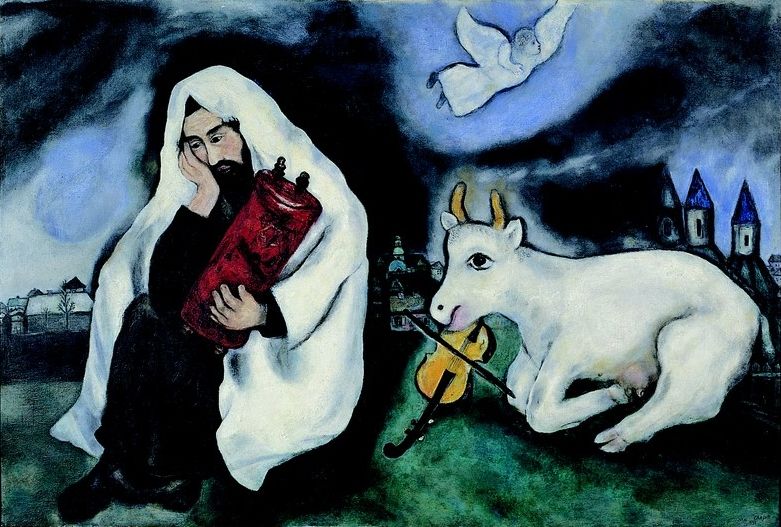
Marc Chagall, Solitude (1933)

Marc Chagall, Solitude (1933)

Psalm 22

<To the leader: according to The Deer of the Dawn. A Psalm of David.>
1 My God, my God, why have you forsaken me? Why are you so far from helping me, from the words of my groaning?
 2 O my God, I cry by day, but you do not answer; and by night, but find no rest.
 3 Yet you are holy, enthroned on the praises of Israel.
 4 In you our ancestors trusted; they trusted, and you delivered them.
 5 To you they cried, and were saved; in you they trusted, and were not put to shame.
 6 But I am a worm, and not human; scorned by others, and despised by the people.
 7 All who see me mock at me; they make mouths at me, they shake their heads;
 8 “Commit your cause to the LORD; let him deliver– let him rescue the one in whom he delights!”
 9 Yet it was you who took me from the womb; you kept me safe on my mother’s breast.
 10 On you I was cast from my birth, and since my mother bore me you have been my God.
 11 Do not be far from me, for trouble is near and there is no one to help.
 12 Many bulls encircle me, strong bulls of Bashan surround me;
 13 they open wide their mouths at me, like a ravening and roaring lion.
 14 I am poured out like water, and all my bones are out of joint; my heart is like wax; it is melted within my breast;
 15 my mouth is dried up like a potsherd, and my tongue sticks to my jaws; you lay me in the dust of death.
 16 For dogs are all around me; a company of evildoers encircles me. My hands and feet have shriveled;
 17 I can count all my bones. They stare and gloat over me;
 18 they divide my clothes among themselves, and for my clothing they cast lots.
 19 But you, O LORD, do not be far away! O my help, come quickly to my aid!
 20 Deliver my soul from the sword, my life from the power of the dog!
 21 Save me from the mouth of the lion! From the horns of the wild oxen you have rescued me.
 22 I will tell of your name to my brothers and sisters; in the midst of the congregation I will praise you:
 23 You who fear the LORD, praise him! All you offspring of Jacob, glorify him; stand in awe of him, all you offspring of Israel!
 24 For he did not despise or abhor the affliction of the afflicted; he did not hide his face from me, but heard when I cried to him.
 25 From you comes my praise in the great congregation; my vows I will pay before those who fear him.
 26 The poor shall eat and be satisfied; those who seek him shall praise the LORD. May your hearts live forever!
 27 All the ends of the earth shall remember and turn to the LORD; and all the families of the nations shall worship before him.
 28 For dominion belongs to the LORD, and he rules over the nations.
 29 To him, indeed, shall all who sleep in the earth bow down; before him shall bow all who go down to the dust, and I shall live for him.
 30 Posterity will serve him; future generations will be told about the Lord,
 31 and proclaim his deliverance to a people yet unborn, saying that he has done it.

Psalm 22 echoes heavily in the gospel writer’s telling of the crucifixion of Jesus and it forms a central part of the liturgy of holy week (closing the Maundy Thursday service and serving as the pivot into Good Friday). For both Jewish and Christian readers this Psalm of suffering and lament has been a place that can reflect the reality of the faithful life when God seems absent and God’s promises not to forsake seem far away. Many people are troubled when they read the language of the Psalms of Lament, particularly the vivid language of Psalm 22 because it seems unlike the language of faith. Yet, here in the place of suffering where the faithful one calls out to God and questions God’s seeming lack of intervention is a faithful (even if difficult) place. As Beth Tanner can state, “Crying out in pain and expressing trust are not incompatible.” (Nancy deClaisse-Walford, 2014, p. 233) There will always be those, like Job’s friends in the book of Job, who want to equate suffering as proof of the suffering one’s unfaithfulness and demand a rigidly ordered world where the righteous prosper and the unrighteous are punished but the real world is seldom that tidy. My experience as well as my reading of the story of many of the saints of the church and the patriarchs and matriarchs of the Jewish story reveal a very different dynamic: frequently those saints and ancestors in the faith do suffer, and often in ways that seem unreasonable, yet they can hold their suffering within the framework of a world where God still remains sovereign even if the world is often incomprehensible.

The Psalm begins with a cry to a known God, the one the sufferer calls out to is their God who they have known in the past, who has been present and active throughout their lives and who now seems absent. It is this absence of God’s presence that makes a space for the crisis of the sufferer and allows their oppressors to have their way. For the petitioner who cries out to God they trust that God is a God who hears, much as in the Exodus when God heard the cries of the Israelites, and the Psalmist calls upon this history of God’s action in the past on their behalf and on behalf of the people. The Psalmist contrasts the position of their ancestors ‘who trusted in you and were not put to shame’ and their own experience of being despised and scorned. The Psalmist oscillates between the ways in which God has acted in the past and their own experience of abandonment, terror and shame. The poetic language of this Psalm is particularly rich in representing their opponents as wild bulls, ravening lions, a pack of vicious dogs and their experience takes a toll on their own body in vivid ways: mouth dried up like a potsherd, being poured out like water and bones being out of joint with a heart that has melted like wax, and they are dying of hunger to the point where their bones stand out against their skin. The person places their petition to God in the direst terms possible, their petition is a matter of life and death and their only hope is for God to hear and act like God has heard and acted in the past and to honor God’s promise not to forsake.

As with most of the Psalms of Lament, Psalm 22 allows us to see the reversal of the petitioner’s condition. In the middle of verse 21 the situation changes and the tone changes. The verse begins ‘save me from the mouth of the lions’ but then abruptly switches ‘from the horns of wild oxen you have rescued me’. We don’t know the time that elapses in this transition but the deliverance occurs and the prayer switches to one of praise. Since God has not despised or disdained, there is a hope for tomorrow. Those who sought the LORD now become those who praise, the poor whose bones could be counted can finally eat and be satisfied and the God who seemed to forsake has become the LORD who reigns over the nations. God’s action in the speaker’s generation ensures that another generation will be told about the God who watches over God’s faithful people and hears their complaints and prayers.

For the first tellers of the story of Jesus the resonant images of Psalm 22 probably helped to make sense of their experience of the crucifixion. For both Matthew and Mark the words Jesus speaks from the cross, “Eloi, Eloi lema sebachthani, my God, my God why have you forsaken me” would resonate with the beginning of this Psalm and the question of the righteous suffer. Even within the experience of that day where the soldiers cast lots for the garments of Jesus, the Psalm provides an easy connection for followers trying to make sense of the senseless suffering. The Psalms provided a language for their experience and words for their pain.

As important as Psalm 22 is for Christians in telling the story of the crucifixion both in scriptures and in the liturgy of Holy Week we cannot leave it only there. Psalm 22, and the psalms of lament more generally, are rich and powerful words that for generations of Jewish and Christians followers of God have given voice to a cry for deliverance. Whether it was the Jewish people in exile in Babylon, slaves crying out in suffering, or the person dealing with a devastating injury or illness that has robbed them of their sense of belonging we need to hear again that the God who we perceive has forsaken us can indeed hear our cry. We need to be able to claim that the experience of suffering and isolation need not be read as an implication of our own unfaithfulness or unrighteousness, but that indeed crying out to God in that time of suffering and isolation is itself a mighty cry of faith. Groaning words can indeed be powerful words when they reach the ears of the LORD who rules over the nations.

Psalm 21- A Blessing for the King

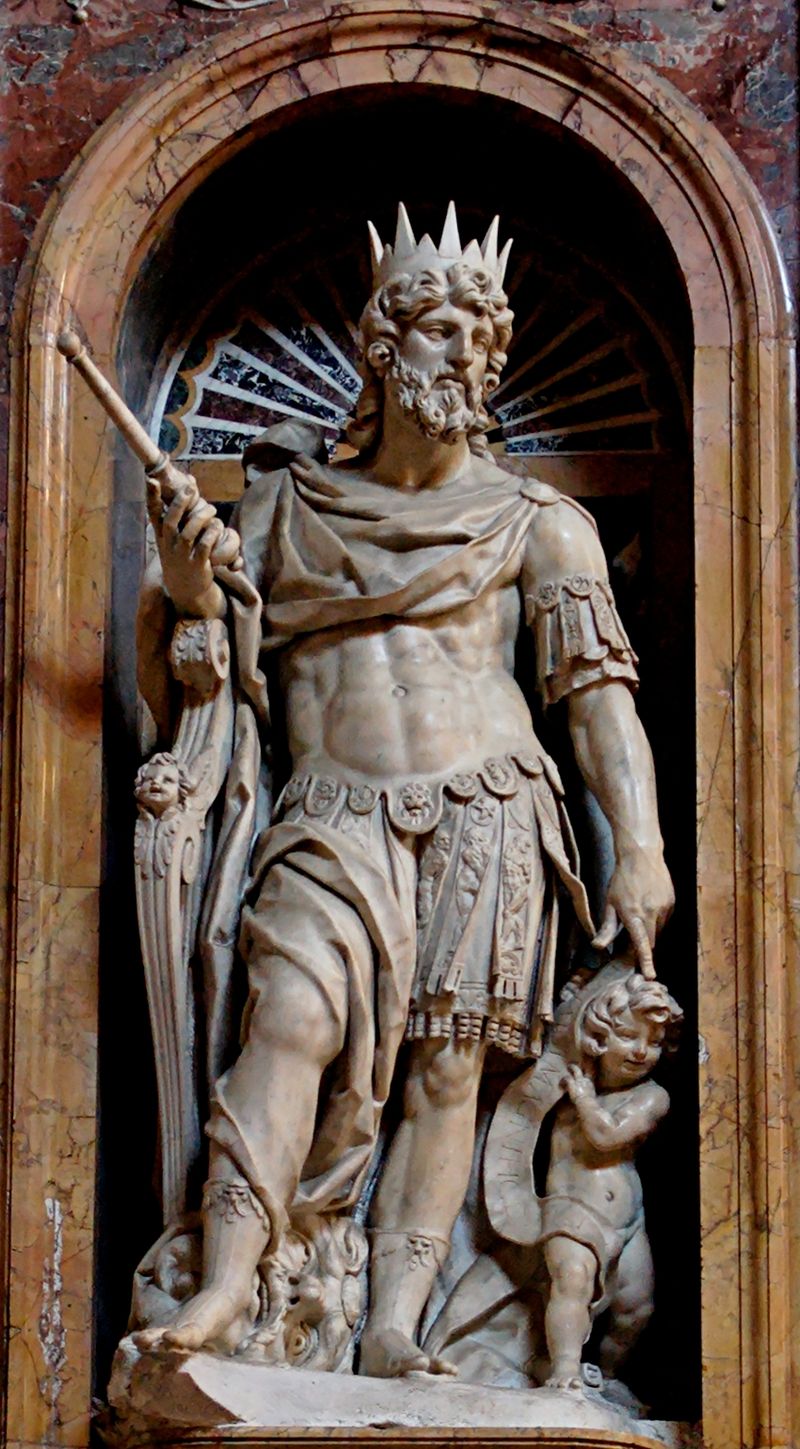
Statue of David by Nicolar Cordier in the Borghese Chapel of the Basilica di Santa Maria Maggiore

Statue of David by Nicolar Cordier in the Borghese Chapel of the Basilica di Santa Maria Maggiore

Psalm 21

<To the leader. A Psalm of David.>
1 In your strength the king rejoices, O LORD, and in your help how greatly he exults!
2 You have given him his heart’s desire, and have not withheld the request of his lips. Selah
3 For you meet him with rich blessings; you set a crown of fine gold on his head.
4 He asked you for life; you gave it to him– length of days forever and ever.
5 His glory is great through your help; splendor and majesty you bestow on him.
6 You bestow on him blessings forever; you make him glad with the joy of your presence.
7 For the king trusts in the LORD, and through the steadfast love of the Most High he shall not be moved.
8 Your hand will find out all your enemies; your right hand will find out those who hate you.
9 You will make them like a fiery furnace when you appear. The LORD will swallow them up in his wrath, and fire will consume them.
10 You will destroy their offspring from the earth, and their children from among humankind.
11 If they plan evil against you, if they devise mischief, they will not succeed.
12 For you will put them to flight; you will aim at their faces with your bows.
13 Be exalted, O LORD, in your strength! We will sing and praise your power.

At first glance we may wonder if this royal Psalm which is all about the relationship between the king’s trust and the steadfast love has to say to our time when we no longer have kings and, other than politically conservative Christians, we are reluctant to declare God’s blessing upon a political candidate. In a world with a flourishing royal establishment, which is the world of the Psalm, it does qualify the king’s leadership. Everything the king, and by extension the people, has received is an extension of God’s rich blessings from the physical crown the king wears to the long life and glory the king receives. It does place the king as the vessel of the Lord’s blessing and not the cause of the blessing itself and perhaps here is a place where some humility, which is easily lost for those tempted with power, can indeed remain. The gifts lifted up here for the king are similar to the gifts that Solomon is said to receive after his request for wisdom in 1 Kings 3. Yet, these gifts are not merely for the king but for the people by extension.

Perhaps one could impertinently state that the Psalm reflects a type of divine trickle-down economics where the king is blessed so that the nation as a whole may be blessed. The people of Israel could not imagine a representative democracy or any other modern system of government. Their frame of reference was that of a monarchy and with its nobles and officials. To pray for the life of the king may seem strange to us but it is a frequent stock petition of the time and as Rolf Jacobson can remind us, “and this blessing was not just for the king but for the nation. Short royal reigns are often symptomatic of nation turmoil, and the common folk were just as likely to suffer in such times as the nobility.” (Nancy deClaisse-Walford, 2014, p. 224) Much of the narrative of the Hebrew Bible about the people of Israel and Judah directly links the health of the nation to the faithfulness of the king in power. It is a strange thought to us who are used to our individuality but in a nation where access to biblical texts as well as literacy would have resided with the priests and the nobles the leadership of the king often set the course for the nation. When the king trusts in the LORD the nation is blessed, when the king (and by extension the people) turn to other gods they also turn away the blessings of their LORD.

The world of Israel and Judah was a dangerous and violent world and conflict was a part of life. Here, like in Deuteronomy 20 it is the LORD who is the primary force when Israel triumphs and not their military prowess or strength. I have discussed in other places the ways in which the use of God as a divine warrior can be a powerful but also a dangerous way of talking about God. Yet in the world of the Psalms it is one of the central ways of referring to God. God is the divine warrior, the shield, the fortress, the rock and many other metaphors of strength that provide comfort for the Psalmist and people of many times and places.

Those called into positions of leadership in our time could benefit from remembering that their calling does not exist to serve their benefits but instead their position is for the sake of the community. As Rolf Jacobson says well:

And the blessings that come with leadership do not exist for the advantage of the leader, but for the sake of the community and for the sake of the world. The kings of Israel and Judah never learned this lesson. And the leaders of today seem to do no better. One is reminded of the old saw that people get elected to Congress in order to do good, but end up doing well. So perhaps Jesus’ warning is still apt: From those to whom much has been given much will be expected. (Nancy deClaisse-Walford, 2014, p. 226)

In our time the final axiom of the quote could almost be reversed, that to those whom much has been given little will be expected. There has been a loss of faith in those elected to political office in our society. At the same time humility seems to be an undervalued trait in those who we tend to elect to positions of authority. Perhaps we have sought the wrong traits in our leaders. Perhaps a leader who is able to understand that the position given to him or her is indeed a gift of God, not in the sense of entitlement but instead in the sense of vocation, could have enough humility, compassion, and gratitude to use their position for the sake of the community, the people and the world. Unfortunately, it often seems that those leaders who claim their Christianity most vociferously seem to be those who view their calling as entitlement to do well instead of doing good.