Category Archives: Jeremiah

The Disconnect Between Worship and Obedience:Jeremiah 6: 15-21

Jeremiah Lamenting the Destruction of Jerusalem by Rembrandt van Rijn 1630

Jeremiah Lamenting the Destruction of Jerusalem by Rembrandt van Rijn 1630

15 They acted shamefully, they committed abomination;
yet they were not ashamed, they did not know how to blush.
Therefore they shall fall among those who fall;
at the time that I punish them, they shall be overthrown, says the LORD.
16 Thus says the LORD: Stand at the crossroads, and look, and ask for the ancient paths, where the good way lies; and walk in it, and find rest for your souls. But they said, “We will not walk in it.”
17 Also I raised up sentinels for you: “Give heed to the sound of the trumpet!”
But they said, “We will not give heed.”
18 Therefore hear, O nations, and know, O congregation, what will happen to them.
19 Hear, O earth; I am going to bring disaster on this people,
the fruit of their schemes, because they have not given heed to my words;
and as for my teaching, they have rejected it.
20 Of what use to me is frankincense that comes from Sheba, or sweet cane from a distant land?
Your burnt offerings are not acceptable, nor are your sacrifices pleasing to me.
21 Therefore thus says the LORD:
See, I am laying before this people stumbling blocks against which they shall stumble;
parents and children together, neighbor and friend shall perish.

Apparently the reality that some people may be faithful church attenders while they live lives that are fundamentally out of touch with God’s desire for their lives is not a new reality. As Walter Brueggemann states:

In place of torah, Israel has substituted cultic action (Jer. 6:20-21): frankincense, cane, sacrifices. Israel has devised a form of religion that reflects affluence, which can be safely administered, and which brackets out all questions of obedience.” (Brueggemann 1998, 73)

It is a nice, safe, easy religion that has allowed the people to slip into a sense of cultic complacency. So long as we have the temple and we keep bringing our offerings to God nothing will happen to us. This is the picture of gods that are common in the ancient world, that you bring pleasing offerings to the gods to entreat their favor and to get them fight for you in your battles, allow your crops to prosper, etc. But this is to fundamentally misunderstand the relationship God wants for God’s people. It is not coincidence that the Old Testament prophets frequently rail against the sacrificial system (and Jesus also directly confronts the temple in his own day). The way things are will not continue indefinitely, God is speaking through the prophet. God is taking away the things that people have placed their trust in, and the temple and the priestly sacrificial system is one of these things.

purple rose 01 by picsofflowers.blogspot.com


Peace, Peace When There Is No Peace: Jeremiah 6: 9-14

The Door of the Castle Church in Wittenburg where Martin Luther posted the 95 Theses. The Theses are now engraved in the metal doors.

The Door of the Castle Church in Wittenburg where Martin Luther posted the 95 Theses. The Theses are now engraved in the metal doors.

9 Thus says the LORD of hosts: Glean thoroughly as a vine the remnant of Israel;
like a grape-gatherer, pass your hand again over its branches.
10 To whom shall I speak and give warning, that they may hear?
See, their ears are closed, they cannot listen.
The word of the LORD is to them an object of scorn; they take no pleasure in it.
11 But I am full of the wrath of the LORD; I am weary of holding it in.
Pour it out on the children in the street,
and on the gatherings of young men as well;
both husband and wife shall be taken, the old folk and the very aged.
12 Their houses shall be turned over to others,
their fields and wives together;
for I will stretch out my hand against the inhabitants of the land, says the LORD.
13 For from the least to the greatest of them, everyone is greedy for unjust gain;
and from prophet to priest, everyone deals falsely.
14 They have treated the wound of my people carelessly, saying,
“Peace, peace,” when there is no peace.
The posting of the 95 Theses by Martin Luther for debate in Wittenberg touched off a firestorm in Europe that would rage for a century, and most people think of the beginning of the reformation as a theological movement, which it was, but the 95 theses gained the immediate attention they did because they addressed an economic reality. I think it is telling that thesis 92 (which sets up the final three theses) explicitly refers to Jeremiah 6: 14:
92. Away then with the prophets who say to the people of Christ, “Peace, peace,” and there is no peace! [Jer. 6:14]
93. Blessed be all those prophets who say to the people of Christ, “Cross, cross,” and there is no cross!
94. Christians should be exhorted to be diligent in following Christ, their head, through penalties, death, and hell;
95. And thus be confident of entering into heaven through many tribulations rather than through the false security of peace [Acts 14: 22] (Luther 1989, 29)

Luther felt that the people had placed their trust in the wrong place; in the reformation context they had placed their faith in the church and not in Christ. In Jeremiah’s context the people have trusted the rulers and the temple, but not God- and the consequences of that misplaced trust are devastating. Rather than making a single pass over the grapevine of Israel, Jeremiah is told to make a second pass so there is very little remaining for the people do not hear the prophet’s warning-others have told them a more pleasant message. The prophet is at the point where he has been the bearer of this message that has fallen on deaf ears, and he feels ready to break, even though he knows the result will be devastation. The litany of children, husband and wives, old and aged, least to greatest, prophet and priest, everyone is to be caught up in the tide of wrath.
We live in a culture that doesn’t deal with God’s wrath very well. Churches in the United States that tend to talk about God’s wrath tend to direct it towards primarily moralistic (and particularly sexual) behaviors. But in the Bible God’s wrath is a function of God’s grief over the turning of the people away from their vocation as the people of God and the ways in which injustice and greed have taken over the narrative of who they are.

purple rose 01 by picsofflowers.blogspot.com

The World Turned Upside Down: Jeremiah 6: 1-8

Jeremiah Lamenting the Destruction of Jerusalem by Rembrandt van Rijn 1630

Jeremiah Lamenting the Destruction of Jerusalem by Rembrandt van Rijn 1630

Flee for safety, O children of Benjamin, from the midst of Jerusalem!
Blow the trumpet in Tekoa, and raise a signal on Beth-haccherem;
for evil looms out of the north, and great destruction.
2 I have likened daughter Zion to the loveliest pasture.
3 Shepherds with their flocks shall come against her.
They shall pitch their tents around her; they shall pasture, all in their places.
4 “Prepare war against her; up, and let us attack at noon!”
“Woe to us, for the day declines, the shadows of evening lengthen!”
5 “Up, and let us attack by night, and destroy her palaces!”
6 For thus says the LORD of hosts:
Cut down her trees; cast up a siege ramp against Jerusalem.
This is the city that must be punished; there is nothing but oppression within her.
7 As a well keeps its water fresh, so she keeps fresh her wickedness;
violence and destruction are heard within her; sickness and wounds are ever before me.
8 Take warning, O Jerusalem, or I shall turn from you in disgust,
and make you a desolation, an uninhabited land.

Things have gone so wrong in the relationship between God and God’s people, and the poetry of pain continues. Things are so bad that a city will become a field again, the urban elite will give way to the poorest of shepherds. There is an undertone of severe economic injustice that it finally coming to its head, and in the coming crisis the poor rather than standing with the leadership will set up their tent against them. Things are so dire that the daytime is not enough for the building of siege works and prosecuting the attack. For unlike the modern U.S. military which does a great deal of its fighting at night, throughout history the setting of the sun meant an end to the day’s hostility. Not so here, “up and let us attack by night and destroy her” says the enemy from the north. Their world has been turned upside down.  The Lord is no longer the strength and shield for people of Judah, in fact Psalm 46 is turned on its head for the Lord of hosts is no longer on their side and the God of Jacob is no longer their refuge. God no longer can dwell in the midst of the betrayal of the city.The prophet sounds the alarm in the hope that the people will turn, and yet God still seems to want to avoid this path, this still seems to be a warning, “take warning, O Jerusalem, or I shall turn from you in disgust, and make you a desolation, an uninhabited land.”

There are many who may not know what to do with the picture of the wounded God that Jeremiah presents us with, a God who doesn’t want to turn his people over to the desolation that is coming but can no longer abide with the way things are. God is in the midst of God’s own process of grief, and in one way it seems trivial to anthropomorphize (assign human characteristics) to God-yet the picture of God in the Bible displays a wide range of emotions and has little to do with the Greek philosophical God who is the unmoved mover who is purely rational, nor does the Hebrew mindset trivialize emotions the way modern society does.

purple rose 01 by picsofflowers.blogspot.com

Corrupted Justice: Jeremiah 5:18-31

Icon of Jeremiah

Icon of Jeremiah

Jeremiah 5: 18-31

18 But even in those days, says the LORD, I will not make a full end of you. 19 And when your people say, “Why has the LORD our God done all these things to us?” you shall say to them, “As you have forsaken me and served foreign gods in your land, so you shall serve strangers in a land that is not yours.”
 20 Declare this in the house of Jacob, proclaim it in Judah:
 21 Hear this, O foolish and senseless people,
 who have eyes, but do not see,
 who have ears, but do not hear.
 22 Do you not fear me? says the LORD;
Do you not tremble before me?
I placed the sand as a boundary for the sea, a perpetual barrier that it cannot pass;
 though the waves toss, they cannot prevail, though they roar, they cannot pass over it.
 23 But this people has a stubborn and rebellious heart;
they have turned aside and gone away.
 24 They do not say in their hearts,
 “Let us fear the LORD our God, who gives the rain in its season,
 the autumn rain and the spring rain, and keeps for us the weeks appointed for the harvest.”
 25 Your iniquities have turned these away, and your sins have deprived you of good.
 26 For scoundrels are found among my people; they take over the goods of others.
 Like fowlers they set a trap; they catch human beings.
 27 Like a cage full of birds, their houses are full of treachery;
therefore they have become great and rich, 28 they have grown fat and sleek.
They know no limits in deeds of wickedness;
they do not judge with justice the cause of the orphan, to make it prosper,
 and they do not defend the rights of the needy.
 29 Shall I not punish them for these things? says the LORD,
 and shall I not bring retribution on a nation such as this?
 30 An appalling and horrible thing has happened in the land:
 31 the prophets prophesy falsely, and the priests rule as the prophets direct;
 my people love to have it so, but what will you do when the end comes?
 
In a brief interlude in the poetry (v. 18-19) we see some hope in the future, it is a dim hope, but it is a hope nonetheless when people after all the destruction ask ‘why has this happened’ and the answer is simply you chose to serve strange gods, so you have gone to serve strangers in another land. In a broken home sometimes someone has to leave, but God has not closed the door to a return, in fact it seems to be God’s continual hope through all the pain, yet God will not be tame or mocked. The relationship will not be one where God will bend to whatever the people think is right. God has not given up on God’s vision of justice and shalom. Yet the people are not in a place where their eyes can see or their ears can hear yet because their heart is in the wrong place and one the wrong things. Literally they are heart-less or empty hearted (NRSV senseless) and their heart is no longer in the relationship with God.

Justice has been so corrupted towards the wealthy that the cause of the orphan and the needy are neglected. The way things are remain irreconcilable with God’s vision of justice, and yet the very mouthpieces that should be calling for faithfulness and correction are behind the corruption. Prophets and priests rule and direct falsely and the people love the falseness. Patrick Miller speaks truth about this passage when he states:

This is a strong indictment of a community in which the politically powerful and the well-to-do amass possessions and wealth at the expense of the marginal and those in society who do not have the protection and power, in which flagrant manipulation of the socioeconomic system to the advantage of the advantaged is simply ignored. The picture is as familiar at the beginning of the third millennium CE as it was in the first millennium BCE. (NIB 6:621)

The Bible often has harsh words for those who are wealthy and in power, especially among the prophets. Most people assume wealth in the Bible is primarily viewed as a source of blessing, and that is one theology present within the Bible, but more commonly in the prophets and throughout most of the New Testament power and wealth are temptations and things that may distort one’s relationship with God. This is difficult for most people to accept, and I struggle with it myself but God does have a vision of a society that all can live in justice and peace and everyone has enough. Perhaps it is a utopian dream, perhaps it is naïve, and perhaps looking at the world through a dream like this opens a person to see the dystopia within the reality they live in, but at the same point just because the way that the people love and the prophets and priests in Jeremiah’s time proclaim may be easier, it doesn’t mean it is the right way.

purple rose 01 by picsofflowers.blogspot.com

The End Of The World As They Know It: Jeremiah 5 : 7-17

Icon of Jeremiah

Icon of Jeremiah

Jeremiah 5: 7-17

 7 How can I pardon you?
Your children have forsaken me, and have sworn by those who are no gods. When I fed them to the full, they committed adultery and trooped to the houses of prostitutes.
 8 They were well-fed lusty stallions, each neighing for his neighbor’s wife.                                                           
 9 Shall I not punish them for these things? says the LORD;
 and shall I not bring retribution on a nation such as this?
 10 Go up through her vine-rows and destroy, but do not make a full end;
 strip away her branches, for they are not the LORD’s.
 11 For the house of Israel and the house of Judah have been utterly faithless to me, says the LORD.
 12 They have spoken falsely of the LORD, and have said,
“He will do nothing. No evil will come upon us, and we shall not see sword or famine.”
 13 The prophets are nothing but wind, for the word is not in them. Thus shall it be done to them!
 14 Therefore thus says the LORD, the God of hosts:
Because they have spoken this word, I am now making my words in your mouth a fire,
and this people wood, and the fire shall devour them.
 15 I am going to bring upon you a nation from far away,
 O house of Israel, says the LORD.
It is an enduring nation,
 it is an ancient nation,
 a nation whose language you do not know,
nor can you understand what they say.
 16 Their quiver is like an open tomb;
all of them are mighty warriors.
 17 They shall eat up your harvest and your food;
 they shall eat up your sons and your daughters;
 they shall eat up your flocks and your herds;
they shall eat up your vines and your fig trees;
 they shall destroy with the sword your fortified cities in which you trust.
 
R.E.M.’s song It’s the End of the World as We Know it fits well here:

That’s great, it starts with an earthquake, birds and 
snakes, an aeroplane and Lenny Bruce is not afraid. 
Eye of a hurricane, listen to yourself churn – world 
serves its own needs, dummy serve your own needs. Feed 
it off an aux speak, grunt, no, strength, the Ladder 
start to clatter with fear fight down height. Wire 
in a fire, representing seven games, and a government 
for hire at a combat site. Left of west and coming in 
a hurry with the furys breathing down your neck. Team 
by team reporters baffled, trumped, tethered cropped. 
Look at that low playing. Fine, then. Uh oh, 
overflow, population, common food, but it’ll do to Save 
yourself, serve yourself. World serves its own needs, 
listen to your heart bleed dummy with the rapture and 
the revered and the right, right. You vitriolic, 
patriotic, slam, fight, bright light, feeling pretty 
psyched. 

It’s the end of the world as we know it. 
It’s the end of the world as we know it and I feel fine. 

Six o’clock – TV hour. Don’t get caught in foreign 
towers. Slash and burn, return, listen to yourself 
churn. Lock it in, uniforming, book burning, blood 
letting. Every motive escalate. Automotive incinerate. 
Light a candle, light a motive. Step down, step down. 
Watch your heel crush, crushed, uh-oh, this means no 
fear cavalier. Renegade steer clear! A tournament, 
tournament, a tournament of lies. Offer me solutions, 
offer me alternatives and I decline. 

It’s the end of the world as we know it. 
It’s the end of the world as we know it and I feel fine. 

The prophetic poetry of death continues, as does the language of God’s woundedness. This will continue through much of Jeremiah, for the prophet points to the end of a world. These are words designed to rend the world apart, to point to an end that is coming. This has nothing to do with the frenzy some people get wrapped around thoughts of the end of the world people would talk about in Revelation (and most people fundamentally misunderstand most of Revelation—especially as it has been twisted around in the interpretations in the movies or literature like the Left Behind series). No this is about the end of the world as the people know it. Temple and priest, prophet and king, Jerusalem and Judah, wealth and prosperity, home and heart are all approaching a time when they will all be consumed by war.  God seems to still be looking for a way to pardon, but sees no way and so the end of the relationship is coming so that perhaps out of the death of the relationship something new might evolve. The root is to be left, so that perhaps something new might grow. The prophets words burn and consume, these are words that point to destruction and they are indeed painful for the prophet and their eventual result will consume the people. They point poetically to the future that is on the horizon and the on the horizon is the smoke of an approaching army.

The nation that will eventually come is Babylon, although the prophet may not know who they are at this point. As an American, we are very blessed to not have had a war take place on our soil since the Civil War (1861-1865) and except for those who have served in conflict overseas the utter destruction of warfare has been lost. In an invasion the invading army takes the harvest to feed their soldiers, sons and daughters would be killed, raped or enslaved, flocks become feasts for the invading army, herd become spoils, the fruit of vines and fig trees may be taken, then as in the earlier image in this part of the poem the branches may be stripped away-used in fires or simply burned to deny the food to the residents of the land under siege. Walled cities were the places where people would flee to, but a siege is a horrific experience once food or water becomes short. We will have ample time to deal with the horrors of a siege later in Jeremiah. The future is dark, the words are painful, and the prophet tries to point to a reality that the world as they know it is ending, but apparently the people feel fine.

purple rose 01 by picsofflowers.blogspot.com

Searching for the Righteous One: Jeremiah 5: 1-6

Icon of Jeremiah

Icon of Jeremiah

Jeremiah 5: 1-6

Run to and fro through the streets of Jerusalem, look around and take note!
 Search its squares and see if you can find one person who acts justly and seeks truth—
so that I may pardon Jerusalem.
 2 Although they say, “As the LORD lives,” yet they swear falsely.
 3 O LORD, do your eyes not look for truth?
 You have struck them, but they felt no anguish;
 you have consumed them, but they refused to take correction.
 They have made their faces harder than rock; they have refused to turn back.
 4 Then I said, “These are only the poor, they have no sense;
for they do not know the way of the LORD, the law of their God.
 5 Let me go to the rich and speak to them; surely they know the way of the LORD, the law of their God.
” But they all alike had broken the yoke, they had burst the bonds.
 6 Therefore a lion from the forest shall kill them,
 a wolf from the desert shall destroy them.
 A leopard is watching against their cities;
 everyone who goes out of them shall be torn in pieces—
 because their transgressions are many, their apostasies are great.

Where is the righteous person, show me the person who I can look at and say all this pain it really is worth it. Yet the vision, the hope seems dashed. God is so deeply wounded that God that God’s pain seems to be overwhelming God’s love. Such is the risk of caring deeply. You can say many things about the picture of God we see in Jeremiah, but you can never make the claim that this God does not care and is uninvolved. In an intentional echo of Genesis 18 when Abraham intercedes before God for the people of Sodom and Gomorrah and bargains with God down to ten righteous people, now God tells Jeremiah ‘just find one.’ Things have become so bad that the people are living in a lie and the lie has become their reality. It is as if they have told themselves over and over again a falsehood until they believe it is true. Beyond that they have begun to believe that the lie has divine sanction. Something is so horribly wrong in the relationship of the people with God that it appears irreconcilable.

Jeremiah seems to say back to God, do you not want to see the truth. You have sought and believed the best possible in these people. God seems to have, in Jeremiah’s mind, done everything to interpret the peoples actions in the best possible light and the divine trust has been met with increased recalcitrance.  Yet, Jeremiah too seems reluctant to give up hope. These are his people, his family as well and so he goes first among the poor, and then assuming it is ignorance (remember this is a pre-literate society where the poor would have been unable to read and this is a time where most people would have made it to the temple primarily for festivals if they were able) Jeremiah goes to the elite. Those who have no excuse, who can read and would have been taught the law of God which contains the vision of peace and justice God desired for them to live in, and they too have refused to live within it.

In a relationship we see a God who doesn’t want to believe that things have reached this point, but has seen the hopes and dreams of the relationship dashed by the people and we hear the wounded words go forth. The very animals of nature begin to represent the destruction that is coming, the people have become like sheep without a shepherd and their fence has been taken away. It is almost as if the shepherd walks away with tears in his eyes, exhausted from trying to lead and protect them surrendering them to the natural consequences of the world they live in.

 purple rose 01 by picsofflowers.blogspot.com

The Prophet’s Agony: Jeremiah 4: 19-31

Job by Leon Bonnat (1880)

Job by Leon Bonnat (1880)

Jeremiah 4: 19-31
 19 My anguish, my anguish! I writhe in pain!
Oh, the walls of my heart! My heart is beating wildly;
 I cannot keep silent; for I hear the sound of the trumpet, the alarm of war.
 20 Disaster overtakes disaster, the whole land is laid waste.
 Suddenly my tents are destroyed, my curtains in a moment.
 21 How long must I see the standard, and hear the sound of the trumpet?
 22 “For my people are foolish, they do not know me;
 they are stupid children, they have no understanding.
They are skilled in doing evil, but do not know how to do good.”
 23 I looked on the earth, and lo, it was waste and void; and to the heavens, and they had no light.
 24 I looked on the mountains, and lo, they were quaking, and all the hills moved to and fro.
 25 I looked, and lo, there was no one at all, and all the birds of the air had fled.
 26 I looked, and lo, the fruitful land was a desert,
 and all its cities were laid in ruins before the LORD, before his fierce anger.
 27 For thus says the LORD: The whole land shall be a desolation;
 yet I will not make a full end.
 28 Because of this the earth shall mourn, and the heavens above grow black;
 for I have spoken, I have purposed; I have not relented nor will I turn back.
 29 At the noise of horseman and archer every town takes to flight;
they enter thickets; they climb among rocks;
all the towns are forsaken, and no one lives in them.
 30 And you, O desolate one, what do you mean that you dress in crimson,
that you deck yourself with ornaments of gold,
 that you enlarge your eyes with paint?
In vain you beautify yourself.
Your lovers despise you; they seek your life.
 31 For I heard a cry as of a woman in labor,
anguish as of one bringing forth her first child,
the cry of daughter Zion gasping for breath, stretching out her hands,
“Woe is me! I am fainting before killers!”

In entering the prophet’s poetry we come to experience some small part of the agony of his profession. His whole life, even his very health becomes consumed by the foreboding fear of what is to come. He sees the disaster which he feels he has no power to stop, and yet he takes the fear and names it, places it into words. Perhaps he hopes that by painting reality through the dystopic  lenses that perhaps someone might hear and turn, that perhaps the uttering of this potential reality might alter the reality that comes, otherwise he is looking at the end of the world as he has known it.

The Bible has an audacious belief that the human conduct matters for the well being of creation, in fact the whole notion of shalom and justice are not merely human concepts in Hebrew thought, they effect everything and Israel and Judah’s failure to live this vision is poisoning the earth. From the beginning of the Genesis story Adam and adamah (the Hebrew word for soil/earth) are tied together and in Genesis 3 the earth bears the price of the man’s disobedience:

And to the man he said,”Because you have listened to the voice of your wife and have eaten of the tree about which I commanded you, ‘you shall not eat of it,’cursed is the ground because of you; Genesis 3: 17

This is a poetic and theological description of reality that Jeremiah is living out of. It is also behind Paul’s imagery in Romans 8:18-25 where creation will be set free by the children of God being revealed and beginning to live out of their identity and into God’s shalom.

The final image of the poem at this point shows the distance between the poets reality and the peoples with the offensive imagery of a foolish prostitute. When invading armies come and the capture a city the soldiers do not pay, they take what they want-and yet here is Judah represented as a prostitute who is decking herself out in her finest jewels expecting payment, but what Judah will find is rape. As I have  said in earlier posts it is an offensive image, and yet it is the image of the poetry which is trying to rouse the people from their slumber.

purple rose 01 by picsofflowers.blogspot.com

The Poetry of Death and Destruction: Jeremiah 4: 11-18

The Prophet Jeremiah by Michelangelo

The Prophet Jeremiah by Michelangelo

Jeremiah 4: 11-18

 11 At that time it will be said to this people and to Jerusalem: A hot wind comes from me out of the bare heights in the desert toward my poor people, not to winnow or cleanse- 12 a wind too strong for that. Now it is I who speak in judgment against them.
 13 Look! He comes up like clouds, his chariots like the whirlwind;
his horses are swifter than eagles– woe to us, for we are ruined!
 14 O Jerusalem, wash your heart clean of wickedness so that you may be saved.
 How long shall your evil schemes lodge within you?
 15 For a voice declares from Dan and proclaims disaster from Mount Ephraim.
 16 Tell the nations, “Here they are!”
Proclaim against Jerusalem, “Besiegers come from a distant land;
they shout against the cities of Judah.
 17 They have closed in around her like watchers of a field,
 because she has rebelled against me, says the LORD.
 18 Your ways and your doings have brought this upon you.
This is your doom; how bitter it is! It has reached your very heart.”
 
The prophet lapses into his deathly poetry again, trying desperately with his words to shake his people out of what Brueggeman calls their “religious indifference and covenantal recalcitrance”  (Brueggemann 1998, 56) Yet the words seem to be falling on deaf ears, the party continues and nobody wants to sober up and go home. Yet the Northern tribe of Dan is proclaiming the disaster that is coming.

Though it will be the Babylonian army that will come and lay siege to Jerusalem and take the people into exile, they are not named. The people and the prophet live in different theological realities.  The prophet sees the way in which God is sovereign over not just Israel or Judah, but over the besiegers and conquerors as well, and that God is indeed moving in judgment towards the people of Judah for the ways they have not kept their covenantal faith.

The people are presented with two conflicting realities. The rulers and the priests pass on the platitudes that things are ok, as well as apparently many of those looked upon as prophets. They continue to prop up the Davidic regime and the temple hierarchy, and the people really have no reason to question the way things are. It is a much different world, where most people are illiterate and do not have anything beyond their oral memory to challenge the king and the priests who not only bear the recorded word of God, they are the only ones who are educated enough to be able to approach the words we take for granted. Also worship has become focused on the temple, and so most people may make it to the temple for the festivals (much as people who come at Christmas and Easter) and may have their own practices which may or may not line up with the temple ideology, but they are reliant upon the priests and the king to point them to what covenantal faithfulness looks like. Jeremiah, the prophet and poet, is one of the few voices of dissent pointing to the way in which the leaders have failed to be the exemplars of covenantal faithfulness that may lead the people back into God’s way of justice and shalom.

purple rose 01 by picsofflowers.blogspot.com

The Siren Call: Jeremiah 4: 5-10

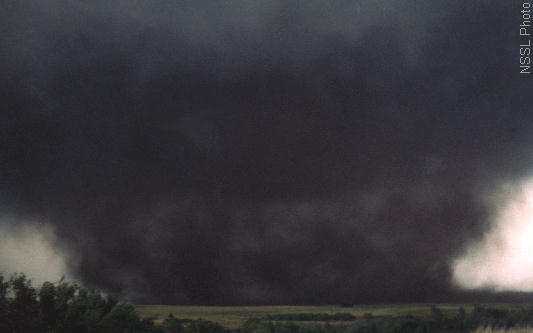
F4 Wedge Type Tornado, nearly a mile wide that hit Binger, Oklahoma

F4 Wedge Type Tornado, nearly a mile wide that hit Binger, Oklahoma

Jeremiah 4: 5-10

5 Declare in Judah, and proclaim in Jerusalem, and say:
Blow the trumpet through the land; shout aloud and say,
 “Gather together, and let us go into the fortified cities!”
 6 Raise a standard toward Zion, flee for safety, do not delay,
for I am bringing evil from the north, and a great destruction.
 7 A lion has gone up from its thicket, a destroyer of nations has set out;
 he has gone out from his place to make your land a waste;
 your cities will be ruins without inhabitant.
 8 Because of this put on sackcloth, lament and wail:
“The fierce anger of the LORD has not turned away from us.”

 9 On that day, says the LORD, courage shall fail the king and the officials; the priests shall be appalled and the prophets astounded. 10 Then I said, “Ah, Lord GOD, how utterly you have deceived this people and Jerusalem, saying, ‘It shall be well with you,’ even while the sword is at the throat!”

 When I lived in Oklahoma, tornado sirens were a way of life. When spring came you knew that if the siren was blaring its dissonant tones that you needed to check the TV to see where the storm might be and how dangerous the storm was. Some storms were storms that you could weather in place, going to the safe room in your house. But some storms, if you were in their path you didn’t want to stay in place and wait out, you needed to flee to designated areas that were better able to withstand the winds.  And yet sometimes even fleeing to a strong place is not enough, as was the case of the F5 tornado that struck Oklahoma City in 1999 destroying or badly damaging over 8,000 homes.

Jeremiah has the unfortunate role of being the siren, alerting the people to a disaster they do not expect nor do they want to see. War is approaching, an unspecified invading  army is coming to lay waste to the land. Destroying cities, burning crops, killing and enslaving and the Lord has withdrawn the protection they have relied upon in the past. The prophet goes even farther, to place the Lord behind the movement of the predicted enemy. The Lord has made a choice, a dreadful choice, a choice against his former people. It is a choice the prophet has allowed us to see the Lord agonizing over, and yet the pieces are in motion, the storm is in motion and yet the prophet continues to hope for a turn. The prophet desires for the people to put on sackcloth, to lament and wail, and perhaps the Lord will turn once more.

The very people who should be keeping the people in the relationship with God, the king-priest-prophet have become the very people who have dulled the people to the siren’s call. There is a Davidic king and the temple which the people have begun to place their trust in, yet the prophets are always pointing to God’s vision of justice and shalom (harmony/peace) and the ways that the people have betrayed this vision.

Jeremiah makes a bold statement, in essence placing the blame at God’s feet, for the people have heard and received the message that it is well (most likely from the king and his officials, the priests and the prophets) while terror approaches. One of the roles of the prophet is to stand between the people and God, challenging both. The prophet will love both God and the people and weep with and for both of them, and in standing between the two his heart and body will be broken. Yet Jeremiah, among the prophets, seems to stand alone-for the other prophets of his time seem to be singing in unison with the kings and priests. Jeremiah speaks dangerous words, but they are the words of the faithful willing to enter into the struggle with God, to challenge God, to even go so far as calling God a traitor while still remaining in the relationship. As Moses in the Exodus, Jeremiah intercedes for the people he loves and yet even Jeremiah will have his limits as we will find.

purple rose 01 by picsofflowers.blogspot.com

God the Wounded Lover: Jeremiah 4: 1-4

The Prophet Jeremiah by Michelangelo

The Prophet Jeremiah by Michelangelo

Jeremiah 4: 1-4

If you return, O Israel, says the LORD,
                if you return to me,
 if you remove your abominations from my presence,
 and do not waver,
 2 and if you swear, “As the LORD lives!”
 in truth, in justice, and in uprightness,
 then nations shall be blessed by him,
and by him they shall boast.
 3 For thus says the LORD to the people of Judah
 and to the inhabitants of Jerusalem:
 Break up your fallow ground,
 and do not sow among thorns.
 4 Circumcise yourselves to the LORD,
 remove the foreskin of your hearts,
 O people of Judah and inhabitants of Jerusalem,
or else my wrath will go forth like fire,
 and burn with no one to quench it,
 because of the evil of your doings.
 

One of the gifts of having been through a divorce that I did not want or seek, that I did everything in my power to prevent is being able to resonate with the emotions of the God portrayed in Jeremiah. A God who is wrestling with a feeling of absolute betrayal, and yet still has deep feelings for the beloved one. The desire is there to start again, to do everything within their power to rebuild the relationship. Everything, that is, except force the other party to remain within the relationship with them. Yet if the relationship is to be reconciled it requires faithfulness and it requires the ending of the affairs that created the separation in the first place.

I am writing this during the season of lent (often there is a significant lag between when I write something and when I publish it as is here apparent), preparing for Holy week, and one of the traditional services for Good Friday includes a long series of solemn reproaches that I think capture some of the emotion of this part of Jeremiah:

O my people, O my church, what have I done to you?
How have I offended you? Answer me.
I led you out of slavery into freedom,
And delivered you through the waters of rebirth,
But you have prepared a cross for your Savior….
O my people, O my church, what more could I have done for you?
Answer me.
I struck down your enemies, but you struck my head with a reed;
I gave you peace, but you draw the sword in my name,
And you have prepared a cross for your Savior
(Evangelical Lutheran Worship Leaders Edition, 639ff)

Even against the wisdom of Torah (the law) God still yearns for the relationship with his covenant people, and if it can be resumed it will have to be in a new type of relationship. God is not like King Ahasuerus in Esther who is bound by royal decrees and laws, no God is more like Joseph in Matthew’s gospel, portraying a different kind of righteousness. A legalistic understanding of righteousness or a punitive understanding would say here is the rule, the law that was broken and here is the punishment that this infraction dictates. Every action has a consequence, every offence has a punishment and reconciliation rests in the hands of the one who offended. But I use the example of Joseph, because he was a righteous man as Matthew tells the story, but rather than look for justice when he learns of Mary’s pregnancy he looks for mercy. In Jeremiah and in the New Testament we find a God for whom relationships are more important than rules, who desires and works for the return of the departed even while they are still turned away. Who desires nothing more than to resume the relationship as it was meant to be.

Perhaps God is naïve in the nature of relationships among humans, perhaps God is an idealistic fool—or perhaps God loves and that love is greater than the wound that the brokenness has caused.

purple rose 01 by picsofflowers.blogspot.com