Author Archives: Neil

Matthew 13: 24-43 Parables of Weeds, Seeds and Leaven

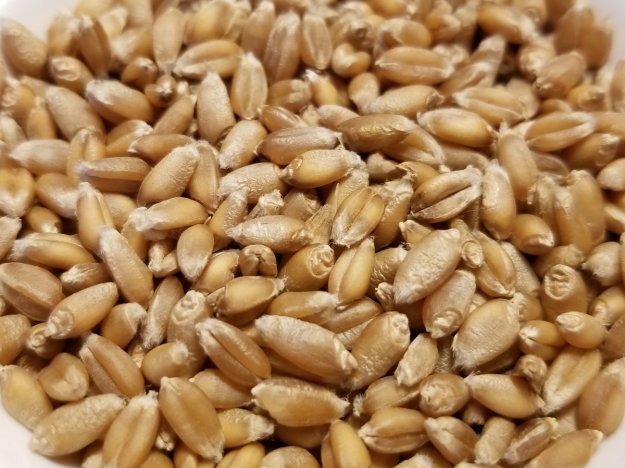
Close up view of Wheat, shared by user Bluemoose on Wiki Commons under Creative Commons 2.0

Matthew 13: 24-43

24 He put before them another parable: “The kingdom of heaven may be compared to someone who sowed good seed in his field; 25 but while everybody was asleep, an enemy came and sowed weeds among the wheat, and then went away. 26 So when the plants came up and bore grain, then the weeds appeared as well. 27 And the slaves of the householder came and said to him, ‘Master, did you not sow good seed in your field? Where, then, did these weeds come from?’ 28 He answered, ‘An enemy has done this.’ The slaves said to him, ‘Then do you want us to go and gather them?’ 29 But he replied, ‘No; for in gathering the weeds you would uproot the wheat along with them. 30 Let both of them grow together until the harvest; and at harvest time I will tell the reapers, Collect the weeds first and bind them in bundles to be burned, but gather the wheat into my barn.'”

31 He put before them another parable: “The kingdom of heaven is like a mustard seed that someone took and sowed in his field; 32 it is the smallest of all the seeds, but when it has grown it is the greatest of shrubs and becomes a tree, so that the birds of the air come and make nests in its branches.”

33 He told them another parable: “The kingdom of heaven is like yeast that a woman took and mixed in with three measures of flour until all of it was leavened.”

34 Jesus told the crowds all these things in parables; without a parable he told them nothing. 35 This was to fulfill what had been spoken through the prophet: “I will open my mouth to speak in parables; I will proclaim what has been hidden from the foundation of the world.”

36 Then he left the crowds and went into the house. And his disciples approached him, saying, “Explain to us the parable of the weeds of the field.” 37 He answered, “The one who sows the good seed is the Son of Man; 38 the field is the world, and the good seed are the children of the kingdom; the weeds are the children of the evil one, 39 and the enemy who sowed them is the devil; the harvest is the end of the age, and the reapers are angels. 40 Just as the weeds are collected and burned up with fire, so will it be at the end of the age. 41 The Son of Man will send his angels, and they will collect out of his kingdom all causes of sin and all evildoers, 42 and they will throw them into the furnace of fire, where there will be weeping and gnashing of teeth. 43 Then the righteous will shine like the sun in the kingdom of their Father. Let anyone with ears listen!

One of the dangers of attempting to interpret parables which are designed both to reveal and to conceal comes with the pinning down the imagery to a meaning. Like a butterfly collector which pins their captures where they can be displayed only to realize the now deceased insect loses the life it once demonstrated, it may still be beautiful but is no longer a dynamic thing. As I have worked through the gospel of Matthew I have attempted to provide a coherent and plausible reading, but the perspective I write from is not the only one and others will and have found other dynamic readings in these verbal portraits of Jesus’ life and teaching. Yet, there are a number of interpretations of both Matthew’s gospel in general and these parables in particular which are not helpful (and may even be toxic) or would not make sense to people in either Jesus’ or Matthew’s audience in the first century middle east. Perhaps these reflections can help us metaphorically see some readings which look like wheat but are really just weeds that occupy the field hiding the fruit of the wheat from us.

It is important to pay attention to structure for clues in how we are to hear these parables and I’ve tried to group these together in ways that make sense to helping us have ears to hear. Matthew likes patterns of three and this is highlighted here by the placement of three parables followed by an explanation of the first parable. Between the three parables and the explanation is another explanation of why Jesus speaks in parables. The joining together of the parables in a group of three points to an interconnection in the imagery and understanding of the stories. Even though Matthew only includes an explanation for the first parable in this group, it is placed there by Matthew to be a key not only for the first parable but for a way of hearing all three parables. Similarly, the first parable of the chapter also provides a window into hearing all the parables gathered together in this chapter.

The opening parable of good seed, weeds and a field again places hearers to the familiar world of sowing and agriculture, yet it introduces an almost comic element when an enemy is responsible for sowing weeds among the field. Anyone who has done any type of agriculture work from a personal garden to industrial farming knows that weeds come whether they are sown or not, no one needs to sow tares; yet, in the world of this story, an enemy does just that. The wheat and the weeds grow up together in the field and the removal of one may mean the uprooting of the other. The householder, or the master of the house, has their slaves wait until the harvest time where the reapers can gather both wheat and weeds separately for different locations.

Matthew’s interpretation points to a world where the children of the kingdom and the children of evil live together. Matthew’s gospel repeatedly references a time of sorting or judgment where the righteous and the unrighteous are separated and God (or those sent by God like the angels) are responsible for that sorting. The gospel of Matthew has pointed to a vision for a community that lives out of a merciful but demanding righteousness and the community the gospel was written for lived in a world where many outside the community followed different visions for what a faithful life looked like. Matthew’s community may have also experienced competing expectations for what righteousness within the community and this parable may have allowed them to accept that both the church and the world were a mixed body until God separates weed from wheat, or in a later images the good fish from the bad fish and the sheep from the goats. As the imagery of the salt and light from Matthew 5: 13-16 point to the individuals and community are called to live out there calling and not to concern themselves with the disposition of the world around them. While they will be recognizable when mature by the fruit they produce, in contrast to the tares, they are not in charge of the time of harvest or the harvest itself. Ultimately any ingathering and separation is the responsibility of God and not the disciples.

The second parable again has the image of sowing in a field but this time what is sown is a mustard seed. Unfortunately, many interpreters get caught up on the mustard seed as being something undesirable in the field but the evidence this claim is built upon is pretty flimsy. Often the connection is made to Pliny the Elder, a Roman naturalist and philosopher, who said of mustard: “It grows entirely wild, though it is improved by being transplanted; but on the other hand when it has been once sown it is scarcely possible go get the place free of it, as the seed when it falls germinates at once.” Often missed is when Pliny also states mustard is “extremely beneficial for health”, helpful for the treatment of “snake and scorpion bites, toothache, indigestion, asthma, epilepsy, constipation, dropsy, lethargy, tetanus, leprous sores” and other illnesses (Levine, 2014, pp. 175-177) Nor was mustard looked upon as a bad or non-kosher thing.  The word translated shrub by the NRSV (and many translations) is the Greek laxanon which is a vegetable or garden herb. Perhaps the rendering of this a shrub adds to the perception of it uselessness which, in the case of brassica nigra “black mustard” grows into a plant of eight to ten feet when properly cultivated. Matthew has the vegetable (laxnon) become a tree (dendron) which may point in a mocking manner to imagery of great trees that represented empires in Ezekiel 31 and Daniel 4 but this is probably not the primary image that the parable draws us to.

If the field continues to be the world and the sower continues to be the Son of Man, which the parallel imagery invites, then the small thing planted in the field is something of use to the entire world.  As Amy Jill-Levine can state:

the mustard plant offers more than a single person can use. The invitation to partake is a universal one, as the birds so neatly demonstrate. Instead of looking at the plant as a noxious weed, we might be better off seeing it as a part of the gifts of nature; something so small, allowed to do what it naturally does, produce prodigious effects. (Levine, 2014, p. 181)

Maybe instead of being the weed no one wants in the field maybe the mustard seed is that which gives rise to a plant which once it emerges grows prodigiously producing with both curative and flavor producing properties meant to be shared among the creation of God, both birds of the air and the people of the earth. Perhaps, like the trees on either side of the river of life in Revelation 22, this small seed emerges as something for feeding creation and healing the nations. Perhaps this is part of the reason faith the size of a mustard seed can move mountains for little faith ones (Matthew 17: 20)

Likewise the parable of the yeast has several unfortunate interpretations which misunderstand the place of leaven in Jewish culture. Amy Jill-Levine is again instructive here: “Leaven is not itself “impure”; if it were, Jews would not have to remove it from their homes at Passover, because they would never have used it in the first place.” (Levine, 2014) The cakes used on the altar  for the sacrifice of well-being were leavened (Leviticus 7: 13) and so leaven is not the ‘corrupting agent’ that sometimes interpretations make it out to be.

Leaven at this time is not the packets of yeast we think of in our time but a sourdough starter and the woman does not mix it into the flour, she hides it in the flower (Greek enkrypto where we get encryption or cryptology from). It is also helpful to realize that three measures of flour would be between forty and sixty pounds of flour, which again would be far more than one person could consume. There is a resonance with the story in Genesis 18 where Abraham encounters three men, who we learn to be a divine visitation, and instructs Sarah to make ready three measures of choice flour and proceeds with the bread and a calf, curds and milk to present a feast.  One of the images for the end of the age is of a great banquet, see for example Isaiah 55, and this woman in hiding the yeast in the three measures of flour is beginning the preparation for the feast to come.

In line with the previous two parables, if we want to move this towards an allegory, it would probably make sense to consider the flour the world with something hidden in it by a baker. If you want to proceed allegorically then the woman also represents the Son of Man, which may seem unsettling at first but we’ve already had Jesus adopt the character of Wisdom, and ultimately, as Anna Case-Winters can state,

It is interesting that many commentators and interpreters who work with these parables frequently draw an analogy between God and the male sowers in to of the parables (vv. 3 and 24) but do not draw an analogy between God and the female baker (v. 33) (Case-Winters, 2015, p. 180)

The position of this parable as the third in a series of three also invites us to see this is the image that Matthew has been moving us towards with the two previous parables.

Matthew also follows these parables by returning again to the reason for parables, which both reveal and conceal. As Frank Kermode observed, “Parable, it seems may proclaim a truth as a herald does and at the same time conceal truth like an oracle.” (Hays, 2016, p. 101) The dullness of the people, and the disciples even, may be tiresome and yet this may be the best way for the seed to be sown among those it can take root in.  Things hidden are proclaimed and yet they are proclaimed veiled in stories that require ears to hear and eyes to see and hearts to comprehend. They can continue to amaze and astonish as living things that fly just beyond our capture and demonstrate the beauty of the kingdom of heaven.

I believe these parables can continue to surprise and even delight us in their strange way of illuminating the kingdom of heaven’s place in our world. I’m hesitant to pin them down but perhaps I might point to some lessons that listening to these parables might teach us. First, they require patience, seed is allowed to grow until harvest, a seed grows to a bush and flour rises after leaven is added, none of which occur when we constantly unearth the seeds or disturb the flour. We may not always be directly involved in the state of the kingdom, if the Son of Man sows the seeds and hides the leaven we might just be observing something magical expanding in the world around us as a metaphor of the kingdom. But in the end the seeds and leaven, field and flour are all directed toward the final goal: harvests gathered into barns, bushes which produce flavorful and healing spices, and enough bread for a great celebration. We live in a world of good and evil living together and we may long for a time when all the “all causes of sin and all evildoers”(literally all scandals/causes of stumbling and the ones doing the works of this age) are removed and where the righteous ones shine like the sun but that rests in God’s time and judgment, but the world in which the parables are spoken, seeds are sown and flour rises to create bread for celebration requires the patience to live in a world where the kingdom of heaven emerges from the field of the world in unexpected ways.



Song of Creation

By NASA, ESA, and the Hubble Heritage Team (STScI/AURA) – http://hubblesite.org/image/3471/news_release/2015-01, Public Domain, https://commons.wikimedia.org/w/index.php?curid=38165284


What is the palette in which the master artist dipped the brush that painted in colors?
Or what thunderous notes did the creator sing to tune the sun and stars and quasars?
Which no eye would see, nor any ear hear, nor thought comprehend for millions of years
Where the colors spoken into being or where did they burst onto the scene with the elements
Did spirits or angels go to gather them together at their master’s directing like treasure hunters
Or was it the act of a solitary composer working in silence waiting to create an audience
Crafting the depths of the universe and sprinkling brilliant light into the blackness of the abyss
Singing into the silence of space a symphonic composition whose melodies gave form and shape
Whose beat marked the passage of days and millennia as the spheres turned and the cosmos shone.

What runes were hidden deep within the caverns of the earth which are the hidden signature
Of the master artist waiting to be discovered by those who peer deeply into the painting?
What fingerprints might remain from the act of raising the mountains and carving canyons?
Do the notes of the songbird echo some piece of the melody of the maker, a reflected praise?
Or the whale song of the deep form a baseline with the rumble of the continental drift?
Might the human drive of curiosity be the imprint of the master’s image on the creature?
The drive to delight in the possibilities of the palette of the painting they reside within
The desire to listen to the melody of the cosmos in all its wide range of sounds
To develop eyes to see and ears to hear and minds to comprehend their place in the picture
To join the song and dance in delight at the magic of the universe’s echo of the song it learned
At the knee of its creator and which it continues to sing as it wonders at its majesty

Matthew 13: 1-23 Parable of the Sower

Red Clawson Wheat Seeds, image from https://greatlakesstapleseeds.com/products/red-clawson-wheat

Matthew 13: 1-23

Parallel: Mark 4: 1-20; Luke 8: 4-15

That same day Jesus went out of the house and sat beside the sea. 2 Such great crowds gathered around him that he got into a boat and sat there, while the whole crowd stood on the beach. 3 And he told them many things in parables, saying: “Listen! A sower went out to sow. 4 And as he sowed, some seeds fell on the path, and the birds came and ate them up. 5 Other seeds fell on rocky ground, where they did not have much soil, and they sprang up quickly, since they had no depth of soil. 6 But when the sun rose, they were scorched; and since they had no root, they withered away. 7 Other seeds fell among thorns, and the thorns grew up and choked them. 8 Other seeds fell on good soil and brought forth grain, some a hundredfold, some sixty, some thirty. 9 Let anyone with ears listen!”

10 Then the disciples came and asked him, “Why do you speak to them in parables?” 11 He answered, “To you it has been given to know the secrets of the kingdom of heaven, but to them it has not been given. 12 For to those who have, more will be given, and they will have an abundance; but from those who have nothing, even what they have will be taken away. 13 The reason I speak to them in parables is that ‘seeing they do not perceive, and hearing they do not listen, nor do they understand.’ 14 With them indeed is fulfilled the prophecy of Isaiah that says:

‘You will indeed listen, but never understand, and you will indeed look, but never perceive.15 For this people’s heart has grown dull, and their ears are hard of hearing, and they have shut their eyes; so that they might not look with their eyes, and listen with their ears, and understand with their heart and turn — and I would heal them.’

16 But blessed are your eyes, for they see, and your ears, for they hear. 17 Truly I tell you, many prophets and righteous people longed to see what you see, but did not see it, and to hear what you hear, but did not hear it.

18 “Hear then the parable of the sower. 19 When anyone hears the word of the kingdom and does not understand it, the evil one comes and snatches away what is sown in the heart; this is what was sown on the path. 20 As for what was sown on rocky ground, this is the one who hears the word and immediately receives it with joy; 21 yet such a person has no root, but endures only for a while, and when trouble or persecution arises on account of the word, that person immediately falls away. 22 As for what was sown among thorns, this is the one who hears the word, but the cares of the world and the lure of wealth choke the word, and it yields nothing. 23 But as for what was sown on good soil, this is the one who hears the word and understands it, who indeed bears fruit and yields, in one case a hundredfold, in another sixty, and in another thirty.”

In Matthew’s gospel we are almost at the midpoint of the gospel when we encounter this first block of parables. This is the third of the blocks of teaching in Matthew (previously we have encountered the Sermon on the Mount and the Mission Discourse) but now we encounter three groups of parables grouped together with explanations of why Jesus teaches the crowd in this manner and explanation to the group of disciples. This first parable and explanations is mainly shared between Mark, Matthew and Luke with Matthew adding the text alluded to in Mark.

Our word parable comes from the Greek prefix para (along-side, together with) combined with the verb balo (to cast, to throw) and in Greek they are stories that cast two things alongside one another metaphorically. They are related to a long practice within and outside the bible of mashal, short stories used in instruction and teaching. They are not necessarily allegories where individual items represent something else (although the parable of the sower and the parable of the weeds below are disclosed as allegories by the interpretation provided in the gospels). Most of the parables we encounter will stand on their own without interpretation often acting like metaphors placing two things alongside each other to either reveal (or perhaps conceal) something about what Jesus is saying.

Unlike the Sermon on the Mount or the Mission Discourse where the primary audience is the disciples, now the primary audience is the crowds which approach Jesus. The teaching takes place while the crowd stands on the shoreline in Matthew while Jesus, and presumably his disciples, sits on a boat. It is likely that Jesus, like most storytellers, probably used these stories on multiple occasions and that they were an important part of his method of addressing the crowds that sought him. As a reader of the parables we are invited into the role of the disciple who has been given to know the secrets (literally mysteries) of the kingdom of heaven rather than the crowds who stand on the shoreline and many of whom, in the words of this first parable, will not grow deep roots or will endure only while it does not provoke trouble or tribulation.

Vincent van Gogh, The Sower with a Setting Sun

In contrast to the other parables in this chapter the parable of the sower is not placed alongside the kingdom of heaven explicitly in its proclamation. The short story told to the crowd simply begins in the familiar picture of a person sowing seed in anticipation of an eventual harvest. Without jumping ahead to the explanations that the gospels provide let’s look at this short story on its own. Hand sowing is done for wheat, barley and other grains and would’ve reflected one of the primary means of farming in the Middle East. Many of the festivals of the Jewish people are oriented around the harvest times for these sown crops and they were essential for the diet of the people Jesus speaks to. Although modern farming attempts to remove some of the variables in the soil by introducing fertilizers, planting at a preset depth and field preparation, even modern farmers will see areas of a field underproduce while others produce abundantly. But the sower in this parable casts the seed upon the field and its surroundings indiscriminately and the seed falls both in areas expected to provide growth and those that would be typically avoided (hardened paths or areas of brambles and thorns). The reality of rocks and undesired plants growing in a field may have been unavoidable, and yet, the sowing in portions of the field that are not anticipated to be good earth is probably intended to be the portion of the parable which introduces the dissonance to normal, more careful practices of preserving one’s seed where harvest is most likely.

Following the parable are two sets of explanations to the disciples. The audience has changed and those who are in the presence of Jesus are the ‘little faith ones’ who continue to follow him through his work and proclamation. The disciples, even in Matthew which has a more positive evaluation of them than Mark’s gospel, hardly prove to be paragons of understanding and yet it fits within the paradoxical world that Jesus proclaims where the Father has, “hidden these things from the wise and revealed them to infants.” (Matthew 11: 25). These ‘little faith ones’ are given the mysteries of the kingdom of heaven. Matthew takes the allusion in Mark to Isaiah 6: 9-11 and makes it explicit. Isaiah 6: 9-11 is a part of the call of Isaiah which is less frequently heard where God says to Isaiah that paradoxically the lack of reception for Isaiah’s prophecy is a part of the divine plan. Here Isaiah and this first parable are brought together to speak to the reality of that God’s proclamation often falls upon dull hearts, closed ears and shut eyes. The call still goes for those who have ears to hear, eye to see and hearts to turn and yet even in the midst of places where the harvest is great, there will be surprising places where the word of the kingdom is not received, where faith is not found, or where the depth of understanding is shallow or where distractions or alternative values strangle the nascent faith.

The explanation of this parable as an allegory provides a key to understanding the parable. This may not be the only way that the parable was heard, but as readers we are invited to hear ourselves with the disciples as those who receive the mysteries of the kingdom of heaven. The seed becomes the word of the kingdom, the proclamation of Jesus or the proclamation done by his disciples, which goes out into the world. We have already seen times where Jesus’ message is received with hostility and resistance and this will continue to be a reality, including later in this chapter in Jesus’ hometown. For those who are charged with casting this word into a waiting world one of the gracious pieces of this parable is that reception is not their responsibility. They are not responsible for preparing the soil, they are merely sowers casting the seed into the receptive or unreceptive earth. Some of the proclamation may have no perceived effect and lay lifeless on the ground to be snatched away by the forces opposed to the kingdom, at other times there may be a joyous reception followed be dashed hopes as the shallowness of the faith is revealed as times become difficult, sometimes other persuasive alternatives will turn people away from the kingdom. I’ve always found the description of the thorny ground as ‘the cares of the world and the lure of wealth’ enlightening for I think many modern Christians who follow a prosperity understanding of the gospel would think that being wealthy and being engaged in the world are fertile soil rather than soil that grows strangling weeds. Nonetheless, there continues to be a harvest for the times the proclamation meets those receptive, who are people where the seed can germinate and bear fruit and continue to give life to the world around them. In our modern mechanical understandings of farming, which reflect our modern understandings of our world, the farmer would probably force the field to yield its harvest, but these artificial methods have their cost to the long-term health of the field. Perhaps we modern proclaimers have also tried to force a reception of the kingdom only to find it shallow, choked or non-existent. Perhaps, in this ancient wisdom there is a permission to a more cooperative approach where both the seed and soil must work together and the sower in not ultimately responsible for the harvest, for that lies in the hands of the Father. Like in the Mission Discourse the sower, when they find a field that is not receptive to the seed, is simply to shake off the dust and proceed on to another field where the seed may thrive.

Cooperating with Creativity: A Reflection

Blue Dancers by Edgar Degas, 1899

“Creativity is the relationship between the human being and the mysteries of inspiration” Elizabeth Gilbert, Big Magic, Creative Living Beyond Fear

There are times where creativity seems like a divine gift, something external and strange and magical that comes from some unknown space in the cosmos. Normally these are times where I let creativity take the lead, where I allow curiosity around a phrase or an idea to lead the way. During these times the providential provision of resources and words can be delightful if a little scary. There are times where my words both reflect me and something that is not like me at all, even when there is truth in the strangeness. I enjoy cooperating with creativity whatever spirit it may be, letting it flow through me and guide me, surprise and startle. Sometimes I can almost stand back and watch it dance and spin and leap and all I can do is simply try to record the joy or lament of the dance. As one who is not a dancer, I am at best an uninformed commenter on the art and yet sometimes the comments themselves capture some of the beauty whether dark or savage or light or joyous or somber.

There are times where creativity seems like some strange reserve of energy within me, like the old Polynesian idea of mana or the Chinese concept of qi. Feeling like some vital energy that is a part of me and that expending it in a forced manner leaches strength from the very marrow of my being. When it feels like a time-constraints force me to be creative in an urgent matter it almost feels like I am doing violence to creativity and to myself at the same time. It is like this thing which can be separate from me is somehow conjoined, that we feed off the same energy. Not like some unwelcome parasite that simply leeches its victim for its own purposes but some type of symbiotic relationship where the creativity, genius, daemon, muse or whatever name you give it cannot do its work without your participation in the dance with it. When it is forced to dance a dance it no longer wants to dance or is not ready for, then I, as its partner, am the one whose head pounds, whose muscles burn and whose soul aches.

Creativity can be elusive but she can be a delight. Sometimes she stays away for days on end, or perhaps it is me who has been away on some other journey, too distracted by the alluring entertainment on some screen or some pressing task at work or home. Sometimes she comes when the time is not right and by the time I can give her my full attention she is off dancing somewhere out of site. I’m not sure what creativity is or how it works, I’m just trying to learn how to cooperate with it. To be attentive to its call, to listen to the music it chooses, to observe the dance, to do my part as a recorder of these mysteries of inspiration. I try to work diligently but not to force or bend it to my will, that seems to do damage to both of us. Perhaps it is something deep within me, perhaps it is something else, perhaps it is in some strange way both. I may never know, and perhaps to know would steal away the magic and delight, like knowing some illusionist’s trick. So, for now I’ll let this dance end as the music fades and leave this reflection for others to see. Perhaps serendipity may allow this to be that providential provision that another curious observer needs as their creativity calls its tune.

The Suburbs of Hell

Mauricio Garcia Vega “Visita al infierno’ shared by artist under Creative Commons 3.0

All those eyes intent on me. Devouring me. What? Only two of you? I thought there were more; many more. So this is hell. I’d never have believed it. You remember all we were told about the torture-chambers, the fire and brimstone, the “burning marl.” Old wives’ tales! There’s no need for red-hot pokers. HELL IS OTHER PEOPLE!” Jean-Paul Sartre, No Exit

“Hell is a state of mind – ye never said a truer word. And every state of mind, left to itself, every shutting up of the creature within the dungeon of its own mind – is, in the end, Hell.” C.S. Lewis, The Great Divorce

What if the existentialists were wrong seeing in others eyes the mirror that condemns themselves?
That their self-directed focus loosed the bonds of the compassion experienced in community
Their desire to liberate themselves from the plight of humanity became their own chains
Which they forged like Marley in Dickens’ Christmas Carol when their neighbor no longer mattered
Their revelation became the great unseeing of their place within the covenant of the commonwealth
Where they looked at the unenlightened with disdain seeking to isolate themselves in their suffering
As they moved into the suburbs of hell to discover what one slowly but inexorably uncovers
That the mirror that condemns oneself is the looking glass of one’s own crafting they gaze into
Discovering in their loneliness that hell is a dungeon of one’s own mind that they are locked within
And the only key to salvation, though it goes against every practice they’ve embraced, every dogma
Is the other people they feared would see them as they are and would deem them unlovable

Perhaps they, like the denizens of C.S. Lewis’ vision, looked with disgust and moved themselves
Further and further away from the city, further away from the possibility of looking into another’s eye
As they move further and further into the wilderness to build their utopias in their grey worlds
Building the walls higher around their stately grounds along roads that no one travels
Locking themselves inside their places of paranoia and safety, hoarding their treasure like dragons
And still Amazon delivers to these unmapped places all the possessions which come to possess
Houses full of unopened boxes with smiles upon the side for people who no longer smile
“I think therefore I am” proclaimed their apostle Descartes as they declared the world outside false
No need for the flames of the lake of fire nor demonic torturers and devilish prison wardens
They in their own self-flagellation willingly wield the red-hot pokers unwilling to accept forgiveness
Remaining locked inside their self-imposed sentence of solitary confinement for unknown offenses

The Vision

Creek babbling through Benvoulin wetlands in Kelowna, British Columbia, Canada, Capture from video shared by Extemporalist under Creative Commons 1.0 https://en.wikipedia.org/wiki/File:Creek_babbling_through_Benvoulin_wetlands.webm

The Vision

The stream burbled patiently singing its tune
As the sun shone in a ray through the break in the trees
While dragonflies danced and frogs played
In the early summer’s warmth of this peaceful place
My secret place where others rarely enter
A space to commune with the undisturbed world
To delight in the slow and steady rhythm of the creator
Where every mote of dust reflects magic and light
And heaven and earth are not so far apart
This thin space where sometimes epiphanies occurs

Into this peaceful space emerges a hawk, proud and strong
Soaring in to rest upon the branch an ancient oak tree
And it watches me watching it with knowing eyes
A herald of the mystery that awaits unveiling in that space
Rustling through the underbrush another unexpected guest
Emerging with his royal blue head from the undergrowth
Strutting into this magical place with his myriad eyes
As he quickly expands his tailfeathers in proud display
Looking imperially at the human who happens to be
In this space where creation came to play in delight
To dance in the joy of the creator’s masterwork

As nature continued to roll back her curtain of majesty
Rolling out her green carpet to await the celebration
Out of the mystery steps lady wisdom cloaked in green
With her escorts, a stag on her left and a wolf on her right
The frogs cease their croaking chorus
Dragonflies circle to land on the cat lilies
The peacock bows his proud blues head
the hawk swoops down to land upon her shoulder
While I stand transfixed by this moment of mystery
All watch as she brings forth an egg from her cloak
Which she cradles in her hands like the greatest treasure
As the creation watches this miracle of new birth

Somehow, I know to look away not to look unmediated
At the divine drama unfolding in this beautiful place
But from the reflection of the stream I see her lay
The dormant egg into a thick blanket of green grass
And from the bed of green emerges red, yellow, blue and orange
As nature’s nest burns and yet remains unconsumed
And I wonder if I, like Moses, stand on sacred ground
As the new chick emerges with a cry of victory
From fire and light and ash the new phoenix emerges
Spreading its wings towards the waiting sky
Looking to its dominion among the heavens

Before it flies away from this place it scooped
By the woman’s gentle hands and they share a second
As all the earth bows in this moment of mystery
Wolf and stag bend low, peacock and hawk
Even the trees themselves seem to stoop
As creation lifts its joyous song and the resurrection
The revelation that magic has not left the creation
And I, on behalf of humanity lie upon the verdant ground
In wonder and awe as a witness of this sight

As quickly as it was revealed it is concealed
Nature closes her curtain and the world returns
To the chorus of frogs and the dance of dragonflies
The woman and her escorts are gone
Back behind the shroud of the ancient trees of the forest
The phoenix disappears into the heavens
Shining as radiant and dazzling as the beaming sun
Yet, I remain stunned at this dream, this vision
Wondering at what I have seen as the memories fade
And so, I grab my pen and write furiously
Trying to capture the essence of the epiphany
Of the magic and mystery at work in the world
Masked but to those who sit in the thin spaces
Where heaven and earth are not so far apart

Matthew 12: 46-50 Redefining Community

James Tissot, The Exhortation to the Apostles (between 1886 and 1894)

Matthew 12: 46-50

Parallel Mark 3: 31-35; Luke 8: 19-21

46 While he was still speaking to the crowds, his mother and his brothers were standing outside, wanting to speak to him.47 Someone told him, “Look, your mother and your brothers are standing outside, wanting to speak to you.” 48 But to the one who had told him this, Jesus replied, “Who is my mother, and who are my brothers?” 49 And pointing to his disciples, he said, “Here are my mother and my brothers! 50 For whoever does the will of my Father in heaven is my brother and sister and mother.”

Central to one’s understanding of identity throughout the ancient world was the family and not merely the nuclear family of father and mother, brothers and sisters. There is a reason that one of the ten commandments is dedicated to honoring the familial bonds and relationships and why Matthew spends seventeen verses at the beginning of the gospel narrating the genealogy of Jesus. Yet, within Judaism, there is always a higher calling to follow God than one’s family. This is particularly highlighted in the Abraham narrative which begins with Abram (later renamed Abraham) being separated from his family:

Now the LORD said to Abram, “Go from your country and your kindred and your father’s house to the land that I will show you. I will make of you a great nation, and I will bless you, and make your name great, so that you will be a blessing. Genesis 12: 1-2

Even the bond between father and the long-awaited son Isaac is to be secondary to Abraham’s commitment to the LORD his God.

He (God) said, “Take your son, your only son Isaac, whom you love, and go to the land of Moriah, and offer him there as a burnt offering on one of the mountains that I shall show you.” Genesis 22: 2

Throughout Matthew’s gospel we have seen Jesus insisting that following him is more central than one’s commitment to family. In fact the arrival of Jesus may bring conflict within those relationships: a disciple is to follow Jesus rather than burying his father (8: 18-22), family members may betray other family members over conflicting views of Jesus (10: 21-22) and the presence of Jesus will create strife within families but the followers of Jesus are to love Jesus more than familial relationships. (10: 35-37) The people hearing Matthew’s gospel may understand these broken familial relationships at a personal level, but here they also hear Jesus elevating them above the level of his own earthly family. If they have given up their family, the community of those gathered around Jesus has become their new brothers and sisters.

Others will attempt to define Jesus from his family relations:

“Is not this the carpenter’s son? Is not his mother called Mary? And are not his brothers James and Joseph and Simon and Judas? And are not all his sisters with us? Where then did this man get all this?” Matthew 13: 55-56

And while the community of family is important for Matthew it cannot be central, only Jesus can occupy that position. Jesus is not opposed to families, many of his miracles are requested by family members and one of his conflicts with the Pharisees and scribes will center around keeping the commandment to honor father and mother (Matthew 15: 1-20). Yet, Jesus also occupies a place that previously only the God of Israel could occupy. He is one who can ask those who follow him to be willing to leave family behind so that they can be blessing to the nations.  After the rich young man has gone away grieving his unwillingness to give up his possessions to follow Jesus, Peter asks: “Look, we have left everything and followed you. What then will we have?” and Jesus’ answer in addition to their positions judging Israel includes “And everyone who has left houses or brothers or sisters or father or mother or children or fields, for my name’s sake, will receive a hundred-fold, and will inherit eternal life” (19: 29)

Many Christians in Matthew’s time and beyond have experienced broken families and have needed the community of disciples to be mother and brothers and sisters. Here Jesus also embraces this community of disciples above those family relationships which cared for him. Jesus is creating a new family, a new Israel and like God’s call to Abram, there are times where Jesus’ call means leaving previously central relationships behind, but it also involves the formation of a new family network to support and care for one another.

Book of Ecclesiastes

Ecclesiastes is probably one of the latest books written in the Hebrew Bible, or the Old Testament as many Christians known the first portion of their scriptures, and was also one of the books that many ancient and modern people have wondered how it fits in the Bible. These reflections from 2016 walk through this short book of wisdom in both Jewish adn Christian scriptures. Ecclesiastes wanders boldly into the absurdity and senselessness of the world of the Teacher, Qohelet (the word that is translated the Teacher or in other translations the preacher and how I will refer to the author throughout these reflections). It is not only in our time where disillusionment can creep in and mocks any sentimental religiosity or easy answers. Perhaps the entirety of this short work is vanity, perhaps it is wisdom or foolishness, for many it will be unsatisfying and for others it will be a voice singing in the choir of those willing to peer honestly into the unresolved questions of a world that often seems devoid of any cosmic wisdom or justice. Below are links to my reflections on the twelve chapters of Ecclesiastes.

Ecclesiastes 1: Chasing After the Wind
Ecclesiastes 2: The Quest for Meaning
Ecclesiastes 3: Approaching Time Wisely
Ecclesiastes 4: The Things that Steal our Peace
Ecclesiastes 5: the Gift of Mortality Before God and in the World
Ecclesiastes 6: The Illusiveness of Joy
Ecclesiastes 7: The Lonely Path of the Seeker
Ecclesiastes 8: Wisdom in an Uncertain World
Ecclesiastes 9: Staring into the Abyss and Finding Peace
Ecclesiastes 10: Wisdom, Life and the King
Ecclesiastes 11: Proverbs for Life in an Uncertain World
Ecclesiastes 12: The End of Wisdom


The Book of Esther

This is a compilation of my work on the book of Esther, the second book of scripture I worked through in 2013. It represents an early stage in my finding my voice in this medium but it is relatively easy book of scripture to approach and is well loved in both Jewish and Christian traditions.

Let the Party Begin: Esther 1: 1-12
If You Make A Decision While Drunk, Make Sure You Have Good Advisers: Esther 1: 13-21
Reality TV in the Ancient World: Esther 2: 1-11
Long Live the Queen: Esther 2: 12-18
Rumors of Assassination: Esther 2: 19-23
From Insult to Genocide: Esther 3: 1-6
Rolling the Dice: Esther 3: 7-11
Bureaucracy and Collusion: Esther 3: 12-15
Waiting on the World to Change: Esther 4: 1-8
The Weight of the World on Her Shoulders: Esther 4: 9-17
A Game of Thrones: Esther 5: 1-8
Of Gallows and Egos: Esther 5: 9-14
The World is About to Turn: Esther 6: 1-14
Endgame: Esther 7: 1-6
Mechanisms of Execution: Esther 7: 7-10
Dueling Edicts: Esther 8: 1-8
Bureaucracy in Action: Esther 8: 9-14
Mordecai’s Rise: Esther 8: 15-17
Horror or Celebration in Susa: Esther 9: 1-9
The Horror Concludes: Esther 9: 11-19
The Practice Forms the Faith: Esther 9: 20-32
The Final Chapter: Esther 10: 1-3

A Young Girl in an Unfair World: A Sermon on Esther
Esther’s Crown: A Poem

Matthew 12: 22-45 The Spirit of God in an Age of Unclean Spirits

Jonah By Unknown – Metropolitan Museum of Art, online collection: entry 453683, Public Domain, https://commons.wikimedia.org/w/index.php?curid=32908844

Matthew 12: 22-45

Parallel Mark 3: 22-35, 8: 11-12; Luke 11: 14-15, 17-23, 12: 10, 6: 43-45, 11: 16, 29-32, 24-26

22 Then they brought to him a demoniac who was blind and mute; and he cured him, so that the one who had been mute could speak and see. 23 All the crowds were amazed and said, “Can this be the Son of David?” 24 But when the Pharisees heard it, they said, “It is only by Beelzebul, the ruler of the demons, that this fellow casts out the demons.” 25 He knew what they were thinking and said to them, “Every kingdom divided against itself is laid waste, and no city or house divided against itself will stand. 26 If Satan casts out Satan, he is divided against himself; how then will his kingdom stand? 27 If I cast out demons by Beelzebul, by whom do your own exorcists cast them out? Therefore they will be your judges. 28 But if it is by the Spirit of God that I cast out demons, then the kingdom of God has come to you. 29 Or how can one enter a strong man’s house and plunder his property, without first tying up the strong man? Then indeed the house can be plundered. 30 Whoever is not with me is against me, and whoever does not gather with me scatters. 31 Therefore I tell you, people will be forgiven for every sin and blasphemy, but blasphemy against the Spirit will not be forgiven. 32 Whoever speaks a word against the Son of Man will be forgiven, but whoever speaks against the Holy Spirit will not be forgiven, either in this age or in the age to come.

33 “Either make the tree good, and its fruit good; or make the tree bad, and its fruit bad; for the tree is known by its fruit. 34 You brood of vipers! How can you speak good things, when you are evil? For out of the abundance of the heart the mouth speaks. 35 The good person brings good things out of a good treasure, and the evil person brings evil things out of an evil treasure. 36 I tell you, on the day of judgment you will have to give an account for every careless word you utter; 37 for by your words you will be justified, and by your words you will be condemned.”

38 Then some of the scribes and Pharisees said to him, “Teacher, we wish to see a sign from you.” 39 But he answered them, “An evil and adulterous generation asks for a sign, but no sign will be given to it except the sign of the prophet Jonah. 40 For just as Jonah was three days and three nights in the belly of the sea monster, so for three days and three nights the Son of Man will be in the heart of the earth. 41 The people of Nineveh will rise up at the judgment with this generation and condemn it, because they repented at the proclamation of Jonah, and see, something greater than Jonah is here! 42 The queen of the South will rise up at the judgment with this generation and condemn it, because she came from the ends of the earth to listen to the wisdom of Solomon, and see, something greater than Solomon is here!

43 “When the unclean spirit has gone out of a person, it wanders through waterless regions looking for a resting place, but it finds none. 44 Then it says, ‘I will return to my house from which I came.’ When it comes, it finds it empty, swept, and put in order. 45 Then it goes and brings along seven other spirits more evil than itself, and they enter and live there; and the last state of that person is worse than the first. So will it be also with this evil generation.”

This is a long section to address in one section, but the interconnectedness of the narrative and pronouncements are tightly intertwined to prepare us to again understand the authority of the one whose teaching Matthew wants us to hear. This conflict which initiates around the presence of unclean spirits in this generation not only invites us to consider the spirit that Jesus is working through but also how the followers of the Pharisees have been unable to deal with the deeper spiritual problem of an ‘evil generation.’ There is no place of neutrality in this conflict between the present evil age and the approaching kingdom of heaven, and to misunderstand the signs of the kingdom of heaven’s advent is where blasphemy lies. John the Baptist, Jonah, Nineveh, the queen of the South and even the followers of the Pharisees are called as witnesses to the nature of the one who stands in their presence announcing the binding of the strong man in his house.

The healing which begins this section once again sets the stage for another conflict over authority between Jesus and a group of Pharisees. Their accusation of Jesus casting out demons by the authority of Beelzebul, ruler of demons, echoes Jesus’ warning to his disciples in Matthew 10: 25 that “if they call the master of the house Beelzebul, how much more will they align those of his household.” Within the crowd they wonder if Jesus might be the ‘Son of David,’ the hoped for royal figure to reignite the hope of the Davidic line. Jesus’ demonstrated ability to bring healing to those afflicted by the evil spirits of this age places him as one with power to bring about changes for those in this generation. The Pharisees response to Jesus’ power is to link it with the power that is enslaving those of this generation, Jesus is in league with the demons themselves, it is all some sort of demonic trick to lead the chosen people astray. Jesus is accused of being a sorcerer or magician who by alliance with unholy powers is threatening the unity of the holy people.

Jesus’ answer to these Pharisees argues that their accusation is absurd and again invites them to see that instead of being aligned with the evil spirits his work is evidence of the Holy Spirit. If there is infighting in the demonic kingdom of Satan or Beelzebul then they are weakened by that infighting and the forces oppressing this evil generation can be easily swept away, but all evidence instead says that they are firmly entrenched against God’s kingdom. In a statement that can be read a couple ways Jesus tosses the question back to the Pharisees, “If I cast out by Beelzebul, by whom do your followers (literally the sons of you (implied Pharisees) cast them out?” Perhaps there are other exorcists of the Pharisees who have been able to bring relief to some of the people, and people would look to those with religious authority to deal with all manners of affliction, but I think it is more likely that this points to the ineffectiveness of the Pharisees followers in addressing the manifestations of the demonic in their midst. Jesus may, instead of pointing to the existence of successful Pharisaic exorcists, be pointing to their impotence in the midst of the forces they face and how their attempts to create an ordered world have only made a more attractive homes for the demonic forces to end their sojourn and to make their home. Jesus has demonstrated that he has the power to heal and to liberate those enslaved by the forces at work in this generation and now is the time to plunder the house of the strong man.

The lack of success of the Pharisees against the forces of this time testifies against them while it points to the Spirit of God at work in Jesus’ ministry as the Son of Man. There is space for misunderstanding who the Son of Man is and how exactly Jesus and the Lord the God of Israel are connected, but to judge the work of casting out demons, healing the blind and lame, of setting the captives free as the work of demonic spirits rather than the divine Spirit is to misunderstand the kingdom of God completely. Just as these Pharisees consider Jesus’ ministry a danger to the unity of the people, Jesus views their resistance to the kingdom of God as that which scatters the lost sheep of Israel. To remain committed to the way things are is to be remain aligned against the kingdom of God. Jesus’ harsh words about ‘this evil generation’ are intended to bring about repentance so that even these Pharisees and scribes might turn towards God’s approaching kingdom.

The conflict also points, again, to another side of the identity of Jesus. Jesus in addition to the titles Son of David and Son of Man we now have a stronger linkage with the Spirit of God being active in Jesus and as a demonstration of the kingdom of God’s presence. Somehow in the presence of Jesus the Spirit of God is active and the kingdom of God is present as demonstrated by the actions of healing and exorcism. Yet, many of these Pharisees will remain unable to discern in Jesus the presence of God’s kingdom or the activity of the Spirit of God. In the spirit of the quotation from Isaiah 42 in the previous section, the Gentiles will be the ones who will see and judge the faithfulness of this generation. Like the Canaanite woman in Matthew 15: 21-28 who will show great faith in Jesus while these Pharisees show no faith even though the works in their presence should have demonstrated which Spirit Jesus was acting in and the power of the kingdom of God.

Jesus then follows this response with words that echo John the Baptist’s earlier condemnation of the Pharisees and Sadducees who came to see him at the Jordan in Matthew 3: 7-10. Both John and Jesus have called the people to repentance and both have been resisted by both religious and political leaders. I do think one key to understanding the accusation of these Pharisees as a ‘brood of vipers’ and ‘bad trees that bear bad fruit’ is their alignment with the forces at work in this time. They are unable to speak good and do good because they are too deeply rooted in the soil of the way things are. They are too heavily invested in protecting their power in the current order to embrace the approach of the new power of the kingdom of God. Instead of recognizing and out of the storehouse of the good bringing forth additional good words and fruit in the presence of Jesus they have only their own storehouses of scarcity to bring forth the words they speak and the lack of action against the demonic forces at work in their world. Yet, there is a time where their words and actions will be judged as either righteous or in need of judgment.

Jesus wants not only some legalistic moral perfection, but instead the law is interpreted in light of a merciful righteousness. One’s speech and actions flow out of one’s heart and the wise community of disciples has sunk their roots deep into the practices of mercy to yield this desired fruit. Throughout Matthew’s gospel there will be the imperative to act towards those who are poor in spirit, mourning, meek and hungering and thirsting for righteousness as well as those who are oppressed by those spirits which are aligned against the kingdom of God. Some of those aligned against God’s kingdom may act piously but not righteously. The Pharisees are accused of “tying up heavy burdens, hard to bear, and laying them on others.” (Matthew 23: 4) while Jesus invites others to take his yoke which is “easy, and my burden is light.” (Matthew 11: 30). Jesus continues to act to lift the burdens of the oppressed of this time, while the Pharisees are accused of only making their burdens heavier.

Ironically, after the healing, Jesus is asked for a sign. Jesus responds with the ‘sign of Jonah’ where he will lie in the earth for three days, like Jonah lied in sea creature for three days while God waited for his repentance. One the one hand, the story of Jonah is the classic story of the outsiders (Gentiles) understanding and repenting while the insider (Jonah) remains unrepentant unable to embrace the mercy and forgiveness of God. On the other hand, the story of Jonah is a story of divine patience where God refuses to give up on God’s recalcitrant and unforgiving servant. One greater than the prophet Jonah who could made the people of Nineveh is here, so perhaps there is still an opportunity for the recalcitrant people of the lost people of Israel and even for these Pharisees. Perhaps they too can be transplanted into good soil and the brood of vipers can become those whose merciful storehouses can be opened those in the community around them who need their fruits of mercy.

Just as Nineveh who repented at the proclamation of Jonah will judge this generation so too will the queen of South, or queen of Sheba, who came seeking the wisdom of Solomon in 1 Kings 10 judge those unable to perceive the wisdom of God.  The introduction of the queen of Sheba probably raised eyebrows. One reason is highlighted by Anna Case-Winters, “It is somewhat surprising in the patriarchal culture to present a woman as judging in the divine court, and a foreign woman at that.” (Case-Winters, 2015, p. 171)  Yet, Matthew highlighted foreign women who in the genealogy who made a place for themselves in the story of God and also shortly we will see a foreign woman demonstrate great faith unlike those here. Like the Ninevites who understood the opportunity of repentance in the proclamation of Jonah, or the queen of Sheba who recognized wisdom in Solomon these women will stand in contrast to these Pharisees and scribes who fail to recognize Jesus’ proclamation, power or wisdom.

The neat orderly world of the Pharisees where there are people who are beyond the reach of mercy and the violent peace of Rome is accommodated makes for a place where the demonic can play. The spirits, even if they are cast out find their previous hosts even more welcoming in the light of these practices. Ultimately the practices of the Pharisees have proved unable to prevent the pillaging of the people of God prior to the approach of one greater than Jonah, Solomon, or David who acts with the power of the Spirit of God. Continuing the practices that have allowed the current order, which is opposed to the kingdom of God, to flourish will not bring about the repentance of this generation or the exile of the demonic forces which oppress it. Only one who can bind the strongman, who can overpower the well-entrenched devilish forces at work in the world, can bring salvation to the lost sheep of Israel and hope to the Gentiles. We are invited to ponder the identity of the one who works with the authority of the Holy Spirit and who embodies the kingdom of God, but more than merely pondering the identity we are called to recognize the power that is at work in the actions of the Son of Man and to respond with repentance while sinking one’s roots deep into his merciful practices of righteousness.