Striding lions from the Processional Street of Babylon. Exhibited at the Pergamon Museum in Berlin.
2 Kings 24: 1-7 The Reign of Jehoiakim
1In his days King Nebuchadnezzar of Babylon came up; Jehoiakim became his servant for three years, then turned and rebelled against him. 2He sent against him bands of the Chaldeans, bands of the Arameans, bands of the Moabites, and bands of the Ammonites; he sent them against Judah to destroy it, according to the word of the LORD that he spoke by his servants the prophets. 3Surely this came upon Judah at the command of the LORD, to remove them out of his sight, for the sins of Manasseh, for all that he had committed, 4and also for the innocent blood that he had shed, for he filled Jerusalem with innocent blood, and the LORD was not willing to pardon. 5Now the rest of the deeds of Jehoiakim and all that he did, are they not written in the Book of the Annals of the Kings of Judah? 6So Jehoiakim slept with his ancestors; then his son Jehoiachin succeeded him. 7The king of Egypt did not come again out of his land, for the king of Babylon had taken over all that belonged to the king of Egypt from the Wadi of Egypt to the River Euphrates.
Jehoiakim was installed by Pharaoh Neco to replace his younger brother Jehoahaz who Neco took into imprisonment at Riblah. Jehoiakim begins his reign as a vassal of Egypt but during his eleven years as king the situation dramatically shifts as Nebuchadnezzar of Babylon becomes the dominant power in the region forcing Egypt’s influence to recede back beyond the Wadi of Egypt. The forces of Babylon (Chaldeans,[1] Arameans, Moabites, and Ammonites) raid into Judah, and although the siege of Jerusalem will not occur until Jehoiakim’s sons brief reign, the forces that will bring about the end of the time of Judah are in motion.
Jehoiakim appears frequently in the book of Jeremiah in a negative light. The king is portrayed as living in luxury while the nation struggles, mistreating the poor and executing those who speak against his policies.[2] The king executes Uriah son of Shemiah who prophecies in a manner similar to Jeremiah and Jeremiah is protected by some of the officials, including Ahikam son of Shaphan (secretary during the time of Josiah)[3] Jeremiah sends a scroll with God’s words to Jehoiakim but in contrast to his father Josiah who tore his clothes in mourning Jehoiakim tore (same verb in Hebrew) the scroll after it was read and cast it into the fire.[4]
Jeremiah declares the Jehoiakim will die “the death of a donkey…dragged off and thrown out beyond the gates of Jerusalem.” (Jeremiah 22:19) 2 Kings states that Jehoiakim slept with his ancestors indicating a normal death and burial. Jehoiakim rebels against Babylon after being a vassal for three years, likely in response to a defeat in Egypt which Nebuchadnezzar returns to Babylon to give his forces time to recover and rebuild. This time the rebellion of Judah does not go unpunished, and this leads to the first siege of Jerusalem by Babylon. Jehoiakim is roughly thirty-six when he dies so it is possible that he is killed by elements within Jerusalem seeking a different leader to attempt to negotiate with the threat of Babylon.
2 Kings 24: 8-17 The Reign of Jehoiachin and the First Siege of Jerusalem
8Jehoiachin was eighteen years old when he began to reign; he reigned three months in Jerusalem. His mother’s name was Nehushta daughter of Elnathan of Jerusalem. 9He did what was evil in the sight of the LORD, just as his father had done. 10At that time the servants of King Nebuchadnezzar of Babylon came up to Jerusalem, and the city was besieged. 11King Nebuchadnezzar of Babylon came to the city while his servants were besieging it; 12King Jehoiachin of Judah gave himself up to the king of Babylon: himself, his mother, his servants, his officers, and his palace officials. The king of Babylon took him prisoner in the eighth year of his reign.
13He carried off all the treasures of the house of the LORD and the treasures of the king’s house; he cut in pieces all the vessels of gold in the temple of the LORD that King Solomon of Israel had made, all this as the LORD had foretold. 14He carried away all Jerusalem, all the officials, all the warriors, ten thousand captives, all the artisans and the smiths; no one remained except the poorest people of the land. 15He carried away Jehoiachin to Babylon; the king’s mother, the king’s wives, his officials, and the elite of the land, he took into captivity from Jerusalem to Babylon. 16The king of Babylon brought captive to Babylon all the men of valor, seven thousand, the artisans and the smiths, one thousand, all of them strong and fit for war. 17The king of Babylon made Mattaniah, Jehoiachin’s uncle, king in his place and changed his name to Zedekiah.
The short reign of Jehoiachin is significant because it marks a critical change for Judah. Jehoiachin inherits the troubles his father inflamed by rebelling against Babylon and reigns briefly over a besieged city. We know that the king and his royal household surrender on March 16 (the second of Adar) 597 BCE and the royal household, warriors, artisans and smiths are taken into exile while the remainder of the people remain under the charge of Zedekiah. This initial exile of the leaders, elites, and skilled members of the population are the setting of the narrative at the beginning of Daniel. We also know that the prophet Ezekiel was among those exiled.[5] The city of Jerusalem and the temple remain but ten thousand people and the riches of the temple and royal household are removed into Babylon.
This creates a new situation for Judah which now has two centers of life: one in exile in Babylon and one remaining in the land. Jeremiah will be the prophet remaining in the land while Ezekiel will emerge to be the prophet for those in exile. The prophet Jeremiah will receive a vision of two baskets of figs, one very good and one rotten, and in this vision the good figs will be Jehoiachin, and the people taken into exile who God views favorable and the rotten figs are Zedekiah and those remaining in Jerusalem.[6] Ezekiel also shares this perspective that the population in exile will be the population of Judah that endures.
2 Kings 24: 18-20 The Reign and Rebellion of Zedekiah
18Zedekiah was twenty-one years old when he began to reign; he reigned eleven years in Jerusalem. His mother’s name was Hamutal daughter of Jeremiah of Libnah. 19He did what was evil in the sight of the LORD, just as Jehoiakim had done. 20Indeed, Jerusalem and Judah so angered the LORD that he expelled them from his presence.
Zedekiah rebelled against the king of Babylon.
Zedekiah is left in charge of the remnant in Jerusalem. The final line of the chapter strikes the critical note for Zedekiah’s reign. He is portrayed in Jeremiah as a king who does seek the prophet’s words but is ultimately unable or unwilling to resist his advisors who lead him into conflict with Babylon. Jehoahaz, Jehoiakim, Jehoiachin, and Zedekiah all reign under the thumb of external powers, Egypt for Jehoahaz and Jehoiakim initially and then Babylon for Jehoiakim through Zedekiah. Yet for the narrator of 2 Kings all of this is a part of God’s action to judge the unfaithfulness of Judah which reaches its climax under Manasseh but extends back to Solomon and beyond. Judah and Jerusalem are expelled from the presence of God because of their disobedience in 2 Kings. Zedekiah’s rebellion sets Babylon in motion to be the instrument of that judgment.
[1] Although we think of Babylon as the empire, the Chaldeans were the dominant people of this empire. All ancient empires were coalitions of groups and so the presence of Arameans, Moabites, and Ammonites (neighbors of Judah) are not surprising.
[5] Ezekiel would receive his call as a prophet while in exile (Ezekiel 1). Kish the grandfather of Mordecai (uncle of Esther) was also among this group of exiles in Esther 2:5-6. Many scholars view the book of Daniel as a later book written well after the exile, but the setting of the initial chapters of the book are this initial exile of the elites to Babylon.
2 Kings 23: 1-3 Attempting to Recreate the Covenant
1Then the king directed that all the elders of Judah and Jerusalem should be gathered to him. 2The king went up to the house of the LORD, and with him went all the people of Judah, all the inhabitants of Jerusalem, the priests, the prophets, and all the people, both small and great; he read in their hearing all the words of the book of the covenant that had been found in the house of the LORD. 3The king stood by the pillar and made a covenant before the LORD, to follow the LORD, keeping his commandments, his decrees, and his statutes, with all his heart and all his soul, to perform the words of this covenant that were written in this book. All the people joined in the covenant.
King Josiah responded to the rediscovered book of the law of Moses with repentance and seeking God’s will through the prophet Hulda. After learning that his understanding of the judgment that hangs over the people is confirmed by God and learning that God has seen and responded to the king’s action of mourning and repentance Josiah initiates his reforms by gathering the leaders and the people of Judah in an action to recommit the people to the covenant. The action echoes the creation of the covenant between God and the people by Moses (Exodus 24: 4-8), the recommittal to the covenant preceding Moses’ death (Deuteronomy 29:2-29)[1] and finally when Joshua renews the covenant in the promised land (Joshua 8:30-35). Throughout the narratives of the book of Judges, 1&2 Samuel, and 1&2 Kings this is the only instance of covenant renewal of this type. Other kings have attempted to renew the worship in the temple or the building of the temple, but only here in the time of kings are the people reconnected to the law in this manner.[2] This will also happen when the temple is rebuilt and the people are regathered in Jerusalem under the governor Nehemiah and the priest Ezra (Nehemiah 8). King Josiah seems to understand that his personal repentance may be enough for his own reign, but the only chance for the people lies in reestablishing the practices that were designed to make the people of Judah into the people of the LORD the God of Israel.
2 Kings 23: 4-14 Reforming the Practices in Judah
4The king commanded the high priest Hilkiah, the priests of the second order, and the guardians of the threshold to bring out of the temple of the LORD all the vessels made for Baal, for Asherah, and for all the host of heaven; he burned them outside Jerusalem in the fields of the Kidron and carried their ashes to Bethel. 5He deposed the idolatrous priests whom the kings of Judah had ordained to make offerings in the high places at the cities of Judah and around Jerusalem, those also who made offerings to Baal, to the sun, the moon, the constellations, and all the host of the heavens. 6He brought out the image of Asherah from the house of the LORD, outside Jerusalem, to the Wadi Kidron, burned it at the Wadi Kidron, beat it to dust, and threw the dust of it upon the graves of the common people. 7He broke down the houses of the illicit priests who were in the house of the LORD, where the women did weaving for Asherah. 8He brought all the priests out of the towns of Judah and defiled the high places where the priests had made offerings, from Geba to Beer-sheba; he broke down the high places of the gates that were at the entrance of the gate of Joshua the governor of the city, which were on the left at the gate of the city. 9The priests of the high places, however, did not come up to the altar of the LORD in Jerusalem but ate unleavened bread among their kindred. 10He defiled Topheth, which is in the valley of Ben-hinnom, so that no one would make a son or a daughter pass through fire as an offering to Molech. 11He removed the horses that the kings of Judah had dedicated to the sun at the entrance to the house of the LORD, by the chamber of the eunuch Nathan-melech, which was in the precincts; then he burned the chariots of the sun with fire. 12The altars on the roof of the upper chamber of Ahaz that the kings of Judah had made and the altars that Manasseh had made in the two courts of the house of the Lord he pulled down from there and broke in pieces and threw the rubble into the Wadi Kidron. 13The king defiled the high places that were east of Jerusalem, to the south of the Mount of Destruction, which King Solomon of Israel had built for Astarte the abomination of the Sidonians, for Chemosh the abomination of Moab, and for Milcom the abomination of the Ammonites. 14He broke the pillars in pieces, cut down the sacred poles, and covered the sites with human bones.
The list of idolatrous images and practices that Josiah attempts to eradicate is encyclopedic in nature and paints the picture of the pervasive perversity of the people. Baal, Asherah, and the host of heaven have all been attractive alternatives for the leaders and people of Israel throughout their history as well as the worship at the high places by local priests and leaders who may not have been committed exclusively to the LORD. The ‘illicit priests’ (NRSVue) of verse seven is rendered ‘male prostitutes’ in many translations[3] and may indicate a linkage between some of these idolatrous religious practices and sexual practices. The list is similar to the list of abominable practices in the temple in Ezekiel 8 and it is likely that even during Josiah’s life many of these practices endured even if they were done in secret. Some of these idolatrous practices go back to the time of King Solomon (1 Kings 11: 1-13) and King Josiah forms a faithful contrast to Solomon. The actions of removing and destroying these idolatrous imagery and practices in a public and cultic manner is intended to purge these images from the practices of Judah. Josiah attempts to eradicate these practices, both long standing and recent, and attempt to recenter worship in a purged temple with administered by the priests who are faithful to the LORD in Jerusalem.
The reading of the covenant is not enough. Josiah seems to understand that only a complete abandonment of the idolatrous practices of his ancestors and the people may turn away the anger of the LORD. His work of purging the temple, the countryside, and the people is a model of what is expected in the law (Deuteronomy 12: 1-12), but despite the extreme actions to purge these images and practices from Judah the renewal will not survive his death. There is an optimism in the time of Josiah that is reflected in the prophet Jeremiah, but Jeremiah will also see that the reforms do not run deep enough and the people quickly return to the practices that Josiah attempted to eradicate.
2 Kings 23: 15-20 Reforming the Practices in Israel
15Moreover, the altar at Bethel, the high place erected by Jeroboam son of Nebat, who caused Israel to sin—he pulled down that altar along with the high place. He burned the high place, crushing it to dust; he also burned the sacred pole. 16As Josiah turned, he saw the tombs there on the mount, and he sent and took the bones out of the tombs and burned them on the altar and defiled it, according to the word of the LORD that the man of God proclaimed when Jeroboam stood by the altar at the festival; he turned and looked up at the tomb of the man of God who had proclaimed these things. 17Then he said, “What is that monument that I see?” The people of the city told him, “It is the tomb of the man of God who came from Judah and proclaimed these things that you have done against the altar at Bethel.” 18He said, “Let him rest; let no one move his bones.” So they let his bones alone, with the bones of the prophet who came out of Samaria. 19Moreover, Josiah removed all the shrines of the high places that were in the towns of Samaria that kings of Israel had made, provoking the LORD to anger; he did to them just as he had done at Bethel. 20He slaughtered on the altars all the priests of the high places who were there and burned human bones on them. Then he returned to Jerusalem.
I intentionally separated this section from the previous section because the actions here are occurring in Northern Israel/Samaria. Jeremiah also indicates that during the time of Josiah there was a hope for a reunification of the two halves of Israel that had broken apart after Solomon (1 Kings 12). It is difficult to peer this far back into history since we have few historical witnesses from this point but it is plausible with Assyrian power in decline that Josiah may have had a window where he could assume control over portions of Northern Israel/Samaria and attempt to bring the people who now live there into the worship of the LORD. Bethel is mentioned, but the altar in Dan is not. However, the story takes us back to the strange story of the unnamed prophet who testifies against the altar at Bethel and foretells its destruction under Josiah and then is later buried in the city. (1 Kings 13) The method of defiling the altars that Josiah practices to bring about ritual uncleanness is not specifically outlined in the law, although contact with a dead body did bring about ritual uncleanness. The killing of the idolatrous priests, however, is consistent with the expectations of Deuteronomy 13: 13-19 for a man who has led people to follow other gods.
2 Kings 23: 21-23 Reestablishing the Passover
21The king commanded all the people, “Keep the Passover to the LORD your God as prescribed in this book of the covenant.” 22No such Passover had been kept since the days of the judges who judged Israel, even during all the days of the kings of Israel and of the kings of Judah, 23but in the eighteenth year of King Josiah this Passover was kept to the Lord in Jerusalem.
Passover is the ritual that reminds the people of Israel of their identity, an identity that goes to the heart of the law. They are descendants of a people enslaved and liberated by the LORD’s powerful actions to deliver them from Egypt. This central festival in the life of the people of God is mentioned here for the first time in the books of 1 & 2 Kings and is not mentioned in Judges or 1 & 2 Samuel either. The last time the scriptures note the people celebrating the Passover prior to Josiah was in Joshua when the people celebrated at Gilgal.[4] There is an attempt to reconnect the people to their story through the renewal of the covenant, the removal of idolatrous alternatives, and the reinstatement of the rituals which help provide meaning. It is possible that Passover celebrations have continued through the story of Israel with or without royal institution, but I do believe that 2 Kings is attempting to show a drastic contrast between the loss of communal identity in the practices that surround the practice of the commandments, statutes, and ordinances of the law. Something central to the life of the people, in the view of 2 Kings, has been lost for many generations and for a brief window under Josiah there is the potential to rediscover the life the people were intended to live in the promised land.
2 Kings 23: 24-30 The Death of Josiah, a Final Word on both Josiah and Judah
24Moreover, Josiah put away the mediums, wizards, teraphim, idols, and all the abominations that were seen in the land of Judah and in Jerusalem, so that he established the words of the law that were written in the book that the priest Hilkiah had found in the house of the LORD. 25Before him there was no king like him who turned to the LORD with all his heart, with all his soul, and with all his might, according to all the law of Moses, nor did any like him arise after him. 26Still the LORD did not turn from the fierceness of his great wrath by which his anger was kindled against Judah because of all the provocations with which Manasseh had provoked him. 27The LORD said, “I will remove Judah also out of my sight, as I have removed Israel, and I will reject this city that I have chosen, Jerusalem, and the house of which I said, ‘My name shall be there.’ ”
28Now the rest of the acts of Josiah and all that he did, are they not written in the Book of the Annals of the Kings of Judah? 29In his days Pharaoh Neco king of Egypt went up to the king of Assyria to the River Euphrates. King Josiah went to meet him, but when Pharaoh Neco met him at Megiddo, he killed him. 30His servants carried him dead in a chariot from Megiddo, brought him to Jerusalem, and buried him in his own tomb. The people of the land took Jehoahaz son of Josiah, anointed him, and made him king in place of his father.
Josiah’s actions to restore the nation of Judah to the expectations of the words of the law are shown in the book as an example of what a good king was expected to be. Yet all the works of Josiah are not enough to turn aside the anger of the LORD. They delay the anger and provide a window of perceived prosperity during the lifetime of this king but ultimately it seems that the wickedness of Manasseh have a greater impact on the future of the people than the reforms of Josiah. Josiah may be portrayed alongside Moses, Joshua, David, and Hezekiah as shining examples of leaders seeking God’s ways but ultimately these leaders were unable to undo the corruption among the people.
The prophet Jeremiah, when writing about the time of Josiah, shares the early optimism of what could be with this reformer king but quickly realizes that the reforms did not change the practices of the people. Josiah may be able to capture a hope of a reunification of Israel and a return to their previous relationship with their God but the rituals, the readings of the law, and the removal of the idols do not ultimately change the hearts of the people and the leaders who will follow him. Just as Hezekiah was followed by Manasseh, so Josiah will be followed by leaders who are unable or unwilling to continue his actions.
The Deuteronomic history and 2 Kings is written from the perspective of the exile of Judah and wants to understand how the people of Israel could fall from their pinnacle under David and Solomon to the moment where they are exiles in a foreign land. 2 Kings like the prophets Jeremiah and Ezekiel points to the wickedness of Manasseh but also a wickedness that goes back to Solomon’s betrayal under the influence of his wives. On the one hand, from the perspective of the narrator, the LORD has been incredibly patient with both Israel and Judah waiting for generations for them to live into their identity and willing to postpone God’s wrath for the sake of these moments of repentance. On the other hand, the narration of the unfaithful history of Judah and Israel in the words of 1 & 2 Kings helps to provide meaning and context for a people who have lost their land, their king, and their temple.
Josiah’s death occurs abruptly in the text and brings an end to this time of possibility. We can only hypothesize why Josiah would go out to meet Pharoah Neco at Megiddo. Assyria is in decline and by 610 BCE is beginning to lose ground to the Babylonians. Pharoah Neco at this time is a relatively new king and leads a force northward to help the Assyrians when Josiah meets him at Megiddo. Could Josiah be forming an alliance with Babylon against Assyria? It is possible. It is also possible that this king who has experienced success in regaining territory in Northern Israel to bring about the possibility of a reunited kingdom may view himself as divinely authorized to protect the land from any invasion even if Pharoah’s armies were only intending to pass through Judah on their way to the conflict in the north. Ultimately the critical reality is that Josiah dies at the hands of Pharoah Neco and this brings about the end of this final promising moment in the history of Davidic kings. Josiah is buried but ultimately does not die in peace as the prophet Huldah had stated and his death brings about the rapid descent of Judah towards its exile under Babylon.
2 Kings 23: 31-37 The Brief Reign of Jehoahaz and the Transition to Jehoiakim
31Jehoahaz was twenty-three years old when he began to reign; he reigned three months in Jerusalem. His mother’s name was Hamutal daughter of Jeremiah of Libnah. 32He did what was evil in the sight of the LORD, just as his ancestors had done. 33Pharaoh Neco confined him at Riblah in the land of Hamath, so that he might not reign in Jerusalem, and imposed tribute on the land of one hundred talents of silver and a talent of gold. 34Pharaoh Neco made Eliakim son of Josiah king in place of his father Josiah and changed his name to Jehoiakim. But he took Jehoahaz away; he came to Egypt and died there. 35Jehoiakim gave the silver and the gold to Pharaoh, but he taxed the land in order to meet Pharaoh’s demand for money. He exacted the silver and the gold from the people of the land, from all according to their assessment, to give it to Pharaoh Neco.
36Jehoiakim was twenty-five years old when he began to reign; he reigned eleven years in Jerusalem. His mother’s name was Zebidah daughter of Pedaiah of Rumah. 37He did what was evil in the sight of the LORD, just as all his ancestors had done.
Jehoahaz, whose birth name seems to be Shallum[5] reigned for only three months before he was removed by Pharoah Neco and replaced by Jehoiakim as a more palatable leader to Egypt who now extends control over Judah and requires a heavy tribute[6] on the people. The death of Josiah has not only brought about an end to the reforms of his reign but has also changed the political situation of the people. We don’t know what Jehoahaz did in his three-month reign, which was evil in the sight of the narrator of 2 Kings, but his unfaithfulness is implied to be linked to the decline of the people as we move into the final two chapters of the narrative.
Jehoiakim, Josiah’s second born son, is chosen to succeed Jehoahaz by Pharoah Neco. This is an area where the chapter break would make sense to come two verses earlier since Jehoiakim’s story follows in the coming chapter. At this point it is worth noting the narrator’s judgment of Jehoiakim as one who did evil in the sight of the LORD and then end this discussion to resume his story in the following chapter.
[1] The narrative setting of the book of Deuteronomy paints the book as a witness of Moses’ public restatement of the law before the people which the people assent to at the end of the book.
[2] Many biblical scholars from the historical critical and source critical schools would argue that the law as we have it in Genesis-Deuteronomy is a later document. Their arguments are cogent, but ultimately, I do think it is likely that even if Genesis-Deuteronomy will reach their final form in the time of exile there is some pre-existing collection of the commandments which is active here and earlier through the story of Israel and Judah.
[3] The Hebrew qesesim refers to ‘sacred males.’ “It is an open question whether these persons were or were not male “cult prostitutes.” (Cogan, 1988, p. 286)
[4] Joshua 5: 10-12. 2 Chronicles 30 mentions a celebration of Passover under King Hezekiah, but in the Deuteronomic History (Joshua-2 Kings) this is the first mention since the time of Joshua
Josiah Hearing the Book of the Law (1873) Unknown author – The story of the Bible from Genesis to Revelation
2 Kings 22
1Josiah was eight years old when he began to reign; he reigned thirty-one years in Jerusalem. His mother’s name was Jedidah daughter of Adaiah of Bozkath. 2He did what was right in the sight of the LORD and walked in all the way of his father David; he did not turn aside to the right or to the left.
3In the eighteenth year of King Josiah, the king sent Shaphan son of Azaliah son of Meshullam, the secretary, to the house of the LORD, saying, 4“Go up to the high priest Hilkiah and have him add up the entire sum of the silver that has been brought into the house of the LORD that the keepers of the threshold have collected from the people; 5let it be given into the hand of the workers who have the oversight of the house of the LORD; let them give it to the workers who are at the house of the LORD repairing the house, 6that is, to the carpenters, to the builders, to the masons; and let them use it to buy timber and quarried stone to repair the house. 7But no accounting shall be asked from them for the silver that is delivered into their hand, for they deal honestly.” 8The high priest Hilkiah said to Shaphan the secretary, “I have found the book of the law in the house of the LORD.” When Hilkiah gave the book to Shaphan, he read it. 9Then Shaphan the secretary came to the king and reported to the king, “Your servants have melted down the silver that was found in the house and have delivered it into the hand of the workers who have oversight of the house of the LORD.” 10Shaphan the secretary informed the king, “The priest Hilkiah has given me a book.” Shaphan then read it aloud to the king. 11When the king heard the words of the book of the law, he tore his clothes. 12Then the king commanded the priest Hilkiah, Ahikam son of Shaphan, Achbor son of Micaiah, Shaphan the secretary, and the king’s servant Asaiah, saying, 13“Go, inquire of the LORD for me, for the people, and for all Judah, concerning the words of this book that has been found, for great is the wrath of the LORD that is kindled against us, because our ancestors did not obey the words of this book to do according to all that is written concerning us.” 14So the priest Hilkiah, Ahikam, Achbor, Shaphan, and Asaiah went to the prophet Huldah the wife of Shallum son of Tikvah son of Harhas, keeper of the wardrobe; she resided in Jerusalem in the Second Quarter, where they consulted her. 15She declared to them, “Thus says the LORD, the God of Israel: Tell the man who sent you to me: 16‘Thus says the LORD: I will indeed bring disaster on this place and on its inhabitants—all the words of the book that the king of Judah has read. 17Because they have abandoned me and have made offerings to other gods, so that they have provoked me to anger with all the work of their hands, therefore my wrath will be kindled against this place, and it will not be quenched.’ 18But as to the king of Judah who sent you to inquire of the LORD, thus shall you say to him: ‘Thus says the LORD, the God of Israel: Regarding the words that you have heard, 19because your heart was penitent and you humbled yourself before the LORD, when you heard how I spoke against this place and against its inhabitants, that they should become a desolation and a curse, and because you have torn your clothes and wept before me, I also have heard you, says the LORD. 20Therefore, I will gather you to your ancestors, and you shall be gathered to your grave in peace; your eyes shall not see all the disaster that I will bring on this place.’ ” They took the message back to the king.
The thirty-one years of King Josiah’s reign in Jerusalem are a final window of hope for Judah. Even though as readers of 2 Kings we know that shortly after Josiah’s death we will reach the end of the story of the kings of the line of David and enter into the time of exile in Babylon, for the author of 2 Kings this is a moment of hope for a rediscovery of faithfulness, restoration of the temple, recommittal to the covenant, and even a hope for the reunification of Israel and Judah. The parallel telling of the story of the reign of King Josiah in 2 Chronicles 34-35 has the reformation of Josiah beginning in his twelfth year, but for 2 Kings the critical event is the discovery of the law in the eighteenth year[1] which initiates a period of repentance for the king and a recommittal to the covenant.
The characterization of King Josiah as one who ‘did not turn aside to the right or the left’ echoes the language of Deuteronomy calling for covenant obedience.[2] His obedience to the covenant links him to Moses, and then the text continues to link him to his ancestor David. Then the text takes us to the repair of the temple in language which parallels the actions of King Jehoash in 2 Kings 12: 1-16. In inquiring of the LORD through the prophet he, like his great-grandfather Hezekiah who sought God’s word through the prophet Isaiah. By his actions Josiah is shown embodying the actions of the good kings and leaders that have come before him. Although the prophet Jeremiah is not mentioned in this narrative, we also know that Jeremiah’s ministry begins in the thirteenth year of Josiah’s reign.[3]
The king sends Shaphan, the scribe or secretary, to the high priest Hilkiah[4] to instigate the utilization of the funds brought into the temple for the temple’s repair. As mentioned above, the narrative is similar to the rebuilding under Jehoash, but at this moment there is a critical discovery that is shared by Hilkiah with Shaphan and eventually with the king, the rediscovered book of the law. Shaphan reads this book to the king who responds by rending his garments in an act of mourning and repentance. Walter Brueggemann draws an insightful contrast between this action by Josiah and an opposite reaction by his son Jehoiakim:
Josiah, the good king, hears the scroll and tears his garment in a dramatic act of repentance (22:11). In Jeremiah 36:23, Jehoiakim, Josiah’s son who is a bad king, hears the scroll of Jeremiah and “cuts” the scroll and not his garments; that is, he does not repent but seeks to dispose of the troublesome scroll. (Brueggemann, 2000, p. 545)
Yet Josiah as a king who upon hearing the words of the law humbles himself and seeks God’s guidance is the model of what a good king is supposed to be.
The book of the law mentioned in this portion of 2 Kings has traditionally been thought of as Deuteronomy in some form. Deuteronomy is the only book among the torah[5] that specifically expects worship being concentrated in the city that God places God’s name upon. Deuteronomy also has lengthy sections of ‘curses’ that result from covenant disobedience. (Cogan, 1988, p. 294) We will never know whether the ‘law’ is Deuteronomy, the torah as a whole, or some proto-Deuteronomic document[6] but what 2 Kings wants us to understand is that Josiah received these words as the covenantal expectations of God and responded to them with the appropriate repentance and rigor.
The high priest Hilkiah, the scribe Shaphan, as well as Ahikam and Achbor are sent to the prophetess Hulda to seek God’s will. Ahikam, the son of Shaphan may be the son of the secretary and another advisor to the king, although some scholars are confused by Ahikam’s position in the list ahead of his father if they are related.[7] Ahikam son of Shaphan will be instrumental in preserving the prophet Jeremiah’s life during the reign of Jehoiakim.[8] In contrast Achbor’s son Elnathan will be charged with capturing the prophet Uriah and returning him to King Josiah for execution.[9] Like Josiah and Jehoiakim fathers and sons can take very different paths.
Hulda is the only woman prophet mentioned in either Israel or Judah, and yet she is trusted by the king and his men to speak the words of the LORD. Her message is ominous and hopeful. It is ominous because the king has heard the threats for covenant disobedience in the law correctly and the actions, particularly of Manasseh, have kindled an unquenchable wrath in God against the people. It is also hopeful because the actions of the king have been seen and appreciated by God. The king’s heart was penitent (literally soft in Hebrew) and tore his clothes and wept. God has postponed the disaster and held back the wrath during the reign of Josiah.
The humility and repentance of the king open the possibility for the repentance of the people. God’s judgment has been postponed, and there remains a hope that continued obedience can avert the disaster on the horizon. Jeremiah will continue to testify to the people after Josiah’s death to try to prevent the destruction that comes with this judgment enacted through the Babylonians. Yet Jeremiah will also see that the reforms enacted by Josiah will not change the heart of the people. Just as the people, in the narrative of 2 Kings, were quick to embrace the corruption of Manasseh the reforms of Josiah will unfortunately not survive his death. Yet 2 Kings wants to continue to celebrate this final good king who like Moses, David, Jehoash, and Hezekiah attempted to follow God’s will and to turn neither to the left or right.
[1] King Josiah would be roughly twenty-six at the time of the discovery of the law in the text.
[3] Josiah would have been 21-22 at the call of Jeremiah, five years before the rediscovery of the book of the law. Jeremiah is portrayed as a young, ‘only a boy’ in the narrative of his call. Jeremiah 1:6.
[4] Hilkiah is also the name of the prophet Jeremiah, but Jeremiah’s father is a priest at Anathoth, and it is likely that he is the son of a different Hilkiah than the high priest in this story.
[5] Genesis, Exodus, Leviticus, Numbers, and Deuteronomy.
[6] Scholars of the source critical school popular in the middle 20th century were focused on trying to find the source material behind the text. They had some good insights but ultimately, they tended to divide up the text into sections rather than engage the text as it has been received.
[7] Age does normally grant a person higher respect and status in ancient cultures, but Ahikam may also be a contemporary and valued advisor to this king who began his reign as a young boy.
Book 44: Housekeeping by Marilynne Robinson (1981)
This is a series of reflections reading through Time Magazine’s top 100 novels as selected by Lev Grossman and Richard Lacayo published since 1923 (when Time magazine was founded). For me this is an attempt to broaden my exposure to authors I may not encounter otherwise, especially as a person who was not a liberal arts major in college. Time’s list is alphabetical, so I decided to read through in a random order, and I plan to write a short reflection on each novel.
Marilynne Robinson use of the English language is artful and poetic. I read Gilead several years ago and when I began Housekeeping, I was immediately struck by the beautiful way in which she can write. The novel is told from the perspective of Ruth Stone, normally called Ruthie throughout the book, who is left at a young age with her grandmother, Sylvia Foster, along with her sister Lucille. Ruthie’s mother after leaving her daughters at their grandmother’s house drives into the lake and dies and for several years Sylvia cares for the two girls until her death. When Slyvia dies suddenly, she arranges for her sisters-in-law, Lily and Nona Foster, to come care for the girls but these older women are uneasy with the girls and eventually locate Sylvie Fisher, the girls’ aunt and their mother’s sister, to come to the home in Fingerbone, Idaho where their grandmother was raising them. Sylvie attempts to raise these two girls, but she is ill equipped for this responsibility, and the household slowly devolves into dysfunction from the perspective of the surrounding community.
Although the book never names it there is some type of mental illness that seems to pervade the family and impacts the generations of women who compose this dysfunctional home. From the suicide of Ruthie’s mother to the transient lifestyle of Sylvie and her lack of awareness of the needs of Ruthie and Lucille. In the end Ruthie also begins to exhibit the characteristics that Sylvie possesses. Hearing the innocent perspective of Ruthie, it is apparent that she and her sister live with an absence of attention and provision that children need. Yet Ruthie is also desperate to keep Sylvie close to her since she is the only adult, in age if not maturity, who shows her any attention.
As mentioned above the use of the English language in this book is beautiful but it also seems at odds with the character who narrates the story. There is a chasm between the dysfunction and mental illness of the characters and their elevated language. As a father I struggled with the neglect and isolation of Ruthie and Lucille, but I also struggled with Ruthie as a believable narrator who speaks like a highly educated literary author but struggles to attend school and reflects on the experience of being a young girl and teenager. There were also times when the language prevented the story from moving, the narration became so struck with their thoughts that they lost track of their place in their story and their world. There was a disorientation to this book that reminded me of Caitlin Kiernan’s The Drowning Girl. Not as severe but reading Housekeeping gave the feeling of looking through the world through eyes and perceptions shrouded in some type of mental distortion.
Hezekiah, Manasseh, and Amon, from the Sistine Chapel ceiling.
2 Kings 21: 1-18 The Wicked Reign of King Manasseh of Judah
1Manasseh was twelve years old when he began to reign; he reigned fifty-five years in Jerusalem. His mother’s name was Hephzibah. 2He did what was evil in the sight of the LORD, following the abominable practices of the nations that the LORD drove out before the people of Israel. 3For he rebuilt the high places that his father Hezekiah had destroyed; he erected altars for Baal, made a sacred pole, as King Ahab of Israel had done, worshiped all the host of heaven and served them. 4He built altars in the house of the LORD, of which the LORD had said, “In Jerusalem I will put my name.” 5He built altars for all the host of heaven in the two courts of the house of the LORD. 6He made his son pass through fire; he practiced soothsaying and augury and dealt with mediums and with wizards. He did much evil in the sight of the LORD, provoking him to anger. 7The carved image of Asherah that he had made he set in the house of which the LORD said to David and to his son Solomon, “In this house and in Jerusalem, which I have chosen out of all the tribes of Israel, I will put my name forever; 8I will not cause the feet of Israel to wander any more out of the land that I gave to their ancestors, if only they will be careful to do according to all that I have commanded them and according to all the law that my servant Moses commanded them.” 9But they did not listen; Manasseh misled them to do more evil than the nations had done that the LORD destroyed before the people of Israel. 10The LORD said by his servants the prophets, 11“Because King Manasseh of Judah has committed these abominations, has done things more wicked than all that the Amorites who were before him did, and has caused Judah also to sin with his idols, 12therefore thus says the LORD, the God of Israel: I am bringing upon Jerusalem and Judah such evil that the ears of everyone who hears of it will tingle. 13I will stretch over Jerusalem the measuring line for Samaria and the plummet for the house of Ahab; I will wipe Jerusalem as one wipes a dish, wiping it and turning it upside down. 14I will cast off the remnant of my heritage and give them into the hand of their enemies; they shall become a prey and a spoil to all their enemies 15because they have done what is evil in my sight and have provoked me to anger, since the day their ancestors came out of Egypt even to this day.” 16Moreover, Manasseh shed very much innocent blood, until he had filled Jerusalem from one end to another, besides the sin that he caused Judah to sin so that they did what was evil in the sight of the LORD. 17Now the rest of the acts of Manasseh, all that he did and the sin that he committed, are they not written in the Book of the Annals of the Kings of Judah? 18Manasseh slept with his ancestors and was buried in the garden of his house, in the garden of Uzza. His son Amon succeeded him.
Manasseh in 2 Kings is the paradigm of the wicked king. Not only is he articulated as the ultimate cause of the exile of the Judeans under Babylon in 2 Kings and Jeremiah[1]but he is placed in parallel with Ahab who was the king who opposed the prophet Elijah and led Israel astray. At the same time Manasseh has an exceptionally long reign, the longest of any of the Davidic kings. For the narrator of 2 Kings any events during this fifty-five-year reign are secondary to the practices of idolatry and violence that Manasseh led Judah to practice.
From Assyrian records we know that Manasseh was a vassal king and provided soldiers for Assyria’s campaign against Egypt. (Cogan, 1988, p. 265) Rabbinical sources highlight that Manasseh’s young age means he was born after Hezekiah’s illness and they speculate that Hezekiah did not have children before then. Yet Hezekiah would be age forty-two at that point and it is unlikely that Manasseh was his first born. It is more likely that Manasseh was selected at a young age to be amenable either to the Assyrian king or forces within Jerusalem. A twelve-year-old king would need support as his long reign begins.
When I read 2 King’s narration of the change between Hezekiah and Manasseh it makes me suspicious that something is rotten in Jerusalem for things to change so rapidly. Some commentaries connect the actions of Manasseh with the expectations of being a vassal of Assyria, but the actions that are listed are the practices of the surrounding Canaanites which have plagued Israel throughout its history. It is possible that Manasseh integrated some of the worship of Assyrian gods and certainly adopted Assyrian practices and morality, but Assyria is never mentioned in the text. Manasseh intensifies the practices of previous kings who did what was evil in the eyes of the LORD and even exceeded of the nations that were dispossessed from the land by God when they entered the promised land. (Deuteronomy 9:5) The entirety of the accusation against Manasseh combines the continual witness of prophets throughout the narrative of 2 Kings with the Deuteronomic prohibitions, particularly Deuteronomy 18: 9-14.
The result of this long period of practices abhorrent to the LORD brings a judgment against Judah. The language of making the ears tingle echoes the judgment on the house of Eli.[2] To this is added the language of the plummet and measuring line[3] where now Judah becomes like Ahab, reaching the end of their dynasty. Finally, Jerusalem is wiped like a dish. The term rendered “wipe” in English is the verb for “blot out” or “exterminate” which carries far more force. (Brueggemann, 2000, p. 533) Although the language is rough, God is heartbroken by the actions of the people under Manasseh, heartbroken to the point where the relationship cannot continue without a break. God’s patience has finally come to a breaking point.
The main force of the judgment of 2 Kings against Manasseh is focused on the idolatry the king leads the nation into, but before closing it highlights the second accusation: the spilling of innocent blood. Innocent blood is an important theme in the law from Abel’s innocent blood calling out from the earth (Genesis 4:10) to Deuteronomy’s instructions on how to deal with an unsolvable murder (Deuteronomy 21:1-9). Innocent blood is frequently paired with the persecution of the vulnerable in the prophets.[4] The kings were supposed to prevent the shed of innocent blood, but as Micah can accuse:
9Hear this, you rulers of the house of Jacob and chiefs of the house of Israel, who abhor justice and pervert all equity, 10 who build Zion with blood and Jerusalem with wrong! 11 Its rulers give judgment for a bribe; its priests teach for a price; its prophets give oracles for money; yet they lean upon the Lord and say, “Surely the Lord is with us! No harm shall come upon us.” Micah 3:9-11
The innocent blood likely included the vulnerable and political opponents but also those who opposed Manasseh’s religious policies. Talmud states that the prophet Isaiah was killed under Manasseh’s instructions.
In 2 Kings Manasseh is wicked until the end and he is the only king whose sin is mentioned in the final summary of his reign. It is worth noting that in the parallel narrative in 2 Chronicles 33 Manasseh repents at the end of his life. Ultimately for the narrator of 2 Kings if there is any repentance it is too little and too late. In Rabbinic tradition Manasseh is one of three kings excluded from the afterlife, along with Jeroboam and Ahab. (Israel, 2019, p. 322)
2 Kings 21: 19-26 The Brief Reign of King Amon of Judah
19Amon was twenty-two years old when he began to reign; he reigned two years in Jerusalem. His mother’s name was Meshullemeth daughter of Haruz of Jotbah. 20He did what was evil in the sight of the LORD, as his father Manasseh had done. 21He walked in all the way in which his father walked, served the idols that his father served, and worshiped them; 22he abandoned the LORD, the God of his ancestors, and did not walk in the way of the LORD. 23The servants of Amon conspired against him and killed the king in his house. 24But the people of the land killed all those who had conspired against King Amon, and the people of the land made his son Josiah king in place of him. 25Now the rest of the acts of Amon that he did, are they not written in the Book of the Annals of the Kings of Judah? 26He was buried in his tomb in the garden of Uzza; then his son Josiah succeeded him.
After the long and disastrous, in the eyes of 2 Kings, reign of Manasseh is the short but still wicked reign of his son Amon. The description of his two-year reign is consumed with relating the conspiracy which leads to the end of his life and his reign. The significant oscillation between the faithfulness of Hezekiah’s reign and the odious nature of Manasseh’s reign likely means that there are groups and beliefs competing for the loyalty of the people and in our story two groups, the servants of the king and the people of the land are mentioned. As Walter Brueggemann describes it, “Amon is yet one more victim of a deep and abiding dispute over the shape and character of Israel.” (Brueggemann, 2000, p. 540)The assassination of Amon and the anointing of the boy king Josiah allows the pendulum to swing once more to loyalty to the LORD the God of Israel and the covenant and a stay of the execution of God’s judgment.
This is a series of reflections reading through Time Magazine’s top 100 novels as selected by Lev Grossman and Richard Lacayo published since 1923 (when Time magazine was founded). For me this is an attempt to broaden my exposure to authors I may not encounter otherwise, especially as a person who was not a liberal arts major in college. Time’s list is alphabetical, so I decided to read through in a random order, and I plan to write a short reflection on each novel.
The Assistant is a story that centers around a struggling grocery store in Brooklyn, its owner Morris Bober, his wife Ida, daughter Helen, and the assistant Frank Aspen. It is a story that reflects upon the Jewish identity of the Bober family in a predominantly non-Jewish neighborhood, an identity that doesn’t involve the practice of the Jewish religion but still maintains a connection to the cultural and ethnic reality of Judaism. In the mind of Morris Bober to be a Jew is to suffer and his view of his life is one of suffering imprisoned in his grocery store and unable to provide for his wife and especially his young adult daughter the way he would like. Frank Aspen enters the story as ‘a hold-upnik’ when he is a part of a robbery of Morris’ grocery store. Frank is a twenty-five-year-old drifter who has recently arrived in Brooklyn and in the aftermath of the robbery begs Morris to let him work in the store for no pay to gain experience. Frank also finds Helen attractive and his presence as a non-Jewish admirer of this Jewish girl is one of Ida Bober’s greatest fears.
Bernard Malamud gives us four characters whose fears, disappointments, strengths and weaknesses are apparent and believable. It is a story of great wrongs, the search for reconciliation and forgiveness. The story inhabits both a Jewish and non-Jewish world between the Morris family and Frank Aspen and can show appreciation for both. This along with Herzog and Call it Sleep are stories of Jewish existence in the United States in the middle third of the 20th Century, yet this was my favorite of these three novels. The story has an easy flow as Frank enters the orbit of the Bober family and its business occasionally despite the traumatic events that occur in the family. Frank is a flawed person seeking redemption and he comes off as likeable despite his pattern of bad decisions.
I enjoyed The Assistant. It is a character driven story and Bernard Malamud gives us believable characters in a well-articulated world. He allows the reader to get to know the characters through their thoughts and actions and it is an easy read. Frank Aspen as the assistant in the story is the driving character but he is also the outsider to the family, while the Bober family as Jews are outsiders to their surrounding world. Ultimately, the story ends abruptly, and I would have enjoyed hearing a little more about how Frank navigates the world and his relationship to the Bober family after Morris’ death and his conversion to Judaism, but the author leaves the story at this point leaving the reader to wonder about Frank, Helen, and Ida.
Hezekiah showing off his wealth to envoys of the Babylonian king, oil on canvas by Vicente López Portaña, 1789
2 Kings 20: 1-11
1In those days Hezekiah became sick and was at the point of death. The prophet Isaiah son of Amoz came to him and said to him, “Thus says the LORD: Set your house in order, for you shall die; you shall not recover.” 2Then Hezekiah turned his face to the wall and prayed to the LORD, 3“Remember now, O LORD, I implore you, how I have walked before you in faithfulness with a whole heart and have done what is good in your sight.” Hezekiah wept bitterly. 4Before Isaiah had gone out of the middle court, the word of the LORD came to him, 5“Turn back and say to Hezekiah prince of my people: Thus says the LORD, the God of your ancestor David: I have heard your prayer, I have seen your tears; indeed, I will heal you; on the third day you shall go up to the house of the LORD. 6I will add fifteen years to your life. I will deliver you and this city out of the hand of the king of Assyria; I will defend this city for my own sake and for my servant David’s sake.” 7Then Isaiah said, “Bring a lump of figs. Let them take it and apply it to the boil, so that he may recover.” 8Hezekiah said to Isaiah, “What shall be the sign that the LORD will heal me and that I shall go up to the house of the LORD on the third day?” 9Isaiah said, “This is the sign to you from the LORD, that the LORD will do the thing that he has promised: Shall the shadow advance ten intervals, or shall it retreat ten intervals?” 10Hezekiah answered, “It is normal for the shadow to lengthen ten intervals; rather, let the shadow retreat ten intervals.” 11The prophet Isaiah cried to the LORD, and he brought the shadow back the ten intervals, by which the sun had declined on the dial of Ahaz.
Even though these final two stories are placed after the siege of Jerusalem by Assyria they probably occurred earlier in the timeline, and the timeline given within the story indicates this as well. Chapter eighteen indicates that Hezekiah reigned for twenty-nine years, and within this story his life is extended by fifteen years which places these events in the fourteenth year of King Hezekiah’s reign. This is significant because the fourteenth year of his reign (701 BCE) is when Jerusalem is besieged by Assyria (see 2 Kings 18:13) and although the illness and recovery could happen in the immediate aftermath of the siege the indication that “I will deliver you and this city out of the hands of the king of Assyria” probably indicates an impending threat to the city. The recovery of the king and the fate of the city are bound together with King Hezekiah being the model of the faithful king.
This is the fourth story in the narrative of 1&2 Kings where a king has asked the prophet if they will recover. In each of the previous stories: the wife of Jeroboam inquiring of Ahijah about her son (1 Kings 14: 1-18), King Ahaziah (who sends messengers to inquire of Baal-zebub and is given his sentence by Elijah in 2 Kings 1), and Ben-hadad (who the prophet Elisha delivers both the positive message of healing and the prophecy that leads to the kings murder by Hazael in 2 Kings 8: 7-15) the person asking ultimately dies. This fourth story the initial message is that the illness is fatal, and the king should put his affairs in order. King Hezekiah turns away from the prophet and tearfully and prayerfully prays to God.
Hezekiah’s prayer as recorded echoes the language of the prayers of the book of Psalms, where the prayer of the individual lifts up how they have walked in faithfulness and call upon God to respond to their obedience. The prayer of the faithful king changes God’s mind on the future for the king and by extension for the city. Brueggemann when writing about Isaiah’s description[1] of the king’s prayer can write:
The prayer of the king has changed the inclination of Yahweh. Prayer is not simply a subjective act of emotional posturing and submissiveness. It impinges upon God. The divine assurance takes place through four verbs: I have heard, I have seen, I will add, I will deliver…not unlike the series of verbs in Exodus 2:24-25 and 3:7. (Brueggemann, Isaiah 1-39: Westminster Bible Commentary, 1998, pp. 303-304)
The response of the LORD through the prophet Isaiah is rapid, before the prophet leaves the palace grounds, and the king is promised restoration within three days and an additional fifteen years of life. The king asks for a sign and Isaiah offers that the LORD can move the sun to alter the time on a sundial, where the LORD will ultimately move the sundial back ten intervals. Unlike his father King Ahaz who was offered a sign by Isaiah and refused it (Isaiah 7) King Hezekiah asks for a sign, and it is granted. There are some similarities to the requests of Joshua request for more daylight in his battle against the Amorites (Joshua 10: 1-15) or Gideon’s request for a sign with the fleece (Judges 6:36-40), and in each story the LORD is not offended by the request for the sign and indeed grants it.
Hezekiah’s boil is treated with a poultice of figs, and although we do not know the nature of Hezekiah’s disease, the treatment and the promise of God work together to affect the healing of the king and to enable him to reign for an additional fifteen years. Unlike King Azariah (aka Uzziah) whose leprosy prevented him from continuing to reign (2 Kings 15:5), Hezekiah’s time as king is doubled by God’s intervention in response to the king’s tears and prayers. Although the editor of 2 Kings, like Isaiah and Chronicles, probably wanted to place the story of Jerusalem’s survival as the focal event of King Hezekiah’s reign, this story occurring before the siege also helps to give a reason for the trust of the king in the LORD’s promise of deliverance.
2 Kings 20:12-21
12At that time King Merodach-baladan son of Baladan of Babylon sent envoys with letters and a present to Hezekiah, for he had heard that Hezekiah had been sick. 13Hezekiah welcomed them; he showed them all his treasure house, the silver, the gold, the spices, the precious oil, his armory, all that was found in his storehouses; there was nothing in his house or in all his realm that Hezekiah did not show them. 14Then the prophet Isaiah came to King Hezekiah and said to him, “What did these men say? From where did they come to you?” Hezekiah answered, “They have come from a far country, from Babylon.” 15He said, “What have they seen in your house?” Hezekiah answered, “They have seen all that is in my house; there is nothing in my storehouses that I did not show them.” 16Then Isaiah said to Hezekiah, “Hear the word of the LORD: 17Days are coming when all that is in your house and that which your ancestors have stored up until this day shall be carried to Babylon; nothing shall be left, says the LORD. 18Some of your own sons who are born to you shall be taken away; they shall be eunuchs in the palace of the king of Babylon.” 19Then Hezekiah said to Isaiah, “The word of the LORD that you have spoken is good.” For he thought, “Why not, if there will be peace and security in my days?”
20The rest of the deeds of Hezekiah, all his power, how he made the pool and the conduit and brought water into the city, are they not written in the Book of the Annals of the Kings of Judah? 21Hezekiah slept with his ancestors, and his son Manasseh succeeded him.
The envoys from Merodach-balaban based on the historical references we have also must have occurred before the siege of Jerusalem in the fourteenth year of King Hezekiah (around 701 BCE). We know the Merodach-balaban returned to power in Babylon in the aftermath of King Sargon of Assyria’s death in 705, and while Hezekiah was pulling away from Assyria’s control in Jerusalem, he asserted his independence from Assyria with Elamite support in the southeast. When King Sennacherib began to reestablish dominance, he turned initially against Babylon in 704-703 and ended Merodach-balaban’s brief resurgent reign. (Cogan, 1988, pp. 260-261)[2] If these two stories are linked in time it is likely occurring even earlier than the fourteenth year of Hezekiah, around 705-703 BCE. Chronicles indicates that the envoys are sent because of the manipulation of time as a sign to Hezekiah (2 Chronicles 32:31), but this is also probably more than mere curiosity about an astrological event. Merodach-balaban and Hezekiah have a common purpose in resisting Assyria and the visit of the envoys likely has political implications.
Hezekiah welcomes these gift-bearing emissaries as honored guests and shows off the wealth of his storehouses, the temple, and the king’s house.[3] Isaiah, who appears to have easy access to the monarch, asks about the visitors and what they have seen and then gives an oracle that in the future Babylon will be responsible for the removal of the wealth of Jerusalem as well as the descendants of Hezekiah.
Mordechai Cogan and Hayim Tadmor note that the language of the prophecy in verses seventeen to nineteen is closely related to the language of Jeremiah and not like the language of Isaiah, (Cogan, 1988, p. 259) but this would require the parallel language in Isaiah 39 to also be written by Jeremiah.[4] Ultimately, we know that the prophet Micah who was active during the time of King Hezekiah prophesies that Jerusalem will ultimately be destroyed, although Micah does not indicate Babylon as the vessel. (Micah 3:12) Micah’s prophecy reemerges in the story of Jeremiah (Jeremiah 26:18) to justify Jeremiah’s words against the city and king. It may seem strange for Babylon to enter the scene when it will shortly seem like a minor threat, but likely these words of Isaiah become central to the retelling of the final five chapters of the book which end with Isaiah’s words being fulfilled.
As a king, Hezekiah must navigate between the prophetic expectations of faithfulness exclusively to the LORD the God of Israel and the political and diplomatic requirements of running a kingdom. What may have been an act of alliance making and friendship to Hezekiah looks like an act of foolishness to Isaiah. Political matters can shift quickly, and today’s allies may be tomorrow’s adversaries, but the narrator of the book of Kings wants us to remember that God is where the kings of Judah derive their power, security, and peace.
King Hezekiah’s response and thoughts which the narrator convey have been read combining a pious response and an inner thought unconcerned about future generations. The response of Hezekiah echoes the words of his prayer earlier in the chapter as Alex Israel notes:
“The word of the Lord…is good (tov)…If there will be peace (shalom) and security (emet) in my days.” The terms tov, shalom, and emet, echo from his earlier prayer: “Remember…how I have walked before You in faithfulness (emet) and with a whole (shalem) heart, and have done what is good (tov) in your eyes” (II Kings 20:2) (Israel, 2019, p. 313)
Although it is easy to read his private thoughts as unconcerned about the future generations, there is a pious reading like the words of the priest Eli in 1 Samuel 3:18, “It is the LORD; let him do what seems good to him.” Ultimately the future rests in the LORD’s hands and the hands of future generations. Earlier in the chapter we have seen how a faithful king’s prayer can change the future with the LORD.
The reign of Hezekiah is closed with the customary relation of his entire reign which highlights his power and specifically the creation of a reliable water supply for the city. We noted the king’s works to fortify the city and to bring water into the city in our notes on chapter eighteen, and they have been historically documented with the discovery of the inscription on the Siloam pool. Hezekiah’s reign is consequential both for the development of a Zion theology where the city of Jerusalem, the temple, and the Davidic king are under God’s protection as demonstrated by the deliverance of Jerusalem from Assyria, but 2 Kings includes the prophetic critique of this belief. Hezekiah is a good king in the eyes of 2 Kings and Isaiah, although Micah indicates that the reforms of the king do not ultimately impact the nobility, priesthood, and the people, much as Jeremiah will indicate under Josiah. This also is emphasized with the rapid return under Manasseh to the ‘abominable practices of the nations’ and turn aside from Hezekiah’s faithfulness.
[1] This story is echoed in Isaiah 38, although the ordering of the story is slightly different and it includes a long song of thanksgiving in response to the healing.
[2] Merodach-balaban initially reigns in 710 BCE but is removed by Sargon and flees, he returns to power briefly five years later when Sargon dies in battle.
[3] Another indication that this is before the siege of Jerusalem when Hezekiah takes the wealth of the temple and the king’s house to attempt to pay tribute to King Sennacherib.
[4] Cogan and Tadmor’s commentary comes from a period that focused more on source criticism and looked for evidence of multiple sources behind a text. I find those arguments interesting but ultimately, I come from more of a canonical school where I look to comment on the text as we have received it. There is a tradition where Jeremiah is the one responsible for assembling the book of Kings and the Deuteronomic History in general.
Andrzej Sapkowski, The Witcher: Crossroads of Ravens
For me a five-star book is something that either I want to read again or something that is so profound it makes an immediate impact. There are lots of ways that books can be compelling: a unique idea, an interesting set of characters, a complex plot, an artistic use of the English language and more. Reading is also a subjective experience, so what appeals to me as a reader may be very different for you. I read a lot for both pleasure and work, but these short reviews are a way for me to show my appreciation for the work and the craft of the author of the reviewed work.
I came to the Witcher books by Andrzej Sapkowski after playing The Witcher 3: Wild Hunt, like many English readers of this beloved Polish series. I was fascinated by the depth of the mythology within the game, and I loved the character of Geralt of Rivia and the dark world shattered by both war and the monsters that lived on the edge of society. I greatly appreciate Andrzej Sapkowski’s books[1] from the short stories through the connected story of Geralt and Ciri, but Crossroads of Ravens which is a story which comes before any of the other books may be my favorite. This is the way to write a backstory which balances developing the young Geralt fresh from his training, his interactions with Preston Holt, an older witcher, and continues to give a window into the previously established world.
Crossroad of Ravens does allow the young Geralt to spend more time developing his skills as a professional monster hunter than most of the other books in the series, but it is also a story where our protagonist finds himself snared in an ongoing struggle. As Nenneke, the priestess of Melitele, can say late in the book, “Revenge only brings joy to vapid and primitive minds.” And perhaps there is something to stories of revenge that appeals to some base part of our need for some fairness in the world, but this is a well-told story of a long-delayed revenge and the things that are more important than revenge. All of Sapkowski’s characters have emotional depth and are willing to sacrifice for what is important. I enjoyed being able to go back in the story to a young and naïve Geralt learning to survive in a world that hates him as a witcher, something other than human, and relies on his skills at the same time. A very quick read for me and it was good to be on the path with the witcher again.
[1] Like most people who read the books I was intensely disappointed by the Netflix adaptation which either fundamentally misunderstood the source material or intentionally chose to rewrite it into something barely recognizable that felt cheap and shallow.
The Defeat of Sennacherib, oil on panel by Peter Paul Rubens, seventeenth century
2 Kings 19: 1-7
1When King Hezekiah heard it, he tore his clothes, covered himself with sackcloth, and went into the house of the LORD. 2And he sent Eliakim, who was in charge of the palace, and Shebna the secretary, and the senior priests, covered with sackcloth, to the prophet Isaiah son of Amoz. 3They said to him, “Thus says Hezekiah: This day is a day of distress, of rebuke, and of disgrace; children have come to the birth, and there is no strength to bring them forth. 4It may be that the LORD your God heard all the words of the Rabshakeh, whom his master the king of Assyria has sent to mock the living God, and will rebuke the words that the LORD your God has heard; therefore lift up your prayer for the remnant that is left.” 5When the servants of King Hezekiah came to Isaiah, 6Isaiah said to them, “Say to your master: Thus says the LORD: Do not be afraid because of the words that you have heard, with which the servants of the king of Assyria have reviled me. 7I myself will put a spirit in him so that he shall hear a rumor and return to his own land; I will cause him to fall by the sword in his own land.”
The narration of 2 Kings 19 speaks in unison with Isaiah 37 as the prophetic voice brings a note of hope into this critical moment in the life of Jerusalem. The threats of Rabshakeh, and by extension King Sennacherib of Assyria, are now relayed to King Hezekiah and then to the LORD the God of Israel. The hope of the land now rests in the hope the prophet’s intercession with living God will cause this God to act on behalf of the city. King Hezekiah, a king who did right in the sight of the LORD as his ancestor David had done, and the Prophet Isaiah stand with the LORD the God of Israel against the arrayed forces of the empire of Assyria that call from beyond the walls of the city.
The perspective of the narrator of 2 Kings is that the LORD the God of Israel is trustworthy and that the fall from the nation of Israel’s pinnacle under David and Solomon to the reality at the time of Hezekiah where Samaria has been captured and Jerusalem stands under threat was precipitated by the unfaithfulness of the kings and people. Yet, Hezekiah is a king who has shown faithfulness to God’s vision for the people and has been aligned with the prophet Isaiah. In contrast to the bold and idolatrous voice of Rabshakeh and Sennacherib, here Hezekiah assumes the expected posture of repentance: he tears his clothes and covers himself in sackcloth before the LORD as a sign of distress and repentance. As the prophet Isaiah says:
On that day the Lord God of hosts called for weeping and mourning, for baldness and putting on sackcloth, Isaiah 22:12[1]
Now the king assumes this posture of weeping and mourning on this day of distress. The king utilizes the image of a woman who comes to the point of childbirth where the child is in the birth canal and needs the mother to push the child out into the world, but the mother does not have the strength to move the child from this place of extreme pain and danger from both the child and the mother. Hezekiah and Jerusalem are powerless to bring about their own deliverance and can only rely upon the LORD to respond and rescue them.
The king and the prophet relay the mocking words of Rabshakeh and Sennacherib to the LORD in the hope that God will respond and rebuke these arrogant words and actions. Isaiah relays to the servants to Hezekiah God’s response which begins with the reassuring words, “Do not be afraid.” Hezekiah and Isaiah have trusted in God against the overwhelming and mocking might of the Assyrians, and God will not be mocked. God will put a spirit in the king, not unlike the action of the ‘lying spirits’ that Micaiah mentions that deceive King Ahab,[2] which lead him away from Jerusalem and eventually to his death.
2 Kings 19: 8-13
8The Rabshakeh returned and found the king of Assyria fighting against Libnah, for he had heard that the king had left Lachish. 9When the king heard concerning King Tirhakah of Cush, “See, he has set out to fight against you,” he sent messengers again to Hezekiah, saying, 10“Thus shall you speak to King Hezekiah of Judah: Do not let your God on whom you rely deceive you by promising that Jerusalem will not be given into the hand of the king of Assyria. 11See, you have heard what the kings of Assyria have done to all lands, destroying them utterly. Shall you be delivered? 12Have the gods of the nations delivered them, the nations that my predecessors destroyed: Gozan, Haran, Rezeph, and the people of Eden who were in Telassar? 13Where is the king of Hamath, the king of Arpad, the king of the city of Sepharvaim, the king of Hena, or the king of Ivvah?”
14Hezekiah received the letter from the hand of the messengers and read it; then Hezekiah went up to the house of the LORD and spread it before the LORD. 15And Hezekiah prayed before the LORD and said, “O LORD the God of Israel, who are enthroned above the cherubim, you are God, you alone, of all the kingdoms of the earth; you have made heaven and earth. 16Incline your ear, O LORD, and hear; open your eyes, O LORD, and see; hear the words of Sennacherib, which he has sent to mock the living God. 17Truly, O LORD, the kings of Assyria have laid waste the nations and their lands 18and have hurled their gods into the fire, though they were no gods but the work of human hands—wood and stone—and so they were destroyed. 19So now, O LORD our God, save us, I pray you, from his hand, so that all the kingdoms of the earth may know that you, O LORD, are God alone.”
Jerusalem may be the capital of a small kingdom caught between the aggressive Assyrian empire and the movements of Egypt to the south, but the audacity of the Jewish belief is that the God of Israel is the LORD of hosts behind not only the armies of heaven but behind the movement of the armies on the face of the earth. The rumored or real movement of the armies of King Tirhakah of Cush[3] prevent a threat to the Assyrians in Judah that must be addressed and this causes both King Sennacherib to move from Lachish and the emissaries of the king of Assyria to prepare to move in support of their king. Yet, King Sennacherib does not want to allow Jerusalem to believe that it has escaped his judgment, and that any removal of the threat is temporary. The Assyrians have conquered numerous other nations and their gods, and in the eyes of Sennacherib Jerusalem, Hezekiah and the LORD are no different. In a similar way Joseph Stalin is attributed with remarking millennia later about the pope, “How many divisions hath the pope?” In the eyes of the empire of the day might makes their position right.
King Hezekiah of Jerusalem views the world differently; it is the LORD who makes things right. Hezekiah takes these words delivered by the messenger, enters the house of the LORD and spreads these words before the LORD. Hezekiah’s prayer calls on the LORD to hear, see, and respond to the mocking words of King Sennacherib. The Assyrians may have defeated the other nations and their gods, who were really no gods at all, but now they have challenged the creator of the heavens and the earth. King Hezekiah calls on God to save Jerusalem from the hands of the Assyrians and to demonstrate that the LORD the God of Israel is the only true God.
2 Kings 19: 20-34
20Then Isaiah son of Amoz sent to Hezekiah, saying, “Thus says the LORD, the God of Israel: I have heard your prayer to me about King Sennacherib of Assyria. 21This is the word that the LORD has spoken concerning him: She despises you; she scorns you— virgin daughter Zion; she tosses her head—behind your back, daughter Jerusalem.
22Whom have you mocked and reviled? Against whom have you raised your voice and haughtily lifted your eyes? Against the Holy One of Israel! 23By your messengers you have mocked the Lord, and you have said, ‘With my many chariots I have gone up the heights of the mountains, to the far recesses of Lebanon; I felled its tallest cedars, its choicest cypresses; I entered its farthest retreat, its densest forest. 24I dug wells and drank foreign waters, I dried up with the sole of my foot all the streams of Egypt.’
25Have you not heard that I determined it long ago? I planned from days of old what now I bring to pass, that you should make fortified cities crash into heaps of ruins, 26while their inhabitants, shorn of strength, are dismayed and confounded; they have become like plants of the field and like tender grass, like grass on the housetops that is scorched before the east wind.
27But I know your sitting and your going out and your coming in and your raging against me. 28Because you have raged against me and your arrogance has come to my ears, I will put my hook in your nose and my bit in your mouth; I will turn you back on the way by which you came.
29“And this shall be the sign for you: This year you shall eat what grows of itself and in the second year what springs from that; then in the third year sow, reap, plant vineyards, and eat their fruit. 30The surviving remnant of the house of Judah shall again take root downward and bear fruit upward, 31for from Jerusalem a remnant shall go out and from Mount Zion a band of survivors. The zeal of the LORD of hosts will do this. 32“Therefore thus says the LORD concerning the king of Assyria: He shall not come into this city, shoot an arrow there, come before it with a shield, or cast up a siege ramp against it. 33By the way that he came, by the same he shall return; he shall not come into this city, says the LORD. 34For I will defend this city to save it, for my own sake and for the sake of my servant David.”
The poetic response to King Hezekiah’s prayer and King Sennacherib’s mocking letter is delivered through Isaiah and the instrument of the word of the LORD. Jerusalem, personified as a woman, despises and mocks Sennacherib and Assyria, but ultimately it is not Jerusalem that has been disrespected but the Holy One of Israel. Sennacherib has misunderstood his military successes as his own action, but the poem reveals the truth understood from the biblical perspective: the LORD the God of Israel is the LORD of hosts (or armies). The LORD has allowed Sennacherib and Assyria to enjoy the success they have seen, but now they have bitten the hand that fed them. The mocking words of Sennacherib have provoked a reaction from the LORD and now a hook in the nose and a bit in the mouth symbolically shows the powerful king as an unruly animal brought under control by force. Sennacherib will have his head turned like a horse or mule to direct this recalcitrant tyrant back to Ninevah.
The sign discussing eating what grows from the ground for two years before replanting and sowing not only grain, but vineyards set a period for recovery in the aftermath of Assyria’s invasion. The invasion of a land does not only focus on cities. The agricultural land also is used by the invading army as a source of food and unutilized crops are often destroyed to deny food to the invaded population. Yet, the LORD promises there will be enough to glean from the remnant of the current years crop and the volunteer crop of the following year as the armies return to Assyria and depart not only the region around Jerusalem but the entirety of the productive land of Judea. In the third year there will be the security to plant not only annual crops like wheat and barley but also to plant vineyards and to begin to restore the productivity of the land. The expulsion of the armies of Assyria allows both the people and the land to take root and bear fruit. Both nations and people can recover and grow from the remnant of the people of Judah who are gathered in Jerusalem.
The LORD also indicates that the threat to Jerusalem will end without the activities of a siege: no arrows shot into the city, no shields and siege ramps cast up against the walls of Jerusalem. This indicates the army camped near Jerusalem will depart almost immediately before the work of the siege can begin. The LORD promises here to act both on God’s behalf, for the sake of the honor of the name of the LORD which has been insulted by Sennacherib’s words, but also for the sake of David and his faithful heir Hezekiah.
This moment when the armies of Assyria are turned away at the gates of Jerusalem will encourage a focus on the city of Jerusalem, the temple, and the Davidic line as guarantees of divine protection by the LORD. The emergence of a Zion theology, where temple and city occupy a privileged place before God will have to be deconstructed by later prophets like Jeremiah, but in this moment of a faithful king who appeals to God through the prophet Isaiah and in prayer in the temple God answers the prayer of the faithful one. Nevertheless, as Alex Israel states:
When the Temple was eventually destroyed, kings and commoner alike were astonished. They simply failed to comprehend that Jerusalem could fall. Why? Because the victory against Sennacherib had engendered the belief that Jerusalem was under divine protection, that it was invincible.
Similarly, Jeremiah (ch.7) seeks to persuade the people of Jerusalem to stop believing blindly that the Temple was fundamentally indestructible, that God would never abandon His Temple. (Israel, 2019, p. 303)
The kings of the earth did not believe, nor did any of the inhabitants of the world, that foe or enemy could enter the gates of Jerusalem.
Yet from the perspective of 2 Kings the faithfulness of the king and the people matter. God did not rescue Samaria from Assyria and from the perspective of 2 Kings that conquest is a judgment upon the kings and people of Samaria and their idolatrous practices. Hezekiah restores the people to proper worship of the LORD, and his faithfulness and prayer change God’s authorization of Assyria’s conquest.
2 Kings 19: 35-37
35That very night the angel of the LORD set out and struck down one hundred eighty-five thousand in the camp of the Assyrians; when morning dawned, they were all dead bodies. 36Then King Sennacherib of Assyria left, went home, and lived at Nineveh. 37As he was worshiping in the house of his god Nisroch, his sons Adrammelech and Sharezer killed him with the sword, and they escaped into the land of Ararat. His son Esar-haddon succeeded him.
Many modern readers struggle with the destruction of the one hundred eighty-five thousand soldiers in the camp of Assyria. I remember during Desert Storm Sadaam Hussein claimed that Allah would strike down the American other allied soldiers who were fighting against him in this ‘holy war/Jihad’ and most modern Western observers responded to this language with scorn. Yet, as Walter Brueggemann states, “the bible hangs or falls on its attestation of the divine difference Yahweh makes in real events.” (Brueggemann, 2000, p. 517) The narrator of 2 Kings has already indicated the power of the LORD the God of hosts when the servant of Elisha has his eyes opened to see the LORD’s chariots of fire and horsemen which surround the Arameans attempting to capture the prophet. (2 Kings 6:15-23) The bible is full of imagery of God as the divine warrior or the leader of armies who saves that people. One hundred eighty-five thousand soldiers is a huge number, especially in the ancient world where populations were much smaller, but I think too many modern readers struggle with accepting that God could act like this through the angel of the LORD.
King Sennacherib retires to Ninevah, likely significantly embarrassed by inability to capture Jerusalem and the loss of soldiers. A defeated king is a vulnerable king, and while worshipping in the house of the unknown god, outside of this mention, Nisroch he is killed by two of his sons who flee and one of his other sons ascends the throne. Assyria’s reign as the empire of the day has not ended, indeed Esar-haddon would conquer Egypt, and Assyria remains a threat through the end of Hezkiah’s life (see 2 Kings 20:6) but God promises to continue to protect Jerusalem.
So much of the biblical language of prophecy is poetry, and so I’m going to close this reflection with Lord Byron’s poem “the Destruction of Sennacherib”
The Assyrian came down like the wolf on the fold,
And his cohorts were gleaming in purple and gold;
And the sheen of their spears was like stars on the sea,
When the blue wave rolls nightly on deep Galilee.
Like the leaves of the forest when Summer is green,
That host with their banners at sunset were seen:
Like the leaves of the forest when Autumn hath blown,
That host on the morrow lay withered and strown.
For the Angel of Death spread his wings on the blast,
And breathed in the face of the foe as he passed;
And the eyes of the sleepers waxed deadly and chill,
And their hearts but once heaved, and for ever grew still!
And there lay the steed with his nostril all wide,
But through it there rolled not the breath of his pride;
And the foam of his gasping lay white on the turf,
And cold as the spray of the rock-beating surf.
And there lay the rider distorted and pale,
With the dew on his brow, and the rust on his mail:
And the tents were all silent, the banners alone,
The lances unlifted, the trumpet unblown.
And the widows of Ashur are loud in their wail,
And the idols are broke in the temple of Baal;
And the might of the Gentile, unsmote by the sword,
[1] See also the actions of the King of Ninevah in Jonah 3: 6-8 or the action of the unnamed king of Samaria during the siege of Ben-hadad of Aram in 2 Kings 6:30.
[3] King Tirhakah or Taharqa was one of the Cushite or Nubian Pharoahs that came from further south in Africa. These ‘Cushite’ Pharoahs ruled over Egypt for more than a century.
King Hezekiah on a 17th century painting by unknown artist in the choir of Sankta Maria kyrka in Åhus, Sweden.
2 Kings 18: 1-8
1In the third year of King Hoshea son of Elah of Israel, Hezekiah son of King Ahaz of Judah began to reign. 2He was twenty-five years old when he began to reign; he reigned twenty-nine years in Jerusalem. His mother’s name was Abi daughter of Zechariah. 3He did what was right in the sight of the LORD, just as his ancestor David had done. 4He removed the high places, broke down the pillars, and cut down the sacred pole. He broke in pieces the bronze serpent that Moses had made, for until those days the people of Israel had made offerings to it; it was called Nehushtan. 5He relied on the LORD, the God of Israel, so that there was no one like him among all the kings of Judah after him or among those who were before him. 6For he held fast to the LORD; he did not depart from following him but kept the commandments that the LORD had commanded Moses. 7The LORD was with him; wherever he went, he prospered. He rebelled against the king of Assyria and would not serve him. 8He attacked the Philistines as far as Gaza and its territory, from watchtower to fortified city.
With the northern kingdom of Samaria (Israel) scattered by the Assyrians the remainder of the book of kings focuses on the kings in Jerusalem. Ultimately over the final eight chapters of 2 Kings it will focus on the two paradigmatically good kings, Hezekiah (chapters 18-20) and Josiah (chapters 22-23), in contrast to the kings ‘who do evil in the sight of the LORD. Hezekiah and Josiah are the only kings who are compared to their father David in faithfulness, and Hezekiah ‘held fast’ to the LORD in contrast to Solomon who in his later years ‘held fast’[1] to his foreign wives. (1 Kings 11:2) Hezekiah is viewed as a king who is faithful to God and whose faithfulness ensures that Jerusalem does not suffer the same fate as Samaria. 2 Chronicles 29-32 and Isaiah 36-39 also relate the events of Hezekiah’s reign in a very positive light.
The narrators of 2 Kings and 2 Chronicles view the faithfulness of Hezekiah in his consolidation of worship in the temple in Jerusalem and the elimination of the long-established high places and sacred poles. The high places have failed to be eliminated by previous kings and to the narrator of 2 Kings that has provided a qualification of the faithfulness of any previous king, but now Hezekiah is viewed as an example of the type of king that the LORD expects. Even Nehushtan[2], the bronze serpent on a pole mentioned in Numbers 21, is destroyed to prevent the misuse of this object from the time of Moses. The faithfulness of Hezekiah is also rewarded with success as he both rebels against Assyria and expands his territory into the land of the Philistines. We will explore the impact of this rebellion against Assyria at the end of chapter eighteen and through chapter nineteen, but this introduction to the reign of Hezekiah’s twenty-nine year reign ends on a high note.
2 Kings 18: 9-12
9In the fourth year of King Hezekiah, which was the seventh year of King Hoshea son of Elah of Israel, King Shalmaneser of Assyria came up against Samaria, besieged it, 10and at the end of three years took it. In the sixth year of Hezekiah, which was the ninth year of King Hoshea of Israel, Samaria was taken. 11The king of Assyria carried the Israelites away to Assyria and settled them in Halah, on the Habor, the river of Gozan, and in the cities of the Medes, 12because they did not obey the voice of the LORD their God but transgressed his covenant—all that Moses the servant of the LORD had commanded; they neither listened nor obeyed.
This brief reminder of the Assyrian conquest of Samaria places the disaster of the northern kingdom in its place between the fourth and sixth year of Hezekiah. Most commentaries will note a struggle with the chronology here and in the following section since Samaria is destroyed in 722/721 BCE and in the following section Sennacherib (705-681 BCE) attacks in the fourteenth year of Hezekiah (believed to be 701 BCE). Ultimately this is a relatively minor instance of numbers not aligning and I do not want to detract from the basic contrast between the kings of the Israelites in the north who did not obey the voice of the LORD their God and Hezekiah who was faithful.
2 Kings 18:13-37
13In the fourteenth year of King Hezekiah, King Sennacherib of Assyria came up against all the fortified cities of Judah and captured them. 14King Hezekiah of Judah sent to the king of Assyria at Lachish, saying, “I have done wrong; withdraw from me; whatever you impose on me I will bear.” The king of Assyria demanded of King Hezekiah of Judah three hundred talents of silver and thirty talents of gold. 15Hezekiah gave him all the silver that was found in the house of the Lord and in the treasuries of the king’s house. 16At that time Hezekiah stripped the gold from the doors of the temple of the Lord and from the doorposts that King Hezekiah of Judah had overlaid and gave it to the king of Assyria. 17The king of Assyria sent the Tartan, the Rabsaris, and the Rabshakeh with a great army from Lachish to King Hezekiah at Jerusalem. They went up and came to Jerusalem. When they arrived, they came and stood by the conduit of the upper pool, which is on the highway to the fuller’s field. 18When they called for the king, there came out to them Eliakim son of Hilkiah, who was in charge of the palace, and Shebnah the secretary, and Joah son of Asaph, the recorder. 19The Rabshakeh said to them, “Say to Hezekiah: Thus says the great king, the king of Assyria: On what do you base this reliance of yours? 20Do you think that mere words are strategy and power for war? On whom do you now rely, that you have rebelled against me? 21See, you are relying now on Egypt, that broken reed of a staff, which will pierce the hand of anyone who leans on it. Such is Pharaoh king of Egypt to all who rely on him. 22But if you say to me, ‘We rely on the Lord our God,’ is it not he whose high places and altars Hezekiah has removed, saying to Judah and to Jerusalem, ‘You shall worship before this altar in Jerusalem’? 23Come now, make a wager with my master the king of Assyria: I will give you two thousand horses, if you are able on your part to set riders on them. 24How then can you repulse a single captain among the least of my master’s servants when you rely on Egypt for chariots and for horsemen? 25Moreover, is it without the LORD that I have come up against this place to destroy it? The LORD said to me, ‘Go up against this land, and destroy it.’ ” 26Then Eliakim son of Hilkiah, Shebnah, and Joah said to the Rabshakeh, “Please speak to your servants in the Aramaic language, for we understand it; do not speak to us in the language of Judah within the hearing of the people who are on the wall.” 27But the Rabshakeh said to them, “Has my master sent me to speak these words to your master and to you and not to the people sitting on the wall, who are doomed with you to eat their own dung and to drink their own urine?” 28Then the Rabshakeh stood and called out in a loud voice in the language of Judah, “Hear the word of the great king, the king of Assyria: 29Thus says the king: Do not let Hezekiah deceive you, for he will not be able to deliver you out of my hand. 30Do not let Hezekiah make you rely on the LORD by saying, ‘The LORD will surely deliver us, and this city will not be given into the hand of the king of Assyria.’ 31Do not listen to Hezekiah, for thus says the king of Assyria: Make your peace with me and come out to me; then every one of you will eat from your own vine and your own fig tree and drink water from your own cistern, 32until I come and take you away to a land like your own land, a land of grain and wine, a land of bread and vineyards, a land of olive oil and honey, that you may live and not die. Do not listen to Hezekiah when he misleads you by saying, ‘The LORD will deliver us.’ 33Has any of the gods of the nations ever delivered its land out of the hand of the king of Assyria? 34Where are the gods of Hamath and Arpad? Where are the gods of Sepharvaim, Hena, and Ivvah? Have they delivered Samaria out of my hand? 35Who among all the gods of the countries have delivered their countries out of my hand, that the LORD should deliver Jerusalem out of my hand?” 36But the people were silent and answered him not a word, for the king’s command was, “Do not answer him.” 37Then Eliakim son of Hilkiah, who was in charge of the palace, and Shebna the secretary, and Joah son of Asaph, the recorder, came to Hezekiah with their clothes torn and told him the words of the Rabshakeh.
This critical moment in the story of Zion is related here and in Isaiah 36. For both 2 Kings and Isaiah the implication of this story is clear, that God protected the city. The faithfulness of the people under Hezekiah leads God to intervene on behalf of the city and the people and Jerusalem, unlike Samaria, will be spared. In a David and Goliath type of moment the small kingdom of Judah resists the seemingly irresistible empire of Assyria.
Alex Israel gives a good summary of the events preceding Assyria’s actions against King Hezekiah and Jerusalem:
The death of an emperor always presented an opportunity for revolt, but the circumstances of Sargon’s death, widely seen as a bad omen for Assyria, exacerbated the unrest. Rebellion broke out at both extremities of the sprawling empire. East of Assyria, in Babylonia, Merodach-baladan (known in Kings as Berodach-baladan) crowned himself as ruler. In the West, Judah allied itself with Philistia and Egypt in rejecting Assyrian power. Since Kings records that Berodach visited Hezekiah in Jerusalem (II Kings 20: 12-13), it is probable that the resistance efforts in the East and the West were coordinated. Israel 289
During the roughly two decades since the destruction of Samaria we know that Hezekiah has been active both in attempting to strengthen the defenses of Jerusalem and has ensured that the city has an adequate water supply by cutting tunnels to carry the waters of the Gihon spring to the Siloam Pool. (Cogan, 1988, p. 221) The Philistine cities Hezekiah attacked in verse eight may have been those loyal to Assyria to secure this Philistine-Egyptian-Judah alliance on the western side of Assyria. Yet, when Assyria under Sennacherib attempts to regain control of the portions of its empire in rebellion it overwhelms the fortified cities of Judah and stands at the gates of Jerusalem where this challenge is issued.
King Hezekiah does attempt to appease the Assyrian king by submitting to a tribute of three hundred talents of silver and thirty talents of gold[3] and Hezekiah empties the treasuries and strips the gold from the temple doorposts, yet the empire is not appeased and the troops of Assyria continue from the conquered city of Lachish to Jerusalem.
The Tartan, the Rabsaris, and the Rabshakeh are three officials of Sennacherib. Tartan is the viceroy who had the authority to act on behalf of Sennacherib, Rabsaris is literally the “chief eunuch”, and Rabshakeh is the “chief cupbearer.” Rabshakeh is the speaker for the emissaries of Sennacherib to the representatives of King Hezekiah, Eliakim the steward of the palace, Shebnah the secretary and Joah the recorder. Rabshakeh speaks both to these representatives but also to the population watching from the walls to weaken the resolve of the defenders and to have people defect from Hezekiah. At the heart of Rabshakeh’s challenge is on what the people and Hezekiah can trust.[4]
Rabshakeh indicates that Egypt is not trustworthy and that any trust placed in their action to deliver will only wound the one who hoped in this weak and unreliable ally. Then Rabshakeh indicates that the people should not trust in the LORD since, in Rabshakeh’s interpretation, the people have at Hezekiah’s insistence removed the very sites that honored the LORD. Then the Rab-shakeh indicates that the presence of the Assyrian army is because the LORD has sent it, an argument that is echoed in Isaiah 10: 5-11. Finally, the people should not trust in Hezekiah to deliver them or when Hezekiah says to ‘trust in the LORD.’ Despite the efforts of Hezekiah to fortify the city, the Rab-shakeh mocks his ineffectual army which could not field two thousand mounted men if Assyria provided the horses. Rabshakeh also states that the gods of the other nations have not prevented Assyria from conquering them, and even if the LORD had not sent Assyria the God of Israel is powerless to prevent the destruction that the army of Assyria portends.
This crisis for the narrator of 2 Kings and Isaiah is more than a military and humanitarian crisis, it is a crisis of trust. Is the God of Israel trustworthy and is Hezekiah, God’s faithful king, trustworthy or does might make right. Can the emissaries of Sennacherib mock God and Jerusalem with impunity or will God intervene on their behalf. The actions of King Hezekiah and the Prophet Isaiah in the following chapter will give a model of faithfulness for future generations and God’s response will prove God’s trustworthiness.
[1] In both cases the Hebrew word dabaq is used for these kings holding fast to either God or their foreign wives.
[2] Nehustan name suggests both the material nehoset, “bronze” and the image nahas, “serpent. (Cogan, 1988, p. 217)
[3] Assyrian records indicate eight hundred talents of silver and thirty talents of gold. (Cogan, 1988, p. 229)
[4] The Hebrew batahta (trust) and derivative forms which are translated security/reliance permeate Rab-shakeh’s speech.
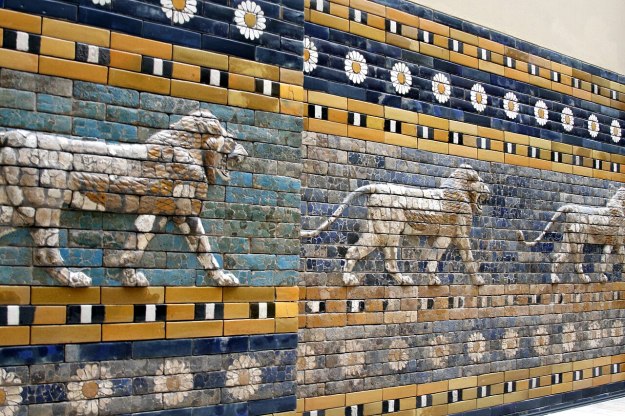
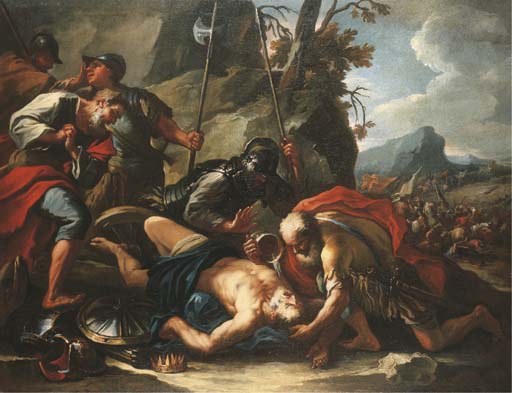
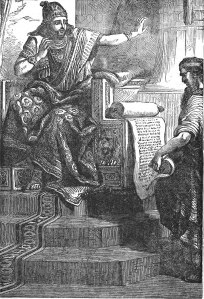

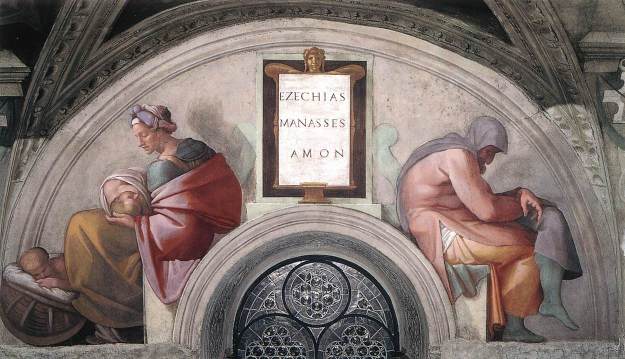

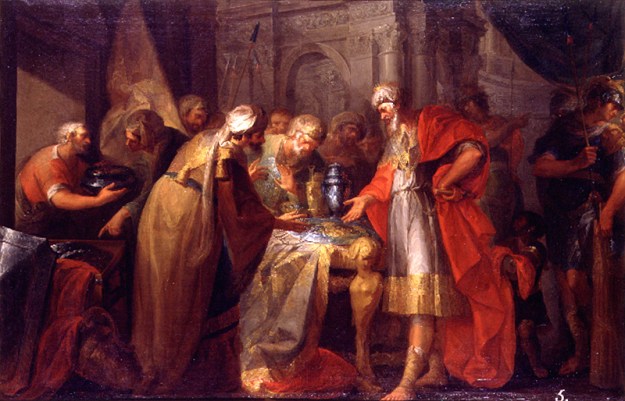

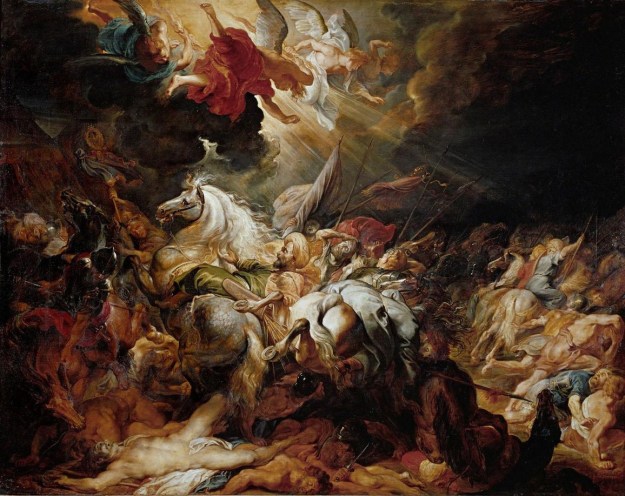
 Sign of the Rose