Yearly Archives: 2016

I Pray That I Am Wrong…

As a person who dearly loves this country and the dream of what it can be I dearly hope that I am wrong….

After an election that has caused long lasting trauma for people on the left, right and in the middle and where fear and anxiety were the dominant emotions we the people elected Donald Trump. I dearly hope that those who voted for Donald are right and I am wrong, that he is somehow better than what he appears to be: a better leader, a better learner, and a better human being. I pray that somehow he can learn that as the President of the United States he is no longer a reality TV star or a business man who maximizes his own personal profit at the cost of many others. I pray that he will neither destroy the credit of the American people with rash economic decisions or with our moral standing in the world. My fear is that he is not the type of man who will put the needs of the people before his own needs but I dearly hope that I am wrong.

As a veteran who gladly committed my service to this country when I was younger and who still has a strong attachment to not only my former regiment but to those who serve in any of the armed services and our allies across the globe, I dearly hope that President Trump will take the time to learn the intricacies of diplomacy and the importance of the promises our country has made in the past. Whether it is the Breton Woods accords which guaranteed commerce across the oceans protected by U.S. naval power or the alliances like NATO which continue to serve a vital role in preserving and protecting and providing a space in which freedom and democracy have a chance. I pray that he can understand the importance of things like the Geneva convention not only for our standing in the world but for the safety of our own soldiers when they are called into action. I hope that he understands that just because the executive branch of the United States government can call upon the complete set of weapons in the U.S. arsenal that force is only used as a last resort and that there are consequences for the type of warfare he so casually talked about in his campaign. I pray that his own seemingly fragile ego does not continually place those who are willing to serve in conflict because of a perceived insult to his person. Perhaps President Trump will be able to enhance America’s standing on the world stage, and for those who elected him to make America great again I pray that you are right and my fears this day are wrong.

As a Lutheran pastor who cares deeply for not only those who are members of my congregation but those well beyond the walls of any Christian community who are my neighbors, I hope that the language of scapegoating that was so rampant in the Trump campaign for president ends and there is no additional harm done. As a white straight male who has not spoken up enough on behalf of my friends and neighbors of color, of different or no religion, who are LBTGQ or are people with disabilities, I apologize. I refuse to see a future that reflects my denomination’s past in 1930s Germany. I will stand with you, perhaps falteringly at first as I learn how to use my voice, but I will not see a future where they came for my Muslim neighbor, but I was not Muslim and I did nothing, then they came for my Latino/Latina brothers and sisters and I did nothing. Granted as a white straight male I probably could coast through with little fear that my own personal status would be impacted, but that is not the America I believe in. I do believe it is self-evident that all men (and women) are created equal as our founding fathers could so boldly state in the Declaration of Independence.

To those who are celebrating this day, please know that almost half of your fellow Americans are mourning. Your version of the American dream and theirs may be somewhat different but I fear that you have elected someone who will not allow either sets of visions for the American dream to prosper. I pray that I am wrong…

But if I am not wrong and Donald Trump is not able to be an effective leader, to learn the role of President and assume the responsibilities that are a part of the office and that he can become a decent human being for the four years of his term then:

I hope that you can pay a fraction of the attention to the electronic communication of the new president that you have paid to Hillary Clinton’s during the past twelve years. Hillary Clinton was far from a perfect candidate but the news story of her emails was probably the key piece in the strategy to win this election but now the bar is set. Does the communication coming out of the office of President befit the office, is it causing harm to America’s security, is it antagonizing movements around the world that put our diplomats and military in dangerous situations? If President Trump’s previous actions on twitter are any indication I fear greatly for the security of our country. Again, I pray that I am wrong.

I hope that you can pay a fraction of the attention that you have paid to Bill Clinton in his affair with Monica Lewinsky to President Trump’s words and actions while in the presidency. Particularly for those of you who elected Trump when you have opposed other presidents on moral grounds I hope that you will apply the same standards for him. We have elected a person to the highest office in the land who, if he was a professional athlete, probably would not be able to play on any professional sports team. I hope you understand the message you sent to our daughters about the type of language that we are willing to tolerate when someone speaks about their bodies. Maybe Trump will be able to learn how to be a person who has the highest respect for women. I have my severe doubts but again I pray that I am wrong.

I fear for the damage that will be done to the U.S. and global economy and not just for my own self-serving reasons. Yes, I fear that the anxiety in the market will hurt my retirement account and could damage the long work of debt reduction I have undertaken in my personal life but my fears are greater for my children’s generation. I fear that people like my son who is autistic will not be able to find coverage for his healthcare needs since Trump and a Republican congress will likely overturn the Affordable Care Act and return us to the free market system of insurance without protections for those who are unable to get insurance. I worry that the trend of Republican presidents to decrease taxes, increase both military spending and the overall budget while reducing revenues will continue to add to the deficit that myself and my children will continue to have to pay back. I worry that the turning away from the advances made in alternative energy sources and an increased reliance on coal and oil will continue to have a negative impact on the world my children will inherit. I pray that I am wrong on this.

This day, like every day before, I will get up and go to work. I will pay my bills, my taxes and make sure my family has food on the table. I will pray for my country and those who have been elected to serve it. Yet, on this day I need to voice my own fears about the man we have elected to be our president. I pray that my fears do not come to pass. Yet, I have not given up working for this country to be the country that I love where all men and women are created equal, where we are a nation that other nations look to as an example of freedom and justice, to be a place where everyone has an opportunity for the pursuit of life, liberty and happiness.
Wisdom of Story: Reflection 4 Daring to Imagine a Bigger Story

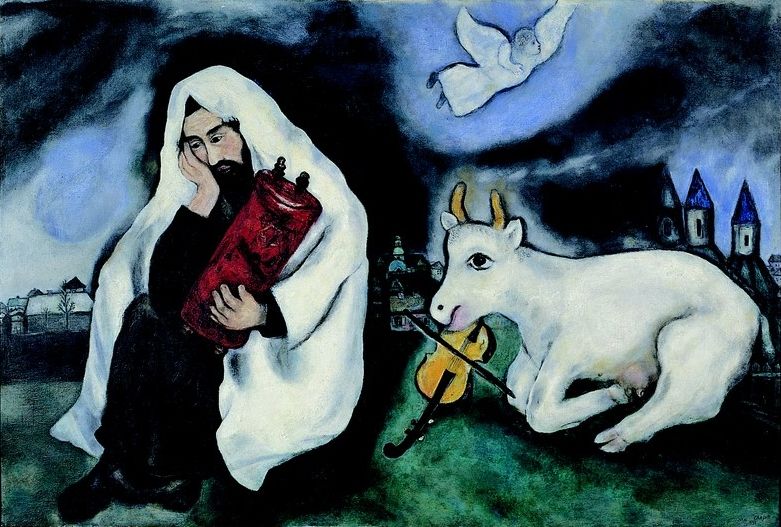
Marc Chagall, Solitude (1933)

Marc Chagall, Solitude (1933)

So, this is the final of the Wisdom of Story reflections after working through this course with Brené Brown and Glennon Doyle Melton (reflection 3 is The Rules which is more of a poetic reflection on the content) and it ended with a profound challenge: what is a community challenge or a global story that you want to write yourself into? This was a hard question because it forced me to think of what are the things going on in my community and in the world, that breaks my heart and to pay attention to that. Where I ended up was highlighted by several conversations I have had over the past weeks and I think it is an area where I need to spend some time both reflecting and creating opportunities to imagine a different big story.

There are so many places where I have seen a growing cultural anxiety paired with malaise in the church, in the communities around us and in the nation. There are so many pieces of this: I believe that we have become addicted to anxiety, almost like a drug, by the continual presence of news and information constantly throughout our lives. Anxiety sells even if it is not an accurate representation of reality- news programs present the worst aspects of the world continually before our eyes and we believe we no longer live in a safe place, even though statistically we are significantly safer than 20 years ago. Like many I have gone through our current election cycle with a bad taste in my mouth because of the ways the candidates have been portrayed. While character matters when elections become primarily about tearing down another person’s character or even demonizing one’s opponent we all lose. I am dismayed by the loss of civility in our public square, where one whose ideas may be different from our own are not only dismissed out of hand but may even be considered ‘un-American’ and in a digital age it is easier to become a troll out to destroy the other person. We live in a polarized and anxious world where there is less of an American dream and more alternate versions of an American nostalgia for a time and place that never truly existed. We become so consumed with work, with taking care of ourselves, with the desire for the next new thing that never quite satisfies that I’m not sure we know what a good life looks like.

That is a huge bundle of tightly wound knots and so how do I begin to untangle it? Well for me it begins with understanding so I can try to imagine a different story. There is a self-reflective component: It will mean thinking critically on my own life and its incessant business and what a good life means for me. There will be a time to listen to other people’s stories and their fears and concerns as well as their hopes and dreams, which is one of the gifts of what I do. As a reflective person, it will also mean that I go back and ask questions both in reading and research but also to question some of the narratives I hear around me.  Honestly not sure where it will ultimately go or look like but I’ve got lots of questions and I’m curious enough to see where they might lead.

Psalm 23- The LORD as Shepherd, Host and Destination

Eastman Johnson, The Lord is My Shepherd (1863)

Eastman Johnson, The Lord is My Shepherd (1863)

Psalm 23

<A Psalm of David.>
1 The LORD is my shepherd, I shall not want.
2 He makes me lie down in green pastures; he leads me beside still waters;
3 he restores my soul. He leads me in right paths for his name’s sake.
4 Even though I walk through the darkest valley, I fear no evil;
for you are with me; your rod and your staff– they comfort me.
5 You prepare a table before me in the presence of my enemies;
you anoint my head with oil; my cup overflows.
6 Surely goodness and mercy shall follow me all the days of my life,
and I shall dwell in the house of the LORD my whole life long.
 
To attempt to write about the best-known Psalm and one of the most loved pieces in all the scriptures is a challenge because of these words have such an emotional resonance in my memory and the memory of many others. Yet, sometimes slowing down to meditate upon these words that I and many others know by heart can be beneficial. These words of trust have been spoken, prayed and meditated on for millennia and the image of the LORD as shepherd and generous host echoes in many places in the bible, in art and in song.

The metaphor of the LORD being one’s shepherd resonates in multiple ways. Primarily the images evoke the literal pastoral image of a shepherd guiding and watching over the sheep and the words of the Psalm (at least in the first four verses) are told from the sheep’s perspective. In the more literal reading of the metaphor the shepherd is the one who continually provides for the needs of the sheep as it seeks food, water, and safety. The shepherd seeks out an environment where the sheep may thrive and provides protection from the threat of enemies (either wild beasts or men). If, as the Psalm indicates in its attribution, this is a Psalm of David it makes sense that the pastoral image would be a readily available metaphor as David himself begins as a shepherd. Yet, within the world of the bible the shepherd also has a metaphorical linkage to those entrusted as rulers and kings. Jeremiah 23:1-7 and Ezekiel 34, for example, can use this metaphor as a condemnation of the rulers who have not cared for the people they ruled and then later in John 10 Jesus can pick up this language by claiming ‘I am the good shepherd’ which would have both the pastoral image as well as the kingly image.

The LORD leading the sheep into an environment where they might prosper for ‘his name’s sake’ reflects upon a long tradition of honoring the name of the LORD the God of Israel. While the Hebrew people lifted the honoring of God’s name as a commandment it also was used as a claim upon God’s identity. For example, in Psalm 79:9 the Psalmist can cry out, “Help us, O God of our salvation, for the glory of your name; deliver us and forgive our sins, for your name’s sake.” To call upon the name of the LORD is to call upon the character of God. In many ways, this Psalm, and many other Psalms and prayers, call upon the name of the LORD to ask God to act in a way that is in the character of God’s provision and care for the sheep of the LORD’s field and the people under the LORD’s care.

One of the most memorable parts of the Psalm is the darkest valley, or as I remember it growing up ‘the valley of the shadow of death.’ God’s presence amid the dark and difficult moments of our life is both a source of great comfort for the sufferer and a challenge to many simplistic theologies that can only find a place for God in the times of joy and prosperity. God’s presence provides security in every part of our lives and the faithful one can lean upon the protective rod and staff in a time of insecurity. The journey of the follower will not always be a time in green pastures and still waters and yet they shepherd leads the sheep through the dangerous and scary places to places where the flock can once again thrive.

In the final two verses the metaphor shifts from the LORD as shepherd to the LORD as host. The follower becomes one welcomed into the LORD’s hospitality, and as one extended hospitality the host also provides protection. In this way, a banquet table can be spread even when one’s enemies may be nearby for the host provides the security which allows the feast to be peaceful. The traveler is welcomed, anointed with oil and given food to eat and rich drink. Goodness and mercy become personified and follow the traveler, pursuing them throughout their life to provide a safe harbor.

Ultimately the one who has led the sheep/follower throughout life is finally the destination. Dwelling in the house of the LORD is far more than just residing there as a priest, but ultimately goodness and mercy have pursued the Psalmist and the LORD has led the Psalmist like a shepherd back to the LORD’s house. St. Augustine’s famous words, “Thou hast made us for thyself, O Lord, and our heart is restless until it finds its rest in you” resonates with Psalm 23. As the book of John loves to use a set of images in John 10: I am the gate for the sheep (10:7); I am the gate (10:9) and I am the good shepherd (10: 11, 14) can ultimately lead in chapter 14:6 to “I am the way, the truth and the life.” Just as John can develop the imagery of the Psalm in a way that points ultimately to Jesus being the destination of the journey for Christians, the Psalm can point back to the LORD the God of Israel being both shepherd, host and destination for the Psalmist and those who would echo these words.

The Rules

Afghan children playing soccer in front of the ruined Darul Aman Palace on the outskirts of Kabul from www.dawn.com/news/1050835

Afghan children playing soccer in front of the ruined Darul Aman Palace on the outskirts of Kabul from http://www.dawn.com/news/1050835

When we were children and the game wouldn’t go our way
We would reinvent the rules of the game so that we might win
And others around us would cry out unfair, you changed the rules
But in our childish foolishness we believed we were masters of the game
And the rules could be bent to serve our needs and wants and desires
In a world that was bound in an orbit with us at the center
 
Yet, when we were older the rules became hardened in the game of life
Others stepped in as referees ensuring that we played by some rulebook
We were never allowed to study or read but which defined the roles
We were expected to play in work, at home, in relationship and in life
And if we dared to cry out that the rules were unfair we would be penalized
For the rules couldn’t be bent to serve our wants and needs and desires
In a world that was bound in an orbit where we are not the center
 
But sometimes the game of life breaks us leaving us shattered on the field
The rules we tried to work within only served to beat us down and confine us
The game became a sentence in which we were expected to serve our term
And the referees became the warden keeping us imprisoned within our cells
For the rules were there to keep a check on our wants and needs and desires
In a world that was binds us in orbit to someone else’s sun
 
But sometimes there is wisdom in childhood in knowing the rules can change
In reinventing the rules that don’t work and ignoring the self-appointed referees
In playing a game where we might flourish and our lives matter
Where we can once again believe that we are the masters of the game
And the rules could be bent to serve our needs and wants and desires
In a world no longer forced to orbit around someone else’s star


Psalm 22-A Desperate Cry to God

Marc Chagall, Solitude (1933)

Marc Chagall, Solitude (1933)

Psalm 22

<To the leader: according to The Deer of the Dawn. A Psalm of David.>
1 My God, my God, why have you forsaken me? Why are you so far from helping me, from the words of my groaning?
 2 O my God, I cry by day, but you do not answer; and by night, but find no rest.
 3 Yet you are holy, enthroned on the praises of Israel.
 4 In you our ancestors trusted; they trusted, and you delivered them.
 5 To you they cried, and were saved; in you they trusted, and were not put to shame.
 6 But I am a worm, and not human; scorned by others, and despised by the people.
 7 All who see me mock at me; they make mouths at me, they shake their heads;
 8 “Commit your cause to the LORD; let him deliver– let him rescue the one in whom he delights!”
 9 Yet it was you who took me from the womb; you kept me safe on my mother’s breast.
 10 On you I was cast from my birth, and since my mother bore me you have been my God.
 11 Do not be far from me, for trouble is near and there is no one to help.
 12 Many bulls encircle me, strong bulls of Bashan surround me;
 13 they open wide their mouths at me, like a ravening and roaring lion.
 14 I am poured out like water, and all my bones are out of joint; my heart is like wax; it is melted within my breast;
 15 my mouth is dried up like a potsherd, and my tongue sticks to my jaws; you lay me in the dust of death.
 16 For dogs are all around me; a company of evildoers encircles me. My hands and feet have shriveled;
 17 I can count all my bones. They stare and gloat over me;
 18 they divide my clothes among themselves, and for my clothing they cast lots.
 19 But you, O LORD, do not be far away! O my help, come quickly to my aid!
 20 Deliver my soul from the sword, my life from the power of the dog!
 21 Save me from the mouth of the lion! From the horns of the wild oxen you have rescued me.
 22 I will tell of your name to my brothers and sisters; in the midst of the congregation I will praise you:
 23 You who fear the LORD, praise him! All you offspring of Jacob, glorify him; stand in awe of him, all you offspring of Israel!
 24 For he did not despise or abhor the affliction of the afflicted; he did not hide his face from me, but heard when I cried to him.
 25 From you comes my praise in the great congregation; my vows I will pay before those who fear him.
 26 The poor shall eat and be satisfied; those who seek him shall praise the LORD. May your hearts live forever!
 27 All the ends of the earth shall remember and turn to the LORD; and all the families of the nations shall worship before him.
 28 For dominion belongs to the LORD, and he rules over the nations.
 29 To him, indeed, shall all who sleep in the earth bow down; before him shall bow all who go down to the dust, and I shall live for him.
 30 Posterity will serve him; future generations will be told about the Lord,
 31 and proclaim his deliverance to a people yet unborn, saying that he has done it.

Psalm 22 echoes heavily in the gospel writer’s telling of the crucifixion of Jesus and it forms a central part of the liturgy of holy week (closing the Maundy Thursday service and serving as the pivot into Good Friday). For both Jewish and Christian readers this Psalm of suffering and lament has been a place that can reflect the reality of the faithful life when God seems absent and God’s promises not to forsake seem far away. Many people are troubled when they read the language of the Psalms of Lament, particularly the vivid language of Psalm 22 because it seems unlike the language of faith. Yet, here in the place of suffering where the faithful one calls out to God and questions God’s seeming lack of intervention is a faithful (even if difficult) place. As Beth Tanner can state, “Crying out in pain and expressing trust are not incompatible.” (Nancy deClaisse-Walford, 2014, p. 233) There will always be those, like Job’s friends in the book of Job, who want to equate suffering as proof of the suffering one’s unfaithfulness and demand a rigidly ordered world where the righteous prosper and the unrighteous are punished but the real world is seldom that tidy. My experience as well as my reading of the story of many of the saints of the church and the patriarchs and matriarchs of the Jewish story reveal a very different dynamic: frequently those saints and ancestors in the faith do suffer, and often in ways that seem unreasonable, yet they can hold their suffering within the framework of a world where God still remains sovereign even if the world is often incomprehensible.

The Psalm begins with a cry to a known God, the one the sufferer calls out to is their God who they have known in the past, who has been present and active throughout their lives and who now seems absent. It is this absence of God’s presence that makes a space for the crisis of the sufferer and allows their oppressors to have their way. For the petitioner who cries out to God they trust that God is a God who hears, much as in the Exodus when God heard the cries of the Israelites, and the Psalmist calls upon this history of God’s action in the past on their behalf and on behalf of the people. The Psalmist contrasts the position of their ancestors ‘who trusted in you and were not put to shame’ and their own experience of being despised and scorned. The Psalmist oscillates between the ways in which God has acted in the past and their own experience of abandonment, terror and shame. The poetic language of this Psalm is particularly rich in representing their opponents as wild bulls, ravening lions, a pack of vicious dogs and their experience takes a toll on their own body in vivid ways: mouth dried up like a potsherd, being poured out like water and bones being out of joint with a heart that has melted like wax, and they are dying of hunger to the point where their bones stand out against their skin. The person places their petition to God in the direst terms possible, their petition is a matter of life and death and their only hope is for God to hear and act like God has heard and acted in the past and to honor God’s promise not to forsake.

As with most of the Psalms of Lament, Psalm 22 allows us to see the reversal of the petitioner’s condition. In the middle of verse 21 the situation changes and the tone changes. The verse begins ‘save me from the mouth of the lions’ but then abruptly switches ‘from the horns of wild oxen you have rescued me’. We don’t know the time that elapses in this transition but the deliverance occurs and the prayer switches to one of praise. Since God has not despised or disdained, there is a hope for tomorrow. Those who sought the LORD now become those who praise, the poor whose bones could be counted can finally eat and be satisfied and the God who seemed to forsake has become the LORD who reigns over the nations. God’s action in the speaker’s generation ensures that another generation will be told about the God who watches over God’s faithful people and hears their complaints and prayers.

For the first tellers of the story of Jesus the resonant images of Psalm 22 probably helped to make sense of their experience of the crucifixion. For both Matthew and Mark the words Jesus speaks from the cross, “Eloi, Eloi lema sebachthani, my God, my God why have you forsaken me” would resonate with the beginning of this Psalm and the question of the righteous suffer. Even within the experience of that day where the soldiers cast lots for the garments of Jesus, the Psalm provides an easy connection for followers trying to make sense of the senseless suffering. The Psalms provided a language for their experience and words for their pain.

As important as Psalm 22 is for Christians in telling the story of the crucifixion both in scriptures and in the liturgy of Holy Week we cannot leave it only there. Psalm 22, and the psalms of lament more generally, are rich and powerful words that for generations of Jewish and Christians followers of God have given voice to a cry for deliverance. Whether it was the Jewish people in exile in Babylon, slaves crying out in suffering, or the person dealing with a devastating injury or illness that has robbed them of their sense of belonging we need to hear again that the God who we perceive has forsaken us can indeed hear our cry. We need to be able to claim that the experience of suffering and isolation need not be read as an implication of our own unfaithfulness or unrighteousness, but that indeed crying out to God in that time of suffering and isolation is itself a mighty cry of faith. Groaning words can indeed be powerful words when they reach the ears of the LORD who rules over the nations.

Exquisitely Tender

I’m doing my best to play on through the pain
Putting on my bravest face as I try make it through
Yet, somehow my soul is exquisitely tender today
As if some wound on my heart was bleeding underneath
And I know that at the slightest touch the façade I wear
Might fall away as the pain comes pouring out
If I had a choice I would retreat away from the world
Like a wounded animal not wanting to snap out
At those who might inadvertently make things worse
And if tear would fall from these stoic eyes I wonder
What types of tears they might be:
Would they be tears of rage or pain or fear or confusion?
For perhaps the worst part is I don’t know what to feel or why I hurt
I just know that I am exquisitely tender and I’m doing all I can
To hold it together and keep my temper from flaring
And my emotions from falling apart under the strain
And like a repetitive stress injury it just needs time and space
To heal and to be isolated from the stress that broke it in the first place
And yet, it seems, that there is no protective cast or brace
No doctor’s orders or physical therapist’s demands
Or balm in Gilead to magically heal the sensitive soul

The Wisdom of Story Reflection 2: Modern Crises and the Balance of Work, Rest and Play

When I started the Wisdom of Story I had no idea that the session on act 2 of the story, the part of the story where the conflict comes in and changes things around would coincide with an actual set of minor crises (predominantly around a building project at my congregation) and the stress that would be added by that to an already full schedule. So I am thankful for thinking about crisis and the practices that sustain me immediately before needing to call upon many of these practices. There is ancient wisdom in the practice of Sabbath, which is not primarily about worship but about rest. For me one of my natural reactions to stress is to work harder and to attempt to plow through the crisis and outlast it. Yet, while this is one of my defaults it also tends to be an unhealthy reaction for me because it impacts my creativity, my joy, my relationships and it cuts me off from the support I need.

As an introvert I require space and time to recharge, but beyond the space and time there are things that recharge my batteries faster than other things. These include music, stories, exercise, eating well, learning, playing, solitude or time with people I love, and working with my hands. Music has always been a source of joy for me and whether I am singing along with a CD, attending a concert, drumming on the steering wheel as I drive or jamming to the air guitar alone in the house by myself, music is one of the things I love. Unfortunately, when I overwork I tend to put myself in places where I can’t enjoy music in the same way. A lot of my work is either talking with other people or things that require more concentration and often silence is beneficial. But I need the balance of music to bring richness into my life.

I am a person who feeds off stories. Stories come in many forms, in books, in a movie, sometimes I just make them up in my head. I’ve always been able to let stories take me into their world for a moment and to get caught up with the actors or characters. I often find things in the world of the story that bring insight into situations in my own world, and then there is also simply the joy of a well told tale. Perhaps one of the other gifts of stories goes back to the gift of Sabbath, it forces me (or allows me) to have an excuse to step away from that drive to work through my struggles and instead to sit in another place at some distance from my own crises and to come back to them re-energized from being away in a distant land or time or world through the story.

I’m thankful that early in my life I learned the benefit of staying fit and eating a healthy diet. Through my time at Texas A&M and the Army physical fitness was a daily part of my work day and my enjoyment of running endured well after my time in the Army ended. Physical exertion is a great stress relief for me and my body just feels better and I am more creative when I make the time to run and workout. When I am stressed I am more likely to miss workout and I also have one less method to work through stress. Diet also affects me greatly. I enjoy cooking and I cook pretty fresh food using very little preservatives. If my diet changes through eating out frequently or even eating at church potlucks then I notice it rapidly. Caffeine also has a stronger effect on my body than it does for many people and again it is another thing that is readily available and tastes good at the moment but when I am stressed it contributes to that stress.

For a long time I didn’t give enough credence to the need to play. I was simply too busy doing ‘important’ things to give myself permission to do something as unnecessary as that. I always enjoyed playing, whether it was sports or a computer game or doing puzzles of various kinds but I never made time for it. Sometimes it goes back to my love of story (which video games often do immerse you into a story world) other times it feeds that need for physical activity but in the midst of all of it is the need to bring fun and joy into one’s life. I’m still not great at making time to play but I’ve learned it is an enjoyable part of my life and very healing.

Being an introvert doesn’t mean that I shun opportunities to be around other people, but it often doesn’t recharge my batteries. People who I love and trust can help me recharge but I also need my times of solitude. I’m not cut out to be an hermit, I need other people but social situations (like parties) take a lot more energy than they give to me.

Finally, I do enjoy working with my hands. Whether it is working in the soil in my garden or building something or just trying to be creative.  So much of what I do requires my intellectual side to be engaged but I also have the need to use the tactile side of my personality. I like being able to problem solve and being able to see something created or improved through working on it.

Psalm 21- A Blessing for the King

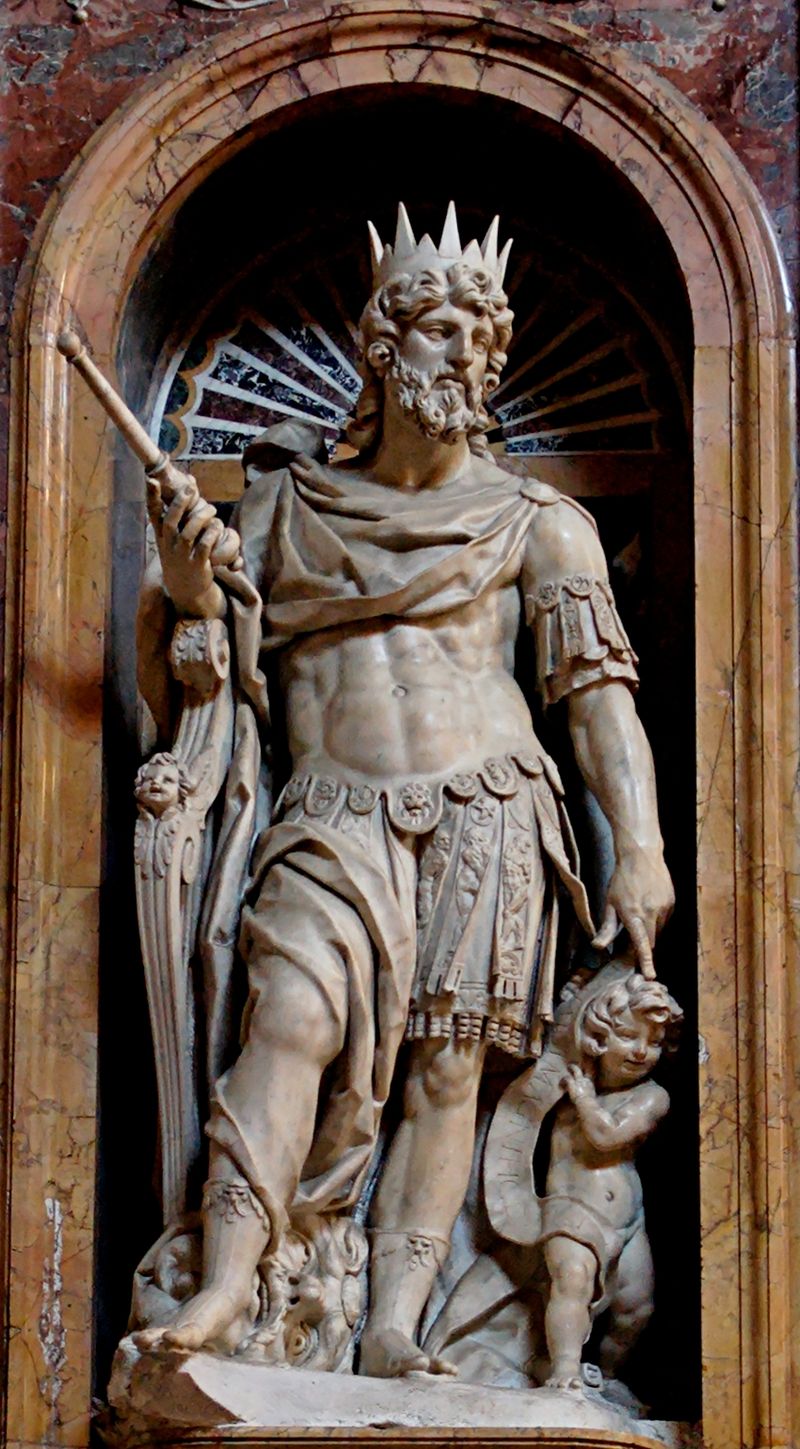
Statue of David by Nicolar Cordier in the Borghese Chapel of the Basilica di Santa Maria Maggiore

Statue of David by Nicolar Cordier in the Borghese Chapel of the Basilica di Santa Maria Maggiore

Psalm 21

<To the leader. A Psalm of David.>
1 In your strength the king rejoices, O LORD, and in your help how greatly he exults!
2 You have given him his heart’s desire, and have not withheld the request of his lips. Selah
3 For you meet him with rich blessings; you set a crown of fine gold on his head.
4 He asked you for life; you gave it to him– length of days forever and ever.
5 His glory is great through your help; splendor and majesty you bestow on him.
6 You bestow on him blessings forever; you make him glad with the joy of your presence.
7 For the king trusts in the LORD, and through the steadfast love of the Most High he shall not be moved.
8 Your hand will find out all your enemies; your right hand will find out those who hate you.
9 You will make them like a fiery furnace when you appear. The LORD will swallow them up in his wrath, and fire will consume them.
10 You will destroy their offspring from the earth, and their children from among humankind.
11 If they plan evil against you, if they devise mischief, they will not succeed.
12 For you will put them to flight; you will aim at their faces with your bows.
13 Be exalted, O LORD, in your strength! We will sing and praise your power.

At first glance we may wonder if this royal Psalm which is all about the relationship between the king’s trust and the steadfast love has to say to our time when we no longer have kings and, other than politically conservative Christians, we are reluctant to declare God’s blessing upon a political candidate. In a world with a flourishing royal establishment, which is the world of the Psalm, it does qualify the king’s leadership. Everything the king, and by extension the people, has received is an extension of God’s rich blessings from the physical crown the king wears to the long life and glory the king receives. It does place the king as the vessel of the Lord’s blessing and not the cause of the blessing itself and perhaps here is a place where some humility, which is easily lost for those tempted with power, can indeed remain. The gifts lifted up here for the king are similar to the gifts that Solomon is said to receive after his request for wisdom in 1 Kings 3. Yet, these gifts are not merely for the king but for the people by extension.

Perhaps one could impertinently state that the Psalm reflects a type of divine trickle-down economics where the king is blessed so that the nation as a whole may be blessed. The people of Israel could not imagine a representative democracy or any other modern system of government. Their frame of reference was that of a monarchy and with its nobles and officials. To pray for the life of the king may seem strange to us but it is a frequent stock petition of the time and as Rolf Jacobson can remind us, “and this blessing was not just for the king but for the nation. Short royal reigns are often symptomatic of nation turmoil, and the common folk were just as likely to suffer in such times as the nobility.” (Nancy deClaisse-Walford, 2014, p. 224) Much of the narrative of the Hebrew Bible about the people of Israel and Judah directly links the health of the nation to the faithfulness of the king in power. It is a strange thought to us who are used to our individuality but in a nation where access to biblical texts as well as literacy would have resided with the priests and the nobles the leadership of the king often set the course for the nation. When the king trusts in the LORD the nation is blessed, when the king (and by extension the people) turn to other gods they also turn away the blessings of their LORD.

The world of Israel and Judah was a dangerous and violent world and conflict was a part of life. Here, like in Deuteronomy 20 it is the LORD who is the primary force when Israel triumphs and not their military prowess or strength. I have discussed in other places the ways in which the use of God as a divine warrior can be a powerful but also a dangerous way of talking about God. Yet in the world of the Psalms it is one of the central ways of referring to God. God is the divine warrior, the shield, the fortress, the rock and many other metaphors of strength that provide comfort for the Psalmist and people of many times and places.

Those called into positions of leadership in our time could benefit from remembering that their calling does not exist to serve their benefits but instead their position is for the sake of the community. As Rolf Jacobson says well:

And the blessings that come with leadership do not exist for the advantage of the leader, but for the sake of the community and for the sake of the world. The kings of Israel and Judah never learned this lesson. And the leaders of today seem to do no better. One is reminded of the old saw that people get elected to Congress in order to do good, but end up doing well. So perhaps Jesus’ warning is still apt: From those to whom much has been given much will be expected. (Nancy deClaisse-Walford, 2014, p. 226)

In our time the final axiom of the quote could almost be reversed, that to those whom much has been given little will be expected. There has been a loss of faith in those elected to political office in our society. At the same time humility seems to be an undervalued trait in those who we tend to elect to positions of authority. Perhaps we have sought the wrong traits in our leaders. Perhaps a leader who is able to understand that the position given to him or her is indeed a gift of God, not in the sense of entitlement but instead in the sense of vocation, could have enough humility, compassion, and gratitude to use their position for the sake of the community, the people and the world. Unfortunately, it often seems that those leaders who claim their Christianity most vociferously seem to be those who view their calling as entitlement to do well instead of doing good.

Wisdom of Story Reflection 1: The Roles and Rules of the World

When an author tells a story one of the first things they have to do is place their characters in roles and in a world that has rules. The rules and roles will be different based upon the character and the world. A young wizard in a world where magical things are possible will have different roles and rules than an old cowboy riding into the old West. Even within the same world the rules can be different. A private in the army, for example, operates under different rules and certainly a different role than a general. Rules and roles work in a story because it imitates our life. Often the roles we play are second nature, like the feel of clothing on top of our skin that we no longer notice and the rules are as much a part of the environment we live in as the air we breathe.

The rules that we live within are dependent on the numerous roles we play within our lives. Some are gender determined: there are different cultural expectations for men and women. Men are shown from a young age to put their work above everything else (even family), to not express pain or weakness, and that the cultural expected role is for them to be the provider. Some rules come out of one’s place within a family: a young son or daughter should have different rules and constraints than a teenager or a young adult. Some rules come from the organizations and work that one is a part of. In my life the expectations as a military officer and later as a pastor were very different, for example language that was assumed to be a part of the life in the military are no longer considered appropriate in a more ‘holy’ calling by many.

Rules are not bad, we need rules to make sense of our lives and world. However, there are times where they can become stifling. Roles may fit us like a second skin or we may feel like we are continually wearing a mask that covers up our true self. Often these parts of our lives are invisible until a major change comes that changes the rules and roles. Things that we may have assumed to be true about our lives no longer hold up under the stress of the changes that go on within our lives.

So what do we do when the rules no longer work and the role we once played no longer fits. That is where the hard part of the story begins. Much like the people of Israel on their long Exodus from Egypt we may long to return to the places we knew and the security we once had (even though it might have been its own type of enslavement). Yet, in a story this is act 2, the challenging part of the story where a crisis pushes the protagonist to find our something new about themselves. If a person is in that part of their life it doesn’t feel like a story, it may feel like chaos or freefall. Yet all stories have a beginning point, a Launchpad so to speak and the rules and initial roles are that solid ground that retreats away on the expedition into the scary unknown frontier.


These meditations are based upon the Courageworks course, the Wisdom of Story taught by Brené Brown and Glennon Doyle Melton. This is my reflections after session 1.

Ecclesiastes 12-The End of Wisdom

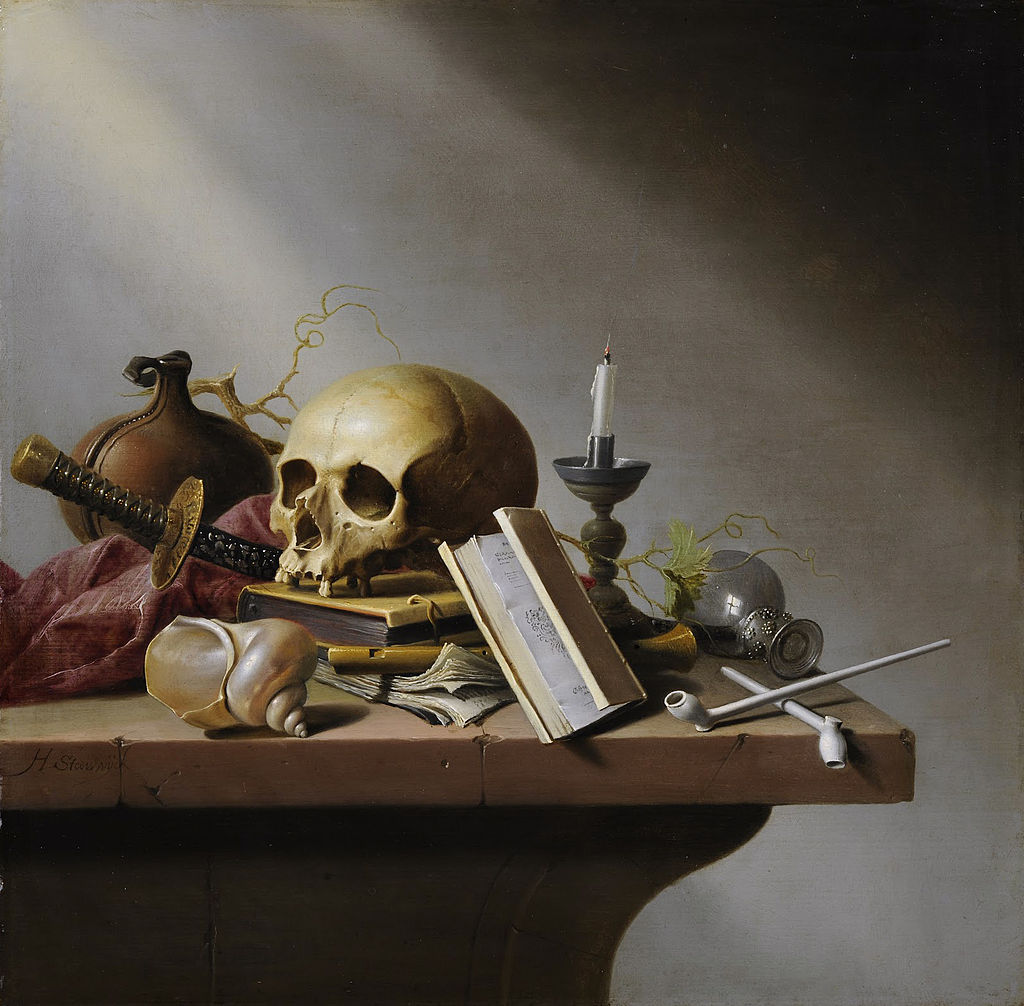
Harmen Steenwijck, Vanitas (1640)

Harmen Steenwijck, Vanitas (1640)

Ecclesiastes 12: 1-8: The End of Things

1 Remember your creator in the days of your youth, before the days of trouble come, and the years draw near when you will say, “I have no pleasure in them”; 2 before the sun and the light and the moon and the stars are darkened and the clouds return with the rain; 3 in the day when the guards of the house tremble, and the strong men are bent, and the women who grind cease working because they are few, and those who look through the windows see dimly; 4 when the doors on the street are shut, and the sound of the grinding is low, and one rises up at the sound of a bird, and all the daughters of song are brought low; 5 when one is afraid of heights, and terrors are in the road; the almond tree blossoms, the grasshopper drags itself along and desire fails; because all must go to their eternal home, and the mourners will go about the streets; 6 before the silver cord is snapped, and the golden bowl is broken, and the pitcher is broken at the fountain, and the wheel broken at the cistern, 7 and the dust returns to the earth as it was, and the breath returns to God who gave it. 8 Vanity of vanities, says the Teacher; all is vanity.

So now we come to the end of things and at the end of things is growing old and death. The final eight verses either talk metaphorically about the aging of the individual or directly about the collapse of a city or town. I read this metaphorically and at the end of all things is the gradual process of letting go that comes with old age, diminished health and eventually mortality. One of my nonagenarians from a previous congregation who had a spry sense of humor even in the midst of her failing vision and health would remind me when I would visit her that, “Old age isn’t for sissies” and that “they can call these the golden years but it must be fool’s gold.” Ecclesiastes has no place for a sentimentalism about how things will be better in some great by and by in the afterlife, it only has place for that which it can see. Perhaps there is an uneasiness with the somewhat agnostic perspective that Ecclesiastes seems to portray at certain points, its willingness to question what many people would rather overlook. Yet, looking at the world through the lens of a person who is willing to call much of what they see ‘vanity’ doesn’t lead the Teacher to desperation but instead a greater sense of peace in the moment. It allows them to counsel their pupils to embrace their youth, to remember the creator of this time and not to rush forward into the responsibility and diminishment of old age. In a culture where old age was valued and youth was not Ecclesiastes was an unusual voice. In our culture where youth is valued and old age is considered a burden and death is to be avoided at all cost perhaps the honesty of Ecclesiastes might help us with our own vain struggles against our mortality.

One of the greatest gifts I think Ecclesiastes brings to things is the wisdom of appreciating the gifts of the day. We can struggle against our mortality and against our limits but they make the time we have precious. Health, wealth, relationships, fame and power may all be transitory but the gift comes in being able to find joy in one’s food and drink, relationships, toil and the work of one’s hands and mind. Vanity of vanities, all may be vanity but that doesn’t have to be a source of struggle. Instead we can be freed to enjoy the day that our creator has made and to indeed be glad in it.

Ecclesiastes 12: 9-14: Epilogue

 9 Besides being wise, the Teacher also taught the people knowledge, weighing and studying and arranging many proverbs. 10 The Teacher sought to find pleasing words, and he wrote words of truth plainly.

 11 The sayings of the wise are like goads, and like nails firmly fixed are the collected sayings that are given by one shepherd. 12 Of anything beyond these, my child, beware. Of making many books there is no end, and much study is a weariness of the flesh.

 13 The end of the matter; all has been heard. Fear God, and keep his commandments; for that is the whole duty of everyone. 14 For God will bring every deed into judgment, including every secret thing, whether good or evil.

The voice shifts suddenly to one talking about the Teacher rather than one talking as the Teacher. This short book was one that barely made it into the canon of Scriptures because it is a very different voice. Here an appreciative epilogue is offered which closes Ecclesiastes as we have it. It evaluates what has come before as both plainly truthful but also pleasing in its composition. That perhaps is a challenge for anyone trying to speak or write in a way that can speak the truth to the best of their ability but also not in a callous or judgmental way. Ecclesiastes writes about some uncomfortable truths and as Ellen Davis can comment, “who in our culture has the moral authority and the imagination to make uncomfortable words heard in the public forum? Few teachers or clergy, even fewer politicians.” (Davis, 2000, p. 226) Yet truth, perhaps most of all the uncomfortable truth that is skipped over in the soundbites and marketing strategies, is needed for both the individual and the public’s life.

Perhaps it is great vanity writing about a book that can claim ‘Of making many books there is no end, and much study is a weariness of the flesh.’ But there has been enjoyment in the toil and a sense of satisfaction coming to the end of these reflections upon this irreverent little piece of the scriptures. Fearing God may be the beginning of wisdom as Proverbs 1:7 can state and here is one of the few times Ecclesiastes sings in harmony with its neighbor in the scriptures. Yet, perhaps it would be vanity to worry about how God will judge this deed in the end and so for me too this is the end of the matter. Vanity or wisdom or both it is done and I go to enjoy the rest of this day that God has provided.