Tag Archives: Wisdom literature

Gehenna, Tartaros, Sheol, Hades and Hell

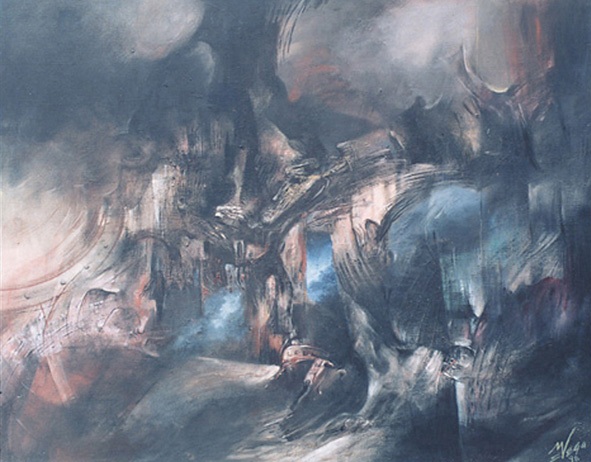
Mauricio Garcia Vega “Visita al infierno’ shared by artist under Creative Commons 3.0


For many Christians the concept of hell has a lot of baggage associated with it. In the New Testament Gehenna, Sheol, or Tartaros which are translated Hades (Sheol) or Hell (Gehenna or Tartaros) did not carry the same level of imagined meaning to its hearers. The New Testament is not primarily concerned with heaven and hell as locations for the afterlife reward and punishment, which is how most people hear these terms today.

The Afterlife in the Hebrew Scriptures

For most of ancient Judaism heaven was the place that God reigned from, but it was not a place where humans (except for a select few like Elijah and Enoch) were brought to be with God. The Hebrew Scriptures are primarily concerned with the relationship between God and the people of God in this life. The blessings of covenant faithfulness were to be experienced in the provision of God for the people and the curse of covenant unfaithfulness was experienced in the struggle and strife that occurred through invasion, famine and illness. There is a long history of lament when the blessings of covenant faithfulness seem to be denied by God unfairly, but this faithful protest to God still expected God’s action within the lifetime of the prophet or poet calling for God’s action. There is a concept of Sheol, a place where the dead rest, but it is not a place of punishment or reward but simply a place where the dead are. Two quick examples of the concept of Sheol in the Hebrew Scriptures: it occurs frequently in Psalms and Proverbs as a place where the dead go and where the faithful one will end up if God does not intervene. In Psalm 6:5 the author attempts to bargain with God to deliver them because, “For in death there is no remembrance of you; in Sheol who can give you praise?” Additionally, there was an understanding that, even though it was prohibited magic for the Jewish people, a medium was summoning the shade of a dead one from somewhere which we see in the story of Saul consulting the medium at Endor. (1 Samuel 28)

Belief about death would evolve near the end of the time where the Hebrew Scriptures were written because the experience of the people appeared to be in tension with the promise of covenant faithfulness. As Samuel Ballentine, quoting Peter Berger, can state:

“All socially constructed worlds are inherently precarious,” P. Berger observes. They are precarious because the socially managed consensus concerning right and wrong, good and evil, actions and abilities that are acceptable and those that exceed tolerable limits, is constantly threatened by chaos. (Ballentine, 1993, p. 139)

At the end of Isaiah, we see the first idea of an everlasting punishment for those who have rebelled against God. This is set within the larger context of an ingathering of the nations where all flesh worships before God but there is articulated a judgment for those who rebel against God that goes beyond this life:

And they shall go out and look at the dead bodies of the people who have rebelled against me; for their worm shall not die, their fire shall not be quenched, and they shall be an abhorrence to all flesh. (Isaiah 66:24)

In the Jewish writings like 2 Maccabees, Enoch and 2 Esdras, which are written between the time of the Hebrew Scriptures and the New Testament, we see the evolution of the resurrection of the dead but at the time of Jesus this is not a universal belief (the Pharisees and Jesus accept it but the Sadducees do not.)

In the New Testament

Tartaros occurs only in 2 Peter 2:4 and refers to a place where the rebellious angels are sent. This is combined in later theology to make hell the domain of the devil and the fallen angels, but this evolution has not occurred at the time when the New Testament is written. Satan has fallen from heaven, but his place seems to be on the earth at the time of the gospels. There is the concept of the Abyss in Revelation as well as angels and demonic forces which are unleashed from the sea and the earth as well as punishment in the lake of fire in Revelation 20: 11-15 where the devil and those who align themselves with him end up.

Sheol in the New Testament is translated Hades and is often in parallel with death. It seems to serve a similar function to the use of Sheol in the Hebrew Scriptures as a place where people are brought down to at death, but it also becomes personified as an entity (along with death) that is resisting God’s reign. In Matthew it is used twice, once in reference to Capernaum which has had ample opportunities to hear Jesus’ message and repent but since there has not been repentance will be brought down to Hades (Matthew 11:23) and most famously after the declaration of Peter:

And I tell you, you are Peter, and on this rock I will build my church and the gates of Hades will not prevail against it. (Matthew 16: 18)

Gehenna is used more in Matthew than in any other book of the New Testament (Matthew 5:22, 29, 30 [parallel Mark 9:43, 45,47] 10:28 [Parallel Luke 12: 5]; 18:9; 23: 15 and 33). The only uses outside of Matthew and Mark and Luke is James 3:6 (speaking about the tongues ability to set on fire being itself set on fire by Gehenna). To further explore Matthew’s concept, I’ve listed each place Matthew uses the idea of Gehenna.

22 But I say to you that if you are angry with a brother or sister, you will be liable to judgment; and if you insult a brother or sister, you will be liable to the council; and if you say, ‘You fool,’ you will be liable to the hell of fire… 29 If your right eye causes you to sin, tear it out and throw it away; it is better for you to lose one of your members than for your whole body to be thrown into hell. 30 And if your right hand causes you to sin, cut it off and throw it away; it is better for you to lose one of your members than for your whole body to go into hell. Matthew 5: 22, 29, 30 [parallel Mark 9:43, 45,47]

28 Do not fear those who kill the body but cannot kill the soul; rather fear him who can destroy both soul and body in hell. Matthew 10:28 [Parallel Luke 12: 5]

8If your hand or your foot causes you to stumble, cut it off and throw it away; it is better for you to enter life maimed or lame than to have two hands and two feet and to be thrown into the eternal fire. 9 And if your eye causes you to stumble, tear it out and throw it away; it is better for you to enter life with one eye than to have two eyes and to be thrown into the hell of fire (Matthew 18: 8-9)

15 Woe to you, scribes and Pharisees, hypocrites! For you cross sea and land to make a single convert, and you make the new convert twice as much a child of hell as yourselves. Matthew 23: 15

33 You snakes, you brood of vipers! How can you escape being sentenced to hell? Matthew 23: 33

Additionally Matthew does have a concept of the age of punishment in contrast to the age of life in Matthew 18:8, 19: 16, 29 and 25: 41 and 46. (I am intentionally not using the NRSV and most modern translations’ usage of eternal punishment and eternal life because these also have a lot of baggage in the Christian tradition).

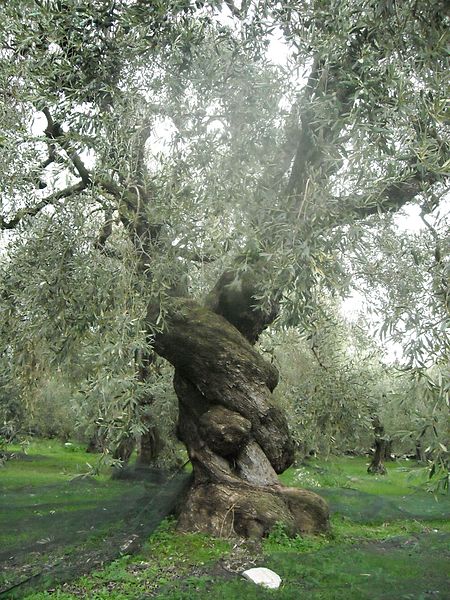
Deror Avi, Picture of the Valley of Hinnom (2007) Shared by photographer under GNU Free Documentation License 1.2

Jesus, especially in Matthew and the synoptic tradition, does include punishment for those who choose the path of the wicked. The gospels use the term Gehenna a term that originates withthe valley of Hinnom, which was considered a cursed place and a place where trash from Jerusalem was burned but it also is used as the opposite of the kingdom of heaven. Choose the kingdom of heaven or choose Gehenna, it is a choice between wisdom and foolishness. I think it is difficult to argue that Jesus does not have some conception of a judgment that goes beyond this life that parallels the resurrection that also transcends this life. Yet, rather than giving us terrifying descriptions to fuel the imaginations, Jesus uses the term in a way that the people of his time would understand and that we can only approach through the accumulated tradition and imagination of the church and artists. Jesus doesn’t focus on Gehenna or heaven as a destination, instead he is focused on the kingdom of heaven’s approach to earth. Gehenna is the place that those who oppose the kingdom of heaven find themselves.

How do we as Christians almost two thousand years after Jesus death and resurrection approach this concept of judgement and hell? Here is some wisdom I can share that I’ve learned from other wise thinkers on our tradition. The first comes from Miroslav Volf in his work Exclusion and Embrace where in the final chapter he makes the point:

Most people who insist on God’s “nonviolence” cannot resist using violence themselves (or tacitly sanctioning its use by others). They deem the talk of God’s judgment irreverent, but think nothing of entrusting judgment into human hands, persuaded presumably that this is less dangerous and more humane than to believe in a God who judges! That we should bring “down the powerful from their thrones” (Luke 1: 51-52) seems responsible; the God should do the same, as the song of that revolutionary Virgin explicitly states, seems crude. And so violence thrives, secretly nourished by belief in a God who refuses to wield the sword.

My thesis that the practice of nonviolence requires a belief in divine vengeance will be unpopular with many Christians, especially theologians in the West. To the person who is inclined to dismiss it, I suggest imagining that you are delivering a lecture in a war zone (which is where a paper that underlies this chapter was originally delivered). Among your listeners are people whose cities and villages have been first plundered, then burned and leveled to the ground, whose daughters and sisters have been raped, whose fathers and brothers have had their throats slit. The topic of the lecture: a Christian attitude toward violence. The thesis: we should not retaliate since God is perfect noncoercive love. Soon you would discover it takes the quiet suburban home for the birth of the thesis that human nonviolence corresponds to God’s refusal to judge. In a scorched land, soaked in the blood of the innocent, it will invariably die. And as one watches it die, one will do well to reflect about many other pleasant captivities of the liberal mind. (Volf, 1996, pp. 303-304)

Additionally, I would add the way we often use the concept of eternal damnation and salvation incorrectly, something I learned from Lesslie Newbingin:

In the debate about Christianity and the world’s religions it is fair to say that there has been an almost unquestioned assumption that the only question is, “What happens to the non-Christian after death?” I want to affirm that this is the wrong question and that as long as it remains the central question we shall never come to the truth. And this for three reasons:

    1. First, and simply, it is the wrong question because it is a question to which God alone has the right to give the answer….
    2. The second reason for rejecting this way of putting the question is that it is based on an abstraction. By concentrating on the fate of the individual soul after death, it abstracts the soul from the full reality of the human person as an actor and sufferer in the ongoing history of the world…
    3. The third reason for rejecting this way of putting the question is the most fundamental: it is that the question starts with the individual and his or her need to be assured of ultimate happiness, and not with God and his glory.(Newbingin, 1989, pp. 177-179)

Ultimately questions of heaven and hell, salvation and damnation are not in my control, and that is something I am thankful for. I do trust that God is wiser than I am in judgment and that ultimately the injustice in this world will not outlast God’s justice. The world’s violence will not ultimately thwart God’s kingdom of peace. Beyond this I can accept that there is an opposite to the kingdom of heaven that Jesus announces to those who hear him, but instead of focusing on Gehenna and the path of foolishness I attempt to follow the path of the kingdom and share it with those who have ears to hear. Beyond this part which I can live and proclaim I leave the rest in God’s capable hands.

Psalm 37 A Song of a Wise Life

An Old Woman Reading, Probably the Prophetess Hannah by Rembrandt (1631)

Psalm 37

<Of David.>
1 א  Do not fret because of the wicked; do not be envious of wrongdoers,
 2 for they will soon fade like the grass, and wither like the green herb.
 3 ב Trust in the LORD, and do good; so you will live in the land, and enjoy security.
 4 Take delight in the LORD, and he will give you the desires of your heart.
 5 ג Commit your way to the LORD; trust in him, and he will act.
 6 He will make your vindication shine like the light, and the justice of your cause like the noonday.
 7 ד Be still before the LORD, and wait patiently for him; do not fret over those who prosper in their way, over those who carry out evil devices.
 8 ה Refrain from anger, and forsake wrath. Do not fret — it leads only to evil.
 9 For the wicked shall be cut off, but those who wait for the LORD shall inherit the land.
 10 ו Yet a little while, and the wicked will be no more; though you look diligently for their place, they will not be there.
 11 But the meek shall inherit the land, and delight themselves in abundant prosperity.
 12 ז The wicked plot against the righteous, and gnash their teeth at them;
 13 but the LORD laughs at the wicked, for he sees that their day is coming.
 14 ח The wicked draw the sword and bend their bows to bring down the poor and needy, to kill those who walk uprightly;
 15 their sword shall enter their own heart, and their bows shall be broken.
 16 ט Better is a little that the righteous person has than the abundance of many wicked.
 17 For the arms of the wicked shall be broken, but the LORD upholds the righteous.
 18 י The LORD knows the days of the blameless, and their heritage will abide forever;
 19 they are not put to shame in evil times, in the days of famine they have abundance.
 20 כ But the wicked perish, and the enemies of the LORD are like the glory of the pastures; they vanish — like smoke they vanish away.
 21 ל The wicked borrow, and do not pay back, but the righteous are generous and keep giving;
 22 for those blessed by the LORD shall inherit the land, but those cursed by him shall be cut off.
 23 מ Our steps are made firm by the LORD, when he delights in our way;
 24 though we stumble, we shall not fall headlong, for the LORD holds us by the hand.
 25 נ I have been young, and now am old, yet I have not seen the righteous forsaken or their children begging bread.
 26 They are ever giving liberally and lending, and their children become a blessing.
 27 ס Depart from evil, and do good; so you shall abide forever.
 28 For the LORD loves justice; he will not forsake his faithful ones.
    ע The righteous shall be kept safe forever, but the children of the wicked shall be cut off.
 29 The righteous shall inherit the land, and live in it forever.
 30 פ The mouths of the righteous utter wisdom, and their tongues speak justice.
 31 The law of their God is in their hearts; their steps do not slip.
 32 צ The wicked watch for the righteous, and seek to kill them.
 33 The LORD will not abandon them to their power, or let them be condemned when they are brought to trial.
 34 ק Wait for the LORD, and keep to his way, and he will exalt you to inherit the land; you will look on the destruction of the wicked.
 35 ר I have seen the wicked oppressing, and towering like a cedar of Lebanon.
 36 Again I passed by, and they were no more; though I sought them, they could not be found.
 37  ש Mark the blameless, and behold the upright, for there is posterity for the peaceable.
 38 But transgressors shall be altogether destroyed; the posterity of the wicked shall be cut off.
 39  ת The salvation of the righteous is from the LORD; he is their refuge in the time of trouble.
 40 The LORD helps them and rescues them; he rescues them from the wicked, and saves them, because they take refuge in him.

I have introduced the Hebrew letters at the beginning of each acrostic line to show the structure of this poem. The psalms frequently use acrostic poetry as a form which tends to denote a completion of thought from Aleph to Tav (or in our alphabet the equivalent would be from A to Z). Psalm 37 uses this form to express the contrast between the life of the wicked and the life of the righteous. The psalm was works in a similar way to the book of Proverbs where the words are a tool for passing on a manner of life that values the correct things. It encourages the hearer to take the long view of life as it compares the momentary success of the wicked and the way of the righteous.

Psalm 37, like much wisdom literature, wrestles with the common question of every age: Why do those who seem to be wicked often prosper and those who are faithful struggle? Or in simpler terms: Why do good things happen to bad people and bad things to good people? No psalm, poetry, proverbs or philosophy can adequately address every aspect of this fundamental question, but the poets, wise ones and prophets of the bible do attempt to give their provisional answers to these questions because they are important to how they understand what a good life looks life. In the psalms God is fundamentally trustworthy and, even when situations seem to testify otherwise, the authors trust that God’s will and God’s way will prevail. Psalm 37 attempts to make a case for faithfulness in the seeming prosperity of the faithless and for the long view of life in contrast to the ways of the wicked which focus on the immediate reward of their actions.

The psalm invites us into a life that is not dominated by worrying about how other’s actions are rewarded but rather to trust in the LORD amid the positives and negatives of life. It encourages the hearer to expand the horizon of their consideration beyond the transitory present. Throughout the psalms the LORD is trustworthy, sees the struggles of the righteous and does, in God’s time, act. The longstanding faithfulness of God is contrasted with the transitory prosperity of those who act unethically or who live wicked lives that are centered on their own interests. Vengeance and justice rest in God’s hands and it is ultimately God who will cut off the wicked, who will bring their plots and their power to an end. Their own actions will become their undoing and in time they will fade away while the righteous endure. For now, they may be imposing, like the cedars of Lebanon, but the day will come when the LORD’s ax will cut them down at the roots.

This psalm echoes in the sermon on the mount, where Jesus can state, “Blessed are the meek, for they shall inherit the earth.” (Matthew 5:5) In contrast to a worldview where one should seize all that one can this psalm offers a view of the world that outlasts those who grasp for land, wealth and power. This bit of wisdom points to a life of generosity and trust. One can lend and give generously because the righteous one can trust that the LORD will provide for their needs. They in their lives of generosity, the lives they model and hand on to their children, become a blessing to the world around them. They seek the good of the community and justice trusting that their God is a God of goodness and justice.

Psalm 37 in particular and wisdom literature in general attempts to pass on a way of life and cultivate practices that lead towards a whole life. I believe we ask this question too infrequently in our time. The question of the practices and values of a good life are questions that need to be asked as they are handed on from generation to generation. Part of the answer comes from the experiences of life. Like the psalmist we may be able to reflect upon times where someone’s power and prosperity that were accumulated in an unjust manner proved temporary. Like the psalmist we may reflect upon the way that God’s prosperity has provided for us in our own life. Reflections like this one do not deny the challenge of those who prosper while doing evil or who struggle while trying to live a righteous life. But they wrestle with these questions from the position of trust. The psalmist and those who echo this psalm believe that God is ultimately trustworthy. They believe, even when confronted by those who see prosperity in a life that goes against their values, that a life lived in the practices of wisdom and righteousness are worth living. They view life in a longer horizon than the profits of the moment or the experience of the day. Without discounting their present experience, they can set aside their anger, envy and strife because they trust that the LORD who has created the day will provide for them today and tomorrow. They sing a song of gratitude and trust and that song shapes the values and practices of the life they live.