1Unless the LORD builds the house, those who build it labor in vain. Unless the LORD guards the city, the guard keeps watch in vain. 2It is in vain that you rise up early and go late to rest, eating the bread of anxious toil, for he gives sleep to his beloved.
3Sons are indeed a heritage from the LORD, the fruit of the womb a reward. 4Like arrows in the hand of a warrior are the sons of one’s youth. 5Happy is the man who has his quiver full of them. He shall not be put to shame when he speaks with his enemies in the gate.
Bolded words have notes on translation below.
Psalm 127 rotates around the basic claim that everything comes from the trustworthy LORD who builds the house, guards the city, and gives the blessing of family. The opening verse introduces the word translated in the NRSVue ‘house’ (Hebrew bayit) which can be used in multiple ways. Nancy deClaissé-Walford illustrates the multiple ways Hebrew uses bayit:
The word house (bayit) has a number of meanings in the Hebrew Bible. It can refer to family dwellings (Gen. 19:2; Judg. 11:31; 2 Kgs. 4:2); to the whole household (Gen. 46:27; Josh. 7:18; Ruth 1:8); to the whole people of Israel (Exod. 40:38; 1 Kgs. 20:31; Ezek. 36:22); to ruling dynasties (2 Sam. 3:1; 7:11; 1 Kgs. 16:3); or to the temple in Jerusalem (2 Kgs. 22:3; Ezra 6:15; Jer. 7:2). (Nancy deClaisse-Walford, 2014, p. 918)
Critical to the wordplay in this Psalm is the usage of the term in Nathan’s prophecy to David in 2 Samuel 7: 11-13
The LORD declares to you that the LORD will make you a house (bayit). When your days are fulfilled and you lie down with your ancestors, I will raise up offspring after you, who shall come forth from your body, and I will establish his kingdom. He shall build a house (bayit) for my name, and I will establish the throne of his kingdom forever.
While the building of a family dwelling or a temple would also be a labor committed to the LORD and the word allows and encourages those meanings, the psalm also wants us to understand the resonance of household, especially when linked thematically and phonetically to the second half of the psalm (see below).
The LORD is the primary actor throughout the psalm as the builder of the house and the guard of the city and the provider of children while the psalmist lives in trust of the LORD. They may participate with God in the building of the house, the protection of the city, and the procreation and raising of a family, but they can trust that the LORD provides that which they need. Instead of anxious toil trying to secure their house, city, and family they can sleep in peace entrusting the LORD to provide that which they need. I am reminded of Martin Luther’s explanation of the petition of the Lord’s prayer on daily bread:
What is this?
In fact, God gives daily bread without our prayer, even to all evil people, but we ask in this prayer that God cause us to recognize what our daily bread is and to receive it with thanksgiving.
What then does “daily bread” mean?
Everything our bodies need such as food, drink, clothing, shoes, house, home, fields, livestock, money, property, an upright spouse, upright children, upright members of the household, upright and faithful rulers, good government, good weather, peace, health, decency, honor, good friends, faithful neighbors, and the like. (Luther, 1978, p. 36)
Wisdom is trusting the LORD to provide for the house and the security of the city so that the faithful one can be free from anxiety and worry. The psalmist understands cooperating with God but the idea of securing their own future by working harder or longer is foolishness. For the psalmist God provides for the home, the community, and the family.
As briefly mentioned above there is a phonetic connection between the verses in Hebrew that is not present in English. Nancy deClaissé-Walford is again helpful in showing this:
The word translated here as children (NRSVue sons) is the Hebrew banim, whose acoustic similarity to the Hebrew word build (bana) and house (bayit) in v. 1, coupled with the polyvalent meaning of the word “house” in the Hebrew Bible, strongly connects the two stanzas of Psalm 127. (Nancy deClaisse-Walford, 2014, p. 918)
The word ‘reward’ (Hebrewsakar) also appears in Genesis 15 when God tells Abram, “your reward (sakar) shall be very great. Within this promise Abram is told to look to the heavens and count the stars…so shall his dependents be. This psalm echoes the story of Abram/Abraham when multiple sons/children are viewed as a ‘reward.’ ‘Warrior’ and ‘man’ in verses four and five are the Hebrew gibbor and its alternate form geber which is an important term often translated “mighty one”[1] which can refer to either military or economic power. Finally, the word ‘happy’ (Hebrew ‘asre) is a term frequently used in wisdom literature. This wise ‘mighty one’ whose house the LORD has built, whose city the LORD has guarded, and whose family has produced many children as a reward from God can live at peace and content because they have trusted in the LORD. The LORD who builds their household, guards them and provides for their family will not allow their enemies to put them to shame.
[1] Hebrew gibbor hehayil which can refer to physical strength or the economic strength to equip oneself and a group for combat. Ruth 4:11 uses this term for economic ability in reference to Boaz.
1If it had not been the LORD who was on our side —let Israel now say— 2if it had not been the LORD who was on our side, when our enemies attacked us, 3then they would have swallowed us up alive, when their anger was kindled against us; 4then the flood would have swept us away; the torrent would have gone over us; 5then over us would have gone the raging waters.
6Blessed be the LORD, who has not given us as prey to their teeth. 7We have escaped like a bird from the snare of the hunters; the snare is broken, and we have escaped.
8Our help is in the name of the Lord, who made heaven and earth.
Bolded words have notes on translation below.
The overall meaning of the psalm should be clear to any reader: the LORD is the one who is on our side and who rescues us from the perils of the world. The theme of God as strength, support, shelter, rock, shield, fortress and many other metaphors of protection and comfort occur regularly throughout the psalms and scripture in general. The theme of this fifth song of ascent is not new, but its language (somewhat dulled in English translations) is striking. Israel would not continue to exist without the LORD. Paul’s defiant statement in his letter to the church in Rome echoes the sentiment of this psalm: “What then are we to say about these things? If God is for us, who is against us?” (Romans 8:31)
Verse one and two both begin with a statement that seems conditional in English, “If it had not been the LORD who was on our side” but as Nancy deClaissé-Walford highlights,
Verses 1 and 2 both begin with if not (lûlê), forming the protasis of vv. 1-5. Lûlê, however, is only used in Hebrew to express an unreal condition. The psalm-singers are confident that the Lord is on their side. (Nancy deClaisse-Walford, 2014, p. 907)
This psalm of corporate trust in the LORD begins and ends with a confident assurance that the God of Israel has protected the people of God against her enemies. The enemies identified in verse two is identified with the collective noun humanity(‘adam). Israel and God have all humanity arrayed in opposition to them, and without God Israel would have been overwhelmed.
The psalm then uses several images that indicate that the people of God on their own are powerless before those who oppose them. Their enemy is large enough to swallow them alive, or to sweep over the life of the people,[1] to be devoured in the mouth or captured in a trap. In verse six the word rendered teeth is the same word (lason) rendered tongue in Psalm 120:2
Deliver me, O LORD, from lying lips, from a deceitful tongue.
Compared to the hunter of fowl the people of Israel are like a bird unable to free themselves from the traps their enemies have laid. On their own Israel is small and weak before the mass of humanity arrayed against them. Yet here, as in Psalm 121, their help is in the name of the LORD who makes heaven and earth. What was a confession of individual trust in Psalm 121 is now a corporate statement of trust in the creating and protecting God. As a people they ‘go with God.’
In the United States, where I live and lead a congregation, there is a reliance on self-sufficiency that is very different from the biblical faith represented in the psalms and throughout the bible. As J. Clinton McCann, Jr. aptly writes,
To profess that God is our fundamental help means to profess that we are not sufficient to create and secure our own lives and future. In short, we need help. (NIB IV: 1191)
As people of God, we believe that God is on our side and stands with us against the enemies that threaten to consume or overwhelm us. If it were only our own strength that we could rely on we would find ourselves consumed, overwhelmed, and trapped but in our own weakness we know our help comes from the one who created the heavens and the earth.
[1] In verse 4b and 5 the “us” in the verse is the Hebrew nephesh, often rendered “soul” in English translations but in Hebrew thought it is closer to the essence of life, not something that can be separated from life. J. Clinton McCann, Jr. notes the word may have originally meant neck. (NIB IV: 1190)
The Hebrew Alphabet. Hebrew reads right to left so it begins with Aleph and ends with Tet
Psalm 119
Introduction to Psalm 119
I’m going to modify my normal pattern of having the text first and then a reflection due to the length of Psalm 119 which is longer than several biblical books. Many readers find Psalm 119, “boring, repetitious, and without plot development.” (Bellinger, 2014, p. 519) Translations of this psalm lose the key organizational feature of Psalm 119 which its acrostic organization and that in combination with the length of the psalm makes it difficult for many readers to fully appreciate. Also hindering the hearing of this psalm dedicated to a “Torah piety” or “law piety” is a lingering stigma of legalism associated with Judaism. Yet, what this psalm advocates for in its language and organization is a joyful way of life organized around God’s guidance to God’s people.
I have spent far more time in Hebrew acrostic poetry in the past year than the average person spends in a lifetime having worked through Lamentations, Psalm 111, 112, and now 119 this year. Psalm 119 is the acrostic of acrostics intensifying the form to have eight lines begin with each letter of the Hebrew alphabet (from Aleph to Tav) for a total of 176 verses. The acrostic form is a way of indicating a complete poetic treatment of a topic, and the intensification of this psalm of an eight-fold acrostic is designed to convey a complete treatment of a life faithfully and joyfully lived in relation to God through the law. In addition to the eight-fold repetition of a common letter to start each group of lines are the eight synonyms for the law utilized throughout the poem: law, decrees (or statutes), ordinances, statutes, word, precepts, and promises. One of these synonyms occurs in every verse except verses 3, 37, 90 and 122. In the 176 verses there are five verses where two synonyms occur compared to the four where none occur. The repetition is intentional to reinforce the central position of the law in the relationship between God and the people.
Psalm 119 begins with the Hebrew asre (‘happy’ NRSV) which is a common word in wisdom literature, just as the acrostic is a common wisdom literature form. Psalm 1 and Psalm 19 are the other two psalms primarily associated with a ‘Torah piety’ and both psalms share both vocabulary as well as a common vision of what a wise life consists of. The similarities between Psalm 1 and Psalm 119, some of which will be noted below, were strong enough that Claus Westermann could suggest that they once formed the beginning and end of the psalter. (Bellinger, 2014, p. 520)
For the reflections below I will take each eight-verse portion of the acrostic as a unit for reflection. On the one hand the psalm is designed to be viewed as an entire unit held together by its acrostic organization and focal vocabulary. On the other hand, the psalm is daunting for its length, and I will follow the habit of many other scholars in attempting to look at the psalm in its components and then have some final reflections. Dietrich Bonhoeffer in 1939-1940 considered his work on Psalm 119 to be “the climax of his theological life.” (Bethge, 2000, p. 667) Yet even Bonhoeffer in his reflections only made it to verse twenty-one. For me this may be a high mountain to climb, but hopefully there are many more pinnacles in my life of reflection.
1 Happy are those whose way is blameless, who walk in the law of the LORD.
2 Happy are those who keep his decrees, who seek him with their whole heart,
3 who also do no wrong, but walk in his ways.
4 You have commanded your precepts to be kept diligently.
5 O that my ways may be steadfast in keeping your statutes!
6 Then I shall not be put to shame, having my eyes fixed on all your commandments.
7 I will praise you with an upright heart, when I learn your righteous ordinances.
8 I will observe your statutes; do not utterly forsake me.
As mentioned in the introduction there is a strong connection between Psalm 1, 19 and Psalm 119. They share a common vision of what leads to happiness or contentment (Hebrew asre) but they also share a common vocabulary. As J. Clinton McCann, Jr. notes, “every word of v. 1 occurs in either Psalm 1 or Psalm 19.” (NIB IV: 1168) Dietrich Bonhoeffer in his reflection on verse one uses the terms ““complete”, “whole,” undivided, unassailable” for the term the NRSV translates ‘blameless’ and he notes that Luther in his 1521 translation of the psalm says, “the wholly healthy ones.” (DBWE 15: 500) The Hebrew concept of ‘blameless’ or ‘without fault’ is not the legalistic perspective often (wrongly) attributed to Jewish thought. It is clear as you progress through the poem that the psalmist does not consider themselves without fault, and yet they desire to be steadfast in their adherence to God’s vision for the world. They are seeking a way of life in harmony with God’s will for the world, and they seek that harmony through God’s revealed will in the Torah.
Beth
9 How can young people keep their way pure? By guarding it according to your word.
10 With my whole heart I seek you; do not let me stray from your commandments.
11 I treasure your word in my heart, so that I may not sin against you.
12 Blessed are you, O LORD; teach me your statutes.
13 With my lips I declare all the ordinances of your mouth.
14 I delight in the way of your decrees as much as in all riches.
15 I will meditate on your precepts, and fix my eyes on your ways.
16 I will delight in your statutes; I will not forget your word.
Throughout the law there is a concern for passing on the practices from generation to generation. This is perhaps best illustrated in the verses that immediately follow the Shema in Deuteronomy 6:
Keep these words that I am commanding you today in your heart. Recite them to your children and talk abou them when your are at home and when you are away, when you lie down and when you rise. Deuteronomy 6: 6-7.
The book of Proverbs is also an attempt to pass on wisdom to the next generation. How are young people to keep their way pure, by remaining attentive to the word, commandments, statutes, ordinances, decrees, and precepts (all synonyms mentioned in this section). This shares a common vision with Matthew’s parable of the treasure found in the field[2] where the object (here the law) is to become the thing which the individual gives up all other things to possess and guard. It becomes the treasure of the heart, the words upon the lips, the delight of life, and that which is meditated on. The young person learns to center their life on God’s law and God’s word.
Gimel
17 Deal bountifully with your servant, so that I may live and observe your word.
18 Open my eyes, so that I may behold wondrous things out of your law.
19 I live as an alien in the land; do not hide your commandments from me.
20 My soul is consumed with longing for your ordinances at all times.
21 You rebuke the insolent, accursed ones, who wander from your commandments;
22 take away from me their scorn and contempt, for I have kept your decrees.
23 Even though princes sit plotting against me, your servant will meditate on your statutes.
24 Your decrees are my delight, they are my counselors.
For the first time the notes of lament make their way into the psalm. Living in attentive service to the way of God in the law does not guarantee a life free of struggle. Yet even in the midst of the struggle the psalmist remains focused on the ordinances of God and the way of life they outline. It is possible that Psalm 119 comes from the time of the exile where the person may have lived as an alien in the land of Babylon, but it also may come from a time where they feel alienated from the community. Even in the space where the psalmist is a stranger receiving scorn and contempt from those who have power in the land, they trust that the God who gave the law will continue to provide for this seeker after God’s decrees.
Daleth
25 My soul clings to the dust; revive me according to your word.
26 When I told of my ways, you answered me; teach me your statutes.
27 Make me understand the way of your precepts, and I will meditate on your wondrous works.
28 My soul melts away for sorrow; strengthen me according to your word.
29 Put false ways far from me; and graciously teach me your law.
30 I have chosen the way of faithfulness; I set your ordinances before me.
31 I cling to your decrees, O LORD; let me not be put to shame.
32 I run the way of your commandments, for you enlarge my understanding.
Dust, as J. Clinton McCann, Jr. notes, is elsewhere associated with death.[3] (NIB IV: 1169) The Hebrew word nephesh (NRSV soul) is not the Greek idea of a eternal soul that is separate from the physical body but rather the essence of life or center of life. Yet in a time where life is clinging to death God revives with the word. Life seeking understanding is the way of the psalmist. God can strengthen with the word, teach this student the law, and keep this seeker from shame. They know that life is found in these commandments of God, but they also seek for God to continue to enlarge their understanding of this gracious gift that God has bestowed to the people. The LORD is a God who can bring life from the dust, strength from sorrow, and honor from shame.
He
33 Teach me, O LORD, the way of your statutes, and I will observe it to the end.
34 Give me understanding, that I may keep your law and observe it with my whole heart.
35 Lead me in the path of your commandments, for I delight in it.
36 Turn my heart to your decrees, and not to selfish gain.
37 Turn my eyes from looking at vanities; give me life in your ways.
38 Confirm to your servant your promise, which is for those who fear you.
39 Turn away the disgrace that I dread, for your ordinances are good.
40 See, I have longed for your precepts; in your righteousness give me life.
The verbs that drive this section ask for the LORD to take control of the petitioner’s ways: teach, give, lead, turn the heart and eyes, confirm, and turn away from the things that lead to disgrace. The poet seeks right understanding, right willing (the heart as the seat of will), right seeing, a right practice of faith and life that leads to a wise path instead of the foolish path that leads to disgrace. The psalmist desires that which is life giving and yet knows that there are temptations which can turn the heart, eye, and mind to the path of the wicked. Yet, the psalmist desires to hold fast to the good that God has revealed to the people.
Waw
41 Let your steadfast love come to me, O LORD, your salvation according to your promise.
42 Then I shall have an answer for those who taunt me, for I trust in your word.
43 Do not take the word of truth utterly out of my mouth, for my hope is in your ordinances.
44 I will keep your law continually, forever and ever.
45 I shall walk at liberty, for I have sought your precepts.
46 I will also speak of your decrees before kings, and shall not be put to shame;
47 I find my delight in your commandments, because I love them.
48 I revere your commandments, which I love, and I will meditate on your statutes.
A note of lament returns with those who taunt the psalmist, but the dominant chord of this refrain is continued trust in God. A faithful life will always be lived in the midst of those who seek different sources of security. To those involved in the court of the king the psalmist’s trust in God’s ways may seem naïve in a world of politics and intrigue. Yet, the psalmist asks for their words of their mouth to be their LORD’s words of truth. They seek to fulfill the intention of Deuteronomy 17: 14-20 by becoming a living breathing law which continually is before the king reminding them of God’s way. This way of life, which reveres and meditates on the law is an act of love for the poet.
Zayin
49 Remember your word to your servant, in which you have made me hope.
50 This is my comfort in my distress, that your promise gives me life.
51 The arrogant utterly deride me, but I do not turn away from your law.
52 When I think of your ordinances from of old, I take comfort, O LORD.
53 Hot indignation seizes me because of the wicked, those who forsake your law.
54 Your statutes have been my songs wherever I make my home.
55 I remember your name in the night, O LORD, and keep your law.
56 This blessing has fallen to me, for I have kept your precepts.
This verse moves between the poet’s request for God to remember to the poet’s repeated remembering.[4] When God remembers in the Hebrew Scriptures it leads to God acting. For example, the story of Noah, when God sees the bow in the clouds God remembers (Genesis 9:16) or in Egypt when God hears the cries of the people God remembers (Exodus 20:8). The psalmist calls on God to remember as they are remembering God’s ordinances and God’s name. The second half of verse 54 reads literally, “in the house of my sojourning” (NIB IV: 1170) and may reflect a situation of displacement, perhaps in exile, of the psalmist. Yet, wherever the psalmist finds themselves they attempt to live a wise life which leads them into conflict with the wicked and arrogant in their midst. Perhaps in a time of exile and confusion they are attempting to hold on to the covenant while others are turning away from the way of God’s law. Yet, in the dark of the night this psalmist remembers and maintains their way of obedience.
Het
57 The LORD is my portion; I promise to keep your words.
58 I implore your favor with all my heart; be gracious to me according to your promise.
59 When I think of your ways, I turn my feet to your decrees;
60 I hurry and do not delay to keep your commandments.
61 Though the cords of the wicked ensnare me, I do not forget your law.
62 At midnight I rise to praise you, because of your righteous ordinances.
63 I am a companion of all who fear you, of those who keep your precepts.
64 The earth, O LORD, is full of your steadfast love; teach me your statutes.
It is likely that this psalm was written by a Levite, and the initial verse of this section which declares the LORD is the portion for this poet would recall the division of the land in Numbers and Joshua where the Levites do not have a share in the land, instead the LORD is their portion.[5] But if this psalm is written in exile, now the entirety of the people is left with the LORD as their portion. The poet again alludes to a situation where they need the LORD to act upon the covenant for their rescue, to remember as requested in the previous section. The poet is keeping the commandments, now they implore the LORD to do the same as they are ensnared by the cords of the wicked. The psalmist trusts the LORD and there are others who apparently share this trust, but the poem alludes to a world where the faithful are not the powerful and they are vulnerable to the actions of the wicked.
Teth
65 You have dealt well with your servant, O LORD, according to your word.
66 Teach me good judgment and knowledge, for I believe in your commandments.
67 Before I was humbled I went astray, but now I keep your word.
68 You are good and do good; teach me your statutes.
69 The arrogant smear me with lies, but with my whole heart I keep your precepts.
70 Their hearts are fat and gross, but I delight in your law.
71 It is good for me that I was humbled, so that I might learn your statutes.
72 The law of your mouth is better to me than thousands of gold and silver pieces.
The word ‘good’ (Hebrew tob) occurs six times[6] in these eight verses. The LORD is good and does good and deals well (good) with the servant of the LORD. In echo the servant desires to learn good judgment and the good law of God’s mouth and can even view it as good that they have been humbled. In contrast the arrogant have hearts that are gross and fat. Their words are lies instead of the good words of the law. This is the binary language of wisdom literature: good and wicked, faithful and foolish. Yet even the poet went astray and had to be humbled to find the good. The psalmist has not lived a perfect life and had to have a time of repentance. But now they keep the word and know the value of this treasure their LORD has provided.
Yodh
73 Your hands have made and fashioned me; give me understanding that I may learn your commandments.
74 Those who fear you shall see me and rejoice, because I have hoped in your word.
75 I know, O LORD, that your judgments are right, and that in faithfulness you have humbled me.
76 Let your steadfast love become my comfort according to your promise to your servant.
77 Let your mercy come to me, that I may live; for your law is my delight.
78 Let the arrogant be put to shame, because they have subverted me with guile; as for me, I will meditate on your precepts.
79 Let those who fear you turn to me, so that they may know your decrees.
80 May my heart be blameless in your statutes, so that I may not be put to shame.
The psalmist taps into the poetic imagery of the Hebrew scriptures of God not only as the creator of the heavens and the earth, but the craftsman or potter that fashioned each individual person. They as a creature are completely in God’s hands and even though their suffering may be at the hands of the wicked it is still tied into God’s judgments. Yet, the psalmist trusts in the attributes of God: God’s steadfast love (hesed) and mercy. The psalmist trusts that this moment where the arrogant are able to bring them shame will be reversed in God’s justice. They seek a place of leadership in the community, but they also seek a heart that is fixed on the statutes of God.
Kaph
81 My soul languishes for your salvation; I hope in your word.
82 My eyes fail with watching for your promise; I ask, “When will you comfort me?”
83 For I have become like a wineskin in the smoke, yet I have not forgotten your statutes.
84 How long must your servant endure? When will you judge those who persecute me?
85 The arrogant have dug pitfalls for me; they flout your law.
86 All your commandments are enduring; I am persecuted without cause; help me!
87 They have almost made an end of me on earth; but I have not forsaken your precepts.
88 In your steadfast love spare my life, so that I may keep the decrees of your mouth.
The perilous condition reaches its pinnacle in these eight verses as the psalmist wastes away.[7] The nephesh (NRSV soul)[8], the very life of the person and the vision of the psalmist are all failing. They wonder how much longer they can endure in this situation without God’s intervention on behalf of the faithful one. The poet needs God to act to counteract the actions of the wicked which threaten their life. The remain steadfast in their adherence to the commandments and throw themselves on the steadfast love (hesed) of their God.
Lamedh
89 The LORD exists forever; your word is firmly fixed in heaven.
90 Your faithfulness endures to all generations; you have established the earth, and it stands fast.
91 By your appointment they stand today, for all things are your servants.
92 If your law had not been my delight, I would have perished in my misery.
93 I will never forget your precepts, for by them you have given me life.
94 I am yours; save me, for I have sought your precepts.
95 The wicked lie in wait to destroy me, but I consider your decrees.
96 I have seen a limit to all perfection, but your commandment is exceedingly broad.
The poem transitions from its lowest point to its highest. The psalmist previously had been wasting away but now they turn their eyes to the eternal LORD. Their faith rests not on their own strength but the faithfulness of God and the goodness of God’s eternal law. The psalmist trusts that this law of God will provide them deliverance from the wicked who attempt to destroy them. The meaning of the word translated perfection in verse 96 (Hebrew tikla) is not entirely clear but the overall direction of the final verse is to compare the greatness of God’s commandments and ways to the transitory nature of the wicked.
Mem
97 Oh, how I love your law! It is my meditation all day long.
98 Your commandment makes me wiser than my enemies, for it is always with me.
99 I have more understanding than all my teachers, for your decrees are my meditation.
100 I understand more than the aged, for I keep your precepts.
101 I hold back my feet from every evil way, in order to keep your word.
102 I do not turn away from your ordinances, for you have taught me.
103 How sweet are your words to my taste, sweeter than honey to my mouth!
104 Through your precepts I get understanding; therefore I hate every false way.
The effusive language of these eight verses now focuses on the psalmist’s love of the law. Love is not a common word in the psalter, and it takes on a sensual tone with language similar to the Song of Songs in talking about the words being sweeter than honey. This zealous adherent to the law of God seeks to surpass their teachers and elders by focusing on God’s law as the center of their life. The psalmist may be a young person (v.9) and this may be the zeal of youth, but their direction focused in the right direction. Whatever their age, they are seeking ardently the wise way of God’s law.
Nun
105 Your word is a lamp to my feet and a light to my path.
106 I have sworn an oath and confirmed it, to observe your righteous ordinances.
107 I am severely afflicted; give me life, O LORD, according to your word.
108 Accept my offerings of praise, O LORD, and teach me your ordinances.
109 I hold my life in my hand continually, but I do not forget your law.
110 The wicked have laid a snare for me, but I do not stray from your precepts.
111 Your decrees are my heritage forever; they are the joy of my heart.
112 I incline my heart to perform your statutes forever, to the end.
This group of verses begins with the most well-known verse of the psalm, “Your word is a lamp to my feet and a light to my path.” The way or law of God is the guide for the psalmist’s life, but they remain imperiled by the actions of the wicked. Previously the LORD was lifted up as the heritage of the psalmist (NRSV portion) and now the decrees of God are the heritage of the poet. Yet even in this situation where the wicked imperil the poet they lift up an offering of praises and continue to incline their heart to the performance of God’s law. Praise and obedience continue even in threatening times.
Samekh
113 I hate the double-minded, but I love your law.
114 You are my hiding place and my shield; I hope in your word.
115 Go away from me, you evildoers, that I may keep the commandments of my God.
116 Uphold me according to your promise, that I may live, and let me not be put to shame in my hope.
117 Hold me up, that I may be safe and have regard for your statutes continually.
118 You spurn all who go astray from your statutes; for their cunning is in vain.
119 All the wicked of the earth you count as dross; therefore I love your decrees.
120 My flesh trembles for fear of you, and I am afraid of your judgments.
This section begins with the contrast between the hate of the ‘double-minded’ and the love of the law. The evildoers attempt to pull the faithful one away from the commandment, but God is the hiding place and shield, a frequent image in scripture. The psalmist fears God far more than the wicked who are valued as dross. The psalmist continues to trust that God’s judgment between the foolish/double-minded/wicked ones and themselves will come to pass.
Ayin
121 I have done what is just and right; do not leave me to my oppressors.
122 Guarantee your servant’s well-being; do not let the godless oppress me.
123 My eyes fail from watching for your salvation, and for the fulfillment of your righteous promise.
124 Deal with your servant according to your steadfast love, and teach me your statutes.
125 I am your servant; give me understanding, so that I may know your decrees.
126 It is time for the LORD to act, for your law has been broken.
127 Truly I love your commandments more than gold, more than fine gold.
128 Truly I direct my steps by all your precepts; I hate every false way.
The poet lifts us their justice (mishpat) and righteousness (tsedeq) and implores the LORD to do good (tob) and show steadfast love (hesed). Yet once again the eyes of the psalmist are in danger of failing as they watch in hope for God’s rescue and fulfillment of the promises of the law. But the psalmist cries to God that the time has indeed come to act on behalf of this one who treasures the law more than gold. Their life rests in the hands of the God of the law.
Pe
129 Your decrees are wonderful; therefore my soul keeps them.
130 The unfolding of your words gives light; it imparts understanding to the simple.
131 With open mouth I pant, because I long for your commandments.
132 Turn to me and be gracious to me, as is your custom toward those who love your name.
133 Keep my steps steady according to your promise, and never let iniquity have dominion over me.
134 Redeem me from human oppression, that I may keep your precepts.
135 Make your face shine upon your servant, and teach me your statutes.
136 My eyes shed streams of tears because your law is not kept.
The poet finds the commandments of God as wonderful, but they live in a time where the law is not kept. They are attempting to live as a faithful servant of God in an unfaithful time. They continue to long for and pant for God’s commandments and they trust that God will be faithful to them and redeem them from their trouble. Yet, they cry for the unfaithfulness of the world around them. They and perhaps a minority among the people continue to seek God’s way.
Tsadhe
137 You are righteous, O LORD, and your judgments are right.
138 You have appointed your decrees in righteousness and in all faithfulness.
139 My zeal consumes me because my foes forget your words.
140 Your promise is well tried, and your servant loves it.
141 I am small and despised, yet I do not forget your precepts.
142 Your righteousness is an everlasting righteousness, and your law is the truth.
143 Trouble and anguish have come upon me, but your commandments are my delight.
144 Your decrees are righteous forever; give me understanding that I may live.
God is righteous and God’s decrees are righteous, and this righteousness of God and God’s decrees is the repetitive image throughout this section. The servant of God may be small and despised but they are zealous for God’s ways. They continue to seek God’s righteous and good way and trust in God’s promise even though they may be insignificant. Their trust remains in the righteousness of God and God’s law.
Qoph
145 With my whole heart I cry; answer me, O LORD. I will keep your statutes.
146 I cry to you; save me, that I may observe your decrees.
147 I rise before dawn and cry for help; I put my hope in your words.
148 My eyes are awake before each watch of the night, that I may meditate on your promise.
149 In your steadfast love hear my voice; O LORD, in your justice preserve my life.
150 Those who persecute me with evil purpose draw near; they are far from your law.
151 Yet you are near, O LORD, and all your commandments are true.
152 Long ago I learned from your decrees that you have established them forever.
The psalm continues its movement from petition to trust as it oscillates through the experience of life where the faithful one is not surrounded by a community that practices the law. The ones who persecute this faithful poet are near to them but far from God’s law. The psalmist’s whole heart is crying out for God’s attention to the difference between the psalmist’s life and the lives of the ones who threaten them. Yet, ultimately, they trust in God and God’s law.
Resh
153 Look on my misery and rescue me, for I do not forget your law.
154 Plead my cause and redeem me; give me life according to your promise.
155 Salvation is far from the wicked, for they do not seek your statutes.
156 Great is your mercy, O LORD; give me life according to your justice.
157 Many are my persecutors and my adversaries, yet I do not swerve from your decrees.
158 I look at the faithless with disgust, because they do not keep your commands.
159 Consider how I love your precepts; preserve my life according to your steadfast love.
160 The sum of your word is truth; and every one of your righteous ordinances endures forever.
The psalmist continues to pray that God preserve their life. I like Nancy deClaissé-Walford’s translation of this phrase as cause me to live. (Nancy deClaisse-Walford, 2014, pp. 880-881) If God will look on their misery, rescue them, plead their cause and redeem them, then God will cause them to live according to the promises God has made. God’s mercy, justice, and precepts will cause this poet to live even in the face of their many persecutors and adversaries. The poet trusts that God’s word is truth that will triumph over the falsehoods of their oppressors.
Sin and Shin
161 Princes persecute me without cause, but my heart stands in awe of your words.
162 I rejoice at your word like one who finds great spoil.
163 I hate and abhor falsehood, but I love your law.
164 Seven times a day I praise you for your righteous ordinances.
165 Great peace have those who love your law; nothing can make them stumble.
166 I hope for your salvation, O LORD, and I fulfill your commandments.
167 My soul keeps your decrees; I love them exceedingly.
168 I keep your precepts and decrees, for all my ways are before you.
Although this penultimate group of verses begins with one final reminder of the powerful enemies who oppress the psalmist the bulk of this section is devoted to praise. Princes in a monarchical society were people with power, but the poet trust in God and God’s promises instead of princes. For the first time the word praise (hallel) occurs in the psalm. Seven times a day may reflect a regular pattern of praise or it may indicate a continual life of praise. Those who love the law have peace (shalom) and live their lives before God.
Taw
169 Let my cry come before you, O LORD; give me understanding according to your word.
170 Let my supplication come before you; deliver me according to your promise.
171 My lips will pour forth praise, because you teach me your statutes.
172 My tongue will sing of your promise, for all your commandments are right.
173 Let your hand be ready to help me, for I have chosen your precepts.
174 I long for your salvation, O LORD, and your law is my delight.
175 Let me live that I may praise you, and let your ordinances help me.
176 I have gone astray like a lost sheep; seek out your servant, for I do not forget your commandments.
The closing verse of this psalm which repetitively speaks of the psalmist’s obedience to the law is striking because of it using language used elsewhere to describe the wicked. (NIB IV: 1175) The word the NRSV translates as ‘lost’ (Hebrew ‘obed) has its root meaning in ‘perish.’ This final verse uses the familiar metaphor of God as a shepherd who seeks out the sheep. Yet, this one who has gone astray is the same one who seeks and does not forget the commandments. James L. Mays articulates the place of the poet well when he reminds us:
The word of God is given but never possessed…It is there, objectively available in all the forms of God’s communication. But it must be sought and constantly studied in prayer in order to be taught, to learn with the help of God to receive the gift of understanding. (Mays, 1994, p. 385)
This massive psalm which intensifies the acrostic form attempts to bring a sense of completeness to this treatment of life under the law, decrees (or statutes), ordinances, statutes, word, precepts, and promises of God. It is a life of seeking and learning that trusts God’s faithfulness in an unfaithful world. It is an act of faith transmitted through artistry for the purpose of teaching and worship. It is seeking the peace, the steadfast love, the mercy, and the rescue of God as the faithful one attempts to live in harmony with God’s will.
[1] I will follow the NIV’s practice of including the letter of the Hebrew alphabet which begins each of the eight verses in each section of the acrostic. I am using the NIV’s spelling for the letters of the Hebrew alphabet.
[6] ‘Dealt well’ in verse 65 and ‘is better to me’ in verse 72 are also the Hebrew tob. The NRSV translation is smoother, but it obscures this repetition.
[7] Languishes (v.81), fail (v. 82), made an end of me (v.87) are all the same word in Hebrew kalah which means waste away, fail, be finished, to be spent.
[8] See my comments on vv. 25-32 for additional reflections on the Hebrew idea of nephesh.
Cedrus libani var. libani — Lebanon Cedars; old and sacred grove. In the Cedars of God nature preserve in the Mount Lebanon Range, North Lebanon. Photograph By Jerzy Strzelecki – Own work, CC BY-SA 3.0, https://commons.wikimedia.org/w/index.php?curid=3356425
Psalm 92
<A Psalm. A Song for the Sabbath Day.> 1 It is good to give thanks to the LORD, to sing praises to your name, O Most High; 2 to declare your steadfast love in the morning, and your faithfulness by night, 3 to the music of the lute and the harp, to the melody of the lyre. 4 For you, O LORD, have made me glad by your work; at the works of your hands I sing for joy. 5 How great are your works, O LORD! Your thoughts are very deep! 6 The dullard cannot know, the stupid cannot understand this: 7 though the wicked sprout like grass and all evildoers flourish, they are doomed to destruction forever, 8 but you, O LORD, are on high forever. 9 For your enemies, O LORD, for your enemies shall perish; all evildoers shall be scattered. 10 But you have exalted my horn like that of the wild ox; you have poured over me fresh oil. 11 My eyes have seen the downfall of my enemies; my ears have heard the doom of my evil assailants. 12 The righteous flourish like the palm tree, and grow like a cedar in Lebanon. 13 They are planted in the house of the LORD; they flourish in the courts of our God. 14 In old age they still produce fruit; they are always green and full of sap, 15 showing that the LORD is upright; he is my rock, and there is no unrighteousness in him.
The superscription of Psalm 92 indicates that it is a psalm for the Sabbath Day, and although the Sabbath is never mentioned in the text of the psalm there are several reasons for this being an appropriate psalm for the Sabbath. The name of God is mentioned seven times[1] in the psalm for the seventh day set apart as holy to the LORD. The psalm begins with praising God is thankfulness, song, and declaration and ends in scenes of peaceful rest. The Sabbath as a day of rest is due the great works of God in creation, in the deliverance of the people from slavery, and the continued provision for those who seek God’s ways. Both commandments on the Sabbath[2] point to a vision of life where the people can trust in God’s provision and protection and lay down their burdens and fears to celebrate a day of gratitude and rest.
To most modern people their assumptions about life rotate around ideas of ownership and self-sufficiency. The theology of the bible understands life rotating around stewardship of the gifts that God provides and dependance upon God’s continuing work and provision for God’s people. From this perspective the psalm declares that it is good to live a life of gratitude to God for the works God has done. That gratitude is expressed in song, declaration, prayer, and praise. The psalmist lives in the trust that God provides for those who seek God’s ways. As J. Clinton McCann, Jr. points out:
From the perspective of Psalm 92, the irony is that the more sophisticated and self-sufficient we think we are, the more stupid and insecure we actually are. A renewed sense of the greatness of God’s works, of the stunning depth of God’s design for the cosmos, and of the breadth of God’s sovereign claim upon humankind, is urgently needed (see vv. 5-9). (NIB IV: 1052)
The wicked may spring up like grass, evildoers may flourish, those who seek self-sufficiency apart for God may succeed for a time, but the faith of the psalmist sees their efforts as foolish. Their lack of insight into the true nature of the world and God’s activity upon it makes them dullards. Their actions may seek to oppose those who trust in God, but it is God who anoints them and makes them strong.[3] The wicked are like grass but the righteous are like palm or cedar trees which are planted in the house of God flourishing and enduring.
James L. Mays notes that the Mishnah Tamid in speaking about Psalm 92 indicates, “It is a psalm and a song for the era to come, for the day that will be entirely Sabbath for eternal life.” (Mays, 1994, p. 300) The perspective of the psalmist moves beyond the immediate observations of the present where those who seek their own self-sufficiency and security apart from God’s provision may spring up like grass. They look forward to a vision of God’s future where the righteous are rewarded with fruitful flourishing as they reside in God’s court. Sabbath as a time of rest and praise anticipates this reality. The actions of gratitude and praise are anticipations the times when the steadfast love and faithfulness of God strengthen the righteous ones and God is demonstrated to be the upright rock that the people can trust.
[1] In English translations of the Hebrew texts when LORD is placed in capital letters it indicates that the four consonants YHWH which comprise the name of God given to Moses in Exodus 3 are present in Hebrew.
[2] The explanation of the Sabbath commandments differs in Exodus 20 and Deuteronomy 5. In Exodus the justification for the seventh day is God’s creation of the world in six days and resting on the seventh, while in Deuteronomy the explanation is remembering that the people were slaves in Egypt and the LORD delivered them.
Wartburg Castle, Eisenach, Germany. Photo by Robert Scarth shared under creative commons 2.0
Psalm 62 Truly Faith Surrounds My Troubles
<To the leader: according to Jeduthun. A Psalm of David.>
1 For God alone my soul[1] waits in silence; from him comes my salvation. 2 He alone is my rock and my salvation, my fortress; I shall never be shaken. 3 How long will you assail a person, will you batter[2] your victim, all of you, as you would a leaning wall, a tottering fence? 4 Their only plan is to bring down a person of prominence. They take pleasure in falsehood; they bless with their mouths, but inwardly they curse. Selah 5 For God alone my soul waits in silence, for my hope is from him. 6 He alone is my rock and my salvation, my fortress; I shall not be shaken. 7 On God rests my deliverance and my honor; my mighty rock, my refuge is in God. 8 Trust in him at all times, O people; pour out your heart before him; God is a refuge for us. Selah 9 Those of low estate are but a breath, those of high estate are a delusion; in the balances they go up; they are together lighter than a breath. 10 Put no confidence in extortion, and set no vain hopes on robbery; if riches increase, do not set your heart on them. 11 Once God has spoken; twice have I heard this: that power belongs to God, 12 and steadfast love belongs to you, O Lord. For you repay to all according to their work.
In poetry structure can frequently be used to help those familiar with the medium understand the words at a deeper level. In this psalm there are a number of structural elements that are often missed in the English translations that help provide emphasis in the psalm of trust amidst trouble. The placement of this psalm between Psalm 61 and Psalm 63 (also psalms which declare the psalmist’s trust in God above all other things) also emphasizes this common theme. The “trilogy of trust” within the psalms, as J. Clinton McCann labels Psalm 61-63, (NIB IV:922) stand near the end of the petitions for help in this portion of the book of psalms. Even though the psalmist’s world is full of people who murder reputations with their duplicitous ways, the way of faith knows that God’s steadfast love will outlast the scheming of mortals.
Invisible to most English translations of this psalm is the repetition of the Hebrew ‘ak which begins verses 1,2,4,5,6 and 9. This word, translated ‘alone’ and ‘only’ in the NRSV, is used four times in relation to God and twice in relation to the working of humans. There is a strong emphasis on God ‘alone’ providing strength which thwarts the ‘only’ plans of those who are but a breath. In addition to this structural repetition is the nearly identical wording of verses 1-2 and 5-6. The complaints about the enemies who are assailing the psalmist and attempting to bring them down from prominence are structurally surrounded by God alone, who they wait for in silence. The psalmist may appear like a leaning wall or a tottering fence, but they are surrounded by their rock, salvation, and fortress. The faithful one can remain in silence while the wicked ones utter falsehoods for they know that this struggle takes place within the sheltering space of their God who will not allow them to be shaken. Even trouble is surrounded by faith and the deliverance from the ephemeral evils produced by the wicked rests in the hands of God who rescues not only life but also honor and reputation.
In verse eight the psalm transforms from personal trust to testimony. Now the psalmist takes on the role of the instructor to the people handing on the trust they have learned. What humans can do alone without God (in verse 9 this is the final time the Hebrew ‘ak occurs) is to be a breath or a puff of air. God alone can be salvation, rock, fortress, deliverance, and honor. Placing trust in human scheming, extortion, robbery, and even riches is foolishness. It is in God, not humans and their schemes, where power rests. It is God’s hesed (steadfast love) that is the guarantee of the future for the faithful. The actions of the faithful and the foolish are seen by God and the psalmist trusts that ultimately God’s steadfast love and power will lift up the righteous and bring down those who are working in falsehood to destroy the honor and perhaps even the life of the faithful ones.
[1] Although the Hebrew nephesh is often translated ‘soul,’ the Hebrew understanding of ‘soul’ is closer to ‘life’ than the Greek conception of soul most English speakers assume. The Hebrew idea is inseparable from the life of the individual.
[2] A more literal translation of the Hebrew rasah here would be ‘kill’ or ‘murder’ (NIB IV:923)
James Tissot, Moses and Joshua in the Tabernacle (1896-1902)
Psalm 57
<To the leader: Do Not Destroy. Of David. A Miktam, when he fled from Saul, in the cave.> 1 Be merciful to me, O God, be merciful to me, for in you my soul[1] takes refuge; in the shadow of your wings I will take refuge, until the destroying storms pass by. 2 I cry to God Most High, to God who fulfills his purpose for me. 3 He will send from heaven and save me, he will put to shame those who trample on me. Selah God will send forth his steadfast love and his faithfulness. 4 I lie down among lions that greedily devour human prey; their teeth are spears and arrows, their tongues sharp swords. 5 Be exalted, O God, above the heavens. Let your glory be over all the earth. 6 They set a net for my steps; my soul was bowed down. They dug a pit in my path, but they have fallen into it themselves. Selah 7 My heart is steadfast, O God, my heart is steadfast. I will sing and make melody. 8 Awake, my soul![2] Awake, O harp and lyre! I will awake the dawn. 9 I will give thanks to you, O Lord, among the peoples; I will sing praises to you among the nations. 10 For your steadfast love is as high as the heavens; your faithfulness extends to the clouds. 11 Be exalted, O God, above the heavens. Let your glory be over all the earth.
Many of the psalms deal with common themes and use common language. Already in the psalter we have seen psalms repeated[3] and verses 7-11 of Psalm 57 are identical with the beginning of Psalm 108. Well chosen words can make sense within multiple contexts, and the ending of a psalm spoken from the place of trouble (Psalm 57) can be the beginning of a prayer for victory (Psalm 108). For the psalmist, the steadfast love (Hebrew hesed) and faithfulness of God are “the pervasive, fundamental realities of the universe.” (NIB IV, p. 906) The present experience of trouble does not prevent the faithful poet from relying on these realities to provide hope beyond the present moment and meaning in the storms of life they are currently experiencing. With the fundamental realities of the universe being the steadfast love God and the faithfulness of God, the wicked ones which inflict harm and threaten death will find themselves unable to destroy the one finding shelter in the shadow of the wings of God.
The faithful one flees to the presence of God who is their refuge. The powerful image of being sheltered under the wings of God appears for a second time[4] in the psalter and now these wings provide shelter in the midst of the destructive storms (physical or metaphorical) occurring in the psalmist’s life. God provides a safe place in the midst of the troubles, God still has a purpose for the psalmist to fulfill, God will intervene between the faithful one and those who are currently oppressing them. God will send forth the restorative powers of steadfast love and faithfulness which will transform the reality the poet is experiencing and bring an end to the destructive storms.
The opponents here are portrayed metaphorically as lions who devour prey with their sharp teeth and sword like tongues. Perhaps what the psalmist is experiencing is a world where malicious gossip is destroying their name and bringing them shame. If this is the case, those who wound with tongue and tooth and trample with feet to bring shame will be put to shame themselves. Those who set (verbal or physical) snares will find themselves caught within their own snare. The harm the words and actions of these enemies portrayed as lions and hunters are real, and while the poem may speak in metaphors they are not talking about abstract concepts, but the experience of living in a world where individuals wound with words, set traps for the righteous, and use shame to attempt to bring down the faithful.
The psalmist who flees to God’s protective presence, who rests under God’s sheltering wings, and who longs for the expected steadfast love and faithfulness of God knows that their future depends upon God answering their cry. They call upon God to be the God who sees the trampled one and to deliver them. God’s faithful action on their behalf is a demonstration of the reign of God over the earth. They remain steadfast in their heart, the organ of the will in Hebrew thought. Those who have shamed them have now been shamed and their honor (see note 2) now awakens along with their song. They cry out in hope to the dawn, lifting up their song of thanksgiving among their own people and the nations. The steadfast love of God has proven to be as high as the heavens, the faithfulness of God surpasses the earth and extends to the clouds of the sky. The glory of God is over all the earth, and the steadfast love and faithfulness of God have proven to be “the pervasive, fundamental realities of the universe.”
[1] What the NRSV translates ‘soul’ throughout this psalm (with the exception of verse 8) is the Hebrew nephesh which refers to ‘the whole self’ or that which makes a person a person rather than the Greek idea of soul which is separate from life. The Hebrew way of thinking is not about an escape to heaven, but the engagement with the whole of life in the present.
[2] Here the Hebrew kabod refers to ‘honor.’ The NRSV reads this as the similar sounding kabed ‘liver’ in its translation of the word as soul.
<To the leader: according to The Dove on Far-off Terebinths. Of David. A Miktam, when the Philistines seized him in Gath.> 1 Be gracious to me, O God, for people trample on me; all day long foes oppress me; 2 my enemies trample on me all day long, for many fight against me. O Most High[1], 3 when I am afraid, I put my trust in you. 4 In God, whose word I praise, in God I trust; I am not afraid; what can flesh do to me? 5 All day long they seek to injure my cause; all their thoughts are against me for evil. 6 They stir up strife, they lurk, they watch my steps. As they hoped to have my life, 7 so repay them for their crime; in wrath cast down the peoples, O God! 8 You have kept count of my tossings; put my tears in your bottle. Are they not in your record? 9 Then my enemies will retreat in the day when I call. This I know, that God is for me. 10 In God, whose word I praise, in the LORD, whose word I praise, 11 in God I trust; I am not afraid. What can a mere mortal do to me? 12 My vows to you I must perform, O God; I will render thank offerings to you. 13 For you have delivered my soul from death, and my feet from falling, so that I may walk before God in the light of life.
In God we trust was adopted in 1956 as the official motto of the United States and was placed on all government currency the following year. Yet, these official words of a community trusting in God have not prevented the people of the United States from being afraid. For the psalmist the statement, “In God I trust” is a statement which moves them from being afraid to a defiant stance of faithful endurance in the midst of suffering. The God of the psalmist is trustworthy and sees the strife of the righteous ones. Their tears have not been shed in vain, their suffering and strife are not meaningless because God has treasured them, and God will deliver them from their turmoil.
The superscription of the Psalm places it within the same time period as Psalm 52 but focuses on the brief narrative of David in Gath in 1 Samuel 21: 10-15. David has fled King Saul and goes to the King of Gath to attempt to find safety. The servants of the King of Gath wonder if they have a valuable hostage they can use, but David feigns madness, and the King of Gath sends him away. David finds himself unwelcome both in Israel and among the enemies of Israel. He is on the run and trying to survive. This time of uncertainty makes sense as a framework for this Psalm which focuses on trusting God in the midst of fear and the militaristic language of this poem could apply to David and his followers, but this psalm, like the rest of the psalms, can find meaning beyond the context of their superscription.
Like the previous psalm, there are several words that have caused troubles for translators and have produced multiple readings of individual verses, but the overall direction of the psalm is not in doubt. The complaint of the psalmist which is voiced in verse 1-2 and 5-6 revisits the common theme of this portion of the psalter, a righteous one oppressed by a group who cause them trouble. The militaristic language reflected in the complaint where the righteous one finds themselves trampled by warriors who oppose them. These ones opposing the righteous one is set against them. They are creating strife, watching their words and movements, seeking to injure their cause, and aligning their thoughts against them for evil. The righteous one finds themselves in a struggle against others in a time where they cannot rely upon other people.
This psalm pivots on the words ‘afraid’ and ‘trust.’ Both words appear three times in parallel with each other
When I am afraid, I put my trust in you. (3) In God I trust; I am not afraid; (4) in God I trust; I am not afraid. (11)
In this psalm, their trust in God is what moves them from fear to not being afraid. The trustworthiness of the LORD their God transforms their fear into fearlessness. The one sustaining them is God, the ones who oppose the righteous are mere mortals. As Paul would later echo, “If God is for us, who is against us?” (Romans 8:31) The poet trusts that God is one who sees their situation and will deliver their soul from death. Their God not only knows about their sufferings but can measure the physical manifestations of that suffering. Their tossings are counted, their tears are bottled and recorded, and God will not continue to allow these offering of pain to go unanswered. The God of the people of Israel is one who has “observed the misery of my people…I have heard their cry…Indeed, I know their sufferings, and I have come down to deliver them.” (Exodus 3:7-8) This God who the psalmist trusts will not allow their suffering to go unanswered.
The psalm ends on a confident note: they trust in God, they will perform their vows obediently, they will offer up offerings of gratitude, and they will walk before God. The psalmist may not be delivered by the end of the psalm, but they stand in the confidence that God will act, and they will be able to enter a future with gratitude for how God has delivered them. Their opponents may remain, but their fear is gone. They stand in a defiant trust in their God who hears their cries and delivers them, so what can a mere mortal do to them.
[1] The Hebrew marom here is problematic and led to very different translations. The NIV translates “many are attacking me in their pride”. While the NRSV sees this as a designation of God, hence the translation “many fight against me O Most High. Both translations can make sense in the context of the psalm.
Jesus Healing the Blind From 12th Century Basilica Catedrale di Santa Maria Nouva di Monreale in Sicily.
Faith, believing, and unbelief are frequently used terms in Matthew, all originating with the Greek pistis. When modern people use terms like faith or belief they typically are referring to some type of cognitive assent-I believe certain things to be true, but the frequent usage of faith related terms in Matthew indicates definitions closer openness or trust than some type of cognitive assent to certain beliefs. There is a certain elasticity to how Matthew employs these terms but when we think about faith in Matthew it is not belief in the dogmatic sense.
As I’ve alluded to several times while discussing portions of Matthew that we view the world differently than the people that Matthew’s gospel is written to. I still find one of the more helpful ways to think of this difference comes from the philosopher Charles Taylor in his work A Secular Age where he differentiates between our ‘disenchanted’ world and the ‘enchanted’ world of our ancestors. Most ancient cultures, and the readers of Matthew’s gospel certainly fit within this characterization, believed there were times, places and individuals where the spiritual side of reality permeated their reality. Divine and demonic forces were actively at work in the world and responsible for sickness, famine, war, acts of nature and could be at work for or against the individual living in this enchanted world. Demons might cause a person to be mute or have a seizure, they might cause a storm to come upon the sea or the crops to fail. God or another deity might bring a bountiful harvest or hold back the rains as a judgment on the lack of ‘faithfulness’ of the chosen people. Ritual, when done by the priests, or magic, when done by others, often tapped into these people, times, and places where the spiritual world drew close to our own.
The gospel of Matthew is written from the perspective that the spiritual realm of the LORD the God of Israel, the Kingdom of Heaven, has now drawn near and turning towards the approaching Kingdom of Heaven is the proper response. (Matthew 4: 17) Although this is a minimalistic way of putting things, in Jesus we have a person where the spiritual side of reality associated with the God of Israel is able to act upon the earth and against the demonic forces that enslave, the sin that condemns and the lack of holiness that excludes. Faith or belief in Matthew’s gospel seems to reflect an openness or an awareness of this reality that some have while others do not. Some, like the centurion and the Canaanite woman, seem to perceive this reality in Jesus without having the background of the Jewish scriptures and practices, but instead use their own frameworks to understand who Jesus is and what Jesus means.
A special usage of this term, oligopistoi, what I’ve translated ‘little faith ones’ is always used in relation to Jesus’ disciples. They may not demonstrate the moments of clarity or openness that those coming to Jesus requesting a healing or exorcism may, but their faith is enough to recognize the call that Jesus extends to them. Traditionally translators and commentators have viewed ‘little faith’ as a criticism but Jesus, even asked to increase the disciples’ faith in Matthew 17: 20 (after they were unable to exorcize the demon of the son the father brings to them) tells that if they have ‘faith the size of a mustard seed’ they can command mountains to move. Being a ‘little faith one’ is not a crisis, for indeed these little faith ones will be sent out with the authority to heal and cast out demons and carry out the mission in chapter ten as emissaries of the kingdom and workers in the harvest. Jesus seems to be indicating that those with a small amount of faith can still do incredible things. As Mark Allan Powell can state,
So, Jesus seems to be saying, the amount of faith is not what’s important; you just need to know what to do with the faith you have. Quit worrying about whether you have enough faith and start asking, “Which mountains does God want me to move?” (Powell, 2004, p. 112)
Jesus may be able to expound about people like the Canaanite woman or the centurion that they have ‘great’ faith (in contrast to the little faith of the disciples) and they may simply have a greater openness to what God is doing in the world. This is not limited to Jesus’ time. There are many who are outside of organized religion who demonstrate a greater openness to God’s action than those who have been shaped by congregations. That doesn’t mean that faith and understanding cannot coexist, merely that they are not the same thing. I do think when Matthew invites the disciples who come to hear his gospel into the world of Jesus, he is also trying to invite us into a world where God’s kingdom is active and present, where in Jesus we meet the ‘God who is with us’ and to invite us, whether our faith is great or little, to hear about the people whose faith enabled them to see in Jesus the opportunity for God’s healing, forgiveness, and even resurrection.
Of David, when he feigned madness before Abimelech, so that he drove him out, and he went away. 1 I will bless the LORD at all times; his praise shall continually be in my mouth. 2 My soul makes its boast in the LORD; let the humble hear and be glad. 3 O magnify the LORD with me, and let us exalt his name together. 4 I sought the LORD, and he answered me, and delivered me from all my fears. 5 Look to him, and be radiant; so your faces shall never be ashamed. 6 This poor soul cried, and was heard by the LORD, and was saved from every trouble. 7 The angel of the LORD encamps around those who fear him, and delivers them. 8 O taste and see that the LORD is good; happy are those who take refuge in him. 9 O fear the LORD, you his holy ones, for those who fear him have no want. 10 The young lions suffer want and hunger, but those who seek the LORD lack no good thing. 11 Come, O children, listen to me; I will teach you the fear of the LORD. 12 Which of you desires life, and covets many days to enjoy good? 13 Keep your tongue from evil, and your lips from speaking deceit. 14 Depart from evil, and do good; seek peace, and pursue it. 15 The eyes of the LORD are on the righteous, and his ears are open to their cry. 16 The face of the LORD is against evildoers, to cut off the remembrance of them from the earth. 17 When the righteous cry for help, the LORD hears, and rescues them from all their troubles. 18 The LORD is near to the brokenhearted, and saves the crushed in spirit. 19 Many are the afflictions of the righteous, but the LORD rescues them from them all. 20 He keeps all their bones; not one of them will be broken. 21 Evil brings death to the wicked, and those who hate the righteous will be condemned. 22 The LORD redeems the life of his servants; none of those who take refuge in him will be condemned.
Psalm 34 is another acrostic poem (each line beginning with a successive letter of the Hebrew Alphabet) where the teacher passes on a robust life of trust in God’s faithfulness and presence. Its form points to the psalm being an A to Z (or Aleph to Taw) exposition of what a whole life under God’s care looks like. Faith becomes something passed on from the speaker to the hearer as they impart the wisdom they have learned from their experience of life. What they are handing on is not a naïve faith that cannot endure heartbreak, struggle and disappointment but a fully embodied faith which learns to trust in the LORD’s seeing, hearing, and action in the difficult times.
The beginning begins in blessing, a blessing that comes continually from the poet’s mouth. The blessing is not conditional upon the feelings of the moment, nor is the psalmist’s faith dependent upon never enduring hardship. Praise is the appropriate action for the one who trusts and fears the LORD. They can praise based on their experience of God’s dependability. The faithful one has learned to boast in the LORD, and it is God’s strength and power that is their foundation. As Psalm 33 reminds us it is not armies, or strength, or military might that is the place where we are to put our trust but instead we magnify the LORD and exalt his name. This places the speaker and hearers in a place where they can acknowledge, “Praise does not make God greater, but it acknowledges that God is greater than I.” (Nancy deClaisse-Walford, 2014, p. 324) The life of faith learns peace by trusting in the strength and protection and trustworthiness of their God.
The poet invites those hearing into their experience of faith. Faith has an experiential component, and here the psalm can look back upon times where the speaker cried out and they were heard. The psalmist trusted in the LORD and feared the LORD and the LORD extended protection around them. Taste and see that the LORD is good, one of my favorite lines of this psalm, is an invitation to come and experience, or in the words of the lectionary gospel reading from John for this week, to “come and see.” (John 1: 46) This may have originated as a portion of a sacrifice of thanksgiving where the invitation to taste and see the blessings of God may have been an invitation to the table. There is value in taking the time to reflect upon the provision of God throughout our lives and, whether at times like Thanksgiving or simply as a portion of a prayer before a meal, to be reminded that the things that we taste and see are ways in which God has provided for us. Happiness resides in being able to accept the things that one has as a gift rather than something one is entitled to.
The young lions, those beasts which are the strongest and seem to be able to seize their security for themselves, suffer want and hunger in contrast to the faithful ones who trust in the LORD’s provision. The continual call of instruction to those who are hearing, like a parent to a child, of what it means to fear, love and trust God above all things becomes the center of handing on this embodied and experienced faith. Those desiring to experience a fullness of life throughout their days are encouraged to seek the paths of righteousness and faithfulness in contrast to the ways of deceit and evil. They are to depart from evil, seek peace and pursue it for the LORD will actively watch over the righteous.
This care of the LORD takes on the familiar human senses. The LORD will see since the eyes of the LORD are on the righteous, God will hear because God’s ears are open to their cry and the LORD’s face will be set against those who work against God’s ways. Being a faithful one does not guarantee a life free of heartbreak or affliction, yet the LORD is present amid those experiences and does not allow those experiences to separate the faithful on from God’s steadfast love. Even though the wicked may seem to prosper there is a trust that evil itself will bring down the wicked. Perhaps this is a part of arc of the moral universe bending towards justice that Martin Luther King, Jr. and other civil rights leaders could speak of. At the foundation of this faith is a belief that goodness ultimately triumphs over evil, that righteousness will persevere long beyond wickedness and that God’s will shall eventually be done on earth as it is in heaven. I’m going to close with a quote from Peter C. Craigie I found helpful in hearing this psalm:
The fear of the Lord establishes joy and fulfillment in all of life’s experiences. It may mend the broken heart, but it does not prevent the heart from being broken; it may restore the spiritually crushed, but it does not crush the forces that create oppression. The psalm, if fully grasped, dispels the naiveté of that faith which does not contain within it the strength to stand against the onslaught of evil. (NIB IV: 815)
1 Rejoice in the LORD, O you righteous. Praise befits the upright. 2 Praise the LORD with the lyre; make melody to him with the harp of ten strings. 3 Sing to him a new song; play skillfully on the strings, with loud shouts. 4 For the word of the LORD is upright, and all his work is done in faithfulness. 5 He loves righteousness and justice; the earth is full of the steadfast love of the LORD. 6 By the word of the LORD the heavens were made, and all their host by the breath of his mouth. 7 He gathered the waters of the sea as in a bottle; he put the deeps in storehouses. 8 Let all the earth fear the LORD; let all the inhabitants of the world stand in awe of him. 9 For he spoke, and it came to be; he commanded, and it stood firm. 10 The LORD brings the counsel of the nations to nothing; he frustrates the plans of the peoples. 11 The counsel of the LORD stands forever, the thoughts of his heart to all generations. 12 Happy is the nation whose God is the LORD, the people whom he has chosen as his heritage. 13 The LORD looks down from heaven; he sees all humankind. 14 From where he sits enthroned he watches all the inhabitants of the earth — 15 he who fashions the hearts of them all, and observes all their deeds. 16 A king is not saved by his great army; a warrior is not delivered by his great strength. 17 The war horse is a vain hope for victory, and by its great might it cannot save. 18 Truly the eye of the LORD is on those who fear him, on those who hope in his steadfast love, 19 to deliver their soul from death, and to keep them alive in famine. 20 Our soul waits for the LORD; he is our help and shield. 21 Our heart is glad in him, because we trust in his holy name. 22 Let your steadfast love, O LORD, be upon us, even as we hope in you.
This psalm is a majestic psalm of praise that takes the fundamental trust throughout the psalms that God will take care of the author and the faithful ones and extends that care to all of creation. If you read Psalm 32 and 33 together then this psalm becomes the shout for joy by the righteous ones (shout for joy in 32 and rejoice in 33 translate the same Hebrew verb). Martin Luther’s well-known explanation of the first commandment that we are to “fear, love and trust God above all things.” could explain the dynamic of many psalms, but we hear in this psalm why God is trustworthy and many of the things that seem to be powerful are not. The faithful one understands that the earth is full of the steadfast love of God and that the poet’s role is to praise this creative love of God which permeates everything.
Structurally the poem is designed to give a sense of completeness. The poem’s 22 lines, mirroring the 22 letters of the Hebrew alphabet even though the poem is not acrostic, speak a complete message of God’s power and trustworthiness in all of creation. (Actemeir, 1997, p. IV:809) The act of praise is an act of hope and faith, of speaking trust amid a world that trusts in other sources of power. It protests trusting in military might, physical strength, financial resources or political power. The Psalmist can rejoice because at its heart the world is full of the steadfast love of God that nothing can separate the poet from.
The LORD is described as committed to a stance of uprightness, faithfulness, righteousness and justice. The God of the psalmist is not an unmoving or unengaged deity, but one that chooses and defends those who attempt to live in accordance with God’s will for the world. Even though the word shalom (peace, harmony) is not mentioned in this new song the poet lifts before the LORD, it underlies the trust that the one who created and ordered the world protects and guards the one who lives in righteousness and faithfulness. The words of the LORD given through the law and the prophets echo the order that the LORD has spoken into creation itself.
Psalm 33 shares a common vocabulary with Genesis 1, where the creation comes into being and is given form by the word of the LORD. In the beginning when the LORD created the heavens and the earth reverberates as the heavens are created by the word of the LORD and the host are created by the breath of God. The limits for the oceans and sea become playfully like a bottle and the LORD has storehouses that can contain the immeasurable (at least at the time of the psalm’s composition) depths of the oceans. If the world itself is an act of imagination and speaking for the LORD and the seas and the stars find their place due to the word of the LORD, then the promises uttered passed on to the psalmist are a faithful foundation to build the poet’s trust and hope upon. If earth is full of the steadfast love of God, then the psalmist can rest in the comforting embrace of that love.
Philip Melanchthon, one of Martin Luther’s close associates in the reformation, once said, “to know Christ is to know his benefits rather than his natures…” and similarly Rolf Jacobson can parallel:
the Psalter bears witness that to know the Lord is to know the benefits of being in relationship with the Lord, rather than to know the Lord’s natures. In Psalm 33, the emphasis first of all upon the relationship with that the Lord forges with humanity through the act of creation (vv. 6-7, 9, 15) and also upon the special relationship that God forged through Israel through the election of the chosen people. (v.12) (Nancy deClaisse-Walford, 2014, p. 319)
Blessed is the nation whose God is the LORD, who trusts in God rather than the military might, financial prosperity or political influence. Faith enables the individual and the faithful ones to see that the benefit of the LORD’s trustworthiness. I’ve said in other forums that I believe that the greatest idol in the United States is security and we are willing to sacrifice almost anything to that idol. We may inhabit a place where great armies and military technology can create incredible damage and vast amounts of death, but ultimately it is the LORD who looks down from heaven who can control the course of humanity. God sees all of humanity, fashions the hearts, observes the deeds, and the eyes of God watches those who trust in the LORD. Nothing can separate them from the seeing eyes and the pervading love of the LORD, not death and not famine nor anything else under the heavens.
The grace of God that can forgive sin and bring about peace and reconciliation is the same steadfast love of God that creates and fills the earth. The word of the LORD, whose utterance brought creation into being continues to shape the hearts of humanity and the course of the nations. Even though might and power may appear to reside in the strength of the military or the wealth contained within the vaults of banks or the political power of various groups these are ultimately illusions. The steadfast love of God fills the earth and faithful ones have learned to rest within this gracious presence of God’s creative might. This praise of the upright and new song of the faithful ones proclaim the trustworthiness of the LORD and stands among the blessed ones chosen for the joyous task of praising the LORD and knowing what the steadfast love of God is creating in their midst.






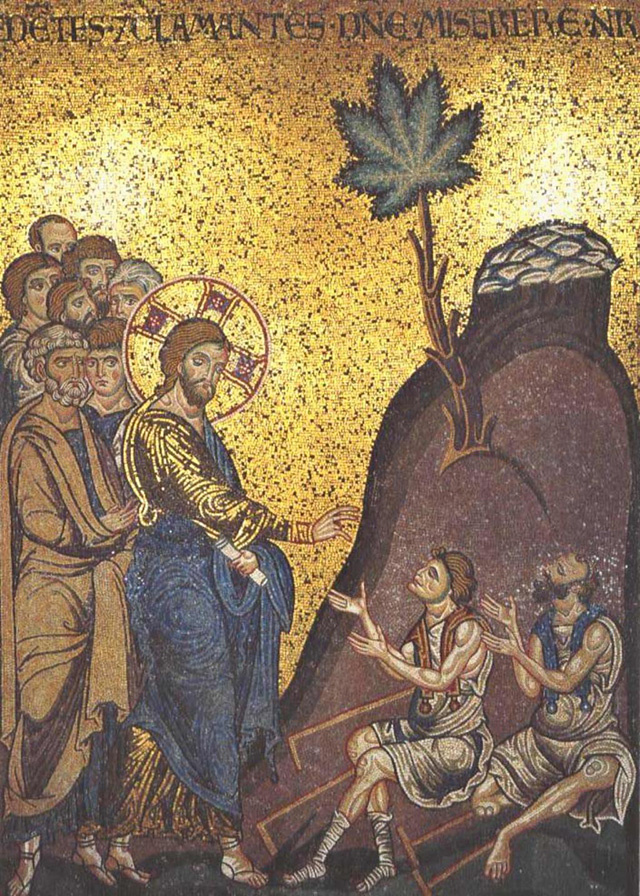


 Sign of the Rose