Tag Archives: Thirsting for God

Psalm 126 Carrying in the Sheaves Planted in Tearful Moments

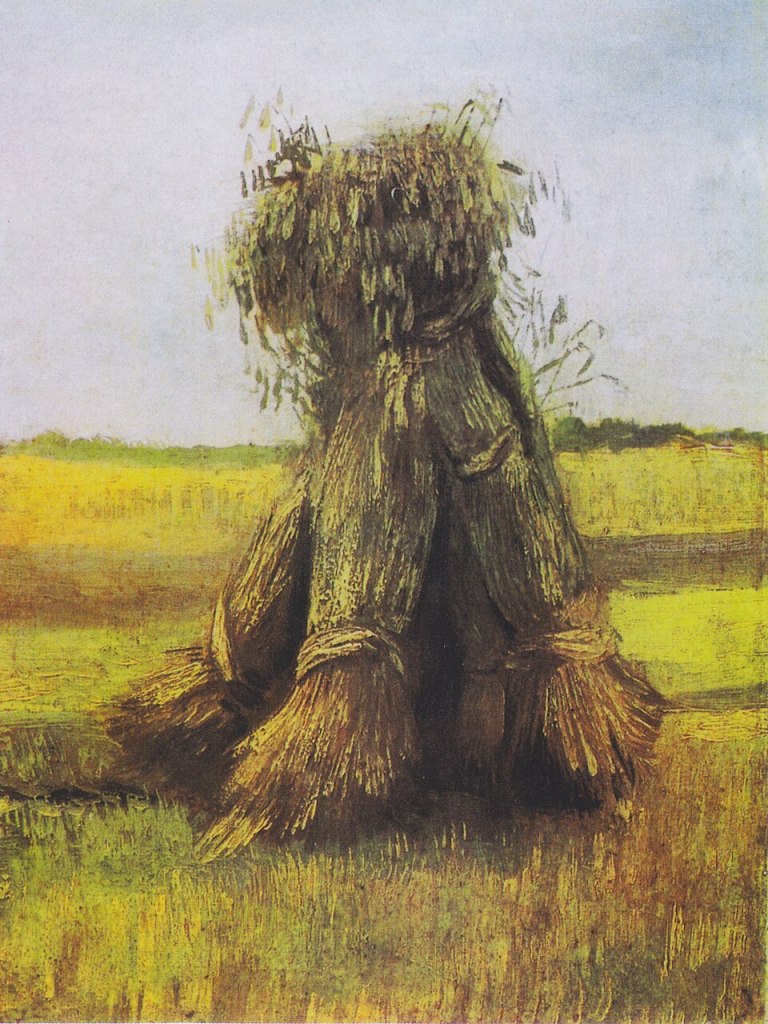
Wheatsheaves in a Field (1885) by Vincent van Gogh

Psalm 126

A Song of Ascents.

1When the LORD restored the fortunes of Zion,
  we were like those who dream.
2
Then our mouth was filled with laughter
  and our tongue with shouts of joy;
 then it was said among the nations,
  “The LORD has done great things for them.”
3
The LORD has done great things for us,
  and we rejoiced.

4
Restore our fortunes, O LORD,
  like the watercourses in the Negeb.
5
May those who sow in tears
  reap with shouts of joy.
6
Those who go out weeping,
  bearing the seed for sowing,
 shall come home with shouts of joy,
  carrying their sheaves.

Bolded words have notes on translation below.

Psalm 126 follows a common pattern in the psalms and throughout the scriptures. It begins with a remembrance of the ways God has acted on behalf of the people in the past and then moves to an appeal for God’s action in the troubles of the present. As J. Clinton McCann Jr. states, “We live in the hope of God’s help always remembering what God has done in the past…and always anticipating what God will do in the future.”(NIB III:1196) The imagery of sowing and reaping have led to the Psalm’s usage on Thanksgiving Day in worship (Year B in the Revised Common Lectionary) and it inspired Knowles Shaw’s song “Bringing in the Sheaves.”

The psalm is structured around two uses of a Hebrew idiom translated “restored our fortunes” in the NRSVue. The phrase is difficult to render in English and has led to a wide variety of translations, but in the prophets it relates to the change in condition brought about by God turning away from God’s wrath and again regarding the people with favor. (Mays, 1994, p. 399) The use of the phrase often refers to the return of the exiles to the homeland of Israel (Deuteronomy 30:3; Jeremiah 30: 3, 18; 32:44; Ezekiel 39:25) and here it may also refer to a homecoming of the exiles from Babylon. (NIB III: 1195) The specific context that the psalm originally spoke to is not required for the reader to understand the relief and joy of those who have experienced the great things God has done for the people of the psalmist. The dreamy state of the remembered joy and laughter of the people emerges from the ways God has provided for and protected the people in the past. From the memory of what God has done in the past comes the hope of God’s action in the present.
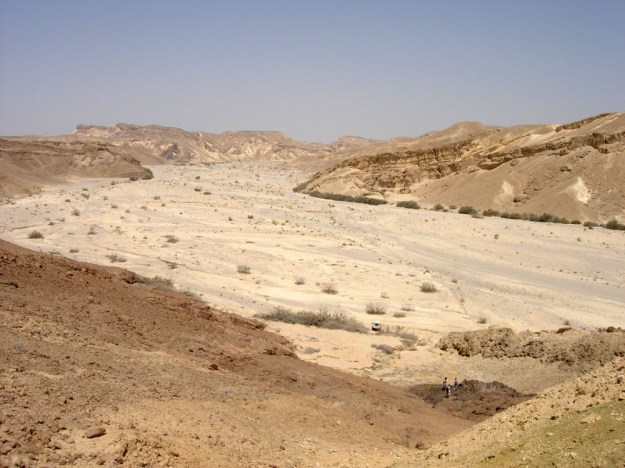
Wadi in Nahal Paran, Negev, Israel By Wilson44691 at English Wikipedia – Photograph taken by Mark A. Wilson (Department of Geology, The College of Wooster).[1], Public Domain, https://commons.wikimedia.org/w/index.php?curid=3140024

The experience of the present is one described metaphorically by the dry watercourses of the Negeb. During the rainy season these creek beds are filled with water but now in the metaphor of the psalm they are dry. Psalm 42 used the imagery of thirsting for water as a metaphor for thirsting for God’s presence:

As a deer longs for flowing streams, so my soul longs for you, O God. Psalm 42:1

The prophet Joel will also use a similar image:

In that day the mountains shall drip sweet wine, the hills shall flow with milk, and all the stream beds of Judah shall flow with water; a fountain shall come forth from the house of the LORD and water the Wadi Shittim. Joel 3:18

It is possible as Walter Beyerin argues that the author of Psalm 126 utilized Joel as a source of imagery as the psalmist, in his reconstruction, attempts to deal with the disappointment that prevailed in Judah after the return from Babylon (NIB III: 1196) but the beauty of the psalms is their ability to fit circumstances frequently encountered in life. Most people can relate to the imagery of drought in the personal, relational, economic, and spiritual struggles of life. The desire for the tears of today to turn to shouts of joy and a desire for the pain of the present to have some harvest of meaning in the future. To live in anticipation that the God who brings an end to the dryness of the watercourses of the Negeb will also turn tears into joy as people come in carrying the sheaves planted in these moments of hardship.
Psalm 63 Hungering and Thirsting for God’s Presence

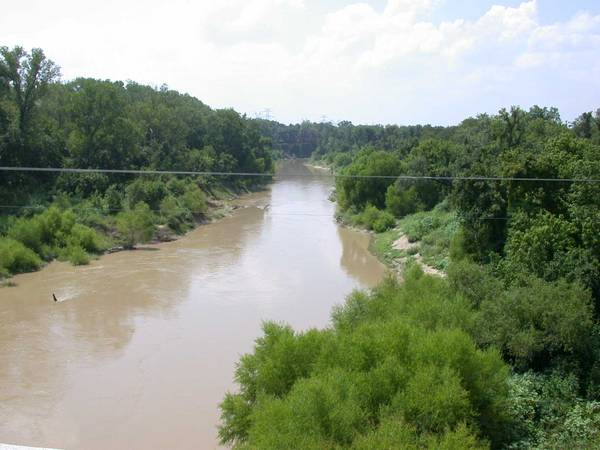
Trinity River in Texas

Psalm 63

<A Psalm of David, when he was in the Wilderness of Judah.>
1 O God, you are my God, I seek you, my soul thirsts for you; my flesh faints for you, as in a dry and weary land where there is no water.
2 So I have looked upon you in the sanctuary, beholding your power and glory.
3 Because your steadfast love is better than life, my lips will praise you.
4 So I will bless you as long as I live; I will lift up my hands and call on your name.
5 My soul is satisfied as with a rich feast, and my mouth praises you with joyful lips
6 when I think of you on my bed, and meditate on you in the watches of the night;
7 for you have been my help, and in the shadow of your wings I sing for joy.
8 My soul clings to you; your right hand upholds me.
9 But those who seek to destroy my life shall go down into the depths of the earth;
10 they shall be given over to the power of the sword, they shall be prey for jackals.
11 But the king shall rejoice in God; all who swear by him shall exult, for the mouths of liars will be stopped.

Trust in the midst of trouble has been a common theme in this portion of the book of Psalms. Sometimes the trouble precedes a turning to trust in the life of the psalmist, but sometimes the psalmist begins in trust and then addresses their troubles to God. This Psalm, which is attributed to David’s time in the wilderness when he was hunted by Saul, begins with a thirst and hunger to experience God’s presence like the psalmist experienced in the past. Yet, even though the psalmist longs for God’s presence and desires to share a rich feast in the security of God’s love and protection, they trust that their life is upheld by the power and protection of God.

We have previously seen the metaphor of thirsting for God’s presence at the beginning of Psalm 42, where the nephesh[1]pants for God like a deer pants for water. Once again the nephesh thirsts for God and the flesh faints for God. The psalmists entire being is weakened by the perceived absence of God’s presence like a person wandering in a hostile wilderness may be threatened by the harsh sun, unforgiving winds, and the lack of water. The psalmist is able to look back on times where they encountered the presence of God in the tabernacle or temple and came to know the hesed (steadfast love) of God. This encounter with the presence and love of God made a powerful impression on the psalmist, causing them to understand that the proper response was to dedicate their life to blessing and living in prayerful thanksgiving to their God.

The metaphor now shifts from thirst to hunger as the nephesh is satisfied with a rich feast.[2] Much as the feast of Thanksgiving in the United States was intended to give thanks to God for the abundance of harvest, now the psalmist participating in this festive meal, probably understood as taking place within the context of sacrifice, responds with lifting up praises with joyful lips. Hunger and thirst sated, now the psalm moves to the bed where the psalmist can rest in the peace provided by God’s protection and can lay down with a joyful song on their lips. They may experience hunger and thirst, but they trust that God will provide for the needs of their body and life. They can go to sleep even in the midst of their enemies continuing to make trouble because their God is a God of steadfast love and protection.

Only in the final three verses does the external threat of the enemy make its appearance, but in contrast to the experience of the faithful one their future is, through the eyes of the psalmist, one of shame and silence. The psalmist trusts that they will be surrounded by the presence of God, but their enemies will ‘go down’ to the depths of the earth-a place perceived to be distant from God. Their lives may have been lived violently, and the psalmist trusts that they will end violently, and they will end up the prey of scavengers who wander the wastelands. The voice of the psalmist will be lifted up in praise but the mouths of the liars who oppose him shall be silenced. Perhaps the ending of the psalm seems vengeful, but vengeance is left in God’s hands. Ultimately the threat of the psalmist’s enemies are real but they trust in the protection of their God to deal with these threats and they look forward to being in the holy spaces and lifting up their voice as they wonder and marvel at the presence and steadfast love of God which satisfies their thirst and sates their hunger.

[1] The Hebrew nephesh is often translated soul, but a Hebrew understanding of this word is closer to ‘my life’ or ‘my whole being.’

[2] Literally fat and fatness.