Tag Archives: Reading

Review of the Girl in the Tower by Katherine Arden (2018)

Five Star Book Review

Katherine Arden, The Girl in the Tower

For me a five-star book is something that either I want to read again or something that is so profound it makes an immediate impact. There are lots of ways that books can be compelling: a unique idea, an interesting set of characters, a complex plot, an artistic use of the English language and more. Reading is also a subjective experience, so what appeals to me as a reader may be very different for you. I read a lot for both pleasure and work, but these short reviews are a way for me to show my appreciation for the work and the craft of the author of the reviewed work.

The Girl in the Tower is the middle book of the Winternight Trilogy, and it picks up in the aftermath of The Bear and the Nightingale. Vasya and her magnificent horse Solovey now set off to travel away from her home of Lesnaya Zemla where her father can no longer protect her from being viewed as a witch. She sets off on a journey as a traveler but quickly finds herself rescuing girls stolen by bandits and reunited with her brother Sasha who is a monk, a renowned warrior, and a trusted advisor of the crown prince of Moscow. She disguises herself as a boy and her brother, and later her sister Olya in Moscow, are caught up in this deception. From pursuing bandits raiding small villages in the woods to the world of court in Moscow and the appearance of the strange noble Kasyan this is a story with an even richer world than The Bear and the Nightingale. One of the things I appreciate about this story is that it is honest about the danger of Vasya as a woman attempting to navigate a different path where the only two options available for women are marriage and the convent.  

Katherine Arden does a remarkable job of portraying the world of this story. A time where Russia still owed allegiance to the Tatars but is beginning to yearn for independence, when the Russian Orthodox church reigns supreme in Moscow but the old practices and myths still have a hold in the rural areas. It is a winter story, but it is also a story of winter losing its hold to spring. For Vasya it is also a coming-of-age story and I appreciate the tension in the relationship between Vasya and the Winter King Morosko, but that there is an acknowledgement that this cannot be a simple love story. In the words of the characters:

                “Love?” he (Mososko) retorted. “How? I am a demon and a nightmare; I die every spring, and I will live forever.”

                She waited.

                “But yes,” he said wearily. “As I could, I loved you. Now will you go? Live.”

                “I, too,” she said. “In a childish way, as girls love heroes that come in the night, I loved you.” (336)

Even in a world that still has a little magic in it, maidens do not easily surrender their hearts to myths nor do inhuman ‘gods’ warm quickly to the maiden. Yet, Katherine Arden does a remarkable job of creating the tension which is formed by their bond. I really enjoy this mixture of fantasy with historical fiction and myths and folk stories of medieval Russia. I wrote in my review of The Bear and the Nightingale that the story felt like returning to a home I never knew, and the characters and environment made me feel at home with them once again in this second book of the Winternight trilogy. I look forward to returning to The Winter of the Witch later this year.  

Review of Project Hail Mary by Andy Wier

Five Star Book Review: Project Hail Mary by Andy Wier

For me a five-star book is something that either I want to read again or something that is so profound it makes an immediate impact. There are lots of ways that books can be compelling: a unique idea, an interesting set of characters, a complex plot, an artistic use of the English language and more. Reading is also a subjective experience, so what appeals to me as a reader may be very different for you. I read a lot for both pleasure and work, but these short reviews are a way for me to show my appreciation for the work and the craft of the author of the reviewed work.

Project Hail Mary was a delightful journey with Dr. Ryland Grace on a last chance mission to save humanity from a failing sun caused by a previously unknown species. The story cleverly combines Dr. Grace’s experiences in the Tau Seti system as the sole survivor of the ship named Hail Mary and flashbacks to his role in the discovery of the problem, the conception of a solution and his surprising inclusion on the interstellar mission. This is a novel that is science fiction, heavy on science, but in a delightfully geeky way that allows a non-scientist to enjoy with the scientific main character. Both the portions that take place on earth as well as the portions that occur in space tell a very human story of fear, loneliness, the joy of discovery, and hope. Without providing spoilers, the book is full of unexpected discoveries and friendships, and Ryland Grace is a character who is easy to enjoy as you experience the discoveries, both scientific and personal, through his eyes.

Andy Wier does a great job of creating a book that is a joy to read. He strikes a great balance between science and storytelling. His curiosity expresses itself through his characters and he does a miraculous job of making the scientific experimentation that the story depends upon both accessible and interesting. I listened to the audio version of Project Hail Mary and there are some added benefits to this version of the book which I can’t adequately express without providing some spoilers. One of my sisters gave me this book as a gift after she had enjoyed it, and I thoroughly enjoyed it as well. Great characters caught in an epic journey who are unapologetic in their curiosity about their world. A very human story of space, discovery, curiosity, and hope.

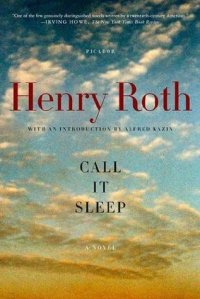
A Review of Call it Sleep by Henry Roth (1934)

Time Magazine Top 100 Novels

Book 18: Call it Sleep by Henry Roth

This is a series of reflections reading through Time Magazine’s top 100 novels as selected by Lev Grossman and Richard Lacayo published since 1923 (when Time magazine was founded). For me this is an attempt to broaden my exposure to authors I may not encounter otherwise, especially as a person who was not a liberal arts major in college. Time’s list is alphabetical, so I decided to read through in a random order, and I plan to write a short reflection on each novel.

Call it Sleep follows a young Jewish boy, David Schearl who immigrates to the United States with his mother Genya. Upon arriving he is introduced to his emotionally unstable and unloving father Albert Schearl. Young David struggles to engage with other children and adults and Henry Roth does a good job of writing a story from the perspective of an early elementary age boy. David is an innocent in a rough world, and he fears both the world outside and of his violent father. The place of an innocent in a fallen and rough world seems to animate the narration as David continually finds himself in situations he is unprepared for. From a neighbor girl who wants to play ‘bad’ to an older Gentile boy who takes advantage of David’s desire for attention to put himself in a position to take advantage of one of David’s cousins. Central to the story is a secret his mother tells her sister, which David overhears, about being in love with a Christian organ player to the disgrace of her family. The one place where David fits in is in chedar, a one room Hebrew school for young boys. David has a talent for Hebrew recitation and it also curious about the little bit of insight into God he receives from Reb Pankower, but this is also where David allows his interpretation of his mother’s secret to slip out to disastrous effects. When a rabbi who hears David’s confession brings it to his mother and father it creates an explosive crisis in the home.

Every book is not for every reader, and when a story fails for me, I often wonder what it is that makes me not the best reader of the book, particularly a book other intelligent readers have enjoyed. Part of my struggle was the language of dialogue between the young people in the narrative in broken English which made it more difficult to follow. The lines spoken in Yiddish are translated into easily read English, but Henry Roth attempts to copy the slang and accent of English spoken in the Jewish ghettos of the early 1900s. I can also appreciate Henry Roth’s ability to convey the mental state of a young boy, but young David is an unreliable interpreter of the world around him. I can understand why young David is fearful, and I appreciate the way his perspective sheds light on the immigrant experience, but it also made for a dull read. Call it Sleep was ultimately a book I could appreciate but not one I enjoyed.

The Art of Happiness

The Art of Happiness

The point in a workout when the sweat pours from your body
And the blood thrums in your veins as the muscles add
Their melody of vitality to a percussive beat as salty streams
Run towards the floor and everything else can wait
While your clear mind listens to the body’s song of life
 
The scent of baked muffins fills the house with a sweet fragrance.
Each one warm from the oven, soft and fluffy to the touch
As it crumbles in your mouth it releases its domestic magic
Awakening the tongue to taste and savor. Its small gift.
The alchemy of baking awakens a little taste of joy.
 
An auditorium full of people sings along each individual
Knowing each word, each note as they sing together.
Echoing the band, entering the communal euphoria
Of a people united around this moment in melody.
A song that strikes a common chord of shared humanity.
 
When a story catches its stride and grabs hold of the reader
The words have transformed from characters upon the page
To fellow travelers on a shared journey on the canvas of the mind,
As real as the world forgotten beyond the pages of the book.
While you share the dream of the author and live another life.
 
So many possible paths into happiness, and yet no path is a guarantee:
If the body is alienated from itself and no longer dances,
When food becomes merely fuel for the body something consumed,
If a broken heart is too heavy with grief to join in the beloved song,
When the story you enter is written for another reader.
 
Psychology can seek the science of happiness knowing what causes it.
I prefer the art of happiness with its messy brushstrokes on canvas,
Its awkward first steps learning to dance, listening to the emotions,
Taking a mental photo of each moment as it comes and delighting in it.
Grateful for the surprise of joy and slowing down to let it engulf the moment.

Three Metaphors at a Closing of a Story: Part 1 Diverging Paths

The story ends, as all stories eventually do
A door closes, a world comes to its conclusion
And I stand watching as the words that conjured it
Sink slowly into the deep sea of memories.
Its characters who became my companions on the road.
I have known their names, I have shared their dreams
I supped at their table and walked their winding way
But they now recede with their world as my path diverges
Their story ends and mine continues forward
And I have been changed on this journey through their world
Rarely do I walk out of a story unaltered by its magic
I’ve seen another world and talked with its denizens
Yet, other worlds beckon from the shelves invitingly
There is a beautiful, tearful, strange magic in these words
Which invoke such vivid reactions in my mind
It’s time to close the book, maybe someday I’ll return
To share this journey once again, to rekindle friendships lost
And rediscover the people and place in these pages.