Tag Archives: Psalm 60

Psalm 108 Old Words Brought Together For A New Time

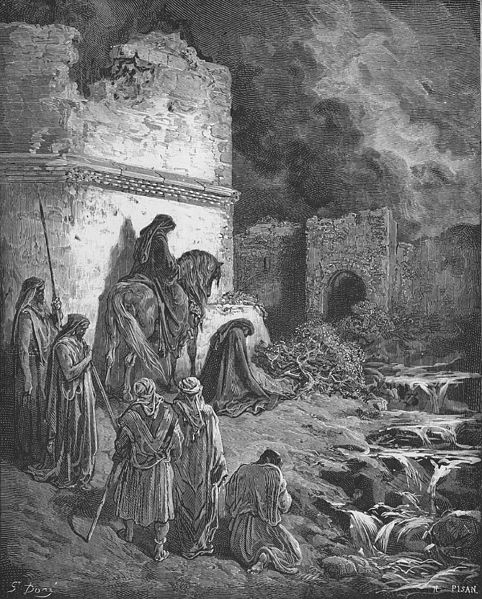
Nehemiah View the Ruins of jerusalem’s Walls, Gustav Dore 1866

Psalm 108

A Song. A Psalm of David.
 1My heart is steadfast, O God, my heart is steadfast; I will sing and make melody. Awake, my soul!
 2Awake, O harp and lyre! I will awake the dawn.
 3I will give thanks to you, O LORD, among the peoples, and I will sing praises to you among the nations.
 4For your steadfast love is higher than the heavens, and your faithfulness reaches to the clouds.
 5Be exalted, O God, above the heavens, and let your glory be over all the earth.
 6Give victory with your right hand, and answer me, so that those whom you love may be rescued.
 7God has promised in his sanctuary: “With exultation I will divide up Shechem, and portion out the Vale of Succoth.
 8Gilead is mine; Manasseh is mine; Ephraim is my helmet; Judah is my scepter.
 9Moab is my washbasin; on Edom I hurl my shoe; over Philistia I shout in triumph.”
 10Who will bring me to the fortified city? Who will lead me to Edom?
 11Have you not rejected us, O God? You do not go out, O God, with our armies.
 12O grant us help against the foe, for human help is worthless.
 13With God we shall do valiantly; it is he who will tread down our foes.

Psalm 108 brings together portions of two psalms attributed to David for a new time. Most interpreters believe that Psalm 57: 7-11 and Psalm 60: 5-12 were written before they were later joined together in the current psalm. This is a common practice in scripture where a key idea or phrase is utilized in multiple contexts[1] but here the entirety of the psalm is a composition of two previous psalms. Psalm 57: 7-11 forms the initial five verses while Psalm 60: 5-12 forms the final eight verses. Based on the position of Psalm 108 in book five of the Psalter the new situation may involve the return of the people to their home after the exile, but even without knowing a concrete situation for the invocation of these words from earlier psalms it points to the long-standing resonance and vitality of these words in the life of the people.

The heart (the organ of will in Hebrew) is steadfast and the proper response to the steadfast love of God is for the entirety of one’s being to respond in praise and song. The steadfast love (hesed) and the faithfulness of God are beyond measure and the psalmist’s gift of song echoes the chorus of a grateful creation to its creator. The joyous ending of Psalm 57 introduces the petition of verse six which initiates the quotation of Psalm 60.

The psalms are spoken from the embodied experience of the covenant people, and that experience involves times where God’s promise and presence feel distant. The beloved ones of God have always understood their continued existence was contingent on God’s continual provision. As in a previous time the people do not need a stronger army or a better military technology, they need the God who reigns over both Israel and the surrounding nations, to come to their aid. As J. Clinton McCann Jr. can articulate.

Their prayer is not that of the powerful, who seek to claim God’s sanction of the status quo. Rather, their prayer is the desperate prayer of those who turn to God as the only possible hope in an apparently hopeless situation (v. 11) (NIB IV:918)

If these words reemerge in the fragile situation of the post-exilic return to Jerusalem where the people are threatened by hostile neighbors, the reminder that Moab, Edom, and Philistia are all under God’s claim[2] is a source of comfort. Yet, the people who claim the title of ‘those whom you love’ now feel the abandonment of God. God no longer goes out with the people or defends them, but they cry out to God for God’s renewed favor.

The psalms understand the dependence of the people upon God’s continual provision but also speak eloquently about the perception of God’s absence. This psalm utilizes two previously utilized psalms to speak of the trust in God’s steadfast love and faithfulness in a time where they feel endangered by God’s absence. Yet, the perception of God’s distance causes the beloved ones of God to cry out to God for deliverance from their current distress. For they can do nothing on their own, but with God they shall do valiantly.


[1] For example, 1 Chronicles 16 brings together Psalm 105: 1-11 and Psalm 106: 35-36, of Isaiah 2: 2-4 is repeated in Micah 4: 2-3. There are numerous other examples of parallels.

[2] The designation of Moab as washbasin, Edom as a place where shoes are hurled, and Philistia as one that the LORD shouts in triumph over may be intended as an insult to these nations, but it also may simply be a way of designating that they too remain under God’s control. Moab, Edom, and Philistia all incur words of judgment in the prophets (Ezekiel 25, Jeremiah 4748, Obadiah 12-13).  

Psalm 60 A Plea for God’s Return to the People

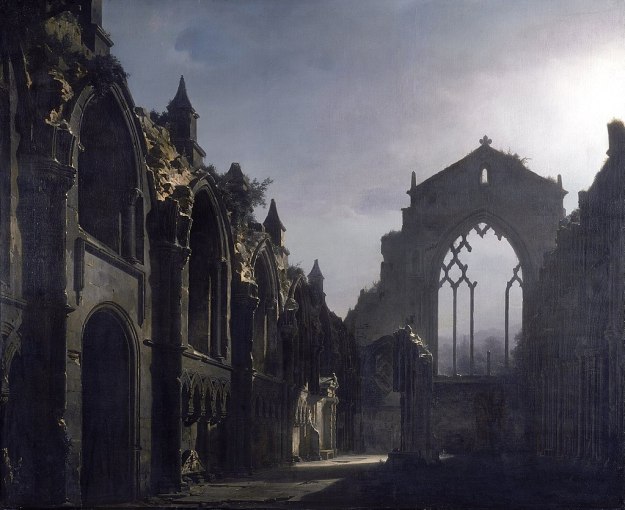
The Ruins of Holyrood Chapel by Louis Daguerre (1824)

Psalm 60

<To the leader: according to the Lily of the Covenant. A Miktam of David; for instruction; when he struggled with Aram-naharaim and with Aram-zobah, and when Joab on his return killed twelve thousand Edomites in the Valley of Salt.>
1 O God, you have rejected us, broken our defenses; you have been angry; now restore us!
2 You have caused the land to quake; you have torn it open; repair the cracks in it, for it is tottering.
3 You have made your people suffer hard things; you have given us wine to drink that made us reel.
4 You have set up a banner for those who fear you, to rally to it out of bowshot. Selah
5 Give victory with your right hand, and answer us, so that those whom you love may be rescued.
6 God has promised[1] in his sanctuary: “With exultation I will divide up Shechem, and portion out the Vale of Succoth.
7 Gilead is mine, and Manasseh is mine; Ephraim is my helmet; Judah is my scepter.
8 Moab is my washbasin; on Edom I hurl my shoe; over Philistia I shout in triumph.”
9 Who will bring me to the fortified city? Who will lead me to Edom?
10 Have you not rejected us, O God? You do not go out, O God, with our armies.
11 O grant us help against the foe, for human help is worthless.
12 With God we shall do valiantly; it is he who will tread down our foes.

While writing to his friend Eberhard Bethge from Tegel military prison in 1944, Dietrich Bonhoeffer wrote, “The same God who is with us is the God who forsakes us (Mark 15:34!)” (DBWE 8: 479) Though Bonhoeffer was discussing how he, and other faithful Christians, were to live before God in a world that seems to manage without God, his phrasing could also apply to this psalm where the critical issue is the perceived abandonment of the covenant people at a critical moment by their God. The psalms are theological enough to rest on the conviction of God’s active presence and participation, but they are poetic enough to speak eloquently about the experience of God’s absence, abandonment, and rejection.

The superscription of this psalm seems to be disconnected from the content of the psalm itself. The superscription refers to a string of events in 2 Samuel 8 (and 1 Chronicles 18) when David and his armies are experiencing a time of the LORD’s favor and, “the LORD gave victory to David wherever he went.” (2 Samuel 8:14) Yet the psalm is clearly about a time where the people are not experiencing the LORD’s favor and are speaking in the aftermath of defeat searching for answers. This communal prayer contrasts the experience of God’s previous provision with the brokenness of their current plight.

In the theological world of the Bible the existence of the covenant people is contingent upon the continued provision and care of the God of Israel. They may have suffered a defeat from one or multiple of the surrounding kingdoms of Moab, Edom, or Philistia, but the theological claim that the psalmist makes is that this defeat is symptomatic of their rejection by their God. It is not better military technology or strategy that will change the plight of the defeated covenant people. Their need as expressed in this prayer is that God to return to their side and protect them. There are numerous incidents in the story of Israel where the scriptures narrate a military defeat theologically as a judgment by God or a time where God’s presence has not gone with the people.[2] The bible consistently provides a theological interpretation of history, judging kings and times for their faithfulness to the covenant instead of their wealth, power, or military prowess. In this psalm, it is God who has rejected the people, breached their defenses and broken the land itself. Although the people may have external opponents it is God who has caused them to suffer and given them the ‘wine of reeling.’[3]

There is an abrupt transition in verse four where God’s role changes to being once again the one who provides a safe place for the people to rally under. Perhaps this is the psalmist speaking in hope or perhaps it is a desperate plea, but it remains consistent with the psalmist’s worldview that the problem is God’s rejection which can only be resolved by God’s initiative. In Hebrew verse five ends with the imperative “answer” setting up what “God has spoken.” God’s answer reinforces the psalmist’s worldview that God is not merely the God of Israel, but the God of all the nations. Not only are the places of Israel (verses 6-7) but also Israel’s opponents (verse 8) under God’s authority. The language about Moab, Edom, and Philistia may be intended as an insult of these nations or they may simply be extending the image of God’s possession and claiming of each of these nations that surround Israel as well.

The nation still finds themselves in conflict and unable to oppose their foes. They are not going to enjoy success against the defenses of their opponents until God’s rejection ends and God once again goes out with the armies of the covenant people. It would be easy to dismiss this prayer as an appeal to divine authorization of the wars of the people, and in a conflicted history of Israel there are times where it would be appealing to combine military might and strategy with a divine mandate. Yet, Israel has never been a superpower and they were to rely upon God for their survival in the ancient world. As J. Clinton McCann Jr. can articulate.

Their prayer is not that of the powerful, who seek to claim God’s sanction of the status quo. Rather, their prayer is the desperate prayer of those who turn to God as the only possible hope in an apparently hopeless situation (v. 11) (NIB IV:918)

In a violent world the covenant people were to learn to rely upon their God’s continual strength, protection, and provision. In this moment of crisis, in the psalmist’s view, God has not upheld God’s responsibility to the covenant and no justification for this absence is given. This psalm boldly calls upon God to act on behalf of the covenant people and to restore them once again and grant them victory over the foes that oppose them.

[1] The NRSV takes a less literal approach here in its rendition of these words as God has promised from his sanctuary. There is the possibility of understanding this as a ‘brief sermon’, but the more literal reading of the Hebrew rendered by the NIV as “God has spoken from the sanctuary” places this as a plea for an answer responded to by God’s voice from the sanctuary. (NIB IV:916)

[2] Examples of this include Numbers 14:41-45, and Judges 2: 11-15. This theological interpretation of history permeates the narration of Israel’s story throughout historical books (Joshua-Esther) and also often appears in the prophets.

[3] This theme of the wine of reeling or cup of judgment also appears in Isaiah 51:22 (where this wine is to be passed now to the enemies of the people) and Jeremiah 25:15-17(although the language in Jeremiah is slightly different the image is employed in the same manner).