Tag Archives: Prophet Ezekiel

Ezekiel 12 Judgment on the Leaders and People of Jerusalem

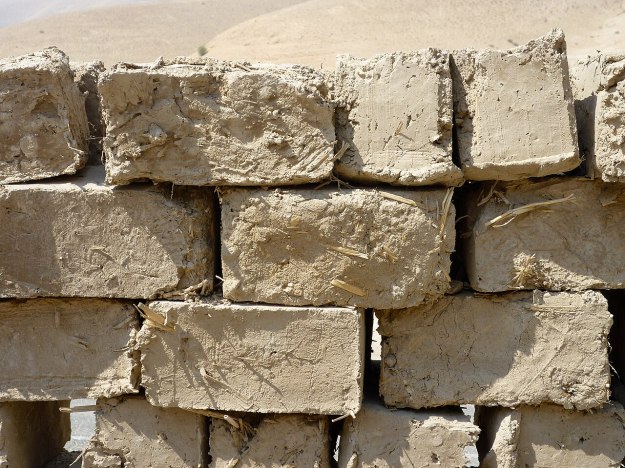
New, unlaid mudbricks in the Jordan ValleyWest Bank Palestine, (2011) By Whiteghost.ink – Own work, CC BY-SA 3.0, https://commons.wikimedia.org/w/index.php?curid=16303999

Ezekiel 12

Ezekiel 12: 1-16 Zedekiah’s End Enacted

1 The word of the LORD came to me: 2 Mortal, you are living in the midst of a rebellious house, who have eyes to see but do not see, who have ears to hear but do not hear; 3 for they are a rebellious house. Therefore, mortal, prepare for yourself an exile’s baggage, and go into exile by day in their sight; you shall go like an exile from your place to another place in their sight. Perhaps they will understand, though they are a rebellious house. 4 You shall bring out your baggage by day in their sight, as baggage for exile; and you shall go out yourself at evening in their sight, as those do who go into exile. 5 Dig through the wall in their sight, and carry the baggage through it. 6 In their sight you shall lift the baggage on your shoulder, and carry it out in the dark; you shall cover your face, so that you may not see the land; for I have made you a sign for the house of Israel.

7 I did just as I was commanded. I brought out my baggage by day, as baggage for exile, and in the evening I dug through the wall with my own hands; I brought it out in the dark, carrying it on my shoulder in their sight.

8 In the morning the word of the LORD came to me: 9 Mortal, has not the house of Israel, the rebellious house, said to you, “What are you doing?” 10 Say to them, “Thus says the Lord GOD: This oracle concerns the prince in Jerusalem and all the house of Israel in it.” 11 Say, “I am a sign for you: as I have done, so shall it be done to them; they shall go into exile, into captivity.” 12 And the prince who is among them shall lift his baggage on his shoulder in the dark, and shall go out; he shall dig through the wall and carry it through; he shall cover his face, so that he may not see the land with his eyes. 13 I will spread my net over him, and he shall be caught in my snare; and I will bring him to Babylon, the land of the Chaldeans, yet he shall not see it; and he shall die there. 14 I will scatter to every wind all who are around him, his helpers and all his troops; and I will unsheathe the sword behind them. 15 And they shall know that I am the LORD, when I disperse them among the nations and scatter them through the countries. 16 But I will let a few of them escape from the sword, from famine and pestilence, so that they may tell of all their abominations among the nations where they go; then they shall know that I am the LORD.

Ezekiel’s sign-acts are designed, by the nature of their strangeness, to garner attention. In a world before internet influencers who attempt to draw attention to themselves for fame and money, prophets like Ezekiel did outlandish and sometimes destructive acts to call attention to a message God wants the people to talk about and share. Especially for a message which will need to be transmitted (in a world without telephones, new reports, or even a newspaper or regular mail) from the exiles in Babylon to the people of Jerusalem requires it to be memorable and significant. Ezekiel’s action of preparing an exile’s baggage, digging a hole in the wall of his house, entering the house with the baggage through the hole he created and then exiting at night by the same whole leaves his curious neighbors seeking an explanation for these actions, an explanation that he communicates from the LORD.

Throughout the passage the contrast between sight and the lack of sight, light, and darkness, “presents a fascinating study in perception and blindness.” (Block, 1997, p. 365) Christian readers will be familiar with Jesus using identical language to Ezekiel’s description of Israel as those “who have eyes to see but do not see, who have ears to hear but do not hear.” This type of language occurs multiple times in the prophets and the psalms. Ezekiel’s older contemporary Jeremiah says in Jerusalem:

Hear this, O foolish and senseless people. Who have eyes, but do not see, who have ears, but do not hear. (Jeremiah 5:21)[1]

And in the psalmist’s protest against idols:

Their idols are silver and gold, the work of human hands. They have mouths, but do not speak; eyes, but do not see. They have ears, but do not hear; noses, but do not smell. Psalm 115: 4-6

Like Isaiah and Jeremiah, Ezekiel’s message attempts to reach people who are blind and deaf to the implications of these divine messages. Yet Ezekiel’s actions are audacious enough to attract the curiosity of his fellow exiles even if they do not lead to repentance. As stated when Ezekiel is called, when these audacious sign-acts and words come to fruition the people will know that a prophet has been among them whether they hear or refuse to hear. (Ezekiel 2:5)

Ezekiel prepares his exile’s baggage[2] and visibly places it on they outside of his house and then proceeds to dig a hole in the wall of his house.[3] The exiles may have interpreted his actions positively as an end to their exile and a return to their homes in Judah. Yet, Ezekiel’s actions of preparing his baggage, digging through the wall, placing his baggage on the inside, and then departing through the hole in the wall at night will be interpreted the next morning for those who are curious enough to see the prophet’s action and hear its interpretation.

The interpretation involves the people still in Jerusalem and in particular king Zedekiah. Zedekiah is never named in Ezekiel and is referred to here as prince (Hebrew navi) rather than king (Hebrew melek). Zedekiah is the target of prophecy for the first time in Ezekiel. Prior to this Ezekiel only referred to the exile of King Jehoichin and the elders acting unfaithfully in Jerusalem. The temple, the city of Jerusalem and the land have all received judgment, but now the appointed leader in Jerusalem is singled out. The prophet Jeremiah had extensive interactions with Zedekiah in Jerusalem (Jeremiah 32-34, 37-38) and narrates the ending of Zedekiah twice in the book of Jeremiah (Jeremiah 39, 52). 2 Kings shares an identical description of Zedekiah’s end:

Then a breach was made in the city wall; the king with all the soldiers fled by night by the way of the gate between the two walls, by the king’s garden, though the Chaldeans were all around the city. They went in the direction of the Arabah. But the army of the Chaldeans pursued the king, and overtook him in the plains of Jericho; all his army was scattered, deserting him. Then they captured the king and brought him up to the king of Babylon at Riblah, who passed sentence on him. They slaughtered the sons of Zedekiah before his eyes, then put out the eyes of Zedekiah; they bound him in fetters and took him to Babylon. 2 Kings 25: 4-7

The actions of Jeremiah foreshadow the actions of Zedekiah fleeing Jerusalem through a hole in the wall with the sword following him. Ezekiel’s prophecy indicates that the LORD is the one casting his net and setting a snare for Zedekiah and Babylon is merely the instrument.[4] The king does leave by a hole in the wall, is quickly captured, and then is taken to Babylon blinded. As the prophet indicates he is taken to Babylon, but he does not see it.

We live in an age where even many biblical scholars are skeptical of prophecy as prediction. Many scholars of the historical critical and source criticism school view prophesies which foretell later events as “prophecy after the fact” which are included in the compilation of the words of the prophets which may have occurred at a later date. This idea would have been foreign to the early readers of scripture who viewed the prophet as one who receives and transmits divine oracles in both word and action. The prophets’ predictions normally speak in generalities, but it is expected (as we will see in the resistance in the remainder of the chapter) that prophets would communicate coming events. Blinding captives was a widespread practice among the Babylonians, but believability based on common practices is not necessary for a prophet. A true prophet was a person who received a message or insight from God whose knowledge is not limited to the present and whose actions may include the actions through another nation as an instrument of God’s judgment or salvation.

Ezekiel 12: 17-20 Portraying a Traumatized People

17 The word of the LORD came to me: 18 Mortal, eat your bread with quaking, and drink your water with trembling and with fearfulness; 19 and say to the people of the land, Thus says the Lord GOD concerning the inhabitants of Jerusalem in the land of Israel: They shall eat their bread with fearfulness, and drink their water in dismay, because their land shall be stripped of all it contains, on account of the violence of all those who live in it. 20 The inhabited cities shall be laid waste, and the land shall become a desolation; and you shall know that I am the LORD.

In the next visual picture, the prophet demonstrates the traumatic nature of the events for those impacted by the LORD’s judgment of Jerusalem. One of the symptoms of prolonged stress and trauma is uncontrollable shaking, and in the public act of eating and drinking[5] and again the sign must be memorable enough to be communicated from Ezekiel’s position in exile to the remnant in Jerusalem. The judgment of the LORD echoes the covenant curses of Leviticus 26:43:

For the land shall be deserted by them, and enjoy its sabbath year by lying desolate without them while they make amends for their iniquity, because they dared to spurn my ordinances, and abhorred my statutes.[6]

Within Hebrew thought there is a connection between the people and the land, and the disobedience of the people has a negative impact on the land. In Leviticus the land is given a sabbath to recover from the damage incurred by the unfaithfulness of the people, but in Ezekiel the focus is on the impact on the people who will bear the fearful consequences of violence committed in the land.

Ezekiel 12: 21-28 The Time of Judgment is At Hand

21 The word of the LORD came to me: 22 Mortal, what is this proverb of yours about the land of Israel, which says, “The days are prolonged, and every vision comes to nothing”? 23 Tell them therefore, “Thus says the Lord GOD: I will put an end to this proverb, and they shall use it no more as a proverb in Israel.” But say to them, The days are near, and the fulfillment of every vision. 24 For there shall no longer be any false vision or flattering divination within the house of Israel. 25 But I the LORD will speak the word that I speak, and it will be fulfilled. It will no longer be delayed; but in your days, O rebellious house, I will speak the word and fulfill it, says the Lord GOD.

26 The word of the LORD came to me: 27 Mortal, the house of Israel is saying, “The vision that he sees is for many years ahead; he prophesies for distant times.” 28 Therefore say to them, Thus says the Lord GOD: None of my words will be delayed any longer, but the word that I speak will be fulfilled, says the Lord GOD.

Although the God presented throughout the book of Ezekiel is a God whose judgment will not be delayed much longer, the character of the God of Israel throughout scripture is a God who desires repentance. The patience of God in continuing to send prophets to warn the people of the consequences of their actions has continued to meet resistance from a people who no longer hear or see. The two proverbs that the LORD responds to in this final portion of the chapter speak to the belief among the speakers that the visions of the prophets come to nothing or they are for distant times. Unfortunately, what these proverb speakers fail to realize is that the time of judgment being delayed is closing and they will soon see these prophecies of doom fulfilled.

Throughout the bible, the patience of God has allowed an opportunity for the wicked to turn from their ways. This patience often has a cost for the righteous, the society, and as mentioned above even the land and God’s costly patience is not infinite. Prophets throughout the bible have encountered rejection[7] as well as dealing with false prophets[8] who often echoed royal or popular desires. The combination of divine patience and conflicting message made it difficult for the population to take the challenging message of Jeremiah and Ezekiel as seriously as they merited. This combination of factors has led to the illusion that God’s judgment will either not come or will be delayed for a future generation to deal with. Ezekiel attempts to communicate with a people who no longer listen with the urgency of the prophecy he has received.

[1] Similar language is used in Isaiah 6:9-10, 43: 8.

[2] Literally “container of exile.” Probably a sort of knapsack to carry the essentials for a long journey. This would be familiar to the exiles who prepared similar baggage for their journey from Jerusalem to Babylon.

[3] The Hebrew qir used here is the word for the wall of a house. Homa is the Hebrew word for a defensive wall. The act of digging through the wall is reasonable because most structures in Babylon used bricks made from dried mud. (Block, 1997, p. 370)

[4] The same claim will be advanced with nearly identical wording in Ezekiel 17: 20.

[5] Eating in the ancient world was normally a communal activity not a private one, and the LORD using this as a prophetic sign act implies an audience to observe the sign act.

[6] A similar stripping of the land will occur in 32:15 (referring to Egypt) and 33:28(referring to Judah). Zechariah 7:10 uses the image of a desolated land in a similar way, while Jeremiah uses the image of a desolate land as the place where God will in the future will know joy and prosperity (Jeremiah 33:10) as he narrates a hopeful future after the exile.

[7] For example, the man of God from Judah (1 Kings 13) the prophets killed by Jezebel (1 Kings 18:4) and later the threat to Elijah (1 Kings 19) Zechariah (2 Chronicles 24: 20-22)

[8] The prophets may have been aligned with other gods like the prophets of Baal in 1 Kings 18 or simply proclaim a message that did not come from the God of Israel like Hananiah in Jeremiah 28.

Ezekiel 11 Judgment on Jerusalem and Hope for the Exiles

A smaller pithos, probably not semi-subterranean, as the decorative bands cover the entire body. There is a rope decoration around the neck; however, the body features distributed fasteners for handling via a rope harness. From Knossos, Crete 2004 Shared by CC 2.5 https://en.wikipedia.org/wiki/Pithos#/media/File:Aardewerk_knossos.JPG


Ezekiel 11: 1-13 The Judgment of the Jerusalem Leaders

1 The spirit lifted me up and brought me to the east gate of the house of the LORD, which faces east. There, at the entrance of the gateway, were twenty-five men; among them I saw Jaazaniah son of Azzur, and Pelatiah son of Benaiah, officials of the people. 2 He said to me, “Mortal, these are the men who devise iniquity and who give wicked counsel in this city; 3 they say, ‘The time is not near to build houses; this city is the pot, and we are the meat.’ 4 Therefore prophesy against them; prophesy, O mortal.”

5 Then the spirit of the LORD fell upon me, and he said to me, “Say, Thus says the LORD: This is what you think, O house of Israel; I know the things that come into your mind. 6 You have killed many in this city, and have filled its streets with the slain. 7 Therefore thus says the Lord GOD: The slain whom you have placed within it are the meat, and this city is the pot; but you shall be taken out of it. 8 You have feared the sword; and I will bring the sword upon you, says the Lord GOD. 9 I will take you out of it and give you over to the hands of foreigners, and execute judgments upon you. 10 You shall fall by the sword; I will judge you at the border of Israel. And you shall know that I am the LORD. 11 This city shall not be your pot, and you shall not be the meat inside it; I will judge you at the border of Israel. 12 Then you shall know that I am the LORD, whose statutes you have not followed, and whose ordinances you have not kept, but you have acted according to the ordinances of the nations that are around you.”

13 Now, while I was prophesying, Pelatiah son of Benaiah died. Then I fell down on my face, cried with a loud voice, and said, “Ah Lord GOD! will you make a full end of the remnant of Israel?”

In George Orwell’s famous short story Animal Farm the new leadership of the fictional farm ruled over by the animals quickly devolves as the pigs adopt the role of leaders. Napolean and the rest of the pigs soon take over the farmer’s house as their home and office. Instead of being compatriots who uphold the principles of animalism in the book, they become new masters willing to sell other animals for profit. Proverbs warns of the dangers of a dramatic change in leadership in its own manner:

Under three things the earth trembles; under four it cannot bear up: a slave when he becomes king, and a fool when glutted with food; an unloved woman when she gets a husband, and a maid when she succeeds her mistress. Proverbs 30: 21-23

The situation in Jerusalem that Ezekiel is visiting in this spiritual vision shows us the twenty-five men who are the new leaders in Jerusalem now that many of the leaders, priests, and counselors have been exiled to Babylon. Jaazaniah and Pelatiah and the remaining leaders who exercise authority in the absence of the exiles view themselves as safe within the city walls. In their view God’s judgment has fallen upon the exiles and they are now outside the pot, while they are the prime cuts left on the inside. To use a different metaphor, the city is now their oyster and they mean to extract the pearl of great price for their own profit.

When we think of the pot as a metaphor, it often is a place of difficulty rather than safety since pots are primarily used as instruments of cooking in modern kitchens. The image in Ezekiel is likely viewing the pot as a sealed vessel used for the storage of meat and other items, like the pithos in the image above, rather than primarily a vessel for cooking. (NIB VI: 1186) With the city walls functioning as the metaphorical pot that will keep the meat (these officials) safe they have run the city as ‘false shepherds’ as Ezekiel will later describe in Ezekiel 34: 1-10. The officials’ comments that “the time is not near to build houses” may indicate that building materials are needed to secure the city walls, but another insidious possibility is that these new officials are appropriating the property and wealth of the exiles and exploiting their new power to confiscate the property of the vulnerable within the city, as verse six seems to indicate. In the LORD’s view their actions have been death dealing to the very people they were entrusted to protect. They used their apparent safety and the power vacuum to enrich themselves at the expense of others, but their safety was an illusion.

God reverses their metaphor; they were the meat safe in the pot but now God has determined they are the spoiled portion that needs to be removed from the pot. These officials were probably exempted by their position from serving in the conflict around the walls, but now God promises to take them outside the walls and to expose them to the sword they have previously avoided. Like the pigs in Animal Farm who end the story indistinguishable from the surrounding farmers, these officials have acted like the nations around Israel. They have not cared for the vulnerable in the city, nor the exiles from their own people. As the prophet Micah would declare of leaders in his time, they became the butchers of the people:

And I said: Listen, you heads of Jacob and rulers of the house of Israel! Should you not know justice?—you who hate the good and love the evil, who tear the skin off my people, and the flesh off their bones; who eat the flesh of my people, flay their skin off them, break their bones into pieces, and chop them up like meat in a kettle, life flesh in a cauldron. Micah 3: 1-3

Throughout these chapters God has declared judgment upon the temple, the city, and the nation because of their unwillingness to live according to the way of God’s covenant. These leaders may have escaped the effects of the famine and conflict temporarily, but now they too will experience the consequences of their unjust actions while they were leading the people. Pelatiah, whose name means YHWH reserves a remnant, dies while Ezekiel is prophesying. Ezekiel protests to God that God is making a full end to the remnant of Israel.[1] Ezekiel’s protest results one of the first windows of hope in the book of Ezekiel.

Ezekiel 11: 14-21 Hope for the Exiles

14 Then the word of the LORD came to me: 15 Mortal, your kinsfolk, your own kin, your fellow exiles, the whole house of Israel, all of them, are those of whom the inhabitants of Jerusalem have said, “They have gone far from the LORD; to us this land is given for a possession.” 16 Therefore say: Thus says the Lord GOD: Though I removed them far away among the nations, and though I scattered them among the countries, yet I have been a sanctuary to them for a little while in the countries where they have gone. 17 Therefore say: Thus says the Lord GOD: I will gather you from the peoples, and assemble you out of the countries where you have been scattered, and I will give you the land of Israel. 18 When they come there, they will remove from it all its detestable things and all its abominations. 19 I will give them one heart, and put a new spirit within them; I will remove the heart of stone from their flesh and give them a heart of flesh, 20 so that they may follow my statutes and keep my ordinances and obey them. Then they shall be my people, and I will be their God. 21 But as for those whose heart goes after their detestable things and their abominations, I will bring their deeds upon their own heads, says the Lord GOD.

Ezekiel is the first prophet to a people in exile, and it is to the exiles that this vision of hope is imparted. The people of Jerusalem may have viewed the exiles as those removed far from the LORD, but the LORD imparts through the prophet that these are the ones who the hopeful future will come through. Although they have been removed from the physical presence of the temple, now the LORD promises to be their sanctuary in this time of exile. As Psalm 90, attributed to Moses, declares about the LORD, “Lord, you have been our dwelling place in all generations.” (Psalm 90:1) Their exile will not be forever, and they will be regathered by their God and returned to the land. There have been little windows into hope in the previous texts (Ezekiel 5:3, 6: 8-10) but those slivers of hope were surrounded by seas of darkness. In a further reversal, although the LORD has given up on those dwelling in Jerusalem, the remnant of the people is already in exile. The LORD will not abandon the land of Israel or the people.

This is the first time that Ezekiel will utilize the image of a ‘heart’ transplant: replacing a stony heart with a fleshy one. The heart in Hebrew thought is the organ of will, not emotions, so perhaps this is as much about a fleshy mind as a fleshy heart. Yet, Ezekiel will diagnose the problem with Israel as a heart problem, and only by replacing the sick and hard heart can there be a new life that is responsive to the LORD’s covenant and ordinances. This people of obedient and fleshy hearts will return and purify the land from the idols and detestable things that are present during this time. This renewed land and renewed people allow for the reestablishment of the covenant as the rearticulation of the covenant formula indicates: “Then they shall be my people, and I will be their God.”  As the prophet Jeremiah could state in a similar manner:

I will give them one heart and one way, that they may fear me for all time, for their own good and the good of their children after them. I will make an everlasting covenant with them, never to draw back from doing good to them, and I will put the fear of me in their hearts, so that they may not turn from me. I will rejoice in doing good to them, and I will plant them in this land in faithfulness, with all my heart and soul. (Jeremiah 32: 39-41)

Yet, for any who would not embrace this new future with a new heart and new faithfulness, their wicked deeds will not be exempted from the judgment Ezekiel proclaims.

Ezekiel 11: 22-25 The End of the Vision

22 Then the cherubim lifted up their wings, with the wheels beside them; and the glory of the God of Israel was above them. 23 And the glory of the LORD ascended from the middle of the city, and stopped on the mountain east of the city. 24 The spirit lifted me up and brought me in a vision by the spirit of God into Chaldea, to the exiles. Then the vision that I had seen left me. 25 And I told the exiles all the things that the LORD had shown me.

The LORD has left Jerusalem. Ezekiel never sees the glory of God move further than the mountains east of the city, although it has appeared to him in his exile in Babylon. Daniel and Revelation will assume that the presence of God is in heaven, but for Ezekiel God’s presence stops here and the vision ends with Ezekiel being returned to the exiles. Now the prophet shares this vision, both its terror and its hope, with these exiles, presumably starting with the elders of Judah who were seated in his house when the vision began.

Ezekiel has seen in this vision a people who worship other gods, but also a people whose misdirected worship has caused them to be an unjust society. The officials leading both the civic and religious life of Jerusalem have done violence to the city. Jerusalem as it stands is irredeemable in the LORD’s eyes, and it will require beginning fresh with a remnant already in exile. During this exile the LORD will be their sanctuary, will put a new and willing heart within them. I am reminded of the words of Psalm 51:

Create in me a clean heart, O God, and put a new and right spirit within me. Do not cast me away from your presence, and do not take your holy spirit from me. Restore to me the joy of your salvation and sustain in me a willing spirit. Psalm 51: 10-12

Yet, Psalm 51 is a prayer for individual renewal while Ezekiel’s vision is the recreation of a covenant people from the remnant in exile in Babylon whose clean hearts will lead to a clean land.

[1] Most English translations make this a question, but in Hebrew there is no interrogative. Rather than a question, Ezekiel is here protesting the perceived totality of God’s judgment on Israel. (NIB VI: 1187)

Ezekiel 10 God Prepares to Leave the Temple

Augsburger Wunderzeichenbuch — folio 15? „Vision des Hesekiel“

 Ezekiel 10

1 Then I looked, and above the dome that was over the heads of the cherubim there appeared above them something like a sapphire, in form resembling a throne. 2 He said to the man clothed in linen, “Go within the wheelwork underneath the cherubim; fill your hands with burning coals from among the cherubim, and scatter them over the city.” He went in as I looked on. 3 Now the cherubim were standing on the south side of the house when the man went in; and a cloud filled the inner court. 4 Then the glory of the LORD rose up from the cherub to the threshold of the house; the house was filled with the cloud, and the court was full of the brightness of the glory of the LORD. 5 The sound of the wings of the cherubim was heard as far as the outer court, like the voice of God Almighty when he speaks.

6 When he commanded the man clothed in linen, “Take fire from within the wheelwork, from among the cherubim,” he went in and stood beside a wheel. 7 And a cherub stretched out his hand from among the cherubim to the fire that was among the cherubim, took some of it and put it into the hands of the man clothed in linen, who took it and went out. 8 The cherubim appeared to have the form of a human hand under their wings.

9 I looked, and there were four wheels beside the cherubim, one beside each cherub; and the appearance of the wheels was like gleaming beryl. 10 And as for their appearance, the four looked alike, something like a wheel within a wheel. 11 When they moved, they moved in any of the four directions without veering as they moved; but in whatever direction the front wheel faced, the others followed without veering as they moved. 12 Their entire body, their rims, their spokes, their wings, and the wheels — the wheels of the four of them — were full of eyes all around. 13 As for the wheels, they were called in my hearing “the wheelwork.” 14 Each one had four faces: the first face was that of the cherub, the second face was that of a human being, the third that of a lion, and the fourth that of an eagle.

15 The cherubim rose up. These were the living creatures that I saw by the river Chebar. 16 When the cherubim moved, the wheels moved beside them; and when the cherubim lifted up their wings to rise up from the earth, the wheels at their side did not veer. 17 When they stopped, the others stopped, and when they rose up, the others rose up with them; for the spirit of the living creatures was in them.

18 Then the glory of the LORD went out from the threshold of the house and stopped above the cherubim. 19 The cherubim lifted up their wings and rose up from the earth in my sight as they went out with the wheels beside them. They stopped at the entrance of the east gate of the house of the LORD; and the glory of the God of Israel was above them.

20 These were the living creatures that I saw underneath the God of Israel by the river Chebar; and I knew that they were cherubim. 21 Each had four faces, each four wings, and underneath their wings something like human hands. 22 As for what their faces were like, they were the same faces whose appearance I had seen by the river Chebar. Each one moved straight ahead.

The four living creatures and wheels that made up the divine chariot with the divine presence of God above it that appeared in Ezekiel’s initial vision now reappear in this scene before the temple. The passage of time and the presence of the temple have now given Ezekiel a clearer understanding of the vision he sees. As Daniel Block states:

Most of the grammatical difficulties plaguing ch. 1 have been smoothed out; the abstract has become concrete; much of the analogical language has been eliminated; the sheer brilliance of the first vision has been toned down; and details that seemed out of place in ch. 1 now play a vital roles. Whereas Ezekiel’s first encounter with the heavenly throne-chariot had left the prophet struggling to describe what he saw, when the vehicle reappears more than a year later, he is able to deal with the encounter more rationally, and his description is more calculated. (Block, 1997, pp. 316-317)

The difficult to describe living creatures now realized to be cherubim and the wheels within wheels are now the wheelwork. The presence of the temple likely helped Ezekiel make the connections between the living creatures and the cherubim. The cherubim were crafted on the lid of the ark of the covenant and inside the holy of holies in the tabernacle (Exodus 25-26, 1 Kings 6) and while the statues of the cherubim and their presence on embroidery are stated they are not described beyond the wings of the cherubim touching. There is tradition of both the LORD meeting the people between the cherubim (referring to the ark of the covenant Exodus 25:22) the LORD above the cherubim (2 Kings 19:15) and the LORD who rides on the cherubim (2 Samuel 2: 2-15, Psalm 18: 1-15, Psalm 104:3). The visual imagery of the temple and song now are combined in this living throne-chariot where the presence of the LORD is above the cherubim and the wheelwork, and yet this is not a static throne but a wheeled one that the LORD rides upon.

The man clothed in linen is commanded to go into the wheelwork and take fire from it. In Isaiah 6: 6 a burning coal was taken from the altar to purify the prophet Isaiah, and although there are priestly echoes in this passage the implication here is that the coals are to burn the city. The word for scatter (Hebrew zaraq) is used in Leviticus 3 for the act of dashing blood on the altar for offerings of well-being. Yet, the action here is similar to the seventh seal in Revelation 8:1-5 where the fire from the altar is thrown upon the earth. The man who sealed those who moaned and groaned over the state of Israel, now becomes an agent of destruction. This man receives the burning coals from the cherubim depart to fulfill his instructions.

As I mentioned after discussing the living creatures/cherubim, wheelwork, and the heavenly throne-chariot in chapter 1, it is easy to become drawn to the images and miss the message. The imagery of the divine presence and the throne chariot indicate the movement of the LORD of Israel away from the temple. The actions of the executioners in the previous chapter and the man in linen with fire from the wheelwork in this chapter are communicating the judgment of the LORD upon the city of Jerusalem. The movement of the God of Israel has been deliberate throughout the past two chapters, only moving as far as the entrance of the east gate of the temple, but the overall direction is clear. God is leaving the building and in the next chapter the presence of God will leave the city.

Ezekiel 9 The Sealing of the Righteous and the Judgment of the City

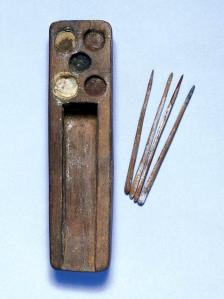
Ancient Egyptian Scribe’s Palette By Staff or representatives of Harrogate Museums and Arts service – Commons:Licensing., CC BY-SA 4.0, https://commons.wikimedia.org/w/index.php?curid=38347984

Ezekiel 9

1 Then he cried in my hearing with a loud voice, saying, “Draw near, you executioners of the city, each with his destroying weapon in his hand.” 2 And six men came from the direction of the upper gate, which faces north, each with his weapon for slaughter in his hand; among them was a man clothed in linen, with a writing case at his side. They went in and stood beside the bronze altar.

3 Now the glory of the God of Israel had gone up from the cherub on which it rested to the threshold of the house. The LORD called to the man clothed in linen, who had the writing case at his side; 4 and said to him, “Go through the city, through Jerusalem, and put a mark on the foreheads of those who sigh and groan over all the abominations that are committed in it.” 5 To the others he said in my hearing, “Pass through the city after him, and kill; your eye shall not spare, and you shall show no pity. 6 Cut down old men, young men and young women, little children and women, but touch no one who has the mark. And begin at my sanctuary.” So they began with the elders who were in front of the house. 7 Then he said to them, “Defile the house, and fill the courts with the slain. Go!” So they went out and killed in the city. 8 While they were killing, and I was left alone, I fell prostrate on my face and cried out, “Ah Lord GOD! will you destroy all who remain of Israel as you pour out your wrath upon Jerusalem?” 9 He said to me, “The guilt of the house of Israel and Judah is exceedingly great; the land is full of bloodshed and the city full of perversity; for they say, ‘The LORD has forsaken the land, and the LORD does not see.’ 10 As for me, my eye will not spare, nor will I have pity, but I will bring down their deeds upon their heads.”

11 Then the man clothed in linen, with the writing case at his side, brought back word, saying, “I have done as you commanded me.”

The idolatrous actions of the people in the previous chapter have defiled the temple of the LORD. In the previous chapters we have seen judgment declared upon the city of Jerusalem, the land, and now the temple. Ezekiel has been the obedient prophet who enacts predominantly in signs what he sees and records. Here the prophet sees the judgment of God embodied in these six men with weapons for slaughter and a scribal/priestly figure with a writing case. The glory of God has come out from the holy of holies and gives the instructions to these agents of destruction to execute God’s justice upon the rebellious occupants of the city of Jerusalem.

Ezekiel observes the scene from a position near the bronze altar originally dedicated by Solomon (1 Kings 8: 64) and moved from a central position before the entrance to the holy of holies to a north facing position under King Ahaz (2 Kings 16: 14). Looking towards the north he sees the approach of these six men with weapons of destruction and the man in linen cloth with a writing case. The men bearing ‘instruments or weapons of destruction’ are those who will execute the sentence. The approach from the north is consistent with the direction a threat from Babylon would approach Jerusalem. Linen was the fabric used for priests and one of the functions of the priestly caste was to be scribes.[1] Now this man in linen is instructed to go throughout the city and mark with a taw[2] those who moan and groan over the abominations done in the city. This mark functions like the blood on the lintels and doorposts in Exodus 12:7 or the scarlet cord on Rahab’s house in Joshua 2: 21. This scribe is to seek out those who see the actions perpetrated in the city through the LORD’s perspective and who see the incongruity between the idolatrous actions of many and the covenantal expectations of the people of God.

There is a chilling echo between this story and the destruction of Sodom and Gomorrah in Genesis 18-19. When Abraham intercedes for Sodom hoping that ten righteous persons might be found and the city not be destroyed on their behalf, God grants Abraham’s request (after an extended bargaining period by Abraham) but when the angels investigate the depravity of Solomon they remove only Lot’s family. Again, this somewhat angelic figure goes through the city to mark those saved from destruction before the destroyers proceed through the city bringing death. Ezekiel who until this point has been obedient, only protesting an action he felt would defile him (Ezekiel 4:14) now falls prostrate before the LORD and intercedes for the people. Yet, throughout the first half of Ezekiel it has become clear that it is too late for this intercession. Prophets, stand between God and the people. These individuals charged with announcing God’s judgment also love and care for this people, city, and temple. Jeremiah when he is commanded not to intercede for the people (Jeremiah 7: 16) still continues to intercede for the people, and here Ezekiel does as well. This is the fate of those called to be prophets, they are people caught between the God whom they are obedient to and the people who have broken God’s heart.

Any hope for a remnant of Jerusalem rests with those still faithful enough to bemoan the state of Jerusalem and the temple. The destroyers are tasked with the elimination of all those unmarked regardless of age or gender. One key group not included in the list are strong men and men of war. (Block, 1997, p. 308)  It is possible as Daniel Block suggests that these warriors and able-bodied men are eliminated in the military struggle against Babylon’s forces, but the parallel of old men and young men may also form an inclusive group from the old to the young. Those considered defenseless and frail, those normally under the protection of God from the strong, are included in this list because they too cannot be considered innocent by their participation in these idolatrous actions. From the point of view of Ezekiel, the defilement of idolatry has made even these vulnerable ones guilty, and they remain unmarked and selected for destruction.

The previous chapters have been dominated by visual activities, whether indescribable sites seen by the prophets or sign acts done by the prophet for others to see. Chapter nine is primarily aural. We do not follow the scribal figure or the destroyers through the city, we merely hear their summons, their instructions, Ezekiel’s intercession, the LORD’s response, and the scribal figure’s report that he has completed the LORD’s task. Yet, the instructions are dark enough to convey the gravity of the situation. The killing begins with those at the sanctuary and now the Jerusalem temple is treated like the idolatrous shrines in the high places which are destroyed. The ritualistic defilement of these unholy places is now shared by this place which was once considered holy. The actions of those in Jerusalem have made the temple no better than a high place.

This action by the scribal figure in this chapter is echoed in the sealing of the 144,000 in Revelation 7: 1-8. Although there are differences in the two visions: in Revelation both the sealer and destroyers are angels and it is a seal placed on the righteous rather than a mark, the resonance between both images is strong. In Revelation, the action is expanded to a cosmic scale, rather than the judgment upon the temple and Jerusalem here. In Revelation there are many who are sealed (a total of 144,000) but here the implication is that few are marked, and the prophet interprets this destruction as a disaster which could bring about the end of Israel.

Ezekiel’s words and actions did not bring about change among those in Jerusalem and Judah. His words clearly have gained some interest among the elders in exile with him, but Ezekiel’s commission is to declare what is given and he is not responsible for its reception. This time of judgment by God upon the unfaithfulness of the people are difficult to read and they were distressing for the people in Ezekiel’s time to hear. In the traumatic aftermath of the destruction of Jerusalem and the remnants exile in Babylon they provided an answer to the question of why this event occurred. Even though the prophet intercedes for the people he communicates that the actions of God are justified because “the guilt of the house of Israel and Judah is exceedingly great; the land is full of bloodshed and the city full of perversity.” Perhaps we, like Abraham, might want the LORD to save the city on behalf of some small representative group of the righteous who moan and groan over the abominations practiced in the city, but the God who Ezekiel transmits to us indicates that the judgment long delayed is finally occurring.

[1] The evolution of the English word clerk comes from the clerical work performed by clergy since for much of history the clergy were among the elites who could read and write.

[2] The last letter of the Hebrew alphabet, similar in appearance and sound to the English T.

Ezekiel 8 The Corruption of the Temple and the People

James Tissot, Solomon Decicates the Temple (1896-1902)

Ezekiel 8

1 In the sixth year, in the sixth month, on the fifth day of the month, as I sat in my house, with the elders of Judah sitting before me, the hand of the Lord GOD fell upon me there. 2 I looked, and there was a figure that looked like a human being; below what appeared to be its loins it was fire, and above the loins it was like the appearance of brightness, like gleaming amber. 3 It stretched out the form of a hand, and took me by a lock of my head; and the spirit lifted me up between earth and heaven, and brought me in visions of God to Jerusalem, to the entrance of the gateway of the inner court that faces north, to the seat of the image of jealousy, which provokes to jealousy. 4 And the glory of the God of Israel was there, like the vision that I had seen in the valley.

5 Then God said to me, “O mortal, lift up your eyes now in the direction of the north.” So I lifted up my eyes toward the north, and there, north of the altar gate, in the entrance, was this image of jealousy. 6 He said to me, “Mortal, do you see what they are doing, the great abominations that the house of Israel are committing here, to drive me far from my sanctuary? Yet you will see still greater abominations.”

7 And he brought me to the entrance of the court; I looked, and there was a hole in the wall. 8 Then he said to me, “Mortal, dig through the wall”; and when I dug through the wall, there was an entrance. 9 He said to me, “Go in, and see the vile abominations that they are committing here.” 10 So I went in and looked; there, portrayed on the wall all around, were all kinds of creeping things, and loathsome animals, and all the idols of the house of Israel. 11 Before them stood seventy of the elders of the house of Israel, with Jaazaniah son of Shaphan standing among them. Each had his censer in his hand, and the fragrant cloud of incense was ascending.12 Then he said to me, “Mortal, have you seen what the elders of the house of Israel are doing in the dark, each in his room of images? For they say, ‘The LORD does not see us, the LORD has forsaken the land.'” 13 He said also to me, “You will see still greater abominations that they are committing.”

14 Then he brought me to the entrance of the north gate of the house of the LORD; women were sitting there weeping for Tammuz. 15 Then he said to me, “Have you seen this, O mortal? You will see still greater abominations than these.”

16 And he brought me into the inner court of the house of the LORD; there, at the entrance of the temple of the LORD, between the porch and the altar, were about twenty-five men, with their backs to the temple of the LORD, and their faces toward the east, prostrating themselves to the sun toward the east. 17 Then he said to me, “Have you seen this, O mortal? Is it not bad enough that the house of Judah commits the abominations done here? Must they fill the land with violence, and provoke my anger still further? See, they are putting the branch to their nose! 18 Therefore I will act in wrath; my eye will not spare, nor will I have pity; and though they cry in my hearing with a loud voice, I will not listen to them.”

Ezekiel’s prophecies as reported in the book of Ezekiel have been directed first at Jerusalem, then at the land of Judah, and now the next two chapters orient on the temple and prepare us for the departure of the LORD’s presence from the temple. Ezekiel from his exile in Babylon is transported by God to view the actions of idolatry which have aroused the LORD’s passion so violently. During this time where the prophet is given a look within the walls of the temple the LORD shows four different examples of idolatrous practices among the people which cause the God of Israel disgust. These syncretistic[1] practices by themselves are enough, in the book of Ezekiel’s view, to justify God’s anger. The anger of God is increased by the way the infection of idolatrous worship is leading to practices of violence which further provoke God.

The beginning of this oracle fixes the date of this vision precisely: September 18, 592 BCE (by our calendar), fourteen months after the inaugural vision. This is close to the number of days that Ezekiel is instructed to lie on his right and left side (if this occurs immediately after the initial vision) outlined in Ezekiel 4: 4-8. Yet, even in this short time the prophet’s actions have attracted the notice of the elders in exile with Ezekiel and they sit before Ezekiel. Perhaps they have come to Ezekiel seeking an oracle or they are watching the performance of his sign act of lying on his side, but during this time when the elders are present Ezekiel is transported to Jerusalem. There is no indication of what the elders perceive during this event, whether they perceive Ezekiel having a prophetic episode or whether they see him lifted up and transported. The description of the LORD’s appearance does not have the divine chariot that is described in the first two chapters and only focuses on the image of the humanlike but divinely bright character who lifts the prophet up. One reason the chariot may not be present is that God is picking Ezekiel up in Babylon and transporting him to the place where the LORD’s presence is supposed to rest in Jerusalem. The prophet is taken by a lock of hair, but the spirit at the same time is lifting the prophet up so it is plausible that the experience is not one of being lifted by one’s hair, but instead of being carefully picked up by what can be described as the hand of God and the spirit of God simultaneously. Yet, the method of divine transportation is merely the prelude to the vital imagery of idolatry that God desires the prophet to see and communicate.

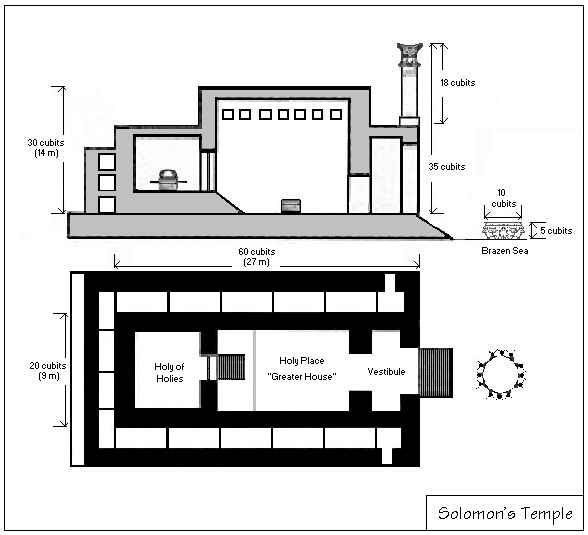
Ezekiel is transported to the altar gate of the temple to see the ‘image of jealousy’ which has clearly aroused the LORD’s passionate anger. I am not certain whether Ezekiel is standing near the entrance to the holy of holies, where the ark of the covenant resides and where God’s presence is expected to rest, or whether he is perhaps between the holy place and the vestibule, nearer to where the altar would be, but the presence of a statue to a different god within the temple complex would have been a shocking abomination to this prophet concerned with the holiness of the temple.

The description of the abominations in Ezekiel 8 parallel the pattern of prohibitions laid out in Deuteronomy 4: 15-20:

15 Since you saw no form when the LORD spoke to you at Horeb out of the fire, take care and watch yourselves closely, 16 so that you do not act corruptly by making an idol for yourselves, in the form of any figure — the likeness of male or female, 17 the likeness of any animal that is on the earth, the likeness of any winged bird that flies in the air, 18 the likeness of anything that creeps on the ground, the likeness of any fish that is in the water under the earth.19 And when you look up to the heavens and see the sun, the moon, and the stars, all the host of heaven, do not be led astray and bow down to them and serve them, things that the LORD your God has allotted to all the peoples everywhere under heaven. 20 But the LORD has taken you and brought you out of the iron-smelter, out of Egypt, to become a people of his very own possession, as you are now.

This image of jealousy is likely one of the Canaanite gods that continually work their ways into the practices of the people of Israel and Judah and the Canaanite gods often appear as figures or male of female likeness as prohibited in Deuteronomy 4:16. King Manasseh of Judah placed a carved image of Asherah within the house of the LORD (2 Kings 21:7) but Josiah destroyed this idol during his reforms (2 Kings 23:6). Yet, Josiah’s reforms did not endure long after his death in battle and it is possible that a later king or individual had the audacity to place another image like Manasseh’s Asherah within the temple. It is also possible that with the physical transportation of the prophet to the temple that there is a temporal transportation to this time when the statue of Asherah existed within the temple grounds. While the temporal transportation is possible with God, and there is an element where we are seeing a compilation of offenses that may not all be occurring simultaneously, it is also likely that the people of Judah continued to revert to syncretistic practices of worshiping other gods alongside the LORD that are continually indicated in the Deuteronomic history.[2]

The second abomination that the LORD wants the prophet to see involves the elders offering incense to their rooms of images. The prophet is shown a recess or hiding place (NRSV hole) in the wall that the prophet is instructed to dig through.[3] The excavation of this hiding place takes Ezekiel into a secret room where seventy elders including Jaazaniah son of Shaphan are conducting their secretive incense offerings before walls decorated with images in a way prohibited by Deuteronomy 4:17-18. In addition to the misplaced actions of offering incense before the creeping things and loathsome animals is the reality that it is the elders and not the priests who are conducting this offering. The images may be like the walls in Egyptian burial chambers or the Ishtar gate in Babylon, but it also may indicate the conglomeration of personal shrines that are in the households of the elders of Israel. The presence of seventy elders echoes the presence of seventy elders in Exodus 24: 9-18 and Number 11:16-30 where the elders are gathered to share in Moses in the burden of leading the people. In contrast these seventy elders, distinct from the elders gathered around Ezekiel in exile, are one of the causes of the condemnation of the people. If Jaazaniah son of Shaphan, the recognized and named elder, is a son of the Shaphan mentioned in 2 Kings 22, a court official involved in the reforms of Josiah, then as Kathyrn Pfister Darr indicates, “the presence of this elder within the secret chamber signaled not only the failure of the reform (of Josiah), but also the ubiquity of Israelite idolatry.” (NIB VI: 1176) The elders may state that the LORD does not see them and that the LORD has forsaken the land, but the prophet is shown that the LORD does see and wants the prophet to see as well. These secretive mysterious rituals being conducted in the dark have been unearthed by the prophets excavation, and what they conducted in darkness has now been brought into the light.

Detail from the Ishtar Gate (Reconstruction in Berlin’s Pergamon Museum)

The third abomination the prophet sees is the practice of women weeping for Tammuz. Tammuz is not mentioned elsewhere in scripture, but we do know about this practice comes from existing inscriptions from the surrounding region. Tammuz is a Sumerian myth involving the decent of Tammuz into the underworld and then rebirth corresponding to the agricultural seasons. If this practice is corresponding to the practices of the surrounding culture, then the timing would be off for this lament to be given during September (the time of the vision) but as mentioned above there is likely some element of temporal transport along with the physical transport to highlight multiple practices that the LORD finds offensive.

The final transport takes the prophet to the temple again where twenty-five men have turned their backs on the LORD to bow down to the rising sun. This again follows the prohibitions of Deuteronomy 4:19 against bowing down to the sun, moon, or any astral body. These practices are seemingly present in every portion of society in Judah: within the temple, practiced by the elders, by women and by men. The temple has not prevented the spiritual deterioration of the people because the temple itself has been corrupted by the ‘image of jealousy’ and the practices of the elders, the women, and the men within the temple compound.

Yet, the idolatrous acts of worship have also corrupted the way of life of the people of Judah. Although the idolatrous worship is enough, the people have gone further and committed acts of violence (Hebrew hamas).[4] Rimon Kasher explains the meaning of the Hebrew word hamas as:

Ĥamas is violent social injustice… The expression occurs in the story of the Flood, so what we have here is more than merely a hint of the punishment that awaits Judah. What the verse means is that God’s anger towards Israel arises not only from their religious abominations, but also from their sins in the moral and social sphere. (Ganzel, 2020, p. 76)

The idolatrous and violent actions of the people have grieved God’s heart like the story of the flood, and now Judah has put the branch to the God’s nose. The enigmatic phrase ‘sticking the branch up my nose’  has been described by interpreters as everything from a phallic symbol to the actions involved in the worship of one of the indicated idols, or simply an insulting gesture, but as Daniel Block indicates it is used to describe how the LORD feels his subjects have treated him disrespectfully. (Block, 1997, p. 299) This place that was to be a place reserved for the worship of the LORD and honoring the divine name has become transformed into a place where idolatrous practices obscure the worship of their God and have caused God to feel disgust towards the temple and those who are misusing it.


[1] Syncretism is the merging or combining of various religious practices. The theology of the Hebrew Scriptures is continually opposed to syncretism but it also narrates numerous instances of syncretic practice throughout the story of Israel and Judah.

[2] The Deuteronomic history, so called by scholars because the theological perspective echoes the book of Deuteronomy, includes the books Joshua, Judges, 1 & 2 Samuel, and 1 & 2 Kings.

[3] As Katheryn Pfister Darr notes if there was already a hole in the wall why would God command the prophet to dig a hole. (NIB VI:1175)

[4] The Hebrew word hamas is not the root of the Palestinian group Hamas. The Hamas currently involved in the Hamas-Israel conflict derives its name from an acronym of Harakata al-Muqawama al-Islamiya (translated as Islamic resistance Movement).

Ezekiel 7 A Three Alarm Crisis

Jerusalem is on Fire from the Art Bible (1896)

Ezekiel 7

The word of the LORD came to me: 2 You, O mortal, thus says the Lord GOD to the land of Israel:

An end! The end has come upon the four corners of the land.
3 Now the end is upon you, I will let loose my anger upon you; I will judge you according to your ways, I will punish you for all your abominations.
4 My eye will not spare you, I will have no pity. I will punish you for your ways, while your abominations are among you. Then you shall know that I am the LORD.
5 Thus says the Lord GOD: Disaster after disaster! See, it comes.
6 An end has come, the end has come. It has awakened against you; see, it comes!
7 Your doom has come to you, O inhabitant of the land. The time has come, the day is near — of tumult, not of reveling on the mountains.
8 Soon now I will pour out my wrath upon you; I will spend my anger against you. I will judge you according to your ways, and punish you for all your abominations.
9 My eye will not spare; I will have no pity. I will punish you according to your ways, while your abominations are among you. Then you shall know that it is I the LORD who strike.
10 See, the day! See, it comes! Your doom has gone out. The rod has blossomed, pride has budded.
11 Violence has grown into a rod of wickedness. None of them shall remain, not their abundance, not their wealth; no pre-eminence among them.
12 The time has come, the day draws near; let not the buyer rejoice, nor the seller mourn, for wrath is upon all their multitude.
13 For the sellers shall not return to what has been sold as long as they remain alive. For the vision concerns all their multitude; it shall not be revoked. Because of their iniquity, they cannot maintain their lives.
14 They have blown the horn and made everything ready; but no one goes to battle, for my wrath is upon all their multitude.
15 The sword is outside, pestilence and famine are inside; those in the field die by the sword; those in the city — famine and pestilence devour them.
16 If any survivors escape, they shall be found on the mountains like doves of the valleys, all of them moaning over their iniquity.
17 All hands shall grow feeble, all knees turn to water.
18 They shall put on sackcloth, horror shall cover them. Shame shall be on all faces, baldness on all their heads.
 19 They shall fling their silver into the streets, their gold shall be treated as unclean.
Their silver and gold cannot save them on the day of the wrath of the LORD. They shall not satisfy their hunger or fill their stomachs with it. For it was the stumbling block of their iniquity. 20 From their beautiful ornament, in which they took pride, they made their abominable images, their detestable things; therefore I will make of it an unclean thing to them.
21 I will hand it over to strangers as booty, to the wicked of the earth as plunder; they shall profane it.
22 I will avert my face from them, so that they may profane my treasured place; the violent shall enter it, they shall profane it.
23 Make a chain! For the land is full of bloody crimes; the city is full of violence.
24 I will bring the worst of the nations to take possession of their houses. I will put an end to the arrogance of the strong, and their holy places shall be profaned.
25 When anguish comes, they will seek peace, but there shall be none.
26 Disaster comes upon disaster, rumor follows rumor; they shall keep seeking a vision from the prophet; instruction shall perish from the priest, and counsel from the elders.

27 The king shall mourn, the prince shall be wrapped in despair, and the hands of the people of the land shall tremble. According to their way I will deal with them; according to their own judgments I will judge them. And they shall know that I am the LORD.

My father was a firefighter when I was growing up, and the number of alarms would determine the number of trucks that would be sent to a reported fire. Larger disasters required more trucks and firefighters available to fight the fire or rescue trapped people and they would attempt to dispatch the appropriate response for the situation. The structure of chapter seven sounds three distinct alarms for this disaster which is coming upon the land of Israel and threatens not only Jerusalem, but all the towns of Judea with survivors having to flee to the mountains in powerlessness and humiliation. Yet, for the people hearing these three alarms from the prophet there are no rescuers to deliver them.

Before dealing with the alarms that we encounter in Ezekiel 7, I want to take a moment to recall the character of the LORD as articulated in Exodus 34:

5 The LORD descended in the cloud and stood with him there, and proclaimed the name, “The LORD.” 6 The LORD passed before him, and proclaimed,

“The LORD, the LORD,
a God merciful and gracious,
slow to anger,
and abounding in steadfast love and faithfulness,
7 keeping steadfast love for the thousandth generation,
 forgiving iniquity and transgression and sin,
yet by no means clearing the guilty,
but visiting the iniquity of the parents upon the children
and the children’s children,
to the third and the fourth generation.”

The elements of this list, sometimes called the thirteen attributes of God, are critical to understanding the character of the God of Israel. Within this identity is a God who is merciful and gracious, slow to anger, and abounding in steadfast love and faithfulness who forgives, but there is also the caution that God will not clear the guilty. Ezekiel understands that God has been slow to anger, has continually sought to show Israel steadfast love and faithfulness but Israel has responded with disobedience for generations. Israel has failed, within the prophecies of Ezekiel, to be a light to the nations and now God will no longer clear the guilty who are continuing to corrupt the people of God and to violate God’s covenant.

The first alarm occurs in the first four verses of the chapter when Ezekiel is to declare the end for the land and the people. This is similar to the language of Amos 8:2 where the LORD declares an end for the people of Samaria:

The end has come upon my people Israel; I will never pass them by again.

Amos declared to the northern kingdom that their grace period was running out, and now Ezekiel from exile warns the people of Judah that their grace period has also expired. In the past God may have overlooked their failures to live according to the covenant but now the curses in the law are being enacted. (Block, 1997, p. 249)

A second alarm resounds in verses five through nine. The flow is broken by indicating God speaks a second time at the beginning of verse five. Six words describe the impact of the curse which the people’s continued disobedience have awakened: disaster, end, doom, the time, the day, and the tumult. The language is similar to Zephaniah 1: 14-16, and it is possible that Ezekiel may have been familiar with this prophet from forty to fifty years earlier. Regardless of the similarities, the announcement of this alarm does not give any chance for return, for the time when the wrath of God will unfold upon the nation will be soon. The punishment is for the purpose of removing the abominations from among the people and they will realize that this is the action of their God in response to their long running disobedience.

The final alarm begins in verse ten as many of the words that described the impact of the curse are now repeated along with additional descriptions. The arrival of the day and doom twists the imagery of the budding rod which declared Aaron as God’s chosen high priest (Numbers 17) into a rod of violence and wickedness. In the time where this rod is blooming the normal actions of buying and selling have become meaningless for the land and the marketplace have all been invaded and there is no expectation of returning to one’s home. A sentinel sounds the horn to alert the people to defend their homes, but no one prepares to fight. Conflict destroys those outside the city while famine and sickness ravage those behind the walls. The only refuge is the mountains where the people wail over their fate. Their panic is so complete that their hands have become weak, and they even lose control over their bladders[1]. There is no buying oneself out of this situation and gold and silver are thrown away as unclean[2] things. God has turned away and the worst of the nations comes to put an end to the disobedience of the people. No one can change the unfolding of this curse. The visions of the prophets fail, the priest no longer have instruction (torah) to give, the elders have no counsel, the king mourns, and the princes are without hope. Every corner of the land is stricken by this long-delayed judgment and in the end the people will know the LORD.

These words were hard to hear when they were first spoken or read, and they are difficult today. Many Christians want the God of steadfast love and faithfulness but do not want a God who judges them if they are the ones guilty of disobedience. Many modern people have an agnostic view of God, where God will neither do good or ill. For the prophets this would be the definition of foolishness. There is always a risk when a people focus on the grace of God that the sense of awe and wonder becomes diminished, and both cynicism and self determination replace obedience and respect. The patience of God in the past for Judah has led to complacency among the people in Ezekiel’s time. These words of Ezekiel point to a process of undoing the pillars that the people of Israel’s false security rested upon. In the end the prophecy of Ezekiel envisions a people who once again know the LORD and whose abominations and idols have been removed.

[1] The NRSV’s all knees turn to water is misleading. The imagery here is losing control of the bladder in a state of panic, or crudely pissing oneself in fear. (NIB VI: 1167)

[2] The Hebrew nidda denotes bodily secretions, especially menstrual blood which was considered a source of uncleanness in the Levitical ideas of purity. (NIB VI: 1167)

Ezekiel 6 Judgment Against the Land of Israel

Judean Hills viewed from the Dead Sea by Kreecher at Russian Wikipedia – Transferred from ru.wikipedia to Commons., Public Domain, https://commons.wikimedia.org/w/index.php?curid=4241172

Ezekiel 6

1 The word of the LORD came to me: 2 O mortal, set your face toward the mountains of Israel, and prophesy against them, 3 and say, You mountains of Israel, hear the word of the Lord GOD! Thus says the Lord GOD to the mountains and the hills, to the ravines and the valleys: I, I myself will bring a sword upon you, and I will destroy your high places. 4 Your altars shall become desolate, and your incense stands shall be broken; and I will throw down your slain in front of your idols. 5 I will lay the corpses of the people of Israel in front of their idols; and I will scatter your bones around your altars. 6 Wherever you live, your towns shall be waste and your high places ruined, so that your altars will be waste and ruined, your idols broken and destroyed, your incense stands cut down, and your works wiped out. 7 The slain shall fall in your midst; then you shall know that I am the LORD.

8 But I will spare some. Some of you shall escape the sword among the nations and be scattered through the countries. 9 Those of you who escape shall remember me among the nations where they are carried captive, how I was crushed by their wanton heart that turned away from me, and their wanton eyes that turned after their idols. Then they will be loathsome in their own sight for the evils that they have committed, for all their abominations. 10 And they shall know that I am the LORD; I did not threaten in vain to bring this disaster upon them.

11 Thus says the Lord GOD: Clap your hands and stamp your foot, and say, Alas for all the vile abominations of the house of Israel! For they shall fall by the sword, by famine, and by pestilence. 12 Those far off shall die of pestilence; those nearby shall fall by the sword; and any who are left and are spared shall die of famine. Thus I will spend my fury upon them. 13 And you shall know that I am the LORD, when their slain lie among their idols around their altars, on every high hill, on all the mountain tops, under every green tree, and under every leafy oak, wherever they offered pleasing odor to all their idols. 14 I will stretch out my hand against them, and make the land desolate and waste, throughout all their settlements, from the wilderness to Riblah. Then they shall know that I am the LORD.

The sign-acts of the previous two chapters have been directed against the city of Jerusalem, but now the judgment is expanded to the mountains of Israel. The city of Jerusalem, the temple, the Davidic king, and the land have all been pillars upon which the people’s false sense of security rested. Just as chapters four and five were directed against Israel, now the focus shifts to the land. In this chapter we also begin to see the reason for the fractured relationship between God and God’s people. The worship at the high places of other gods by the people has broken the LORD’s heart and led to this broken relationship.

This oracle begins with the characteristic address to the prophet as mortal (literally son of man) and then immediately proceeds to what Daniel Block calls the ‘hostile orientation formula’ (Block, 1997, p. 34) when Ezekiel is instructed to ‘set his face towards’ the mountains of Israel. It may derive from the idea that a person delivering a curse must be facing the object of cursing[1] or it may generally refer to the common practice of facing the one who you are addressing. Yet, Ezekiel’s address of the mountains of Israel from the exile in Babylon would’ve been merely directional like the Islamic practice of facing Mecca to pray. The command to set one’s face towards an place, person or object is universally used throughout the book of Ezekiel to denote the LORD’s hostility towards the object that the face is set towards.

The religious problems of the people of Judah are not concentrated only in the temple. The high places (Hebrew bamot) have existed throughout Israel’s time in the land and although there are positive references in the time prior to the construction of the temple, the majority of references are viewed from the perspective of the author of 1 and 2 Kings as a source of embarrassment once Solomon’s temple is built. Yet even Solomon constructed high places late in his reign. Josiah’s attempts to purge the nation of Israel of these high places ends with his death and the worship at these high places resumed shortly afterwards. Most of the high places noted in the scriptures are not out in the wilderness places but are in inhabited areas where the people could easily access them.

The altars, incense stands, and idols in these high places indicate the misdirected faith of the people of Israel. Altars and incense stands can be used properly in the worship of the LORD in the temple, but they can also be used in the worship of these other images for other gods. Daniel Block argues that the word often translated idols or images should be harsher:

Modern sensitivities prevent translators from rendering the expression as Ezekiel intended it to be heard, but had he been preaching today, he would probably have identified these idols with a four-letter word for excrement.[2] (Block, 1997, p. 226)

The continued presence of these high places, altars, incense stands, and idols have left the LORD brokenhearted (NRSV crushed) at the way Israel has failed to be faithful to God. Like in the Genesis narrative of the flood (Genesis 6-7) when God is sorry to have created humanity, the result is the same: God resolved to blot out (expunge) humanity in Genesis and here the towns and high places will be ruined (expunged).[3]

God’s words may be harsh in this portion of Ezekiel, but they are not without hope. There is a future for a remnant and a possibility for renewal, but the renewal will occur in a new place. For this renewal to happen the people must remember the LORD and know the LORD. When the pillars on which the peoples’ false sense of security are broken down the people will remember their God and they will loathe their previous unfaithfulness. The words of this prophecy are clearly aligned with the curses of Leviticus 26:30-33 and the consequences of disobedience long delayed have not been spoken in vain.

The God of Israel is a passionate God who desperately wants to abide among the people, but this God will not be taken for granted. The land, the temple, the city, the stable line of Davidic kings are all conditioned on loyalty to the LORD as articulated in the covenant. The painful words of the heartbroken God of the people of Israel may be difficult to hear, and the loss of the land, the death of many of the people, and the need for the remnant to begin again as strangers in a strange land must have been challenging. Yet, Ezekiel’s words do not seem to change the direction of the people until after the

[1] For example the actions of Balaam in Number 22-24.

[2] Block’s argument is based on the practice of looking at the words a new word is constructed from. If the hypothesis of Block and others is correct the images or idols are representative of ‘shitgods.’ Ezekiel is responsible for 39 or the 48 occurrences in the Hebrew Scriptures of the Hebrew word gillum which is what is translated idols or images here.

[3] The same Hebrew verb maha is used in both Genesis 6-7 and here.

  Ezekiel 4 The Siege of Jerusalem Portrayed

Jerusalem is on Fire from the Art Bible (1896)

Ezekiel 4

1 And you, O mortal, take a brick and set it before you. On it portray a city, Jerusalem; 2 and put siegeworks against it, and build a siege wall against it, and cast up a ramp against it; set camps also against it, and plant battering rams against it all around. 3 Then take an iron plate and place it as an iron wall between you and the city; set your face toward it, and let it be in a state of siege, and press the siege against it. This is a sign for the house of Israel.

4 Then lie on your left side, and place the punishment of the house of Israel upon it; you shall bear their punishment for the number of the days that you lie there. 5 For I assign to you a number of days, three hundred ninety days, equal to the number of the years of their punishment; and so you shall bear the punishment of the house of Israel. 6 When you have completed these, you shall lie down a second time, but on your right side, and bear the punishment of the house of Judah; forty days I assign you, one day for each year. 7 You shall set your face toward the siege of Jerusalem, and with your arm bared you shall prophesy against it. 8 See, I am putting cords on you so that you cannot turn from one side to the other until you have completed the days of your siege.

9 And you, take wheat and barley, beans and lentils, millet and spelt; put them into one vessel, and make bread for yourself. During the number of days that you lie on your side, three hundred ninety days, you shall eat it. 10 The food that you eat shall be twenty shekels a day by weight; at fixed times you shall eat it. 11 And you shall drink water by measure, one-sixth of a hin; at fixed times you shall drink. 12 You shall eat it as a barley-cake, baking it in their sight on human dung. 13 The LORD said, “Thus shall the people of Israel eat their bread, unclean, among the nations to which I will drive them.” 14 Then I said, “Ah Lord GOD! I have never defiled myself; from my youth up until now I have never eaten what died of itself or was torn by animals, nor has carrion flesh come into my mouth.” 15 Then he said to me, “See, I will let you have cow’s dung instead of human dung, on which you may prepare your bread.”

16 Then he said to me, Mortal, I am going to break the staff of bread in Jerusalem; they shall eat bread by weight and with fearfulness; and they shall drink water by measure and in dismay. 17 Lacking bread and water, they will look at one another in dismay, and waste away under their punishment.

Ezekiel has eaten and ingested the scroll that was given to him by the LORD and now he becomes the physical embodiment of the words of lament, morning, and woe. Previous prophets have used ‘sign-acts’ to convey a message. There is a societal expectation that prophets will do strange actions to convey a symbolic meaning: whether it is Ahijah the Shilonite tearing the new garment he was wearing into twelve pieces and handing ten to Jeroboam to indicate God was handing ten tribes to Jeroboam to reign over (1 Kings 11 29-39) or Zedekiah son of Chenaanah making horns of iron[1] (1 Kings 22: 11) Elisha having King Joash strike the ground with arrows to symbolize victory (2 Kings 13: 14-19), Isaiah walking around naked and barefoot for three years (Isaiah 20. Jeremiah burying and retrieving a loincloth, breaking an earthenware jug, or wearing a yoke[2] (Jeremiah 13: 1-11; 19: 1-13; 27) Hosea’s relationship with his wife becomes an enactment of God’s relationship with Israel (Hosea 1-3) or Zechariah’s creation of a crown to put on the high priest Joshua (Zechariah 6). Yet, Ezekiel makes this type of visual prophecy a central part of his ministry to the people. ‘Sign-acts’ are a part of the modus operandi of the prophet Ezekiel as he embodies the word of God he is given. The nature and duration of the acts assumes an audience. These actions are public actions which are designed to provoke reaction, discussion, and communication.

The actions as commanded by the LORD would take over the prophet’s life for over a year. As Ellen Davis writes, “The prophet so consumed the divine word that finally his life…was important only to illustrate it might well claim to speak for YHWH.” (Davis, 1989, p. 70) Ezekiel is going to feel the pain of his people in his body as he prefigures the action of the siege, the length of exile, and the meager rations that those remaining in Jerusalem will encounter. His strange actions will be observed by his fellow exiles, but they will ultimately be communicated through family, social, political, and religious networks to those in Judah. Although he is already in exile in Babylon and will not endure the siege like those in Jerusalem his actions will embody the pain that is coming upon the people as a result of their hardheaded and hard-hearted ways of resisting the LORD’s covenant.

Ezekiel and Jeremiah both are attempting to deconstruct the “four pillars upon which Judah’s (false) sense of security was built.” (Block, 1997, p. 162) Jeremiah was working among those still in Judah as Ezekiel began his work among the exiles. The four pillars centered on the LORD the God of Israel’s covenant with Israel, God’s commitment to the land, God’s commitment to Jerusalem and the temple, and finally God’s promises to David. The covenant that the LORD entered into with the people at Sinai provided divine protection but included the obligation of faithfulness to the commands and ordinances of the covenant. Although there is an understanding of God being the creator of the heavens and the earth there was also the expectation of their God as the sovereign tied to a specific land and having an interest in defending the territory of Israel. Frequently the Israelites used the framework of the surrounding nations view of their ‘territorial deities’ to shape their imagination of their LORD. Jerusalem and the temple were viewed as special because they were the place that was a residence for the name of God, and the turning away of Sennacherib and the Assyrian threat during the time of King Hezekiah and the prophet Isaiah had reinforced this belief of “Zion’s inviolability.” (Block, 1997, p. 163) Lastly there was the covenant with David in 2 Samuel 7 where the LORD would guarantee the Davidic dynasty. The message both Jeremiah and Ezekiel received demonstrated the fallacy of the trust the people placed on God’s protection of the people, the land, the city/temple, and the king because the people did not attend to the commandments and ordinances that were a part of the covenant. Due to the disobedience and rebellion of the people their LORD was oriented against them and was allowing the punishment to fall first on his prophet and then on the people.

Ezekiel’s sign-act begins with taking a presumably wet slate or brick of clay and inscribing a visual representation of Jerusalem upon it. Archeologists have unearthed similar tablets and bricks depicting other cities in this region of Babylon. (NIB VI: 1143) Then this representation of Jerusalem is placed under siege by building a siege wall to isolate the city, setting up ramps (most cities are built on hills and surrounded by walls thus requiring ramps to assault) encamping a representative army around it and placing battering rams around the city. Siege in the ancient world worked in a double fashion, it isolated the city from sources of food, water, supplies, and reinforcements and it actively worked to destroy the walls that protected the city and to hasten the end of the siege. The iron griddle or iron plate separates the prophet from the city, but also may indicate God’s separation from the city. The prophet can demonstrate the siege but is powerless to prevent its happening.

The prophet is then called to bear the iniquity or punishment of the people of Israel and Judah for a number of days representing the years of punishment. Ezekiel’s act of bearing the iniquities of the people does not serve an atoning function like the scapegoat on the Day of Atonement (Leviticus 16: 21) but instead becomes a demonstration of the consequence of the long-endured stubbornness of the people. The three hundred ninety days (representing three hundred ninety years) of punishment for Israel presents several questions for an interpreter: who is represented by Israel, when are the three hundred ninety years of disobedience and when does the judgment of Israel begin? Israel (Samaria) and Judah separated in 922 and Assyria conquers Northern Israel in 721 BCE (a period of two hundred years) so one may question if the Israel here refers to Samaria or some unified vision of Israel which includes Judah. Perhaps Samaria’s disobedience has continued until this time and that would bring it closer to the period of three hundred ninety years. 1 Kings would indicate from its perspective the northern kingdom of Israel was disobedient to the LORD from its foundation with no ruler who did what was right in the eyes of the LORD. This three hundred ninety years may also harken back to Israel’s history in Egypt and its eventual liberation, and Ezekiel may be imagining a new exodus event in the people’s future. The forty days of Judah is easier to relate to the experience of exile in Babylon, but it also follows the pattern of Israel’s history when the people wandered in the wilderness for forty years for their disobedience.

According to the number of days in which you spied out the land, forty days, for every day a year, you shall bear your iniquity, forty years, and you shall know my displeasure. Number 14: 34

The action of laying on the right side for three hundred ninety days bound in cords and then a further forty days on the left side sounds impossible to accomplish, but Ezekiel is physically putting his body on the line as an image for the people. It is worth remembering that at the end of the previous chapter Ezekiel We are not given the complete details of how the prophet enacted this, but this repeated action would attract curiosity from the exiles and would probably be communicated to the residents of Judah.

During this extended embodiment of Judah’s punishment, the prophet is on a highly restricted diet: roughly six hundred fifty grams of water a day and about one thousand calories of a bread-like cake. This is a nutrient and calorie poor diet which probably gave the prophet little energy to do anything beyond lying around in the warm climate of Babylon. This siege diet which represents “scraping the bottom of each of the storage barrels.” (Block, 1997, p. 184) creates a cake that a third century experiment recorded by the Babylonian Talmud (Erubin 81a) demonstrated that a dog would refuse. (NIB VI: 1148) Yet the only thing the prophet resists is the command to bake the cake over human excrement. This may go back to the provisions in Deuteronomy that required the people to bury their excrement outside the camp. (Deuteronomy 23: 12-13) This request for God to amend his command is the first time the prophet speaks in the book, and God grants the request to allow cow chips to be used instead. Other than this request it appears that Ezekiel obediently embodies God’s commands. He becomes a visual representation of the words of God and an image of a suffering servant bearing the punishment of his people.

Ezekiel used the language of the covenant to challenge the four pillars that the people of Jerusalem have placed their misguided belief in their safety from the Babylonians or any other invasion. The language of ‘the staff of bread’ echoes the language of Leviticus 26:26 where the result of disobedience results in a situation where bread is doled out by weight and those who eat are not satisfied. Ezekiel’s diet would put him in a significant caloric deficit until the end of his ordeal. The upcoming siege of Jerusalem will be an experience of extreme hunger and starvation for many in Jerusalem and they, like the prophet who is embodying this dark future, will waste away as the days crawl on and the food dries up.

[1] Zedekiah was a false prophet, but he illustrates the cultural expectations of a prophet.

[2] Hananiah breaking of Jeremiah’s yoke was also a ‘sign-act’ even though performed by a false prophet.

Ezekiel 2 A Prophet’s Call and a Message to be Consumed

Russian icon of the Prophet Ezekiel holding a scroll with his prophecy and pointing to the “closed gate” (18th century, Iconostasis of Kizhi monastery, Russia)

Ezekiel 2

1 He said to me: O mortal, stand up on your feet, and I will speak with you.2 And when he spoke to me, a spirit entered into me and set me on my feet; and I heard him speaking to me.3 He said to me, Mortal, I am sending you to the people of Israel, to a nation of rebels who have rebelled against me; they and their ancestors have transgressed against me to this very day.4 The descendants are impudent and stubborn. I am sending you to them, and you shall say to them, “Thus says the Lord GOD.” 5 Whether they hear or refuse to hear (for they are a rebellious house), they shall know that there has been a prophet among them.6 And you, O mortal, do not be afraid of them, and do not be afraid of their words, though briers and thorns surround you and you live among scorpions; do not be afraid of their words, and do not be dismayed at their looks, for they are a rebellious house. 7 You shall speak my words to them, whether they hear or refuse to hear; for they are a rebellious house.

8 But you, mortal, hear what I say to you; do not be rebellious like that rebellious house; open your mouth and eat what I give you. 9 I looked, and a hand was stretched out to me, and a written scroll was in it. 10 He spread it before me; it had writing on the front and on the back, and written on it were words of lamentation and mourning and woe.

The narration of Ezekiel’s encounter with the LORD the God of Israel continues with this calling of the prophet as a messenger from the God of Israel to God’s rebellious people. In the midst of the bright and visually overwhelming living creatures, wheels, crystal dome, throne, and the fiery appearance of the LORD in a human like form combined with the sound like thunder and mighty waters the prophet has assumed the proper position of a mortal in the presence of the divine, prostrate on the ground. Ezekiel’s response reflects the practice of ancient royal courts where those summoned would prostrate themselves before the sovereign until they were commanded to rise when the sovereign is ready to address them. Ezekiel is cognizant of the distinction between himself as a mortal servant of the LORD and the overwhelming and powerful divine one who addresses him.

Ezekiel is referred to throughout the book as ‘son of man’ (Hebrew ben-adam, NRSV ‘mortal’). This is the primary way the prophet is addressed throughout the book, and it occurs ninety-three times. Adam in Hebrew is the general word for ‘man’ or ‘human’ and while Ezekiel is both a son of Adam, and a son of man, the NRSV and other translations that render this as ‘mortal’ do capture the way the term distinguishes Ezekiel from the LORD who is addressing him. This ‘son of man’ terminology will be used in a very different way in the book of Daniel (Daniel 7:13) and in the gospels by Jesus as a figure who is commissioned to come from heaven, but here it is a very mortal prophet who finds himself before the throne of God in a foreign land being commissioned as an emissary of God’s word to the people of Israel.

Ezekiel was a passive observer of the approach of the divine chariot in the previous chapter, and remains a passive if obedient vessel throughout this chapter of commissioning. When commanded to rise and stand on his feet, a ruach (spirit, wind, breath) enters into him and places him on his feet enabling the prophet to stand in the overpowering presence of the divine. It could be that a breath of God enters into the prophet, or a spirit of God, or a wind that lifts the prophet upon his feet, and the flexibility of the Hebrew allows for all of these senses to be true simultaneously. Yet, the action begins with the word and the ruach of the God of Israel who speaks and lifts up this son of man.

Ezekiel is commissioned to go to the people of Israel. Israel now refers to what remains of the people of Israel and Judah in the aftermath of the Assyrian dispersion of the Northern Kingdom of Israel (or Samaria), the portions of Judah still in the land around Jerusalem as well as the Judeans in exile in Babylon (where Ezekiel finds himself). It is likely that in the aftermath of the Northern Kingdom’s and Judah’s brief renaissance under Josiah that there was a reclamation of the identity of the people as the people of Israel as well as aspirations of reclaiming these lands that once belonged to the northern tribes. Yet this people of Israel at the time of Ezekiel is a nation (Hebrew goy) of rebels. The Hebrew word goy is normally used in a pejorative sense, the nations (or Gentiles) are the goyim. As Daniel Block highlights:

When the word is used of this nation, it tends to carry a pejorative sense, highlighting Israel’s indistinguishability from other nations and Yahweh’s rejection of Israel. Apart from faith in and fidelity to Yahweh, Israel is just another “heathen” nation. (Block, 1997, p. 118)

The nation of Israel is impudent (literally hard of face) and stubborn (literally hard of heart). Their external actions and the internal state of their heart and mind.[1] Later in Ezekiel 36:26 the remedy to this hardness of heart will be God’s action of placing within the people a ‘heart of flesh.’ For now, Ezekiel is warned that he is going to a people who have set their face and their will against their God and who continue in this rebellion. The people of Israel have become a house of rebellion and the renaming of Israel in this way recalls the way the eighth century BCE prophets Amos and Hosea renamed Bethel (house of God) to Beth-aven (house of iniquity). [2]

Ezekiel’s commission is not dependent on convincing this hard faced and hard-hearted people, but in faithfully delivering the messages that the LORD God hands on to him. When the words Ezekiel delivers come to pass the people will realize they have had a prophet in their midst. The prophets whose words are recorded in scripture were probably not well received as they delivered words of lamentation, mourning, and woe in their time, and it is only afterwards when their words proved true and the words of the prophets made sense of the experience of the people that they were accepted. Yet, within Deuteronomy, this is the only way to recognize a true prophet.

You may say to yourself, “How can we recognize a word that the LORD has not spoken?” If a prophet speaks in the name of the LORD but the thing does not take place or prove true, it is a word that the LORD has not spoken. The prophet has spoken presumptuously; do not be frightened by it. Deuteronomy 18: 21-22

It is only once a prophet’s words prove true that the people can recognize a true prophet has been in their midst, but they are still accountable for their response to these prophets who speak in the name of the LORD.

Ezekiel’s words will not be popular among the exiles or the remnant in Jerusalem and the only protection the prophet has will come from the God who sends him. The briers, thorns, and scorpions which surround the prophet are symbols of the prophet’s protection. Many scholars view the ‘scorpions’ introduced with the ‘briars and thorns’ as a mixed metaphor and wonder if the ‘scorpions’ refers to a ‘scorpion plant’ of thorny appearance or stinging quality. (Block, 1997, p. 121) But Katheryn Pfister Darr points to two incantations in Maqlȗ, a Babylonian series of rituals for warding off the effects of sorcery:

I am the spike of a thornbush; you cannot step on me! I am the stinger of a scorpion; you cannot touch me. Maqlȗ III. 153-154 (NIB VI: 1123)

Even though it may mix plant and animal imagery, the poetic sense of the prophets is elastic enough to encompass two elements like this to point to the divine protection which surrounds this prophet who delivers an unpleasant word to a rebellious people. This mortal who bears the divine word is not to be afraid of mortal words of looks.[3] The people have already rejected the LORD who sends the prophet, so the prophet should not expect a receptive audience for the words he is called to bear.

The elaborate description of the approach of the divine presence and the commissioning of this son of man to carry the message to the rebellious house of Israel have prepared us to approach the message itself. As mentioned above Ezekiel has been a passive recipient of the vision and this calling, but he (unlike Israel) has not actively resisted the LORD’s instructions. But immediately before receiving this message he is to bear, Ezekiel is warned not to be infected by the disease which the people he is sent to have, a refusal to listen and obey. The prophet Jeremiah received the word of God when the words were placed in his mouth:

Then the LORD put out his hand and touched my mouth; and the LORD said to me, “Now I have put my words in your mouth.” Jeremiah 1:9

Yet, for Ezekiel the words are written on a scroll he is given to eat. Katheryn Pfister Darr humorously remarks, “Yahweh’s touch bestows divine words that Jeremiah must proclaim. Yet one does not surmise that God literally stuffs words down his throat.” (NIB VI: 1124) But that is what will happen to the passive prophet who will soon open his mouth to receive that which is normally inedible. The scroll is full of writing, front and back, and there is no place to add or any ability for the prophet to modify the text of lamentation, mourning, woe.[4]

With the presented scroll something has changed in the nature of prophecy. Instead of a personal address by God the prophet is given a scroll to consume, and as Walther Zimmerli can state “It has become a book.” (NIB VI: 1125) The prophet who will be given this scroll to consume will become the written prophecy, and it is likely that many of Ezekiel’s recorded words may have been distributed in primarily written form. Ezekiel is a prophet in a new situation and time, he is separated from the temple and Jerusalem and charged with ministering to a people divided between Jerusalem and exile. Like the apostle Paul in the early Christian church many of his messages will have to be in a written form to minister to these two dispersed communities. Due to the identity of those taken into exile, being the notables of the land, there was probably a higher concentration of literate individuals. Yet, even messages that were directed to the remnant in Jerusalem would be primarily addressed to the priestly and ruling remnant in Jerusalem. I’m indebted to Ellen Davis for these reflections on the character of Ezekiel in her study of Ezekiel as a prophet navigating a new location by utilizing, “a style of prophecy which the immediate audience selected for him by Nebuchadnezzar’s army was especially qualified to understand, if not appreciate.” (Davis, 1989, p. 44) Writing is both a solution to communicating with a separated community, but now this prophet who will become the embodiment of the scroll he consumes will also recreate the content of the scroll he consumes as a written text that can remain a witness for a generation which can understand Ezekiel’s position as a prophet bearing God’s word who is finally ready to receive this word. As Ellen Davis can insightfully state, “Preserved as a text, God’s word is no longer frustrated by the intransigence of any generation; it can wait until such time as it may be heard.” (Davis, 1989, p. 61)

[1] In Hebrew though the heart is the organ of will and decision, not emotion. When someone’s heart is set on something it means they have set their will on gaining or following something. In Hebrew the emotions are the realm of the stomach and guts.

[2] See Amos 5:5-6 where the prophet still uses Bethel but condemns the injustice of the place and Hosea 4:15, 5:8, 10:5 where the name is intentionally changed. This can be confusing since Beth-aven also refers to a different location in Joshua 7:2; 18:12 and 1 Samuel 13:5; 14:23

[3] The idea of ‘looks’ from the people may refer to the idea of cursing a person with an ‘evil eye’. Words, rituals, and actions had a different significance in ancient cultures than we often grant them today, and a word or evil eye or other ‘looks’ were looked upon in ancient societies as powerful things.

[4] The three Hebrew words behind lamentation, mourning, and woe are qina “lament, dirge” which is often associated with funerals, hegeh an onomatopoeic expression of moaning and groaning, and hi which is only used here in scripture and may be another onomatopoeic expression for a cry of pain. (Block, 1997, p. 125)

Introduction to the Prophet Ezekiel

Ezekiel as depicted by Michelangelo on the Sistine Chapel ceiling


Ezekiel will be the fourth of the prophetic books[1] I have approached in my studies on sign of the rose and the second major prophet[2] that I have engaged. Ezekiel is a book that has a significant impact on several later prophets and particularly the books of Zechariah and Daniel as well as the Christian book Revelation. The book of Ezekiel is a strange book full of evocative language which has inspired a plethora of odd interpretations. Jerome notes that Jews under thirty were forbidden from reading the beginning and ending of the book, yet it remained an important book for the rabbinical scholars. (Block, 1997, p. 44)

The Context of Ezekiel

Ezekiel son of Buzi began his prophetic ministry in exile in Babylon in the time between 597 and 586 BCE. This time period is between the first exile when King Nebuchadrezzar of Babylon crushes the rebellion of King Jehoiakim and the larger exile when the forces of Babylon return and destroy Jerusalem and the temple in 586 BCE. Ezekiel is among the group of elites who were taken to Babylon in 597 while the remnant of the people were left under Mattaniah (renamed Zedekiah, see 2 Kings 24:17). Ezekiel’s status is similar to what is narrated at the beginning of the book of Daniel for the titular character as well as well as Hananiah, Mishael, and Azariah (or as more commonly known by their Babylonian names: Shadrach, Meshach, and Abednego)[3]. Ezekiel has nothing positive to say about the Judeans who remained in Jerusalem between 597 and 587, and in Ezekiel’s mind the destruction of Jerusalem, the temple, and the severing of the Davidic line of kings is fully justified based on the unfaithfulness of the people to God’s covenant and their unwillingness to heed God’s words. (NIB VI: 1080) Ezekiel was the first prophet to operate in the Diaspora (the Judean people exiled among the nations). Ezekiel, like Jeremiah from inside Jerusalem, was deconstructing the beliefs that the people in Jerusalem had around the Davidic king, the land of Judea, the city of Jerusalem (Zion) and particularly the temple initially built by Solomon. Temple, land, and king all became symbols of God’s promise, but the prophets continued to call the people back to the covenantal nature of their relationship with God. The promise was dependent upon obedience to the laws, statutes, and ordinances of God and in Ezekiel’s view God’s judgment through Babylon was the just punishment for the lack of faithfulness to God’s laws and vision for the people.

Entering the Strangeness of Ezekiel

Ezekiel with his strange visions, passionate language, and symbolic actions seems like an alien work to most modern readers. The book’s visions attempt to describe things beyond description, the prophet’s actions as instructed by God seem out of step with the reality of his time or ours, and his language may offend our ears and sensibilities. Ezekiel’s language is supposed to be shocking to a complacent people who treated God’s covenant with Jerusalem as a guarantee of their security, and the first half of the book (like most of Jeremiah) is used to “debunk this illusory conviction.” (Block, 1997, p. 48) Yet, despite Ezekiel’s shocking words and performances he, nor his contemporary Jeremiah, is able to convince the people of Jerusalem to repent or change. As Tova Ganzel states:

Perhaps, then, we can see that Ezekiel’s prophetic mission at the time was not to call upon the people to mend their ways and repent, but rather to explain the significance of the events in Jerusalem, and thereby to lay the groundwork for the prophecies of rebuilding which came after the Destruction. (Ganzel, 2020, p. 16)

The Prophet of the Ruach

The prophet Ezekiel utilized the Hebrew word ruach throughout his book more than any other prophet. Ruach can mean “wind, breath, or spirit” and frequently, although translations have to focus on one meaning, there are shades of all three meanings. The living creatures are animated by the ruach, Ezekiel will be picked up and moved by the ruach, the ruach of the LORD will fall upon Ezekiel and cause him to prophesy, and his will prophesy to the ruach to reanimate the boneyard that represents Israel.

Resources Used on This Journey

As with my previous reflections I utilize the works of several authors who have spent their life studying this portion of scripture. I attempt to utilize various perspectives in all of these reflections to inform my own writing and reflections. Below are the works I am reading as I write my own reflections:

Block, Daniel I. The Book of Ezekiel: Chapters 1-24. (New International Commentary on the Old Testament series) Grand Rapids, MI: William B. Eerdmans Publishing Company, 1997.

_______. The Book of Ezekiel: Chapters 25-48. (New International Commentary on the Old Testament series) Grand Rapids, MI: William B. Eerdmans Publishing Company, 1998.

The NICOT series of commentaries have often been helpful textual commentaries, and when looking for a volume to assist with the language as well as the historical background these have often been helpful. Daniel Block is viewed as an evangelical scholar who is well versed in the literature of Israel and its neighbors in the ancient world.

Darr, Katheryn Pfisterer. “The Book of Ezekiel.” In The New Interpreter’s Bible. (New International Commentary on the Old Testament series) Grand Rapids, MI: William B. Eerdmans Publishing Company, 1997.Volume VI. Nashville, Abingdon Press, 1994.

The NIB is a solid all-around commentary on the entire bible and apocrypha. It is designed for pastors and those leading in congregations, so it does not normally engage the textual issues as deeply as the NICOT or Anchor Bible commentaries.

Davis, Ellen F. Swallowing the Scroll: Textuality and the Dynamics of Discourse in Ezekiel’s Prophecy. Sheffield, England: Almond Press, 1989.

Ellen Davis is one of the scholars who I attempt to read anything that they write. This is her doctoral dissertation, so it will probably be a denser read focused on a smaller set of issues than a commentary would be, but I trust it will prove insightful.

Ganzel, Tova. Ezekiel: From Destruction to Restoration. Maggid Studies in Tanakh. Jerusalem: Maggid Books, 2020.

When I can I attempt to utilize a Jewish scholar when reading the scriptures that we share. The Maggid Studies I have utilized in the past have been approachable, but also provide a window into perspectives that most Christian scholars may not explore.

The Book of Ezekiel is a long book of forty-eight chapters, and some of its chapters are quite lengthy. I anticipate this study taking all of 2024 and may stretch into 2025 depending on how my sabbatical later this year impacts my writing. Unlike Isaiah which is used frequently in preaching and Jeremiah which I have written on, Ezekiel has many sections which are relatively unfamiliar to me as I begin this study and as I walk into its strangeness I am curious what this journey will yield.

[1] As Christians organize the Bible, according to the Jewish organization of scriptures both Judges and 1 Kings would also be included in the prophetic writings while most Christians view these as historical narratives.

[2] Jeremiah is the other major prophet I wrote on in 2013-14 as I was beginning this site. The other major prophet is Isaiah. The differentiation of major vs. minor prophets has to do with the length of their ‘books.’ The minor prophets could all be contained on one scroll (the twelve) when texts were compiled that way while Isaiah, Jeremiah, and Ezekiel each required their own scroll.

[3] Daniel 1: 3-7