Ezekiel 36:1-15
1 And you, mortal, prophesy to the mountains of Israel, and say: O mountains of Israel, hear the word of the LORD. 2 Thus says the Lord GOD: Because the enemy said of you, “Aha!” and, “The ancient heights have become our possession,” 3 therefore prophesy, and say: Thus says the Lord GOD: Because they made you desolate indeed, and crushed you from all sides, so that you became the possession of the rest of the nations, and you became an object of gossip and slander among the people; 4 therefore, O mountains of Israel, hear the word of the Lord GOD: Thus says the Lord GOD to the mountains and the hills, the watercourses and the valleys, the desolate wastes and the deserted towns, which have become a source of plunder and an object of derision to the rest of the nations all around; 5 therefore thus says the Lord GOD: I am speaking in my hot jealousy against the rest of the nations, and against all Edom, who, with wholehearted joy and utter contempt, took my land as their possession, because of its pasture, to plunder it. 6 Therefore prophesy concerning the land of Israel, and say to the mountains and hills, to the watercourses and valleys, Thus says the Lord GOD: I am speaking in my jealous wrath, because you have suffered the insults of the nations; 7 therefore thus says the Lord GOD: I swear that the nations that are all around you shall themselves suffer insults.
8 But you, O mountains of Israel, shall shoot out your branches, and yield your fruit to my people Israel; for they shall soon come home. 9 See now, I am for you; I will turn to you, and you shall be tilled and sown; 10 and I will multiply your population, the whole house of Israel, all of it; the towns shall be inhabited and the waste places rebuilt; 11 and I will multiply human beings and animals upon you. They shall increase and be fruitful; and I will cause you to be inhabited as in your former times, and will do more good to you than ever before. Then you shall know that I am the LORD. 12 I will lead people upon you — my people Israel — and they shall possess you, and you shall be their inheritance. No longer shall you bereave them of children.
13 Thus says the Lord GOD: Because they say to you, “You devour people, and you bereave your nation of children,” 14 therefore you shall no longer devour people and no longer bereave your nation of children, says the Lord GOD; 15 and no longer will I let you hear the insults of the nations, no longer shall you bear the disgrace of the peoples; and no longer shall you cause your nation to stumble, says the Lord GOD.
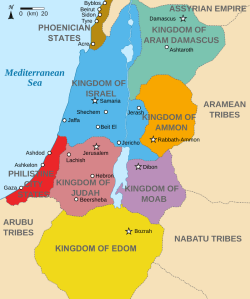
The judgment against Mount Seir (Edom) in the previous chapter is mirrored by the words of promise for the mountains of Israel in the first half of chapter thirty-six. Previously in chapter six, Ezekiel set his face towards the mountains of Israel and prophesied against them. Now God’s rising to deal with the violation of the land of Israel by the Edomites, in the aftermath of the exile of the people, opens the path for a renewed relationship between the people and the land. In the first half of Ezekiel the prophet challenged the reliance of the people on the Davidic king, Jerusalem and the temple, and the land as assurances of the LORD’s blessings. In chapter thirty-four Ezekiel could reimagine a world with a proper ‘prince’ acting on behalf of the LORD as the shepherd of the people. Now in this chapter the judgment on Edom and the renewal of the land reimagines a future where the land and the people can live in harmony. Yet, both the land and the people need divine intervention to become what they were intended to be.
Even though the people of Judah have been removed from the land, the land still belongs to the LORD. When Edom and the other nations view this land as their bounty to exploit the LORD is affronted and will not sit by. Psalm seventy-nine, also likely speaking to the time of exile, could cry out to raise God to action:
How long, O LORD? Will you be angry forever? Will your jealous wrath burn like fire? Pour out your anger on the nations that do not know you, and on the kingdoms that do not call on your name. For they have devoured Jacob and laid waste his habitation. Psalm 79: 5-7
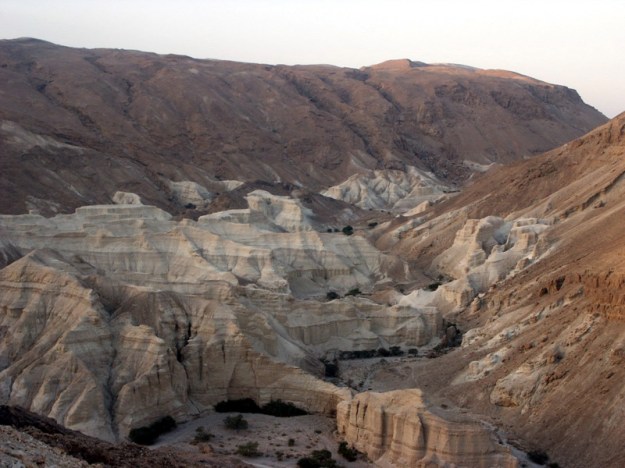
Yet, initially the concern of this portion of Ezekiel is for the land itself and not for the people. The people of Edom are laying waste to the prior habitation of Judah, but in Ezekiel’s view that people of Judah have been rightly judged by their God and their time in exile is earned. Now God is judging on behalf of the mountains and hills, the watercourses and valleys, and the plundered pastures. The actions of Edom and any others who violated the land have turned the LORD’s anger away from Judah and towards these invaders.
The reputation of the land has suffered in this time where other nations have seized it, and the LORD’s work to repair the reputation of the land leads to a broader time of healing for the mountains and valleys. Although there is in verse twelve the announcement that God will lead the people of Israel back to the land, there is a necessary healing for the land first. This land corrupted by the previous disobedience of the people and bearing the scars of war and famine must become fruitful again. The land begins by bearing fruit and being ready to be farmed again, perhaps having a time of sabbath renewal-but something more direct is indicated in the imagery. The phrase, “See now, I am for you” in verse nine is typically a summon to a duel when utilized in Ezekiel, but here the intent is plainly turning towards the welfare of the land rather than the judgment of the land. God has previously been the shepherd of the flock, and now is the tiller of soil planting the land as a new garden. Formerly destroyed towns will be rebuilt and wastelands inhabited as the land is renewed in expectation of the return of its children.
There is something wrong in this personified land of Israel. Daniel Block can talk about the land,
as having stifled maternal feelings for the nation that inhabits it and having robbed the nation of children. Yahweh hereby promises that this will never happen again. (Block, 1998, p. 335)
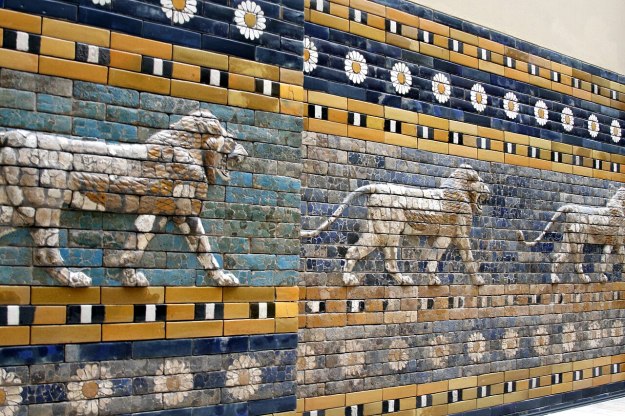
There is a long tradition throughout the scriptures of understanding the land personified and reacting in response to the disobedience of humanity. From the earth being cursed by Adam’s disobedience (Genesis 3:17) to the earth cursing Cain for consuming Abel’s blood (Genesis 4:11) to the provisions in the law dealing with an unsolved murder (Deuteronomy 21: 1-9) there is a connection between the people’s disobedience, blood, and the reaction from the land. The land now devours children just like the ‘princes of Israel/lions’ did in chapter nineteen. The rupture between land and people will be repaired by God prior to the reintroduction of the children of Israel. In an interesting echo the land in the time of Ezekiel has once again the fear of the spies sent to scout the land in Numbers 13:32-33
So they brought to the Israelites an unfavorable report of the land that they had spied out, saying, “The land that we have gone through as spies is a land that devours its inhabitants; and all the people we say in it are of great size. There we saw the Nephilim (the Anakites come for the Nephilim); and to ourselves seemed like grasshoppers, and so we seemed to them.”
In preparation for what is to come the curse upon the land has been removed, the giants are a distant memory, and what remains is a land flowing with milk and honey, of rich fruit and grain filled fields where people and animals can flourish and multiply. The defilement of the land must be healed and so also must the defilement of the people.
Ezekiel 36: 16-21
16 The word of the LORD came to me: 17 Mortal, when the house of Israel lived on their own soil, they defiled it with their ways and their deeds; their conduct in my sight was like the uncleanness of a woman in her menstrual period. 18 So I poured out my wrath upon them for the blood that they had shed upon the land, and for the idols with which they had defiled it. 19 I scattered them among the nations, and they were dispersed through the countries; in accordance with their conduct and their deeds I judged them. 20 But when they came to the nations, wherever they came, they profaned my holy name, in that it was said of them, “These are the people of the LORD, and yet they had to go out of his land.” 21 But I had concern for my holy name, which the house of Israel had profaned among the nations to which they came.
Ezekiel’s way of understanding the world is often strange to modern readers but it adheres to a priestly understanding of the things that defile. The defilement of the land is coming from the actions of the people. In the law defilement can come from murder (Numbers 35:33-34), sexual relations outside of those permitted (Leviticus 18: 6-25), failing to remove the corpse of hanged criminal (Deuteronomy 21: 22-23) or idolatry (Ezekiel 5:11)[1] (NIB VI: 1489) This is the only time Ezekiel refers to the land being defiled, but as mentioned above there is a tradition stretching back to Genesis of the land responding to the actions of humanity upon it. (See my discussion on the Connection between humanity and the earth) Blood is a consistent theme in these verses and Ezekiel’s metaphor of the uncleanness of a woman in her menstrual period links to Leviticus 15: 19-24. Blood in the law is a source of both life and contamination and there are many laws around contact with blood and purification after contact. The actions of the people were not only defiling themselves but also the land they had contact with and their God acted in response to the defilement of both the people and the land.
Ezekiel’s language may be uncomfortable for us but if we consider this strange prophet a part of our scriptures we have to figure out how to receive his messages which come from a world that understands defilement in a very different manner than we do. Ezekiel’s metaphors may have been powerful in his time because of their connection with his culture but also due to their uncomfortable nature. We do not know how the people of Israel actually practiced the laws of Leviticus, whether they truly kept women isolated from the camp for the seven days surrounding their menstrual cycle, but these ideas of cleanness and uncleanness helped to shape the practices and the imagination of the people.
Yet, the strangest thing for most Christian readers of Ezekiel is the image of God. Christians who may have more rigid ideas of holiness and boundaries may be comfortable with Ezekiel’s worldview and often their view of God adheres more closely to Ezekiel’s. God in this way of thinking is firm and a dispenser of justice. Yet, for a Lutheran Christian, like myself, whose witness is centered around the grace of God, the harsh God of Ezekiel is often disconcerting. Several important characteristics of God’s nature are absent in Ezekiel. Ezekiel’s God is never indicated to act in hesed (steadfast love), covenant faithfulness, and only once is the word mercy[2] used. (NIB VI: 1489) Instead Ezekiel focuses on the honor due to God’s name. The divine reputation is the primary motivation for God’s action on behalf of the land and the people in this section. The exile of the people and the violation of the land have had a negative impact of the name (reputation) of the LORD among the nations and for Ezekiel that damage must be addressed.
Ezekiel 36: 17-32
22 Therefore say to the house of Israel, Thus says the Lord GOD: It is not for your sake, O house of Israel, that I am about to act, but for the sake of my holy name, which you have profaned among the nations to which you came. 23 I will sanctify my great name, which has been profaned among the nations, and which you have profaned among them; and the nations shall know that I am the LORD, says the Lord GOD, when through you I display my holiness before their eyes. 24 I will take you from the nations, and gather you from all the countries, and bring you into your own land. 25 I will sprinkle clean water upon you, and you shall be clean from all your uncleannesses, and from all your idols I will cleanse you. 26 A new heart I will give you, and a new spirit I will put within you; and I will remove from your body the heart of stone and give you a heart of flesh. 27 I will put my spirit within you, and make you follow my statutes and be careful to observe my ordinances. 28 Then you shall live in the land that I gave to your ancestors; and you shall be my people, and I will be your God. 29 I will save you from all your uncleannesses, and I will summon the grain and make it abundant and lay no famine upon you. 30 I will make the fruit of the tree and the produce of the field abundant, so that you may never again suffer the disgrace of famine among the nations. 31 Then you shall remember your evil ways, and your dealings that were not good; and you shall loathe yourselves for your iniquities and your abominable deeds. 32 It is not for your sake that I will act, says the Lord GOD; let that be known to you. Be ashamed and dismayed for your ways, O house of Israel.
This image of the purification and renewal of the people of God is one of the well-known portions of the book of Ezekiel. Receiving a new heart (Hebrew leb) and a new spirit (Hebrew ruach) occurred previously in chapter eleven[3] and is similar to Jeremiah’s one heart and one way.[4] Yet at the same time we receive the heart-warming image of a new heart and new spirit replacing the stony heart of the purified people there is an uncompromising harshness to the image of God presented in this section. As Daniel Block is worthy of extended quotation for his directness on this point:
The modern reader may find Yahweh’s apparent heartlessness at this point disturbing, if not offensive. Yahweh looks like a stuffy egotistical monarch, upset that his subjects have not given him the honor he demands. His response hardly enhances his image. Absent is any compassion toward a bleeding nation, any mercy, any hint of forgiveness. Absent also is any reference to the covenant promises. Indeed, as Zimmerli has observed, a whole class of terms is missing from Ezekiel: hesed, “covenant loyalty,” rahamim, “compassion,” amuna, “faithfulness,” yesua, “salvation,”’ahaba, “love.” (Block, 1998, p. 352)
As mentioned previously, the motivation reinforced once again is that the LORD is acting for the sake of the name of the LORD and the reputation of that name. These actions are explicitly not for the people of Israel’s sake. Yet, regardless of the motives for God’s actions there are benefits for the people.
This reminds me of the ‘guilt piety’ in the Lutheran church that I grew up in. The language from the 1958 Service Book and Hymnal used by many Lutheran congregations declared in confession that, “we are by nature sinful and unclean.” And much of the preaching differentiated between our fundamental unworthiness and God’s undeserved grace towards us. Yet, this led to a practice of self-loathing similar to the desired end of these actions for Israel. Israel here is to loathe themselves and to be ashamed and dismayed at their ways. I understand the desire for repentance and the emphasis on personal accountability for the actions which defile the people and the land. Yet, the image of God presented throughout Ezekiel does not seem to have steadfast love, compassion, faithfulness, or love for the land or the people. Perhaps this is the language of a brokenhearted God and a brokenhearted prophet, and perhaps both will learn to love again in the future, but for now a purified people of a new heart and new spirit precede any renewal of God’s heart and spirit.
Human initiative will not be a prerequisite for the LORD’s actions on behalf of the land and the people. The people will be gathered and returned to the land to display the holiness of God and repair God’s reputation. Previously sprinkling with water has been used for the consecration of priests and Levites, for ritual cleanness on the day of atonement, and for cleansing a person defiled by a corpse.[5] Each of these images has resonance to this situation: the people are reformed to accept their role as a priestly kingdom and a holy nation (Exodus 19:6) in this time of atonement where their defilement from their past bloody actions is removed. Yet the verb for sprinkling is often used for the sprinkling with blood, particularly in Exodus 24:6-8 where the people are sprinkled with blood to seal the covenant with the people at Sinai. As Tova Ganzel notes, all of these actions also prepare the nation to not defile the future temple of chapters forty through forty-eight. (Ganzel, 2020, p. 305)
The familiar image of a new heart and new spirit to replace the stony heart are an act of the LORD to create a situation where the people can be faithful. In Hebrew leb and ruach are the locus of will and thought.[6] Through most of scripture, and even in Ezekiel, people are told to get a new heart (Ezekiel 18:31) but here the action is solely God’s. In Deuteronomy 30 the people are told to seek God with their heart, but then later God promises to circumcise their hearts. Now God’s reaction to human stubbornness and wickedness is a heart and spirit transplant. A renewed land awaits purified people bearing fleshy hearts and godly spirits. Yet, a heartbroken God acts for God’s own honor and for the sake of the land. God’s heart seems too broken here to love the people in return at this point.
Ezekiel 36: 33-38
33 Thus says the Lord GOD: On the day that I cleanse you from all your iniquities, I will cause the towns to be inhabited, and the waste places shall be rebuilt. 34 The land that was desolate shall be tilled, instead of being the desolation that it was in the sight of all who passed by. 35 And they will say, “This land that was desolate has become like the garden of Eden; and the waste and desolate and ruined towns are now inhabited and fortified.” 36 Then the nations that are left all around you shall know that I, the LORD, have rebuilt the ruined places, and replanted that which was desolate; I, the LORD, have spoken, and I will do it.
37 Thus says the Lord GOD: I will also let the house of Israel ask me to do this for them: to increase their population like a flock. 38 Like the flock for sacrifices, like the flock at Jerusalem during her appointed festivals, so shall the ruined towns be filled with flocks of people. Then they shall know that I am the LORD.
God’s intervention on behalf of the land has transformed the wasteland that eats its children into a cultivated garden as full of life as the garden of Eden. Vegetation and animals are fruitful once again. Towns and cities have both the walls that protect the city and the habitations within the city rebuilt. The trauma inflicted on the land by the impurity of the people’s actions and the scars of war are healed and the land is ready to receive its children as a caring and responsible mother. The nations will see the renewal of the land, the nation of Israel, and the people and give the proper honor to the LORD the God of Israel in this vision. The LORD’s words become the assurance that this future will occur.
Previously in Ezekiel the LORD has been unwilling to hear the petitions of Israel, but now Israel is invited to ask for God to make their population grow. In chapter thirty-four the LORD was the shepherd caring for the flock, which was the people of Israel, and now as a good shepherd practicing proper husbandry of the flock it leads to an increase in the population of the people under God’s care. They will become as numerous as the memory of animals gathered around the temple at the time of festivals when sacrifice was practiced. The renewed land and rebuilt cities will be filled with people and both land and people will again be fruitful. Previously the people and the nation had known the LORD through the actions of judgment, but now they will now the LORD through the prosperity of the land and the population.
[1] The idolatry in Ezekiel five explicitly defiles the temple, but defilement in Ezekiel’s understanding would not be limited to the temple but expand to the city, the people, and the land itself.
[2] Ezekiel 39:25.
[3] Ezekiel 11:19.
[4] Jeremiah 31:33-34.
[5] See Exodus 29:4, Numbers 8:7, Leviticus 16: 4,24,26, and Number 19: 1-22.
[6] In Hebrew the heart is not primarily for emotion. That often in Hebrew thought comes from the bowels or gut.



 Darr, Katheryn Pfisterer. “The Book of Ezekiel.” In The New Interpreter’s Bible. (New International Commentary on the Old Testament series) Grand Rapids, MI: William B. Eerdmans Publishing Company, 1997.Volume VI. Nashville, Abingdon Press, 1994.
 Davis, Ellen F. Swallowing the Scroll: Textuality and the Dynamics of Discourse in Ezekiel’s Prophecy. Sheffield, England: Almond Press, 1989.
 Ganzel, Tova. Ezekiel: From Destruction to Restoration. Maggid Studies in Tanakh. Jerusalem: Maggid Books, 2020.



 Sign of the Rose