Tag Archives: Metaphor

Ezekiel 31 Egypt as a Mighty Tree Cut Down

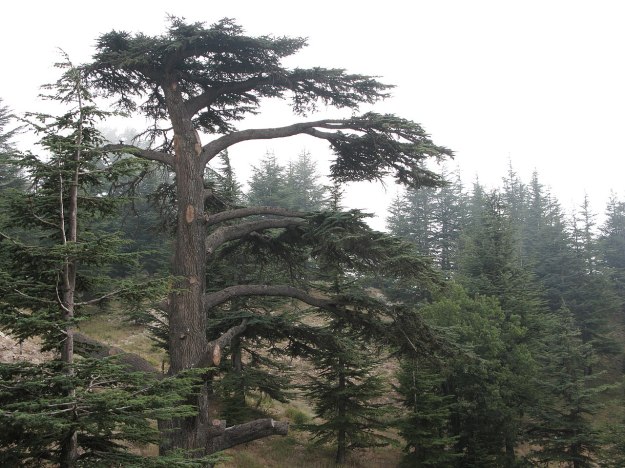
Cedar of Lebanon (Cedar of God), Lebanon By © Vyacheslav Argenberg / http://www.vascoplanet.com/, CC BY 4.0, https://commons.wikimedia.org/w/index.php?curid=92872076

Ezekiel 31

1In the eleventh year, in the third month, on the first day of the month, the word of the LORD came to me: 2Mortal, say to Pharaoh king of Egypt and to his hordes:
Whom are you like in your greatness?
3Consider Assyria, a cedar of Lebanon,
with fair branches and forest shade,
and of great height,
its top among the clouds.
4The waters nourished it,
the deep made it grow tall,
making its rivers flow
around the place it was planted,
sending forth its streams
to all the trees of the field.
5So it towered high
above all the trees of the field;
its boughs grew large
and its branches long,
from abundant water in its shoots.
6All the birds of the air
made their nests in its boughs;
under its branches all the animals of the field
gave birth to their young;
and in its shade
all great nations lived.
7It was beautiful in its greatness,
in the length of its branches;
for its roots went down
to abundant water.
8The cedars in the garden of God could not rival it,
nor the fir trees equal its boughs;
the plane trees were as nothing
compared with its branches;
no tree in the garden of God
was like it in beauty.
9I made it beautiful
with its mass of branches,
the envy of all the trees of Eden
that were in the garden of God.
10Therefore thus says the Lord GOD: Because it towered high and set its top among the clouds, and its heart was proud of its height, 11I gave it into the hand of the prince of the nations; he has dealt with it as its wickedness deserves. I have cast it out. 12Foreigners from the most terrible of the nations have cut it down and left it. On the mountains and in all the valleys its branches have fallen, and its boughs lie broken in all the watercourses of the land; and all the peoples of the earth went away from its shade and left it.
13On its fallen trunk settle
all the birds of the air,
and among its boughs lodge
all the wild animals.
14All this is in order that no trees by the waters may grow to lofty height or set their tops among the clouds, and that no trees that drink water may reach up to them in height.
For all of them are handed over to death,
to the world below;
along with all mortals,
with those who go down to the Pit.
15Thus says the Lord GOD: On the day it went down to Sheol I closed the deep over it and covered it; I restrained its rivers, and its mighty waters were checked. I clothed Lebanon in gloom for it, and all the trees of the field fainted because of it. 16I made the nations quake at the sound of its fall, when I cast it down to Sheol with those who go down to the Pit; and all the trees of Eden, the choice and best of Lebanon, all that were well watered, were consoled in the world below. 17They also went down to Sheol with it, to those killed by the sword, along with its allies, those who lived in its shade among the nations.
18Which among the trees of Eden was like you in glory and in greatness? Now you shall be brought down with the trees of Eden to the world below; you shall lie among the uncircumcised, with those who are killed by the sword. This is Pharaoh and all his horde, says the Lord GOD.

This fifth oracle against Egypt is like Ezekiel’s earlier oracle against the King of Tyre where the king is highlighted for their beauty and preeminent state among the garden of Eden.[1] Like that previous oracle the one who excels all others is brought low as they exceed their station as a creation of God. Although this oracle is directed against Pharoah and his hordes, it only mentions Pharoah or Egypt in the first and last verse, the rest of the oracle uses Assyria as an example for Egypt to heed. Assyria who was once the great empire in the north has collapsed and dragged all who allied themselves with her down to Sheol, and the same fate awaits proud Egypt in this oracle.

It is likely that Ezekiel is building upon Isaiah’s imagery in Isaiah 2:11-13 linking pride and great trees.

The haughty eyes of people shall be brought low, and the pride of everyone shall be humbled; and the LORD alone will be exalted in that day. For the LORD of hosts has a day against all that is proud and lofty, against all that is lifted up and high; against all the cedars of Lebanon, lofty and lifted up; and against all the oaks of Bashan;

Just as Daniel will probably utilize Ezekiel’s imagery in his own image in Daniel 4: 10-17 and Jesus alludes to this imagery in his parable of the mustard seed.[2] Yet, Ezekiel’s usage is the longest sustained use of this metaphor.

This oracle is dated almost two months after the previous one, June 21, 587 BCE. The city of Jerusalem is still besieged by Babylon, and it is possible that Babylon has already repulsed the Egyptian attempts to lift the siege. Egypt has been one of the significant powers in the ancient world throughout Israel’s history, and Egypt has continually exerted influence in the region around Israel. Now Egypt in this parable is told to look at a metaphor of Assyria. Assyrian was the great empire in the north prior to the emergence of the Babylonian empire. There are some translators who view Assyria’s presence here as a mistake, but thematically it makes sense to use a metaphor about Assyrian to demonstrate to Egypt that it too can fall from its great heights. Even though verses three through nine repeatedly refer to the beauty of this metaphorical tree and portray its majesty in an admirable light, like the earlier references to the King of Tyre, this is a case of prophetic satire. Although the kings of Assyria normally have the date palm as their image, the use of the cedar of Lebanon would be a well-known image of both size and strength, and a tree frequently used in royal and holy construction.

There are mythical elements in the background of this image, but they should not distract from the basic point that Pharoah and Egypt, according to the oracle, will share the same fate as Assyria. Although the waters nourished it and the deep made it grow tall, it will still fall when the prince of nations (King Nebuchadrezzar of Babylon) cuts it down. The waters and deep are the same Hebrew words used in Genesis 1:2 and this tree surpasses the trees of the garden of God (Eden) but ultimately, like the King of Tyre, its beauty, strength, and height cannot prevent its falling into the realm of the dead. The remnants of the tree fall on the mountains and valleys, just as the defeated ‘dragon’ in the next chapter will have its remains fall on the mountains, valleys, and waterways.[3] Now this great tree and all the lesser trees that inhabited the space under its branches find themselves in the Pit.

The very forces which once gave this great tree life now bury it in the depths. The rivers that flowed around it are now restrained and this once beautiful and living tree is now debris scattered upon the ground, or in other places brought down into the pit. The great tree and the empire it represents are now dead, and Egypt who is similarly a great tree is in danger from the same axe wielding prince of the nations. In the oracle Pharoah and all his armies cannot oppose God and God’s chosen instrument of vengeance King Nebuchadrezzar.

As mentioned before there are limited historical records from this period. We do know that Nebuchadrezzar does eventually turn his army to march on Egypt. Although the Babylonians have enjoyed multiple victories over Egypt, Egypt never becomes a part of the Babylonian empire. The great cedar tree which represents Egypt will stand at least for a time longer. Ezekiel interprets the actions of the king of Babylon and his forces as an extension of the will of the God of Israel. Even though Jerusalem is under siege, the LORD’s actions, in Ezekiel’s mind, are just. The LORD is not merely the God of Israel but is at work in the movement of empires to bring about the will of God.

[1] Ezekiel 28.

[2] Matthew 13: 31-32, Mark 4: 30-32, Luke 13: 18-19

[3] Ezekiel 32: 5-6.

Revelation 17 Unmasking Babylon

Revelation 17

1 Then one of the seven angels who had the seven bowls came and said to me, “Come, I will show you the judgment of the great whore who is seated on many waters, 2 with whom the kings of the earth have committed fornication, and with the wine of whose fornication the inhabitants of the earth have become drunk.” 3 So he carried me away in the spirit into a wilderness, and I saw a woman sitting on a scarlet beast that was full of blasphemous names, and it had seven heads and ten horns. 4 The woman was clothed in purple and scarlet, and adorned with gold and jewels and pearls, holding in her hand a golden cup full of abominations and the impurities of her fornication; 5 and on her forehead was written a name, a mystery: “Babylon the great, mother of whores and of earth’s abominations.” 6 And I saw that the woman was drunk with the blood of the saints and the blood of the witnesses to Jesus.

When I saw her, I was greatly amazed. 7 But the angel said to me, “Why are you so amazed? I will tell you the mystery of the woman, and of the beast with seven heads and ten horns that carries her. 8 The beast that you saw was, and is not, and is about to ascend from the bottomless pit and go to destruction. And the inhabitants of the earth, whose names have not been written in the book of life from the foundation of the world, will be amazed when they see the beast, because it was and is not and is to come.

9 “This calls for a mind that has wisdom: the seven heads are seven mountains on which the woman is seated; also, they are seven kings, 10 of whom five have fallen, one is living, and the other has not yet come; and when he comes, he must remain only a little while. 11 As for the beast that was and is not, it is an eighth but it belongs to the seven, and it goes to destruction. 12 And the ten horns that you saw are ten kings who have not yet received a kingdom, but they are to receive authority as kings for one hour, together with the beast. 13 These are united in yielding their power and authority to the beast; 14 they will make war on the Lamb, and the Lamb will conquer them, for he is Lord of lords and King of kings, and those with him are called and chosen and faithful.”

15 And he said to me, “The waters that you saw, where the whore is seated, are peoples and multitudes and nations and languages. 16 And the ten horns that you saw, they and the beast will hate the whore; they will make her desolate and naked; they will devour her flesh and burn her up with fire. 17 For God has put it into their hearts to carry out his purpose by agreeing to give their kingdom to the beast, until the words of God will be fulfilled. 18 The woman you saw is the great city that rules over the kings of the earth.”

The language here is potent, and the subject matter below may be difficult for some readers, particularly those who would be triggered by imagery of sexual violence and the metaphorical use the word whore. Rhetorically this is a powerful use of satire to subvert many of the images of strength and piety that were a part of the portrayed identity of Rome. Interpreters across the generations have used this passage as a basis for satire in their own time. For example, Lucas Cranach the Elder in his initial edition of illustrations for Revelation portrayed the woman on the beast wearing a papal tiara, which visually reinforced that for many followers of Luther in their time they viewed the pope and the Roman catholic church as a reading of the text for their time. In later editions Cranach would modify the woodcut to have a simpler crown and a less political reading. Even though the initial readers of Revelation would have seen the imagery pointing satirically to the Roman empire of their day instead of the Roman catholic church, the understanding of the satirical intent of the text has been consistent.

Lucas Cranach the Elder, The Whore of Babylon

The Roman empire portrayed itself as a virtuous, strong and benevolent empire. The peace of Rome, while it may have been a bloody peace as mentioned in earlier chapters, was enforced through the might of the legions, the alliance with local powers and in some cases the use of fear and terror to keep populations in line. The Romans did not invent crucifixion, for example, but they did perfect it as a tool to shame those who were crucified as they died a slow painful death exposed for the rest of the population to see. I have frequently heard people say that John in writing Revelation was encoding his message so that the Roman empire would not understand what he is saying but this is simply not true. To his readers the images he used would be as readable as most political cartoons in a newspaper would be today. For example, Rome was commonly known as a city on seven hills, or mountains, and by explaining the details of the seven heads being seven mountains and seven hills where the woman would be clear to any reader of the time who he was referring to. Especially when Roman coinage of the time portrays Rome the city as a goddess reclining upon the seven hills. The satire begins by taking the Roman image of their virtue and reversing it: Rome the goddess becomes instead personified as the whore dressed in opulence. As Craig Koester can state:

Such transparent allusion to Rome means that John does not use imagery to conceal his message but to reveal the opulence, arrogance, violence and idolatry of the world’s ruling power. (Koester, 2014, p. 690)

Auction coins from http://www.icollector.com showing a Sestertius from 69-70 with Vespasian on the front and the goddess Rome reclining on seven hills on the back

The emperor cult in the Roman empire was often embraced willingly by the people of the empire. Patrons would compete for the ability to dedicate a temple or a structure to the empire to show their loyalty and to curry favor. Since to many people the ruler cult was popular, even early Christians appeared to look for how they could participate in the economic and social benefits as we learned in the letters to the seven churches in Revelation two and three, and in the image the angel has to tell John not to be amazed by the portrayal of Rome. The people of Rome who actively participated in the emperor cult had either become numb to the violence of the empire, kept themselves distant from it or had become intoxicated with it themselves. John wants us to understand that the power behind Rome is not the God of Israel or any benevolent god, but instead by placing the woman on the beast we met in Revelation thirteen John wants his readers to understand that the empire is instead a beast created in the image of the great dragon, Satan, and a “demonic counterpart to the slain and living Lamb.” (Koester, 2014, p. 687)

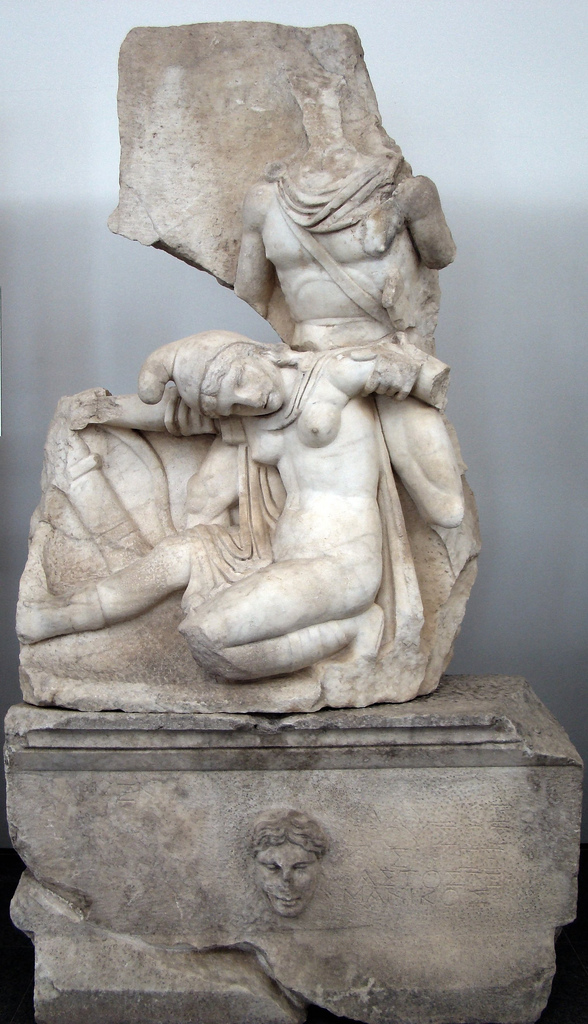
For all the Roman empire’s talk of piety, they had no trouble using images of women being abused or raped by the emperor in military garb as a metaphor for the military conquest of nations. For example, in the excavations at Aphrodisias we can see in two reliefs emperor Claudius conquering Britain and Nero conquering Armenia portrayed as a soldier who is overpowering a woman.

Emperor Claudius Portraying the Conquest of Brittanica in AD 43 as the Rape of a Woman from Aphrodisias Excavations Sebasteion South Building http://aphrodisias.classics.ox.ac.uk/sebasteionreliefs.html#prettyPhoto

Emperor Nero portrayed conquesting Armenia rom Aphrodisias Excavations Sebasteion South Building http://aphrodisias.classics.ox.ac.uk/sebasteionreliefs.html#prettyPhoto


The imagery of Rome as the conquering and overpowering essence of masculinity is now reversed as Rome becomes the prostitute who will be torn apart by the very ones that she has given her favors to. This imagery is similar to the end of Jeremiah four where the woman, representing Judah, prepares herself to receive lovers:

 30 And you, O desolate one, what do you mean that you dress in crimson,
that you deck yourself with ornaments of gold,
 that you enlarge your eyes with paint?
In vain you beautify yourself.
Your lovers despise you; they seek your life.
 31 For I heard a cry as of a woman in labor,
anguish as of one bringing forth her first child,
the cry of daughter Zion gasping for breath, stretching out her hands,
“Woe is me! I am fainting before killers!”

Much as the imagery of Rome the conqueror shows that conquering soldiers in this time did not pay for a prostitute but instead took women against their will, now Rome itself is torn apart by the very powers that once paid it homage and honor. Revelation understands that the forces aligned against God are indeed a house divided and they will devour one another even before Christ arrives. The violence that created the empire will become its undoing in John’s vision.


Psalm 29- The Thundering Voice of God

Supercell Thunderstorm over Chaparral, New Mexico on April 3, 2004

Supercell Thunderstorm over Chaparral, New Mexico on April 3, 2004

Psalm 29

<A Psalm of David.>
 1 Ascribe to the LORD, O heavenly beings, ascribe to the LORD glory and strength.
 2 Ascribe to the LORD the glory of his name; worship the LORD in holy splendor.
 3 The voice of the LORD is over the waters; the God of glory thunders, the LORD, over mighty waters.
 4 The voice of the LORD is powerful; the voice of the LORD is full of majesty.
 5 The voice of the LORD breaks the cedars; the LORD breaks the cedars of Lebanon.
 6 He makes Lebanon skip like a calf, and Sirion like a young wild ox.
 7 The voice of the LORD flashes forth flames of fire.
 8 The voice of the LORD shakes the wilderness; the LORD shakes the wilderness of Kadesh.
 9 The voice of the LORD causes the oaks to whirl, and strips the forest bare; and in his temple all say, “Glory!”
 10 The LORD sits enthroned over the flood; the LORD sits enthroned as king forever.
 11 May the LORD give strength to his people! May the LORD bless his people with peace!
 
What language do we use to praise God and where does it come from? I know for many contemporary Christians there is a fear of using the secular language or language that may come from a mythological or another religion’s background. Yet, here is Psalm 29 which uses the language that the Canaanites used to talk about their god Baal and repurposes that praise in a way to explicitly and repetitively talk about the LORD. In our desire to ascribe to the LORD glory and strength what words, what language and what images shall we use? How do the metaphors capture some piece of what the LORD’s strength and power is? One of the gifts of the Psalms is the way in which it stretches and challenges the ways in which we can poetically allow ourselves to talk about God.

The metaphorical exploration of the power of God’s voice as a thunderstorm is a potent image on its own. The powerful image also takes on a polemical context when paired in a Canaanite environment when their primary god Baal is a storm god who battles the chaotic sea (Yam). In a bold move the poet who puts these words on paper takes the primary image of strength of the god of the surrounding nation and usurps the image to talk about the voice of the LORD. All the other heavenly beings are summoned from the beginning to honor the LORD and to assume their proper subservient positions. The unimaginable power of the mighty storm which can strip the forests are or which can break the mighty cedars of Lebanon is now one attribute of the LORD’s strength.

To use the language of the surrounding world as a part of the language we use to praise God is necessary and yet like all metaphors it has its limits. The Psalms never pretend to be a systematic theology but rather a window into the ways in which God has been experienced. The metaphors can capture our imaginations as ways, as in this Psalm, to give praise to God. In a Psalm where the voice of the LORD is emphasized seven times the only word spoken is reserved for those in the temple. We, like those in the temple, use our own limited words to try to proclaim, “Glory!” The bible wants to use the language it can muster to bring honor and praise to the LORD, and if it means redirecting language which the people of the LORD believed was misused to worship other gods then they would repurpose and recast those words to bring honor and praise to their God. To echo another poet quoted by Paul in Philippians they wanted to see that time when “every knee should bend, in heaven and on earth and under the earth.” (Philippians 2. 10)

Psalm 29 celebrates the power of the LORD with all its destructive might but ultimately that power is wielded so that the people may be at peace. As in Psalm 46 where the bows are broken and spears are shattered and shields burned to make wars cease, so here the incredible powerful voice of the LORD is wielded to bring the people peace. As Rolf Jacobson can state, “God’s strength quells the warring madness of the children of Adam and Eve. (Nancy deClaisse-Walford, 2014, p. 286) Until the days to come that the prophet Isaiah could dream of when swords are turned into plowshares and spears into pruning hooks (Isaiah 2.4) and where the voice of the LORD blesses the people with peace and all the nations stream to the house of the LORD we live in the expectation for the time when the voice of the LORD’s immense power thunders across our world, strengthens the people, blesses us with peace and all can proclaim, “Glory!”

Minding the Flow

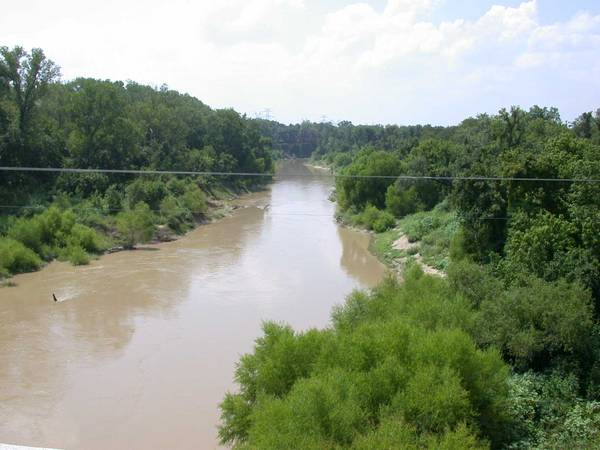
Trinity River in Texas

Trinity River in Texas

There was a time when the words flowed from the pen
Like rivers of inky thought rushing toward the paper sea
And the flow revealed the gems and minerals buried
Within the rumbling currents of thought.
One day the waters stopped flowing
Dammed up by the constraints of time and productivity
Caught up behind the logjams of life
Too long untended and they quickly grew stagnant
But I’m learning to mind the flow again
Clearing away the detritus that prevented the flow
Slowly finding the silence to hear the water’s song
To prospect again in the sediment deposited on the shore
Rather than acting as if the waters need to be contained
Shutting them inside as if mindful of a drought
Instead to let the flow down and fill up the vacant pages
Not expecting that every exploration will yield up new surprises
Learning to merely enjoy the rhythm of the river again
Minding the flow, mining the shore, swimming in the shallows
Diving into the depths and sharing in the experience
Letting the words flow again and take their own course
As the paper seas begin once again to be filled with images

Neil White, 2015

Metaphors of Reality

Newton by William Blake (1795)

Newton by William Blake (1795)

One of the sets of vows that is commonly used when I do weddings includes the words “to better understand ourselves, the world and God.” One of the things we do as humans with our language to better understand ourselves, the world and God is we attempt to describe objects and actions and their interactions. All of these words, symbols and ideas are constructed within a system to give meaning and sense to them, for example in the world of mathematics 1 + 1 = 2, if the rules of the system were different 1 +1 could equal a different number, but the rules that the system works within allow 1 + 1= 2 to be the correct answer while 1 + 1= 3 would not make sense within the system. The systems we understand the world within are attempts to describe the reality we observe and know, and yet they are always metaphors or propositions of reality. As Jacob Bronowski states:

I believe that all the kind of scientific descriptions that we can make about one another are perfectly real. And yet, I believe that any theory that we as human beings make at any point in time is full of provisional decodings which to some extent are as fictitious as the notion of force in Newton. (Bronowski, 1978, p. 58)

As Bronowski alludes to, Newton’s description of force, particularly the force of gravity where “the gravitational attraction is proportional to the mass of the two bodies divided by the square of the distance between some point in each mass.” Or in the symbolic language of science:

G=  k ( m m’) / r2

Which as a description of reality worked well in a system of Newtonian based physics, but when Albert Einstein published his first paper on relativity in 1905 it demonstrated the flaw in the concept and proposed a new way of describing the reality,  and yet even Einstein’s theory is no longer held to be an ultimate description of reality- yet both the work of Newton and Einstein and countless other scientists (just to stay within the scientific realm of creativity) work well for describing reality as it is encountered and it is only when we find exceptions to the rule where we begin to wonder what might cause these anomalies, is the way we have constructed reality inaccurate in some manner and we begin to wonder if perhaps there is some new way to understand the world our senses observe and to describe it so that others can encounter the world in a new way.

Science is not the only discipline that works this way, think for example in the realm of religion. At various point in history different metaphors have served as a dominant metaphor for understanding God. For example, at the beginning of the enlightenment where the clocks and watches were one of the most complicated pieces of technology available that most people would encounter in their world there was the common image of God as the clockmaker who constructed the world and then allowed it to run. It is not coincidental that this was a time in which deism was the primary philosophical tool for talking about God and the deist view of God was a God that was for the most part uninvolved in the day to day undertakings of the world. This is not the dominant picture of God today and there are a number of problems with this image, but it was how many religious people of that time tried to make sense of God in a way they could imagine.

Here I think is where the mystical tradition of talking about God can help us out: on the one hand there is the cataphatic tradition which in a positive manner says that our language can point to God while, on the other hand, there is the apophatic tradition which states that our language is never adequate to describe God. Moving back to our world and ourselves there is a sense in which our language describes reality, for example I can say that I have hazel eyes or that I am around 6’2” tall but ultimately my descriptions, even of myself, will never be completely adequate to convey all of who I am. Our understanding of the world around us is also provisional or metaphorical, that doesn’t mean it is incorrect-but it may not be complete. I think the French language has a helpful construct here with its two words that we can translate into the English ‘to know.’ The French word savior refers to knowing a fact, knowing how to do something or to know something by heart. The French word connaître refers to knowing a person or being familiar with a person or thing. There is a sense where we can know about and describe individual things but people, for example, are not reducible to a set of facts. We can describe others, ourselves, the world and even God, but that sense of knowing is always based upon our relation to those things and is in its own way contingent on the systems we understand them within. Each of these systems are really theories about the nature of the world and there may be times where we find our own metaphors of reality are inadequate and need to be reexamined as we attempt to make sense of our relationship to the reality we encounter.

purple rose 01 by picsofflowers.blogspot.com