Tag Archives: Language of faith

Psalm 108 Old Words Brought Together For A New Time

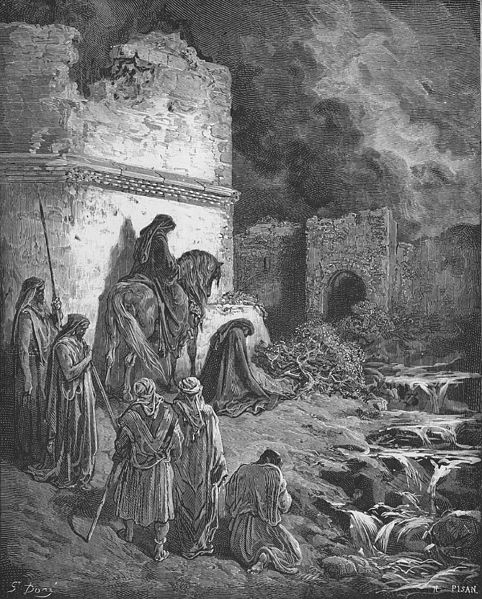
Nehemiah View the Ruins of jerusalem’s Walls, Gustav Dore 1866

Psalm 108

A Song. A Psalm of David.
 1My heart is steadfast, O God, my heart is steadfast; I will sing and make melody. Awake, my soul!
 2Awake, O harp and lyre! I will awake the dawn.
 3I will give thanks to you, O LORD, among the peoples, and I will sing praises to you among the nations.
 4For your steadfast love is higher than the heavens, and your faithfulness reaches to the clouds.
 5Be exalted, O God, above the heavens, and let your glory be over all the earth.
 6Give victory with your right hand, and answer me, so that those whom you love may be rescued.
 7God has promised in his sanctuary: “With exultation I will divide up Shechem, and portion out the Vale of Succoth.
 8Gilead is mine; Manasseh is mine; Ephraim is my helmet; Judah is my scepter.
 9Moab is my washbasin; on Edom I hurl my shoe; over Philistia I shout in triumph.”
 10Who will bring me to the fortified city? Who will lead me to Edom?
 11Have you not rejected us, O God? You do not go out, O God, with our armies.
 12O grant us help against the foe, for human help is worthless.
 13With God we shall do valiantly; it is he who will tread down our foes.

Psalm 108 brings together portions of two psalms attributed to David for a new time. Most interpreters believe that Psalm 57: 7-11 and Psalm 60: 5-12 were written before they were later joined together in the current psalm. This is a common practice in scripture where a key idea or phrase is utilized in multiple contexts[1] but here the entirety of the psalm is a composition of two previous psalms. Psalm 57: 7-11 forms the initial five verses while Psalm 60: 5-12 forms the final eight verses. Based on the position of Psalm 108 in book five of the Psalter the new situation may involve the return of the people to their home after the exile, but even without knowing a concrete situation for the invocation of these words from earlier psalms it points to the long-standing resonance and vitality of these words in the life of the people.

The heart (the organ of will in Hebrew) is steadfast and the proper response to the steadfast love of God is for the entirety of one’s being to respond in praise and song. The steadfast love (hesed) and the faithfulness of God are beyond measure and the psalmist’s gift of song echoes the chorus of a grateful creation to its creator. The joyous ending of Psalm 57 introduces the petition of verse six which initiates the quotation of Psalm 60.

The psalms are spoken from the embodied experience of the covenant people, and that experience involves times where God’s promise and presence feel distant. The beloved ones of God have always understood their continued existence was contingent on God’s continual provision. As in a previous time the people do not need a stronger army or a better military technology, they need the God who reigns over both Israel and the surrounding nations, to come to their aid. As J. Clinton McCann Jr. can articulate.

Their prayer is not that of the powerful, who seek to claim God’s sanction of the status quo. Rather, their prayer is the desperate prayer of those who turn to God as the only possible hope in an apparently hopeless situation (v. 11) (NIB IV:918)

If these words reemerge in the fragile situation of the post-exilic return to Jerusalem where the people are threatened by hostile neighbors, the reminder that Moab, Edom, and Philistia are all under God’s claim[2] is a source of comfort. Yet, the people who claim the title of ‘those whom you love’ now feel the abandonment of God. God no longer goes out with the people or defends them, but they cry out to God for God’s renewed favor.

The psalms understand the dependence of the people upon God’s continual provision but also speak eloquently about the perception of God’s absence. This psalm utilizes two previously utilized psalms to speak of the trust in God’s steadfast love and faithfulness in a time where they feel endangered by God’s absence. Yet, the perception of God’s distance causes the beloved ones of God to cry out to God for deliverance from their current distress. For they can do nothing on their own, but with God they shall do valiantly.


[1] For example, 1 Chronicles 16 brings together Psalm 105: 1-11 and Psalm 106: 35-36, of Isaiah 2: 2-4 is repeated in Micah 4: 2-3. There are numerous other examples of parallels.

[2] The designation of Moab as washbasin, Edom as a place where shoes are hurled, and Philistia as one that the LORD shouts in triumph over may be intended as an insult to these nations, but it also may simply be a way of designating that they too remain under God’s control. Moab, Edom, and Philistia all incur words of judgment in the prophets (Ezekiel 25, Jeremiah 4748, Obadiah 12-13).  

Psalm 102 The Song of One Suffering in Solitude

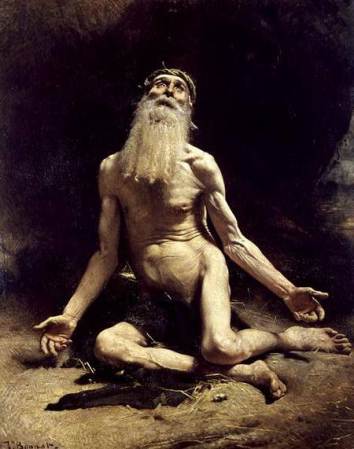
Job (oil on canvas) by Bonnat, Leon Joseph Florentin (1833-1922)

Psalm 102

A prayer of one afflicted, when faint and pleading before the LORD.
 1Hear my prayer, O LORD; let my cry come to you.
 2Do not hide your face from me in the day of my distress. Incline your ear to me; answer me speedily in the day when I call.
 3For my days pass away like smoke, and my bones burn like a furnace.
 4My heart is stricken and withered like grass; I am too wasted to eat my bread.
 5Because of my loud groaning my bones cling to my skin.
 6I am like an owl of the wilderness, like a little owl of the waste places.
 7I lie awake; I am like a lonely bird on the housetop.
 8All day long my enemies taunt me; those who deride me use my name for a curse.
 9For I eat ashes like bread, and mingle tears with my drink,
 10because of your indignation and anger; for you have lifted me up and thrown me aside.
 11My days are like an evening shadow; I wither away like grass.
 12But you, O LORD, are enthroned forever; your name endures to all generations.
 13You will rise up and have compassion on Zion, for it is time to favor it; the appointed time has come.
 14For your servants hold its stones dear, and have pity on its dust.
 15The nations will fear the name of the LORD, and all the kings of the earth your glory.
 16For the LORD will build up Zion; he will appear in his glory.
 17He will regard the prayer of the destitute, and will not despise their prayer.
 18Let this be recorded for a generation to come, so that a people yet unborn may praise the LORD:
 19that he looked down from his holy height, from heaven the LORD looked at the earth,
 20to hear the groans of the prisoners, to set free those who were doomed to die;
 21so that the name of the LORD may be declared in Zion, and his praise in Jerusalem,
 22when peoples gather together, and kingdoms, to worship the LORD.
 23He has broken my strength in midcourse; he has shortened my days.
 24“O my God,” I say, “do not take me away at the midpoint of my life, you whose years endure throughout all generations.”
 25Long ago you laid the foundation of the earth, and the heavens are the work of your hands.
 26They will perish, but you endure; they will all wear out like a garment. You change them like clothing, and they pass away;
 27but you are the same, and your years have no end.

 28The children of your servants shall live secure; their offspring shall be established in your presence.

Psalm 102 is described in its superscription as a prayer of one afflicted, when faint and pleading before the LORD. This type of description is unusual among the psalms. It doesn’t indicate an author to attribute the psalm to, nor does it give instructions for its performance or a reference to a scriptural story that the psalm comes from. This psalm of a suffering one who is alienated from their body, from society, and ultimately from God may have been intended as a psalm that any suffering individual could recite at times where their situation seemed hopeless, and God’s help seemed far away. Imagery of impermanence, loneliness, pain, and shame permeate the complaint of the psalm, but like many psalms of complaint there is a turn towards hope. The psalmist intuits that the answer, “to human finitude and mortality is divine infinitude and immortality.” (Nancy deClaisse-Walford, 2014, p. 754)

The opening language of the psalm resonates with appeals throughout the psalter as Rolf A. Jacobson notes:

The opening appeal to be heard employs language quite typical of these entreaties—hear my prayer, let my cry come unto you (39:12), do not hide your face (27:9; 143:7), turn your ear towards me (31:2; 71:2), make haste to answer me (69:17; 143:7) (Nancy deClaisse-Walford, 2014, p. 751)

Although Rolf Jacobson attributes this to intentionally creating a generic composition for use in the community, the use of familiar language may also reflect a person shaped in the communal worship which utilizes these psalms. The language of prayer and faith is shaped in the worshipping community which shaped the psalmist’s faith and life. Yet, now in a time when the author is alienated from their own physical body, from the community, and from God, they turn to the words that shaped their life when they were physically, socially, and religiously whole.

The psalm moves between personal complaints about their own health and isolation, “I complaints” in Westermann’s terminology, complaints about the actions of isolation and persecution by those in the psalmist’s society, “they complaints”, and complaints about the way that God is treating the psalmist, “you complaints.”[1] The personal complaints begin with an image of transience that reminds me of Ecclesiastes frequently used term hebel (vanity, emptiness). Hebel literally means smoke, mist, or vapor but is often used metaphorically to refer to the emptiness of life.[2] Now for the psalmist their days pass away like smoke and their bones burn like a furnace. Their life down to their very bones is going up in smoke while their heart withers like grass and they are too far gone to even eat the bread that could give them strength.  Their songs have turned to groans and their body now is transforming into a (barely) living skeleton. We don’t know if they were suffering from an illness, but they attribute their suffering to God’s judgment upon them. Their suffering is also done in isolation, they are like an unclean owl of the wastelands or a lonely bird on a roof. These lonely images of birds heighten the feeling of the psalm, for the sufferer is not only weak but they are abandoned.

The social complaints are also sharply worded as the psalmist’s unnamed name is synonymous with a curse among their enemies. Their personal weakness and isolation are viewed in the society as a curse from God, and enemies have taken advantage of this weakness. The only nourishment left for this abandoned one is the bread of ashes and the drink of tears.  Yet, behind both the physical pain and suffering and the social isolation is the LORD. We are never told of any sin that this poet has committed, but they view their suffering because of God’s anger and distance. In the words of the psalm God has cast the suffering one aside and yet hope resides in God repenting from God’s attitude towards the psalmist, turning the face and hearing with the ear and responding with grace and healing.

In contrast to the evanescent position of the psalmist is the strength and might of the LORD. The psalmist now joins his fate to the action of God to have compassion on Zion. It is possible that this psalm originates in the time of the exile where there is hope for the rebuilding of Zion and rescue the people from the destitute position as exiles in a foreign land. Yet, even without the context of the Babylonian exile, the turn to hope is based on the faithfulness of God for the people and a belief that God’s anger lasts only a moment, but God’s favor is for a lifetime.[3] The poet’s strength may have been broken in the middle of their life by God’s action, but if God wills it will be renewed. The heavens and the earth which seem so permanent to humanity are like a garment that can easily be changed by the powerful and permanent God. God will continue to endure and only in God can this suffering one hope to find a renewed physical, social, and religious life. The psalmist claims their familial bond to the LORD the God of Israel and now awaits the parental turning of their God to the children of God’s servants.


[1] Rolf A. Jacobson notes this helpful pattern citing Westermann, The Psalms (54-57). (Nancy deClaisse-Walford, 2014, p. 752)

[2] Psalm102 does not use the term hebel but the combination of words of impermanence create a similar resonance for me as Ecclesiastes.

[3] Psalm 30:5.

Psalm 71 A Prayer for Help Shaped by a Life of Worship

An Old Woman Reading, Probably the Prophetess Hannah by Rembrandt (1631)

Psalm 71

1 In you, O LORD, I take refuge; let me never be put to shame.
2 In your righteousness deliver me and rescue me; incline your ear to me and save me.
3 Be to me a rock of refuge, a strong fortress, to save me, for you are my rock and my fortress.
4 Rescue me, O my God, from the hand of the wicked, from the grasp of the unjust and cruel.
5 For you, O Lord, are my hope, my trust, O LORD, from my youth.
6 Upon you I have leaned from my birth; it was you who took me from my mother’s womb. My praise is continually of you.
7 I have been like a portent to many, but you are my strong refuge.
8 My mouth is filled with your praise, and with your glory all day long.
9 Do not cast me off in the time of old age; do not forsake me when my strength is spent.
10 For my enemies speak concerning me, and those who watch for my life consult together.
11 They say, “Pursue and seize that person whom God has forsaken, for there is no one to deliver.”
12 O God, do not be far from me; O my God, make haste to help me!
13 Let my accusers be put to shame and consumed; let those who seek to hurt me be covered with scorn and disgrace.
14 But I will hope continually, and will praise you yet more and more.
15 My mouth will tell of your righteous acts, of your deeds of salvation all day long, though their number is past my knowledge.
16 I will come praising the mighty deeds of the Lord GOD, I will praise your righteousness, yours alone.
17 O God, from my youth you have taught me, and I still proclaim your wondrous deeds.
18 So even to old age and gray hairs, O God, do not forsake me, until I proclaim your might to all the generations to come. Your power
19 and your righteousness, O God, reach the high heavens. You who have done great things, O God, who is like you?
20 You who have made me see many troubles and calamities will revive me again; from the depths of the earth you will bring me up again.
21 You will increase my honor, and comfort me once again.
22 I will also praise you with the harp for your faithfulness, O my God; I will sing praises to you with the lyre, O Holy One of Israel.
23 My lips will shout for joy when I sing praises to you; my soul also, which you have rescued.
24 All day long my tongue will talk of your righteous help, for those who tried to do me harm have been put to shame, and disgraced.

The practice of worship shapes the language of our prayers and informs how we talk about God’s action in the world. Psalm 71 bears witness to this process by bringing together language from several psalms to address the situation of a faithful elderly worshiper crying once again for God’s deliverance. These psalms which have been a part of the regular recitations of those seeking to live a righteous life now shape a new prayer lifted up to God. Even as this psalm reflects on what has gone before, it becomes a pattern for others to build their own prayers and songs upon. The psalm becomes a medium where the psalmist proclaims God’s might to generations to come.

A consistent theme throughout the psalms is that God is the source of refuge and deliverance from one’s enemies. God is the refuge, the strong fortress, and the rock, all familiar images for God’s protection. The lifelong faith of the psalmist begins metaphorically from birth where God serves as the midwife delivering the psalmist from the mother’s womb. The trust of the psalmist is formed by a lifetime of worship, prayer, song, and the experience of God’s protection and rescue.

This praying one has been a portent to many. Many assume that they are a portent because they were judged by God for some past action, but it is equally likely that they are a portent of what a life lived under God’s favor is like. Although this is a psalm petitioning for God’s deliverance from enemies there is no indication that the psalmist feels distant from God or judged by God. Even though this is a psalm asking for God’s deliverance and protection it maintains a confident note of praise throughout. The current struggle that the psalmist endures does not erase a lifetime of God’s provision or the language of praise formed in worship.

In a hostile world the vulnerability that comes with old age can be a cause of great anxiety and danger. The enemies in the psalms are often looking for weaknesses that they can exploit for their own benefit, and their action here goes against the intent of the law that God provided Israel. The commandment on honoring father and mother in both Exodus 20 and Deuteronomy 5 is primarily about caring for parents in their old age and the Hebrew culture was to be a culture that honored the elderly rather than preying on them. Unfortunately, in any conflict it is often the weak: the sick, the elderly, the disabled, women, children, and the poor who often are viewed as expendable. The enemies are portrayed like vultures who are waiting to pick at the psalmist’s carcass and their actions are viewed as shameful. Perhaps they are waiting to seize power from this psalmist and the psalmist, on their own, is unable to resist them as vigorously as they would have been able to when they were younger. Their vulnerability forces them to rely upon God as their refuge and strength and to bring these dishonorable ones to justice.

The life of faith is a life shaped by the praising of God for God’s faithfulness and steadfast love, and even in times of trouble this praise comes naturally to the psalmist’s lips. Even psalms of lamentations will normally turn to praise and this unnamed psalm writer[1] uses rhythms and patterns that mirror several other psalms to give voice to this praise in the midst of their crisis. J. Clinton McCann points to several places in the psalm where it mirrors Psalms 22, 31, 35, 36, 38, and 40 in addition to the verbal links with Psalm 70. (NIB IV: 958) In the midst of their personal crisis the psalmist leans into the hymnbook looking for words to express their concern and confidence in God. It is likely that we see in this psalm the process of building upon the language of faith learned in worship to express the needs to God in a new time.

The psalmist asks that they be allowed to “proclaim your might to all the generations to come.” (18) In this psalm becoming a part of the scriptures this prayer is granted. The actions of this unnamed psalmist weaving together the language they learned from a lifetime of faithfulness to respond to the struggles brought by the vulnerability of growing older becomes one of the many patterns of faithful praising and crying out to God in the midst of their life recorded in the scriptures. God was there as a midwife to begin the faithful one’s life and God will accompany the psalmist and those who read these psalms throughout their life. The writer of this psalm trusts that God is active in the world and can use troubles and calamities and the deliverance from these troubles to shape the life of the faithful one and to witness to God’s providence in the world. Instruments and voices are lifted up to praise God who has been faithful in the past. The psalmist sings in confidence that God will deliver in the present. The lessons of a life shaped by worship are not quickly forgotten.

[1] Psalm 71 is one of the psalms with no attribution.