Tag Archives: King Jehoiakim

2 Kings 23 The Reforms and Death of Josiah

2 Kings 23: 1-3 Attempting to Recreate the Covenant

1Then the king directed that all the elders of Judah and Jerusalem should be gathered to him. 2The king went up to the house of the LORD, and with him went all the people of Judah, all the inhabitants of Jerusalem, the priests, the prophets, and all the people, both small and great; he read in their hearing all the words of the book of the covenant that had been found in the house of the LORD. 3The king stood by the pillar and made a covenant before the LORD, to follow the LORD, keeping his commandments, his decrees, and his statutes, with all his heart and all his soul, to perform the words of this covenant that were written in this book. All the people joined in the covenant.

King Josiah responded to the rediscovered book of the law of Moses with repentance and seeking God’s will through the prophet Hulda. After learning that his understanding of the judgment that hangs over the people is confirmed by God and learning that God has seen and responded to the king’s action of mourning and repentance Josiah initiates his reforms by gathering the leaders and the people of Judah in an action to recommit the people to the covenant. The action echoes the creation of the covenant between God and the people by Moses (Exodus 24: 4-8), the recommittal to the covenant preceding Moses’ death (Deuteronomy 29:2-29)[1] and finally when Joshua renews the covenant in the promised land (Joshua 8:30-35). Throughout the narratives of the book of Judges, 1&2 Samuel, and 1&2 Kings this is the only instance of covenant renewal of this type. Other kings have attempted to renew the worship in the temple or the building of the temple, but only here in the time of kings are the people reconnected to the law in this manner.[2] This will also happen when the temple is rebuilt and the people are regathered in Jerusalem under the governor Nehemiah and the priest Ezra (Nehemiah 8). King Josiah seems to understand that his personal repentance may be enough for his own reign, but the only chance for the people lies in reestablishing the practices that were designed to make the people of Judah into the people of the LORD the God of Israel.

2 Kings 23: 4-14 Reforming the Practices in Judah

  4The king commanded the high priest Hilkiah, the priests of the second order, and the guardians of the threshold to bring out of the temple of the LORD all the vessels made for Baal, for Asherah, and for all the host of heaven; he burned them outside Jerusalem in the fields of the Kidron and carried their ashes to Bethel. 5He deposed the idolatrous priests whom the kings of Judah had ordained to make offerings in the high places at the cities of Judah and around Jerusalem, those also who made offerings to Baal, to the sun, the moon, the constellations, and all the host of the heavens. 6He brought out the image of Asherah from the house of the LORD, outside Jerusalem, to the Wadi Kidron, burned it at the Wadi Kidron, beat it to dust, and threw the dust of it upon the graves of the common people. 7He broke down the houses of the illicit priests who were in the house of the LORD, where the women did weaving for Asherah. 8He brought all the priests out of the towns of Judah and defiled the high places where the priests had made offerings, from Geba to Beer-sheba; he broke down the high places of the gates that were at the entrance of the gate of Joshua the governor of the city, which were on the left at the gate of the city. 9The priests of the high places, however, did not come up to the altar of the LORD in Jerusalem but ate unleavened bread among their kindred. 10He defiled Topheth, which is in the valley of Ben-hinnom, so that no one would make a son or a daughter pass through fire as an offering to Molech. 11He removed the horses that the kings of Judah had dedicated to the sun at the entrance to the house of the LORD, by the chamber of the eunuch Nathan-melech, which was in the precincts; then he burned the chariots of the sun with fire. 12The altars on the roof of the upper chamber of Ahaz that the kings of Judah had made and the altars that Manasseh had made in the two courts of the house of the Lord he pulled down from there and broke in pieces and threw the rubble into the Wadi Kidron. 13The king defiled the high places that were east of Jerusalem, to the south of the Mount of Destruction, which King Solomon of Israel had built for Astarte the abomination of the Sidonians, for Chemosh the abomination of Moab, and for Milcom the abomination of the Ammonites. 14He broke the pillars in pieces, cut down the sacred poles, and covered the sites with human bones.

The list of idolatrous images and practices that Josiah attempts to eradicate is encyclopedic in nature and paints the picture of the pervasive perversity of the people. Baal, Asherah, and the host of heaven have all been attractive alternatives for the leaders and people of Israel throughout their history as well as the worship at the high places by local priests and leaders who may not have been committed exclusively to the LORD. The ‘illicit priests’ (NRSVue) of verse seven is rendered ‘male prostitutes’ in many translations[3] and may indicate a linkage between some of these idolatrous religious practices and sexual practices. The list is similar to the list of abominable practices in the temple in Ezekiel 8 and it is likely that even during Josiah’s life many of these practices endured even if they were done in secret. Some of these idolatrous practices go back to the time of King Solomon (1 Kings 11: 1-13) and King Josiah forms a faithful contrast to Solomon. The actions of removing and destroying these idolatrous imagery and practices in a public and cultic manner is intended to purge these images from the practices of Judah. Josiah attempts to eradicate these practices, both long standing and recent, and attempt to recenter worship in a purged temple with administered by the priests who are faithful to the LORD in Jerusalem.

The reading of the covenant is not enough. Josiah seems to understand that only a complete abandonment of the idolatrous practices of his ancestors and the people may turn away the anger of the LORD. His work of purging the temple, the countryside, and the people is a model of what is expected in the law (Deuteronomy 12: 1-12), but despite the extreme actions to purge these images and practices from Judah the renewal will not survive his death. There is an optimism in the time of Josiah that is reflected in the prophet Jeremiah, but Jeremiah will also see that the reforms do not run deep enough and the people quickly return to the practices that Josiah attempted to eradicate.

2 Kings 23: 15-20 Reforming the Practices in Israel

  15Moreover, the altar at Bethel, the high place erected by Jeroboam son of Nebat, who caused Israel to sin—he pulled down that altar along with the high place. He burned the high place, crushing it to dust; he also burned the sacred pole. 16As Josiah turned, he saw the tombs there on the mount, and he sent and took the bones out of the tombs and burned them on the altar and defiled it, according to the word of the LORD that the man of God proclaimed when Jeroboam stood by the altar at the festival; he turned and looked up at the tomb of the man of God who had proclaimed these things. 17Then he said, “What is that monument that I see?” The people of the city told him, “It is the tomb of the man of God who came from Judah and proclaimed these things that you have done against the altar at Bethel.” 18He said, “Let him rest; let no one move his bones.” So they let his bones alone, with the bones of the prophet who came out of Samaria. 19Moreover, Josiah removed all the shrines of the high places that were in the towns of Samaria that kings of Israel had made, provoking the LORD to anger; he did to them just as he had done at Bethel. 20He slaughtered on the altars all the priests of the high places who were there and burned human bones on them. Then he returned to Jerusalem.

I intentionally separated this section from the previous section because the actions here are occurring in Northern Israel/Samaria. Jeremiah also indicates that during the time of Josiah there was a hope for a reunification of the two halves of Israel that had broken apart after Solomon (1 Kings 12). It is difficult to peer this far back into history since we have few historical witnesses from this point but it is plausible with Assyrian power in decline that Josiah may have had a window where he could assume control over portions of Northern Israel/Samaria and attempt to bring the people who now live there into the worship of the LORD. Bethel is mentioned, but the altar in Dan is not. However, the story takes us back to the strange story of the unnamed prophet who testifies against the altar at Bethel and foretells its destruction under Josiah and then is later buried in the city. (1 Kings 13) The method of defiling the altars that Josiah practices to bring about ritual uncleanness is not specifically outlined in the law, although contact with a dead body did bring about ritual uncleanness. The killing of the idolatrous priests, however, is consistent with the expectations of Deuteronomy 13: 13-19 for a man who has led people to follow other gods.

2 Kings 23: 21-23 Reestablishing the Passover

  21The king commanded all the people, “Keep the Passover to the LORD your God as prescribed in this book of the covenant.” 22No such Passover had been kept since the days of the judges who judged Israel, even during all the days of the kings of Israel and of the kings of Judah, 23but in the eighteenth year of King Josiah this Passover was kept to the Lord in Jerusalem.

Passover is the ritual that reminds the people of Israel of their identity, an identity that goes to the heart of the law. They are descendants of a people enslaved and liberated by the LORD’s powerful actions to deliver them from Egypt. This central festival in the life of the people of God is mentioned here for the first time in the books of 1 & 2 Kings and is not mentioned in Judges or 1 & 2 Samuel either. The last time the scriptures note the people celebrating the Passover prior to Josiah was in Joshua when the people celebrated at Gilgal.[4] There is an attempt to reconnect the people to their story through the renewal of the covenant, the removal of idolatrous alternatives, and the reinstatement of the rituals which help provide meaning. It is possible that Passover celebrations have continued through the story of Israel with or without royal institution, but I do believe that 2 Kings is attempting to show a drastic contrast between the loss of communal identity in the practices that surround the practice of the commandments, statutes, and ordinances of the law. Something central to the life of the people, in the view of 2 Kings, has been lost for many generations and for a brief window under Josiah there is the potential to rediscover the life the people were intended to live in the promised land.

2 Kings 23: 24-30 The Death of Josiah, a Final Word on both Josiah and Judah

  24Moreover, Josiah put away the mediums, wizards, teraphim, idols, and all the abominations that were seen in the land of Judah and in Jerusalem, so that he established the words of the law that were written in the book that the priest Hilkiah had found in the house of the LORD. 25Before him there was no king like him who turned to the LORD with all his heart, with all his soul, and with all his might, according to all the law of Moses, nor did any like him arise after him.
  26
Still the LORD did not turn from the fierceness of his great wrath by which his anger was kindled against Judah because of all the provocations with which Manasseh had provoked him. 27The LORD said, “I will remove Judah also out of my sight, as I have removed Israel, and I will reject this city that I have chosen, Jerusalem, and the house of which I said, ‘My name shall be there.’ ”

  28
Now the rest of the acts of Josiah and all that he did, are they not written in the Book of the Annals of the Kings of Judah? 29In his days Pharaoh Neco king of Egypt went up to the king of Assyria to the River Euphrates. King Josiah went to meet him, but when Pharaoh Neco met him at Megiddo, he killed him. 30His servants carried him dead in a chariot from Megiddo, brought him to Jerusalem, and buried him in his own tomb. The people of the land took Jehoahaz son of Josiah, anointed him, and made him king in place of his father.

Josiah’s actions to restore the nation of Judah to the expectations of the words of the law are shown in the book as an example of what a good king was expected to be. Yet all the works of Josiah are not enough to turn aside the anger of the LORD. They delay the anger and provide a window of perceived prosperity during the lifetime of this king but ultimately it seems that the wickedness of Manasseh have a greater impact on the future of the people than the reforms of Josiah. Josiah may be portrayed alongside Moses, Joshua, David, and Hezekiah as shining examples of leaders seeking God’s ways but ultimately these leaders were unable to undo the corruption among the people.

The prophet Jeremiah, when writing about the time of Josiah, shares the early optimism of what could be with this reformer king but quickly realizes that the reforms did not change the practices of the people. Josiah may be able to capture a hope of a reunification of Israel and a return to their previous relationship with their God but the rituals, the readings of the law, and the removal of the idols do not ultimately change the hearts of the people and the leaders who will follow him. Just as Hezekiah was followed by Manasseh, so Josiah will be followed by leaders who are unable or unwilling to continue his actions.

The Deuteronomic history and 2 Kings is written from the perspective of the exile of Judah and wants to understand how the people of Israel could fall from their pinnacle under David and Solomon to the moment where they are exiles in a foreign land. 2 Kings like the prophets Jeremiah and Ezekiel points to the wickedness of Manasseh but also a wickedness that goes back to Solomon’s betrayal under the influence of his wives. On the one hand, from the perspective of the narrator, the LORD has been incredibly patient with both Israel and Judah waiting for generations for them to live into their identity and willing to postpone God’s wrath for the sake of these moments of repentance. On the other hand, the narration of the unfaithful history of Judah and Israel in the words of 1 & 2 Kings helps to provide meaning and context for a people who have lost their land, their king, and their temple.

Josiah’s death occurs abruptly in the text and brings an end to this time of possibility. We can only hypothesize why Josiah would go out to meet Pharoah Neco at Megiddo. Assyria is in decline and by 610 BCE is beginning to lose ground to the Babylonians. Pharoah Neco at this time is a relatively new king and leads a force northward to help the Assyrians when Josiah meets him at Megiddo. Could Josiah be forming an alliance with Babylon against Assyria? It is possible. It is also possible that this king who has experienced success in regaining territory in Northern Israel to bring about the possibility of a reunited kingdom may view himself as divinely authorized to protect the land from any invasion even if Pharoah’s armies were only intending to pass through Judah on their way to the conflict in the north. Ultimately the critical reality is that Josiah dies at the hands of Pharoah Neco and this brings about the end of this final promising moment in the history of Davidic kings. Josiah is buried but ultimately does not die in peace as the prophet Huldah had stated and his death brings about the rapid descent of Judah towards its exile under Babylon.

2 Kings 23: 31-37 The Brief Reign of Jehoahaz and the Transition to Jehoiakim

  31Jehoahaz was twenty-three years old when he began to reign; he reigned three months in Jerusalem. His mother’s name was Hamutal daughter of Jeremiah of Libnah. 32He did what was evil in the sight of the LORD, just as his ancestors had done. 33Pharaoh Neco confined him at Riblah in the land of Hamath, so that he might not reign in Jerusalem, and imposed tribute on the land of one hundred talents of silver and a talent of gold. 34Pharaoh Neco made Eliakim son of Josiah king in place of his father Josiah and changed his name to Jehoiakim. But he took Jehoahaz away; he came to Egypt and died there. 35Jehoiakim gave the silver and the gold to Pharaoh, but he taxed the land in order to meet Pharaoh’s demand for money. He exacted the silver and the gold from the people of the land, from all according to their assessment, to give it to Pharaoh Neco.

  36
Jehoiakim was twenty-five years old when he began to reign; he reigned eleven years in Jerusalem. His mother’s name was Zebidah daughter of Pedaiah of Rumah. 37He did what was evil in the sight of the LORD, just as all his ancestors had done.

Jehoahaz, whose birth name seems to be Shallum[5] reigned for only three months before he was removed by Pharoah Neco and replaced by Jehoiakim as a more palatable leader to Egypt who now extends control over Judah and requires a heavy tribute[6] on the people. The death of Josiah has not only brought about an end to the reforms of his reign but has also changed the political situation of the people. We don’t know what Jehoahaz did in his three-month reign, which was evil in the sight of the narrator of 2 Kings, but his unfaithfulness is implied to be linked to the decline of the people as we move into the final two chapters of the narrative.

Jehoiakim, Josiah’s second born son, is chosen to succeed Jehoahaz by Pharoah Neco. This is an area where the chapter break would make sense to come two verses earlier since Jehoiakim’s story follows in the coming chapter. At this point it is worth noting the narrator’s judgment of Jehoiakim as one who did evil in the sight of the LORD and then end this discussion to resume his story in the following chapter.  


[1] The narrative setting of the book of Deuteronomy paints the book as a witness of Moses’ public restatement of the law before the people which the people assent to at the end of the book.

[2] Many biblical scholars from the historical critical and source critical schools would argue that the law as we have it in Genesis-Deuteronomy is a later document. Their arguments are cogent, but ultimately, I do think it is likely that even if Genesis-Deuteronomy will reach their final form in the time of exile there is some pre-existing collection of the commandments which is active here and earlier through the story of Israel and Judah.

[3] The Hebrew qesesim refers to ‘sacred males.’ “It is an open question whether these persons were or were not male “cult prostitutes.” (Cogan, 1988, p. 286)

[4] Joshua 5: 10-12. 2 Chronicles 30 mentions a celebration of Passover under King Hezekiah, but in the Deuteronomic History (Joshua-2 Kings) this is the first mention since the time of Joshua

[5] Jeremiah 22: 11-12. 1 Chronicles 3:15 indicates that he was Josiah’s fourth son.

[6] A talent is around 70 pounds, so a tribute of roughly 7,000 pounds of silver and 70 pounds of gold in the text.
The Babylonian Empire

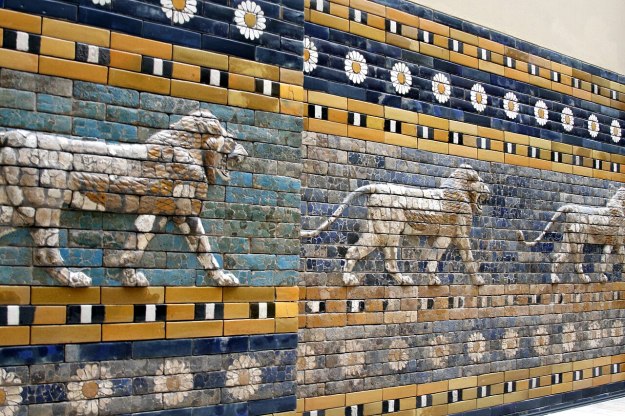
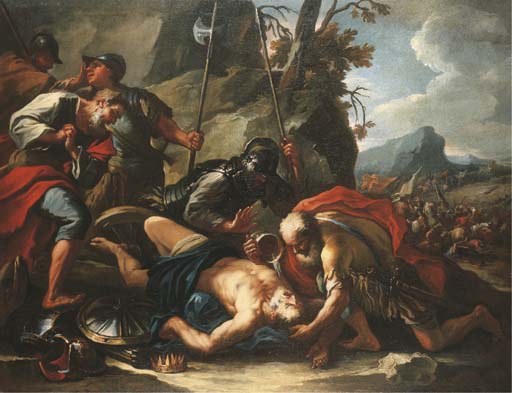
Most readers of the Bible do not have much exposure to the history of the region 2,600 years ago, but this time is critical for much of the Hebrew Scriptures (or Old Testament). One of my Hebrew Bibles professors used to joke that if you were taking an exam on the Hebrew Scriptures and did not know the answer that the Babylonian exile was a solid guess. This is the time period that the books of Jeremiah and Ezekiel address and it is where 2 Kings concludes the Deuteronomic History[1] and shortly before 2 Chronicles ends its narration.[2] This becomes a time of redefinition for the Jewish people where the stories and writings are collected together to form a unified tradition to hand on to their descendants away once the temple, Jerusalem, and the Davidic kings no longer reign.

When talking about the Babylonian Empire in relation to scripture, it is actually the Second Babylonian Empire or the Neo Babylonian Empire. The Babylonians were also known as Chaldeans in scripture and historical references, and you will occasionally see this time referred to as the Chaldean Empire. Babylon begins its rise after the coronation of King Nabopolassar in 626 BCE and the rise of Babylonian power coincides with the collapse of the Assyrian Empire in 612 BCE.[3] In 605 BCE King Nebuchadrezzar II (or Nebuchadnezzar II) succeeded his father Nabopolassar as king. Shortly before his father’s death Nebuchadrezzar II won a critical victory over Pharoah Neco II’s Egyptian Army at the battle of Carchemish ensuring Babylonian power over the Levant (the region bordering the Eastern Mediterranean Sea which includes Israel/Judah).

Neo-Babylonian_Empire_under_Nebuchadnezzar_II By IchthyovenatorSémhur (base map) – Own work, CC BY-SA 4.0, https://commons.wikimedia.org/w/index.php?curid=105732621

In 601 BCE Babylon marched into Egypt to counter rising Egyptian influence in the Levant and this campaign ultimately failed in 599 BCE but did end Egyptian power in the Levant. During this war King Jehoiakim (or Jehoiakim) in Judah allied his country with Egypt[4] and Nebuchadrezzar after leaving Egypt turned his forces towards Jerusalem. In 598/597 BCE Jerusalem surrenders to Babylon, King Jehoiakim is taken captive to Babylon along with many of the elites of the land. This is the exile that Ezekiel is experiencing as he prophesies, and this is also the setting at the beginning of the book of Daniel. King Zedekiah is left in charge of Jerusalem as a puppet king of the Babylonian empire.

Egypt continued to be a regional force and both Jeremiah and Ezekiel point to the influence of Egypt in the decision of King Zedekiah to refuse to pay tribute in 589 BCE. In 587 BCE Ammon, Edom, and Moab all come together to form a mutual alliance against Babylon, but in 586 Babylon responds. Jerusalem is destroyed, and the Kingdom of Judah ends in 586 BCE with the survivors being taken captive in Babylonia. After the defeat of Judah, Babylon would continue to be militarily active ensuring the submission of the region under Babylonian control and repelling Egyptian influence. The Babylonian Empire would maintain control over the region until they were conquered by Cyrus the Great and the Persian Empire in 539 BCE.

[1] The books starting in Joshua and running through 2 Kings in most Christian bibles (excluding Ruth) which called the Deuteronomic history by scholars because they theologically follow the book of Deuteronomy.

[2] 2 Chronicles has two final verses which point to the end of the Babylonian exile under the Persian King Cyrus.

[3] The Assyrian Empire is responsible for the capture of Samaria and the ending of the Kingdom of Northern Israel in 721 BCE.

[4] Jehoiakim had been appointed by Pharoah Neco II so Judah’s alliance with Egypt against Babylon is not surprising.

Jeremiah 36: The Consumed Scroll and The Indestructible Words

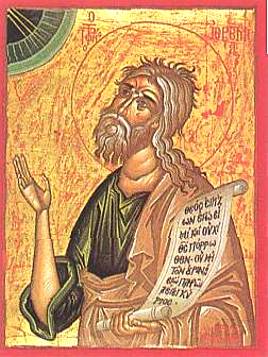
Orthodox Icon of the Prophet Jeremiah

Orthodox Icon of the Prophet Jeremiah


Jeremiah 36: 1-8 Perhaps They Will Turn

In the fourth year of King Jehoiakim son of Josiah of Judah, this word came to Jeremiah from the LORD:2 Take a scroll and write on it all the words that I have spoken to you against Israel and Judah and all the nations, from the day I spoke to you, from the days of Josiah until today. 3 It may be that when the house of Judah hears of all the disasters that I intend to do to them, all of them may turn from their evil ways, so that I may forgive their iniquity and their sin.

 4 Then Jeremiah called Baruch son of Neriah, and Baruch wrote on a scroll at Jeremiah’s dictation all the words of the LORD that he had spoken to him. 5 And Jeremiah ordered Baruch, saying, “I am prevented from entering the house of the LORD; 6 so you go yourself, and on a fast day in the hearing of the people in the LORD’s house you shall read the words of the LORD from the scroll that you have written at my dictation. You shall read them also in the hearing of all the people of Judah who come up from their towns. 7 It may be that their plea will come before the LORD, and that all of them will turn from their evil ways, for great is the anger and wrath that the LORD has pronounced against this people.” 8 And Baruch son of Neriah did all that the prophet Jeremiah ordered him about reading from the scroll the words of the LORD in the LORD’s house.


In a final plea for the attention of the people, Jeremiah is instructed to write down the words he has received from the Lord throughout his ministry so that they can be delivered in total to the people of Jerusalem and Judah. Jeremiah’s ministry has been a visual and oral one up until this point but we see a transition as the words of the Lord become written down so that they are not lost with the prophet. This is the dangerous move from proclamation to print, where the words given the prophet are collected and become scripture. We don’t know the form of exactly what Baruch will write down on dictation from Jeremiah, but in the waning days of King Jehoiakim and the independence of Judah perhaps there is one final hope that the words will be received and judgment can be averted.

For roughly forty years Jeremiah has been the prophet of the Lord, and for all that time he has been unheard by those with the power to change the course of the people. Yet, the Lord and the prophet still desire a turning, some glimmer of hope in some future reconciliation. The relationship cannot remain as it is, with the people placing their trust in the land, the city of Jerusalem, the Davidic king and the temple along with political alliances with Egypt and not living into their identity they were called to in their covenant with God. Things cannot remain how they are and so there is one cumulative reminder of the consequences of the path that lies ahead. The words once spoken are now written so that they can be heard and spoken again and again. Knowing the previous story perhaps it is a desperate gambit by the prophet with little chance of success, but the reality of the coming dread is such that every option must be exhausted before surrendering to the despair of the siege and desolation of the land and people.

As Walter Brueggemann talks about this text in his article “Haunting Book-Haunting People” this scroll, created through the fidelity of Jeremiah and Baruch and designed to evoke a massive change in the people while sounding like a threat is actually an act of grace. (Brueggemann, 2006, p. 133f) And this unique text, which is the only text in the Hebrew Scriptures that shows the process of moving from proclamation to text so that the haunting text can continue to bring its haunting message to us today. By this text of Jeremiah which has been handed down from generation to generation, often neglected and sometimes wrestled with invites us into the haunting relationship between God, the people and the prophet and in its own poetic way invites those willing to engage it into dialogue between God, the people, the leaders and we who receive it and either suppress or profess it.

Jeremiah 36: 9-19: A Final Hearing

 9 In the fifth year of King Jehoiakim son of Josiah of Judah, in the ninth month, all the people in Jerusalem and all the people who came from the towns of Judah to Jerusalem proclaimed a fast before the LORD. 10 Then, in the hearing of all the people, Baruch read the words of Jeremiah from the scroll, in the house of the LORD, in the chamber of Gemariah son of Shaphan the secretary, which was in the upper court, at the entry of the New Gate of the LORD’s house.

            11 When Micaiah son of Gemariah son of Shaphan heard all the words of the LORD from the scroll, 12 he went down to the king’s house, into the secretary’s chamber; and all the officials were sitting there: Elishama the secretary, Delaiah son of Shemaiah, Elnathan son of Achbor, Gemariah son of Shaphan, Zedekiah son of Hananiah, and all the officials. 13 And Micaiah told them all the words that he had heard, when Baruch read the scroll in the hearing of the people. 14 Then all the officials sent Jehudi son of Nethaniah son of Shelemiah son of Cushi to say to Baruch, “Bring the scroll that you read in the hearing of the people, and come.” So Baruch son of Neriah took the scroll in his hand and came to them. 15 And they said to him, “Sit down and read it to us.” So Baruch read it to them. 16 When they heard all the words, they turned to one another in alarm, and said to Baruch, “We certainly must report all these words to the king.” 17 Then they questioned Baruch, “Tell us now, how did you write all these words? Was it at his dictation?” 18 Baruch answered them, “He dictated all these words to me, and I wrote them with ink on the scroll.” 19 Then the officials said to Baruch, “Go and hide, you and Jeremiah, and let no one know where you are.”


As King Nebuchadnezzer of Babylon begins his campaigns and cities and empires begin to fall there is a gathering in Jerusalem and a time of fasting. It is into this time of fasting that Baruch, the scribe who has recorded the words of Jeremiah, enters the temple and proclaims the words to the people in the chamber of Gemariah. The words dictated by Jeremiah do fall initially on some sympathetic ears, first Micaiah the son of Gemariah (the son of the one whose chamber Baruch read from, probably indicating some sympathy for Jeremiah in advance) and then later in the king’s house by several of the named officials. Jeremiah, even though he had run afoul of the king was still valued by some within the royal court and once they confirm the origin of the scroll they decide that the king does need to hear the words given through Jeremiah and Baruch.

These officials know that these are dangerous words that will likely be ill received by the king, but they courageously are will both to bring news of these words to the king and to instruct Baruch and Jeremiah to go into hiding. The officials do not even know where Baruch and Jeremiah are, but the words themselves are so important that just as Micaiah brought word to them, now they feel compelled to bring word to the king.

The text is a threat to the status-quo, the trusting in Davidic lines, temple and land as well as alliances with Egypt which have been the strategy of King Jehoiakim’s reign. The words are a risk for Jeremiah, even more for Baruch, and now for these officials who now prepare to take this challenge to the king.


Jeremiah 36: 20-32 The Burning of the Scroll and the Enduring Word

 20 Leaving the scroll in the chamber of Elishama the secretary, they went to the court of the king; and they reported all the words to the king. 21 Then the king sent Jehudi to get the scroll, and he took it from the chamber of Elishama the secretary; and Jehudi read it to the king and all the officials who stood beside the king. 22 Now the king was sitting in his winter apartment (it was the ninth month), and there was a fire burning in the brazier before him. 23 As Jehudi read three or four columns, the king would cut them off with a penknife and throw them into the fire in the brazier, until the entire scroll was consumed in the fire that was in the brazier. 24 Yet neither the king, nor any of his servants who heard all these words, was alarmed, nor did they tear their garments. 25 Even when Elnathan and Delaiah and Gemariah urged the king not to burn the scroll, he would not listen to them. 26 And the king commanded Jerahmeel the king’s son and Seraiah son of Azriel and Shelemiah son of Abdeel to arrest the secretary Baruch and the prophet Jeremiah. But the LORD hid them.

27 Now, after the king had burned the scroll with the words that Baruch wrote at Jeremiah’s dictation, the word of the LORD came to Jeremiah: 28 Take another scroll and write on it all the former words that were in the first scroll, which King Jehoiakim of Judah has burned. 29 And concerning King Jehoiakim of Judah you shall say: Thus says the LORD, You have dared to burn this scroll, saying, Why have you written in it that the king of Babylon will certainly come and destroy this land, and will cut off from it human beings and animals? 30 Therefore thus says the LORD concerning King Jehoiakim of Judah: He shall have no one to sit upon the throne of David, and his dead body shall be cast out to the heat by day and the frost by night. 31 And I will punish him and his offspring and his servants for their iniquity; I will bring on them, and on the inhabitants of Jerusalem, and on the people of Judah, all the disasters with which I have threatened them– but they would not listen.

            32 Then Jeremiah took another scroll and gave it to the secretary Baruch son of Neriah, who wrote on it at Jeremiah’s dictation all the words of the scroll that King Jehoiakim of Judah had burned in the fire; and many similar words were added to them.


The king mistakenly believes that if he can destroy the words of the text that the status quo can be maintained. Rather than engage the haunting words he destroys them, personally cutting them and throwing them into the fire where they are consumed. After the scroll is burned up, against the protests of Elnathan, Delaiah and Gemariah, the next command to his sons is to seek out Baruch and Jeremiah. Not only must the message be eliminated, the messengers must be silenced as well. Yet the word of the Lord is not so easily eliminated, it will continue its haunting presence. Eliminating the threatening words will not eliminate the armies of Babylon, and burning the text does not eliminate even it. Instead of reducing the words spoken through Jeremiah, dictated by Baruch now a new scroll is produce which also has many similar words added to it, and the judgment against Jehoiakim is particularly harsh. His line will come to an end in disgrace, and according to Jeremiah’s words he will not even be buried but left out in the open for his corpse to be consumed by the elements. These words, as haunting and inconvenient as they may be will not be ignored or eliminated.

Jeremiah 35: The Example of the Rechabites

The Prophet Jeremiah by Michelangelo

The Prophet Jeremiah by Michelangelo

Jeremiah 35: 1-11: If You Offer a Rechabite a Drink

 The word that came to Jeremiah from the LORD in the days of King Jehoiakim son of Josiah of Judah: 2 Go to the house of the Rechabites, and speak with them, and bring them to the house of the LORD, into one of the chambers; then offer them wine to drink. 3 So I took Jaazaniah son of Jeremiah son of Habazziniah, and his brothers, and all his sons, and the whole house of the Rechabites. 4 I brought them to the house of the LORD into the chamber of the sons of Hanan son of Igdaliah, the man of God, which was near the chamber of the officials, above the chamber of Maaseiah son of Shallum, keeper of the threshold. 5 Then I set before the Rechabites pitchers full of wine, and cups; and I said to them, “Have some wine.” 6 But they answered, “We will drink no wine, for our ancestor Jonadab son of Rechab commanded us, ‘You shall never drink wine, neither you nor your children; 7 nor shall you ever build a house, or sow seed; nor shall you plant a vineyard, or even own one; but you shall live in tents all your days, that you may live many days in the land where you reside.’ 8 We have obeyed the charge of our ancestor Jonadab son of Rechab in all that he commanded us, to drink no wine all our days, ourselves, our wives, our sons, or our daughters, 9 and not to build houses to live in. We have no vineyard or field or seed; 10 but we have lived in tents, and have obeyed and done all that our ancestor Jonadab commanded us. 11 But when King Nebuchadrezzar of Babylon came up against the land, we said, ‘Come, and let us go to Jerusalem for fear of the army of the Chaldeans and the army of the Arameans.’ That is why we are living in Jerusalem.”


Knowing who one is and the story one is living out of is crucial to identity. The Rechabites, a part of the people known as Kenites who come into the promised land as allies of the tribes of Israel when they settled the land. The majority of the Kenites settled into life in cities and homes, but the descendants of Jonadab son of Rechab maintain a nomadic lifestyle consisting in a way of life very different than most of their kin and the surrounding nation of Israel. The Rechabite response to Jeremiah when offered wine demonstrates their way of life:

You shall never drink wine

You shall never build a house

You shall not sow seed, plant a vineyard or own one

Their actions living into this identity constitute who they are. They as a community remain faithful to this way of life which differentiates them from their surrounding kin and neighbors. They remain fixed to a lifestyle articulated by their ancestor and their actions in faithfulness to these commands mark them off as being Rechabite in contrast to the surrounding world. Many groups use specific actions and markers to act as boundaries of identity, and the Rechabites who are only in the city because of the invading Chaldean army demonstrate a contrast between themselves who have held fast to these markers of identity through the promises and command of their ancestor and Israel who has not held fast to their identity in the covenant with the Lord.


Jeremiah 31: 12-19:The Rechabites as an Object Lesson

 12 Then the word of the LORD came to Jeremiah: 13 Thus says the LORD of hosts, the God of Israel: Go and say to the people of Judah and the inhabitants of Jerusalem, Can you not learn a lesson and obey my words? says the LORD. 14 The command has been carried out that Jonadab son of Rechab gave to his descendants to drink no wine; and they drink none to this day, for they have obeyed their ancestor’s command. But I myself have spoken to you persistently, and you have not obeyed me. 15 I have sent to you all my servants the prophets, sending them persistently, saying, ‘Turn now everyone of you from your evil way, and amend your doings, and do not go after other gods to serve them, and then you shall live in the land that I gave to you and your ancestors.’ But you did not incline your ear or obey me. 16 The descendants of Jonadab son of Rechab have carried out the command that their ancestor gave them, but this people has not obeyed me.

 17 Therefore, thus says the LORD, the God of hosts, the God of Israel: I am going to bring on Judah and on all the inhabitants of Jerusalem every disaster that I have pronounced against them; because I have spoken to them and they have not listened, I have called to them and they have not answered. 18 But to the house of the Rechabites Jeremiah said: Thus says the LORD of hosts, the God of Israel: Because you have obeyed the command of your ancestor Jonadab, and kept all his precepts, and done all that he commanded you, 19 therefore thus says the LORD of hosts, the God of Israel: Jonadab son of Rechab shall not lack a descendant to stand before me for all time.


The Rechabites are now used as an object lesson for those who will see and hear. The Lord appeals to their faithfulness to their ancestors command and contrasts it with the inability of the people to maintain God’s covenantal commands. Where the Rechabites have listened, the people of Judah and Jerusalem have failed to listen. Where the Rechabites have been obedient, the people Jeremiah is called to address have been disobedient.  The Rechabites have made their ancestor’s commands an integral part of their identity, yet God has continued to send prophets to call people back into their calling to be the people of God. The people of Israel cannot be Israel without their covenantal obedience, without living into the Torah, without being willing to hear the words of the Lord when they come through the prophets. Even though this passage is chronologically ahead of the previous chapters where Jeremiah is in the court of the guard the people are reaching the point where there is no longer a chance to turn back. The disasters are coming, and in Deuteronomic form there are blessings and curses. The Rechabites are commended for their obedience and so the promise is that they will not lack descendants, but to the people who have not listened the disasters pronounced for years to encourage a returning to their identity are indeed coming to pass. The armies of Chaldea, the forces of King Nebuchadrezzar are indeed coming and they will bring about the ending of the world that the people of Jerusalem and Judah have known.

Jeremiah 26 The Prophet, the Temple and the Elders

Jeremiah 26: 1-19 The Prophet, the Temple and the Elders

Ilya Repin, Cry of the Prophet Jeremiah on the Ruins of Jerusalem (1870)

Ilya Repin, Cry of the Prophet Jeremiah on the Ruins of Jerusalem (1870)

At the beginning of the reign of King Jehoiakim son of Josiah of Judah, this word came from the LORD: 2 Thus says the LORD: Stand in the court of the LORD’s house, and speak to all the cities of Judah that come to worship in the house of the LORD; speak to them all the words that I command you; do not hold back a word. 3 It may be that they will listen, all of them, and will turn from their evil way, that I may change my mind about the disaster that I intend to bring on them because of their evil doings. 4 You shall say to them: Thus says the LORD: If you will not listen to me, to walk in my law that I have set before you, 5 and to heed the words of my servants the prophets whom I send to you urgently– though you have not heeded– 6 then I will make this house like Shiloh, and I will make this city a curse for all the nations of the earth.

 7 The priests and the prophets and all the people heard Jeremiah speaking these words in the house of the LORD. 8 And when Jeremiah had finished speaking all that the LORD had commanded him to speak to all the people, then the priests and the prophets and all the people laid hold of him, saying, “You shall die! 9 Why have you prophesied in the name of the LORD, saying, ‘This house shall be like Shiloh, and this city shall be desolate, without inhabitant’?” And all the people gathered around Jeremiah in the house of the LORD.

                10 When the officials of Judah heard these things, they came up from the king’s house to the house of the LORD and took their seat in the entry of the New Gate of the house of the LORD. 11 Then the priests and the prophets said to the officials and to all the people, “This man deserves the sentence of death because he has prophesied against this city, as you have heard with your own ears.”

 12 Then Jeremiah spoke to all the officials and all the people, saying, “It is the LORD who sent me to prophesy against this house and this city all the words you have heard. 13 Now therefore amend your ways and your doings, and obey the voice of the LORD your God, and the LORD will change his mind about the disaster that he has pronounced against you. 14 But as for me, here I am in your hands. Do with me as seems good and right to you. 15 Only know for certain that if you put me to death, you will be bringing innocent blood upon yourselves and upon this city and its inhabitants, for in truth the LORD sent me to you to speak all these words in your ears.”

 16 Then the officials and all the people said to the priests and the prophets, “This man does not deserve the sentence of death, for he has spoken to us in the name of the LORD our God.” 17 And some of the elders of the land arose and said to all the assembled people, 18 “Micah of Moresheth, who prophesied during the days of King Hezekiah of Judah, said to all the people of Judah: ‘Thus says the LORD of hosts, Zion shall be plowed as a field; Jerusalem shall become a heap of ruins, and the mountain of the house a wooded height.’ 19 Did King Hezekiah of Judah and all Judah actually put him to death? Did he not fear the LORD and entreat the favor of the LORD, and did not the LORD change his mind about the disaster that he had pronounced against them? But we are about to bring great disaster on ourselves!”

This passage is traditionally linked with the ‘Temple Sermon of Jeremiah’ in Jeremiah 7 and into chapter 8 based on the dating and the circumstances lined out in the first lines. Jeremiah goes into the temple, the heart of the royal and priestly justification of the people’s favored status and compares the temple to Shiloh, which was an earlier site of the tabernacle site in the time of 1 Samuel. The prophet calls the people back to the two sided covenant of Deuteronomy, ‘If you will do these things, then you will be blessed, if you will not do these things you will be cursed.’ Since the construction of the temple by Solomon there has been a critique of the possibility of relying solely on the temple for maintaining the people’s status with God. For example when God answers Solomon’s prayer in 1 Kings 9, it relates the answer as this:

2 the LORD appeared to Solomon a second time, as he had appeared to him at Gibeon. 3 The LORD said to him, “I have heard your prayer and your plea, which you made before me; I have consecrated this house that you have built, and put my name there forever; my eyes and my heart will be there for all time. 4 As for you, if you will walk before me, as David your father walked, with integrity of heart and uprightness, doing according to all that I have commanded you, and keeping my statutes and my ordinances, 5 then I will establish your royal throne over Israel forever, as I promised your father David, saying, ‘There shall not fail you a successor on the throne of Israel.’

 6 “If you turn aside from following me, you or your children, and do not keep my commandments and my statutes that I have set before you, but go and serve other gods and worship them, 7 then I will cut Israel off from the land that I have given them; and the house that I have consecrated for my name I will cast out of my sight; and Israel will become a proverb and a taunt among all peoples. 8 This house will become a heap of ruins; everyone passing by it will be astonished, and will hiss; and they will say, ‘Why has the LORD done such a thing to this land and to this house?’ 9 Then they will say, ‘Because they have forsaken the LORD their God, who brought their ancestors out of the land of Egypt, and embraced other gods, worshiping them and serving them; therefore the LORD has brought this disaster upon them.'” (1Kings 9:2-9)

Yet in the time of King Jehoiakim this way of understanding the covenant with God is either forgotten or neglected. For the prophet claims of obedience to God’s law/Torah are more important than any human authority. This undercuts the certitude of not only Jehoiakim, but particularly here the priests in the temple where Jeremiah makes his proclamation. Their lives are invested in the maintaining of the centrality of the temple worship and the proclamation of the prophet threatens not only their temple with its words but their livelihood. The react quickly and harshly demanding the death of Jeremiah because he has spoken against the temple and the city and bring him before the leadership of the city. It is a tense picture painted where the priest and temple authorities and the crowd have surrounded the prophet and the city leaders quickly move to bring calm to the situation and hold judgment in the case of this troublesome prophet.

For his part, Jeremiah denies nothing that he is accused of and yet he claims his role as a prophet of God speaking on God’s behalf and still in the hope of both the prophet and God that the people will hear and turn from their ways. What the priests have heard as condemnation is from Jeremiah’s perspective a hope for turning and rescue by God, but the words have fallen on unreceptive ears.  Jeremiah knows that his life rests in these officials’ hands and yet he warns them that if they take his life they will be liable for innocent blood.

The elder’s rely on the precedence of Micah, one of the examples of intertextuality in the Bible. This instance refers back to the prophet Micah who a century earlier had spoken harsh words against the city, and yet Micah was not killed by the leadership then. The ‘elders’ override the ‘priest’ and the historical memory of prophetic witness and Torah piety hold out in this case and the elders too are able to see this as an opportunity for repentance rather than a certain doom. Unfortunately for the people the repentance does not come as the priestly and royal authority are hostile to this message that Jeremiah proclaim.

Jeremiah 26:20-24 The Risk of the Prophetic Challenge


                20 There was another man prophesying in the name of the LORD, Uriah son of Shemaiah from Kiriath-jearim. He prophesied against this city and against this land in words exactly like those of Jeremiah. 21 And when King Jehoiakim, with all his warriors and all the officials, heard his words, the king sought to put him to death; but when Uriah heard of it, he was afraid and fled and escaped to Egypt.22 Then King Jehoiakim sent Elnathan son of Achbor and men with him to Egypt, 23 and they took Uriah from Egypt and brought him to King Jehoiakim, who struck him down with the sword and threw his dead body into the burial place of the common people.

 24 But the hand of Ahikam son of Shaphan was with Jeremiah so that he was not given over into the hands of the people to be put to death.

King Jehoiakim is not receptive to Jeremiah’s message, and while Jeremiah apparently has some protection from Ahikam son of Shaphan another prophet, Uriah son of Shemaiah does not. The words of Uriah infuriate the king enough to send men into Egypt to capture, bring the prophet to the king and then to be killed by the king. This is not a welcome time for prophets and death and torture are real possibilities to ensure the message of King Jehoiakim is the dominant message heard.