
Five Star Book Review
Katherine Arden, The Girl in the Tower
For me a five-star book is something that either I want to read again or something that is so profound it makes an immediate impact. There are lots of ways that books can be compelling: a unique idea, an interesting set of characters, a complex plot, an artistic use of the English language and more. Reading is also a subjective experience, so what appeals to me as a reader may be very different for you. I read a lot for both pleasure and work, but these short reviews are a way for me to show my appreciation for the work and the craft of the author of the reviewed work.
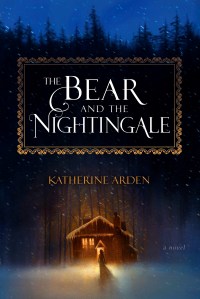
The Girl in the Tower is the middle book of the Winternight Trilogy, and it picks up in the aftermath of The Bear and the Nightingale. Vasya and her magnificent horse Solovey now set off to travel away from her home of Lesnaya Zemla where her father can no longer protect her from being viewed as a witch. She sets off on a journey as a traveler but quickly finds herself rescuing girls stolen by bandits and reunited with her brother Sasha who is a monk, a renowned warrior, and a trusted advisor of the crown prince of Moscow. She disguises herself as a boy and her brother, and later her sister Olya in Moscow, are caught up in this deception. From pursuing bandits raiding small villages in the woods to the world of court in Moscow and the appearance of the strange noble Kasyan this is a story with an even richer world than The Bear and the Nightingale. One of the things I appreciate about this story is that it is honest about the danger of Vasya as a woman attempting to navigate a different path where the only two options available for women are marriage and the convent.
Katherine Arden does a remarkable job of portraying the world of this story. A time where Russia still owed allegiance to the Tatars but is beginning to yearn for independence, when the Russian Orthodox church reigns supreme in Moscow but the old practices and myths still have a hold in the rural areas. It is a winter story, but it is also a story of winter losing its hold to spring. For Vasya it is also a coming-of-age story and I appreciate the tension in the relationship between Vasya and the Winter King Morosko, but that there is an acknowledgement that this cannot be a simple love story. In the words of the characters:
“Love?” he (Mososko) retorted. “How? I am a demon and a nightmare; I die every spring, and I will live forever.”
She waited.
“But yes,” he said wearily. “As I could, I loved you. Now will you go? Live.”
“I, too,” she said. “In a childish way, as girls love heroes that come in the night, I loved you.” (336)
Even in a world that still has a little magic in it, maidens do not easily surrender their hearts to myths nor do inhuman ‘gods’ warm quickly to the maiden. Yet, Katherine Arden does a remarkable job of creating the tension which is formed by their bond. I really enjoy this mixture of fantasy with historical fiction and myths and folk stories of medieval Russia. I wrote in my review of The Bear and the Nightingale that the story felt like returning to a home I never knew, and the characters and environment made me feel at home with them once again in this second book of the Winternight trilogy. I look forward to returning to The Winter of the Witch later this year.
 Five Star Book Review
 I received an advance readers copy of the Warm Hands of Ghosts and I am a fan of Katherine Arden’s The Bear and the Nightingale series as well as her middle grade series Small Spaces. The Warm Hands of Ghosts takes the reader back to the historical fantasy genre of The Bear and the Nightingale, but this time the environment is primarily the hellish environment of Belgium in 1917 during the World War I battle for Passchendaele. Katherine Arden does a phenomenal job of presenting the environment of a world at war through the eyes of Laura and Freddie Iven. Laura begins the narrative home in Canada after several years as a field nurse for the medical corps, while her younger brother Freddie later joins the Canadian army in the trenches near Ypres. There is both a spiritualist and an apocalyptic framing of the war (particularly in a Jehovah’s Witness sense) and into the soul stealing space of war enters the beguiling but also devilish Faland. There are some similarities to the Smiling Man of the Small Spaces series, but the devil in a different context calls a different tune and plays a different game.
 Sign of the Rose