
2 Kings 12: 1-3
1 In the seventh year of Jehu, Jehoash began to reign; he reigned forty years in Jerusalem. His mother’s name was Zibiah of Beer-sheba. 2 Jehoash did what was right in the sight of the LORD all his days because the priest Jehoiada instructed him. 3 Nevertheless, the high places were not taken away; the people continued to sacrifice and make offerings on the high places.
Jehoash, or Joash, is one of the kings of Judah regarded positively but there is a qualification to that assessment and when one looks closely at this narrative and the more critical parallel in 2 Chronicles 24 it leaves some questions about the totality of the reign of this king. The NIV renders the judgment of Jehoash’s reign. ”Joash did what was right in the eyes of the LORD all the years Jehoida the priest instructed him.” The NIV appears to harmonize its translation with the narrative of 2 Chronicles (see below) but even within the narrative of 2 Kings there is enough to give pause. Yes, there is a qualification that the high places are not removed but looking closely at the end of 2 King’s description of Jehoash’s reign there are enough things revealed to indicate there may be some trouble below the surface of the narration.
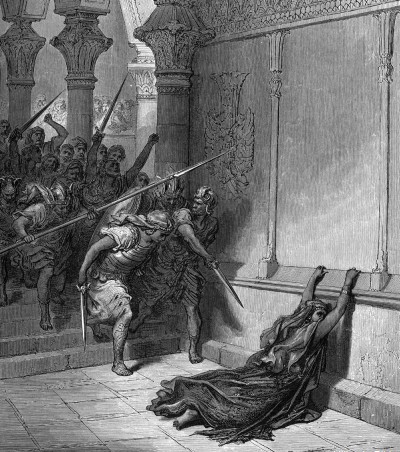
Jehoash’s mother is named as Zibiah of Beer-sheba. Beer-sheba would be on the southern border of Judah and geographically distant from the influence of Northern Israel which had led to the turmoil of the previous chapter. There are numerous examples of queen mothers exercising significant power in both positive and negative manners. The influence of a Jezebel or Athaliah to corrupt both Israel and Judah are matched by a queen mother like Bathsheba who uses her influence to get Solomon in anointed rather than Adonijah.
2 Kings 12: 4-16
4 Jehoash said to the priests, “All the silver offered as sacred donations that is brought into the house of the LORD—the census tax, personal redemption payments, and silver from voluntary offerings brought into the house of the LORD 5 let the priests receive from each of the donors, and let them repair the house wherever any need of repairs is discovered.” 6 But by the twenty-third year of King Jehoash the priests had made no repairs on the house. 7 Therefore King Jehoash summoned the priest Jehoiada with the other priests and said to them, “Why are you not repairing the house? Now therefore do not accept any more silver from your donors but hand it over for the repair of the house.” 8 So the priests agreed that they would neither accept more silver from the people nor repair the house.
9 Then the priest Jehoiada took a chest, made a hole in its lid, and set it beside the altar on the right side as one entered the house of the LORD; the priests who guarded the threshold put in it all the silver that was brought into the house of the LORD. 10 Whenever they saw that there was a great deal of silver in the chest, the king’s secretary and the high priest went up, cast the silver that was found in the house of the LORD into ingots, and counted it. 11 They gave the silver that was weighed out into the hands of the workers who had the oversight of the house of the LORD; then they paid it out to the carpenters and the builders who worked on the house of the LORD, 12 to the masons and the stonecutters, as well as to buy timber and quarried stone for making repairs on the house of the LORD, as well as for any outlay for repairs of the house. 13 But for the house of the LORD no basins of silver, snuffers, bowls, trumpets, or any vessels of gold or of silver were made from the silver that was brought into the house of the LORD, 14 for that was given to the workers who were repairing the house of the LORD with it. 15 They did not ask an accounting from those into whose hand they delivered the silver to pay out to the workers, for they dealt honestly. 16 The silver from the guilt offerings and the silver from the sin offerings was not brought into the house of the LORD; it belonged to the priests.
King Jehoash was probably involved in a number of important decisions and moments throughout his forty-year reign, but for 2 Kings the central event of his positively assessed reign is the repair of the temple. I’ve noted earlier that much of the book of Kings could have easily been the book of prophets, but it is also worth noting that the narrative of the book of Kings begins with Solomon’s construction of the temple (1 Kings 5-8) and ends with its destruction (2 Kings 25). In the ancient world the construction and maintenance of the temple and the worship in that temple was an expected part of royal piety, and while we can debate the proper balance between proper worship and faithful execution of the law both have been recently missing in Judah. As Alex Israel notes the temple is one hundred and fifty years old (Israel, 2019, p. 184) and 2 Chronicles makes explicit the damage that Athaliah has done:
7 For the children of Athaliah, that wicked woman, had broken into the house of God and had even used all the dedicated things of the house of the LORD for the Baals. 2 Chronicles 24:7
Between the age of the structure and the misuse of the building it was likely in serious need of repair to be a structure worthy of the name of the LORD.
We do not know when in his reign Jehoash commanded that the taxes, payments, and specific offerings would be utilized for the repair of the temple. Jehoash began to reign at age seven and would have been heavily influenced by the priest Jehoida and others who advised him, but in his twenty-third year of his forty-year reign he is thirty years old and confronts Jehoida and the other priests about the lack of progress. There are multiple theories that have nothing to do with corruption that have plausibly explained the lack of progress: from the expectations of the priests to be the fundraisers for these taxes, payments, and offerings and limiting their appeal to their family groups, to inability of the priests to properly determine the scope of the work and effectively carry out the repairs. 2 Kings does not indicate that corruption was a part of the problem, although this is possible, nor does it indicate that the collected funds are not available. It gives Jehoash and Jehoida credit for creating a workable solution. While it is possible that the NRSVue’s translation which indicates that the process included taking the donated items and smelting them into ingots occurred at this time, the Hebrew only indicates they tied it up. The physical structure is the recipient of the repairs rather than creating the implements for the conduct of worship, and in light of the upcoming note on King Jehoash’s reign it is probably an important note. The text on the repair of the temple ends with a note that the priests still had a source of income from the guilt and sin offerings.
2 Kings 12: 17-18
17 At that time King Hazael of Aram went up, fought against Gath, and took it. But when Hazael set his face to go up against Jerusalem, 18 King Jehoash of Judah took all the votive gifts that Jehoshaphat, Jehoram, and Ahaziah, his ancestors, the kings of Judah, had dedicated, as well as his own votive gifts, all the gold that was found in the treasuries of the house of the LORD and of the king’s house, and sent these to King Hazael of Aram. Then Hazael withdrew from Jerusalem.
King Hazael, first mentioned in chapter eight, captures Gath, one of the Philistine cities and then orients his forces on Jerusalem. Jehoash decides that he does not have adequate forces to resist Hazael’s force and so sets out with the treasures of Jerusalem to make peace. Military conflict in the ancient world is an economic matter and if a leader can gain a significant tribute, like the one mentioned above, without having to expend the cost and trouble of a military siege they will often take it. King Asa (1 Kings 15:18) utilized the temple resources to buy off the forces of Aram under King Ben-hadad (who Hazael later assassinated and assumed his role) and so it is only the gifts given under Jehoshaphat, Jehoram, and Ahaziah that remain in the temple.
King Jehoash’s decision to bribe King Hazael not to attack may have been a wise one, but its narration in 2 Kings is ambiguous. The people of Judah were never a great military power but there is no indication that Jehoash seeks God’s will in this decision or that he trusts in God’s deliverance. This decision also probably brings the repair of the temple to an end, at least for a time. Military conflict and siege warfare create problems not just for the king but the entire population, yet many probably viewed this move as a sign of weakness and this may contribute to King Jehoash’s assassination by his servants in the next section.
2 Kings 12: 19-21
19 Now the rest of the acts of Joash and all that he did, are they not written in the Book of the Annals of the Kings of Judah? 20 His servants arose, devised a conspiracy, and killed Joash in the house of Millo, on the way that goes down to Silla. 21 It was Jozacar son of Shimeath and Jehozabad son of Shomer, his servants, who struck him down, so that he died. He was buried with his ancestors in the city of David; then his son Amaziah succeeded him.
King Jehoash’s (or Joash) forty-year reign ends with his assassination by two subordinates: Jozacar son of Shimeath and Jehozabad son of Shomer. These men may have been slaves in the household of the king (the word translated servant has the primary meaning of slave) but whether they are servants or slaves it is an indication of a conspiracy[1] in the palace to end the reign of Jehoash. Brueggemann notes that in the 2 Kings narrative it could be a conspiracy by those who were faithful to Baal and the ways of Athaliah (Brueggemann, 2000, p. 423) but the 2 Chronicles 24: 17-22 telling of the end of Jehoash’s reign is very different and leads to the NIV translation noted in the beginning of the chapter:
17 Now after the death of Jehoiada the officials of Judah came and did obeisance to the king; then the king listened to them. 18 They abandoned the house of the Lord, the God of their ancestors, and served the sacred poles and the idols. And wrath came upon Judah and Jerusalem for this guilt of theirs. 19 Yet he sent prophets among them to bring them back to the Lord; they testified against them, but they would not listen.
20 Then the spirit of God took possession of Zechariah son of the priest Jehoiada; he stood above the people and said to them, “Thus says God: Why do you transgress the commandments of the Lord, so that you cannot prosper? Because you have forsaken the Lord, he has also forsaken you.” 21 But they conspired against him, and by command of the king they stoned him to death in the court of the house of the Lord. 22 King Joash did not remember the kindness that Jehoiada, Zechariah’s father, had shown him but killed his son. As he was dying, he said, “May the Lord see and avenge!” 2 Chronicles 24: 17-22
If 2 Chronicles is accurate in its narration of the end of Jehoah’s reign it could have been out of loyalty to the LORD and the temple that these servants conspired against their king. It is plausible that 2 Kings wanted to narrate the reign of Jehoash in an overall positive manner without delving into the murky ending that 2 Chronicles narrates. If 2 Chronicles narrative is correct then Jehoash becomes a lesser version of Solomon: Solomon builds the temple and Jehoash repairs the temple, Solomon’s reign begins in wisdom, but later Solomon is led astray by his wives and Jehoash is led away by the officials of Judah. Ultimately, we only have the sources of 2 Kings and 2 Chronicles to bear witness to this time in the story of Judah, and we can do our best to place the narratives in the world the inhabited but all of our reconstructions involve some level of educated guessing.
[1] The word translated “conspiracy” here is rendered as treason in 11:14. (Brueggemann, 2000, p. 422)
 Sign of the Rose