Tag Archives: Fantasy

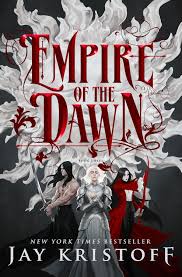
Review of Empire of the Dawn by Jay Kristoff

For me a five-star book is something that either I want to read again or something that is so profound it makes an immediate impact. There are lots of ways that books can be compelling: a unique idea, an interesting set of characters, a complex plot, an artistic use of the English language and more. Reading is also a subjective experience, so what appeals to me as a reader may be very different for you. I read a lot for both pleasure and work, but these short reviews are a way for me to show my appreciation for the work and the craft of the author of the reviewed work.

Jay Kristoff quickly became one of my favorite authors with both the Nevernight trilogy and this worthy conclusion to the Empire of the Vampire trilogy. This narrative journey through Empire of the Vampire, Empire of the Damned and now Empire of the Dawn has been phenomenal. Gabriel de Leon, the last Silversaint (vampire hunter), Celene Castia, Gabriel’s sister and the last Liathe, and Dior le Chance, the young woman who is believed to have the power to end the eternal darkness of their world form the central characters in this final volume. The story is dark, the narration of the conflict scenes so rich I could imagine them as a manga or anime (I think that is the only way you could faithfully replicate the speed and damage of these vampire vs Silversaint fights). The world cloaked in darkness, the place of religion and mysticism, the rich imagery in a perilous world, there is so much to love in this long but engaging story of a world where vampires are no longer consigned to the night and humanity hangs on the precipice. But beyond the incredible plot, worldbuilding, and hard driving action are the characters and their interactions with one another. There were so many times the dialogue between the characters echoed the pattern of conversations I had with people in the army, the way men rib each other to show they care, the language, and verbal duels that went along with the physical trials. There were countless times I would look up from the page and say, “Damn. Jay Kristoff can write.”

Each of the volumes of this trilogy were the best read of the year they were released and there is some regret in coming to the end of this massive journey. Jay Kristoff will not be for every reader: his language is the language of fighting men which includes frequent swearing (and he has some really interesting ways of utilizing the coarser parts of the English language) and there are several very spicy erotic scenes throughout the books. It is a dark world (literally and metaphorically) where no human character or animal character is safe. It is fantasy with horror and romantic elements set in a beautifully imagined (and illustrated if you buy a physical copy) world. It is a poignantly human story of characters who walk through the hell of war, betrayal, death, and times that seem hopeless. People will be divided on the ending of the book, but I thought it was masterful use of a plot device that breaks the fourth wall with a pair of narrators who have their own motivations for why they tell the story they are spinning. I did not want to put this almost eight-hundred-page book down, each time I picked it up it hooked me. I loved this dark gothic story of faith and fighting in a world struggling against four vampiric armies. The symbology and the myth, the conversations and the combat, the characters and the plot all come together to form the favorite trilogy I have ever read.

Review of the Girl in the Tower by Katherine Arden (2018)

Five Star Book Review

Katherine Arden, The Girl in the Tower

For me a five-star book is something that either I want to read again or something that is so profound it makes an immediate impact. There are lots of ways that books can be compelling: a unique idea, an interesting set of characters, a complex plot, an artistic use of the English language and more. Reading is also a subjective experience, so what appeals to me as a reader may be very different for you. I read a lot for both pleasure and work, but these short reviews are a way for me to show my appreciation for the work and the craft of the author of the reviewed work.

The Girl in the Tower is the middle book of the Winternight Trilogy, and it picks up in the aftermath of The Bear and the Nightingale. Vasya and her magnificent horse Solovey now set off to travel away from her home of Lesnaya Zemla where her father can no longer protect her from being viewed as a witch. She sets off on a journey as a traveler but quickly finds herself rescuing girls stolen by bandits and reunited with her brother Sasha who is a monk, a renowned warrior, and a trusted advisor of the crown prince of Moscow. She disguises herself as a boy and her brother, and later her sister Olya in Moscow, are caught up in this deception. From pursuing bandits raiding small villages in the woods to the world of court in Moscow and the appearance of the strange noble Kasyan this is a story with an even richer world than The Bear and the Nightingale. One of the things I appreciate about this story is that it is honest about the danger of Vasya as a woman attempting to navigate a different path where the only two options available for women are marriage and the convent.  

Katherine Arden does a remarkable job of portraying the world of this story. A time where Russia still owed allegiance to the Tatars but is beginning to yearn for independence, when the Russian Orthodox church reigns supreme in Moscow but the old practices and myths still have a hold in the rural areas. It is a winter story, but it is also a story of winter losing its hold to spring. For Vasya it is also a coming-of-age story and I appreciate the tension in the relationship between Vasya and the Winter King Morosko, but that there is an acknowledgement that this cannot be a simple love story. In the words of the characters:

                “Love?” he (Mososko) retorted. “How? I am a demon and a nightmare; I die every spring, and I will live forever.”

                She waited.

                “But yes,” he said wearily. “As I could, I loved you. Now will you go? Live.”

                “I, too,” she said. “In a childish way, as girls love heroes that come in the night, I loved you.” (336)

Even in a world that still has a little magic in it, maidens do not easily surrender their hearts to myths nor do inhuman ‘gods’ warm quickly to the maiden. Yet, Katherine Arden does a remarkable job of creating the tension which is formed by their bond. I really enjoy this mixture of fantasy with historical fiction and myths and folk stories of medieval Russia. I wrote in my review of The Bear and the Nightingale that the story felt like returning to a home I never knew, and the characters and environment made me feel at home with them once again in this second book of the Winternight trilogy. I look forward to returning to The Winter of the Witch later this year.  

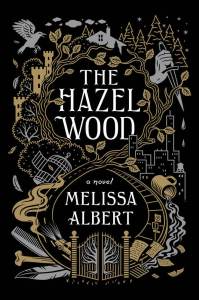
Review of The Hazel Wood by Melissa Albert

Melissa Albert, The Hazel Wood

For me a five-star book is something that either I want to read again or something that is so profound it makes an immediate impact. There are lots of ways that books can be compelling: a unique idea, an interesting set of characters, a complex plot, an artistic use of the English language and more. Reading is also a subjective experience, so what appeals to me as a reader may be very different for you. I read a lot for both pleasure and work, but these short reviews are a way for me to show my appreciation for the work and the craft of the author of the reviewed work.

Every reader has certain types of stories that they are drawn to and for me two of those genres are dark fairy tales and books that have another story underneath the story that helps to shape the world. The Hazel Wood is dark fairy tale that lives on the edge of our world that is defined by a set of stories published by the protagonist’s grandmother. This is the first book in a series of three books set in this world, one is the book of stories alluded to throughout the Hazel Wood while the second is a sequel that continues the story of Alice and Finch. This is my second reading of the series and yet it still retains its edge even though the journey was familiar. I appreciate this fantasy world which has teeth and claws and is as close to hell as heaven.

The story is more plot driven than character driven which would normally be less appealing for me, but in this story is about stories where the story spinner places an actual Story Spinner in the narrative and stories are characters it works. The dynamic of a broken family haunted by a story that has planted its roots in our world and follows the characters wanting to draw them back to the Hazel Wood, and eventually back to the Hinterlands. For Alice it is a journey into wonderland where she discovers the family she needed is the family she already had, not the mysterious grandmother who she could only read about until she arrives at her estate and discovers that some dreams are nightmares.

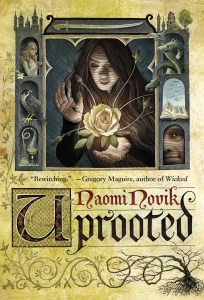
Review of Uprooted by Naomi Novik

Naomi Novik, Uprooted

For me a five-star book is something that either I want to read again or something that is so profound it makes an immediate impact. There are lots of ways that books can be compelling: a unique idea, an interesting set of characters, a complex plot, an artistic use of the English language and more. Reading is also a subjective experience, so what appeals to me as a reader may be very different for you. I read a lot for both pleasure and work but these short reviews are a way for me to show my appreciation for the work and the craft of the author of the reviewed work.

I read Uprooted when it came out in 2015 and loved it, and a part of my reading habit is including books that I enjoyed previously and rereading them. I’ve read most of what Naomi Novik has written and this is my favorite of her books. Uprooted is set within a fantasy kingdom where a corrupted and malicious forest yearns to destroy the people who find themselves planted near its boundaries. The region is protected by a wizard named Sarkan, but who is commonly known as the Dragon. Every ten years the dragon selects a seventeen-year-old woman to come to his tower for the next ten years. Agnieszka is the protagonist of the story who is the surprise choice of this immortal wizard to spend the next ten years of her life in the Dragon’s tower. Agnieszka soon proves to be a difficult student but a gifted witch with her own relationship to magic which is more intuitive than Sarkan’s more precise and rigid approach. Despite their different gifts and approaches to magic their gifts weave together to allow them to do magic neither would be able to do alone.

The malicious wood plants devious seeds to attempt to entrap Sarkan and Agnieszka and to provoke confusion and conflict in the surrounding kingdoms. The wood makes an intriguing antagonist with its inhuman and corrupted drive to consume, and its ability to corrupt animals, humans, and objects. The story maintains an air of continual tension where the stakes are the destruction of the two kingdoms surrounding the wood. The wood’s manipulation of the vain Prince Marek springs a devilish trap which threatens to destroy Sarkan and Agnieszka as well as the kingdom. Naomi Novik does an impressive job of articulating a beautiful vision of magic within her world that can move between the elitist and rigid abilities of Sarkan and the folkish and musical abilities of Agnieszka.

Uprooted is both a fantasy story but also a coming-of-age story. Agnieszka as a young woman discovers her talents as a magic wielder and her voice within the political struggles of the kingdom but she is also a young woman discovering attraction. The intertwining of Sarkan’s and Agnieszka’s magical abilities unlocks feelings for both but there is also a vast gap between them to be overcome. It is a dangerous but beautiful world with well written characters, a constant threat of destruction by the environment which seeks revenge on all humanity, and a compelling vision of magic. The book invites you to walk barefoot into these dark woods and stay rooted in the magic of the place.

Review of the Melody of Trees: 10 Tales from the Forest by Helen Whistberry

Helen Whistberry, The Melody of Trees: 10 Tales from the Forest

For me a five-star book is something that either I want to read again or something that is so profound it makes an immediate impact. There are lots of ways that books can be compelling: a unique idea, an interesting set of characters, a complex plot, an artistic use of the English language and more. Reading is also a subjective experience, so what appeals to me as a reader may be very different for you. I read a lot for both pleasure and work but these short reviews are a way for me to show my appreciation for the work and the craft of the author of the reviewed work.

The Melody of Trees is a collection of diverse short stories where trees or forests play some role in the story. Each story is short enough to be read in one setting but unique and complex enough to be intriguing. The stories span from mythological to science fiction, some are delightful fairy tales while others are dark stories of ash, death, and darkness. ‘Forest’ is told from the perspective of Forest as an ancient god observing the life and death occurring within its boundaries. ‘Girl of Glass’ is the story of a witch’s daughter who makes a desperate magical bargain to escape her unloving home that requires a heavy sacrifice. ‘Revenant of High Lonesome’ is an interesting combining of fantasy and western themes as a gun for hire determines that a promise made is worth taking on the authorities of a faithless town. ‘The Melody of Trees’ is a story of two people who find themselves in an odd sort of futuristic prison where they must use their skills as an artist and programmer to find an escape. It is a story of the beginning of relationships and learning to trust, but also creativity and intuition. ‘An Invitation of Shadows’ is the story of a young boy who escapes a murderous father leaving behind his loving mother, but learns he has a special power and a difficult choice to make: to heed his mother’s last wish and flee or to return to attempt to save her and his siblings. ‘The Watcher’ follows a cranky elderly man who is living in a retirement home and finds his only solace in watching the field and the forest near the home, but when his environment begins to change in nightmarish ways, he finds that he is also being watched. ‘Written in Ashes’ is a story of doors that should not be opened, of warnings unheeded, and of a darkly magical curse that lies just beyond the normal world for those whose curiosity gets the better of them. ‘Flora and Milo’ is another magical story of a missing mother, an absent father, and two children who follow the animals into the forest learning who is friend and who is foe and the magic the daughter possess. ‘Bad Day on the Job’ is a delightfully absurd story of two hit men in a supernatural world of werewolves, monsters under the bed, summoned demons, ghosts, and a mob boss who crossed the wrong woman. ‘A Gnashing of Teeth’ is another story in a science fiction world where humanity is at risk of being consumed by an invading race of strange beings that resemble the ancient pictures of Seraphim, and a ‘wise one’ who provides hope for a group of survivors.

I found each of the tales engaging and the overall book a delight. I intentionally attempted not to give away too many secrets in my brief summaries of each tale so new readers can discover the strange twists that the stories include. The stories are just long enough to introduce you to a new world and an interesting set of characters, but each story still manages to be complete.

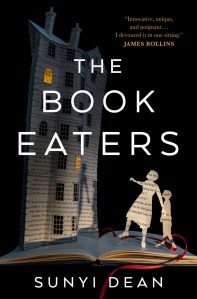
Review of Sunyi Dean The Book Eaters

Sunyi Dean. The Book Eaters

For me a five star book is something that either I want to read again or something that is so profound it makes an immediate impact. There are lots of ways that books can be compelling: a unique idea, an interesting set of characters, a complex plot, an artistic use of the English language and more. Reading is also a subjective experience, so what appeals to me as a reader may be very different for you. I read a lot for both pleasure and work but these short reviews are a way for me to show my appreciation for the work and the craft of the author of the reviewed work.

The Book Eaters is a work of dark fantasy set in contemporary England. The first time I saw the title and read the synopsis I was intrigued by the idea of a people who ate books instead of food and I was curious to see how this idea played out in the story. The story alternates between the present-day struggle of Devon and her son Cai and the traumatic story that places this mother and son on the run from the families of book eaters. Devon grows up in a world where she is isolated from the rest of the world by her family and grows up on fairy tales of princesses. These carefully curated stories are fed to her (literally since she is a book eater) and form her world and imagination, but she is also curious for the other stories that she is not supposed to read or eat. She begins to see signs that life is not the fairy tales she has been fed as a child, but as an adult she discovers that her role in the families is to be essentially breeding stock and she will be unable to raise the children she bears. Devon is permanently scared when the connection with her daughter is severed suddenly and she is sent to another marriage to bear her second child.

Devon’s second child, Cai, is a mind eater. Among the book eaters there are children born who consume human minds instead of paper and although there is a drug that allows them to consume books instead of minds they are always looked upon as a danger. Most of these children will become ‘dragons’ who are kept by the ‘knights’ in the story but as the time near for Cai to be taken by the knights and Devon to be removed from his life the family who produces the drug to treat the mind eaters disappears. In the present day the story follows Devon and Cai as they attempt to find the Ravenscar family who manufactures this drug which will allow five-year-old Cai to no longer eat human minds. In the meantime Devon must find a human for her son to feed on every two weeks as she attempts to avoid the families and the knights who want her and her son dead.

What makes The Book Eaters a compelling read is the realistic character development of both Devon and Cai who are looked upon as monsters but are bound together by the love of a mother and son. It is a book full of betrayals and broken people, of fairy tales that hide the darker side of reality, of the difficult choices love can cause us to make, and princesses who find a way to save themselves. The isolation of the families reminded me a little of the Ravenwood/Duchennes family in the Kami Garcia and Margaret Stohl series Beautiful Creatures although that is set in a Southern U.S. gothic world rather than an English one. A compelling plot which realistically develops a group of characters who are shaped by the curated narratives they have been fed and the trauma inflicted upon them as they attempt to survive in a world that views them as monsters.

Banished Monsters

Old Tree Wallpaper by Deligaris@deviantart.com

Old Tree Wallpaper by Deligaris@deviantart.com

Maybe there was once a time when magic ruled the world
When wizards and witches cast their spells upon their watchers
Where dragons flew beyond the mountains and wild children lived in the forest
Giants and trolls and goblins inhabited the wilderness beyond the safety of town
And brace heroes marched out into the wild lands to defend our boundaries
But no longer, the dragons are gone, the giants of old are dead,
and the children of the forest forgotten
Lost to the fog of some long forgotten time
beyond the shade of our parents’ or our parents parents’ memory
The demons that once dwelled in the wilderness now have only our minds to haunt
And the devils live among us wearing our own skins
For in arming ourselves to conquer the dangerous world of monsters
We became that which we sought to banish, the reflection of our nightmares
For where else will the monster roar if not within the heart of man?

Neil White, 2015

The Gryphon: A Poem

May_The_Gryphon_Be_With_You_by_rage1986

May the Gryphon Be With You, by rage1986@deviantart.com

Once I was viewed as an image of nobility and power itself

The king of the sky and the king of the jungle brought together into something far deadlier

Strong enough to rule the skies and deadly enough to stalk the beasts of the ground

Kings and armies emblazoned my image on their shield and castles for safe keeping

In a world where imagination and magic still existed

And children dreamed of magical beasts that prowled the dark places

Heroes and wizards came to seek my aid in their impossible quests

In a time before the modern world cast its own spell of certainty

And the wilderness of dreamland became tamed by roads of asphalt and concrete

And the dictatorial iconoclasts of plutocracy stripped the artistic from the halls of the world

When the gryphons, dragons and unicorns went the way of the dinosaur

Once I was the master of the earth and sky in another world, in another place and time

Now I don’t belong in the heavens or on the earth

For neither the eagles or the lions would have me

To them I am neither beast nor bird and my presence makes a mockery of both

So what am I?

Am I merely some projection of some alchemist’s desire

Am I the joining of two creatures noble in their own right

Into an unstable and unholy creature banished to live between worlds

On the edge of imagination in the whispers of dreams not yet quashed by the mechanistic drive of progress

Will there come a time when the magic returns and heroes come back to the world

When gryphons and dragons and unicorns can again dwell in the dreams of young and old

Or will they too be thrown into the furnaces of the disillusioned dreams and broken hearts

Of children grown too soon and adults who no longer sing songs

Composed Neil White, 2013

purple rose 01 by picsofflowers.blogspot.com