Jesus Healing the Blind From 12th Century Basilica Catedrale di Santa Maria Nouva di Monreale in Sicily.
Matthew 14: 34-36
Parallels Mark 6: 53-56
34 When they had crossed over, they came to land at Gennesaret. 35 After the people of that place recognized him, they sent word throughout the region and brought all who were sick to him, 36 and begged him that they might touch even the fringe of his cloak; and all who touched it were healed.
This short little transition may not seem to add much to Matthew’s narration, but Matthew (like most ancient writers) does not waste words. Even small additions to the narrative can point to important links and serve a structural point in oral storytelling. Matthew follows the pattern of Mark’s narration and slightly reduces the length of Mark’s narration, but Matthew’s decision to keep these transitional stories of healing is revealing.
The reformer Philip Melanchthon famously said, “To know Christ is to know his benefits.” As we compare this scene in Matthew to others in the gospel, I think this is a helpful frame to see some of the structure that underlays Matthew’s narration. At the end of the previous chapter (13: 54-58) the people of Jesus’ hometown knew Jesus’ family but they were unable to accept the wisdom he brought or to have faith in his ability to bring God’s kingdom to them and there were very few healings done there. In contrast in Gennesaret, which is close to Capernaum where Jesus has done many acts of power, the people come and they send word to the neighboring places to bring the ones who need healing. These demonstrations of the power of Jesus play an important part of understanding who Jesus is and a receptiveness to these acts point to the nature of faith and prepare the disciple to hear Jesus’ teaching. Matthew used a scene of healing many to prepare the reader to hear the Sermon on the Mount, (4: 23-25) and a description of the healing serves as an demonstration to John the Baptist’s disciples sent to inquire if Jesus is the one they are expecting. (11: 4-6) The neglecting of these demonstrations of power by Chorazin, Bethsaida and Capernaum have placed themselves below Tyre, Sidon and Gomorrah in the coming judgment (11: 20-24). The two other brief insertions of healing are both preceded by a miracle for an outsider (the healing of the Centurion’s servant/child before 8:14-17 and the healing of the Canaanite woman’s daughter prior to 15: 29-31—both possessing faith not seen in Israel). Structurally both this passage and 15: 29-31 are also bracketed by feeding miracles which also highlight Matthew’s organization (and by extension Mark’s organization since they share the structure of these chapters). One additional linkage that Matthew highlights is the healing of the woman with the flow of blood (9:20-22) who touches the fringe of his garment and hears that ‘her faith has made you well.’
These short readings highlight one of the primary ways that Matthew’s gospel wants us to understand what faith in Jesus looks like. Faith is an openness to the kingdom of heaven’s power at work in Christ, and to amend slightly Melanchthon’s wording: to know Christ is to remain open to his benefits or works. The crowd at Nazareth knows Christ primarily according to his family and are not open to his wisdom or works, the Pharisees, the scribes and soon the Sadducees in the narrative will judge Jesus’ works by their expectation of what the works should be, but those of faith are open to the works as they appear. They
trust that even the fringe of his garment, if touched, can heal/save (the Greek sozo translated healing means both) them completely.
Extract of Herbert Boeckl’s fresco “Saint Peter’s rescue from the Lake Galilee” inside the cathedral of Maria Sall, Carinthia, Austria
Matthew 14: 22-33
Parallels Mark 6: 45-52; John 6: 16-21
22 Immediately he made the disciples get into the boat and go on ahead to the other side, while he dismissed the crowds. 23 And after he had dismissed the crowds, he went up the mountain by himself to pray. When evening came, he was there alone, 24 but by this time the boat, battered by the waves, was far from the land, for the wind was against them. 25 And early in the morning he came walking toward them on the sea. 26 But when the disciples saw him walking on the sea, they were terrified, saying, “It is a ghost!” And they cried out in fear. 27 But immediately Jesus spoke to them and said, “Take heart, it is I; do not be afraid.”
28 Peter answered him, “Lord, if it is you, command me to come to you on the water.” 29 He said, “Come.” So Peter got out of the boat, started walking on the water, and came toward Jesus. 30 But when he noticed the strong wind, he became frightened, and beginning to sink, he cried out, “Lord, save me!” 31 Jesus immediately reached out his hand and caught him, saying to him, “You of little faith, why did you doubt?” 32 When they got into the boat, the wind ceased. 33 And those in the boat worshiped him, saying, “Truly you are the Son of God.”
This is the story within Matthew that initiated some of my questions about the way that Matthew’s gospel had been translated and interpreted. This well known story with Matthew’s unique addition of Peter coming to Jesus upon the water is a common image on stained glass windows and paintings in churches, and while it is often an image of hope: of Jesus who rescues those sinking in the stormy waters. Yet, it also is often paired with a condemnation of Peter who doubts in the face of the strong wind. I never anticipated my discomfort with the traditional translation of ‘you of little faith’ in this scene becoming this project which became a much larger examination of the gospel as a whole and its history of interpretation, but often one question leads to many others.
Normally when Matthew takes a story present in Mark (assuming Mark as the first of the gospels written) he shortens it to quickly move us to the instruction by Jesus, which comprises many of the additions in Matthew’s gospel, but here Matthew adds and entire scene of Peter getting out of the boat and coming to Jesus. One of the things to pay attention to when there are parallel narrations of an event is the places where an author introduces new or unique elements because they often give critical insights into what the gospel writer wants to express about who Jesus is and the nature of following him. Matthew has structurally placed this narrative in roughly the middle of the gospel and almost doubled the length that Mark (and John) dedicate to this story. It is also worth remembering that this is the second time Jesus has done the incredible upon the sea and there are unique aspects in both stories in Matthew’s careful narration that invite us to hear this story and the story of Jesus calming the storm in Matthew 8: 23-27 together.
Jesus compels the disciples to get into the boat, presumably a boat owned by one of the disciples, and after the feeding of the 5,000 remains to dismiss the crowds. The Greek enagkasen is more forceful than the NRSV’s translation of ‘made’, Jesus compels or forces the disciples to embark on the boat and sends them on their own into the waters to travel to the other side while he dismisses the crowds. Jesus goes up a mountain to be alone in prayer, but in this time the situation of those on the boat changes. The disciples in Matthew 8: 23-27 felt alone in the midst of the storm while Jesus slept, but now they are isolated from Jesus as the wind become hostile towards them and the boat is tormented under the waves. The wind and waves become, in the narration, active entities working against the disciples on the sea and from evening until the fourth watch of night, traditionally 3 am-6 am, the disciples struggle on their own against the elements. I think it is helpful to notice in this narration that there is a significant time of struggle for the disciples and it takes time for Jesus to move from the mountain where he is praying to the shore and across the many stadia (great distance in the NRSV) that the disciples are out upon the sea.
In Mark’s narration of this story Jesus intends to pass the disciples by, which may be an allusion to God passing by Moses to reveal who he is, but Matthew removes this highlighting the destination of Jesus being these ones on the boat. There are plenty of hints that Matthew shares with Mark, and some unique to Matthew, that point to the identity of Jesus, but Matthew has the boat squarely in Jesus direction of movement as the disciple see him approaching. In the midst of struggling against the wind and waves for hours and seeing what they perceive is a phantom or a ghost (Greek phantasma) their response is to cry out in fear. Jesus’ response to ‘be of good courage, I am, fear not’ is crafted to again alert the reader that more is happening than meets the eye. The initial command to ‘be of good courage’ or ‘take heart’ is a normal response to the cry of fear, but the next two statements are theologically rich. I am (NRSV it is I) is the same language that John’s gospel uses in all the I am sayings (I am the bread of life, I am the good shepherd, I am the way, the truth, and the life, etc.) and Jesus declaration that ‘I am’ in John 18: 6 causes the soldiers step back and fall to the ground when arresting Jesus. The phrase ‘I am’ recalls the name of God in Exodus 3:14 and while it can simply be the first person pronoun with the being verb in normal speech, in scriptures this frequently causes the hearer to ask about the person’s relationship to the LORD the God of Israel. In addition, this linked with the command ‘Fear not’ or as it is commonly rendered ‘do not be afraid’[1] is also commonly associated with a divine message either from an angel or directly from God. As we wondered in Matthew 8, ‘what sort of man is this?’ we are now again directed to wonder about the identity of the one approaching his disciples upon the water. The wind and the waves are unable to prevent this one who proclaims ‘I am, fear not’ from approaching.
Matthew is the only gospel who includes the story of Peter approaching Jesus on the water, and this is where Peter begins to stand out among the disciples and be a major actor in the narrative. In the coming chapters Peter will become the one out of the twelve who speaks and acts in answer to Jesus questions and will become the one who represents in many ways the community. Peter moves down from the boat and towards Jesus upon the water, but he sees the strong wind which has been against the boat and he begins to sink. The word translated sink (Greek katapontizesthai) can also mean drown, so Peter in this narrative is experiencing true peril in the midst of his fear as he cries out “Lord, save me.” Just as the disciples in Matthew 8 cried out ‘Lord save us’ as they were in the windstorm on the sea, now Peter echoes this rich phrase with resonance between Israel and the people of God (see comments on 8:25) to Jesus as he finds himself overwhelmed by the wind, waves and water. Immediately Jesus responds by extending his hand and taking hold of him.
This is the third of five uses of oligopistos (NRSV ‘you of little faith’) in Matthew’s gospel, a phrase always used in relation to those following Jesus. Rendering this term ‘you of little faith’ while correct adds a negative connotation that doesn’t need to be there (try saying ‘you of little faith’ without it sounding judgmental) and I do believe that ‘little faith one’ is a better translation. Jesus in this narrative has moved directly toward the boat, told the disciples to be of good courage because of his presence, and told Peter to come to him in the midst of the wind and waves. I know I am pushing against the interpretive tradition of this phrase, but I do believe that Jesus is fond of his ‘little faith ones’ and in this particular story of Peter. Instead of castigating Peter for experiencing doubt, perhaps he is reassuring Peter (and ‘little faith ones’ throughout the ages) that he indeed is ‘God with us’ in the midst of the storm. This is reinforced by the use of the word diatazo here which is only used one other time in Matthew’s gospel, on the mountain in Galilee after the resurrection where the disciples doubt is paired with the encouragement “I am with you always, to the end of the age.”[2] Like the disciples on the mountain, who even in their doubt worship, so the disciples here worship saying “You are the Son of God.” As I mentioned when discussing the ‘Son of’ titles for Jesus the Son of God title has relationship to the identity of Jesus being the Davidic King, but Matthew also pushes the boundaries of that title to include something greater in relation to the God of Israel. For Matthew, Jesus is one who is worthy of worship by the disciples, like the God of Israel.[3] The wind and the waves which threaten the disciples are stopped by his presence and we are invited beyond the wondering of ‘what sort of man is this’ the disciples voiced when Jesus calmed the storm before to the stance of worship this one who meets his little faith ones in their doubts and trouble and saves them.
[1] Anna Case-Winters notes that this is the fourth of seven significant texts with the message “do not be afraid” (1:20; 8:26; 10: 31; 14: 27; 17: 7; 28:5; 28:10). Note that all of these except 10:31 are in some manner a theophany (angel of the Lord appearing to Joseph in a dream, the two water narratives, the transfiguration and the resurrection. (Case-Winters, 2015, p. 194)
[2] Matthew 21: 21 in the NRSV “if you have faith and do not doubt” is the other place doubt occurs in English in the gospel, but the Greek word behind it is different: diakrino
[3] This is reinforced when you realize that Matthew uses proskuneo (to prostrate, worship) more than Mark and Luke combined and when you look at the thirteen times it is used (The Magi ‘paying homage’ 2:2, 8, 11; the women and disciples at the resurrection worshipping Jesus 28: 9, 17 and the temptation narrative where ultimately instead of worshipping Satan, Jesus quotes Deuteronomy 6:13 where one is to worship the Lord only. (Hays, 2016, p. 396 n. 52)
By Meister der Kahriye-Cami-Kirche in Istanbul – The Yorck Project (2002) 10.000 Meisterwerke der Malerei (DVD-ROM), distributed by DIRECTMEDIA Publishing GmbH. ISBN: 3936122202., Public Domain, https://commons.wikimedia.org/w/index.php?curid=155126
Matthew 13: 54-58
Parallels Mark 6: 1-6a; Luke 4: 16-30
54 He came to his hometown and began to teach the people in their synagogue, so that they were astounded and said, “Where did this man get this wisdom and these deeds of power? 55 Is not this the carpenter’s son? Is not his mother called Mary? And are not his brothers James and Joseph and Simon and Judas? 56 And are not all his sisters with us? Where then did this man get all this?” 57 And they took offense at him. But Jesus said to them, “Prophets are not without honor except in their own country and in their own house.” 58 And he did not do many deeds of power there, because of their unbelief.
The rejection of Jesus by those in his hometown or country (Greek patrida literally fatherland is behind both words in this narrative) fits within the overall flow of the gospel of Matthew’s structure which existed prior to the chapter divisions and this short narrative of the rejection in Nazareth combined with the death of John the Baptist set the stage for the next group of stories of Jesus’ power and reflections on faith. Throughout the parables we have been warned that many will not have ears to hear, eyes to see or hearts to understand. For the people of Jesus’ hometown familiarity with the relations of Jesus becomes the ‘stumbling block’ or ‘scandal’ (Greek skandalizo) which makes them unable to receive the wisdom that Jesus offers them, presumably in parables.
Earlier in response to the crowd, notably after the disciples of John the Baptist come to him. Jesus would say, “Yet wisdom is vinidicated by her deeds.” (11:19) Now the ones in his hometown recognize both wisdom and the deeds of power, and yet they are unable to receive him. Their unbelief (literally unfaith or lack of faith) it not due to the lack of justification for faith, the wisdom and deeds of power are known and demonstrated even here. There may not be a large number of deeds of power where ‘all the sick’ will be healed as in other places but that is because their lack of faith. As I argued in talking about faith in Matthew’s gospel, faith is an openness or awareness to what God is doing in the world through the presence of Jesus. They are in a synagogue, they can perceive the wisdom and even the deeds of power, but they are unable to connect those realities to the kingdom of heaven’s presence in this one whose father was a laborer (we may associate carpenters with craftsmen, but in this time the Greek tekton is merely a builder/laborer) whose mother and brothers they can name and whose sisters are known among them.
There may be many reasons that people reject wisdom, many stumbling blocks that can cause them to fall, but this is still a world in which the harvest will occur. The seed may fall on the path, or the rocky soil or among the thorns but the sower continues to sow. The weeds and the wheat will grow up together, the mustard seed is sown among the massive field, and the yeast is hidden among the three measures of flour. One discovers a treasure, one a pearl of surpassing value, others good and bad fish that need to be sorted. Yet, even in the midst of no faith Jesus is still able to do something according to Matthew. In a change from Mark’s language where the lack of faith in his hometown makes Jesus unable to do any deeds of power (except for healing a few sick people), in Matthew’s gospel Jesus doesn’t do deeds of power there and the reason is ambiguous. Perhaps it is by choice, why do deeds of power where hearts cannot understand, eyes cannot see and ears cannot hear, perhaps their lack of openness to the kingdom creates a resistance to God’s activity in that place. Regardless there are other fields to tend to and so Jesus and his disciples go where the people are ready to be fed.
That same day Jesus went out of the house and sat beside the sea. 2 Such great crowds gathered around him that he got into a boat and sat there, while the whole crowd stood on the beach. 3 And he told them many things in parables, saying: “Listen! A sower went out to sow. 4 And as he sowed, some seeds fell on the path, and the birds came and ate them up. 5 Other seeds fell on rocky ground, where they did not have much soil, and they sprang up quickly, since they had no depth of soil. 6 But when the sun rose, they were scorched; and since they had no root, they withered away. 7 Other seeds fell among thorns, and the thorns grew up and choked them. 8 Other seeds fell on good soil and brought forth grain, some a hundredfold, some sixty, some thirty. 9 Let anyone with ears listen!”
10 Then the disciples came and asked him, “Why do you speak to them in parables?” 11 He answered, “To you it has been given to know the secrets of the kingdom of heaven, but to them it has not been given. 12 For to those who have, more will be given, and they will have an abundance; but from those who have nothing, even what they have will be taken away. 13 The reason I speak to them in parables is that ‘seeing they do not perceive, and hearing they do not listen, nor do they understand.’ 14 With them indeed is fulfilled the prophecy of Isaiah that says:
‘You will indeed listen, but never understand, and you will indeed look, but never perceive.15 For this people’s heart has grown dull, and their ears are hard of hearing, and they have shut their eyes; so that they might not look with their eyes, and listen with their ears, and understand with their heart and turn — and I would heal them.’
16 But blessed are your eyes, for they see, and your ears, for they hear. 17 Truly I tell you, many prophets and righteous people longed to see what you see, but did not see it, and to hear what you hear, but did not hear it.
18 “Hear then the parable of the sower. 19 When anyone hears the word of the kingdom and does not understand it, the evil one comes and snatches away what is sown in the heart; this is what was sown on the path. 20 As for what was sown on rocky ground, this is the one who hears the word and immediately receives it with joy; 21 yet such a person has no root, but endures only for a while, and when trouble or persecution arises on account of the word, that person immediately falls away. 22 As for what was sown among thorns, this is the one who hears the word, but the cares of the world and the lure of wealth choke the word, and it yields nothing. 23 But as for what was sown on good soil, this is the one who hears the word and understands it, who indeed bears fruit and yields, in one case a hundredfold, in another sixty, and in another thirty.”
In Matthew’s gospel we are almost at the midpoint of the gospel when we encounter this first block of parables. This is the third of the blocks of teaching in Matthew (previously we have encountered the Sermon on the Mountand the Mission Discourse) but now we encounter three groups of parables grouped together with explanations of why Jesus teaches the crowd in this manner and explanation to the group of disciples. This first parable and explanations is mainly shared between Mark, Matthew and Luke with Matthew adding the text alluded to in Mark.
Our word parable comes from the Greek prefix para (along-side, together with) combined with the verb balo (to cast, to throw) and in Greek they are stories that cast two things alongside one another metaphorically. They are related to a long practice within and outside the bible of mashal, short stories used in instruction and teaching. They are not necessarily allegories where individual items represent something else (although the parable of the sower and the parable of the weeds below are disclosed as allegories by the interpretation provided in the gospels). Most of the parables we encounter will stand on their own without interpretation often acting like metaphors placing two things alongside each other to either reveal (or perhaps conceal) something about what Jesus is saying.
Unlike the Sermon on the Mount or the Mission Discourse where the primary audience is the disciples, now the primary audience is the crowds which approach Jesus. The teaching takes place while the crowd stands on the shoreline in Matthew while Jesus, and presumably his disciples, sits on a boat. It is likely that Jesus, like most storytellers, probably used these stories on multiple occasions and that they were an important part of his method of addressing the crowds that sought him. As a reader of the parables we are invited into the role of the disciple who has been given to know the secrets (literally mysteries) of the kingdom of heaven rather than the crowds who stand on the shoreline and many of whom, in the words of this first parable, will not grow deep roots or will endure only while it does not provoke trouble or tribulation.
Vincent van Gogh, The Sower with a Setting Sun
In contrast to the other parables in this chapter the parable of the sower is not placed alongside the kingdom of heaven explicitly in its proclamation. The short story told to the crowd simply begins in the familiar picture of a person sowing seed in anticipation of an eventual harvest. Without jumping ahead to the explanations that the gospels provide let’s look at this short story on its own. Hand sowing is done for wheat, barley and other grains and would’ve reflected one of the primary means of farming in the Middle East. Many of the festivals of the Jewish people are oriented around the harvest times for these sown crops and they were essential for the diet of the people Jesus speaks to. Although modern farming attempts to remove some of the variables in the soil by introducing fertilizers, planting at a preset depth and field preparation, even modern farmers will see areas of a field underproduce while others produce abundantly. But the sower in this parable casts the seed upon the field and its surroundings indiscriminately and the seed falls both in areas expected to provide growth and those that would be typically avoided (hardened paths or areas of brambles and thorns). The reality of rocks and undesired plants growing in a field may have been unavoidable, and yet, the sowing in portions of the field that are not anticipated to be good earth is probably intended to be the portion of the parable which introduces the dissonance to normal, more careful practices of preserving one’s seed where harvest is most likely.
Following the parable are two sets of explanations to the disciples. The audience has changed and those who are in the presence of Jesus are the ‘little faith ones’ who continue to follow him through his work and proclamation. The disciples, even in Matthew which has a more positive evaluation of them than Mark’s gospel, hardly prove to be paragons of understanding and yet it fits within the paradoxical world that Jesus proclaims where the Father has, “hidden these things from the wise and revealed them to infants.” (Matthew 11: 25). These ‘little faith ones’ are given the mysteries of the kingdom of heaven. Matthew takes the allusion in Mark to Isaiah 6: 9-11 and makes it explicit. Isaiah 6: 9-11 is a part of the call of Isaiah which is less frequently heard where God says to Isaiah that paradoxically the lack of reception for Isaiah’s prophecy is a part of the divine plan. Here Isaiah and this first parable are brought together to speak to the reality of that God’s proclamation often falls upon dull hearts, closed ears and shut eyes. The call still goes for those who have ears to hear, eye to see and hearts to turn and yet even in the midst of places where the harvest is great, there will be surprising places where the word of the kingdom is not received, where faith is not found, or where the depth of understanding is shallow or where distractions or alternative values strangle the nascent faith.
The explanation of this parable as an allegory provides a key to understanding the parable. This may not be the only way that the parable was heard, but as readers we are invited to hear ourselves with the disciples as those who receive the mysteries of the kingdom of heaven. The seed becomes the word of the kingdom, the proclamation of Jesus or the proclamation done by his disciples, which goes out into the world. We have already seen times where Jesus’ message is received with hostility and resistance and this will continue to be a reality, including later in this chapter in Jesus’ hometown. For those who are charged with casting this word into a waiting world one of the gracious pieces of this parable is that reception is not their responsibility. They are not responsible for preparing the soil, they are merely sowers casting the seed into the receptive or unreceptive earth. Some of the proclamation may have no perceived effect and lay lifeless on the ground to be snatched away by the forces opposed to the kingdom, at other times there may be a joyous reception followed be dashed hopes as the shallowness of the faith is revealed as times become difficult, sometimes other persuasive alternatives will turn people away from the kingdom. I’ve always found the description of the thorny ground as ‘the cares of the world and the lure of wealth’ enlightening for I think many modern Christians who follow a prosperity understanding of the gospel would think that being wealthy and being engaged in the world are fertile soil rather than soil that grows strangling weeds. Nonetheless, there continues to be a harvest for the times the proclamation meets those receptive, who are people where the seed can germinate and bear fruit and continue to give life to the world around them. In our modern mechanical understandings of farming, which reflect our modern understandings of our world, the farmer would probably force the field to yield its harvest, but these artificial methods have their cost to the long-term health of the field. Perhaps we modern proclaimers have also tried to force a reception of the kingdom only to find it shallow, choked or non-existent. Perhaps, in this ancient wisdom there is a permission to a more cooperative approach where both the seed and soil must work together and the sower in not ultimately responsible for the harvest, for that lies in the hands of the Father. Like in the Mission Discourse the sower, when they find a field that is not receptive to the seed, is simply to shake off the dust and proceed on to another field where the seed may thrive.
Jesus Healing the Blind From 12th Century Basilica Catedrale di Santa Maria Nouva di Monreale in Sicily.
Faith, believing, and unbelief are frequently used terms in Matthew, all originating with the Greek pistis. When modern people use terms like faith or belief they typically are referring to some type of cognitive assent-I believe certain things to be true, but the frequent usage of faith related terms in Matthew indicates definitions closer openness or trust than some type of cognitive assent to certain beliefs. There is a certain elasticity to how Matthew employs these terms but when we think about faith in Matthew it is not belief in the dogmatic sense.
As I’ve alluded to several times while discussing portions of Matthew that we view the world differently than the people that Matthew’s gospel is written to. I still find one of the more helpful ways to think of this difference comes from the philosopher Charles Taylor in his work A Secular Age where he differentiates between our ‘disenchanted’ world and the ‘enchanted’ world of our ancestors. Most ancient cultures, and the readers of Matthew’s gospel certainly fit within this characterization, believed there were times, places and individuals where the spiritual side of reality permeated their reality. Divine and demonic forces were actively at work in the world and responsible for sickness, famine, war, acts of nature and could be at work for or against the individual living in this enchanted world. Demons might cause a person to be mute or have a seizure, they might cause a storm to come upon the sea or the crops to fail. God or another deity might bring a bountiful harvest or hold back the rains as a judgment on the lack of ‘faithfulness’ of the chosen people. Ritual, when done by the priests, or magic, when done by others, often tapped into these people, times, and places where the spiritual world drew close to our own.
The gospel of Matthew is written from the perspective that the spiritual realm of the LORD the God of Israel, the Kingdom of Heaven, has now drawn near and turning towards the approaching Kingdom of Heaven is the proper response. (Matthew 4: 17) Although this is a minimalistic way of putting things, in Jesus we have a person where the spiritual side of reality associated with the God of Israel is able to act upon the earth and against the demonic forces that enslave, the sin that condemns and the lack of holiness that excludes. Faith or belief in Matthew’s gospel seems to reflect an openness or an awareness of this reality that some have while others do not. Some, like the centurion and the Canaanite woman, seem to perceive this reality in Jesus without having the background of the Jewish scriptures and practices, but instead use their own frameworks to understand who Jesus is and what Jesus means.
A special usage of this term, oligopistoi, what I’ve translated ‘little faith ones’ is always used in relation to Jesus’ disciples. They may not demonstrate the moments of clarity or openness that those coming to Jesus requesting a healing or exorcism may, but their faith is enough to recognize the call that Jesus extends to them. Traditionally translators and commentators have viewed ‘little faith’ as a criticism but Jesus, even asked to increase the disciples’ faith in Matthew 17: 20 (after they were unable to exorcize the demon of the son the father brings to them) tells that if they have ‘faith the size of a mustard seed’ they can command mountains to move. Being a ‘little faith one’ is not a crisis, for indeed these little faith ones will be sent out with the authority to heal and cast out demons and carry out the mission in chapter ten as emissaries of the kingdom and workers in the harvest. Jesus seems to be indicating that those with a small amount of faith can still do incredible things. As Mark Allan Powell can state,
So, Jesus seems to be saying, the amount of faith is not what’s important; you just need to know what to do with the faith you have. Quit worrying about whether you have enough faith and start asking, “Which mountains does God want me to move?” (Powell, 2004, p. 112)
Jesus may be able to expound about people like the Canaanite woman or the centurion that they have ‘great’ faith (in contrast to the little faith of the disciples) and they may simply have a greater openness to what God is doing in the world. This is not limited to Jesus’ time. There are many who are outside of organized religion who demonstrate a greater openness to God’s action than those who have been shaped by congregations. That doesn’t mean that faith and understanding cannot coexist, merely that they are not the same thing. I do think when Matthew invites the disciples who come to hear his gospel into the world of Jesus, he is also trying to invite us into a world where God’s kingdom is active and present, where in Jesus we meet the ‘God who is with us’ and to invite us, whether our faith is great or little, to hear about the people whose faith enabled them to see in Jesus the opportunity for God’s healing, forgiveness, and even resurrection.
Christ Healing a Paralytic, Mosaic from the Cycle of the Life of Christ, Chora Church, Constantinople (1310-20)
Matthew 9: 1-8
Parallels Mark 2: 1-12; Luke 5: 17-26
1 And after getting into a boat he crossed the sea and came to his own town.
2 And just then some people were carrying a paralyzed man lying on a bed. When Jesus saw their faith, he said to the paralytic, “Take heart, son; your sins are forgiven.” 3 Then some of the scribes said to themselves, “This man is blaspheming.” 4 But Jesus, perceiving their thoughts, said, “Why do you think evil in your hearts? 5 For which is easier, to say, ‘Your sins are forgiven,’ or to say, ‘Stand up and walk’? 6 But so that you may know that the Son of Man has authority on earth to forgive sins” — he then said to the paralytic — “Stand up, take your bed and go to your home.” 7 And he stood up and went to his home. 8 When the crowds saw it, they were filled with awe, and they glorified God, who had given such authority to human beings.
In this final miraculous story of this set of three which have all pointed to the authority Jesus bears and opened windows into who Jesus is in Matthew’s gospel we hear for a second time in this section of Matthew the use of the title the Son of Man. The differences in the way Matthew narrates this story from Mark and Luke probably are elements that may add details to the story (like the house being so full that the friends of the paralyzed man have to dig through the roof) but for all the gospels the central issue of this narrative is the authority that the Son of Man has and how to answer the charge of blasphemy that Jesus and his disciples will encounter.
We are returned to Capernaum which acts as a base of operations for Jesus’ ministry in Galilee and while the return connects us to the previous two stories where Jesus crossed to the other side of the sea, the return voyage is merely noted as we transition back to Jesus’ hometown. Unlike Mark and Luke we are not told that we are in a home and therefore there is no need for the friends of the paralytic find a way through the crowd at the home, climb up on the roof and open the roof to lower their friend. The story could take place in a home or in an outdoor location, but instead of the actions of the friends demonstrating their faith Jesus sees their faith. The faith may include the faith of the paralytic man or it may just be the faith of his friends, but this faith is enough for Jesus to see and speak.
Faith in Matthew’s gospel involves trusting that Jesus can do what is being hoped for, and here the faith can come from those other than the one being healed. I’ve been asked if it is possible to believe for someone else, and in the way the church has traditionally understood belief in terms of cognitive assent to doctrines my answer would be no, but in the way the New Testament discuss faith I think we need to say yes. Here, and in several places in Matthew’s gospel (ex. Matthew 8: 5-13, Matthew 9: 18-26, Matthew 15: 21-28) the trust of another in Jesus’ ability to bring about the healing they desire works on behalf of another person.
Jesus’ initial response to observing the faith of the friends and the paralytic man is to declare forgiveness on the man’s sins. While the declaration of forgiveness may seem strange to those of us who live in a world where injury and sickness are rarely viewed as dependent on the moral character of the ill or injured one, in the ancient world sin and sickness were often viewed as connected. Skin diseases or bleeding made one unclean and untouchable, blindness may be viewed as caused by either the individual’s or the parent’s sinfulness, and even injury or disability was viewed as either an action by a demonic threat or of divine judgment. These views are not limited to Judaism, but were common among cultures and in some strange forms persist even today when those who are sick or injured are viewed as lazy, gluttonous, or have done something morally deviant to incur their disease (Think for example of the way people think about diabetes or in the past the way HIV/AIDS was viewed). Matthew’s placement of this story as the climax of a series of stories where Jesus has demonstrated his authority over the elements, over the demonic prepares us for the declaration that he is one with the ability to forgive sins.
When a person can be labeled as a sinner the community is not responsible for their care, they can be left as an outsider. Forgiveness makes a way for inclusion. Like Job’s friends, religious people can sometimes spend time justifying why a person is dealing with an illness or injury, why they are disabled and while religion does help provide order for people’s lives it can also be used to exclude those who do not fit within the framework that they have established. Job’s friends needed to explain why Job’s suffering was Job’s fault and often it is easier to blame those who are needing assistance than engage the uncomfortable reality that sometimes people suffer and there is no apparent reason. On the other hand there are times where one’s actions do cause pain for oneself or others: one is intoxicated and causes an accident, one is injured while doing something unethical. We don’t know why the man in this story is paralyzed: was he injured while working, was he a revolutionary or a bandit who was injured, we can speculate and create a story behind this story but ultimately whatever the cause his friends trusted that Jesus could provide the answer and Jesus forgives whatever the believed or real cause of his paralysis was.
The reaction of the scribes which is not spoken publicly but only saying among (literally in) themselves and yet Jesus chooses to address this unspoken, or softly spoken deliberations. Unlike the friends of the paralytic who trust that Jesus is able to do what they desire for their friend, the scribes do not believe that Jesus is able to do what he says and that is the evil in their hearts. Jesus commands the paralytic to ‘rise up’ (again the Greek word egeipoo which is frequently used in this section and for Jesus at the resurrection) and take his bed and go home. His command and the paralytics response to the command, which demonstrates the authority Jesus had over the disability of the paralytic, demonstrates to the crowd the authority that has been given to human beings by God (not just Jesus in particular). On the one hand the Son of Man’s authority is implied in the narrative to be granted to the sons of humanity.
The title Son of Man is used in Matthew for the second time (Initially in Matthew 8:20). The title originates in the book of Daniel in a vision of judgment. This is one of the times where the desire for inclusive language in the NRSV obscures the linkage between texts. As the book of Daniel relays the vision:
I saw one like a human being (Aramaic is one like the son of man) coming with the clouds of heaven. And he came to the Ancient One and was presented before him. To him was given dominion and glory and kingship, that all peoples, nations and languages should serve him. His dominion that shall not pass away, and his kingship is one that shall never be destroyed. Daniel 7: 13-14
The Son of Man is often discussed as an apocalyptic title in writing about the New Testament, but since the word apocalyptic carries a lot of baggage for many Christians that may not be appropriate to the way that scripture actually is used in books like Daniel or Revelation and certainly not in terms of Jesus. In the literature around the time of Jesus we do see a hope for God’s intervention in the world through a representative of God. Much like the earlier Jewish hope where the Davidic king would be the means through which God would provide security and blessings for God’s people, now this ‘heavenly figure’ becomes the one through which the dominion, glory and kingship of the kingdom of heaven is exercised. The term is used frequently in the gospels and with Son of God and Son of David become ways of referring to Jesus. The intentional use of the title Son of Man in relation to the authority to forgive sins links Jesus to operating with the authority of God.
The Son of Man has appeared in two sections related to the scribes at this point in the narrative and it is worth watching as we continue to journey through Matthew when this title continues to be used instead of another title. Matthew is very concerned with demonstrating that who Jesus is and what Jesus does is in accordance with the scriptures and yet the scribes, those with the ability to read and interpret the scriptures seem resistant to Jesus’ authority. Perhaps the introduction of the Son of Man whose authority comes directly from God and doesn’t need to be mediated through scripture is one of the reasons that it is introduced in relationship with the scribes. Jesus as we encounter him in Matthew makes some astounding claims of authority and interprets scripture at times in ways that are either blasphemous or awe inspiring. Perhaps the demons in the previous story may see who Jesus is because the threat he poses to them and their dominion, for them Jesus is an undeniable threat to their power and authority and denies them the ability to continue their oppression. The people in Gadarene and the scribes may see the acts Jesus does, but they are unwilling or unable to grant him the authority he claims. Where the evil that lies in their hearts originates (and the heart is the organ of decision not emotion in scriptures) that stands in contrast to the faith of the centurion and the friends of the paralytic but for the followers of Jesus he is one with authority from God, for the crowds he is one who embodies the authority God is granting to the sons and daughters of humanity, but we will continue to see conflict with those who will be unwilling or unable to see who Jesus is through the actions he does and the words he says.
Paolo Veronese, Jesus Healing the Servant of the Centurion (16th Century)
Matthew 8: 5-13
Parallel Luke 7: 1-14
5 When he entered Capernaum, a centurion came to him, appealing to him 6 and saying, “Lord, my servant is lying at home paralyzed, in terrible distress.” 7 And he said to him, “I will come and cure him.” 8 The centurion answered, “Lord, I am not worthy to have you come under my roof; but only speak the word, and my servant will be healed. 9 For I also am a man under authority, with soldiers under me; and I say to one, ‘Go,’ and he goes, and to another, ‘Come,’ and he comes, and to my slave, ‘Do this,’ and the slave does it.” 10 When Jesus heard him, he was amazed and said to those who followed him, “Truly I tell you, in no one in Israel have I found such faith. 11 I tell you, many will come from east and west and will eat with Abraham and Isaac and Jacob in the kingdom of heaven, 12 while the heirs of the kingdom will be thrown into the outer darkness, where there will be weeping and gnashing of teeth.” 13 And to the centurion Jesus said, “Go; let it be done for you according to your faith.” And the servant was healed in that hour.
This is the second in a trio of interconnected healing stories which will be interpreted in the final story with the quotation from Isaiah that “He took our infirmities and bore our diseases.” As Jesus is compared to the suffering servant from Isaiah by Matthew, this narrative invites us to consider the span of the ‘our’ that Jesus will take infirmities and bear diseases for. Early in Matthew’s gospel we saw an openness to the Gentiles expressing worship for Jesus and understanding what the leaders in Jerusalem did not (Matthew 2: 1-12) and here we have the first request for healing from a Gentile, an action that will demonstrate surprising faith from an unexpected character. Jesus returns home to Capernaum and an emissary of the empire meets him asking for what the empire cannot give him. In contrast to Rome’s claims to heal a sick world, a Roman officer approaches Jesus for what the kingdom of heaven can offer.
There are two translational issues that significantly shape how I believe this passage is intended to be heard that are obscured by most translations. The first issue is the translation of the person needing healing: the Greek word pais normally means child and the masculine article would indicate a son. While in some cases the word can mean servant, its translation here as servant is attempts to harmonize this story with Luke’s version where he translates the Greek doulos as slave or servant. Matthew understands the distinction and uses doulos in verse nine to refer to a slave who the centurion can order to ‘do this’ and the slave does it. If the one needing healing is a son it heightens the connection to the centurion and creates a linkage to the other narrative of surprising faith in Matthew when a Canaanite woman approaches Jesus to heal her daughter. (Matthew 15: 21-28)
The second translational issue is that the initial response of Jesus to the Centurion is structured in Greek as a question: “Am I to come heal him?” Like the Canaanite woman there is a barrier that is present and the question of who Jesus has come for is brought forward. Is this officer in a different empire to be a beneficiary of the kingdom of heaven’s approach? Even though modern readers know that Jesus does heal the Centurion’s child, the initial response does not guarantee it and the petitioning centurion now is placed in the position of answering Jesus’ query. Like the Canaanite woman, the centurion meets this reluctance or resistance with a demonstration of faith that amazes Jesus and is contrasted to the expressions of faith he has encountered among the people of Israel. Jesus does not have to come and heal the child, but only speak the word and it will be done. The centurion uses his experience of earthly authority as a model for the authority of Jesus.
Faith for the centurion, and throughout Matthew’s gospel, is not a solely intellectual thing. Often faith in churches is a type of intellectual assent to beliefs or doctrines about who Jesus or God is, but although the identity of Jesus is an important theme for Matthew faith seems to be trust in what Jesus, or God, can do. The centurion does use his understanding of authority to reason that Jesus can heal by simply saying the word, but that doesn’t mean that the centurion or others seeking healing from Jesus understand who Jesus is (as Matthew is attempting to illuminate through a combination of stories, scriptural references, conflicts and teaching). Nor has the centurion committed to the way of life outlined in the Sermon on the Mount and we don’t have any indication that the centurion’s interactions with Jesus will go beyond this one meeting. Yet, the centurion is able to see what many both opponents and followers of Jesus are unable to see at this time: that Jesus has the authority to do what he says. Yet, as highlighted in the previous story, the address of Jesus as Lord indicates this is a story where there is an attribution of faith. Even if the centurion may intend this as a polite address to authority, Matthew is continually inviting us as hearers to reflect on who Jesus is who has the authority to do these things.
Matthew also uses this narrative as a way to reinterpret the ‘our’ of the hope that . Matthew takes the hope of texts like Psalm 107: 2-3 and Isaiah 43: 5-7 which speak of the regathering of the people of Israel:
Let the redeemed of the LORD say so, those he redeemed from trouble and gathered in from the lands, from the east and the west, from the north and the south. Psalm 107: 2-3
Do not fear, for I am with you; I will bring your offspring from the east, and from the west I will gather you; I will say to the north, “Give them up,” and to the south, “Do not withhold; bring my sons from far away and my daughters from the end of the earth—everyone who is called by my name, whom I created for my glory, whom I formed and made. Isaiah 43: 5-7
Now instead of those coming from east and west being the regathered heirs of the kingdom, now the Gentiles are included in this regathering for the banquet with Abraham, Isaac and Jacob and some of those in Israel will not be included. This is a part of Matthew’s inclusion of the Gentiles in the kingdom of heaven, but the receptions by the Gentiles will not be universal as we see in future stories. Faith will be found within and beyond Israel and the kingdom will be for Jews and Gentiles, men and women, parents and children, centurions, lepers and more. Even for those serving other empires, they are not beyond the reach of healing and redemption. Centurions can demonstrate faith unseen in Israel, Jesus can heal by saying the word and a child’s distress can be relieved in the hour of Jesus’ declaration that it is done according to the centurion’s understanding of faith.
This is a series of classes I’ve been teaching with my congregation that I’ve been attempting to capture digitally so that they could be used by other communities or small groups or for members who are unable to be present in class.
As I’ve looked back over the previous weeks there have been numerous challenges that have emerged along with the opportunities presented by the digital technology we use. As a way of completing these reflections I am bringing many of these challenges and dangers together in a way that I hope can help us reflect upon how we utilize this technology in ways that are beneficial. I will start with things that may seem minor and move towards events that can have catastrophic impacts on the people who use this technology. My intention is not to scare or to prevent people from using this technology but instead to help us use it wisely.
One of the challenges is the limitation of our human brain and its ability to handle the massive amounts of information we receive from both digital and non-digital sources. Our brain does not evolve at the same pace that technology evolves, and we can become overwhelmed by too many competing sources of information vying for our limited attention. Sometimes we can simply be distracted by the continual availability of entertainment and connection which can take us away from the work and personal connections we want to spend time on. The internet is great at feeding our desire for that which is interesting in the moment and when given the choice between the instantaneous distraction and the more involved effort of thinking and engaging our brain often chooses the distraction and we can spend hours engaged on the internet, our phones or social media and not feel good about the time we used there.
As I’ve looked at some of the narratives that are a part of our life, I mentioned the narrative of scarcity which tells us we don’t have enough. We believe there is never enough time, information, sleep, money and the list can continue indefinitely. When we add in technologies like social media to the already existing temptations of advertising, we are tempted to believe to compare our lives to the portion of other people’s lives that they choose to share. We can believe that our lives are inadequate because we are comparing them to the lives of others and this often happens because of our existing shame narratives about needing to be, for example, more beautiful, wealthier, more powerful, stronger, more successful or popular, or be better parents. I believe this is where the wisdom of the commandments not to covet come in: if we are going to be content it starts with believing that we have enough and that we don’t need to measure ourselves against some unattainable standard to be satisfied. Comparison can be a deadly to personal satisfaction. Part of my job both as a pastor and when I’m counseling people is helping them learn to see that they do have enough and to be grateful for what they do have.
I do believe there are strong pressures for people to remain engaged online and things that make these platforms more addictive. As people wired for connection we go to social media, for example, seeking that connection and there can be a fear of missing out (or FOMO) on the connections that are being made. In addition to this there are several strategies used by digital media to keep you engaged. One of these strategies is the removal of stopping clues, so YouTube or Netflix will automatically play the next video in a sequence and social media sites will allow you to continue to scroll indefinitely. Another strategy that internet platforms and apps frequently use is rewards for continued engagement, so this can be a stream on a platform like Instagram or a reward on a gaming app.
We as human beings were created for rest, what in a religious context we would refer to as Sabbath. The religious idea of sabbath is primarily about rest and not primarily about worship. We do need a break from the continual engagement with the digital world. Sometimes this is to maintain a healthy work/home balance where we set boundaries about when we will respond to work email or messages. Sometimes we set boundaries on our use of the web and our phones for entertainment so that we can focus on either projects and passions or so that we can intentionally spend time with family, friends and acquaintances. Our technology can help us to connect with people across the world, but it can also limit our connections with people who may be in the same room with us. I do think that within families a healthy discussion around boundaries with digital technology and the expectations for connection and engagement is an important discussion.
When the internet was created it was a place where information could flow freely, but with the loss of any type of editorial control there has been a loss of accountability for who is responsible for misinformation, especially when it is deliberately spread. Just because something is shared on the internet does not mean it is true, but sometimes it becomes difficult to differentiate between factual information and someone’s conjectures or opinions. The other struggle is the rapid diffusion of this information across platforms. The spreading of false information can have consequences for people’s reputations and careers. One of the narratives in my country, the United States, is the impact of deliberately distributed false information and their impact on people’s votes in the 2016 and 2018 elections. Like a rumor in interpersonal communication once it is started it can be very difficult to counteract false information once it is distributed online.
We both knowingly and unknowingly share a lot of information online and that information is mined for multiple purposes. I do think that we, as a society, need to have a robust conversation about the ethics of data-mining by advertisers, governments, employers and insurance agencies and what right we as citizens have to safe guard this information. I do think a place to begin this discussion could be the fourth amendment to the U.S. Constitution which states:
The right of people to be secure in their persons, houses, papers, and effects against unreasonable searches and seizures, shall not be violated, and no Warrants shall issue, but upon probably cause, supported by Oath or affirmation, and particularly describing the place to be searched, and the persons or things to be seized.
While the authors of the Bill of Rights never imagined a situation where people would be sharing information digitally, they were concerned about the fundamental privacy and protection of that privacy against overzealous entities. I do believe that we should have a right to be secure in not only our persons and houses but also in our digital identity and secure against both governmental and private concerns. These issues will resurface later in our discussion, but I do think we need to be aware of what we have control of in our digital identity and what we do not currently have control of.
Another factor that contributes to some of the issues online is the lowering of social boundaries that people have when communicating through digital technology. Many people feel safer expressing things digitally whether through text or email or on a social platform that they wouldn’t express in direct communication. On one hand this can lead to online bullying or trolling where a person voices some incredibly hurtful and hateful things in a way that may anonymous, things that if said in another’s presence you would have to see their reaction or be vulnerable to their physical and verbal retaliation. One can also experience miscommunication, because we lose all the verbal and non-verbal cues that make up much of communication, where people either read in emotions that are not present or misunderstand attempts at humor. Sometimes with lowered social boundaries people feel free to share too much information (TMI) which can make the person receiving it feel uncomfortable and can present some dangers for the person sharing. Finally, since we are desiring connection, we may be encouraged to do things that are popular and create reaction online. Peer pressure has existed well before the advent of digital technology and has caused people to do things they regret to attempt to fit into a peer group, but with the lowered social boundaries online this can make it easier to make choices that may be popular but have consequences.
Once something is online, we may not have control of that information. Several weeks ago, I listened to Darieth Chisolm’s discussion of how when she left a relationship her ex posted pictures of her online and her struggle to have these images removed. This struggle was enhanced by the involvement of the laws of two sovereign territories and the transnational nature of the internet. I’ve included a link to the TED talk discussion she gave below:
Another situation was with a colleague who had shared information about a superior and a congregation he served in what was supposed to be a closed group on Facebook, but someone in the group commented on it and the information was eventually seen beyond the group and it created a lot of challenges for him in relating to his congregation. Nothing, even when in a closed group, is truly private on a social media site. The other reality is the permanence of this data and that way you share and say can be used against you, even years later. An example of this which ultimately didn’t hurt the individual but should be cautionary was in the lead up to the NFL Draft last year, a social media post from Josh Allen from his early teenage days, quoting the lyrics from a rap song, used an inappropriate word for a minority group and days before the draft this was shared with the media, which didn’t ultimately impact his being drafted early but perhaps could have. I do know people who have not been offered jobs because of pictures and posts on social media that do not represent who they may be now but are still present online.
The internet has made all types of data much more accessible, and this also can present a danger. One of the news stories going on this week is related to a group placing MOMO videos, a suicide game, in with Peppa the Pig, a show for young children, and other shows and finding a way past the controls that parents may try to establish. Even without the malicious intent of something like the group behind these videos there is the easy access to violent, sexual, graphic, and inflammatory and hateful information online. Even without intentionally seeking out some of these temptations we may stumble upon things we didn’t expect while searching for something innocent.
The internet can also impact our relationships. The ease of access of sexual content online is a struggle I’ve seen played out in couples I’ve worked with where one partner in the relationship feels cheapened or unable to live up to the ideal images that the other person is viewing online. For some people this is viewed as equal to having an affair, while for others they view it less critically, but it can impact the way that couples interact and view one another. With the increased connectivity I’ve also seen people in a relationship either seek out additional relationships or reconnect with an ‘old flame’ online and sometimes this has led to breaking the trust in the relationship either through an emotional or physical affair or sharing negative thoughts and views about their partner. As I discussed when discussing online dating there is also the reality that having a bigger pool of people one could connect with may negatively impact the formation of relationships. The paradox of choice is that more choices do not make us happier and may make us less satisfied with a choice we make because we are continually considering the other possible choices.
Most online platforms use algorithms to attempt to show you more of what they anticipate you want to see, so that you continue to stay engaged on the platform. The danger of this is we can become isolated from differing opinions and this has led to an increase in polarization in our communities. Facebook, for example, will categorize you based on what you block and what you like as Extremely Liberal, Moderately Liberal, Moderate, Moderately Conservative, and Extremely Conservative and attempt to show you more things in your feed that fit your political bias. The struggle with this is when we become isolated from people who think differently than ourselves, we can begin to look upon them as our enemy and begin to demonize them. We can also be surrounded by organizations and groups who continue to push us more solidly into their camp and away from opposing views so that we support them, and we can end up with a bunker mentality where we are surrounded by people who think the same way against a common enemy. On the one hand this plays into the natural tendency for humans to form tribes and groups that we feel responsible for and it can feel very comfortable for people to find others who share their views. On the other hand, it can exert a lot of pressure for us to fit into the views of the group and for the sake of fitting in we may silence area where we disagree or feel uncomfortable. I do think that online, like in public speech, we need to be responsible for our language. Both when I was an officer in the military and in my current role as a pastor, I’ve always been aware of the power of words to do great harm and I continue to try to remind others in the public sphere of the impact of their words on others. This has become harder as the society has become more polarized and pushing against political correctness can become used by people as an excuse for painful and hateful speech.
I do think it is helpful to be aware of how we are using these technologies and how they impact our lives in positive and negative ways. The above discussion engages some of the negative aspects of the digital technology and I didn’t discuss the ways criminals use it for everything from scamming to human trafficking but while I think it is important to be aware of the dangers of the technology, I think it is also important to state that there are several positive features. I use digital technology frequently to communicate, to share ideas and information, and to stay updated on what is happening with the people and events that are important to me. I use all these technologies, but I do intentionally set boundaries on my interactions with the internet, my email, my cellphone and social media as I attempt to live a life that is fulfilling.
Session 3: The Internet the Backbone of the Digital Age
This is the third part of a now eight-part series on faith in a digital age. It expanded due to the richness of the discussion on the internet and the amount of material I couldn’t cover in this first week. The outline of the series is:
Week one: Advertising in a Digital Age Week two: Email, Multi-tasking and the blurring of the work/home divide Week three: The Internet the Backbone of the Digital Age Week four: The Impact of the Internet and Engaging it faithfully Week five: Cell phones and a continually connected life Week six: Social media and the projecting and mining of the digital self Week seven: Dating and relationships in a digital age Week eight: The dangers of a digital age
This is a series of classes I’ve been teaching with my congregation that I’ve been attempting to capture digitally so that they could be used by other communities or small groups or for members who are unable to be present in class.
The internet is the backbone, the infrastructure that makes the digital age possible. My children have never known a world without the interconnections that the internet makes possible, but I still think the internet is a mystery to a lot of people. The internet is simply a set of interconnected servers and computers that enable data to be exchanged both over hardwired connections and wirelessly. For a simplistic illustration think of phones: when I was growing up, I had a large number of phone numbers memorized and there were large phonebooks that gave me both the business and personal numbers I needed. If I wanted to talk to somebody, I would enter the phone a seven-digit number for a local call (eleven for a long-distance call 1+an area code+ the seven-digit phone number) and I would be connected to the proper phone in the proper house. Now with my cell phone I remember many fewer numbers, they are stored in my contacts. I can go to the contacts and select, for example, work and the phone translates that into the number 972-569-8185, or I can say to my phone “call work” and it will dial this same number. With the internet it works in a similar manner, if I type into my browser http://www.rejoicefrisco.com it automatically goes to a registry and translates this into a long numerical address which tells the computer the location on a server that I want to see. It goes to a space on the server and translates the data that has been stored there into a visual page. The way the internet is designed allows for multiple pages and places to be linked together and displayed on in a user-friendly way but the internet itself is just the backbone, it is just the structure that everything else we use it for is built upon.
Even though we say the internet is ‘just’ the infrastructure this infrastructure has changed so much of how we live and engage our world. One of the big stories the week before I presented this was the multi-billion dollar divorce of Jeff Bezos, the founder and CEO of Amazon, a company that wouldn’t have existed without the internet and the capabilities it provided. Amazon is significantly larger than its next largest competitor, Walmart. Many of the traditional retailers have been heavily impacted by this change. Sears is celebrating 125 years of business this year but also is in the process of being liquidated because the world has changed around it and it isn’t hard to think of the number of stores that no longer exist. It has changed the way we think about the need for a physical place to do business, to bank, and many other things.
We use the internet for a wider range of things from communications, to shopping, to getting news and information, to watch sports or entertainment programming, and many more things. We use it to monitor information and it also watches us (this is where many of the cookies on your computer come from). It is what most of the aps on our cellphones access to be useful and it connects us not only through our computers but through all our devices. As we enter a time where people have smart houses and smart cars, they are also continually transmitting information to servers which monitor these things. As we discussed in advertising, we can give up our information without thinking about it and often for a benefit (a lower insurance rate for example if they can monitor our driving behavior) but it is worth thinking about what that information is worth both to you and the person gathering it.
Most people realize that just because something is on the internet that doesn’t mean it is true. Yet, there are many things that people accept that may not be true for various reasons (confirmation bias and misplaced trust are just two examples) . The internet has no editor, no one to go back and verify the factuality of a page or article. Now an individual site may have its own controls: if you go to a news site, they have an editor or something like National Geographic would, but many sites do not. It is a great place to get information out quickly and easily and that is a great freedom. The internet makes this site possible but there is no editor other than me. There is no ‘peer review’ that we would see in the academic world where an article would be placed out with a claim and then be reviewed by others in the field to see if the claim can be verified: this is how everything from science to theology and biblical studies worked for years. The internet doesn’t do this.
There have been some creative ways to get around the lack of an editorial or peer review structure and a good case to think about this is Wikipedia. In the early 1990s Microsoft decided they were going to reinvent the encyclopedia with Encarta, a resource that they put their significant resources behind at the same time a small startup called Wikipedia entered the landscape. Encarta went with the traditional, but cumbersome peer review method to create its encyclopedia the way organizations like Encyclopedia Britannica had done in the past but Wikipedia allowed the community to create and comment on articles creating an agile and quick way of updating information. Microsoft eventually gave up on Encarta and Wikipedia has proven, through allowing others to critique articles, to be as accurate as the older peer review methods had delivered in the past.
Trust is a central issue in the evaluation of a source. If you are reading this as a blog or watching the video of this presentation and you don’t know me personally then you have to evaluate, “do I trust Neil as a presenter or not?” “Is the information he is giving me accurate or not?”
The internet has also proved a challenge for a lot of traditional businesses and industries. If you are still functioning as a business or an organization, you have probably adjusted how you work due to the internet. Many customer service related jobs have disappeared and have been replaced by technology or been relocated into central warehouses for an organization or in larger online companies like Amazon or Zappos. There has been a way people think of the need for a physical place. Even in the world of religion it has changed the way people think of the need for a physical space. One of my realization as I’ve been experimenting more with placing more video and discussions on the internet is that many people have watched many of these videos before ever considering coming to my congregation. Even if people never do come my hope is that I am making a positive impact for them, but could you imagine a virtual church? I know some people who are trying to do this, to replicate a church experience for people who for various reasons may not want or be able to come to a traditional experience of worship.
The church has always been a community that was connected even when its leaders couldn’t be present. The apostle Paul is the first we see this type of attempt to maintain a presence in his communities even when he couldn’t be there physically. The letters to the church in Rome, Corinth, Philippi, Thessalonica and more were attempts to influence and impact a community when he was physically somewhere else. We have always used the technology of the day to attempt to transmit the faith across distance. In my own tradition, the Lutheran tradition, Martin Luther benefited from the invention of the printing press approximately fifty years before the reformation began as a way of transmitting his thoughts, protests, sermons and teaching material from Wittenberg across much of Europe. Several large churches have developed satellite congregations connected by video with the central pastor/preacher who is the charismatic leader of the community. Even among traditional churches, like the one I am a part of, there is an increasing realization that for many of our smaller communities we may need to think creatively how they can continue to worship and be connected with the larger church with limited resources.
I’m indebted to Deanna Thompson’s honest reflections in The Virtual Body of Christ in a Suffering World which reflects on her own experiences with technology while she was dealing with treatment for cancer. Technology enabled her to remain connected with people when her physical body was unable to have sustained conversations and it allowed her to not be defined by the look of pity that she would see from people when they would visit her. CaringBridge, a website for giving medical updates on someone undergoing treatment, allowed her to pass on information about her treatment to a wide range of people and to receive messages from an unexpected number of people who were praying and sending thoughts. Through technology she was able to communicate in ways that reflected her normal intelligence and wit because she could communicate on her own terms. As she writes:
What I wrote and published online still sounded like the me I was familiar with, the me that was not wholly overcome by the stigma and diminishment caused by advanced stage cancer. (Thompson, 2016, p. 63)
When we are sick, we may lose our self-image as a person who can contribute, who has a voice. The internet can provide means of communicating that may be harder face to face.
There is a lot more I want to discuss in relation to the internet and some things I plan to discuss next session include:
How does the ease of information availability change the way we store information in our memory?
Many facts we need background information to even understand the answers.
Lack of ‘stopping clues’ designed into many aspects of the internet and how we can lose time by not stopping at regular intervals
How I attempt to use the internet in various ways and some boundaries I set
From a faith perspective we are going to think through some parts of the sermon on the mount and what that might have to say about how we interact online
We will also think about how we can do ancient things like prayer, connection, teaching and maybe even worship in a connected age.
Finally, we will think about the online identities we construct and how they connect to our physical identities.
Discussion questions:
What do you use the internet for? How frequently do you use the internet?
How do you use the internet to communicate and connect with other people?
What are some changes you’ve noticed happening because of technology?
What are some of the strengths of connecting with people across the internet? What are come of the challenges of connecting with people across the internet?
What are your thoughts about a virtual faith community? What would be some benefits and some challenges to your understanding of what it means to be faithful?
Why would people seek out a virtual church community rather than a traditional community of faith?
Have you ever used technology to communicate when you were physically unable to be present with someone? How was the connection you felt over the distance?
This is the second part of a seven-part series on faith in a digital age, the first session was on advertising on a digital age. And the outline of the series is:
Week one: Advertising in a Digital Age Week two: Email, Multi-tasking and the blurring of the work/home divide Week three: Advent of the internet and a connected age Week four: Cell phones and a continually connected life Week five: Social media and the projecting and mining of the digital self Week six: Dating and relationships in a digital age Week seven: The dangers of a digital age
This is a series of classes I’ve been teaching with my congregation that I’ve been attempting to capture digitally so that they could be used by other communities or small groups or for members who are unable to be present in class.
I remember in the 1970s and 1980s when I was growing up the promise that technology would enable us to work fewer hours and spend more time at home with people doing what we enjoyed. One of the cartoons of that age, the Jetsons, the father only worked a couple of hours at a very leisurely pace and then came home and spent almost all of his time with his family. The reality is that people are not working fewer hours, they are working more hours than previously. The quantity and quality of work an individual person can produce has increased dramatically due to technology but now we are expected to do more work with fewer people. We do less physical work than we did a generation ago but our time at the office or engaged with work related items has increased dramatically.
Email starts out as a tool in the business, academic and military. Originally it took a dedicated network of terminals connected to a larger computer and I remember at Texas A&M when I was a student in the early 1990s logging in on a ‘dumb terminal’ to check my email for assignments from class. Email was much less convenient but it was also limited to devices connected into the main server and so your email for work stayed at work. Email would soon evolve to become far more connected and capable and this would create both new possibilities and new challenges.
One of the benefits of email is it is free. Now understand it is free because someone else, either the office or school we are associated with or advertisers have paid for the servers and infrastructure required to make the email possible. Yet, it is free which, unless you are the postal service and have seen electronic communication eat into the volume you deliver, is a good thing. Email is also able to carry immense amounts of information. For example, my congregation sends out a weekly email to the congregation which includes documents, links as well as highlights of events occurring each week.
One of the realities of email is that we get overwhelmed with information. Most people can relate to the experience of opening your email account and checking many of the emails to delete even before you open them. We are exposed to a lot of information and it becomes overwhelming and so we have to learn how to filter what is vital, what is important and what is not important. We have always sorted, even before email we would quickly sort our postal mail and determine what was trash and what was worth opening. Yet, even once we open an email, we quickly see what we think may be important and one of the realities is that information often gets missed. For example, the synod (the higher body over the churches of my denomination in the North Texas-North Louisiana region) sends out a weekly email update which includes events occurring in the region and if something is not in the first several events there is a strong possibility that I may have stopped reading at that point. We have become so overwhelmed with information that we have to find ways to limit so that we can focus on what we believe are the important things.
In any technology that communicates by text one of the things to understand is we do not have a number of the physical clues from voice and body language that we use to insert the emotion accurately into a message. Most of the information we take in when we speak to another person is non-verbal and so it is easy with text-based communication to misinterpret the emotion of the sender. For example, let’s assume that I was in an accident prior to arriving at the office and the first email I read I assume that the author is yelling at me. Now the way the email is worded may lead to this interpretation but it may also be about my own shame or anger at being in an accident. I may transfer my anger with the person I had an accident with to the sender or if I am ashamed of being in the accident, I may feel that I deserve to be yelled at. But these may have nothing to do with the intent of the sender, they are things I have read into the text message.
One of the other things it is easy to do with email is to send a message to more people than you intend or the wrong person. Many people can relate to times where they intended to forward a message and replied instead or they wanted to reply to an individual and they unintentionally hit the reply all response on the message.
People could reach out for work related things by phone long before email, but email was really the first area where we see an increasing tendency to take work home with us. We became available to people from the office, once email was connected via the internet, twenty-four hours a day and seven days a week. I know many people will take their email with them on vacation and respond to it, or they may attempt to respond to email in the evening or during a meal. This can become an unhealthy dynamic for us as individuals and for our relationships.
Email was one of the first areas where we saw the advent of digital multi-tasking. Especially with the advent of push notification we see email constantly interrupting our day. So, most people who have outlook or another email device on their computer and phone will receive a pop-up whenever an email comes in and our eyes are immediately drawn to it and we make a decision whether to open the email or allow it to sit until a later point. Yet, even the reality of looking at the pop-up and making a quick decision has taken us away from the work we are doing and those who study efficiency have seen a drop in efficiency from these frequent interruptions. It takes our mind time to switch between tasks and to engage what is being asked of it and then to re-engage what we were working on initially. Multi-tasking doesn’t make us more productive or efficient, it actually is a productivity killer. It is like when your computer has multiple tasks open the available memory and processing capability it has is reduced for any one task so it runs slower. Computers have evolved quickly to be able to increase their processing capacity but the human brain cannot evolve in the same way. We simply were not made for a world of continual interruption.
In our culture we seem to value being busy. I’m guilty of answering the question, “how are you doing?” with the word busy and sometimes we wear our constant activity as a badge of honor. ‘I’m really important because I am always busy.’ Yet, I think we need to talk about the reality that people use being busy the same way they use drugs and alcohol—as a numbing device. If I am busy doing something that has meaning to my life and my relationships that a good thing, but if I am busy so that I don’t have to think about the brokenness in my life or my relationships or so that I can avoid difficult conversations and feelings then we are using our activity to keep us numbed.
One of the other things that can happen with all of these technologies is if we don’t set our own healthy boundaries, we will allow the person with the least healthy boundaries to determine how much of our time they can demand. The person who believes they need verification from you or your attention to validate their importance can take time away from the people in your life who truly are important to you or the things in life that give you value and meaning. I will talk about some of my own values below but I think it is a very healthy thing to reflect on how we use any technology and when are the times we feel like it is impacting our life, health and relationships in a negative way.
Is checking an email a bad thing? No, but sometimes the way it dominates our life can be. I know there are times when I spend multiple hours responding to emails after a weekend and that is time that is taken away from being present with other people, doing the work I need to get done on a weekly basis and doing the creative work that brings life and joy to my life. One of the questions to ask is, “Is this a productive use of my time.” Frequently it can be, but it will not always be. If your answer to the question of the use of time being productive is frequently no, then it may be time to look at establishing some boundaries and thinking how you might limit the amount of time you spend with email or any other item.
So, as a pastor and I want to help us think through this from a faith perspective and help us to imagine how we might live a good life. I will also share some of my own boundaries below that have come through my own wrestling with these issues. I’m not perfect at this, I continue to have days or weeks where I am not as diligent or healthy as I would like to be. To begin examining this question from a faith perspective I am going to start with the two great commandments. Here is how the Gospel of Mark tells the story where the two great commandments are introduced:
One of the scribes came near and heard them disputing with one another, and seeing that he answered them well, he asked him, “Which commandment is the first of all?” Jesus answered, “The first is ‘Hear, O Israel: the Lord our God, the Lord is one: you shall love the Lord your God with all your heart, and with all your soul, and with all your mind, and with all your strength.’ The second is this, ‘You shall love your neighbor as yourself.’ There is no commandment greater than these. (Mark 12: 28-31)
I’m going to focus in on the second commandment, and in particular the second phrase. If we are going to love our neighbor as we love ourselves it means we need to be able to love ourselves. It is hard to love your neighbor more than you love yourself. When we are not taking care of our needs we often reply in anger, frustration or in resignation that this is one more person who is taking us away from what we want to be doing. We set boundaries so that we can be present with our neighbor. To be able to be present with another person is one of the greatest gifts we can give them.
For me this also goes back to my baptismal identity. In my baptism I am reminded that God values me for who I am, not primarily for what I can do to earn God’s love or favor. God’s grace frees me from this continual seeking to be good enough in God’s eyes and my baptism reminds me I am already loved and valued. I have a plaque on my wall that came from my advisor in seminary which reads:
Neil Eric White, remember you are a baptized child of God; for that is the basis of everything else you will become.
My value does not come from how busy I am but from who I am as a child of God. There are times when I forget this and I get caught in the trap of looking important and busy. Yet, I am valuable not because I am busy but because I am a person created in the image of God.
A part of our identity as humans is that we were created for connection with God and with one another. That is one of the things I take away from the narrative of Adam and Eve in Genesis 2 and 3. One of the predictors of an early death is the lack of strong interpersonal connections with family and a network of friends. We need interpersonal connection and technology can help facilitate that and it can also take us away from acknowledging the humanity of another person. Have you ever been interacting with someone when they suddenly interrupt the conversation to interact with their email or their phone? Or have you talked with someone and they never looked away from their email during the entire conversation? How did that make you feel? It can make you feel unseen, unvalued and unloved. For parents I think this is one of the places where our messages can speak louder than any words we say: our children watch us to see a model of what is important and how they will interact with the world. If they see us modeling that email or work is more important than their conversation, playing with them, and physical signs of affection then they will also look for meaning and value in their work and electronic devices.
Here are some of the boundaries I use as a person who has thought through some of these items from the perspective of faith and seeking a better life: I include these a descriptive and not as prescriptive, they are what I do and I would invite you to think about how you might set your own boundaries.
I attempt to engage email in a couple blocks during the day. Typically, I try to respond to email in 24 hours if a response is needed. My normal pattern is once when I begin my work day, once before lunch and once later in the afternoon.
I do filter based on who an email is from and the content of the title whether I even need to open an email. Do I occasionally miss something? Yes, but I am willing to risk missing something for the time and the freedom I gain from this.
I do not open email on my day off unless I feel it is something that needs a quick response or something that will cause me anxiety not to respond to.
I do set aside times to be present with people and if I am present with someone, I will not look at my email or my phone until that time is over. I also do not check email or phone when I am out on a date with my wife, when I am working out or working in the yard. It can wait
Between 9 p.m. and 8 a.m. I typically don’t check email and I assume any type of communication I receive needs to be an emergency. If it is not an emergency, I attempt to let the person know politely but firmly that this is not an emergency and when they should contact me.
I do believe that we as people were created for rest, that we need a Sabbath and that means finding a way to be away from the demands of work for a time. My hope in this is that we can be both curious but also to provoke some challenging conversations about the values we have and the type of life we want to live. I don’t think of email as a negative thing, but I do know it can be used in a way that is detrimental to our lives, our health and our relationships. I do this as a way to model not only for my congregation but also for my children what is important. There is a phrase I learned from my mentor in seminary that says, “Don’t worry that your children aren’t listening to you, worry intently that they are watching everything you are doing.” If we say we want them to value other people and then we check our work email or our personal email instead of interacting with them they see where our true values are and they will emulate that. If we use digital technology and devices as a way to entertain and distract them while they are young don’t be surprised when they use them to stay entertained and distracted when they are older. They often learned their behaviors by modeling what we ourselves have done.
Discussion questions:
List the positive and negative aspects of email.
How do you feel when you are interrupted when you work? Do you feel like email is an interruption?
Have you ever used being busy to avoid a hard conversation or to avoid thinking about brokenness in your life or relationship? Has email become something you are addicted to checking?
Do I model using technology in a way that I would want to model for my children?
What boundaries would be healthy for me to set around my work? My response to email?
Do you feel like your email overwhelms you with information? Are there ways you can limit the emails you receive or filter them more efficiently?
How do we show another person that they are important to us?
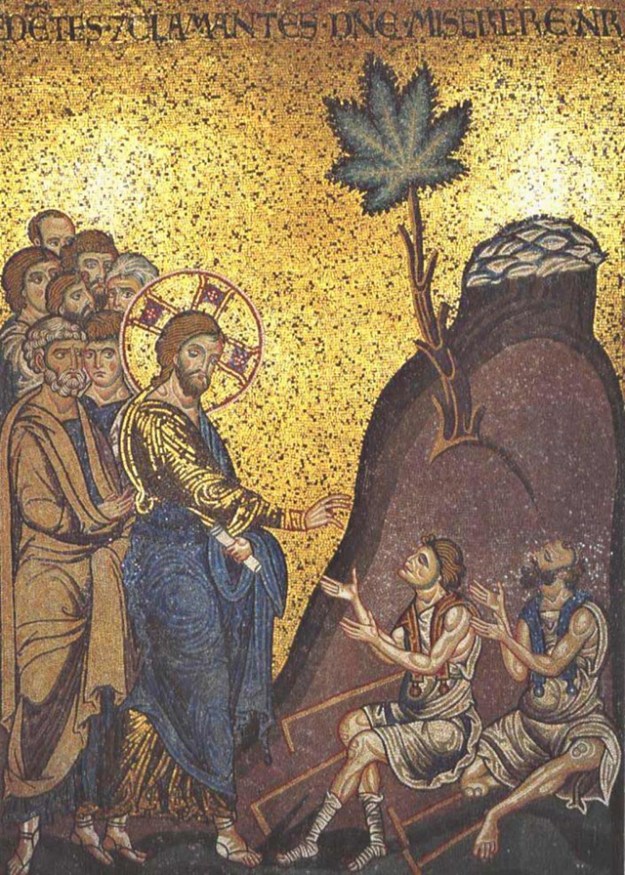






 Sign of the Rose