Tag Archives: Disaster

The Poetry of Death and Destruction: Jeremiah 4: 11-18

The Prophet Jeremiah by Michelangelo

The Prophet Jeremiah by Michelangelo

Jeremiah 4: 11-18

 11 At that time it will be said to this people and to Jerusalem: A hot wind comes from me out of the bare heights in the desert toward my poor people, not to winnow or cleanse- 12 a wind too strong for that. Now it is I who speak in judgment against them.
 13 Look! He comes up like clouds, his chariots like the whirlwind;
his horses are swifter than eagles– woe to us, for we are ruined!
 14 O Jerusalem, wash your heart clean of wickedness so that you may be saved.
 How long shall your evil schemes lodge within you?
 15 For a voice declares from Dan and proclaims disaster from Mount Ephraim.
 16 Tell the nations, “Here they are!”
Proclaim against Jerusalem, “Besiegers come from a distant land;
they shout against the cities of Judah.
 17 They have closed in around her like watchers of a field,
 because she has rebelled against me, says the LORD.
 18 Your ways and your doings have brought this upon you.
This is your doom; how bitter it is! It has reached your very heart.”
 
The prophet lapses into his deathly poetry again, trying desperately with his words to shake his people out of what Brueggeman calls their “religious indifference and covenantal recalcitrance”  (Brueggemann 1998, 56) Yet the words seem to be falling on deaf ears, the party continues and nobody wants to sober up and go home. Yet the Northern tribe of Dan is proclaiming the disaster that is coming.

Though it will be the Babylonian army that will come and lay siege to Jerusalem and take the people into exile, they are not named. The people and the prophet live in different theological realities.  The prophet sees the way in which God is sovereign over not just Israel or Judah, but over the besiegers and conquerors as well, and that God is indeed moving in judgment towards the people of Judah for the ways they have not kept their covenantal faith.

The people are presented with two conflicting realities. The rulers and the priests pass on the platitudes that things are ok, as well as apparently many of those looked upon as prophets. They continue to prop up the Davidic regime and the temple hierarchy, and the people really have no reason to question the way things are. It is a much different world, where most people are illiterate and do not have anything beyond their oral memory to challenge the king and the priests who not only bear the recorded word of God, they are the only ones who are educated enough to be able to approach the words we take for granted. Also worship has become focused on the temple, and so most people may make it to the temple for the festivals (much as people who come at Christmas and Easter) and may have their own practices which may or may not line up with the temple ideology, but they are reliant upon the priests and the king to point them to what covenantal faithfulness looks like. Jeremiah, the prophet and poet, is one of the few voices of dissent pointing to the way in which the leaders have failed to be the exemplars of covenantal faithfulness that may lead the people back into God’s way of justice and shalom.

purple rose 01 by picsofflowers.blogspot.com

The Siren Call: Jeremiah 4: 5-10

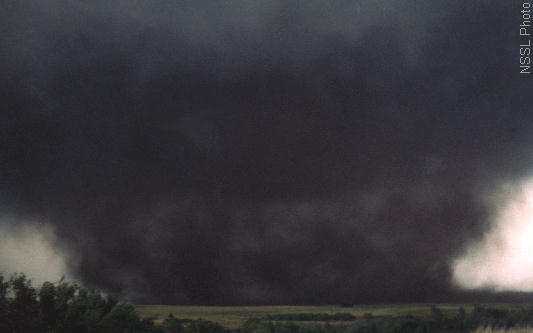
F4 Wedge Type Tornado, nearly a mile wide that hit Binger, Oklahoma

F4 Wedge Type Tornado, nearly a mile wide that hit Binger, Oklahoma

Jeremiah 4: 5-10

5 Declare in Judah, and proclaim in Jerusalem, and say:
Blow the trumpet through the land; shout aloud and say,
 “Gather together, and let us go into the fortified cities!”
 6 Raise a standard toward Zion, flee for safety, do not delay,
for I am bringing evil from the north, and a great destruction.
 7 A lion has gone up from its thicket, a destroyer of nations has set out;
 he has gone out from his place to make your land a waste;
 your cities will be ruins without inhabitant.
 8 Because of this put on sackcloth, lament and wail:
“The fierce anger of the LORD has not turned away from us.”

 9 On that day, says the LORD, courage shall fail the king and the officials; the priests shall be appalled and the prophets astounded. 10 Then I said, “Ah, Lord GOD, how utterly you have deceived this people and Jerusalem, saying, ‘It shall be well with you,’ even while the sword is at the throat!”

 When I lived in Oklahoma, tornado sirens were a way of life. When spring came you knew that if the siren was blaring its dissonant tones that you needed to check the TV to see where the storm might be and how dangerous the storm was. Some storms were storms that you could weather in place, going to the safe room in your house. But some storms, if you were in their path you didn’t want to stay in place and wait out, you needed to flee to designated areas that were better able to withstand the winds.  And yet sometimes even fleeing to a strong place is not enough, as was the case of the F5 tornado that struck Oklahoma City in 1999 destroying or badly damaging over 8,000 homes.

Jeremiah has the unfortunate role of being the siren, alerting the people to a disaster they do not expect nor do they want to see. War is approaching, an unspecified invading  army is coming to lay waste to the land. Destroying cities, burning crops, killing and enslaving and the Lord has withdrawn the protection they have relied upon in the past. The prophet goes even farther, to place the Lord behind the movement of the predicted enemy. The Lord has made a choice, a dreadful choice, a choice against his former people. It is a choice the prophet has allowed us to see the Lord agonizing over, and yet the pieces are in motion, the storm is in motion and yet the prophet continues to hope for a turn. The prophet desires for the people to put on sackcloth, to lament and wail, and perhaps the Lord will turn once more.

The very people who should be keeping the people in the relationship with God, the king-priest-prophet have become the very people who have dulled the people to the siren’s call. There is a Davidic king and the temple which the people have begun to place their trust in, yet the prophets are always pointing to God’s vision of justice and shalom (harmony/peace) and the ways that the people have betrayed this vision.

Jeremiah makes a bold statement, in essence placing the blame at God’s feet, for the people have heard and received the message that it is well (most likely from the king and his officials, the priests and the prophets) while terror approaches. One of the roles of the prophet is to stand between the people and God, challenging both. The prophet will love both God and the people and weep with and for both of them, and in standing between the two his heart and body will be broken. Yet Jeremiah, among the prophets, seems to stand alone-for the other prophets of his time seem to be singing in unison with the kings and priests. Jeremiah speaks dangerous words, but they are the words of the faithful willing to enter into the struggle with God, to challenge God, to even go so far as calling God a traitor while still remaining in the relationship. As Moses in the Exodus, Jeremiah intercedes for the people he loves and yet even Jeremiah will have his limits as we will find.

purple rose 01 by picsofflowers.blogspot.com