Tag Archives: Deuteronomy

Deuteronomy 28 Blessings and Curses

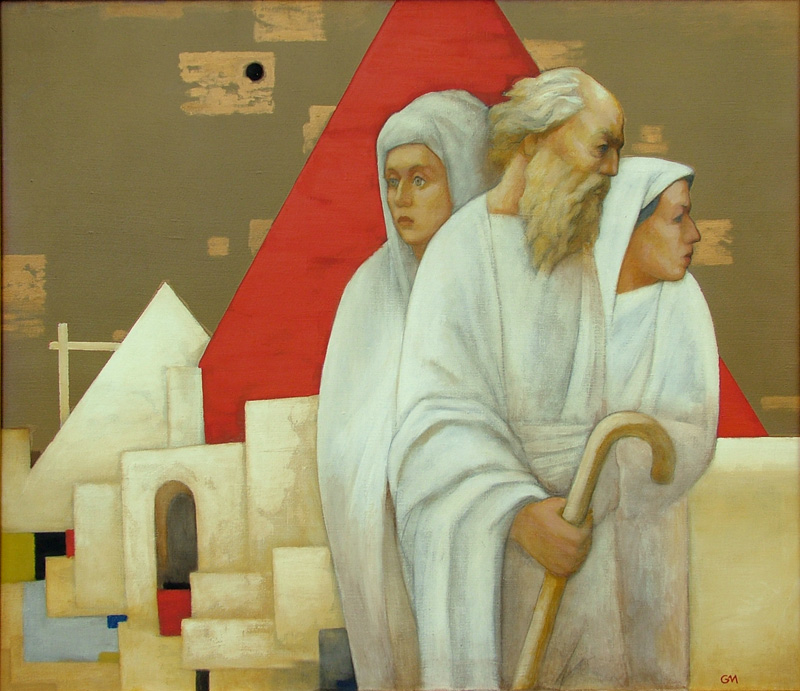
Grigory Mekheev, Exodus (2000) artist shared work under Creative Commons Attribution-Share Alike 3.0

Grigory Mekheev, Exodus (2000) artist shared work under Creative Commons Attribution-Share Alike 3.0

Deuteronomy 28: 1-14 Blessings for Obedience

1 If you will only obey the LORD your God, by diligently observing all his commandments that I am commanding you today, the LORD your God will set you high above all the nations of the earth; 2 all these blessings shall come upon you and overtake you, if you obey the LORD your God:
 3 Blessed shall you be in the city, and blessed shall you be in the field.
 4 Blessed shall be the fruit of your womb, the fruit of your ground, and the fruit of your livestock, both the increase of your cattle and the issue of your flock.
 5 Blessed shall be your basket and your kneading bowl.
 6 Blessed shall you be when you come in, and blessed shall you be when you go out.
 7 The LORD will cause your enemies who rise against you to be defeated before you; they shall come out against you one way, and flee before you seven ways. 8 The LORD will command the blessing upon you in your barns, and in all that you undertake; he will bless you in the land that the LORD your God is giving you. 9 The LORD will establish you as his holy people, as he has sworn to you, if you keep the commandments of the LORD your God and walk in his ways. 10 All the peoples of the earth shall see that you are called by the name of the LORD, and they shall be afraid of you. 11 The LORD will make you abound in prosperity, in the fruit of your womb, in the fruit of your livestock, and in the fruit of your ground in the land that the LORD swore to your ancestors to give you. 12 The LORD will open for you his rich storehouse, the heavens, to give the rain of your land in its season and to bless all your undertakings. You will lend to many nations, but you will not borrow. 13 The LORD will make you the head, and not the tail; you shall be only at the top, and not at the bottom– if you obey the commandments of the LORD your God, which I am commanding you today, by diligently observing them, 14 and if you do not turn aside from any of the words that I am commanding you today, either to the right or to the left, following other gods to serve them.
 
Deuteronomy closes this section with a series of blessings and curses. The previous chapter gives instructions for Simeon, Levi, Judah, Issachar, Joseph and Benjamin to stand on Mount Gerazim to proclaim the blessings. Although the ancient world had a much stronger view of blessings and curses than we do in our culture they are not quite these magic words that linger in the air and take on a power to bless or smite, rather they are a continual reminder of the contingent nature of the blessings that the LORD has promised. Israel does not have a true freedom in the sense of being able to choose its own destiny but it does, according to Deuteronomy, have a choice of which destiny it will live into. The reward for covenant obedience is that they will be materially blessed in this life, their harvests will be good, their flocks and herds will grow, they will have children and good health.

In an American context it would be easy to misread Deuteronomy as some sort of prosperity gospel for individuals, but this would be to miss much of what Deuteronomy is saying. Yes, in the author of Deuteronomy’s view the people (as a community) will be blessed if they are obedient. That obedience involves a harsh set of justice requirements and the continual care for the oppressed in their midst. It involves an acknowledgment that their blessings come from the LORD their God who brought them out of the Egypt and to this land of milk and honey. It is a way of thinking that is simple, and one that other books of the bible do challenge (for example in the book of Job which revolves around the righteous sufferer and in Matthew, Mark and Luke where prosperity is viewed with suspicion) yet it is a perspective that helps many people make sense of their lives, and probably helped the people Deuteronomy is written to initially make sense of their lives.

The people will often fail to diligently observe all the commandments and the much larger portion of this chapter is dedicated to the consequences for disobedience. Perhaps as we approach the following fifty three verses of curses, which seem oppressive and distasteful in our time, we can suspend our judgment and wonder about the experiences of the people who would hear these words.


Deuteronomy 28: 15-68 Curses for Disobedience

      15 But if you will not obey the LORD your God by diligently observing all his commandments and decrees, which I am commanding you today, then all these curses shall come upon you and overtake you:
 16 Cursed shall you be in the city, and cursed shall you be in the field.
 17 Cursed shall be your basket and your kneading bowl.
 18 Cursed shall be the fruit of your womb, the fruit of your ground, the increase of your cattle and the issue of your flock.
 19 Cursed shall you be when you come in, and cursed shall you be when you go out.
       20 The LORD will send upon you disaster, panic, and frustration in everything you attempt to do, until you are destroyed and perish quickly, on account of the evil of your deeds, because you have forsaken me. 21 The LORD will make the pestilence cling to you until it has consumed you off the land that you are entering to possess. 22 The LORD will afflict you with consumption, fever, inflammation, with fiery heat and drought, and with blight and mildew; they shall pursue you until you perish. 23 The sky over your head shall be bronze, and the earth under you iron. 24 The LORD will change the rain of your land into powder, and only dust shall come down upon you from the sky until you are destroyed.
      25 The LORD will cause you to be defeated before your enemies; you shall go out against them one way and flee before them seven ways. You shall become an object of horror to all the kingdoms of the earth. 26 Your corpses shall be food for every bird of the air and animal of the earth, and there shall be no one to frighten them away. 27 The LORD will afflict you with the boils of Egypt, with ulcers, scurvy, and itch, of which you cannot be healed. 28 The LORD will afflict you with madness, blindness, and confusion of mind; 29 you shall grope about at noon as blind people grope in darkness, but you shall be unable to find your way; and you shall be continually abused and robbed, without anyone to help. 30 You shall become engaged to a woman, but another man shall lie with her. You shall build a house, but not live in it. You shall plant a vineyard, but not enjoy its fruit. 31 Your ox shall be butchered before your eyes, but you shall not eat of it. Your donkey shall be stolen in front of you, and shall not be restored to you. Your sheep shall be given to your enemies, without anyone to help you. 32 Your sons and daughters shall be given to another people, while you look on; you will strain your eyes looking for them all day but be powerless to do anything. 33 A people whom you do not know shall eat up the fruit of your ground and of all your labors; you shall be continually abused and crushed, 34 and driven mad by the sight that your eyes shall see. 35 The LORD will strike you on the knees and on the legs with grievous boils of which you cannot be healed, from the sole of your foot to the crown of your head. 36 The LORD will bring you, and the king whom you set over you, to a nation that neither you nor your ancestors have known, where you shall serve other gods, of wood and stone. 37 You shall become an object of horror, a proverb, and a byword among all the peoples where the LORD will lead you.
 38 You shall carry much seed into the field but shall gather little in, for the locust shall consume it. 39 You shall plant vineyards and dress them, but you shall neither drink the wine nor gather the grapes, for the worm shall eat them. 40 You shall have olive trees throughout all your territory, but you shall not anoint yourself with the oil, for your olives shall drop off. 41 You shall have sons and daughters, but they shall not remain yours, for they shall go into captivity. 42 All your trees and the fruit of your ground the cicada shall take over. 43 Aliens residing among you shall ascend above you higher and higher, while you shall descend lower and lower. 44 They shall lend to you but you shall not lend to them; they shall be the head and you shall be the tail.
      45 All these curses shall come upon you, pursuing and overtaking you until you are destroyed, because you did not obey the LORD your God, by observing the commandments and the decrees that he commanded you. 46 They shall be among you and your descendants as a sign and a portent forever. 47 Because you did not serve the LORD your God joyfully and with gladness of heart for the abundance of everything, 48 therefore you shall serve your enemies whom the LORD will send against you, in hunger and thirst, in nakedness and lack of everything. He will put an iron yoke on your neck until he has destroyed you. 49 The LORD will bring a nation from far away, from the end of the earth, to swoop down on you like an eagle, a nation whose language you do not understand, 50 a grim-faced nation showing no respect to the old or favor to the young. 51 It shall consume the fruit of your livestock and the fruit of your ground until you are destroyed, leaving you neither grain, wine, and oil, nor the increase of your cattle and the issue of your flock, until it has made you perish. 52 It shall besiege you in all your towns until your high and fortified walls, in which you trusted, come down throughout your land; it shall besiege you in all your towns throughout the land that the LORD your God has given you. 53 In the desperate straits to which the enemy siege reduces you, you will eat the fruit of your womb, the flesh of your own sons and daughters whom the LORD your God has given you. 54 Even the most refined and gentle of men among you will begrudge food to his own brother, to the wife whom he embraces, and to the last of his remaining children, 55 giving to none of them any of the flesh of his children whom he is eating, because nothing else remains to him, in the desperate straits to which the enemy siege will reduce you in all your towns. 56 She who is the most refined and gentle among you, so gentle and refined that she does not venture to set the sole of her foot on the ground, will begrudge food to the husband whom she embraces, to her own son, and to her own daughter, 57 begrudging even the afterbirth that comes out from between her thighs, and the children that she bears, because she is eating them in secret for lack of anything else, in the desperate straits to which the enemy siege will reduce you in your towns.
      58 If you do not diligently observe all the words of this law that are written in this book, fearing this glorious and awesome name, the LORD your God, 59 then the LORD will overwhelm both you and your offspring with severe and lasting afflictions and grievous and lasting maladies. 60 He will bring back upon you all the diseases of Egypt, of which you were in dread, and they shall cling to you. 61 Every other malady and affliction, even though not recorded in the book of this law, the LORD will inflict on you until you are destroyed. 62 Although once you were as numerous as the stars in heaven, you shall be left few in number, because you did not obey the LORD your God. 63 And just as the LORD took delight in making you prosperous and numerous, so the LORD will take delight in bringing you to ruin and destruction; you shall be plucked off the land that you are entering to possess. 64 The LORD will scatter you among all peoples, from one end of the earth to the other; and there you shall serve other gods, of wood and stone, which neither you nor your ancestors have known. 65 Among those nations you shall find no ease, no resting place for the sole of your foot. There the LORD will give you a trembling heart, failing eyes, and a languishing spirit. 66 Your life shall hang in doubt before you; night and day you shall be in dread, with no assurance of your life. 67 In the morning you shall say, “If only it were evening!” and at evening you shall say, “If only it were morning!”– because of the dread that your heart shall feel and the sights that your eyes shall see. 68 The LORD will bring you back in ships to Egypt, by a route that I promised you would never see again; and there you shall offer yourselves for sale to your enemies as male and female slaves, but there will be no buyer.

One of my practices as I write these reflections is to physically write out the text. I have done this for Haggai, Esther, Jeremiah, Psalms 1-10 and now most of the way through Deuteronomy. This is a challenging text to listen to as you write it, but it is not the first time I have approached a text like this. What the text reminded me of was the end of Jeremiah, particularly Jeremiah 46-51 where the curses are uttered towards all the nations around Judah. Even though it is unusual in our time to think about dedicating this much energy to a ‘hex’ or ‘curse’ it is not unusual in the ancient world: both in Israel and in the cultures around them. Many ancient texts end with a long set of curses for failing to observe the commands or view of the text, but Deuteronomy does not end here. While this is the closing of this central portion of Deuteronomy that deals with the law, in the narrative of Deuteronomy Moses is still going to renew the covenant one more time, promise them that even in the midst of the curses that there is still an option to return to the LORD, a challenge to choose the way of blessing and life, the setting up Joshua as a successor and establishing practices for reminding the people of this law, Moses’ song and Moses’ final blessing. Yet, there is no avoiding the discomfort that a passage like this causes modern people.

I am amazed at the ways I have seen people misuse this text, for example the text in verses 56 and 57 (which is very reminiscent of Jeremiah) which talks about parents eating their own children within the context of a land under siege I have seen it twisted by a person trying to discredit the bible to God commanding parents to eat their children (which never happens). I can understand why people would misread these curses, but let’s take a little time to try to understand what is going on here. The great fear of the author of Deuteronomy is that the people when they enter the promised land will forget the covenant and turn aside to worship other gods. If they do this they lose their identity as being Israel, and with that they lose the land, their prosperity, and everything else. If scholars are correct that Deuteronomy, like many other books, reach their final form during the Babylonian exile then this portion in verses 47-57 makes a lot of sense. It does not parallel any of the blessings but does reflect the experience of the siege of Jerusalem and the departure into exile. As harsh as this language is, it may reflect the process of meaning making that is a part of the recovery from trauma. In her well written book interpreting the book of Jeremiah from the perspective of trauma and recovery Kathleen O’Connor can write about the rhetoric of responsibility and survival by saying:

If the world is ever to be trustworthy, victims need interpretation. For their lives to rest on the most minimal order, they must have meaning, interpretation, explanation, even if the explanation is ephemeral, inadequate, partial or outright wrong. Explanation puts order back in the world…. He (Jeremiah) claims without qualification that God is still in charge of the world; God controls events and governs justly. But perhaps even more important and surprising, when he places responsibility upon the people, he gives people a sense of control. (O’Connor, 2011, p. 43f.)

Amazingly in these curses, perhaps in a period where the world seems out of control, the people of Israel and Judah can find a sense of control and things they can do to return to their former state. The answer may be incomplete or there may be times where it doesn’t adequately address the complexity of the situation. Yet, in a time of a crisis of belief and life where the people are seeking an answer the simple answer is often the one that people cling to. In an option where they could either say their God is powerless or that they themselves were under judgment it was an easier option, at least for those who would become the remnant, to claim that they were the party that failed the covenant. This reflection is not likely to convince the person who does not have God as a central part of their life but to those who consider themselves the faithful they may find great comfort in it.

As I mentioned above, the great fear voiced throughout Deuteronomy is that the people will forget the covenant in their prosperity. They will begin to trust in their own work or in the practice of the nations around them. The narrative that follows beginning in Joshua and running through 2 Kings bears out this fear. If Deuteronomy does have its origins in a speech of Moses, then it is conceivable that this fear of what would happen after his death could be a pressing anxiety for Moses on behalf of this people. Wherever Deuteronomy emerges from in time and history, the form we have it now does spend a lot of energy on these curses in a way that encourages the people to remain faithful. Also remember this is more of an aural document (written for the ear) than a textual one. Even though it is recorded it was to be read to the people and then repeated emphasis on the consequences are probably intended to encourage one more time obedience.

The book of Deuteronomy does have a very binary manner of looking at the world. There is either Mount Ebal, the mountain of curses, or Mount Gerazim, the mountain of blessings. Reality is probably closer to the valley between the two. Even though God is portrayed harshly in Deuteronomy, and other places as well, this wrath of God is never the primary thing. Even though this chapter is dominated by curses for disobedience, the continuing unfolding of this narrative will show how often God attempts to get the people to turn away from the practices that are leading them to destruction. God will be the heartbroken one often in the story going forward, and yet a God who does not judge is an apathetic god, not the passionate God of the Bible. Yet, just as these curses are not the end of Deuteronomy, nor are the experiences of destruction and loss the end of God’s calling for the people. As the final chapters will make clear there is always the possibility for the people’s return and the LORD’s forgiveness.

Deuteronomy 27-Preserving the Law

Moses by Victorvictori, permission granted by author through WikiCommons

Moses by Victorvictori, permission granted by author through WikiCommons

Deuteronomy 27: 1-8 An Enduring Word

1 Then Moses and the elders of Israel charged all the people as follows: Keep the entire commandment that I am commanding you today. 2 On the day that you cross over the Jordan into the land that the LORD your God is giving you, you shall set up large stones and cover them with plaster. 3 You shall write on them all the words of this law when you have crossed over, to enter the land that the LORD your God is giving you, a land flowing with milk and honey, as the LORD, the God of your ancestors, promised you. 4 So when you have crossed over the Jordan, you shall set up these stones, about which I am commanding you today, on Mount Ebal, and you shall cover them with plaster.

 5 And you shall build an altar there to the LORD your God, an altar of stones on which you have not used an iron tool. 6 You must build the altar of the LORD your God of unhewn stones. Then offer up burnt offerings on it to the LORD your God, 7 make sacrifices of well-being, and eat them there, rejoicing before the LORD your God. 8 You shall write on the stones all the words of this law very clearly.

Deuteronomy narrates a scene where Moses has dictated the law to the people in its completion prior to their entering into the promised land. We know that Moses is not going to cross over with the people and so in the remaining chapters we see the beginning of a massive transition in the leadership of the people. We live in a time where written texts are readily available and even if we don’t have a physical copy for many texts a digital copy is only a few keystrokes away. In the ancient world there are very few physical texts and a relatively small class who are able to read and create the written texts. Even something as central as the law was lost, intentionally or unintentionally, multiple times in the story of the people of Israel and Judah. For example, in the reign of King Josiah it is reported in 2 Kings 22: 8: “The high priest Hilkiah said to Shaphan the secretary, “I have found the book of the law in the house of the LORD.” When Hilkiah gave the book to Shaphan, he read it. Shortly afterwards the written text is read before the king and the king continues the work of reform.

Moses has been the mediator of the law between the LORD and the people, but with Moses about to leave his role as leader, judge, mediator and teacher there needs to be a way for the people to refer to this critical law he is leaving behind. Oral texts may survive a couple of generations intact, but ultimately for the law to survive it must become a textual document. Much like the recording of the words of the prophet Jeremiah in Jeremiah 36, where the prophet’s haunting and inconvenient words survive both the physical threat to the prophet as well as the burning by King Jehoiakim by being recorded again, now the critical exposition of the law in Deuteronomy 4-26 is to be put on plastered stones to be a visible witness to the people. This “furniture of the covenant” (Brueggemann, 2001 , p. 251) now is to be a manner in which future leaders can refer back to the law that Moses handed on. Moses now begins to step aside from being the teacher of the law to make space for the written law that future leaders and the people will be governed by.

Moses throughout his ministry has occupied a central role in the place between the people and God. Even with the elders and the tribal leaders and priest, ultimately he is the one who mediated the relationship between the people and their God, was the political leader, their chief judge and prophet, their lawgiver, and peacemaker. Yet, as Rabbi Kushner can state,

In the Jewish tradition, we speak of him as Moses Rabeinu—Moses, Our Teacher—not Moses, our Political Leader; not Moses, Who Freed the Slaves. Moses, Our Teacher. He dedicates himself to getting the people to embrace the ideas that they have to live by when he’s no longer around to remind them. (Thompson, 2014, p. 194)

Moses, throughout Deuteronomy has been working to equip the people to live in accordance with the commandments, statutes and ordinances outlined within the book. He has done this with catechetical practices within the home and with worship practices at the place where the LORD’s name will rest that reinforce their identity as the people of God. Here in the recording of the law and the building of an altar to celebrate and worship the LORD the narrative shows Moses preparing the people for a faithful practice of the covenant when he is no longer there to guide or intercede for them. And when the people fail to live out the covenant, then the stones themselves can testify very clearly against them.

Deuteronomy 27: 9-10 Hear One More Time

 9 Then Moses and the levitical priests spoke to all Israel, saying: Keep silence and hear, O Israel! This very day you have become the people of the LORD your God. 10 Therefore obey the LORD your God, observing his commandments and his statutes that I am commanding you today.

Moses, along with the priest, charges the people one final time with their identity and calling. Echoing the tone of the Shema in Deuteronomy 6: 4-5 he makes a final appeal for the people to hear. In an aural world they are to be silent and listen so they may remember who they are. They are the people of the LORD their God and therefore they are to be obedient. Their calling comes with blessing and challenges, and in their faithfulness they will be a witness to the nations and a blessing to the world. In their failing they will become the embodiment of the curses that will come in the following chapter.

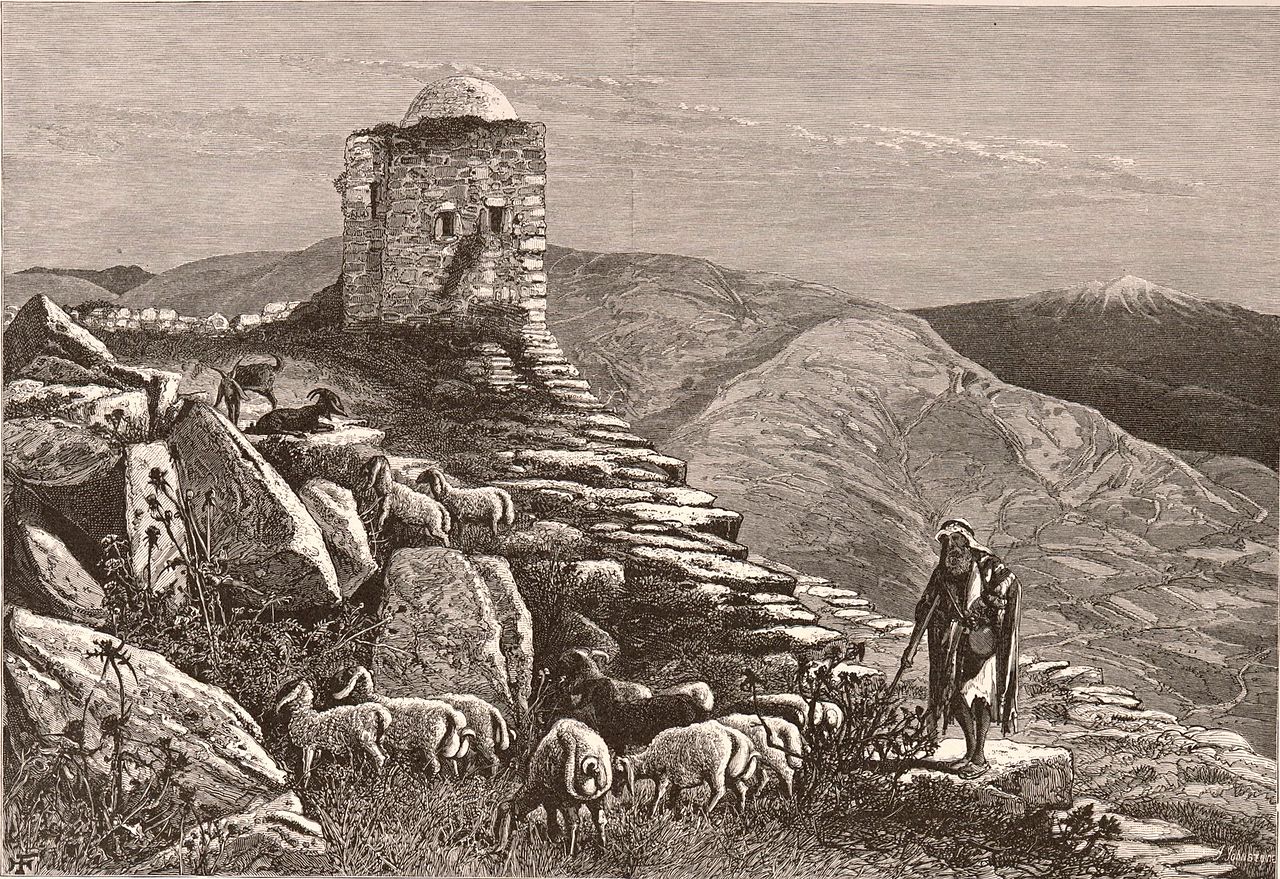
Herny Fenn, Ruins on the Summit of Mount Gerazim, On the Site of the Samaritan Temple (between 1881 and 1884)

Herny Fenn, Ruins on the Summit of Mount Gerazim, On the Site of the Samaritan Temple (between 1881 and 1884)

Deuteronomy 27: 11-26 A Liturgy of Curses

 11 The same day Moses charged the people as follows: 12 When you have crossed over the Jordan, these shall stand on Mount Gerizim for the blessing of the people: Simeon, Levi, Judah, Issachar, Joseph, and Benjamin. 13 And these shall stand on Mount Ebal for the curse: Reuben, Gad, Asher, Zebulun, Dan, and Naphtali. 14 Then the Levites shall declare in a loud voice to all the Israelites:
 15 “Cursed be anyone who makes an idol or casts an image, anything abhorrent to the LORD, the work of an artisan, and sets it up in secret.” All the people shall respond, saying, “Amen!”
 16 “Cursed be anyone who dishonors father or mother.” All the people shall say, “Amen!”
 17 “Cursed be anyone who moves a neighbor’s boundary marker.” All the people shall say, “Amen!”
 18 “Cursed be anyone who misleads a blind person on the road.” All the people shall say, “Amen!”
 19 “Cursed be anyone who deprives the alien, the orphan, and the widow of justice.” All the people shall say, “Amen!”
 20 “Cursed be anyone who lies with his father’s wife, because he has violated his father’s rights.” All the people shall say, “Amen!”
 21 “Cursed be anyone who lies with any animal.” All the people shall say, “Amen!”
 22 “Cursed be anyone who lies with his sister, whether the daughter of his father or the daughter of his mother.” All the people shall say, “Amen!”
 23 “Cursed be anyone who lies with his mother-in-law.” All the people shall say, “Amen!”
 24 “Cursed be anyone who strikes down a neighbor in secret.” All the people shall say, “Amen!”
 25 “Cursed be anyone who takes a bribe to shed innocent blood.” All the people shall say, “Amen!”
 26 “Cursed be anyone who does not uphold the words of this law by observing them.” All the people shall say, “Amen!”

 The chapter ends with a series of twelve individual curses that the community is to place on anyone who violates particular actions. This sets the scene as well for the blessings and curses in chapter 28 where six tribes are on Mount Ebal for curses and six tribes are on Mount Gerazim for blessings. The two mountains are on the opposite sides of a valley and for the Samaritans Mount Gerazim would become one of their holy sites. Within Deuteronomy Mount Gerazim becomes the mountain of blessing while Mount Ebal is the mountain of curse, yet for Deuteronomy the tablets of the law and the altar are to be built on Mount Ebal rather than Mount Gerazim.

Many of these are covered earlier in Deuteronomy and rather than spend much time on those I will link you back to the discussion at the appropriate place in Deuteronomy, but a few are new. Verse 15 which concerns idols and images is talked about earlier in Deuteronomy 4: 15-20, and Deuteronomy 5:8-10 and is depending on how you number either part of the first commandment or the second commandment. Verse 16 also harkens back to the ten commandments with the commandment on honoring father and mother in Deuteronomy 5: 16 and is also expanded in Deuteronomy 21: 18-21 with the punishment for children who are rebellious and bring dishonor to their father and mother. Verse 17 concerns the moving of boundary markers which is addressed in Deuteronomy 19: 14. Verse 18 is the first new item on misleading the blind, but it follows in the concern that people care for the vulnerable and the weak in the society. Leviticus 19: 14 also addresses this when it states, “You shall not revile the deaf or put a stumbling block before the blind; you shall fear the LORD your God.” Caring for the vulnerable is a central part of living out of the covenant and one of the places where the prophets are called upon to point out the way the people have not cared for the vulnerable.  The next curse continues about those who oppress the representative triumvirate of the vulnerable, the widows, the orphan and the alien. The tithe, addressed in Deuteronomy 14: 29 and Deuteronomy 26: 12-13, the inclusion of the vulnerable in the festivals like outlined in Deuteronomy 16: 11, 14 the practice of allowing the remnant of the harvest and vine to be gleaned by the vulnerable in Deuteronomy 24: 19-22 are all concrete practices to help care for the vulnerable in their community. Verse 20 about lying with the father’s wife is covered in Deuteronomy 22: 30. The next three curses about forbidden sexual relations are new to Deuteronomy but fit within the ordered world of Deuteronomy 22:13-26 for the author of Deuteronomy’s view of sexual relations. Sexual relations with any animal, with a sister or a mother-in-law are forbidden and Deuteronomy doesn’t feel the need to explain these any further. The command in verse 24 about striking a neighbor in secret is new and it addresses disputes outside the purview of the community. For Deuteronomy the community and the elders are key to ensuring that disputes are resolved equitably. The curse about taking a bribe to shed innocent blood is addressed in the judicial context of Deuteronomy 16:19. Finally the last curse is general in nature referring to the entirety of the law and the need for obedience. This final curse may round it out to bring the final number of these individual curses to the representative twelve. Obedience is both an individual and communal responsibility, where the community holds the individual accountable. By placing these curses in the mouths of the people as they enter the land their own words hold them accountable to living in obedience to this law and covenant.


Deuteronomy 26: Bringing Story into Liturgy

The Seven Species of the Land of Israel listed in Deuteronomy 8:8, Creative Commons Attribution 3.0

The Seven Species of the Land of Israel listed in Deuteronomy 8:8, Creative Commons Attribution 3.0

 Deuteronomy 26

1 When you have come into the land that the LORD your God is giving you as an inheritance to possess, and you possess it, and settle in it, 2 you shall take some of the first of all the fruit of the ground, which you harvest from the land that the LORD your God is giving you, and you shall put it in a basket and go to the place that the LORD your God will choose as a dwelling for his name. 3 You shall go to the priest who is in office at that time, and say to him, “Today I declare to the LORD your God that I have come into the land that the LORD swore to our ancestors to give us.” 4 When the priest takes the basket from your hand and sets it down before the altar of the LORD your God, 5 you shall make this response before the LORD your God: “A wandering Aramean was my ancestor; he went down into Egypt and lived there as an alien, few in number, and there he became a great nation, mighty and populous. 6 When the Egyptians treated us harshly and afflicted us, by imposing hard labor on us, 7 we cried to the LORD, the God of our ancestors; the LORD heard our voice and saw our affliction, our toil, and our oppression. 8 The LORD brought us out of Egypt with a mighty hand and an outstretched arm, with a terrifying display of power, and with signs and wonders; 9 and he brought us into this place and gave us this land, a land flowing with milk and honey. 10 So now I bring the first of the fruit of the ground that you, O LORD, have given me.” You shall set it down before the LORD your God and bow down before the LORD your God. 11 Then you, together with the Levites and the aliens who reside among you, shall celebrate with all the bounty that the LORD your God has given to you and to your house.

 12 When you have finished paying all the tithe of your produce in the third year (which is the year of the tithe), giving it to the Levites, the aliens, the orphans, and the widows, so that they may eat their fill within your towns, 13 then you shall say before the LORD your God: “I have removed the sacred portion from the house, and I have given it to the Levites, the resident aliens, the orphans, and the widows, in accordance with your entire commandment that you commanded me; I have neither transgressed nor forgotten any of your commandments: 14 I have not eaten of it while in mourning; I have not removed any of it while I was unclean; and I have not offered any of it to the dead. I have obeyed the LORD my God, doing just as you commanded me. 15 Look down from your holy habitation, from heaven, and bless your people Israel and the ground that you have given us, as you swore to our ancestors– a land flowing with milk and honey.”

 16 This very day the LORD your God is commanding you to observe these statutes and ordinances; so observe them diligently with all your heart and with all your soul. 17 Today you have obtained the LORD’s agreement: to be your God; and for you to walk in his ways, to keep his statutes, his commandments, and his ordinances, and to obey him. 18 Today the LORD has obtained your agreement: to be his treasured people, as he promised you, and to keep his commandments; 19 for him to set you high above all nations that he has made, in praise and in fame and in honor; and for you to be a people holy to the LORD your God, as he promised.

The twenty sixth chapter of Deuteronomy closes a long section which runs from chapter five (although many people move it back to the scene being set in Deuteronomy 4:44) through the end of this chapter. Here in the narrative Moses concludes his exposition of the commandments, statutes and ordinances of the LORD for the people of Israel. In this conclusion resides both ritual and liturgy that will continue to form the identity of the people for their life in the promised land. The manner in which the people of Israel bring in their offerings is mentioned several times throughout this portion of Deuteronomy but the way in which the author chooses to end this section liturgically explaining the significance of these practices is important to note.

In American Christianity there are several branches of the faith that are uncomfortable with the idea of a confessional creed. In a society based on individualism where the focus is on the individual’s faith and what they believe at each point in their lives the idea of a communal confession of faith seems unnecessary. I appreciate the gifts of the confessional tradition that I come out of and the way it binds me both to the manner Christians have understood the faith historically as well as locating me within a community that shares and wrestles with common confessions. Creeds have been used throughout the ages as summaries of a wider faith used in both catechetical (teaching future generations) and liturgical (worship) settings. The bible is full of these confessions of faith in both the Hebrew Scriptures and the New Testament (for example Philippians 2: 5-11) and various confessions of faith have been used as a part of the liturgy of faithful people for generations as a way of summarizing the faith. Deuteronomy 6: 21-25 is one example of a ‘credo’ a basic statement of belief to be used as a method of catechesis within the home. While in Deuteronomy 6 the focus is on the actions within the household that the parents will use to pass on the faith to their children and grandchildren and beyond, here we see confessions of faith used liturgically as a part of the telling of the story of the people of Israel. The practice of bringing the tithe and first fruits in Deuteronomy 14: 22-29 and in Deuteronomy 18:4 is now brought into a setting of worship with words that reinforce several basic parts of the understanding of the covenantal relationship the people would be expected to maintain in the promised land. Deanna Thompson outlines succinctly the key themes of the text as:
“the call for Israel to acknowledge God’s persistent care; the reminder that the land God is giving them is sheer gift; and the insistence that fundamental to Israel’s right relationship to God is the practice of attending to the needs of the stranger, the widow and the orphan.” (Thompson, 2014, p. 188)

As the offering are brought to the tabernacle or temple the people recite a brief exposition of their history which outlines their beginnings as a wandering people in Genesis, the journey to Egypt in the time of Joseph where they received the food they needed in the midst of famine, and then a brief synopsis of the Exodus experience including their oppression and liberation and being brought into the promised land. This short liturgical statement begins with the tenuousness of their situation as a landless people and later as slaves contrasted with their new but contingent identity as the covenant people of the LORD the God of Israel. The narrated history is now combined with the practice of giving which is intended to continue to form the identity of the people in their life in the land.

The liturgy in Deuteronomy 26: 1-11 focuses on re-telling the story of the people and the action of bringing the first fruit which is a result of God’s gracious provision for the people in the land. God has brought the people from being landless or oppressed to being in a land of milk and honey, therefore they are to bring in these gifts and celebrate and remember the provision of God. The focus on this first exhortation is on what God has done for Israel and now Israel is freed to enjoy the fruits of the land. In Deuteronomy 26: 12-15 the giving of the tithe Deuteronomy 14: 28-29 and a declaration that the individual has been faithful both in bringing the tithe (and not withholding a portion or using it in some other way) but also in the keeping of all of the commandments and asking the LORD to bless the peoples’ lives in the coming years.  Now the focus is on what Israel has done in response and their faithfulness to the covenant and understanding that because of their faithfulness the LORD will look down and allow them to prosper in the land. The section concludes with oaths that bind the people and the LORD the God of Israel together. The hope of this relationship is that “I will be your God, and you shall be my people; and walk only in the way that I command you, so that it may be well with you.” (Jeremiah 7: 23) As Brueggemann has helpfully outlined the italicized comments above and here now the people are to be utterly obedient to the LORD and the LORD will be utterly committed to Israel. (Brueggemann, 2001 , p. 249f)

This relationship between the LORD and the people as given in this giving and receiving of vows is to be a committed one, and perhaps the natural comparison is to the marriage vows that a couple make when they are married. This relation of the covenant to marriage will form a metaphorical background for Jeremiah (see for example Jeremiah 3) and Hosea (Hosea 2). Much of the remainder of Deuteronomy will call attention to the seriousness of Israel’s commitment in this covenant and the cost of disobedience as well as the LORD’s continuing commitment. As a people holy to the LORD their commitment is a calling. They will need to return to this covenant and recommit themselves several times throughout their story and yet there is the commitment that when they stumble and fall and recommit themselves that God will hear. They have been reminded of who they were and where they came from, how God acted to bring them graciously into this land filled with promise, how they are to respond to God’s faithfulness and the critical nature of their obedience.

Deuteronomy 19: Justice, Refuge and Grace

"Bouguereau-The First Mourning-1888" by William-Adolphe Bouguereau - Art Renewal Center – description. Licensed under Public Domain via Commons - https://commons.wikimedia.org/wiki/File:Bouguereau-The_First_Mourning-1888.jpg#/media/File:Bouguereau-The_First_Mourning-1888.jpg

“Bouguereau-The First Mourning-1888” by William-Adolphe Bouguereau – Art Renewal Center – description. Licensed under Public Domain via Commons – https://commons.wikimedia.org/wiki/File:Bouguereau-The_First_Mourning-1888.jpg#/media/File:Bouguereau-The_First_Mourning-1888.jpg

Deuteronomy 19: 1-13: Cities of Refuge

1 When the LORD your God has cut off the nations whose land the LORD your God is giving you, and you have dispossessed them and settled in their towns and in their houses, 2 you shall set apart three cities in the land that the LORD your God is giving you to possess. 3 You shall calculate the distances and divide into three regions the land that the LORD your God gives you as a possession, so that any homicide can flee to one of them.

 4 Now this is the case of a homicide who might flee there and live, that is, someone who has killed another person unintentionally when the two had not been at enmity before: 5 Suppose someone goes into the forest with another to cut wood, and when one of them swings the ax to cut down a tree, the head slips from the handle and strikes the other person who then dies; the killer may flee to one of these cities and live. 6 But if the distance is too great, the avenger of blood in hot anger might pursue and overtake and put the killer to death, although a death sentence was not deserved, since the two had not been at enmity before. 7 Therefore I command you: You shall set apart three cities.

                8 If the LORD your God enlarges your territory, as he swore to your ancestors– and he will give you all the land that he promised your ancestors to give you, 9 provided you diligently observe this entire commandment that I command you today, by loving the LORD your God and walking always in his ways– then you shall add three more cities to these three, 10 so that the blood of an innocent person may not be shed in the land that the LORD your God is giving you as an inheritance, thereby bringing bloodguilt upon you. 11 But if someone at enmity with another lies in wait and attacks and takes the life of that person, and flees into one of these cities, 12 then the elders of the killer’s city shall send to have the culprit taken from there and handed over to the avenger of blood to be put to death. 13 Show no pity; you shall purge the guilt of innocent blood from Israel, so that it may go well with you.

                 With the roles that people will play within the community to ensure justice established in chapters 17 and 18 (judges, priests, king and prophets) now this section of Deuteronomy turns to expounding upon laws that continue to flesh out the ten commandments, particularly how the people of Israel are to relate to one another. There is less of a narrative and more of a didactic tone as the exposition of the law is intended to illustrate what the covenant life of the people is to look like and the manner in which they are interconnected with their God, the land and with one another. The author of Deuteronomy may not move systematically through the various commandments in articulating this exposition of the law, but is continually concerned to relate the adherence to the commandments to the people’s continuing life under the covenant with their LORD.

The setting up of cities of refuge assumes a situation very different from our modern legal system. In ancient honor bound agrarian societies if a member of the family was killed it was the family’s responsibility to enact justice. Deuteronomy assumes this type of system but also limits it with the provision of cities of refuge where a person who has killed another may flee to. Mentioned in Exodus 21: 13 and later designated in Joshua 20 they provide a place where the cycle of violence may be stopped providing the killing is accidental. If the killing is murder, the elders fill a judicial function in having the murderer turned over from the city of refuge to the family. The family remains the executor of judgment in this system.

Within this law setting aside both the cities of refuge and the method of justice to prevent a murder from remaining in sanctuary within these cities is an understanding of innocent blood which would contaminate the land and bring bloodguilt upon the people. Perhaps the understanding of this bloodguilt is similar to God’s response to Cain in Genesis 4:

And the LORD said, “What have you done? Listen; your brother’s blood is crying out to me from the ground! And now cursed you are cursed from the ground, which has opened its mouth to receive your brother’s blood from your hand. Genesis 4: 10-11

Innocent blood calls out to God who is ultimately the one who will have vengeance. There is an understanding that only blood can atone for blood and that the injury is not only against the individual but also the community and their holiness before God.

Issues of revenge and vengeance are huge threats to order within any society. There needs to be some manner that wrongs can be addressed. Yet, there also is a role for the legal system of a society to place a limit on the practice of revenge or vigilante justice. As much as Americans may love characters like Batman who are symbols of vigilante justice in a society where justice is perceived to be lacking. The reality of people creating their own systems of justice in a system where justice is not being carried out effectively (or rigorously enough) has led to many terrible acts throughout history. As will be outlined later in the chapter what is being sought is not vengeance but instead proportional justice. The lex talionis, (an eye for an eye, a tooth for a tooth, etc.) which probably was not enforced literally, provided a formula for justice that did not exceed the damage caused.


Deuteronomy 19:14 Honoring Boundaries

14 You must not move your neighbor’s boundary marker, set up by former generations, on the property that will be allotted to you in the land that the LORD your God is giving you to possess.


The gift of the land to the people of Israel was a part of their living out of the providence of their LORD. Within this society, where land is the primary means of producing food and ultimately wealth, the book of Deuteronomy has a very different understanding of land than our modern understanding derived from philosophers like John Locke or Adam Smith. For the people of Israel land was to remain with a family and was not viewed as private property that could be bartered or sold, it was to remain with the family for as long as the people remained faithful to God’s commandments. It was contingent on their relation to God, not to their ability to acquire more wealth.  Moving the boundary markers on a neighbor’s property is stealing from their neighbor in addition to failing to trust in the provision of God for their needs.


Deuteronomy 19: 15-21 Bearing False Witness

15 A single witness shall not suffice to convict a person of any crime or wrongdoing in connection with any offense that may be committed. Only on the evidence of two or three witnesses shall a charge be sustained. 16 If a malicious witness comes forward to accuse someone of wrongdoing, 17 then both parties to the dispute shall appear before the LORD, before the priests and the judges who are in office in those days, 18 and the judges shall make a thorough inquiry. If the witness is a false witness, having testified falsely against another, 19 then you shall do to the false witness just as the false witness had meant to do to the other. So you shall purge the evil from your midst. 20 The rest shall hear and be afraid, and a crime such as this shall never again be committed among you. 21 Show no pity: life for life, eye for eye, tooth for tooth, hand for hand, foot for foot.

Central to the pursuit of justice is truthfulness. Truth is not only about not telling falsehoods, but also about the damage it does to the neighbor and by extension the community. Fear of punishment is a part of the understanding for obedience in Deuteronomy. People are to fear the consequences of their actions both from God and from the community. Deuteronomy’s justice is a harsh justice but it is a proportional one, and here the lex talionis is applied to the concept of bearing false witness or perjury against another. The punishment is in relation to the damage the false witness intended to do to the neighbor.

Within any community people will act out of self-interest and look for advantages over their neighbor. Yet, Israel was intended to embody something different. They were to look out for and to care for their neighbor. Within the laws of Deuteronomy safe guards are put in place, like the provision of needing multiple witnesses to convict a person of any crime or wrongdoing and the important role of the judges and the priests in ensuring an impartial hearing. For Deuteronomy’s author the consequences are too high for justice to be corrupted. The bloodguilt would cry out against the community before God and the people would find themselves needing to atone for the wrongs done to the innocent.

Some Christians embrace this harsh judgment within Deuteronomy and would love to see a legal system that is as unforgiving and which embraces capital punishment for a number of crimes. They may also want to ensure that they can have the right to bear arms and have the ability to be enforcers of this system like the families in the ancient world would do in relation to a murder. Yet, Christians also have to wrestle with the way Jesus engages this text Matthew’s gospel for example:

“You have heard that it was said, ‘An eye for and eye and a tooth for a tooth.’ But I say to you, Do not resist and evildoer. But if anyone strikes you on the right cheek, turn the other also; and if anyone wants to sue you and take your coat, give your cloak as well; and if anyone forces you to go one mile, go also the second mile. Give to everyone who begs from you, and do not refuse anyone who wants to borrow from you.  Matthew 5: 38-42

Jesus was certainly concerned about a community that could live in justice but his manner of speaking about the way this community was centered more upon forgiveness than on justice. Perhaps Archbishop Desmond Tutu’s famous quote that, “there is no future without forgiveness.” Which came out of his experiences in South Africa, represent the challenge of constructing a society where forgiveness can lead to justice. But whether we talk about Jesus (see immediately before the above quote in Matthew 5: 33-37), or Archbishop Tutu, or Deuteronomy one of the prerequisites for a society that has justice is truthfulness.

Deuteronomy 18: Priests, Prophets and Forbidden Magic

Deuteronomy 18: 1-8: The Levitical Priests

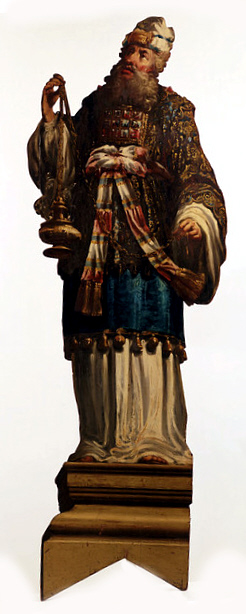
Painted board of Aaron, oil on wood panel, British, ca 1708

Painted board of Aaron, oil on wood panel, British, ca 1708

1 The levitical priests, the whole tribe of Levi, shall have no allotment or inheritance within Israel. They may eat the sacrifices that are the LORD’s portion 2 but they shall have no inheritance among the other members of the community; the LORD is their inheritance, as he promised them.

3 This shall be the priests’ due from the people, from those offering a sacrifice, whether an ox or a sheep: they shall give to the priest the shoulder, the two jowls, and the stomach. 4 The first fruits of your grain, your wine, and your oil, as well as the first of the fleece of your sheep, you shall give him. 5 For the LORD your God has chosen Levi out of all your tribes, to stand and minister in the name of the LORD, him and his sons for all time.

6 If a Levite leaves any of your towns, from wherever he has been residing in Israel, and comes to the place that the LORD will choose (and he may come whenever he wishes), 7 then he may minister in the name of the LORD his God, like all his fellow-Levites who stand to minister there before the LORD. 8 They shall have equal portions to eat, even though they have income from the sale of family possessions.

In addition to judges and the king outlined in Deuteronomy 16 and 17 respectively now a third ordering portion of society is added, already alluded to in Deuteronomy 17: 8-13 with their role being the final judicial appeal for cases too difficult for the regional judges. This third pillar of the society is the priesthood, a group set aside to minister before the LORD and who serve cultic, teaching and judicial roles for the people of Israel.

The Levites do not have an inheritance of agricultural land, they will have places to live but not the fields for growing crops or animals like the other tribes. On the one hand they are independent of the necessity to work in the fields and are able to dedicate their time to their work of ministering on behalf of the community. On the other hand, they are incredibly vulnerable and dependent on the other tribes providing for them and continuing to offer before the LORD their sacrifices and bringing in their first fruits. If Israel remains faithful to their calling to bring in from the fields their first fruits of grain, wine and oil as well as offering the firstlings of the flock and the other offerings that are outlined the Levites will be taken care of. If Israel becomes a more secular society then the economic security of the Levites is undercut because they do require the other tribes to provide the portion that they are living off of. They have no inheritance other than the LORD which gives them, perhaps, a closer sense of communion with their God but also depends upon receiving the blessing of the LORD through the labor and work of the other tribes.

Israel was intended to be a society structured around this covenantal relationship with their God, not a secular society. In this society structured around a particular understanding of justice the people will care for the tabernacle and later the temple and those who minister to it. The remembered reality is often far different: the priests would often fail in being faithful by abusing their position, the temple and tabernacle would fall into disrepair, the people and kings would be attracted by the ways of the other nations and the economy would become indistinguishable from the nations that surrounded them or the practices of Egypt where they were enslaved.

It is possible that the reference to Levites leaving the towns and coming to minister at the temple/tabernacle may reference the reforms of King Josiah in 2 Kings 23: 8-9, where he tries to centralize the worship of Judah in the temple and eliminates the high places. In the theology of Deuteronomy and the books that come after it, the high places are places where the worship of the LORD is not done correctly, perhaps blending in the elements of the surrounding nations. Perhaps this is also referencing the practices mentioned in 16: 20. The centralization of the cultic functions in Jerusalem does cause a concentration of a large number of levites, but the ongoing narrative also is aware of priests that are scattered throughout the nation. There would be tensions that would arise between the rural priests and the urban priests who became a part of the power structure in Jerusalem, but these verses imagine a situation where rural priests would be welcomed into Jerusalem as equals.

We live in a very different world than the one imagined in Deuteronomy. In Deuteronomy the Levites become one of the central parts of the society ordered around the worship of the LORD. In the United States where there is a strange hybrid relationship between the religious and the secular those in religious callings that are dependent upon the support of their congregations share the blessing and insecurity imagined for the Levites. There is the gift of being able to dedicate one’s time to the ministry that they fell called to be a part of. Yet, particularly in our increasingly spiritual but not religious age where many congregations are aging and shrinking and fewer people identify themselves religiously as a part of a congregation much less support one financially, many leaders of religious communities are finding their calling very tenuous. Unlike the Levites there is the opportunity in a diverse economy for dual callings where the religious role becomes one of two or more roles that sustain a person and their family, but in the ancient world where wealth was tied to land the Levites were placed in a vulnerable state if the other tribes did not support the religious system.

Deuteronomy 18: 9-14: Forbidden Magic

9 When you come into the land that the LORD your God is giving you, you must not learn to imitate the abhorrent practices of those nations. 10 No one shall be found among you who makes a son or daughter pass through fire, or who practices divination, or is a soothsayer, or an augur, or a sorcerer, 11 or one who casts spells, or who consults ghosts or spirits, or who seeks oracles from the dead. 12 For whoever does these things is abhorrent to the LORD; it is because of such abhorrent practices that the LORD your God is driving them out before you. 13 You must remain completely loyal to the LORD your God. 14 Although these nations that you are about to dispossess do give heed to soothsayers and diviners, as for you, the LORD your God does not permit you to do so.

We live in a world where magic is predominantly a part of fiction and the magicians we may see are illusionists that are able to trick our senses through various forms of deception. There are still people who look to horoscopes, palm readers, mediums and other spiritual forms of divining the future but for most people in our society theses are looked upon in terms of entertainment rather than items to place one’s trust in. In the world of Deuteronomy, the practices listed were apparently real and persuasive options available in the world they lived within. All of these forms of magic and divining the future were not to be things that the people of Israel were to heed.

Many of the prohibited practices relate to trying to predict the future or discern how a person is to act to bring about a desired future, whether through practices like augury or by inquiring of the dead. In many respects this vacancy is to be filled by the role of the prophet talked about in the coming verses, even though the biblical prophets are primarily concerned with the present and its impact on the immediate future. Perhaps one of the key differences comes from a different view of the universe. For many people in the ancient world the future was fixed and many ancient religions have some idea of fate. For the people of Israel the future rested in God’s freedom and their relationship with their God. Ultimately God would decide the course of their lives based upon their obedience to the covenant. Deuteronomy will echo repeatedly: if you follow the ways of the covenant you will be blessed and your lives will be long, if you do not follow the commandments and ordinances you will be cursed.

In verse 13, the command is that “you must remain completely loyal to the LORD your God.” Walter Brueggemann points out when speaking about the word translated completely loyal, “The Hebrew term tāmîm means “integrated, whole, undivided, as one unit.” This idea and term likely lies behind Jesus’ teaching in Matthew 5:48 which gets translated, “Be perfect, therefore, as your heavenly Father is perfect.” The translation in the gospel as perfect could mislead the reader to think this is about some type of moral perfection which is different from the direction of the Sermon on the Mount within which this verse is contained. Jesus and Deuteronomy are both calling for unreserved loyalty and living a whole integrated life within the followers ongoing relationship with their God. (Brueggemann, 2001 , p. 194)

Deuteronomy 18: 15-22 The Prophetic Voice

Jeremiah Lamenting the Destruction of Jerusalem by Rembrandt van Rijn 1630

Jeremiah Lamenting the Destruction of Jerusalem by Rembrandt van Rijn 1630

15 The LORD your God will raise up for you a prophet like me from among your own people; you shall heed such a prophet. 16 This is what you requested of the LORD your God at Horeb on the day of the assembly when you said: “If I hear the voice of the LORD my God any more, or ever again see this great fire, I will die.” 17 Then the LORD replied to me: “They are right in what they have said. 18 I will raise up for them a prophet like you from among their own people; I will put my words in the mouth of the prophet, who shall speak to them everything that I command. 19 Anyone who does not heed the words that the prophet shall speak in my name, I myself will hold accountable. 20 But any prophet who speaks in the name of other gods, or who presumes to speak in my name a word that I have not commanded the prophet to speak– that prophet shall die.” 21 You may say to yourself, “How can we recognize a word that the LORD has not spoken?” 22 If a prophet speaks in the name of the LORD but the thing does not take place or prove true, it is a word that the LORD has not spoken. The prophet has spoken it presumptuously; do not be frightened by it.

 The fourth and final pillar of the Israelite society is the voice of the prophet. The judges, priests and king will all be voices charged with defending the faithfulness of Israel and protecting the justice for all the people, especially the vulnerable. Yet, the judges, priests and king will all compose the ruling class of the people and come from privileged positions which may skew their perspective on justice at times. With Moses all of these roles are held within one person but in the coming future without Moses these gifts will need to be spread among the community, yet the prophetic voice, the one charged with speaking on behalf of God, is a unique gift of the Hebrew people. The prophets may or may not come from the priestly Levites, but they are charged with standing between God and the people as a mouthpiece. Often their words will be uncomfortable: they will challenge kings and sometimes be thought of as traitors. In Deuteronomy 13 it is the faithfulness of the prophet to the LORD that is the critical discernment as to whether the prophet is a true or false prophet, but sometimes a situation may arise, as in Jeremiah 28 where Hananiah and Jeremiah are proclaiming two very different prophecies and both apparently in the name of the LORD. Now the actual occurrence of the prophecy becomes a key part of discerning who the true and false prophet is. Being a true prophet of God is often a dangerous and lonely vocation because it often challenges the monarchy, priestly and judicial powers calling them back to justice and their vocation on behalf of the LORD. Only certain people seem to be able to hear the voice of the LORD, and this story places this back with the reception of the law at Mount Horeb/Sinai (see Exodus 20: 18-21). The word of God being enfleshed in messengers rather than appearing in its terrifying unveiled power is a concession to the people’s plea. Yet, in this enfleshment in the prophets there is also the potential for abuses even in this office. The story of Israel will be full of false prophets who tell people what they want or expect to hear or those who ensnare others. The prophets will also be those who at least in some cases, like Elijah and Elisha, are able to act as an extension of God’s power towards (or against) the people of Israel.

Within the person of Moses he bears together the roles of leader, priest, judge and prophet. From a Christian perspective these roles come together in a very different way with Jesus. Because of this it is not surprising that the gospel of Matthew spends a lot of time placing Jesus and Moses alongside each other and understands who Jesus is in light of Moses story and role. It is very early in the Christian church that you can find references to the three roles of Christ: as prophet, priest and king. And perhaps it is underappreciated how Jesus was seen by the people of his time as a prophet because his words and his actions would have called to mind some of the biblical prophets that had been a part of the story of Israel.

Deuteronomy 17: A Society Structured Around One Lord

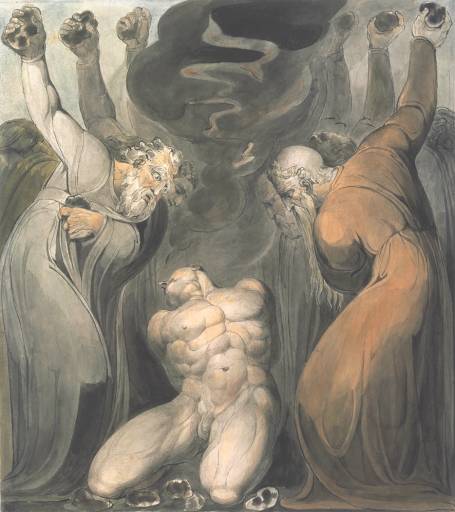
The Blasphemer, as in Leviticus 24: 13-23, by William Blake circa 1800

The Blasphemer, as in Leviticus 24: 13-23, by William Blake circa 1800

Deuteronomy 16:20-17:7 Only the LORD your God

1You must not sacrifice to the LORD your God an ox or a sheep that has a defect, anything seriously wrong; for that is abhorrent to the LORD your God.

                2 If there is found among you, in one of your towns that the LORD your God is giving you, a man or woman who does what is evil in the sight of the LORD your God, and transgresses his covenant 3 by going to serve other gods and worshiping them– whether the sun or the moon or any of the host of heaven, which I have forbidden– 4 and if it is reported to you or you hear of it, and you make a thorough inquiry, and the charge is proved true that such an abhorrent thing has occurred in Israel, 5 then you shall bring out to your gates that man or that woman who has committed this crime and you shall stone the man or woman to death. 6 On the evidence of two or three witnesses the death sentence shall be executed; a person must not be put to death on the evidence of only one witness. 7 The hands of the witnesses shall be the first raised against the person to execute the death penalty, and afterward the hands of all the people. So you shall purge the evil from your midst.

For the author of Deuteronomy the first and central commandment that the people are only to have the LORD as their God. It comes at the head of the Ten Commandments in Deuteronomy 5:6:

I am the LORD your God, who brought you out of the land of Egypt, out of the house of slavery; you shall have no other gods before me

and in Deuteronomy 6: 4-5:

Hear, O Israel: The LORD is our God, the LORD alone. You shall love the LORD your God with all your heart, and with all your soul, and with all your might.

Even before this Deuteronomy 4 emphasizes this same theme, as do Deuteronomy 7, 8, and 9. Deuteronomy 12 again addresses this issue in relation to destroying places of worship for other gods, and all of Deuteronomy 13 addresses this issue in stark terms of what the punishment is to be for violating this covenant relationship by individuals or by entire towns. It comes up here again at the end of 16 and beginning of 17 because it is such a central issue for the Deuteronomist that the author wants no chance for the hearer/reader to miss it. Being an aural culture the things that are central will be repeated over and over to ensure that they are heard by the listening audience. The death penalty for following other gods may seem harsh to us, and I address this question in greater detail when I talk about Deuteronomy 13, but this unique relationship with the LORD is to be at the center of the life of the people of Israel.

The LORD is not to be worshiped in the same way that the gods of the nations around the people are worshiped, there is to be no blending of the gods of the nations and the LORD. The people are also to bring their best to the worship of their LORD, not the animals that are defective. For the Deuteronomist these are life and death decisions, and yet they are still bound by the due process of the law. Justice is expected and a thorough investigation of any claims of idolatry are to be made. Deuteronomy 17 probably lays behind the command in Matthew 18.16 of wanting claims to be confirmed with the testimony of two or three witnesses and also behind the command for the one who is without sin to ‘cast the first stone’ in John 8 (even though this deals with adultery). In a contemporary fictional setting it is similar to the insistence of Ned Stark in the Game of Thrones that the one who passes the sentence should swing the sword, but instead here it is the witness who has testified against a person who must cast the initial stone of the community’s judgment. As Walter Brueggemann can state, “The book of Deuteronomy is committed to a rule of law even if it is a severe rule of law.” (Brueggemann, 2001 , p. 181) The nation of Israel is to be a theocracy where ultimately the LORD their God is at the center of their judicial, religious and political life and the central place of their LORD their God should, in the view of Deuteronomy, impact the way they structure the leadership and judicial life of their community

Deuteronomy 17:8-13 The Levitical Judicial Function

8 If a judicial decision is too difficult for you to make between one kind of bloodshed and another, one kind of legal right and another, or one kind of assault and another– any such matters of dispute in your towns– then you shall immediately go up to the place that the LORD your God will choose, 9 where you shall consult with the levitical priests and the judge who is in office in those days; they shall announce to you the decision in the case. 10 Carry out exactly the decision that they announce to you from the place that the LORD will choose, diligently observing everything they instruct you. 11 You must carry out fully the law that they interpret for you or the ruling that they announce to you; do not turn aside from the decision that they announce to you, either to the right or to the left. 12 As for anyone who presumes to disobey the priest appointed to minister there to the LORD your God, or the judge, that person shall die. So you shall purge the evil from Israel. 13 All the people will hear and be afraid, and will not act presumptuously again.

The vision of Deuteronomy is for a theocracy, a nation that is an extension of the covenantal relationship with the LORD their God, and so all of the functions of life are structured around trying to create that type of a nation. In many respects ancient Judaism and Islam share this desire to create nations that are structured in this manner and so in ancient Judaism, like some Muslim states, the highest court of appeals is a religious court and not a secular one. For people who live in Europe or the United States this may seem a strange concept because we live in a post-enlightenments modern society where religion is viewed as a private portion of a person’s life, but this is a relatively recent development. The law for the Jewish people was a reflection of their covenantal relationship with their God and it was viewed as a gift that God had given them. Even the judges that were a part of the tribes were expected to judge in accordance with the ideals outlined in the law. It doesn’t take long reading through books like Judges or 1 Samuel to find ways in which the judges often failed in this respect, but the ideal was that those entrusted with ministering to the LORD in the tabernacle or temple would be those most focused on the ideals of justice that the LORD called for. People are to obey the judgments of this religious and tribal courts, for a judge whose sentence holds no power is not going to be effective in enforcing this justice. So again, it is a harsh justice, where the penalty for disobeying a priest or a judge in their sentences is execution.

Deuteronomy 17: 14-20 The Model King

                14 When you have come into the land that the LORD your God is giving you, and have taken possession of it and settled in it, and you say, “I will set a king over me, like all the nations that are around me,” 15 you may indeed set over you a king whom the LORD your God will choose. One of your own community you may set as king over you; you are not permitted to put a foreigner over you, who is not of your own community. 16 Even so, he must not acquire many horses for himself, or return the people to Egypt in order to acquire more horses, since the LORD has said to you, “You must never return that way again.” 17 And he must not acquire many wives for himself, or else his heart will turn away; also silver and gold he must not acquire in great quantity for himself. 18 When he has taken the throne of his kingdom, he shall have a copy of this law written for him in the presence of the levitical priests. 19 It shall remain with him and he shall read in it all the days of his life, so that he may learn to fear the LORD his God, diligently observing all the words of this law and these statutes, 20 neither exalting himself above other members of the community nor turning aside from the commandment, either to the right or to the left, so that he and his descendants may reign long over his kingdom in Israel.

Willem de Poorter, 'De afgoderij van konig Solomo'-Solomon's decent into idolatry (between 1630 and 1648)

Willem de Poorter, ‘De afgoderij van konig Solomo’-Solomon’s decent into idolatry (between 1630 and 1648)

Most people assume that the monarchy, and particularly the Davidic monarchy, was universally embraced by scriptures and particularly King David and Solomon are the great kings where everything went well during their reign. The bible is not unanimous in endorsing having a king at all and for example in 1 Samuel 8, when the people are demanding of Samuel a king the LORD’s response is telling:

“Listen to the voice of the people in all that they say to you; for they have not rejected you, but they have rejected me from being king over them. Just as they have done to me, from the day I brought them up out of Egypt to this day, forsaking me and serving other gods, so also they are doing to you. Now then, listen to their voice; only—you shall solemnly want them, and show them the ways of the king who shall reign over them.” 1 Samuel 8: 7-9

The Deuteronomic history (the books beginning with Judges and stretching through 2 Kings) is pretty unromantic when it describes the failings of the kings that would rule over Judah and Israel, and it is telling the way that Deuteronomy describes the aspects of who the king is to be, they are the opposite of King Solomon. Most Christians know little of the story of Solomon, other than his request for wisdom and his building of the temple, but the way 1 Kings tells of his reign he quickly is drawn into a quest for wealth, military power and in making alliance is led astray from being faithful to the LORD, the God of Israel. Solomon imports horses from Egypt and has 12,000 horses and 1,400 chariots. Horses in the ancient world are a sign of military might. With power centralized and the military muscle to back up that power the king of Israel may begin to act like the Pharaohs of Egypt and the people become plunged into dependence under the burden of supplying for the hunger of a large military budget. 1 Kings goes at length into describing the wealth that Solomon accumulates as well as the incredible investment in projects beyond the temple, like his own palace. Solomon’s reign is reported to have brought in more than five tons of gold a year in addition to countless other resources. Finally Solomon is lifted up as having seven hundred princesses and three hundred concubines. All of these are direct counters to Deuteronomy’s vision of what a king is to be, and are ultimately blamed for the rising opposition to Solomon in his life and the splitting of the kingdom in two after his death. I tell about this briefly in the Place of Authority posts.

The title of the book of Deuteronomy comes from verse 18 where it refers to a copy of the law (in greek deutero nomos-second law) that the king is to read from each night and to be the way in which the king stays grounded in the covenantal life the people are called to.  Ultimately in the view of Deuteronomy the king is subservient to the will of the LORD. In reality, this rarely seemed to be the case in the story of the people of Judah and Israel. In a time where the majority of the population would be illiterate and not have access to written copies of the law they did rely upon the leaders including the king and the religious authorities guiding them in their actions. The bible evaluates the kings theologically: were they faithful to the LORD their God or did they lead the people to follow other gods?

I am writing from a Christian perspective, and in the church year we are approaching Christ the King Sunday and perhaps as Christians it might be worth examining how Jesus who we call Messiah or Christ (which means anointed king) lives into this identity. In Paul’s short statement of who Christ was in Philippians 2:

Who, though he was in the form of God, did not regard equality with God as something to be exploited, but emptied himself, taking the form of a slave, being born in human likeness. And being found in human form, he humbled himself and became obedient to the point of death—even death on a cross. Philippians 2: 6-8.

Many of the servant songs from Isaiah, which Christians read as talking about Jesus probably originally were trying to consider a monarch that might embody the vision of passages like Deuteronomy 17. Perhaps when the New Testament talks about explaining who Jesus was from the law and the prophets this is one of the places in the law where the early Christians went back to.

Deuteronomy 11: Blessings and Curses

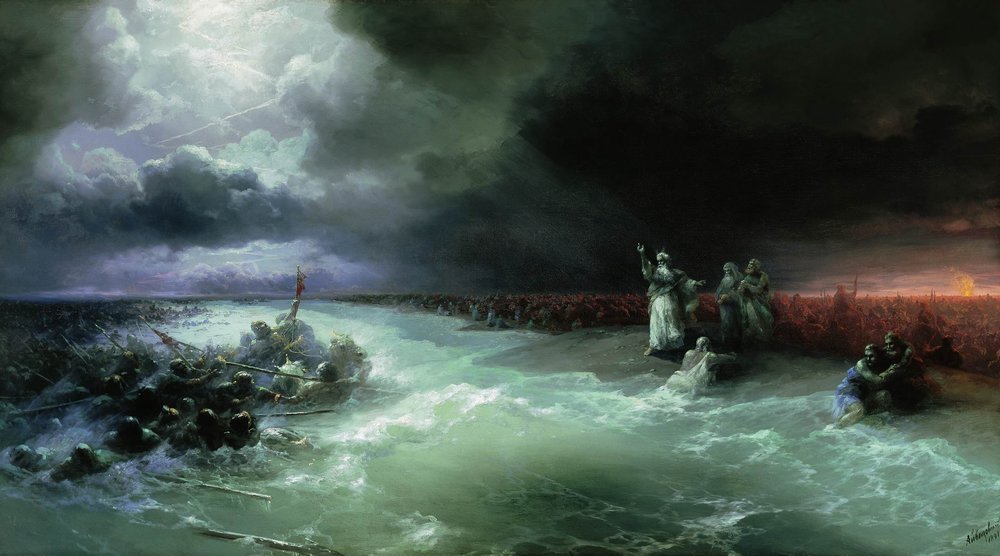
Ivan Aivazovsky, Passage of the Jews through the Red Sea (1891)

Ivan Aivazovsky, Passage of the Jews through the Red Sea (1891)

Deuteronomy 11

1 You shall love the LORD your God, therefore, and keep his charge, his decrees, his ordinances, and his commandments always. 2 Remember today that it was not your children (who have not known or seen the discipline of the LORD your God), but it is you who must acknowledge his greatness, his mighty hand and his outstretched arm, 3 his signs and his deeds that he did in Egypt to Pharaoh, the king of Egypt, and to all his land; 4 what he did to the Egyptian army, to their horses and chariots, how he made the water of the Red Sea flow over them as they pursued you, so that the LORD has destroyed them to this day; 5 what he did to you in the wilderness, until you came to this place; 6 and what he did to Dathan and Abiram, sons of Eliab son of Reuben, how in the midst of all Israel the earth opened its mouth and swallowed them up, along with their households, their tents, and every living being in their company; 7 for it is your own eyes that have seen every great deed that the LORD did.

8 Keep, then, this entire commandment that I am commanding you today, so that you may have strength to go in and occupy the land that you are crossing over to occupy, 9 and so that you may live long in the land that the LORD swore to your ancestors to give them and to their descendants, a land flowing with milk and honey. 10 For the land that you are about to enter to occupy is not like the land of Egypt, from which you have come, where you sow your seed and irrigate by foot like a vegetable garden. 11 But the land that you are crossing over to occupy is a land of hills and valleys, watered by rain from the sky, 12 a land that the LORD your God looks after. The eyes of the LORD your God are always on it, from the beginning of the year to the end of the year.

13 If you will only heed his every commandment that I am commanding you today– loving the LORD your God, and serving him with all your heart and with all your soul–14 then he will give the rain for your land in its season, the early rain and the later rain, and you will gather in your grain, your wine, and your oil; 15 and he will give grass in your fields for your livestock, and you will eat your fill. 16 Take care, or you will be seduced into turning away, serving other gods and worshiping them, 17 for then the anger of the LORD will be kindled against you and he will shut up the heavens, so that there will be no rain and the land will yield no fruit; then you will perish quickly off the good land that the LORD is giving you.

                18 You shall put these words of mine in your heart and soul, and you shall bind them as a sign on your hand, and fix them as an emblem on your forehead. 19 Teach them to your children, talking about them when you are at home and when you are away, when you lie down and when you rise. 20 Write them on the doorposts of your house and on your gates, 21 so that your days and the days of your children may be multiplied in the land that the LORD swore to your ancestors to give them, as long as the heavens are above the earth.

 22 If you will diligently observe this entire commandment that I am commanding you, loving the LORD your God, walking in all his ways, and holding fast to him, 23 then the LORD will drive out all these nations before you, and you will dispossess nations larger and mightier than yourselves. 24 Every place on which you set foot shall be yours; your territory shall extend from the wilderness to the Lebanon and from the River, the river Euphrates, to the Western Sea. 25 No one will be able to stand against you; the LORD your God will put the fear and dread of you on all the land on which you set foot, as he promised you.

                26 See, I am setting before you today a blessing and a curse: 27 the blessing, if you obey the commandments of the LORD your God that I am commanding you today; 28 and the curse, if you do not obey the commandments of the LORD your God, but turn from the way that I am commanding you today, to follow other gods that you have not known. 29 When the LORD your God has brought you into the land that you are entering to occupy, you shall set the blessing on Mount Gerizim and the curse on Mount Ebal. 30 As you know, they are beyond the Jordan, some distance to the west, in the land of the Canaanites who live in the Arabah, opposite Gilgal, beside the oak of Moreh.

                31 When you cross the Jordan to go in to occupy the land that the LORD your God is giving you, and when you occupy it and live in it, 32 you must diligently observe all the statutes and ordinances that I am setting before you today.

The author of the book of Deuteronomy approaches the same topics multiple times in similar ways over the first eleven chapters, and throughout the rest of the book. Because of this, on a topical level, there is not a lot of new material in this eleventh chapter, yet I also think it is important to consider the implied narrative that the book of Deuteronomy is set within. The book of Deuteronomy opens by telling us, “These are the words that Moses spoke to all Israel beyond the Jordan.” And the book portrays itself as primarily an oral speech rather than a written text. For most people in a literate or even post-literate context (post literate coming from the assumption that most people now receive information more through digital images rather than written text) our attention span for a spoken text is fairly short, but this is written for an aural culture (aural-information is received through hearing) where the majority of the hearers are not literate. Speech in an aural culture is repetitive so that is can be remembered and just as the words are connected to concrete actions to enhance remembrance (binding the words upon the forehead and on the hands, writing them on doorposts as a visual reminder of the spoken word) the repetition of certain critical words and phrases should continue to enhance the memory of the speech event. Music does this all the time by repeating a chorus or using certain patterns to fit words within. So while Deuteronomy may be an unwieldy written text as an aural presentation its continual re-narrating of the story, emphasis on the commandments, statutes and ordinances laid down for the people to live by serve to enhance its effectiveness.

Figurine of a Semitic Slave, Acient Egyptian figurine, Hecht Museum

Figurine of a Semitic Slave, Acient Egyptian figurine, Hecht Museum

There strong contrast set throughout Deuteronomy, and particularly here in chapter eleven between the people of Israel and the land they are to enter and their former masters and land in Egypt. Part of the story of their people is their being exploited as slave in the nation of Egypt. Egypt is the first major power and they are able to be a successful people because of the waters of the Nile. Yet to provide for food in this hot and arid land it required the irrigation of crops and this is a very labor intensive process. The Israelite people were probably a part of the slave labor force that used foot pumps to pull water out of the Nile to irrigate the fields of the Egyptians and to pull from a hot and unforgiving environment by the exertion of human will a harvest each year. Yet the system in Egypt was dependent upon slave labor and provided great agriculture riches for the owners and the elite on the backs of the enslavement of others. The Israelites are not to have this type of economic relationship where their culture is dependent upon the enslavement of other people. They are also entering a land of milk and honey, a land of abundance. The availability of water is not dependent upon the exertion of human labor but instead is dependent upon the God of Israel who provides the rains in their season and allows the waters of the heavens to provide for the crops of the Promised Land. In this land of abundance they are called to be attentive to the commands of their God, for the eyes of the LORD are always on the land but also always watching them as a people in their obedience.

The obedience to the commandments and to the words spoken here are a matter of blessing and curse for both the people and the land. They do not have a great river like the Nile that they can utilize to irrigate in the drought years, instead they are dependent upon their God granting them rain at the appropriate time. Obedience, as continues to be stressed over and over in Deuteronomy, means blessing for the people and their children and their children’s children. Disobedience means the loss of prosperity and ultimately the loss of the land. The book of Deuteronomy constructs a world of sharp alternatives in a tightly ordered universe. It is a matter of life or death importance that the people of Israel hear again their story, remember who they are and remember their LORD, and then live out of the commandments, statutes and ordinances of their God. They are to be a people who live in justice, not taking advantage of the exploitable to form a new class of slaves. They have this story and these words read to them again and again to reinforce the imperatives that Moses is putting before them in speech. It is speech that is reinforced by not only the emblem on their foreheads or sign on their hands but by the sight of Mount Gerizim and Mount Ebal where blessing and curse symbolically reside.