Ashes and Dust (poetry reading)
Leave a reply

Millions of swarming Australian plague locusts on the move By CSIRO, CC BY 3.0, https://commons.wikimedia.org/w/index.php?curid=35486123
1 Blow the trumpet in Zion; sound the alarm on my holy mountain! Let all the inhabitants of the land tremble, for the day of the LORD is coming, it is near —
2 a day of darkness and gloom, a day of clouds and thick darkness! Like blackness spread upon the mountains a great and powerful army comes; their like has never been from of old, nor will be again after them in ages to come.
3 Fire devours in front of them, and behind them a flame burns. Before them the land is like the garden of Eden, but after them a desolate wilderness, and nothing escapes them.
4 They have the appearance of horses, and like war-horses they charge.
5 As with the rumbling of chariots, they leap on the tops of the mountains, like the crackling of a flame of fire devouring the stubble, like a powerful army drawn up for battle.
6 Before them peoples are in anguish, all faces grow pale.
7 Like warriors they charge, like soldiers they scale the wall. Each keeps to its own course, they do not swerve from their paths.
8 They do not jostle one another, each keeps to its own track; they burst through the weapons and are not halted.
9 They leap upon the city, they run upon the walls; they climb up into the houses, they enter through the windows like a thief.
10 The earth quakes before them, the heavens tremble. The sun and the moon are darkened, and the stars withdraw their shining.
11 The LORD utters his voice at the head of his army; how vast is his host! Numberless are those who obey his command. Truly the day of the LORD is great; terrible indeed — who can endure it?
12 Yet even now, says the LORD, return to me with all your heart, with fasting, with weeping, and with mourning;
13 rend your hearts and not your clothing. Return to the LORD, your God, for he is gracious and merciful, slow to anger, and abounding in steadfast love, and relents from punishing.
14 Who knows whether he will not turn and relent, and leave a blessing behind him, a grain offering and a drink offering for the LORD, your God?
15 Blow the trumpet in Zion; sanctify a fast; call a solemn assembly;
16 gather the people. Sanctify the congregation; assemble the aged; gather the children, even infants at the breast. Let the bridegroom leave his room, and the bride her canopy.
17 Between the vestibule and the altar let the priests, the ministers of the LORD, weep. Let them say, “Spare your people, O LORD, and do not make your heritage a mockery, a byword among the nations. Why should it be said among the peoples, ‘Where is their God?'”
One of the choices that any reader of Joel has to make is whether the imagery in chapter two continues to be a metaphor for the invasion of locusts or whether this is now an invasion from a conquering army. Those who believe this is describing an invasion of an actual army will point to the language in verse twenty of ‘the northern army’ as evidence of a literal army since a human army (at this time) would invade from the north rather than across the desert to the east and Egypt was no longer the primary threat from the south. Locust plagues in this part of the world tend to originate in Africa and spread from the south and southeast through the Middle East and the Indian Subcontinent. My perspective throughout this chapter is that this is using the metaphor of a military invasion to describe the swarm of locusts which has brought the region to the brink. It may be a restatement of the same condition of chapter one of the approach of a new swarm, but repetition in Hebrew poetry and in the prophets is a common rhetorical device used to, “intensify the impression on the reader.” (Collins, 2013, p. 18)
The prophet Joel is the sentinel raising the alarm in Zion to awaken the people that this invasion of locusts is the day of the LORD’s judgment. Like Jeremiah or Ezekiel,[1] Joel is now charged to raise the alarm for the people to give them a chance to return to the LORD and plead for mercy. For Joel this crisis is not a prelude to God’s action of judgment, the insectile invasion which has threatened the life of the people, the animals, and the land itself the dark day of the LORD that nothing can stand before. Life hangs in the balance and the only hope is that the LORD will relent and turn the plague of locusts away.
Joel’s language echoes the language of other prophets as he narrates the situation. The day of the LORD as a time of judgment goes back to the 8th century BCE prophet Amos who indicates that the day of the LORD is a day of darkness. The day of the LORD being near and being a day of clouds and thick darkness echoes the language of Zephaniah 1: 7, 15. Later in verse eleven the language is similar to Malachi 4: 5 and 3:2. Finally verse fourteen echoes the King of Nineveh in Jonah 3:9 when he declares, “Who knows? God may relent and change his mind; he may turn from his fierce anger, so that we do not perish.” Joel is likely familiar with these passages, and they may provide him the language to articulate his understanding of God’s action upon Israel. Joel has demonstrated that he is immersed in the language and imagery of the scriptures, and they form the lexicon he uses to describe the experience of this crisis.
As mentioned above, I view this language as metaphorically describing the locust swarm. Although the language of an invading army could be literal, and armies do destroy both the land and the people, the particular choices that Joel makes poetically describe the swarm as well. The day of thick darkness and the blackness on the mountains may indicate a swarm so thick it obscures the sun and covers the ground. The sound of a locust swarm has been described as a roar with constant popping like a brush or forest fire. (Birch, 1997, p. 143) Revelation will use the metaphor of approaching horses to describe the locusts in that vision (Revelation 9:7). No walls or weapons are able to repel this locust horde which enters the city unopposed and emerges in the houses of the city. There is no sanctuary from this immense horde which decimates fields and households. These insignificant insects come together to be a gathered horde of ‘mighty warriors’[2]
Joel’s responsibility to sound the shofar (trumpet) and alert the people is because the LORD wants the people to return to the LORD. The alarm is so that the people do not have to endure the unendurable day of the LORD. Even now, with the locust swarm on the horizon there is a chance that God will lead this devouring army away, but the time for action is now. The actions of public repentance: fasting, weeping and morning are the appropriate start, but they are not sufficient. Joel’s well-known call to “rend your hearts and not your clothing” indicates that something more than ceremony is needed. The heart in Hebrew is the seat of volition and will and Joel is calling for people not merely to be ‘broken-hearted’ but to make a change. This is a call to action. The crisis is at hand and the communal actions of blowing the shofar, sanctifying a fast, calling a solemn assembly, and gathering the people where there are no exemptions: the infant to the elderly. This solemn communal activity takes precedence over celebrating the joy of a new marriage. The life of the people is at stake and both public and private change is necessary in this moment. There is still a hope that God may relent, that God may remember that Israel is God’s inheritance and has a responsibility to ensure the continuation of the people. The call goes up to remind God that God’s honor will suffer if the people cease to exist because the death of the people will cause the nations to question. “Where is their God?”
Joel expects the priests to both set an example for the people but also to intercede with God for the people. Like Moses standing between God and the people after the golden calf, the priests stand between the vestibule and the altar on behalf of the people. In a world where the priests and those in the temple would be the only ones with access to the scriptures they are called to interpret to the people what this repentant life will look like. They will be responsible for both interceding before God and teaching the covenant way of life that the LORD is expecting from the people. The existence of the people hangs in the balance as the priests begin to intercede and lead the solemn assembly. They act in hope that the LORD will prove to be a God who is gracious and abounding in steadfast love who will turn away the impending disaster and leave a blessing in its place.
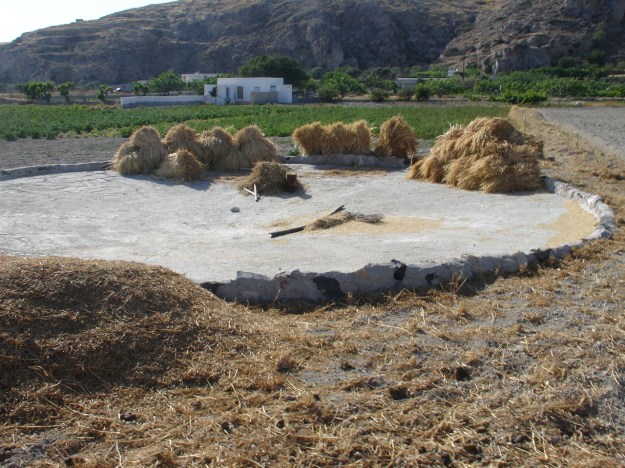
Threshing Place in Santorini, Greece. Photo by Stan Zurek – CC BY-SA 3.0, https://commons.wikimedia.org/w/index.php?curid=917402
18 Then the LORD became jealous for his land, and had pity on his people.
19 In response to his people the LORD said: I am sending you grain, wine, and oil, and you will be satisfied; and I will no more make you a mockery among the nations.
20 I will remove the northern army far from you, and drive it into a parched and desolate land, its front into the eastern sea, and its rear into the western sea; its stench and foul smell will rise up. Surely he has done great things!
21 Do not fear, O soil; be glad and rejoice, for the LORD has done great things!
22 Do not fear, you animals of the field, for the pastures of the wilderness are green; the tree bears its fruit, the fig tree and vine give their full yield.
23 O children of Zion, be glad and rejoice in the LORD your God; for he has given the early rain for your vindication, he has poured down for you abundant rain, the early and the later rain, as before.
24 The threshing floors shall be full of grain, the vats shall overflow with wine and oil.
25 I will repay you for the years that the swarming locust has eaten, the hopper, the destroyer, and the cutter, my great army, which I sent against you.
26 You shall eat in plenty and be satisfied, and praise the name of the LORD your God, who has dealt wondrously with you. And my people shall never again be put to shame.
27 You shall know that I am in the midst of Israel, and that I, the LORD, am your God and there is no other. And my people shall never again be put to shame.
The crisis is averted, the relationship is restored, the curse is turned away and blessings for the people are returned. This oracle of reassurance given to Joel promises renewal for the people, the animals, and the land. Grain, wine, and oil return to nourish the people. The ‘northern army’ is driven to the east and west where it dies in the sea and in the wilderness. As mentioned above I believe that Joel’s imagery is describing the locust swarm and not an army, and the death of the locusts in the wilderness would create a stench. The language is reminiscent of the end of the ‘wonder’ of locusts in Exodus 10:19 where the locusts are driven into the Red Sea. With the locusts gone the soil can recover, the wilderness can provide the grass the cattle desire, the trees and the vines are once again fruitful. The signs of abundance have returned in the aftermath of the curse. The return of the people has led to the return of God’s blessings on the land. The drought ends with the return of the early and late rains and the harvest fills the threshing floor and the vats. The years of scarcity will be replaced by years of abundance and the people will be satisfied and live in prosperity.
This joyous vision of renewed prosperity for the people, the animals, and the soil ends with the promise of the LORD’s dwelling in the midst of Israel. One of the recurring themes in scriptures is the desire of God to dwell among God’s people. The disobedience of the people causes God to withdraw, but the entire purpose of the tabernacle or temple is to give a place for God’s presence among the people. In a similar way Jeremiah can echo this vision:
But this is the covenant that I will make with the house of Israel after those days, says the LORD: I will put my law within them, and I will write it on their hearts; and I will be their God, and they shall be my people. No longer shall they teach one another, or say to each other, “Know the LORD,” for they shall all know me, from the least of them to the greatest, says the LORD; for I will forgive their iniquity, and remember their sin no more. Jeremiah 31: 33-34
The people will no longer know shame. Instead, the people will know the LORD. The renewed relationship with the people and the land opens up a hopeful vision of the future where the people know the will of God.
[1] Jeremiah 4:5, Ezekiel 3: 17-21, 33:1-9
[2] The warriors mentioned in verse seven is the Hebrew gibborim which are the elite warriors or men of status (officers, leaders). The labeling of these grasshoppers as gibborim poetically shows how these pests have become more threatening than the greatest warriors of an enemy army.

Ivan Kramskoy, Christ in the Desert (1872)
16 “And whenever you fast, do not look dismal, like the hypocrites, for they disfigure their faces so as to show others that they are fasting. Truly I tell you, they have received their reward. 17 But when you fast, put oil on your head and wash your face, 18 so that your fasting may be seen not by others but by your Father who is in secret; and your Father who sees in secret will reward you.
The third practice of righteousness that Jesus lifts up is fasting. Fasting, like prayer, is often considered in terms of personal piety but most of the discussion of fasting in the scriptures, like here, pushes against a public demonstration of piety. The disciple again acts in private, but their actions related to the community are to embody the justice they are to live. Much of the discussion of fasting in the Hebrew Scriptures comes in the prophets as they criticize the way fasting is done by other members of the community and attempt to reunite fasting with the practices of righteousness.
Both Jeremiah and Isaiah have the LORD rejecting the fasting of the people because of the wider practices of unrighteousness. This stark language from God in Jeremiah will draw protest from Jeremiah for the people’s sake:
The LORD said to me: Do not pray for the welfare of this people. Although they fast, I do not hear their cry, and although they offer burnt offering and grain offering, I do not accept them; but by the sword, by famine, and by pestilence I consume them. Jeremiah 14: 11-12
Even though the LORD commands Jeremiah to no longer pray for the people, Jeremiah does exactly that to intercede on their behalf. The prophet is still in a person where the words and actions are seen and heard by God for the people, but the practices of the people cannot be separated from either fasting or offering sacrifice. In a similar way the prophet Isaiah criticizes the disconnection of religious practices from practices of righteousness in his familiar critique:
Shout out, do not hold back! Lift up your voice like a trumpet! Announce to my people their rebellion, to the house of Jacob their sins. Yet day after day they seek me and delight to know my ways, as if they were a nation that practiced righteousness and did not forsake the ordinance of their God; the ask of me righteous judgments, they delight to draw near to God. “Why do we fast, but you do not see? Why humble ourselves, but you do not notice?” Look, you serve your own interest on your fast day, and oppress all your workers. Look, you fast only to quarrel and to fight and to strike with a wicked fist. Such fasting as you do today will not make your voice heard on high. Is such the fast I choose, a day to humble oneself? Is it to bow down the head like a bulrush, and to lie in sackcloth and ashes? Will you call this a fast, a day acceptable to the LORD? Is not this the fast I choose: to loose the bonds of injustice, to undo the thongs of the yoke, to let the oppressed go free, and to break every yoke? Is it not to share your bread with the hungry, and to bring the homeless poor into your house; when you see the naked, to cover them, and not to hide yourself from your own kin? Isaiah 58: 1-7
I’ve quoted Isaiah at length because this understanding of fasting also connects with final teaching of Jesus in Matthew’s gospel where the righteous are those who fed the hungry, gave drink to the thirsty, clothed the naked, welcomed the stranger, cared for the sick and visited the imprisoned. (Matthew 25: 31-46)
Fasting is an appropriate practice of righteousness as a practice of repentance (see for example Joel 1: 13-18; 2: 12-17; Jonah 3: 5-9) and is practiced by the followers of John the Baptist (Matthew 9: 14-15) and Jesus’ followers are criticized for their lack of fasting in comparison with the Pharisees and the followers of John the Baptist. Fasting is appropriate to times and seasons, but it is also to be a practice which doesn’t exempt the disciple from their normal manner of interacting with the community. Fasting is not an excuse for oppressing workers or quarreling and fighting. Instead fasting is to be an act seen by God and is to be instead of a mournful act a joyful act for the kingdom. As the prophet Zechariah can state:
The word of the LORD of hosts came to me, saying: Thus says the LORD of hosts: The fast of the fourth month, and the fast of the fifth, and the fast of the seventh , and the fast of the tenth, shall be seasons of joy and gladness, and cheerful festivals for the house of Judah: therefore love truth and peace. Zechariah 8: 18-19
Matthew 6 is read in churches that follow a lectionary at the beginning of the season of Lent where fasting is one of the practices that Christians may choose to practice in this time of forty days. Fasting can be a challenging discipline to practice but it does not exempt the disciple choosing to fast from engaging in the life of the community or the world around them. The community which practices fasting and righteousness will be seen, even when the individual disciple’s fast is not. They will be seen by the way they loose the bonds of injustice and their fasting allows them to hunger and thirst for righteousness. Fasting may be an occasion for repentance but should also be practiced in joy, for such seems to be the fast that the Jesus chooses for his disciples.

Palma Giovane, Prophet Nathan ermahnt Konig David (1622)
<To the leader. A Psalm of David, when the prophet Nathan came to him, after he had gone in to Bathsheba.>
1 Have mercy on me, O God, according to your steadfast love; according to your abundant mercy blot out my transgressions.
2 Wash me thoroughly from my iniquity, and cleanse me from my sin.
3 For I know my transgressions, and my sin is ever before me.
4 Against you, you alone, have I sinned, and done what is evil in your sight, so that you are justified in your sentence and blameless when you pass judgment.
5 Indeed, I was born guilty, a sinner when my mother conceived me.
6 You desire truth in the inward being; therefore teach me wisdom in my secret heart.
7 Purge me with hyssop, and I shall be clean; wash me, and I shall be whiter than snow.
8 Let me hear joy and gladness; let the bones that you have crushed rejoice.
9 Hide your face from my sins, and blot out all my iniquities.
10 Create in me a clean heart, O God, and put a new and right spirit within me.
11 Do not cast me away from your presence, and do not take your holy spirit from me.
12 Restore to me the joy of your salvation, and sustain in me a willing spirit.
13 Then I will teach transgressors your ways, and sinners will return to you.
14 Deliver me from bloodshed, O God, O God of my salvation, and my tongue will sing aloud of your deliverance.
15 O Lord, open my lips, and my mouth will declare your praise.
16 For you have no delight in sacrifice; if I were to give a burnt offering, you would not be pleased.
17 The sacrifice acceptable to God is a broken spirit; a broken and contrite heart, O God, you will not despise.
18 Do good to Zion in your good pleasure; rebuild the walls of Jerusalem,
19 then you will delight in right sacrifices, in burnt offerings and whole burnt offerings; then bulls will be offered on your altar.
The relationship between the speaker and God has been broken because of the psalmist’s own actions and there is no future without God’s forgiveness. The superscription gives us one possible moment to read the psalm from: the moment when David is confronted by the prophet Nathan about his adultery with Bathsheba and the arrangement of the murder of her husband, Uriah. (2 Samuel 11-12) This moment of betrayal of both David’s responsibilities to his people and the favor that God has bestowed upon him changes everything: trust has been broken, the innocent bore the cost of David’s actions and in the words of this psalm David’s iniquity, sin and transgressions have broken the relationship with God. Yet, this psalm could apply to any experience of guilt and shame where one’s actions have failed match one’s called identity as a person of faith. When a person who sought God’s heart stumbles, when a righteous one commits iniquity, when the one who once was clean is now polluted by sin and when one’s transgressions place a wall between the transgressor and God these words allow the penitent one to seek the possibility of forgiveness and reconciliation with God and a return to their former state of grace.
The hope of the penitent lies in the character of God outlines in verse one: God is a God of steadfast love and abundant mercy. There characteristics of God’s character are matched against the trilogy of terms for acts against God: iniquity, sin and transgression. The sinner in the psalm stands permanently marked by their sin and in need of cleansing. They have become defined by their actions and their guilt shows them how their actions have not matched the calling they bore before the people. The guilty one was a righteous one whose entire life was lived in the presence of God and now their actions which may have once been concealed from others were seen by God and they confess that God is justified in God’s judgment of them. Others may have been injured by the psalmist’s actions (and the in the narrative of David and Bathsheba a family was broken, a man was killed, and David failed to be the king he was supposed to be) but here the brokenness is between the psalmist and God and the hope rests in God’s cleansing and restoration.
The guilt of the actions has transformed the person at their deepest level. Everything of who they are is now tainted by a part of themselves they wouldn’t have believed before. They question everything about their story from their conception to the present. They have been transformed into a sinner, one who is separated from God and others and is defined by their transgressions. The psalmist probably doesn’t see their actions as a result of “original sin” passed on from generation to generation but instead views their entire life under the judgment and pollution of their iniquity. They know they need to be purged, cleansed and washed by God in order to remove the stain that their sin causes them to bear. They know that they need to learn truth after their lies, wisdom after the folly of their innermost heart, a holy spirit to replace their sinful one. They need to be recreated as a new being in order to have a future beyond their brokenness. Yet the God of mercy and steadfast love could forgive the people of Israel when they worshipped a golden calf (Exodus 32-34) and while cleansing oneself and receiving a new heart, spirit and future are impossible for the psalmist on their own, they are the type of action that a merciful and forgiving God does. The psalmist hopes for a return to their life in God’s presence where God no longer looks upon their sins but upon the redeemed sinner.
From their place of shame, the psalmist attempts to barter with God. I know when I was growing up that I was taught not to barter with God but the more of the scriptures I read the more I see places like this psalm where a person attempts to barter with God, and I’ve had to rethink this. For the speaker, they will teach, sing, declare and offer right sacrifice If God will restore the relationship. The psalmist doesn’t have much to offer beyond their acknowledgment of their sin which broke the relationship and their promise to live better in the future but the offering a broken spirit, broken and contrite heart. They are hoping through an exchange with God of receiving a new spirit and heart in return for their broken spirit and heart. God becomes for the poet the surgeon who can place in them a new heart and renew a right spirit. Perhaps by the penitent’s witness the good that God does for them will also extend to the rest of the people and allow for Zion’s pleasure and strength to be renewed. As we saw in the previous psalm the sacrifices and burnt offerings are not needed by God, but just as a broken heart and spirit were preconditions in the psalm for forgiveness and renewal the new orientation of the speaker places sacrifices and worship as acts of thanksgiving for the God who blots out transgressions, washes away the iniquity and cleanses the sin because of God’s steadfast love and abundant mercy.
Forgot to get Transfiguration Sunday, this year from Matthew’s Gospel, out so it is a combined post with a lot of images:
The initial reading is Moses being called up the mountain to receive the Ten Commandments, the design of the Tabernacle, etc. I found what I think is a really different image of Moses that reflects the multiple roles he constantly had to do in his time leading the people of Israel.

Moses by Victorvictori, permission granted by author through WikiCommons
And now on to a few of the plethora of images of the Transfiguration:
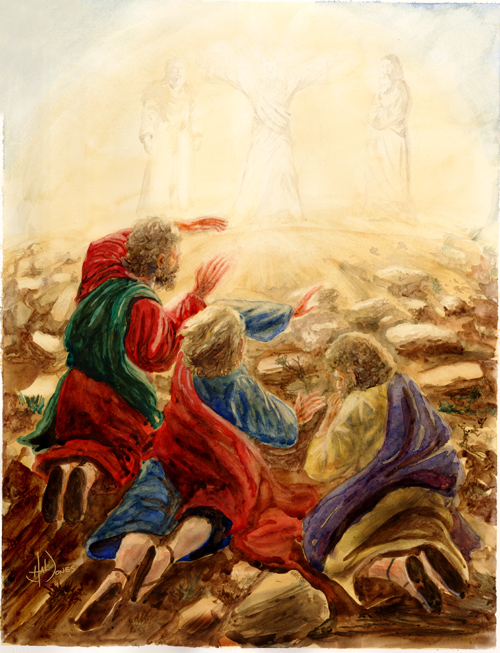
Transfiguration by artjones@deviantart.com
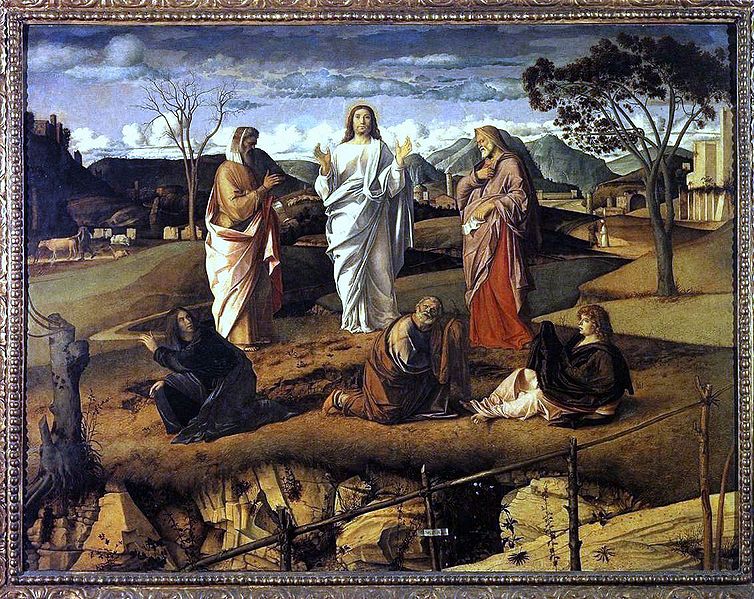
Giovanni Bellini, Transfiguration of Christ (1487-1495)

The Saviour’s Transfiguration, an early 15th century icon attributed to Theophanes the Greek

Transfiguration by Raphael, (1518-1520)
There are a lot of images of black crosses and ashes out there, for imagery this time I’m focusing on Psalm 51 which the opening line attributes to David after he is confronted by the Prophet Nathan after he had go in to Bathsheba

Bathsheba by Artemisia Gentileschi (1636)

Pieter Lastman, King David Handing the Letter to Uriah (1619)
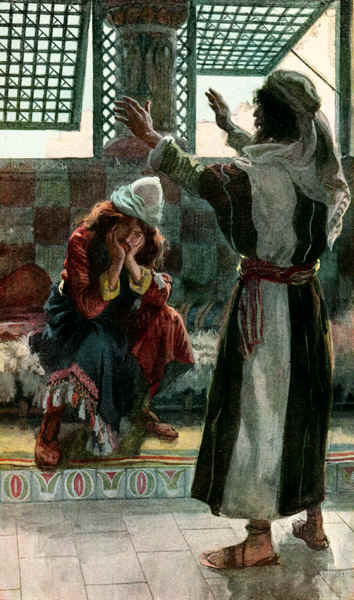
James Tissot, Nathan Rebukes David (1896-1902)
Palma Giovane, Prophet Nathan ermahnt Konig David (1622)
Two really rich pictoral readings, the Genesis narrative of Adam and Eve and the Tree of the Knowledge of Good and Evil and the Matthew’s full temptation narrative
First a couple select images of the Adam and Eve story I found interesting,
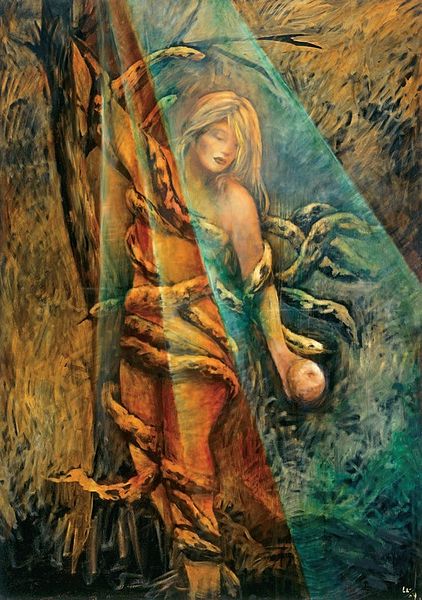
Tree of the Knowledge of Good and Evil by Dr. Lidia Kozenitzky (2009) Image made available by artist through WikiCommons
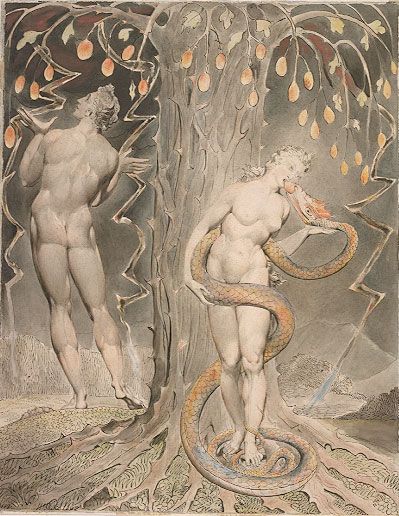
William Blake, Adam and Eve (1808)
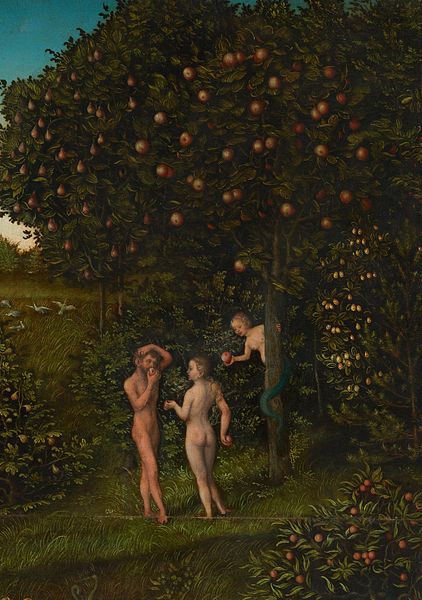
The Fall of Man by Lucas Cranach (1530)
And the Temptation, where in Matthew there are the three distinct temptations

Ivan Nikolaevich Kramskoi, Christ in the Desert (1872)
There are multiple artists who have done representations of the three temptations, like William Blake or Peter Paul Reubens, I’m going to just show James Tissot’s interpretation:

Jesus Tempted in the Wilderness, James Tissot

James Tissot, Jesus Carried to the Pinnacle of the Temple
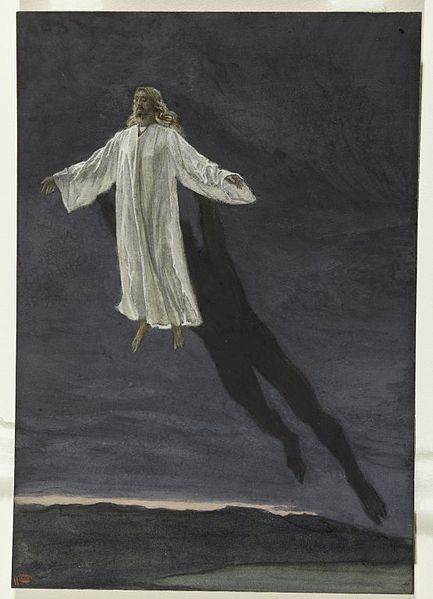
James Tissot, Jesus Transported by a Spirit up to a High Mountain

James Tissot, Jesus Ministered to by the Angels (1886-1894),

By the sweat of your face you shall eat bread until you return to the ground, for out of it you were taken; you are dust, and to dust you shall return. Genesis 3: 19
The fire of time burns in each of us, slowly consuming our days and our years
In the springtime of our youth we seemed immortal, we didn’t feel the touch of the flames
Nothing could touch us, we burned brightly while our wood was green
Our branches were too tall to be licked by the tongues of flames that licked the ground around us
We were warmed by the risks and the dangers that we believed would never shorten our days
And yet each of us leave a trail of ash on the pathways we walk.
But in the summer of our adulthood, when the air was hotter and drier we begin to feel the touch.
Our joints begin to dry out, the vigor of youth wanes, and the rainment of youth begins to dry
The pain of loss begins to touch our lives and we begin to wonder whether we will endure
For the fire of time burns hotter as the days get longer
As the seeds we planted begin to grow and we marvel at the vigor of youth
We also begin to see the trail of ashes that we left behind
And we pray that the ashes and the dust fertilize the ground for the journeyers behind us
Rather than poisoning the wells from which they and we shall drink
In the fall of our lives, the third age, when leaves begin to fall to join the dust of the ground
We are no longer young, not yet old, and yet we have seen those whose roots caught
Those who the fires of time consumed far too young, and we know we are but ashes and dust
We pray for those who make the journey behind us, and rejoice in the seeds we have sown
We look back at the trail of dust mingled with ash and we wonder what could have been,
What should have been, what still might be, how long the ash and the dust will continue to blend
We wonder what we might do in the autumn days of life as the fires of time continue to dry us for winter
As winter comes, the green has gone and our wood has dried
We are not creatures of iron or bronze that can be melted down and recast into youth,
No, we are dust and to dust we shall return.
Some burn brightly and shortly, other molder on throughout the winter
But the fires consume us all, and the energy of our lives returns to the earth we were taken from.
We are dust and ash, mingled together on our journey through the seasons and ages
We begin and we end, we are all born and we all die, we are mortal as much as we flee our weakness
Yet, dust and ash though we are, we are precious and valued
We desire to live and breathe, to make a difference, to share our journeys and stories
We love, laugh, cry, desire, struggle, we are always life and death mixed together
And yet even though we end, we make a place for others to begin
And life continues, sustained by the hands that formed us from the future and past
The ashes of history that become the dust, the earth of the future
Marked by ashes, we continue our journey to the dust
Trusting the potter who breathes breath into dust and ash
Treasuring dust and ash beyond gold and diamonds
Though diamonds are forever, dust and ash live and die,
Yet dust and ash live, precious under the mark of the cross.
Composed: Neil White, 2013

 Sign of the Rose