Jeremiah 22: Justice, the King and Judgment

Justice and the Covenant

Gustav Dore, Jeremiah Preaching (1865)

Gustav Dore, Jeremiah Preaching (1865)

1 Thus says the LORD: Go down to the house of the king of Judah, and speak there this word, 2 and say: Hear the word of the LORD, O King of Judah sitting on the throne of David– you, and your servants, and your people who enter these gates. 3 Thus says the LORD: Act with justice and righteousness, and deliver from the hand of the oppressor anyone who has been robbed. And do no wrong or violence to the alien, the orphan, and the widow, or shed innocent blood in this place. 4 For if you will indeed obey this word, then through the gates of this house shall enter kings who sit on the throne of David, riding in chariots and on horses, they, and their servants, and their people. 5 But if you will not heed these words, I swear by myself, says the LORD, that this house shall become a desolation. 6 For thus says the LORD concerning the house of the king of Judah:
You are like Gilead to me, like the summit of Lebanon;
but I swear that I will make you a desert, an uninhabited city.
7 I will prepare destroyers against you, all with their weapons;
they shall cut down your choicest cedars and cast them into the fire.
8 And many nations will pass by this city, and all of them will say one to another, “Why has the LORD dealt in this way with that great city?” 9 And they will answer, “Because they abandoned the covenant of the LORD their God, and worshiped other gods and served them.”
10 Do not weep for him who is dead, nor bemoan him;
weep rather for him who goes away, for he shall return no more to see his native land.

Two conflicting views of reality are coming into conflict between the prophetic and the royal ideologies of the day. Jeremiah’s worldview comes out of the Mosaic and particular the Deuteronomic covenant where the covenant is conditional, if the people live into the vision that God has set before them they will be bless and if they do not they shall be cursed. For example the structure of Deuteronomy 28 illustrates this well:
If you will only obey the LORD your God, by diligently observing all his commandments that I am commanding you today, the LORD your God will set you high above all the nations of the earth; 2all the blessings shall come upon you and overtake you, if you obey your God:….
But if you will not obey the LORD your God by diligently observing all his commandments and decrees, which I am commanding you today, then all these curses shall come upon you and overtake you:
Deuteronomy 28: 1,2,15
And the prophetic voice interprets these obligations primarily not in terms of cultic actions but in terms of living in justice/righteousness (justice and righteousness are the same word families in both Hebrew and Greek). In contrast the royal ideology views God’s commitment as unconditional, so long as there is a Davidic king and a temple God will not forsake God’s people. The prophet Jeremiah tries again and again to call the people and the rulers back to the vision of justice and righteousness. They are charged again to not shed innocent blood, to care for the weakest of the society, the widows and orphans, and their success is conditional upon their living out of this justice. In contrast to the desire to accumulate more and more wealth among the elite as a way of securing their position, Jeremiah points to the practice of justice and righteousness as a condition for their security which ultimately comes from God. Numerous passages throughout the prophets echo this sentiment, perhaps one of the most well known being from Amos:
But let justice roll down like waters, and righteousness like an ever-flowing stream. Amos 5: 24

The King Of No Account

Vultures around a Dead Donkey

Vultures around a Dead Donkey

11 For thus says the LORD concerning Shallum son of King Josiah of Judah, who succeeded his father Josiah, and who went away from this place: He shall return here no more, 12 but in the place where they have carried him captive he shall die, and he shall never see this land again.
13 Woe to him who builds his house by unrighteousness, and his upper rooms by injustice;
who makes his neighbors work for nothing, and does not give them their wages;
14 who says, “I will build myself a spacious house with large upper rooms,”
and who cuts out windows for it, paneling it with cedar, and painting it with vermilion.
15 Are you a king because you compete in cedar?
Did not your father eat and drink and do justice and righteousness?
Then it was well with him.
16 He judged the cause of the poor and needy; then it was well.
Is not this to know me? says the LORD.
17 But your eyes and heart are only on your dishonest gain,
for shedding innocent blood, and for practicing oppression and violence.
18 Therefore thus says the LORD concerning King Jehoiakim son of Josiah of Judah: They shall not lament for him, saying, “Alas, my brother!” or “Alas, sister!” They shall not lament for him, saying, “Alas, lord!” or “Alas, his majesty!” 19 With the burial of a donkey he shall be buried– dragged off and thrown out beyond the gates of Jerusalem.
20 Go up to Lebanon, and cry out, and lift up your voice in Bashan;
cry out from Abarim, for all your lovers are crushed.
21 I spoke to you in your prosperity, but you said,
“I will not listen.” This has been your way from your youth,
for you have not obeyed my voice.
22 The wind shall shepherd all your shepherds,
and your lovers shall go into captivity;
then you will be ashamed and dismayed because of all your wickedness.
23 O inhabitant of Lebanon, nested among the cedars,
how you will groan when pangs come upon you, pain as of a woman in labor!
24 As I live, says the LORD, even if King Coniah son of Jehoiakim of Judah were the signet ring on my right hand, even from there I would tear you off 25 and give you into the hands of those who seek your life, into the hands of those of whom you are afraid, even into the hands of King Nebuchadrezzar of Babylon and into the hands of the Chaldeans. 26 I will hurl you and the mother who bore you into another country, where you were not born, and there you shall die. 27 But they shall not return to the land to which they long to return.
28 Is this man Coniah a despised broken pot, a vessel no one wants?
Why are he and his offspring hurled out and cast away in a land that they do not know?
29 O land, land, land, hear the word of the LORD!
30 Thus says the LORD: Record this man as childless,
a man who shall not succeed in his days;
for none of his offspring shall succeed in sitting on the throne of David,
and ruling again in Judah.

Much of the ire of the prophets is directed at the kings, and we need to remember that this is a time much different from our own. In an age where the vast majority of the population was illiterate and relied on the kings and the elites of the society to establish the systems of justice that the society operated within. As Brueggeman accurately states, “The conduct of the king is decisive for the weal or woe of the entire social system.” (Brueggemann, 1998, p. 194) and so here at the end of the Davidic monarchy, at the point where the elites are being taken into exile, including King Jehoiakim and his son Jeconiah (here referred to as Coniah) who is contrasted to his well respected father/grandfather Josiah. He is of no account, he will not have the honors he desires, instead of an honorable death Jeremiah declares he will have the death of a donkey—simply thrown beyond the gates. God is done with Jeconiah, ready to cast him off. In contrast to Josiah who rebuilt the temple, his son and grandson are accused with surrounding themselves with luxury far greater. This is not a new critique, it goes at least as far back as Solomon when the amount of resources placed into the temple is compared with the amount of time and resources that go into the construction of Solomon’s houses. Yet in contrast to Jeremiah’s words at the end of this chapter about his being recorded childless, when the people return to Jerusalem under the Persian empire it will be Zerubabbel, the grandson of Jeconiah will be leading the people home. The grandson of the one who if he was a signet ring on the LORD’s finger he would be cast off will experience the reversal of being the signet ring that is put back on after the exile is over.

On that day, says the LORD of hosts, I will take you, O Zerubbabel my servant, son of Shealtiel, says the LORD, and make you like a signet ring; for I have chosen you, says the LORD of hosts. Haggai 2: 24

And the harsh words of Jeremiah about the type of death Jehoiakim (or Jehoiachin) would receive seem also not to come to pass as the ending of 2 Kings points to:

27 In the thirty-seventh year of the exile of King Jehoiachin of Judah, in the twelfth month, on the twenty-seventh day of the month, King Evil-merodach of Babylon, in the year that he began to reign, released King Jehoiachin of Judah from prison; 28 he spoke kindly to him, and gave him a seat above the other seats of the kings who were with him in Babylon. 29 So Jehoiachin put aside his prison clothes. Every day of his life he dined regularly in the king’s presence. 30 For his allowance, a regular allowance was given him by the king, a portion every day, as long as he lived. 2 Kings 25: 27-30

Images for Baptism of our Lord

This is another festival where there are no shortages of images out there. Particularly in ancient art baptism is frequently portrayed as well as the baptism of Jesus. Also the reading from the New Testament is from the baptism of Corneilius, the Roman Centurion in Acts, so a couple images from the Acts story first:

Gerbrand van den Eeckhout, Vision of Cornelius the Centurion, 1664

Gerbrand van den Eeckhout, Vision of Cornelius the Centurion, 1664

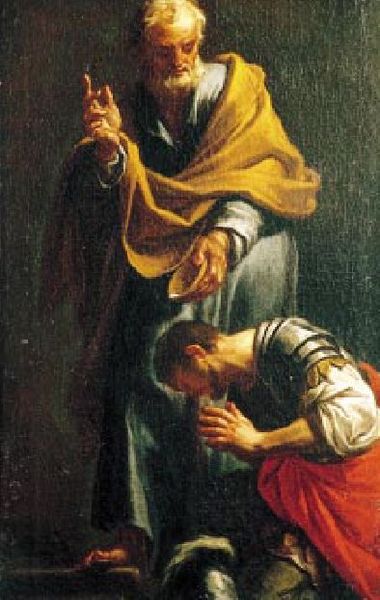
Francesco Trevisani, Peter Baptizing the Centurion Cornelius (1709)

Francesco Trevisani, Peter Baptizing the Centurion Cornelius (1709)

Guido Reni, The Baptism of Christ (1623)

Guido Reni, The Baptism of Christ (1623)


Francesco Albani, Baptism of Christ (1600s)

Francesco Albani, Baptism of Christ (1600s)

A favorite for stained glass windows:

Louis Comfort Tiffany, The Baptism of Christ, Stained Glass Window at Brown Memorial Presbyterian Church, Baltimore

Louis Comfort Tiffany, The Baptism of Christ, Stained Glass Window at Brown Memorial Presbyterian Church, Baltimore

And icons

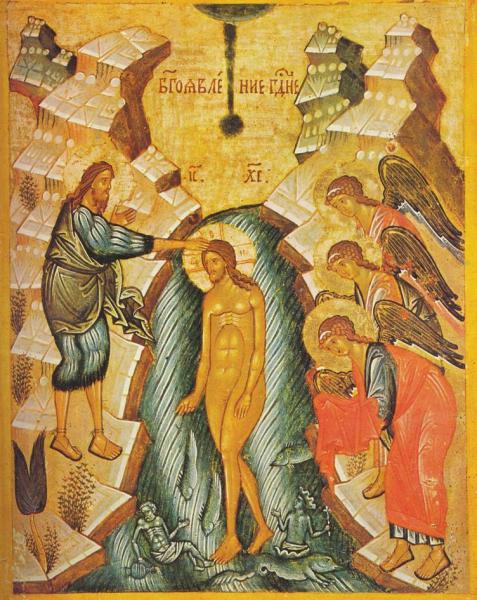
Baptism of Jesus, Orthodox Icon

Baptism of Jesus, Orthodox Icon

And Baptism in general appears in artwork across the ages from the very ancient


Baptism Fresco on the catacomb of Saints Marcellinus and Peter, Via Labicana, Rome, Italy

Baptism Fresco on the catacomb of Saints Marcellinus and Peter, Via Labicana, Rome, Italy


Masaccio, Baptism of the Neophytes, (1424-28)

Masaccio, Baptism of the Neophytes, (1424-28)

To modern architecture and art in churches:

Baptismal font at Valparaiso University

Baptismal font at Valparaiso University

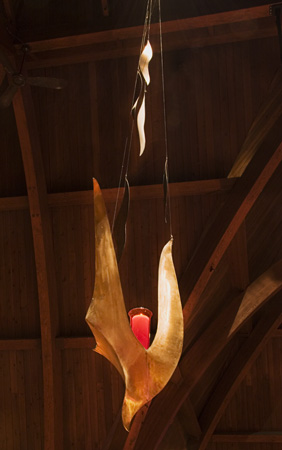
Descending Dove in Grace Lutheran Church, Tacoma Washington

Descending Dove in Grace Lutheran Church, Tacoma Washington


Re-enchantment-A Poem

112 CSmith-Full

The demons and angels and magical forces that reigned in the world no longer hold sway
In a world of people governed by rules and laws and discipline, order and civility
In the grave seriousness of the moment where the past is closed off
And fairy tales and ghost stories belong to the world of children
Walled off from the worlds of imagination in our buffered realities
Carefully constructed to ward off the shock of the unknown
Ballasted with the bulwarks of certainty to hold off the devilry of doubt
Where the only monsters left are ourselves
Yet our souls were never created to inhabit a mechanistic world
Nor our spirits excommunicated from our body
For all our science, suffering still calls out for an answer
For some new type of heroism that might call us from the banality of a disenchanted world
Yearning not merely for some romanticized past but a present that is not ultimate
To move us again to the transcendence of our excarnate realities and disembodied feelings
To the incarnate immanence that can somehow re-enchant the cosmos
Allowing the winds of creation to penetrate the armor of our buffered reality
And breathing free the breath of God in the midst of the polluted heavens

Neil White, 2014

The Silent Night-A Poem

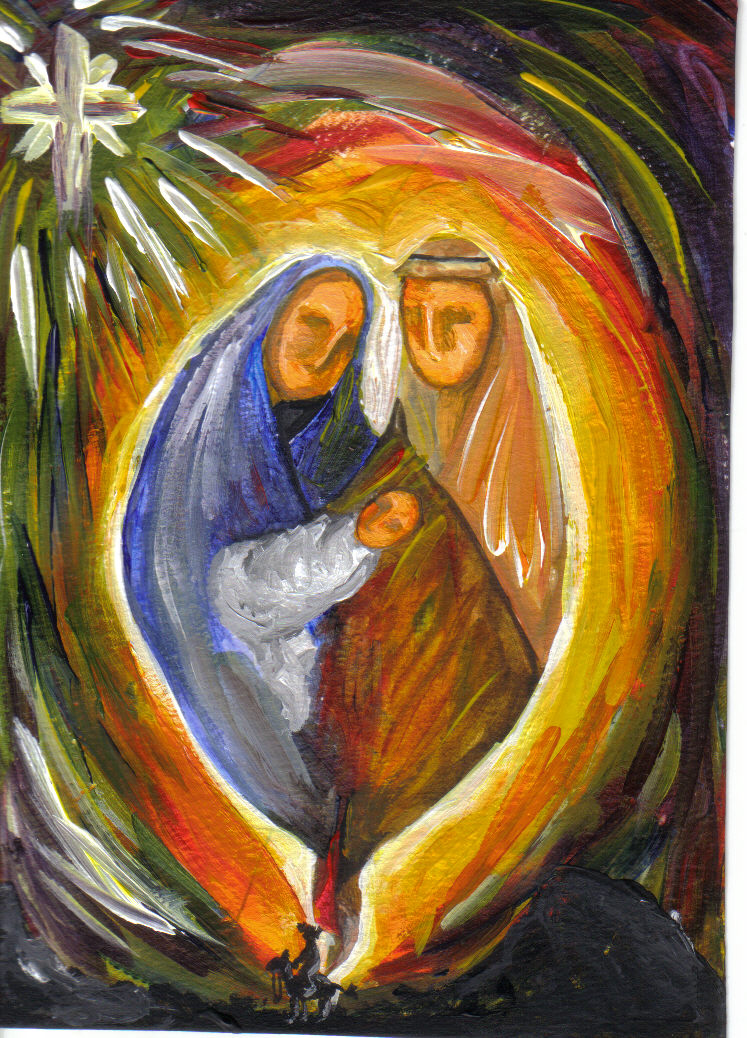
Nativity by Lady Macbeth @deviantart.com

Nativity by Lady Macbeth @deviantart.com

As we hear the story again, that ancient story we know so well
Of the days when heaven and earth touched and angels sang their praises
When shepherds heard and a virgin gave birth in the midst of the stable
There in the magic of the night where simple shepherds knew what kings did not
And somehow God came down to dwell among us in the weakness of a newborn
When the deafness of humanity somehow missed the Word of God
Except for those few gathered together to witness the chorus of new creation
And as we echo the strains in our own key two millennia displaced from that day
May the mystery and majesty of the heavenly chorus blend in harmony
With the songs of the faithful gathered from all corners of the world
To fill the silent night with songs, to join with all creation in singing a new song
And in the cacophony of noise perhaps we too might hear the stirring of angels
Proclaiming the message of peace on earth and goodwill towards humanity
Singing of the love of God that comes down to be among us on this silent night
To share God’s song and to join in ours this day

Neil White, 2013

Blessings to all my friends who will be a part of the song tonight

Images for Christmas Eve, Christmas Day and the First Sunday after Christmas

From Luke’s Christmas Story

Nativity by Lady Macbeth @deviantart.com

Nativity by Lady Macbeth @deviantart.com

Nativity by Zephyr98@deviantart.com

Nativity by Zephyr98@deviantart.com

Hugo Van der Goes, The Adoration of the Shepherds 1480

Hugo Van der Goes, The Adoration of the Shepherds 1480

James Tissot, The Adoration of the Shepherds between 1886 and 1894

James Tissot, The Adoration of the Shepherds between 1886 and 1894


Christmas Day from the Prologue of John’s Gospel there are some really cool images at the Light of the World Exhibition of the Episcopal Church and Visual Arts

Finally for the Sunday after Christmas, which this year is the story of the slaughter of the innocents by Herod in Matthew’s gospel

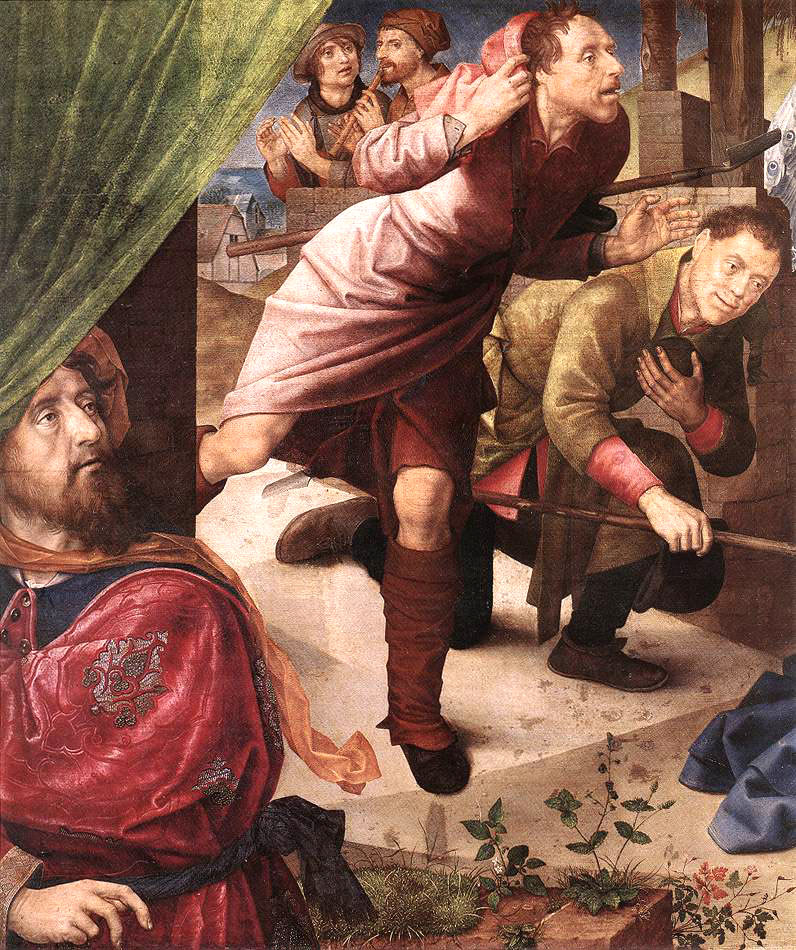
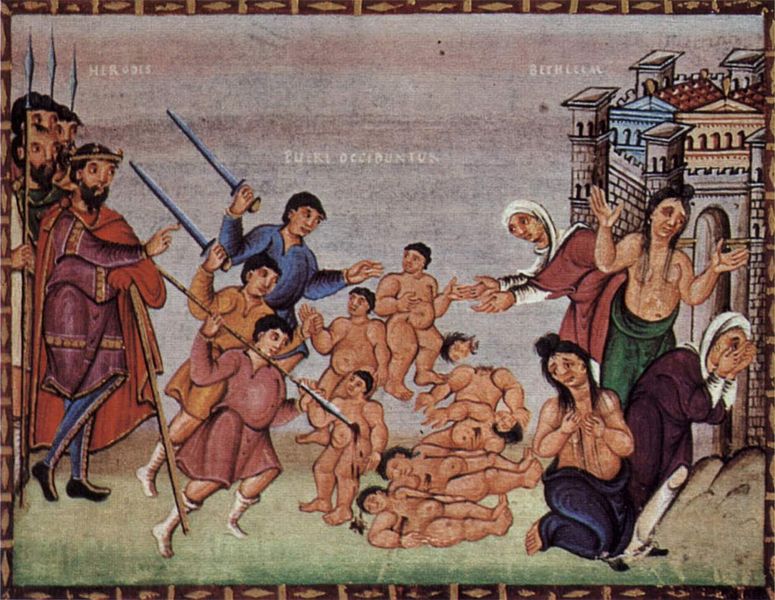
Codex Egberti, Folio 15, scene: Bethlehemitscher Kindermord

Codex Egberti, Folio 15, scene: Bethlehemitscher Kindermord

Peter Paul Rubens, La massacre des Innocents 1611-1612

Peter Paul Rubens, La massacre des Innocents 1611-1612


Francois-Joseph Navez, the Massacre of the Innocents 1824

Francois-Joseph Navez, the Massacre of the Innocents 1824


Phoenix Rising- A Poem

Flight of the Phoenix by shutupandwhiper@deviantart.com

Flight of the Phoenix by shutupandwhiper@deviantart.com

Rising from the ashes of a past that consumed the dreams of the day
Embracing the rising sun of the new life and possibilities
The flaming pyre that were supposed to consume me
Became the necessary predecessor to resurrection
As the strength long lost returns as the desperation of the past dies
The pinions once clipped to prevent flight have regenerated stronger than ever
As the fiery feathers cover my contours radiate life and light
And my brightly covered wings yearn to taste the breath of the heavens
The phoenix rises from the ash pile of the past
To boldly fly into a new future, to climb the updrafts
And return his magic to the kingdom of the air

Neil White, 2013

Images for the Fourth Sunday of Advent

Another cool resource I found this week for artwork is Art and Bible which is in French, but it is pretty easy to click on the wikis for various readings which also has some great artwork for this passage.

For this year it is Matthew’s nativity story which focuses attention on Joseph and the angel speaking to Joseph in a dream:

Saint Joseph the Carpenter, Georges de La Tour (1640)

Saint Joseph the Carpenter, Georges de La Tour (1640)

James Tissot, The Vision of Saint Joseph (1886-1894)

James Tissot, The Vision of Saint Joseph (1886-1894)

T'oros Roslin, Joseph's Dream (1262)

T’oros Roslin, Joseph’s Dream (1262)

Domenico Guidi, Vision of St. Joseph 1694

Domenico Guidi, Vision of St. Joseph 1694

Sir John Everett Millais, Jesus in the House With His Elders, 1850

Sir John Everett Millais, Jesus in the House With His Elders, 1850

Saint Joseph Holding the Christ, Scuola Veneta, picture by Antione Motte dit Falisse

Saint Joseph Holding the Christ, Scuola Veneta, picture by Antione Motte dit Falisse

Imagining Advent- A poem

Altar Paraments created for Easter Lutheran Church in Eagen Minnesota by Linda Witte Henke

Altar Paraments created for Easter Lutheran Church in Eagen Minnesota by Linda Witte Henke

In a world come of age that no longer dreams
When the spiritual is banished to some distant past
And feelings and dreamings of the romatics are exorcised
In the cold harsh world of facts and data and pundits
Can we imagine the advent of mystery
The coming of the divine into the space of the secular
Will the dreams of the prophets be met by the cynicism of this age
Like in their own day, ignored by those who had surrendered hope
To the foolishness of the past, to the dreams of old men
The prophecy of daughters long gone and the visions of young men

Or might there be in the midst of the foolishness of those dreams
A way out of the rabbit’s hole where we find ourselves trapped in our own wonderlands
Trapped into a world that egocentrically revolves around the walls I build to protect me from thee
What would a world look like where nations no longer train for war
Where spears of separation are beaten into pruning hooks of production
Where swords of every age are reforged into the implements for feeding the nations
Where the shields and walls that divide become the fuel that fires the halls of fellowship
In this crazy kingdom where wolves and lambs lie down, and lions and calves and fatlings
Where children can play with poisonous snakes and we enter into the childish imagination
Of the Lord who is born in the home of the animals, laid in the straw of the ox

Of deserts that become productive and blind that see and deaf that hear,
Where springs of water break forth in the midst of the thirsty ground
And the highway that leads home is no longer a fools dream
No longer just the narrow way that only the wise can discern
To a place where hospitality and healing reign and tears are wiped away
Where children are born to us that might bring the mighty down from their thrones
And uplift the humble of heart and fill the hungry with good things
A crazy dream where the last are first and the first are last
Where the poor, hungry, weeping, hated, cursed and defamed are blessed
Where the ignored child of an unwed mother is Lord
And a crucified slave is the king

These dreams don’t come easy in a world come of age
Where we are all too aware of the ways these dreams were manipulated and mobilized
To prop up the powerful rather than to lift up the lowly
To build walls to divide rather than to create a world where there is no longer
Jew or Greek, slave or free, male or female
And yet for all the deconstructionism of the day
The dreams persist, the imagination dares to imagine the heavens opened
The angelic messengers pointing to the sacred in the midst of the profane
That the portals between heaven and earth may indeed be opened
In this unusual advent coming in the smallest and the least
Where a little child might lead them.

Neil White, 2013

Images for the Third Sunday of Advent

This is typically the second Sunday of John the Baptist readings for the season of Advent, so a few images of John the Baptist first and then I’m going to  break from the Revised Common Lectionary this Sunday in Year A (Matthew) and use the genealogy in Matthew’s gospel as a way to introduce the story. So John the Baptist first, as I mentioned last week John the Baptist is a favorite of artists so there are lots more out there, but a few include:

Joan de Joanes, Saint John the Baptist, 1560

Joan de Joanes, Saint John the Baptist, 1560

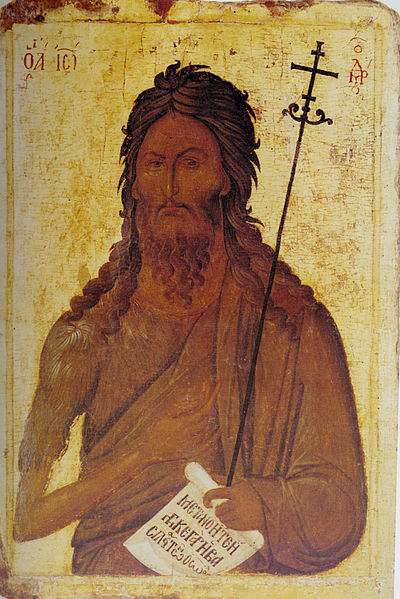
John the Baptist, Icon from Macedonia 14th Century

John the Baptist, Icon from Macedonia 14th Century

Pierre Puvis de Chavannes, The Beheading of St John the Baptist 1869

Pierre Puvis de Chavannes, The Beheading of St John the Baptist 1869

Now for the Geneology of Matthew which is punctuated (unusual for a geneology) by a number of women including

Tamar:

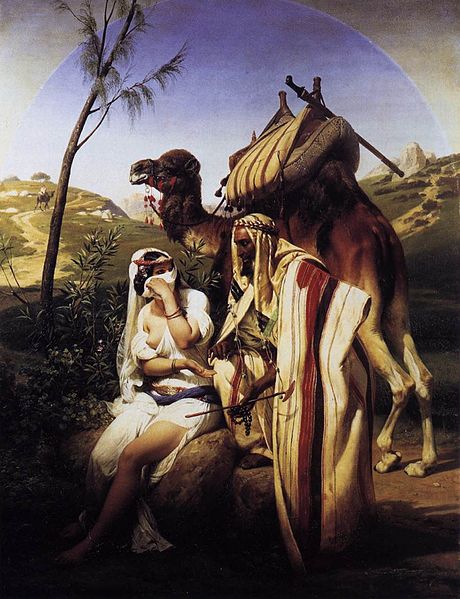
Horace Vernet, Judah and Tamar 1840

Horace Vernet, Judah and Tamar 1840

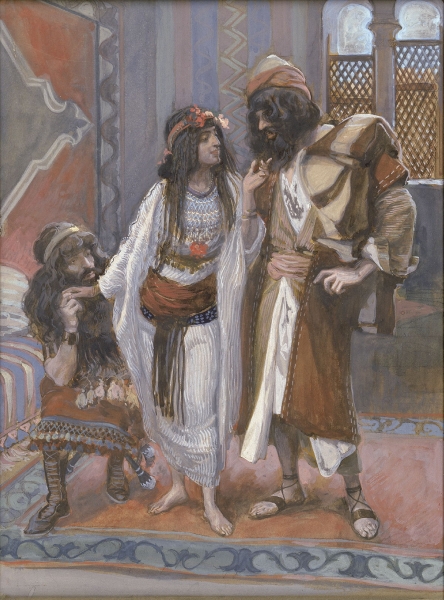
Rahab:

James Tissot, The Harlot of Jericho and the Two Spies

James Tissot, The Harlot of Jericho and the Two Spies

Ruth

William Blake, Naomi Entreating Ruth and Orpah

William Blake, Naomi Entreating Ruth and Orpah

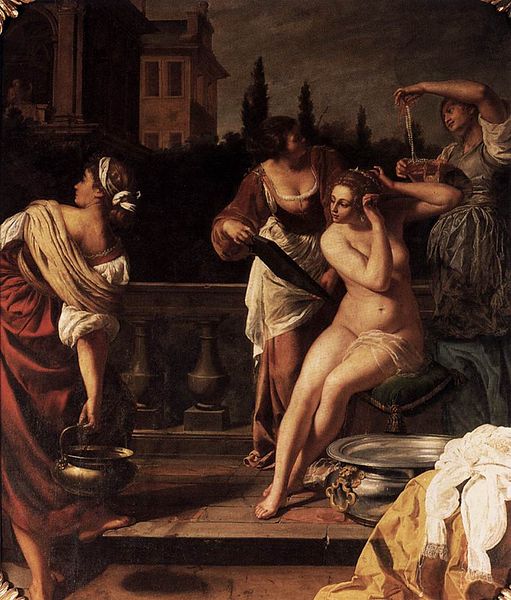
Bathsheeba, the wife of Uriah the Hittite

Artemisia Gentileschi, Bathshedba, first half of the 17th Century

Artemisia Gentileschi, Bathshedba, first half of the 17th Century

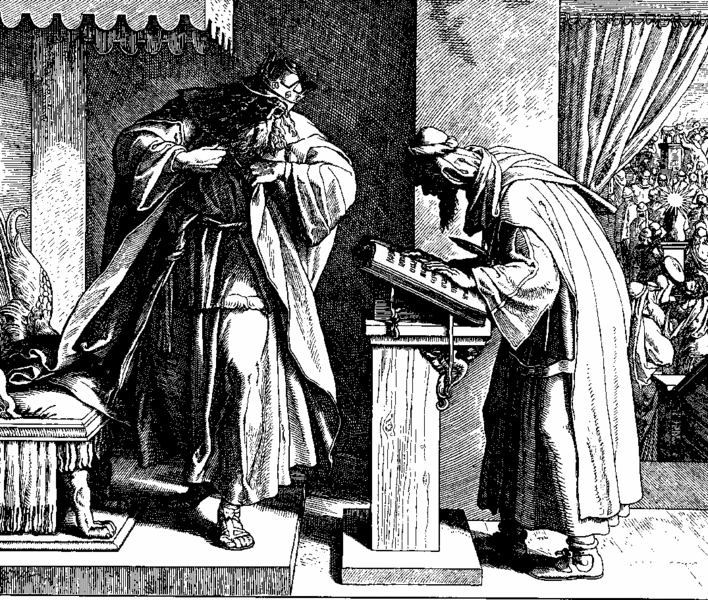
The good kings of Israel and later Judah and the bad:

King Josiah by Julius Schnoor von Carolseld

King Josiah by Julius Schnoor von Carolseld

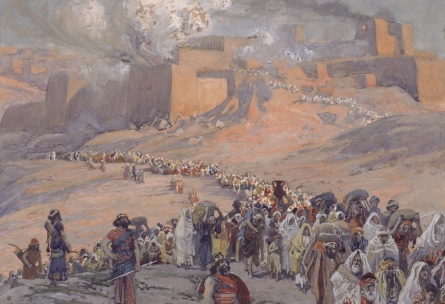
The Exile in Babylon

James Tissot, The Flight of the Prisoners

James Tissot, The Flight of the Prisoners

And the return

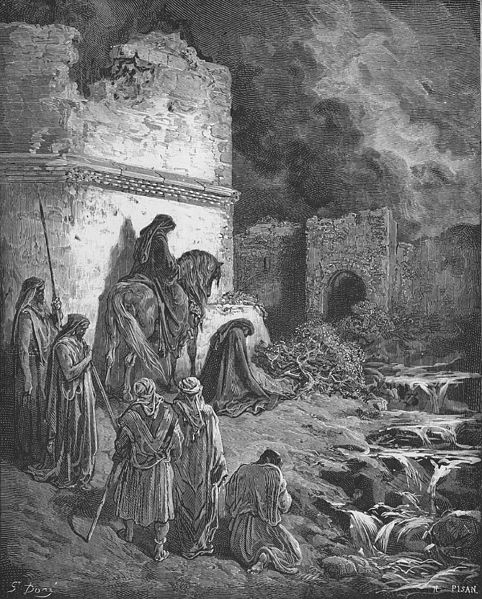
Nehemiah View the Ruins of jerusalem's Walls, Gustav Dore 1866

Nehemiah View the Ruins of jerusalem’s Walls, Gustav Dore 1866

And finally Joseph

Guido Reni, Saint Joseph with the Infant Jesus, 1635

Guido Reni, Saint Joseph with the Infant Jesus, 1635

Frozen- A Poem

photo (1)

As the earth reaches the point where water turns to ice
And life retreats into the caves and crevasses of the world
In a valiant attempt to retain the heat that it has stored up
From the new life of spring and the warmth of summer
Hiding away from the slow creeping death of cold
Trying to survive until the warm air renews the earth again
Winter has arrived and in it is a time where the earth yield not its fruit
Where the sun disappears behind the clouds and shortens it trek along the sky
And for a season the north winds and the cold nights reign supreme
While the creatures of spring hide away or flee towards the lands of summer
Until the transitory ice age passes and the waters melt and life returns

Neil White, 2013