Jeremiah 29: A Letter to the Exiles and the Recurring False Prophets

Letter to the Exiles
Psalm137-794316

Jeremiah 29
These are the words of the letter that the prophet Jeremiah sent from Jerusalem to the remaining elders among the exiles, and to the priests, the prophets, and all the people, whom Nebuchadnezzar had taken into exile from Jerusalem to Babylon. 2 This was after King Jeconiah, and the queen mother, the court officials, the leaders of Judah and Jerusalem, the artisans, and the smiths had departed from Jerusalem. 3 The letter was sent by the hand of Elasah son of Shaphan and Gemariah son of Hilkiah, whom King Zedekiah of Judah sent to Babylon to King Nebuchadnezzar of Babylon. It said: 4 Thus says the LORD of hosts, the God of Israel, to all the exiles whom I have sent into exile from Jerusalem to Babylon: 5 Build houses and live in them; plant gardens and eat what they produce. 6 Take wives and have sons and daughters; take wives for your sons, and give your daughters in marriage, that they may bear sons and daughters; multiply there, and do not decrease. 7 But seek the welfare of the city where I have sent you into exile, and pray to the LORD on its behalf, for in its welfare you will find your welfare.
8 For thus says the LORD of hosts, the God of Israel: Do not let the prophets and the diviners who are among you deceive you, and do not listen to the dreams that they dream, 9 for it is a lie that they are prophesying to you in my name; I did not send them, says the LORD.
10 For thus says the LORD: Only when Babylon’s seventy years are completed will I visit you, and I will fulfill to you my promise and bring you back to this place. 11 For surely I know the plans I have for you, says the LORD, plans for your welfare and not for harm, to give you a future with hope. 12 Then when you call upon me and come and pray to me, I will hear you. 13 When you search for me, you will find me; if you seek me with all your heart, 14 I will let you find me, says the LORD, and I will restore your fortunes and gather you from all the nations and all the places where I have driven you, says the LORD, and I will bring you back to the place from which I sent you into exile.
15 Because you have said, “The LORD has raised up prophets for us in Babylon,”– 16 Thus says the LORD concerning the king who sits on the throne of David, and concerning all the people who live in this city, your kinsfolk who did not go out with you into exile: 17 Thus says the LORD of hosts, I am going to let loose on them sword, famine, and pestilence, and I will make them like rotten figs that are so bad they cannot be eaten. 18 I will pursue them with the sword, with famine, and with pestilence, and will make them a horror to all the kingdoms of the earth, to be an object of cursing, and horror, and hissing, and a derision among all the nations where I have driven them, 19 because they did not heed my words, says the LORD, when I persistently sent to you my servants the prophets, but they would not listen, says the LORD. 20 But now, all you exiles whom I sent away from Jerusalem to Babylon, hear the word of the LORD:

The beginning of this chapter spends a long time situating when this letter is sent by royal courier to the people (predominantly the elites of Judean society) already in exile in Babylon after the first deportation in 597 BCE and the second invasion and massive deportation in 586 BCE. Here in the beginning of chapter 29 we can see some glimmers of hope for those already in Babylon. The Jewish people in Babylon now are charged with constructing their identity in the midst of exile, of getting on with their lives: planting gardens, building homes, getting married and having children for this will not be a short exile. They are to learn how to be the people of God as a minority culture in a very different culture. In their time they are to learn to embrace the exile as the place where God has placed them, that this is indeed from God and to oppose the exile is to oppose God. Also there is a hope in the long term for a restoration to their homeland, but the time is not near and certainly not now. For those already in exile Jeremiah writes a letter intending to bring comfort.
The Babylonian exile is a very productive time for the exiles, most scholars agree that this is when much of the Hebrew Bible reaches its final form. There are still books written after the exile, but being a conquered people in a foreign land caused the people to bring the traditions together to pass on their identity to their children and their children’s children. They became for the first time people of the book, rather than people of the land or oriented around the temple or the city of the Davidic dynasty. In particular these elites who are taken away in the first exile are the bearers of the hope for the future and, despite appearance to the contrary, are objects of God’s affection. Even in exile they are still the chosen people and they have a calling in the exile.
Even in exile they are to be a blessing to the nation they are exiled to. They have to learn how to be faithful to their identity as people of God, and that involves also seeking the well-being (shalom) of the city they are sent to. In contrast to the message they may be hearing from their own kin still in Jerusalem and Judah, they are bearers of God’s blessing. Those still in Judah and Jerusalem still have very dark days ahead, there is still more judgment before they can receive the consolation in the exile, but for those already in the exile they can begin the process of settling into their identity in the midst of the empire. Moving on with their lives in a new place, finding their new identity and holding fast to the covenant and promise that God intends for them.

More False Prophets

21 Thus says the LORD of hosts, the God of Israel, concerning Ahab son of Kolaiah and Zedekiah son of Maaseiah, who are prophesying a lie to you in my name: I am going to deliver them into the hand of King Nebuchadrezzar of Babylon, and he shall kill them before your eyes. 22 And on account of them this curse shall be used by all the exiles from Judah in Babylon: “The LORD make you like Zedekiah and Ahab, whom the king of Babylon roasted in the fire,” 23 because they have perpetrated outrage in Israel and have committed adultery with their neighbors’ wives, and have spoken in my name lying words that I did not command them; I am the one who knows and bears witness, says the LORD.
24 To Shemaiah of Nehelam you shall say: 25 Thus says the LORD of hosts, the God of Israel: In your own name you sent a letter to all the people who are in Jerusalem, and to the priest Zephaniah son of Maaseiah, and to all the priests, saying, 26 The LORD himself has made you priest instead of the priest Jehoiada, so that there may be officers in the house of the LORD to control any madman who plays the prophet, to put him in the stocks and the collar. 27 So now why have you not rebuked Jeremiah of Anathoth who plays the prophet for you? 28 For he has actually sent to us in Babylon, saying, “It will be a long time; build houses and live in them, and plant gardens and eat what they produce.”
29 The priest Zephaniah read this letter in the hearing of the prophet Jeremiah. 30 Then the word of the LORD came to Jeremiah: 31 Send to all the exiles, saying, Thus says the LORD concerning Shemaiah of Nehelam: Because Shemaiah has prophesied to you, though I did not send him, and has led you to trust in a lie, 32 therefore thus says the LORD: I am going to punish Shemaiah of Nehelam and his descendants; he shall not have anyone living among this people to see the good that I am going to do to my people, says the LORD, for he has spoken rebellion against the LORD.

Even in the midst of this time between the exile we continue to see false prophets who will continue to encourage a false version of hope. Ahab, Zedekiah, and Shemaiah are the latest examples mentioned. Ahab and Zedekiah are mentioned at the end of the letter that begins the chapter while Shemaiah is mentioned in a second letter included in the chapter. The accusations against Zedekiah and Ahab also include personal accusations of morality as well (committing adultery with their neighbors’ wives) and while we will never know about what actually happened to these false prophets spoken of only here their punishment is one of particular horror (being roasted on the fire). Shemaiah once again tries to get Jeremiah punished for speaking words that would have been considered treasonous by many of his contemporaries. Jeremiah we see again at least has some who listen to him or respect him. Zephaniah reads to Jeremiah the letter and Jeremiah is captured again by the word of the Lord and utters condemnation against Shemaiah. These false messengers continue to confuse the people and allow them to hear the words that are more palatable and trust in them even when they are not true. In our own context there are many times I could point to where pundits or politicians or even religious leaders have obscured or overstated ideas that fit their view of the way things were or told people what they wanted to hear. But for those who claim the role of prophets their words are to come from God even when the message God has is one nobody seems to want to hear.
Jeremiah 28: The True and the False Prophet

The Breaking of Jeremiah's Yoke by Hananiah

The Breaking of Jeremiah’s Yoke by Hananiah

Jeremiah 28

In that same year, at the beginning of the reign of King Zedekiah of Judah, in the fifth month of the fourth year, the prophet Hananiah son of Azzur, from Gibeon, spoke to me in the house of the LORD, in the presence of the priests and all the people, saying, 2 “Thus says the LORD of hosts, the God of Israel: I have broken the yoke of the king of Babylon. 3 Within two years I will bring back to this place all the vessels of the LORD’s house, which King Nebuchadnezzar of Babylon took away from this place and carried to Babylon. 4 I will also bring back to this place King Jeconiah son of Jehoiakim of Judah, and all the exiles from Judah who went to Babylon, says the LORD, for I will break the yoke of the king of Babylon.”
5 Then the prophet Jeremiah spoke to the prophet Hananiah in the presence of the priests and all the people who were standing in the house of the LORD; 6 and the prophet Jeremiah said, “Amen! May the LORD do so; may the LORD fulfill the words that you have prophesied, and bring back to this place from Babylon the vessels of the house of the LORD, and all the exiles. 7 But listen now to this word that I speak in your hearing and in the hearing of all the people. 8 The prophets who preceded you and me from ancient times prophesied war, famine, and pestilence against many countries and great kingdoms. 9 As for the prophet who prophesies peace, when the word of that prophet comes true, then it will be known that the LORD has truly sent the prophet.”
10 Then the prophet Hananiah took the yoke from the neck of the prophet Jeremiah, and broke it.
11 And Hananiah spoke in the presence of all the people, saying, “Thus says the LORD: This is how I will break the yoke of King Nebuchadnezzar of Babylon from the neck of all the nations within two years.” At this, the prophet Jeremiah went his way.
12 Sometime after the prophet Hananiah had broken the yoke from the neck of the prophet Jeremiah, the word of the LORD came to Jeremiah: 13 Go, tell Hananiah, Thus says the LORD: You have broken wooden bars only to forge iron bars in place of them! 14 For thus says the LORD of hosts, the God of Israel: I have put an iron yoke on the neck of all these nations so that they may serve King Nebuchadnezzar of Babylon, and they shall indeed serve him; I have even given him the wild animals. 15 And the prophet Jeremiah said to the prophet Hananiah, “Listen, Hananiah, the LORD has not sent you, and you made this people trust in a lie. 16 Therefore thus says the LORD: I am going to send you off the face of the earth. Within this year you will be dead, because you have spoken rebellion against the LORD.”
17 In that same year, in the seventh month, the prophet Hananiah died.
Like the previous chapter this occurs in the time of King Zedekiah, the king appointed by King Nebuchadnezzar after the initial exile of the nobles and elites in 596 BCE. It is a time where the Kingdom of Judah has already suffered one defeat at the hands of the Babylonians and Jeremiah’s words have been shown to be a more accurate reading of the times than the many other prophets around him, yet even in a time of defeat the withdrawing of Babylonian forces and the rise of a new Egyptian dynasty leads to a political and religious resurgence of the ideology that the Kingdom of Judah, the temple and Jerusalem are the chosen people because of the Davidic king, the temple and the city of David not because of the covenant they are called to live out of. It is a time where there remain powerful competing visions of what it means to be the people of God, and where prophets have very different messages.
Hananiah son of Azzur proclaims a message that people want to hear, that their time of punishment is over, that the vessels of the temple taken away from Jerusalem will soon be returned along with the King Jeconiah and the other leaders taken into exile. It is a message of hope in a time of confusion and chaos and it is a message that even Jeremiah would rather hear, but Jeremiah also knows it runs counter to his experience of God’s message. The prophet Hananiah acts in visual ways similar to Jeremiah. Jeremiah wears the yoke symbolizing the domination of King Nebuchadnezzar being a divinely allowed reign. Hananiah shatters that yoke as a symbol of the ending of that reign.
For the people how do they tell a false from a true prophet? Ultimately it is only once their words become reality, especially for the prophet of hope and peace. For the prophets who prophesy destruction that never comes there is the reality expressed by the prophet Joel:
Return to the Lord, your God, for he is gracious and merciful, slow to anger and abounding in steadfast love, and relents from punishing. Who know whether he will not turn and relent, and leave a blessing behind. Joel 2: 13b-14a
We have seen throughout Jeremiah that God’s desire is to turn, but at this point the people have crossed a threshold where there is no immediate return. Jeremiah’s words, although unheard, are meant to bring about repentance in the hope of averting an even greater disaster. Hananiah’s words bring a comfortable lie which allows people to trust in a false promise and ideology which leads them once more into conflict with Babylon and into the greater exile of 586 BCE.
Jeremiah’s words and prophecy would have been unsettling and unpopular and treasonous, but that doesn’t mean they were untrue. In many times, including our own, it is often easier to speak the easy lie that doesn’t challenge anyone’s preconceptions than the hard truth. We have seen in previous chapters that speaking as a prophet has a high price for those prophets who come in conflict with the royal and priestly authorities of Jeremiah’s time. Yet for Jeremiah his calling places him between the God who will not be taken for granted and the shepherds who have led the flock astray. Yet Jeremiah continues his impassioned plea to attempt to prevent the destruction of the city, temple and people he loves. Yet, the people to use the poetic language of the gospel of John’s prologue:
He came to what was his own, and his own people did not accept him John 1:11
Yet the easy truth covered the harsh reality, the promised return to independence combined with political allegiances to Egypt and other regional kingdoms would only exchange the wooden yoke for an iron yoke, allegiance to Babylon while remaining in the land to the harsh reality of exile in a foreign land.

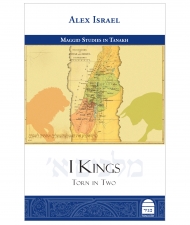
Review of 1 Kings: Torn in Two by Alex Israel

kings for web1 (1)

1 Kings: Torn in Two, by Alex Israel. Jerusalem: Maggid Books, 2013. Pp 350. $29.95 (Hardcover)

1 Kings is the second volume in the Maggid Studies in Tanakh series, and both works have proven to be clear written and insightful approaches to the portions of the Hebrew Scriptures that they address. Rabbi Alex Israel’s skillful opening of the book of 1 Kings provides the reader multiple frames to view the characters, events and historical context of this narrative which moves from the end of the reign of King David through the splitting of the nation of Israel in two and to the end of 1 Kings at the reigns of Jehoshaphat in Judah and Ahaziah in Israel. In a very easy to read style, Rabbi Israel narrates the struggle between kings and prophets, the uneasy relationship between the tribe of Judah and the tribes of Joseph, and with a sympathetic eye paints each of the kings and prophets as people caught within conflicting allegiances. 1 Kings: Torn in Two takes the theological narrative of the history of Israel in 1 Kings and tells it as a compelling story full of struggles and questions and invites the reader into a deeper engagement of the complicated story of the people of God.

1 Kings is roughly half of the original book of Kings, which we now have divided into both 1 and 2 Kings. The book of Kings looks back on the period of the First Temple and attempts to answer the question of what went wrong during this period that eventually led to the destruction of the temple and the people of both the northern Kingdom of Israel and the southern Kingdom of Judah being conquered by the Assyrians and Babylonians respectively. It is a spiritual evaluation of the era rather than a history book and it evaluates each ruler on how they either accelerated the nation of Israel’s path to destruction or reversed the tide by returning to God. The core problem that underlies the evaluation of the leaders in the Book of Kings is the spiritual issue of idolatry. (2)

1 Kings begin with the political intrigue caused by the approaching death of King David and the struggle for power between two of his sons, Adonijah and Solomon. Rabbi Israel skillfully narrates both a political and theological reading of this story of political intrigue. Through his close reading of the movements and alliances of each son of King David we see how both attempt to grasp for power at the end of David’s reign. In a time of uncertainty both groups attempt to consolidate their grasp on their reign through various methods, and ultimately when Solomon emerges the anointed king and consolidates his power it begins a new period of the time of Israel. A time of peace and prosperity begins the age of the first temple.

King Solomon’s reign will demonstrate a pattern of competing allegiances that will continue with all the kings that will follow him. Solomon’s reign and projects will demonstrate an openness to the world beyond the borders of the nation of Israel, even the construction of the temple is designed to spread the name of God beyond the Jewish people. (86) Yet, with this outward looking policy are sown the seeds of future conflicts. From Solomon’s marriage to the daughter of Pharaoh, as well as his other wives and concubines, to a policy of taxation to fund the building of the temple and many other houses which are all done in a time of peace and agricultural prosperity. It is a time of tension, as Rabbi Israel states it, “a tale of Solomon’s two conflicting loves—that of the Temple and that of Pharaoh’s daughter” It is an era that begins with the hope and promise of Solomon asking for wisdom to judge the people that transitions to that same wisdom being turned to become a source of revenue. The affluence of Solomon’s reign also begins to point to a spiritual decline as the accumulation of spices, wealth and building materials become more central to the narrative than the king’s ability to bring justice to the nation. Solomon’s reign of peace ends with his policies of taxation placing a huge internal strain on the already fragile bond between the tribes of Judah and the tribes of the rest of the nation and Solomon establishing a pattern of divided loyalties between the God of Israel and the Temple in Jerusalem and the his building worship sites for his foreign wives and his devotion to them. The end of Solomon’s reign sets the stage for a nation torn in two in his son’s reign.

When Rehoboam ascends to the throne the seam between Judah and the other tribes unravels. By the end of Solomon’s reign the resistance to the taxation policies of the king are already beginning to meet resistance and Jeroboam emerges as one of the challengers of Solomon and later to his heir Rehoboam. Rabbi Israel paints a nuanced portrait of both Jeroboam and Rehoboam where they are both faithful and unfaithful. Jeroboam’s revolt is portrayed as an anti-elitist, people-based movement where priestly service in the two new worship sites (Dan and Bethel) is opened up to all the people. While Jeroboam’s revolt receives divine sanction his institution of new worship sites and the use of images to mediate the people’s worship comes under condemnation of the book of Kings. In Judah, Rehoboam is willing to listen to the prophets that tell him not to go to war with the rest of Israel, however he too continues in the sin of idolatry of his father Solomon. The sin of idolatry is the one defining action that drives the evaluation of each king’s reign according to the book of Kings.

The time after the kingdom unravels is a time of numerous conflicts between Judah and Israel as well as turbulence as leadership as one dynasty is replaced by another. 1 Kings: Torn in Two narrates this complex time of interlocking reigns and conflict from both a northern and southern perspective and is able to highlight both the perspective of the author of 1 Kings on this time period but also brings in a historical and inter textual perspective, utilizing in particular the book of Chronicles to provide an additional voice on this time. Particularly in the North it is a time where different royal dynasties reign for a couple generations only to be replace by another dynasty when they are overthrown.

1 Kings conclude in the time of the Omri dynasty, Kings Omri and Ahab in the north. The reign of Kings Omri and Ahab in the north is one of economic prosperity but spiritual decline. King Omri and later his son Ahab base their foreign policy on an alliance with Phoenicia. This economic and political alliance with Phoenicia also bring Ball worship deep into the life of the Northern Kingdom. Particularly when King Ahab is married to Jezebel who become an ardent missionary of the religion of Phoenicia. (221) In a time where Ahab abandons God and his kingdom flourishes there seems to be no contradiction between his personal and national fortune and his religious orientation.

It is into this time of King Ahab and Jezebel and the continued influence of the religion and policies of Phoenicia that the prophet Elijah enters the story and the conflict begins for the spiritual identity of the Northern Kingdom. Rabbi Israel highlights several important readings of this story and how it reflects on both Elijah and God. In a more traditional reading Elijah is acting as God’s agent and God seems indifferent to the epidemic and famine caused by the three years of drought, but he also lifts up the position of Rabbi Samet in which God attempts to dislodge Elijah from his refusal to end the drought, and so finally in chapter 18 God orders Elijah to explicitly end the famine. (237) Ahab is also presented in a compassionate way as drawn between competing allegiances: after the events on Mt. Carmel where Elijah challenges the prophets of Baal and Ahab appears to return, briefly, to trusting the God of Israel, yet Jezebel continues to hold a strong sway over his policies and is able to threaten Elijah’s life immediately afterwards. The conflict between Elijah and Jezebel also demonstrates a conflict between two value systems: the democratic land culture of Torah and ancient Israel (where land remains in a family) and the monarchical Phoenician system where the king has the ability to take whatever the king wants. Yet even King Ahab, who has done more evil than any of the kings before him according to 1 Kings makes a sudden repentance at the end of the story and God enthusiastically accepts his repentance delaying any condemnation during his lifetime.

Rabbi Israel’s reading of the narrative of 1 Kings highlights the continuing pattern of competing allegiances that the leaders and people of Israel and Judah struggled with. His ability to tell the story in a compelling way allows the tensions of the time and the personalities of the leaders to come forward. The story points to the struggle that people live out our society between competing allegiances based on economic, political, relational and religious authorities. This is an illuminating journey into the time of the kings of Israel and Judah and resonates with themes and struggles found throughout the Hebrew Scriptures and in the relationship between God and God’s people.

Images for Transfiguration Sunday, Ash Wednesday and the First Sunday of Lent

Forgot to get Transfiguration Sunday, this year from Matthew’s Gospel, out so it is a combined post with a lot of images:

Transfiguration Sunday

The initial reading is Moses being called up the mountain to receive the Ten Commandments, the design of the Tabernacle, etc. I found what I think is a really different image of Moses that reflects the multiple roles he constantly had to do in his time leading the people of Israel.

Moses by Victorvictori, permission granted by author through WikiCommons

Moses by Victorvictori, permission granted by author through WikiCommons

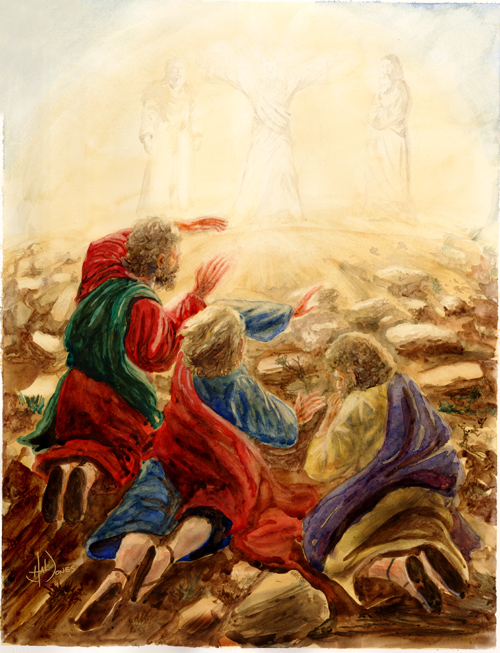
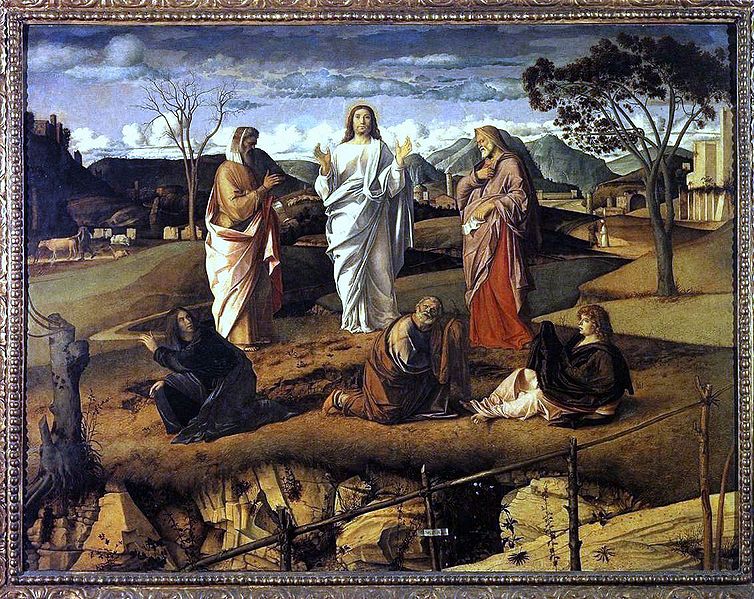
And now on to a few of the plethora of images of the Transfiguration:

Transfiguration by artjones@deviantart.com

Transfiguration by artjones@deviantart.com


Giovanni Bellini, Transfiguration of Christ (1487-1495)

Giovanni Bellini, Transfiguration of Christ (1487-1495)


The Saviour's Transfiguration, an early 15th century icon attributed to Theophanes the Greek

The Saviour’s Transfiguration, an early 15th century icon attributed to Theophanes the Greek

Transfiguration by Raphael, (1518-1520)

Transfiguration by Raphael, (1518-1520)

Ash Wednesday

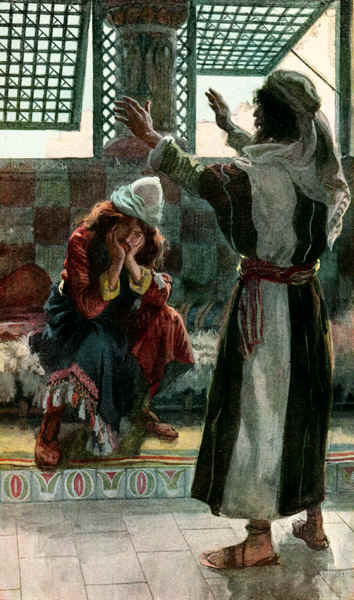
There are a lot of images of black crosses and ashes out there, for imagery this time I’m focusing on Psalm 51 which the opening line attributes to David after he is confronted by the Prophet Nathan after he had go in to Bathsheba

Bathsheba by Artemisia Gentileschi (1636)

Bathsheba by Artemisia Gentileschi (1636)


Pieter Lastman, King David Handing the Letter to Uriah (1611)

Pieter Lastman, King David Handing the Letter to Uriah (1619)

James Tissot, Nathan Rebukes David (1896-1902)

James Tissot, Nathan Rebukes David (1896-1902)


Palma Giovane, Prophet Nathan ermahnt Konig David (1622)

Palma Giovane, Prophet Nathan ermahnt Konig David (1622)

First Sunday of Lent

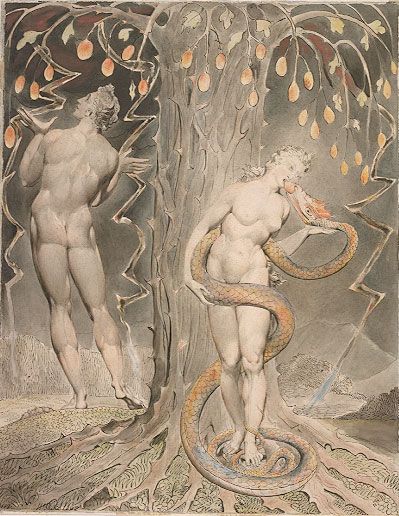
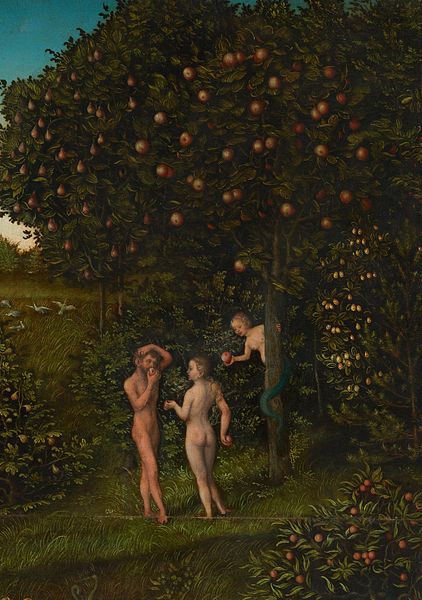
Two really rich pictoral readings, the Genesis narrative of Adam and Eve and the Tree of the Knowledge of Good and Evil and the Matthew’s full temptation narrative

First a couple select images of the Adam and Eve story I found interesting,

Tree of the Knowledge of Good and Evil by Dr. Lidia Kozenitzky (2009) Image made available by artist through WikiCommons

Tree of the Knowledge of Good and Evil by Dr. Lidia Kozenitzky (2009) Image made available by artist through WikiCommons

William Blake, Adam and Eve (1808)

William Blake, Adam and Eve (1808)


The Fall of Man by Lucas Cranach (1530)

The Fall of Man by Lucas Cranach (1530)

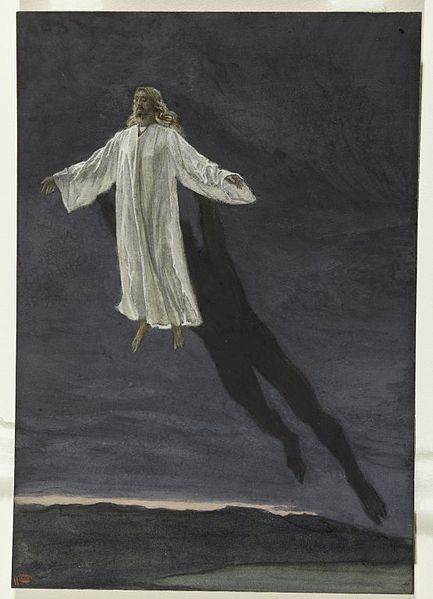
And the Temptation, where in Matthew there are the three distinct temptations

Ivan Nikolaevich Kramskoi, Christ in the Desert (1872)

Ivan Nikolaevich Kramskoi, Christ in the Desert (1872)

There are multiple artists who have done representations of the three temptations, like William Blake or Peter Paul Reubens, I’m going to just show James Tissot’s interpretation:

Jesus Tempted in the Wilderness, James Tissot

Jesus Tempted in the Wilderness, James Tissot


James Tissot, Jesus Carried to teh Pinnacle of the Temple

James Tissot, Jesus Carried to the Pinnacle of the Temple


James Tissot, Jesus Transported by a Spirit up to a High Mountain

James Tissot, Jesus Transported by a Spirit up to a High Mountain


James Tissot, Jesus Ministered to by the Angels (1886-1894)

James Tissot, Jesus Ministered to by the Angels (1886-1894), 


Jeremiah 27: The Yoke of Babylon

Weigel Engraving, Hananiah and Jeremiah

Weigel Engraving, Hananiah and Jeremiah

In the beginning of the reign of King Zedekiah son of Josiah of Judah, this word came to Jeremiah from the LORD. 2 Thus the LORD said to me: Make yourself a yoke of straps and bars, and put them on your neck. 3 Send word to the king of Edom, the king of Moab, the king of the Ammonites, the king of Tyre, and the king of Sidon by the hand of the envoys who have come to Jerusalem to King Zedekiah of Judah. 4 Give them this charge for their masters: Thus says the LORD of hosts, the God of Israel: This is what you shall say to your masters: 5 It is I who by my great power and my outstretched arm have made the earth, with the people and animals that are on the earth, and I give it to whomever I please. 6 Now I have given all these lands into the hand of King Nebuchadnezzar of Babylon, my servant, and I have given him even the wild animals of the field to serve him. 7 All the nations shall serve him and his son and his grandson, until the time of his own land comes; then many nations and great kings shall make him their slave.

 8 But if any nation or kingdom will not serve this king, Nebuchadnezzar of Babylon, and put its neck under the yoke of the king of Babylon, then I will punish that nation with the sword, with famine, and with pestilence, says the LORD, until I have completed its destruction by his hand. 9 You, therefore, must not listen to your prophets, your diviners, your dreamers, your soothsayers, or your sorcerers, who are saying to you, ‘You shall not serve the king of Babylon.’ 10 For they are prophesying a lie to you, with the result that you will be removed far from your land; I will drive you out, and you will perish. 11 But any nation that will bring its neck under the yoke of the king of Babylon and serve him, I will leave on its own land, says the LORD, to till it and live there.

 12 I spoke to King Zedekiah of Judah in the same way: Bring your necks under the yoke of the king of Babylon, and serve him and his people, and live. 13 Why should you and your people die by the sword, by famine, and by pestilence, as the LORD has spoken concerning any nation that will not serve the king of Babylon? 14 Do not listen to the words of the prophets who are telling you not to serve the king of Babylon, for they are prophesying a lie to you. 15 I have not sent them, says the LORD, but they are prophesying falsely in my name, with the result that I will drive you out and you will perish, you and the prophets who are prophesying to you.

 16 Then I spoke to the priests and to all this people, saying, Thus says the LORD: Do not listen to the words of your prophets who are prophesying to you, saying, “The vessels of the LORD’s house will soon be brought back from Babylon,” for they are prophesying a lie to you. 17 Do not listen to them; serve the king of Babylon and live. Why should this city become a desolation? 18 If indeed they are prophets, and if the word of the LORD is with them, then let them intercede with the LORD of hosts, that the vessels left in the house of the LORD, in the house of the king of Judah, and in Jerusalem may not go to Babylon. 19 For thus says the LORD of hosts concerning the pillars, the sea, the stands, and the rest of the vessels that are left in this city, 20 which King Nebuchadnezzar of Babylon did not take away when he took into exile from Jerusalem to Babylon King Jeconiah son of Jehoiakim of Judah, and all the nobles of Judah and Jerusalem– 21 thus says the LORD of hosts, the God of Israel, concerning the vessels left in the house of the LORD, in the house of the king of Judah, and in Jerusalem: 22 They shall be carried to Babylon, and there they shall stay, until the day when I give attention to them, says the LORD. Then I will bring them up and restore them to this place.


The NRSV corrects the text since the context set for Jeremiah’s actions are almost universally accepted to be during the reign of King Zedekiah after the exile of Jeconiah and many of the elites in the land. In this context where Zedekiah is ruling over the remnant in the time before the much larger Babylonian exile of 586 BCE, so the prophets actions are in the time of Zedekiah rather than Jeconiah. At some time during this ten year span there is some type of regional meeting of the envoys of the nations of Edom, Moab, the Ammonites,Tyre and Sidon with the king of Judah, most likely to discuss how they are going to respond to the continued domination of the Babylonian empire. Would the regional kings perhaps ally themselves with a resurgent Egypt, would they rebel against Babylon or would they submit to the reign of King Nebuchadnezzar? We know from a viewpoint removed from history that Judah would set a policy that would rely on Egypt and eventually provoke the wrath of Babylon leading to the destruction of Jerusalem and the exile of the nation.

In a symbolic act Jeremiah wears a yoke around his neck commanding not only Judah, but the other representatives at the regional summit to submit to Babylon’s rule. The message goes to the nation, to the king of Judah and then to the priests and all the people. The strong claim that God is behind the power of the empire of Babylon and that at least for this time to oppose Nebuchadnezzar is to oppose God’s will and to invite disaster.  Nebuchadnezzar is given control of not only the nations but even the wild animals of the field as for the time being all creation seems to have a pro-Babylonian tilt. Yet, this is not an unqualified endorsement of the Babylonian or any other empire since God’s favor is only for a time, yet to the generation in this time prior to the final exile it must have seemed like an eternity. Apparently, as we have seen elsewhere in Jeremiah, there are other prophets declaring that even after this first defeat the time is rapidly approaching where the furnishings of the house of God will represent a return to power for the people of Judah. These other prophets are saying hope is on the horizon, but for Jeremiah even now hope is a long way off. The hope of these false prophets is a false hope, that rather than things getting better Jeremiah is trying to prevent what remains of the temple from being taken as the spoils of yet another Babylonian invasion. Jeremiah’s voice goes unheard, the temple and the city a sacked, and the people like the remaining treasures of the Lord’s house are taken to Babylon where they stay until the end of the exile as appointed by the Lord.


Images for the Seventh Sunday after Epiphany

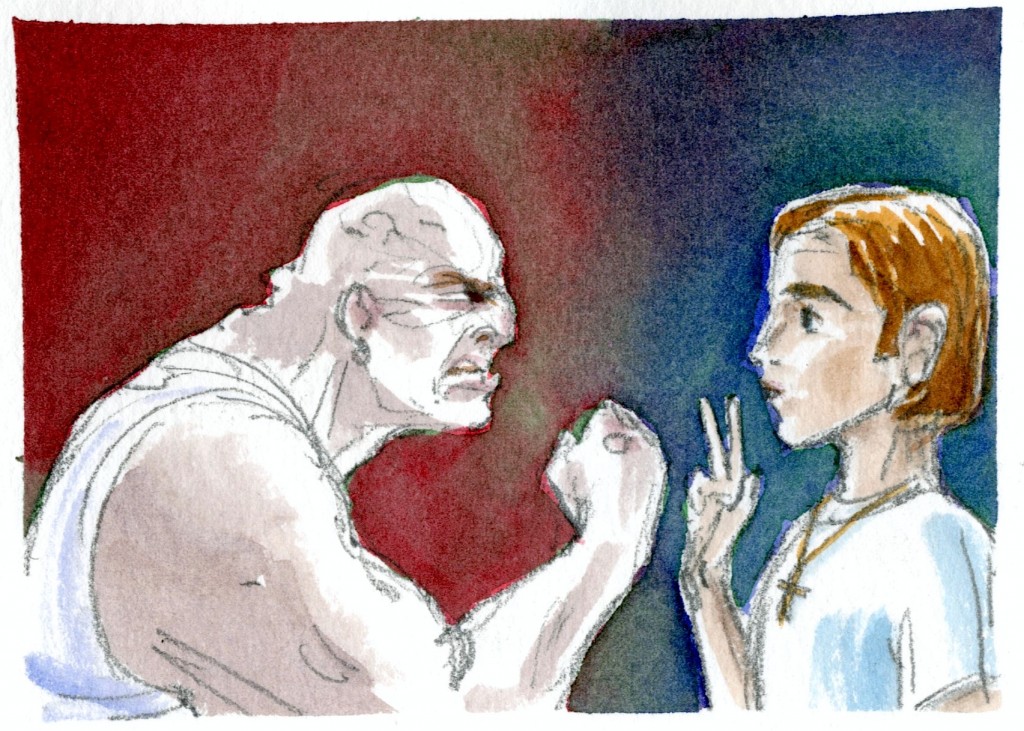
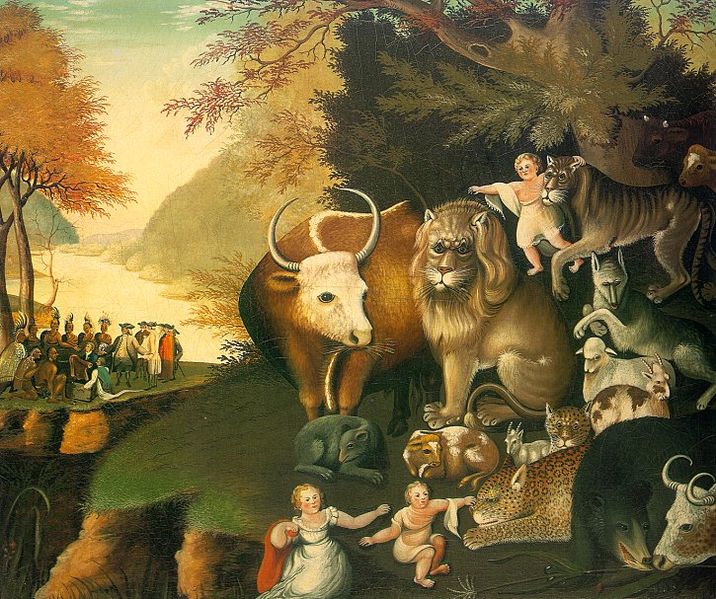
This is another week where some of the linkages artistically are more difficult, since it is Jesus talking about loving enemies, going the second mile, turning the other cheek. There may be images out there that reflect this but I struggled to find direct linkages. There is plenty of images out there that rebel against these ideas. 


Edward Hicks, Peaceable Kingdom 1834

Edward Hicks, Peaceable Kingdom 1834


Maltreatments in the House of Caiphas, James Tissot (1886-1894)

Maltreatments in the House of Caiphas, James Tissot (1886-1894)


Jeremiah 26 The Prophet, the Temple and the Elders

Jeremiah 26: 1-19 The Prophet, the Temple and the Elders

Ilya Repin, Cry of the Prophet Jeremiah on the Ruins of Jerusalem (1870)

Ilya Repin, Cry of the Prophet Jeremiah on the Ruins of Jerusalem (1870)

At the beginning of the reign of King Jehoiakim son of Josiah of Judah, this word came from the LORD: 2 Thus says the LORD: Stand in the court of the LORD’s house, and speak to all the cities of Judah that come to worship in the house of the LORD; speak to them all the words that I command you; do not hold back a word. 3 It may be that they will listen, all of them, and will turn from their evil way, that I may change my mind about the disaster that I intend to bring on them because of their evil doings. 4 You shall say to them: Thus says the LORD: If you will not listen to me, to walk in my law that I have set before you, 5 and to heed the words of my servants the prophets whom I send to you urgently– though you have not heeded– 6 then I will make this house like Shiloh, and I will make this city a curse for all the nations of the earth.

 7 The priests and the prophets and all the people heard Jeremiah speaking these words in the house of the LORD. 8 And when Jeremiah had finished speaking all that the LORD had commanded him to speak to all the people, then the priests and the prophets and all the people laid hold of him, saying, “You shall die! 9 Why have you prophesied in the name of the LORD, saying, ‘This house shall be like Shiloh, and this city shall be desolate, without inhabitant’?” And all the people gathered around Jeremiah in the house of the LORD.

                10 When the officials of Judah heard these things, they came up from the king’s house to the house of the LORD and took their seat in the entry of the New Gate of the house of the LORD. 11 Then the priests and the prophets said to the officials and to all the people, “This man deserves the sentence of death because he has prophesied against this city, as you have heard with your own ears.”

 12 Then Jeremiah spoke to all the officials and all the people, saying, “It is the LORD who sent me to prophesy against this house and this city all the words you have heard. 13 Now therefore amend your ways and your doings, and obey the voice of the LORD your God, and the LORD will change his mind about the disaster that he has pronounced against you. 14 But as for me, here I am in your hands. Do with me as seems good and right to you. 15 Only know for certain that if you put me to death, you will be bringing innocent blood upon yourselves and upon this city and its inhabitants, for in truth the LORD sent me to you to speak all these words in your ears.”

 16 Then the officials and all the people said to the priests and the prophets, “This man does not deserve the sentence of death, for he has spoken to us in the name of the LORD our God.” 17 And some of the elders of the land arose and said to all the assembled people, 18 “Micah of Moresheth, who prophesied during the days of King Hezekiah of Judah, said to all the people of Judah: ‘Thus says the LORD of hosts, Zion shall be plowed as a field; Jerusalem shall become a heap of ruins, and the mountain of the house a wooded height.’ 19 Did King Hezekiah of Judah and all Judah actually put him to death? Did he not fear the LORD and entreat the favor of the LORD, and did not the LORD change his mind about the disaster that he had pronounced against them? But we are about to bring great disaster on ourselves!”

This passage is traditionally linked with the ‘Temple Sermon of Jeremiah’ in Jeremiah 7 and into chapter 8 based on the dating and the circumstances lined out in the first lines. Jeremiah goes into the temple, the heart of the royal and priestly justification of the people’s favored status and compares the temple to Shiloh, which was an earlier site of the tabernacle site in the time of 1 Samuel. The prophet calls the people back to the two sided covenant of Deuteronomy, ‘If you will do these things, then you will be blessed, if you will not do these things you will be cursed.’ Since the construction of the temple by Solomon there has been a critique of the possibility of relying solely on the temple for maintaining the people’s status with God. For example when God answers Solomon’s prayer in 1 Kings 9, it relates the answer as this:

2 the LORD appeared to Solomon a second time, as he had appeared to him at Gibeon. 3 The LORD said to him, “I have heard your prayer and your plea, which you made before me; I have consecrated this house that you have built, and put my name there forever; my eyes and my heart will be there for all time. 4 As for you, if you will walk before me, as David your father walked, with integrity of heart and uprightness, doing according to all that I have commanded you, and keeping my statutes and my ordinances, 5 then I will establish your royal throne over Israel forever, as I promised your father David, saying, ‘There shall not fail you a successor on the throne of Israel.’

 6 “If you turn aside from following me, you or your children, and do not keep my commandments and my statutes that I have set before you, but go and serve other gods and worship them, 7 then I will cut Israel off from the land that I have given them; and the house that I have consecrated for my name I will cast out of my sight; and Israel will become a proverb and a taunt among all peoples. 8 This house will become a heap of ruins; everyone passing by it will be astonished, and will hiss; and they will say, ‘Why has the LORD done such a thing to this land and to this house?’ 9 Then they will say, ‘Because they have forsaken the LORD their God, who brought their ancestors out of the land of Egypt, and embraced other gods, worshiping them and serving them; therefore the LORD has brought this disaster upon them.'” (1Kings 9:2-9)

Yet in the time of King Jehoiakim this way of understanding the covenant with God is either forgotten or neglected. For the prophet claims of obedience to God’s law/Torah are more important than any human authority. This undercuts the certitude of not only Jehoiakim, but particularly here the priests in the temple where Jeremiah makes his proclamation. Their lives are invested in the maintaining of the centrality of the temple worship and the proclamation of the prophet threatens not only their temple with its words but their livelihood. The react quickly and harshly demanding the death of Jeremiah because he has spoken against the temple and the city and bring him before the leadership of the city. It is a tense picture painted where the priest and temple authorities and the crowd have surrounded the prophet and the city leaders quickly move to bring calm to the situation and hold judgment in the case of this troublesome prophet.

For his part, Jeremiah denies nothing that he is accused of and yet he claims his role as a prophet of God speaking on God’s behalf and still in the hope of both the prophet and God that the people will hear and turn from their ways. What the priests have heard as condemnation is from Jeremiah’s perspective a hope for turning and rescue by God, but the words have fallen on unreceptive ears.  Jeremiah knows that his life rests in these officials’ hands and yet he warns them that if they take his life they will be liable for innocent blood.

The elder’s rely on the precedence of Micah, one of the examples of intertextuality in the Bible. This instance refers back to the prophet Micah who a century earlier had spoken harsh words against the city, and yet Micah was not killed by the leadership then. The ‘elders’ override the ‘priest’ and the historical memory of prophetic witness and Torah piety hold out in this case and the elders too are able to see this as an opportunity for repentance rather than a certain doom. Unfortunately for the people the repentance does not come as the priestly and royal authority are hostile to this message that Jeremiah proclaim.

Jeremiah 26:20-24 The Risk of the Prophetic Challenge


                20 There was another man prophesying in the name of the LORD, Uriah son of Shemaiah from Kiriath-jearim. He prophesied against this city and against this land in words exactly like those of Jeremiah. 21 And when King Jehoiakim, with all his warriors and all the officials, heard his words, the king sought to put him to death; but when Uriah heard of it, he was afraid and fled and escaped to Egypt.22 Then King Jehoiakim sent Elnathan son of Achbor and men with him to Egypt, 23 and they took Uriah from Egypt and brought him to King Jehoiakim, who struck him down with the sword and threw his dead body into the burial place of the common people.

 24 But the hand of Ahikam son of Shaphan was with Jeremiah so that he was not given over into the hands of the people to be put to death.

King Jehoiakim is not receptive to Jeremiah’s message, and while Jeremiah apparently has some protection from Ahikam son of Shaphan another prophet, Uriah son of Shemaiah does not. The words of Uriah infuriate the king enough to send men into Egypt to capture, bring the prophet to the king and then to be killed by the king. This is not a welcome time for prophets and death and torture are real possibilities to ensure the message of King Jehoiakim is the dominant message heard.

Images for the Sixth Sunday After Epiphany, Lectionary 6A

Continuing in the Sermon on the Mount where Jesus interprets the commandments. The ideas for many of these images come out of the images in my copy of Luther’s Small Catechism around the fifth, sixth and eighth commandments

William Blake, Moses Receiving the Law (1780)

William Blake, Moses Receiving the Law (1780)

Peter Paul Rubens, Cain Slaying Abel, (1608-1809)

Peter Paul Rubens, Cain Slaying Abel, (1608-1809)


Jean-Leon Gerome, Bethsabee (1889 or 1885)

Jean-Leon Gerome, Bethsabee (1889 or 1885)

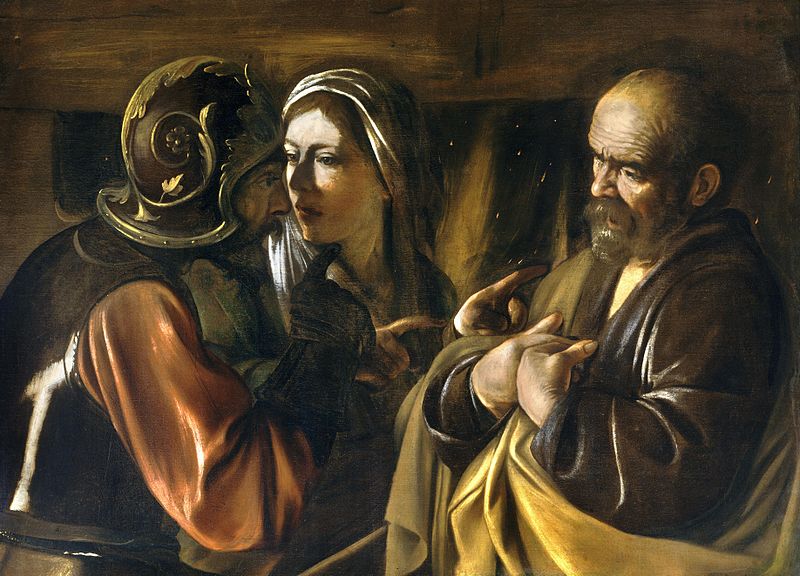
Michelangelo Merisis da Carvaggio, The Denial of Saint Peter

Michelangelo Merisis da Carvaggio, The Denial of Saint Peter


Images for the Fifth Sunday After Epiphany, Lectionary 5A

It is more abstract this week, if you want images for the Sermon on the Mount in General look back at the Fourth Sunday after Epiphany. This week is Matthew 5: 13-20: Jesus telling the disciples they are the salt of the earth, light on a lampstand, a city on a hill and unless their righteousness exceeds that of the Pharisees they will not enter the kingdom of heaven.

Salt and Light by Anacre0n@deviantart.com

Salt and Light by Anacre0n@deviantart.com

More of an abstract image, but I found it helpful for my own meditation

Saltfish drying in Iceland

Saltfish drying in Iceland

A reminder that in the ancient world (pre-refrigerators) salt was mainly a preservative rather than a seasoning

candle

City on a Hill by antonisfes@deviantart.com

City on a Hill by antonisfes@deviantart.com

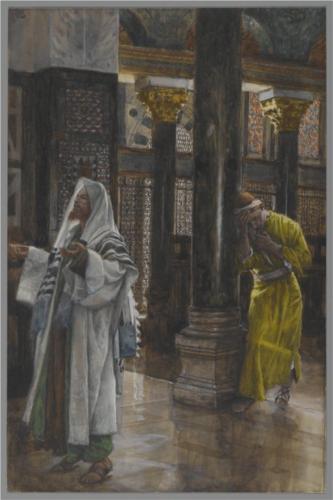
James Tissot, The Pharisee and the Publican (1894)

James Tissot, The Pharisee and the Publican (1894)


Opening a Galaxy-A Poem

magrathea

In a universe where 42 is the answer to life, the universe and everything
Resides the world of Magrathea where planets are custom made to order
On the factory floor is every world conceivable
Any customer can request a tailor made environment
So long as they have the funds to support the massive building project
Yet, Magrathea itself is contained within the unimaginable expanses
Of a universe which the story allows us to hitch a ride into
And we find worlds taking form in the factory floor of our own minds
Countless imaginations there for the taking from the stories
Contained in books, stories, movies, and some which are our own creations
Even when the words are shared, though the worlds are our own
For such is the elastic nature of words to evoke images in the eye of the mind
And we don’t panic as we hitchhike through galaxies as improbable
As a planet where planets are created and restaurants where that universe ends
And yet once we pick up another story it begins anew

Neil White, 2014