Category Archives: Psychology and Philosophy

Empathetic-A Poem

Eye_iris

I can see the exhaustion in your eyes
And the way you hold your head tells a story
Before the first word emerges from your mouth
I can imagine myself in your shoes
And perhaps I have been there, perhaps not
But either way I can imagine your world
And attempt to see my own through your eyes
In empathy I can see your humanity
And I am drawn to care and notice your suffering
To value you as a peer even while a stranger

Yet, in an inhospitable world how do we risk hospitality
When empathy is mistakenly viewed as weakness
And psychosis as strength and it is easier not to care
How do we make the inhuman humane?
How does compassion live with apathy?
How can love exist in the midst of hate?
Wouldn’t it be far easier to turn inwards
Narcissistically seeking my own good and benefit?
Refusing to consider any world beyond my own,
Refusing to risk seeing and hearing and caring
To convince myself that your story doesn’t matter
That I am entitled to the position as the world’s center of gravity
It would be easier to turn a blind eye
With willfully blinded eyes and closed ears

Yet, I do see and I remain empathetic
And once again hope triumphs over despair
That perhaps you might know you are seen
And that you might also see me as well
And our journey through this life might not be alone

Neil White, 2013

purple rose 01 by picsofflowers.blogspot.com

What I Learned About Myself, Life and God from My Divorce Part 3

Apophysis-Betrayal (1footonthedawn at deviantart.com)

Apophysis-Betrayal (1footonthedawn at deviantart.com)

This is the final reflection on this at this point in my journey.

7. The Place of Ritual and the Value of a Worshipping Community- I know that many people have had bad experiences in churches, synagogues and places of worship after a divorce, which is sad but a very real experience of many people-but not every place is like that. For myself, as a pastor I found myself in a new community, where I knew the pastor as one of my colleagues and I showed up with my kids each Sunday and as much as I could be I was anonymous. I did have a few people ask where their mother was in an inquiring and not an accusing way (to which I answered that she had chosen not to be there) and since I was still at the process of trying to save the marriage initially and later going through the divorce I didn’t want to close any doors, but I needed a place to just be. I knew that when I needed I could talk to the pastor as a friend and as a person who knew more of what was happening but mostly I just needed to be around the rituals and around a worshipping community. I needed someone else to sing when there were no songs coming out of my heavy heart. I needed something that was familiar and known in the midst of all the changes. I needed to be reminded that in the bigger picture that I mattered. I needed to hear about forgiveness, that I was valued, that I mattered. I needed to be in a place where I could begin my journey of healing.

8. The Gift of Limitations-For years in my life I would always find a way to dig a little deeper, to draw on some reserve of physical, spiritual or emotional strength and continue to do whatever needed done. In my relationship with my ex, in my work or school, in my life failure was never an option. The time leading up to the divorce pushed me for the first time in my life beyond the breaking point, where I reached a point where my spiritual and emotional strength were exhausted and depression began to sap even my physical strength. At the time, nothing about this seemed like a gift but it forced me to begin to pay attention to my own body and mind for the first time. To accept that my energy had limitations, that I needed to take breaks and pay attention, that there were times that I would need to say no to a commitment because I simply was not in a state of mind to deal with things. I began to listen more closely, to recapture some of the parts of myself that had been lost in pushing so hard for so many years. I began to recommit to listening and paying attention which eventually turned into poetry and writing, and I made space to listen to stories, to read, to listen to music and to make time for myself and not feel guilty about it. In accepting my own limitations I was able to find strengths that I had long forgotten about.

9. Seeing Myself as Worthy of Being Loved Again-I never imagined how deeply the rejection I felt from my ex-wife would reach into my sense of self-worth, but it challenged the core of my identity. I had always been pretty confident, in at least decent physical shape, considered myself fairly attractive and charismatic, emotionally resilient, intelligent and I had done a lot of things in my life that I was pretty proud of. The things that happened in this time caused me to question all of this, through both words and actions everything that I was felt rejected. I felt ugly, emotionally flat, I questioned whether anyone would find me interesting, I wondered whether everything I had done in the past was merely me managing to get through rather than really achieving anything. I wondered what type of future I might have in relationships, I was also wondering what I would do as far as work. Everything seemed in a period of months to have gone away and I really began to wonder who I was. I’m not sure exactly when it happened, and it probably didn’t happen all at once, but slowly I began to see that I really was pleased with the way I had lived my life, that I genuinely was happy with who I was. That I was worthy of being loved again, that I was still creative and intelligent (and in fact the experiences had opened up new avenues of creativity) and that I was OK with who I was. Not that every moment and every day I remembered this, there were occasional dark times and still are every once in a while, but  the emotional resilience did return and that I was able to see myself as worthy of being loved again.

10. The Process of Forgiveness and Reconciliation– Until you’ve really been hurt you don’t understand how difficult forgiveness and reconciliation really are. Even when you have made the choice to forgive there will be times where past actions are reenacted in your mind and you need to let go of them to move forward. It was a journey from the point where I had made the initial decision to forgive my ex (while we were still married) and work towards reconciliation and the possibility of a new beginning, to realizing that the reconciliation which occurred (which involved the divorce which I didn’t want) was much different than what I hoped for, to continually having to commit to trying not to allow things that happened in the past to determine the relationship going forward. It was a journey and not a one-time decision, and yet it was a journey that ultimately led me towards healing.

In the midst of the many challenges and lessons I have changed and grown. It took time and I have been able to walk with several others through their own journeys through broken relationships and divorces. It was not a skill I was seeking or an experience I wanted but you can learn to find the gift in even the most challenging of times.

purple rose 01 by picsofflowers.blogspot.com

What I Learned About Myself, Life and God from My Divorce: Part 2

Apophysis-Betrayal (1footonthedawn at deviantart.com)

Apophysis-Betrayal (1footonthedawn at deviantart.com)

4. The Language of Woundedness– Growing up, in seminary and even through the first several years of my ministry I never really knew what to do with much of the language of the prophets in the bible. At times it is visceral, offensive, painful and harsh and even though I had done many things through my life to challenge myself physically and mentally I didn’t realize what a sheltered life I had lived. It was only in the time before and after my divorce, where I found myself emotionally shattered and dealing with a deep emotional and spiritual wound that I found that this was the language of emotional pain. Those who have been following my writing know I’ve been writing quite a bit on Jeremiah, and Jeremiah is full of this language of woundedness-of a wounded God and the wounded prophet who are working through an intense feeling of betrayal by the very people they committed themselves to. I’ve come to understand that this language, although harsh and painful and often unheard by anyone else is a part of the healing process. It is a way that we try to make sense of the deep brokenness that we feel on the inside and to let go of the relationship, dreams, trust, love and eventually move towards forgiveness. For me, many times, these were words that were said in the car alone, in the shower when nobody could hear, and rarely before anyone except a couple close friends who I trusted deeply as well as some of my conversations with God (which both the Psalms and the Prophets model). It is the language of our emotional self crying out in desperation as it tries to re-establish itself and it needs the place to be vented, and yet it is not where we want to remain. It is a wilderness of anger that I had to move through on my journey of healing, but I have also know people who have established their residence there and allowed their identity to remain wounded. This is one of those things that there is a season for, a season for woundedness and anger and a season of healing and new beginnings.

5. Letting Go of Dead Dreams-This took some time, probably close to two years for me. Many people will immediately try to re-establish a relationship to take the place of the relationship they lost but I didn’t. I did date some over my first couple years but was never able to place myself fully into the relationships because I was still holding on to what had been in the past. For two years of dating and thirteen years of marriage I had seen my life always being connected to my ex-wife’s and there was a time, even after divorce where I dreamed the relationship could be reestablished, my family could be joined back together and the dream I had held onto for years could be realized. The crazy part is that I was holding onto this dream precisely when I was also dealing with the most extreme pain and hurt. Eventually I did reach a point where I was able to say that the relationship was truly over, the dream was dead, that I had come to the point where there was no going back, where I could be honest with myself about the number of things I had given up over the previous years to make the relationship work and I could see some of the flaws. For me this was a part of letting go and beginning to wonder what might happen in the future and making space for the present. It also allowed me to accept the gift of myself and hopefully in the future be ready for the gift of somebody else.

6. The Relational Currency of Trust-I had the opportunity as I was going through my divorce to do some coursework on Marriage and Family Therapy which has been invaluable going forward in my life and in the counseling I do as a pastor. At a fundamental level, when you love someone else you open yourself up to the possibility of being hurt-there is no love without this possibility. This is why a person’s death can be so difficult and why betrayal within any relationship can be so devastating. In my own experience I know there were times when I may have known what was going on but I didn’t want to admit that someone I had opened up to so deeply could possibly be willing to betray that trust. The reason that betrayal is so deadly to marriages (and this can come in many forms, affairs both emotional and physical, addictions, lying, hiding of financial struggles or resources, undisclosed legal struggles and the list could go on) is that it violates trust. Trust allows us to risk opening ourselves up, and once trust is broken it is painful and it takes a lot for another person to grant that trust again. In my case I was willing to open myself up again in the hope of saving the relationship and I ended up being wounded again, but it was the right decision for me to make in the long run. If trust has been broken it can be rebuilt, but it takes a lot of time and work.

purple rose 01 by picsofflowers.blogspot.com

What I Learned About Myself, Life and God from My Divorce: Part 1

Apophysis-Betrayal (1footonthedawn at deviantart.com)

Apophysis-Betrayal (1footonthedawn at deviantart.com)

On July 1, 2010 my marriage of almost 13 years with two children officially ended. For those who have been through or are going through the process of divorce you know that this journey, which for me was unwanted, begins much earlier than that, but now over three years later I finally sat down to think about what I learned from this journey. Much like some of my earlier posts about my learning about myself, the world and God from my son who is on the autistic spectrum I hope that perhaps others may be able to find some light in the midst of their dark times in their own journey. An unwanted divorce causes a crisis that I wouldn’t wish upon my worst enemy, but even though it is an unwanted journey there are gifts that do come along the way.

1.       There is some wisdom that is only learned through pain and suffering. My divorce was the third of three major transitions in my life in a very short period of time. In the spring of 2009 one of my personal dreams had died. I saw myself going on to do PhD work to teach at a university or seminary. For several years this had been a direction that I had put considerable time and energy into preparing for this possibility and had applied to several programs over the period of a couple years. In 2009 I received a rejection letter from the final program I had applied for, a program that I was fairly certain that I met all the criteria for, and I sensed that this dream was not going to happen. I attempted to care for myself during this time period, meeting with a counselor and trying to take good emotional care of myself yet even as resilient as I am this did take a toll on me personally. The second transition was due to the church I was serving at that time, it was a congregation that had experienced a lot of conflict in the previous four years and I knew that another conflict was on the horizon in the fall of 2009 due to decisions made within my denomination. Dealing with conflict, especially as a leader, for any extended period of time is very draining. It was in the fall of 2009 that I also learned that my wife was not satisfied with the relationship. In this time of broken dreams, conflict and a distancing spouse I went through an emotional breakdown, and just as Brené Brown can joke about her breakdown becoming a spiritual awakening, mine in its own way was very much a spiritual awakening. The experiences of heartbreak, betrayal, depression and anxiety, shame and weakness forced me to go through a process of re-learning who I was, how I related to others and the world, the process of forgiveness, the way in which I would relate to God, and the sympathy I was able to show others.

The wisdom that comes from going through a time of intense pain or suffering is a slow process, and it is not the type of learning that we actively seek on our own. It is not the reason we go through a difficult journey, instead it is a gift that we realize along the way. It takes a while to be able to accept it as a gift because it comes at a cost-a cost that involves re-examining who you are from bile to bones, to the very core of your identity. It is not a gift that comes all at once, rather it is more like a slow process of awakening physically, spiritually and emotionally and which I will touch on in many of my other points. You didn’t ask for this wisdom that came at a cost but it is now a part of you, a gift that you can share with others.

2.      The process of rediscovering yourself. For fifteen years (two years of dating, thirteen years of marriage) I had invested so much of my identity into my relationship with my ex-wife and my relationship with my children. I was deeply in love with my ex-wife and still love my children more than words can express and to make the relationship work I had given away a number of pieces of myself over the years, it wasn’t intentional-we all make sacrifices for the sake of relationships. I feel that I was a good husband and a loving father who had poured himself into the family and I didn’t realize how much of me was defined by my sense of living out these roles. When first my wife began to distance herself from me and later left the relationship and later when the agreement we came to on parenting left my son living with me and my daughter living with my ex-wife and we would have times where both kids would be with one parent or the other-I found myself for the first time in fifteen years having to live with just me for times. I had poured so much of myself into raising kids and into my work as a pastor I had not made space (nor felt I had the money at the time) to pursue hobbies, to take part in many of the activities I enjoyed and without either my family around me or, initially, a congregation to be a minister to I had to find who I was again. I had to learn new things, I had to learn how to date again (honestly, not sure I figured it out the first time and I certainly have had my share of lessons this time around), to learn how to take care of myself and to give myself permission to spend money on myself. I had been a natural giver who found his joy making other people happy but I rarely would allow myself to do the things I wanted to do or to buy the things that I wanted. In hindsight I probably hoped that my wife and children would want to give back to me the way I enjoyed giving to them, but that wasn’t the case. I also came from a family that one of their primary ways of expressing love was to give gifts and so I didn’t understand that not everyone has that same experience.

 Three years later, and I came to this realization well before three years, I genuinely like who I am. I’m far from perfect and I still have the occasional dark day, but most of the time I’m comfortable in my own skin. Nice guys may finish last, but it is more important to be who you are than to win. I am a nice guy, I am always looking out for other people. Don’t get me wrong I am a very mentally, physically and most of the time emotionally strong and resilient person, but I have always had a soft heart. One of the reasons I don’t carry and use cash very often is that if I had cash in my wallet I would give it away. Because I am a nice guy there have been many times in relationships and in my work life that I have been taken advantage of because I genuinely have wanted to make other people happy. I could become a jerk and say I’ll never be taken advantage of in the same way again, but that wouldn’t be me (nor would it be healthy-even if it is a common male way of avoiding vulnerability). I had to come to the point where I could admit to myself, I genuinely like who I am most days. I am proud of the way I have handled adversity, I am proud of the father I am and I am enough. I also had to arrive at the point where I was OK being alone and not trying to fill the emptiness with someone else. I would love to find someone I can share my life with again, but I’m not willing to settle just to have someone next to me.

3. You can do everything right and still fail.  This may sound like a really depressing lesson to learn, but failure is not the end of the world and it doesn’t define the future, in fact it may open up new possibilities. Marriage for example takes two people committed to working at it, no matter how one person tries they cannot by themselves hold a marriage together. You can go the extra mile and the mile beyond that, and perhaps even the marathon beyond that and things may not work. And maybe this sounds self-centered, but most people have been in the situation where you’ve had to try to make something work and failed. Sometimes the best thing you can take out of a situation is what did you learn about yourself, your gifts, your weaknesses, your habits, etc. that you can use in the future. I can look back without any regrets that I didn’t try hard enough to save my marriage. Yet, before going through my own divorce I did think that, ‘if someone just tried harder, loved more, was more patient, etc.’ they could have made the relationship work. I have no such illusions anymore and it has helped me numerous times in the last several years as I have worked with people not only in the midst of divorce but in the midst of many other crises that come up in life.

purple rose 01 by picsofflowers.blogspot.com

Dark Days

Thunderstorm_in_sydney_2000x1500

There are days where the emptiness takes over
And nothing can fill the abyss inside
When the successes of the past are transformed
Into the bars that the future can never measure up to
And the idealization of the way things were
Steals the joy of the present and the hope of tomorrow
And the emptiness of the house echoes
With the hollow sounds of failure.

When my own insatiable expectations overwhelm
My all too limited time and abilities
Where my spirit chastises weaknesses
Weaknesses others never see

Then as inexplicably as the appearance
Of the dark clouds the sun re-emerges
The dark day passes and the flowers
Of new life emerge in its light

On my journeys I know that the dark days
Pass and that the sunlight returns
Yet, my heart aches for those who dwell
Trapped within the darkness of their own minds
Isolated from their own brightly burning light
And I pray that their dark days
May pass into the breaking of a new dawn

Neil White, 2013

purple rose 01 by picsofflowers.blogspot.com

Means of Perception

Eye_iris


In her insightful survey of Romantic philosophy’s concept of the imagination and the 20th Century critique of that concept, Mary Warnock arrives at the conclusion that, “Imagination is our means of interpreting the world, and it is also our means of forming images in the mind. The images themselves are not separate from our interpretations of the world; they are our way of thinking of the objects in the world.” (Warnock, 1976, p. 194) The journey with her throughout the study was full of realizations, but what I want to focus in on was a leap I made from her final conclusion to think more about these interpreted images that form in our memories and worldviews and ideas. At this point this is an intuitive jump that may be played out in more recent philosophy and science and it bears further investigation, but one of the processes of discovery is stating an idea and seeing if it remains true under further dialogue and observation.

Philosophers like Hume and Kant would point to the concept of imagination which allows us to realize that objects continue to exist and are indeed the same object when we encounter them at a later point, but this level of imagination is exhibited very early in life and by the time a child surpasses 12-18 months and has a sense of object permanence to use Jean Piaget’s language our imaginations have already become far more intricate than Hume and Kant would suggest. If imagination is involved in the ‘image making’ in our mind it is also responsible for the interpretation of these images, and these images are not like pictures, nor are they merely like ideas-perhaps a better word is they form interrelated constructs. When I encounter a person, for example, I don’t just take a mental picture of that person and store it in my memory, not even a three dimensional portrait, I take in much more information than that. I also am taking in the environment that I meet this person within, I am making value judgments about this individual, I am interpreting who they are within a web of relationships, I am interpreting their communication (not just spoken words, but also body language, tone and many other ways of interpreting the meaning of their communication) and I am placing them within a narrative or story. In even the simplest interaction there is far more data around me than my eyes and mind can possibly interpret so my mind has to know how to filter and pay attention to what is important. In a familiar environment we tend to pay less attention to the objects within that environment unless something changes, we filter out noise to be able to pay attention to a particular conversation and we decide what types of things from an interaction might be worth remembering. Yet with all this data we are not just passively acquiring information, but we are constantly interpreting and seeking meaning within the data. Even our most basic interpersonal interactions require a huge amount of creativity as we try to understand and interpret what another person is thinking and how they might interact with us next. For example, in the context of a job interview the person being interviewed is probably observing how the person conducting the interview is responding to the answer they are given since it will probably impact whether they are offered the job or not. At the same time this same person is attempting to make inferences about what it would be like to work with this person and make a value judgment if this is a job that they want. In interpersonal interactions this is what had been referred to as theory of mind (the realization that the other person has thoughts, feelings, intents and desires and that are distinct from one’s own thoughts, feelings, intents and desires, combined with the ability to interpret and predict those feelings).

Yet, while imagination is certainly involved in interpreting and giving meaning to the communications and the images or constructs within the appropriate environment, time, story, etc. it also must be involved in much more. For our imagination is able to take these communications and constructs which have been stored in our memory and continue to manipulate them. Sometimes this manipulation will be within a normal frame of reality and may be as simple as replaying an interaction either for further interpretation (did they really think this) or for continued learning (if this happens again I would do/say this) and sometimes we place or manipulate objects and transform them into new things in a different reality.

If we want to imagine an unreal creature or an unreal world we, by necessity, start with the world we know. For example if we were to imagine an imaginary creature like a dragon, we would in this case have many other people’s images of dragons in many media, but if we were to create a new dragon we would probably begin with creatures we are familiar with, like a lizard or a bird and continue to modify it in a way that fit that new reality. Or if you were to design a life-form for an imagined world, or the landscape for an imagined world you would start from the world you know and modify it based on some creative leaps. We can also imagine interactions with people that have never happened but are intelligent guesses  based upon previous interactions.

I’ve quickly moved into the realm of speculation, but I wanted to get some of these thoughts down so that as I continue to encounter some more recent work on imagination and experience I can test some of these ideas.


purple rose 01 by picsofflowers.blogspot.com

The Father’s We Seek

Saint Joseph the Carpenter, Georges de La Tour (1640)

Saint Joseph the Carpenter, Georges de La Tour (1640)

On Mother’s Day I wrote about women being more than mothers, and on Father’s Day I’m going to take a different angle because I think men struggle with a different issue and that is in society they are at best fathers only after they are whatever other role they have. To understand why this is I’m going to approach the male concept of shame, which is different than shame for women. For women shame comes from the inability to fit into the expectations of perfection defined first by looks and second by motherhood. Shame for women comes from how others view you and how you view yourself. Shame for men comes from being perceived as being weak or a failure. For men the societal expectations are: emotional control, primacy of work, pursuit of status and finally violence (the ability to take or protect that which is yours). Yet in relationships men are expected to put these things aside and be vulnerable, to share in the nurturing of children, to show restraint (it is very easy for a man to injure a child just due to the strength differential and the preponderance of rough play that is sought from fathers by boys and girls alike), and to enter into a world that is still defined by women’s expectations in the home. Just as women have struggled with the predominantly male expectations of the world of work, men have struggled with the very different set of expectations within the home.

Just as there was a time when a woman’s worth was tied to her ability to bear children, a man’s worth is still tied to his ability to provide security in terms of protection, shelter, food and comfort. Men are still primarily viewed as producers in society, and some of this is reflected in the way that employers view men taking time off for their family’s needs. Men do not give birth, but frequently they are expected to be back on the job within days of their wife or significant other giving birth. Men are looked upon as not having their work priorities straight if they take time off to be with a sick loved one, and this also  can extend to women as well-but the societal expectations are not as strong (although the expectations of perfection that women in the workplace put on themselves may be).

Mother’s Day and Father’s Day are important and should be celebrated, but I get the impression that of the two holidays Father’s Day is viewed as the lesser of the two. Perhaps this is because for men fatherhood is a secondary identity, second to their ‘real’ identity in the world of work. In the past couple generations while the role of men as fathers has changed the expectations in the working world have not decreased, nor has their compensation increased and like women they find themselves trying to live well between the worlds of word and home. As the workplace is learning to value women for who they are and the gifts they bring (and I understand that there is still a lot of work that needs to be done here), so in the world of the home as men become an increasing part of the world at home it will mean that the expectations in this world will need to begin to shift as well to be able to account for the gifts that men and women can bring.

I know I am leaving the issue of single parenthood unaddressed, which I definitely sympathize with being a single dad, but on Father’s Day I hope I was able to help us think about how we might help our young men be the fathers we hope they will be.

purple rose 01 by picsofflowers.blogspot.com

The Glorious Freedom of Creative Mistakes

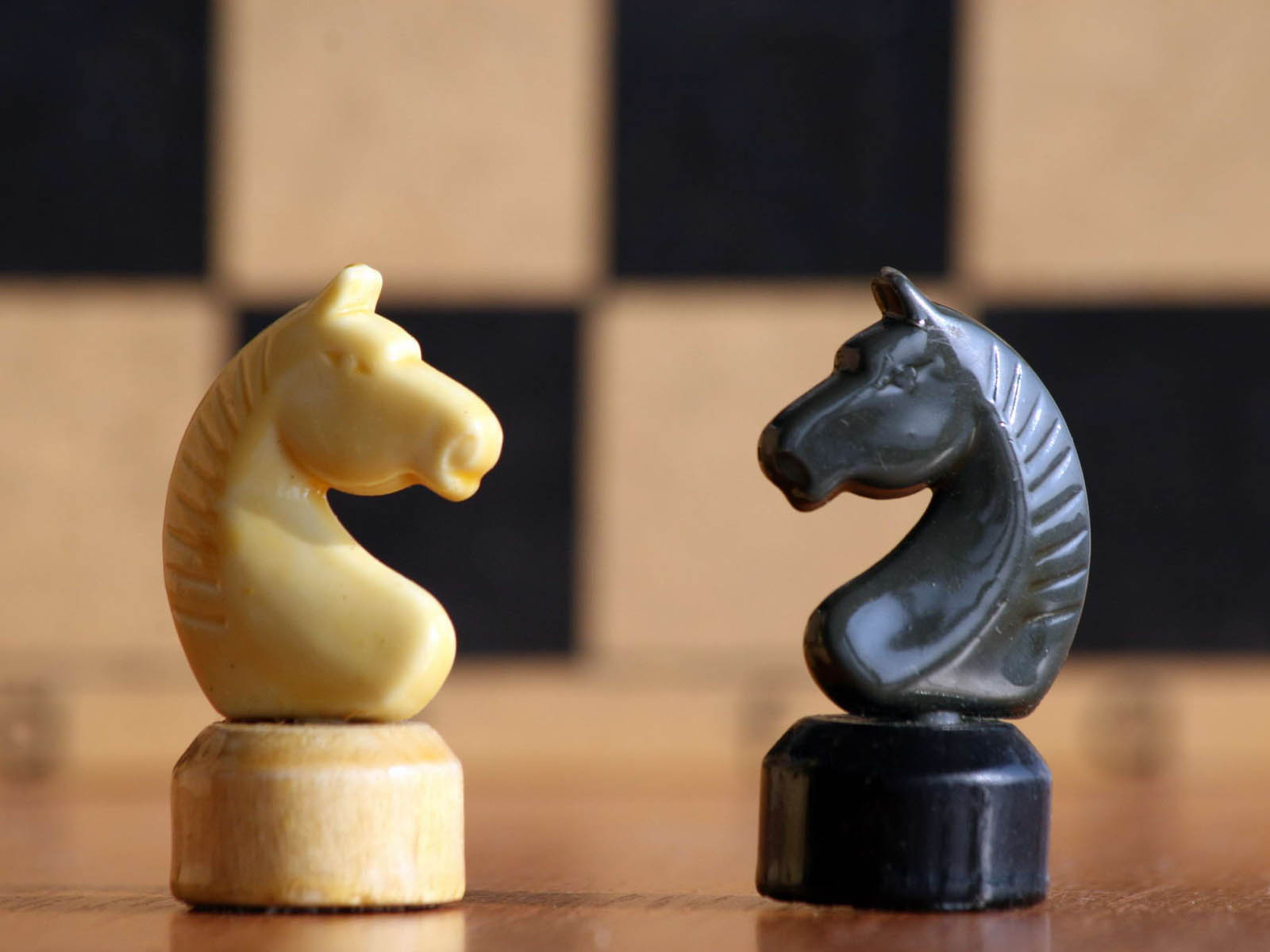
chess

We are limited beings who do attempt to make sense of our world and we have the gifts of perception and communication which help us to do that. Our perception allows us to see and experience the world and communication allows us to learn from the experiences and intuitions of others and our minds are not machines. We cannot, like Descartes wanted to do many years ago, separate our mind from our bodies and senses-they are real, the mind and body are integrated and even if a sense doesn’t work, for example in the case of a person who is unable to see or hear, we find other ways of perceiving and communicating about the world around us. We make a lot of assumptions and inferences about the world around us and we try to set up closed systems to make everything fit, but combined with this comfort that comes from certainty is the joy that comes with discovery. As we encounter the world and interact with others there will be times where we discover new connections and have to expand our system to make sense of the new ideas or images we encounter. Sometimes these new paradigms come from outside us, when we through communication or observation come into contact with another person’s or group’s way of explaining something. So for example a person who encounters Newton’s physics in high school which would explain gravity in terms of the attraction between two objects may later in their life encounter relativity theory where gravity is explained very differently and in a way that makes more sense given what we know about the universe and perhaps sometime later would encounter a completely new explanation. Yet, we don’t magically jump from one explanation to another on our own, the road to discovery is paved with numerous failed attempts and creative mistakes.

Jacob Bronowski uses the example of a chess player when he says:

“Why does one chess player play better than another?”The answer is not that the one who plays better makes fewer mistakes, because in a fundamental way the one who plays better makes more mistakes, by which I mean more imaginative mistakes. He sees more ridiculous alternatives. (Bronowski, 1978, p. 110f)

Yet, as a person who knows the rules of chess but has never studied the strategy of chess, I would not play a challenging game to a chess master because I don’t have enough information to make new imaginative mistakes. There is something to understanding the systems that are already existent and then being able to manipulate them, experiment with them and see where there may be new places to discover. In the process of manipulation and experimentation we come up with possible explanations or visualizations which most of the time are not true. This is not just in the realm of science, but also in the realm of art where it is true that there are more bad works of art than good ones. It takes a lot of attempts to become good at any art, and in the midst of the attempts we learn. Every great imaginative construct, whether it be in science or art, begins as an exploration of past errors. One of our greatest freedoms is the ability to learn from our mistakes rather than being defined by them.

purple rose 01 by picsofflowers.blogspot.com

The Gift of Self Reference and Necessary Imaginative Constructs

Mirror

As I mentioned at the beginning of the post Metaphors of Reality we try to make sense of ourselves, the world and (at least for those who think in spiritual or religious terms) God. But one of the struggles we have is that we never have a ‘God’s eye’ view of reality and that our view is always provisional. Unlike in the gospel stories which sometimes have an all seeing narrator (who for example sees what is going on in the temptation of Jesus) we are limited to the things we have experienced through our senses, the creative leaps we have made through our imagination and the constructs we have learned from our conversations with others. We take all these pieces of reality as we perceive them and try to decode our world and experiences “by a highly imaginative, creative piece of guesswork. But we finish with something that is only a gigantic metaphor for that part of the universe which we are decoding.” (Bronowski 1978, 70) We attempt to make sense of things and we construct systems that seem to make sense of the world with some things we are fairly certain of, others less so, and some just our best guess at the time. Sometimes there are things we believe that we cannot prove, that doesn’t mean they are not true-just that they cannot be proved. That is the reality of living in which our perception and knowledge are incomplete and bound by constraints and self reference.

One of the vanities of the modern (note I am talking modern as a category, not necessarily in terms of recent) philosophy that emerged in the 18th century in the wake of the Enlightenment was that it believed that it could penetrate reality and get to absolute truth. That for example if you could peel away the encrusted layers of tradition you could actually get back to the real history of what happened-and while there were many useful insights gained from this dedicated effort to get back to the facts as well as the dialogues that came out of different interpretations of the same data, but we never are truly free of self reference. For a lot of people this is looked upon primarily as an issue to be apologized for, but I want to suggest this is one of the things that allow creativity to thrive. In contrast to a computer which understands its inputs in terms of its coding and programming that when it encounters a novel experience that doesn’t fit within the world of its programming either creates an error or the computer ignores the anomaly, humans are able to integrate experiences in creative ways into their worldview. We are not limited by one set of constructs which we make sense of the world; instead humans are constantly experiencing and growing in our interaction with others and the world around us.

We need the imaginative constructs, the language and systems and science we learn from others to make communication possible, so for example within linear mathematics we can feel confident that 1 + 1= 2, or that in speech the letter ‘c’ will make certain sounds, or that in the world of Newtonian physics every action will have an equal and opposite reaction. We need laws, theorems and systems to make sense of the world, but these laws, theorems and systems are not absolute because there are times when we will experience things that do not make sense within the constructs we may have accepted. As Bronowski alludes to when he states, “The fact that we are content, when running into this kind of difficult, to reanalyze the system, to seek a new consistent formulation, is terribly important.” (Bronowski 1978, 87)Without the ability to seek a better system that makes sense of ourselves and our world we would be limited in our understanding to the knowledge and systems that were handed on to us. The experience is always in reference to the self, it is using our senses and our intellect to interpret that experience within the memory of our previous experiences and knowledge, and yet because of this self reference we are able to challenge external references and experiences. We seek consistency, we want things to make sense, but the experience that does not make sense for many is actually an exciting process of discovery. Let’s say, for example, that we had received a way of evaluating others passed down from our parents that, “blondes have more fun.” So long as our experience of people having blonde hair being fun people to be around holds up we might assume this random piece of a world to be true. Yet, once we encounter a person who has blonde hair who is not fun to be around we have several options of how we might proceed: we might challenge the assumption (are blondes really more fun?), we might wonder if this person is an exception to the rule (and the ability for there to be exceptions is also an imaginative leap), we might wonder if blonde is really their natural color (providing we understand that people can change their hair color) but the reality is that we will attempt to make sense of a disparity we have encountered. This is the way for example that prejudices may change when a person has experiences that challenge that prejudice, or new scientific discoveries are made when data doesn’t fit the previously assumed construct, or a new challenge presents itself based on technologies not previously available. Our ability to take in new challenges and experiences and in light of our knowledge and memory to make sense of them in a new way, even if it is only a creative piece of guesswork, and then see if this piece of guesswork seems to hold true is a part of the experimentation that opens new horizons in the imagination.

purple rose 01 by picsofflowers.blogspot.com


Metaphors of Reality

Newton by William Blake (1795)

Newton by William Blake (1795)

One of the sets of vows that is commonly used when I do weddings includes the words “to better understand ourselves, the world and God.” One of the things we do as humans with our language to better understand ourselves, the world and God is we attempt to describe objects and actions and their interactions. All of these words, symbols and ideas are constructed within a system to give meaning and sense to them, for example in the world of mathematics 1 + 1 = 2, if the rules of the system were different 1 +1 could equal a different number, but the rules that the system works within allow 1 + 1= 2 to be the correct answer while 1 + 1= 3 would not make sense within the system. The systems we understand the world within are attempts to describe the reality we observe and know, and yet they are always metaphors or propositions of reality. As Jacob Bronowski states:

I believe that all the kind of scientific descriptions that we can make about one another are perfectly real. And yet, I believe that any theory that we as human beings make at any point in time is full of provisional decodings which to some extent are as fictitious as the notion of force in Newton. (Bronowski, 1978, p. 58)

As Bronowski alludes to, Newton’s description of force, particularly the force of gravity where “the gravitational attraction is proportional to the mass of the two bodies divided by the square of the distance between some point in each mass.” Or in the symbolic language of science:

G=  k ( m m’) / r2

Which as a description of reality worked well in a system of Newtonian based physics, but when Albert Einstein published his first paper on relativity in 1905 it demonstrated the flaw in the concept and proposed a new way of describing the reality,  and yet even Einstein’s theory is no longer held to be an ultimate description of reality- yet both the work of Newton and Einstein and countless other scientists (just to stay within the scientific realm of creativity) work well for describing reality as it is encountered and it is only when we find exceptions to the rule where we begin to wonder what might cause these anomalies, is the way we have constructed reality inaccurate in some manner and we begin to wonder if perhaps there is some new way to understand the world our senses observe and to describe it so that others can encounter the world in a new way.

Science is not the only discipline that works this way, think for example in the realm of religion. At various point in history different metaphors have served as a dominant metaphor for understanding God. For example, at the beginning of the enlightenment where the clocks and watches were one of the most complicated pieces of technology available that most people would encounter in their world there was the common image of God as the clockmaker who constructed the world and then allowed it to run. It is not coincidental that this was a time in which deism was the primary philosophical tool for talking about God and the deist view of God was a God that was for the most part uninvolved in the day to day undertakings of the world. This is not the dominant picture of God today and there are a number of problems with this image, but it was how many religious people of that time tried to make sense of God in a way they could imagine.

Here I think is where the mystical tradition of talking about God can help us out: on the one hand there is the cataphatic tradition which in a positive manner says that our language can point to God while, on the other hand, there is the apophatic tradition which states that our language is never adequate to describe God. Moving back to our world and ourselves there is a sense in which our language describes reality, for example I can say that I have hazel eyes or that I am around 6’2” tall but ultimately my descriptions, even of myself, will never be completely adequate to convey all of who I am. Our understanding of the world around us is also provisional or metaphorical, that doesn’t mean it is incorrect-but it may not be complete. I think the French language has a helpful construct here with its two words that we can translate into the English ‘to know.’ The French word savior refers to knowing a fact, knowing how to do something or to know something by heart. The French word connaître refers to knowing a person or being familiar with a person or thing. There is a sense where we can know about and describe individual things but people, for example, are not reducible to a set of facts. We can describe others, ourselves, the world and even God, but that sense of knowing is always based upon our relation to those things and is in its own way contingent on the systems we understand them within. Each of these systems are really theories about the nature of the world and there may be times where we find our own metaphors of reality are inadequate and need to be reexamined as we attempt to make sense of our relationship to the reality we encounter.

purple rose 01 by picsofflowers.blogspot.com