Category Archives: Psalms

Psalm 102 The Song of One Suffering in Solitude

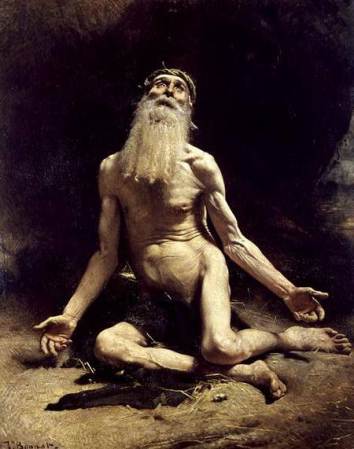
Job (oil on canvas) by Bonnat, Leon Joseph Florentin (1833-1922)

Psalm 102

A prayer of one afflicted, when faint and pleading before the LORD.
 1Hear my prayer, O LORD; let my cry come to you.
 2Do not hide your face from me in the day of my distress. Incline your ear to me; answer me speedily in the day when I call.
 3For my days pass away like smoke, and my bones burn like a furnace.
 4My heart is stricken and withered like grass; I am too wasted to eat my bread.
 5Because of my loud groaning my bones cling to my skin.
 6I am like an owl of the wilderness, like a little owl of the waste places.
 7I lie awake; I am like a lonely bird on the housetop.
 8All day long my enemies taunt me; those who deride me use my name for a curse.
 9For I eat ashes like bread, and mingle tears with my drink,
 10because of your indignation and anger; for you have lifted me up and thrown me aside.
 11My days are like an evening shadow; I wither away like grass.
 12But you, O LORD, are enthroned forever; your name endures to all generations.
 13You will rise up and have compassion on Zion, for it is time to favor it; the appointed time has come.
 14For your servants hold its stones dear, and have pity on its dust.
 15The nations will fear the name of the LORD, and all the kings of the earth your glory.
 16For the LORD will build up Zion; he will appear in his glory.
 17He will regard the prayer of the destitute, and will not despise their prayer.
 18Let this be recorded for a generation to come, so that a people yet unborn may praise the LORD:
 19that he looked down from his holy height, from heaven the LORD looked at the earth,
 20to hear the groans of the prisoners, to set free those who were doomed to die;
 21so that the name of the LORD may be declared in Zion, and his praise in Jerusalem,
 22when peoples gather together, and kingdoms, to worship the LORD.
 23He has broken my strength in midcourse; he has shortened my days.
 24“O my God,” I say, “do not take me away at the midpoint of my life, you whose years endure throughout all generations.”
 25Long ago you laid the foundation of the earth, and the heavens are the work of your hands.
 26They will perish, but you endure; they will all wear out like a garment. You change them like clothing, and they pass away;
 27but you are the same, and your years have no end.

 28The children of your servants shall live secure; their offspring shall be established in your presence.

Psalm 102 is described in its superscription as a prayer of one afflicted, when faint and pleading before the LORD. This type of description is unusual among the psalms. It doesn’t indicate an author to attribute the psalm to, nor does it give instructions for its performance or a reference to a scriptural story that the psalm comes from. This psalm of a suffering one who is alienated from their body, from society, and ultimately from God may have been intended as a psalm that any suffering individual could recite at times where their situation seemed hopeless, and God’s help seemed far away. Imagery of impermanence, loneliness, pain, and shame permeate the complaint of the psalm, but like many psalms of complaint there is a turn towards hope. The psalmist intuits that the answer, “to human finitude and mortality is divine infinitude and immortality.” (Nancy deClaisse-Walford, 2014, p. 754)

The opening language of the psalm resonates with appeals throughout the psalter as Rolf A. Jacobson notes:

The opening appeal to be heard employs language quite typical of these entreaties—hear my prayer, let my cry come unto you (39:12), do not hide your face (27:9; 143:7), turn your ear towards me (31:2; 71:2), make haste to answer me (69:17; 143:7) (Nancy deClaisse-Walford, 2014, p. 751)

Although Rolf Jacobson attributes this to intentionally creating a generic composition for use in the community, the use of familiar language may also reflect a person shaped in the communal worship which utilizes these psalms. The language of prayer and faith is shaped in the worshipping community which shaped the psalmist’s faith and life. Yet, now in a time when the author is alienated from their own physical body, from the community, and from God, they turn to the words that shaped their life when they were physically, socially, and religiously whole.

The psalm moves between personal complaints about their own health and isolation, “I complaints” in Westermann’s terminology, complaints about the actions of isolation and persecution by those in the psalmist’s society, “they complaints”, and complaints about the way that God is treating the psalmist, “you complaints.”[1] The personal complaints begin with an image of transience that reminds me of Ecclesiastes frequently used term hebel (vanity, emptiness). Hebel literally means smoke, mist, or vapor but is often used metaphorically to refer to the emptiness of life.[2] Now for the psalmist their days pass away like smoke and their bones burn like a furnace. Their life down to their very bones is going up in smoke while their heart withers like grass and they are too far gone to even eat the bread that could give them strength.  Their songs have turned to groans and their body now is transforming into a (barely) living skeleton. We don’t know if they were suffering from an illness, but they attribute their suffering to God’s judgment upon them. Their suffering is also done in isolation, they are like an unclean owl of the wastelands or a lonely bird on a roof. These lonely images of birds heighten the feeling of the psalm, for the sufferer is not only weak but they are abandoned.

The social complaints are also sharply worded as the psalmist’s unnamed name is synonymous with a curse among their enemies. Their personal weakness and isolation are viewed in the society as a curse from God, and enemies have taken advantage of this weakness. The only nourishment left for this abandoned one is the bread of ashes and the drink of tears.  Yet, behind both the physical pain and suffering and the social isolation is the LORD. We are never told of any sin that this poet has committed, but they view their suffering because of God’s anger and distance. In the words of the psalm God has cast the suffering one aside and yet hope resides in God repenting from God’s attitude towards the psalmist, turning the face and hearing with the ear and responding with grace and healing.

In contrast to the evanescent position of the psalmist is the strength and might of the LORD. The psalmist now joins his fate to the action of God to have compassion on Zion. It is possible that this psalm originates in the time of the exile where there is hope for the rebuilding of Zion and rescue the people from the destitute position as exiles in a foreign land. Yet, even without the context of the Babylonian exile, the turn to hope is based on the faithfulness of God for the people and a belief that God’s anger lasts only a moment, but God’s favor is for a lifetime.[3] The poet’s strength may have been broken in the middle of their life by God’s action, but if God wills it will be renewed. The heavens and the earth which seem so permanent to humanity are like a garment that can easily be changed by the powerful and permanent God. God will continue to endure and only in God can this suffering one hope to find a renewed physical, social, and religious life. The psalmist claims their familial bond to the LORD the God of Israel and now awaits the parental turning of their God to the children of God’s servants.


[1] Rolf A. Jacobson notes this helpful pattern citing Westermann, The Psalms (54-57). (Nancy deClaisse-Walford, 2014, p. 752)

[2] Psalm102 does not use the term hebel but the combination of words of impermanence create a similar resonance for me as Ecclesiastes.

[3] Psalm 30:5.

Psalm 101 A Leader Shaping a Community of Character

The Presentation of the Torah By Édouard Moyse – Own work Musée d’art et d’histoire du Judaïsme, CC BY-SA 4.0, https://commons.wikimedia.org/w/index.php?curid=41893002

Psalm 101

Of David. A Psalm.
 1I will sing of loyalty and of justice; to you, O LORD, I will sing.
 2I will study the way that is blameless. When shall I attain it? I will walk with integrity of heart within my house;
 3I will not set before my eyes anything that is base. I hate the work of those who fall away;
 it shall not cling to me.
 4Perverseness of heart shall be far from me; I will know nothing of evil.
 5One who secretly slanders a neighbor I will destroy. A haughty look and an arrogant heart
 I will not tolerate.
 6I will look with favor on the faithful in the land, so that they may live with me; whoever walks in the way that is blameless shall minister to me.
 7No one who practices deceit shall remain in my house; no one who utters lies shall continue in my presence.
 8Morning by morning I will destroy all the wicked in the land, cutting off all evildoers from the city of the LORD.

As modern readers we tend to read the psalms individualistically, and from that perspective this psalm can sound judgmental. “Do not judge, so that you may not be judged”[1] may resonate with many modern readers but if we read the psalm from this perspective, we fundamentally have missed the point of this psalm written for or by a ruler in a communal society. I am heavily influenced by Charles Taylor’s description of society prior to our disenchanted view of the world, and I think his description of the community or parish deploying the collective power of its prayers, worship, and faith for blessing and protection is instructive here. In Taylor’s words, “Villagers who hold out, or even denounce the common rites, put the efficacy of these rites in danger, and hence pose a menace to everyone.” (Taylor, 2007, p. 42) Especially after working through the prophet Ezekiel, it is clear that the Hebrew view of the world in relation to God expects a society of justice and a ruler who enforces the character of the world that God’s law articulates. The king in Jerusalem, and leaders throughout history have been responsible for checking the selfish impulses of those who have the power to exploit others. Allowing injustice to take root in their kingdom quickly corrupts not only the individual practicing the injustice but the entire society.

This is a psalm of loyalty (hesed)[2] and justice, two primary characteristics of God that are to be embodied in the community of the faithful. Throughout this psalm the ideas of being blameless and having integrity translate the Hebrew terms tam and tamim.[3] This psalm is a royal psalm, and so the one studying the way of blamelessness (tamim) likely points to the ideal of a king articulated in Deuteronomy 17:14-20. Yet, the king can acknowledge that their practice of these ideals of loyalty and justice and the way of blamelessness are still aspirational.

The leader aspires to walk with integrity of heart and to keep its opposite, perverseness in heart, far from them. The metaphor of walking (halak) is often used in Hebrew about the way one lives one’s life. Halakah is a term commonly used to talk about the law and one’s life is to be oriented around the practices outlined in the law of God. In addition, the heart in Hebrew thought is not the seat of emotion, but the seat of will and discernment. This leader’s life and will are set upon God’s way for the community and not on the way that will enrich themselves or allow them to accrue more power. This leader in following God is walking in God’s way, learning to set their heart on the things of integrity and justice, and their character is shaped by the God they serve.

The character of the leader shapes the character of the community. One of the critical acts of leading a community is setting boundaries that protect those under the leader’s authority. Those who slander a neighbor, who are haughty and arrogant and feel they are above the law, who practice deceit and utter lies undermine the ethos the leader is attempting to cultivate. The leader seeks the way of loyalty and justice, a blameless way that models the character of God, and the presence of those who follow the path of wickedness, deceit and injustice are a danger to the life of the community.

James Mays notes that Martin Luther called this psalm, “the mirror of a monarch” and relates the story of Ernest the Pious, Duke of Saxe-Gotha who would send an unfaithful minister a copy of the 101st Psalm when that official had done anything wrong. (Mays, 1994, pp. 321-322) A leader who models their leadership on the loyalty and justice of God, who strives to study the way that is blameless and walk in integrity of heart was unusual both in biblical times and in our own time. Yet, it is path that the way of God expects for those entrusted with power in family, land, city, congregation, or the world. The things we invest in with both our resources and our actions show where our heart is located. As Jesus would state in the Sermon on the Mount, “where your treasure is, there your heart will be also.”[4] The life of faith is not merely a quest for individualistic righteousness, but to shape a community of loyalty and justice that seek the way of blamelessness and walk in integrity. Both Hebrew and Christian communities have often fallen short of the vision of this psalm, but leaders can call the community together to this of life shaped by the character of the God we attempt to follow. Communities that are in the heart shaping business of studying the way that is blameless and modeling walking with integrity.


[1] Matthew 7:1.

[2] Hesed is one of those rich Hebrew concepts that loses richness in translation. It is often translated as steadfast love in English. I am partial to ‘covenantal faithfulness’ as a translation of this term but it almost always points to the connection between God and God’s people. A Christian/New Testament term that is heavily related to God’s hesed is grace.

[3] See my discussion on Perfection and Blamelessness in the Bible.

[4] Matthew 6:21.

Psalm 100 Know the LORD is God and We are God’s

James Tissot, Solomon Decicates the Temple (1896-1902)

Psalm 100

<A Psalm of thanksgiving.>
1 Make a joyful noise to the LORD, all the earth.
2 Worship the LORD with gladness; come into his presence with singing.
3 Know that the LORD is God. It is he that made us, and we are his; we are his people, and the sheep of his pasture.
4 Enter his gates with thanksgiving, and his courts with praise. Give thanks to him, bless his name.
5 For the LORD is good; his steadfast love endures forever, and his faithfulness to all generations.

This short psalm of thanksgiving centers the actions of praise around the knowledge that the LORD is God and the peoples’ relation to their creator and shepherd. It echoes the concern of the Shema (Deuteronomy 6:4-5) and the first commandment (Exodus 20: 2-3, Deuteronomy 5: 6-7) that the people of Israel would know that the LORD is God alone and their role is to know, serve and belong to their God. The movement of the psalm is centered around seven imperatives: shout (NRSV make a joyful noise), serve (NRSV worship), come, know, come (NRSV enter), testify (NRSV give thanks), and bless. Poetically the repetition of come (obscured in the NRSV translation) focuses the hearer on what is bracketed in between: the command to know that the LORD is God and that the hearers are a part of his people. (Nancy deClaisse-Walford, 2014, p. 736) In response to the knowing the people are enabled to enter into the presence of God’s courts to bring praise and blessing.

Knowing is not just about knowledge of the LORD’s identity in Hebrew thought, it also involves acknowledgment that the community belongs to God and depends upon God. To be autonomous (one’s own law) in a Hebrew way of thinking is to be wicked. The statement that they are the LORD’s people and the sheep of his pasture focus the hearers on their God’s personal responsibility in overseeing the people of Israel. [1]  Although at times there may be an earthly king who rules on behalf of the LORD, when those kings prove to be unfaithful shepherds the LORD removes those shepherds and becomes their shepherd who guides, protects, and keeps them. Their maker and protector is good (echoing the language of creation in Genesis) and provides steadfast love (hesed) and faithfulness (emuna) two of the characteristics of God’s self-revelation to Moses.[2]

The life of praise is a life of service to the LORD. A person who comes to the courts of God is also expected to know that the LORD is their God, their creator and protector. The response to that knowledge is doxology (giving thanks). It is a life that acknowledges one’s dependance upon the LORD. Psalm 100 makes a bold claim for a life of praise, service, and thanksgiving to God in a world that seems to serve many gods. The psalmist points to a life centered on the knowledge of God and praise filled obedience to God’s ways.

[1] See for example Psalm 74:1, 79:13, 95:7, Jeremiah 23:1-4, Ezekiel 34:11-22

[2] Exodus 34: 6-7

Psalm 99 The Universal King Worshipped By A Particular People

The Temple by Radojavor@deviantart.com

Psalm 99

1 The LORD is king; let the peoples tremble! He sits enthroned upon the cherubim; let the earth quake!
2 The LORD is great in Zion; he is exalted over all the peoples.
3 Let them praise your great and awesome name. Holy is he!
4 Mighty King, lover of justice, you have established equity; you have executed justice and righteousness in Jacob.
5 Extol the LORD our God; worship at his footstool. Holy is he!
6 Moses and Aaron were among his priests, Samuel also was among those who called on his name. They cried to the LORD, and he answered them.
7 He spoke to them in the pillar of cloud; they kept his decrees, and the statutes that he gave them.
8 O LORD our God, you answered them; you were a forgiving God to them, but an avenger of their wrongdoings.
9 Extol the LORD our God, and worship at his holy mountain; for the LORD our God is holy.

Psalm 8 can wonder, “what are human beings that you are mindful of them, mortals that you care for them?” and Psalm 99 can focus that wonder on a particular place and people through whom the world comes to know the ruler of the heavens and earth. The LORD is the one before whom all nations tremble and the earth shakes, but whose universal sovereignty is focused on a particular place: the temple in Zion. The description of God being enthroned above the cherubim almost always refers to the ark of the covenant (1 Samuel 4:4, 2 Samuel 6:2, Psalm 80:1) and the references to Zion and holy mountain indicate that the psalm is pointing to the temple in Jerusalem. Even the notation of God’s footstool also refers to the temple as a resting place for the ark (1 Chronicles 28:2, Psalm 132:7). God presence and power becomes known through a particular place.

At the same time the psalm links the knowledge of God to a holy place, it also becomes known through holy people. Book four of the psalter began with Psalm 90, the only psalm attributed to Moses, and it is likely intentional that the final enthronement psalm references Moses once again. Moses and Aaron are lifted up as priests of God, and they are responsible for the construction of the ark where God’s presence is met. Samuel is the other figure lifted up in the psalm, who also harkens back to pre-monarchic Israel. Samuel opposed the people’s request for a king because for Samuel only the LORD is king, a sentiment echoed by Psalm 99. It is possible that Psalm 99 comes from a time after the re-establishment of the temple in Jerusalem after the exile, a time when the line of Davidic kings seems to have ended.

The paradox of the psalmist’s faith is that the LORD the God of Israel is the universal king over all the earth and peoples who has revealed Godself through a particular place (the temple in Zion) and through particular people (Moses, Aaron, and Samuel in the psalm). Yet, the psalm yearns for a universal realization that transcends the particularity of Israel. Israel has the privileged position of being the people to whom the Mighty King revealed not only himself but also the vision of justice and righteousness that God’s kingdom would involve. So, in response to the universal wonder of Psalm 8, Psalm 99 can give the particular wonder of a people who says, “Who are we that the Mighty King, the lover of justice who establishes equity throughout the earth dwells in the temple on our holy mountain, and spoke to use through Moses, Aaron, and Samuel, Israel that you care for us?”

Psalm 98 A Joyous Song of God’s Salvation

Statue of Watts, Abney Park Cemetery


Psalm 98

<A Psalm.>
1 O sing to the LORD a new song, for he has done marvelous things. His right hand and his holy arm have gotten him victory.
2 The LORD has made known his victory; he has revealed his vindication in the sight of the nations.
3 He has remembered his steadfast love and faithfulness to the house of Israel. All the ends of the earth have seen the victory of our God.
4 Make a joyful noise to the LORD, all the earth; break forth into joyous song and sing praises.
5 Sing praises to the LORD with the lyre, with the lyre and the sound of melody.
6 With trumpets and the sound of the horn make a joyful noise before the King, the LORD.
7 Let the sea roar, and all that fills it; the world and those who live in it.
8 Let the floods clap their hands; let the hills sing together for joy
9 at the presence of the LORD, for he is coming to judge the earth. He will judge the world with righteousness, and the peoples with equity.

Isaac Watt’s well known Christmas song “Joy to the World” is inspired by Psalm 98, (Mays, 1994, p. 312) although instead of heaven and nature singing as in “Joy to the World”, the seas and the nations sing in the text of the psalm. The appropriate response of the people of God, the nations of the earth, and the elements and residents of the waters to the victory (or salvation)[1] of God is the boisterous music of praise and worship. The vocal and instrumental music of humanity joins with the harmonic and percussive notes of the earth and the land. The approach of the LORD the God of Israel to judge the world with righteousness and the peoples of the earth with equity is a moment of celebration for all the earth. The faithful ones are the sentinels announcing to the peoples of the world that the time has come to join in the song of creation as the marvel and salvation of God.

The salvation of God and the reign of God’s righteousness is a moment of joyous expectation for all of creation. The house of Israel has experienced God’s steadfast love[2] and faithfulness, but all the nations of the earth also witnessed God’s salvation and the creation itself responds in joy. As Ellen Davis can state,

Judgment is the positive and passionate assertion of God’s will for the world, beginning with the deep foundation of God’s rule in the human heart; therefore, it gives no quarter to deception and self-delusion. (Nancy deClaisse-Walford, 2014, p. 728)

The faithful ones know the internal dimension of God’s reign in their lives and yearn for the revelation of God’s reign in the world seen across governments and nations. Yet, the longing of the faithful is also the longing of the creation for God’s judgement which brings God’s kingdom to earth, so the ways of steadfast love and faithfulness experienced in the heavens may be done on earth. The only response is the joyous song of lyre, trumpet and voice joining the collection of the sounds of the sea, the rains, and the hills. Nature joins the song of heaven and both the faithful and the wicked bear witness to the moment when heaven and nature sing along with the upraised voices of people throughout the world.

[1] The Hebrew verb ysh is typically translated salvation and it occurs in each of the first three verses (victory in NRSV’s translation).

[2] Hebrew hesed.

Psalm 97 The Righteous Reign of God

Supercell Thunderstorm over Chaparral, New Mexico on April 3, 2004

Psalm 97

1 The LORD is king! Let the earth rejoice; let the many coastlands be glad!
2 Clouds and thick darkness are all around him; righteousness and justice are the foundation of his throne.
3 Fire goes before him, and consumes his adversaries on every side.
4 His lightnings light up the world; the earth sees and trembles.
5 The mountains melt like wax before the LORD, before the Lord of all the earth.
6 The heavens proclaim his righteousness; and all the peoples behold his glory.
7 All worshipers of images are put to shame, those who make their boast in worthless idols; all gods bow down before him.
8 Zion hears and is glad, and the towns of Judah rejoice, because of your judgments, O God.
9 For you, O LORD, are most high over all the earth; you are exalted far above all gods.
10 The LORD loves those who hate evil; he guards the lives of his faithful; he rescues them from the hand of the wicked.
11 Light dawns for the righteous, and joy for the upright in heart.
12 Rejoice in the LORD, O you righteous, and give thanks to his holy name!

One of the losses of our modern, technology filled world is the patient hope of the psalmist and the prophets for the arrival of God’s kingdom. James L. Mays notes that Psalm 97 shares several key images and ideas with the portions of Isaiah most scholars attribute to Judah’s time in exile.[1] (Mays, 1994, p. 311) The psalmist’s proclamation of God’s reign causing the earth, Judah, and the righteous to rejoice were always contested claims. Israel and Judah lived in a world of multiple religious options and empires who exercised military, economic, and political might over Israel or Judah. Yet, the psalms and the prophets exhibit a persistent faith that despite the evidence to the contrary the God of Israel reigns over creation, is chief among the gods of the nations, and continues to sow joy and righteousness in the upright in heart. It is only through the eyes of faith that these poets can rejoice with the earth and the coastland because their vision has revealed to them that the LORD, the God of Israel and Judah, is king.

The vision of God in the psalms and the prophets may, as Brueggemann and Bellinger comment, retain the “remnants of a storm god.” (Brueggemann, 2014, p. 418) but as in Psalm 29 the use of the language of clouds and darkness, fire, lightning, and earthquake takes the primary language for the power of the Canaanite god Baal and now uses it to describe the power of the LORD the God of Israel. This imagery also resonates with the appearance of the LORD to the people at Mount Sinai in Exodus 19:16-19. The psalmist longs for the day for all the people to see what the eyes of faith trust: that the idols of the nations are worthless, that the kings of the earth and the gods of the nations are powerless before the LORD who is king, and that the power of the wicked over the faithful will end as God rescues them.

God’s righteousness and justice are the foundation of God’s throne, and they are also the foundation for the hopeful imagination of the psalmist. The heavens can proclaim God’s righteousness and the people of Judah can find reasons for rejoicing and gladness because of God’s judgments. Because God’s reign is based on righteousness it opens the possibility that people in Judah and beyond the borders of Judah can live as righteous ones rather than adopting the ways of the wicked. The response throughout the poem to the righteousness and justice of God is joy and gladness. The earth can rejoice, and the coastlands can be glad because the creation bears witness to the just reign of God. Zion can be glad, and the towns of Judah can rejoice because God judges with righteousness. The ones loving the LORD will hate evil[2] and God will guard their lives and sows[3] light and joy in these faithful ones of upright hearts. These righteous ones planted with light and joy in the rejoicing earth now join the earth’s joy at the celebration of God’s reign.

[1] See for example Isaiah 40: 5, 9-11; 42:17, and 52: 7-10

[2] In both the MT (Hebrew) and LXX (Greek translation) the direct translation is “The ones loving the LORD hate evil” as the NIV captures. The NRSV follows the translation of scholars who in their attempt to smooth our the translation change the subject to God, but there is no reason to make this change to the original text. (Nancy deClaisse-Walford, 2014, p. 724)

[3] Some change this word to a similar Hebrew word for ‘rise, shine’ (hence the NRSV translation) but the metaphor of sowing light fits with the imagination of the psalmist. (Nancy deClaisse-Walford, 2014, p. 724)

Psalm 96 A New Song of God’s Triumph

Psalm 96

1 O sing to the LORD a new song; sing to the LORD, all the earth.
2 Sing to the LORD, bless his name; tell of his salvation from day to day.
3 Declare his glory among the nations, his marvelous works among all the peoples.
4 For great is the LORD, and greatly to be praised; he is to be revered above all gods.
5 For all the gods of the peoples are idols, but the LORD made the heavens.
6 Honor and majesty are before him; strength and beauty are in his sanctuary.
7 Ascribe to the LORD, O families of the peoples, ascribe to the LORD glory and strength.
8 Ascribe to the LORD the glory due his name; bring an offering, and come into his courts.
9 Worship the LORD in holy splendor; tremble before him, all the earth.
10 Say among the nations, “The LORD is king! The world is firmly established; it shall never be moved. He will judge the peoples with equity.”
11 Let the heavens be glad, and let the earth rejoice; let the sea roar, and all that fills it;
12 let the field exult, and everything in it. Then shall all the trees of the forest sing for joy
13 before the LORD; for he is coming, for he is coming to judge the earth. He will judge the world with righteousness, and the peoples with his truth.

Psalm 96 is an exultant song of God’s glory and reign over all gods, nations, and the creation itself. 1 Chronicles 16 places the majority of this psalm within the song of thanksgiving appointed by David (1 Chronicles 16: 23-33) which marks the placing the placing of the ark of God in the tent. This psalm might have its origin in the songs of David, and its placement in 1 Chronicles creates an event that would make sense for this song of God’s triumphant ascension. However, this psalm also articulates the defiant faith of the chosen people in their God as they attempt to remain faithful in a multireligious world where they are not dominant among the nations. This new song allows the singers and hearers to articulate a vision of a world already giving glory and praise to the LORD who is enthroned over all gods and kings.

Three times the hearers are commanded to sing to the LORD, and the hearers are not limited to Judah or Israel. All the earth is to join in this song of blessing to the God of salvation. The song proclaims the gospel[1] that God has triumphed over the forces that opposed God’s reign. God’s works and glory are to extend to all the nations as the LORD transcends all the gods of the nations. The gods of the nations are ‘idols’ (NRSV), ‘nobodies’ ( (Brueggemann, 2014, p. 415) or ‘ineffective and incompetent.’ (Mays, 1994, p. 308) The LORD is the creator of the heavens compared to all the ineffective and incompetent nobodies who the nations once gave their allegiance to. The peoples and families of the earth are to bear witness to the glory and strength that is due to God. The nations are to stream to Jerusalem to bring an offering before God as the prophets envision. (Isaiah 2: 2-3, Micah 4: 1-2, Zechariah 8:21-23) The temple of God in Zion now occupies the central place in the world where all the families of the peoples come together in awe filled worship and celebration of the God who reigns over all the heavens and the earth.

God’s reign over the earth is to be a reign of justice that brings joy to the peoples of the earth and to the creation. The heavens, the sea, and the land all join in this praise of the nations. Those who have reigned with injustice, whose actions have done violence to people and the earth are now removed so the nations, the land, the sea, and the sky can all heal. The psalm envisions God’s kingdom coming and God’s will being done on earth as it is in heaven.

The faithful ones who worship God declare God does reign over the earth and then enter into the tension of a world where God’s reign is not realized. Injustice continues to occur. The heavens, sea, and the earth are polluted by those who improperly use the gifts of creation and the blood spilled in conflict and war. The nations continue to give their allegiance to idols that are ineffective nobodies who cannot deliver what they promise. This psalm may be easier to sing in moments of triumph, but the defiant faith of this psalm bears witness to the world of the reality faith allows them to see: that God’s kingdom is already present in the midst of the world and the time will come when the nations will all see, worship, and give glory to the God who reigns over the heavens and the earth.

[1] The Hebrew bissar is the verb “for the duty of the herald who precedes a victor to bring a report to those who await good news from the battle.” (Mays, 1994, p. 308) This verb is normally translated in the Septuagint as the Greek euangelion translated as gospel in the New Testament.

Psalm 95 Lifting Up Voices and Listening in Silence

Pieter de Grebber, Moses Striking the Rock (1630)

Psalm 95

1 O come, let us sing to the LORD; let us make a joyful noise to the rock of our salvation!
2 Let us come into his presence with thanksgiving; let us make a joyful noise to him with songs of praise!
3 For the LORD is a great God, and a great King above all gods.
4 In his hand are the depths of the earth; the heights of the mountains are his also.
5 The sea is his, for he made it, and the dry land, which his hands have formed.
6 O come, let us worship and bow down, let us kneel before the LORD, our Maker!
7 For he is our God, and we are the people of his pasture, and the sheep of his hand. O that today you would listen to his voice!
8 Do not harden your hearts, as at Meribah, as on the day at Massah in the wilderness,
9 when your ancestors tested me, and put me to the proof, though they had seen my work.
10 For forty years I loathed that generation and said, “They are a people whose hearts go astray, and they do not regard my ways.”
11 Therefore in my anger I swore, “They shall not enter my rest.”

Psalm 95 is a psalm which invites the hearer to move with the faithful into a noisy and jubilant time of worship which then is silenced so that God (or a prophet or priest speaking for God) can instruct the people in obedience. The life of worship and a life of obedience are linked here as it is frequently in the psalms and prophets. God in this psalm is the great God who reigns over all gods, is the master and creator of the earth and sea, and the one to whom the faithful owe their obedience. History and the memory of the disobedience of their ancestors becomes the invitation for the current generation to respond with obedience.

The first word of this psalm is the imperative form of the Hebrew halak[1] (to walk) and it impels the people to get moving to meet God in celebration and worship. Yet, within the command to move is also an allusion to a way of walking that is in accordance with God’s commandments and within the movement of the psalm is both the uplifted voices of the worshipping faithful but also the lives of obedience which listen to the voice of God. The invitation to ‘sing’ and ‘make a joyful noise’ while familiar in English are not as strong as the Hebrew verbs which they translate.[2] This is not a timid action of worship but instead is a community in full voice shouting and singing to their God and King. The praise of God echoes the sentiment of Psalm 24, where the earth is the LORD’s and all that is in it. The worldview of the psalms assumes the pluralistic world where the surrounding nations worship other gods, but the LORD is the sovereign over both the gods of the nations and the earth itself. The faithful come in jubilant acclamation to worship, bow down, and kneel before the God who is their maker, their king, and their shepherd who provides shelter and pasture for them. The movement and the noise climax in this acclamation and prepares the people for the time of silence that they may hear the words from their God (or God’s messenger).

The second movement of the psalm begins in the second half of verse seven with the command to listen. The congregation is to move from full voice to silence and from motion to stillness. The command to listen is the Hebrew shema which is the critical verb at key points in the declaration of the law:

Now therefore, if you obey (shema) my voice and keep my covenant, you shall be my treasured possession our of all the peoples. Indeed the whole earth is mine, but you shall be for me a priestly kingdom and a holy nation. These are the words that you shall speak to the Israelites.”  Exodus 19:5-6 (immediately before consecrating the people and receiving the commandments)

Hear (shema) O Israel: The LORD is our God , the LORD alone. You shall love the LORD your God with all your heart, and with all your soul, and with all your might. Deuteronomy 6: 4-5[3]

Hearing or listening in Hebrew is not merely listening to the words but also involves living in response to the words. Lifting up praise to God in full voice without hearing and obeying God’s commands is often condemned in the psalms and prophets[4] and here the actions of the people of Israel at Meribah and Massah (Exodus 17: 1-7; Numbers 20: 1-13) are used as an example of the high cost of disobedience. The inability of their ancestors to listen is remembered as the reason for the long journey in the wilderness and the inability of the first generation that left Egypt to enter their rest in the promised land. The relationship between God and the people of Israel is a covenantal relationship which requires obedience. If the people will listen and obey then God will provide for them in the land, but if they do not hear and obey then they may end up without God’s guidance and blessing.

The two parts of the psalm, the movement and raucous noise and the obedient silence and reverential hearing, belong together. The faithful should move to the place where they can praise God in full voice in a jubilant and joyful way, but we must also remember that God desires our obedience. As Beth Tanner can state truthfully, “In worship today, God can be seen as too friendly, too nice, and too forgiving. We can easily forget the great power of the King God.” (Nancy deClaisse-Walford, 2014, p. 718) The previous psalm reminded us, “Happy are those whom you discipline, O LORD, and whom you teach out of your law,” (Psalm 94: 12). Now Psalm 95 uses the story of the people of Israel as an illustration of the dangers when the people refuse to follow God’s way of walking. The life of the faithful is one of coming (walking, halak), hearing (shema), and living in obedience to the ways of God in both jubilant worship, silent listening, and faithful living.

[1] Halak is an important word in Hebrew. Halakha which derives from halak is the collective body of the Hebrew laws (both oral and written) and it means ‘the way of walking.’ This movement at the beginning of the psalm is both the physical motion to the place of worship and the way of walking in accordance with God’s will.

[2] Ranan and rua in the intensified piel form mean to “call loudly” and “lift up a war-cry or cry of alarm.” (Nancy deClaisse-Walford, 2014, p. 716)

[3] Deuteronomy 6: 4-5 has a central place in the practice of the Jewish people and this entire command is often called the shema because of the command to ‘hear.’

[4] See for example Psalm 50, 81, Isaiah 1, and Amos 5: 21-24

Psalm 94 Thy Kingdom Come

Marc Chagall, Solitude (1933)

Psalm 94

1 O LORD, you God of vengeance, you God of vengeance, shine forth!
2 Rise up, O judge of the earth; give to the proud what they deserve!
3 O LORD, how long shall the wicked, how long shall the wicked exult?
4 They pour out their arrogant words; all the evildoers boast.
5 They crush your people, O LORD, and afflict your heritage.
6 They kill the widow and the stranger, they murder the orphan,
7 and they say, “The LORD does not see; the God of Jacob does not perceive.”
8 Understand, O dullest of the people; fools, when will you be wise?
9 He who planted the ear, does he not hear? He who formed the eye, does he not see?
10 He who disciplines the nations, he who teaches knowledge to humankind, does he not chastise?
11 The LORD knows our thoughts, that they are but an empty breath.
12 Happy are those whom you discipline, O LORD, and whom you teach out of your law,
13 giving them respite from days of trouble, until a pit is dug for the wicked.
14 For the LORD will not forsake his people; he will not abandon his heritage;
15 for justice will return to the righteous, and all the upright in heart will follow it.
16 Who rises up for me against the wicked? Who stands up for me against evildoers?
17 If the LORD had not been my help, my soul would soon have lived in the land of silence.
18 When I thought, “My foot is slipping,” your steadfast love, O LORD, held me up.
19 When the cares of my heart are many, your consolations cheer my soul.
20 Can wicked rulers be allied with you, those who contrive mischief by statute?
21 They band together against the life of the righteous, and condemn the innocent to death.
22 But the LORD has become my stronghold, and my God the rock of my refuge.
23 He will repay them for their iniquity and wipe them out for their wickedness; the LORD our God will wipe them out.

James L. Mays begins his comments on this psalm by quoting a line from Maltbie D. Babcock’s song “This is my Father’s world”: “Though the wrong seems oft so strong, God is the ruler yet.” (Mays, 1994, p. 302) The opening line of the psalm names God as the God of vengeance, and yet God’s vengeance is necessary to avenge the wrongs done to the vulnerable and powerless who suffer in an unjust society. Because of this beginning this is sometimes called a psalm of vengeance, yet it is important to realize this vengeance is an action to restore society and to undo the work of those who utilize their positions of power to oppose God’s justice on earth and to oppress the ones God promised to defend. Much as the petitions in the Lord’s Prayer call for “God’s kingdom to come and God’s will to be done on earth as it is in heaven,” this psalm calls on God to act in concrete and visible ways to repair a society that has become controlled by those who have abandoned the ways of the covenant righteousness.

The proud and wicked have prospered in the society the psalmist lives in and they have turned the dream of a just society on its head. They have killed and oppressed the widow, the stranger, and the orphan who God has promised to protect, and who the leaders who work on God’s behalf are to ensure justice for. These arrogant evildoers perceive that they are not bound by the requirements of the law for the God of Israel has not acted to judge them. In their view, “without God everything is possible.” (Brueggemann, 2014, p. 407) These wicked ones view the LORD the God of Israel as either unwilling or unable to respond to their actions which violate God’s command, oppress the vulnerable among God’s people, and threaten God’s own heritage.

The psalmist testifies to the tension of an unjust present and a life in hopeful expectation of God’s intervention in the world. In the present the wicked are prospering and crime does pay. (NIB IV: 1019) To challenge this honest observation of the present the psalmist relies on the language of the wisdom tradition in scripture. The proud, arrogant, wicked evildoers who profit by oppressing and murdering the vulnerable and believe that God does not see or hear about their actions are foolish. The wise are glad to be disciplined by God and God’s law, but the foolish will ultimately perish. They may prosper in the moment, but that moment is an empty breath.[1] Yet, even though their time in power may be short the threat to the vulnerable is acute and needs God’s intervention.

In the meantime, the psalmist also testifies to the ways God has continued to provide respite and protection for the faithful ones in the midst of injustice. In times where their feet were slipping, God held them fast. When their worries were great God provided consolation. Without God’s protection they would dwell in the silence of the dead. These actions of God may not have brought about the fullness of God’s kingdom for the psalmist, but they have been the necessary provision and protection in their time of waiting and the actions which renewed their hope for God’s intervention which they trust is coming.

For people of faith a part of the desire for God to reign as king comes from the experience of injustice in this world and the desire for the God of vengeance to bring God’s justice to those who exploit God’s people and God’s world. When wicked people sit in the positions of power and the laws and statutes that should provide protection have become warped and utilized to oppress, the faithful cry out for God’s reign and God’s vengeance to create a society where the vulnerable are protected and justice prevails. (Mays, 1994, p. 303) The work of the wicked is a concrete and visible reality in the world of the psalmist and the cry of the psalmist is not for some otherworldly deliverance from the toils of this earth. The psalmist demands the judge of the earth to rise up and cause justice to return to the righteous. The prayer is for God’s justice to be a concrete and visible reality which displaces the injustice of the world.

[1] This is the Hebrew hebel which is translated as vanity in Ecclesiastes. The word means ‘vapor, mist, or emptiness.’ It is an evanescent word which points to the impermanence of the object it describes.

Psalm 93 God the King

Stained Glass window at the Melkite Catholic Annunciation Cathedral in Roslindale, MA depicting Christ the King with the regalia of a Byzantine Emperor


Psalm 93

1 The LORD is king, he is robed in majesty; the LORD is robed, he is girded with strength. He has established the world; it shall never be moved;
2 your throne is established from of old; you are from everlasting.
3 The floods have lifted up, O LORD, the floods have lifted up their voice; the floods lift up their roaring.
4 More majestic than the thunders of mighty waters, more majestic than the waves of the sea, majestic on high is the LORD!
5 Your decrees are very sure; holiness befits your house, O LORD, forevermore.

This short psalm focused on the image of God as king makes explicit one of the assumptions of the psalter and the bible as a whole. Underneath the praise, lament, prayers, and appeals of the psalter is the understanding of God’s position of sovereignty and strength in relation to the people of God, the nations, and the world itself. God is able to respond because God is the sovereign over all creation. The God who is over all gods and who is the creator to whom the creation gives praise is also the object of the worship and the source of hope for the people of is the God. They confess that this God reigns in majesty and strength from everlasting.

The sovereignty of God is not linked to the king of Israel or Judah as in Psalm 2 and it is possible that this psalm emerges in a time where there is no earthly king who is entrusted with authority on behalf of God. In both Christianity and Judaism, “the reign of God is always proclaimed amid circumstances that seem to deny it.” (NIB IV: 1055) No matter the political situation the person proclaiming this psalm finds themselves within, the confession of God’s continuing reign over creation, the nations, and the world becomes a bedrock for the faith of the community. God’s decrees remain established and no floods or crashing waves can wash them away. No rulers or gods can rival God’s sovereignty.

Proclaiming God’s sovereignty in the midst of a secular world is an act of faith and defiance. It is only through the eyes of faith that the faithful one can witness the forces of creation giving praise to God. There may be moments where the reign of God is clearly visible to the faithful, but it often remains hidden by ‘circumstances that seem to deny it.’ Yet, the bedrock trust that God remains in control of the creation and that God reigns in strength is central to the life of faith.