Category Archives: Biblical Reflections

Matthew 18: 15-20 A Reconciling Community

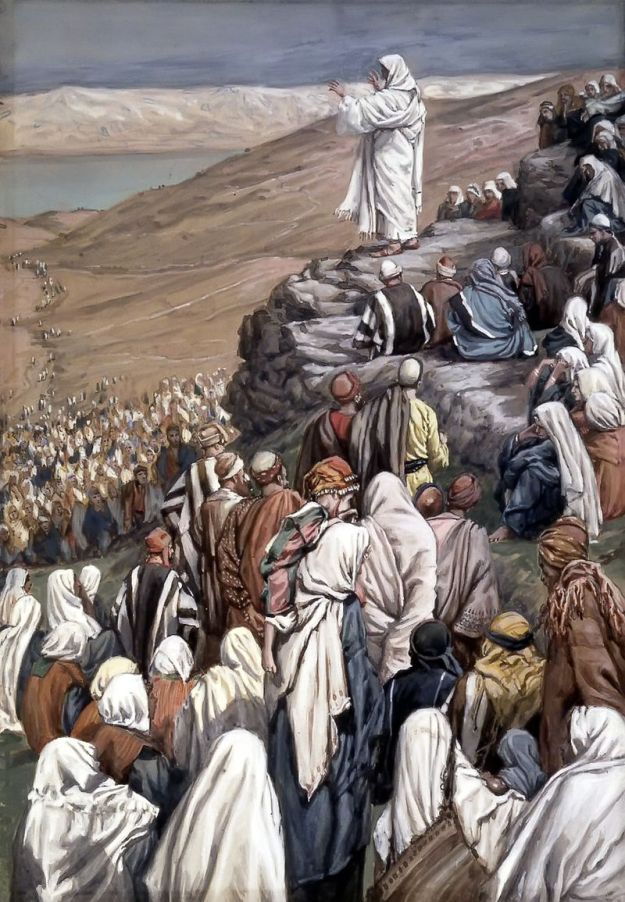
James Tissot, The Exhortation to the Apostles (between 1886 and 1894)

Matthew 18: 15-20

15 “If another member of the church sins against you, go and point out the fault when the two of you are alone. If the member listens to you, you have regained that one. 16 But if you are not listened to, take one or two others along with you, so that every word may be confirmed by the evidence of two or three witnesses. 17 If the member refuses to listen to them, tell it to the church; and if the offender refuses to listen even to the church, let such a one be to you as a Gentile and a tax collector. 18 Truly I tell you, whatever you bind on earth will be bound in heaven, and whatever you loose on earth will be loosed in heaven. 19 Again, truly I tell you, if two of you agree on earth about anything you ask, it will be done for you by my Father in heaven. 20 For where two or three are gathered in my name, I am there among them.”

This short passage, unique to Matthew’s gospel, has exercised a powerful influence on the shaping of church practices and understandings. In five short verses we have the background of the church’s practice of excommunication, a second reiteration of the ability to bind and loose, and the promise of Christ’s presence where two or three are gathered. Our understanding of these verses is often locked into our understanding of church as it exists two thousand years after Jesus’ life with all its accumulated traditions and practices. Every act of interpretation is an act of imagining the context in which these words were spoken to an early community of disciples attempting to enact the assembly that Jesus calls into being with his words and presence. Yet, for Matthew more than any other gospel, the formation of a community that can embody Jesus’ vision for the kingdom of heaven in their proclamation and life together is an important feature.

When we use the term church to translate the Greek ekklesia it ensures that most readers will bring to this reading their concrete experiences of church and their intellectual and emotional baggage that the term may carry. Ekklessia in the Greco-Roman environment is typically an, “assembly, as a regularly summoned political body” or when used in the Septuagint to talk about the gathered community of the Israelites is typically the “congregation” of the Israelites. (BAGD, p.241) Matthew’s understanding of the ekklesia taking on the role of Israel on behalf of the world probably leads to ‘congregation’ being a better term, but that is also associated in modern times with the experience of church. Ultimately for the purposes of this I would translate this as the ‘congregation of Christ’ or ‘the assembly of Christ’ hopefully calling attention to the unique nature of this community in relation to the world around it and its distinction from our experience and understanding of ‘church.’

In the church the historical practice of excommunication was used to enforce the boundaries of the church, to exclude those who by beliefs or practices were felt to be a danger to the right worship of Christ. Unfortunately, the manner in which it has often been practiced in the life of the church was centered upon exclusion rather than reconciliation which is the direction of Matthew 18. The congregation of Christ that Matthew speaks to does have the difficult task of holding a brother or sister accountable for their actions towards an individual or the community. The imperative to act is placed upon the one who perceives they have been sinned against. Here the action is against a one person, and the initial response is for the individual to point out the fault while they are alone.

The action of bringing the action of the brother or sister to light in a way that encourages reconciliation and forgiveness is countercultural in our society of shame and blame. This is a courageous action which hopes for healing, rather than an identification of faults for the sake of exercising power over the individual or to justify their exclusion. The entire direction of this fourth block of teaching is directed towards forgiveness and reconciliation, the hope that the lost sheep might be rejoined to the flock. As Dietrich Bonhoeffer would say as he tried to re-imagine a community of Christ in Life Together:

Nothing can be more cruel than that leniency which abandons others to their sin. Nothing can be more compassionate than that severe reprimand which calls another Christian in one’s community back from the path of sin. (DBWE 5: 105)

This community called into existence by Christ is called to practice a way of life that can hold another brother or sister accountable for their actions and let them know that by their actions they are walking outside the way of the community of Christ in the hope of repentance and reconciliation between the one whose sin has placed a stumbling block before others in the community.

The one who is sinned against had the responsibility to bring the action to light, but this also requires a community that supports this practice of accountability. Just like the owner of the sheep who realizes that one of their flock has gone astray, so the individual who realizes a brother or sister has sinned goes to seek them and to try to heal the brokenness. Yet, just as there is the possibility that a sheep may not be found, there is the possibility that a sinner will not change; but the community bears responsibility for providing them every opportunity for repentance and reconciliation. If one on one the reproving is not received, then they are to go as a group of two or three. This parallels the requirements in Deuteronomy 17:6 and 19:15 where the evidence of two or three witnesses is required to sustain the punishment or exclusion from the community (by death in Deuteronomy 17). Matthew’s community may not practice the death penalty, but it is attempting to figure out how it can model a society based upon a merciful reading of the law. If even in the presence of witnesses the person refuses to hear reproving, then the matter is brought before the congregation for an additional opportunity at public reconciliation. It is now the congregation of Christ that bears the power to receive or release the individual from the community, they can declare that one is no longer living in accordance with the congregation and are therefore an outsider who would need to be evangelized and repent before being considered a brother or sister once more. The congregation bears this authority because of Christ’s presence among the congregation.

As I argued in the Sermon on the Mount, Matthew is trying to articulate a community of Jesus followers who can live and hand on Jesus’ teaching. As Richard B. Hays can state: “There can be no question here of a purely individualized spiritual formation. Matthew is strongly ecclesially oriented.” (Hays, 1996, p. 97) This community is always oriented towards forgiveness. Yet, it is a community that cares enough to declare some actions as inappropriate and scandalous towards the little ones of the community of Christ. It is a place that is an alternative to the practices of the kingdoms of the world and provides a place where forgiveness can be learned, and courage is practiced as sins are named and sinners have an opportunity for reconciliation.

The gospel of Matthew begins and ends by referring to Jesus as Emmanuel, ‘God with us’ and here within the guidance about life in the community of Christ the reference to Jesus’ presence among the gathered community is highlighted once more. In Matthew 1:23 the narrator uses the name Emmanuel to introduce Jesus’ coming birth and here in this passage we have Jesus promising for the first time his continued presence among the congregation of Christ (this theme returns at the end of the gospel). There is an oft noted parallel teachings in the Rabbinical Jewish tradition where the rabbis state: “But if two sit together and the words between them are of Torah, then the Shekinah[1] is in their midst.” (m. Aboth 3:2) The community of Christ gathered around Jesus’ words experiences the presence of God in the way the rabbis expected of observant Jews gathered around Torah. This is heightened when one anticipates Jesus’ teaching in Matthew 24:35 where, “Heaven and earth will pass away, but my words will not pass away.” and that passage’s connection to Isaiah 40:7-8,

The grass withers, the flower fades, when the breath of the LORD blows upon it; surely the people are grass. The grass withers, the flower fades; but the word of our God will stand forever.

There is a theological boldness to the claiming in a manner parallel to God’s words not fading, Christ’s words will not fade, and that as God’s Shekinah is present in the gathering around Torah, the community gathered around Jesus’ words for discernment shares the presence of Jesus in their midst. The formation of a community of Christ that can both name sins that are committed and practice reconciliation is a community that will later be called to make disciples of not only the little ones of Israel, but all nations, handing on all that they have been commanded. Yet, they go in the presence of the Jesus who is with them always.

[1] The Shekinah is from the Jewish word for ‘settle’ or ‘dwell’ and while not mentioned in the Hebrew Scriptures is an idea in rabbinic writing that refers to the presence of God among God’s people. It can refer to the presence of God in the temple, but also as here to God’s presence in the midst of the studying of Torah, also in prayer, in judging, in relationships and in times of need.

Matthew 18: 12-14 The Parable of the Lost Sheep

Lamb By © Nevit Dilmen, CC BY-SA 3.0, https://commons.wikimedia.org/w/index.php?curid=1377638

Matthew 18: 12-14

Parallel Luke 15: 3-7

12 What do you think? If a shepherd has a hundred sheep, and one of them has gone astray, does he not leave the ninety-nine on the mountains and go in search of the one that went astray? 13 And if he finds it, truly I tell you, he rejoices over it more than over the ninety-nine that never went astray. 14 So it is not the will of your Father in heaven that one of these little ones should be lost.

This short little parable is placed here in the midst of the discussion of the community Christ is imagining for those who will follow him and it demonstrates the continuing concern for the little ones who may be ‘scandalized’ and lost to the community. Both Matthew and Luke use this brief illustration of a flock of sheep with one missing whom the master of the sheep seeks out and rejoices over, but their placement of this parable within the context of the gospel and the structure of the surrounding text are used to illustrate different points. In Luke’s gospel, this parable is the first of three familiar parables which answer the accusation that Jesus, “eats with sinners and tax collectors” and through stories of a lost sheep, lost coin, and lost son Jesus points to the joy in heaven over a sinner repenting and a child returning home. In Matthew’s gospel the primary issue is the finding of one lost to the community and it is set within parables and teaching about reconciliation and it is paired with two different parables about unforgiving servants and ungrateful workers.[1]  For Luke this parable is used to explain to outsiders the inclusive nature of the community of Christ, in Matthew the parable reminds insiders of their continual need to seek out those led astray and to welcome them home with forgiveness and rejoicing.

In the parable a person has a hundred sheep. It is important that the person is not labeled as a shepherd in the original Greek but is ‘a certain person’ having 100 sheep. The person is not merely the ‘caretaker’ of someone else’s flock but they both own and are present with the flock.  Most translations tidy up the parable to indicate that the missing sheep has ‘gone astray’ but the Greek plano has the primary meaning of being led astray or deceived, this is language unique but important to Matthew’s narration of this parable, especially sandwiched between a discussion of those who ‘scandalize’ the little ones by their actions and the upcoming discussions on forgiveness and reconciliation. The sheep has not merely wandered off, but has actively been deceived or mislead to be away from the remainder of the 99. Likewise the action of the owner of the flock is not merely leaving the ninety nine on the mountain, but the Greek aphimi has the connotation of abandoning and the act of leaving behind the majority of one’s sheep to search for the lost one who might be found would not be a normal action for a person caring for a flock but this again demonstrates the point of the parable, that the one rejoiced over in the kingdom of heaven is the little one who was lost and regained.

Even though the owner of the sheep in the parable values the restoration of the lost one, in Matthew’s relation of this parable there is no guarantee that the lost one is regained. While Luke’s parables states ‘when’ the owner finds the sheep, Matthew says ‘if’ leaving the possibility that even with the owner’s search the led astray sheep may not be recovered, just as an corrected member may not accept correction in the following section. Matthew’s placement of this parable within a discussion of relations between members in the church and the continual emphasis on reconciliation and forgiveness can realistically acknowledge the danger that a little one can be led astray by the actions of those inside or beyond the community, but the hope is always for restoration. The lost little one restored is the source of joy of the owner and the will of the heavenly Father.

Amy-Jill Levine points to a midrashic text which has an interesting resonance to this parable. In Exodus Rabbah, Moses is shown as a paradigm of what it means to care for a flock. The story in Exodus Rabbah states:

The Holy One tested Moses by means of the flock, as our rabbis explained: when Moses rabbenu (Moses our teacher) was tending Jethro’s flock in the wilderness, a lamb scampered off, and Moses followed it, until it approached a shelter under a rock. As the lamb reached the shelter, it came upon a pool of water and stopped to drink. When Moses caught up with it, he said, “I did not know that you ran away because you were thirsty. Now you must be tired.” So he hoisted the lamb on his shoulders and started walking back with it. The Holy One then said, “Because you showed such compassion in tending the flock of a mortal, as you live, you shall become the shepherd of Israel, the flock that is mine.” (Levine, 2014, pp. 43-44)

Matthew’s placement of this parable in the context of discussions of the community that will be shaped by the message of Jesus, the ekklesia (often translated church) indicates the stance of compassion that God has for those who have been led astray. This also should is to shape the response of those called to participation in this community and the compassion they are to have for the little ones who are led astray. When possible they are to be restored and that restoration is to be greeted with joy. Restoration may not always be possible, but the owner of the flock is willing to leave behind the majority to seek the sheep who is missing. Leaders in this ekklesia are to model the compassion of Moses in the parable above and the compassion for the little ones who trust in him that Jesus shows throughout his teaching. If the owner of the flock will abandon the herd to search for the lost one, those who shepherd the flock are called to practice this type of care for those they guide. Throughout Matthew’s gospel and throughout most of scripture there is always an opportunity for repentance and reconciliation. Sometimes the led astray little one may need to repent and sometimes the individual or community that allowed a stumbling block to be placed before the little one will need to repent so they can participate in the joy over the reconciliation between the lost little one and the remainder of the flock.

[1] As mentioned in the previous sections I view Matthew 18: 1-20:28 as a unit structurally. Many scholars end this unit at 19:1 with “When Jesus had finished saying these things…” but I view the section beginning and ending with questions of ‘the greatest in the kingdom’ and it also includes Matthew’s (and Mark’s and Luke’s) normal pattern of groups of three parables which center around a common theme.

Matthew 18: 1-10 A Community of Little Ones

By Carl Bloch – The Athenaeum: Home – info – pic, Public Domain, https://commons.wikimedia.org/w/index.php?curid=25991809

Matthew 18: 1-10

 At that time the disciples came to Jesus and asked, “Who is the greatest in the kingdom of heaven?” 2 He called a child, whom he put among them, 3 and said, “Truly I tell you, unless you change and become like children, you will never enter the kingdom of heaven. 4 Whoever becomes humble like this child is the greatest in the kingdom of heaven. 5 Whoever welcomes one such child in my name welcomes me.

6 “If any of you put a stumbling block before one of these little ones who believe in me, it would be better for you if a great millstone were fastened around your neck and you were drowned in the depth of the sea. 7 Woe to the world because of stumbling blocks! Occasions for stumbling are bound to come, but woe to the one by whom the stumbling block comes!

8 “If your hand or your foot causes you to stumble, cut it off and throw it away; it is better for you to enter life maimed or lame than to have two hands or two feet and to be thrown into the eternal fire. 9 And if your eye causes you to stumble, tear it out and throw it away; it is better for you to enter life with one eye than to have two eyes and to be thrown into the hell of fire. 10 “Take care that you do not despise one of these little ones; for, I tell you, in heaven their angels continually see the face of my Father in heaven.[1]

The fourth block of teaching in Matthew continues to explore what embodying the way of Jesus in community will look like. I view the contours of this block of teaching different than many who comment on this section both in its length and in what is being communicated. Most scholars end this block of teaching with the seam at the beginning of Chapter 19, “When Jesus had finished these things, he left Galilee and went to the region of Judea beyond the Jordan.” The scholars who end the block of teaching at 19:1 are paying attention to a pattern in Matthew’s gospel (see 7:28, 11:1, and 13:53) where it is announced that Jesus has finished his teaching or parables, and while there is a distinct ending and transition in the previous cases, thematically and structurally I believe Matthew wants us to hear Matthew 18:1-20:28 as a unit: It begins and ends with a question of greatness, it allows the normal pattern of three in parables to be joined together, and it centers around questions of how the community of Christ is to live in relations to one another.

Just as the people of Israel were to be an alternative to the community which was built upon the practices of slavery and the acquisition of power by the great ones in Egypt, Babylon and Rome, so the community of Jesus’ followers is a countercultural community where the leaders are like humble children. The greatest in the kingdom of heaven will be like the least and the very question of greatness is a danger to the unity of the community. The disciples are still learning the ways of the kingdom of heaven and unlearning the ways that the kingdoms of the world have taught them. Jesus continues to teach them the type of life they are to embody for this new community of the kingdom of heaven.

The use of a child as a visual illustration in this teaching is instructive in several manners. First, it indicates that there were already children present in close proximity to Jesus and that they felt welcome being in close proximity to him. Children in both the ancient world and the modern world are often excluded from the working world of men for fear they will be underfoot. In the ancient world children began to have value when they could be ‘little adults’ adding value to the work of the family. Being a child becomes a metaphor for being a part of the kingdom of heaven, but also for being a disciple and I do think the thematic use of ‘little one’ and the frequent reference to the disciples as ‘little faith ones’ is intentional. The child is welcomed not for the value that they can bring to the kingdom of heaven, they are not like the rich young man we will meet in the next chapter who has resources to bring into the community, but the welcoming of the humble child is an act of grace. The disciples are to learn the humility of the child who is placed in their midst not for the benefit of the adults in the circle, but purely as a witness to the type of community of hospitality that the kingdom of heaven is.

In a previous block of teaching Jesus linked showing hospitality to little ones when he stated, “and whoever gives even a cup of cold water to one of the little ones in the name of a disciple—truly I tell you, none of these will lose their reward.” (10:42) The community of Jesus is to be a community of hospitality, and now the act of welcoming a little one is tied to welcoming Jesus. The same practice of welcoming a righteous person or a prophet is extended not only to disciples, but to the little ones who the disciples are to model themselves after. The opposite of the greatest (Greek meizon) is the little one (Greek micron) and the disciples instead of striving to be the greatest in the kingdom of heaven are to learn the logic of this kingdom where the first are last and the last are first. They are to be an alternative to the communities where power and authority is lorded over others, instead they are a community where humble little ones are valued and cherished and placed in the center of the community.

Being a disciple of Jesus is not merely about learning the right things. Throughout the gospel we have heard Jesus instruct those who listen that the practice of righteousness is critical. While I have argued against a type of moralistic perfectionism in reading Matthew, I do think we need to understand Jesus’ call for a community that authentically practices a merciful reading of the law. As we come to Jesus’ words about placing a ‘stumbling block’ it is important to address to two aspects of the Greek scandlise which stands behind this. This is the word that is at the root of the English word scandal, and there is a call for those within the community not to scandalize the ‘little ones.’ The type of community that Jesus teaching points towards is undercut by those who either use their authority for self-glorification, who misuse those who are vulnerable (women, children, those who are either politically or economically vulnerable), or whose actions do not embody the values of the kingdom of heaven. Many throughout history have been ‘scandalized’ by leaders or members of the church whose actions did not embody they vision of Christ. But the other aspect of scandalize is the placing of a barrier towards inclusion. There are many groups who have been excluded from participation in the church, and the history of the community of Christ is full of times where the boundaries of the community had to be removed to embody the vision Jesus handed on to the disciples who followed him.

Ironically, there may be times where a member’s actions towards others in the community necessitate their removal from the community. This will be a theme throughout chapter eighteen, but one’s actions in relation to the community do have implications both to one’s relationship to the community and to the kingdom of heaven. Jesus uses hyperbolic language here, and throughout the gospel, to underline the importance of practicing righteousness. When one’s actions scandalize or exclude a ‘little one’ it is a matter of life or death in the community and for one’s standing in the kingdom of heaven. Jesus does expect God to judge the world and those who exclude, the Jesus in Matthew’s gospel does take the side of the ‘little ones’ who are vulnerable to those who claim the status of greatness, who scandalize, exclude or practice hypocrisy. Even though the practice of hanging a millstone (literally the millstone of a donkey, a stone large enough that it needs a pack animal to turn) and casting a person into the sea to ‘sleep with the fishes’ would be understood in both ancient and modern contexts, I disagree with Warren Carter’s assertion that, “Again Jesus bullies disciples into obedience with a threat that imitates imperial practices.” (Carter, 2005, p. 364) Jesus does use graphic language to communicate with the disciples the importance of their embodiment of these teachings: a millstone around the neck, cutting off a hand or foot or tearing out an eye. As I stated when addressing this language in 5:29-30, this language is probably not intended individualistically or literally. Regardless the disciples are not the ones who will give the sentence of death by drowning or casting a person into Gehenna, but they will be the ones who have to teach and maintain the practices and, when necessary, the boundaries of the community. There may be times where the community, after attempting to correct a member, has to cast them away from the community but there is also the continual desire for reconciliation and forgiveness.

Anytime we talk about ‘eternal fire’ or the ‘Hell of fire’ we enter into a discussion that carries a lot of baggage for Christians. I engage this topic in a fuller way when I discussed Gehenna, Tartaros, Sheol, Hades and Hell and while it is impossible to completely free ourselves of the long history of thinking about the concepts of punishment beyond this life, I do think we need to be cautioned before we import these ideas into Matthew’s gospel. Jesus does believe that God does judge those who stand in opposition to the kingdom of heaven. Our conceptions about ‘eternal life’ and ‘eternal damnation’ while pulled from Jesus’ words about ‘the life of the new age’ or ‘entering into the age of fire’ or our conceptions of ‘hell’ based on Jesus’ use of the place ‘Gehenna’ have heaped upon the original concepts 2,000 years’ of poetic imagination, hellfire preaching, and fear. Jesus does present people with a choice, to choose the way of the kingdom of heaven which is life, or to choose the way opposed to the kingdom which means judgment, but the details of the judgment are only pointed to metaphorically. Yet, the way one treats the ‘little ones’ is critical for the community because the ‘little ones’ are critical to God. The plight of the ‘little ones’ is continually placed before God in heaven and the hope of the followers of Jesus, like the hope of the Jewish people, is that God would judge on behalf of the ‘little ones’ who are vulnerable with righteousness. Ultimately for the followers of Jesus the questions of God’s judgment are not in their control. They may have to bind or loose actions and individuals in the community, but any punishment beyond life is in God’s hands. In our individualistic way of reading scripture we have often reduced passages like this to compliance out of fear for the salvation of one’s soul, but my hope is that learning to read these passages in light of the community can open us for the joy of practicing the righteousness of God in a community which practices hospitality towards the ‘little ones,’  protects and honors them, has the courage to correct members who are not practicing righteousness and even to ‘cut them off’ when necessary for the life of the community. Yet, even when one is ‘cut off’ there is always the hope of repentance and reconciliation. The community of Jesus, the church, may find itself continually removing boundaries which keep the ‘little ones’ out of the community and struggling with scandals which endanger the ‘little ones’ as it awaits God’s judgment of the world in righteousness.


[1] Verse 11 is omitted in most modern translations and is probably a later insertion into the text. The text of verse 11 would be For the Son of Man came to save the lost.

Matthew 17: 24-27 Something is Fishy with these Taxes

A Corinthian Stater By Classical Numismatic Group, Inc. http://www.cngcoins.com, CC BY-SA 3.0, https://commons.wikimedia.org/w/index.php?curid=510397

Matthew 17: 24-27

24 When they reached Capernaum, the collectors of the temple tax came to Peter and said, “Does your teacher not pay the temple tax?” 25 He said, “Yes, he does.” And when he came home, Jesus spoke of it first, asking, “What do you think, Simon? From whom do kings of the earth take toll or tribute? From their children or from others?” 26 When Peter said, “From others,” Jesus said to him, “Then the children are free. 27 However, so that we do not give offense to them, go to the sea and cast a hook; take the first fish that comes up; and when you open its mouth, you will find a coin; take that and give it to them for you and me.”

Throughout Matthew’s gospel we have heard of the approaching kingdom of heaven, and yet the disciples and Christians across the generations have needed to negotiate their participation in the earthly society they are a part of when their citizenship is in heaven. The paying of taxes is a reality that people of Jesus’ world, Matthew’s church, and modern Christians share and there are times when one may live in a society that either oppresses Christians and Jews (since the first followers of Jesus were Jewish) or embodies a set of values which contradict the values of the disciples of Jesus. We will see shortly that Jesus will be in conflict with the temple and its leadership, but the hearers in Matthew’s church probably heard this reading reflecting two different contexts: the context of Jesus’ life where the temple exists and collects tribute for support and the context of their own time where the temple is destroyed and there is a tax Jewish people are required to pay after their defeat in the Jewish war and the destruction of the temple.

Peter has continued to be the person who speaks on behalf of the disciples and he is the one approached the collectors of the ‘two drachma’ and is asked ‘Does your teacher not fulfill the two drachma?’ As mentioned above, in Jesus’ time there would be a tax or contribution that supported the temple in Jerusalem but after 70 C.E. and the conclusion of the Jewish War the temple was destroyed and Emperor Vespasian imposed a tax on Jews to pay annually and the tax was used to build the temple to Jupiter Capitolinus. (Carter, 2001, p. 135) Jesus may have had issues with the temple establishment but the payment of taxes to a occupying empire to construct a temple to a different God may have been a contentious subject for many devout Jews. How does one maintain allegiance to the kingdom of God in the midst of the Roman empire? Does one pay this tax or does one resist? How does one render to God what is God’s, to Caesar what is Caesar’s and to the temple what belongs to the temple? Are the followers of Jesus to resist or to hand over these taxes?

As Peter enters the home, Jesus uses the moment to frame the ‘two drachma’ tax within the framework of understanding one’s position in relation to the temple (and by extension in Matthew’s time Rome) as being connected to one’s identity in the kingdom of heaven. At the beginning of this chapter, in the transfiguration, we were reminded of Jesus’ identity as the Son of God and using the reasoning of the world Jesus invites the question whether the sons of kings pay the taxes or whether others pay these taxes. Jesus invites Peter to use the logic of the world around him to see that Jesus’ relation to God in the world’s logic would exempt him from paying taxes to the temple. As we heard in 12:6, one greater than the temple is here and the sons (children NRSV) but while Jesus may not be subordinate to the temple, he provides for the tax to be paid. Like Paul in Romans 12: 18, “If it is possible, so far as it depends on you, live peaceably with all.” In order not to give offense (again the Greek scandalizo is behind this term) Jesus provides another way and again demonstrates who he is in relation to the creation.

We have seen Jesus provide food for multitudes by making provisions for thousands with a little bread and fish (14: 13-21, 15: 32-39) and demonstrate his mastery over the sea (8: 23-27, 14: 22-33) so perhaps this strange little story where Jesus has one of his fishers of men return to their original vocation as a fisherman casting a line into the sea may not be so strange as it initially appears . While there may be something fishy about the coin pulled from the mouth of a fish, but the master of the fish and the sea is the creator and not Caesar. God provides a stater, a coin about three times the size of a drachma, for the payment to be given. We are not told if this is a gold or silver stater which would either be worth far more than the tax for a gold stater or slightly less than the tax for two people for a silver (based on weight) but ultimately what is provided is enough and a way is found to navigate the demands of earthly authorities while affirming the ultimate sovereignty of God and the position of Jesus as Son of God. Peter, and by extension the disciples, are also invited into participating in the benefits of the children of God but will also forgo their own rights for the sake of peace or to not give offence.[1] One can find ways to grant to temple or Caesar what they claim without impinging on God’s ultimate claim on the followers of Christ and all of creation.

Each of the gospels, the letters of Paul and other epistle writers and Revelation all deal with navigating one’s faithfulness to Christ within the world of the Roman empire. These texts give us examples to follow as we try to faithfully navigate our own time. Many of the authors in the New Testament illustrate this third way between resistance and submission which allows one to understand one’s privileges as a child of God while acting in a way that does not provide offense. As I reflect on this passage I remember an experience Eberhard Bethge shares about a time he shared with Dietrich Bonhoeffer June 17, 1940

While we were enjoying the sun, there suddenly boomed out from the café loudspeakers the fanfare signal for a special announcement: the message was that France had surrendered. The people round about the tables could hardly contain themselves; they jumped up, and some even climbed on the chairs. With outstretched arm they sang ‘Deutschland, Deutschland űber alles.’ We had stood up too. Bonhoeffer raised his arm in the regulation Hitler salute, while I stood there dazed. ‘Raise your arm! Are you crazy?’  he whispered to me, and later: ‘We shall have to run risks for very different things now, but not for that salute!” (Bethge, 2000, p. 681)

Jesus will have plenty of conflicts with Pharisees, Sadducees, and the chief priests in Jerusalem, but he also seeks peace where possible. Part of the struggle for followers of Jesus is navigating when they can conform to the societies in which they live without compromising their allegiance to Christ and when they must prophetically resist. When it comes to the question of taxes for the temple or Rome, Jesus shows a way to render the tax without losing one’s identity as a child of God.

[1] A gold stater would cover the ‘two drachma’ tax for all the disciples and this may be what Matthew intends theologically but it is not explicit in the text.

Matthew 17: 22-23 The Way of the Cross part 2

Domine, quo Vadis? by Annibale Carracci, 1062

Matthew 17: 22-23

22 As they were gathering in Galilee, Jesus said to them, “The Son of Man is going to be betrayed into human hands, 23 and they will kill him, and on the third day he will be raised.” And they were greatly distressed.

Matthew, like Mark, loves patterns of threes which is a frequently seen characteristic of literature written for to be heard primarily rather than read. This is the second and shortest of the three predictions of the passion in the gospel and they all either precede misunderstandings by the disciples about what it means to be followers of Jesus. In the first prediction Peter will rebuke Jesus and need to be told what discipleship will mean (16: 21-28), in this prediction there is an intermediary scene before the disciples ask who is the greatest in the kingdom of heaven (18:1-5) and the final prediction will be followed by the mother of James and John asking for places of honor in the kingdom (20: 17-28). The disciples show some understanding of this brief statement as they gather in Galilee, but until the resurrection they will continue to perceive only a portion of Jesus’ identity and path.

There is no location for the impending betrayal of ‘the Son of Man into the hands of men[1] unlike the previous prediction where Jerusalem is both their destination and where Jesus will encounter suffering. This statement of Jesus’ death in heard by the disciples and they understand that Jesus’ use of the title Son of Man is a reference to himself and they grasp enough to be greatly distressed about his upcoming betrayal and death. They are unable to understand his message about the resurrection. Even Peter, James and John who heard that the Son of Man was to suffer while coming down the mountain, even after experiencing the transfiguration of Jesus and the overwhelming presence of God on the mountain, share with the rest of the disciples the inability to consider the resurrection after three days as a possibility. Those hearing this narration are being prepared to make sense of the upcoming crucifixion and resurrection and this foreshadowing helps upcoming generations of disciples to make sense of the seeming senselessness of the cross and to anticipate the amazement of the resurrection.

[1] The Greek word anthropos lies behind the Man in Son of Man and human in human hands. The NRSV is correct in the translation of the term as Son of Man and humanity but it misses the world play between the two terms in Greek and how the betrayal of the ‘son of humanity’ is accomplished by ‘human hands.’

Matthew 17: 14-20 A Little Faith is Enough

By © Ralph Hammann – Wikimedia Commons – Own work, CC BY-SA 4.0, https://commons.wikimedia.org/w/index.php?curid=39699229

Matthew 17: 14-20

14 When they came to the crowd, a man came to him, knelt before him, 15 and said, “Lord, have mercy on my son, for he is an epileptic and he suffers terribly; he often falls into the fire and often into the water. 16 And I brought him to your disciples, but they could not cure him.” 17 Jesus answered, “You faithless and perverse generation, how much longer must I be with you? How much longer must I put up with you? Bring him here to me.” 18 And Jesus rebuked the demon, and it came out of him, and the boy was cured instantly. 19 Then the disciples came to Jesus privately and said, “Why could we not cast it out?” 20 He said to them, “Because of your little faith. For truly I tell you, if you have faith the size of a mustard seed, you will say to this mountain, ‘Move from here to there,’ and it will move; and nothing will be impossible for you.”

This is another scene in Matthew where the common interpretation of the scene involves Jesus berating his disciples and where I am going to suggest a significantly different reading. Translation into English involves several assumptions and the prevailing assumption of Jesus’ dismissive nature of his disciples continues to be seen here. Perhaps Jesus humiliates his disciples in front of the crowd and in private out of frustration, or perhaps, as my reading will suggest, his frustration resides in the forces that resist him and his response to his disciples is one of encouragement. Throughout this reading I’ve highlighted areas where Jesus may be pushing his disciples to claim the authority they have as his disciples over the powers that oppose the approaching kingdom of heaven, and these ‘little faith ones’ even without Peter, James and John present, attempt to help this father who brings his son to them. Like Peter stepping out of the boat, perhaps these disciples are continuing to make strides to approach Jesus in faith.

Comparing Mark’s narration of this scene to Matthew’s one can see both Matthew’s excision of details from the story but some very important, to Matthew’s narration, additions which are centered around this private discussion with the disciples about faith. The exorcism of the spirit which causes the man’s son to have convulsions, in Matthew, sets the scene for the contrast between the generation without faith and these little faith ones who may not realize that they are able to move mountains. They may feel that their only skill is to make a place for Jesus, but they are invited to listen to Jesus sharing with them what their little faith can do.

This scene comes after Jesus descends the mountain with Peter, James and John after the Transfiguration, and they come from their isolation to the crowd and the troubles down below. Matthew does not include Mark’s note that the scribes were arguing with the disciples in the crowd but instead immediately presents us with a father pleading to Jesus on behalf of his son. Interestingly in this scene there is only one person waiting for healing from Jesus in the crowd and perhaps the disciples have been able to heal others, but regardless we are confronted with a man who comes and kneels before Jesus, addressing him as Lord and asking on behalf of his child. In Matthew, this man’s address to Jesus places him with others like the centurion and the Canaanite who appeal to Jesus as ‘Lord’ and we expect that his appeal will be heard and acted upon. Unlike Mark where the man calls Jesus ‘teacher’ and has to ask Jesus to ‘help me with my unbelief’ in Matthew we are given every indication that this father is open to what Jesus is able to do and the presence of God’s healing power in him. In Matthew’s telling the father is not the faithless one, instead he has faith in a generation without faith. He comes to Jesus’ disciples initially and when they are not powerful enough. He refuses to be satisfied until he comes to the source and Jesus heals his son.

Most modern translations render the son’s condition as epilepsy, but that assigns a modern understanding to a term that is literally ‘moon seeking’ or the more familiar but misunderstood ‘moonstruck.’ The Greek goddess of the moon, Selene, was often associated with madness and sending demons on those who dishonored her and while ‘moonstruck’ in English is often associated with being in an irrational state due to falling in love, this ‘moonstruck’ one is possessed by a spirit, at least in the understanding of the time, which causes its host to lose control and fall into fire or water injuring itself. In a porous world where spirits, both good and evil, are able to act upon those a person, like Jesus, where the power of God’s spirit resides is where one can turn for aid for those afflicted.

Many scholars hear Jesus’ answer to the father as the first condemnation of the disciples in this scene, which I find intriguing because Jesus’ complaint is literally ‘O generation of no faith and distortion.’ Especially when you look at the other times Jesus mentions the ‘generation’ he is never referring to his disciples[1] one could argue that he is referring to either the Pharisees, scribes and those who oppose him or to the resistance to the kingdom of heaven in general but I believe if Matthew wanted us to know Jesus was frustrated with his disciples inability to handle the father’s appeal in his absence he would have directed that frustration at the disciples instead of the generation where sons are bound by a spirit that makes them lose control of their body and endanger themselves and others. Jesus’ frustration is either directed at the resistance to the kingdom of heaven or the delay in that kingdom’s realization among the disciples, the crowd and ultimately the nations. Jesus acts quickly in this instance rebuking the demon and the child is healed ‘from that hour’ which the NRSV’s ‘instantly’ captures the time aspect of but not the continuing future movement of the phrase. This child will not be like others in this generation where a demon is cast out, presumably by the exorcists of this age, and the demon returns with seven more and takes up residence making the child worse off than before. (12: 43-45)

When the disciples approach Jesus on their own and ask, ‘by what means (dia) were we are not powerful enough to cast it out?’ most interpreters assume Jesus chastises the disciples for their lack of faith. I’ve argued throughout this reading for a more charitable reading of oligopistos and its derived terms as ‘little faith ones’[2] where Jesus uses this as a term of encouragement and endearment rather than the typically harsh “you of little faith.” This term always is used for disciples and again Jesus here modifies the usage slightly to “by means of[3] (dia) the little faith (oligopistian) of you.” Perhaps instead of Jesus saying that their little faith is smaller than a mustard seed and that is why they are unable to do incredible things, Jesus here tells the disciples their little faith is all they need to handle this spirit or to say to the mountain Jesus just descended to depart and the mountain will depart, and nothing they are not powerful enough for. The Greek dunami (to be powerful, able) sits behind the father’s statemt of the disciples’ initial inability, their question of their insufficient power and Jesus encouragement that they have all the power they need. If they can command mountains to depart they can command a spirit in a moon-seeking child to come out. Instead of criticizing the disciples for their inability, perhaps Jesus is preparing them for the great things they will do in the future when they are sent out to proclaim the kingdom of heaven’s approach to all the nations and to teach them what they have learned from Jesus.

[1] Matthew 11: 16; 12: 39, 41, 42, 45; 16:4; 23:36; 24:34

[2] See my comments on Matthew 6: 19-34; 8: 23-27; 14: 22-33 and 16: 1-12.

[3] NRSV and many translations render dia as because but it is a term of agency or means here and should be rendered either through or by means of. Most translations assume this is a direct answer to the disciples question and that the ‘why’ in English needs a ‘because’ in English. In Greek it is more a question “by what means…’ ‘by this means…’

Matthew 17: 1-13 The Transfiguration of Jesus

Carl Bloch, The Transfiguration of Jesus (1865)

Matthew 17: 1-13

Parallel Mark 9: 2-10; Luke 9: 28-36

Six days later, Jesus took with him Peter and James and his brother John and led them up a high mountain, by themselves. 2 And he was transfigured before them, and his face shone like the sun, and his clothes became dazzling white. 3 Suddenly there appeared to them Moses and Elijah, talking with him. 4 Then Peter said to Jesus, “Lord, it is good for us to be here; if you wish, I will make three dwellings here, one for you, one for Moses, and one for Elijah.” 5 While he was still speaking, suddenly a bright cloud overshadowed them, and from the cloud a voice said, “This is my Son, the Beloved; with him I am well pleased; listen to him!” 6 When the disciples heard this, they fell to the ground and were overcome by fear. 7 But Jesus came and touched them, saying, “Get up and do not be afraid.” 8 And when they looked up, they saw no one except Jesus himself alone.

9 As they were coming down the mountain, Jesus ordered them, “Tell no one about the vision until after the Son of Man has been raised from the dead.” 10 And the disciples asked him, “Why, then, do the scribes say that Elijah must come first?” 11 He replied, “Elijah is indeed coming and will restore all things; 12 but I tell you that Elijah has already come, and they did not recognize him, but they did to him whatever they pleased. So also the Son of Man is about to suffer at their hands.” 13 Then the disciples understood that he was speaking to them about John the Baptist.

Mountains in Matthew’s gospel are places of revelation, and this vision where Jesus is transfigured before the disciples continues the trend of giving insight into Jesus’ identity. The devil takes Jesus to a very high mountain to test his identity (4:8); the Sermon on the Mount puts has several echoes of Moses on the mountain and shows Jesus relation to the law; Jesus prays on a mountain prior to walking the water, saving Peter and being worshipped by the disciples (14: 29); and great crowds meet Jesus at a mountain and he feeds them (15: 32-39). In this scene which evokes multiple scriptural resonances we are again confronted with the identity of Jesus and asked to reconsider the meaning of what it means for Jesus to be the Son, the Beloved one.

Peter, James, and John are set aside as a select group within the disciples who are allowed to be present for this moment of revelation, but they are also ordered to keep this vision secret until after the resurrection. We are not given any insight into why these three disciples are selected to ascend the mountain with Jesus, but they will be the group within the disciples that are present for some of the critical moments, but they will not prove to be the ideal observers and participants in these moments. As Stanley Hauerwas notes,

Jesus will also ask Peter, James and John to be with him in Gethsemane, but there, when he is in agony, they will find it hard to be present with him (Matt. 26: 36-46). Their need to be touched will continue. (Hauerwas, 2006, p. 156)

Peter, James and John share common characteristics with all the disciples: they are not people who have easy insight into the identity of Jesus, they are ‘little faith ones’ who need to journey behind Jesus and ask questions to understand. Yet, they are precisely the people that Jesus invites to share these moments that reveal who Jesus is and the faith and understanding they have makes them open to these revelations in a way that the scribes have not been.

The primary echo of scripture in this scene is Moses’ ascent of Mount Sinai. In Exodus 24, Moses takes with him Aaron, Nadab and Abihu along with seventy elders who see God, but then Moses goes up into the cloud and waits for six days before God calls and speaks to Moses. The time marker at the beginning of the transfiguration story, along with the three named disciples and the overshadowing cloud all echo the experience of God in this scene, but remarkably Peter, James and John are invited to come all the way up to this place where the presence of God overwhelms them. We also hear that Moses is changed by his time in the presence of God and that his face was shining, and the people reacted to this change with fear. (Exodus 34: 29-35) The scene may place Jesus in resonance with Moses, but the introduction of both Moses and Elijah into the scene speaking with Jesus and the note that Jesus’ face is shining like the sun and his garments are literally ‘white as the light’ while Moses and Elijah are not described in a similar way places Jesus above both of these two exemplars of the faithful ones of God.

Peter’s ‘enthusiastic error’ to desire to construct a tent or tabernacle for Jesus, Moses and Elijah to become a fixed dwelling place for Jesus, the law and the prophets (Hays, 2016, p. 352) is a continual temptation for the generations that will follow Peter in confessing Jesus as Christ/Messiah, son of the living God. Matthew certainly dedicates more space to confession of who Jesus is, to understanding his identity in relation to the law and the prophets, but confession without following behind tends to lead the disciples to misunderstanding the content of Jesus’ identity and what it means for them. The multiple ways in which Matthew reveals the connection between Jesus and the God of Israel may be difficult for the disciples, both original and modern, to grasp but we are invited to be in the place of awe and wonder where heaven and earth come together to not only reveal the identity of Jesus, but the proper response. In the presence of the ‘sound from the cloud’ the disciples’ response is one of fear and to fall on the ground, while Jesus’ encouragement to them will be not to fear and to rise up.

Peter is silenced by the presence of God in a manner that would be familiar to those who know the way God appears in the Exodus narrative. God descends on the mountain as a cloud and a sound that is described in ways that emulate both thunder and a volcano speaks the words that Moses, the elders and the people of Israel hear. In this scene the bright cloud descends upon Peter, James, John along with Jesus, Moses, and Elijah and the ‘sound from the cloud’ (the NRSV’s rendering of phone as voice instead of sound is understandable but doesn’t capture the overwhelming and terrifying nature of the scene’s echo of the LORD speaking in Exodus. The disciples’ action of being silent, fearful, and reverent are appropriate when they realize they are in the presence of the God of Israel, but in the midst of this theophany (encounter with God) they hear the voice of God declaring not only Jesus’ identity as “my Son, the Beloved; with him I am well pleased” but also the correct response to Jesus, “hear him.”

The words which come from the bright cloud are rich in resonance both within Matthew’s story, but also within the language of scripture. In Jesus’ baptism the ‘sound from the heavens’ declares Jesus as ‘my Son, the Beloved, with whom I am well pleased,” and we now have this direct revelation from God a second time of this exact identity. The Son of God title comes directly from the mouth of God and from the mouth of those directly opposed to God’s work in bringing in the kingdom of heaven (see my discussion on the title Son of God here). Additionally, there are two significant resonances in scripture in this title declared from the cloud. The first is from Genesis 22 where God commands Abraham:

Take your son, your only son Isaac, whom you love, and go to the land of Moriah and offer him there as a burnt offering on one of the mountains that I shall show you. Genesis 22:2

This scene which is pivotal in the book of Genesis because it places the covenant between Abraham and the LORD at risk, the LORD is asking Abraham to offer up the long-awaited promise of God back to God, after God has bound Godself to this promise. Hearing the echo of this scene may help those with attentive ears to be prepared for Jesus’ journey to a different mountain where the Son of Man will suffer at the hands of men. The other echo an attentive ear may hear is Isaiah 42:1

Here is my servant, whom I uphold, my chosen, in whom my soul delights; I have put my Spirit upon him; he will bring forth justice to the nations.

The additional imperative to “hear him” also echoes Deuteronomy 18: 15:

The LORD your God will raise up for you a prophet like me from among your own people; you shall heed such a prophet[1]

These echoes point to Jesus being a prophet like Moses, the suffering servant of Isaiah, and the beloved son of the speaker, like Isaac to Abraham all within this divine pronouncement from the cloud. Jesus radiates with the same brightness as the terrifying and bright cloud where the presence of God approaches, and the scene is overwhelming for Peter, James, and John who bow their faces to the ground and are fearing exceedingly.

The disciples have been commanded to hear Jesus and after touching them, an observation unique to Matthew’s narration of this story, the disciples are invited to ‘rise up’ and to ‘not fear.’ Upon rising up they see only Jesus, no longer transfigured, inviting them to continue their journey down the mountain. They are commanded to remain speechless about this vision until the Son of Man ‘rises up’ from the dead, and only then can they tell what happened on the mountain. They were never to stay there for long, they were invited to see and hear and wonder in new ways who this one they follow is and to continue to hear him while they can. The disciples may be speechless about what happened on the mountain, but they have enough understanding to ask for clarification about the expectation of Elijah’s coming.

The scribes who study the scriptures have enough insight to know that the scriptures point to Elijah’s coming, but without faith that is open to God’s emissaries at work they are unable to interpret the meaning of John the Baptist or Jesus within God’s action. These disciples have enough faith to understand once things are explained to them. Both John the Baptist and Jesus will suffer at the hands of those who have eyes but cannot see or ears that do not hear. The word here for ‘suffer’ is pascha, the word we get Paschal (like the Paschal lamb of Passover). Peter, James, and John hear an extra reminder that Jesus’ path will be one that will involve suffering at the hands of those unable to see as they journey down the mountain to the crowd and disciples waiting below.

[1] In the Septuagint, the Greek translation of the Hebrew Scriptures (Old Testament) the words are ‘hear him’ (autou akousesthe) the same verb used in Matthew.

Matthew 16: 21-28 The Way of the Cross Part 1

Domine, quo Vadis? by Annibale Carracci, 1062

Matthew 16: 21-28

21 From that time on, Jesus began to show his disciples that he must go to Jerusalem and undergo great suffering at the hands of the elders and chief priests and scribes, and be killed, and on the third day be raised. 22 And Peter took him aside and began to rebuke him, saying, “God forbid it, Lord! This must never happen to you.” 23 But he turned and said to Peter, “Get behind me, Satan! You are a stumbling block to me; for you are setting your mind not on divine things but on human things.”

24 Then Jesus told his disciples, “If any want to become my followers, let them deny themselves and take up their cross and follow me. 25 For those who want to save their life will lose it, and those who lose their life for my sake will find it. 26 For what will it profit them if they gain the whole world but forfeit their life? Or what will they give in return for their life? 27 “For the Son of Man is to come with his angels in the glory of his Father, and then he will repay everyone for what has been done. 28 Truly I tell you, there are some standing here who will not taste death before they see the Son of Man coming in his kingdom.”

Titles in Matthew’s gospel, while important and demonstrating some understanding of who Jesus is, can only take us so far. In the previous section we have the titles Son of Man, Messiah/Christ and son of the living God all applied to Jesus, as well as the prophetic identity assigned to Jesus by the crowds. But these titles only have meaning in the context of how Jesus will inhabit these titles: Jesus will be prophetic but is not limited to how John, Jeremiah or Elijah enacted that identity; Jesus will be Messiah/Christ/King but not in the way that Peter or many others expect; and Matthew continues to hint that the title Son of God and Son of Man reflect more than just one divinely appointed. People of great faith, like the Canaanite woman or the centurion may have unique insights into what Jesus’ presence means for their situation, but for those called to be disciples one can only understand Jesus’ identity in relation to his teaching and actions as they continue to follow his path.

The focus now turns to Jerusalem. Although the next couple chapters involve actions and teaching in Galilee, it becomes a farewell tour of places and locations where much of the ministry of Jesus has occurred, because now for the first time Jesus indicates Jerusalem as the final destination of his ministry. Peter has just declared that Jesus is the Messiah, and it is natural that the Messiah of the Jewish people should go to Jerusalem and take up the seat once occupied by David. Yet, Jesus does not describe the journey to Jerusalem as a coronation but rather a road of great suffering and death. This first of three predictions of Jesus’ suffering and death in Jerusalem drastically changes the triumphal scene of Peter’s confession. Even though we hear Jesus’ state he will rise after three days it isn’t surprising that this is not understood by his disciples any better than the sign of Jonah was understood by the Pharisees and Sadducees.

M. Eugene Boring insightfully recognized that Peter’s action of taking Jesus aside and rebuking him could be read as Peter misunderstanding what Messiahship meant to Jesus, personal love for the person of Jesus and wanting to spare him from suffering or both. (NIB VIII: 349) What Peter intends as a blessing, the Greek ileos is better translated ‘God be merciful’ rather than ‘God forbid’, asking God not to bring this suffering upon Jesus becomes instead a stumbling block. Words of mercy intended to protect God’s anointed instead become words of temptation to pull the chosen one from what is necessary. Peter may misunderstand, but his words evoke compassion for Jesus.

Yet, even these words of blessing can become twisted to attempt to alter the way that Jesus embodies the identity of Messiah and Son of God and to become a stumbling block (scandalon). The title of Satan returns us to the temptation of Christ in Matthew 4: 1-11, where the devil attempts to test Jesus’ identity as Son of God. The devil’s temptations to avoid suffering, to give a sign and to take up worldly power all seem at odds with this necessary path to Jerusalem where the only sign is the sign of Jonah and suffering will come from those who wield religious and political power. Satan as a title for the devil originates with ‘the satan’ which is used as a title in Job 1-2 for ‘the accuser.’ Now Peter, albeit unintentionally, occupies the role of accusing Jesus of misunderstanding his place. Now Jesus turns to Peter to correct him.

There is a contrast between Jesus’ dismissal of the devil in 4:10 and his words to Peter in 16:23. In both cases Jesus tells the tempting one to go away (hupage) but here Jesus adds a location “behind me.”  Peter is called to occupy the position of following Jesus as one who learns rather than being dismissed like the devil or left behind like Pharisees and Sadducees. Peter will have to learn that his understanding of divine and human things are incorrect and that God’s way will be learned by following this Messiah who moves towards the suffering and death rather than towards human conceptions of power and glory.

Jesus’ words to his followers about denying themselves, taking up their cross and following were challenging to his initial followers but perhaps even more so in our culture that avoids suffering at all costs. Leszak Kolakowsky’s description of our culture as “a culture of analgesics” where we are “entertaining ourselves to death” by our endless distractions (Case-Winters, 2015, p. 211) rings true. The modern world presents many ways to numb and distract ourselves away from our callings and to present us with alternatives to a life that is difficult but ultimately worth dedicating ourselves to. Martin Luther King, Jr.’s words in a Detroit speech in 1963 that, “I submit to you that if a man hasn’t discovered something that he will die for, he isn’t fit to live” resonates with this calling of the men and women who follow the path of Jesus to be willing to take up their own crosses, deny the distractions and stumbling blocks and well meaning friends who try to change their paths and to place their life in the service of something worth living and dying for.

In a culture of revenge, where violence is repaid with more violence, Jesus calls his disciples to a way of life that ‘turns the other cheek and loves one’s enemies.’ We, like Peter and the rest of the disciples, are called into a discipleship which walks the path that Jesus walks. The crosses we bear may be different, the suffering we endure may be unique to our position and our time, but we do this as part of a community of people who desire to follow Jesus. There may be times where those who are among us, often for well intentioned reasons, place a stumbling block before us or who point us to the myriad of distractions and numbing agents that are a part of our culture. There may be times where the tempter attempts to turn us away from the path that leads to the cross.  The word the NRSV translates as life is psuche which is normally rendered ‘soul.’ The Hebrew people didn’t have a concept of a ‘detachable’ soul which goes into the afterlife, but the ‘soul’ was the very essence of what one’s life. The concept of selling one’s ‘soul’ in Hebrew would be to betray the life one is called to live instead of being a transaction where one damned one’s immortal life.

Ultimately there is a hope beyond the present that this life of discipleship yearns towards, some experience of the kingdom of heaven’s infiltration into the earth. Jesus’ words about the coming of God to reward those who choose this life of denial to find their lives embodies a hope for God’s action to overturn the injustice of the world. In Jűrgen Moltmann’s memorable phrase, “A theology of the cross without the resurrection is hell itself.” (Moltmann, 1981, pp. 41-42) This path of suffering without hope would merely be some masochistic philosophy and this suffering should produce not only a hope, but in Paul’s words a ‘hope that does not disappoint us.’ (Romans 5:6) The path which involves taking up ones cross involves a hope that the follower will share in the glory of the Son of Man coming in his glory. How Jesus’ early disciples heard the promise that some of those standing there would not taste death before Jesus came in his kingdom could relate to the Transfiguration, paradoxically the cross, or the resurrection, but as those who still attempt to follow the path of the crucified Lord we also hope in our own way to experience both moments of insight into the glory of God and some future realization of the kingdom of heaven.

Matthew 16: 13-20 Peter’s Confession

Mosaic of Peter from St. Peter’s Basilica, Vatican city

Matthew 16: 13-20

Parallels Mark 8: 27-30; Luke 9: 18-21

13 Now when Jesus came into the district of Caesarea Philippi, he asked his disciples, “Who do people say that the Son of Man is?” 14 And they said, “Some say John the Baptist, but others Elijah, and still others Jeremiah or one of the prophets.” 15 He said to them, “But who do you say that I am?” 16 Simon Peter answered, “You are the Messiah, the Son of the living God.” 17 And Jesus answered him, “Blessed are you, Simon son of Jonah! For flesh and blood has not revealed this to you, but my Father in heaven. 18 And I tell you, you are Peter, and on this rock I will build my church, and the gates of Hades will not prevail against it. 19 I will give you the keys of the kingdom of heaven, and whatever you bind on earth will be bound in heaven, and whatever you loose on earth will be loosed in heaven.” 20 Then he sternly ordered the disciples not to tell anyone that he was the Messiah.

At the beginning of Matthew’s gospel, we were introduced to Jesus the Messiah, son of David, son of Abraham but throughout most of the gospel the term Messiah or Christ has rarely been used. The magi inquired of about the Messiah and John the Baptist from prison heard “what the Messiah was doing” but otherwise Matthew has reserved this term until this moment. In the shadow of a city named for Caesar, a new key to understanding how disciples are to understand Jesus is revealed. Peter’s words become the foundation for the confessions of the church that will be raised to celebrate the experience of the kingdom of heaven’s presence on earth. The disciples, through Peter, have enough insight to name what their experience of Jesus acts and teaching mean. Even with articulation of a specific group of titles for Jesus they will still need to understand how Jesus’ actions will shape what those titles mean.

Jesus refers to himself with his favored title, the Son of Man, but then asks what the people say about his identity. The answer, in Matthew, includes references to several prophets. John the Baptist is a recent example and not only has Matthew linked the proclamation and language or Jesus and John[1] and we also have Herod Antipas refer to Jesus as John the Baptist (14:2). Elijah as the prophet who returns to announce the coming of God is also an answer that makes sense within Jesus’ proclamation of the approach of the kingdom of heaven. Matthew’s gospel is the only gospel that includes specifically Jeremiah as the other named prophet, and this is worth noting in Matthew’s portrayal of Jesus. Jeremiah’s ministry involved challenging a people who may have returned to worshipping the God of Israel in the temple, but whose religious practices never translated to a return to the covenantal expectations of living under the law. Jeremiah continually found himself in conflict with the authorities of the temple and yet, much of his ministry is a lament for the ending of the kingdom of Judah, Jerusalem, the Davidic kings and the temple as the nation antagonizes the Babylonian empire. The crowds and people will understand Jesus in terms of a prophet, and his challenge to those in political and religious authority in addition to his acts of power to heal the sick, cast out demons and to protect or feed the people will be interpreted by the masses as a part of this calling.

But the disciples, these little faith ones, who have journeyed with Jesus since he called them to join him in fishing for people and gathering the harvest, have been given a greater insight into the person of Jesus and his identity. His question to them about his identity is answered, on behalf of the rest of the disciples, by Peter. Peter, since asking to join Jesus on the water in 14: 28-33, will often be one who speaks or acts on behalf of the rest of the disciples through the remainder of Matthew’s gospel. The disciples in the boat (14: 33) already declared Jesus the Son of God, but now Peter adds the title Messiah/Christ to this identity.

As mentioned before, the Son of God title in Jewish thought is linked to one’s role as a king and the linking of Messiah and Son of the living God here just emphasizes the connection between the one who is appointed king and the appointer in God. Even though I believe Matthew wants us to hear more than just Jesus as the ‘anointed king’ in this confession, this dual use of Messiah/Christ[2] and Son of God among the people of Galilee and Judea there is the hope of a divinely appointed leader who will lead the people out of their captivity under the nations and reestablish them as God’s chosen people, a priestly nation and God’s treasured possession. (Exodus 19: 5-6) Peter articulates his understanding of Jesus fulfilling that role.

Jesus’ response is that God is the one who has revealed this to Peter and not humanity. What was hidden from the Pharisees and Sadducees is now revealed to the little faith ones standing before Jesus. These one of imperfect understanding and little faith will be the foundation upon which the church will be erected and which the forces of Hades will not be able to overcome. Matthew’s gospel does understand that there are forces that will be opposed to the coming kingdom of heaven, and to the community which is formed to proclaim that kingdom but ultimately what God reveals to the faithful ones is enough to keep the community on solid rock.

The name Peter means rock, and so underneath this declaration of Peter (Petros) as the rock (petra) that Christ will build his church upon is a wordplay on Peter’s name. Historically the church has wrestled with whether the church was founded on Peter as a person (traditional Roman Catholic position where Peter becomes the first bishop of the church and the church is handed down from him to future leaders) or on the profession of faith (traditional Protestant perspective) but ultimately both the person and the profession matter. Peter as a person can no longer be separated from his role as a disciple of Jesus, and his life is tied up in his profession of who Jesus is. The identity of Jesus will become crucial for the way his life, and the life of his fellow disciples, will be lived. Although he may be Simon son of Jonah, his identity is completely transformed to become Peter the rock among the disciples of Jesus. We will shortly see the way Peter’s understanding of this will be challenged by Jesus and this Son of Jonah will learn what the sign of Jonah (see previous section) will mean for his life.

The keys to the kingdom mentioned in this section have also been historically limited to the understanding of forgiveness of sins within the church, but I don’t think that is what Matthew intends for us to hear. Sin is never mentioned in this context, and while this is echoed in 18: 18 within the context of when someone in the community of faith sins against another, I think this highly limits the impact of what Jesus is referring to. As Jesus proclaims the nearness of the kingdom of heaven and grants his followers the ‘keys to the kingdom,’ I think he intends for them to understand they now have the agency to do the things he has done. Just as I believe he intended to give the disciple the opportunity to release (loose) the daughter of the Canaanite woman, I think the context tells us that they now have the agency not only resist but to bind the forces that approach from the gates of Hades and to release those in captivity to those forces. The things that they do upon the earth will be enacted by the forces of heaven.

Yet, this identity of Jesus is not to be proclaimed from the rooftops at this point. Jesus commands them not to tell anyone he is the Messiah, and this may be due to the way even the disciples can misunderstand what this title will mean. They will be charged to continue to follow him as he turns toward Jerusalem where his title will be proclaimed from a cross instead of a crown. While they understand in part and they know in part, they are on a journey to understand more completely. These little faith ones will be the foundation of the church of Christ which will go to all the nations with the proclamation of Christ and him crucified.

[1] Compare the language of John in Matthew 3: 2, 7-10 with the language of Jesus in 4:17, 12:34, and 23:33

[2] Christ and Messiah are the same term in different language. Christ is the transliteration of the Greek Christos which translates the Hebrew masiah. Both terms mean anointed one, referring to the anointing of a king when they begin their office.

Matthew 16: 1-12 Demanding a Sign or Needing Instruction

By Unknown – Metropolitan Museum of Art, online collection: entry 453683, Public Domain, https://commons.wikimedia.org/w/index.php?curid=32908844

Matthew 16: 1-12

Parallels Mark 8: 11-2; Luke 12: 54-56, 12:1, 11:29

The Pharisees and Sadducees came, and to test Jesus they asked him to show them a sign from heaven. 2 He answered them, “When it is evening, you say, ‘It will be fair weather, for the sky is red.’ 3 And in the morning, ‘It will be stormy today, for the sky is red and threatening.’ You know how to interpret the appearance of the sky, but you cannot interpret the signs of the times. 4 An evil and adulterous generation asks for a sign, but no sign will be given to it except the sign of Jonah.” Then he left them and went away.

5 When the disciples reached the other side, they had forgotten to bring any bread. 6 Jesus said to them, “Watch out, and beware of the yeast of the Pharisees and Sadducees.” 7 They said to one another, “It is because we have brought no bread.” 8 And becoming aware of it, Jesus said, “You of little faith, why are you talking about having no bread? 9 Do you still not perceive? Do you not remember the five loaves for the five thousand, and how many baskets you gathered? 10 Or the seven loaves for the four thousand, and how many baskets you gathered? 11 How could you fail to perceive that I was not speaking about bread? Beware of the yeast of the Pharisees and Sadducees!” 12 Then they understood that he had not told them to beware of the yeast of bread, but of the teaching of the Pharisees and Sadducees.

The Pharisees, the Sadducees and the disciples all fail to understand Jesus in this passage, but there is a critical difference between the Pharisees and Sadducees whom Jesus leaves and the disciples whom Jesus teaches: the openness to the work that has been done by Jesus already. While the Pharisees and Sadducees in the narrative demand a new sign from the heavens the disciples are reminded of the acts of power and the teaching of Jesus to correct their misunderstanding. It seems a little faith can make a lot of difference in the relationship between Jesus and those who approach, and yet even the faithless will not be left without a sign. But the sign which is given will not be a sign easily accepted by the religious leaders who are in conflict with Jesus or the disciples attempting to follow him where he leads. This scene marks a transition in the narrative as the focus intensifies on the disciples and their journey to understanding who Jesus is and what being a faithful one of his followers will mean for their own lives.

The scene begins, presumably in the region of Magadan, with Jesus separated from his disciples and approached by the Pharisees and Sadducees. The Pharisees have been in conflict with Jesus throughout the previous eight chapters but this is the first introduction of the Sadducees since their encounter with John the Baptist in Matthew 3. The Pharisees and Sadducees may have been competing for positions of authority and prominence among the Jewish people and they did have theological differences but both groups find themselves in conflict with John the Baptist and Jesus. Jesus seems to have little use for the representatives of these groups other than to confront the way they impede the advance of the kingdom of heaven and lead others astray.

The Pharisees and Sadducees come to test Jesus, and the word for test (Greek piarazo) alludes to the temptation of Jesus where the tempter (Greek piarazon) attempts to challenge Jesus’ identity and one of Jesus’ responses is to quote Deuteronomy 6:17 “Do not put the LORD you God to the test (Greek ekpiarazopiarazo with he prefix ek attached).  The Pharisees and scribes already asked for a sign in 12: 38-42 and received the same answer, no sign except the sign of Jonah, but even more recently Jesus said to his disciples, about the Pharisees, “Every plant that my Father has not planted will be uprooted. Let them alone; they are blind guides to the blind.” (15: 13-14) We expect the Pharisees and Sadducees to be unsatisfied with Jesus, but it is worth slowing down to attend to the answer Jesus gives in this scene. Jesus takes their demand from a sign from heaven and shows they are looking for the wrong thing, the signs of the times have been all around them. Most English translations obscure the play on words going on when the Pharisees and Sadducees ask for a sign from the heaven (Greek ouranos) and Jesus replies with the accepted wisdom the “It will be fair weather, for the heavens (ouranos) are brilliant red in the evening, or it will be storms because the heavens (ouranos) are gloomy and brilliant red in the morning. They know how to interpret the face of the heavens (prosopon tou ouranos) but are not able to know the signs of the time. (kaipos-appointed time) They are looking to the heavens, but as Jesus said in 12: 40, the sign of the times they will receive will be, “For just as Jonah was three days and three nights in the belly of the sea monster, so for three days and three nights the Son of Man will be in the heart of the earth.” The sign they seek will not be in the heavens, but in the earth. They fail to see in all the things Jesus has done the presence of the kingdom of heaven among them, and so Jesus leaves them to attend to the disciples who are open to learning.

The disciples enter the scene unaware of the previous conflict with the Pharisees and Sadducees, and we are given the key to their misunderstanding of Jesus in their failure to take bread with them to this new location. When Jesus says, “See and attend to (that) from the leaven of the Pharisees and Sadducees” Most English translations smooth this out to make the focus the ‘yeast of the Pharisees and Sadducees’ missing the crucial preposition apo which means from, but this also misses why the disciples may think of bread which is made out of leaven folded into flour. While the kingdom of heaven may be like a woman who fold leaven into three measures of flour, (13:33) what is resulting from the actions of the Pharisees and Sadducees is, in Jesus’ view, decidedly not the kingdom of heaven. Jesus wants his disciples to see and attend to what results from the Pharisees and Sadducees, but they begin discussing the lack of bread they have.

Most English translations of Matthew tend to make Jesus sound angry and judgmental towards his disciples (try to read Jesus’ response to the disciples in a kind manner, it is difficult in English) but the Greek which the scriptures are translated from leaves open a much softer reading. Those who have followed this reading to this point will be familiar with my translation of oligopistoi/oligopistos as ‘little faith ones’[1] but the harshness of the NRSV and other’s translations carries throughout Jesus response. I would modify this to:

And becoming aware of it, Jesus said, “Why are you discussing among yourselves not having bread little faith ones? You don’t understand yet, but rather remember the five bread for the five thousand and how many baskets (of pieces of bread) you received. Or rather the seven bread and the four thousand and how many large baskets (of pieces of bread) you received. How do you not understand (now) that not about bread I spoke to you? But attend to (the things) from the leaven of the Pharisees and Sadducees.[2]

Perhaps, rather than berating the disciples for their misunderstanding of what was said, Jesus interprets for them what he said as he has done with multiple parables previously. The disciples may be ‘little faith ones’ but that ‘little faith’ will enable them to understand, at least in part, who Jesus is and be willing to accept correction when they become stumbling blocks. This faith will allow them to see what has been revealed by the Father in Heaven. As Jesus said earlier, “you have hidden these things from the wise and the intelligent and have revealed them to infants.” (11: 25) Now the Pharisees and Sadducees in our narrative are the ‘wise and intelligent’ who cannot see while the disciples, the little faith ones, are the infants who have truth revealed to them.

[1] This term always refers to the disciples of Jesus and occurs in 6:30, 8:26. 14:31, and 17:20 in addition to here.

[2] The punctuation included in NA28 indicates questions in the middle sentences, but like English, a line of questions can be statements leading up to a final question. Otherwise the translation stays pretty literal to the Greek (insertions for context shown in parenthesis.