Category Archives: Jeremiah

Jeremiah 42 A Final Prayer And A Final Response

Cry Of Prophet Jeremiah on the Ruins of Jerusalem by Ilya Repin 1870

Cry Of Prophet Jeremiah on the Ruins of Jerusalem by Ilya Repin 1870

Then all the commanders of the forces, and Johanan son of Kareah and Azariah son of Hoshaiah, and all the people from the least to the greatest, approached 2 the prophet Jeremiah and said, “Be good enough to listen to our plea, and pray to the LORD your God for us– for all this remnant. For there are only a few of us left out of many, as your eyes can see. 3 Let the LORD your God show us where we should go and what we should do.” 4 The prophet Jeremiah said to them, “Very well: I am going to pray to the LORD your God as you request, and whatever the LORD answers you I will tell you; I will keep nothing back from you.” 5 They in their turn said to Jeremiah, “May the LORD be a true and faithful witness against us if we do not act according to everything that the LORD your God sends us through you. 6 Whether it is good or bad, we will obey the voice of the LORD our God to whom we are sending you, in order that it may go well with us when we obey the voice of the LORD our God.”

            7 At the end of ten days the word of the LORD came to Jeremiah. 8 Then he summoned Johanan son of Kareah and all the commanders of the forces who were with him, and all the people from the least to the greatest, 9 and said to them, “Thus says the LORD, the God of Israel, to whom you sent me to present your plea before him: 10 If you will only remain in this land, then I will build you up and not pull you down; I will plant you, and not pluck you up; for I am sorry for the disaster that I have brought upon you. 11 Do not be afraid of the king of Babylon, as you have been; do not be afraid of him, says the LORD, for I am with you, to save you and to rescue you from his hand. 12 I will grant you mercy, and he will have mercy on you and restore you to your native soil.

13 But if you continue to say, ‘We will not stay in this land,’ thus disobeying the voice of the LORD your God 14 and saying, ‘No, we will go to the land of Egypt, where we shall not see war, or hear the sound of the trumpet, or be hungry for bread, and there we will stay,’ 15 then hear the word of the LORD, O remnant of Judah. Thus says the LORD of hosts, the God of Israel: If you are determined to enter Egypt and go to settle there, 16 then the sword that you fear shall overtake you there, in the land of Egypt; and the famine that you dread shall follow close after you into Egypt; and there you shall die. 17 All the people who have determined to go to Egypt to settle there shall die by the sword, by famine, and by pestilence; they shall have no remnant or survivor from the disaster that I am bringing upon them.

18 “For thus says the LORD of hosts, the God of Israel: Just as my anger and my wrath were poured out on the inhabitants of Jerusalem, so my wrath will be poured out on you when you go to Egypt. You shall become an object of execration and horror, of cursing and ridicule. You shall see this place no more. 19 The LORD has said to you, O remnant of Judah, Do not go to Egypt. Be well aware that I have warned you today 20 that you have made a fatal mistake. For you yourselves sent me to the LORD your God, saying, ‘Pray for us to the LORD our God, and whatever the LORD our God says, tell us and we will do it.’ 21 So I have told you today, but you have not obeyed the voice of the LORD your God in anything that he sent me to tell you. 22 Be well aware, then, that you shall die by the sword, by famine, and by pestilence in the place where you desire to go and settle.”


Into the space and confusion following the assassination of Gedaliah, the governor appointed by Babylon to rule in Judea over the remnant, the interim leaders, Johanan and Azariah come with the people to Jeremiah asking for a word from the LORD. Based on previous times when kings and leaders have asked for a word from the LORD there is little expectation for the reader that it will be heard and obeyed, yet here in desperation the people come and finally they come to Jeremiah who they have ignored so many times before asking his prayer to God. It is very possible that Jeremiah is tired at this point and yet he consents and goes once again in prayer to the LORD. In contrast to Jeremiah’s reluctance (Very well: I am going to pray to the LORD your God as you request, and whatever the LORD answers you I will tell you, I will keep nothing back from you) and the peoples’ insistence (Whether it is good or bad, we will obey the voice of the LORD our God.) Yet, in the space and time of waiting the people probably don’t sit idle. Why does it take ten days to answer? We will never know the answer, but ultimately God doesn’t work on our time tables, but in that time when Jeremiah returns to give the answer it is clear he knows which way the peoples’ hearts are leaning.

The LORD’s answer presents two choices, one in obedience with an accompanied blessing and on in disobedience with an accompanying curse. Much as the end of Deuteronomy ends with blessings if the people keeps the commandments of the LORD and curses if they do not. If the people listens and stays within the land the LORD promises an end to their disaster. The LORD will build and not tear down, plant and not pluck up, that in the midst of the present threat of Babylon’s retaliation the LORD promises to protect them and to give them mercy. In the response we hear that the LORD is sorry for the pain that God’s people have endured and that this remnant finds themselves within and so if they will obey they will have the opportunity to begin anew. Yet, if they do not obey, if they seek security in Egypt then the very things they fear here in Judah will find them in Egypt. Sword, famine and pestilence will follow them, their name will become dishonored and an object of not only shame but horror. Jeremiah tries desperately to convince the people not to go to Egypt, and it is quite possible that he knows that is the journey the people are preparing for, and yet once again he tries to get the people to see something which seems to run counter to their own intuition.

In the face of the destruction of Jerusalem, the temple, and the taking on much of the people of Judah into exile this small remnant has seen ample reason to fear Babylon. It may be very difficult for the people to trust God at this point, and at points they seem to distance themselves from the LORD (your God) and at other points want to claim God (our God). Egypt being the other major power in the region from a military/political standpoint makes sense as a place to flee to when fleeing the Babylonian empire, but here they are asked to trust the LORD, something they have failed to do to this point, and to listen to the LORD’s prophet, something else they have failed to do.

Jeremiah 41 The Murder of Gedaliah and a Shattered Hope

Edvard Munch, The Scream (Der Schrei der Natur) 1893

Edvard Munch, The Scream (Der Schrei der Natur) 1893

In the seventh month, Ishmael son of Nethaniah son of Elishama, of the royal family, one of the chief officers of the king, came with ten men to Gedaliah son of Ahikam, at Mizpah. As they ate bread together there at Mizpah, 2 Ishmael son of Nethaniah and the ten men with him got up and struck down Gedaliah son of Ahikam son of Shaphan with the sword and killed him, because the king of Babylon had appointed him governor in the land. 3 Ishmael also killed all the Judeans who were with Gedaliah at Mizpah, and the Chaldean soldiers who happened to be there.

 4 On the day after the murder of Gedaliah, before anyone knew of it, 5 eighty men arrived from Shechem and Shiloh and Samaria, with their beards shaved and their clothes torn, and their bodies gashed, bringing grain offerings and incense to present at the temple of the LORD. 6 And Ishmael son of Nethaniah came out from Mizpah to meet them, weeping as he came. As he met them, he said to them, “Come to Gedaliah son of Ahikam.” 7 When they reached the middle of the city, Ishmael son of Nethaniah and the men with him slaughtered them, and threw them into a cistern. 8 But there were ten men among them who said to Ishmael, “Do not kill us, for we have stores of wheat, barley, oil, and honey hidden in the fields.” So he refrained, and did not kill them along with their companions.

 9 Now the cistern into which Ishmael had thrown all the bodies of the men whom he had struck down was the large cistern that King Asa had made for defense against King Baasha of Israel; Ishmael son of Nethaniah filled that cistern with those whom he had killed. 10 Then Ishmael took captive all the rest of the people who were in Mizpah, the king’s daughters and all the people who were left at Mizpah, whom Nebuzaradan, the captain of the guard, had committed to Gedaliah son of Ahikam. Ishmael son of Nethaniah took them captive and set out to cross over to the Ammonites.

11 But when Johanan son of Kareah and all the leaders of the forces with him heard of all the crimes that Ishmael son of Nethaniah had done, 12 they took all their men and went to fight against Ishmael son of Nethaniah. They came upon him at the great pool that is in Gibeon. 13 And when all the people who were with Ishmael saw Johanan son of Kareah and all the leaders of the forces with him, they were glad. 14 So all the people whom Ishmael had carried away captive from Mizpah turned around and came back, and went to Johanan son of Kareah. 15 But Ishmael son of Nethaniah escaped from Johanan with eight men, and went to the Ammonites. 16 Then Johanan son of Kareah and all the leaders of the forces with him took all the rest of the people whom Ishmael son of Nethaniah had carried away captive from Mizpah after he had slain Gedaliah son of Ahikam– soldiers, women, children, and eunuchs, whom Johanan brought back from Gibeon. 17 And they set out, and stopped at Geruth Chimham near Bethlehem, intending to go to Egypt 18 because of the Chaldeans; for they were afraid of them, because Ishmael son of Nethaniah had killed Gedaliah son of Ahikam, whom the king of Babylon had made governor over the land.


In Chapter 40 there was a hope for the remnant in Judah in the appointment of Gedaliah and the return of refugees from the surrounding regions that were joining with those left by Nebuzaradan, the Babylonian captain of the guard, as beginning to pick up the pieces of their destroyed homeland. Yet for a small group that returned, the war is not over and the appointment of Gedeliah as governor to act on behalf of Babylon is further insult to their loss. At the end of Chapter 40 we overheard Johanan son of Kareah inform Gedaliah of the plot by both the king of Ammon and Ishmael so of Nethaniah and at the beginning of chapter 41 we are introduced to Ishmael. Ishmael is of the royal family and an officer of the king, perhaps one of the very officers who continued to lobby for resistance against the Chaldeans as the city languished with no food under the siege, yet unlike the rest of the Davidic line he somehow avoided being taken into captivity and now he returns and is welcomed by Gedaliah. Perhaps Ishmael wants to reign himself, perhaps it is merely the association with Babylon, perhaps he is merely bloodthirsty and loves the destruction of war, whatever his reasons he kills Gedaliah. His act is monstrous, he and his ten men while enjoying the hospitality of Gedaliah kill him. Gedaliah’s other allies are not present and perhaps Gedaliah is intentionally trying to make peace with Ishmael.

Ishmael murders the king, the other Judeans with Gedaliah as well as the Chaldean soldiers who are there, then he manages to keep things quiet for a day. The following day eighty pilgrims come to mourn the fallen temple and they, under deceit, are led to their death. It is significant that these pilgrims are coming from Israel and perhaps in this one scene we see not only the desired coming to Jerusalem by these representatives from Israel but also the failure of the royal family to be open to reunification except in terms of conquest. Seventy of the eighty pilgrims are slaughtered and their bodies discarded into a large cistern, ten escape only by promising their stores of grain, oil and honey. Ishmael and his men are portrayed as bloodthirsty killers and they hold the people of the area in terror by their violence. Once Johanan and his forces arrive the people quickly turn to him and Ishmael flees to Ammon.

The remnant, now under Johanan is terrified that Babylon will respond to the death of their appointed governor. Even though they are innocent of the murder they fear the armies of the Chaldeans will not be very discerning when they return a third time to put down an insurrection so they retreat. Their intended destination is Egypt, a place in the opposite direction from Babylon and a place that may offer them the protection they seek. In rational terms it is a sensible plan because they have no way to oppose Babylon, yet it ends up not being the will of God as well will see in the coming chapter.

There are different opinions on whether Gedeliah only remains in power three months (city is destroyed in the fourth month and he is assassinated in the seventh month) or whether, since no year marker is given, he reigns longer. There is a final deportation to Babylon in 582 BCE, which may have been in reaction to these events (five years later). But it is impossible to tell, especially since it took time to mobilize forces in the ancient world. Gedaliah had been long forgotten in Jewish and Christian memories and he returned to the Jewish collective consciousness following the assassination of Prime Minister Yitzchak Rabin in November 1995. (Lau, 2013, p. 199) The fast of Gedaliah (held on September 28 in 2014) has been promoted by some groups as a day for dialogue, yet for many Gedaliah is a mixed figure. There will always be those who are unhappy with compromises and any type of movement for reconciliation within the political constraints of the day, yet the message of Jeremiah over and over again to the people of Judah was precisely the uncomfortable message of surrender to Babylon and settling in within their empire. At a time where Jeremiah’s message seemed proved correct there were still those who were committed to preventing this type of accommodation while they had any power, and thus the narrative of Jeremiah continues its dark path further away from the promised land.

Jeremiah 40: The Remnant

Jeremiah 40: 1-11 Jeremiah and the Remnant Settle in the Land

Seal of Gedaliah

Seal of Gedaliah

The word that came to Jeremiah from the LORD after Nebuzaradan the captain of the guard had let him go from Ramah, when he took him bound in fetters along with all the captives of Jerusalem and Judah who were being exiled to Babylon. 2 The captain of the guard took Jeremiah and said to him, “The LORD your God threatened this place with this disaster; 3 and now the LORD has brought it about, and has done as he said, because all of you sinned against the LORD and did not obey his voice. Therefore this thing has come upon you. 4 Now look, I have just released you today from the fetters on your hands. If you wish to come with me to Babylon, come, and I will take good care of you; but if you do not wish to come with me to Babylon, you need not come. See, the whole land is before you; go wherever you think it good and right to go. 5 If you remain, then return to Gedaliah son of Ahikam son of Shaphan, whom the king of Babylon appointed governor of the towns of Judah, and stay with him among the people; or go wherever you think it right to go.” So the captain of the guard gave him an allowance of food and a present, and let him go. 6 Then Jeremiah went to Gedaliah son of Ahikam at Mizpah, and stayed with him among the people who were left in the land.

 7 When all the leaders of the forces in the open country and their troops heard that the king of Babylon had appointed Gedaliah son of Ahikam governor in the land, and had committed to him men, women, and children, those of the poorest of the land who had not been taken into exile to Babylon, 8 they went to Gedaliah at Mizpah– Ishmael son of Nethaniah, Johanan son of Kareah, Seraiah son of Tanhumeth, the sons of Ephai the Netophathite, Jezaniah son of the Maacathite, they and their troops. 9 Gedaliah son of Ahikam son of Shaphan swore to them and their troops, saying, “Do not be afraid to serve the Chaldeans. Stay in the land and serve the king of Babylon, and it shall go well with you.10 As for me, I am staying at Mizpah to represent you before the Chaldeans who come to us; but as for you, gather wine and summer fruits and oil, and store them in your vessels, and live in the towns that you have taken over.” 11 Likewise, when all the Judeans who were in Moab and among the Ammonites and in Edom and in other lands heard that the king of Babylon had left a remnant in Judah and had appointed Gedaliah son of Ahikam son of Shaphan as governor over them, 12 then all the Judeans returned from all the places to which they had been scattered and came to the land of Judah, to Gedaliah at Mizpah; and they gathered wine and summer fruits in great abundance.

As happens so often in both the Hebrew Bible and in the New Testament, it is the outsider who perceives what the insiders do not. As Patrick Miller insightfully sees, “The one acknowledgement of the truthfulness of Jeremiah’s prophecy I the whole book comes from the lips of the enemy.” (Elizabeth Actemeir, et. al., 1994, pp. 857, Vol. VI). Like in the book of Jonah when the sailors and the people of Ninevah acknowledge Jonah’s preaching, or in the gospels when either the demons know the identity of the son of man, or it is a Syro-Phonecian/Canaanite woman (Mark/Matthew) who shows great faith, or a Roman centurion who at the end of the gospels (perhaps sarcastically in Mark, but Matthew and Luke remove the possibility of reading it sarcastically) “Truly this man was God’s Son” (Matthew 27: 54, parallels in Mark and Luke). But in a ministry where Jeremiah’s message has been continually challenged and unheard, we hear from an unexpected source-a foreigner, a servant of another empire and different gods, an acknowledgment of the truth of the message of Jeremiah. As Jeremiah has testified all throughout his time, now it unfolds that these foreigners can be instruments of the LORD.

Jeremiah is presented a choice, will he go into exile and into a comfortable life after a long struggle in the nation of Judah or will he return to the remnant of the land. By his own words in Jeremiah 24 (talking about the good and the bad figs), although admittedly referring to the previous exile of the elites from Jerusalem and Judah, he indicated it would be those taken into exile that the future would pass through. Yet Jeremiah chooses to remain with the people of the land where, as Kathleen O’Conner puts it he will find himself with the “baddest of the bad figs” who will carry him with them into Egypt. (O’Conner, 2011, p. 130). Yet, Jeremiah’s choice to remain is consistent with his character to not give up on the people and the land. Other prophets will emerge among the people in the exile that will give them hope as they reconstruct their identity as exiles in a foreign land. Whatever Jeremiah’s motives for remaining we will never know, although perhaps there is some insight in the governor assigned to oversee the remnant in the land.

Gedaliah is given a very positive reading in this text. He comes from an established family. As Patrick Miller highlights:

His grandfather (Shapan) and father (Ahikam) had both been involved in the discovery and handling of the scroll of Torah found in the Temple during Josiah’s reign. Moreover, his father had protected Jeremiah from execution by the people after his trial in chap. 26. (Elizabeth Actemeir, et. al., 1994, pp. 857, Vol. VI)

                        Perhaps Jeremiah feels some loyalty to this family which had protected him and had attempted to be faithful to the LORD. In this short introduction we see Gedaliah urging the people to settle down, to raise their crops and to serve the Chaldeans, words remarkably like those of Jeremiah in other places. With the return of some of the scattered military in the open country and the refugees in the surrounding lands it looks like a miniature return to the land and a possible new beginning. Yet, this is not the ending of this unfortunate and traumatic story.


Jeremiah 40: 13-16: Whispers of Assassination

13 Now Johanan son of Kareah and all the leaders of the forces in the open country came to Gedaliah at Mizpah 14 and said to him, “Are you at all aware that Baalis king of the Ammonites has sent Ishmael son of Nethaniah to take your life?” But Gedaliah son of Ahikam would not believe them. 15 Then Johanan son of Kareah spoke secretly to Gedaliah at Mizpah, “Please let me go and kill Ishmael son of Nethaniah, and no one else will know. Why should he take your life, so that all the Judeans who are gathered around you would be scattered, and the remnant of Judah would perish?” 16 But Gedaliah son of Ahikam said to Johanan son of Kareah, “Do not do such a thing, for you are telling a lie about Ishmael.”

Carl von Clauswitz famously said, “War is a continuation of politics by other means.” Yet within both the modern world and the ancient world there have always been other means to influence the policy within one’s region and to either call attention to oneself or away from one’s desired area of influence. History is often learned from the perspective of which empire is reigning at any one time, but often there is much more going on under the surface. Here we see the king of Ammon meddling in Judean and Babylonian inter-relations and this is not the first time. The king of Ammon in Jeremiah 27 is one of the kings also explicitly linked to the Judean resistance to Babylonian domination, and so the Ammonites may not have been happy with Gedaliah’s policy of cooperation with Babylon. Johanan becomes aware of the plot and comes to warn the king and offers to quell this plot before it has an opportunity to come to fruition. Unfortunately Gedaliah is either to naïve or refuses to believe the accusations about Ishmael plotting his assassination and this will have disastrous consequences for Gedaliah, Jeremiah, and the rest of the remnant in Judah. A foreign power is meddling in the affairs of a weakened Judean homeland, stirring the pot of international intrigue pivots the story once again towards the ending of Jeremiah’s narrative.

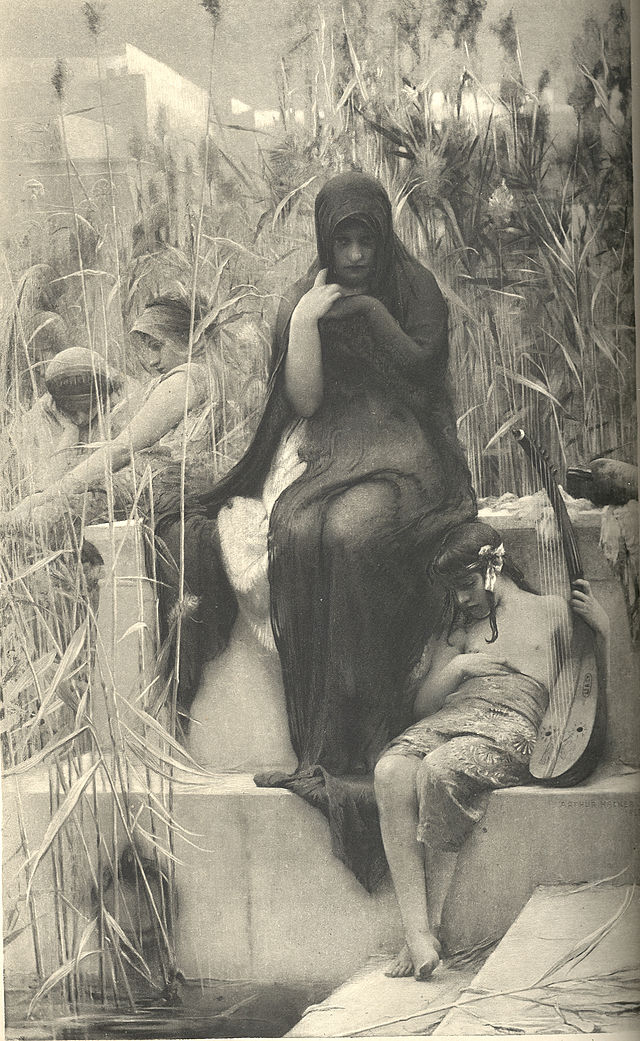
Athur Kacker, By the Waters of Babylon (1888)

Athur Kacker, By the Waters of Babylon (1888)

Jeremiah 39: The City Falls

Jeremiah 39: 1-10 The Destruction of Jerusalem

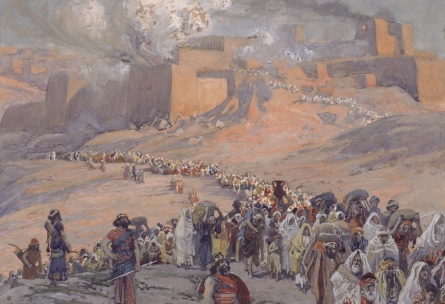
James Tissot, The Flight of the Prisoners

James Tissot, The Flight of the Prisoners

In the ninth year of King Zedekiah of Judah, in the tenth month, King Nebuchadrezzar of Babylon and all his army came against Jerusalem and besieged it; 2 in the eleventh year of Zedekiah, in the fourth month, on the ninth day of the month, a breach was made in the city. 3 When Jerusalem was taken, all the officials of the king of Babylon came and sat in the middle gate: Nergal-sharezer, Samgar-nebo, Sarsechim the Rabsaris, Nergal-sharezer the Rabmag, with all the rest of the officials of the king of Babylon. 4 When King Zedekiah of Judah and all the soldiers saw them, they fled, going out of the city at night by way of the king’s garden through the gate between the two walls; and they went toward the Arabah. 5 But the army of the Chaldeans pursued them, and overtook Zedekiah in the plains of Jericho; and when they had taken him, they brought him up to King Nebuchadrezzar of Babylon, at Riblah, in the land of Hamath; and he passed sentence on him. 6 The king of Babylon slaughtered the sons of Zedekiah at Riblah before his eyes; also the king of Babylon slaughtered all the nobles of Judah. 7 He put out the eyes of Zedekiah, and bound him in fetters to take him to Babylon. 8 The Chaldeans burned the king’s house and the houses of the people, and broke down the walls of Jerusalem. 9 Then Nebuzaradan the captain of the guard exiled to Babylon the rest of the people who were left in the city, those who had deserted to him, and the people who remained. 10 Nebuzaradan the captain of the guard left in the land of Judah some of the poor people who owned nothing, and gave them vineyards and fields at the same time.

The city finally falls, the event which Jeremiah has foretold but also dreaded has finally occurred. Nebuchadrezzar’s army besieges the city of Jerusalem for a year and a half. The parallel telling of this event in 2 Kings 25 also relates, what we learned in the previous chapter of Jeremiah, that food had run out and that at the time the city wall is breached the people are beginning to starve. After a year and a half under siege this part of the narrative shows this final collapse happening with little resistance. The King Zedekiah and the remnants of the army and the officials flee by night, the officials of Babylon set up court in the gate of the city, and even in their fleeing we get the impression that Zedekiah and they are quickly overtaken as they attempt to flee across the Jordan river to Arabah. The punishment of the leaders is swift as the sons of the kin and the nobles of Judah, the leaders who had continued to push for resistance to Babylon, are killed when Nebuchdrezzar passes sentence in Hamath (Syria). Zedekiah is blinded and bound, most likely to be led back through the capitol of Babylon as a spoil of war to show how the might of Babylon has humiliated the Judeans who opposed them. In contrast to the first exile where the majority of the people are left in Judea, now this time Nebuzaradan, the captain of the guard, is charged with organizing a massive exile of those who survived the siege as well as those who fled and surrendered to Babylon. Only the poorest are left, these meek who inherit the earth, the pastures and the vineyards that were once owned by the powerful. Perhaps these are some of the slaves who were freed only to be brought immediately back into captivity (see Jeremiah 34), or those who suffered the loss of everything in the long costly war brought onto them by their leaders. Regardless, for the majority of the Judeans heading into exile it is a bitter pill to swallow. As Psalm 137 laments:

 By the rivers of Babylon—there we sat down and wept when we remembered Zion.
 On the willows there we hung up our harps
 For their our captors asked us for songs,
 And our tormentors asked for mirth, saying,
“Sing us one of the songs of Zion!”
How could we sing the LORD’s song in a foreign land?
If I forget you, O Jerusalem, let my right hand wither!
Let my tongue cling to the roof of my mouth, if I do not remember you,
If I do not set Jerusalem above my highest joy.
Remember, O LORD, against the Edomites the day of Jerusalem’s fall
How they said, “Tear it down! Tear it down! Down to the foundations!”
O daughter Babylon, you devastator!
Happy shall they be who pay you back what you have done to us!
Happy shall they be who take your little ones and dash them against the rock!
 (Psalm 137)

The promise of Jerusalem, the temple, the Davidic dynasty have all failed as the people are marched into a foreign land as exiles. They will have to begin to rediscover who they are as the people of God, and what it means to be the chosen people without the land, a temple or a king. But for this moment they are entering a season of lament and grief. We know from earlier in Jeremiah hope will rise again, but in the midst of the desolation of despair the people may only be able to sings songs of lament and utter prayers of vengeance.

Jeremiah 39: 11-18 Protecting Jeremiah and Ebed-melech

11 King Nebuchadrezzar of Babylon gave command concerning Jeremiah through Nebuzaradan, the captain of the guard, saying, 12 “Take him, look after him well and do him no harm, but deal with him as he may ask you.” 13 So Nebuzaradan the captain of the guard, Nebushazban the Rabsaris, Nergal-sharezer the Rabmag, and all the chief officers of the king of Babylon sent 14 and took Jeremiah from the court of the guard. They entrusted him to Gedaliah son of Ahikam son of Shaphan to be brought home. So he stayed with his own people.

15 The word of the LORD came to Jeremiah while he was confined in the court of the guard: 16 Go and say to Ebed-melech the Ethiopian: Thus says the LORD of hosts, the God of Israel: I am going to fulfill my words against this city for evil and not for good, and they shall be accomplished in your presence on that day. 17 But I will save you on that day, says the LORD, and you shall not be handed over to those whom you dread. 18 For I will surely save you, and you shall not fall by the sword; but you shall have your life as a prize of war, because you have trusted in me, says the LORD.

On the orders of King Nebuchadrezzar of Babylon, Jeremiah is sought out by the officials present in Jerusalem for protection. Jeremiah is freed from his confinement in the court of the guard and placed under the care of Gedaliah who is left in charge of the devastated city and land. Jeremiah is protected, and perhaps for many of his own people this only furthers their conviction that he is a traitor, yet he is sheltered and protected in the midst of the destruction and allowed to remain with the Judean people in the land. Although we only hear the promise of protection to Ebed-melech, the Ethiopian who pulled Jeremiah out of the cistern in Jeremiah 38, he also is promised his life and protection. In contrast to King Zedekiah who heard Jeremiah’s message several times and did not listen and is forced to watch his sons killed and led to Babylon in chains, now this servant of the king who is not a Judean and is a eunuch does hear and inherits his life, the same promise that Jeremiah made again to the king in Jeremiah 38.  This is not a story where Jeremiah or probably Ebed-melech live happily ever after, but in the midst of the death that surrounds them they live and they endure in the midst of the destruction of the nation and city around them.

Jeremiah 38: The Officials, The Prophet, The Eunuch and the King

Jeremiah 38: 1-13 The Persecution and Rescue of the Inconvenient Prophet

Salvatore Rosa, Jeremie Tire De La Cistern, 3rd quarter of the 17th Century

Salvatore Rosa, Jeremie Tire De La Cistern, 3rd quarter of the 17th Century

Now Shephatiah son of Mattan, Gedaliah son of Pashhur, Jucal son of Shelemiah, and Pashhur son of Malchiah heard the words that Jeremiah was saying to all the people, 2 Thus says the LORD, Those who stay in this city shall die by the sword, by famine, and by pestilence; but those who go out to the Chaldeans shall live; they shall have their lives as a prize of war, and live. 3 Thus says the LORD, This city shall surely be handed over to the army of the king of Babylon and be taken. 4 Then the officials said to the king, “This man ought to be put to death, because he is discouraging the soldiers who are left in this city, and all the people, by speaking such words to them. For this man is not seeking the welfare of this people, but their harm.” 5 King Zedekiah said, “Here he is; he is in your hands; for the king is powerless against you.” 6 So they took Jeremiah and threw him into the cistern of Malchiah, the king’s son, which was in the court of the guard, letting Jeremiah down by ropes. Now there was no water in the cistern, but only mud, and Jeremiah sank in the mud.
                7 Ebed-melech the Ethiopian, a eunuch in the king’s house, heard that they had put Jeremiah into the cistern. The king happened to be sitting at the Benjamin Gate, 8 So Ebed-melech left the king’s house and spoke to the king, 9 “My lord king, these men have acted wickedly in all they did to the prophet Jeremiah by throwing him into the cistern to die there of hunger, for there is no bread left in the city.” 10 Then the king commanded Ebed-melech the Ethiopian, “Take three men with you from here, and pull the prophet Jeremiah up from the cistern before he dies.” 11 So Ebed-melech took the men with him and went to the house of the king, to a wardrobe of the storehouse, and took from there old rags and worn-out clothes, which he let down to Jeremiah in the cistern by ropes. 12 Then Ebed-melech the Ethiopian said to Jeremiah, “Just put the rags and clothes between your armpits and the ropes.” Jeremiah did so. 13 Then they drew Jeremiah up by the ropes and pulled him out of the cistern. And Jeremiah remained in the court of the guard.

                 This chapter of Jeremiah does a great deal to highlight the situation at the end of the kingdom of Judah in ways that are surprising. Jeremiah’s long call for what sounds to many of his listeners like a pro-Babylonian policy, where God has sided not with God’s chosen people but with the Chaldean invaders, and he is viewed by many of the ‘officials’ as a traitor. In honesty, imagining myself from my previous time as a soldier in a very different time and army, there was a time when I probably would have looked at someone talking the way Jeremiah does as a traitor as well. Perhaps it would be the easier and more natural reaction for me as well. The officials have bought into the idea that being the covenant people, having the holy city and the temple and the Davidic king guarantees their position. Even now when the siege of Jerusalem has dried up the city’s resources and there is no food left they hold on doggedly to their own positions and ideology, even though Jeremiah’s long message rings truer every day. Their pro-Egyptian alliance and policies have failed them, and perhaps they believe in their desperation that if they can quiet Jeremiah they can quiet the very real voices of dissent that must be emerging at this point. From later in the chapter we see that there are already those who have deserted the city and have either heeded Jeremiah’s words or seen the senselessness of dying of starvation behind the walls that will soon be crumbling. Jeremiah has been once taken out of the house of Jonathan the secretary and the king has offered him some protection, but now the ‘officials’ throw him into the mud-filled cistern to die of dehydration and starvation.

King Zedekiah also occupies a role that most people do not imagine with a king. Zedekiah does not wield total control of the people, in fact many of these officials seem to be the ones able to manipulate the course of how things will go. Zedekiah the son of Josiah, the devout king who attempted to lead the people of Judah back to trusting in the LORD, now finds himself powerless against these officials. Perhaps he is weak and ineffective, or perhaps he finds himself with a position without any real power with others who are skilled at operating the mechanisms of power pulling the strings. Regardless of how Zedekiah found himself in a weak position, here he stands caught between the coming onslaught of Babylon and those in his own government who have locked Jerusalem into a struggle it cannot win.

Finally into the scene enters the unlikely hero, Ebed-melech an Ethiopian eunuch. Not Jewish, not even a person who can enter into the temple, but a person who (unlike the officials) can see that persecuting the LORD’s prophet is wicked. In a scene that is full of compassion, Ebed-melech goes to the king and tells him what is going on. With the king’s approval he goes with three others and not only removes Jeremiah from this cistern where he was sentenced to die but thinks enough to bring padding to protect the abused prophet’s armpits as they lift him out of the pit. These Judean officials are thwarted by the actions of Ebed-melech and again Jeremiah is brought to the court of the guard.

It is a world in chaos with competing agenda and ideologies. Where in the chaos of collapse there are still those grasping for the seats of power on the sinking ship. Yet the prophet continues his impassioned plea to save the city and the temple and the people, in spite of all he has endured.


Jeremiah 38:14-28 The King and The Prophet

                14 King Zedekiah sent for the prophet Jeremiah and received him at the third entrance of the temple of the LORD. The king said to Jeremiah, “I have something to ask you; do not hide anything from me.” 15 Jeremiah said to Zedekiah, “If I tell you, you will put me to death, will you not? And if I give you advice, you will not listen to me.” 16 So King Zedekiah swore an oath in secret to Jeremiah, “As the LORD lives, who gave us our lives, I will not put you to death or hand you over to these men who seek your life.”
 17 Then Jeremiah said to Zedekiah, “Thus says the LORD, the God of hosts, the God of Israel, If you will only surrender to the officials of the king of Babylon, then your life shall be spared, and this city shall not be burned with fire, and you and your house shall live. 18 But if you do not surrender to the officials of the king of Babylon, then this city shall be handed over to the Chaldeans, and they shall burn it with fire, and you yourself shall not escape from their hand.” 19 King Zedekiah said to Jeremiah, “I am afraid of the Judeans who have deserted to the Chaldeans, for I might be handed over to them and they would abuse me.” 20 Jeremiah said, “That will not happen. Just obey the voice of the LORD in what I say to you, and it shall go well with you, and your life shall be spared. 21 But if you are determined not to surrender, this is what the LORD has shown me– 22 a vision of all the women remaining in the house of the king of Judah being led out to the officials of the king of Babylon and saying,
‘Your trusted friends have seduced you and have overcome you;
Now that your feet are stuck in the mud, they desert you.’
 23 All your wives and your children shall be led out to the Chaldeans, and you yourself shall not escape from their hand, but shall be seized by the king of Babylon; and this city shall be burned with fire.”
 24 Then Zedekiah said to Jeremiah, “Do not let anyone else know of this conversation, or you will die. 25 If the officials should hear that I have spoken with you, and they should come and say to you, ‘Just tell us what you said to the king; do not conceal it from us, or we will put you to death. What did the king say to you?’ 26 then you shall say to them, ‘I was presenting my plea to the king not to send me back to the house of Jonathan to die there.'” 27 All the officials did come to Jeremiah and questioned him; and he answered them in the very words the king had commanded. So they stopped questioning him, for the conversation had not been overheard. 28 And Jeremiah remained in the court of the guard until the day that Jerusalem was taken.

King Zedekiah is a tragic figure in this narrative, and I believe that Jeremiah has some compassion for him, if for no other reason than him being Josiah’s son. Jeremiah once again is summoned to meet with the king in ‘secret’ (although it is a secret that everyone knows occurs even if they don’t know the content of what is said). For those who have read George R.R. Martin’s Fire and Ice series (which the HBO series Game of Thrones gets its storyline) it is almost like in King’s Landing where there are the listeners employed by Cersei, Varus, and Littlefinger, all keeping track of everyone’s movements.  King Zedekiah also seems to at least respect Jeremiah, and maybe even believes his words (though he is unable to act on them). This is the last time Jeremiah will make this plea for the King to surrender and his life and the city will be saved. We learn from the king’s words that there are already Judeans who have defected to the Babylonians, and the king is afraid that in his surrender he would fall into their hands. We also know from the official’s words earlier in the chapter when the mention the soldiers ‘who are left’ that either many of the soldiers have fallen or some of them too have defected (very likely in my opinion). Jeremiah’s words again are for naught, the king does not act on them, but he does continue to protect Jeremiah and his excuse that he tells Jeremiah to tell the ears of the already curious eyes watching is a plausible one, ‘to keep him out of the house of Jonathan’ where Jeremiah has already been once and fears to go again. The time is short, Jeremiah’s days in the court of the guard are coming to an end and with them the city of Jerusalem is approaching its end.

Jeremiah 37: The People Who Do Not Hear

Jeremiah 37: 1-10 A Failure to Listen


Shema Yisrael at the Knessey Menorah in Jerusalem

Shema Yisrael at the Knessey Menorah in Jerusalem

Zedekiah son of Josiah, whom King Nebuchadrezzar of Babylon made king in the land of Judah, succeeded Coniah son of Jehoiakim. 2 But neither he nor his servants nor the people of the land listened to the words of the LORD that he spoke through the prophet Jeremiah.

 3 King Zedekiah sent Jehucal son of Shelemiah and the priest Zephaniah son of Maaseiah to the prophet Jeremiah saying, “Please pray for us to the LORD our God.” 4 Now Jeremiah was still going in and out among the people, for he had not yet been put in prison. 5 Meanwhile, the army of Pharaoh had come out of Egypt; and when the Chaldeans who were besieging Jerusalem heard news of them, they withdrew from Jerusalem.

 6 Then the word of the LORD came to the prophet Jeremiah: 7 Thus says the LORD, God of Israel: This is what the two of you shall say to the king of Judah, who sent you to me to inquire of me, Pharaoh’s army, which set out to help you, is going to return to its own land, to Egypt. 8 And the Chaldeans shall return and fight against this city; they shall take it and burn it with fire. 9 Thus says the LORD: Do not deceive yourselves, saying, “The Chaldeans will surely go away from us,” for they will not go away. 10 Even if you defeated the whole army of Chaldeans who are fighting against you, and there remained of them only wounded men in their tents, they would rise up and burn this city with fire.


For the Jewish people, their central command is to hear or listen. The Shema (Deuteronomy 6:4-Shema is the first word in this verse translated Hear) is to form the central practice of their lives

Hear, O Israel: The LORD is our God, the LORD alone. Deuteronomy 6: 4

Yet here, as throughout the ministry of Jeremiah where he speaks the word of the LORD nobody listens. Even now, in this time where Babylon has already conquered the Kingdom of Judah once and place on the throne Zedekiah in the place of Jeconiah, has taken the elites of the land into exile and has demonstrated that the words of so many of the other voices that contradicted Jeremiah’s voice were false, still nobody wants to listen to this inconvenient prophet. Yet, in this chapter here and in the next section we see in Zedekiah an acceptance of Jeremiah’s role if not his words. Zedekiah sends to Jeremiah for him to once again pray to the LORD our God (again echoing the language of the Shema) but we have heard again that Jeremiah is no longer to pray for this people.

The life of the king and the prophet and the people are also caught up in the geo-political events of the day and so as the great empire to the north (Babylon) hears of the movement of the armies of the empire to the south (Egypt) they move to engage the armies of Pharaoh. Much of the policies in this interim time between the first and second invasion of the armies of Chaldea (the forces of the Babylonian empire) have involved political maneuvering to place the Judean people in alliance with the Egyptians. These alliances will fail and Judea will be left alone to face the wrath of Babylon, but in Jeremiah’s view Judah has a more important enemy, the LORD their God. Jeremiah again prophesies what he has prophesied for years, there is no escape from the armies of Babylon, that even if their entire army was destroyed leaving only the wounded that would be enough for them to carry out their function in destroying Jerusalem.


Jeremiah 37: 11-21 Jeremiah Put in Prison


Salvatore Rosa, Jeremie Tire De La Cistern, 3rd quarter of the 17th Century

Salvatore Rosa, Jeremie Tire De La Cistern, 3rd quarter of the 17th Century

 11 Now when the Chaldean army had withdrawn from Jerusalem at the approach of Pharaoh’s army, 12 Jeremiah set out from Jerusalem to go to the land of Benjamin to receive his share of property among the people there. 13 When he reached the Benjamin Gate, a sentinel there named Irijah son of Shelemiah son of Hananiah arrested the prophet Jeremiah saying, “You are deserting to the Chaldeans.” 14 And Jeremiah said, “That is a lie; I am not deserting to the Chaldeans.” But Irijah would not listen to him, and arrested Jeremiah and brought him to the officials. 15 The officials were enraged at Jeremiah, and they beat him and imprisoned him in the house of the secretary Jonathan, for it had been made a prison. 16 Thus Jeremiah was put in the cistern house, in the cells, and remained there many days.

 17 Then King Zedekiah sent for him, and received him. The king questioned him secretly in his house, and said, “Is there any word from the LORD?” Jeremiah said, “There is!” Then he said, “You shall be handed over to the king of Babylon.” 18 Jeremiah also said to King Zedekiah, “What wrong have I done to you or your servants or this people, that you have put me in prison? 19 Where are your prophets who prophesied to you, saying, ‘The king of Babylon will not come against you and against this land’?

 20 Now please hear me, my lord king: be good enough to listen to my plea, and do not send me back to the house of the secretary Jonathan to die there.” 21 So King Zedekiah gave orders, and they committed Jeremiah to the court of the guard; and a loaf of bread was given him daily from the bakers’ street, until all the bread of the city was gone. So Jeremiah remained in the court of the guard.


Jeremiah’s words have not made him popular with the remaining leaders in Jerusalem, so when he sets out from Jerusalem during this break in the siege by the movement of the Chaldean army he is arrested and placed in a makeshift prison set up at the house of Jonathan the secretary. Jeremiah is beaten, imprisoned and in Jeremiah’s eyes left for dead. Surprisingly, it is King Zedekiah who sends for him in secret (and this probably drew the ire of many of the officials who were enraged at Jeremiah and had him beaten and imprisoned).  Zedekiah, son of Josiah the faithful king, once again seems to respect the role of the prophet Jeremiah and so asks again for a word from the LORD. Jeremiah answers again, probably not with the words the king wants to hear but with a message that is probably not surprising to the king. Unlike the other officials the king is not enraged by these words, perhaps even accepts the inevitability of them. Then surprisingly we hear the plea of Jeremiah, making his case that he is not a traitor or a liar, but rather the very prophets who spoke the words the officials wanted to hear have spoken lies and Jeremiah pleads to be rescued from his current situation in the house of Jonathan the secretary.  Jeremiah’s plea is heard and the king places him in the court of the guard (where Jeremiah 32 and 33 take place) which is apparently a more hospitable imprisonment where Jeremiah receives regular food until famine and the lack of food from the siege overtake the city. Even if the king cannot change the course of the city and the kingdom’s eventual destruction by Babylon, and even if he is unwilling (or perhaps unable-Zedekiah does not occupy the typical strong position we often imagine with kings) to surrender to Babylon, at least he is able to provide some protection for the prophet Jeremiah.

Jeremiah 36: The Consumed Scroll and The Indestructible Words

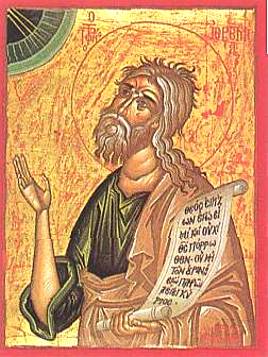
Orthodox Icon of the Prophet Jeremiah

Orthodox Icon of the Prophet Jeremiah


Jeremiah 36: 1-8 Perhaps They Will Turn

In the fourth year of King Jehoiakim son of Josiah of Judah, this word came to Jeremiah from the LORD:2 Take a scroll and write on it all the words that I have spoken to you against Israel and Judah and all the nations, from the day I spoke to you, from the days of Josiah until today. 3 It may be that when the house of Judah hears of all the disasters that I intend to do to them, all of them may turn from their evil ways, so that I may forgive their iniquity and their sin.

 4 Then Jeremiah called Baruch son of Neriah, and Baruch wrote on a scroll at Jeremiah’s dictation all the words of the LORD that he had spoken to him. 5 And Jeremiah ordered Baruch, saying, “I am prevented from entering the house of the LORD; 6 so you go yourself, and on a fast day in the hearing of the people in the LORD’s house you shall read the words of the LORD from the scroll that you have written at my dictation. You shall read them also in the hearing of all the people of Judah who come up from their towns. 7 It may be that their plea will come before the LORD, and that all of them will turn from their evil ways, for great is the anger and wrath that the LORD has pronounced against this people.” 8 And Baruch son of Neriah did all that the prophet Jeremiah ordered him about reading from the scroll the words of the LORD in the LORD’s house.


In a final plea for the attention of the people, Jeremiah is instructed to write down the words he has received from the Lord throughout his ministry so that they can be delivered in total to the people of Jerusalem and Judah. Jeremiah’s ministry has been a visual and oral one up until this point but we see a transition as the words of the Lord become written down so that they are not lost with the prophet. This is the dangerous move from proclamation to print, where the words given the prophet are collected and become scripture. We don’t know the form of exactly what Baruch will write down on dictation from Jeremiah, but in the waning days of King Jehoiakim and the independence of Judah perhaps there is one final hope that the words will be received and judgment can be averted.

For roughly forty years Jeremiah has been the prophet of the Lord, and for all that time he has been unheard by those with the power to change the course of the people. Yet, the Lord and the prophet still desire a turning, some glimmer of hope in some future reconciliation. The relationship cannot remain as it is, with the people placing their trust in the land, the city of Jerusalem, the Davidic king and the temple along with political alliances with Egypt and not living into their identity they were called to in their covenant with God. Things cannot remain how they are and so there is one cumulative reminder of the consequences of the path that lies ahead. The words once spoken are now written so that they can be heard and spoken again and again. Knowing the previous story perhaps it is a desperate gambit by the prophet with little chance of success, but the reality of the coming dread is such that every option must be exhausted before surrendering to the despair of the siege and desolation of the land and people.

As Walter Brueggemann talks about this text in his article “Haunting Book-Haunting People” this scroll, created through the fidelity of Jeremiah and Baruch and designed to evoke a massive change in the people while sounding like a threat is actually an act of grace. (Brueggemann, 2006, p. 133f) And this unique text, which is the only text in the Hebrew Scriptures that shows the process of moving from proclamation to text so that the haunting text can continue to bring its haunting message to us today. By this text of Jeremiah which has been handed down from generation to generation, often neglected and sometimes wrestled with invites us into the haunting relationship between God, the people and the prophet and in its own poetic way invites those willing to engage it into dialogue between God, the people, the leaders and we who receive it and either suppress or profess it.

Jeremiah 36: 9-19: A Final Hearing

 9 In the fifth year of King Jehoiakim son of Josiah of Judah, in the ninth month, all the people in Jerusalem and all the people who came from the towns of Judah to Jerusalem proclaimed a fast before the LORD. 10 Then, in the hearing of all the people, Baruch read the words of Jeremiah from the scroll, in the house of the LORD, in the chamber of Gemariah son of Shaphan the secretary, which was in the upper court, at the entry of the New Gate of the LORD’s house.

            11 When Micaiah son of Gemariah son of Shaphan heard all the words of the LORD from the scroll, 12 he went down to the king’s house, into the secretary’s chamber; and all the officials were sitting there: Elishama the secretary, Delaiah son of Shemaiah, Elnathan son of Achbor, Gemariah son of Shaphan, Zedekiah son of Hananiah, and all the officials. 13 And Micaiah told them all the words that he had heard, when Baruch read the scroll in the hearing of the people. 14 Then all the officials sent Jehudi son of Nethaniah son of Shelemiah son of Cushi to say to Baruch, “Bring the scroll that you read in the hearing of the people, and come.” So Baruch son of Neriah took the scroll in his hand and came to them. 15 And they said to him, “Sit down and read it to us.” So Baruch read it to them. 16 When they heard all the words, they turned to one another in alarm, and said to Baruch, “We certainly must report all these words to the king.” 17 Then they questioned Baruch, “Tell us now, how did you write all these words? Was it at his dictation?” 18 Baruch answered them, “He dictated all these words to me, and I wrote them with ink on the scroll.” 19 Then the officials said to Baruch, “Go and hide, you and Jeremiah, and let no one know where you are.”


As King Nebuchadnezzer of Babylon begins his campaigns and cities and empires begin to fall there is a gathering in Jerusalem and a time of fasting. It is into this time of fasting that Baruch, the scribe who has recorded the words of Jeremiah, enters the temple and proclaims the words to the people in the chamber of Gemariah. The words dictated by Jeremiah do fall initially on some sympathetic ears, first Micaiah the son of Gemariah (the son of the one whose chamber Baruch read from, probably indicating some sympathy for Jeremiah in advance) and then later in the king’s house by several of the named officials. Jeremiah, even though he had run afoul of the king was still valued by some within the royal court and once they confirm the origin of the scroll they decide that the king does need to hear the words given through Jeremiah and Baruch.

These officials know that these are dangerous words that will likely be ill received by the king, but they courageously are will both to bring news of these words to the king and to instruct Baruch and Jeremiah to go into hiding. The officials do not even know where Baruch and Jeremiah are, but the words themselves are so important that just as Micaiah brought word to them, now they feel compelled to bring word to the king.

The text is a threat to the status-quo, the trusting in Davidic lines, temple and land as well as alliances with Egypt which have been the strategy of King Jehoiakim’s reign. The words are a risk for Jeremiah, even more for Baruch, and now for these officials who now prepare to take this challenge to the king.


Jeremiah 36: 20-32 The Burning of the Scroll and the Enduring Word

 20 Leaving the scroll in the chamber of Elishama the secretary, they went to the court of the king; and they reported all the words to the king. 21 Then the king sent Jehudi to get the scroll, and he took it from the chamber of Elishama the secretary; and Jehudi read it to the king and all the officials who stood beside the king. 22 Now the king was sitting in his winter apartment (it was the ninth month), and there was a fire burning in the brazier before him. 23 As Jehudi read three or four columns, the king would cut them off with a penknife and throw them into the fire in the brazier, until the entire scroll was consumed in the fire that was in the brazier. 24 Yet neither the king, nor any of his servants who heard all these words, was alarmed, nor did they tear their garments. 25 Even when Elnathan and Delaiah and Gemariah urged the king not to burn the scroll, he would not listen to them. 26 And the king commanded Jerahmeel the king’s son and Seraiah son of Azriel and Shelemiah son of Abdeel to arrest the secretary Baruch and the prophet Jeremiah. But the LORD hid them.

27 Now, after the king had burned the scroll with the words that Baruch wrote at Jeremiah’s dictation, the word of the LORD came to Jeremiah: 28 Take another scroll and write on it all the former words that were in the first scroll, which King Jehoiakim of Judah has burned. 29 And concerning King Jehoiakim of Judah you shall say: Thus says the LORD, You have dared to burn this scroll, saying, Why have you written in it that the king of Babylon will certainly come and destroy this land, and will cut off from it human beings and animals? 30 Therefore thus says the LORD concerning King Jehoiakim of Judah: He shall have no one to sit upon the throne of David, and his dead body shall be cast out to the heat by day and the frost by night. 31 And I will punish him and his offspring and his servants for their iniquity; I will bring on them, and on the inhabitants of Jerusalem, and on the people of Judah, all the disasters with which I have threatened them– but they would not listen.

            32 Then Jeremiah took another scroll and gave it to the secretary Baruch son of Neriah, who wrote on it at Jeremiah’s dictation all the words of the scroll that King Jehoiakim of Judah had burned in the fire; and many similar words were added to them.


The king mistakenly believes that if he can destroy the words of the text that the status quo can be maintained. Rather than engage the haunting words he destroys them, personally cutting them and throwing them into the fire where they are consumed. After the scroll is burned up, against the protests of Elnathan, Delaiah and Gemariah, the next command to his sons is to seek out Baruch and Jeremiah. Not only must the message be eliminated, the messengers must be silenced as well. Yet the word of the Lord is not so easily eliminated, it will continue its haunting presence. Eliminating the threatening words will not eliminate the armies of Babylon, and burning the text does not eliminate even it. Instead of reducing the words spoken through Jeremiah, dictated by Baruch now a new scroll is produce which also has many similar words added to it, and the judgment against Jehoiakim is particularly harsh. His line will come to an end in disgrace, and according to Jeremiah’s words he will not even be buried but left out in the open for his corpse to be consumed by the elements. These words, as haunting and inconvenient as they may be will not be ignored or eliminated.

Jeremiah 35: The Example of the Rechabites

The Prophet Jeremiah by Michelangelo

The Prophet Jeremiah by Michelangelo

Jeremiah 35: 1-11: If You Offer a Rechabite a Drink

 The word that came to Jeremiah from the LORD in the days of King Jehoiakim son of Josiah of Judah: 2 Go to the house of the Rechabites, and speak with them, and bring them to the house of the LORD, into one of the chambers; then offer them wine to drink. 3 So I took Jaazaniah son of Jeremiah son of Habazziniah, and his brothers, and all his sons, and the whole house of the Rechabites. 4 I brought them to the house of the LORD into the chamber of the sons of Hanan son of Igdaliah, the man of God, which was near the chamber of the officials, above the chamber of Maaseiah son of Shallum, keeper of the threshold. 5 Then I set before the Rechabites pitchers full of wine, and cups; and I said to them, “Have some wine.” 6 But they answered, “We will drink no wine, for our ancestor Jonadab son of Rechab commanded us, ‘You shall never drink wine, neither you nor your children; 7 nor shall you ever build a house, or sow seed; nor shall you plant a vineyard, or even own one; but you shall live in tents all your days, that you may live many days in the land where you reside.’ 8 We have obeyed the charge of our ancestor Jonadab son of Rechab in all that he commanded us, to drink no wine all our days, ourselves, our wives, our sons, or our daughters, 9 and not to build houses to live in. We have no vineyard or field or seed; 10 but we have lived in tents, and have obeyed and done all that our ancestor Jonadab commanded us. 11 But when King Nebuchadrezzar of Babylon came up against the land, we said, ‘Come, and let us go to Jerusalem for fear of the army of the Chaldeans and the army of the Arameans.’ That is why we are living in Jerusalem.”


Knowing who one is and the story one is living out of is crucial to identity. The Rechabites, a part of the people known as Kenites who come into the promised land as allies of the tribes of Israel when they settled the land. The majority of the Kenites settled into life in cities and homes, but the descendants of Jonadab son of Rechab maintain a nomadic lifestyle consisting in a way of life very different than most of their kin and the surrounding nation of Israel. The Rechabite response to Jeremiah when offered wine demonstrates their way of life:

You shall never drink wine

You shall never build a house

You shall not sow seed, plant a vineyard or own one

Their actions living into this identity constitute who they are. They as a community remain faithful to this way of life which differentiates them from their surrounding kin and neighbors. They remain fixed to a lifestyle articulated by their ancestor and their actions in faithfulness to these commands mark them off as being Rechabite in contrast to the surrounding world. Many groups use specific actions and markers to act as boundaries of identity, and the Rechabites who are only in the city because of the invading Chaldean army demonstrate a contrast between themselves who have held fast to these markers of identity through the promises and command of their ancestor and Israel who has not held fast to their identity in the covenant with the Lord.


Jeremiah 31: 12-19:The Rechabites as an Object Lesson

 12 Then the word of the LORD came to Jeremiah: 13 Thus says the LORD of hosts, the God of Israel: Go and say to the people of Judah and the inhabitants of Jerusalem, Can you not learn a lesson and obey my words? says the LORD. 14 The command has been carried out that Jonadab son of Rechab gave to his descendants to drink no wine; and they drink none to this day, for they have obeyed their ancestor’s command. But I myself have spoken to you persistently, and you have not obeyed me. 15 I have sent to you all my servants the prophets, sending them persistently, saying, ‘Turn now everyone of you from your evil way, and amend your doings, and do not go after other gods to serve them, and then you shall live in the land that I gave to you and your ancestors.’ But you did not incline your ear or obey me. 16 The descendants of Jonadab son of Rechab have carried out the command that their ancestor gave them, but this people has not obeyed me.

 17 Therefore, thus says the LORD, the God of hosts, the God of Israel: I am going to bring on Judah and on all the inhabitants of Jerusalem every disaster that I have pronounced against them; because I have spoken to them and they have not listened, I have called to them and they have not answered. 18 But to the house of the Rechabites Jeremiah said: Thus says the LORD of hosts, the God of Israel: Because you have obeyed the command of your ancestor Jonadab, and kept all his precepts, and done all that he commanded you, 19 therefore thus says the LORD of hosts, the God of Israel: Jonadab son of Rechab shall not lack a descendant to stand before me for all time.


The Rechabites are now used as an object lesson for those who will see and hear. The Lord appeals to their faithfulness to their ancestors command and contrasts it with the inability of the people to maintain God’s covenantal commands. Where the Rechabites have listened, the people of Judah and Jerusalem have failed to listen. Where the Rechabites have been obedient, the people Jeremiah is called to address have been disobedient.  The Rechabites have made their ancestor’s commands an integral part of their identity, yet God has continued to send prophets to call people back into their calling to be the people of God. The people of Israel cannot be Israel without their covenantal obedience, without living into the Torah, without being willing to hear the words of the Lord when they come through the prophets. Even though this passage is chronologically ahead of the previous chapters where Jeremiah is in the court of the guard the people are reaching the point where there is no longer a chance to turn back. The disasters are coming, and in Deuteronomic form there are blessings and curses. The Rechabites are commended for their obedience and so the promise is that they will not lack descendants, but to the people who have not listened the disasters pronounced for years to encourage a returning to their identity are indeed coming to pass. The armies of Chaldea, the forces of King Nebuchadrezzar are indeed coming and they will bring about the ending of the world that the people of Jerusalem and Judah have known.

Jeremiah 34: A Broken Covenant

Zedekiah, last King of Judah before the destruction of the kingdom by Babylon, "Promptuarii Iconum Insigniorum" published by Guillaume Rouille (1518-1589)

Zedekiah, last King of Judah before the destruction of the kingdom by Babylon, “Promptuarii Iconum Insigniorum” published by Guillaume Rouille (1518-1589)

Jeremiah 34: 1-7: A Final Chance for Zedekiah?

The word that came to Jeremiah from the LORD, when King Nebuchadrezzar of Babylon and all his army and all the kingdoms of the earth and all the peoples under his dominion were fighting against Jerusalem and all its cities: 2 “Thus says the LORD, the God of Israel: Go and speak to King Zedekiah of Judah and say to him: Thus says the LORD: I am going to give this city into the hand of the king of Babylon, and he shall burn it with fire. 3 And you yourself shall not escape from his hand, but shall surely be captured and handed over to him; you shall see the king of Babylon eye to eye and speak with him face to face; and you shall go to Babylon. 4 Yet hear the word of the LORD, O King Zedekiah of Judah! Thus says the LORD concerning you: You shall not die by the sword; 5 you shall die in peace. And as spices were burned for your ancestors, the earlier kings who preceded you, so they shall burn spices for you and lament for you, saying, “Alas, lord!” For I have spoken the word, says the LORD.

6 Then the prophet Jeremiah spoke all these words to Zedekiah king of Judah, in Jerusalem, 7 when the army of the king of Babylon was fighting against Jerusalem and against all the cities of Judah that were left, Lachish and Azekah; for these were the only fortified cities of Judah that remained.


Like the previous chapters we are in the context of the invasion of Judah by Nebuchadrezzar of Babylon but unlike chapters 30-33 this is not a chapter of hope, this is focused on the immediate reality of the collapse of Judah, Jerusalem, and the Davidic dynasty. On the one hand this is a much kinder word than his predecessor Jehoiakim receives from Jeremiah, in many ways it is the exact opposite word (see Jeremiah 22: 18-19). As Rabbi Lau narrates this part of the story he sees Jeremiah looking at Zedekiah in a web far beyond his own control and that ultimately this crisis is not his fault. (Lau, 2013, p. 162) The defenses and all the alliances have failed as the fortified cities of Judah quickly fall. Zedekiah actually endures a much harsher punishment than what Jeremiah states here, and perhaps this is one final plea for Zedekiah and the forces of Jerusalem to surrender. The city will fall either way, there is no escape for Zedekiah but perhaps Jeremiah offers him one final chance for some mercy for the king and by extension the people in the face of the destruction.


Jeremiah 34: 8-22: A Broken Covenant

Roman collared slaves-Marble relief from Smyrna (Izmir, Turkey), 200 CE

Roman collared slaves-Marble relief from Smyrna (Izmir, Turkey), 200 CE

8 The word that came to Jeremiah from the LORD, after King Zedekiah had made a covenant with all the people in Jerusalem to make a proclamation of liberty to them, 9 that all should set free their Hebrew slaves, male and female, so that no one should hold another Judean in slavery. 10 And they obeyed, all the officials and all the people who had entered into the covenant that all would set free their slaves, male or female, so that they would not be enslaved again; they obeyed and set them free. 11 But afterward they turned around and took back the male and female slaves they had set free, and brought them again into subjection as slaves. 12 The word of the LORD came to Jeremiah from the LORD: 13 Thus says the LORD, the God of Israel: I myself made a covenant with your ancestors when I brought them out of the land of Egypt, out of the house of slavery, saying, 14 “Every seventh year each of you must set free any Hebrews who have been sold to you and have served you six years; you must set them free from your service.” But your ancestors did not listen to me or incline their ears to me. 15 You yourselves recently repented and did what was right in my sight by proclaiming liberty to one another, and you made a covenant before me in the house that is called by my name; 16 but then you turned around and profaned my name when each of you took back your male and female slaves, whom you had set free according to their desire, and you brought them again into subjection to be your slaves. 17 Therefore, thus says the LORD: You have not obeyed me by granting a release to your neighbors and friends; I am going to grant a release to you, says the LORD– a release to the sword, to pestilence, and to famine. I will make you a horror to all the kingdoms of the earth. 18 And those who transgressed my covenant and did not keep the terms of the covenant that they made before me, I will make like the calf when they cut it in two and passed between its parts: 19 the officials of Judah, the officials of Jerusalem, the eunuchs, the priests, and all the people of the land who passed between the parts of the calf 20 shall be handed over to their enemies and to those who seek their lives. Their corpses shall become food for the birds of the air and the wild animals of the earth. 21 And as for King Zedekiah of Judah and his officials, I will hand them over to their enemies and to those who seek their lives, to the army of the king of Babylon, which has withdrawn from you. 22 I am going to command, says the LORD, and will bring them back to this city; and they will fight against it, and take it, and burn it with fire. The towns of Judah I will make a desolation without inhabitant.


This event gives a window into some of the competing ideals that are at work in the time of Jeremiah. Slavery in this time was an economic arrangement where a person no longer able to pay their debts would become a slave to the debt holder. Leviticus 25: 10 (also Isaiah 61:1 and Ezekiel 46: 17 refer to this idea) places a limit on this time of servitude requires the release of lands and bonded servants and Deuteronomy 15 also talks about this regular practice of the remission of debts and the freeing of those under those debts and indentured slavery. In a time of military and political crisis the people fall back on to this practice under the leadership of Zedekiah. The cut a covenant with God, set those in slavery free. In the context of the invasion this is also the point where the approaching Babylonian armies have to turn aside to deal with an approaching Egyptian army. Quickly, once the threat of the approaching Babylonian army turns aside economic concerns begin to dominate again and the people recently freed are returned to their positions of servitude. Perhaps the people are beginning to mock Jeremiah’s words and believe that they have averted yet another crisis: the city and the temple and the Davidic king are all the guarantee they need rather than living out the covenant they have made with their God. The Lord is furious with this turnaround, this is one additional illustration of the unfaithfulness of the people to the covenant that they made with the Lord. The Lord’s words refer to the action of cutting a covenant, similar to the action narrated in Genesis 15 between God and Abraham, where the action of cutting apart an animal and passing through the center is used to mark the cutting of the covenant and also to symbolize the consequences of breaking that covenant. Now the people who have broken this covenant will become a corpse like the calf and be left for the wild animals. They were a people who could have been a blessing but they in their turning away have become a curse. The army of Babylon will not stay away, they will come and burn, kill and destroy.

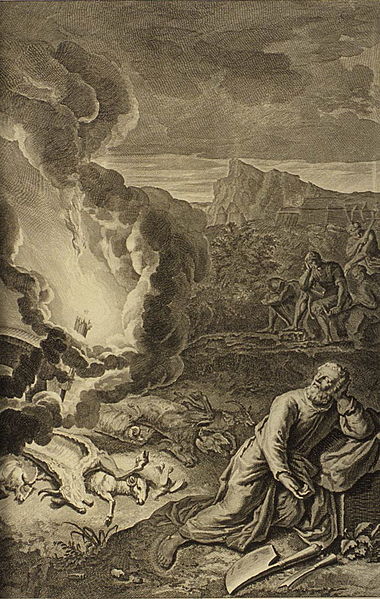
A Deep Sleep Came Upon Abraham and a Horror Siezed Him, as in Genesis 15: 12 from 1728 Figures de la Bible illustrated by Gerard Hoet (1648-1733)

A Deep Sleep Came Upon Abraham and a Horror Siezed Him, as in Genesis 15: 12 from 1728 Figures de la Bible illustrated by Gerard Hoet (1648-1733)

Jeremiah 33 Hope in the Midst of Hopelessness

candle

Jeremiah 33: 1-11: Hope in the Midst of the Hopelessness

The word of the LORD came to Jeremiah a second time, while he was still confined in the court of the guard: 2 Thus says the LORD who made the earth, the LORD who formed it to establish it– the LORD is his name: 3 Call to me and I will answer you, and will tell you great and hidden things that you have not known. 4 For thus says the LORD, the God of Israel, concerning the houses of this city and the houses of the kings of Judah that were torn down to make a defense against the siege ramps and before the sword: 5 The Chaldeans are coming in to fight and to fill them with the dead bodies of those whom I shall strike down in my anger and my wrath, for I have hidden my face from this city because of all their wickedness. 6 I am going to bring it recovery and healing; I will heal them and reveal to them abundance of prosperity and security. 7 I will restore the fortunes of Judah and the fortunes of Israel, and rebuild them as they were at first. 8 I will cleanse them from all the guilt of their sin against me, and I will forgive all the guilt of their sin and rebellion against me. 9 And this city shall be to me a name of joy, a praise and a glory before all the nations of the earth who shall hear of all the good that I do for them; they shall fear and tremble because of all the good and all the prosperity I provide for it.
10 Thus says the LORD: In this place of which you say, “It is a waste without human beings or animals,” in the towns of Judah and the streets of Jerusalem that are desolate, without inhabitants, human or animal, there shall once more be heard 11 the voice of mirth and the voice of gladness, the voice of the bridegroom and the voice of the bride, the voices of those who sing, as they bring thank offerings to the house of the LORD:
“Give thanks to the LORD of hosts, for the LORD is good,
for his steadfast love endures forever!”
For I will restore the fortunes of the land as at first, says the LORD.

             Out of the darkness and destruction comes a new beginning and a new light. Jeremiah is still in prison and the armies of Babylon surround the city. The deepest depths have not been reached yet, but in the midst of the darkness we continue to have the message of hope and reversals emerge. Finally the expected invasion from the previous 30 chapters has come, the devastation places the people into a place where they feel they have no future, no hope, no God they can turn to, and in this time life comes to a standstill. Men and women no longer marry, celebrations stop and those who remain are merely trying to survive. But the prophet now sees the long-expected judgment in the horizon of hope. That the death and destruction are not ultimate, that God’s steadfast love endures forever even as the judgment only lasts for a season. The people will be cleansed and made knew, the city becomes again a source of joy for God rather than a place that evokes God’s wrath. Where joy and mirth are absent, the time will come when they re-emerge. The land, one of the central symbols of identity for the people is again to be restored to the people as they in the future will regain their identity.


Model of the Second Temple at the time of Jesus

Model of the Second Temple at the time of Jesus

Jeremiah 33: 12-26: Restoration of Prosperity, the Line of Kings and the Priesthood

  12 Thus says the LORD of hosts: In this place that is waste, without human beings or animals, and in all its towns there shall again be pasture for shepherds resting their flocks. 13 In the towns of the hill country, of the Shephelah, and of the Negeb, in the land of Benjamin, the places around Jerusalem, and in the towns of Judah, flocks shall again pass under the hands of the one who counts them, says the LORD.
            14 The days are surely coming, says the LORD, when I will fulfill the promise I made to the house of Israel and the house of Judah.
            15 In those days and at that time I will cause a righteous Branch to spring up for David;
and he shall execute justice and righteousness in the land.
 16 In those days Judah will be saved and Jerusalem will live in safety.
And this is the name by which it will be called: “The LORD is our righteousness.”
            17 For thus says the LORD: David shall never lack a man to sit on the throne of the house of Israel, 18 and the levitical priests shall never lack a man in my presence to offer burnt offerings, to make grain offerings, and to make sacrifices for all time.
            19 The word of the LORD came to Jeremiah: 20 Thus says the LORD: If any of you could break my covenant with the day and my covenant with the night, so that day and night would not come at their appointed time, 21 only then could my covenant with my servant David be broken, so that he would not have a son to reign on his throne, and my covenant with my ministers the Levites. 22 Just as the host of heaven cannot be numbered and the sands of the sea cannot be measured, so I will increase the offspring of my servant David, and the Levites who minister to me.
 23 The word of the LORD came to Jeremiah: 24 Have you not observed how these people say, “The two families that the LORD chose have been rejected by him,” and how they hold my people in such contempt that they no longer regard them as a nation? 25 Thus says the LORD: Only if I had not established my covenant with day and night and the ordinances of heaven and earth, 26 would I reject the offspring of Jacob and of my servant David and not choose any of his descendants as rulers over the offspring of Abraham, Isaac, and Jacob. For I will restore their fortunes, and will have mercy upon them.

 The theme of reversals continues as the agricultural losses of the invasion of Babylon are regained as they see the flocks again counted. In one of the better known pieces of Jeremiah to Christians because this portion is often read as a prefiguring of the Christ, it also stands as a promise to the people of Judah that the line of Davidic kings which seems to have failed. The priesthood which now has lost its place without the temple will also be restored and the traditional places of Levi and Judah will be restored. The one guaranteeing the continued line of kings and place for the priests is the Lord who states again that only if the basic orders of creation can be reversed will his promises come to an end. The exile in Babylon is not the ultimate reality, God will not forget God’s people.