Author Archives: Neil

Reflections After Walking Through the Book of Exodus

This journey through the book of Exodus was an insightful journey for me. I am thankful for what I learned from four wise teachers who have spent far longer in this book than I did: my primary companions were Rabbi Jonathan Sacks and his book Covenant and Conversation: Exodus the Book of Redemption and Carol Myers volume on Exodus for the New Cambridge Bible Commentary, but I also learned from both Terence E. Fretheim whose Exodus commentary for the Interpretation Series I read at the beginning of the journey and Walter Brueggemann whose work on Exodus is in the New Interpreter’s Bible which I read closer to the end of the journey. In addition there is the discipline of writing out the book I am working through, which takes most of a composition book in the case of Exodus. I continue to be amazed by how much I learn in this process and how much I appreciate each book I have worked through.  Here are a few reflections looking back on my writing about the forty chapters of the book of Exodus:

  • In the book of Genesis, barrenness becomes a major part of the story of the people of Israel but in Exodus this is reversed and one of the central issues that give rise to the crisis in Egypt is the fertility of the people. This is one of the many narratives of reversal in the book of Exodus and will be a place where the narrative points to the Israelites being more robust than their Egyptian overlords.
  • From an overall perspective there is a contrast drawn between the vision of the lords of Egypt, and particularly the vision of a society where Pharaoh controls life and death, and the vision of the LORD the God of Israel for the society the Jewish people are to create. Yet, even for these former captives the vision of a society the saw modeled in Egypt will continue to occupy a potent place in their imaginations.
  • There is a surprising number of places where the role of women is highlighted in Exodus. Early in the book women are the primary resistors to the policies of Pharaoh: the midwives, Moses’ mother and sister, and even the daughter of Pharaoh all in their own ways resist the policies of death decreed by the most powerful man in Egypt.
  • Moses’ actions reveal a person unable to see oppression go unanswered. Moses’ actions with killing the Egyptian abusing a Hebrew and driving off the shepherds for the daughters of the priest of Midian to be able to water their flocks demonstrate he sees and acts upon injustice. This may be one of the things God sees in Moses when he is called.
  • Moses’ resistance to the call of the LORD is worth considering. Even Moses realizes his own inadequacies and attempts to talk God out of choosing him, yet the LORD sees something in Moses that Moses is unable to see in himself. The LORD also accommodates some of Moses’ fears by allowing Aaron to partner with him in this vocation.
  • Zipporah, Moses’ wife, also becomes one who rescues Moses. This time we enter one of the strangest parts of Exodus (Exodus 4: 8-26) where God comes to kill Moses and Zipporah becomes one more woman who through her actions spare Moses’ life.
  • I had never noticed the mythic elements of the signs/plagues previously. It makes sense to read this as primarily a conflict between the LORD the God of Israel and the gods of Egypt and how the plagues systematically demonstrate the superiority of the God of Israel over these gods. They are violent, but there is also an incredible amount of restraint as the signs unfold to resist the taking of human life until the end.
  • The Exodus story is perhaps the central story for the Hebrew Scriptures and is also the metanarrative of the West and has been recast many times. The power of this story in the Hebrew Bible demonstrates how those who were once the pilgrim people can be recast as the oppressor (the new Pharaoh) at later times. This potent move even resonates today. For example, the Civil Rights movement in the United States was able to recast the Exodus narrative to their own situation where they were the people looking for the promised land, living under the oppression of the polices of the Pharaohs of their own time.
  • The God of the Exodus is a God who chooses sides. In the Exodus the LORD hears, sees and responds to the oppression of the people. The LORD also warns these former slaves not to become the oppressors or they will find themselves opposed to the LORD their God.
  • Wrestling with the hardened heart of Pharaoh and free will. Is Pharaoh a villain or a tragic character? Does he become powerless in yet another great reversal in the narrative? However one’s theological position resolves this, it is an interesting theme in the narrative.
  • Looking at the strategies of Pharaoh I was struck by their parallels to the strategies many abusers use to main control over the abused.
  • The people will be forming a new identity as the people of God and liturgy, the structuring time, eating, storytelling and the journey will all be a portion of this identity formation.
  • Just as women were critical early in the story in resisting Pharaoh, they also become important in worship. Miriam sings with the women, women are involved in the creation of the tabernacle, there are women who are stationed outside the tent of meeting. These small glimpses highlight that women had a larger role than I initially thought in the worship of the LORD the God of Israel.
  • Israel continues to have crises of trust and identity along their journey. They will struggle to live by faith as they journey through the wilderness short on water and food. They will seek the relative familiarity and security of their bondage in Egypt. They will, in the absence of Moses, try to worship in the same way that other nations do.
  • Jethro, a foreign priest, will demonstrate to Moses how fulfill priestly responsibilities (he is the first one to sacrifice to the LORD in the book) as well as how to effectively lead.
  • Israel’s vocation as a priestly kingdom, a precious treasure and a holy nation is a high calling and one worth discerning.
  • Like when I worked through Deuteronomy, I find the expansion of the law in Exodus an interesting place to look at the type of society they were attempting to create and even though we may not copy their laws it is worth thinking about what type of society we would want to envision and what laws would make that possible.
  • The God of Israel is not an unemotional God like so many people imagine. The LORD draws close enough to be wounded by the people’s betrayal with the golden calf. The relationship is broken Moses becomes the mediator between the wounded God and the people who have broken God’s trust.
  • Exodus dedicates an incredible amount of space to the narrating and construction of the tabernacle, the holy things within it, the vestments for the priests and the ritual of ordination-holy space, holy things and holy people to work in that space. There is a lot in these two long sections to reflect upon, but the construction of the space is designed as a way for God to travel with the people and to bring a little bit of heaven to earth. We continue to need holy spaces, holy things within those spaces and people set aside for the work of God to mediate this God who desires to dwell among the people.
Psalm 31- Faith, Questions and the Life of Faith

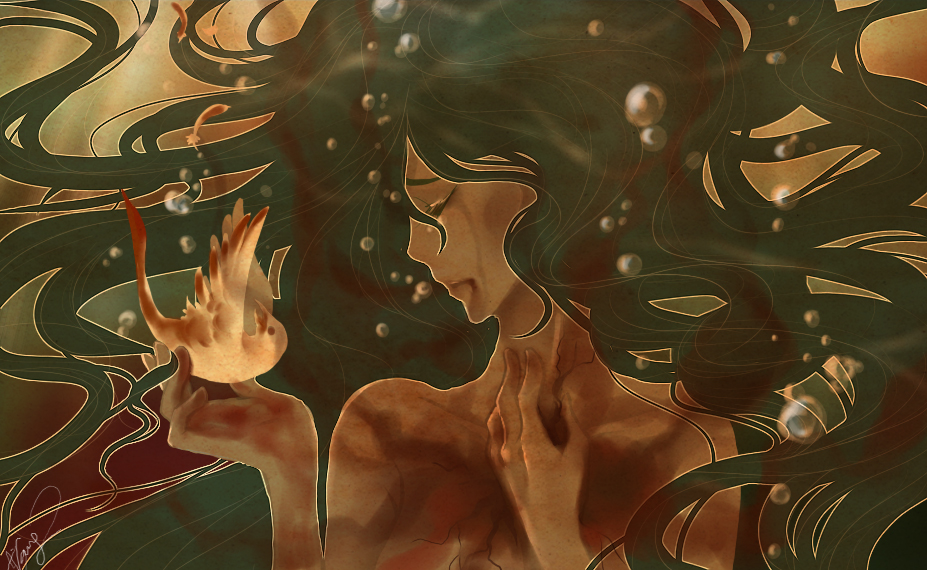
Can You Hear Me by jinzilla@deviantart.com

Psalm 31
To the leader. A Psalm of David.
1 In you, O LORD, I seek refuge; do not let me ever be put to shame; in your righteousness deliver me.
2 Incline your ear to me; rescue me speedily. Be a rock of refuge for me, a strong fortress to save me.
3 You are indeed my rock and my fortress; for your name’s sake lead me and guide me,
4 take me out of the net that is hidden for me, for you are my refuge.
5 Into your hand I commit my spirit; you have redeemed me, O LORD, faithful God.
6 You hate those who pay regard to worthless idols, but I trust in the LORD.
7 I will exult and rejoice in your steadfast love, because you have seen my affliction; you have taken heed of my adversities,
8 and have not delivered me into the hand of the enemy; you have set my feet in a broad place.
9 Be gracious to me, O LORD, for I am in distress; my eye wastes away from grief, my soul and body also.
10 For my life is spent with sorrow, and my years with sighing; my strength fails because of my misery, and my bones waste away.
11 I am the scorn of all my adversaries, a horror to my neighbors, an object of dread to my acquaintances; those who see me in the street flee from me.
12 I have passed out of mind like one who is dead; I have become like a broken vessel.
13 For I hear the whispering of many — terror all around! — as they scheme together against me, as they plot to take my life.
14 But I trust in you, O LORD; I say, “You are my God.”
15 My times are in your hand; deliver me from the hand of my enemies and persecutors.
16 Let your face shine upon your servant; save me in your steadfast love.
17 Do not let me be put to shame, O LORD, for I call on you; let the wicked be put to shame; let them go dumbfounded to Sheol.
18 Let the lying lips be stilled that speak insolently against the righteous with pride and contempt.
19 O how abundant is your goodness that you have laid up for those who fear you, and accomplished for those who take refuge in you, in the sight of everyone!
20 In the shelter of your presence you hide them from human plots; you hold them safe under your shelter from contentious tongues.
21 Blessed be the LORD, for he has wondrously shown his steadfast love to me when I was beset as a city under siege.
22 I had said in my alarm, “I am driven far from your sight.” But you heard my supplications when I cried out to you for help.
23 Love the LORD, all you his saints. The LORD preserves the faithful, but abundantly repays the one who acts haughtily.
24 Be strong, and let your heart take courage, all you who wait for the LORD.

If you are looking for a strong linear progression in the poetry of a Psalm, then this will not be the Psalm for you. Yet if you are willing to acknowledge that life and faith are rarely linear and that doubt and faith are often places which people in crisis oscillate between. If you can understand that a life of faith is a place where one calls upon the LORD and trusts in the LORD but then must inhabit the space of waiting on the LORD’s actions in the presence of enemies and persecutors who are seen and felt. Then Psalm 31 with its movement from crisis to trust to crisis to trust may be a Psalm that feels complete, honest and genuine to your experience.

Some people have wanted to break the Psalm into two separate Psalms based on the division between verse eight and nine where verses six through eight demonstrate a resolution and a trust in God and verse nine begins again in crisis which seems an even more intense. While the Psalm does have two progressions from crisis to trust and it makes sense to look at the two progressions within it, as I mentioned above life is rarely a nice linear progression from crisis to resolution. Faith and trust may be quickly followed by doubt and despair in the poet’s life. We do not know what type of crisis they are dealing with but there is this continual movement in the Psalmist’s words from the cry to the LORD in the midst of crisis where one asks for God to be the refuge or strength in their life back to the assurance of faith in who the LORD is to the petitioner.

The first four verses of the Psalm call upon God to be their refuge, the one who protects them from shame, their deliverer, their strong fortress and the one who delivers them from a trap. These are all familiar images for God. The Psalmist doesn’t ask for God’s action because of their own righteousness and honor but rather on the LORD’s righteousness and honor. The Psalmist is one who has trusted in the LORD and believes that God will deliver them from this crisis and those who seek to destroy their life and their reputation. Being put to shame, which the Psalmist asks the LORD to prevent, is not merely being embarrassed or humiliated but rather in an honor-shame based society it was to lose one’s standing in society. Dishonor in the ancient world would ruin a person’s name and often could lead to death or ‘a broken life of no hope.’ (Brueggeman, 2014, p. 157)

Verse 5 may sound familiar to many Christians because in Luke’s gospel these words are spoken by Jesus during the crucifixion (Luke 23:46). The Hebrew word for spirit (ruach) means wind, breath, or spirit (in the connotation of one’s life). In the Psalm itself the poet commits their life into God’s hands so that God may deliver them amid their crisis. In Luke’s gospel these words take on a slightly different tone because now Jesus is commending his life into the Father’s hands even as he lets go of life on the cross. The hope of the Psalmist is a hope of God’s deliverance within the span of their days, Christ calls upon God’s deliverance beyond the bounds of death.

For the Jewish people the LORD is one who sees and acts. From the foundational story of the Exodus through the remainder of the Hebrew Scriptures, the LORD is trusted in to hear, see and act for the one who is in oppression. The corporate trust of the people becomes the individual trust of the Psalmist. In this brief window into the faith of the poet in verses 6-8 we see the how the covenantal faith that they are a part of shapes their trust and expectations of their life with the LORD. Much like the green pastures and still waters of Psalm 23, the broad place of Psalm 31 is a place where the petitioner finds rest and renewal. Yet, this space of rest and renewal do not guarantee a future life free from persecution and trials.

By verse nine the language of distress returns, and it is expressed in language far more intense than originally present in the Psalm. One of the gifts of spending time with the Bible is the deep and sometimes raw honesty that can exist between God and God’s people. Jeremiah, for example, would bear God’s painful emotions to the people but would also use honesty to speak to God on behalf of the people and on behalf of his own experience. The Psalms are emotionally honest poetry, songs and prayers which don’t sanitize the experience of grief, joy, pain, disappointment, fear, distress, jubilation or regret when speaking to God. The Psalms, like all good poetry seeks to move beyond the rational part of our life and moves into the emotions that we must deal with. As Beth Tanner says

Poetry is meant to engage our memories and our imagination and in that transform our relationship with God, so the meaning of this psalm is to examine the thin line between faith and doubt that we all share as we strive to better understand and embrace our relationship with God. (Nancy deClaisse-Walford, 2014, p. 305)

The Psalmist prays for God to be the God who hears and sees and acts, like the God of the Exodus. The poet remembers the covenant and calls upon the LORD of Israel to intervene in their own struggles. The corporate faith becomes embodied in the individual struggles of faith and life. The life of the faithful one is not free of struggle and oppression, yet even in times of struggle the LORD the God of Israel is the one who the Psalmist places their trust in. The faithful one may question why God appears to not act on their behalf when they are being dishonored and threatened but they trust that their God do see, hear and act faithfully.

Post 500

Fire and Rose by Kondratj on deviantart.com

When I started this journey back in 2012 of writing I never imagined that I would be still going 500 posts later. It is an immense amount of writing and learning from the process. I’ve had lots of times where an idea has run out or where I’ve taken a break or moved in different directions, but as I look back on the previous 499 posts there is a lot there.

When I began Sign of the Rose in 2012 I was an associate pastor preaching once a month on average and I needed a creative outlet. For the past four years I’ve been a lead pastor, preaching around 55 times a year. I’ve also remarried, seen my oldest graduate and go off to college. I’ve been overseen the planning and am currently overseeing a building addition to my congregation, I’ve stated an alliance of interfaith leaders (Christian, Jewish, Muslim and Hindu currently) in my community, acted as dean for the Dallas Area Metro North conference of my denomination, and serve on the student health advisory committee for Frisco ISD. There are occasionally times where I wish things would slow down a bit and I would have more time to write, but I genuinely enjoy my work and engagement in the community.

Many who discovered Sign of the Rose probably came here because of my poetry and I thank you for that. There are well over a hundred poems on the site, and there are some I am particularly fond of. Others were experiments that never really came to completion and I try to keep a writing book nearby for those ideas which come up so that I can write at least a few words down for a time when I may be able to return to it. Sadly, many of the ideas are still stuck within the pages and I would love to get back to a place where I am weekly taking the time to develop some of these ideas.

I am a curious person. I enjoy learning and writing helps me understand how I think about things. In contrast to the dictum ‘I think therefore I am’ for me ‘I write so I can process what I think.’ In five hundred posts there is a lot of ground covered on various things. The space really is like a chalkboard for my mind as I work through things. I also find it a useful place for me to go back to and look at what I’ve written about an idea or a topic.

I know that for many people the idea of working systematically through biblical texts sounds tedious. On the one hand it is hard work, even as a student of the Bible. Jeremiah, Deuteronomy, Ecclesiastes and most recently Exodus are not books that most people spend a lot of time in. Exodus is perhaps an exception but even in this book most people only engage a portion of the book. What I can say is that even though it is hard work it has been worth it. Working through these books has really made me think about how the people understood God, the society they were attempting to create or advocate for, and they make the story of Jesus richer and fuller. I will continue with this. I just finished the last chapter of Exodus, so I will transition back to the Psalms for a bit as I figure out which book is next, but at this point I look at the work on Exodus, Deuteronomy, Esther, Ecclesiastes, Jeremiah, Haggai and the first thirty Psalms (so far) and I’m impressed with what I have been able to write.

I’ve recently realized that with the volume of what is on this site I need to rethink organization. The index, which hasn’t been updated since March) currently runs 14 pages when it is printed out. One thing I am planning to do is to take each Biblical reflection book and create a page for it that will have all the individual chapters/posts and that will take a lot of those posts off the index page.

I still think of this as a hodgepodge of interesting work. I plan to keep on adding and maybe at some point I’ll reach a point where it no longer feeds an interest in me, but I’m not there yet. If anything, I would like to write more. I have more ideas than time, at least for now. But I never expected to reach five hundred posts in roughly five years. Who knows what the future might hold. Until then thank you for visiting this strange little place where my mind sometimes works.


Exodus 40 A Hopeful Conclusion

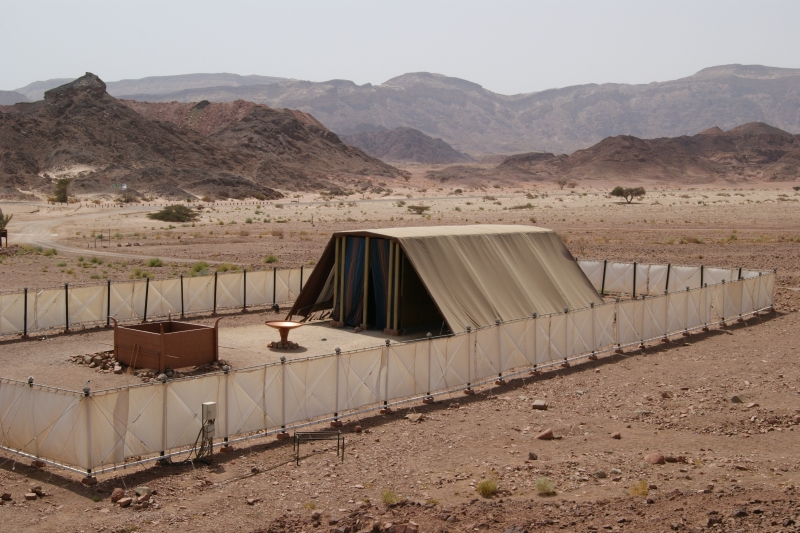
Model of the Tabernacle as seen in Timna Park, Israel shared by author through Creative Commons Attribution-Share Alike 3.0

 Exodus 40:1-33 Moses Finishes the Work of the Tabernacle

The LORD spoke to Moses: 2 On the first day of the first month you shall set up the tabernacle of the tent of meeting. 3 You shall put in it the ark of the covenant, and you shall screen the ark with the curtain. 4 You shall bring in the table, and arrange its setting; and you shall bring in the lampstand, and set up its lamps. 5 You shall put the golden altar for incense before the ark of the covenant, and set up the screen for the entrance of the tabernacle. 6 You shall set the altar of burnt offering before the entrance of the tabernacle of the tent of meeting, 7 and place the basin between the tent of meeting and the altar, and put water in it. 8 You shall set up the court all around, and hang up the screen for the gate of the court. 9 Then you shall take the anointing oil, and anoint the tabernacle and all that is in it, and consecrate it and all its furniture, so that it shall become holy. 10 You shall also anoint the altar of burnt offering and all its utensils, and consecrate the altar, so that the altar shall be most holy. 11 You shall also anoint the basin with its stand, and consecrate it. 12 Then you shall bring Aaron and his sons to the entrance of the tent of meeting, and shall wash them with water, 13 and put on Aaron the sacred vestments, and you shall anoint him and consecrate him, so that he may serve me as priest. 14 You shall bring his sons also and put tunics on them, 15 and anoint them, as you anointed their father, that they may serve me as priests: and their anointing shall admit them to a perpetual priesthood throughout all generations to come.

16 Moses did everything just as the LORD had commanded him. 17 In the first month in the second year, on the first day of the month, the tabernacle was set up. 18 Moses set up the tabernacle; he laid its bases, and set up its frames, and put in its poles, and raised up its pillars; 19 and he spread the tent over the tabernacle, and put the covering of the tent over it; as the LORD had commanded Moses. 20 He took the covenant and put it into the ark, and put the poles on the ark, and set the mercy seat above the ark; 21 and he brought the ark into the tabernacle, and set up the curtain for screening, and screened the ark of the covenant; as the LORD had commanded Moses. 22 He put the table in the tent of meeting, on the north side of the tabernacle, outside the curtain, 23 and set the bread in order on it before the LORD; as the LORD had commanded Moses. 24 He put the lampstand in the tent of meeting, opposite the table on the south side of the tabernacle, 25 and set up the lamps before the LORD; as the LORD had commanded Moses. 26 He put the golden altar in the tent of meeting before the curtain, 27 and offered fragrant incense on it; as the LORD had commanded Moses. 28 He also put in place the screen for the entrance of the tabernacle. 29 He set the altar of burnt offering at the entrance of the tabernacle of the tent of meeting, and offered on it the burnt offering and the grain offering as the LORD had commanded Moses. 30 He set the basin between the tent of meeting and the altar, and put water in it for washing, 31 with which Moses and Aaron and his sons washed their hands and their feet. 32 When they went into the tent of meeting, and when they approached the altar, they washed; as the LORD had commanded Moses. 33 He set up the court around the tabernacle and the altar, and put up the screen at the gate of the court. So Moses finished the work.

One year after the beginning of the journey the new year begins with the assembly of the tabernacle. On the first day of the first month of the second year there is a new opportunity to begin again. Just as the previous year began with the people’s position as slaves ending and their journey into the wilderness as the people of the LORD the God of Israel began, now here at the beginning of year two they witness the completion of their work for a dwelling for the LORD in their midst. The tent of meeting previously had been outside the camp and a place where only Moses and Joshua would go to. The LORD’s dream of dwelling among the people was shattered in the betrayal by Aaron and the rest of the people with the golden calf.

The craftsmen Bezalel and Oholiob and all the craftsmen and women of Israel who were a part of creating the curtains, bars, the ark, the altars, the incense and the anointing oil have completed their work. They have taken the gifts of the people, the best of precious metals, stones, fabric, spices and oils and they have used their divinely inspired talents to create this space where the LORD’s presence can inhabit. It is to be a little bit of heaven on earth, a place that can be holy because the one who will inhabit it will be holy. It is an offering of reconciliation from the people. The gifts and the work become a communal act of apology and hope that the LORD who brought them out of Egypt will come and abide in their midst.

Moses is the one who is charged with completing the work and the repetitive refrain ‘as the LORD commanded Moses’ emphasizes the obedience of Moses. The phrase occurs initially encompassing all the work and then seven additional times as it details the completion of each portion. Seven indicates completion in the bible and so the number of times the phrase is repeated is probably not a coincidence. The careful articulation also mirrors the seven days of the creation narrative and this human work of creation is offered up to the Creator of the heavens and the earth.

Moses fulfils the function that Aaron and his sons are not yet ready to perform. Moses is a holy person, a person who can go and speak to God face to face as one speaks to a friend. Moses is allowed to go into the holy spaces with the LORD. Aaron and his sons will be washed but they will still need to be ordained for their ministry to begin. In our time we are skeptical of the idea of holy people, holy place and holy things but this story points to reality that, “holy acts by holy persons in holy places give access to the liberating, healing, forgiving power of the holy God.” (Actemeir, 1997, pp. 977, Vol. 1) Moses as a holy person consecrates the act of the people, lifts up their offering to God of this place created to be holy and completes the work of the people in creating the tabernacle.

Exodus 40: 34-38 God Dwells Among the People

34 Then the cloud covered the tent of meeting, and the glory of the LORD filled the tabernacle. 35 Moses was not able to enter the tent of meeting because the cloud settled upon it, and the glory of the LORD filled the tabernacle. 36 Whenever the cloud was taken up from the tabernacle, the Israelites would set out on each stage of their journey; 37 but if the cloud was not taken up, then they did not set out until the day that it was taken up. 38 For the cloud of the LORD was on the tabernacle by day, and fire was in the cloud by night, before the eyes of all the house of Israel at each stage of their journey.

The book of Exodus ends on a hope filled note. Reconciliation has occurred to the point where God will dwell among the people. The tent of meeting becomes filled with the presence of God, the tabernacle has been accepted as a dwelling place for the holiness of the LORD of Israel. The betrayal of the golden calf has been overcome and there is a new possibility as the journey can now continue. The people of God now enter the precious and dangerous vocation of journeying with God. Moses has held together the people and the LORD through the journey from Egypt to Sinai. They are not to the promised land, but they are a people of hope. They no longer dwell under the oppression of the king of Egypt, they are a people whose God dwells among them, has established the covenant with them, and will now journey with them to the promised land. They are a people of the law which points to a new way of living, a different way than the ways of the land of Egypt they were taken out of. They are a people. They are a people who the LORD has provided for throughout their journey and promises to continue to provide for. They are a people who are expected to live a life of obedience and thankfulness for the calling they have received. Their journey continues, and they will be a people on the move. They have journeyed far but there are still many miles and many experiences that lay before they inhabit the promised land. But for now, the book of Exodus closes on a note of hope: God has forgiven. A small portion of God’s vision for the people has now been fulfilled. The journey with God continues for Moses and the people. It is a new year, a chance at a new beginning for the pilgrim people of God.

Exodus 39 Completing the Work of the Tabernacle

Erection of the Tabernacle and Sacred Vessels by Gerard Hoet (1728)

 Exodus 39: 1-31 The Vestments

Of the blue, purple, and crimson yarns they made finely worked vestments, for ministering in the holy place; they made the sacred vestments for Aaron; as the LORD had commanded Moses.

2 He made the ephod of gold, of blue, purple, and crimson yarns, and of fine twisted linen. 3 Gold leaf was hammered out and cut into threads to work into the blue, purple, and crimson yarns and into the fine twisted linen, in skilled design. 4 They made for the ephod shoulder-pieces, joined to it at its two edges. 5 The decorated band on it was of the same materials and workmanship, of gold, of blue, purple, and crimson yarns, and of fine twisted linen; as the LORD had commanded Moses.

6 The onyx stones were prepared, enclosed in settings of gold filigree and engraved like the engravings of a signet, according to the names of the sons of Israel. 7 He set them on the shoulder-pieces of the ephod, to be stones of remembrance for the sons of Israel; as the LORD had commanded Moses.

8 He made the breastpiece, in skilled work, like the work of the ephod, of gold, of blue, purple, and crimson yarns, and of fine twisted linen. 9 It was square; the breastpiece was made double, a span in length and a span in width when doubled. 10 They set in it four rows of stones. A row of carnelian, chrysolite, and emerald was the first row; 11 and the second row, a turquoise, a sapphire, and a moonstone; 12 and the third row, a jacinth, an agate, and an amethyst; 13 and the fourth row, a beryl, an onyx, and a jasper; they were enclosed in settings of gold filigree. 14 There were twelve stones with names corresponding to the names of the sons of Israel; they were like signets, each engraved with its name, for the twelve tribes. 15 They made on the breastpiece chains of pure gold, twisted like cords; 16 and they made two settings of gold filigree and two gold rings, and put the two rings on the two edges of the breastpiece; 17 and they put the two cords of gold in the two rings at the edges of the breastpiece. 18 Two ends of the two cords they had attached to the two settings of filigree; in this way they attached it in front to the shoulder-pieces of the ephod. 19 Then they made two rings of gold, and put them at the two ends of the breastpiece, on its inside edge next to the ephod. 20 They made two rings of gold, and attached them in front to the lower part of the two shoulder-pieces of the ephod, at its joining above the decorated band of the ephod. 21 They bound the breastpiece by its rings to the rings of the ephod with a blue cord, so that it should lie on the decorated band of the ephod, and that the breastpiece should not come loose from the ephod; as the LORD had commanded Moses.

22 He also made the robe of the ephod woven all of blue yarn; 23 and the opening of the robe in the middle of it was like the opening in a coat of mail, with a binding around the opening, so that it might not be torn. 24 On the lower hem of the robe they made pomegranates of blue, purple, and crimson yarns, and of fine twisted linen. 25 They also made bells of pure gold, and put the bells between the pomegranates on the lower hem of the robe all around, between the pomegranates; 26 a bell and a pomegranate, a bell and a pomegranate all around on the lower hem of the robe for ministering; as the LORD had commanded Moses.

27 They also made the tunics, woven of fine linen, for Aaron and his sons, 28 and the turban of fine linen, and the headdresses of fine linen, and the linen undergarments of fine twisted linen, 29 and the sash of fine twisted linen, and of blue, purple, and crimson yarns, embroidered with needlework; as the LORD had commanded Moses.

30 They made the rosette of the holy diadem of pure gold, and wrote on it an inscription, like the engraving of a signet, “Holy to the LORD.” 31 They tied to it a blue cord, to fasten it on the turban above; as the LORD had commanded Moses.

Perhaps the crafting of the garments for the priesthood are even more important after the incident of the golden calf in Exodus 32 to set aside Aaron and his sons for the priesthood. The directions for the vestments was outlined in Exodus 28 and I don’t have a lot to add to the earlier discussion. This is a place where the clothes do make the person.

In our modern world we don’t consider the priestly role a particularly risky one but for the Israelites there is always risk when entering the presence of the holy LORD of Israel. Yet, on behalf of the people, the priest is to put on the sacred vestments and perform their tasks. We won’t see the ordination of Moses and his sons until Leviticus 6, but as we approach the end of Exodus the vestments for their work have been created and the place where they are to minister to the LORD is ready to be presented.

Exodus 39: 32-43 The Completion of the Work

32 In this way all the work of the tabernacle of the tent of meeting was finished; the Israelites had done everything just as the LORD had commanded Moses. 33 Then they brought the tabernacle to Moses, the tent and all its utensils, its hooks, its frames, its bars, its pillars, and its bases; 34 the covering of tanned rams’ skins and the covering of fine leather, and the curtain for the screen; 35 the ark of the covenant with its poles and the mercy seat; 36 the table with all its utensils, and the bread of the Presence; 37 the pure lampstand with its lamps set on it and all its utensils, and the oil for the light; 38 the golden altar, the anointing oil and the fragrant incense, and the screen for the entrance of the tent; 39 the bronze altar, and its grating of bronze, its poles, and all its utensils; the basin with its stand; 40 the hangings of the court, its pillars, and its bases, and the screen for the gate of the court, its cords, and its pegs; and all the utensils for the service of the tabernacle, for the tent of meeting; 41 the finely worked vestments for ministering in the holy place, the sacred vestments for the priest Aaron, and the vestments of his sons to serve as priests. 42 The Israelites had done all of the work just as the LORD had commanded Moses. 43 When Moses saw that they had done all the work just as the LORD had commanded, he blessed them.

The artisans have done their work, their ministry in the creation of all the items for this holy space and the holy things to occupy the space is completed and presented to Moses. Even though the LORD’s desire to dwell among the people was placed in jeopardy by the people’s betrayal with the golden calf, they now have given and labored in the creation of this place which is a little bit of heaven on earth. They have created a mobile holy space as a pilgrim people still journeying to their promised home. It is their offering of obedience and of their treasures presented to their LORD. The work is now finished, and Moses blesses the people. The LORD has dwelt away from the people, but now the people have prepared a place in the camp for the LORD to dwell among them. As we approach the end we await to see if the LORD’s presence will occupy this space.

Exodus 37-38 Holy Things for Holy Space

James Tissot, Moses and Joshua in the Tabernacle (1896-1902)

Exodus 37 Holy Things for the Holy Space

Bezalel made the ark of acacia wood; it was two and a half cubits long, a cubit and a half wide, and a cubit and a half high. 2 He overlaid it with pure gold inside and outside, and made a molding of gold around it. 3 He cast for it four rings of gold for its four feet, two rings on its one side and two rings on its other side. 4 He made poles of acacia wood, and overlaid them with gold, 5 and put the poles into the rings on the sides of the ark, to carry the ark. 6 He made a mercy seat of pure gold; two cubits and a half was its length, and a cubit and a half its width. 7 He made two cherubim of hammered gold; at the two ends of the mercy seat he made them, 8 one cherub at the one end, and one cherub at the other end; of one piece with the mercy seat1 he made the cherubim at its two ends. 9 The cherubim spread out their wings above, overshadowing the mercy seat with their wings. They faced one another; the faces of the cherubim were turned toward the mercy seat.

10 He also made the table of acacia wood, two cubits long, one cubit wide, and a cubit and a half high. 11 He overlaid it with pure gold, and made a molding of gold around it. 12 He made around it a rim a handbreadth wide, and made a molding of gold around the rim. 13 He cast for it four rings of gold, and fastened the rings to the four corners at its four legs. 14 The rings that held the poles used for carrying the table were close to the rim. 15 He made the poles of acacia wood to carry the table, and overlaid them with gold. 16 And he made the vessels of pure gold that were to be on the table, its plates and dishes for incense, and its bowls and flagons with which to pour drink offerings.

17 He also made the lampstand of pure gold. The base and the shaft of the lampstand were made of hammered work; its cups, its calyxes, and its petals were of one piece with it. 18 There were six branches going out of its sides, three branches of the lampstand out of one side of it and three branches of the lampstand out of the other side of it; 19 three cups shaped like almond blossoms, each with calyx and petals, on one branch, and three cups shaped like almond blossoms, each with calyx and petals, on the other branch — so for the six branches going out of the lampstand. 20 On the lampstand itself there were four cups shaped like almond blossoms, each with its calyxes and petals. 21 There was a calyx of one piece with it under the first pair of branches, a calyx of one piece with it under the next pair of branches, and a calyx of one piece with it under the last pair of branches. 22 Their calyxes and their branches were of one piece with it, the whole of it one hammered piece of pure gold. 23 He made its seven lamps and its snuffers and its trays of pure gold. 24 He made it and all its utensils of a talent of pure gold.

25 He made the altar of incense of acacia wood, one cubit long, and one cubit wide; it was square, and was two cubits high; its horns were of one piece with it. 26 He overlaid it with pure gold, its top, and its sides all around, and its horns; and he made for it a molding of gold all around, 27 and made two golden rings for it under its molding, on two opposite sides of it, to hold the poles with which to carry it. 28 And he made the poles of acacia wood, and overlaid them with gold.

29 He made the holy anointing oil also, and the pure fragrant incense, blended as by the perfumer.

Bezalel, Oholiab and all the workers take the resources of the people and begin to create the holy things that will be used in the worship of the LORD the God of Israel. The ark is constructed as outlined in Exodus 25: 1-22. The focus on the construction of the objects does take less description than initially given to Moses on the mountain, but the direction of these texts points towards the obedience of the workers to the design laid out to Moses by God. Although the ark itself will come to have powerful function as a symbolic representation of God’s presence it is ultimately a box designed to hold the covenant given to Moses between God and the people. In a much later time for the Jewish people the Torah scrolls will come to have central place as their most precious and holy things, but even here it is a receptacle for the words spoken by God which takes the place of an image of God that the people would rally around.

The table for the bread of presence (based on the design of Exodus 25: 23-30) and the lampstand (see Exodus 25: 31-40) are the next two pieces that the narrative lists in the construction process of these holy things. Bread is the basic staple for life and here it serves as a place where a loaf for each tribe can be lifted up before the LORD. Light also was an essential image for the people and in a time before electricity this elaborate lampstand would have been a difficult piece to construct requiring great skill, but it is also a sign of people using their best talents to place within the holy space of the tabernacle.

Word of God, light and bread are central religious symbols that occupy a place in the center of the temple and will continue to occupy religious language, symbolism and imagery throughout the centuries. It is probably not accidental that the gospel of John takes these three images (among others) in referring to the meaning of who Jesus is for these early followers of Jesus (Jesus as the Word of God, the light that has come into the world, the bread of life).

The altar of incense comes later in the plans that are given to Moses (Exodus 30: 1-10) but the construction of the space in oriented more pragmatically around similar types of items being discussed being crafted together.  The detailed description of the anointing oil, and incense in Exodus 30: 22-28 is reduced to a simple line stating that the oils and incense were made as by a perfumer. There is an olfactory element to the worship, an element that some traditions still maintain. Although I am very sensitive to many fragrances we host a Coptic Orthodox church at our congregation which uses incense as a part of every worship service. The holy things for worship include unique smells that are only to be associated with the worship of the LORD.

  Exodus 38: 1-8 Altar and Basin for the Holy Space

 He made the altar of burnt offering also of acacia wood; it was five cubits long, and five cubits wide; it was square, and three cubits high. 2 He made horns for it on its four corners; its horns were of one piece with it, and he overlaid it with bronze. 3 He made all the utensils of the altar, the pots, the shovels, the basins, the forks, and the firepans: all its utensils he made of bronze. 4 He made for the altar a grating, a network of bronze, under its ledge, extending halfway down. 5 He cast four rings on the four corners of the bronze grating to hold the poles; 6 he made the poles of acacia wood, and overlaid them with bronze. 7 And he put the poles through the rings on the sides of the altar, to carry it with them; he made it hollow, with boards.

8 He made the basin of bronze with its stand of bronze, from the mirrors of the women who served at the entrance to the tent of meeting.

The altar, as outlined in Exodus 27: 1-8, which is made of bronze and occupies a space farther away from the central tabernacle (and uses a less precious material) becomes one of the final items mentioned as it is constructed. Finally, there is the basin of bronze initially described in Exodus 30: 17-21. Within this brief note on the basin is an interesting and often overlooked note that the basin was made from the mirrors of the women who served at the entrance of the tent of meeting. There were women who were a part of the work of the tabernacle! We don’t know what their function was, but it places them near the holiest places. I believe that in Herod’s temple that there is a delineation between the court of women and the court of Israel where only men could approach, but apparently in the description of the tabernacle’s construction there are women who also have a function within the holy places.

Model of Tabernacle, as seen in Israel, Timna Park licensed under Creative Commons Attribution-Share Alike 3.0

Exodus 28: 9-20 The Court of the Tabernacle

 9 He made the court; for the south side the hangings of the court were of fine twisted linen, one hundred cubits long; 10 its twenty pillars and their twenty bases were of bronze, but the hooks of the pillars and their bands were of silver. 11 For the north side there were hangings one hundred cubits long; its twenty pillars and their twenty bases were of bronze, but the hooks of the pillars and their bands were of silver. 12 For the west side there were hangings fifty cubits long, with ten pillars and ten bases; the hooks of the pillars and their bands were of silver 13 And for the front to the east, fifty cubits. 14 The hangings for one side of the gate were fifteen cubits, with three pillars and three bases. 15 And so for the other side; on each side of the gate of the court were hangings of fifteen cubits, with three pillars and three bases. 16 All the hangings around the court were of fine twisted linen. 17 The bases for the pillars were of bronze, but the hooks of the pillars and their bands were of silver; the overlaying of their capitals was also of silver, and all the pillars of the court were banded with silver. 18 The screen for the entrance to the court was embroidered with needlework in blue, purple, and crimson yarns and fine twisted linen. It was twenty cubits long and, along the width of it, five cubits high, corresponding to the hangings of the court. 19 There were four pillars; their four bases were of bronze, their hooks of silver, and the overlaying of their capitals and their bands of silver. 20 All the pegs for the tabernacle and for the court all around were of bronze.

The court is outlined in Exodus 27: 9-19 and this serves as a buffer zone between the holiest space and the space where the people live and work. The court is also a place where most of the work done by the priests is done, since the entrance into the tabernacle will only occur at the day when the camp is to move or at the specified times given to the high priest.

Exodus 28: 21-31 Stewarding the Resources for the Temple

21 These are the records of the tabernacle, the tabernacle of the covenant, which were drawn up at the commandment of Moses, the work of the Levites being under the direction of Ithamar son of the priest Aaron. 22 Bezalel son of Uri son of Hur, of the tribe of Judah, made all that the LORD commanded Moses; 23 and with him was Oholiab son of Ahisamach, of the tribe of Dan, engraver, designer, and embroiderer in blue, purple, and crimson yarns, and in fine linen.

24 All the gold that was used for the work, in all the construction of the sanctuary, the gold from the offering, was twenty-nine talents and seven hundred thirty shekels, measured by the sanctuary shekel. 25 The silver from those of the congregation who were counted was one hundred talents and one thousand seven hundred seventy-five shekels, measured by the sanctuary shekel; 26 a beka a head (that is, half a shekel, measured by the sanctuary shekel), for everyone who was counted in the census, from twenty years old and upward, for six hundred three thousand, five hundred fifty men. 27 The hundred talents of silver were for casting the bases of the sanctuary, and the bases of the curtain; one hundred bases for the hundred talents, a talent for a base. 28 Of the thousand seven hundred seventy-five shekels he made hooks for the pillars, and overlaid their capitals and made bands for them. 29 The bronze that was contributed was seventy talents, and two thousand four hundred shekels; 30 with it he made the bases for the entrance of the tent of meeting, the bronze altar and the bronze grating for it and all the utensils of the altar, 31 the bases all around the court, and the bases of the gate of the court, all the pegs of the tabernacle, and all the pegs around the court.

Even in ancient times there is a desire for accountability for the resources invested in a project. This is a phenomenal investment of resources. A talent is roughly 75 pounds, and so at the modern value of gold the 37 talents is worth roughly $46 million dollars, in addition to the cost of the silver, bronze, yarn, spices, oils and the physical labor that went into the construction project. Ithamar, a son of Aaron, is tasked with overseeing the accounting for the work that Bezalel and Oholiab oversee. It also begins to give some idea of the resources necessary to move the tabernacle in a time prior to mechanical locomotion. One hundred silver bases, each weighing around 75 pounds, in addition to hundreds of feet of curtains, poles, the bronze bases and all the furnishings-each movement was a significant undertaking. The tabernacle will involve not only a significant investment of resources to construct but for a people on the move it will also involve a large investment of human and animal strength dedicated to the movement and assembly/disassembly of the structure.

The designation of the half shekel for each man over twenty-five is outlined in Exodus 30: 11-16 and the offering for the tabernacle is described in Exodus 35: 4-29 and as Exodus 36: 3-7 where we are told the people brought more than enough resources for this project.

Exodus 35-36 Beginning the Construction of the Tabernacle

Erection of the Tabernacle and Sacred Vessels by Gerard Hoet (1728)

The final six chapters of the book of Exodus echo Exodus 25-31. In many places I will refer to the appropriate discussion from those chapters which lay out the plan of the tabernacle, the holy items that are within the tabernacle, the clothing for the priests as well as oil and incense used for the holy things. These chapters, like chapters 25-31, most Christians never read or when they do they scan through them but the reality that the book of Exodus dedicates more time to the design and construction of the tabernacle than anything else in the book should make us pause. Physically writing out these chapters, which is a part of my discipline, has made me realize the importance of these chapters as a part of the narrative of reconciliation between the LORD the God of Israel and the people of Israel. The people’s participation in this project is an essential part of moving back towards God.

Exodus 35: 1-3 Sabbath

Moses assembled all the congregation of the Israelites and said to them: These are the things that the LORD has commanded you to do:

2 Six days shall work be done, but on the seventh day you shall have a holy sabbath of solemn rest to the LORD; whoever does any work on it shall be put to death. 3 You shall kindle no fire in all your dwellings on the sabbath day.

The practice of Sabbath is a critical part of the life that the people of God are to live. Sabbath is emphasized not only in the Ten Commandments (Exodus 20) but is also reemphasized in Exodus 23: 10-13, and in Exodus 34: 21-24 and once again here at the beginning of the construction of the tabernacle. Even in this work of creating the tabernacle, sabbath is still essential. Sabbath takes precedence even over doing holy work. As a pastor, I can appreciate the emphasis on Sabbath even as one undertakes God’s work. I also see the continual temptation in my people and even in my own life to allow work to consume this space of solemn rest.

Exodus 35: 4-29 The Offering for the Sanctuary

4 Moses said to all the congregation of the Israelites: This is the thing that the LORD has commanded: 5 Take from among you an offering to the LORD; let whoever is of a generous heart bring the LORD’s offering: gold, silver, and bronze; 6 blue, purple, and crimson yarns, and fine linen; goats’ hair, 7 tanned rams’ skins, and fine leather; acacia wood, 8 oil for the light, spices for the anointing oil and for the fragrant incense, 9 and onyx stones and gems to be set in the ephod and the breastpiece.

10 All who are skillful among you shall come and make all that the LORD has commanded: the tabernacle, 11 its tent and its covering, its clasps and its frames, its bars, its pillars, and its bases; 12 the ark with its poles, the mercy seat, and the curtain for the screen; 13 the table with its poles and all its utensils, and the bread of the Presence; 14 the lampstand also for the light, with its utensils and its lamps, and the oil for the light; 15 and the altar of incense, with its poles, and the anointing oil and the fragrant incense, and the screen for the entrance, the entrance of the tabernacle; 16 the altar of burnt offering, with its grating of bronze, its poles, and all its utensils, the basin with its stand; 17 the hangings of the court, its pillars and its bases, and the screen for the gate of the court; 18 the pegs of the tabernacle and the pegs of the court, and their cords; 19 the finely worked vestments for ministering in the holy place, the holy vestments for the priest Aaron, and the vestments of his sons, for their service as priests.

20 Then all the congregation of the Israelites withdrew from the presence of Moses. 21 And they came, everyone whose heart was stirred, and everyone whose spirit was willing, and brought the LORD’s offering to be used for the tent of meeting, and for all its service, and for the sacred vestments. 22 So they came, both men and women; all who were of a willing heart brought brooches and earrings and signet rings and pendants, all sorts of gold objects, everyone bringing an offering of gold to the LORD. 23 And everyone who possessed blue or purple or crimson yarn or fine linen or goats’ hair or tanned rams’ skins or fine leather, brought them. 24 Everyone who could make an offering of silver or bronze brought it as the LORD’s offering; and everyone who possessed acacia wood of any use in the work, brought it. 25 All the skillful women spun with their hands, and brought what they had spun in blue and purple and crimson yarns and fine linen; 26 all the women whose hearts moved them to use their skill spun the goats’ hair. 27 And the leaders brought onyx stones and gems to be set in the ephod and the breastpiece, 28 and spices and oil for the light, and for the anointing oil, and for the fragrant incense. 29 All the Israelite men and women whose hearts made them willing to bring anything for the work that the LORD had commanded by Moses to be done, brought it as a freewill offering to the LORD.

Years ago, when I was serving as an intern pastor in Wisconsin for a rural parish with several congregations over one hundred years old I got to see some of the records about the initial construction of the buildings. It was amazing to look back upon the way in which the entire community pulled together and with their hands, skills and resources they built a building to be a place where they could worship. I often forget how recent most of the technology I take for granted is. As the people bring their very best resources together for the construction of the tabernacle it is a voluntary offering. Unlike the golden calf where Aaron orders the people to remove their earrings and bring them to him, now those who are moved by generosity bring the materials needed for construction. Those who have specific gifts also use those gifts to be a part of this gift they are creating for their LORD.

Both men and women have access to these fine materials that will be used for the various projects and both have a hand in bringing this project to completion. There is plenty of work for both women and men contribute in the creation of these holy places and holy things. Women probably had a larger role in the creation of the curtains and hangings, while men probably had a greater involvement in the creation of the frames, metal work and stone work but both roles were essential in the creation of the holy things.

The offering fulfills the original plan for the offering in Exodus 25: 1-9. There are additional reflections on the offering at that point.

Exodus 35: 30-35 Setting Aside Bezalel and Oholiab

Bezalel by James Tissot (1896-1902)

30 Then Moses said to the Israelites: See, the LORD has called by name Bezalel son of Uri son of Hur, of the tribe of Judah; 31 he has filled him with divine spirit, with skill, intelligence, and knowledge in every kind of craft, 32 to devise artistic designs, to work in gold, silver, and bronze, 33 in cutting stones for setting, and in carving wood, in every kind of craft. 34 And he has inspired him to teach, both him and Oholiab son of Ahisamach, of the tribe of Dan. 35 He has filled them with skill to do every kind of work done by an artisan or by a designer or by an embroiderer in blue, purple, and crimson yarns, and in fine linen, or by a weaver — by any sort of artisan or skilled designer.

Two craftsmen are named and will have a crucial role in the completion of the tabernacle plans. Bezalel and Oholiab also have the Spirit of God come upon them for their work of construction and teaching. Their vocation as craftsmen will be a vital part of the project coming to completion. The setting aside of Bezalel and Oholiab completes their appointment by God on Mount Sinai, prior to the golden calf which Aaron crafted, in Exodus 31:1-11. There is additional discussion in my comments on Exodus 31 about Bezalel, Oholiab and the need for people skilled as artisans in addition to the roles of priest and prophet.

 Exodus 36:1-7 The Completion of the Offering

Bezalel and Oholiab and every skillful one to whom the LORD has given skill and understanding to know how to do any work in the construction of the sanctuary shall work in accordance with all that the LORD has commanded.

2 Moses then called Bezalel and Oholiab and every skillful one to whom the LORD had given skill, everyone whose heart was stirred to come to do the work; 3 and they received from Moses all the freewill offerings that the Israelites had brought for doing the work on the sanctuary. They still kept bringing him freewill offerings every morning, 4 so that all the artisans who were doing every sort of task on the sanctuary came, each from the task being performed, 5 and said to Moses, “The people are bringing much more than enough for doing the work that the LORD has commanded us to do.” 6 So Moses gave command, and word was proclaimed throughout the camp: “No man or woman is to make anything else as an offering for the sanctuary.” So the people were restrained from bringing; 7 for what they had already brought was more than enough to do all the work.

The people are called together into this project and their hearts are moved to give generously. They are a part of something bigger than themselves. In one sense, the offerings and the work they do become a peace offering to God. They are a way to fulfill a part of God’s vision of a place where God can dwell in the center of the people. In another sense, it is a project that unites the people in a common goal as they come together to build the tabernacle. This common project for a time unites them as a people of Israel rather than the twelve tribes and countless families that are a part of the wilderness journey. There is more than enough for the project to be completed and the giving seems to be a joyful act. The abundance is so great that Moses must put an end to the offering because the workers are being overwhelmed by the abundance of materials being brought together. The impossible task now seems possible. The seemingly incredible amount of resources required to build the place of worship for a pilgrim people is quickly surpassed with the resources that people carried with them on their journey. God’s vision begins to take shape through the hands of the men and women gifted to be both givers and builders of this place where the LORD will dwell among the people.

Exodus 36: 8-38 The Construction of the Tabernacle

8 All those with skill among the workers made the tabernacle with ten curtains; they were made of fine twisted linen, and blue, purple, and crimson yarns, with cherubim skillfully worked into them. 9 The length of each curtain was twenty-eight cubits, and the width of each curtain four cubits; all the curtains were of the same size.

10 He joined five curtains to one another, and the other five curtains he joined to one another. 11 He made loops of blue on the edge of the outermost curtain of the first set; likewise he made them on the edge of the outermost curtain of the second set; 12 he made fifty loops on the one curtain, and he made fifty loops on the edge of the curtain that was in the second set; the loops were opposite one another. 13 And he made fifty clasps of gold, and joined the curtains one to the other with clasps; so the tabernacle was one whole.

14 He also made curtains of goats’ hair for a tent over the tabernacle; he made eleven curtains. 15 The length of each curtain was thirty cubits, and the width of each curtain four cubits; the eleven curtains were of the same size. 16 He joined five curtains by themselves, and six curtains by themselves. 17 He made fifty loops on the edge of the outermost curtain of the one set, and fifty loops on the edge of the other connecting curtain. 18 He made fifty clasps of bronze to join the tent together so that it might be one whole. 19 And he made for the tent a covering of tanned rams’ skins and an outer covering of fine leather.

20 Then he made the upright frames for the tabernacle of acacia wood. 21 Ten cubits was the length of a frame, and a cubit and a half the width of each frame. 22 Each frame had two pegs for fitting together; he did this for all the frames of the tabernacle. 23 The frames for the tabernacle he made in this way: twenty frames for the south side; 24 and he made forty bases of silver under the twenty frames, two bases under the first frame for its two pegs, and two bases under the next frame for its two pegs. 25 For the second side of the tabernacle, on the north side, he made twenty frames 26 and their forty bases of silver, two bases under the first frame and two bases under the next frame. 27 For the rear of the tabernacle westward he made six frames. 28 He made two frames for corners of the tabernacle in the rear. 29 They were separate beneath, but joined at the top, at the first ring; he made two of them in this way, for the two corners. 30 There were eight frames with their bases of silver: sixteen bases, under every frame two bases.

31 He made bars of acacia wood, five for the frames of the one side of the tabernacle, 32 and five bars for the frames of the other side of the tabernacle, and five bars for the frames of the tabernacle at the rear westward. 33 He made the middle bar to pass through from end to end halfway up the frames. 34 And he overlaid the frames with gold, and made rings of gold for them to hold the bars, and overlaid the bars with gold.

35 He made the curtain of blue, purple, and crimson yarns, and fine twisted linen, with cherubim skillfully worked into it. 36 For it he made four pillars of acacia, and overlaid them with gold; their hooks were of gold, and he cast for them four bases of silver. 37 He also made a screen for the entrance to the tent, of blue, purple, and crimson yarns, and fine twisted linen, embroidered with needlework; 38 and its five pillars with their hooks. He overlaid their capitals and their bases with gold, but their five bases were of bronze.

The tabernacle, the place for the holy things and ultimately where God will meet with the high priest, becomes the first item listed as the construction begins. The construction description proceeds in a different order than the plans. Ultimately, they are carried out as laid out on Mount Sinai. The plans for the tabernacle are described in Exodus 26 and there are additional comments there about the tabernacle itself.

Exodus 34: Restoring the Covenant


Hebrew Letters for the Name of God

Exodus 34: 1-10 The LORD Reclaims Identity Post Betrayal

The LORD said to Moses, “Cut two tablets of stone like the former ones, and I will write on the tablets the words that were on the former tablets, which you broke. 2 Be ready in the morning, and come up in the morning to Mount Sinai and present yourself there to me, on the top of the mountain. 3 No one shall come up with you, and do not let anyone be seen throughout all the mountain; and do not let flocks or herds graze in front of that mountain.” 4 So Moses cut two tablets of stone like the former ones; and he rose early in the morning and went up on Mount Sinai, as the LORD had commanded him, and took in his hand the two tablets of stone. 5 The LORD descended in the cloud and stood with him there, and proclaimed the name, “The LORD.” 6 The LORD passed before him, and proclaimed,
“The LORD, the LORD,
a God merciful and gracious,
slow to anger,
and abounding in steadfast love and faithfulness,
7 keeping steadfast love for the thousandth generation,
 forgiving iniquity and transgression and sin,
yet by no means clearing the guilty,
but visiting the iniquity of the parents upon the children
and the children’s children,
to the third and the fourth generation.”

 8 And Moses quickly bowed his head toward the earth, and worshiped. 9 He said, “If now I have found favor in your sight, O Lord, I pray, let the Lord go with us. Although this is a stiff-necked people, pardon our iniquity and our sin, and take us for your inheritance.”

 10 He said: I hereby make a covenant. Before all your people I will perform marvels, such as have not been performed in all the earth or in any nation; and all the people among whom you live shall see the work of the LORD; for it is an awesome thing that I will do with you.

This chapter represents a remarkable turn in the story. In chapter 32 the people turn away from the way of the LORD and for the LORD this is an incredible betrayal which plunges the LORD into intense emotional pain and causes the LORD to distance from the people. The LORD’s wrath threatens to consume Israel, but Moses stands between God and the people. In chapter 33 Moses attempts to reconcile the people and God, and here, as we begin this chapter, the healing begins with God reclaiming God’s identity. There will be a new covenant, a new beginning and God will be who God will be despite of the peoples’ disobedience.

Pain can threaten to obscure our identities and can cause people to act in ways that seem discordant to the way they would normally act. In Exodus, the LORD’s merciful and gracious nature is threatened by the other portion of the LORD’s identity that expects faithfulness and obedience. The LORD’s emotions in Exodus are surprisingly human in nature. Yet, here after a time of grieving and making sense of the broken relationship the LORD moves in the direction of forgiveness and reclaims the identity the LORD chooses.

The name of the LORD is proclaimed multiple times and there is an almost joyous quality in this proclamation. This seems to be a moment of rediscovery for God and then we for the first time hear what is known as the Thirteen Attributes of God. These attributes are repeated fourteen times throughout the Hebrew Bible and alluded to many others. (Myers, 2005, p. 264) Within God’s identity lies a paradox: forgiving iniquity, transgressions and sins yet also accountability for iniquity. The LORD chooses to be both gracious and just. The LORD chooses to be slow to anger and yet to remain in Ellen Davis’ words a ‘fool for love’ (Davis, 2001, p. 153) God chooses the path of being vulnerable to the people of Israel.

Many people I have talked to question the final portion of these thirteen attributes where it talks about visiting the iniquity of the parent upon the third and fourth generation. On the one hand, this contrasts the steadfast love that goes until the thousandth generation which attempts to contrast the expansiveness of God’s steadfast love with the limited nature of the judgment of God. It also is something that God will respond to in Jeremiah 31: 29-30 where the children will no longer be held accountable for their parent’s sins but instead everyone will be accountable for their own sins. Finally, it is also something that I have seen play out within family systems where an iniquity, violation, brokenness or sin has impacts not only on the person who commits it but for generations to come. Regardless this is a part of the paradox of God’s identity, a God who refuses to be taken for granted, a God who cares enough to be wounded by the brokenness of God’s followers and yet chooses to be merciful, gracious, slow to anger and abounding in steadfast love.

God has chosen to reclaim God’s own identity and now God chooses to reclaim the people of Israel. God again moves towards them, restates that God will provide for them and go with them as they move toward the promised land. This is one of the steps toward a renewed relationship. God chooses the people again and reenters into the covenant with them. God moves beyond God’s pain and back towards God’s people.

Exodus 34: 11-28 Restating the Commandments

 11 Observe what I command you today. See, I will drive out before you the Amorites, the Canaanites, the Hittites, the Perizzites, the Hivites, and the Jebusites. 12 Take care not to make a covenant with the inhabitants of the land to which you are going, or it will become a snare among you. 13 You shall tear down their altars, break their pillars, and cut down their sacred poles 14 (for you shall worship no other god, because the LORD, whose name is Jealous, is a jealous God). 15 You shall not make a covenant with the inhabitants of the land, for when they prostitute themselves to their gods and sacrifice to their gods, someone among them will invite you, and you will eat of the sacrifice. 16 And you will take wives from among their daughters for your sons, and their daughters who prostitute themselves to their gods will make your sons also prostitute themselves to their gods.

 17 You shall not make cast idols.

 18 You shall keep the festival of unleavened bread. Seven days you shall eat unleavened bread, as I commanded you, at the time appointed in the month of Abib; for in the month of Abib you came out from Egypt.

 19 All that first opens the womb is mine, all your male livestock, the firstborn of cow and sheep. 20 The firstborn of a donkey you shall redeem with a lamb, or if you will not redeem it you shall break its neck. All the firstborn of your sons you shall redeem.

 No one shall appear before me empty-handed.

 21 Six days you shall work, but on the seventh day you shall rest; even in plowing time and in harvest time you shall rest. 22 You shall observe the festival of weeks, the first fruits of wheat harvest, and the festival of ingathering at the turn of the year. 23 Three times in the year all your males shall appear before the LORD God, the God of Israel. 24 For I will cast out nations before you, and enlarge your borders; no one shall covet your land when you go up to appear before the LORD your God three times in the year.

 25 You shall not offer the blood of my sacrifice with leaven, and the sacrifice of the festival of the passover shall not be left until the morning.

 26 The best of the first fruits of your ground you shall bring to the house of the LORD your God. You shall not boil a kid in its mother’s milk.

27 The LORD said to Moses: Write these words; in accordance with these words I have made a covenant with you and with Israel. 28 He was there with the LORD forty days and forty nights; he neither ate bread nor drank water. And he wrote on the tablets the words of the covenant, the ten commandments.

Several portions of the exposition of the law are revisited here as the covenant is reestablished. Verses 11-16 restate and heighten the words of Exodus 23: 20-33 where the commandment not to have other gods is highlighted in the context of their coming occupation of the promised land. Here in addition to making no covenant with the people of the land they are also told not to intermarry with them. The people have already shown a predisposition to copy the practices of the other nations and this serves as another reminder that they are to worship the LORD alone. After the command not to create idols is restated there is a reminder of the festivals of Exodus 23: 14-19, the reminder of the dedication of firstborns which is outlined in Exodus 13: 11-16, the essential nature of Sabbath in Exodus 23: 10-13. While I could restate much of what I have written before exploring these commandments here I think it is important to highlight the necessity of restating them as the covenant is being renewed. With the new tablets which bear the ten commandments (or ten words of God, see Exodus 20) there is also a renewal of the expectation of living in obedience to these commandments. There is a new chance for the people to order their society in a manner that reflects the justice of a covenant people. Restating the expectations for the relationship between the LORD and the people becomes another step in restoring the relationship.

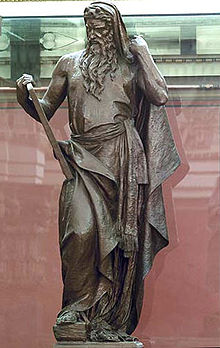
Statue of Moses at the Library of Congress, Washington D.C.

Exodus 34: 29-35: The Radiance of Moses

29 Moses came down from Mount Sinai. As he came down from the mountain with the two tablets of the covenant in his hand, Moses did not know that the skin of his face shone because he had been talking with God. 30 When Aaron and all the Israelites saw Moses, the skin of his face was shining, and they were afraid to come near him. 31 But Moses called to them; and Aaron and all the leaders of the congregation returned to him, and Moses spoke with them. 32 Afterward all the Israelites came near, and he gave them in commandment all that the LORD had spoken with him on Mount Sinai. 33 When Moses had finished speaking with them, he put a veil on his face; 34 but whenever Moses went in before the LORD to speak with him, he would take the veil off, until he came out; and when he came out, and told the Israelites what he had been commanded, 35 the Israelites would see the face of Moses, that the skin of his face was shining; and Moses would put the veil on his face again, until he went in to speak with him.

The time spent by Moses in the presence of God has a transforming effect upon Moses. While the changes are invisible to Moses they are clearly seen by Aaron and the people and it is a cause for fear. This time in God’s presence has made Moses different from the rest of the people, he continues to stand apart. In his role as mediator between God and the people he seems to have brought a little bit of God’s presence back with him.

The presence of God does change people. Moses enjoys a far greater intimacy with God than any other person among the Israelites. Moses has shown great faithfulness to God and to the people as well. Moses is more than an emissary for God or even a prophet of God but one who God trusts and speaks to like one speaks to a friend. Moses has something that even Aaron will never have. Aaron and the priests will need things to announce them before God and will only be allowed to enter God’s presence rarely. Moses dwells both with God and the people. Yet, Moses seems to belong more with God now than the people. Among the people Moses needs to wear a veil to fit in, but in God’s presence Moses doesn’t need to hide the radiance of who he is.

Exodus 33: Repairing the Relationship Between God and Israel

“Ten Commandments by Anton Losenko – Licensed under Public Domain via Wikimedia Commons –

Exodus 33:1-6 The LORD’s Separation from Israel

The LORD said to Moses, “Go, leave this place, you and the people whom you have brought up out of the land of Egypt, and go to the land of which I swore to Abraham, Isaac, and Jacob, saying, ‘To your descendants I will give it.’ 2 I will send an angel before you, and I will drive out the Canaanites, the Amorites, the Hittites, the Perizzites, the Hivites, and the Jebusites. 3 Go up to a land flowing with milk and honey; but I will not go up among you, or I would consume you on the way, for you are a stiff-necked people.”

4 When the people heard these harsh words, they mourned, and no one put on ornaments. 5 For the LORD had said to Moses, “Say to the Israelites, ‘You are a stiff-necked people; if for a single moment I should go up among you, I would consume you. So now take off your ornaments, and I will decide what to do to you.'” 6 Therefore the Israelites stripped themselves of their ornaments, from Mount Horeb onward.

Trust was broken when the Israelites cast and worshipped the golden calf. Perhaps it is my own experience of a broken relationship as well as helping others deal with broken relationships that makes me hear this passage between the LORD and Israel being like the struggling attempts of a couple after trust was broken. The God of the Bible is not the unmoved mover that many Christians imagine, the LORD the God of Israel was passionately invested in this covenant. We see here and many other places in scriptures a wounded God nursing broken dreams and beginning the long journey to the place where trust can be rebuilt. It is not only a journey from Mount Sinai/Horeb to the promised land, it is a journey of rebuilding trust between God and God’s people.

At this point the LORD needs some space from the people. Like a couple who needs to live in separate places after an affair because the presence of the other is a continual reminder of the brokenness that exists between them, the LORD needs space and time to deal with these emotions. The Israelites too in their own way go into mourning. Their ornaments were once removed to cast the golden calf and now they are removed as a mourning of the pain and grief they caused for the LORD and for themselves. They are a people who have lost their God’s trust and who exist in the hope that in the future that trust can be rebuilt, and the relationship restored.

God has not completely walked away from the people or from hope. An angel, and emissary continues to lead and go with the people but the LORD’s desire to dwell among the people has been for a time shattered. The previous focus on the tabernacle is temporarily set aside amid the pain of the broken relationship. Moses still stands between the LORD and the people, clung to by both. For now the people and God journey in parallel paths and Moses’ job will be to bring healing to both God and God’s people.

Exodus 33: 7-11 Separate Camp

7 Now Moses used to take the tent and pitch it outside the camp, far off from the camp; he called it the tent of meeting. And everyone who sought the LORD would go out to the tent of meeting, which was outside the camp. 8 Whenever Moses went out to the tent, all the people would rise and stand, each of them, at the entrance of their tents and watch Moses until he had gone into the tent. 9 When Moses entered the tent, the pillar of cloud would descend and stand at the entrance of the tent, and the LORD would speak with Moses. 10 When all the people saw the pillar of cloud standing at the entrance of the tent, all the people would rise and bow down, all of them, at the entrance of their tent.11 Thus the LORD used to speak to Moses face to face, as one speaks to a friend. Then he would return to the camp; but his young assistant, Joshua son of Nun, would not leave the tent.

Much as adults going through a strained portion of a relationship often separate because the immediate presence of the other causes too much pain, now the LORD meets with Moses outside the camp. Moses’ role as the mediator between the people and God in now intensified as Moses still has the LORD’s trust. The people who are longing for reconciliation, those who seek the LORD, wait and watch Moses’ departure to the tent of meeting and return hopeful for some sign that the relationship will be renewed. This is not the desired state of things for God. The LORD’s desire was to be in the center of the camp but now God’s place of meeting is beyond the borders of the camp.

Dietrich Bonhoeffer in his theological exposition of Genesis 1-3, Creation and Fall, talks about Adam’s original orientation of God placing God in the center of existence. (Bonhoeffer, 1997, p. 88f) In a similar way, the intent for the tabernacle was to echo this place in creation where God is symbolically and theologically in the center of the people of Israel’s life. Both Adam and the people of Israel were to realize their dependence on the LORD’s providence and protection. Yet both would eventually by their disobedience push God to the margins (using Bonhoeffer’s theological metaphor). Yet, God also withdraws to the margins as an act of grace. In the creation narrative it is a grace which overcomes the threat of death to Adam and Eve for eating the fruit of the tree of knowledge of good and evil. In Exodus it is a grace which prevents the people from being consumed by the wrath of God over their betrayal with the golden calf. Moses as the mediator will now continue to work to bring the people and their God back together and to move God away from the margins and back to the center.

Exodus 33: 12-23 The Presence of God

love me forever by syntheses on deviantart.com

12 Moses said to the LORD, “See, you have said to me, ‘Bring up this people’; but you have not let me know whom you will send with me. Yet you have said, ‘I know you by name, and you have also found favor in my sight.’ 13 Now if I have found favor in your sight, show me your ways, so that I may know you and find favor in your sight. Consider too that this nation is your people.” 14 He said, “My presence will go with you, and I will give you rest.” 15 And he said to him, “If your presence will not go, do not carry us up from here. 16 For how shall it be known that I have found favor in your sight, I and your people, unless you go with us? In this way, we shall be distinct, I and your people, from every people on the face of the earth.”

17 The LORD said to Moses, “I will do the very thing that you have asked; for you have found favor in my sight, and I know you by name.” 18 Moses said, “Show me your glory, I pray.” 19 And he said, “I will make all my goodness pass before you, and will proclaim before you the name, ‘The LORD’;1 and I will be gracious to whom I will be gracious, and will show mercy on whom I will show mercy. 20 But,” he said, “you cannot see my face; for no one shall see me and live.” 21 And the LORD continued, “See, there is a place by me where you shall stand on the rock; 22 and while my glory passes by I will put you in a cleft of the rock, and I will cover you with my hand until I have passed by; 23 then I will take away my hand, and you shall see my back; but my face shall not be seen.”

For a beautiful description and meditation on this scene see Ellen Davis’ chapter ‘A Fool for Love: Exodus 33’ in Getting Involved with God: Rediscovering the Old Testament. (Davis, 2001, pp. 153-159) Even though I will be coming at the scene from a different perspective she has some beautiful insights into this scene and suggestions about the character of the LORD. Moses is, “disgusted with the Israelites, betrayed by his own brother, and now even God has bailed out, leaving him alone with a job he never wanted in the first place” (154) and yet he is the one who is caught between a people and their God attempting to make peace. Moses asks for a demonstration of the LORD’s favor and trust in this place where Moses feels abandonment. The LORD attempts to reassure Moses that Moses is seen and known and that the relationship between Moses and God remains strong, but Moses is not willing to allow things to remain as they are. God promises to be present and to walk with Moses (the Hebrew is second person singular-Hebrew has a singular and a plural you unlike English). Moses refuses to allow God to only journey with him, if God will not go with the people Moses asks him to return to the original intent of journeying with the people. For Moses sake God consents to journey with the people and to be vulnerable to the pain that they will cause God along this journey.

God grants Moses request based upon the relationship with Moses, not the people. Moses becomes the one whose prayer is heard when the prayers of the people are not. Moses is one who is righteous for the people, who stands in the gap between the people and God and who holds the relationship together.

Moses makes a bold request of God, to see God’s glory. Moses has been the one who seeks after the LORD throughout the Exodus journey and the LORD grants this request as fully as possible. Moses continues to be the one seeking after God and God consents to be seen in a manner that Moses can endure. God is not insulted by Moses’ request and, as Ellen Davis highlights, God seems to be flattered by it. (157) God has been taken for granted by the people but not by Moses and the LORD has stated that the LORD is a jealous God who will not be taken for granted. Yet, God is willing to show Godself to those who seek and to enter into the relationship with those who are willing to be open to God. Moses’ faithfulness to God’s vision for the relationship between the LORD and the people pulls the LORD back to the LORD’s original dream. Moses’ intercession for the people and desire for God becomes instrumental in the process of reconciliation.

Belonging

Growing up I wanted to be a part of the cool kids
To sit at the right tables with all the beautiful people
The pretty girls and the athletic guys who others wanted to be
With the witty conversationalists and jokers who made everyone laugh
The teenage courts of royalty where these young princes and princesses danced
But I was just a commoner on the outside looking in on a world I imagined
 
As an adult I wanted to be a part of the biggest and the toughest
To run with the elite of the elites, to be among the company of the fearless
The warriors who were the modern knights of the round table
The new chosen fighters for king and country questing across the globe
Missions that would save the realm from the forces of chaos all around
But some things we are never built for physically or by temperament
 
Sometimes I feel I spent so much trying to belong somewhere else
In the dreams that I thought I was supposed to dream
Seeing the ways in which I imagined I didn’t fit into those adolescent imaginings
Standing on the outside looking in at those who lived those lives
Trying to find a place where I belonged and belonging nowhere
Until I learned I belonged only to myself and becoming me was the home I sought