Author Archives: Neil

Psalm 70 God Help Me Quickly

Psalm 70

Psalm 70

<To the leader. Of David, for the memorial offering.>

1 Be pleased, O God, to deliver me. O LORD, make haste to help me!

2 Let those be put to shame and confusion who seek my life. Let those be turned back and            brought to dishonor who desire to hurt me.

3 Let those who say, “Aha, Aha!” turn back because of their shame.

4 Let all who seek you rejoice and be glad in you. Let those who love your salvation say evermore, “God is great!”

5 But I am poor and needy;

hasten to me, O God! You are my help and my deliverer; O LORD, do not delay!
 
Sometimes the only prayer that can be managed in a crisis is, “dear God, help! Please! Quickly!” That is the essence of this short psalm which appeals to God for deliverance. It is possible that Psalm 70 and 71 were originally designed to be joined together, there are a number of thematic and vocabulary linkages between the two psalms, and this psalm is also present with a few minor differences as the ending of Psalm 40. Yet, in the way we have received this Psalm in the psalter it stands alone as a brief and unresolved plea for help which calls on God to act quickly and decisively to save the petitioner.

The Psalm has an uneven chiastic structure[1] which I’ve attempted to show in the indentations above. As Beth Tanner helpfully illustrates:

Plea to hurry (v. 1)
The world as it is (v.2-3)
The world as it should be (v.4)
The world as it is (v. 5a)
Plea to hurry (v. 5b) (Nancy deClaisse-Walford 2014, 563)

The opening and closing verses share both vocabulary and theme (help, deliver(er), haste(n)) bracketing the brief psalm with an urgent cry for immediate help. The world the psalmist is experiencing is one where enemies seek to cause pain, ruin reputation, and destroy the life of this one crying for help. The psalmist asks for the shameful actions of their enemy to rebound upon these enemies causing them to be shamed. In a world as it should be the righteous who seek God know joy and are able to praise God, but in the world as it is experienced they find themselves appealing to God for deliverance from their oppressors. Psalm 70 ends with a repeated cry for immediate help and we sit with the psalmist in the time of waiting for God’s response.

Although most modern Christians don’t attend service on the Wednesday of Holy Week, this is the appointed psalm for that day and liturgically it applies this psalm to Jesus hearing the mocking words on the cross. The psalm makes sense in this setting of one being accused unjustly and calling out to the LORD for help, but it also applies to many other settings throughout the life of faith. Cries for God’s immediate response in a situation of crisis are a part of a life that trusts that God will deliver. Sometimes the shortest prayers are the ones that speak the clearest of the immediate need for help.

[1] A Chiasm is a poetic form which uses mirroring statements, vocabulary or themes.

Psalm 69 A Cry for Deliverance from Unjust Suffering

Psalm 69

<To the leader: according to Lilies. Of David.>

1 Save me, O God, for the waters have come up to my neck.[1]
2 I sink in deep mire, where there is no foothold; I have come into deep waters, and the flood sweeps over me.
3 I am weary with my crying; my throat is parched. My eyes grow dim with waiting for my God.
4 More in number than the hairs of my head are those who hate me without cause; many are those who would destroy me, my enemies who accuse me falsely. What I did not steal must I now restore?
5 O God, you know my folly; the wrongs I have done are not hidden from you.
6 Do not let those who hope in you be put to shame because of me, O Lord GOD of hosts; do not let those who seek you be dishonored because of me, O God of Israel.
7 It is for your sake that I have borne reproach, that shame has covered my face.
8 I have become a stranger to my kindred, an alien to my mother’s children.
9 It is zeal for your house that has consumed me; the insults of those who insult you have fallen on me.
10 When I humbled my soul with fasting, they insulted me for doing so.
11 When I made sackcloth my clothing, I became a byword to them.
12 I am the subject of gossip for those who sit in the gate, and the drunkards make songs about me.
13 But as for me, my prayer is to you, O LORD. At an acceptable time, O God, in the abundance of your steadfast love, answer me. With your faithful help
14 rescue me from sinking in the mire; let me be delivered from my enemies and from the deep waters.
15 Do not let the flood sweep over me, or the deep swallow me up, or the Pit close its mouth over me.
16 Answer me, O LORD, for your steadfast love is good; according to your abundant mercy, turn to me.
17 Do not hide your face from your servant, for I am in distress — make haste to answer me.
18 Draw near to me, redeem me, set me free because of my enemies.
19 You know the insults I receive, and my shame and dishonor; my foes are all known to you.
20 Insults have broken my heart, so that I am in despair. I looked for pity, but there was none; and for comforters, but I found none.
21 They gave me poison for food, and for my thirst they gave me vinegar to drink.
22 Let their table be a trap for them, a snare for their allies.
23 Let their eyes be darkened so that they cannot see, and make their loins tremble continually.
24 Pour out your indignation upon them, and let your burning anger overtake them.
25 May their camp be a desolation; let no one live in their tents.
26 For they persecute those whom you have struck down, and those whom you have wounded, they attack still more.
27 Add guilt to their guilt; may they have no acquittal from you.
28 Let them be blotted out of the book of the living; let them not be enrolled among the righteous.
29 But I am lowly and in pain; let your salvation, O God, protect me.
30 I will praise the name of God with a song; I will magnify him with thanksgiving.
31 This will please the LORD more than an ox or a bull with horns and hoofs.
32 Let the oppressed see it and be glad; you who seek God, let your hearts revive.
33 For the LORD hears the needy, and does not despise his own that are in bonds.
34 Let heaven and earth praise him, the seas and everything that moves in them.
35 For God will save Zion and rebuild the cities of Judah; and his servants shall live there and possess it;
36 the children of his servants shall inherit it, and those who love his name shall live in it.

As attractive as the simple linkage of suffering as a punishment for sin is for some people, there are moments where the magnitude of the suffering becomes impossible to correlate with the suffering that a faithful one is undergoing. Psalm 69 has often been heard in reference to Job, the suffering servant of Isaiah 52: 13-53:12, Jeremiah, the author of Lamentations, and Jesus. It is a complaint from one whose suffering, particularly at the hands of others in the community, is disproportionate to any offenses they may have committed. As we have seen throughout the Psalms, the petitioner trusts that God is the one who can save their life from the threat they face and restore justice in the face of injustice.

Structurally, Psalm 69 begins with two sets of appeals to God which parallel each other in significant ways using similar content and vocabulary. This mirroring intensifies the urgency in the appeal of the psalmist and reinforces the impression that their life is in imminent danger of being overwhelmed by the forces and the individuals who oppose them. The person cries out using the imagery of rising floodwaters that they cannot flee from because they are stuck in the deep mire and cannot gain a foothold. Their time is running out before the waters rise above their neck and their life is swept away because the air they need is denied to their lungs by the overwhelming waters. The metaphor indicates a situation of dire need, and the petitioner has continued to call out to God for deliverance until their throat is dry from crying out and their eyes are weary from crying.

The image abruptly shifts from a rising flood of water to a flood of opponents who hate without cause. The psalmist does not claim to being sinless, they know their actions and attitudes have been seen and known by God, but what others are accusing them of they proclaim their innocence of. They are being asked to answer for crimes they did not commit and to pay for things they did not take. The wording of the psalm makes it likely that the psalmist is being persecuted for their faithfulness to their understanding of what God has asked of them. Perhaps they are a prophet whose actions on behalf of God have made them unpopular, or perhaps they maintain faithfulness to the worship of the LORD and practice of the law in a time when many others are serving other gods or embracing other values. Their suffering which has alienated them from even their family is correlated, in the psalmist’s view, with their faithfulness to God. This faithful one has defended God and now they ask for God’s defense and rescue of them. Only God can restore justice in this time of injustice.

The image of flooding returns in verse fourteen and once again we see and echo of the cry for God’s deliverance from the rapidly rising waters which represent the enemies seeking to overwhelm the psalmist. These enemies whose insults have broken their heart of and brought shame and dishonor upon the psalmist. These people who were viewed as their family and community have rejected them and caused them to be viewed as one whose life is forfeit. For the psalmist, the only way they can imagine their restoration and salvation is for the tables to turn. They have been met without pity or comfort, and they ask for God to show their tormentors no comfort. They in their need received only poison and vinegar and so they call upon God to respond to their lack of hospitality. They have attempted to overwhelm their life like a rising flood, and now the psalmist asks that their lives may be blotted out of the book of life. They appeal to God for rescue and deliverance and through their dry throat and dimming eyes they hold on to the hope that God will deliver them and vindicate them over their oppressors.

Within this psalm it appears that the oppressors are adding to the perceived just punishment of God. Verse twenty-six point to the psalmist’s original pain and need, perhaps in the form of an illness. This sense in heightened by the word used for food in verse twenty-one which is an unusual word for food that is often associated with food brought to the sick bed. (Nancy deClaisse-Walford 2014, 560) These enemies may be seeking to exploit the weakness of the psalmist when they are sick and may be (figuratively or literally) poisoning the waters (and the food). One could imagine a scenario where if the psalmist is a king (like David who the psalm is attributed to) someone could seek to exploit their weakness to attempt to seize power. Regardless the psalm indicates that the one who implores God for help can no longer trust even their nearest kin.

The psalm abruptly shifts to praise in verse thirty-one. Perhaps we see the deliverance of the one crying out or perhaps the psalmist merely anticipates that God will deliver. As J. Clinton McCann rightly states, “In the book of Psalms, to live is to praise God, and to praise God is to live.” (NIB IV: 953) The psalms, even in their appeals for help, live in expectation and gratitude of God’s deliverance from the floods that overwhelm and enemies who oppress. The psalmist lifts their voice into the great chorus of all creation praising God for God’s continual provision and redemption. Gratitude lifted up in witness and acclamation is more important in the psalms than providing the proper sacrifices at the temple. The psalmist lives in the love of God’s name, in the shelter of God’s protection, and in the expectation of God’s help.

[1] Hebrew nephesh has occurred frequently throughout the psalms and normally means ‘life’ or ‘soul’ but here is a location where it refers to ‘neck.’ Yet, in the metaphorical waters rising to the neck the life/soul of the petitioner is endangered.

Psalm 68 God as Warrior and Protector of the Powerless

Fredrick Arthur Bridgman, Pharaoh’s Army Engulfed by the Red Sea (1900) oil on canvas

Psalm 68

<To the leader. Of David. A Psalm. A Song.>
1 Let God rise up, let his enemies be scattered; let those who hate him flee before him.
2 As smoke is driven away, so drive them away; as wax melts before the fire, let the wicked perish before God.
3 But let the righteous be joyful; let them exult before God; let them be jubilant with joy.
4 Sing to God, sing praises to his name; lift up a song to him who rides upon the clouds — his name is the LORD — be exultant before him.
5 Father of orphans and protector of widows is God in his holy habitation.
6 God gives the desolate a home to live in; he leads out the prisoners to prosperity, but the rebellious live in a parched land.
7 O God, when you went out before your people, when you marched through the wilderness, Selah
8 the earth quaked, the heavens poured down rain at the presence of God, the God of Sinai, at the presence of God, the God of Israel.
9 Rain in abundance, O God, you showered abroad; you restored your heritage when it languished;
10 your flock found a dwelling in it; in your goodness, O God, you provided for the needy.
11 The Lord gives the command; great is the company of those who bore the tidings:
12 “The kings of the armies, they flee, they flee!” The women at home divide the spoil,
13 though they stay among the sheepfolds — the wings of a dove covered with silver, its pinions with green gold.
14 When the Almighty scattered kings there, snow fell on Zalmon.
15 O mighty mountain, mountain of Bashan; O many-peaked mountain, mountain of Bashan!
16 Why do you look with envy, O many-peaked mountain, at the mount that God desired for his abode, where the LORD will reside forever?
17 With mighty chariotry, twice ten thousand, thousands upon thousands, the Lord came from Sinai into the holy place.
18 You ascended the high mount, leading captives in your train and receiving gifts from people, even from those who rebel against the LORD God’s abiding there.
19 Blessed be the Lord, who daily bears us up; God is our salvation. Selah
20 Our God is a God of salvation, and to GOD, the Lord, belongs escape from death.
21 But God will shatter the heads of his enemies, the hairy crown of those who walk in their guilty ways.
22 The Lord said, “I will bring them back from Bashan, I will bring them back from the depths of the sea,
23 so that you may bathe your feet in blood, so that the tongues of your dogs may have their share from the foe.”
24 Your solemn processions are seen, O God, the processions of my God, my King, into the sanctuary —
25 the singers in front, the musicians last, between them girls playing tambourines:
26 “Bless God in the great congregation, the LORD, O you who are of Israel’s fountain!”
27 There is Benjamin, the least of them, in the lead, the princes of Judah in a body, the princes of Zebulun, the princes of Naphtali.
28 Summon your might, O God; show your strength, O God, as you have done for us before.
29 Because of your temple at Jerusalem kings bear gifts to you.
30 Rebuke the wild animals that live among the reeds, the herd of bulls with the calves of the peoples. Trample under foot those who lust after tribute; scatter the peoples who delight in war.
31 Let bronze be brought from Egypt; let Ethiopia hasten to stretch out its hands to God.
32 Sing to God, O kingdoms of the earth; sing praises to the Lord, Selah
33 O rider in the heavens, the ancient heavens; listen, he sends out his voice, his mighty voice.
34 Ascribe power to God, whose majesty is over Israel; and whose power is in the skies.
35 Awesome is God in his sanctuary, the God of Israel; he gives power and strength to his people. Blessed be God!

The rigorous scholarship of the 20th century which was intent on setting the individual psalms (along with the rest of scripture) within its historical context would argue that the Hebrew language used and the theology of this psalm are similar to Exodus 15, Deuteronomy 32, and Judges 5: which are thought to be some of the most ancient pieces of the Bible. This Psalm does have fifteen words which occur nowhere else in the Hebrew scriptures and numerous other rare words (NIB IV: 944) and even in the English translations you can sense a more primal way of thinking about enemies in language that would seem bloodthirsty and non-religious (or perhaps some more primal form of religion). Yet, perhaps much of the discomfort with this psalm comes from those who, like me, are relatively privileged since this psalm was one of the favorites of the African American church tradition.

The picture of God throughout this psalm is of God the divine warrior who triumphs over the enemies of God’s people. Those who oppose God are no more substantial to this divine warrior that smoke or wax before a fire. ‘God who rides upon the clouds’ is a description used by the Canaanites for their deity Baal, but here the psalmist adopts this language multiple times to refer to the God of Israel. The LORD God as a divine warrior has apparently stripped the surrounding deities of their titles and has assumed lordship over them. Yet, in all the power and might of this divine warrior, the God of Israel is also the father of the fatherless and the defender of the widows and vulnerable. God’s might is directed at providing a future for the powerless and a land toward those who had once been desolate and imprisoned.

The action of God going out before the people and marching through the wilderness recalls both the Exodus and the long process of the people of Israel claiming the promised land through conflict with the numerous kings of the nations in Numbers through Judges. The earth and the heavens react to the movement of God in both destructive (earthquakes, heavens pouring down rain) and renewing (showering rain to renew the languishing ground). The LORD God of Israel is a force of nature but also the leader of a great host which routes the armies which oppose Israel. The women are able to divide the spoil of these once mighty armies in safety and wealth seems to be flowing down as if it were coming from the feathers of a dove falling to the ground.

The LORD God has not chosen the higher and larger mountains of Zalmon or Bashan to be God’s dwelling place. Instead the LORD has descended in power on Jerusalem with an immense army of chariots (the strongest military unit of the time) that could overwhelm any king’s military might. Here the language turns primal, with the LORD shattering the heads of his enemies and allowing his followers to bathe their feet in blood. Just as the psalmist coopted language previously used for Baal to talk about the God of Israel, now the images of a bloodthirsty victory which, “clearly reflects the traditions of the greater ancient Near East” (Nancy deClaisse-Walford 2014, 550) is used to graphically illustrate God’s complete victory over the nations opposed to Israel.

Yet, almost immediately after this primal language about wading in blood and dogs having their share of the foe is a procession to worship. Singers and musicians, men and women, the entire congregation of Israel moves toward the temple. The implication is that the other nations also join in this procession to present their offerings to the conquering God of Israel. The tributes come from as far away as Egypt and Ethiopia as the divine warrior lays down the weapons of conquest and initiates a time of peace where God reigns over Israel, over the heavens and over all the earth.

The psalm deals polemically with the gods of the surrounding peoples. The people who oppose the God of Israel are conquered and the titles of their gods now are lifted up in tribute to the LORD God. Beth Tanner says truthfully, “This is dangerous theology in the wrong hands.” (Nancy deClaisse-Walford 2014, 551) In the hands of the powerful it could be used as an authorization for a bloody extermination of one’s enemies and the eradication of their culture and beliefs. There are bellicose voices today that adopt bloodthirsty language to excite their followers and to baptize their bloody beliefs in the approving smile of their gods of power and might. Yet, one must always remember in the use of this psalm that the divine warrior is the father of the fatherless and the protector of the widows and the vulnerable. As Cheryl Townsend Gilkes notes: within the African American tradition Psalm 68 “connects a personal God who cares about the individual’s circumstances with a powerful liberating God.” (Nancy deClaisse-Walford 2014, 552) For people who have never known a life that needs liberation from a powerful oppressor often backed up by both formal and informal networks of power these words may seem primal and bloodthirsty, but for those who long for liberation the only God who can be a father to the fatherless and protector of the vulnerable is a divine warrior who has enough power to displace those who prey upon the weak.


Review of American Pastoral by Philip Roth

Time Magazine Top 100 Novels

Book 3: American Pastoral by Philip Roth

This is a series of reflections reading through Time Magazine’s top 100 novels as selected by Lev Grossman and Richard Lacayo published since 1923 (when Time magazine was founded). For me this is an attempt to broaden my exposure to authors I may not encounter otherwise, especially as a person who was not a liberal arts major in college. Time’s list is alphabetical, so I decided to read through in a random order, and I plan to write a short reflection on each novel.

American Pastoral is a moving novel which follows the destruction of the world of Seymour (Swede) Levov in the aftermath of his daughter’s bombing of the Rimrock post office and general store in protest of the Vietnam War. Swede Levov is the good-looking high school multi-sport star who eventually joins the U.S. Marines at the end of World War II and then returns home, marries Miss New Jersey, takes over the family glove business and builds a successful life. Although the beautiful couple come from different backgrounds (Swede’s family is Jewish while his wife Dawn is Irish Catholic) the manage to construct a seemingly perfect environment to raise their one daughter, Merry. Yet, their daughter rejects everything about their family life and eventually becomes a part of a violent anti-American group which opposes the actions of the United States in Vietnam and the American capitalistic worldview. Merry plants a bomb and disappears leaving behind a wrecked family.

Swede Levov loved his work, his house, his family, and his life. He attempts to encounter life with an ‘expansive blessing of openness and vigor conferred by his hyperoptimism.’ He is a statuesque protagonist whose experience on the sports field, the Marine Corp, and business have shaped him to continually bear the burdens of others. When his daughter’s actions plunge his wife into a deep depression and shakes his community he attempts to maintain a firm foundation for his wife, his parents, his business, and his missing daughter. When he finally encounters his daughter years later and sees the wreckage of her life that he cannot save her from, he also begins to see the places where his own life and values have come undone. He stands powerless as the foundations of the life he so carefully tended are torn asunder to the delight of some of the more nihilistic characters in the book.

This is another book that is well written, and I can see why it is a part of the Time Magazine top 100 list. Many of these books tend towards a nihilistic and fatalistic perspective on society and humanity (also not surprising based on Lev Grossman’s writing) and seem to rail against the hyperoptimism of characters like Swede Levov. I really like the character of Swede and could identify with him in many ways. Even though I knew that the book was a story of the fall of the ‘golden child’ I wanted him to succeed. I may have read this book at some point in the past because some of the scenes were familiar. Philip Roth does a good job of character development even if he sometimes goes off on rambling almost stream of consciousness tangents that can make the work difficult to follow at times.

Psalm 67 A Blessing For The Earth

Psalm 67

<To the leader: with stringed instruments. A Psalm. A Song.>

1 May God be gracious to us and bless us and make his face to shine upon us, Selah
 2 that your way may be known upon earth, your saving power among all nations.
       3 Let the peoples praise you, O God; let all the peoples praise you.
                4 Let the nations be glad and sing for joy, for you judge the peoples with equity and guide the       nations upon earth. Selah
       5 Let the peoples praise you, O God; let all the peoples praise you.
 6 The earth has yielded its increase; God, our God, has blessed us.
7 May God continue to bless us; let all the ends of the earth revere him.

The Jewish[1] sense of being chosen by God involves a paradox between the universalism of God’s bounty over all the earth and the particularism of their specific role and responsibility within God’s greater action on behalf of the world and the nations. They are to be a ‘treasured possession, a priestly kingdom, and a holy nation,’ (Exodus 19: 5-6) but like their ancestor Abraham, “in you all the families of the earth shall be blessed.” (Genesis 12: 3) Central to the theology of the psalms, and the entire scriptures, is the audacious claim that the particular God they worship is the God of all creation. This small nation, which are descendants of slaves in Egypt, and never emerges as major player on the world stage somehow trusts that the covenantal life they live will be a witness for all the nations to see and it will testify to the universal reign of the God they worship.

The psalm is structured as a chiasm[2] with verse four as the center. This central point focuses on the universal reign and worship of their God. This universal reign is to be demonstrated by the praise of all the peoples. This idea is echoed in several other places in scripture either in relation to the God of Israel (Exodus 9:16, Psalm 22: 27-28, Isaiah 2: 2-4; 19: 23-34; 49: 5-7) or Jesus. (Matthew 28:18, Philippians 2: 10-11) The petition at the beginning of the psalm that God may bless us (echoing the priestly blessing of Numbers 6: 24-26 but now placing it in the voice of the people rather than the priest) is paired with the hope that through this blessing God’s way make be known upon the earth and God’s saving power among the nations. The Psalm mirrors this request by announcing that God has blessed and the earth yields its harvest (increase) and in God’s continued action of blessing the people of Israel the ends of the earth will revere God.

This idea of election or calling of the people of God for the sake of the rest of the earth makes a more gracious view of those who believe and act differently available for the chosen people. God’s blessing on the earth and the nations does not depend upon the conversion or subjugation of those nations. Even if these Gentiles or unbelievers do not ‘know’ that it is God at work, the covenant people know and celebrate this. This is a part of the mystery of God’s strange and gracious way upon the earth. God can act through a foreigner like Cyrus in Isaiah 45: 1-5 to bring about a blessing for the covenant people. As Jesus can state in Matthew’s gospel, “But I say to you, Love your enemies and pray for those who persecute you, so that you may be children of your Father in heaven; for he makes his sun rise on the evil and on the good, and sends rain on the righteous and on the unrighteous.” (Matthew 5: 44-45) These followers of God are to live in gratitude for the blessings that God sends both to them and the unrighteous, to those who are a part of the covenant people and the ones beyond the boundaries of their faith or nation. They continue to pray for God’s blessings not only on themselves but also for the whole world. God’s special consideration of the covenant people somehow, in the mystery of God’s steadfast love, is a part of God’s establishing justice for all the people and a way in which God provides guidance for all the earth.


[1] This also applies to the Christian sense of being chosen or calling.

[2] A Chiasm is a poetic and literary structure where ideas and often vocabulary is mirrored around a central point. I have indented the psalm to show this structure where vs. 1-2 are mirrored by 6-7, vs. 3 and 5 are identical copies and verse four stands as the focal point.

Psalm 66 Formed by Steadfast Love

Grigory Mekheev, Exodus (2000) artist shared work under Creative Commons Attribution-Share Alike 3.0

Psalm 66

<To the leader. A Song. A Psalm.>

1 Make a joyful[1] noise to God, all the earth;
2 sing the glory of his name; give to him glorious praise.
3 Say to God, “How awesome are your deeds! Because of your great power, your enemies cringe before you.
4 All the earth worships you; they sing praises to you, sing praises to your name.” Selah
5 Come and see what God has done: he is awesome in his deeds among mortals.
6 He turned the sea into dry land; they passed through the river on foot. There we rejoiced in him,
7 who rules by his might forever, whose eyes keep watch on the nations — let the rebellious not exalt themselves. Selah
8 Bless our God, O peoples, let the sound of his praise be heard,
9 who has kept us among the living, and has not let our feet slip.
10 For you, O God, have tested us; you have tried us as silver is tried.
11 You brought us into the net; you laid burdens on our backs;
12 you let people ride over our heads; we went through fire and through water; yet you have brought us out to a spacious place.
13 I will come into your house with burnt offerings; I will pay you my vows,
14 those that my lips uttered and my mouth promised when I was in trouble.
15 I will offer to you burnt offerings of fatlings, with the smoke of the sacrifice of rams; I will make an offering of bulls and goats. Selah
16 Come and hear, all you who fear God, and I will tell what he has done for me.
17 I cried aloud to him, and he was extolled with my tongue.
18 If I had cherished iniquity in my heart, the Lord would not have listened.
19 But truly God has listened; he has given heed to the words of my prayer.
20 Blessed be God, because he has not rejected my prayer or removed his steadfast love from me.

For the Hebrew people the Exodus is the defining narrative that informs their life as the people of God. Without God’s action to bring them out of Egypt, through the wilderness, and into the promised land they are not a people of their own, merely slaves of the great Egyptian empire. Central to their faith is the trust that God acted in mighty ways to deliver their ancestors in the past and that God continues to act in ways to protect, preserve, purify, and refine so that they might be a treasured possession, a priestly kingdom, and a holy nation. (Exodus 19: 5-6) The people of God participate with the rest of creation in bearing witness to not only the mighty deeds of God but the careful formation of this people into something precious.

The previous psalm ended with the valleys and meadows shouting for joy and singing and now Psalm 66 begins with the imperative for all the earth to shout to God. God’s name and God’s power are lifted up as reasons for that praise and both friend and foe recognize the power of God. The initial stanza of this psalm joins together the voices of humanity with the voices of the creation in an exultant praise of God’s glory and strength while the second stanza invites the hearer to learn the specific actions that the psalmist views as praiseworthy. The invitation to come and see God’s awesome deeds takes the listener to the exodus narrative where God turned the Red Sea into dry land for Israel to cross and, before their entry into the promised land, God does the same with the Jordan river. These actions to bring the people out of Egypt and into the promised land demonstrate for the speaker God’s rule over the nations and God’s ability to execute justice throughout the world. The rebellious ones find themselves overwhelmed by God’s judgment like Korah and the leaders he assembled to confront Moses. (Numbers 16)

The work of God is not completed with the rescue of the people but it continues with the formation of this people to become the holy nation they are set aside to be. The other nations are invited to observe the way that the God of Israel is at work testing and refining the people, training them as one would train an athlete or soldier by giving them additional burdens to bear, and passing them through fire and water that they might be who they were created to be. As Beth Tanner can observe, “The world is eavesdropping on Israel’s formation as God’s people.” (Nancy deClaisse-Walford 2014, 535) The speaker does not resent this formation but rather praises God because of it. God has shaped and formed them to be something special and they respond with an abundant thanksgiving offering of fatlings, rams, bulls, and goats are offered. Presumably this type of offering would take place within a great communal feast celebrating God’s provision and telling again the story of God’s mighty deeds through the Exodus.

The psalm concludes with a move from a highlighting of what God has done for the people to centering on God’s answering of the prayer of the speaker. God has formed the speaker to be pure of heart and God also hears the prayers of this treasured one. God’s promised steadfast love has been there when the psalmist needed it and God has demonstrated that God is trustworthy in God’s relation to the individual as well as the people. Living in the covenant with this God has brought the psalmist to the point where they shout out joyfully with all creation for the mighty work of their God.

This is a psalm that speaks to what Dietrich Bonhoeffer would many years later call ‘costly grace.’ The grace (or steadfast love) in this psalm chooses the people without any worthiness of their own, but it also tests and tries the recipient so that they may become something precious. This steadfast love is at work in the work of creation, redemption, and sanctification-forming from slaves and sinners a holy people, a treasured possession, and a priestly kingdom. It is a faith which allows the faithful one to understand the struggles they pass through as a part of their formation to be who they were intended by God to be. It is a faith that can point to God’s mighty deeds in the past but also acknowledges the way that God has given heed to the words of the faithful one’s prayer. Perhaps one of the gifts in this psalm is the way that the steadfast love of God is seen at the conclusion, after the mighty deeds and the passing through fire and water. As Bonhoeffer stated in Discipleship, “Grace as presupposition is grace at its cheapest; grace as a conclusion is costly grace.” (DBWE 4:51) Perhaps it is only looking back through the struggles that one can appreciate the manner in which both the struggles and the mighty works together have been a part of God’s patient formation of the people and the individual through the ever-present steadfast love of God.

[1] This is the Hebrew verb rua (shout) which appears at the end of the last verst of Psalm 65

Psalm 65 A Song of Thanksgiving to a Gracious Creator

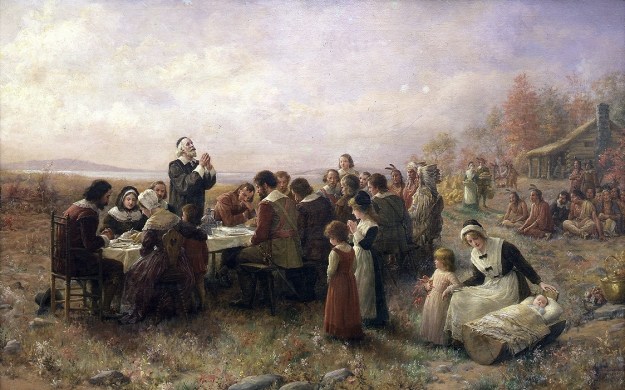
Jennie Augusta Brownscome, The First Thanksgiving at Plymouth (1914) Plymouth Hall Museum, Plymouth, MA

Psalm 65

<To the leader. A Psalm of David. A Song.>
1 Praise is due to you,[1] O God, in Zion; and to you shall vows be performed,
2 O you who answer prayer! To you all flesh shall come.
3 When deeds[2] of iniquity overwhelm us, you forgive our transgressions.
4 Happy[3] are those whom you choose and bring near to live in your courts. We shall be satisfied with the goodness of your house, your holy temple.
5 By awesome deeds you answer us with deliverance, O God of our salvation; you are the hope of all the ends of the earth and of the farthest seas.
6 By your strength you established the mountains; you are girded with might.
7 You silence the roaring of the seas, the roaring of their waves, the tumult of the peoples.
8 Those who live at earth’s farthest bounds are awed by your signs; you make the gateways of the morning and the evening shout for joy.
9 You visit the earth and water it, you greatly enrich it; the river of God is full of water; you provide the people with grain, for so you have prepared it.
10 You water its furrows abundantly, settling its ridges, softening it with showers, and blessing its growth.
11 You crown the year with your bounty; your wagon tracks overflow with richness.
12 The pastures of the wilderness overflow, the hills gird themselves with joy,
13 the meadows clothe themselves with flocks, the valleys deck themselves with grain, they shout and sing together for joy.

It feels serendipitous to arrive at Psalm 65 in the week before the celebration of Thanksgiving in the United States. This psalm is appropriately used in many Thanksgiving services. This song which celebrates a gracious and forgiving God whose awesome actions to deliver, sustain, and protect the people of God along with all of creation evoke praise from God’s people and the earth itself. The praise delivered to God may be done in silence or with shouting and singing for joy, but the poet who composes the psalm recognizes their place among the thankful creation acknowledging all that its gracious creator has done. As Martin Luther could state in explaining God’s act of creation in the Small Catechism, “For all of this I owe it to God to thank and praise, serve and obey him. This is most certainly true.” (Luther 1978, 25)

The initial praise emanates from the chosen people in Zion, likely in the temple or tabernacle. Most translations begin like the NRSV, “Praise is due to you” but the Hebrew states, “to you, silence is praise.” Poetically following the Hebrew makes sense as the psalm moderates back and forth between sound and silence. The things that are audible in the poem are often things that interfere with recognizing the gracious actions of God: words of iniquity (v. 3), the roaring of the seas and their waves and the tumult of the people which God silences (v.7). The two things in the poem that metaphorically shout for joy: the gateways of the morning and the evenings (v.8) and the meadows and valleys (v. 13) are both silent. Perhaps the psalmist is inviting us into silence so that we can observe as the creation responds in praise to God’s actions and we might in our own way learn to do the same.

God is the primary actor in this psalm. God is a redeemer who answers prayers, (v. 2) forgives transgressions, (v. 3) and delivers through awesome deeds. (v. 5) God is the creator who established the mountains, calms the threatening and chaotic water and the tumult of the nations, and who presides over all humanity and creation. (v. 6-8) God is the great farmer who waters the earth and causes the plants to grow into a bountiful harvest. (v. 9-11) The psalmist and all creation only lift up their silent praise together with their shouts and songs of joy. Happy (or blessed) are the ones who by God’s gracious action are brought near to live in the courts of God and to worship in the temple of God for they can see, with the rest of creation, the proper stance towards their gracious redeemer, creator, sustainer, and provider. Part of the wise life is being satisfied with the abundance that God has provided.

One of the gifts of the Lutheran tradition which I was formed within is the focus on God being the primary actor in the world rather than humanity. Much of the Christianity formed in the United States places a large emphasis, due to our individualistic culture, on the actions of the individual in obedience to God. Especially with the secular assumptions that most modern Christians bring to their faith, God’s action seems more distant and human action becomes more central. Reinhold Niebuhr’s incisive critique of the American practice of Thanksgiving from almost a century ago (1927) still resonates:

Thanksgiving becomes increasingly the business of congratulating the Almighty upon his most excellent co-workers, ourselves…The Lord who was worshipped was not the Lord of Hosts, but the spirit of Uncle Sam, given a cosmic eminence for the moment which the dear old gentleman does not deserve. (NIB IV:935)

Perhaps this psalm can help us to join with the rest of creation as it responds with praise to what God is doing in the world regardless of the transgressions of the chosen people who seem unable to live into the obedience to the covenant of God. Perhaps this short song can encourage us to lift our heads and expand our horizons beyond the walls of our community and reflect upon the actions both awesome and miniscule that God does to maintain the harmony of creation. As people gather together for their feasts of Thanksgiving, may it be an opportunity to reflect upon God’s actions of provision from the abundance of God’s harvest which we can gratefully partake in.

[1] The Hebrew text here reads “To you, silence (dumiyya) is praise” Most translations follow the LXX (Greek text) which uses the Greek prepo (fitting or proper) feeling this is a song of praise and sound is a central act. (Nancy deClaisse-Walford 2014, 527) See my comments on this above.

[2] The Hebrew dabar is normally translated word but can have the meaning of things or matters. Within the poetic flow of the Hebrew ‘words’ makes sense.

[3] This is the Hebrew asre which is often translated ‘happy’ in Hebrew scriptures. This word often used in wisdom literature and is the Hebrew equivalent to the Greek word makarios which is translated ‘blessed’ in the New Testament (particularly in the Sermon on the Mount).

Getting to know Creative Words

To introduce Creative Words I did several readings of selections from throughout the work. Click on any of the titles and it will take you to the reading with the text of the poem:

Introducing Creative Words

Reading of the title poem Creative Words

Reading of Anxiety

Reading of Obfuscation

Reading of Poet, End the War

If you would like to read a review of Creative Words by an independent reviewer for Clarion book reviews you can access that here.

Psalm 64 Protect the Innocent One for the Words of the Wicked

By Rashid al-Din – “History of the World” by Rashid al-Din. Photograph by German image bank AKG-Images, published in “The Mongols and the West”, Peter Jackson, 2005., Public Domain, https://commons.wikimedia.org/w/index.php?curid=3237525

Psalm 64

<To the leader. A Psalm of David.>
1 Hear my voice, O God, in my complaint; preserve my life from the dread enemy.
2 Hide me from the secret plots of the wicked, from the scheming of evildoers,
3 who whet their tongues like swords, who aim bitter words like arrows,
4 shooting from ambush at the blameless; they shoot suddenly and without fear.
5 They hold fast to their evil purpose; they talk of laying snares secretly, thinking, “Who can see us?
6 Who can search out our crimes? We have thought out a cunningly conceived plot.” For the human heart and mind are deep.
7 But God will shoot his arrow at them; they will be wounded suddenly.
8 Because of their tongue he will bring them to ruin; all who see them will shake with horror.
9 Then everyone will fear; they will tell what God has brought about, and ponder what he has done.
10 Let the righteous rejoice in the LORD and take refuge in him. Let all the upright in heart glory.

This portion of the psalter is full of petitions to God to deliver the one crying out from the malicious action of those who oppose them. Most people have encountered a time when they felt unfairly targeted by a group that threatened to ruin their reputation and may have even threatened physical violence. We don’t have to look far in our modern world to see people who wield words as weapons and who gather together to seek the advancement of their own power, fame, or fortune while thinking themselves immune to any consequences from their words or actions. The faith of the psalmist, which has been handed down to us, is that God hears and sees the injustice of the world and that God will eventually set the world back in balance. The dangerous words and scheming plots of the wicked may wound but God will rise to defend those who call for deliverance.

The psalm begins with an urgent call for God to hear and act to guard the life of the one praying for God’s preservation. This righteous one is dealing with many enemies who are gathering together and plotting against them. The NRSV translates the gathering together or the enemies as a ‘secret plot’ but the Hebrew sod is a gathering of a company of persons (Nancy deClaisse-Walford 2014, 522) and so the actions of the enemies is more like a gathering mob rather than a quiet conspiracy. The actions of these ‘scheming evildoers’ is intentionally unfair, and the psalmist feels ambushed by their words which have been weaponized like swords and arrows. The cry for help goes up when the psalmist feels exposed and unable to defend themselves against the onslaught of words and clever snares laid for them. These wicked ones are convinced that they have laid out a clever plot which the petitioner cannot escape from and have probably manipulated things to make themselves appear righteous in their assassination of the character and reputation of the righteous one.

The psalmist trusts that God will respond to the words and actions of the wicked ones and will guard their life. Just as the wicked ones aimed their bitter words like arrows, now they are wounded by God’s arrows, and they find that their tongues which they sharpened like swords cut both ways. They intended to bring about the destruction of the reputation and life of the righteous one, but now they find themselves as objects of horror. Their cunning plots unravel and and now they stand exposed before the community. They become the example of the ‘wicked’ whose punishment becomes an example to others who would follow their foolish ways. The psalmist trusts that God will put the world back in balance and the righteous will rejoice in God’s protection while the wicked are revealed before the community.

The persistent reality of those who are willing to use words as weapons and whose schemes often cause damage both lives and reputations causes many to continue to lift up their complaints to God. It is difficult to deny that many of these schemers seem to act without consequences in the present, but faith calls the one praying to trust in the power of God to ultimately overcome the scheming of humans. Sometimes the action of God may be violent, like the archer shooting arrows to defend one ambushed, but often it may be to allow the actions of the ‘evil ones’ to be revealed and their cunning plots to become known. Yet, the petition is for God to act and the psalmist entrusts that God can use the tools at God’s disposal to put the world back in balance and to guard the righteous ones.


Psalm 63 Hungering and Thirsting for God’s Presence

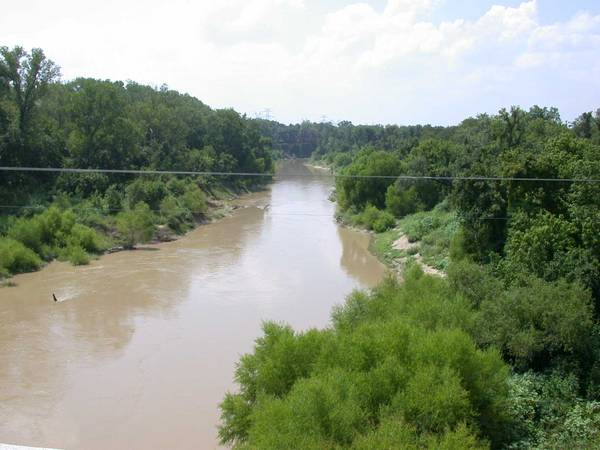
Trinity River in Texas

Psalm 63

<A Psalm of David, when he was in the Wilderness of Judah.>
1 O God, you are my God, I seek you, my soul thirsts for you; my flesh faints for you, as in a dry and weary land where there is no water.
2 So I have looked upon you in the sanctuary, beholding your power and glory.
3 Because your steadfast love is better than life, my lips will praise you.
4 So I will bless you as long as I live; I will lift up my hands and call on your name.
5 My soul is satisfied as with a rich feast, and my mouth praises you with joyful lips
6 when I think of you on my bed, and meditate on you in the watches of the night;
7 for you have been my help, and in the shadow of your wings I sing for joy.
8 My soul clings to you; your right hand upholds me.
9 But those who seek to destroy my life shall go down into the depths of the earth;
10 they shall be given over to the power of the sword, they shall be prey for jackals.
11 But the king shall rejoice in God; all who swear by him shall exult, for the mouths of liars will be stopped.

Trust in the midst of trouble has been a common theme in this portion of the book of Psalms. Sometimes the trouble precedes a turning to trust in the life of the psalmist, but sometimes the psalmist begins in trust and then addresses their troubles to God. This Psalm, which is attributed to David’s time in the wilderness when he was hunted by Saul, begins with a thirst and hunger to experience God’s presence like the psalmist experienced in the past. Yet, even though the psalmist longs for God’s presence and desires to share a rich feast in the security of God’s love and protection, they trust that their life is upheld by the power and protection of God.

We have previously seen the metaphor of thirsting for God’s presence at the beginning of Psalm 42, where the nephesh[1]pants for God like a deer pants for water. Once again the nephesh thirsts for God and the flesh faints for God. The psalmists entire being is weakened by the perceived absence of God’s presence like a person wandering in a hostile wilderness may be threatened by the harsh sun, unforgiving winds, and the lack of water. The psalmist is able to look back on times where they encountered the presence of God in the tabernacle or temple and came to know the hesed (steadfast love) of God. This encounter with the presence and love of God made a powerful impression on the psalmist, causing them to understand that the proper response was to dedicate their life to blessing and living in prayerful thanksgiving to their God.

The metaphor now shifts from thirst to hunger as the nephesh is satisfied with a rich feast.[2] Much as the feast of Thanksgiving in the United States was intended to give thanks to God for the abundance of harvest, now the psalmist participating in this festive meal, probably understood as taking place within the context of sacrifice, responds with lifting up praises with joyful lips. Hunger and thirst sated, now the psalm moves to the bed where the psalmist can rest in the peace provided by God’s protection and can lay down with a joyful song on their lips. They may experience hunger and thirst, but they trust that God will provide for the needs of their body and life. They can go to sleep even in the midst of their enemies continuing to make trouble because their God is a God of steadfast love and protection.

Only in the final three verses does the external threat of the enemy make its appearance, but in contrast to the experience of the faithful one their future is, through the eyes of the psalmist, one of shame and silence. The psalmist trusts that they will be surrounded by the presence of God, but their enemies will ‘go down’ to the depths of the earth-a place perceived to be distant from God. Their lives may have been lived violently, and the psalmist trusts that they will end violently, and they will end up the prey of scavengers who wander the wastelands. The voice of the psalmist will be lifted up in praise but the mouths of the liars who oppose him shall be silenced. Perhaps the ending of the psalm seems vengeful, but vengeance is left in God’s hands. Ultimately the threat of the psalmist’s enemies are real but they trust in the protection of their God to deal with these threats and they look forward to being in the holy spaces and lifting up their voice as they wonder and marvel at the presence and steadfast love of God which satisfies their thirst and sates their hunger.

[1] The Hebrew nephesh is often translated soul, but a Hebrew understanding of this word is closer to ‘my life’ or ‘my whole being.’

[2] Literally fat and fatness.