Author Archives: Neil

Judges 5 The Song of Deborah and Barak

Luca Giordano, The Defeat of Sisera (1692)

Judges 5

1 Then Deborah and Barak son of Abinoam sang on that day, saying:
2 “When locks are long in Israel, when the people offer themselves willingly — bless  the LORD!
3 “Hear, O kings; give ear, O princes; to the LORD I will sing, I will make melody to the LORD, the God of Israel.
4 “LORD, when you went out from Seir, when you marched from the region of Edom, the earth trembled, and the heavens poured, the clouds indeed poured water.
5 The mountains quaked before the LORD, the One of Sinai, before the LORD, the God of Israel.
6 “In the days of Shamgar son of Anath, in the days of Jael, caravans ceased and travelers kept to the byways.
7 The peasantry prospered in Israel, they grew fat on plunder, because you arose, Deborah, arose as a mother in Israel.
8 When new gods were chosen, then war was in the gates. Was shield or spear to be seen among forty thousand in Israel?
9 My heart goes out to the commanders of Israel who offered themselves willingly among the people. Bless the LORD.
10 “Tell of it, you who ride on white donkeys, you who sit on rich carpets  and you who walk by the way.
11 To the sound of musicians at the watering places, there they repeat the triumphs of the LORD, the triumphs of his peasantry in Israel. “Then down to the gates marched the people of the LORD.
12 “Awake, awake, Deborah! Awake, awake, utter a song! Arise, Barak, lead away your captives, O son of Abinoam.
13 Then down marched the remnant of the noble; the people of the LORD marched down for him against the mighty.
14 From Ephraim they set out into the valley, following you, Benjamin, with your kin; from Machir marched down the commanders, and from Zebulun those who bear the marshal’s staff;
15 the chiefs of Issachar came with Deborah, and Issachar faithful to Barak; into the valley they rushed out at his heels. Among the clans of Reuben there were great searchings of heart.
16 Why did you tarry among the sheepfolds, to hear the piping for the flocks? Among the clans of Reuben there were great searchings of heart.
17 Gilead stayed beyond the Jordan; and Dan, why did he abide with the ships? Asher sat still at the coast of the sea, settling down by his landings.
18 Zebulun is a people that scorned death; Naphtali too, on the heights of the field.
19 “The kings came, they fought; then fought the kings of Canaan, at Taanach, by the waters of Megiddo; they got no spoils of silver.
20 The stars fought from heaven, from their courses they fought against Sisera.
21 The torrent Kishon swept them away, the onrushing torrent, the torrent Kishon. March on, my soul, with might!
22 “Then loud beat the horses’ hoofs with the galloping, galloping of his steeds.
23 “Curse Meroz, says the angel of the LORD, curse bitterly its inhabitants, because they did not come to the help of the LORD, to the help of the LORD against the mighty.
24 “Most blessed of women be Jael, the wife of Heber the Kenite, of tent-dwelling women most blessed.
25 He asked water and she gave him milk, she brought him curds in a lordly bowl.
26 She put her hand to the tent peg and her right hand to the workmen’s mallet; she struck Sisera a blow, she crushed his head, she shattered and pierced his temple.
27 He sank, he fell, he lay still at her feet; at her feet he sank, he fell; where he sank, there he fell dead.
28 “Out of the window she peered, the mother of Sisera gazed  through the lattice: ‘Why is his chariot so long in coming? Why tarry the hoofbeats of his chariots?’
29 Her wisest ladies make answer, indeed, she answers the question herself:
30 ‘Are they not finding and dividing the spoil? — A girl or two for every man; spoil of dyed stuffs for Sisera, spoil of dyed stuffs embroidered, two pieces of dyed work embroidered for my neck as spoil?’
31 “So perish all your enemies, O LORD! But may your friends be like the sun as it rises in its might.” And the land had rest forty years.

The song of Deborah and Barak is generally considered one of the oldest pieces of the Hebrew Scriptures, along with the song of Moses, due to its archaic Hebrew vocabulary and syntax, and like the song of Moses in Deuteronomy 32 it shares a distinctive form in the way the Hebrew text is presented. The song is assumed to be older than the narrative version of the story which formed the preceding chapter, and it gives several unique insights into the narrative. Yet, the song assumes a knowledge of the background narrative that it refers to and it was probably a way in which the narrative of Deborah, Barak, and Jael was not forgotten in the passage of time. It also highlights the contrast between the weakness of Israel and the powerful nature of the God of Israel.

The opening line, “When locks were long in Israel” is obscure and difficult to translate with any confidence, but the overall direction of the verse is clear referring to a time when the people were willing to offer themselves to the guidance of the God of Israel. The ‘locks being long’ may refer to a time when holy warriors, like the Nazirites (Numbers 6, Judges 13), didn’t cut their hair and dedicated themselves to God’s service. The NIV renders this this text as ‘when the princes of Israel take the lead’ but most other translations go in the same direction as the NRSV and this seems to be the most likely approach even if its full meaning has been lost to us now. Yet, the primary focus is not the people of Israel, it is the God of Israel whose power thy sing about. It is striking that the initial imagery of the God of Israel is very similar to the imagery that the Canaanites used for their deities, but most people in the ancient world would have assumed that their gods worked through signs like earthquakes and storms. Yet, the initial appearance of the God of Israel being seen in the earth quaking, the storm dumping water, and the mountains quaking prepare us for the action of the LORD in verses 20-21.

Beginning in verse six we have a poetic illustration of the plight of Israel before the coming of Deborah and Barak to rally them and call them back to following the LORD. The mention of Shamgar (Judges 3:31) and Jael (4:17-22) points back to a time when the people of Israel are powerless in the face of a resurgent Canaanite threat. Shamgar may have been able to drive off a Philistine force, but the overall condition was desperate. Normal life was no longer possible. A leaderless Israel could not trade and travel could not be done safely on the main roads. The people of Israel are unable to defend themselves and even once Deborah arrives to be a ‘mother of Israel’ there are no weapons among the people: no spear or shield to defend themselves with. The poem attributes this lack of strength to the Israelites adopting new gods to worship, and probably the practice of adopting the practices and ways of the people already in the land. Before Deborah, Israel has forgotten who it is and how to protect themselves in a dangerous world where their oppressors have an organized and well-equipped fighting force.

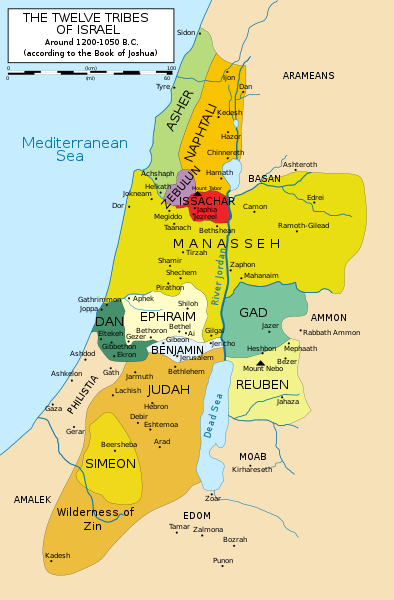
Deborah the ‘mother of Israel’ probably begins the process of helping the tribes in her region begin to reclaim their identity and distinctive way of life. As mentioned in the previous chapter, as a woman she may have had more freedom to act without the Canaanites viewing her as a threat. Whatever shape her work among Israel took, her presence sets the foundation for the rallying of the tribes that do participate in the battle of Wadi Kishon under Barak. Yet, the poem also gives us an indication that Israeli is not unified: Reuben, Dan, Asher, and the half tribe of Manasseh and Gad (designated by the region they live in, Gilead) all fail to answer the rallying cry of Deborah and Barak even though they seem to be aware of it. Ephraim, Benjamin, Issachar, Zebulun, and Naphtali all in the poem offer forces. The narrative in chapter four indicates Zebulun and Naphtali being the primary contributors which is interesting if Deborah is from Issachar. The only forces that Deborah and Barak are able to rally consists of rag tag, poorly equipped force from roughly half of the summoned tribes. Israel on its own is poorly equipped to deal with the Canaanite forces that have made trade and normal life an impossibility for the previous eighteen years.

The weakness of the Israelites in the face of the kings of Canaan has been poetically illustrated. The title ‘kings of the Canaanites’ may harken back to the time of Joshua since the narrative version only points to King Jabin, but in contrast to an ununified Israel a consolidated Canaanite force approaches this rag tag resistance with the expectation of the annihilation and plundering of their enemy. Instead the LORD deploys the stars against Canaan. In the ancient world the stars were often viewed as deities or forces that controlled the weather and the unfolding of event, but now they are a part of the heavenly army of the LORD the God of Israel who are deployed against the chariots of Canaan bringing a torrential downpour which transforms the iron chariots from an insurmountable advantage into a liability for the Canaanites. The retreat of the horses of the Canaanites is captured by the Hebrew for ‘galloping, galloping’ daharot, daharot. Yet, instead of continuing the narration of the surprising scattering of the Canaanites the poem shifts to a curse of Meroz, presumably an Israelite clan or village that did not help pursue and cut off the Canaanite retreat and may have even aided the scattered forces.

Yet in contrast to the cursing of Meroz is the blessing of Jael. Where a group of Israelites failed to provide support, a non-Israelite woman brings down the commander of the Canaanites. The poem may give us a possible hint to Jael’s actions against Sisera when it refers to him ‘laying dead at her feet.’ The Hebrew here, ben rahleyha, also means ‘between her legs’ and is used elsewhere with sexual overtones (ex. Ezekiel 16:25) (NIB II:788) and it is possible that after offering shelter Sisera she is raped by the general and responds by killing him in his sleep. This is conjecture based on the slightest of hints in the poem and is not something that can be stated with any certainty, but it would give a motive for Jael to break the expectations of hospitality and the peace her husband Hobab had established with the Canaanites.

The final stanza of the poem imagines the mother of Sisera waiting for the return of her son. In imagining the cause of his delay this woman imagines that her son is delayed by his actions against other women. The Hebrew here is more explicit than the English translations, women are reduced to wombs so instead of a woman or two for each man it is merely women as sexual objects. That this justification is placed in the mouth of a woman indicates a culture that sees the objectification of women as sexual objects to be conquered by men as normal. This is not the world the Israelites were supposed to embody but it may have been the violent world they often inhabited. The ancient world was not a safe place for women, but here in this poem we have the strong contrast between the unnamed mother of the Canaanite general and Deborah the mother of Israel who calls the people to a different identity and Jael, the wife of Hobab the Kenite, who brings an end to the violent Sisera in her tent.

The poem ends by declaring “So perish all your enemies, O LORD! But may your friends be like the sun as it rises in might.” The poem is clear that the reason for the victory that Israel achieves through Deborah, Barak, and Jael in the righteous power of the LORD the God of Israel. The Canaanites with their chariots have become enemies of their God through their oppression and for the moment these Israelites rallied around Deborah and Barak are friends of God rising in might. Yet, Israel too can find itself as an enemy of God when it forgets God’s ways and adopts the ways of the violent and oppressive ways of the Canaanites. The judges that come after Deborah and Barak will be less successful in bringing the people back to following the God of Israel and the people will continue to reflect the practices of the nations which they were supposed to displace instead of the covenant vision that God handed on to Moses and Joshua. Israel instead of rising in might stands in danger of being eclipsed by its own unfaithfulness

Judges 4 Deborah, Barak, and Jael

Deborah beneath the Palm Tree, James Tissot or followers (1836-1902)

Judges 4 Deborah, Barak, and Jael

The Israelites again did what was evil in the sight of the LORD, after Ehud died. 2 So the LORD sold them into the hand of King Jabin of Canaan, who reigned in Hazor; the commander of his army was Sisera, who lived in Harosheth-ha-goiim. 3 Then the Israelites cried out to the LORD for help; for he had nine hundred chariots of iron, and had oppressed the Israelites cruelly twenty years.

4 At that time Deborah, a prophetess, wife of Lappidoth, was judging Israel. 5 She used to sit under the palm of Deborah between Ramah and Bethel in the hill country of Ephraim; and the Israelites came up to her for judgment. 6 She sent and summoned Barak son of Abinoam from Kedesh in Naphtali, and said to him, “The LORD, the God of Israel, commands you, ‘Go, take position at Mount Tabor, bringing ten thousand from the tribe of Naphtali and the tribe of Zebulun. 7 I will draw out Sisera, the general of Jabin’s army, to meet you by the Wadi Kishon with his chariots and his troops; and I will give him into your hand.'” 8 Barak said to her, “If you will go with me, I will go; but if you will not go with me, I will not go.” 9 And she said, “I will surely go with you; nevertheless, the road on which you are going will not lead to your glory, for the LORD will sell Sisera into the hand of a woman.” Then Deborah got up and went with Barak to Kedesh. 10 Barak summoned Zebulun and Naphtali to Kedesh; and ten thousand warriors went up behind him; and Deborah went up with him.

11 Now Heber the Kenite had separated from the other Kenites, that is, the descendants of Hobab the father-in-law of Moses, and had encamped as far away as Elon-bezaanannim, which is near Kedesh.

12 When Sisera was told that Barak son of Abinoam had gone up to Mount Tabor, 13 Sisera called out all his chariots, nine hundred chariots of iron, and all the troops who were with him, from Harosheth-ha-goiim to the Wadi Kishon. 14 Then Deborah said to Barak, “Up! For this is the day on which the LORD has given Sisera into your hand. The LORD is indeed going out before you.” So Barak went down from Mount Tabor with ten thousand warriors following him. 15 And the LORD threw Sisera and all his chariots and all his army into a panic before Barak; Sisera got down from his chariot and fled away on foot, 16 while Barak pursued the chariots and the army to Harosheth-ha-goiim. All the army of Sisera fell by the sword; no one was left.

17 Now Sisera had fled away on foot to the tent of Jael wife of Heber the Kenite; for there was peace between King Jabin of Hazor and the clan of Heber the Kenite. 18 Jael came out to meet Sisera, and said to him, “Turn aside, my lord, turn aside to me; have no fear.” So he turned aside to her into the tent, and she covered him with a rug. 19 Then he said to her, “Please give me a little water to drink; for I am thirsty.” So she opened a skin of milk and gave him a drink and covered him. 20 He said to her, “Stand at the entrance of the tent, and if anybody comes and asks you, ‘Is anyone here?’ say, ‘No.'” 21 But Jael wife of Heber took a tent peg, and took a hammer in her hand, and went softly to him and drove the peg into his temple, until it went down into the ground — he was lying fast asleep from weariness — and he died. 22 Then, as Barak came in pursuit of Sisera, Jael went out to meet him, and said to him, “Come, and I will show you the man whom you are seeking.” So he went into her tent; and there was Sisera lying dead, with the tent peg in his temple.

23 So on that day God subdued King Jabin of Canaan before the Israelites. 24 Then the hand of the Israelites bore harder and harder on King Jabin of Canaan, until they destroyed King Jabin of Canaan.

In the previous chapter we met the first three judges: a model military leader, a trickster assassin, and a foreigner. In the story of Deborah, Barak, and Jael we have all three elements again with the surprising addition that two of the three main protagonists are women. Early in the book of Judges we have seen that women have names and can act on their own to secure their interests as Achsah, daughter of Caleb and wife of the first judge Othniel, does. (1:11-15) As the book of Judges continues women will have less agency and security and only one other woman is named in the book, even though several individual women and groups of women will be important if tragic parts of the story. We also see for the first time when a male character wants some additional guarantee to do their part in God’s deliverance of the people. This episode, like the crossing of the Red Sea, is captured in both narrative form and a poetic lyrical form in the following chapter. In the memory of the people it is a joyous recollection of God’s deliverance from an oppressive and militarily superior foe at the hands of two women and a man.

We are introduced to the two antagonists of the story that the people of northern Israel are cruelly oppressed by: King Jabin of Canaan who rules from Hazor and his general Sisera who lives in Harosheth-ha-goiim. The name King Jabin and the city of Hazor take us back to an earlier story in the book of Joshua where the northern Canaanite kings are rallied by King Jabin of Hazor roughly a century earlier. In this battle against these northern kings Hazor is burned to the ground and King Jabin is put to the sword. (Joshua 11: 1-15) It is possible that Jabin was a royal title, like Pharaoh or Elimelech, and that while he is from the same line that ruled the former city of Hazor he is exercising his power with his general from Harosheth-ha-goiim. Regardless of how we address the identical titles of King Jabin and the vanquished, according to Joshua, city of Hazor the real locus of power is in the military might of the military commander Sisera and his nine-hundred iron chariots. It is through this mobile and seemingly invincible technological advantage in the early iron age that the northern territory of Israel is subjugated and after twenty years calls they call out to their God once again.

In a patriarchal world, which the vast majority of the ancient world was, it may seem unusual for a woman to be a prophetess as well as one who judges the people. Yet, in a situation of oppression where women have relatively few rights they may initially be viewed by the oppressor as harmless and may be able to use their power of social connectedness to maintain the identity of their family and to work for change. A powerful example of this is the nonviolent movement of women in Liberia which began in 2003 and resulted in the ending of Liberia’s civil war. Deborah becomes a figure that helps the Israelites remember who they are and gives them some sense of their story and their calling. Although the action of Deborah judging the people and providing guidance as a woman is unusual in scripture there is no indication that her role was contrary to God’s intentions. She becomes one of the two women in this story who are instrumental in the deliverance of Israel and as the song will say in the next chapter she will become a ‘mother of Israel.’ She is a married woman, but it is she and not her husband, Lappidoth, who becomes one of the vessels in this story. She is the one who is able to understand the will of God in the situation.

The military leader for the Israelites is Barak who is summoned and charged by Deborah to rally a large number from the tribes of Naphtali and Zebulun. Israel has no standing army at this time and so these ‘ten thousand,’ while numerically superior to the charioteers of Sisera, are not equipped or trained to stand against this type of force. When Barak requires Deborah to go with him it is possible to read this as either Barak’s failure to trust and because of his failure to trust God will deliver the glory that was originally to be his to a woman.[1] But the Hebrew is more ambivalent. It is equally likely that Barak is not negatively judged for wanting the presence of Deborah and that losing some glory to a woman is an exchange he is glad to make for the presence of a prophetess who can discern the movement and will of God. (NIB II:780) Deborah has summoned Barak and goes with him. Now Barak summons the ten thousand from Naphtali and Zebulun and goes to Mount Tabor.

In the middle of the narrative we have the introduction of the family of Heber the Kenite whose wife, Jael, will play a crucial role in the conclusion of the narrative. The Kenites were introduced earlier Judges 1:16 who had allied themselves with Judah and Simeon in their conquest of Southern Israel. Now we have an individual Kenite family group which has come into Northern Israel’s territory and made peace with the Canaanites in that region. Dennis T. Olson mentions the association of the Kenites with the descendants of Cain who in Genesis 4:22 are skilled in bronze and iron working and conjectures that Heber may be a craftsman responsible for building or helping maintain the iron chariot forces of these Canaanites, (NIB II:780-781) but while this is a plausible conjecture it still only a conjecture. What we can say in in the narrative Heber the Kenite has negotiated a peace for his clan with the military power of the area.

Picture of Mount Tabor in 2011, Attribution צילם: אלי זהבי, כפר תבור shared under creative commons 2.5

Barak and his ten thousand fighters from Naphtali and Zebulun and Sisera and with his 900 chariots and all his troops come together at the Wadi Kishon. The book of Judges narrates the battle of the Wadi Kishon from a theological perspective: the LORD has gone out to fight before the fighters of Israel and delivers this technologically superior force into their hands. The narrative also hints at how the technological advantage of the iron chariots is overcome. Terrain can play a critical role in ground combat and particular for armored forces. In modern warfare tanks which can be nearly invincible in the plains or desert become vulnerable in urban areas, forests, and swampy terrain. In ancient warfare iron chariots would be particularly vulnerable in areas where their wheels become mired in soft mud or uneven terrain. In a wadi, which is a stream bed or ravine which is dry except during rainy seasons, the recent presence of water can make the heavy chariot a liability like Pharoah’s chariots mired in the Red Sea which prevent their escape from the returning waters during the escape of the Israelites from Egypt. The presence of water is explicitly mentioned in the song in the next chapter.  Sisera is explicitly mentioned as abandoning his chariot and retreating on foot away from the Israelite horde descending upon them from Mount Tabor.

Sisera flees toward the tent of Heber the Kenite, presuming that it will be a safe space and he is greeted by Jael, Heber’s wife. Jael provides shelter and hides the fleeing general and the imagery for Jael’s action towards Sisera are initially described in a very maternal manner. Yet the language swiftly turns from maternal to violent once the general has been tucked under the blanket and given milk like a child, now his temple is penetrated in a stealthy strike which drive a stake through his head. Once again deception is involved in the elimination of a threat to Israel, and now Jael the wife of Heber the Kenite is the trickster like Ehud. Jael is definitely not an Israelite like Shamgur son of Anath at the end of the previous chapter. With the expectation of hospitality once you bring someone under your tent her actions are at best morally ambiguous and yet they are critical to a story that is a part of God’s action to end the oppression of God’s people. It is a story of reversals where a seemingly invincible commander is reduced to a child and eventually is killed not in combat but hiding under a rug by a woman. Sisera had instructed Jael to answer the question, “Is a man here”[2] and before Jael reduces him to a corpse he already tells her to claim there is ‘no man’ in here. Jael then goes to Barak and shows him ‘the man’ he is seeking is already a corpse.

Once the leadership of Sisera and the threat of the nine hundred chariots are removed the tribes of Naphtali and Zebulun are able to continue their occupation of their territory. King Jabin without Sisera is no longer able to maintain control, these Israelites experience a time of expansion and peace, and God works through a prophetess, a man who can rally the tribes, and a foreign woman. Somehow all three fulfill the role of a judge. Story and morality in the bible can seem complicated, especially when you are looking at the experience of the oppressed. Tricksters often appear in the literature of the oppressed and when they triumph over the powerful they not only defeat them, but they humiliate them. This tale with all its moral ambiguity where Jael violates the expectations of hospitality probably functioned for the Israelites like the Brer Rabbit stories functioned for slaves in America.[3] Perhaps the primary point of the story is the humiliation of the powerful and not the morality of the trickster and perhaps the book of Judges helps us to accept the action of God through people who share different values, beliefs, and morality than we might.

[1] Hence the NIV translation of verse 9 “Very well,” Deborah said, “I will go with you. But because of the way you are going about this, the honor will not be yours, for the LORD will hand Sisera over to a woman.”

[2] The NRSV translates the Hebrew hayes poh ‘is as “is anyone here?” but this reflects the NRSV pattern of using inclusive language. The typical use of the pronoun here is for a man.

[3] See for example the treatment of the trickster in James C. Scott’s Domination and the Arts of Resistance (Scott 1990, 162-166)

Review of All the Kings Men by Robert Penn Warren

Time Magazine Top 100 Novels

Book 2:All the Kings Men by Robert Penn Warren

This is a series of reflections reading through Time Magazine’s top 100 novels as selected by Lev Grossman and Richard Lacayo published since 1923 (when Time magazine was founded). For me this is an attempt to broaden my exposure to authors I may not encounter otherwise, especially as a person who was not a liberal arts major in college. Time’s list is alphabetical, so I decided to read through in a random order, and I plan to write a short reflection on each novel.

Robert Penn Warren’s story set in the political culture of an unnamed southern state where an idealistic self-taught lawyer transforms into a charismatic political operative who eventually becomes governor and is looking ahead to a run for the senate. Willie Talos,[1] or the boss as his staff call him, quickly becomes a savvy and forceful political operator wielding both his popularity, but also using pressure, knowledge of indiscretions, and occasionally bribery. Yet, the story is told from the perspective of Jack Burden, a former journalist and historian, who becomes a personal assistant to Willie Talos and the story of Willie Talos is the story of Jack Burden and several others who become intwined in this tale of power, desire, relationships, and perceptions. There are aspects of the story that are incredibly relevant even sixty years after its publication. There are times where the plot meanders along as Jack Burden reflects on the path that led him to this point in his life, but ultimately in the end his past and Willie Talos’ present come together in an ending where secrets are revealed and many lives are shattered (and a few are reborn).

Jack Burden’s childhood in Burden’s Landing with his friends Anne and Adam Stanton, his attractive mother and her string of men, his father who walks out on his mother, and Judge Stanton who acts as a second father to Jack all find their way into the story’s progress. Adam and Anne Stanton are the children of a previous governor and Adam, as a popular surgeon, becomes the boss’ choice to run the new hospital he is building for the state. Anne was Jack Burden’s romantic interest growing up and although both she and her brother initially disapprove of the boss, she eventually becomes entangled in an affair with Governor Talos. The Judge appears at the beginning of the story and is a major part of Jack Burden’s narration. Once the Judge endorses another candidate other than the one Governor Talos is backing Jack is instructed to dig into the Judge’s past for any indiscretion. Through his digging into the past, he does discover a time when the Judge took a bribe and when his friend Governor Stanton had covered for him.

Robert Penn Warren does a masterful job of brining all the strings together in the end. The boss becomes manipulated by a political opponent due to his son’s possible impregnation of a young woman and becomes mired in the type of corruption he campaigned against. The investigation of Judge Irwin now becomes important because the judge has influence on the politician attempting to manipulate the boss. When Jack reveals the secret he learned about Judge Irwin, it causes the judge to commit suicide and Jack’s mother in her grief reveals that the Judge was his father. The revelation of the boss’ affair with Anne Stanton by one of the boss’ staff members and former lovers ultimately results in Adam Stanton shooting the boss and taking his own life. The boss also becomes manipulated by a political opponent due to his son’s possible impregnation of a young woman and becomes mired in the type of corruption he campaigned against. Secrets built upon secrets are ultimately revealed and the survivors have to find a new way with the boss, the judge, and the surgeon no longer there to be paragons in their world. Jack Burden eventually makes peace with the reality that each of these men, though not perfect, were good men and he begins to reassemble his life with Anne and the man who raised him as a father.

All the King’s Men is a well told story. There are times where the prose slows the story down or we spend time caught in Jack Burden’s meandering mind, but ultimately it paints a world where power can corrupt, where good men (and women) do occasionally act in unethical ways, where secrets exercise power, and where the sticky world of politics is populated by people struggling for power, influence, and wealth. It is an uncomfortable read at times because it embodies many of the prejudices of the 1930s and 1940s when it is written but it also feels appropriate for its narration of a brash populism that seems to be resurgent in the United States.


[1] Earlier editions named the Governor Willie Stark based on the editor’s recommendation, but Robert Penn Warren wanted his last name to be Talos and that was used throughout the Restored Edition that I read through.

Judges 3 The First Three Judges

“Othniel” by the French Painter James Tissot (1836-1902)


Judges 3:1-6 The Remaining Nations

Now these are the nations that the LORD left to test all those in Israel who had no experience of any war in Canaan 2 (it was only that successive generations of Israelites might know war, to teach those who had no experience of it before): 3 the five lords of the Philistines, and all the Canaanites, and the Sidonians, and the Hivites who lived on Mount Lebanon, from Mount Baal-hermon as far as Lebo-hamath. 4 They were for the testing of Israel, to know whether Israel would obey the commandments of the LORD, which he commanded their ancestors by Moses. 5 So the Israelites lived among the Canaanites, the Hittites, the Amorites, the Perizzites, the Hivites, and the Jebusites; 6 and they took their daughters as wives for themselves, and their own daughters they gave to their sons; and they worshiped their gods.

Part of the reason to attempt to write history is to make sense of both the past and the present. Throughout the first two chapters have been setting the scene where the tribes of Israel remain with the various Canaanite and non-Canaanite peoples continuing with their own gods, practices, and in many cases their land and cities. The first two chapters have laid the blame on the Israelites and their unfaithfulness to God’s instructions. Chapter three begins with two explanations for the presence of these people among Israel: that they may learn how to fight and to be a test for the people of Israel. If one assumes that the people have the law as it is outlined in the book of Deuteronomy there is instructions on how to properly conduct war as the covenant people (Deuteronomy 20: 10-18) but that particular portion of Deuteronomy also designates the very people listed in verse five are designate for annihilation (herem). Yet, the very opposite happens here when the daughters and sons of Israel intermarry with these people and worship their gods.

Within this brief passage there are two list of remaining nations. The first list includes the Philistines who are also a people who recently conquered and settled in the land. The Philistines were a sea faring people who came from the Mediterranean (traditionally traced back to Crete) and develop an alliance of five city states (Ashodod, Ashkelon, Ekron, Gath, and Gaza) along the southwestern edge of the territory that Israel claims. The Canaanites is a general term for the peoples that already existed in the land. The Sidonians were Phoenecians who lived along the Mediterranean on the northwestern edge of Israel’s territory (they are named for the town of Sidon) while the Hivites lived in the mountainous terrain presumably in north Israel and southern Lebanon. The second list is the traditional designation of the seven nations of the Canaanites as listed in Deuteronomy 7:1, although the Girgashites are not present in Judges or Deuteronomy 20.

The situation where the boundaries of Israel are blurred by the presence of people who worship different gods and have different practices of life is compounded when the boundary of tribe and family are blurred by intermarriage. The bible has multiple perspectives on this. In general, the Hebrew people were discouraged from intermarrying with other peoples, especially the Canaanites whose land they were entering. Books like Ezra and Nehemiah blame intermarriage for the state of the nation, while Ruth tells the story of the faithful foreigner who marries a Jewish man and adopts the practices of the covenant people.  We know that intermarriage happened, and was probably a regular occurrence throughout Israel’s history but the danger was that the sons and daughters of Israel would then adopt the practices and worship of the other peoples instead of these new sons and daughters being integrated into the covenant life of the chosen people of God.

Judges 3: 7-11 Othniel the First Judge (from Judah)

7 The Israelites did what was evil in the sight of the LORD, forgetting the LORD their God, and worshiping the Baals and the Asherahs. 8 Therefore the anger of the LORD was kindled against Israel, and he sold them into the hand of King Cushan-rishathaim of Aram-naharaim; and the Israelites served Cushan-rishathaim eight years. 9 But when the Israelites cried out to the LORD, the LORD raised up a deliverer for the Israelites, who delivered them, Othniel son of Kenaz, Caleb’s younger brother. 10 The spirit of the LORD came upon him, and he judged Israel; he went out to war, and the LORD gave King Cushan-rishathaim of Aram into his hand; and his hand prevailed over Cushan-rishathaim. 11 So the land had rest forty years. Then Othniel son of Kenaz died.

The story of the first judge, Othniel, is short but it sets the pattern for the narration of the judges that come afterwards. Dennis T. Olson points to six elements that give a pattern to evaluate the stories that follow:

(1) the nature of Israel’s evil, (2) the description of the enemy’s oppression, (3) God’s reaction to the Israelite’s cry of distress, (4) the judge’s success in uniting and delivering Israel, (5) a focus on God’s victory or the judge’s personal life, and a desire for vengeance, and (6) the proportion of the number of years the judge ruled in peace (the land had rest for “X” years) (NIB II: 766)

Just as Othniel will set the pattern for the evaluation of future judges, he will also in many ways be the model of what a judge should be. The Israelites at this point are not a nation and the actions of each judge are primarily oriented around individual tribes, and so with Othniel we are primarily looking at the territory of Judah.

The refrain. “The Israelites did what is evil in the sight of the LORD,” serves as a transition between each of the major judge narratives. The evil the Israelites have done is listed as two-fold: they forget the LORD their God, and they turn to other Gods (Baals and the Asherahs). The previous two chapters and the beginning of chapter three have all set the stage for the people integrating with the people who existed in the land, adopting their practices, and intermarrying with them. Now for the first time the people experience oppression under a foreign leader.

King Cushan-rishathaim (Cushan of the double wickedness) who comes from Aram-naharaim (Aram of the two rivers) is an unknown leader in the historical record outside the bible who comes from the area in modern day Syria or Iraq between the Tigris and Euphrates rivers. This doubly wicked king causes problems for Israel (or at least a portion of Israel) for eight years. The oppression of this ‘wicked’ ruler causes the people of Israel to remember their God and to call out to their God by name.[1] The LORD the God of the Israelites is a God who hears the cry of the oppressed and feels compelled to respond to that cry.

The spirit of the LORD comes upon Othniel to deliver the people. We encountered Othniel in Judges 1: 11-15 and he is the final linkage to the generation that came into the land. In contrast to the Israelites who intermarried, Othniel’s wife is an Israelite and the daughter of the illustrious Caleb, second in respect among the previous generation to only Joshua. There is little narration of the conflict between Othniel and Cushan-rishathaim beyond the spirit of the LORD coming upon Othniel and delivering this foreign king into his hand. Yet, this action of the LORD to deliver the people through Othniel brings forty years of rest in Judah.

Judah in the first chapter of Judges was the most successful in gaining control of its territory and here the judge from the people of Judah is successful in bringing a sustained period of peace after a relatively brief period of oppression (in comparison to the other stories of the judges). Othniel’s narrative is short and compact but it also sets the pattern for all other judges to be evaluated against. Yet, with the death of Othniel the people of Judah, and Israel, lose their connection with the generation that experienced God’s work to bring them into the land. In the absence of a leader to unite them they quickly lapse into the pattern of doing evil in the sight of the LORD again.

Judges 3: 12-30 Ehud the Second Judge (from Benjamin)

12 The Israelites again did what was evil in the sight of the LORD; and the LORD strengthened King Eglon of Moab against Israel, because they had done what was evil in the sight of the LORD. 13 In alliance with the Ammonites and the Amalekites, he went and defeated Israel; and they took possession of the city of palms. 14 So the Israelites served King Eglon of Moab eighteen years.

15 But when the Israelites cried out to the LORD, the LORD raised up for them a deliverer, Ehud son of Gera, the Benjaminite, a left-handed man. The Israelites sent tribute by him to King Eglon of Moab. 16 Ehud made for himself a sword with two edges, a cubit in length; and he fastened it on his right thigh under his clothes. 17 Then he presented the tribute to King Eglon of Moab. Now Eglon was a very fat man. 18 When Ehud had finished presenting the tribute, he sent the people who carried the tribute on their way. 19 But he himself turned back at the sculptured stones near Gilgal, and said, “I have a secret message for you, O king.” So the king said, “Silence!” and all his attendants went out from his presence. 20 Ehud came to him, while he was sitting alone in his cool roof chamber, and said, “I have a message from God for you.” So he rose from his seat. 21 Then Ehud reached with his left hand, took the sword from his right thigh, and thrust it into Eglon’s belly; 22 the hilt also went in after the blade, and the fat closed over the blade, for he did not draw the sword out of his belly; and the dirt came out. 23 Then Ehud went out into the vestibule, and closed the doors of the roof chamber on him, and locked them. 24 After he had gone, the servants came. When they saw that the doors of the roof chamber were locked, they thought, “He must be relieving himself in the cool chamber.” 25 So they waited until they were embarrassed. When he still did not open the doors of the roof chamber, they took the key and opened them. There was their lord lying dead on the floor.

26 Ehud escaped while they delayed, and passed beyond the sculptured stones, and escaped to Seirah. 27 When he arrived, he sounded the trumpet in the hill country of Ephraim; and the Israelites went down with him from the hill country, having him at their head. 28 He said to them, “Follow after me; for the LORD has given your enemies the Moabites into your hand.” So they went down after him, and seized the fords of the Jordan against the Moabites, and allowed no one to cross over. 29 At that time they killed about ten thousand of the Moabites, all strong, able-bodied men; no one escaped. 30 So Moab was subdued that day under the hand of Israel. And the land had rest eighty years.

The second judge comes for the tribe of Benjamin which although a southern tribe was not asked to ally itself with Judah and Simeon and remains unable to drive out the Jebusites from Jerusalem. The period of oppression is also longer before the people call on the LORD and so the people are subject to King Eglon of Moab for eighteen years, ten years longer than before they call on the LORD and the LORD provided Othniel. Now instead of an upstanding member of a family with a history of faithfulness and an individual with previous military success God provides this ‘left handed son of the right hand.’[2] This short narrative of Ehud and Eglon is full of satire and humor but it is also the story of God working through a trickster, something that has happened before and continues to happen in the scriptures.

Names often give additional humor to the story. As mentioned above Ehud is a left handed man in the tribe of the ‘son of the right hand.’ King Eglon whose name in Hebrew is related to ‘young bull’ or ‘fatted calf’ in combination with his obesity is portrayed as a sacrificial beast. We often bring our modern ideals of combat into ancient scenes, but King Eglon may have been a powerful warrior in his day. The tactics which relied on spears, shields, and probably chariots were not as reliant on agility as the sword fighting you see in movies or video games. This ‘young bull’ may have been as strong as an ox, even with his massive girth. He also is able to form alliances with the Ammonites and Amalekites and is able to hold territory once secured by Israel, reoccupying the city of palms (presumably Jericho which has not been rebuilt under Israel). It is also important to note that Ehud could not have approached the territory of Benjamin without passing through the territories of Reuben and Gad on the opposite side of the Jordan River. (Hattin 2020, 29)

Ehud makes a short two-sided sword which is a cubit[3] in length. This sword is short enough to be concealed on the right thigh, but the reality of a left handed assassin also plays into the story since most guards would look for a blade on the left side where a right handed fighter would draw it from. Ehud brings a tribute[4] to King Eglon. The Israelites in Judges have been reluctant to worship the LORD and provide their God tribute so now they find themselves providing what should have been used in the worship of their God in the service of a foreign king. Ehud sends the bearers of this tribute away but at the stones/idols[5] of Gilgal he turns back towards the house of King Eglon. Gilgal has already appeared in Judges as a place where a message from God is delivered by a messenger (2:1) that God will no longer deliver the people, but now from Gilgal God’s deliverance comes in this secret word delivered by Ehud. He bears a secret word[6] from a god[7] for the king. The king dismisses his attendants and waits for this secret word.

Much later the book of Hebrews will state,

Indeed, the word of God is living and active, sharper than any two-edged sword, piercing until it divides soul from spirit, joints from marrow; it is able to judge the thoughts and intentions of the heart. “(Hebrews 4:12)

But here the ‘word’ is a two-edged sword in a non-metaphorical way. This short sword is swallowed up by the obesity of the king and in a bit of ‘scatological humor’[8] and this humor is extended by the followers of Eglon delaying their entry of his chamber assuming he is using the chamber pot. The ‘dirt’ coming out is probably excrement and perhaps the smell also causes the followers of this corpulent king to assume their master is relieving himself in the coolness of the chamber. Their delay allows for Ehud to escape and rally the people of Benjamin and Ephraim to trap the Moabites on the western side of the Jordan River. After a massive military defeat Moab is subdued and the Israelites (at least in this region) enjoy an extended period of peace (eighty years).

This second story of a judge has a much different tone than the first. The story of Ehud and King Eglon is the story of a trickster assassin and bathroom jokes that probably provided entertainment for generations of storytellers and hearers. The morality of the bible is strange to us, but it values the clever trickster. From Jacob the heel grasper (later renamed Israel) to the spies at Bethel who make a deal with a man of the city to bypass the city defenses, (Judges 1:22-25) to the narrative of Samson and many others the bible includes many stories of tricksters who are a part of God’s purpose. The character of the trickster is often valued in ancient stories where people (or animals) find clever ways to thwart a superior opponent and the bible includes several of these stories. The assassination of the King leads to a dramatic change in the ability of the Moabite alliance to continue to oppress the Israelites and is viewed as an extension of God’s action to deliver the people from their oppression. God in Judges may work through strange agents who act in strange ways, but Ehud is viewed in a positive light among the judges of Israel.

Judges 3: 31 Shamgar the Third Judge

31 After him came Shamgar son of Anath, who killed six hundred of the Philistines with an oxgoad. He too delivered Israel.

With Shamgar we encounter the first minor judge and the first conflict with the Philistines. Shamgar is only mentioned here and in the song of Deborah (Judges 5:6) and his mention in that song may be the reason for his inclusion here. Shamgar may not be an Israelite and yet he may be lifted up as one through whom God delivers Israel from the Philistines. Anath is the name of a Canaanite female warrior goddess and there is some evidence from early Iron age Palestine that may point to the existence of a warrior class associated with Anath.[9] The Philistines were technologically advanced having iron chariots and weaponry and so the humiliation of this feared enemy by a warrior bearing a long staff used as a cattle prod makes a mockery of the superior weaponry of their opponent. It is possible that this is the first explorations of a Philistine military unit exploring the territory of the Canaanites and the Israelites and Shamgur’s actions delay the ultimate occupation by force of the Philistines in the region. [10]Yet, the inclusion of a judge who may not be an Israelite and may be the devotee of a Canaanite god is surprising among the twelve judges in this book. Already of the three judges, the God of Israel has worked through a trickster assassin and perhaps through a cattle prod wielding foreign warrior who is devoted to a Canaanite god. Yet, the book of Judges also assumes the God is at work in allowing the various kings and nations to rise up and oppress the tribes of Israel as a punishment for their disobedience, so perhaps including a non-Israelite as a deliverer of Israel is not as strange as it initially appears.

[1] Any time the Old Testament/Hebrew Scriptures uses LORD in all capital letters it is a reference to ‘YHWH’ the name of God spoken to Moses at the burning bush. Throughout the scriptures the vowels are changed to give the reader the clue to say ‘Adonai’ (Lord) instead of pronouncing the divine name (Yahweh). Yet, each time we encounter this naming of God we are referring to specifically the name of the God of Israel.

[2] Benjamin means ‘son of the right hand’ so the story begins its introduction of irony with indicating that this Benjaminite is left handed.

[3] The term for cubit (gomed) only occurs here in the Old Testament/Hebrew Scriptures. This may be shorter than the standard cubit (from elbow to fingertip) typically noted by the Hebrew ‘amma and may refer to the length from elbow to knuckles. (Webb 2012, 171)

[4] The term for tribute (minha) is usually used in scripture for an offering presented to God. (Webb 2012, 171)

[5] This word likely refers to carved stones set up for a shrine or idols, and it is likely that Gilgal is considered a ‘holy place’ where a divine message may occur.

[6] In classical Hebrew wordplay the Hebrew dabar typically means ‘word’ but can also refer to a ‘thing’

[7] In speaking to King Eglon Ehud does not speak specifically of the God of Israel but uses the generic term for ‘a god,’ the king likely assumes it is from one of the gods represented at the shrine/idols of Gilgal.

[8] Scatology is the study of feces, and scatological humor is often looked down upon in proper societies, but the Hebrew Scriptures seem to have no problem using excrement to make light of their enemies.

[9] Bronze arrowheads were discovered from this time inscribed with a warrior’s name as the ‘son of Anath’ (Webb 2012, 177)

[10] Barry Webb makes this suggestion based on the number six hundred commonly designating an organized force under a commander and provides numerous examples from first and second Samuel that support this hypothesis. (Webb 2012, 177)

Judges 2 The Pernicious Cycle of Disobedience

Cracked pots, Picture taken by Enric from the Monestary of Sanahin, Armenia shared under creative commons 4.0

Judges 2:1-5 The Messenger of God

1 Now the angel[1] of the LORD went up from Gilgal to Bochim, and said, “I brought you up from Egypt, and brought you into the land that I had promised to your ancestors. I said, ‘I will never break my covenant with you. 2 For your part, do not make a covenant with the inhabitants of this land; tear down their altars.’ But you have not obeyed my command. See what you have done! 3 So now I say, I will not drive them out before you; but they shall become adversaries  to you, and their gods shall be a snare to you.” 4 When the angel of the LORD spoke these words to all the Israelites, the people lifted up their voices and wept. 5 So they named that place Bochim, and there they sacrificed to the LORD.

The book of Judges begins with Israel inquiring of God, “who will go up?” but in the aftermath of Israel’s failure to expel the inhabitants of the land now a messenger of God “goes up” to confront Israel. The messenger can be read as a prophet or an angelic messenger, but in either case they speak for the God of Israel. This is the first of three times in Judges that the LORD will either send a messenger or directly confront Israel with their unfaithfulness.[2] The location that the ‘messenger’ goes up from is important, even though it is causally dropped into the opening verse. Gilgal is near Jericho. It is where the Israelites celebrate Passover for the first time in the promised land (Joshua 5: 10-12) but it is also where Joshua meets the commander of the army of the LORD. (Joshua 5: 13-15) It is possible that Judges intends us to hear this messenger as the same commander of the army of the LORD who was neither ‘one of us or one of our adversaries’ but who, at the LORD’s command, had come. Previously this ‘man’ was sent by God to go up against the Canaanites, now a ‘messenger’ goes up against the Israelites to confront them with their failure to maintain the covenant their God established with them.

This messenger speaks with the authority and voice of God. God promised to never break the covenant God made with the people, but the people have failed to uphold their side of the covenant by entering into covenants with the people of the land. The LORD their God is faithful but will not be taken for granted and the consequence of their disobedience is the discontinuation of God’s assistance in driving out the remaining inhabitants of the land. Canaan will not become a new Eden: a land of milk and honey free of temptations. Instead, “Canaan will be for Israel a land like any other, with other nations, other cultures, other values, and other gods constantly gnawing at Israel’s heart and allegiances.” (NIB II: 748) The vision of what could have been has been shattered by the broken covenant. Judges accepts this judgment as justified but also a cause for weeping and as the people offer God sacrifices they name the place ‘weepers.’

Judges is a book of weeping. Jephtah’s daughter will weep over the life she will lose to her father’s rash promise. (11: 37-38) Samson’s wife will weep because she is caught in a broken world where she is caught between her people and her husband. (Judges 14: 16-17) But the book ends with the people of Israel weeping to God at Bethel (20:23, 26; 21:2) over the brokenness of the people that ends with the near extermination of the tribe of Benjamin in response to the wickedness they exhibit. It is likely that Bochim is Bethel, and that the place where the Israelites weep at the beginning of the story of Judges becomes the place where the story ends in tears. The people can lament the covenant that they have not fulfilled, but the book of Judges also turns upon the faithfulness of God to this people even in the midst of their unfaithfulness. In this generation still knows the actions of God to bring them out of Egypt and into the land. Future generations will forget their story and their identity, and yet God will continue to hear and respond to their oppression.

Judges 2: 6-23 The Pernicious Cycle

6 When Joshua dismissed the people, the Israelites all went to their own inheritances to take possession of the land. 7 The people worshiped the LORD all the days of Joshua, and all the days of the elders who outlived Joshua, who had seen all the great work that the LORD had done for Israel. 8 Joshua son of Nun, the servant of the LORD, died at the age of one hundred ten years. 9 So they buried him within the bounds of his inheritance in Timnath-heres, in the hill country of Ephraim, north of Mount Gaash. 10 Moreover, that whole generation was gathered to their ancestors, and another generation grew up after them, who did not know the LORD or the work that he had done for Israel.

11 Then the Israelites did what was evil in the sight of the LORD and worshiped the Baals; 12 and they abandoned the LORD, the God of their ancestors, who had brought them out of the land of Egypt; they followed other gods, from among the gods of the peoples who were all around them, and bowed down to them; and they provoked the LORD to anger. 13 They abandoned the LORD, and worshiped Baal and the Astartes. 14 So the anger of the LORD was kindled against Israel, and he gave them over to plunderers who plundered them, and he sold them into the power of their enemies all around, so that they could no longer withstand their enemies. 15 Whenever they marched out, the hand of the LORD was against them to bring misfortune, as the LORD had warned them and sworn to them; and they were in great distress.

16 Then the LORD raised up judges, who delivered them out of the power of those who plundered them. 17 Yet they did not listen even to their judges; for they lusted after other gods and bowed down to them. They soon turned aside from the way in which their ancestors had walked, who had obeyed the commandments of the LORD; they did not follow their example. 18 Whenever the LORD raised up judges for them, the LORD was with the judge, and he delivered them from the hand of their enemies all the days of the judge; for the LORD would be moved to pity by their groaning because of those who persecuted and oppressed them. 19 But whenever the judge died, they would relapse and behave worse than their ancestors, following other gods, worshiping them and bowing down to them. They would not drop any of their practices or their stubborn ways. 20 So the anger of the LORD was kindled against Israel; and he said, “Because this people have transgressed my covenant that I commanded their ancestors, and have not obeyed my voice, 21 I will no longer drive out before them any of the nations that Joshua left when he died.” 22 In order to test Israel, whether or not they would take care to walk in the way of the LORD as their ancestors did, 23 the LORD had left those nations, not driving them out at once, and had not handed them over to Joshua.

Before beginning the narrative of the judges that would be God’s response to the cries of the people, the book of Judges look at the sweep of time from the ending of Joshua’s leadership in the initial conquest of the promised land through the duration of the book. We are introduced to the pernicious cycle which will play out continually throughout the book of Judges. In the absence of a charismatic leader like Joshua it only takes one generation for the people to adopt the gods and the practices of the nations that surround them. The cycle begins when the generation that occupied the land were unable to hand on a practice of faith to the generation that came after them, and now we have a generation that does not know the LORD the God of Israel or the work that God did for them. In the absence of the worship of the LORD and the practice of the law the people adopt the practices of the nations around them and worship their gods.

This short preparation for the narration of the story of the judges gives us an insight into the character of the LORD the God of Israel. The LORD will not be taken for granted. The expectation of the LORD the God of Israel is that the people is to ‘have no other gods before me.’ This God of Israel is ‘a jealous God’ (Exodus 20: 3-6) who desires to show steadfast love for a thousand generations, but in the absence of fidelity will punish the iniquity of the people for several generations. We see this characteristic of God which is spelled out in the first commandment given narrative form when the people abandon God provoking God to anger and God both removes God’s protection (gave them over to plunders who plundered them and sold them into the power of their enemies) but also actively resists them (whenever they marched out the hand of the LORD was against them). Yet, the LORD is a God who is moved to pity and continues to have compassion on the people. The God of Israel is, throughout the Hebrew Scriptures, a God who hears the groaning of the people in their oppression and a God who feels compelled to provide a way that the people can find relief from their oppression. Yet the actions of the judges also fail to provide for a sustainable practice of faith and the book of Judges narrates a pernicious pattern of unfaithfulness and a spiral into a dark period of decline where the identity and continuation of Israel is under threat from external groups like the Canaanites and the Philistines, but also from the tribes failure to adopt the practices that were supposed to distinguish them from the nations around them.

Baal with a Thunderbolt (15th-13th century BC) found in the ancient city of Ugarit Public Domain, https://commons.wikimedia.org/w/index.php?curid=931147

The Baals and the Astartes apparently provided an attractive alternative to the monotheistic  and covenant formed practices demanded by the LORD the God of Israel. Although we do have some archeological evidence that show Baal as a god of storms and Ashtoret as a goddess of fertility, it is important to note that both are denoted as plurals and Baal is often used in conjunction with another name and is used as a common noun like ‘god’ or ‘lord.’ This pluralistic Canaanite culture probably worshipped several local storm and fertility related ‘gods’ which were worshipped in various ways among the Canaanite people. In a community that raised grain, crops, and livestock these local gods were probably associated with local planting and harvesting practices. The practice of a monotheistic worship of an imageless God who not only expected worship but also obedience throughout one’s life was a strong contrast to the manner in which most ancient religions viewed their interactions with their gods. The people of Israel may have viewed the engagement with these practices pragmatically as appealing to multiple gods to attempt to secure a good harvest and good animal husbandry, but the LORD the God of Israel was not willing to be one among a pantheon of gods.

The failure of the tribes and families of Israel to maintain their identity and faithfulness to the God of Israel in the presence of other people who lived and worshipped differently illustrates the fragility of the community without leadership to unite them in their practices. The judges will be able to temporarily end the turmoil of the people under the oppression of the nations or to bridge the conflict between the tribes and people but they are unable to create within the people a way of life that is nurtured and nourished by their worship or the LORD. Instead of the people of Israel being an alternative to the practices of Egypt or Canaan, the book of Judges portrays them quickly conforming to the local practices including adopting the worship of the gods of the land of the people they were supposed to displace.

[1] The Hebrew here is mal’ak-Yahweh which is literally ‘the messenger of The LORD.’ The messenger could be angelic or human. Most English versions assume the messenger is an angel because of the association with Gilgal discussed above.

[2] Judges 6: 7-10 and 10:10-16

Review of the Lord of the Rings by J.R.R. Tolkien

Time Magazine Top 100 Novels

Book 53: The Lord of The Ring by J.R.R. Tolkien

This is a series of reflections reading through Time Magazine’s top 100 novels as selected by Lev Grossman and Richard Lacayo published since 1923 (when Time magazine was founded). For me this is an attempt to broaden my exposure to authors I may not encounter otherwise, especially as a person who was not a liberal arts major in college. Time’s list is alphabetical, so I decided to read through in a random order, and I plan to write a short reflection on each novel.

Tolkien’s Lord of the Rings is one of my favorite books. I first read this work as a teenager and I return and read through it every couple of years. I continue to be amazed at the depth of the story and how I continue to be enriched by each reading. Tolkien is a master at developing a complex world complete with complex cultures, languages, and histories which form the backdrop for the incredible journey of Frodo, Sam, Pippin, Merry, Gandalf, Aragorn, Gimli, Legolas, and Boromir. The work is a classical battle between good and evil on an epic stage and throughout the work spins a defiant hope in the midst of incredible odds.

The test of any great book is how it holds up after multiple readings. Even after walking the paths with the characters many times and knowing how the journey unfolds it still remains a phenomenal journey which continues to reveal new aspects each time. The battle scenes at Helms Deep and Minas Tirith are some of the most moving fantasy battle scenes I’ve read both in their reserve in the details of the battle and their stirring defiant language that lets the reader ride with Rohirrim or stand against the darkness or Mordor.

This is a hopeful epic of heroic perseverance with good ultimately triumphing over evil. After reading several nihilistic or fatalistic works on this list that narrate the ending of an age it was enjoyable to revisit this rich story where the protagonists come through the darkness and emerge into the new age they helped form. Even though the main protagonist, Frodo, comes out permanently scarred and unable to enjoy the homecoming at the end of the work he leaves behind a hopeful new beginning for his beloved Shire, a world safe under the reign of Aragorn, and a place where Sam can raise his new family and tell the stories of the fellowship to new generation.

Judges 1 The Disposition of the People of Israel

Cracked pots, Picture taken by Enric from the Monestary of Sanahin, Armenia shared under creative commons 4.0

Joshua 1: 1-21 The Mainly Positive Beginnings of the Southern Tribes

1 After the death of Joshua, the Israelites inquired of the LORD, “Who shall go up first for us against the Canaanites, to fight against them?” 2 The LORD said, “Judah shall go up. I hereby give the land into his hand.” 3 Judah said to his brother Simeon, “Come up with me into the territory allotted to me, that we may fight against the Canaanites; then I too will go with you into the territory allotted to you.” So Simeon went with him. 4 Then Judah went up and the LORD gave the Canaanites and the Perizzites into their hand; and they defeated ten thousand of them at Bezek. 5 They came upon Adoni-bezek at Bezek, and fought against him, and defeated the Canaanites and the Perizzites. 6 Adoni-bezek fled; but they pursued him, and caught him, and cut off his thumbs and big toes. 7 Adoni-bezek said, “Seventy kings with their thumbs and big toes cut off used to pick up scraps under my table; as I have done, so God has paid me back.” They brought him to Jerusalem, and he died there. 8 Then the people of Judah fought against Jerusalem and took it. They put it to the sword and set the city on fire.

9 Afterward the people of Judah went down to fight against the Canaanites who lived in the hill country, in the Negeb, and in the lowland.10 Judah went against the Canaanites who lived in Hebron (the name of Hebron was formerly Kiriath-arba); and they defeated Sheshai and Ahiman and Talmai.

11 From there they went against the inhabitants of Debir (the name of Debir was formerly Kiriath-sepher). 12 Then Caleb said, “Whoever attacks Kiriath-sepher and takes it, I will give him my daughter Achsah as wife.” 13 And Othniel son of Kenaz, Caleb’s younger brother, took it; and he gave him his daughter Achsah as wife. 14 When she came to him, she urged him to ask her father for a field. As she dismounted from her donkey, Caleb said to her, “What do you wish?” 15 She said to him, “Give me a present; since you have set me in the land of the Negeb, give me also Gulloth-mayim.” So Caleb gave her Upper Gulloth and Lower Gulloth.

16 The descendants of Hobab the Kenite, Moses’ father-in-law, went up with the people of Judah from the city of palms into the wilderness of Judah, which lies in the Negeb near Arad. Then they went and settled with the Amalekites.17 Judah went with his brother Simeon, and they defeated the Canaanites who inhabited Zephath, and devoted it to destruction. So the city was called Hormah. 18 Judah took Gaza with its territory, Ashkelon with its territory, and Ekron with its territory. 19 The LORD was with Judah, and he took possession of the hill country, but could not drive out the inhabitants of the plain, because they had chariots of iron. 20 Hebron was given to Caleb, as Moses had said; and he drove out from it the three sons of Anak. 21 But the Benjaminites did not drive out the Jebusites who lived in Jerusalem; so the Jebusites have lived in Jerusalem among the Benjaminites to this day.

The book of Judges comes from a world that would seem alien to a modern reader. It is a time where the tribes and families that make up Israel are no longer united under a charismatic leader like Moses or Joshua and are not a nation in the modern sense. Moses and Joshua may have been able to hold the tribes together through the wilderness and the initial conflict with the Canaanites in the promised land, but with the death of Joshua the tribes and families no longer work together in harmony. The book of Judges narrates a theologically interpreted story of the decline of Israel in this time between the initial occupation of the promised land and the anointing of the first king of Israel.

The book of Judges is a challenging book for many reasons, but one which we encounter immediately is the expectation that the Canaanite people who occupy the promised land will be destroyed. Throughout Exodus, Leviticus, Numbers, Deuteronomy, and Joshua the have frequently echoed the command to destroy the people in the land so that the people of Israel would not adopt their practices or worship their gods. The violence of the occupation of the promised land can seem difficult to reconcile with the vision of God that many modern Jews and Christians have, and it is often hard to reconcile modern values with the actions of ancient people. The failure of the people to fully remove the populations that existed in the promised land and the failure of these tribes and families to consistently live the values outlined in the law highlights, in the view of the author of Judges, the danger of alternative visions of structuring society and of worshipping other gods to the identity of the people of Israel. As people who live in a secular and pluralistic nation it can be difficult to imagine the ideal of a theocratic and homogenous population living according to the vision of books like Deuteronomy. Apparently this vision was difficult for the people in the time of Judges to adhere to as well.

Judges begins its narration in the time after the death of Joshua. The initial military actions undertaken by Judah and Simeon are viewed in a mainly positive light. Judah and Simeon are both located at the southern end of the territory that the tribes occupy and form a mutual alliance to deal with the significant Canaanite forces still in their region. The numbers throughout Judges are difficult to translate, especially the Hebrew word ‘elep which is frequently translated thousands, but which may refer to a much smaller number in some places.[1] Even if the number of people the tribes of Judah and Simeon defeat at Bezek is less than 10,000, it is still a large battle for tribes with no standing army. The initial defeat of the Canaanites and Perizzites and their actions toward the captured king Adoni-bezek are reminders that the ancient world is a violent place. Adoni-bezek, in the narrative of Judges, views his own loss of thumbs and big toes as divine repayment[2] (although the word for God here is the generic god and not necessarily the God of Israel) for his own action of removing the thumbs and toes from kings he has conquered. The narrative is not always consistent as we see in verse eight and twenty-one, where Jerusalem is taken and burned by Judah but the residents of Jerusalem remain and are not driven out by Benjamin.

The battle in the hill country takes us back into the narrative of Joshua, where the land of Hebron is given to Caleb, the only other survivor of the Exodus journey. Caleb’s family defeats Sheshai, Ahiman, and Talmai who are descendants of Anak (Joshua, 15:14), the feared Anakim who originally caused the people of Israel to fear occupying the promised land. (Numbers 13: 28) These once feared ‘mighty men’ are now defeated and the final living member of the people who left Egypt finally receives his inheritance. The narrative of Caleb, Othniel, and Achsah highlights that we are dealing with collections of families who are working together rather than an organized nation. Othniel, who will be lifted up as the first judge, takes the city of Kiriath-sepher and wins the promised hand of Achsah, daughter of Caleb. Marriages in the ancient world were primarily economic arrangements that were to be mutually beneficial to both parties. Although Achsah may not have any choice in the marriage, she will show her own initiative in relation to both Caleb and Othniel. As Barry Webb can highlight:

From the moment of her entry (v. 14a), Achsah ceases to be an object acted upon by two men. She seizes the opportunity to get something which neither her father nor her husband has considered. Her father has already given the land of the Negeb as her dowry (v.15c). Achsah greatly enhances its value by negotiating successfully for water rights, something of great importance given the predominantly dry nature of the area. (Webb 2012, 104)

Women in the bible are often more assertive than interpreters give them credit for, and especially in the book of Judges we will see a number of women play large roles. This may also highlight the difference between the relatively positive beginning of Judges where women are able to negotiate on behalf of themselves and their families and the very dark conclusion of Judges where women are often the victims of violent acts which deny them safety and the ability to work for their own futures.

The book of Judges is not universally negative toward people who are not a part of the people of Israel, and this is highlighted by the position of the descendants of Hobab the Kenite. This partnership which goes back to Moses allows both the people of Israel and Kenite to live at peace and benefit from their relationship. The military conquest of Judah and Simeon is viewed in a predominantly positive manner, but they remain unable to expel the inhabitants of the plain who have iron chariots, which would have been the pinnacle of military technology in the early iron age. The clans of Judah and Simeon gain control over the majority of their territory but the Canaanite people and their religion prove incredibly challenging to expel completely from their region. The story gets significantly darker as the focus turns to Benjamin, who was not asked to partner with Judah and Simeon, and their inability to drive out the Jebusites and their cohabitation with the Jebusites in Jerusalem.

Judges 1: 22-34 The Less Positive Beginning of the Northern Tribes

22 The house of Joseph also went up against Bethel; and the LORD was with them. 23 The house of Joseph sent out spies to Bethel (the name of the city was formerly Luz). 24 When the spies saw a man coming out of the city, they said to him, “Show us the way into the city, and we will deal kindly with you.” 25 So he showed them the way into the city; and they put the city to the sword, but they let the man and all his family go. 26 So the man went to the land of the Hittites and built a city, and named it Luz; that is its name to this day.

27 Manasseh did not drive out the inhabitants of Beth-shean and its villages, or Taanach and its villages, or the inhabitants of Dor and its villages, or the inhabitants of Ibleam and its villages, or the inhabitants of Megiddo and its villages; but the Canaanites continued to live in that land. 28 When Israel grew strong, they put the Canaanites to forced labor, but did not in fact drive them out.

29 And Ephraim did not drive out the Canaanites who lived in Gezer; but the Canaanites lived among them in Gezer.

30 Zebulun did not drive out the inhabitants of Kitron, or the inhabitants of Nahalol; but the Canaanites lived among them, and became subject to forced labor.

31 Asher did not drive out the inhabitants of Acco, or the inhabitants of Sidon, or of Ahlab, or of Achzib, or of Helbah, or of Aphik, or of Rehob; 32 but the Asherites lived among the Canaanites, the inhabitants of the land; for they did not drive them out.

33 Naphtali did not drive out the inhabitants of Beth-shemesh, or the inhabitants of Beth-anath, but lived among the Canaanites, the inhabitants of the land; nevertheless the inhabitants of Beth-shemesh and of Beth-anath became subject to forced labor for them.

34 The Amorites pressed the Danites back into the hill country; they did not allow them to come down to the plain. 35 The Amorites continued to live in Har-heres, in Aijalon, and in Shaalbim, but the hand of the house of Joseph rested heavily on them, and they became subject to forced labor. 36 The border of the Amorites ran from the ascent of Akrabbim, from Sela and upward.

The two tribes of Joseph (Ephraim and Manasseh) are the two largest northern tribes and they unite to go against Luz (which will be renamed Bethel). The taking of Bethel shares many commonalities with the taking of Jericho in the book of Joshua (Joshua 2, 6) where a hesed (faithful) agreement is made with a resident of the city which allows the city to be taken. Bethel becomes the northern counterpoint to Jerusalem, and yet the destruction of Luz gives birth to a new city of Luz in the land of the Hittites. After the initial success of the northern tribes we receive a litany of all the Canaanites that are not driven out from the land. The Canaanites prove to be difficult to remove from the land and these remaining tribes either lack the ability or the will to secure their inheritance. In many cases the Canaanites become forced labor for these tribes and families, but in the case of Dan it is the Canaanites who retain control of most of the land forcing the Danites back into the hill country.

The inertia of the time of Joshua comes to a halt. The stage is set for the cyclical pattern of decay among the people which the book of Judges narrates. As Michael Hattin says eloquently:

Leaderless, and no longer certain of their mission, the people of Israel instead settle down, content to farm their fertile plots, raise their flocks and families, and leave the process of possession incomplete. The Canaanites continue to dwell among them, with their religious and moral system intact, and the siren call of their gods soon took effect. (Hattin 2020, 10)

Israel was always intended to be an alternative to Egypt, Canaan, and the other moral and religious visions present in the ancient world. Instead, we find the people at the end of this narrative adopting the enslaving practices they found themselves victims of in Egypt and tolerating the presence of competing visions for society complete with alternative religious systems. There is no Moses or Joshua to rally the people from their lethargy, nor is there a strong sense of unity among the tribes. The book of Judges attempts to make sense of a dark time in the story of Israel and after one chapter we are in a position to encounter the recurring challenge of faithfulness to the vision their God intended for the people. They were unable or unwilling to create a space free of alternative moral and religious visions to attempt this great divine experiment of a people living in a covenant with their God, a people living a life ordered by the law of God. Instead they live out their vocation as a covenant people in a place of competing messages and loyalties and the results do not live up to the hope of the author of Judges.

[1] For a complete discussion of the problem of large numbers in the book of Judges see Barry G. Webb’s note on translation. (Webb 2012, 71-74)

[2] The notion of divine ‘repayment’ will also feature in the stories of Gideon, Abimelech, and Samson.

Transitioning into the book of Judges

Cracked pots, Picture taken by Enric from the Monestary of Sanahin, Armenia shared under creative commons 4.0

A part of my learning process is spending time with the parts of the bible I am less familiar with, and this certainly applies to one of the “most exciting, colorful, and disturbing books in the Bible” (NIB II:723) the book of Judges. The book of Judges narrates the time between the entry into the promised land under Joshua and the beginning of the time of the kings of Judah and Israel. This book which occurs in the early Iron Age highlighting the transition from, “a nomadic, shepherding life to one settled and agrarian.” (Hattin 2020, xi) During the book of Judges, Israel is not a nation as we think of nations but rather a collection of tribes and families that rarely acted as a whole. The book of Judges is a violent book which narrates a continual decline in the social and religious life of the people. It is a time where the divine promise is under threat by forces external to Israel, but the greatest threat to the promise is internal-the continual drift of the people away from the ways of covenant faithfulness and to the attractive alternative presented by the gods and practices of the nations that continue to exist in the land.

Entering the world of the book of Judges is challenging. As mentioned above the book is violent, but so is the ancient world. In addition to the immense technological gap between the early iron age and the information age is the equally challenging cultural gap between both the author of the book of Judges and the world that the book describes. The world of Judges is closer to the society of native American populations prior to the arrival of Europeans than to the medieval world that many imagine. It is a time of competing religious and moral visions contrasted with the desire for a covenant based theocratic system desired by the author of Judges.

Within the book of Judges is a continuing and escalating pattern of the unfaithfulness of the people, God’s deliverance of the people into the hands of an oppressor, the call for help from the people, and God’s deliverance of the people from their trouble by a judge. The judges are not legal scholars but military leaders who act to deliver the people from trouble. There are many familiar stories within the book of Judges: Samson and Delilah, Gideon, and Deborah and Barak. There are also many parts of Judges that are rarely talked about: Jephthah’s rash promise which ends with the sacrifice of his daughter, the awful treatment of the unnamed concubine of the Levite and the subsequent near elimination of the tribe of Benjamin, and the carrying away of the women of Shiloh. It has stories that teenage boys love because of their gruesome nature: stories of a sword swallowed up by fat or a tent peg driven through a sleeping king’s head. It is a violent and strange book.

This is not a part of scripture I’ve spent a lot of time thinking about and beyond the simple reality of God’s continual deliverance of Israel despite its continual turning from the covenant vision and its dark vision of the possibility of human depravity I’m not sure what I will discover in this exploration. It is a place in scripture where women often fill unexpected roles, but are also victims of violence. I do consider Judges, along with 1 and 2 Samuel and 1 and 2 Kings, part of a larger narration of the story of Israel that looks backwards trying to make sense of how it can end up in exile under Babylon, and a part of that narration is trying to make sense of the current crisis by examining the stories of the past and where the people have failed to live into the vision God desired for them. I can’t promise that every piece of Judges will produce brilliant flashes of illumination, but I do trust that there is wisdom to attempting to enter this strange book, hear it on its own terms, trying to understand and learn from this action filled and disturbing story.

Psalm 72 Leading God’s Covenant People

Luca Giordano, Dream of Solomon, (1694-1695)

Psalm 72

<Of Solomon.>

1 Give the king your justice, O God, and your righteousness to a king’s son.
2 May he judge your people with righteousness, and your poor with justice.
3 May the mountains yield prosperity[1] for the people, and the hills, in righteousness.
4 May he defend the cause of the poor of the people, give deliverance to the needy, and crush the oppressor.
5 May he live while the sun endures, and as long as the moon, throughout all generations.
6 May he be like rain that falls on the mown grass, like showers that water the earth.
7 In his days may righteousness flourish and peace abound, until the moon is no more.
8 May he have dominion from sea to sea, and from the River to the ends of the earth.
9 May his foes bow down before him, and his enemies lick the dust.
10 May the kings of Tarshish and of the isles render him tribute, may the kings of Sheba and Seba bring gifts.
11 May all kings fall down before him, all nations give him service.
12 For he delivers the needy when they call, the poor and those who have no helper.
13 He has pity on the weak and the needy, and saves the lives[2] of the needy.
14 From oppression and violence he redeems their life; and precious is their blood in his sight.
15 Long may he live! May gold of Sheba be given to him. May prayer be made for him continually, and blessings invoked for him all day long.
16 May there be abundance of grain in the land; may it wave on the tops of the mountains; may its fruit be like Lebanon; and may people blossom in the cities like the grass of the field.
17 May his name endure forever, his fame continue as long as the sun. May all nations be blessed in him; may they pronounce him happy.
18 Blessed be the LORD, the God of Israel, who alone does wondrous things.
19 Blessed be his glorious name forever; may his glory fill the whole earth. Amen and Amen.
20 The prayers of David son of Jesse are ended.

This royal psalm which looks with optimism at the coronation of new king could easily be met with cynicism for multiple reasons, but even our jaded imaginations have something to learn from this psalms vision of the way the nation, properly administered, could be. One reason for our jaded imaginations can be our own experience with politicians and powerbrokers who claim to be ‘protectors of the poor’ but a sober examination of their actions highlights the ways in which they have enriched themselves or their allies. The biblical narration of Israel and Judah’s history of monarchs as told by 1 and 2 Kings, 1 and 2 Chronicles, and the recorded witness of the prophets tell a vastly different story from the utopic vision of kingship imagined by this psalm and other places in the Hebrew Scriptures. Particularly in a time where dystopic literature has become a dominant way of telling stories that highlight uncomfortable truths we may have little interest in the seemingly idealistic vision of what a monarch or political leader can mean for a people and the world. Yet, there is some undying residue of hope that is essential to the Jewish and Christian worldview: a belief in what God can do through the right person to further God’s kingdom.

The bracketing of this psalm by the names of the first two Davidic kings, David and Solomon, provides two initial reading possibilities. One possibility is that the psalm is written by Solomon, perhaps early in his reign before he turns his wisdom to acquisition, and it reflects Solomon’s request for wisdom to, “discern between good and evil” so that he may faithfully govern the people of Israel. (1 Kings 3: 1-14) Another possible reading suggested by the closing of this psalm is that this is a final psalm of David at the ascension of his son, Solomon, and the superscription indicates that the psalm refers to Solomon. Narratively I prefer this second option where David pronounces a blessing on the upcoming and hopeful coronation of his son without knowing how Solomon’s later choices will turn away from this vision. It makes less sense for Solomon writing this at some later date even though it indicates knowledge of events within the early reign of Solomon. The psalm may be written at a later date tapping into the hope of the Solomonic reign, and trying to provide another witness to the incoming king, along with Deuteronomy 17: 14-20, to encourage the new ruler to examine their rule in light of God’s covenantal expectations for the people and the nation’s part in God’s reign on earth.

The Davidic monarch was one of the central symbols of God’s provision for the people and when Israel and Judah narrate their history it is centered on a theological judgment of each king’s faithfulness. The king, the temple, and the land are all viewed as a means through which God can provide protection and care for the people. The focus of Psalm 72 is the king and how the “regular rhythm between covenantal imperatives addressed to the king and divine promises made to the king that are conditioned on the imperatives.” (Brueggemann 2014, 313) The king is to lead in a way that enables the entire nation, including the exploited poor of the people, to experience God’s justice and the blessings that come from it. This covenant shaped imagination of what the society of the people of God could be is a strong contrast to the societies of Egypt where the people had served as slaves for the benefit of the Pharaoh. Now the king is to be a defender of the cause of the poor rather than their exploiter.

The covenantal imperatives of justice and righteousness by the king’s reign over the people lead to the divine promise of shalom which comes forth from the creation for the people. Living in accordance with the vision of God is expected to bring about wholeness, completeness, harmony, and both personal and communal well-being and prosperity. A non-exploitative government overseen by a faithful monarch who judges and defends the needs according to God’s justice and righteousness may contradict the self-interest of the ruler to accumulate personal power and wealth, but this psalm shares the vision of Deuteronomy.

 16 Even so, he must not acquire many horses for himself, or return the people to Egypt in order to acquire more horses, since the LORD has said to you, “You must never return that way again.” 17 And he must not acquire many wives for himself, or else his heart will turn away; also silver and gold he must not acquire in great quantity for himself. (Deuteronomy 17: 16-17)

It is God who ultimately provides longevity and prosperity for the king, and through the king for all the people. One could perhaps make the accusation that this is a divine trickle-down economics, but that would fundamentally misunderstand the covenantal identity of the people and the way that the law was intended to structure the society they lived in. Yet the kings faithful reign was to be a blessing for not only the people of Israel, but also a force that nourished the land like rain showers on the soil.

Throughout the royal psalms there is an expectation that God will extend God’s power and reign over the nations through the king. Psalms 2, 18, 20,21, and 45 (all royal psalms directly referring to the king) expect God to provide deliverance for the faithful king and people from the military might of the nations that surround them and to extend God’s reign beyond the boundaries of Israel. Some view this a endorsing a larger empire that conquers the lands that stretch from the ocean to the Euphrates river where Jerusalem becomes an imperial capital, but Israel was never a military powerhouse that could establish an empire nor does the vision of the ideal king rest on military might or prowess. The psalm imagery also imagines Jerusalem as the trade center of the world with wealth and gifts from the ends of the earth flowing through the gates of the city in tribute. But the psalm, after leaning into these images of greater influence and wealth immediately returns to the cause of this experience of prosperity: the king’s justice and deliverance of the poor and needy.

In the royal psalms the king is often viewed as God’s special vessel and a way in which the people of Israel and beyond would come to know what their God is like. The king, like their God, is one who saves the weak from oppression and violence, provides justice and righteousness to the needy, restrains the powerful and creates a space where the shalom of God can be received. They become a means for the God’s kingdom to be experienced on earth.  The choice to follow a different ideal of leadership by most of the kings of Israel and Judah would give rise to the fiery words of the prophets. Just as the good king is credited with extending the reign of God in this psalm, the unfaithful rulers are judged by God for their unfaithful shepherding of God’s people. The psalm may have originally ended with verse seventeen which has a natural closing with the king assuming the vocation of Abraham in language that mirrors Genesis 12: 1-3, “that all nations may be blessed in him.

The psalm, as we receive it, transitions from the king to the God of Israel in worship and praise and then closes this section of the psalter by indicating this is the last of David’s psalms. The primary actor throughout the psalms is the God of Israel, but the faithful ones who intercede, give thanks, and sometimes lead on behalf of that God may also be a part of the reign of God extending to the ends of the earth. The people of Israel and the writers of the psalms experienced times of oppression by enemies, the struggle of living under unfaithful leaders, and yet they lived in hope of God’s protection and action. Modern people may be critical of this psalm or Deuteronomy 17: 14-20 as utopic visions that are incompatible with the self-interested nature of humans, yet I’m not convinced that our dystopic visions have been any more effective at challenging the misuse of power. Deuteronomy and this psalm provide a vision for a faithful leader to enact a portion of God’s reign on earth and also provide the language for the prophetic critique of leaders who become unfaithful shepherds of the flock God entrusted to them.

[1] Hebrew shalom which is often translate ‘peace’ but has broader connotations of wholeness, completeness, well-being and prosperity.

[2] The word here and in the following verse is once again nephesh which is often translated ‘soul’ but in Hebrew refers to the entirety of ‘life.’

Psalm 71 A Prayer for Help Shaped by a Life of Worship

An Old Woman Reading, Probably the Prophetess Hannah by Rembrandt (1631)

Psalm 71

1 In you, O LORD, I take refuge; let me never be put to shame.
2 In your righteousness deliver me and rescue me; incline your ear to me and save me.
3 Be to me a rock of refuge, a strong fortress, to save me, for you are my rock and my fortress.
4 Rescue me, O my God, from the hand of the wicked, from the grasp of the unjust and cruel.
5 For you, O Lord, are my hope, my trust, O LORD, from my youth.
6 Upon you I have leaned from my birth; it was you who took me from my mother’s womb. My praise is continually of you.
7 I have been like a portent to many, but you are my strong refuge.
8 My mouth is filled with your praise, and with your glory all day long.
9 Do not cast me off in the time of old age; do not forsake me when my strength is spent.
10 For my enemies speak concerning me, and those who watch for my life consult together.
11 They say, “Pursue and seize that person whom God has forsaken, for there is no one to deliver.”
12 O God, do not be far from me; O my God, make haste to help me!
13 Let my accusers be put to shame and consumed; let those who seek to hurt me be covered with scorn and disgrace.
14 But I will hope continually, and will praise you yet more and more.
15 My mouth will tell of your righteous acts, of your deeds of salvation all day long, though their number is past my knowledge.
16 I will come praising the mighty deeds of the Lord GOD, I will praise your righteousness, yours alone.
17 O God, from my youth you have taught me, and I still proclaim your wondrous deeds.
18 So even to old age and gray hairs, O God, do not forsake me, until I proclaim your might to all the generations to come. Your power
19 and your righteousness, O God, reach the high heavens. You who have done great things, O God, who is like you?
20 You who have made me see many troubles and calamities will revive me again; from the depths of the earth you will bring me up again.
21 You will increase my honor, and comfort me once again.
22 I will also praise you with the harp for your faithfulness, O my God; I will sing praises to you with the lyre, O Holy One of Israel.
23 My lips will shout for joy when I sing praises to you; my soul also, which you have rescued.
24 All day long my tongue will talk of your righteous help, for those who tried to do me harm have been put to shame, and disgraced.

The practice of worship shapes the language of our prayers and informs how we talk about God’s action in the world. Psalm 71 bears witness to this process by bringing together language from several psalms to address the situation of a faithful elderly worshiper crying once again for God’s deliverance. These psalms which have been a part of the regular recitations of those seeking to live a righteous life now shape a new prayer lifted up to God. Even as this psalm reflects on what has gone before, it becomes a pattern for others to build their own prayers and songs upon. The psalm becomes a medium where the psalmist proclaims God’s might to generations to come.

A consistent theme throughout the psalms is that God is the source of refuge and deliverance from one’s enemies. God is the refuge, the strong fortress, and the rock, all familiar images for God’s protection. The lifelong faith of the psalmist begins metaphorically from birth where God serves as the midwife delivering the psalmist from the mother’s womb. The trust of the psalmist is formed by a lifetime of worship, prayer, song, and the experience of God’s protection and rescue.

This praying one has been a portent to many. Many assume that they are a portent because they were judged by God for some past action, but it is equally likely that they are a portent of what a life lived under God’s favor is like. Although this is a psalm petitioning for God’s deliverance from enemies there is no indication that the psalmist feels distant from God or judged by God. Even though this is a psalm asking for God’s deliverance and protection it maintains a confident note of praise throughout. The current struggle that the psalmist endures does not erase a lifetime of God’s provision or the language of praise formed in worship.

In a hostile world the vulnerability that comes with old age can be a cause of great anxiety and danger. The enemies in the psalms are often looking for weaknesses that they can exploit for their own benefit, and their action here goes against the intent of the law that God provided Israel. The commandment on honoring father and mother in both Exodus 20 and Deuteronomy 5 is primarily about caring for parents in their old age and the Hebrew culture was to be a culture that honored the elderly rather than preying on them. Unfortunately, in any conflict it is often the weak: the sick, the elderly, the disabled, women, children, and the poor who often are viewed as expendable. The enemies are portrayed like vultures who are waiting to pick at the psalmist’s carcass and their actions are viewed as shameful. Perhaps they are waiting to seize power from this psalmist and the psalmist, on their own, is unable to resist them as vigorously as they would have been able to when they were younger. Their vulnerability forces them to rely upon God as their refuge and strength and to bring these dishonorable ones to justice.

The life of faith is a life shaped by the praising of God for God’s faithfulness and steadfast love, and even in times of trouble this praise comes naturally to the psalmist’s lips. Even psalms of lamentations will normally turn to praise and this unnamed psalm writer[1] uses rhythms and patterns that mirror several other psalms to give voice to this praise in the midst of their crisis. J. Clinton McCann points to several places in the psalm where it mirrors Psalms 22, 31, 35, 36, 38, and 40 in addition to the verbal links with Psalm 70. (NIB IV: 958) In the midst of their personal crisis the psalmist leans into the hymnbook looking for words to express their concern and confidence in God. It is likely that we see in this psalm the process of building upon the language of faith learned in worship to express the needs to God in a new time.

The psalmist asks that they be allowed to “proclaim your might to all the generations to come.” (18) In this psalm becoming a part of the scriptures this prayer is granted. The actions of this unnamed psalmist weaving together the language they learned from a lifetime of faithfulness to respond to the struggles brought by the vulnerability of growing older becomes one of the many patterns of faithful praising and crying out to God in the midst of their life recorded in the scriptures. God was there as a midwife to begin the faithful one’s life and God will accompany the psalmist and those who read these psalms throughout their life. The writer of this psalm trusts that God is active in the world and can use troubles and calamities and the deliverance from these troubles to shape the life of the faithful one and to witness to God’s providence in the world. Instruments and voices are lifted up to praise God who has been faithful in the past. The psalmist sings in confidence that God will deliver in the present. The lessons of a life shaped by worship are not quickly forgotten.

[1] Psalm 71 is one of the psalms with no attribution.