Yearly Archives: 2013

Freedom for Fear and Shame: Grace in our Lives-A Sermon from July 21,2013

I don’t think it is a coincidence that the most common command in the bible is “do not be afraid.” And yet fear is a very real force in all of our lives and it causes us to do some things we are often not proud of. Fear causes us to shut ourselves off from others and even from God, and shame does this as also. Fear and shame are a little different, fear is related to something external, it can be another person, something in our environment, something that might happen, but it is fixed on something outside of oneself. Shame is focused internally, it focuses on the fear that someone else will not accept us if they know something about us, that they won’t like or love or care about me anymore. That they won’t want to be near me, it is the fear of disconnection with other people. Both fear and shame have a profound impact on our lives, they begin to tell us “we aren’t good enough” or “who are you to believe that you can do this” and they can keep us trapped inside that which is known and safe. We may shut ourselves off from other things or other people.

There has been a lot of coverage in the news over the last couple of weeks of the George Zimmerman trial, and I’m not going to go back into the trial itself, nor am I going to try to guess what the jury should or should not have decided. But the incident between George Zimmerman and Travoyn Martin was an episode based out of fear. You see, it arose out of one man seeing another man walking through the neighborhood on a stormy night, reacting out of fear and confronting him and eventually killing him. George Zimmerman believed Trayvon was a threat and he reacted out of that. Now we can’t go back and change the past, we can’t wave a magic wand and make everything better, but can we imagine a better future.  This one of the things posted last week that I really liked was from Jermaine Paul, who is a singer, but he wrote, “How cool would it be to live in a world where George Zimmerman offered Trayvon a ride home to get him out of the rain that night.” That’s a different world than what we live in, but it is a world worth imagining and a world worth fighting for. I think it is a world that Jesus envisioned and  we are going to hear more about as we go through the sermon today, but it is not the world I grew up in.

Those who know my story know that I spent four years in the Corps of Cadets and another 4 ½ years in the Army and they taught me a lot of the same things. They taught me a lot of what we commonly think about as courage, but courage as they taught is was to be bigger, badder and stronger than whoever else might be a threat. So instead of someone else being a threat you then you can be a threat to them but over the last thirteen years I’ve had to learn about a much different type of courage. The word courage comes from the latin word for heart ‘cur’ and courage literally means to be able to tell the story of one’s heart. That’s vulnerability, that being able to open up to who you really are. To be honest in my time in the Army you didn’t open up who you are but you pushed it down inside and you built up your own little suit of armor around yourself so that you were impervious to anything anyone might say or do about you. But real courage is being willing to take off that armor and to be open and vulnerable knowing that you are able to show who you really are. Knowing that you can be hurt and wounded because your armor is down, that someone might not accept you or the things you create or do. It is the courage to be who you are because who you are is valuable.

We live in a culture that doesn’t understand the very well, we live in a culture where our biggest idol is not money or power, at least as I’m coming to believe our biggest idol is security. We are so desperate to feel safe and secure. A lot of these things come in different forms and we are afraid to have enough to retire, afraid that someone might break into our house, someone might strike as a terrorist in the heart of our city. Yet, I think we have become more and more willing to surrender pieces of who we are to feel safe. We begin to give away pieces of our identity in order to feel safe. Yet, I need to be honest with you: security is a cruel, cruel god. If security is your god, then faith becomes transformed into certainty. There is no longer any room to question or to doubt, and yet when faith is transformed into certainty you are a short, short step from extremism. Faith as the bible understands it is about relationship and a journey, and if you notice from the stories of the bible the disciples often don’t get it and yet they keep following behind Jesus and in the journey they learn and grow. Love becomes trumped by the law. We begin to lock things down, making it more about absolutes and less about getting to know and love others. The world becomes transformed into them and us and we build up walls between us and them. Some of the walls are physical and some of the walls are emotional and social. This was the image of the wall I grew up with:

Berlin Wall

This is the Berlin Wall, it was built before I was born and while I was in college I got to see it come down, it was the wall that everyone knew about as I was growing up. The Berlin Wall separated East from West Berlin, two groups of people who were not really separate ethnically, sometimes even a family was split apart by the wall, but they were divided by two political systems. The wall separated two groups of people and it kept one group in and one group out and it was built out of fear, for security and honestly I believe it also was built out of a sense of shame.

But we come to know a very different God in Jesus, you see for Jesus faith is learned by following and we are following the one for whom love is the law. If you remember Jesus’ two great commandments, you shall love the Lord your God with all your heart, with all your soul, with all your mind and with all your strength and you shall love your neighbor as yourself. Jesus goes even further in the Sermon on the Mount when he tells them “you shall love your enemies” or in John’s gospel when the disciples are gathered around the table and he says, “I give you a new commandment, that you are to love one another.”And love comes up again and again and again as what Jesus commands and that is much different than trying to get it all locked down into a particular way. And as we follow Jesus we realize the world is no longer broken down into them and us, but rather as Paul can say in Galatians:

28 There is no longer Jew or Gentile, slave or free, male and female. For you are all one in Christ Jesus. (Galatians 3: 28)

All these things that in Paul’s life that had been the defining things became unimportant. Are you a Jew like or are you a Gentile, not a Jew, are you like us or are you not. Are you a slave or are you free, are you a man or are you a woman, rich or poor, college educated or not and we can put all those things in there, but ultimately in Christ all those things no longer matter. And Paul had to learn this in his own life. If you remember Paul’s story, he started out as a Pharisee and he understood that there were certain things that made him right with God and he was so convinced that these early followers of Jesus were wrong that he was out to wipe them out. He stood there looking on as they stoned Stephen and then he was on his way to Damascus to find any of Jesus early followers he could and bring them back to Jerusalem in chains. Until Jesus met him on the way. Paul recounts this way of thinking in Philippians 3:

4 though I could have confidence in my own effort if anyone could. Indeed, if others have reason for confidence in their own efforts, I have even more! 5 I was circumcised when I was eight days old. I am a pure-blooded citizen of Israel and a member of the tribe of Benjamin– a real Hebrew if there ever was one! I was a member of the Pharisees, who demand the strictest obedience to the Jewish law. 6 I was so zealous that I harshly persecuted the church. And as for righteousness, I obeyed the law without fault.

Paul may have been righteous, and I don’t think Paul had any sense of guilt for the way he followed the law, but it was a righteousness without love. And Paul realizes that now everything has changed because of what is now important in his life. Paul continues:

7 I once thought these things were valuable, but now I consider them worthless because of what Christ has done8 Yes, everything else is worthless when compared with the infinite value of knowing Christ Jesus my Lord. For his sake I have discarded everything else, counting it all as garbage, so that I could gain Christ

You see Paul had to go through this transformation in his own life, from a world where he was separated from those who were not like him: I am a Jew and beyond that I am a Pharisee and a very zealous Pharisee, so zealous I persecuted these early Christians. I’m righteous, these other people are unrighteous, I’m a saint, they are a sinner, I am good they are bad.

And then we encounter Jesus, and have you ever noticed that Jesus is always getting in trouble for being with the wrong people at the wrong? Almost all his controversies are because he either is healing on Sabbath or he is touching and eating with the wrong people. He touches a leper, that should make him unclean- and yet instead it makes the leper clean. He is sitting at the house of a Pharisee and then a woman comes in and anoints him with perfume and washes his feet with her tears, and while the Pharisee is thinking, ‘if this Jesus was really a prophet he would know what kind of woman this is and not let her touch him’ but instead Jesus says to him ‘do you see this woman, when I came in you didn’t anoint me nor did you wash my feet, but she anointed me and has washed my feet with her tears and her sins which are many are forgiven.’ Or he hangs out with sinners and tax collectors, like Matthew. This is Carvaggio’s painting of the calling of Matthew:
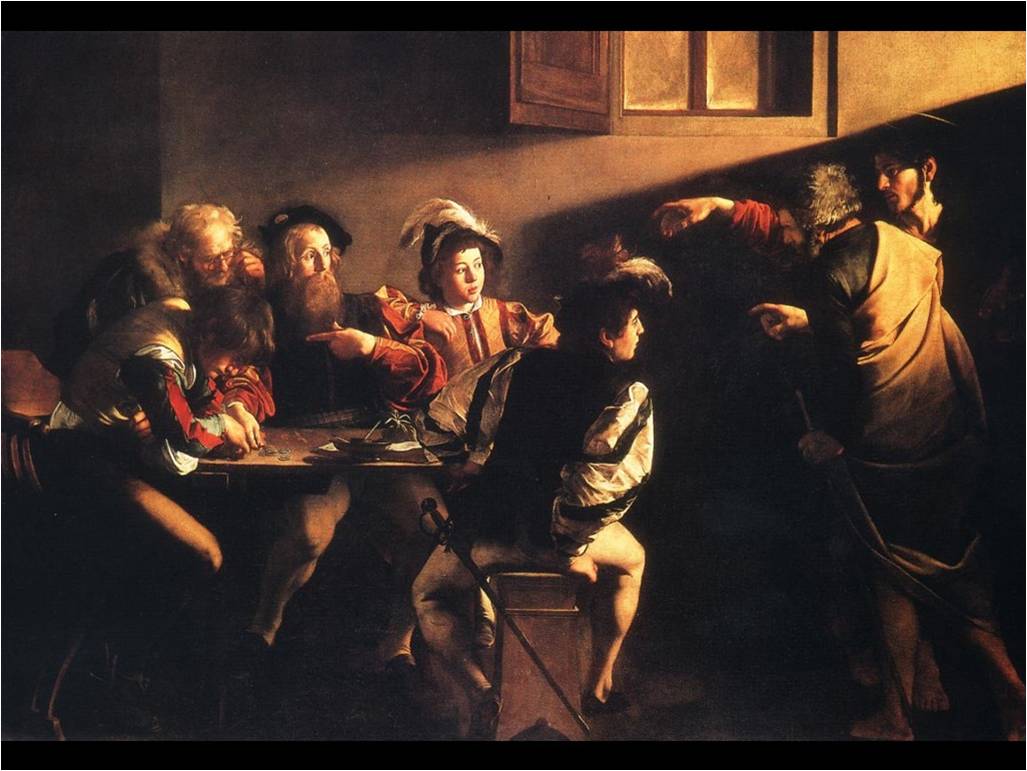
The Calling of St. Matthew by Carvaggio (1599-1600)

The Calling of St. Matthew by Carvaggio (1599-1600)

Jesus is on the right pointing and Matthew is in the center of the table with a bewildered look on his face, with his fingers pointing to himself as if to say, ‘me, you are calling me.’ This is how Matthew records it in the 9th chapter:

9 As Jesus was walking along, he saw a man named Matthew sitting at his tax collector’s booth. “Follow me and be my disciple,” Jesus said to him. So Matthew got up and followed him.

10 Later, Matthew invited Jesus and his disciples to his home as dinner guests, along with many tax collectors and other disreputable sinners. 11 But when the Pharisees saw this, they asked his disciples, “Why does your teacher eat with such scum?”


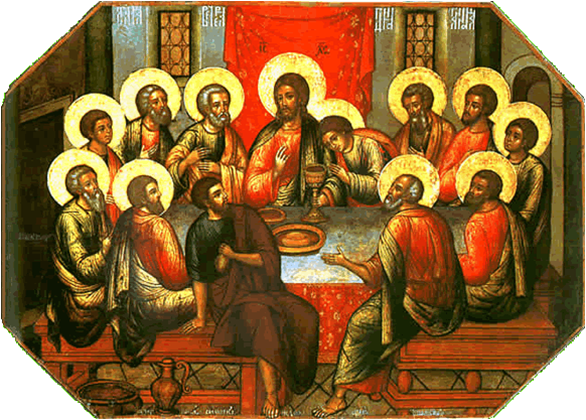
I actually like that translation, even though they take a little freedom with the word there, for I think we often think of being at the table with Jesus being like this:
Picture1

Where everyone is holy and righteous and good, yet people in Jesus day saw it being more like this:
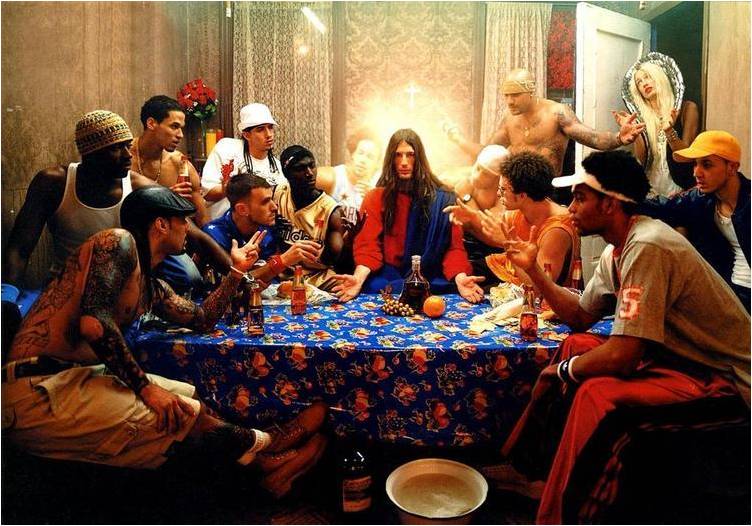
 

Lords supper modernWhere Jesus is there with the sinners, tax collectors, all the wrong people the people they didn’t want to hang out with. Sinners and tax collectors in Jesus day were no less likely than the people in the picture above. In my own experience I keep being stretched as I encounter Jesus among the least likely people I expected. Matthew continues the story

12 When Jesus heard this, he said, “Healthy people don’t need a doctor– sick people do.” 13 Then he added, “Now go and learn the meaning of this Scripture: ‘I want you to show mercy, not offer sacrifices.’ For I have come to call not those who think they are righteous, but those who know they are sinners.”


We come from a tradition, the Lutheran tradition, that gives us a great place to wrestle with this because the person we take our name from, Martin Luther, wrestled mightily with this. Luther started out as an Augustinian monk, the most rigorous of the religious orders of his day, and Luther strove to do everything the right way, to live according to all the rules to try to be right with God and Luther never felt he could achieve that. Staupitz who was Luther’s superior in the order as well as his confessor, after sitting through hours and hours of hearing Luther confess is reported to have said, ‘Luther you come in here confessing every little thing you have done, you can’t so much as fart without coming here fearing condemnation and yet I’ve never once heard you confess anything remotely interesting.’ Yet Luther was afraid that he couldn’t keep all the commandments and love God. He was convinced that God didn’t love him, at least before the reformation breakthrough where he realized that God loved him well before he ever began his journey that led him to monasticism. It transformed him so much that later in his life he could tell his friend and younger colleague, Philip Melancthon who was trying to get everything right and was afraid of making a mistake, “Be a sinner and sin boldly, but believe and rejoice in Christ evermore boldly, for he is victorious over sin, death and the world.”

Paul also had to come through this transformation from being viewing righteousness as being a part of the law to being transformed by the righteousness of God that comes through the love of Christ. As he writes in Romans 8:

So now there is no condemnation for those who belong to Christ Jesus. 2 And because you belong to him, the power of the life-giving Spirit has freed you from the power of sin that leads to death.

There is no condemnation for those who are in Christ. Who can take that away from you? Nobody. You have been freed from the power of sin and death, now that doesn’t we don’t find ourselves struggling, but the victory has already been decided. Paul continues

3 The law of Moses was unable to save us because of the weakness of our sinful nature. So God did what the law could not do. He sent his own Son in a body like the bodies we sinners have. And in that body God declared an end to sin’s control over us by giving his Son as a sacrifice for our sins. 4 He did this so that the just requirement of the law would be fully satisfied for us, who no longer follow our sinful nature but instead follow the Spirit. 5 Those who are dominated by the sinful nature think about sinful things, but those who are controlled by the Holy Spirit think about things that please the Spirit.


So who gets to say who we are, who gets to have that word. Is it others who say that we should be afraid of those who are different from us, who ask us to build walls between ourselves and others. No. Is it our own selves telling us that we are not good enough, smart enough, worthy enough. No. It is the God who made us the baptized children of God, who marked us with the cross of Christ forever and sealed us by the Holy Spirit. That God who promises that nothing will be able to separate us from the love of God in Christ Jesus our Lord, nothing in our lives, nothing in heaven or on earth, no rulers or powers, nothing.Who are you, you are baptized children of God and no one, nothing can take that away from you, and you are loved. And it is in that love that we can imagine the way the world looks in light of that love, Jesus spends most of his ministry talking about the kingdom of God, talking about his vision of the way life should be. This was not a new thing, in the Old Testament this would have been talked about in terms of living in God’s shalom, God’s peace and vision for the world and harmony with God and the world around them. That is why the two great commandments are you shall love the Lord your God with all your heart, with all your soul, with all your mind and with all your strength and you shall love your neighbor as yourself. And as we begin to claim who we are in light of this love and identity those things like fear and shame which cause us to give away potions of who we are begin to lose their hold on us. Now this isn’t easy, I certainly don’t claim to be the one who has mastered this. There are times in my own life where fear kept me paralyzed or shame made me believe that I was unloveable. I can own that, and the reality is that I didn’t earn it. Martin Luther would say that “God’s love doesn’t find that which is pleasing to it; God’s love creates that which is pleasing to it.” We weren’t right with God on our own, God went out and made us right, God goes out seeking us because that is who God is. That gives us a great opportunity. You see, in the midst of Jesus ministry he never built any walls, but he sat at a lot of tables and tables bring us together. He sat at tables with those many in his day would have excluded. I had the opportunity to hear Bishop Mark Hanson, the Bishop of the ELCA a couple years ago and he related a story how when he was elected bishop a colleague who he trusted told him, ‘your calling is to take the walls that divide us and turn them into tables for conversation.’ I think that is what Jesus did, he took the walls that divided Matthew from the rest of the community, ‘he’s a sinner, he’s a tax collector’ and he brought him to the table where he was included as well as the other sinners and tax collectors. That’s what Paul did in going from the ministry that divided Jew and Gentiles to being the apostle to the Gentiles. And grace frees us from that shame, that fear that we need to create a different and better past, indeed grace is freedom from having to seek a better past. The reality is that who you are is accepted right now, God has made you and claimed you. So take down the walls and join those at the table. Amen.

 

 purple rose 01 by picsofflowers.blogspot.com

Bandera- A Poem

006

Every blade of grass comes armed with some spear, barb or spike
And the soil is only a thin blanket covering a bed of limestone
Where the dry winds and the burning heat
Bake the fields like bread in an oven
Roadrunners dart among the cedar trees searching for snakes
While scorpions patrol the dust vigilantly with their tales held high
The clouds rumble and complain as they float through the sky
As if some angry god refused to shed a tear for the parched earth beneath
Yet through the burning summer life continues to persevere
Birds sing their songs while flies and bees buzz through the air
The deer seek out the few remaining pools in the dried creek bed
And for all its arid heat there is a beauty that draws me back home
Through most of the year I dwell where the soil is dark and deep
Where the rains fall and the corn grows tall
And the land is green and the grass is soft
But this dusty land is in my blood and draws me back as one of its own

Neil White, 2013

purple rose 01 by picsofflowers.blogspot.com

Icarus

Herbert James Draper, Mourning for Icarus (1898)

Herbert James Draper, Mourning for Icarus (1898)

There are days when I push carelessly beyond the bounds of my own mortality
Brushing against the edge of the heavens in the frantic flight of my own fancy
And I try to capture the moon and stars while ascending to the seat of the sun
In the valiant pursuit of my own vainglory; trespassing of the limits of body and soul
Yet, for the moment I soar within the vision of my mind’s imagination
But it is not long before my cramping muscles and my throbbing head remind me
I am indeed mortal and not a god, that my limits are painfully real
That my wings are only a clever construct of wood and leather and stolen feathers
Held together with pins and hinges and melted wax
And that as I approach the fire in the sky they evaporate in the heat
While my body finds itself unable to sustain its efforts on the thin air of the heavens
So I plummet again to my home in the dust, collapsing into the hard embrace of earth
Wounded in body and spirit and yet the deepest blow is to the pride
Yet, my body heals and the spirit forgets and the ego yearns
As I once again tan the leather and steal the feathers and build the wings
For the next time I try to make the impossible ascent into the heavens

Neil White, 2013

purple rose 01 by picsofflowers.blogspot.com

The City Becomes a Desolation: Jeremiah 7:27-8:3


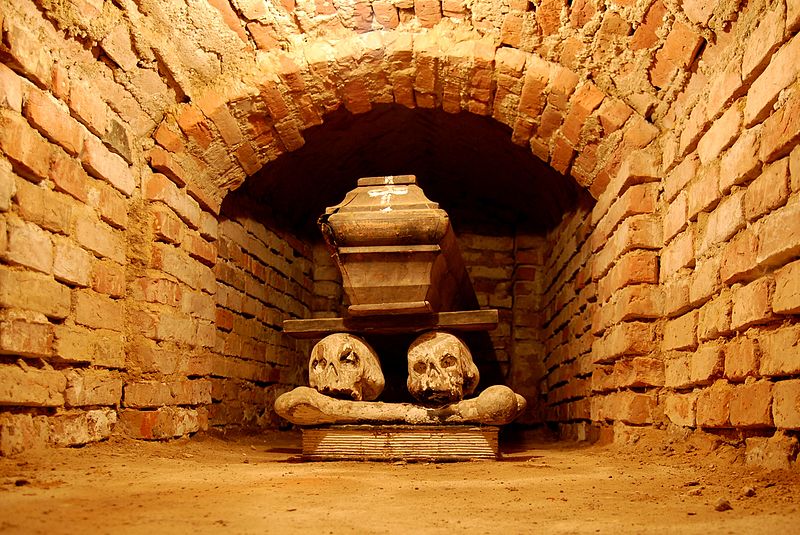
crypt

Jeremiah 7: 27-8:3

 27 So you shall speak all these words to them, but they will not listen to you. You shall call to them, but they will not answer you. 28 You shall say to them: This is the nation that did not obey the voice of the LORD their God, and did not accept discipline; truth has perished; it is cut off from their lips.

 29 Cut off your hair and throw it away; raise a lamentation on the bare heights,
for the LORD has rejected and forsaken the generation that provoked his wrath.

                30 For the people of Judah have done evil in my sight, says the LORD; they have set their abominations in the house that is called by my name, defiling it. 31 And they go on building the high place of Topheth, which is in the valley of the son of Hinnom, to burn their sons and their daughters in the fire– which I did not command, nor did it come into my mind. 32 Therefore, the days are surely coming, says the LORD, when it will no more be called Topheth, or the valley of the son of Hinnom, but the valley of Slaughter: for they will bury in Topheth until there is no more room.33 The corpses of this people will be food for the birds of the air, and for the animals of the earth; and no one will frighten them away. 34 And I will bring to an end the sound of mirth and gladness, the voice of the bride and bridegroom in the cities of Judah and in the streets of Jerusalem; for the land shall become a waste.

 8:1 At that time, says the LORD, the bones of the kings of Judah, the bones of its officials, the bones of the priests, the bones of the prophets, and the bones of the inhabitants of Jerusalem shall be brought out of their tombs; 2 and they shall be spread before the sun and the moon and all the host of heaven, which they have loved and served, which they have followed, and which they have inquired of and worshiped; and they shall not be gathered or buried; they shall be like dung on the surface of the ground. 3 Death shall be preferred to life by all the remnant that remains of this evil family in all the places where I have driven them, says the LORD of hosts.

It has been a little while since I’ve posted anything on Jeremiah. This has been sitting as a draft for a couple months and it was going to be posted the day the tornadoes went through Moore, Shawnee and Newcastle Oklahoma and I didn’t want any association with the title and what happened there. (Also as an excuse my son who had some of my resources on my e-reader with him while he was in Oklahoma for the first part of the summer) but recently I’ve had a couple events that have encouraged me to get back to Jeremiah, so here you go.

We return to the language of horror and disgust precisely to attempt to get past the walls of resistance that the people have put up around them. Are the people practicing child sacrifice, we will never know, but to the Jewish mind this is the most revolting of the practices of the world around them. A time when death is so prevalent that there is no longer the ability to separate the dead from the living because there are no places left to bury the dead. Death is so prevalent that it invades into the everyday experience of the people and they cannot help but be defiled by the presence of death in their midst. The dead are left in the open for the crows and wild animals to consume, and the wild animals have the run of the land—no one is there to stop them. This is the image of a slaughter. There is no more joy, no more happiness, no more celebration, it is the ending of the world as they know it.

Even kings and priests and officials are not exempt from the sacrilege. Their honored bones are laid upon the ground, prophets have no honor, and they are valued as crap. What remains is the image of the boneyard of Ezekiel 37 where no life seems possible. The world where death and defilement has been kept at bay is suddenly turned upside down and death is everywhere around.

purple rose 01 by picsofflowers.blogspot.com

What I Learned About Myself, Life and God from My Divorce: Part 1

Apophysis-Betrayal (1footonthedawn at deviantart.com)

Apophysis-Betrayal (1footonthedawn at deviantart.com)

On July 1, 2010 my marriage of almost 13 years with two children officially ended. For those who have been through or are going through the process of divorce you know that this journey, which for me was unwanted, begins much earlier than that, but now over three years later I finally sat down to think about what I learned from this journey. Much like some of my earlier posts about my learning about myself, the world and God from my son who is on the autistic spectrum I hope that perhaps others may be able to find some light in the midst of their dark times in their own journey. An unwanted divorce causes a crisis that I wouldn’t wish upon my worst enemy, but even though it is an unwanted journey there are gifts that do come along the way.

1.       There is some wisdom that is only learned through pain and suffering. My divorce was the third of three major transitions in my life in a very short period of time. In the spring of 2009 one of my personal dreams had died. I saw myself going on to do PhD work to teach at a university or seminary. For several years this had been a direction that I had put considerable time and energy into preparing for this possibility and had applied to several programs over the period of a couple years. In 2009 I received a rejection letter from the final program I had applied for, a program that I was fairly certain that I met all the criteria for, and I sensed that this dream was not going to happen. I attempted to care for myself during this time period, meeting with a counselor and trying to take good emotional care of myself yet even as resilient as I am this did take a toll on me personally. The second transition was due to the church I was serving at that time, it was a congregation that had experienced a lot of conflict in the previous four years and I knew that another conflict was on the horizon in the fall of 2009 due to decisions made within my denomination. Dealing with conflict, especially as a leader, for any extended period of time is very draining. It was in the fall of 2009 that I also learned that my wife was not satisfied with the relationship. In this time of broken dreams, conflict and a distancing spouse I went through an emotional breakdown, and just as Brené Brown can joke about her breakdown becoming a spiritual awakening, mine in its own way was very much a spiritual awakening. The experiences of heartbreak, betrayal, depression and anxiety, shame and weakness forced me to go through a process of re-learning who I was, how I related to others and the world, the process of forgiveness, the way in which I would relate to God, and the sympathy I was able to show others.

The wisdom that comes from going through a time of intense pain or suffering is a slow process, and it is not the type of learning that we actively seek on our own. It is not the reason we go through a difficult journey, instead it is a gift that we realize along the way. It takes a while to be able to accept it as a gift because it comes at a cost-a cost that involves re-examining who you are from bile to bones, to the very core of your identity. It is not a gift that comes all at once, rather it is more like a slow process of awakening physically, spiritually and emotionally and which I will touch on in many of my other points. You didn’t ask for this wisdom that came at a cost but it is now a part of you, a gift that you can share with others.

2.      The process of rediscovering yourself. For fifteen years (two years of dating, thirteen years of marriage) I had invested so much of my identity into my relationship with my ex-wife and my relationship with my children. I was deeply in love with my ex-wife and still love my children more than words can express and to make the relationship work I had given away a number of pieces of myself over the years, it wasn’t intentional-we all make sacrifices for the sake of relationships. I feel that I was a good husband and a loving father who had poured himself into the family and I didn’t realize how much of me was defined by my sense of living out these roles. When first my wife began to distance herself from me and later left the relationship and later when the agreement we came to on parenting left my son living with me and my daughter living with my ex-wife and we would have times where both kids would be with one parent or the other-I found myself for the first time in fifteen years having to live with just me for times. I had poured so much of myself into raising kids and into my work as a pastor I had not made space (nor felt I had the money at the time) to pursue hobbies, to take part in many of the activities I enjoyed and without either my family around me or, initially, a congregation to be a minister to I had to find who I was again. I had to learn new things, I had to learn how to date again (honestly, not sure I figured it out the first time and I certainly have had my share of lessons this time around), to learn how to take care of myself and to give myself permission to spend money on myself. I had been a natural giver who found his joy making other people happy but I rarely would allow myself to do the things I wanted to do or to buy the things that I wanted. In hindsight I probably hoped that my wife and children would want to give back to me the way I enjoyed giving to them, but that wasn’t the case. I also came from a family that one of their primary ways of expressing love was to give gifts and so I didn’t understand that not everyone has that same experience.

 Three years later, and I came to this realization well before three years, I genuinely like who I am. I’m far from perfect and I still have the occasional dark day, but most of the time I’m comfortable in my own skin. Nice guys may finish last, but it is more important to be who you are than to win. I am a nice guy, I am always looking out for other people. Don’t get me wrong I am a very mentally, physically and most of the time emotionally strong and resilient person, but I have always had a soft heart. One of the reasons I don’t carry and use cash very often is that if I had cash in my wallet I would give it away. Because I am a nice guy there have been many times in relationships and in my work life that I have been taken advantage of because I genuinely have wanted to make other people happy. I could become a jerk and say I’ll never be taken advantage of in the same way again, but that wouldn’t be me (nor would it be healthy-even if it is a common male way of avoiding vulnerability). I had to come to the point where I could admit to myself, I genuinely like who I am most days. I am proud of the way I have handled adversity, I am proud of the father I am and I am enough. I also had to arrive at the point where I was OK being alone and not trying to fill the emptiness with someone else. I would love to find someone I can share my life with again, but I’m not willing to settle just to have someone next to me.

3. You can do everything right and still fail.  This may sound like a really depressing lesson to learn, but failure is not the end of the world and it doesn’t define the future, in fact it may open up new possibilities. Marriage for example takes two people committed to working at it, no matter how one person tries they cannot by themselves hold a marriage together. You can go the extra mile and the mile beyond that, and perhaps even the marathon beyond that and things may not work. And maybe this sounds self-centered, but most people have been in the situation where you’ve had to try to make something work and failed. Sometimes the best thing you can take out of a situation is what did you learn about yourself, your gifts, your weaknesses, your habits, etc. that you can use in the future. I can look back without any regrets that I didn’t try hard enough to save my marriage. Yet, before going through my own divorce I did think that, ‘if someone just tried harder, loved more, was more patient, etc.’ they could have made the relationship work. I have no such illusions anymore and it has helped me numerous times in the last several years as I have worked with people not only in the midst of divorce but in the midst of many other crises that come up in life.

purple rose 01 by picsofflowers.blogspot.com

The Scars of the Past

scarsofheart

We all bear the marks of
Mistakes made that cannot be undone
Hearts broken by betrayal
Regrets of roads not taken
Days when dreams are dashed
False hopes that proved to be illusions
And the wear and tear of life
That left scar tissue in the places
Where we knit ourselves back together

Most days the scars blend into the background
Blending in with the rest of us that is good and whole
Yet, sometimes the scars burn red hot
As old wounds are reopened
As an instant takes us back to the mistakes of yesterday
When our hearts are broken anew
When doors close
When our dreams seem to slip through our fingers
And the wear and tear of life
Tears at the skin still trying to make itself whole again

We all have scars and wounds
We all are in the process of healing
In this journey we call life
Sometimes we are able to bind another’s wounds
Othertimes we can only sit by holding a hand
Praying they will stop wounding themselves
Sometimes all we can see are the scars of the past
Unable to see the living tissue that moves towards tomorrow
But our scars, though they mark us
They do not make us

We walk towards the day when mistakes are forgiven
When hearts are healed by love
When we can choose the road of our destiny
When we dare to chase our dreams again
Where hope does not disappoint
And where the laughter and love of life
Allow us to accept ourselves as we are
As whole, even able to accept the beauty
Of the scars of the past

Neil White, 2013

purple rose 01 by picsofflowers.blogspot.com

Looking Back

TAMU4
Looking back through the photos of another lifetime ago
Looking at this young man with the belief that he will go out and conquer the world
That the struggles of the moments are merely obstacles to be overcome
And the conflicts that will arise in the future are merely opportunities to test one’s mettle
If he knew the pain and the heartaches that lie ahead
The ways in which everything he knew would be shaken to the core
Would he change course or would he stay the path?

As I look into the eyes of my twenty year old self, captured in pictures two decades old
In the midst of the steely idealism and implacable optimism
With his awkward quietness and fiery intensity
When I look I see both myself then and the person I would become
As I walk through the pictures that mark the years and wonder at each point
Would I make the same decisions again or would I change them

I can see the ways in which each step was less a choice
And more an unfolding of the person I was becoming
For the young man I see in the past is the man I see in the mirror
Minus the experience and knowledge that can only come through the journey
And even the parts of my life I wouldn’t wish on an enemy
I wouldn’t trade for myself for they made me who I am

And without changing who I am and who I was
I would still make the same choices, or at least all the important ones
And still within there is that same steely idealism and implacable optimism
Sometimes the awkward quietness still comes out
Most of the time the fiery intensity remains
Yet the twenty years were not in vain as they stretched and challenged me
Learning love and loss, trust and betrayal
And even when good guys finish last they are still themselves
And so I go to sleep, looking back not seeking a better past
Still hopeful enough to look for a better future

Neil White, 2013

purple rose 01 by picsofflowers.blogspot.com

Waiting-A Poem

tightrope

Hanging between possibilities
Trying to stay balanced between the past and future
Remaining focused on the present with eyes on the horizon
Each step carefully placed
One before the other
As I move along the mobile wire
No tether keeps us safe on the walk of life
it would be easier to be magically transported to the far side
But the journey must be made patiently
Slowly walking the wire
Each measured footfall testing the tension
Praying the destination is worth the danger
The unseen future beyond the visible horizon

Neil White, 2013

purple rose 01 by picsofflowers.blogspot.com

Forgiveness in a Graceless World-A Sermon

Depiction of the Parable of the Unmerciful Servant, Scot's Church Melbourne

Depiction of the Parable of the Unmerciful Servant, Scot’s Church Melbourne

Ernest Hemmingway tells in one of his short stories called “The Capital of the World” an episode about forgiveness which goes like this:

Madrid is full of boys named Paco, which is the diminutive form of Francisco, and there is a Madrid joke about a father who came to Madrid and inserted an advertisement in the personal columns of El Liberal which said: PACO MEET ME AT HOTEL MONTANA NOON TUESDAY ALL IS FORGIVEN PAPA and how a squadron of Guardia Civil had to be called out to disperse the eight hundred young men who answered the advertisement.

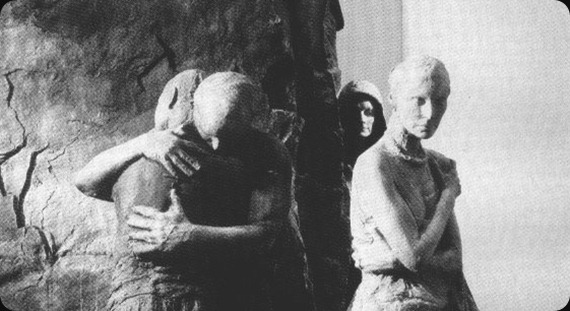
Now the joke is all about the ubiquity of the name Paco in Spain, but it also expresses a deep seeded truth that I think many of us can relate to about our desire for forgiveness to be received. For I think we all have those times where we wish we could change an action that hurt someone in the past, or to be able to take back the words that we said. We wish those words could be like the cartoon bubbles that we could pull back into our mouth to where they were never uttered in the first place. SFC Rubley who was my platoon sergeant while I was a platoon leader in the army used to talk about wanting to be able to lasso the words and say come back. But there is no bringing them back, there is no undoing the past, there is no way to go back and take back the words that were said or put in words that needed to be said. And the reality is that there is truly no future without forgiveness, there is no way forward without a new start. In fact, while forgiveness is one of the hardest things we are called upon as followers of Christ to do it is also at the very heart of our faith. It is right up there with loving the Lord your God with all your heart, mind, soul and strength and loving your neighbor as yourself, in fact it is necessary for both of these for there is no way to love one’s neighbor without forgiveness. We might think that the world of the bible it might be easier to live into forgiveness, but that would be mistaken for you see the bible is written in the same world that we live in. The Old and New Testaments are full of stories of brokenness, unreconciled differences, and woundedness. Even very early in Genesis (Genesis 4) we encounter the story of Lamech which is the opposite of forgiveness, “I have killed a man who attacked me, a young man who wounded me. If someone who kills Cain is punished seven times, then the one who kills me will be punished seventy-seven times!” Or the very first family we follow for a long journey in Genesis, Abraham and Sarah or Abram and Sarai as they start out, is a story of brokenness-yet we don’t often think of it that way. God’s promised child had been a long time in coming and Sarai says to Abram ‘we’re not getting any younger, why don’t you sleep with my servant Hagar and have a child through her and that can be the child we have been waiting for.’ And so Abram does and Ishmael is born, and yet later-after God has changed their names to Abraham and Sarah and the promised child Isaac is born there is no longer, at least in Sarah’s view, anyplace in the household for Ishmael and Hagar and the image is from a sculpture of Abraham saying goodbye to Ishmael, Hagar is facing away and Sarah is watching from behind the rock to ensure this son of Abraham from Hagar will be sent away. Ishmael will never return until both Sarah and Abraham are dead and only then will Isaac and Ishmael be reunited to mourn the death of their common father. But just because the people that God works through in the bible don’t live out God’s vision of forgiveness-that doesn’t mean that is who God is.

Abraham_thumb

As Psalm 103 says:

6 The LORD gives righteousness and justice to all who are treated unfairly.

 7 He revealed his character to Moses and his deeds to the people of Israel.

 8 The LORD is compassionate and merciful, slow to get angry and filled with unfailing love.

 9 He will not constantly accuse us, nor remain angry forever.

 10 He does not punish us for all our sins; he does not deal harshly with us, as we deserve.

 11 For his unfailing love toward those who fear him is as great as the height of the heavens above the earth.

 12 He has removed our sins as far from us as the east is from the west.

 13 The LORD is like a father to his children, tender and compassionate to those who fear him.

 14 For he knows how weak we are; he remembers we are only dust.

The God who removes our sins as far as the east is from the west, who doesn’t remember them anymore and who is tender and compassionate as a father is to his children. This is the God that the bible points to again and again and again and yet it is so easy to try to transform God into something different, something less gracious and more judgmental. One of the things I find interesting is that there are a number of Christian theologies out there that try to understand God as somehow bound to a system of rules and laws that God must act in accordance with- and if anything the bible contrast God against the rulers of the nations around them that are like that.

Unlike King Xerxes in the book of Esther, who while he is drunk summons his wife Vashti to appear before him, a summons which Vasti refuses, and so he passes an edict that she shall never again appear before him. Then he wakes up the next day realizing what he has done, but it is now a law and he cannot break it-God is not like that. Unlike King Darius in the book of Daniel who loves Daniel and yet is tricked by his advisors to pass an edict where everyone is to pray to King Darius and when Daniel is caught praying to God, Darius has no choice-he is bound by the law to throw Daniel into the lion’s den. But God is not like that, no God is like a shepherd who has 100 sheep, and then when one is missing leaves the 99 in the wilderness in search of the one, or like a woman who has 10 coins and losing one searches the house until the one is found and then calls all her neighbors to rejoice. Or like a father who has two sons, and one of the sons, the younger one, says to his father in effect, ‘dad I wish you were dead, give me what is mine after you will be gone so that I may go away from you, away from my family, and away from all that has defined me.’ And the father grants him his request and when the younger son finds himself in a foreign land starving, feeding pigs (doing that which is completely against what he was before) and wishing for what the pigs eat and no one gives him anything and he says to himself, ‘you know my father’s servants are better off than I am’ and so he goes back home and he is expecting to be a servant-but the father seeing the son rushes out to meet him, wraps his arms around him, puts a robe on him and a ring on his finger, slaughters the fattened calf and throws a party to reestablish this son with the community. And welcomes him home not as a servant, but as a son-against every rule of the way things should be. Yet there is another son in the story, the older son, who knows the way things should be, the way the rules say they should be and so he stands on the outside of the party refusing to go in and enter the celebration. So the father goes out to this son who says in effect, ‘father, I wish you were dead, for welcoming back in this younger brother who brought so much dishonor, who broke all the rules, who did everything I haven’t done” and yet the father loves both sons. The son who has gone away, who was lost-who went away and who came home again and the son who never left but now stands on the outside of the party unwilling to go in, dealing with his own anger and unwillingness to forgive and his own woundedness.

Pompeo Batoni, The Return of the Prodigal Son (1773)

Pompeo Batoni, The Return of the Prodigal Son (1773)

We serve a God who relationships are always more important than rules and people are more important than ideas. Unfortunately, sometimes the very people who should be most receptive to this are the ones who understand this the least. Take for example the story of Jonah, Jonah is sent by God to go to Nineveh-but Jonah hates the Ninevites and doesn’t want them to turn but wants them to receive God’s wrath and so Jonah goes on a ship in the opposite direction towards Tarshish. But Jonah cannot escape the God who won’t give up and so in the midst of the storm Jonah asks the sailors to give him death, to throw him into the sea because Jonah would rather die than see mercy given to the Ninevites, and yet God refuses to allow that to happen and so God sends the fish and then places him back on land and Jonah goes to Nineveh and the people turn and Jonah pouts.

In the story of les Mis, whether you’ve read it in the novel or seen it as a musical or on the big screen there are two major characters throughout the story. There is Jauvert, the lawman whose life is bound to his dependence on the law for order. The main character though is Jean val Jean who begins the story in a prison camp having served twenty years for stealing a loaf of bread. Upon Jean val Jean’s release from prison he is defined by the reality that he has been a prisoner and that there is no one who will hire him, he is a thief-and to everyone it seems he will always be a thief until when he actually does steal from a bishop and after being captured the bishop says, ‘but you left the best’ and gives him the golden candlesticks as a part of the gift. A gift which allows him to start a new life with a new identity as Misseur le Mer, and yet in the eyes of Jauvert who continues to track him throughout the story he is always the thief, and even at the end of the story when Jean val Jean spares Jauvert’s life-Jauvert cannot live this new story, he would rather die than to forgive and live in a world where the law fails him and so he does die, he commits suicide rather than forgive.

There are many people who would rather die than forgive, who would rather carry their enmity to their grave rather than let go of it, rather than let something that they have that they can hold over someone else be given up. For that is what forgiveness is, forgiveness states that I refuse to let the actions which caused me harm in the past to define our relationship going forward. Forgiveness gives us freedom from having to seek a better past. It allows us not to be defined by the things that we have done, but rather to be defined by the relationships that have been opened to us. That’s what God does, God comes and brings that forgiveness that we need even before we are ready to accept it, in the hope that we will begin to live into it. But forgiveness is not easy for us, I know a person who is a Lutheran pastor now but she didn’t grow up in the Lutheran church and going for the first time to a Lutheran church she heard at the end of the brief order of confession and forgiveness, “as a called and ordained minister of the church of Christ and by his authority I therefore declare to you the entire forgiveness of all of your sins,” and she turned to the person next to her and said, ‘that’s it!’ For God indeed, yes that is it, God has already made the journey of forgiveness, but for us many times the journey still lies ahead.

In our gospel today we hear Peter wrestling with this forgiveness that Jesus is talking about:

 Matthew 18 21 Then Peter came to him and asked, “Lord, how often should I forgive someone who sins against me? Seven times?” 22 “No, not seven times,” Jesus replied, “but seventy times seven!

At seven times Peter probably thinks he is being generous, but Jesus’ response of seventy times seven takes the world of power and revenge and retribution and turns it on its head. The world of Lamech is reversed. And it is not a point of counting up to 490, the calling is to forgive.

and then Jesus also answers with this parable (Matt 18: 23-30)

23 “Therefore, the Kingdom of Heaven can be compared to a king who decided to bring his accounts up to date with servants who had borrowed money from him. 24 In the process, one of his debtors was brought in who owed him millions of dollars.

Now the millions of dollars is actually downplaying the size of the debt owed, in modern conversion we are probably talking billions, it was as one scholar put it the amount of money a worker could expect to make in 150,000,000 days-and if you want to figure out how many years that is-it is far more than you will ever live. It is a debt that is so large it could never be paid and this man find himself in a crisis. The story continues on:

 25 He couldn’t pay, so his master ordered that he be sold– along with his wife, his children, and everything he owned– to pay the debt. 26 “But the man fell down before his master and begged him, ‘Please, be patient with me, and I will pay it all.’ 27 Then his master was filled with pity for him, and he released him and forgave his debt.

He didn’t do what the man asked for, the man asked for more time ‘give me more time and I’ll pay it back’ but the master released him from this debt and gave him a chance to start over

 28 “But when the man left the king, he went to a fellow servant who owed him a few thousand dollars. He grabbed him by the throat and demanded instant payment. 29 “His fellow servant fell down before him and begged for a little more time. ‘Be patient with me, and I will pay it,’ he pleaded. 30 But his creditor wouldn’t wait. He had the man arrested and put in prison until the debt could be paid in full.

So many times I believe that is the way we may want to react, what’s in my best interest. It allows me to be the insider and the other person to be the outsider. Frequently the biggest critique of Christians is that they act, not like God, not like the Father in the parable of the prodigal son, but rather like the older brother or the forgiven slave. Forgiveness is good for me but these other people are still sinners, they still owe me, the things they have done still define them as people who need to be punished, shunned, set aside. I’ve got to be honest that in a lot of my conversations with people outside the church the most common reason they are no longer a part of the church has nothing to do with any philosophy, or anything on TV, radio or the internet and everything to do with how they were not met with forgiveness by others within the church. Somehow they were marked as the sinner, the outcast, the untouchable. And so it shouldn’t be surprising that the story continues with Matt 18:31-33 and the horror of the other slaves seeing how this forgiven slave acted in light of the incredible forgiveness he received.


31 “When some of the other servants saw this, they were very upset. They went to the king and told him everything that had happened. 32 Then the king called in the man he had forgiven and said, ‘You evil servant! I forgave you that tremendous debt because you pleaded with me. 33 Shouldn’t you have mercy on your fellow servant, just as I had mercy on you?’

You see God wants to meet us in grace, God wants to meet us in justice and it goes back to us not living out the love and grace we have been given. And I think it wounds God when we abuse the gifts that have been given to us, when we set ourselves up as better than everyone else. When we receive grace and turn to the rest of the world in judgment. And I think God wants to meet us in grace, but I also have come to believe that if the only place we can meet God is in law, justice and judgment, then God will meet us there as well. The parable concludes:

 34 Then the angry king sent the man to prison to be tortured until he had paid his entire debt. 35 “That’s what my heavenly Father will do to you if you refuse to forgive your brothers and sisters from your heart.”

I’ve got to be honest, I don’t like the end of this, it makes me uncomfortable. Yet, I know that there are times where God has to come to me and remind me, ‘Neil this is not the life you are called to.’ ‘This is not who you are called to be, you are called to be on the journey of forgiveness.’ And it is a journey, and there are times where you may say ‘I forgive something’ and then something comes up and you realize you are still viewing your neighbor in terms of things they have done in the past. I had to learn this in my own life and journey, and I still bear scars from where I have been wounded. The reality is that there is a risk that comes with forgiveness, that you are opening yourself up to the possibility of being hurt again. And what happens if the other person doesn’t accept the forgiveness you offer. That doesn’t exempt you from the calling to be forgiving, and to be on that journey yourself. Forgiveness opens the possibility of reconciliation happening. And I know that there are wounds that may be too deep to forgive at that moment, but we are called to be on that journey. A person who I’ve learned a lot from is a man who grew up in the former Yugoslavia and is Croatian in background, a man named Miroslav Volf, and those who know a little of the history of Europe in the 1990s, this was the area of Bosnia and Kosovo where the Serbians and Croatians were in a conflict, an ancient conflict that had its roots hundreds of years earlier that was brought to the forefront in the 1990s when the Serbians were in power and began to move towards wiping out the Croatians, destroying entire villages, committing incredible atrocities and killing thousands while displacing tens of thousands. Sometime shortly after the events in Bosnia, Miroslav was working on his PhD in Germany working through the idea of forgiveness and embracing the enemy when another well known scholar, Jürgen Moltmann, said to him Miroslav could you embrace a chětnik, the very soldiers who had done all this to your people? And Miroslav’s answer was I believe an honest one, “No, but I don’t believe that is where God calls me to be.” Even genocide requires forgiveness. Doesn’t mean it is an easy journey and there may be something that is so horrible where our answer is also, “No, but I don’t believe that is where God calls me to be.” As Archbishop Desmond Tutu could say in the midst of the Truth and Reconciliation committees after Apartheid in South Africa, ‘There is no future without forgiveness’.

Forgiveness is the one thing we are called upon to do in the midst of the Lord’s prayer: to forgive us our trespasses as we forgive those who trespass against us, or forgive us our sins as we forgive those who sin against us. Or as one of my friends who is a pastor in Washington State related a story to me of a young girl learning the Lord’s prayer, and not knowing what trespassing was she said, “Forgive us our trash-passing as we forgive those who trash-pass against us.” The wisdom of children, so forgive us our trash-passing as we forgive those who trash pass against us.

purple rose 01 by picsofflowers.blogspot.com

The Playground of the Mind


suoitien

I wonder and imagine and play
With the past and present and future
Real and imaginary, fantasy and reality
All ready to coexist in the playground of my mind

And like a child entering a room full of toys
Anything is possible to be manipulated and combined
In the service of play and delight
The experimentation of the possible
And the boundaries of the unimaginable
Become the field of play

Sometimes I feel like the master of that universe
Able to manipulate the winds of creation
To serve my own whims and will
Oftentimes I am blown here and there by the winds of curiosity
Distractedly moving from one shiny object to another
And at the end of the day when I am exhausted by the work of the day
When I lay down upon my bed and close my eyes
The child continues to run untiringly in the playground of my mind
Reveling in the mystery of the subconscious
And dancing through my dreams with his muddy footprints

Neil White, 2013

purple rose 01 by picsofflowers.blogspot.com