Yearly Archives: 2013

Silence

love me forever by syntheses on deviantart.com

love me forever by syntheses on deviantart.com

When the words don’t come
And the rhymes don’t rhyme
And silence creeps into the soul
Though the absence of words feels like an unwanted guest
And the loneliness like a creeping malady
Perhaps, the silence itself is a healing balm
A release from the cacophony that is life
Freeing from the continual chorus of babble
And there in the abyss of nothingness
The rhythm and meaning return
And against the backdrop of silence
The words that were always there return
Finally able to be heard

Neil White, 2013

Images for Reformation Sunday

There are a number of different you can go for Reformation Sunday. These are some I am using:

The Door of the Castle Church in Wittenburg where Martin Luther posted the 95 Theses. The Theses are now engraved in the metal doors.

The Door of the Castle Church in Wittenburg where Martin Luther posted the 95 Theses. The Theses are now engraved in the metal doors.


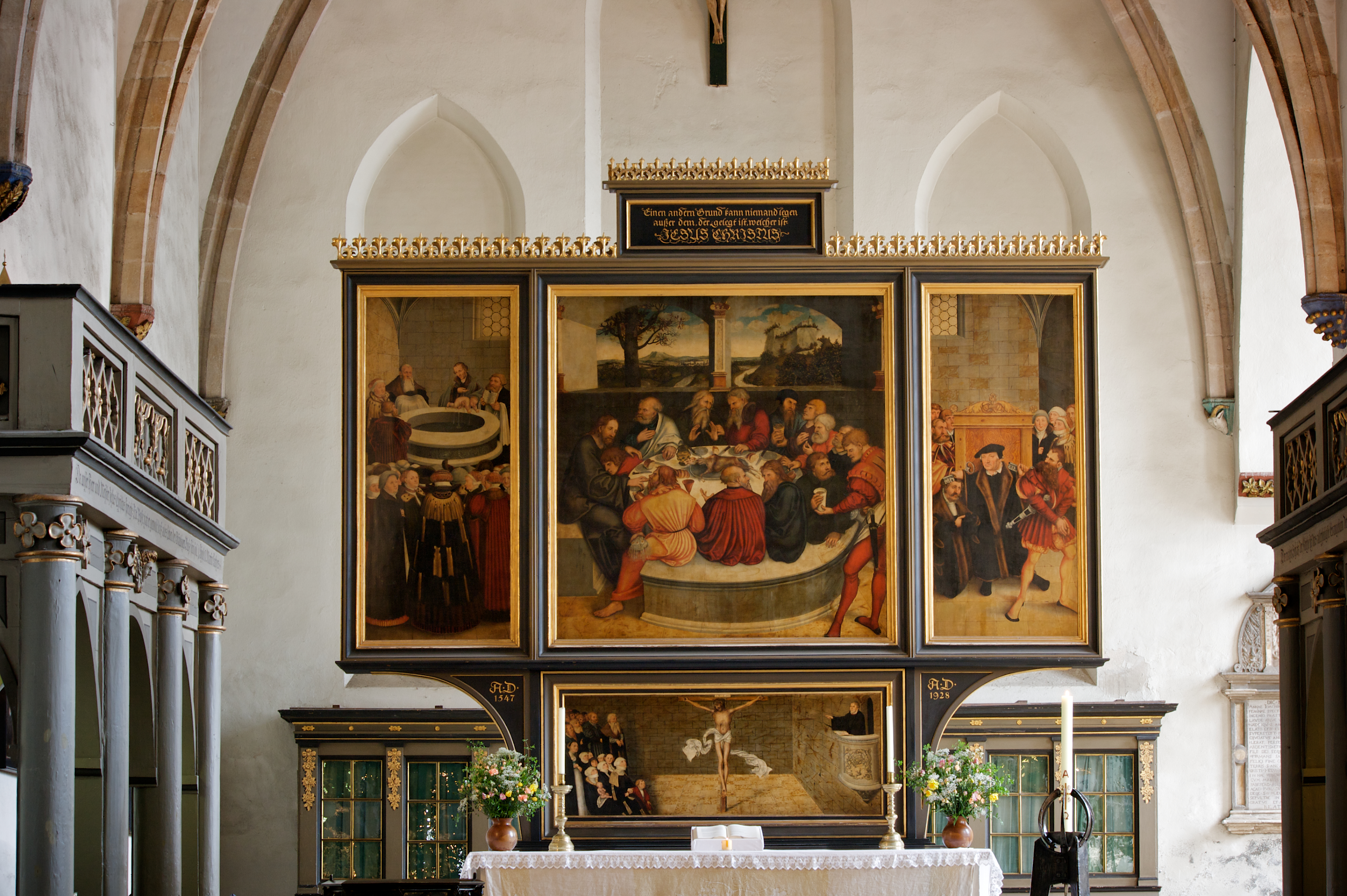
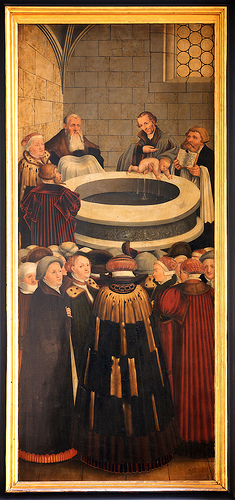
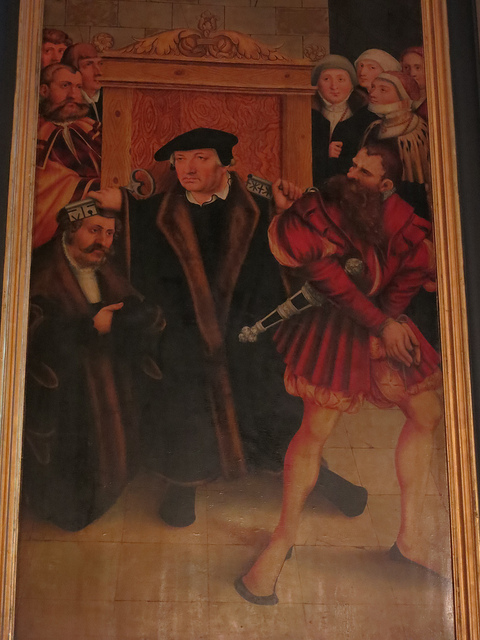
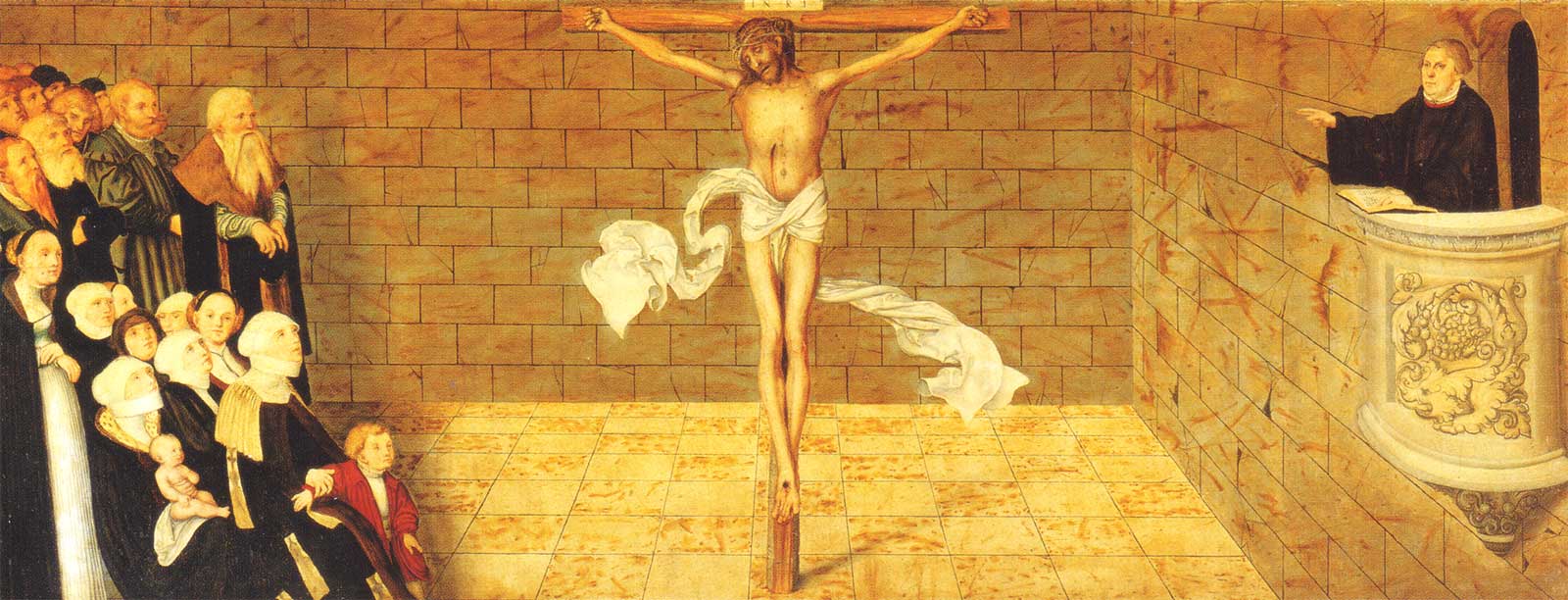
Lucas Cranach the Elder altarpiece in City Church of Wittenberg (1547)

Lucas Cranach the Elder altarpiece in City Church of Wittenberg (1547)

Detail Left Panel

Detail Left Panel

Detail top center panel

Detail top center panel

Detail Right Panel

Detail Right Panel

Detail Bottom Panel

Detail Bottom Panel

Martin Luther (1523) by Lucas Cranach

Martin Luther (1523) by Lucas Cranach


Jeremiah 14: The Broken Covenant and the Death of the Land

drought18-8b9a6db718dda8f9f968da97316f9c0a2daa3655-s6-c30

Jeremiah 14

The word of the Lord that came to Jeremiah concerning the drought: 

2 Judah mourns
and her gates languish;
they lie in gloom on the ground,
and the cry of Jerusalem goes up.
3 Her nobles send their servants for water;
they come to the cisterns,
they find no water,
they return with their vessels empty.
They are ashamed and dismayed
and cover their heads,
4 because the ground is cracked.
Because there has been no rain on the land
the farmers are dismayed;
they cover their heads.
5 Even the doe in the field forsakes her newborn fawn
because there is no grass.
6 The wild asses stand on the bare heights,
they pant for air like jackals;
their eyes fail
because there is no herbage.
7 Although our iniquities testify against us,
act, O Lord, for your name’s sake;
our apostasies indeed are many,
and we have sinned against you.
8 O hope of Israel,
its savior in time of trouble,
why should you be like a stranger in the land,
like a traveler turning aside for the night?
9 Why should you be like someone confused,
like a mighty warrior who cannot give help?
Yet you, O Lord, are in the midst of us,
and we are called by your name;
do not forsake us!
10 Thus says the Lord concerning this people:
Truly they have loved to wander,
they have not restrained their feet;
therefore the Lord does not accept them,
now he will remember their iniquity
and punish their sins. 

There is a connection between the vision of shalom that the people of God are called to live in and not only their own health, but the very health of the earth around them. The turning away of the people has effected everything and nobody is able to avoid the drought. Even nobles who have the choice wells and access to the best water are no longer able to have their servants successfully draw water. Farmers in their fields are directly affected as their crops are unable to grow and life itself hangs by a thread. Even the wild animals abandon the natural order, does no longer care for their fawns, wild donkeys can find no food foraging in the mountains. Everything is dying in the midst of the drought. And in a turn of lament, whether the prophet or the people call on God. In the tradition of the Psalms of lament they cry out in their distress calling on the Lord to act, to rouse Godself from slumber, to act like God has acted in the past, to demonstrate God’s power. Finally as the land dies and the events of the people’s rebellion is coming to fruition, both in the approaching armies of the Babylonians and in the oppressive lack of moisture which is killing the animals and crops of the fields. Yet the prayer comes too late, God is not willing to quickly and easily accept the words that come before God. Too many times in the past the turning has been superficial and now God has turned God’s back upon the people of the covenant, allowing the negative side of the covenant-the woes-to come to pass. The iniquity and sins will not be forgotten or passed over, forgiveness is not granted, the past is not forgotten.

The wrath of God can be a troubling concept for many, myself included at times, especially the way in which it can be utilized to be a tool of fear and oppression. Yet, there is a very real sense where God does care, where God does take sides and where we need to wrestle with the ways in which forgiveness is not cheap, where reconciliation is often a hard and painful process and where our actions (or inactions) cause pain and harm not only to ourselves but the world around us.

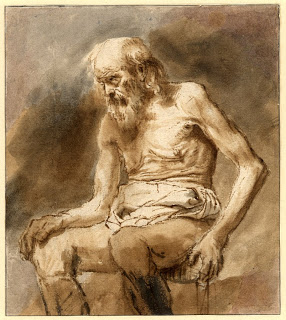
Jeremiah Lamenting the Destruction of Jerusalem by Rembrandt van Rijn 1630

Jeremiah Lamenting the Destruction of Jerusalem by Rembrandt van Rijn 1630

Jeremiah 14: 11-22

11 The Lord said to me: Do not pray for the welfare of this people.12Although they fast, I do not hear their cry, and although they offer burnt-offering and grain-offering, I do not accept them; but by the sword, by famine, and by pestilence I consume them.

13 Then I said: ‘Ah, Lord God! Here are the prophets saying to them, “You shall not see the sword, nor shall you have famine, but I will give you true peace in this place.” ’ 14And the Lord said to me: The prophets are prophesying lies in my name; I did not send them, nor did I command them or speak to them. They are prophesying to you a lying vision, worthless divination, and the deceit of their own minds.15Therefore thus says the Lord concerning the prophets who prophesy in my name though I did not send them, and who say, ‘Sword and famine shall not come on this land’: By sword and famine those prophets shall be consumed. 16And the people to whom they prophesy shall be thrown out into the streets of Jerusalem, victims of famine and sword. There shall be no one to bury them—themselves, their wives, their sons, and their daughters. For I will pour out their wickedness upon them. 


17 You shall say to them this word:
Let my eyes run down with tears night and day,
and let them not cease,
for the virgin daughter—my people—is struck down with a crushing blow,
with a very grievous wound.
18 If I go out into the field,
look—those killed by the sword!
And if I enter the city,
look—those sick with famine!
For both prophet and priest ply their trade throughout the land,
and have no knowledge. 


19 Have you completely rejected Judah?
Does your heart loathe Zion?
Why have you struck us down
so that there is no healing for us?
We look for peace, but find no good;
for a time of healing, but there is terror instead.
20 We acknowledge our wickedness, O Lord,
the iniquity of our ancestors,
for we have sinned against you.
21 Do not spurn us, for your name’s sake;
do not dishonor your glorious throne;
remember and do not break your covenant with us.
22 Can any idols of the nations bring rain?
Or can the heavens give showers?
Is it not you, O Lord our God?
We set our hope on you,
for it is you who do all this.

Perhaps the role of the prophet is not to give up, to be willing to wrestle with God-even when God is unwilling to hear any longer. Moses wrestled with God for the sake of the people several times in the Exodus and God changed God’s mind, and here Jeremiah enters in to once again plead for the people even after God instructs him not to pray for them any longer. Jeremiah refuses to give us, refuses to stay silent. Once again he searches for a way, reminding God that the priests, the prophets and the leaders have failed the people, they have set them on a course for war with Babylon while promising peace. They have trusted in their own strength and the strength of allies like Egypt and have not accepted that it is God’s hand that is moving with the Babylonians and they are to accept their rule for the time being. The Lord is not having any of this, the prophets and leaders will indeed bear the consequences with the people, but there is no turning back from the death that is coming and will soon be all around. Death in the fields, death in the city, death from war and famine and sickness, and the shattering of all that was. The world that the people of Judah know is about to die, they will now be exiles in a foreign land, the remnant of a once proud people.

Jeremiah refuses to give up, returning to the language of lament, searching for hope in the hopelessness. Trying once again to call on God to be God, to be their hope, to save the people not because they deserve it but because it will bring glory to God. Jeremiah fears that if God turns this time the stump will be destroyed to the point it will never rise again, that the people will be wiped out and that death will triumph. Jeremiah continues, even in his own woundedness, to pray for and appeal for the people against the command of God. His love of the people, of Jerusalem and the temple push him to this even though he has been considered a traitor by all of these throughout his ministry. Grace and healing may be coming, but it is not before the people passes through the valley of the shadow of death. With the approaching armies of Babylon death is coming. But we looking back know that God will not turn God’s back forever.

purple rose 01 by picsofflowers.blogspot.com

Wallflower

The solitary one in the midst of the commotion
The silence in surrounded by a world of speech
The unseen actions in the background that go unnoticed
The person who is out of reach
The stranger in the midst of the fellowship
The outcast bearing marks we may or may not see
The one who pulls themselves away
Hiding behind screens that block out searching eyes
The people that become the background
The wallflowers that we never see
More than the fear of death itself
The fear that meaningless we might be

Neil White, 2013

Drawn Back In

purple rose 01 by picsofflowers.blogspot.com

A reminder of the past
A picture, a day, a memory
And I’m drawn back in
Into the past that is gone
Remembering not what I have
But what I’ve lost
And for a time I’m stuck
Until I’m able to forget again
And move on with my life
Maybe the day will come
When the gravitational pull of the past
No longer holds me so
Yet, for now I am drawn back in

Neil White, 2013

The Exceptional Child

The Sacrifice of Isaac by Rembrandt (1635)

The Sacrifice of Isaac by Rembrandt (1635)

Set apart and lifted up
Placed upon a pedestal
An example for the world to see
Expected to excel in every endeavor
The beloved one, the exceptional child
Living out the dreams of so many others
And weeping when no one else sees
For being the sacrifice made for other’s failures
The substitution for their own failures
Expiation for their sins real and imagined
Caught in a life that was thrust upon him
And perhaps if he completes the journey to Moriah
Carrying the wood for his own pyre
There might be a sacrificial lamb caught in the bushes
Able to take his place
So that he might know laugher

Neil White, 2013

purple rose 01 by picsofflowers.blogspot.com

Return to Naïveté

The Garden of Eden by Thomas Cole (1828)

The Garden of Eden by Thomas Cole (1828)

Sometimes I wish I could go back
To the times before Pandora opened her box
Or before I tasted the fruit of the knowledge of good and evil
To the points where I knew nothing and trusted everything
Before trust had been betrayed and my heart shattered
My mind filled with knowledge that only led to more questions
And every new perspective added another layer of complexity to the world
To the fields of innocence where love flowed easily
Yet, there is no path to the childish idealism
nor a way to erase the scars on my heart and soul
Perhaps the land of naiveté was only an illusive memory
Some utopia of the memory that never really existed at all
Or an innocence that was never mine to possess
When faith was simple and didn’t involve seeing the brokenness
But no amount of knocking at the gates of the land of naiveté
No bleeding knuckles or cries begging for admission allow admittance
As I dwell east of Eden with all its questions

Neil White, 2013


This poem was inspired by a line from Field of Innocence by Evanescence
purple rose 01 by picsofflowers.blogspot.com

Wrestling with God

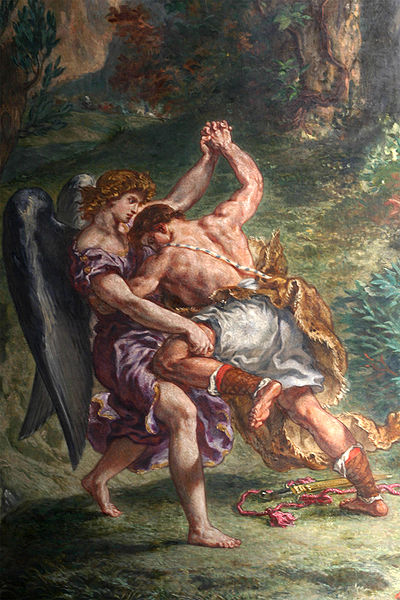
Photo of Lutte's de Jacob avec l'Ange by Gloumouth1 http:/gloumouth1.free.fr

Photo of Lutte’s de Jacob avec l’Ange by Gloumouth1 http:/gloumouth1.free.fr

The world is broken, all around, as far as I can see
I see the hurt, the wounds, the scars, the hungry mouths to feed
And so I stand or bend the knee and seek and knock in prayer
Yet sometimes it seems like all my words just vanish into air
Sometime I feel as if I’m knocking on a door till my knuckles bleed
Yet, there never comes an answer, as far as I can see

I come to points where trust begins to faint and anger comes to life
Searching for the strength and faith to carry on the fight
Yet, then alone caught in my pride a stranger comes to me
To wrestle for a night ‘til dawn seems like eternity
While in the struggle we find each other caught within the plight
Of someone else entering in to come and share the strife

Yet, while I wanted answers that came with simple prayers
I found a God who met me in the midst of the struggle to live
To learn to find forgiveness, peace and identity
The one who came to wrestle, bless and then rename thee
For into both the mortal and the divine struggles I dive
And find the God who in the struggle comes and meets me there

This is more of a chiastic form where there is a a b c c’ b’ a’ rhyming pattern. Another experiment in form as I try some things throughout this month in the range of poetry.

Neil White, 2013

purple rose 01 by picsofflowers.blogspot.com

Jeremiah 13: Weeping for Those Who Don’t Hear

loincloth

Jeremiah 13: 1-11: The Ruined Loincloth

 Thus said the LORD to me, “Go and buy yourself a linen loincloth, and put it on your loins, but do not dip it in water.” 2 So I bought a loincloth according to the word of the LORD, and put it on my loins. 3 And the word of the LORD came to me a second time, saying, 4 “Take the loincloth that you bought and are wearing, and go now to the Euphrates, and hide it there in a cleft of the rock.” 5 So I went, and hid it by the Euphrates, as the LORD commanded me. 6 And after many days the LORD said to me, “Go now to the Euphrates, and take from there the loincloth that I commanded you to hide there.” 7 Then I went to the Euphrates, and dug, and I took the loincloth from the place where I had hidden it. But now the loincloth was ruined; it was good for nothing.

 8 Then the word of the LORD came to me: 9 Thus says the LORD: Just so I will ruin the pride of Judah and the great pride of Jerusalem. 10 This evil people, who refuse to hear my words, who stubbornly follow their own will and have gone after other gods to serve them and worship them, shall be like this loincloth, which is good for nothing. 11 For as the loincloth clings to one’s loins, so I made the whole house of Israel and the whole house of Judah cling to me, says the LORD, in order that they might be for me a people, a name, a praise, and a glory. But they would not listen.

Throughout Jeremiah’s ministry words have failed to convince his listeners to turn from their path, and now God instructs Jeremiah to turn to a symbolic action. Whether Jeremiah actually makes the long journey to the Euphrates river multiple times or whether this is a dream sequence or whether he buries it at another river near his hometown (the Nehal Perat) is something that scholars will debate back and forth, but the symbolic nature of the Euphrates is powerful since it is where the people will cross as they go into exile. At issue within the symbolic representation of the loincloth is the people’s losing the meaning of their being set aside by God for a purpose.

Election, although freighted with all types of baggage with the way it has been used by religious groups, within both Jewish and Christian terms is not for the sake of the elect. The elect are there to be a blessing to the world around them, but too often they become fixated on their own status and they cling to that rather than clinging to the identity they were given by the one who set them apart. Israel was to cling to God and move in the ways God moved as a piece of clothing but to use Jesus’ words they have become like salt that has lost its saltiness and like the loincloth they have failed to be good for anything at this point. Perhaps it is only in this time where they are separated from God and feel that they are ruined that there can be the possibility of being made new and hearing and seeing once again who God is calling them to be.

 Jeremiah 13: 12-14: Filled with Drunkenness

 12 You shall speak to them this word: Thus says the LORD, the God of Israel: Every wine-jar should be filled with wine. And they will say to you, “Do you think we do not know that every wine-jar should be filled with wine?” 13 Then you shall say to them: Thus says the LORD: I am about to fill all the inhabitants of this land– the kings who sit on David’s throne, the priests, the prophets, and all the inhabitants of Jerusalem– with drunkenness. 14 And I will dash them one against another, parents and children together, says the LORD. I will not pity or spare or have compassion when I destroy them.

 Using the image of drunkenness indicates a state where decisions are impaired, where bad choices are frequently made and previous inhibitions may be cast aside. In the context of Jeremiah, the people have turned from God for a long time, they have chased other gods, other goods, trusting in their Davidic king, the temple and the city of Jerusalem to keep them safe. The very people who should be leading the people back to God: the priests, the prophets (other than Jeremiah and perhaps a few others) and the king on David’s throne have instead led them towards a path of destruction. The people are on a path to conflict with Babylon and yet they cannot see it yet, but the prophet sees. The people’s judgment and reactions are impaired unable to see the coming collision with the immovable object and God will not rescue them this time. Perhaps God is the immovable object, perhaps God is merely allowing the consequences of their previous bad choices to come to fruition like a person who after trying to prevent a person who is drunk from taking the wheel and sees them start the vehicle anyways. Regardless, God is no longer there offering a shield of protection to keep the people from hitting the bottom. God has begun to seem to the people no longer as their guardian but their oppressor and until they reach rock bottom they probably won’t be able to see God in a different light.
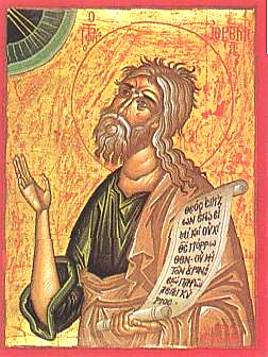
 Orthodox Icon of the Prophet Jeremiah

Orthodox Icon of the Prophet JeremiahJeremiah 13:15-17: A Prophet’s Plea

 15 Hear and give ear; do not be haughty, for the LORD has spoken.
 16 Give glory to the LORD your God before he brings darkness,
and before your feet stumble on the mountains at twilight;
 while you look for light, he turns it into gloom and makes it deep darkness.
 17 But if you will not listen, my soul will weep in secret for your pride;
my eyes will weep bitterly and run down with tears,
because the LORD’s flock has been taken captive.
 

At the center of Israel’s life is the calling to hear (shema) which goes back to Deuteronomy 6:4

Hear, O Israel: The LORD is our God, the LORD alone

And again in this plea the people are called to hear and give hear, to look, to listen and in language characteristic of Deuteronomy’s blessings and curses there is the other side of “if you will not listen” but instead of seeing the consequences for the people we see the consequences for the prophet. The prophet makes his plea as one who is brokenhearted reaching out yet again to the people who have failed to listen to him throughout his ministry and yet his soul still weeps for them and his eyes run down with tears because they will bear the effects of their inability to (or choosing not to) hear.
 
Jeremiah 13: 18-27 Corrupted Identity

18 Say to the king and the queen mother;
“Take a lowly seat, for your beautiful crown has come down from your head.”
 19 The towns of the Negeb are shut up with no one to open them;
all Judah is taken into exile, wholly taken into exile.
 20 Lift up your eyes and see those who come from the north.
Where is the flock that was given you, your beautiful flock?
 21 What will you say when they set as head over you those whom you have trained to be your allies?
Will not pangs take hold of you, like those of a woman in labor?
 22 And if you say in your heart, “Why have these things come upon me?”
it is for the greatness of your iniquity that your skirts are lifted up, and you are violated.
 23 Can Ethiopians change their skin or leopards their spots?
Then also you can do good who are accustomed to do evil.
 24 I will scatter you like chaff driven by the wind from the desert.
 25 This is your lot, the portion I have measured out to you, says the LORD,
 because you have forgotten me and trusted in lies.
 26 I myself will lift up your skirts over your face, and your shame will be seen.
 27 I have seen your abominations, your adulteries and neighings,
 your shameless prostitutions on the hills of the countryside.
Woe to you, O Jerusalem! How long will it be before you are made clean?

Everything is going to change and nothing is going to change. Everything external will change among the people, the king and queen mother will lose their places, places that were once open in hospitality will be closed by conflict, the honored will become dishonored and the powerful will find themselves powerless. But the prophet or God also has little hope or belief that anything will change, that the people’s identity has been corrupted  and they are less likely to change their ways than a person is able to change the color of their skin or a leopard could have its spots removed. The desire is for the unclean to be made clean, but the 13th chapter ends in woe not knowing what it will take for the people to have a new heart placed within them and a new sense of identity as the people of God to live out of. They will need eyes to see and ears to hear, but for now the prophet sees them content in their deafness and blindness, unaware of their shame and their brokenness.

purple rose 01 by picsofflowers.blogspot.com

Images for the 23rd Sunday after Pentecost/ Lectionary 29

Luke 18: 1-8, the Parable of the Unjust Judge, and Genesis 32: 22-31, Jacob wrestles and is renamed Israel

There are not a lot of images for the Parable of the Unjust Judge, but here is one:

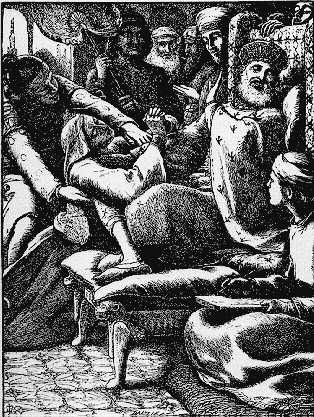
John Everett Millais, Parable of the Unjust Judge (1863)

John Everett Millais, Parable of the Unjust Judge (1863)

For the reading from Genesis there are some good classic images, and I also am planning to use more of Joseph’s story so I included a couple images not specifically from this scene:

Rembrandt Harmenszoon van Rijn, Jacob Wrestling with the Angel (1659)

Rembrandt Harmenszoon van Rijn, Jacob Wrestling with the Angel (1659)

Photo of Lutte's de Jacob avec l'Ange by Gloumouth1 http:/gloumouth1.free.fr

Photo of Lutte’s de Jacob avec l’Ange by Gloumouth1 http:/gloumouth1.free.fr

Woodcut from Gutenberg Bibel, 1558

Woodcut from Gutenberg Bibel, 1558

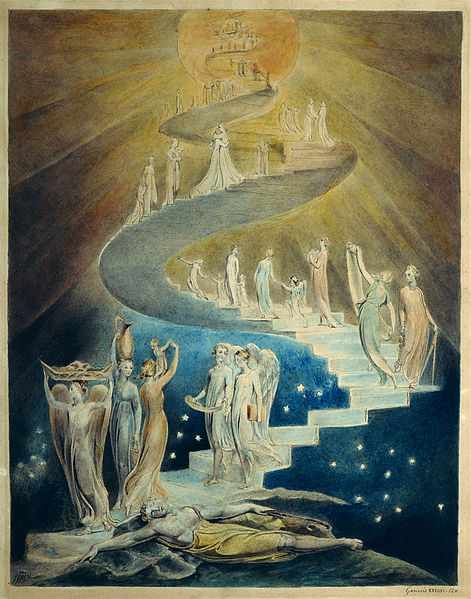
William Blake, Jacob's Dream (1805)

William Blake, Jacob’s Dream (1805)

I just really like this one by Blake and as I mentioned above I am telling more of Jacob’s story

Pierre Paul Rubens, The Reconciliation of Jacob and esau, as in Genesis 33 (1624)

Pierre Paul Rubens, The Reconciliation of Jacob and esau, as in Genesis 33 (1624)