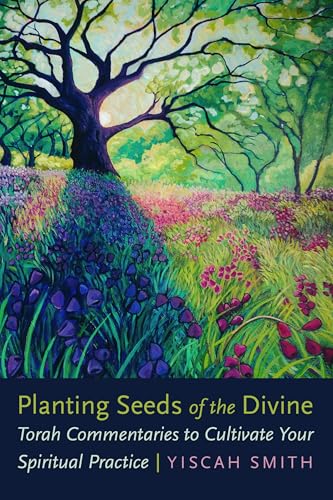
Planting Seeds of the Divine: Torah Commentaries to Cultivate Your Spiritual Practice, by Yiscah Smith. Jewish Publications Society, 2025.
One of the practices that has enriched my faith has been learning from other faith traditions about their encounter with the divine. As a Christian reader, preacher, and interpreter of scripture I have frequently sought out Jewish perspectives on the scriptures that we share and to glean some of the riches of the Jewish interpretive tradition. I was given an advance copy of Planting Seeds of the Divine: Torah Commentaries to Cultivate Your Spiritual Practice written by Yiscah Smith to review and I appreciate the opportunity to share this spiritual practice with another seeker longing to encounter God through an encounter with scripture. As people of faith, we yearn to connect the entirety of our self with the God who we come to know through both the scriptures and our experiences.
Reading through the introduction of Planting Seeds of the Divine I was struck by some common resonances in the history of my own tradition. The description of the “internal experience of a personal and unique encounter with the Divine is a Jew’s spiritual umbilical cord with one’s Creator” made me remember my characterization of the Romantic Reformed Theologian Fredrich Schleiermacher’s absolute dependence on the divine. The idea of ingesting, chewing, swallowing and digesting the scriptures to sustain our spiritual life is a metaphor that was familiar to my own formation as a careful and attentive reader of scripture. Finally, the desire of the book and its process is to help the reader integrate Torah into the daily life of the individual and the community reminded me of Dietrich Bonhoeffer’s process of forming ministers for the Confessing Church in 1930’s Germany in resistance to the Third Reich. For Christians the central text for formation was the gospels but we have often been impoverished by our inattention to the Hebrew Scriptures which were the scriptures for the writers of the New Testament.
I value Yiscah Smith’s methodology of working through these individual reflections on Torah. In the introduction she introduces the practice of breath awareness, reflection, quieting the mind, and then visualization to go with each reading. It is a helpful process of slowing down and reflecting upon the experiential reading of the text and being open to the experience of the presence of the divine in the moment of reflection. To work with the image in the title of the work, it plants the seeds of openness to the moment of connection or insight.
Some of the reflections were very insightful. I particularly enjoyed her reflection on Sarah’s protest in Genesis 23: 1-2 and the gift of spiritual protest, something that resonates with my experience in psalms and the prophets. Other reflections I could value the way the rabbis referenced in the commentary utilized gematria (assigning numerical values to Hebrew letters) or highly spiritualized readings, but I found them more difficult to place alongside my own readings of the text. Yet, I resonate with the intent of Planting Seeds and really enjoyed Yiscah Smith’s methodology of approaching scripture in an open and patient manner to cultivate the relationship between the individual and the divine.






 Sign of the Rose