Tag Archives: Prophets

The Siren Call: Jeremiah 4: 5-10

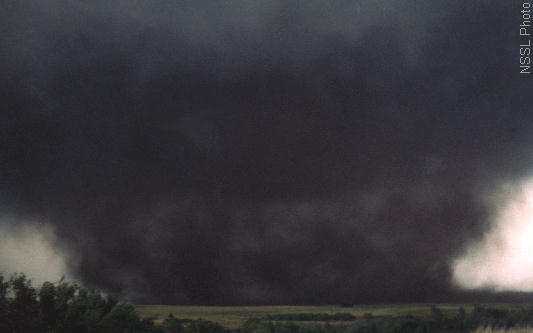
F4 Wedge Type Tornado, nearly a mile wide that hit Binger, Oklahoma

F4 Wedge Type Tornado, nearly a mile wide that hit Binger, Oklahoma

Jeremiah 4: 5-10

5 Declare in Judah, and proclaim in Jerusalem, and say:
Blow the trumpet through the land; shout aloud and say,
 “Gather together, and let us go into the fortified cities!”
 6 Raise a standard toward Zion, flee for safety, do not delay,
for I am bringing evil from the north, and a great destruction.
 7 A lion has gone up from its thicket, a destroyer of nations has set out;
 he has gone out from his place to make your land a waste;
 your cities will be ruins without inhabitant.
 8 Because of this put on sackcloth, lament and wail:
“The fierce anger of the LORD has not turned away from us.”

 9 On that day, says the LORD, courage shall fail the king and the officials; the priests shall be appalled and the prophets astounded. 10 Then I said, “Ah, Lord GOD, how utterly you have deceived this people and Jerusalem, saying, ‘It shall be well with you,’ even while the sword is at the throat!”

 When I lived in Oklahoma, tornado sirens were a way of life. When spring came you knew that if the siren was blaring its dissonant tones that you needed to check the TV to see where the storm might be and how dangerous the storm was. Some storms were storms that you could weather in place, going to the safe room in your house. But some storms, if you were in their path you didn’t want to stay in place and wait out, you needed to flee to designated areas that were better able to withstand the winds.  And yet sometimes even fleeing to a strong place is not enough, as was the case of the F5 tornado that struck Oklahoma City in 1999 destroying or badly damaging over 8,000 homes.

Jeremiah has the unfortunate role of being the siren, alerting the people to a disaster they do not expect nor do they want to see. War is approaching, an unspecified invading  army is coming to lay waste to the land. Destroying cities, burning crops, killing and enslaving and the Lord has withdrawn the protection they have relied upon in the past. The prophet goes even farther, to place the Lord behind the movement of the predicted enemy. The Lord has made a choice, a dreadful choice, a choice against his former people. It is a choice the prophet has allowed us to see the Lord agonizing over, and yet the pieces are in motion, the storm is in motion and yet the prophet continues to hope for a turn. The prophet desires for the people to put on sackcloth, to lament and wail, and perhaps the Lord will turn once more.

The very people who should be keeping the people in the relationship with God, the king-priest-prophet have become the very people who have dulled the people to the siren’s call. There is a Davidic king and the temple which the people have begun to place their trust in, yet the prophets are always pointing to God’s vision of justice and shalom (harmony/peace) and the ways that the people have betrayed this vision.

Jeremiah makes a bold statement, in essence placing the blame at God’s feet, for the people have heard and received the message that it is well (most likely from the king and his officials, the priests and the prophets) while terror approaches. One of the roles of the prophet is to stand between the people and God, challenging both. The prophet will love both God and the people and weep with and for both of them, and in standing between the two his heart and body will be broken. Yet Jeremiah, among the prophets, seems to stand alone-for the other prophets of his time seem to be singing in unison with the kings and priests. Jeremiah speaks dangerous words, but they are the words of the faithful willing to enter into the struggle with God, to challenge God, to even go so far as calling God a traitor while still remaining in the relationship. As Moses in the Exodus, Jeremiah intercedes for the people he loves and yet even Jeremiah will have his limits as we will find.

purple rose 01 by picsofflowers.blogspot.com

The Calling: Jeremiah 1

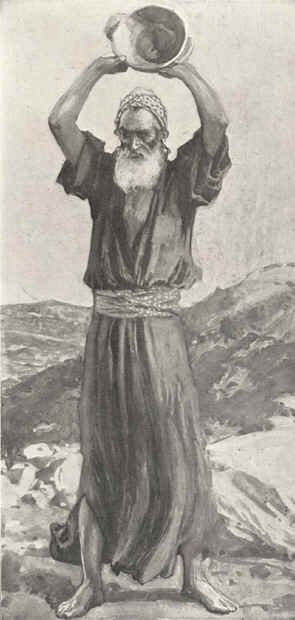
Jeremiah by James Tissot

Jeremiah by James Tissot

Jeremiah 1

   The words of Jeremiah son of Hilkiah, of the priests who were in Anathoth in the land of Benjamin, 2 to whom the word of the LORD came in the days of King Josiah son of Amon of Judah, in the thirteenth year of his reign. 3 It came also in the days of King Jehoiakim son of Josiah of Judah, and until the end of the eleventh year of King Zedekiah son of Josiah of Judah, until the captivity of Jerusalem in the fifth month.
 4 Now the word of the LORD came to me saying,
 5 “Before I formed you in the womb I knew you,
and before you were born I consecrated you;
I appointed you a prophet to the nations.”
 6    Then I said, “Ah, Lord GOD! Truly I do not know how to speak, for I am only a boy.” 7 But the LORD said to me,
“Do not say, ‘I am only a boy’;
for you shall go to all to whom I send you,
and you shall speak whatever I command you.
8 Do not be afraid of them,
for I am with you to deliver you, says the LORD.”
 9 Then the LORD put out his hand and touched my mouth; and the LORD said to me, “Now I have put my words in your mouth.
10 See, today I appoint you over nations and over kingdoms,
to pluck up and to pull down,
to destroy and to overthrow,
to build and to plant.”
     11 The word of the LORD came to me, saying, “Jeremiah, what do you see?” And I said, “I see a branch of an almond tree.” 12 Then the LORD said to me, “You have seen well, for I am watching over my word to perform it.” 13 The word of the LORD came to me a second time, saying, “What do you see?” And I said, “I see a boiling pot, tilted away from the north.”
    14 Then the LORD said to me: Out of the north disaster shall break out on all the inhabitants of the land.15 For now I am calling all the tribes of the kingdoms of the north, says the LORD; and they shall come and all of them shall set their thrones at the entrance of the gates of Jerusalem, against all its surrounding walls and against all the cities of Judah. 16 And I will utter my judgments against them, for all their wickedness in forsaking me; they have made offerings to other gods, and worshiped the works of their own hands. 17 But you, gird up your loins; stand up and tell them everything that I command you. Do not break down before them, or I will break you before them. 18 And I for my part have made you today a fortified city, an iron pillar, and a bronze wall, against the whole land– against the kings of Judah, its princes, its priests, and the people of the land. 19 They will fight against you; but they shall not prevail against you, for I am with you, says the LORD, to deliver you.

Why would anyone want to be a prophet? I know, I’ve heard the young rebels I know who want to ‘speak truth to power’ but the reality is that the prophet is not an easy role. To use Richard Lischer’s words, “The prophet’s voice is usually about an octave too high for the rest of society.” (Lischer 2005, 23) And while there may be moments of anger for the prophet they are caught between God and a people and often they feel abused by both sides. They are the messengers of God at a time when it is all to common to shoot the messenger, they are the bearers of the news that nobody wants to hear. They love their people dearly even when they are abused by them, and while there may be moments of anger, that is not their dominant emotion. Following Lischer again: “…the emotion most characteristic of the prophet is not anger but sorrow. He tells the truth but rarely in bitterness of spirit and never with contempt for the Other. His truth-telling is pervaded by a sense of tragedy.” (Lischer 2005, 161) As we journey with Jeremiah we will experience that tragedy, the sorrow, the frustration and the honest emotions he feels as he is caught between God and the people of God.

Let us begin with his calling: Jeremiah starts out as a priest, one of the literate elite in the time leading up to crisis. He will serve for a prophet as a long time, and will suffer much and it is not a life he chose, but rather a life that was chosen for him:

4 Now the word of the LORD came to me saying,
 5 “Before I formed you in the womb I knew you,
and before you were born I consecrated you;
I appointed you a prophet to the nations.”

God is the actor, Jeremiah is acted upon. God makes the choice, God has made Jeremiah who he is for this role, to be  a mouthpiece. Jeremiah doesn’t ask for this, doesn’t want this and like every other prophet I can think of tries to talk God out of this: I don’t know how to speak, for I am only a boy. Like Moses who didn’t know how to speak, and he is not the type of youth who thinks he knows it all but rather is all too aware of his unworthiness and weaknesses-and yet he is chosen and he begins the road that is laid out before him.

Back in the 1980s one of my favorite bands was a heavy metal group, Queensrÿche, and one of their songs The Road to Madness is perhaps helpful at this point:

Most of this is memory now
I’ve gone too far to turn back now
I’m not quite what I thought I was but
Then again I’m maybe more
The blood-words promised, I’ve spoken
Releasing the names from the circle
Maybe I can leave here now and, o
Transcend the boundaries

For now I’m standing here
I’m awaiting this grand transition
The future is but past forgotten
On the road to madness

Times measure rusts as it crawls
I see its face in the looking glass – stop
This screaming laughter hides, the pain of its reality
Black, the door was locked I opened
And now I’ve paid that price ten-fold over
Knowledge – was it worth such torment, oh
To see the far side of shadow

And still I’m standing here
I’m awaiting this grand transition
I’m a fool in search of wisdom
And I’m on the road to madness
Yes, I’m on the road to madness

I’m awaiting endlessly
Pounding rhythms echo me
Won’t you take me somewhere far beyond the void

And still I’m standing here
I’m awaiting this grand transition
Maybe one day, oh I’ll meet you, and we’ll
Walk the roads to madness
Yes, we’re on the road to madness

Oh, I think they’ve come to take me
I hear the voice, but there’s no-one to see
I can’t scream, too late it’s time

As with this song, the actual meaning of the words may not be as important as what they convey-the sense of having and seeing things in a way that everyone else sees them opens the one seeing to a whole new world of pain, it is almost like Plato’s famous story in the Republic of the Cave where the person who has seen the world in a new way and returns home only to be apprehended and killed by those who are still in darkness.  Being God’s mouthpiece is going to come at a high personal price for Jeremiah.

God has chosen, the prophet will pluck up and pull down, destroy and overthrow, build and plant. The prophet will bear the news that nobody wants to hear and he doesn’t have the choice to throw up his hands and give up. In the words of the song, the door that is locked is opened (and not by the prophet but from the other side, from God) and the prophet will pay the price ten fold over. Who the prophet is, why he was chosen is based on who God formed him to be—God has chosen his instrument for a difficult task and will continue to be with Jeremiah, but Jeremiah never has the ability to give up for it is either withstand priests and princes or be crushed by God?
But who is this God who puts prophets in such a difficult circumstance? Why make the chosen ones suffer so? And yet it is the way of the elect. A person is set aside not for their own benefit but for the benefit of others. The way we naturally want to think of election is that it is what makes a person separate and perhaps able to look down their righteous noses at others, election makes me or us special…but in scripture election, setting apart is always for the sake of the other. Israel is set apart to be a blessing to the nations (the world), the prophets are set apart to be a witness to either the covenant people or those outside the covenant. They are a part of what God is doing and the world, and it is not always easy. The suffer and grieve for those who will not or can not hear, they bear the weight of seeing all that is wrong even when they may not be able to fix it. They may indeed be close to the road to madness, and yet they are there not for their own sake, not for some secret knowledge…they are there because ultimately God loves God’s people (and by extension the world) so much that God will not let go and so God allows those who are drawn closest to suffer on their behalf so that they might see, know and return.

The world of Jeremiah, like our world is not as it should be. Most people accommodate and make their way as best they can with little reference to God or any other source of meaning outside what benefits themselves. The prophets, like Jeremiah, are drawn into the relationship with God and into God’s desire to re-establish the relationship and the idea of shalom (God’s peace or harmony in the world). They are drawn to the dream and they see the nightmare that most of the rest of us have grown accustomed to. It is like us watching a dystopic movie, like The Hunger Games for example, where reality is so dark and yet when we are honest we can see parts of our own society mirrored in that experience. In a very real sense, when everyone else sees things as running along OK the prophet will see through a dystopic lense of all the things that are really wrong and it is only in the midst of crisis that the prophetic hope of what a utopia might look like emerges and gives light and hope for the hard work of building that society of shalom and reconciliation. We are journeying towards the light, but we have a long way to go before the dawn and the road ahead will get darker on the prophet’s road.

purple rose 01 by picsofflowers.blogspot.com

A Brief Forward to the Prophet Jeremiah

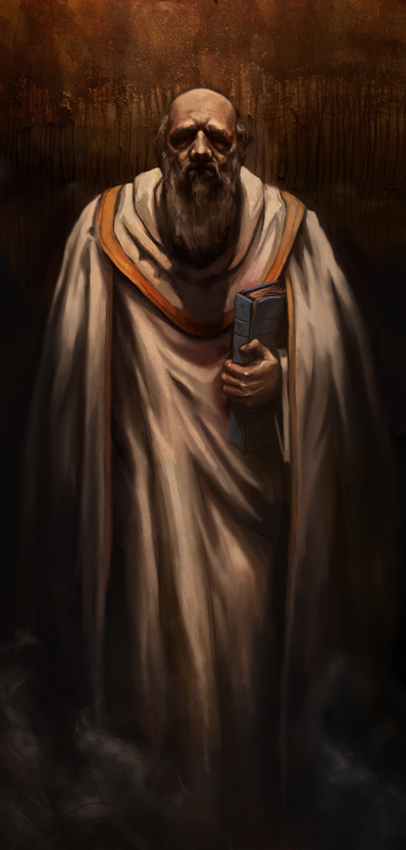
The Prophet (nogard86 at deviantart.com)

The Prophet (nogard86 at deviantart.com)

Jeremiah is one of the more challenging books to approach, both for its content, its length, the fact that it is not organized linearly on a specific timeline but rather skips and jumps to different times and places, and the general unfamiliarity of most people with the context that the prophet (and most prophets are written in). Prophets for many people either are considered fortune tellers or their use is limited to foretelling the birth and ministry of Christ in the New Testament, but that is not how even the authors of the New Testament would have seen the prophets. The prophets were:

-re-interpreters of the story and tradition of God’s relation with the Jewish people. Scripture was not fixed at this point, and even scripture is present would be mediated through  the priestly and kingly offices (since they would be the literate people- there is no general interpretation of scripture by the majority of the population at this point in history, nor would there be for millennia)

-A voice that often spoke in sharp contrast to the priests and kings of their time. Prophets often deal with not only religious but concrete economic and political injustices. It is a mistake to assume that we can separate religion from political power in the ancient world, they are linked. The prophets become the counter-voice that often (although not always) speaks against power and they often are persecuted for their words and actions.

-The actions and words of the prophets may seem strange to us, and I’m sure that even in their time they were looked upon as abnormal, but they also were seen as having a role. Many prophets came from the priestly side (although not all, for example Amos is not a priest) but they in taking up the call of the prophet may lose the safety of the priestly role they are born into.

Jeremiah is born and does his ministry in a time leading up to the defining crisis of this point of the Jewish story, the Babylonian exile. For a better understanding of that time you may want to look at  The Place of Authority A Brief History Part 3a: The Exile, The Crisis of Collapse. Which I wrote as part of a different project but which briefly addresses this part of the story.  Being a prophet who is pronouncing the impending destruction of the way that things are is not an easy calling. But enough of that for the moment, let’s approach Jeremiah and walk with the prophet through the destruction and the hope and examine the God who he encounters throughout that journey. This is a long journey, since Jeremiah is 52 chapters long-many of them quite lengthy. I actually wrote the first three chapters prior to the posts on Haggai and Esther and rather than rewrite them, I have left them largely intact (hence they cover larger pieces, sometimes entire chapters in a single post) but since I know this is a long journey I have continued to move forward rather than going back and starting over again. I will attempt to do at least one chapter per week in addition to my other posts (due to the length of several chapters that may be all there is space for).

For me this is a discipline, it is a way of training myself to listen and see better. If you are reading this I hope you are able to benefit from this journey with Jeremiah through the darkness and towards hope. There will be times when the darkness seems overwhelming in this book (it is a book set at the ending of the world that the prophet knew, the ending of the kingdoms of Israel and Judah and the taking of the people into exile) and yet in the midst of the darkness, hope will come forth.

purple rose 01 by picsofflowers.blogspot.com

The Place of Authority: A Brief History Part 3a: The Exile, the Crisis of Collapse

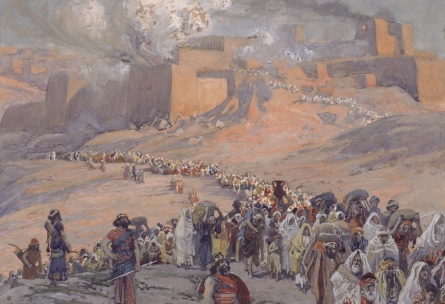
James Tissot, The Flight of the Prisoners

By the rivers of Babylon—there we sat down and there we wept when we remembered Zion. In the willows there we hung up our harps.For there our captors asked us for songs, and our tormentors asked for mirth, saying,

“Sing us one of the songs of Zion!”

How could we sing the Lord’s song in a foreign land? If I forget you, O Jerusalem, let my right hand wither! Let my tongue cling to the roof of my mouth, if I do not remember you,if I do not set Jerusalem above my highest joy. 

Remember, O Lord, against the Edomites the day of Jerusalem’s fall, how they said,

 “Tear it down! Tear it down! Down to its foundations!”

O daughter of Babylon, you devastator! Happy shall they be who pay you back what you have done to us! Happy shall they be who take your little ones and dash them against the rock!   Psalm 137 NRSV

In 721 BCE, after roughly 200 years of separation from the Southern Kingdom of Judah, the Northern Kingdom Israel falls to the Assyrian Empire (which has its origins in the Northwestern Part of modern day Iraq) and the Northern Kingdom is effectively absorbed into the Assyrian nation.  Somehow Judah holds on, even though it becomes completely surrounded by the Assyrian Empire.  Empires come and go, and power shifts to the Babylonian Empire (which has its origins in modern day Southern Iraq) without going into the bloody details: Jerusalem falls, the temple is destroyed, the Davidic monarchy effectively ends and the people of Judah are taken into exile or captivity in Babylon.  The loss of king and temple, as well as the land cause a crisis of authority which leads to one of the most constructive and important periods in Judaism.

The loss of home is catastrophic, it leads to a ton of questions about the future and there may not be any good answers at that point.  The closest cinematic example I could come up with was the loss of Anatevka in Fiddler on the Roof where families try to make the best of their coming exile, belittling what they are leaving behind-and yet families are broken apart, scattered across the world, many will never see each other again.

Something as catastrophic to not only the physical well-being but also to the communal consciousness can lead to several outcomes, many of which do emerge in this time. One response of the conquered is to assimilate with the conqueror, to align oneself with the victor, to adopt their values and practices and to set aside at least a portion of one’s previous identity to become a part of something different.  This is the perceived response of the Northern Kingdom by the Southern Kingdom-they stay on their land, intermarry with the Assyrians, and what emerges will be a hybrid people-no longer really Jewish, already separated from the Davidic monarchy and the temple hundreds of years before they become the other…the Samaritan (yes this is where those Samaritans that Jesus runs into in the New Testament come from).  But to be fair, a large number of the Judeans also assimilate into Babylon, only a small portion of the Judean people will return to their homeland at the end of the exile, most will remain dispersed throughout the nations.

In the lead up to the exile, the prophetic voice becomes very harsh in its critique of the monarchy, temple, the lack of economic justice within the nation, and the perceived idolatry of the shepherds of the nation.  This is the time where the first parts of Isaiah, much of Jeremiah and Ezekiel and many of the Minor Prophets become active in the memory of the people. The prophetic voice leads the way pointing to the ways in which kings and priests, throne and temple have not only failed as sources of authority but are at the very heart of the crisis viewed as a judgment from the LORD.  The prophets announce condemnation for the shepherds (the leaders, the authority in throne and temple) as one example among many:

The word of the Lord came to me: Mortal, prophesy against the shepherds of Israel: prophesy, and say to them—to the shepherds: Thus says the Lord God: Ah, you shepherds of Israel who have been feeding yourselves! Should not the shepherds feed the sheep? You eat the fat, you clothe yourselves with the wool, you slaughter the fatlings: but you do not feed the sheep. You have not strengthened the weak, you have not healed the sick, you have not brought back the strayed, you have not sought the lost, but with force and harshness you ruled them.  So they were scattered, because there was no shepherd: and scattered wandered over all the mountains and on every high hill; my sheep were scattered over the face of the earth, with no one to search or seek for them. Ezekiel 34.1-6 NRSV

 Instead of coming to believe that somehow their God is weaker than the gods of the Assyrians or the Babylonians, something amazing happens in the prophetic imagination (to use Walter Brueggemann’s keen words) and they begin to understand the transitions and the conflict around them as a part of God’s work—that behind Assyrian and Babylonian is the Lord of hosts (literally the Lord of armies-typically we think of this as heavenly armies, but I am beginning to think that in there is something more earthly to this term than often given credit). The coming destruction is a judgment particularly on the leaders, but also within all this death is the chance for something new: a fresh start, a redefinition, a chance to redefine and re-imagine what it means to be the chosen people.

The hand of the Lord came upon me, and he brought me out by the spirit of the Lord and set me down in the middle of the valley; it was full of bones.  He led me around them; there were very many lying in the valley, and they were very dry.  He said to me, “Mortal, can these bones live?” I answered, “O Lord God, you know.” Then he said to me, “Prophecy to these bones, and say to them: O dry bones, hear the word of the Lord. Thus says the Lord God to these bones: I will cause breath to enter you, and you shall live. I will lay sinews on you, and will cause flesh to come upon you, and cover you with skin, and put breath in you, and you shall live; and you shall know that I am the Lord. Ezekiel 37.1-6 NRSV

The prophetic voice will help the people re-imagine a new way forward, a way that is so critical to the way we understand things that we need to take some time with it.  Hope will not die, in fact it will be reborn in a new and powerful way and the people will understand themselves as a chosen people, but what that means takes a dramatic turn in the exile.  To that we shall turn next.

purple rose 01 by picsofflowers.blogspot.com

The Place of Authority: A Brief History Part 2: King, Temple and the Prophetic Critique

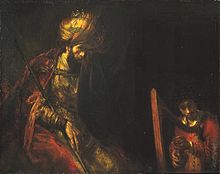
David and King Saul, Rembrandt

David and King Saul, Rembrandt

 So Samuel reported all the words of the LORD to the people who were asking him for a king. He said, “These will be the ways of the king who will reign over you: he will take your sons and appoint them to his chariots and to be his horsemen, and to run before his chariots; and he will appoint for himself commanders of thousands and commanders of fifties, and some to plow his ground and to reap his harvest, and to make his implements of war and the equipment of his chariots. He will take your daughters to be perfumers and cooks and bakers. He will take the best of your fields and vineyards and olive orchards and give them to his courtiers. He will take one-tenth of your grain and of your vineyards and give it to his officers and his courtiers. He will take your male and female slaves, and the best of your cattle and donkeys, and put them to his work. He will take one-tenth of your flocks, and you shall be his slaves. And in that day you will cry out because of your king, whom you have chosen for yourselves; but the LORD will not answer you in that day.” 1 Samuel 8.10-18


At roughly 1,020 BCE a decisive change takes place and Israel enters the time of monarchy.  Power becomes consolidated briefly under King Saul.  Two men, King Saul and Samuel, whose title before had been that of a judge but functioned as a mouthpiece for God at this point, hold the religious and political authority.  Israel begins to act as a powerful actor in the region, constantly moving from one conflict to another, but internal conflict emerges when David emerges on the scene.  Without getting bogged down in the story or trying to parse out what happened historically  by 1000 David would unify his power as king and Israel became for a brief shining moment a power player on the world stage, Jerusalem becomes the capitol, and then perhaps decisively for this era the temple is established under Solomon.   Especially for the Southern Kingdom of Judah this is decisive because the monarchy and the temple become linked as the dominant secular/religious authority. There is a prophetic voice within that critiques the monarchy and temple, but for the most part the people give up a portion of their freedom for the relative security, power and identity of being a part of the unified kingdom of Israel.  That is not to say that family, clan and tribe have lost their power or authority, but that the people become much more linked to the kings and temple than at any previous point in their history.

This is probably a good point for a fun interlude, it is hard for us to imagine being bound in systems where our autonomy is defined so externally.  We don’t have any experience of a monarchical system and so our reaction might be somewhat like the peasants in this scene from Monty Python and the Holy Grail.  Even a romanticized king when we look from our perspective seems like a tyranny or despot.

Even though King David is often looked upon romantically like the King Arthur of legend, one of the incredible things is that the recorded memory of David includes many ugly situations, many family struggles, many times where he is at odds with the prophetic voice of the time.  The whole Bathsheba and Uriah episode (2 Samuel 10-12), incest within the royal family (2 Samuel 13) and eventually the usurpation of the throne by his son Absalom (2 Samuel 15-19) as well as other internal rebellions are a part of David’s roughly forty years of consolidated rule.  Even though the King amasses incredible authority previously unattainable in anyone’s imagination the constant warfare and internal struggles begin to wear on the people.  By the time Solomon, David’s son, ascends to the throne it is a relatively peaceful time but the energy is directed internally on large building projects, the temple, but also many houses and palaces for Solomon and his entourage. The temple becomes, at least for a large group of people, the central focus of worship, and yet again just like with the idea of consolidating power with a king there is a large amount of space dedicated to the critique of the temple

 King Solomon conscripted forced labor out of all Israel; the levy numbered thirty thousand men. He sent them to the Lebanon, ten thousand a month in shifts; they would be a month in the Lebanon and two months at home; Adoniram was in charge of the forced labor. Solomon also had seventy thousand laborers and eighty thousand stonecutters in the hill country, besides Solomon’s three thousand three hundred supervisors who were over the work, having charge of the people who did the work. At the king’s command, they quarried out great, costly stones in order to lay the foundation of the house with dressed stones. So Solomon’s builders and Hiram’s builders and the Gebalites did the stonecutting and prepared the timber and the stone to build the house.  1 Kings 5.13-18 NRSV

This is a huge commitment of people and resources which are directed internally.  In fact it is such a strain that immediately upon Solomon’s death when Rehoboam takes power the people come and plead for relief:

Your father made our yoke heavy.  Now therefore lighten the hard service of your father and his heavy yoke that he placed upon us and we will serve you. 1 Kings 12.4 NRSV

To which the narrative has Rehoboam reply three days later in our language, ‘you ain’t seen nothing yet, you think my father made things hard on you?  Well prepare to be screwed!’ Most translations clean this up significantly…but the little thing that is thicker than his father’s loins is probably not a finger (see 1 Kings 12: 6-15 particularly v.10) Things are not nearly as clean in the Bible as we sometimes want to make them.  The people are offended, the kingdom splits apart and now there are two kings, two places of worship, a prophetic voice that continues to grow louder…but even with this prophetic voice within the Kingdom of Judah in the South and the Kingdom of Israel in the North growing stronger the fate of both nations is linked to the actions of kings and the worship at the temple in Judah and the worship at various sites in the North.  Particularly for the Southern Kingdom of Judah, so long as there is a Davidic king and the Temple who they are as the people of God seems secure.  Yet this too will change….

purple rose 01 by picsofflowers.blogspot.com