Tag Archives: Old Testament

God the Wounded Lover: Jeremiah 4: 1-4

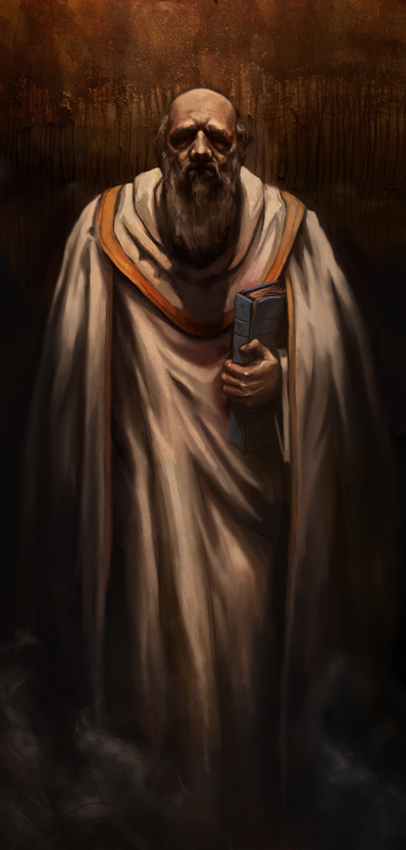
The Prophet Jeremiah by Michelangelo

The Prophet Jeremiah by Michelangelo

Jeremiah 4: 1-4

If you return, O Israel, says the LORD,
                if you return to me,
 if you remove your abominations from my presence,
 and do not waver,
 2 and if you swear, “As the LORD lives!”
 in truth, in justice, and in uprightness,
 then nations shall be blessed by him,
and by him they shall boast.
 3 For thus says the LORD to the people of Judah
 and to the inhabitants of Jerusalem:
 Break up your fallow ground,
 and do not sow among thorns.
 4 Circumcise yourselves to the LORD,
 remove the foreskin of your hearts,
 O people of Judah and inhabitants of Jerusalem,
or else my wrath will go forth like fire,
 and burn with no one to quench it,
 because of the evil of your doings.
 

One of the gifts of having been through a divorce that I did not want or seek, that I did everything in my power to prevent is being able to resonate with the emotions of the God portrayed in Jeremiah. A God who is wrestling with a feeling of absolute betrayal, and yet still has deep feelings for the beloved one. The desire is there to start again, to do everything within their power to rebuild the relationship. Everything, that is, except force the other party to remain within the relationship with them. Yet if the relationship is to be reconciled it requires faithfulness and it requires the ending of the affairs that created the separation in the first place.

I am writing this during the season of lent (often there is a significant lag between when I write something and when I publish it as is here apparent), preparing for Holy week, and one of the traditional services for Good Friday includes a long series of solemn reproaches that I think capture some of the emotion of this part of Jeremiah:

O my people, O my church, what have I done to you?
How have I offended you? Answer me.
I led you out of slavery into freedom,
And delivered you through the waters of rebirth,
But you have prepared a cross for your Savior….
O my people, O my church, what more could I have done for you?
Answer me.
I struck down your enemies, but you struck my head with a reed;
I gave you peace, but you draw the sword in my name,
And you have prepared a cross for your Savior
(Evangelical Lutheran Worship Leaders Edition, 639ff)

Even against the wisdom of Torah (the law) God still yearns for the relationship with his covenant people, and if it can be resumed it will have to be in a new type of relationship. God is not like King Ahasuerus in Esther who is bound by royal decrees and laws, no God is more like Joseph in Matthew’s gospel, portraying a different kind of righteousness. A legalistic understanding of righteousness or a punitive understanding would say here is the rule, the law that was broken and here is the punishment that this infraction dictates. Every action has a consequence, every offence has a punishment and reconciliation rests in the hands of the one who offended. But I use the example of Joseph, because he was a righteous man as Matthew tells the story, but rather than look for justice when he learns of Mary’s pregnancy he looks for mercy. In Jeremiah and in the New Testament we find a God for whom relationships are more important than rules, who desires and works for the return of the departed even while they are still turned away. Who desires nothing more than to resume the relationship as it was meant to be.

Perhaps God is naïve in the nature of relationships among humans, perhaps God is an idealistic fool—or perhaps God loves and that love is greater than the wound that the brokenness has caused.

purple rose 01 by picsofflowers.blogspot.com

Rhetorical Overkill: Jeremiah 2: 20-37

Apophysis-Betrayal (1footonthedawn at deviantart.com)

Apophysis-Betrayal (1footonthedawn at deviantart.com)

Jeremiah 2: 20-37
20 For long ago you broke your yoke
and burst your bonds, and you said, “I will not serve!”
On every high hill and under every green tree
you sprawled and played the whore.
21 Yet I planted you as a choice vine, from the purest stock.
How then did you turn degenerate and become a wild vine?
22 Though you wash yourself with lye and use much soap,
the stain of your guilt is still before me,
says the Lord GOD.
23 How can you say, “I am not defiled, I have not gone after the Baals”?
Look at your way in the valley; know what you have done—
a restive young camel interlacing her tracks,
24 a wild ass at home in the wilderness, in her heat sniffing the wind!
Who can restrain her lust?
None who seek her need weary themselves; in her month they will find her.
25 Keep your feet from going unshod and your throat from thirst.
But you said, “It is hopeless, for I have loved strangers,
and after them I will go.”
26 As a thief is shamed when caught, so the house of Israel shall be shamed—
they, their kings, their officials, their priests, and their prophets,
27 who say to a tree, “You are my father,” and to a stone, “You gave me birth.”
For they have turned their backs to me, and not their faces.
But in the time of their trouble they say,
“Come and save us!”
28 But where are your gods that you made for yourself?
Let them come, if they can save you, in your time of trouble;
for you have as many gods as you have towns, O Judah.
29 Why do you complain against me?
You have all rebelled against me, says the LORD.
30 In vain I have struck down your children; they accepted no correction.
Your own sword devoured your prophets like a ravening lion.
31 And you, O generation, behold the word of the LORD!
Have I been a wilderness to Israel, or a land of thick darkness?
Why then do my people say, “We are free, we will come to you no more”?
32 Can a girl forget her ornaments, or a bride her attire?
Yet my people have forgotten me, days without number.
33 How well you direct your course to seek lovers!
So that even to wicked women you have taught your ways.
34 Also on your skirts is found the lifeblood of the innocent poor,
though you did not catch them breaking in.
Yet in spite of all these things
35 you say, “I am innocent; surely his anger has turned from me.”
Now I am bringing you to judgment for saying, “I have not sinned.”
36 How lightly you gad about, changing your ways!
You shall be put to shame by Egypt as you were put to shame by Assyria.
37 From there also you will come away with your hands on your head;
for the LORD has rejected those in whom you trust, and you will not prosper through them.

One of the things you will see if you spend much time with the prophets is what I and others have called rhetorical overkill. Not only is the person unfaithful, but they are having sex under every green tree, they are like a wild ass in heat, etc….that is the language and it is what it is. You can try to explain it away, you can say it is a metaphor, you might find it offensive, it might work differently in different cultures, but it is using figurative language to express the depth of pain of the betrayed by the betrayer. In this case God is the betrayed one and out of the language of God’s pain comes this set of metaphors shifting from sexual to agricultural and back to sexual to cultic and legal and back to sexual. This is the language of a person in pain trying to make sense of how their view of a person could be so different from the reality. What is the offense that caused this level of pain and disillusionment? Two are lifted up in this section: idolatry and injustice.
Idolatry may constitute a whole range of things from people at this time going out and doing practices which honor other gods, conducting worship of other nations gods, conducting practices which are not approved by God or they may not be worshipping God correctly (away from the temple in Jerusalem or it may be worship without justice). Somehow there has been a distortion of the vision that God had for God’s people. Injustice is lifted up when the prophet says : 34 Also on your skirts is found the lifeblood of the innocent poor, though you did not catch them breaking in. Justice in the ancient world, even more than in the modern world, often depended upon one’s social standing, wealth and power more than any modern understanding of guilt or innocence, and yet this was not the society that the Lord envisioned.
The vine and vineyard image is one that recurs several times throughout scriptures because the vine was one of the most important and common agricultural images. In Isaiah 5, Isaiah morns of a vineyard that the vineyard’s owner did everything for and yet it does not produce, in Mark 12: 1-10 and parallels the image is once again brought up with a vineyard and unfaithful tenants and here in Jeremiah it is a choice vine which goes wild. People would have understood the agricultural imagery because this was an agrarian society.
One additional thing to consider is that we have a theological interpretation of reality going on, which we should expect from the prophets. This is not the world of power politics which the kings and princes are dealing with, they are trying to appease Assyria and Egypt, the powers that could conceivably invade and conquer Judah and they are attempting to maintain security through political alliances, military power and economic policy. Judah is a very desirable piece of property because it is at the trade crossroads between Assyria, Babylon, Persian and the far East and Egypt and Northern Africa and as N.T. Wright notes over the course of its history of 4,000 years on average every 40 years another army will march in or through it. (Wright 1992, 3) The prophets, kings and people are all looking at different strategies of survival and security. Security becomes the most important thing, more important than justice, more important than God, more important than freedom.
Security is perhaps the greatest idol that many in America face. We want to ensure that we have enough for ourselves at the exclusion of a societal concern for others and this runs headlong in contrast with the prophet’s and by extension God’s vision of shalom and justice. While many would read these words and be immediately drawn to condemn personal immorality as a method of societal corruption the prophet reverses this societal corruption, the loss of justice and trust in God’s way, is pointed to using a rhetorically inflated image of personal immorality where the woman in this image represents Judah.

purple rose 01 by picsofflowers.blogspot.com

The Wounded God: Jeremiah 2: 1-19

Apophysis-Betrayal (1footonthedawn at deviantart.com)

Apophysis-Betrayal (1footonthedawn at deviantart.com)

Jeremiah 2: 1-19

The word of the LORD came to me, saying: 2 Go and proclaim in the hearing of Jerusalem, Thus says the LORD:
I remember the devotion of your youth,
your love as a bride, how you followed me in the wilderness,
in a land not sown.
3 Israel was holy to the LORD,
the first fruits of his harvest.
All who ate of it were held guilty;
disaster came upon them,
says the LORD.
4 Hear the word of the LORD, O house of Jacob, and all the families of the house of Israel. 5 Thus says the LORD:
What wrong did your ancestors find in me
that they went far from me,
and went after worthless things, and became worthless themselves?
6 They did not say, “Where is the LORD
who brought us up from the land of Egypt,
who led us in the wilderness,
in a land of deserts and pits,
in a land of drought and deep darkness,
in a land that no one passes through,
where no one lives?”
7 I brought you into a plentiful land
to eat its fruits and its good things.
But when you entered you defiled my land,
and made my heritage an abomination.
8 The priests did not say, “Where is the LORD?”
Those who handle the law did not know me;
the rulers transgressed against me;
the prophets prophesied by Baal,
and went after things that do not profit.
9 Therefore once more I accuse you,
says the LORD,
and I accuse your children’s children.
10 Cross to the coasts of Cyprus and look,
send to Kedar and examine with care;
see if there has ever been such a thing.
11 Has a nation changed its gods,
even though they are no gods?
But my people have changed their glory
for something that does not profit.
12 Be appalled, O heavens, at this,
be shocked, be utterly desolate,
says the LORD,
13 for my people have committed two evils:
they have forsaken me,
the fountain of living water,
and dug out cisterns for themselves,
cracked cisterns
that can hold no water.
14 Is Israel a slave? Is he a homeborn servant?
Why then has he become plunder?
15 The lions have roared against him,
they have roared loudly.
They have made his land a waste;
his cities are in ruins, without inhabitant.
16 Moreover, the people of Memphis and Tahpanhes
have broken the crown of your head.
17 Have you not brought this upon yourself
by forsaking the LORD your God,
while he led you in the way?
18 What then do you gain by going to Egypt,
to drink the waters of the Nile?
Or what do you gain by going to Assyria,
to drink the waters of the Euphrates?
19 Your wickedness will punish you,
and your apostasies will convict you.
Know and see that it is evil and bitter
for you to forsake the LORD your God;
the fear of me is not in you,
says the Lord GOD of hosts.

Can it hurt to be God? For many people their image of God is shaped more by stoicism and philosophy than the picture of God we find in the Bible. This is not a new thing, it was a consequence of the church entering into the Greek speaking and thinking world right at the very beginning of its life where in Greek thought (where stoicism comes from) the ideal person (and thus God) is not swayed by emotions, but is instead logical and rational. God being the unmoved mover who created the world would not be motivated by pleasure, joy or even love and conversely would not get angry, hurt, wounded, or really feel much of anything. Ultimately this is the picture of an apathetic God (apathy is the opposite of pathos, the ability to suffer, a-pathos) but it in no way reflects the God we encounter anywhere in scriptures. I remember Duane Larson, who was president at Wartburg Theological Seminary while I was there, stating, “We have a pathetic God”, we have a God who can feel, who does suffer and so yes, it can hurt to be God. An openness to the pain of rejection and loss are the risks of love.
Now I also approach this from the perspective of having gone through a divorce, and so I hear very clearly in the midst of this the language of a heartbroken God trying to make sense of a relationship that is broken. “What did I do wrong? I gave you everything you asked for…I did this, I did that, look around, what makes you think this an acceptable way to treat your partner…” There is a romanticizing of the past, “I remember the devotion of your youth, your love as a bride, how you followed me in the wilderness…” Really, is this the same people who remember this journey in Exodus, Leviticus, Numbers and Deuteronomy…at least the way that memory is recorded they are hardly paragons of faithfulness and trust. It is like the person who exhibits all types of relational issues during dating and early in a marriage and then when the relationship is broken the other partner looks back and overlooks all those red flags and initially remembers that time better than what it was. God in effect says, “I provided for you, I protected you, I gave you the place you always wanted, what more could I give?” To quote Jeremiah “What wrong did your ancestors find in me that they went far from me?” (vs. 5). The priests, interpreters of the law and the prophets, those who are charged with honoring and pointing to this relationship have turned away as well. The honeymoon is over and the relationship is broken, distorted and in serious jeopardy. God is still reaching out, but Judah and Jerusalem are not.
God tells them go to the east (Kedar) and the west (Cyprus) and you won’t find others doing this, even when their partners aren’t able to give the things that God has given. They don’t change their gods, but Israel has. They have also looked to the powers of the day: Assyria and Egypt-they look at the power in the North and the power in the South and through playing politics they try to ensure their survival. In one sense it is a very rational move, to negotiate with the superpowers of the day who Judah finds itself geographically caught between. But they have put their trust in the way things are rather than the God who has made new things occur in the past.
Adam C. Welch makes the following suggestion:
There was no cause (for other nations) to forsake such gods, because It involved so little to follow them. …The iron core was that Israel could only have Yahweh of His own terms…Yahwism was no colorless faith which was simply the expression of the people’s pride in itself and its destiny. It laid a curb on men, it had a yoke and bonds. The bonds were those of love, but love’s bonds are the most enduring and the most exacting.
Israel’s central command from Deuteronomy 6:5 “You shall love the Lord your God with all your heart, and with all your soul, and with all your might”perhaps is the most difficult commandment to keep. (Breuggemann 1998, 36)

God’s vision of shalom (harmony and peace) and justice were much different from the world around the people of Judah, and so even though I can easily see myself in the shoes of the people who Jeremiah is addressing, I can also understand the brokenhearted God who longs for this people to return, to come home, to live in the covenant and blessing he desires for them. The road of reconciliation ahead, if it is to happen will be a difficult one, and it will require hard words to get past the devastated feelings. It will take the relationship, as it is, dying if there is to be a chance for rebirth. We will not get there quickly, there is hard work that is required by both partners, but God’s woundedness has left the door open.

purple rose 01 by picsofflowers.blogspot.com

The Calling: Jeremiah 1

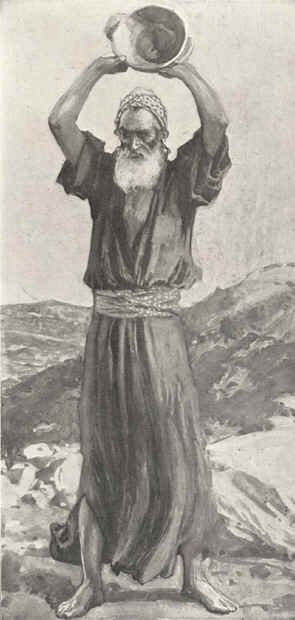
Jeremiah by James Tissot

Jeremiah by James Tissot

Jeremiah 1

   The words of Jeremiah son of Hilkiah, of the priests who were in Anathoth in the land of Benjamin, 2 to whom the word of the LORD came in the days of King Josiah son of Amon of Judah, in the thirteenth year of his reign. 3 It came also in the days of King Jehoiakim son of Josiah of Judah, and until the end of the eleventh year of King Zedekiah son of Josiah of Judah, until the captivity of Jerusalem in the fifth month.
 4 Now the word of the LORD came to me saying,
 5 “Before I formed you in the womb I knew you,
and before you were born I consecrated you;
I appointed you a prophet to the nations.”
 6    Then I said, “Ah, Lord GOD! Truly I do not know how to speak, for I am only a boy.” 7 But the LORD said to me,
“Do not say, ‘I am only a boy’;
for you shall go to all to whom I send you,
and you shall speak whatever I command you.
8 Do not be afraid of them,
for I am with you to deliver you, says the LORD.”
 9 Then the LORD put out his hand and touched my mouth; and the LORD said to me, “Now I have put my words in your mouth.
10 See, today I appoint you over nations and over kingdoms,
to pluck up and to pull down,
to destroy and to overthrow,
to build and to plant.”
     11 The word of the LORD came to me, saying, “Jeremiah, what do you see?” And I said, “I see a branch of an almond tree.” 12 Then the LORD said to me, “You have seen well, for I am watching over my word to perform it.” 13 The word of the LORD came to me a second time, saying, “What do you see?” And I said, “I see a boiling pot, tilted away from the north.”
    14 Then the LORD said to me: Out of the north disaster shall break out on all the inhabitants of the land.15 For now I am calling all the tribes of the kingdoms of the north, says the LORD; and they shall come and all of them shall set their thrones at the entrance of the gates of Jerusalem, against all its surrounding walls and against all the cities of Judah. 16 And I will utter my judgments against them, for all their wickedness in forsaking me; they have made offerings to other gods, and worshiped the works of their own hands. 17 But you, gird up your loins; stand up and tell them everything that I command you. Do not break down before them, or I will break you before them. 18 And I for my part have made you today a fortified city, an iron pillar, and a bronze wall, against the whole land– against the kings of Judah, its princes, its priests, and the people of the land. 19 They will fight against you; but they shall not prevail against you, for I am with you, says the LORD, to deliver you.

Why would anyone want to be a prophet? I know, I’ve heard the young rebels I know who want to ‘speak truth to power’ but the reality is that the prophet is not an easy role. To use Richard Lischer’s words, “The prophet’s voice is usually about an octave too high for the rest of society.” (Lischer 2005, 23) And while there may be moments of anger for the prophet they are caught between God and a people and often they feel abused by both sides. They are the messengers of God at a time when it is all to common to shoot the messenger, they are the bearers of the news that nobody wants to hear. They love their people dearly even when they are abused by them, and while there may be moments of anger, that is not their dominant emotion. Following Lischer again: “…the emotion most characteristic of the prophet is not anger but sorrow. He tells the truth but rarely in bitterness of spirit and never with contempt for the Other. His truth-telling is pervaded by a sense of tragedy.” (Lischer 2005, 161) As we journey with Jeremiah we will experience that tragedy, the sorrow, the frustration and the honest emotions he feels as he is caught between God and the people of God.

Let us begin with his calling: Jeremiah starts out as a priest, one of the literate elite in the time leading up to crisis. He will serve for a prophet as a long time, and will suffer much and it is not a life he chose, but rather a life that was chosen for him:

4 Now the word of the LORD came to me saying,
 5 “Before I formed you in the womb I knew you,
and before you were born I consecrated you;
I appointed you a prophet to the nations.”

God is the actor, Jeremiah is acted upon. God makes the choice, God has made Jeremiah who he is for this role, to be  a mouthpiece. Jeremiah doesn’t ask for this, doesn’t want this and like every other prophet I can think of tries to talk God out of this: I don’t know how to speak, for I am only a boy. Like Moses who didn’t know how to speak, and he is not the type of youth who thinks he knows it all but rather is all too aware of his unworthiness and weaknesses-and yet he is chosen and he begins the road that is laid out before him.

Back in the 1980s one of my favorite bands was a heavy metal group, Queensrÿche, and one of their songs The Road to Madness is perhaps helpful at this point:

Most of this is memory now
I’ve gone too far to turn back now
I’m not quite what I thought I was but
Then again I’m maybe more
The blood-words promised, I’ve spoken
Releasing the names from the circle
Maybe I can leave here now and, o
Transcend the boundaries

For now I’m standing here
I’m awaiting this grand transition
The future is but past forgotten
On the road to madness

Times measure rusts as it crawls
I see its face in the looking glass – stop
This screaming laughter hides, the pain of its reality
Black, the door was locked I opened
And now I’ve paid that price ten-fold over
Knowledge – was it worth such torment, oh
To see the far side of shadow

And still I’m standing here
I’m awaiting this grand transition
I’m a fool in search of wisdom
And I’m on the road to madness
Yes, I’m on the road to madness

I’m awaiting endlessly
Pounding rhythms echo me
Won’t you take me somewhere far beyond the void

And still I’m standing here
I’m awaiting this grand transition
Maybe one day, oh I’ll meet you, and we’ll
Walk the roads to madness
Yes, we’re on the road to madness

Oh, I think they’ve come to take me
I hear the voice, but there’s no-one to see
I can’t scream, too late it’s time

As with this song, the actual meaning of the words may not be as important as what they convey-the sense of having and seeing things in a way that everyone else sees them opens the one seeing to a whole new world of pain, it is almost like Plato’s famous story in the Republic of the Cave where the person who has seen the world in a new way and returns home only to be apprehended and killed by those who are still in darkness.  Being God’s mouthpiece is going to come at a high personal price for Jeremiah.

God has chosen, the prophet will pluck up and pull down, destroy and overthrow, build and plant. The prophet will bear the news that nobody wants to hear and he doesn’t have the choice to throw up his hands and give up. In the words of the song, the door that is locked is opened (and not by the prophet but from the other side, from God) and the prophet will pay the price ten fold over. Who the prophet is, why he was chosen is based on who God formed him to be—God has chosen his instrument for a difficult task and will continue to be with Jeremiah, but Jeremiah never has the ability to give up for it is either withstand priests and princes or be crushed by God?
But who is this God who puts prophets in such a difficult circumstance? Why make the chosen ones suffer so? And yet it is the way of the elect. A person is set aside not for their own benefit but for the benefit of others. The way we naturally want to think of election is that it is what makes a person separate and perhaps able to look down their righteous noses at others, election makes me or us special…but in scripture election, setting apart is always for the sake of the other. Israel is set apart to be a blessing to the nations (the world), the prophets are set apart to be a witness to either the covenant people or those outside the covenant. They are a part of what God is doing and the world, and it is not always easy. The suffer and grieve for those who will not or can not hear, they bear the weight of seeing all that is wrong even when they may not be able to fix it. They may indeed be close to the road to madness, and yet they are there not for their own sake, not for some secret knowledge…they are there because ultimately God loves God’s people (and by extension the world) so much that God will not let go and so God allows those who are drawn closest to suffer on their behalf so that they might see, know and return.

The world of Jeremiah, like our world is not as it should be. Most people accommodate and make their way as best they can with little reference to God or any other source of meaning outside what benefits themselves. The prophets, like Jeremiah, are drawn into the relationship with God and into God’s desire to re-establish the relationship and the idea of shalom (God’s peace or harmony in the world). They are drawn to the dream and they see the nightmare that most of the rest of us have grown accustomed to. It is like us watching a dystopic movie, like The Hunger Games for example, where reality is so dark and yet when we are honest we can see parts of our own society mirrored in that experience. In a very real sense, when everyone else sees things as running along OK the prophet will see through a dystopic lense of all the things that are really wrong and it is only in the midst of crisis that the prophetic hope of what a utopia might look like emerges and gives light and hope for the hard work of building that society of shalom and reconciliation. We are journeying towards the light, but we have a long way to go before the dawn and the road ahead will get darker on the prophet’s road.

purple rose 01 by picsofflowers.blogspot.com

A Brief Forward to the Prophet Jeremiah

The Prophet (nogard86 at deviantart.com)

The Prophet (nogard86 at deviantart.com)

Jeremiah is one of the more challenging books to approach, both for its content, its length, the fact that it is not organized linearly on a specific timeline but rather skips and jumps to different times and places, and the general unfamiliarity of most people with the context that the prophet (and most prophets are written in). Prophets for many people either are considered fortune tellers or their use is limited to foretelling the birth and ministry of Christ in the New Testament, but that is not how even the authors of the New Testament would have seen the prophets. The prophets were:

-re-interpreters of the story and tradition of God’s relation with the Jewish people. Scripture was not fixed at this point, and even scripture is present would be mediated through  the priestly and kingly offices (since they would be the literate people- there is no general interpretation of scripture by the majority of the population at this point in history, nor would there be for millennia)

-A voice that often spoke in sharp contrast to the priests and kings of their time. Prophets often deal with not only religious but concrete economic and political injustices. It is a mistake to assume that we can separate religion from political power in the ancient world, they are linked. The prophets become the counter-voice that often (although not always) speaks against power and they often are persecuted for their words and actions.

-The actions and words of the prophets may seem strange to us, and I’m sure that even in their time they were looked upon as abnormal, but they also were seen as having a role. Many prophets came from the priestly side (although not all, for example Amos is not a priest) but they in taking up the call of the prophet may lose the safety of the priestly role they are born into.

Jeremiah is born and does his ministry in a time leading up to the defining crisis of this point of the Jewish story, the Babylonian exile. For a better understanding of that time you may want to look at  The Place of Authority A Brief History Part 3a: The Exile, The Crisis of Collapse. Which I wrote as part of a different project but which briefly addresses this part of the story.  Being a prophet who is pronouncing the impending destruction of the way that things are is not an easy calling. But enough of that for the moment, let’s approach Jeremiah and walk with the prophet through the destruction and the hope and examine the God who he encounters throughout that journey. This is a long journey, since Jeremiah is 52 chapters long-many of them quite lengthy. I actually wrote the first three chapters prior to the posts on Haggai and Esther and rather than rewrite them, I have left them largely intact (hence they cover larger pieces, sometimes entire chapters in a single post) but since I know this is a long journey I have continued to move forward rather than going back and starting over again. I will attempt to do at least one chapter per week in addition to my other posts (due to the length of several chapters that may be all there is space for).

For me this is a discipline, it is a way of training myself to listen and see better. If you are reading this I hope you are able to benefit from this journey with Jeremiah through the darkness and towards hope. There will be times when the darkness seems overwhelming in this book (it is a book set at the ending of the world that the prophet knew, the ending of the kingdoms of Israel and Judah and the taking of the people into exile) and yet in the midst of the darkness, hope will come forth.

purple rose 01 by picsofflowers.blogspot.com

The Final Chapter: Esther 10: 1-3

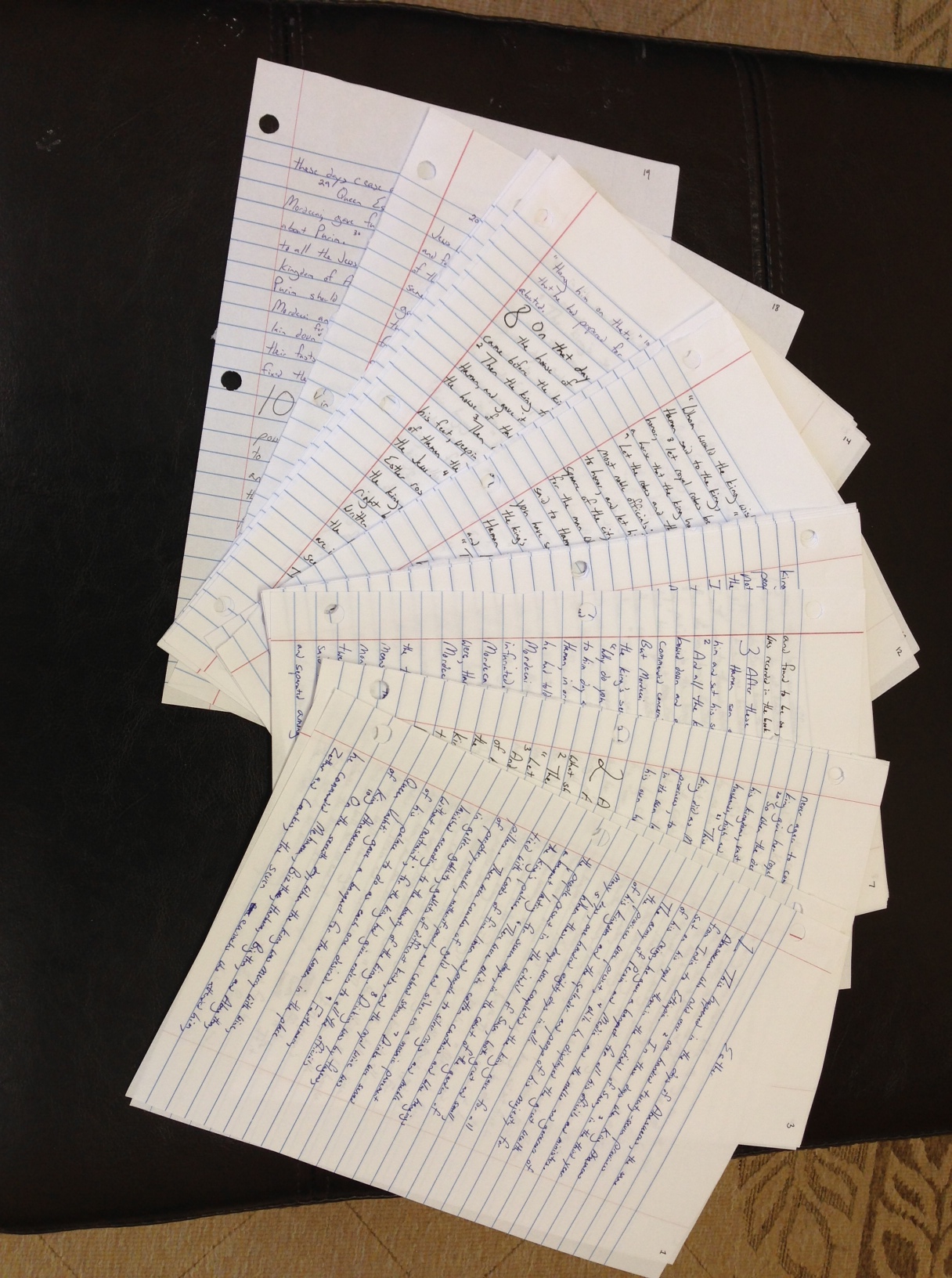
Esther Handwritten

This is the book of Esther written out in my hand, it spans 19 pages. This has been a part of my discipline as I write these posts.

Esther 10: 1-3

King Ahasuerus laid tribute on the land and on the islands of the sea. 2 All the acts of his power and might, and the full account of the high honor of Mordecai, to which the king advanced him, are they not written in the annals of the kings of Media and Persia? 3 For Mordecai the Jew was next in rank to King Ahasuerus, and he was powerful among the Jews and popular with his many kindred, for he sought the good of his people and interceded for the welfare of all his descendants.

                 And they all lived happily ever after, isn’t that how we want the story to end? For Mordecai he is afforded power and position and honor, and it is great for him and his people and his kindred.  As with the previous chapters, many scholars will argue these are additions to what the original story was. Without going into a lot of detail for Esther there are three primary ancient documents: The Masoretic Text (MT) written in Hebrew late 4th or early 3rd Century BCE, the Alpha Text (AT) which is a greek translation of the Hebrew Text (which is roughly 20% shorter than the MT) and the Septuagint which is also a Greek translation used by most early church fathers and probably most of the writers of the New Testament which comes from the Second century BCE. There are differences in each of the texts, with the Septuagint adding quite a lot (if you look in the Apocrypha in most Bibles that contain them, this is where The Additions to Esther come from). Most translations of the Bible go back to the MT, which contains chapters 9 and 10, while the AT does not. Anyways, it really matters little since the text most people read is the translation of the MT from Hebrew into English (or whatever your favorite language is) and this is the communal memory of the book.

The book end on the note of living happily ever after, and that is where we will leave it. I don’t feel a strong desire to spend any time with the Additions to Esther, but Sidnie-White Crawford, whose commentary in The New Interpreter’s Bible I’ve been reading along with as a write does cover this in depth. (Elizabeth Acthemeier, et.al 1999, 3:945-972)

If you have followed through this journey with me, I hope you have enjoyed it and it has provoked thought. Next we are heading into one of the longer books and more challenging books of the Bible, Jeremiah. I am doing this because it is one of the books I don’t know well, like Haggai and Esther, and I want to know more. If you join me on the journey perhaps together we shall see where it leads us.

purple rose 01 by picsofflowers.blogspot.com

The Practice Forms the Faith: Esther 9: 20-32

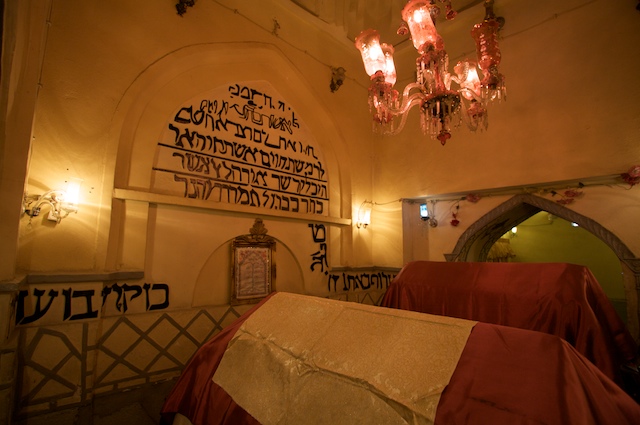
Tomb of Esther and Mordecai, Hamadan, Iran

Tomb of Esther and Mordecai, Hamadan, Iran

Esther 9: 20-32

                20 Mordecai recorded these things, and sent letters to all the Jews who were in all the provinces of King Ahasuerus, both near and far, 21 enjoining them that they should keep the fourteenth day of the month Adar and also the fifteenth day of the same month, year by year, 22 as the days on which the Jews gained relief from their enemies, and as the month that had been turned for them from sorrow into gladness and from mourning into a holiday; that they should make them days of feasting and gladness, days for sending gifts of food to one another and presents to the poor. 23 So the Jews adopted as a custom what they had begun to do, as Mordecai had written to them.

 24 Haman son of Hammedatha the Agagite, the enemy of all the Jews, had plotted against the Jews to destroy them, and had cast Pur– that is “the lot”– to crush and destroy them; 25 but when Esther came before the king, he gave orders in writing that the wicked plot that he had devised against the Jews should come upon his own head, and that he and his sons should be hanged on the gallows. 26 Therefore these days are called Purim, from the word Pur. Thus because of all that was written in this letter, and of what they had faced in this matter, and of what had happened to them, 27 the Jews established and accepted as a custom for themselves and their descendants and all who joined them, that without fail they would continue to observe these two days every year, as it was written and at the time appointed. 28 These days should be remembered and kept throughout every generation, in every family, province, and city; and these days of Purim should never fall into disuse among the Jews, nor should the commemoration of these days cease among their descendants.

 29 Queen Esther daughter of Abihail, along with the Jew Mordecai, gave full written authority, confirming this second letter about Purim. 30 Letters were sent wishing peace and security to all the Jews, to the one hundred twenty-seven provinces of the kingdom of Ahasuerus, 31 and giving orders that these days of Purim should be observed at their appointed seasons, as the Jew Mordecai and Queen Esther enjoined on the Jews, just as they had laid down for themselves and for their descendants regulations concerning their fasts and their lamentations. 32 The command of Queen Esther fixed these practices of Purim, and it was recorded in writing.

Paschasius Radbertus (785-865), a medieval Catholic theologian gave voice to an ancient principle of how doctrine is sometimes formed by the practices of prayer and worship when he said, “the rule of prayer should lay down the rule of faith.” (Pelikan 1978, 159) Our practice informs what we believe, and within the practices of Purim, and the feasting and celebrating combined with the reading of Esther. Purim has some of the feasting and hilarity of Mardi Gras and people often dress up as Esther, Mordecai, Ahasuerus, etc. and this practice shapes the way the Jewish people approach the story in a way that Christians do not have. Esther is a beloved story as a part of this celebration, and so it is not surprising that we have in the closure two different  commands, one from Mordecai and one from Esther that establish the festival. Which came first, the chicken or the egg? You can debate back and forth does the edict establish the festival or does the edict give justification for a practice that was already ongoing.

At one point in my life, I took myself and the world way too seriously, and the life of faith is often looked upon as one of austerity, seriousness and moderation-but that has little to do with the Bible or Jesus. The world of the bible is a world of festivals and feasts, of celebrations and parties, of people enjoying participating and being a part of the story. My personal opinion is we celebrate too little. Mardi Gras for example evolved as an act of rebellion against being continually told by priests (Mardi Gras evolved in predominantly Catholic areas) of all the things they were to give up and to avoid having fun. And yet both of the primary festivals of the Christian church (Christmas and Easter) have evolved to where there is an element of feasting and celebration-but this is done with family and not with any connection to the story of the day. One of the challenges for the church as it enters the twenty first century perhaps we need to learn to celebrate and feast, to begin to live out of abundance rather than scarcity. Now one critical difference is the Christian church, at least in the United States, tells its story from a place of relative privilege, we are not (predominantly) a marginalized group. Many of our members occupy places of authority throughout the society, unlike the experience of the Jewish people throughout much of their history. Nonetheless, especially in a postmodern world which places a high value on story, we would do well to consider how our practices could be informing our faith and how we too can use these feasts throughout the year to do just that: to feast and to celebrate.

purple rose 01 by picsofflowers.blogspot.com

The Horror Conclude: Esther 9: 11-19

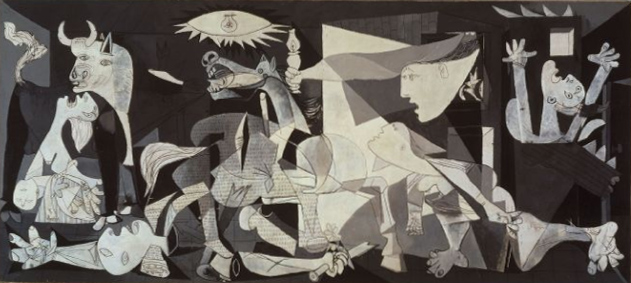
Pablo Picasso, Guernica

Pablo Picasso, Guernica

Esther 9:11-19

                11 That very day the number of those killed in the citadel of Susa was reported to the king. 12 The king said to Queen Esther, “In the citadel of Susa the Jews have killed five hundred people and also the ten sons of Haman. What have they done in the rest of the king’s provinces? Now what is your petition? It shall be granted you. And what further is your request? It shall be fulfilled.” 13 Esther said, “If it pleases the king, let the Jews who are in Susa be allowed tomorrow also to do according to this day’s edict, and let the ten sons of Haman be hanged on the gallows.” 14 So the king commanded this to be done; a decree was issued in Susa, and the ten sons of Haman were hanged. 15 The Jews who were in Susa gathered also on the fourteenth day of the month of Adar and they killed three hundred persons in Susa; but they did not touch the plunder.

 16 Now the other Jews who were in the king’s provinces also gathered to defend their lives, and gained relief from their enemies, and killed seventy-five thousand of those who hated them; but they laid no hands on the plunder. 17 This was on the thirteenth day of the month of Adar, and on the fourteenth day they rested and made that a day of feasting and gladness. 18 But the Jews who were in Susa gathered on the thirteenth day and on the fourteenth, and rested on the fifteenth day, making that a day of feasting and gladness. 19 Therefore the Jews of the villages, who live in the open towns, hold the fourteenth day of the month of Adar as a day for gladness and feasting, a holiday on which they send gifts of food to one another.

The bloodthirsty tone continues, and again this is probably (hopefully) hyperbole, for if it is not then we have an event of horrific proportions-over seventy five thousand dead and the Emperor merely shrugs his shoulders and allows it to continue. Even though the population of the United States is many times the population of the Persian empire at its height, imagine if in one day even a thousand people lost their lives, or by way of comparison-the bloodiest days on American soil were the days where the Union and Confederate army battled at Gettysburg (over 3 days 46,286 people died). This hopefully puts some scale to the type of numbers that are thrown into the story here. Some scholars suggest the last couple chapters are additions to the book of Esther.  Regardless of how and when they become a part of the book, they become a part of the community’s memory. As I’ve mentioned in earlier posts, this probably gave hope to a people who were often the victims of oppression and hatred-it gives them a place where they can vent their frustrations at their powerlessness. A desired striking back, long suppressed may indeed give voice to horrific fantasies of violence. In the presence of their own people they can through stories give vent to the desire for revenge that in public society they could never do without severe reprisal. (Scott 1990, 37-44)

Esther again enters the story, the king continues to give the authority to someone else to make the decisions. Esther’s request for one more day in the city of Susa sounds cold and heartless, and the additional three hundred that die as a result may seem tiny in comparison to the seventy five thousand, but they continue to send a message along with the hanging or impaling of Haman’s sons. They are public demonstrations of power, meant to send a message to anyone who may still harbor the desire to wipe out the Jewish people. Impaling or hanging, like crucifixion in later times, makes a public spectacle of the one’s being executed in this manner and it is also a statement of shame. It dishonors the family, it denies the individual an honorable death-it is a striking statement that Haman and his sons are impaled because of their standing and wealth, it indicates a different culture than the Roman empire when crucifixion was reserved for those who were without status.

The purge comes to an end, and then comes celebration. The story is winding down, the victory is won. The remainder of the story will be codifying the celebration of Purim and lifting up the status of Mordecai and Esther. It has been a long journey through this close of the book, but we are almost there.

purple rose 01 by picsofflowers.blogspot.com

Horror or Celebration in Susa:Esther 9: 1-10

Alfred P Murrah Federal Building after it was bombed in Oklahoma City April 19, 1995

Alfred P Murrah Federal Building after it was bombed in Oklahoma City April 19, 1995

Esther 9: 1-10

Now in the twelfth month, which is the month of Adar, on the thirteenth day, when the king’s command and edict were about to be executed, on the very day when the enemies of the Jews hoped to gain power over them, but which had been changed to a day when the Jews would gain power over their foes, 2 the Jews gathered in their cities throughout all the provinces of King Ahasuerus to lay hands on those who had sought their ruin; and no one could withstand them, because the fear of them had fallen upon all peoples. 3 All the officials of the provinces, the satraps and the governors, and the royal officials were supporting the Jews, because the fear of Mordecai had fallen upon them. 4 For Mordecai was powerful in the king’s house, and his fame spread throughout all the provinces as the man Mordecai grew more and more powerful. 5 So the Jews struck down all their enemies with the sword, slaughtering, and destroying them, and did as they pleased to those who hated them. 6 In the citadel of Susa the Jews killed and destroyed five hundred people. 7 They killed Parshandatha, Dalphon, Aspatha, 8 Poratha, Adalia, Aridatha,9 Parmashta, Arisai, Aridai, Vaizatha,10 the ten sons of Haman son of Hammedatha, the enemy of the Jews; but they did not touch the plunder.

We are at the part of Esther where one has to make a choice on how they will hear this. Many Christians throughout history have come upon this section with distaste, this is certainly one of the reasons Martin Luther didn’t like the book. The slaughter of over five hundred people, an event that would dwarf events like the Oklahoma City Bombing, Sandy Hook Elementary, or Columbine, in fact by percentage of population it would probably rival the loss of life on the September 11th attack on the World Trade Center. If you take the numbers as literal, this is a horrific event (at least if you are not a Jew). In my opinion the numbers are probably hyperbolic, but in either case this is another of those events of violence in the Old Testament that can be difficult to stomach. This is definitely a mindset of retributive justice (you threatened me, so I will do violence to you) that still plays out in wars and genocides even in recent history.

On the other hand, this does reflect a world where anti-Semitism continues to be a real and present force in the lives of Jewish people. This was probably one memory where, instead of being victim, the Jewish people were feared because they actually had power through Mordecai and Esther. Much like Ahasuerus becomes a foil for whatever king they find themselves under and Haman becomes the oppressors they have, this victory probably becomes a counter story in the midst of their lives. When they are weak and powerless they can look back to a time when they were strong.

It is so easy for the oppressed, when given power, to become the oppressor-and even many Christians, who should take Jesus’ teaching on forgiveness and non-violence seriously, have become the worst offenders. One doesn’t need to know much history to pull up events like the Holocaust (a “Christian” nation attempting to wipe out the Jews), Bosnia/Kosovo (Serbs, who are predominantly Christian attempting to wipe our Croats who were predominantly Muslim), or Rwanda (predominantly Christian), or Sudan (Muslim north vs. a Christian south) and the list could go on and on. Violence and death are here to stay with us, and in America we are very sheltered from the horror, we in the past year grieved the events in Sandy Hook and that was a major domestic event for us.

purple rose 01 by picsofflowers.blogspot.com

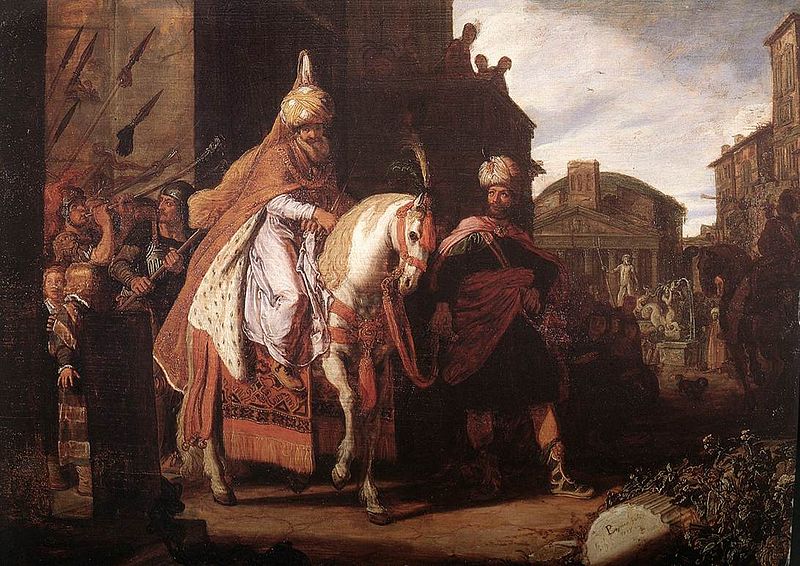
Mordecai’s Rise: Esther 8:15-17

Pieter Lastman, The Triumph of Mordecai (1624)

Pieter Lastman, The Triumph of Mordecai (1624)

Esther 8: 15-17

 15 Then Mordecai went out from the presence of the king, wearing royal robes of blue and white, with a great golden crown and a mantle of fine linen and purple, while the city of Susa shouted and rejoiced. 16 For the Jews there was light and gladness, joy and honor. 17 In every province and in every city, wherever the king’s command and his edict came, there was gladness and joy among the Jews, a festival and a holiday. Furthermore, many of the peoples of the country professed to be Jews, because the fear of the Jews had fallen upon them.

The similarities to the Joseph story continue, take a look at Genesis 41:41-43 (also the previous scene where the king has Mordecai paraded around town), and yet it is amazing (at least to a modern mind)in a story that centers around Esther, now the glory goes to yet another man. The text comes from an androcentric (man-centered) world, and while Esther may be the one who took the risks it will be Mordecai who is lifted up here. Once again he is honored and elevated, once again wearing royal robes. Esther will again return to prominence in the next chapter, but here it is Mordecai who will bear the honor and light and gladness of the people.

As I mentioned in an earlier post, this reminds me a lot of the partisanship we find where it is a win/loss proposition. If your candidate/agenda/party happens to be in office it is a win for you and a loss for the others, in this case for the Jewish people it is a time of light and gladness, of joy and honor to the point where people are falling over themselves to become Jewish because the political clout of Mordecai (and indirectly Esther). I wonder if there were those who were willing to go as far as circumcision (at other points in history some were willing to undergo a reverse circumcision as painful as that sounds to avoid being immediately identified as Jewish). If nothing else it gives me a reason to go to this fun little scene from Robin Hood: Men in Tights.

Yet, this has been a story of reversals, as is much of scripture, and Mordecai has gone from being and exile and his identity as a Jew being the cause of his oppression to being put in royal robes, being a Jew being a title of honor, and Haman (and we will soon see his family) will find themselves destroyed, killed and annihilated.

purple rose 01 by picsofflowers.blogspot.com