Tag Archives: Northern Israel

2 Kings 10 The Elimination of the Sons of Ahab and the Worshippers of Baal

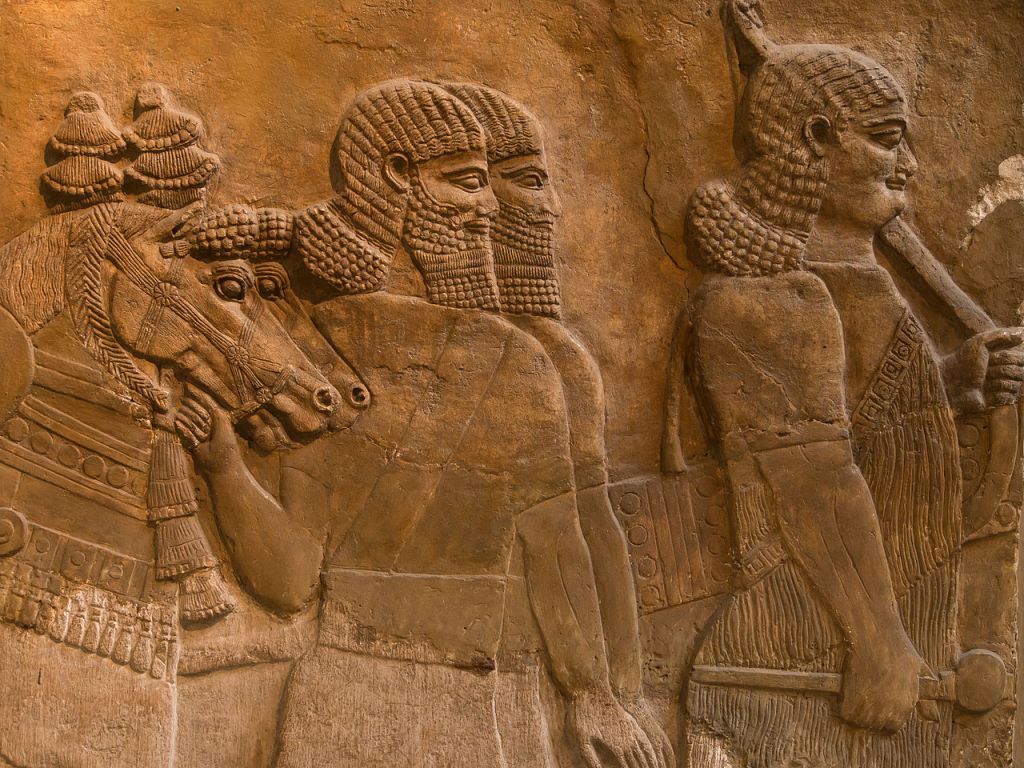
Part of the gift-bearing delegation of King Jehu, Black Obelisk, 841–840 BCE.

2 Kings 10: 1-14

  1 Now Ahab had seventy sons in Samaria. So Jehu wrote letters and sent them to Samaria, to the rulers of the city, to the elders, and to the guardians of the sons of Ahab, saying, 2 “Since your master’s sons are with you and you have at your disposal chariots and horses, a fortified city, and weapons, 3 select the son of your master who is the best qualified, set him on his father’s throne, and fight for your master’s house.” 4 But they were utterly terrified and said, “Look, two kings could not withstand him; how then can we stand?” 5 So the steward of the palace and the governor of the city, along with the elders and the guardians, sent word to Jehu, “We are your servants; we will do anything you say. We will not make anyone king; do whatever you think right.” 6 Then he wrote them a second letter, saying, “If you are on my side and if you are ready to obey me, take the heads of your master’s sons and come to me at Jezreel tomorrow at this time.” Now the king’s sons, seventy persons, were with the leaders of the city, who were charged with their upbringing. 7 When the letter reached them, they took the king’s sons and killed them, seventy persons; they put their heads in baskets and sent them to him at Jezreel. 8 When the messenger came and told him, “They have brought the heads of the king’s sons,” he said, “Lay them in two heaps at the entrance of the gate until the morning.” 9 Then in the morning when he went out, he stood and said to all the people, “You are innocent. It was I who conspired against my master and killed him, but who struck down all these? 10 Know, then, that there shall fall to the earth nothing of the word of the Lord that the Lord spoke concerning the house of Ahab, for the Lord has done what he said through his servant Elijah.” 11 So Jehu killed all who were left of the house of Ahab in Jezreel, all his leaders, close friends, and priests, until he left him no survivor.
  12 Then he set out and went to Samaria. On the way, when he was at Beth-eked of the Shepherds, 13 Jehu met relatives of King Ahaziah of Judah and said, “Who are you?” They answered, “We are kin of Ahaziah; we have come down to visit the royal princes and the sons of the queen mother.” 14 He said, “Take them alive.” They took them alive and slaughtered them at the pit of Beth-eked, forty-two in all; he spared none of them.

There is no avoiding the violence of this text. Jehu and those around him are blunt instruments removing the cancer of both the Omri dynasty and the cancer of Baalism from Israel. Back when I was working through the book of Esther, I did a short reflection on Violence and the Bible, but I still think most modern readers and interpreters find the bloody transition from the heirs of king Ahab to Jehu disconcerting.

The world of the bible was violent as was the ancient world that it was set within. It may not be quite the grimdark world of some recent fantasy made popular in George R.R. Martin’s Game of Thrones, since the world of the bible does assume there is a higher moral power involved in it, but as far as the shocking violence I think this, and the previous chapter, compete with almost anything written by modern authors. There were no bloodless coups in the ancient world. For the necessary transition to happen in both Israel and Judah drastic actions are required (in the view of 2 Kings).

Alex Israel in his writing on Jehu’s overthrown of the Omri dynasty believes that the detail provided is a critique of Jehu’s violence:

Kings is no stranger to military coups, yet not one of these mutinies revel in the explicit gore and detailed descriptions of murder that we find with Jehu. The narrative’s detail communicates Jehu’s barbarism. (Israel, 2019, p. 168)

Although Hosea 1:4 does view Jehu’s violence as excessive, I don’t believe that the narrator of 2 Kings does. Even though the other mention of seventy sons[1] being killed belongs to Abimelech in Judges 9, a story that has several connections with 2 Kings 10, Jehu’s actions are viewed in a positive light in 2 Kings. The violence does not all occur at Jehu’s hands as we will see as the narrative progresses, but Jehu’s evaluation is not tainted by his violent methods in overthrowing the Omri dynasty and the practices of Baal worship but instead that Jehu didn’t go far enough in removing the false worship practices from Northern Israel.

Jehu’s actions at the beginning of this chapter challenge the people with power in Samaria to choose one of the heirs of Ahab to rally behind and to prepare to meet him in battle. Jehu’s rule will never be secure as long as there is another line that can make a claim on the throne, but he does grant the leadership in Samaria the opportunity to make a fight for these heirs of Ahab. We don’t know how the line of Ahab was viewed within Samaria, and the text only mentions the terror of the leaders about this military commander’s ability to conquer whatever resistance they offer. These leaders entreat Jehu for peace and Jehu responds with the command to bring the heads of the seventy sons of Ahab. These leaders of will also have blood on their hands at the conclusion of the coup, but it may not have been necessary for them to directly participate in the bloodshed. As Choon-Leong Seow states on the Hebrew wordplay:

The word “heads” (ra’sim) is ambiguous, for it could refer literally the anatomical heads or figuratively to leaders. The officials assume the literal meaning and decapitate the remaining descendants of Ahab. (NIB III: 223)

There was a time when the leaders could have claimed innocence in this bloody transition since it was Jehu who killed the kings of Israel and Judah as well as Jezebel the queen mother, but now with the seventy heads of the sons of Ahab in baskets they share in this overthrow. Their hands are just as bloody as Jehu’s. Yet, for the narrator of 2 Kings, this bloody event is the fulfillment of the words of Elijah spoken against Jehu in Jezreel. (1 Kings 21)

Finally in this section there is the slaughter of the relatives of Ahaziah. These travelers from Judah seem completely unaware of the situation they walked into as they travel to visit Jezebel and the royal princes of Israel. These kin of Ahaziah are linked by marriage to Ahab’s line and in slaughtering these relatives Jehu weakens the remnants of the house of Ahaziah in Jerusalem. As we will see in the following chapter the remaining child of Ahab, his daughter Athaliah, will violently attempt to hold onto power in Jerusalem.  

2 Kings 10: 15-36

  15When he left there, he met Jehonadab son of Rechab coming to meet him; he greeted him and said to him, “Is your heart as true to mine as mine is to yours?” Jehonadab answered, “It is.” Jehu said, “If it is, give me your hand.” So he gave him his hand. Jehu took him up with him into the chariot. 16He said, “Come with me and see my zeal for the Lord.” So he had him ride in his chariot. 17When he came to Samaria, he killed all who were left to Ahab in Samaria, until he had wiped them out according to the word of the Lord that he spoke to Elijah.

  18
Then Jehu assembled all the people and said to them, “Ahab offered Baal small service, but Jehu will offer much more. 19Now therefore summon to me all the prophets of Baal, all his servants, and all his priests; let none be missing, for I have a great sacrifice to offer to Baal; whoever is missing shall not live.” But Jehu was acting with cunning in order to destroy the servants of Baal. 20Jehu decreed, “Sanctify a solemn assembly for Baal.” So they proclaimed it. 21Jehu sent word throughout all Israel; all the servants of Baal came, so that there was no one left who did not come. They entered the temple of Baal until the temple of Baal was filled from wall to wall. 22He said to the keeper of the wardrobe, “Bring out the vestments for all the servants of Baal.” So he brought out the vestments for them. 23Then Jehu entered the temple of Baal with Jehonadab son of Rechab; he said to the servants of Baal, “Search and see that there is no servant of the Lord here among you but only servants of Baal.” 24Then they proceeded to offer sacrifices and burnt offerings.
  Now Jehu had stationed eighty men outside, saying, “Whoever allows any of those to escape whom I deliver into your hands shall forfeit his life.” 25
As soon as he had finished presenting the burnt offering, Jehu said to the guards and to the officers, “Come in and kill them; let no one escape.” So they put them to the sword. The guards and the officers threw them out and then went into the citadel of the temple of Baal. 26They brought out the pillar that was in the temple of Baal and burned it. 27Then they demolished the pillar of Baal and destroyed the temple of Baal and made it a latrine to this day.
  28
Thus Jehu wiped out Baal from Israel. 29But Jehu did not turn aside from the sins of Jeroboam son of Nebat that he caused Israel to commit: the golden calves that were in Bethel and in Dan. 30The Lord said to Jehu, “Because you have done well in carrying out what I consider right and in accordance with all that was in my heart have dealt with the house of Ahab, your sons of the fourth generation shall sit on the throne of Israel.” 31But Jehu was not careful to follow the law of the Lord the God of Israel with all his heart; he did not turn from the sins of Jeroboam that he caused Israel to commit.

  32
In those days the Lord began to trim off parts of Israel. Hazael defeated them throughout the territory of Israel: 33from the Jordan eastward, all the land of Gilead, the Gadites, the Reubenites, and the Manassites, from Aroer, which is by the Wadi Arnon, that is, Gilead and Bashan. 34Now the rest of the acts of Jehu, all that he did, and all his power, are they not written in the Book of the Annals of the Kings of Israel? 35So Jehu slept with his ancestors, and they buried him in Samaria. His son Jehoahaz succeeded him. 36The time that Jehu reigned over Israel in Samaria was twenty-eight years.

Jehu now meets Jehonadab son of Rachab. The two men are loyal to one another but also share a zeal for the LORD. The descendants of Jehonadab son of Rechab will be the Rechabites that the prophet Jeremiah encounters in Jerusalem who do not drink wine or grow vineyards in obedience to their ancestor’s way. (Jeremiah 35) Now this ancestor of the Rechabites and Jehu move with cunning against the entrenched worship of Baal in Samaria.

In the ancient world the political and religious realms are interconnected, and it would not be surprising for a new ruler to pay for a sacrifice to the gods worshipped in the land. Jehu’s religious connections may not be well known in Samaria, and the prospect of having the new king as a patron would be enticing to the cult of Baal in the land. Yet, Jehu is acting with ‘cunning.’[2] Many modern readers may be confused by the dishonesty of Jehu’s actions, but 2 Kings views these actions positively. After attempting to ensure that only worshippers of Baal are present Jehu orders his guards to slaughter those participating and not to allow any to escape. Jehu in this action eliminates the worship of Baal during his reign and in the view of 2 Kings this causes God to grant him the longest running dynasty in the Northern Kingdom.

Yet the final evaluation of Jehu is negative not because of his violence or dishonesty but because he didn’t go far enough. He allowed the shrines at Bethel and Dan to remain. One the one hand it would be difficult for Jehu to remain in control in Samaria if people had to return to Jerusalem to worship, but in the view of the narrator of 2 Kings this is evidence of idolatry. Northern Israel is slowly losing control of its border to Hazael’s forces out of Damascus, but Jehu and his sons will maintain control in Samaria for four generations.


[1] Seventy is one of the ‘representative’ numbers in Hebrew which may be literal or may represent a large number. Typically multiples of three, seven, and twelve have a connotation of completeness in Hebrew thought.

[2] The Hebrew word for cunning is ‘aqob. This is also the name Jacob. Jacob’s original name and his character in Genesis is that of one who acts with cunning. The trickery here by Jehu is not evaluated in a negative light.

Psalm 78 Telling History to Change the Future

Grigory Mekheev, Exodus (2000) artist shared work under Creative Commons Attribution-Share Alike 3.0

Psalm 78

<A Maskil of Asaph.>
1 Give ear, O my people, to my teaching; incline your ears to the words of my mouth.
2 I will open my mouth in a parable; I will utter dark sayings from of old,
3 things that we have heard and known, that our ancestors have told us.
4 We will not hide them from their children; we will tell to the coming generation the glorious deeds of the LORD, and his might, and the wonders that he has done.
5 He established a decree in Jacob, and appointed a law in Israel, which he commanded our ancestors to teach to their children;
6 that the next generation might know them, the children yet unborn, and rise up and tell them to their children,
7 so that they should set their hope in God, and not forget the works of God, but keep his commandments;
8 and that they should not be like their ancestors, a stubborn and rebellious generation, a generation whose heart was not steadfast, whose spirit was not faithful to God.
9 The Ephraimites, armed with the bow, turned back on the day of battle.
10 They did not keep God’s covenant, but refused to walk according to his law.
11 They forgot what he had done, and the miracles that he had shown them.
12 In the sight of their ancestors he worked marvels in the land of Egypt, in the fields of Zoan.
13 He divided the sea and let them pass through it, and made the waters stand like a heap.
14 In the daytime he led them with a cloud, and all night long with a fiery light.
15 He split rocks open in the wilderness, and gave them drink abundantly as from the deep.
16 He made streams come out of the rock, and caused waters to flow down like rivers.
17 Yet they sinned still more against him, rebelling against the Most High in the desert.
18 They tested God in their heart by demanding the food they craved.
19 They spoke against God, saying, “Can God spread a table in the wilderness?
20 Even though he struck the rock so that water gushed out and torrents overflowed, can he also give bread, or provide meat for his people?”
21 Therefore, when the LORD heard, he was full of rage; a fire was kindled against Jacob, his anger mounted against Israel,
22 because they had no faith in God, and did not trust his saving power.
23 Yet he commanded the skies above, and opened the doors of heaven;
24 he rained down on them manna to eat, and gave them the grain of heaven.
25 Mortals ate of the bread of angels; he sent them food in abundance.
26 He caused the east wind to blow in the heavens, and by his power he led out the south wind;
27 he rained flesh upon them like dust, winged birds like the sand of the seas;
28 he let them fall within their camp, all around their dwellings.
29 And they ate and were well filled, for he gave them what they craved.
30 But before they had satisfied their craving, while the food was still in their mouths,
31 the anger of God rose against them and he killed the strongest of them, and laid low the flower of Israel.
32 In spite of all this they still sinned; they did not believe in his wonders.
33 So he made their days vanish like a breath, and their years in terror.
34 When he killed them, they sought for him; they repented and sought God earnestly.
35 They remembered that God was their rock, the Most High God their redeemer.
36 But they flattered him with their mouths; they lied to him with their tongues.
37 Their heart was not steadfast toward him; they were not true to his covenant.
38 Yet he, being compassionate, forgave their iniquity, and did not destroy them; often he restrained his anger, and did not stir up all his wrath.
39 He remembered that they were but flesh, a wind that passes and does not come again.
40 How often they rebelled against him in the wilderness and grieved him in the desert!
41 They tested God again and again, and provoked the Holy One of Israel.
42 They did not keep in mind his power, or the day when he redeemed them from the foe;
43 when he displayed his signs in Egypt, and his miracles in the fields of Zoan.
44 He turned their rivers to blood, so that they could not drink of their streams.
45 He sent among them swarms of flies, which devoured them, and frogs, which destroyed them.
46 He gave their crops to the caterpillar, and the fruit of their labor to the locust.
47 He destroyed their vines with hail, and their sycamores with frost.
48 He gave over their cattle to the hail, and their flocks to thunderbolts.
49 He let loose on them his fierce anger, wrath, indignation, and distress, a company of destroying angels.
50 He made a path for his anger; he did not spare them from death, but gave their lives over to the plague.
51 He struck all the firstborn in Egypt, the first issue of their strength in the tents of Ham.
52 Then he led out his people like sheep, and guided them in the wilderness like a flock.
53 He led them in safety, so that they were not afraid; but the sea overwhelmed their enemies.
54 And he brought them to his holy hill, to the mountain that his right hand had won.
55 He drove out nations before them; he apportioned them for a possession and settled the tribes of Israel in their tents.
56 Yet they tested the Most High God, and rebelled against him. They did not observe his decrees,
57 but turned away and were faithless like their ancestors; they twisted like a treacherous bow.
58 For they provoked him to anger with their high places; they moved him to jealousy with their idols.
59 When God heard, he was full of wrath, and he utterly rejected Israel.
60 He abandoned his dwelling at Shiloh, the tent where he dwelt among mortals,
61 and delivered his power to captivity, his glory to the hand of the foe.
62 He gave his people to the sword, and vented his wrath on his heritage.
63 Fire devoured their young men, and their girls had no marriage song.
64 Their priests fell by the sword, and their widows made no lamentation.
65 Then the Lord awoke as from sleep, like a warrior shouting because of wine.
66 He put his adversaries to rout; he put them to everlasting disgrace.
67 He rejected the tent of Joseph, he did not choose the tribe of Ephraim;
68 but he chose the tribe of Judah, Mount Zion, which he loves.
69 He built his sanctuary like the high heavens, like the earth, which he has founded forever.
70 He chose his servant David, and took him from the sheepfolds;
71 from tending the nursing ewes he brought him to be the shepherd of his people Jacob, of Israel, his inheritance.
72 With upright heart he tended them, and guided them with skillful hand.

We narrate the story of our past to attempt to understand our present reality, and yet our narrations of the past are always shaped by our present experiences and questions. Psalm seventy-eight is a long narration of the rebellion of the people in the wilderness and God’s judgment of Egypt to force the release of the people of Israel. Yet, the narration is told not merely to relay historical information but to point to the impact of Israel’s failure to keep the covenant (Nancy deClaisse-Walford, 2014, p. 623) Within this historical retelling it focuses on God’s wrath as it is shown towards Israel even after God’s gracious action to deliver them from slavery and to provide food and water in the wilderness. God’s exercise of power for deliverance and provision does not seem to compel the people to obedience and it is only God’s wrath appears that the people change their ways and sought God’s ways. Martin Luther referred to God’s wrath as God’s alien work which reflects the belief that God is fundamentally gracious, but that disobedience provokes this alien expression of punishment or wrath from God. Living much of my life in Texas or the southeastern United States I have always wondered why so many people were drawn to churches that focused on God’s judgment and wrath which articulated clear but rigid definitions of insiders and outsiders having been raised and formed in a tradition that focused heavily on the grace of God, but perhaps for some the God of judgment is more comforting and the rigid boundaries are comfortable. Yet, the God presented by the Bible is both gracious and demanding. God hears the cries of the people and is roused to deliver them, but this same God who is the mighty warrior who delivers refuses to be taken for granted. The narration of the central story of the people of Israel, perhaps in a time where a portion of that people has fallen away, with an emphasis on obedience is to bring about fidelity to God and God’s covenant.

There is no scholarly consensus on the historical background of this psalm, but my suspicion is that it is probably written sometime after the fall of the northern kingdom in 722 BCE but prior to the Babylonian exile in 586 BCE. There are several pointed phrases about Ephraim, Shiloh, and Israel which indicate a perspective of the kingdom of Judah and there is an indication of a disaster in the northern kingdom which seems to be one more example of God’s judgment upon the unfaithful ones in the view of the psalmist.[1] Narrating the ancient and perhaps recent past to learn from it is one of the reasons for revisiting the memories of the people. We live in a world where the written scriptures are readily available, but in a world where the written word is painstakingly handed on and typically only available to priests or royalty this psalm may have been an important way of impressing the historical memory on the current and future generations.

The memory of the past is recited to the community to help it learn how to properly relate to its God. As Walter Brueggemann and William Bellinger can memorably state, “In the recital of memory there is hope for the future.” (Brueggemann, 2014, p. 340) The initial eleven verses are a call to listen and sets the expectations for the hearers to, “not be like their ancestors, a stubborn and rebellious generation…they did not keep the covenant, and they refused to walk according to his teaching:” (8,10) Ephraim, synonymous with the northern kingdom of Israel, is highlighted as being turned back in battle and as mentioned above this may suggest a situation after the conquest of Israel by the Assyrians. Recent events may set the backdrop for the hearing of this examination of the disobedience of the people during the Exodus.

There are two major narrations of the past in this psalm. Both share a common pattern of narrating God’s gracious act, a rebellion by the people, God’s response in anger to the disobedience of the people and a summary of the section. (Nancy deClaisse-Walford, 2014, p. 623) In the first section verses twelve through sixteen narrate God’s action to deliver the people from Egypt, pass them through the sea, lead them in the wilderness, and provide water in the wilderness. Yet, the response of the people in verses seventeen through twenty is to speak against God and to question God’s provision. Their lack of trust or gratitude provokes God and many of the strongest of the people die in this time. Yet, when God responds in judgment they seek him but even this seeking is halfhearted. Their words are deceitful, and their actions do not hold fast to the covenant God placed before them. Yet, God’s compassion restrains God’s wrath even though their actions cause God grief.

The second narration begins in verse forty-three looking back to God’s actions to bring the people out of Egypt. This second narration looks in amazement at all the actions God did in comparison to the continual rebellion of the people. There are some differences between the narration in Exodus 7-11 and the remembrance here, but it is clear they are pointing to a common memory. Yet, in the psalm time begins to compress as the hearers are moved from God’s action to deliver the people from Egypt, lead them through the wilderness and into the promised land seems to move to a more recent judgment beginning in verse fifty-six. The central focus of the judgment seems to be on the northern kingdom of Israel which is rejected with its holy place at Shiloh abandoned by God. God’s arousal from sleep liberates Judah, but Ephraim (northern Israel) is rejected. The psalm ends with Judah being delivered by God and cared for by David (and the Davidic line). Yet, just like Ephraim and the northern kingdom, Judah’s position is due to the gracious provision of God but carries the expectation to live within the covenant. The psalmist encourages the people to choose the way of faithfulness instead of the disobedient and stubborn ways of their ancestors and their brothers in the north.

The bible narrates a theological interpretation of history which focuses on the interaction between God and the people of God. Interpreters of scripture in both Jewish and Christian traditions have seen within the scriptures a witness to a tension within a God who desires to be gracious but whose people only seem to respond to punishment or wrath. In Beth Tanner’s words this psalm,

tells of God’s great passion for humans, even when those humans turn away. It also tells the sad story of human determination to ignore the good gifts of God and to remember God only when the way becomes hard or violent. (Nancy deClaisse-Walford, 2014, p. 625)

God’s anger and wrath may be, to use Luther’s term, God’s alien work but the God of scripture refuses to be taken for granted. God is jealous for the people’s attention and allegiance and when the people turn away from God’s gifts God responds. I tell my congregation that “God wants to meet you in grace and love and peace, but if you can only hear God in judgment God will meet you there even though it creates a struggle within God.” We still come together and remember these stories to learn from the wisdom and the struggles of our ancestors in faith, to seek God in grace, to live in obedience and faithfulness but also to attempt to interpret our world in light of God’s gifts and God’s discipline. This may be harder in our very secular world but just as we attempt to learn from our more recent history, we listen to the narration of the psalmist to the memory of the people and learn from their life with God under grace and under judgment.

[1] See for example verses 9, 56-64, and 67

Judges 1 The Disposition of the People of Israel

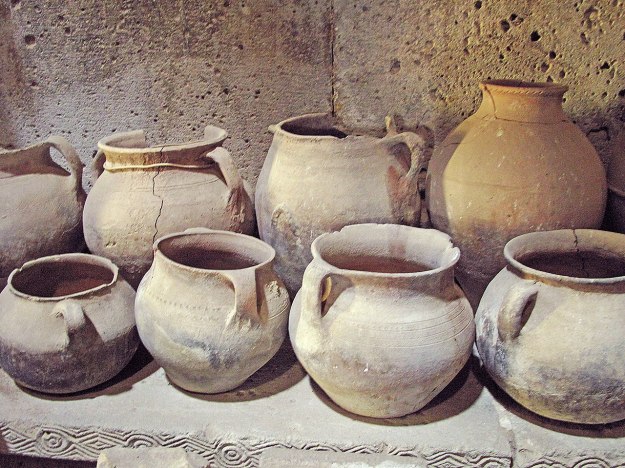
Cracked pots, Picture taken by Enric from the Monestary of Sanahin, Armenia shared under creative commons 4.0

Joshua 1: 1-21 The Mainly Positive Beginnings of the Southern Tribes

1 After the death of Joshua, the Israelites inquired of the LORD, “Who shall go up first for us against the Canaanites, to fight against them?” 2 The LORD said, “Judah shall go up. I hereby give the land into his hand.” 3 Judah said to his brother Simeon, “Come up with me into the territory allotted to me, that we may fight against the Canaanites; then I too will go with you into the territory allotted to you.” So Simeon went with him. 4 Then Judah went up and the LORD gave the Canaanites and the Perizzites into their hand; and they defeated ten thousand of them at Bezek. 5 They came upon Adoni-bezek at Bezek, and fought against him, and defeated the Canaanites and the Perizzites. 6 Adoni-bezek fled; but they pursued him, and caught him, and cut off his thumbs and big toes. 7 Adoni-bezek said, “Seventy kings with their thumbs and big toes cut off used to pick up scraps under my table; as I have done, so God has paid me back.” They brought him to Jerusalem, and he died there. 8 Then the people of Judah fought against Jerusalem and took it. They put it to the sword and set the city on fire.

9 Afterward the people of Judah went down to fight against the Canaanites who lived in the hill country, in the Negeb, and in the lowland.10 Judah went against the Canaanites who lived in Hebron (the name of Hebron was formerly Kiriath-arba); and they defeated Sheshai and Ahiman and Talmai.

11 From there they went against the inhabitants of Debir (the name of Debir was formerly Kiriath-sepher). 12 Then Caleb said, “Whoever attacks Kiriath-sepher and takes it, I will give him my daughter Achsah as wife.” 13 And Othniel son of Kenaz, Caleb’s younger brother, took it; and he gave him his daughter Achsah as wife. 14 When she came to him, she urged him to ask her father for a field. As she dismounted from her donkey, Caleb said to her, “What do you wish?” 15 She said to him, “Give me a present; since you have set me in the land of the Negeb, give me also Gulloth-mayim.” So Caleb gave her Upper Gulloth and Lower Gulloth.

16 The descendants of Hobab the Kenite, Moses’ father-in-law, went up with the people of Judah from the city of palms into the wilderness of Judah, which lies in the Negeb near Arad. Then they went and settled with the Amalekites.17 Judah went with his brother Simeon, and they defeated the Canaanites who inhabited Zephath, and devoted it to destruction. So the city was called Hormah. 18 Judah took Gaza with its territory, Ashkelon with its territory, and Ekron with its territory. 19 The LORD was with Judah, and he took possession of the hill country, but could not drive out the inhabitants of the plain, because they had chariots of iron. 20 Hebron was given to Caleb, as Moses had said; and he drove out from it the three sons of Anak. 21 But the Benjaminites did not drive out the Jebusites who lived in Jerusalem; so the Jebusites have lived in Jerusalem among the Benjaminites to this day.

The book of Judges comes from a world that would seem alien to a modern reader. It is a time where the tribes and families that make up Israel are no longer united under a charismatic leader like Moses or Joshua and are not a nation in the modern sense. Moses and Joshua may have been able to hold the tribes together through the wilderness and the initial conflict with the Canaanites in the promised land, but with the death of Joshua the tribes and families no longer work together in harmony. The book of Judges narrates a theologically interpreted story of the decline of Israel in this time between the initial occupation of the promised land and the anointing of the first king of Israel.

The book of Judges is a challenging book for many reasons, but one which we encounter immediately is the expectation that the Canaanite people who occupy the promised land will be destroyed. Throughout Exodus, Leviticus, Numbers, Deuteronomy, and Joshua the have frequently echoed the command to destroy the people in the land so that the people of Israel would not adopt their practices or worship their gods. The violence of the occupation of the promised land can seem difficult to reconcile with the vision of God that many modern Jews and Christians have, and it is often hard to reconcile modern values with the actions of ancient people. The failure of the people to fully remove the populations that existed in the promised land and the failure of these tribes and families to consistently live the values outlined in the law highlights, in the view of the author of Judges, the danger of alternative visions of structuring society and of worshipping other gods to the identity of the people of Israel. As people who live in a secular and pluralistic nation it can be difficult to imagine the ideal of a theocratic and homogenous population living according to the vision of books like Deuteronomy. Apparently this vision was difficult for the people in the time of Judges to adhere to as well.

Judges begins its narration in the time after the death of Joshua. The initial military actions undertaken by Judah and Simeon are viewed in a mainly positive light. Judah and Simeon are both located at the southern end of the territory that the tribes occupy and form a mutual alliance to deal with the significant Canaanite forces still in their region. The numbers throughout Judges are difficult to translate, especially the Hebrew word ‘elep which is frequently translated thousands, but which may refer to a much smaller number in some places.[1] Even if the number of people the tribes of Judah and Simeon defeat at Bezek is less than 10,000, it is still a large battle for tribes with no standing army. The initial defeat of the Canaanites and Perizzites and their actions toward the captured king Adoni-bezek are reminders that the ancient world is a violent place. Adoni-bezek, in the narrative of Judges, views his own loss of thumbs and big toes as divine repayment[2] (although the word for God here is the generic god and not necessarily the God of Israel) for his own action of removing the thumbs and toes from kings he has conquered. The narrative is not always consistent as we see in verse eight and twenty-one, where Jerusalem is taken and burned by Judah but the residents of Jerusalem remain and are not driven out by Benjamin.

The battle in the hill country takes us back into the narrative of Joshua, where the land of Hebron is given to Caleb, the only other survivor of the Exodus journey. Caleb’s family defeats Sheshai, Ahiman, and Talmai who are descendants of Anak (Joshua, 15:14), the feared Anakim who originally caused the people of Israel to fear occupying the promised land. (Numbers 13: 28) These once feared ‘mighty men’ are now defeated and the final living member of the people who left Egypt finally receives his inheritance. The narrative of Caleb, Othniel, and Achsah highlights that we are dealing with collections of families who are working together rather than an organized nation. Othniel, who will be lifted up as the first judge, takes the city of Kiriath-sepher and wins the promised hand of Achsah, daughter of Caleb. Marriages in the ancient world were primarily economic arrangements that were to be mutually beneficial to both parties. Although Achsah may not have any choice in the marriage, she will show her own initiative in relation to both Caleb and Othniel. As Barry Webb can highlight:

From the moment of her entry (v. 14a), Achsah ceases to be an object acted upon by two men. She seizes the opportunity to get something which neither her father nor her husband has considered. Her father has already given the land of the Negeb as her dowry (v.15c). Achsah greatly enhances its value by negotiating successfully for water rights, something of great importance given the predominantly dry nature of the area. (Webb 2012, 104)

Women in the bible are often more assertive than interpreters give them credit for, and especially in the book of Judges we will see a number of women play large roles. This may also highlight the difference between the relatively positive beginning of Judges where women are able to negotiate on behalf of themselves and their families and the very dark conclusion of Judges where women are often the victims of violent acts which deny them safety and the ability to work for their own futures.

The book of Judges is not universally negative toward people who are not a part of the people of Israel, and this is highlighted by the position of the descendants of Hobab the Kenite. This partnership which goes back to Moses allows both the people of Israel and Kenite to live at peace and benefit from their relationship. The military conquest of Judah and Simeon is viewed in a predominantly positive manner, but they remain unable to expel the inhabitants of the plain who have iron chariots, which would have been the pinnacle of military technology in the early iron age. The clans of Judah and Simeon gain control over the majority of their territory but the Canaanite people and their religion prove incredibly challenging to expel completely from their region. The story gets significantly darker as the focus turns to Benjamin, who was not asked to partner with Judah and Simeon, and their inability to drive out the Jebusites and their cohabitation with the Jebusites in Jerusalem.

Judges 1: 22-34 The Less Positive Beginning of the Northern Tribes

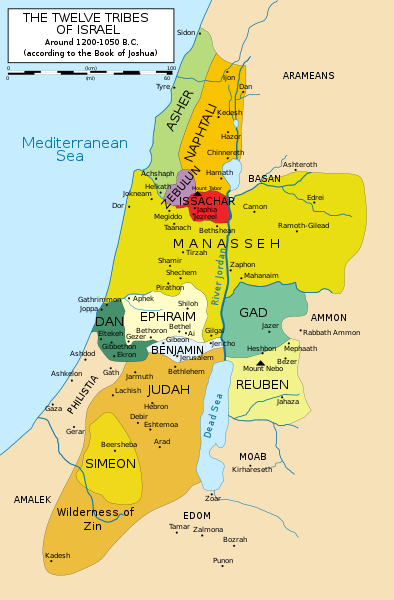
22 The house of Joseph also went up against Bethel; and the LORD was with them. 23 The house of Joseph sent out spies to Bethel (the name of the city was formerly Luz). 24 When the spies saw a man coming out of the city, they said to him, “Show us the way into the city, and we will deal kindly with you.” 25 So he showed them the way into the city; and they put the city to the sword, but they let the man and all his family go. 26 So the man went to the land of the Hittites and built a city, and named it Luz; that is its name to this day.

27 Manasseh did not drive out the inhabitants of Beth-shean and its villages, or Taanach and its villages, or the inhabitants of Dor and its villages, or the inhabitants of Ibleam and its villages, or the inhabitants of Megiddo and its villages; but the Canaanites continued to live in that land. 28 When Israel grew strong, they put the Canaanites to forced labor, but did not in fact drive them out.

29 And Ephraim did not drive out the Canaanites who lived in Gezer; but the Canaanites lived among them in Gezer.

30 Zebulun did not drive out the inhabitants of Kitron, or the inhabitants of Nahalol; but the Canaanites lived among them, and became subject to forced labor.

31 Asher did not drive out the inhabitants of Acco, or the inhabitants of Sidon, or of Ahlab, or of Achzib, or of Helbah, or of Aphik, or of Rehob; 32 but the Asherites lived among the Canaanites, the inhabitants of the land; for they did not drive them out.

33 Naphtali did not drive out the inhabitants of Beth-shemesh, or the inhabitants of Beth-anath, but lived among the Canaanites, the inhabitants of the land; nevertheless the inhabitants of Beth-shemesh and of Beth-anath became subject to forced labor for them.

34 The Amorites pressed the Danites back into the hill country; they did not allow them to come down to the plain. 35 The Amorites continued to live in Har-heres, in Aijalon, and in Shaalbim, but the hand of the house of Joseph rested heavily on them, and they became subject to forced labor. 36 The border of the Amorites ran from the ascent of Akrabbim, from Sela and upward.

The two tribes of Joseph (Ephraim and Manasseh) are the two largest northern tribes and they unite to go against Luz (which will be renamed Bethel). The taking of Bethel shares many commonalities with the taking of Jericho in the book of Joshua (Joshua 2, 6) where a hesed (faithful) agreement is made with a resident of the city which allows the city to be taken. Bethel becomes the northern counterpoint to Jerusalem, and yet the destruction of Luz gives birth to a new city of Luz in the land of the Hittites. After the initial success of the northern tribes we receive a litany of all the Canaanites that are not driven out from the land. The Canaanites prove to be difficult to remove from the land and these remaining tribes either lack the ability or the will to secure their inheritance. In many cases the Canaanites become forced labor for these tribes and families, but in the case of Dan it is the Canaanites who retain control of most of the land forcing the Danites back into the hill country.

The inertia of the time of Joshua comes to a halt. The stage is set for the cyclical pattern of decay among the people which the book of Judges narrates. As Michael Hattin says eloquently:

Leaderless, and no longer certain of their mission, the people of Israel instead settle down, content to farm their fertile plots, raise their flocks and families, and leave the process of possession incomplete. The Canaanites continue to dwell among them, with their religious and moral system intact, and the siren call of their gods soon took effect. (Hattin 2020, 10)

Israel was always intended to be an alternative to Egypt, Canaan, and the other moral and religious visions present in the ancient world. Instead, we find the people at the end of this narrative adopting the enslaving practices they found themselves victims of in Egypt and tolerating the presence of competing visions for society complete with alternative religious systems. There is no Moses or Joshua to rally the people from their lethargy, nor is there a strong sense of unity among the tribes. The book of Judges attempts to make sense of a dark time in the story of Israel and after one chapter we are in a position to encounter the recurring challenge of faithfulness to the vision their God intended for the people. They were unable or unwilling to create a space free of alternative moral and religious visions to attempt this great divine experiment of a people living in a covenant with their God, a people living a life ordered by the law of God. Instead they live out their vocation as a covenant people in a place of competing messages and loyalties and the results do not live up to the hope of the author of Judges.

[1] For a complete discussion of the problem of large numbers in the book of Judges see Barry G. Webb’s note on translation. (Webb 2012, 71-74)

[2] The notion of divine ‘repayment’ will also feature in the stories of Gideon, Abimelech, and Samson.