Tag Archives: Matthew

Images for the Seventh Sunday after Epiphany

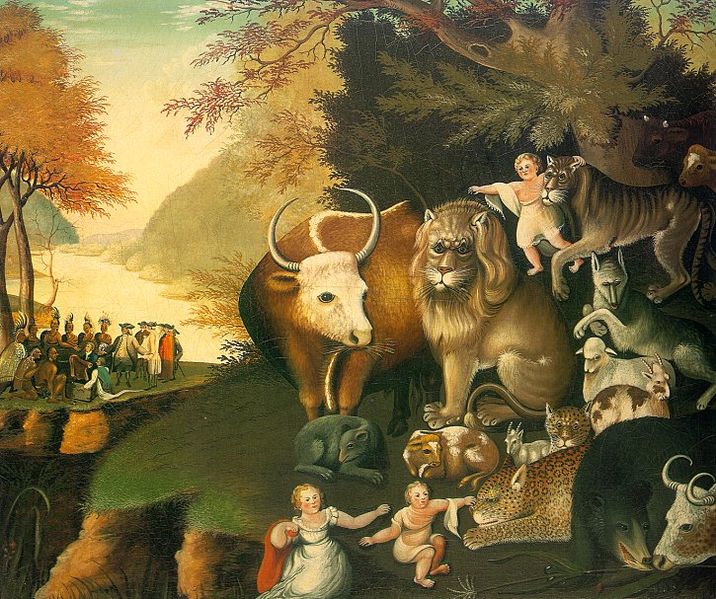
This is another week where some of the linkages artistically are more difficult, since it is Jesus talking about loving enemies, going the second mile, turning the other cheek. There may be images out there that reflect this but I struggled to find direct linkages. There is plenty of images out there that rebel against these ideas. 


Edward Hicks, Peaceable Kingdom 1834

Edward Hicks, Peaceable Kingdom 1834


Maltreatments in the House of Caiphas, James Tissot (1886-1894)

Maltreatments in the House of Caiphas, James Tissot (1886-1894)


Images for the Fifth Sunday After Epiphany, Lectionary 5A

It is more abstract this week, if you want images for the Sermon on the Mount in General look back at the Fourth Sunday after Epiphany. This week is Matthew 5: 13-20: Jesus telling the disciples they are the salt of the earth, light on a lampstand, a city on a hill and unless their righteousness exceeds that of the Pharisees they will not enter the kingdom of heaven.

Salt and Light by Anacre0n@deviantart.com

Salt and Light by Anacre0n@deviantart.com

More of an abstract image, but I found it helpful for my own meditation

Saltfish drying in Iceland

Saltfish drying in Iceland

A reminder that in the ancient world (pre-refrigerators) salt was mainly a preservative rather than a seasoning

candle

City on a Hill by antonisfes@deviantart.com

City on a Hill by antonisfes@deviantart.com

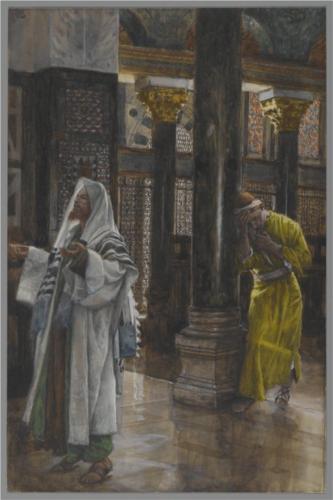
James Tissot, The Pharisee and the Publican (1894)

James Tissot, The Pharisee and the Publican (1894)


Living a Godly Life-A Sermon on Trusting

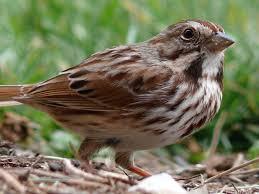
sparrow
“No one can serve two masters; for a slave will either hate the one and love the other, or be devoted to the one and despise the other. You cannot serve God and wealth.
“Therefore I tell you, not to worry about your life, what you will eat, or what you will drink, or about your body, what you will wear. Is not life more than food, and the body more than clothing? Look at the birds of the air; they neither sow nor reap nor gather into barns, and yet your heavenly Father feeds them. Are you not of more value than they? And can any of you by worrying add a single hour to your span of life. And why do you worry about clothing? Consider the lilies of the field, how they grow; they neither toil nor spin, yet I tell you, even Solomon in all his glory was not clothed like one of these. But if God so clothes the grass of the field, which is alive today and tomorrow is thrown into the oven, will he not much more clothe you—you of little faith? Therefore do not worry saying, ‘What will we eat?’ or ‘What will we drink?’ or ‘What will we wear?’ For it is the Gentiles who strive for these things and indeed your heavenly Father knows that you need all these things. But strive first for the kingdom of God and his righteousness, and all these things will be given to you as well.
So do not worry about tomorrow, for tomorrow will bring worries of its own. Today’s trouble is enough for today. Matthew 6: 24-34
I really wrestled with this during the week, mainly because I had to get to the point where I could hear this graciously. Where I started out hearing it was in a condemning way, bringing up all the shortcomings in the places where I was trusting God, and I found myself placing a heavier and heavier burden on my shoulder. I began to feel like Martin Luther before the reformation when he was struggling with an image of God who placed heavy burdens on people’s shoulders that they couldn’t lift and then condemned them for it. I also had to reach my breakthrough moment when I could realize that God’s grace was there all along, but I didn’t start out there.
When I listened to this the first time I found myself struggling against it, my muscles got tighter as I read it, I found myself becoming a little anxious, and I honestly found myself angry at these words. I know Martin Luther said we are to “fear, love and trust God above all things.” And on one level I know I desperately have tried to live my live where I do trust God above all things, but I have to be honest—this passage is both terrifying and comforting at the same time because I find myself caught between two worlds. I live with one foot in this world and one foot in the kingdom of God. In this harsh way of hearing this I acknowledge that I live in a world where roughly 20% of my income goes to taxes, 25% goes to housing, 15% goes to other debts, 10 % goes to the church, another 10% goes to things like phone, cable, insurance and so on a good month I have 20% to spend on gas, groceries, the pants for my son who seems to continually be outgrowing everything I buy him and if there is anything left, maybe something I wanted to buy, and while there may be (and have already been) things that I’ve cut the reality is that as much as I don’t like it I am dependent on receiving a paycheck twice a month. I may not like it but if that paycheck didn’t come in, it would change a lot of things in my life very quickly. I also have to be honest that I have always been on the more meticulous side of how I dressed, and even though I don’t spend very much money on clothes each year for I try to make myself look as good as I can because I legitimately like to look and dress well. Maybe it is the time I spent in the Army and the family I grew up in, but I am still one of these people who tries to make sure my shirts are pressed and my shoes are polished, and that as much as I can, that I look good. And for whatever reason I was coming up against this text and I was hearing, “Don’t worry about how you dress” and “Don’t worry about where your next meal is going to come from” and I wanted to say back to God, “God how much more do you want?” I mean God when you called me to give up a really good paycheck as an officer in the army, doing something I enjoyed to go to for four years in seminary where I wasn’t going to have much of an income, or when I accepted first call well below the guideline for compensation for a pastor and then when I was going through the difficulties with my last call and divorce, giving up that position (even though it was killing me) and trusting that somehow it would work. I began thinking “What more do you want me to give up?” and yet that wasn’t what Jesus was trying to say to me, I was loading that upon my own shoulders. Yet, I think it is very natural for us to slip back into this image of a God who is a harsh taskmaster, who continues to demand more and more out of us, and I think this text can very easily be heard in this way and sometimes English doesn’t help because something as simple as the translation saying “you of little faith” which is hard to hear any way other than condescending, or as in some translations, like the NLT “why do you have so little faith”, but what is there is my little faith ones. It is a different tone, even though the words are the same. It may be nitpicking, but how you hear and read something matters, if you hear Jesus coming off harsh and condemning it affects the way you receive this, so much of communication is more than just words, even on paper we assign emotion to words. Yet the entire section is set within the words of “don’t worry” and when I hear this it is Jesus coming to us and saying in a comforting was, “God takes care of the sparrows and you’re more important than they are, and the wildflowers which only last a season, God cares more about you than them.”
Jesus is speaking primarily to people who are not very wealthy. Most of the people hearing this will go back to their fields, or fishnets, or households. They will plant their crops, drop their nets, bake the bread for their families, and Jesus is not telling them, at least not most of them, to abandon their fields and farms, to give up their boats and fishnets, to turn away from their families. There may be other points where people like Peter and James and John walk away from their boats, and Matthew away from his job as a tax collector, but most people will hear him, and they like his disciples will be little faith ones in the midst of the world. I think the point in the midst of this “who are you?” Ultimately we are God’s little faith ones, we are people marked with the sign of the cross and sealed with the Holy Spirit in our baptism, we are precious to God, more precious than sparrows or flowers, we are people who God has placed value on, and God will watch over us. Yet in the midst of our lives things change. I’m forty, and so I can still do many of the things I did when I was twenty, I just pay for them more. And I know there are things that if I make it to eighty, that I will not be able to do that I do now. Or maybe you lose a job, or a house burns down, or a thief breaks in and steals something precious, or you go through a divorce, or you lose a parent or a child, or something else happens in your life and it feels like it changes everything. And we invest a lot of our lives in our jobs and our relationships, but if the job goes away are you anything else? When things around us change, can we realize that who we are is ultimately children of God, people who are precious to God, more valuable than sparrows and flowers and that God will take care of us? In the times of feast and the times of famine God walks with me. I’ve been through both the experience of losing a job and losing a divorce, and in that time you don’t have to say, “this is where I’ll be six months from now.” No where you are is in that moment. We live in a society where anxiety and depression are rampant, and there is no magic wand that makes it all better, but sometimes we find ourselves living so much in the fears of the futures that may come that we lose the joy of the moment that we are living in. Or you get plugged into the 24 hour new cycle and you let it depress you, because even though the news will not tell you this, there is a lot that is right in the world. We can and will go through a lot of changes throughout our life, but in God’s eyes who we are hasn’t changed. God may not be calling us to seek these things out, but when they happen we can realize that who we are in God’s eyes has not changed. God never promises to make it easy, just possible, and we will have what we need to eat, or drink, or wear…not always what we want, but what we need.
I know when I was going through seminary, and I am a proud person, and I had to use WIC or the food pantry I didn’t like it, I didn’t like that I needed help even when it was available-I didn’t want to feel like I was somehow a drain on the system. And when I look back on that time, it was a time in my life when I had the least, but I was the happiest because I was surrounded by a community of people who were my friends who were sharing the same experience and we were all learning to trust God together.
And Jesus throughout the scriptures cautions people about money, and we hear today that you cannot serve God and money, and one of the things money can do to us is that it affects our relationships. There have been numerous stories, for example, about lottery winners whose lives were ruined because their relationships became defined by their new found wealth. Everybody wanted them to buy something for them, or lend them $5,000 or $10,000. And I know a lot of people yearn for this type of fame, but I couldn’t imagine being someone like Justin Bieber or Taylor Swift where everything you do is watched, and you can’t go to the grocery store without someone taking pictures or wanting an autograph. I couldn’t imagine being the president where you need a large security detail everywhere you go to separate you from everyone else. Yet in the midst of all the distractions it can be so easy to forget who we are, that we are precious, that God has claimed us and named us in the waters of baptism and that we are precious in his sight. Even when everything else around us changes, that does not.
Throughout this time of lent we have been talking about things that have to do with trust. Giving relies on trusting that there will be enough, prayer allows us to grow into the relationship with the loving God who wants us to come to him as loving and trusting children and it is in that communication with God that we build trust. Forgiving involves trusting, because it opens you up to the possibility that you may be hurt again in the relationship, but there is no way to continue a relationship without forgiveness, and as we forgive others we begin to understand God’s forgiveness. I talked about fasting last week, and that involves a deep level of trust, for I struggle against my most basic urge, to eat, so that I may learn that I am more than just a consumer. And we walk along this journey and God continues to shape and mold us to be people who can live in trust. I wrestle with this just like everyone else, I also have to hear for myself that I am precious and loved, I have to get beyond my own tendency to judge myself as unworthy and hear once again that I don’t need to worry, for God has called me God’s own.

purple rose 01 by picsofflowers.blogspot.com

Living a Godly Life: A Sermon on Fasting

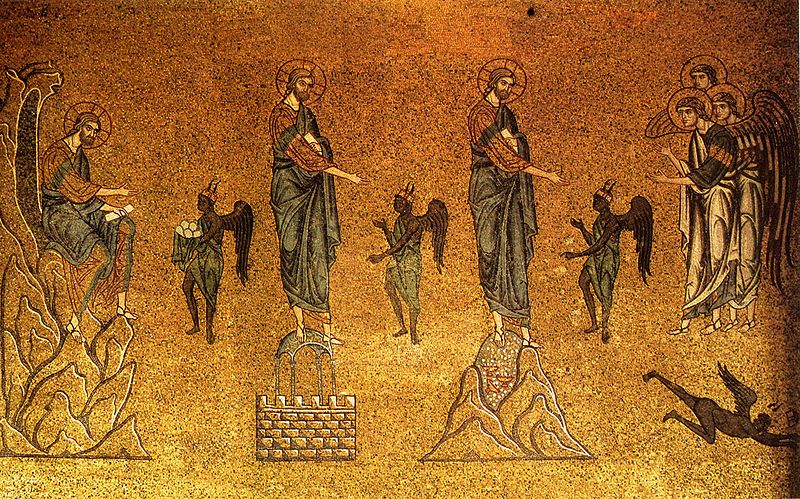
The Temptations of Christ, Mosaic in the Basilica of St. Mark, Venice

The Temptations of Christ, Mosaic in the Basilica of St. Mark, Venice

And whenever you fast, do not look dismal, like the hypocrites, for they disfigure their faces so as to show others that they are fasting. Truly I tell you, they have received their reward. But when you fast, put oil on your head and wash your face, so that your fasting may be seen not by others but by your Father who is in secret and your Fahter who sees in secret will reward you. Matthew 6: 16-18

Fasting is one of those practices that during my lifetime has not been very heavily practiced by most Christians I know, but it is beginning to make a comeback, especially among young spiritual seekers who are seeking real and gritty spiritual practices of how they might draw closer to God. You see, we do a lot in this church in most churches to make it very easy for people to come in, to be a part of what is going on. We try to make the music appealing and the experience enjoyable and the seats comfortable and the temperature correct for the bulk of people, but sometimes to go deeper we need to be taken out of our comfort zone. We may wonder if there is something more to this relationship with God, and the answer is yes indeed there is and so I’m going to talk about fasting tonight and I don’t believe you can talk about fasting without actually using fasting as a spiritual discipline and so yes I do fasted, and have over this Lenten period, and I share this not to say, “Hey, look at me and the great and holy things I am doing.” Because it is something that I struggle with, because I know the way I should be living, but often I fall into the very temptations that Jesus turned away from. Yet I don’t like being hungry, of being forced to slow down. I know I too often buy into the societies message that we shouldn’t do without anything and that depriving myself of something is not only unhealthy, it is un-American. “If you are a child of God you shouldn’t be hungry, make bread and eat.” Fasting for me is an act of confession that sometimes I have so much that I no longer value what I have, that the food begins to lose its taste or appeal, that no matter what I have that it is never enough. Now I’m a good cook, a very good cook even and if you have eaten at my table or tasted something I’ve made most people would agree with that, yet even after I’ve made a good meal for my son and I, and even right after I have eaten I can see an ad for Red Lobster, or Buffalo Wild Wings, or Olive Garden, or Applebee’s, or any number of other restaurants and I can be hungry not for what I just ate but what is being paraded before my screen that I should want.  Fasting is a confession that the food I eat sometimes looses its taste because I’m already full and I’m eating because the food is in front of me and so I eat. It is a confession that even though my spirit know s it is not true that I have bought into the illusion with my heart that having more is the way to happiness and by accepting less I am placing my practices and times and treasures where I hope my heart will someday follow. I confess that often I begin to believe that I am entitled to all the good things that are out there and that I no longer appreciate the things that are there. I fast as part of a confession that while I may know that I cannot serve God and money more often than not I am damn willing to give it a try. I know that I may not be worth mentioning in the same breath as Jesus and Paul, David and Moses, Elijah and Elisha, Daniel and Esther but they all fasted in the midst of their relationship with God and maybe just maybe they knew something. I know that in the Bible fasting is assumed, and it is not a coincidence that Jesus says “when you fast” rather than “if”. That there is something about the act of fasting as a spiritual practice that places us in a place where we might be able to draw close to God.

I’m going to invite you to consider something foolish with me, something I attempt to practice, which is in its own way an act of rebellion against the way things are.  And so perhaps the place to begin is a confession: I have fasted, not every day, but typically one day out of the week throughout lent-this is not the first, nor will it be the last time I have fasted, and rather than taking away from life it frees me for life. Now we live in a world with two competing realities: one is to fit in to the perfect image, and particularly for young women but increasingly for men as well, to try to fit into the image of the models in magazines and actresses on the big screen-I am not advocating fasting as a method to achieve a thinner body to achieve some ideal that most of us were never meant to obtain. But the draw of that image is powerful and real, and even I struggle against it. But there is another reality that I think tries to consume each of us, and that is the reality that calls us to consume. We are consumers and the only thing that makes us happy is consuming, or so we are told.

I refuse to be a consumer, for that to be the primary measure of who I am. I refuse to be a slave to my belly. I empty myself trusting that God might fill me, for as Mother Teresa said, “God cannot fill that which is already full.” In trying to follow Jesus, I humbly try to take some of the same paths he did, being willing to be guided by God into the wilderness to struggle against my own bodies desire to eat, not because eating or feasting is bad, but because there are times to feast and times to fast, and knowing the difference makes the feasting sweeter. I do it to enjoy life, not to deny life. I do it because it forces me to slow down for a day, to rest more and push less hard, it forces me into greater times of pause as I wait on God and listen. It reminds me of the injustices that are out there in the world and those who go to bed this night hungry, not because they choose to but because they have nothing while others have far too much.  In my hunger I am reminded that blessed are those who hunger and thirst for righteousness for they will be filled (Matthew 5.6) or even more haunting in Luke’s gospel in the 6th chapter blessed are those who are hungry now for they will be filled…but woe to those who are full now for they will be hungry.

Now this is a discipline that I take and use, it is not for everyone. I don’t fast if I’m sick or if I feel like I am struggling with my emotions. But like recovering after being sick and you realize how well you feel, eating after fasting allows you to savor that which is there. I long to draw closer to God, not to be taken away from the world-but so that I too might learn like God to love the world in its struggles and illusions.  One of the things I have realized is that God may call us away from the practices of the world so that we may be transformed to go back and point to the things that are good. To allow our eyes and ears to be opened to the places where the kingdom of God has indeed broken it.

It is only fair to acknowledge Bishop Michael Rinehart’s post on Why Fast? which made writing this sermon both easier and more challenging. Easier because he said many things I would want to say and said them very well, but more challenging because it was harder to find my own approach to this after he said it so well.

purple rose 01 by picsofflowers.blogspot.com

Living a Godly Life: Prayer

jesus praying

I listen to a lot of different types of music, and each type of music has its own set of emotions that they play to. For example, one of the emotions that rock and metal wrestle with is despair and depression, , rap tends to play towards defiance, popular music towards desire, and country, one of its many emotions is regret. It isn’t hard to come up with song after song in country that deals with regret, in fact there is a long standing joke about what happens when you play a country song backwards, that you get your wife back, your family back, your home back, etc…and often the regret is due to putting efforts into the wrong things, for a brief sampling this is one of George Strait’s older songs King of the Mountain:

I gave her that diamond she dreamed of

And I bought her a home with a view

I took her to the end of the rainbow

But all I left her was blue


Seems I never had time to love her

And now it seems time just stands still

I thought I was king of the mountain

But I was only a fool on a hill

Now I start out this way because one of the reasons we struggle with prayer is we tend to treat God like the fool in the song, if our prayers are mainly asking for things we are setting ourselves up for a relationship of regret. Sometimes I think we treat God in our prayers like Santa Claus, and Santa Claus is great for a lot of things: Dear Santa for Christmas I would like: a new computer, a PS4, Gift Cards to my favorite restaurants and shops so I can get something for me, these books, these CDs, these movies, an even bigger flatscreen TV…OK you get the picture, but let me let you in on a little secret, we don’t love Santa. Oh he’s cool, but we don’t love him and we’re never satisfied with what he brings, there’s no real relationship there-he grants my wishes and as soon as I am done opening gifts I may find myself thinking “what’s next?” George Schwanenburg was the pastor of the church I grew up in, and he used to call the prayers that many people would say, “Gimme” prayers, and by extension the people who prayed them were “Gimme pigs.” God gimme this, God gimme that-and while there is nothing wrong with asking God for what we want and need, prayer is much more than that. Other times the only prayers people send up are the “Help” prayers. God, OK I’ve really made a mess of this and if you bail me out now, well….”

So what is this prayer thing all about, and how does it really help be draw closer to God? How does it help me love God? You see God doesn’t seek a relationship with us that is just based on giving and receiving, but on being present and spending time listening. In the midst of a noisy and busy world, prayer is the time we set aside to listen. There is a story told of Mother Teresa, who would spend hours in prayer each day, when she was interviewed once by a reporter, who asked her, “What do you say to God in all the time you spend in prayer?” and she replied, “Mostly I just listen.” Perplexed the journalist went on to ask her, “So what does God say in all that time” to which she replied, “Mostly God just listens too.”

I love the image from Psalm 141, which I would sing several times a week in seminary:
let my prayers rise up as incense before you, the lifting up of my hands as an offering to you.

It is my offering from my busyness back to God some of my time to be there and listen. It’s not about me, certainly I benefit from the time probably far more than God does, but it is one of the gifts I try to give to the relationship. It’s not that we have to worry too much as Lutherans of people being impressed or dazzled by our prayers, but ultimately it is not about us. And yet I do have to admit I am often skeptical of overtly public forms of prayer that call more attention to the individual than God, particularly with athletes it is pretty easy to wonder are they doing this to call attention to themselves or God. Prayer doesn’t have to be poetic or artistic or beautiful, and yet I sometimes thing we place that expectations on ourselves. For example when I ask in a group for someone to pray, often the response I get is everyone looking down at their toes, thinking, “if I just don’t make eye contact he won’t pick me.”Or the often unspoken feeling that somehow Erik and I are somehow closer to God and God pays more attention to our prayers than the prayers of anyone else.

Maybe from the Lord’s prayer we can learn something of what prayer is all about, and we begin with the relationship, Our Father…to which Luther states, God wants us to come to him boldly and in complete confidence as loving children come to a loving father.  Prayer and all communication takes place in the context of a relationship and God desires to have that close relationship with us. The prayer begins and ends with the desire that God may be praised and honored, and the prayer is offered in a sense of gratitude. One of my practices I have begun is the practice of writing thank you notes, now there are many reasons for me not to write a thank you note: I have horrible penmanship, there will always be things trying to fill my time and well they may even be important things, but I’ve learned that learning to say thank you is important to both my own well being (it puts me in a far better emotional state) and to the valuation of the relationship.

We pray for God’s kingdom to come, and as Luther says, “God’s kingdom comes on its own without our prayer, but we ask in this prayer that it may also come to us.” It is taking the time to ask God, what are your hopes and dreams for the world, what do you desire of me, what do you love? It goes back to learning more and more about the beloved and we ask that God’s will may be done on earth, which is a dangerous prayer for we may find ourselves being drawn into doing God’s will as we are drawn closer to God. Yes, we do ask for what we need, we do ask for forgiveness and we desire to become more like God an become forgiving people

There is no one right way to pray, nor is there one right way to be in love-but it takes time to get to know the beloved and no amount of presents can make up for absence. Without setting aside the time to talk and listen with God we may look back on regret on the relationship we longed for being reduced to wish lists and panic moments when it can be so much more.

purple rose 01 by picsofflowers.blogspot.com

Living a Godly Life: Learning to Give

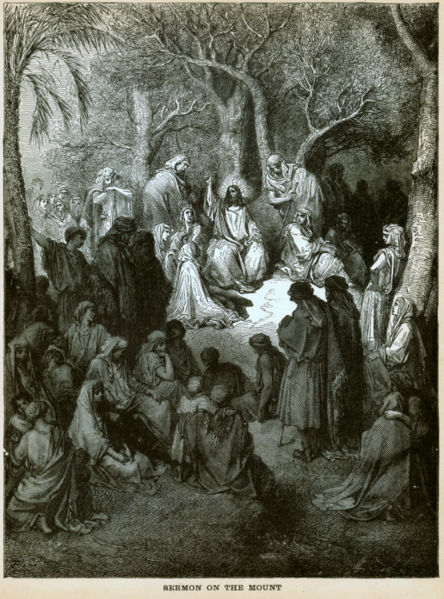
Bloch-SermonOnTheMount

Matthew 6: 1-4

“Beware of practicing your piety before others in order to be seen by them; for then you have no reward from your Father in heaven. 2 “So whenever you give alms, do not sound a trumpet before you, as the hypocrites do in the synagogues and in the streets, so that they may be praised by others. Truly I tell you, they have received their reward. 3 But when you give alms, do not let your left hand know what your right hand is doing, 4 so that your alms may be done in secret; and your Father who sees in secret will reward you.

I assume that most people who come to worship are looking to answer the question, “How can I grow closer to God? How can I understand God better?” I think we all know Jesus’ first and greatest commandment which he takes out of the book of Deuteronomy “ You are to love the Lord your God with all your heart, and with all your soul and with all your might.” In fact, this would be the heart of the Jewish understanding their responsibility to God. And yet, “How can I love God more?”Or “I want to love God, but I’m not sure I know how.” It seems like it is something we should know and it seems like it should be something we should be overjoyed to learn, but I think for many people it is a mystery. Well the good news is that over the next couple weeks we are going to be spending some time on some practices that can and do draw us closer to God. At times they may seem like sacrifices, like we are giving something up, and well to be honest we are but in many respects it is like being in love. When I have been in love in the past, I wanted nothing more than to please my beloved one and so I did things for her. Maybe I would take her to dinner, maybe I would buy her flowers, maybe I would write poetry or do things that I know she enjoyed…yes it meant sacrificing my time, my money, my resources, taking time to be in her presence to listen, yes it meant taking time away from other things-playing video games or watching TV, it also meant learning to do things together. Yet, none of this ever seemed like a sacrifice because I was in love and I wanted nothing more than to draw closer to this woman I loved.

Sometimes I think we’ve done a good job teaching you how to be a good church member, and have not done a good job of helping you become a God lover. But that is where we are going, that is what we are doing here. Ultimately we are setting aside time to be in a place where God promises to meet us and we are trying to learn how to love God. Some of the things I say over the next several weeks are not going to make sense rationally, in fact they may be downright crazy from an outside perspective-and that is how it looks on the outside when you watch two people in love. There is a lot of waste that goes on as money and time are spent on the relationship, but such is the nature of being drawn close in love.

So maybe the place to start is “what is getting in the way of letting yourself go and being in love?” What are we holding onto that we cannot let go of, what is so precious that it forms a part of who we are. Mark Allan Powell tells a story of when the early monks were going into Gaul (part of modern day France) to carry the gospel to the tribes that lived there, they noticed that when they baptized these Gallic warriors they would go into the water but they would all hold their right arm above their head, and they wondered what was going on until the next spring when the tribes went out to war against one another-then they found out. You see it was their sword arm, all of them had been baptized except that which they held out of the waters. I am baptized except with my sword arm which I can go forth and slay you with. So what are we holding out of the waters? What are we holding back from God?

Perhaps one of the things we hold out is the need for honor. It is like the person who is unwilling to dance because they fear they will make a fool of themselves while everyone else is watching and who misses out on the joy of the dance. When I went to college, there was always a major effort to have buildings name after people who were major contributors to the college, and this served to call attention to the generosity of people like H.B. Zachery, or Halbouty, or you can think of the great buildings named for a family, like the Rockerfeller center. There is prestige in showing that you have enough wealth to do things for the common person, but even among these people the amounts, although significant, probably don’t drastically affect the way that they live. Now I don’t want to diminish the giving that goes on to public works and charities, but normally it is done from our excess.

If you want to learn to love God more, be willing to give away your resources and time and not worry about what it is worth. In the Old Testament when people would bring an offering of grain or an animal, or oils or other things of value from their field they would be place on the altar and burned. What would happen if I were to take a match, strike it, bring it over to the offering plate and then drop it. I’m sure people would say, and I’m sure Erik would stop me, but people would say, “what a waste, it could be given to those in need, it can pay the light bills, it pays the pastor.” Well that’s what happened with the Old Testament too, they would provide for those in need, pay the priests, and do a lot of good-but I think there is something to the image of setting afire and putting it back into God’s hands. Later in this chapter we will hear, “where your treasures are, there your heart will be also” and it is not the other way around. We put our time and our resources and our money and our honor on the line to get our heart where it should be.

When you come here and spend time in worship, I hope you understand that you are giving God some of your time and you are putting the treasure of your time into the relationship where you want to learn to love God. You are learning to love by giving. When you take the money you earn and place it in the offering plate, or you give it to charity, or you sponsor a youth going on a trip or you give it to someone who is in need or you sponsor a child or any number of other things, I hope you begin to think, “I taking that which is precious to me and I’m giving it to God, I may not be sure how to love God yet, but I am putting my treasures where I want my heart to be.” When I go and I serve, maybe I feed the hungry, give drink to the thirsty, mourn with the sad, maybe when I visit someone who is sick or in prison, or do something to clothe the naked…I’m doing it because I trust that somehow in the midst of this serving it is a place where I can learn to love God and love my neighbor.  What am I getting out of it, maybe nothing on the front end, instead I’m seeking to live as a person in love and find ways to give what I can to the God who I love and who loves me.

Like the woman who comes and brings the perfume to pour on Jesus, it is out of love. Is it possible to love someone without spending time with them, doing things for them, giving them gifts, trying to make them happy…maybe in some abstract sense. But if I am going to be in a loving relationship I am going to try to be where my beloved is, I am going to try to be a part of the things my beloved does. I want to share their life, and I want them to share mine. And so I’m trying to live in to being the kind of person I want to be by placing my treasures, my time, my money, my resources where I want my heart to be.

purple rose 01 by picsofflowers.blogspot.com