Ezekiel as depicted by Michelangelo on the Sistene Chapel ceiling
I am glad to be coming to the end of this long journey with the prophet Ezekiel and I appreciate the work of scholars who make this book in particular their life work. Working through both Jeremiah and Ezekiel has given me a much richer view of the time leading up to and after the Babylonian exile. I have a much richer view of the history, technology, and culture of the time but also of the way this people of Israel and these prophets had to deconstruct and reconstruct their view of the world. Prior to the exile, for Judah, the Davidic king, the temple of Solomon, the city of Jerusalem (or Zion), and the land were all central images for the faith of the people and Babylon shattered all of these. Ezekiel as a prophet of primarily written word due to communicating to Jerusalem from the exile in Babylon, although many of his visions, sign acts, and proclamations were likely done for a local audience first, is a part of the transition of the people of Judah from being the people of the land, temple and king to being a people of the book. Ezekiel’s perspectives are very different, even from his elder contemporary Jeremiah and there was a lot I gained from this protracted study.
Jeremiah has often been called the ‘wailing prophet’ and his dialogues with God are often honest and pathos filled while Ezekiel only protests when God asks him to do something that offends his priestly sensibilities. In this book obedience to God is a central idea and Ezekiel is a contrast to a disobedient and rebellious people. I do think both Jeremiah and Ezekiel illustrate different aspects of a faithful relationship to the God of Israel and especially for an independently minded person like myself in an independent and individualistic culture Ezekiel’s obedience was both uncomfortable but also provided a necessary correction for me.
Ezekiel’s priestly perspective on holiness was also an uncomfortable but necessary corrective for me. Within many Protestant traditions the focus on the intimacy of the relationship with God or the closeness of God has obscured the dangerous and holy God that Ezekiel knows. This holiness in Ezekiel impacts everything from the design of the new temple to God’s reaction to the disobedience of the people. God’s holiness and the careless actions of idolatry and abomination committed by the people which defile this holiness form Ezekiel’s justification (or God’s justification in Ezekiel) for the death and suffering caused by the Babylonian destruction of Jerusalem and the exile of the people. This way of thinking and believing enabled Ezekiel and those who heard and passed on his words to make sense of the disorienting reality of their homes and beliefs being shattered by the armies of Chaldeans and their allies.
Ezekiel’s imagery can be offensive. The culture that I live in can occasionally silence offensive voices, especially in academic circles, and promote offensive voices in other contexts. Sometimes the offensive message, as in Ezekiel, can point to an uncomfortable truth. Would there be different images or words we would utilize in our context, almost certainly, but there is a reason these words have been transmitted for more than two millennia (often by hand copying the words). I think in general much of the church’s response to Ezekiel has been either embarrassment or neglect. Ezekiel may never be our favorite messenger, but I am thankful that I have taken this time to reflect on his strange and uncomfortable messages.
There were several times as I was working through Ezekiel that I noted his influence on Revelation. Even when I worked through Revelation in 2018, I wished that I could have worked through Ezekiel and Daniel first, but now the echoes of Ezekiel in Revelation are much clearer. Ezekiel may not be at the center of the cannon within the cannon for the Lutheran tradition I am a part of, but I am beginning to have a fuller grasp of the breadth, depth and width of the scriptures which have been handed on to us and the ways in which the law, the prophets, the poetry and narratives of the Hebrew Scriptures enrich and inform the New Testament and ultimately my faith.
This is the thirteenth book I have walked through, and it was one of the hardest. My faith and life were enriched by this journey, and I can appreciate this book in ways I didn’t before. Next, I will be returning to Psalms, now for Psalm 101-110, before selecting another book to begin. Back in 2022 I mapped out the journey through 1 Kings, Joel, and Ezekiel with ten psalms surrounding each reading and I am finally approaching the final leg of this group of texts from the Hebrew Scriptures.
Grigory Mekheev, Exodus (2000) artist shared work under Creative Commons Attribution-Share Alike 3.0
Ezekiel 45: 1-8 The Set Aside Portions of the LORD and the Prince
1When you allot the land as an inheritance, you shall set aside for the LORD a portion of the land as a holy district, twenty-five thousand cubits long and twenty thousand cubits wide; it shall be holy throughout its entire extent. 2Of this, a square plot of five hundred by five hundred cubits shall be for the sanctuary, with fifty cubits for an open space around it. 3In the holy district you shall measure off a section twenty-five thousand cubits long and ten thousand wide, in which shall be the sanctuary, the most holy place. 4It shall be a holy portion of the land; it shall be for the priests, who minister in the sanctuary and approach the LORD to minister to him; and it shall be both a place for their houses and a holy place for the sanctuary. 5Another section, twenty- five thousand cubits long and ten thousand cubits wide, shall be for the Levites who minister at the temple, as their holding for cities to live in. 6Alongside the portion set apart as the holy district you shall assign as a holding for the city an area five thousand cubits wide, and twenty- five thousand cubits long; it shall belong to the whole house of Israel. 7And to the prince shall belong the land on both sides of the holy district and the holding of the city, alongside the holy district and the holding of the city, on the west and on the east, corresponding in length to one of the tribal portions, and extending from the western to the eastern boundary 8of the land. It is to be his property in Israel. And my princes shall no longer oppress my people; but they shall let the house of Israel have the land according to their tribes.
As a modern Protestant Christian entering the worldview of Ezekiel the experience can seem disorienting or alien. The focus on holiness contrasts strongly with the modern Protestant Christian emphasis on the closeness and even intimacy of the relationship with God. The need to set aside holy space separated from the rest of the world has been lost to most modern people, but perhaps even stranger to us is Ezekiel’s focus on the land belonging to the LORD. The allotment of the land (literally casting lots for the land) indicates that all the land belongs to God and God can allocate the land however God chooses. The priests and Levites are highlighted for relying on God for their inheritance.
This section will be more fully developed in chapter forty eight (48:8-22) with the allocation of land to all the tribes, yet here we are given a way of looking at the holy space of the sanctuary with its bordering regions of buffer from the rest of the population. The location of this portion will be shown in chapter forty-eight, but here the focus is on the dimensions of this space surrounding the temple. This portion of land set aside by the LORD for the temple, the priests, and the Levites is slightly more than eight miles in length and six and a half miles in width, fifty square miles or 33,500 acres. (Block, 1998, p. 652) At the heart of this large section of the land is the 500 cubit square of the sanctuary and the fifty cubit buffer zone around the sanctuary.[1] The next layer of buffer is provided by the living area that the LORD provides for the priests. One half of this space (minus the area dedicated to the temple) is for the priests and their families who minister before the LORD. The remaining half of the space is for the Levites and their families. This space, designated as ‘arim which recollects the Levitical cities of Numbers 35:1-8, yet now instead of towns spread throughout the territory there is a concentrated space for the Levites to dwell. There are numerous changes throughout this section of Ezekiel to the original design of territory allocated in Numbers and Joshua, but worship is centralized in a common location in Ezekiel’s vision so the concentration of the priests and Levites in proximity to the temple is logical.
The next section that separates the holy space of the temple, priests, and Levites from the people is the ‘ahazzat ha’ir which is set aside for the whole house of Israel. This may have been a designated place for pilgrims to come to offer sacrifices or participate in the festivals to stay for the celebrations. Although there may have been a vision for structures to serve as temporary housing for the pilgrims that come, it may have also been an open space for people to set up camps or booths. Finally, there is a large section of land given to the prince (nasi) of Israel. The two sections of land for the prince should be sufficient that the prince does not need to claim the land of the people while still being able to provide for the proper sacrifices and festivals around the temple.
Ezekiel 45: 9-12 Just Expectations of Leaders and Trade
9Thus says the Lord GOD: Enough, O princes of Israel! Put away violence and oppression, and do what is just and right. Cease your evictions of my people, says the Lord GOD. 10You shall have honest balances, an honest ephah, and an honest bath. 11The ephah and the bath shall be of the same measure, the bath containing one-tenth of a homer, and the ephah one-tenth of a homer; the homer shall be the standard measure. 12The shekel shall be twenty gerahs. Twenty shekels, twenty-five shekels, and fifteen shekels shall make a mina for you.
We live with the expectation of common standards for measurement where governments maintain the standards for economic commerce. That was also expected in the practice of Hebrew society, but the lack of common measurements that allowed merchants or nobles to exploit the population were a common protest of the prophets. The best-known example is probably Amos:
Hear this, you that trample on the needy, and bring ruin to the poor of the land, saying, “When will the new moon be over so that we may sell grain; and the sabbath, so that we may offer wheat for sale? We will make the ephah small and the shekel great, and practice deceit with false balances, buying the poor for silver and the needy for a pair of sandals, and selling the sweepings of the wheat. Amos 8:4-6
Even Proverbs opines that, “A false balance is an abomination to the LORD, but an accurate weight is his delight.” Proverbs 11:1.
The prince of Israel has just received a sizeable grant of land from the LORD, and now the attention turns to the unjust ways the princes of Israel have preyed upon the people.[2] This new future for a reordered people centered around a holy temple will also be expected to be a just people. Sometimes holiness and justice, or righteousness, are looked upon as contradictory impulses but in the prophets, both are expectations of covenantal faithfulness to the LORD. Rather than preying upon the people and evicting them from their land, the LORD has provided a substantial portion for the prince with the expectation of righteousness by these princes of Israel.
The ephah and the bath are the dry and liquid units of measurement for the people. An ephah is one tenth of a homer, a unit that comes from what a donkey could carry (NIB VI: 1583)[3] Both the ephah and the bath are roughly 22 liters (5.8 gallons). The unit of measure also needs to correspond to a consistent unit of payment in the shekel and mina. Ezekiel’s shekel would be 11.4 g (0.4 oz), and the sixty-shekel mina probably is inspired by Babylon’s “sexagesimal system.” (Block, 1998, p. 657)
Ezekiel 45: 13-17 The Temple Offerings
13This is the offering that you shall make: one-sixth of an ephah from each homer of wheat, and one-sixth of an ephah from each homer of barley, 14and as the fixed portion of oil, one-tenth of a bath from each cor (the cor, like the homer, contains ten baths); 15and one sheep from every flock of two hundred, from the pastures of Israel. This is the offering for grain offerings, burnt offerings, and offerings of well-being, to make atonement for them, says the Lord GOD. 16All the people of the land shall join with the prince in Israel in making this offering. 17But this shall be the obligation of the prince regarding the burnt offerings, grain offerings, and drink offerings, at the festivals, the new moons, and the sabbaths, all the appointed festivals of the house of Israel: he shall provide the sin offerings, grain offerings, the burnt offerings, and the offerings of well-being, to make atonement for the house of Israel.
A rebuilt and rededicated temple exists for the sacrifice of the offerings of the people. Although instruction was undoubtably a part of the activities of the temple, much of the actions and learning is associated with the cultic practices of sacrifice of well-being, to atone for sin, and to give thanks for the prosperity of the people. Just as the land is a grant from God that can be rescinded, so is the prosperity the people enjoy. The requested sacrifices are modest as a percentage of the bounty of the field and flock:
To provide for these offerings wheat and barley are to be taxed at the rate of 1/6 of an ephah for every homer of grain, which amounts to a 1/60 levy, or 1.6 percent. The rate for olive oil is 1/10 a bath for every homer, or 1 percent. Sheep are to be taxed at one animal per 200, that is, at the rate of 0.5 percent. (Block, 1998, p. 659)
The people participate in bringing in the offering, but ultimately it is the responsibility of the prince to collect or provide for the actions of the temple and supply the sacrifices for the festivals as well as the regular offerings. The actions of worship are centralized in the temple and the prince centralizes the provision of offerings.
Ezekiel 45: 18-25 First Month Purification of Temple and Passover
18Thus says the Lord GOD: In the first month, on the first day of the month, you shall take a young bull without blemish, and purify the sanctuary. 19The priest shall take some of the blood of the sin offering and put it on the doorposts of the temple, the four corners of the ledge of the altar, and the posts of the gate of the inner court. 20You shall do the same on the seventh day of the month for anyone who has sinned through error or ignorance; so you shall make atonement for the temple. 21In the first month, on the fourteenth day of the month, you shall celebrate the festival of the passover, and for seven days unleavened bread shall be eaten. 22On that day the prince shall provide for himself and all the people of the land a young bull for a sin offering. 23And during the seven days of the festival he shall provide as a burnt offering to the LORD seven young bulls and seven rams without blemish, on each of the seven days; and a male goat daily for a sin offering. 24He shall provide as a grain offering an ephah for each bull, an ephah for each ram, and a hin of oil to each ephah. 25In the seventh month, on the fifteenth day of the month and for the seven days of the festival, he shall make the same provision for sin offerings, burnt offerings, and grain offerings, and for the oil.
Calendars matter in the ancient world. My one reading of the Old Testament Pseudepigrapha was enough to reinforce that reality since many of the documents struggle over calendar. The beginning of a year, particularly the beginning of a year in this new temple, requires a purification of the site for its utilization throughout the year. Although there is some debate about whether the purification done here is an annual event or an initial event with the opening of the temple at the beginning of the new year, my gut tells me that Ezekiel intends this as an annual event. The closest analogue is Exodus 40:2 where the tabernacle is set up on the first day of the first month, and the echo is likely intentional. This parallel lends support to readers who view this as an initial event, but the beginning of the year is a significant event in most cultures and an annual purification in a worldview concerned with the holiness of this space seems appropriate. The offering of the young bull without blemish on the first and seventh day of the month seems reasonable accommodation to make atonement for the temple.
Ezekiel’s brief description of the Passover is shocking for its differences from the original celebration. Passover as initially outlined in Exodus 12: 1-28 is an event that occurs at the familial level, but now the event is centralized and is a festival that people are expected to make a pilgrimage for. In Exodus 34:21-24 it appears that the Passover is one of the three times the people are to gather and Deuteronomy 16: 1-8 does envision a central place where the people would gather for the Passover, but now the prince takes the central role in providing for the Passover rather than the family and the sacrifice moves from lamb to bull, ram, and goats. “Ezekiel retains the label of the ancient rite as Passover, his ordinances call for a dramatic transformation of the festival.” (Block, 1998, p. 667) Both Hezekiah and Josiah in their reforms bring the people together to celebrate the Passover and add bulls and goats to the offering of lambs (2 Chronicles 30, 35). Yet here the lamb, so central to the imagery and story of the original Passover, is gone as is the familial role in the celebration.
Ezekiel’s perspective values a centralization of worship and activities around the temple. In addition, there is a value for the role of the prince of Israel as a provider for the festival. This may look back fondly on the times of Hezekiah and Josiah where these two kings reestablished the festival from their own resources. Another factor may be the inability of families to ensure the faithful execution of the festival in the past. The practice of the Passover in Israel seems to quickly disappear without royal and priestly encouragement. For Ezekiel, who has seen the disastrous results of the people’s idolatry and their abominable practices, a return to a less centralized celebration of this critical festival may be unthinkable.
1Then he brought me back to the outer gate of the sanctuary, which faces east; and it was shut. 2The LORD said to me: This gate shall remain shut; it shall not be opened, and no one shall enter by it; for the LORD, the God of Israel, has entered by it; therefore it shall remain shut. 3Only the prince, because he is a prince, may sit in it to eat food before the LORD; he shall enter by way of the vestibule of the gate, and shall go out by the same way.
The eastern gate of this temple is to remain closed for all human traffic because it is the path that the LORD has utilized to enter the temple. Even the priests and the prince (mentioned here for the first time in Ezekiel 40-48) must enter by the north or south gateways. The repetition of this gate remaining shut emphasizes the important nature of this command for the sanctity of the temple and the safety of the people. It also may serve as a polemic against the Babylonian New Year’s festival where Marduk is paraded from the temple and then reenters in procession to that temple’s central space. On the one hand, the LORD the God of Israel does not need human hands to carry the presence of God into the temple. Additionally, this permanent closing reinforces the LORD’s intention to be among the people forever and not to depart as the LORD’s presence did in Ezekiel 10.
The presence of the prince (Hebrew nasi) in this section will be expanded on later in Ezekiel 45:21-46:12 as the provider of offerings at festivals and a participant in those celebrations. Yet even this expansion does not offer a lot of specificity about the role of this prince of the people. On the one hand, the prince is permitted to eat before the LORD and has a special relation to the LORD. The presence of a new prince has been promised in both in Ezekiel 34: 23-24 and 37: 24-25 as a new David and one who is a faithful shepherd. Yet, this prince does not construct this temple like Solomon and Ezekiel’s focus is less upon this prince who shepherds the people, and more on the Levites and Zadokite priests who will keep the people from defiling the temple. This prince may have an honored role in God’s future but Ezekiel’s concern is primarily with priestly things and not princely things.
Ezekiel 44:4-31 The Levites and the Zadokite Priests
4Then he brought me by way of the north gate to the front of the temple; and I looked, and lo! the glory of the LORD filled the temple of the LORD; and I fell upon my face. 5The LORD said to me: Mortal, mark well, look closely, and listen attentively to all that I shall tell you concerning all the ordinances of the temple of the LORD and all its laws; and mark well those who may be admitted to the temple and all those who are to be excluded from the sanctuary. 6Say to the rebellious house to the house of Israel, Thus says the Lord GOD: O house of Israel, let there be an end to all your abominations 7in admitting foreigners, uncircumcised in heart and flesh, to be in my sanctuary, profaning my temple when you offer to me my food, the fat and the blood. You have broken my covenant with all your abominations. 8And you have not kept charge of my sacred offerings; but you have appointed foreigners to act for you in keeping my charge in my sanctuary. 9Thus says the Lord GOD: No foreigner, uncircumcised in heart and flesh, of all the foreigners who are among the people of Israel, shall enter my sanctuary. 10But the Levites who went far from me, going astray from me after their idols when Israel went astray, shall bear their punishment. 11They shall be ministers in my sanctuary, having oversight at the gates of the temple, and serving in the temple; they shall slaughter the burnt offering and the sacrifice for the people, and they shall attend on them and serve them. 12Because they ministered to them before their idols and made the house of Israel stumble into iniquity, therefore I have sworn concerning them, says the Lord GOD, that they shall bear their punishment. 13They shall not come near to me, to serve me as priest, nor come near any of my sacred offerings, the things that are most sacred; but they shall bear their shame, and the consequences of the abominations that they have committed. 14Yet I will appoint them to keep charge of the temple, to do all its chores, all that is to be done in it. 15But the levitical priests, the descendants of Zadok, who kept the charge of my sanctuary when the people of Israel went astray from me, shall come near to me to minister to me; and they shall attend me to offer me the fat and the blood, says the Lord GOD. 16It is they who shall enter my sanctuary, it is they who shall approach my table, to minister to me, and they shall keep my charge. 17When they enter the gates of the inner court, they shall wear linen vestments; they shall have nothing of wool on them, while they minister at the gates of the inner court, and within. 18They shall have linen turbans on their heads, and linen undergarments on their loins; they shall not bind themselves with anything that causes sweat. 19When they go out into the outer court to the people, they shall remove the vestments in which they have been ministering, and lay them in the holy chambers; and they shall put on other garments, so that they may not communicate holiness to the people with their vestments. 20They shall not shave their heads or let their locks grow long; they shall only trim the hair of their heads. 21No priest shall drink wine when he enters the inner court. 22They shall not marry a widow, or a divorced woman, but only a virgin of the stock of the house of Israel, or a widow who is the widow of a priest. 23They shall teach my people the difference between the holy and the common, and show them how to distinguish between the unclean and the clean. 24In a controversy they shall act as judges, and they shall decide it according to my judgments. They shall keep my laws and my statutes regarding all my appointed festivals, and they shall keep my sabbaths holy. 25They shall not defile themselves by going near to a dead person; for father or mother, however, and for son or daughter, and for brother or unmarried sister they may defile themselves. 26After he has become clean, they shall count seven days for him. 27On the day that he goes into the holy place, into the inner court, to minister in the holy place, he shall offer his sin offering, says the Lord GOD. 28This shall be their inheritance: I am their inheritance; and you shall give them no holding in Israel; I am their holding. 29They shall eat the grain offering, the sin offering, and the guilt offering; and every devoted thing in Israel shall be theirs. 30The first of all the first fruits of all kinds, and every offering of all kinds from all your offerings, shall belong to the priests; you shall also give to the priests the first of your dough, in order that a blessing may rest on your house. 31The priests shall not eat of anything, whether bird or animal, that died of itself or was torn by animals.
Charles Taylor, in his massive work A Secular Age, talks about the way the ancient world was viewed by its inhabitants as a ‘porous’ place with specific thin places where the holiness of the divine or the profanity of the demonic could come into contact with the people. These spaces were both places of great blessing and great danger, and it required the actions of the entire community to maintain a proper relationship with the divine to prevent the holiness of the God the community worshipped from either abandoning the protection of the community or actively inflicting punishment on the community. (Taylor, 2007, pp. 25-90) The purpose of the ordinances and regulations, the Levites, the priests, and the prophets within this world is to protect the holiness of the temple, the holy place for the city and people, as well as the life and prosperity of the people. Proximity to the LORD the God of Israel is a fraught reality and careless trespassing of the LORD’s holy space, in addition to the other ethical covenant violations of the people led to the departure of the LORD from the previous temple and the exile of the people. In this reconfigured world where the LORD will be present in the temple, the priests and Levites must maintain this holy space in a proper and respectful manner to the powerful God who resides at the center of the temple.
Up to this point in the temple vision Ezekiel has been asked to see and observe, but now Ezekiel’s focus moves to hearing and reporting. As Katheryn Pfisterer Darr states:
Until this point in the vision, Ezekiel has been called to focus attention upon everything his guide shows him (40:4); now, he is told to focus attention upon everything Yahweh tells him (44:5)… attention turns from the visual revelation of Yahweh’s glory filling the Temple (v.4) to God’s aural revelation in the form of ordinances and instructions concerning access to the Temple and its personnel. (NIB VI:1573)
Ezekiel is now giving actions that prescribe and prohibit activities within the temple to ensure that the temple remains undefiled and the people are protected from the holy and yet dangerous presence of God. The Levites, the priests, and the structure all separate the mundane from the holy, the clean from the unclean.
This temple vision which includes the return of the LORD to Israel is a renewal of Ezekiel’s call. The people have been receiving messages of hope from the prophet but now his role is to form a new way of being for the people to operate in this hopeful and reordered future. To ensure this future Ezekiel becomes a new lawgiver providing critical actions the people must do to remain in a good relationship with their God and covenant partner. The departure of the people from Mosaic Torah has been drastic, and even the Levites have followed the people in their abandonment of the LORD. Now the reorganized temple and people have restated laws and ordinances to order their lives.
Although foreigners working in the temple was not mentioned earlier in Ezekiel 8 when the previous temple was examined the influence of foreigners on the policies and worship of Israel and Judah has been a regular part of the narration of Israel’s history. These foreigners may have been visiting dignitaries who participated in the celebrations of the people, but they may also have had some official function in the temple. It is conceivable that they would serve as guards since most kings of this time had foreigners who served in their household and military.[1] It is also possible that Israel and Judah, in their fascination with their neighbors, brought other religious leaders into the temple. Leviticus rejects even offerings coming from a foreigner as unacceptable,[2] yet this seems to be one of many ordinances that were either forgotten or ignored in the practice of the people. Now a reordered temple requires the right people performing the right tasks to ensure that the LORD’s offerings are holy.
The Levites were originally set apart for responding faithfully to Moses when the rest of the people abandoned themselves to the worship of the golden calf.[3] Now as the people strayed from following the covenant of the LORD the Levites followed the people and some may have led the people astray. The Levites are to bear responsibility for the space of worship and bear the responsibility for their own offenses and the offenses that happen within that space.[4] They stand between God and Israel and the consequences for their actions. Daniel Block quotes Jacob Milgrom’s note on the implications of this position for the Levites:
the Levites function as a “lightning rod to attract God’s wrath upon themselves” for Israel’s sin… for their own failure to guard the house against encroachment, the Levites will experience Yahweh’s punishment. Because of their guilt they may not perform the most sacred aspects of the temple ritual. (Block, 1998, p. 629)
The Levites serve as a focal point for God’s punishment and they become the ones who must bear it for the people. They also are charged with the security of the temple and ensuring the separation of the holy from the mundane. They will not participate in the full work of the Zadokite priests, but they do serve as a buffer between the people and the priests. The access of the people to the inner court has been removed and the priests now stand in this place securing the sanctuary but also preparing the burnt offerings and other sacrifices for the people.
The priests were originally Aaron and his family, referred to as the Elide line of the priesthood. The descendants of Aaron by the time of Eli had become corrupt and were eliminated by God (1 Samuel 3-4). Zadok becomes high priest under David and is one of the people who backs Solomon in his ascension to kingship at the end of David’s life.[5] Ezekiel may come from this line of Zadok and Ezra who will lead the renewal of the temple in a rebuilt Jerusalem is also from this line.[6] Ezekiel implies that the Zadokites never departed from the covenant while the Levites did, and because of their faithfulness they are given the central role in the ministry of the temple. We encountered the Zadokites previously in 40:46 as the priests who have charge of the altar and in 43:19 in the purification of the altar. Now these Zadokite priests have the privilege and responsibility of ministering before the LORD.
To minister before the LORD requires attention to the care of one’s body and clothing. The vestments, mentioned earlier in 42:14 where these vestments are to be stored, are to be linen, and the priest is not to wear any wool that would cause perspiration before the LORD. Sweat or any bodily excretion was viewed as a defiling thing.[7] In a similar manner the regulations on cutting hair or disfigurement are brought forward from Leviticus 21. Just as the animals brought for the sacrificial acts were to be unblemished, those who were to stand before God were not to be sweaty, not to have shaved their heads nor have unkempt hair. They also were not to drink and by their inebriation do something that would bring defilement to the space and offend the presence of God. For these priests there is an element of cleanliness being required to be in the space of godliness. Everything in this reordered temple among the reestablished priesthood was to have its proper actions and places. The Zadokites have no inheritance among the land, they are to trust in the LORD and the people of God to provide for them. They have no other responsibility than the maintenance of the holy temple. These priests are given the privilege of eating the offerings provided for the LORD, and that should satisfy them.
The priests are also to be holy in their relationships. Priests are only allowed to marry a virgin from the house of Israel or the widow of another priest. Their presence in this critical role before God requires a certain distance from the people. This concern for purity was also behind Ezra’s denunciation of mixed marriages for both priests, Levites, and even the people of Israel.[8] The priest were also not allowed to be in the presence of a dead person unless it is a very close relative (father, mother, son, daughter, brother, or unmarried sister) and even in the case of a close relative they must undergo a week for purification before they can resume priestly duties. Their job before the LORD is of critical importance in the life of the people and it impacts every aspect of their lives and relationships.
The priestly role has three components. First, they are commanded to educate the people in matters holy and profane, unclean and clean. Second, the priests are charged with responsibility for the administration of justice according to the law. The priests and religious leaders in Israel have been the ones with access to the law of God and are charged with ensuring that judgments are handled according to God’s law. Finally, the priests were to be models of obedience to the will of God. (Block, 1998, pp. 642-643) The temple was to be the center of life for the people, and the priests who ministered in the temple were to ensure that the actions that defiled the temple and the people in the past are not repeated.
[1] For example many of David’s mighty men are foreigners (2 Samuel 23:8-38).
[7]Deuteronomy 23:9-14 discusses nocturnal emissions and the necessity of covering excrement. For Ezekiel sweat likely falls under this type of consideration for defiling this holy space. Sweat is not prohibited in the camp, but only in this place in close proximity to the LORD.
Schematic of Ezekiel’s Temple drawn by Dutch architect Bartelmeüs Reinders, Sr. (1893–1979) released into public domain by artist.
Ezekiel 42:1-14
1 Then he led me out into the outer court, toward the north, and he brought me to the chambers that were opposite the temple yard and opposite the building on the north. 2 The length of the building that was on the north side was one hundred cubits, and the width fifty cubits. 3 Across the twenty cubits that belonged to the inner court, and facing the pavement that belonged to the outer court, the chambers rose gallery by gallery in three stories. 4 In front of the chambers was a passage on the inner side, ten cubits wide and one hundred cubits deep, and its entrances were on the north. 5 Now the upper chambers were narrower, for the galleries took more away from them than from the lower and middle chambers in the building. 6 For they were in three stories, and they had no pillars like the pillars of the outer court; for this reason the upper chambers were set back from the ground more than the lower and the middle ones. 7 There was a wall outside parallel to the chambers, toward the outer court, opposite the chambers, fifty cubits long. 8 For the chambers on the outer court were fifty cubits long, while those opposite the temple were one hundred cubits long. 9 At the foot of these chambers ran a passage that one entered from the east in order to enter them from the outer court. 10 The width of the passage was fixed by the wall of the court.
On the south also, opposite the vacant area and opposite the building, there were chambers 11 with a passage in front of them; they were similar to the chambers on the north, of the same length and width, with the same exits and arrangements and doors. 12 So the entrances of the chambers to the south were entered through the entrance at the head of the corresponding passage, from the east, along the matching wall.
13 Then he said to me, “The north chambers and the south chambers opposite the vacant area are the holy chambers, where the priests who approach the LORD shall eat the most holy offerings; there they shall deposit the most holy offerings — the grain offering, the sin offering, and the guilt offering — for the place is holy. 14 When the priests enter the holy place, they shall not go out of it into the outer court without laying there the vestments in which they minister, for these are holy; they shall put on other garments before they go near to the area open to the people.”
Holy space and holy things are important in the life of a people whose life is centered around a holy God. Holiness is an under appreciated concept in many Christians, particularly in protestant traditions. For many Christians we expect the intimacy of God drawing close to us in Christ and the Spirit without appreciating the terrifying nature of God’s power and holiness. Most of the early followers of Jesus and even the Reformers understood the mystery of God’s was, to use the words of Rudolph Otto, were both fascinating (fascinans) and terrifying (tremendum). There was a deep understanding for reformers like Martin Luther of their own unworthiness to be in the holy presence of God, but in a world where intimacy has eclipsed holiness Ezekiel’s visions of holy space and holy vestments seem strange and alien to many modern readers.
Throughout the bible there is a concern about holiness and its opposite impurity or defilement. Impurity desecrates holy places and things. The idolatrous practices in the previous temple (Ezekiel 8–10) have led to God abandoning that people and by extension this defiled people. God’s vision was for Israel to be a priestly kingdom and a holy nation (Exodus 19:6) where God’s presence could dwell among them in the temple that bore God’s name. Instead, the people, places and things became corrupted by the abominations that Ezekiel has continually protested.
The recreation of sacred space has been the focus of this and the previous two chapters, a place where God’s presence can again dwell among the people. The text is full of rarely used words and so even the translation is provisional and any visual portrayal lacks both the necessary dimensions and precision, but the complete visualization of the space is probably not the intent. As Daniel Block states:
The burden of the present account is to show that the holiness of the sacred space extends beyond the concentric design of the temple complex to the form of the auxiliary structures, and the conduct of humans within those structures. (Block, 1998, p. 568)
For the priests to work in the presence of the holy God, they must be separated from the rest of the people of Israel. These concentric rings of increasing holiness provide a buffer between the complete holiness of God, the set aside Levites and priests, the people and ultimately the nations. Even the clothing worn in the service of God is not to depart the place and risk contamination beyond the walls. The priests are to dress and eat in this holy place they inhabit before the God of the people.
In the New Testament, particularly with Jesus, holiness will be ‘contagious’ and overwhelm uncleanness and unholiness. A prime example of this is Jesus healing leper who are unclean due to their illness. Yet, throughout the law and the prophets the primary fear is the unclean coming into the presence of the holy. Many scholars use the language of uncleanness contaminating the holiness of God, but I prefer to think of it as offending or perhaps being repellant to God. That is the entire thrust of Ezekiel’s frequent highlighting of the abominations and desecrations of the people that have made all of Israel, even the holy space of the previous temple, abhorrent to the God of Israel.
Ezekiel 42: 15-20
15 When he had finished measuring the interior of the temple area, he led me out by the gate that faces east, and measured the temple area all around. 16 He measured the east side with the measuring reed, five hundred cubits by the measuring reed. 17 Then he turned and measured the north side, five hundred cubits by the measuring reed. 18 Then he turned and measured the south side, five hundred cubits by the measuring reed. 19 Then he turned to the west side and measured, five hundred cubits by the measuring reed. 20 He measured it on the four sides. It had a wall around it, five hundred cubits long and five hundred cubits wide, to make a separation between the holy and the common.
The vision of the new temple moved from the exterior walls, through the gates into the outer courtyard, through a second set of gateways into the inner courtyard and the temple itself along the “central spine of sacrality” (Block, 1998, p. 571) leading to the most holy place. Then remaining in holy space are the places and spaces for the set aside priests to do their work on behalf of the LORD without being contaminated by the people. Now as the description of this holy space is completed we are taken to the exterior of the temple structure to view the total dimensions of the space. This five hundred cubit (eight hundred sixty feet) long walls on each side structure separate the mundane exterior from the holy spaces within these walls.
The walls, which are more like the walls of a fortified city than most temples in the ancient world, could be used as a defensive structure. Yet, for Ezekiel’s purposes they are primarily to separate holy space from mundane space. The walls prevent the unholiness of the people from coming into contact with the holiness of the LORD. Ultimately these walls and gates protect the people from defiling this sacred space and lead to a perfectly ordered temple for a reordered people to assemble around. The return of the divine presence will also need a reestablished priesthood, a renewed practice of the practices of faith, and ultimately a reordered land. Yet, in a Jewish view, this holy space where the presence of God dwells among the people is a central part of this renewed people of God.
1 And you, O mortal, take a sharp sword; use it as a barber’s razor and run it over your head and your beard; then take balances for weighing, and divide the hair. 2 One third of the hair you shall burn in the fire inside the city, when the days of the siege are completed; one third you shall take and strike with the sword all around the city; and one third you shall scatter to the wind, and I will unsheathe the sword after them. 3 Then you shall take from these a small number, and bind them in the skirts of your robe. 4 From these, again, you shall take some, throw them into the fire and burn them up; from there a fire will come out against all the house of Israel.
An uncomfortable prophet becomes the embodiment of an uncomfortable message. The God of Israel has transformed from being the protector of Jerusalem to being actively engaged in the scattering and death of the people of Jerusalem. This culmination of the sign-act which through lying on one side, eating a restrictive diet, constructing a model of the siege and now the shaving of the prophet’s hair by a sword has deconstructed the identity of the prophet to demonstrate the destructive forces that are being unleased on Jerusalem. Ezekiel among the prophets has the greatest concern for ritual purity in relation to the Levitical understanding of a priest. Near the end of the book of Ezekiel he will note that priests are not to shave their heads (Ezekiel 44: 20) and this follows the prohibition of shaving bald spots on their heads or shaving the edges of their beards in mourning for all priests (Leviticus 21: 5, see also Deuteronomy 14: 1 where this practice is extended to all people). As before the command of the LORD pushes Ezekiel past the boundaries of what is expected of a priest and perhaps removes him from the role of the priesthood to serve as a strange prophet with a message that embodies the LORD’s disgust at what Israel has become.
Priests were prohibited from shaving their heads, even in the act of mourning but the use of a sharp sword as the instrument may point to the experience of shaving as a mark of dishonor or humiliation as part of a military defeat. Jerusalem is facing a military catastrophe as the continued image of the siege demonstrates. Ezekiel has already been instructed to cook his food in a way that violated his understanding of faithfulness to God’s law, and yet here Ezekiel does not protest. Ezekiel has been commanded to be obedient in contrast with the people. The implication is that the prophet does shave his head and beard, weighs his hair, and divides it in thirds according to the instructions. Two thirds of the city are represented destroyed either within or outside the city by the burning or striking of the representative thirds and the remnant remains under threat of God unsheathing the sword after them. Only a small number is bound to the prophet in order to remain safe.
Ezekiel 5: 5-17
5 Thus says the Lord GOD: This is Jerusalem; I have set her in the center of the nations, with countries all around her. 6 But she has rebelled against my ordinances and my statutes, becoming more wicked than the nations and the countries all around her, rejecting my ordinances and not following my statutes. 7 Therefore thus says the Lord GOD: Because you are more turbulent than the nations that are all around you, and have not followed my statutes or kept my ordinances, but have acted according to the ordinances of the nations that are all around you; 8 therefore thus says the Lord GOD: I, I myself, am coming against you; I will execute judgments among you in the sight of the nations. 9 And because of all your abominations, I will do to you what I have never yet done, and the like of which I will never do again. 10 Surely, parents shall eat their children in your midst, and children shall eat their parents; I will execute judgments on you, and any of you who survive I will scatter to every wind. 11 Therefore, as I live, says the Lord GOD, surely, because you have defiled my sanctuary with all your detestable things and with all your abominations — therefore I will cut you down; my eye will not spare, and I will have no pity. 12 One third of you shall die of pestilence or be consumed by famine among you; one third shall fall by the sword around you; and one third I will scatter to every wind and will unsheathe the sword after them.
13 My anger shall spend itself, and I will vent my fury on them and satisfy myself; and they shall know that I, the LORD, have spoken in my jealousy, when I spend my fury on them. 14 Moreover I will make you a desolation and an object of mocking among the nations around you, in the sight of all that pass by. 15 You shall be a mockery and a taunt, a warning and a horror, to the nations around you, when I execute judgments on you in anger and fury, and with furious punishments — I, the LORD, have spoken — 16 when I loose against you my deadly arrows of famine, arrows for destruction, which I will let loose to destroy you, and when I bring more and more famine upon you, and break your staff of bread. 17 I will send famine and wild animals against you, and they will rob you of your children; pestilence and bloodshed shall pass through you; and I will bring the sword upon you. I, the LORD, have spoken.
If you are making this journey with me through Ezekiel it quickly becomes uncomfortable to hear these harsh words of judgment from God directed at Jerusalem recorded in these first five chapters. This strange prophet’s declarations are unfamiliar to most people who are used to a less judgmental version of Christianity. As Katheryn Pfisterer Darr can state,
Ezekiel has a difficult time securing a place in mainstream Christianity. With a few well-known exceptions (e.g., the valley of dry bones vision in 37: 1-14), his oracles seldom make their way into lectionary readings and sermons, for they are deemed too severe, too complex, and too painful to set before our congregations and Bible study groups. And Ezekiel makes us uncomfortable—a sentiment we surely share not only with his original audience in exile, but also with two and a half millennia of his interpreters, both Jewish and Christian. Among the early rabbis, for example, we find the opinion that reading the book’s beginning and ending was too dangerous to be undertaken by anyone younger than thirty years of age. (NIB VI:1129)
This particular prophetic unit is, “one of the harshest that is delivered to the nation anywhere in Tanakh. It remains difficult to read, even as we are removed by so many generations.” (Ganzel, 2020, p. 54) Yet, even with the harshness and difficulty of reading Ezekiel I still believe it has something to teach us about a passionate God and a people who were once a treasured possession, a holy people, and a nation of priests (Exodus 19: 5-6) but now are viewed as impure and disgusting.
Jerusalem has ceased to be Zion, the home of God. Their privileged status has been forfeited at this time in their story with God, and Ezekiel is concerned with both pronouncing the change of status but also communicating the cause for this change. Throughout the first five chapters we have heard the charge that the people have rebelled against God’s statutes and ordinances. They were intended to be a witness to the righteousness of God revealed to them by the covenant. Instead, they failed to even live up to the righteousness of the nations[1] (ordinances of the nations in NRSV) and this is the root of the LORD’s anger with his people.
Ezekiel frequently uses the language of purity/impurity from the law, particularly Leviticus. Ezekiel uses the terms ‘detestable things’ (Hebrew shikkutzim) and ‘abominations’ (Hebrew to’evot) for the first of more than eighty uses throughout his prophecies. Detestable things typically refer to impure creatures which are forbidden as food, but in Ezekiel they normally refer to the idolatrous practices which have defiled the temple and the people. Abominations in the law are things that is, “hateful, disgusting, or worthy of condemnation.” (Ganzel, 2020, p. 51) and throughout Ezekiel these are the items that defile the bond between husband and wife, the land, the temple, Sabbath, and even God’s name. For Ezekiel these detestable things and abominations corrupt the people, the land, and even the temple making them impure and disgusting to God. The treasured possession is polluted, the holy people are unholy, and the nation of priests have become idolatrous.
The judgment echoes the language of the curses in the law[2] as well as what is found in other prophets.[3] It also remembers the cannibalism that is reported during the siege of Samaria under Ben-Hadad as referenced in 2 Kings 6: 24-41. Ezekiel adds to the reports of eating children or other residents with the reversal of children eating parents. The stress and starvation of siege warfare can make people abandon their humanity in the struggle to survive. Yet, for Ezekiel the Babylonians are not the primary oppressors of Jerusalem. The Babylonians are merely their God’s deadly arrows of famine and destruction.
The God presented by the prophets has a surprisingly human range of emotions from passionate love to anger. Years ago, when I was working through Jeremiah I realized this was the language of a broken-hearted God. God is grieving the loss of what could have and perhaps should have been with the people. Is God reacting rationally, absolutely not, God is reacting emotionally in Ezekiel. This is a painful text which causes us to ask difficult questions. What would cause God the heartbreak which leads to this rage? What actions cause God’s people to go from treasured possessions to detestable things and abominations? How do we explain the disasters within our lives, our churches, and our society and does God have a role in those disasters? What are the ‘idols’ that we trust instead of the God we claim to worship? What are the obligations of our identity as the people of God? All challenging questions without easy answers. The prophet finds himself caught between a rebellious people and a passionate God. He occupies that uncomfortable place of faithfulness is a time a judgment. Yet, even the prophet’s faithfulness may look like disobedience to the strict ideas of purity. There are no easy answers in Ezekiel. The first half of the book leads us unrelentingly to the destruction of Jerusalem, and it is only in the second half where the hope for the surviving remnant can be voiced.
[1] Hebrew mishpat haggoyim this would be a strong condemnation from the perspective of a law observant Hebrew. The righteousness of the Gentiles would be an oxymoron to the Jewish people who viewed themselves as the bearers of God’s vision of righteousness. Ezekiel argues they would not even maintain the standard of those outside the covenant.
Model of the Tabernacle as seen in Timna Park, Israel shared by author through Creative Commons Attribution-Share Alike 3.0
Exodus 40:1-33 Moses Finishes the Work of the Tabernacle
The LORD spoke to Moses: 2 On the first day of the first month you shall set up the tabernacle of the tent of meeting. 3 You shall put in it the ark of the covenant, and you shall screen the ark with the curtain. 4 You shall bring in the table, and arrange its setting; and you shall bring in the lampstand, and set up its lamps. 5 You shall put the golden altar for incense before the ark of the covenant, and set up the screen for the entrance of the tabernacle. 6 You shall set the altar of burnt offering before the entrance of the tabernacle of the tent of meeting, 7 and place the basin between the tent of meeting and the altar, and put water in it. 8 You shall set up the court all around, and hang up the screen for the gate of the court. 9 Then you shall take the anointing oil, and anoint the tabernacle and all that is in it, and consecrate it and all its furniture, so that it shall become holy. 10 You shall also anoint the altar of burnt offering and all its utensils, and consecrate the altar, so that the altar shall be most holy. 11 You shall also anoint the basin with its stand, and consecrate it. 12 Then you shall bring Aaron and his sons to the entrance of the tent of meeting, and shall wash them with water, 13 and put on Aaron the sacred vestments, and you shall anoint him and consecrate him, so that he may serve me as priest. 14 You shall bring his sons also and put tunics on them, 15 and anoint them, as you anointed their father, that they may serve me as priests: and their anointing shall admit them to a perpetual priesthood throughout all generations to come.
16 Moses did everything just as the LORD had commanded him. 17 In the first month in the second year, on the first day of the month, the tabernacle was set up. 18 Moses set up the tabernacle; he laid its bases, and set up its frames, and put in its poles, and raised up its pillars; 19 and he spread the tent over the tabernacle, and put the covering of the tent over it; as the LORD had commanded Moses. 20 He took the covenant and put it into the ark, and put the poles on the ark, and set the mercy seat above the ark; 21 and he brought the ark into the tabernacle, and set up the curtain for screening, and screened the ark of the covenant; as the LORD had commanded Moses. 22 He put the table in the tent of meeting, on the north side of the tabernacle, outside the curtain, 23 and set the bread in order on it before the LORD; as the LORD had commanded Moses. 24 He put the lampstand in the tent of meeting, opposite the table on the south side of the tabernacle, 25 and set up the lamps before the LORD; as the LORD had commanded Moses. 26 He put the golden altar in the tent of meeting before the curtain, 27 and offered fragrant incense on it; as the LORD had commanded Moses. 28 He also put in place the screen for the entrance of the tabernacle. 29 He set the altar of burnt offering at the entrance of the tabernacle of the tent of meeting, and offered on it the burnt offering and the grain offering as the LORD had commanded Moses. 30 He set the basin between the tent of meeting and the altar, and put water in it for washing, 31 with which Moses and Aaron and his sons washed their hands and their feet. 32 When they went into the tent of meeting, and when they approached the altar, they washed; as the LORD had commanded Moses. 33 He set up the court around the tabernacle and the altar, and put up the screen at the gate of the court. So Moses finished the work.
One year after the beginning of the journey the new year begins with the assembly of the tabernacle. On the first day of the first month of the second year there is a new opportunity to begin again. Just as the previous year began with the people’s position as slaves ending and their journey into the wilderness as the people of the LORD the God of Israel began, now here at the beginning of year two they witness the completion of their work for a dwelling for the LORD in their midst. The tent of meeting previously had been outside the camp and a place where only Moses and Joshua would go to. The LORD’s dream of dwelling among the people was shattered in the betrayal by Aaron and the rest of the people with the golden calf.
The craftsmen Bezalel and Oholiob and all the craftsmen and women of Israel who were a part of creating the curtains, bars, the ark, the altars, the incense and the anointing oil have completed their work. They have taken the gifts of the people, the best of precious metals, stones, fabric, spices and oils and they have used their divinely inspired talents to create this space where the LORD’s presence can inhabit. It is to be a little bit of heaven on earth, a place that can be holy because the one who will inhabit it will be holy. It is an offering of reconciliation from the people. The gifts and the work become a communal act of apology and hope that the LORD who brought them out of Egypt will come and abide in their midst.
Moses is the one who is charged with completing the work and the repetitive refrain ‘as the LORD commanded Moses’ emphasizes the obedience of Moses. The phrase occurs initially encompassing all the work and then seven additional times as it details the completion of each portion. Seven indicates completion in the bible and so the number of times the phrase is repeated is probably not a coincidence. The careful articulation also mirrors the seven days of the creation narrative and this human work of creation is offered up to the Creator of the heavens and the earth.
Moses fulfils the function that Aaron and his sons are not yet ready to perform. Moses is a holy person, a person who can go and speak to God face to face as one speaks to a friend. Moses is allowed to go into the holy spaces with the LORD. Aaron and his sons will be washed but they will still need to be ordained for their ministry to begin. In our time we are skeptical of the idea of holy people, holy place and holy things but this story points to reality that, “holy acts by holy persons in holy places give access to the liberating, healing, forgiving power of the holy God.” (Actemeir, 1997, pp. 977, Vol. 1) Moses as a holy person consecrates the act of the people, lifts up their offering to God of this place created to be holy and completes the work of the people in creating the tabernacle.
Exodus 40: 34-38 God Dwells Among the People
34 Then the cloud covered the tent of meeting, and the glory of the LORD filled the tabernacle. 35 Moses was not able to enter the tent of meeting because the cloud settled upon it, and the glory of the LORD filled the tabernacle. 36 Whenever the cloud was taken up from the tabernacle, the Israelites would set out on each stage of their journey; 37 but if the cloud was not taken up, then they did not set out until the day that it was taken up. 38 For the cloud of the LORD was on the tabernacle by day, and fire was in the cloud by night, before the eyes of all the house of Israel at each stage of their journey.
The book of Exodus ends on a hope filled note. Reconciliation has occurred to the point where God will dwell among the people. The tent of meeting becomes filled with the presence of God, the tabernacle has been accepted as a dwelling place for the holiness of the LORD of Israel. The betrayal of the golden calf has been overcome and there is a new possibility as the journey can now continue. The people of God now enter the precious and dangerous vocation of journeying with God. Moses has held together the people and the LORD through the journey from Egypt to Sinai. They are not to the promised land, but they are a people of hope. They no longer dwell under the oppression of the king of Egypt, they are a people whose God dwells among them, has established the covenant with them, and will now journey with them to the promised land. They are a people of the law which points to a new way of living, a different way than the ways of the land of Egypt they were taken out of. They are a people. They are a people who the LORD has provided for throughout their journey and promises to continue to provide for. They are a people who are expected to live a life of obedience and thankfulness for the calling they have received. Their journey continues, and they will be a people on the move. They have journeyed far but there are still many miles and many experiences that lay before they inhabit the promised land. But for now, the book of Exodus closes on a note of hope: God has forgiven. A small portion of God’s vision for the people has now been fulfilled. The journey with God continues for Moses and the people. It is a new year, a chance at a new beginning for the pilgrim people of God.
View from the Summit of Mount Sinai, Picture by Modammed Moussa. Shared under Creative Commons Attribution-Share Alike 3.0
Exodus 19: 1-9 Borne on Eagles Wings to Sinai
On the third new moon after the Israelites had gone out of the land of Egypt, on that very day, they came into the wilderness of Sinai. 2 They had journeyed from Rephidim, entered the wilderness of Sinai, and camped in the wilderness; Israel camped there in front of the mountain. 3 Then Moses went up to God; the LORD called to him from the mountain, saying, “Thus you shall say to the house of Jacob, and tell the Israelites: 4 You have seen what I did to the Egyptians, and how I bore you on eagles’ wings and brought you to myself. 5 Now therefore, if you obey my voice and keep my covenant, you shall be my treasured possession out of all the peoples. Indeed, the whole earth is mine, 6 but you shall be for me a priestly kingdom and a holy nation. These are the words that you shall speak to the Israelites.”
7 So Moses came, summoned the elders of the people, and set before them all these words that the LORD had commanded him. 8 The people all answered as one: “Everything that the LORD has spoken we will do.” Moses reported the words of the people to the LORD. 9 Then the LORD said to Moses, “I am going to come to you in a dense cloud, in order that the people may hear when I speak with you and so trust you ever after.”
The book of Exodus spends the first thirteen chapters with the people in Egypt and with the LORD and Moses working to get Pharaoh to let the people go. I originally thought of the book of Exodus being primarily about the physical journey out of Egypt to the promised land but it is telling that the movement of the people in the book comes to an end here. The books of Numbers, the beginning of Deuteronomy and ultimately the book of Joshua will narrate the long remaining journey into the promised land but in Exodus the movement ends at Mount Sinai. The LORD has made the journey out of Egypt and through the wilderness possible but the events at Mount Sinai will occupy over half of the book of Exodus.
The image of the people being borne on eagles’ wings probably takes many people to the lyrical adaptation of Psalm 91, ‘and he will lift you up on eagles’ wings, bear you on the breath of dawn, make you to shine like the sun and hold you in the palm of his hands.’ This image of God bearing the people on eagles’ wings is a poetic metaphor that gets used in the song of Moses in Deuteronomy 32where the LORD is the mother eagle hovering over her chicks and lifting them into the air with her feathers as well as being a metaphor used in several Psalms (Psalm 17:8, 36:7, 57:1, 61:4, and 63:7 all mention being sheltered in God’s wings as well as the Psalm 91:4 mentioned above). This powerful image of nurturing strength resonated with the people of Israel and continues to resonate with many people today. While metaphors never completely express who God is, they bear witness to a portion of the divine identity and here the motherly attributes of a mother bird as well as the strength of the protective eagle combine in this potent image. The LORD of Israel is a God of strength who can take the people out of Egypt like a warrior, but who like a mother provides food, water and shelter. Ultimately the destination of the people in Exodus is to come into the wilderness to meet God.
In coming chapters, we will see in greater detail what obedience will mean for the covenant people but here Israel is called to be God’s treasured possession, a kingdom of priests and a holy nation. What each of these three vocations is to mean has been a rich territory for scholarly and holy imagination. We may, with our current sensitivities, be a little uncomfortable with the first vocation where the people of Israel are called to be a treasured possession: possession may call to mind images of slavery or chattel (where women, slave, and children were possessions and not people) but we need not take this image in this way. Israel will occupy a special place in the LORD’s heart and while being drawn near to God in this way in vulnerable for both the people and the LORD. The prophet Jeremiah, for example, will bear witness to a God who is wounded by the people’s betrayal and who wants to find a way to restore the relationship and yet deals intensely with the pain of the brokenness. As Isaiah 43 can state, “Do not fear, for I have redeemed you; I have called you by name you are mine….I give Egypt as your ransom, Ethiopia and Seba in exchange for you. Because you are precious in my sight” (Isaiah 43: 1,3-4)
The people of Israel as a priestly kingdom can also be taken in several directions. On the one hand, there is the intercessory role that may be a portion of this calling. Priests in the ancient world were those who interceded between God and the people. While there is a cultic aspect of the priest’s role in offering prayers and sacrifices in the temple to God there is also the didactic role. The priests will be responsible for reading and interpreting the Torah, the law of God. Perhaps as the priests of Israel will intercede for the people of Israel with God, so the people will intercede on behalf of the nations and the world with God. Perhaps as the priests verbally read and interpret the law to the people so the people may be expected to interpret through their words and actions the content of the law to the nations around them. Both functions occupy a lot of space in the Old Testament: Leviticus for example focuses a lot of text on the priestly/cultic function while Deuteronomy and much of the second half of Exodus focuses on interpreting the law. Rabbi Jonathan Sacks also points to an additional function that may have been a part of this calling: being a society of universal literacy. While the Hebrew people probably didn’t come close to universal literacy in the ancient world he makes an intriguing argument for this type of education being essential for their being able to work with a law that can be read and written. Universal literacy which takes writing and reading out of the hands of the elite and makes possible “a non-hierarchical society” (Sacks, 2010, p. 136) If the people were to be a society different from the Egyptian society they left, and much of the law will be contrasted to their experience of being slaves in Egypt, then a worthy goal would be having a society that could read and write the law of their God and understand as individuals how they were called to live. In this respect, it could be paralleled to Martin Luther’s idea of the priesthood of all believers which required a program of catechetical instruction for all believers into what the basics of faith were.
As a holy people, a people sanctified for a purpose they also have a rich vocation within this calling of being a treasured possession and a priestly kingdom. Their lives as a part of this covenant are set aside to be something different. One of the struggles of both the people of Israel and modern people of faith is the struggle to differentiate their lives from the lives of everyone else. For the people of Israel there will be concrete practices and actions that they do that help to be a boundary marker for who they are as the people of God. Yet, the temptation will be to model their lives based on the lives of the nations around them (especially nations more powerful than them) rather than on the calling their LORD has given them. There will be times where the Torah seems to be lost or forgotten and yet, as Jeremiah can hope there will come a time where the LORD will put the law within them and write it on their hearts (Jeremiah 31: 33).
To be the people of God will be a way of life. The book of Exodus will begin the process of unpacking what it will mean to live as the covenant people of God, as God’s treasured possessions, as a priestly kingdom and as a holy people. The journey is not only the journey out of Egypt to the promised land. It is also a journey from slavery in Egypt to being a people equipped to stand in the presence of God and intercede for the nations and be bearers of the law of God.
Exodus 19: 9b-25 The Consecration of the People and the Approach of the LORD
When Moses had told the words of the people to the LORD, 10 the LORD said to Moses: “Go to the people and consecrate them today and tomorrow. Have them wash their clothes 11 and prepare for the third day, because on the third day the LORD will come down upon Mount Sinai in the sight of all the people. 12 You shall set limits for the people all around, saying, ‘Be careful not to go up the mountain or to touch the edge of it. Any who touch the mountain shall be put to death. 13 No hand shall touch them, but they shall be stoned or shot with arrows;1 whether animal or human being, they shall not live.’ When the trumpet sounds a long blast, they may go up on the mountain.” 14 So Moses went down from the mountain to the people. He consecrated the people, and they washed their clothes. 15 And he said to the people, “Prepare for the third day; do not go near a woman.”
16 On the morning of the third day there was thunder and lightning, as well as a thick cloud on the mountain, and a blast of a trumpet so loud that all the people who were in the camp trembled. 17 Moses brought the people out of the camp to meet God. They took their stand at the foot of the mountain. 18 Now Mount Sinai was wrapped in smoke, because the LORD had descended upon it in fire; the smoke went up like the smoke of a kiln, while the whole mountain shook violently. 19 As the blast of the trumpet grew louder and louder, Moses would speak and God would answer him in thunder. 20 When the LORD descended upon Mount Sinai, to the top of the mountain, the LORD summoned Moses to the top of the mountain, and Moses went up. 21 Then the LORD said to Moses, “Go down and warn the people not to break through to the LORD to look; otherwise many of them will perish. 22 Even the priests who approach the LORD must consecrate themselves or the LORD will break out against them.” 23 Moses said to the LORD, “The people are not permitted to come up to Mount Sinai; for you yourself warned us, saying, ‘Set limits around the mountain and keep it holy.'” 24 The LORD said to him, “Go down, and come up bringing Aaron with you; but do not let either the priests or the people break through to come up to the LORD; otherwise he will break out against them.” 25 So Moses went down to the people and told them.
Climbing the Trail Near the Summit of Mount Sinai, Photograph by Mark A. Wilson. Copyright holder released work into public domain.
One of the losses of the Christian tradition in recent times has been the loss of this transcendental holiness of the approach of God. One of the central features of the Christian narrative is the descent of God into the mundaneness of humanity. For the past couple centuries, there has been both a philosophical and religious movement away from focusing on this transcendent holiness. Even within my tradition seasons like Lent and Advent, once times of fasting and prayer and times of preparation for holiness, have lost this movement of sanctification. Perhaps this is inevitable in the disenchanted and more secular world in which we live but as I look at this passage I wonder how much we have lost.
The people prepare for three days for the approach of the LORD. They wash, they abstain from sexual activity, they stay away from the sacred space and they prepare for this approach of God at Mount Sinai. Here is the approach of God in all of God’s awesome power. In a description of a scene like the eruption of a volcano with fire, smoke, earthquake and lightning God approaches the people and Moses comes to introduce the LORD to the people and to stand between them. Moses and Aaron will go up to the mountain and speak with the LORD, but the people are witnesses to this display of God’s powerful approach.
There is something dangerous in the approach of God and the people are to keep their distance. One of the great tensions in the book of Exodus is the desire of the LORD to tabernacle (dwell) among the people and the danger the people’s unholiness presents for themselves in the presence of God. The people will struggle with the presence of God. On the one hand, they will want continued demonstration of God’s provision and power against their enemies. On the other hand, the presence of God is a terrifying reality and one they do not want to draw too close to. A God who bears the power to bring the Egyptian army, its Pharaoh and its gods to their knees is not a safe and controllable deity. As a priestly kingdom, they come into the presence of God for the sake of the world, and their priestly vocation is not a safe one. As a treasured possession, they are the ones that God wants to draw close to God’s presence and they are to be a nation sanctified for the sake of the world. They are made holy to be able to dwell in the presence of the numinous and awesome holiness of the LORD.
<A Psalm of David.> 1 O LORD, who may abide in your tent? Who may dwell on your holy hill? 2 Those who walk blamelessly, and do what is right, and speak the truth from their heart; 3 who do not slander with their tongue, and do no evil to their friends, nor take up a reproach against their neighbors; 4 in whose eyes the wicked are despised, but who honor those who fear the LORD; who stand by their oath even to their hurt; 5 who do not lend money at interest, and do not take a bribe against the innocent. Those who do these things shall never be moved.
How does one prepare to enter the sacred spaces of the world, those places where the presence of the divine makes holy the profane? In many cultures there are a number of rituals one must undergo to purify oneself and prepare to enter the holy places of the world-those places where heaven and earth seem to meet. Even within the Bible there are places where there are actions that the priest must do to prepare for their tasks and in places like Leviticus 21: 17-21 and Deuteronomy 23: 1-6 there are limits placed upon who may enter the tabernacle or the temple to serve. Yet here, in Psalm 15, as is frequently the case in the Psalms and prophets there is no physical requirements, exclusions or cultic actions that prepares one to enter into the house of the LORD, instead the focus is on the way one lives out one’s relationship with one’s neighbor. Perhaps echoing this Psalm, the prophet Micah can say:
“With what shall I come before the LORD, and bow myself before the God on high? Shall I come before him with burnt offerings, with calves a year old? Will the LORD be pleased with thousands of rams, with ten thousand rivers of oil? Shall I give my firstborn for my transgression, the fruit of my body for the sin of my soul? He has told you, O mortal, what is good; and what does the LORD require of you but to do justice, and to love kindness, and to walk humbly with your God. Micah 6: 6-8
In contrast to the duplicitous hearts in Psalm 12 and those who say in their hearts “there is no God” as in Psalm 14, stand the righteous ones who speak truth from the heart and who honor and fear God are allowed to enter into the presence of God. It is one’s life in relation to one’s neighbor that prepares one to enter into the temple or tabernacle, one’s life in the mundane life of community that is the preparation for the sacred encounter with God. Loving one’s neighbor and living as truthful and righteous people toward the community is preparation for encountering God in the promised communion. As Rolf Jacobson can state, “when the Lord extends an invitation for a person to enter the sacred space, God insists that one’s neighbors are also invited.” (Nancy deClaisse-Walford, 2014, p. 173)
This short Psalm has a number of phrases that point towards what a life that is prepared to see God’s presence not only in the holy spaces but in the normal secular spaces of life as well. Speaking truth from one’s heart refers both to a person whose speech reflect truly their own character but also their character is pure and peaceful as well. The refuse to speak of a neighbor in a way that compromises the person’s participation within the community but instead as Martin Luther can talk about in his explanation to the eighth commandment:
We are to fear and love God, so that we do not tell lies about our neighbors, betray or slander them, or destroy their reputations. Instead we are to come to their defense, speak well of them, and interpret everything they do in the best possible light. (Luther, A Contemporary Translation of Luther’s Small Catechism, 1978, p. 20)
While we may struggle a little initially with the language of, “in whose eyes the wicked are despised” there is a strong need for the community not to tolerate or ignore things that are contrary to the justice their God has called for. When we turn a blind eye or accept, for example, the abuse of children or the oppression of the homeless then we have also turned away from the God who cares for the children and the vulnerable. After wrestling with Deuteronomy and Jeremiah I’ve come to appreciate the urgency the people of Israel felt for attempting to create a society that lived into the vision God called them to. A trustworthy society where the words and actions represented the God’s dream for them and the world. A society where mercy for one’s neighbor was more important than profit one could make upon one’s neighbor by charging interest to them in their need.
The Psalm is a bold vision and a vision that is challenging in our time. It is a vision that looks at holiness in terms of how we treat our neighbors rather than some version of piety or orthodoxy. In this Psalm and in many other places, particularly in the Psalms and prophets, issues of proper attire or cultic actions are disregarded or at least given a far lower place than one’s relationship with the neighbor. In the Sermon on the Mount, Jesus can echo this sentiment when he talks about leaving one’s gift before the altar to be reconciled to one’s neighbor (Matthew 5: 23-24). In contrast to the previous three Psalms, where one finds oneself in the position where the wicked seem to be prospering, the Psalmist now returns to the vision of the first Psalm, where the LORD watches over the righteous and they will not be moved. Their words and their actions truthfully come out of their heart and even when their truthful words and actions or their willingness to stand with their neighbor causes them hurt they are not moved. They look at the world through the lens of mercy rather than profit, through the lens of love rather than acquisition and they are perhaps ready to enter into the sacred spaces of the world where God meets them because they lived a godly life in the secular places of life.
Wojceich Stattler, Machabeusze (Maccabbes) Public Domain Art
I think I need to be clear at this point that while I am doing a historical trek through Israel’s story, I am not trying to do a history of Israel at this point, or even of the Hebrew Scriptures. I am intentionally trying to locate where authority rested within their story. Within key transitions the places of authority do change and how the people react to that authority changes and see how that might inform our current questions of authority. Hence, while it might be interesting to focus in greater detail on particular events, or to spend more time interpreting what is going on within a particular piece of scripture or what the theology of a particular author might be, that will have to be for another time and place as we continue on through the story.
A humorous illustration before we proceed. The Hebrew people remain deeply suspicious of external authorities which exercise authority over them, and so there will remain an antagonism between them and those who come to occupy their land. In another Monty Python reference we have the scene of the French Castle where the French refuse to recognize Arthur’s authority. For this period the Hebrew people will stubbornly resist assimilation by the empires that they are a part of.
Beginning around 538 BCE, during the reign of Cyrus of Persia, there is the beginnings of the return to Jerusalem and Judea. There are at least four major stages of the return which span a period of roughly 80 years, longer than the original period of exile, and even with the final return many of the people choose to remain settled and scattered throughout the empires of the day. The diaspora (the dispersion) those Jewish people scattered throughout the empire continue to at various levels maintain their practices and stories that make them distinguishable from the nations around them, but I will be focusing in on the remnant that returns to the promised land since that is where the final pieces of the remembered story of the Hebrew Scriptures (or Old Testament) come from.
Over the eighty years of re-establishment, many of the people return and their first concern is the reclamation of their land (or perhaps in some cases the claiming of land for their family).Remember that in an agrarian society land is the primary source of wealth and power. It takes a great deal of effort by the leaders and prophets to get the people to focus on the effort to rebuild the temple, and even once it is rebuilt it cannot compete with the memory of the former temple. In the memory of the people it is a shadow of the greatness of their past. Even with the codification of the Torah (law-quite possibly Deuteronomy) by Ezra and the completion of the city wall under Nehemiah, Jerusalem and what remains of the former nation are completely dependent on the will of the nations around them. The temple worship does regain some of its former status as one authority figure, but in the absence of a true monarch-temple authority that has the power to authorize the story of the people, the written and oral set of practices begin to take on a greater and greater role of what it means to be the chosen people.
Internal fault lines begin to emerge, not that they didn’t exist previously, but issues of purity and justice come into conflict with one another. At least, in the remembered story it seems that in the time of re-establishment purity becomes the dominant issue, the removal of foreign influences—even when it means disbanding families—and being a ‘purer’ Hebrew people who worship the one Lord in holiness. This is the mark of a society intent on establishing and maintaining boundaries between the insider and the outsider—and I don’t mean this to sound as critical as it may sound—when one feels the world is out to destroy you it is natural for an us/them (or Jew/Gentile) dichotomy to emerge. Yet even though this seems to be the dominant voice a counter-voice emerges, the prophetic voice that never went away and attempts to refocus the central focus on justice. Although there is a strong presence of the prophetic voice in the collected scriptures, it also never seems to gain the influence to reframe the story to create the type of society the prophets imagine.
Certainly within the prophetic voice, but also within the population there is disillusionment with the way things are. Things are not the way people hoped they would be, the temple is a shell of its former self, different religious groups vie for power and influence among the people, various incarnations of leaders try to rally the people with varying levels of success-but the reality is that for most of this 500 year stretch they are a people under the rule first of the Persians, then briefly under Greece. When the Greek empire splits up into the Ptolemaic Empire (in the South) and the Seleucid Empire (in the North) Jerusalem will find itself firmly at the middle of the struggle for power.
A final defining moment comes in 167 BCE with the Maccabean revolt, an event commemorated by Hanukkah today and remembered in the books named Maccabees, where the pressure of the outside influence to conform to a Hellenistic (Greek) culture causes a religious revolt which for a brief moment grants Jerusalem its independence. It is short lived, but it gives the people a memory of their practices defining themselves as a people who are willing to die for what they believe in. Again this is not universal, there are certainly those willing to accommodate, but there are also those willing to revolt, and that fire will not go out again for some time.
Deep divisions continue to grow within Judaism. They will not be fully in control of their own destinies after the fall of the Maccabees , but the hope for a new king, a new David, a messiah will persist. Religious authority will split between Saducees, who predominantly control the temple and accommodate with the kings like Herod, or whichever government official Rome places to govern Judea. With Herod the Great (who rules from 40 BCE-6 CE) reconstructing the temple in magnificent fashion (at a magnificent cost) the Sadducees are able to operate from a position of privilege. The Pharisees in contrast are more of a people’s movement focused on maintaining their identity through purity and right practice of the Torah. There are other groups, the Essenes who pull away and isolate themselves to remain pure, the zealots intent on driving the foreign influence from the promised land. Herod and Rome have the military authority, the Saducees in partnership with the Roman authorities run the temple and all is in a state of tension at the turning of the ages. We are approaching a great turning point in the story, from one group will emerge two-one that is new and one that will be completely reshaped. It is to the turning of the ages that we turn next.
Thus says the Lord of hosts, the God of Israel, to all the exiles whom I have sent into exile from Jerusalem to Babylon: Build houses and live in them; plant gardens and eat what they produce. Take wives and have sons and daughters; take wives for your sons, and give your daughters in marriage that they bear sons and daughters; multiply there, and do not decrease. But seek the welfares of the city where I have sent you into exile, and pray to the Lord on its behalf, for in its welfare you will find your welfare. Jeremiah 29. 4-7 NRSV
Even when the world as you know it ends, life still goes on, and we have to make sense of the conflict, the struggle and our place within it. The communal memory becomes important, the stories parents have told their children, the history of families. In the midst of competing narratives what is the story that one can identify with? With the loss of the Davidic monarchy, the temple, the land of their ancestors the people did something amazing, they recast their identity. They dug deep into their narrative, they began bringing together their stories, and in fact much of the Old Testament is brought together at this point. Stories of creation and exodus begin to be the patterns in which the present is made sensible and the community begins to come up with answers to the hardest question, “why did this happen?” They don’t come up with just one answer, they come up with many. They bring together their stories and the Torah (typically translated into English as law, but it is a term that is much more than what we understand as law in our context) begins to be center of their life. Practice and story come together to bind together this community in exile.
This does not mean that everyone agrees, there is not a central authorizing authority for the narrative at this point, it is constructed mainly by the remnant of the elite (everyone else would have been illiterate at this point) from both the priestly and prophetic side. Some of the central ideas to emerge include:
Justice: a sense of living in harmony (shalom) with God’s desire for the way things are to be structured in society. This includes a strong sense of economic justice, compassion for the widows, orphan, immigrant, and the dispossessed. It is from this vision that many prophets operate out of, and this is a central image for the prophetic hope. The new Jerusalem, the new Israel is to be a place of justice where the nations around can look and say “Come, let us go up to the mountain of the Lord, to the house of Jacob; that he may teach us his ways and that we may walk in his paths” (Isaiah 3b, NRSV) and within God’s plan the nations will stream to Jerusalem.
Purity/Holiness: For us there is often a tension between Purity/Holiness and Justice, but it was not necessarily seen that way by the Jewish people. Especially for priests there are practices that are to be done to prevent the contamination of unholiness from infecting them as a people and making them repulsive to the holiness of God. It also becomes a powerful way of distinguishing between themselves as a Hebrew people and the nations around them who are the Gentiles, the unclean ones. This tends to be more of a priestly focus and there are conflicts between which will dominate going forward, but at the root both justice and holiness are practices which distinguish them from the hostile surrounding culture.
With these two distinctive directions emerges a new strand of a hope for a new beginning, a new temple, a New Jerusalem, a new anointed (and Davidic) king, a messiah. Wrapped up within the memory of the stories of creation and the exodus of the people from Egypt hope springs forth of a return home and a new beginning:
Do not remember the former things, or consider the things of old. I am about to do a new thing: now it springs forth, do you not perceive it? I will make away in the wilderness and rivers in the desert. The wild animals will honor me, the jackals and the ostriches; for I give water in the wilderness, rivers in the desert, to give drink to my chosen people, the people who I formed for myself so that they might declare my praise. Isaiah 43.18-21
2nd Isaiah (Isaiah 40-55, which reflects the time of preparation for the return home, while Isaiah 1-39 deals with the time before the exile) in particular is full of this vibrant hope, along with other voices. Empires rise and empires fall, and a generation later Babylon falls to Persia (modern day Iran) and Cyrus (who Isaiah interestingly calls Messiah/Christ-same word in Hebrew/Greek) makes possible the beginning of a return home. Their stories and practices have maintained their identity and given them hope of a new beginning. With the return to Jerusalem, the land, and the possibility of reconstructing the temple comes yet another transition. It is to that transition that we turn next.
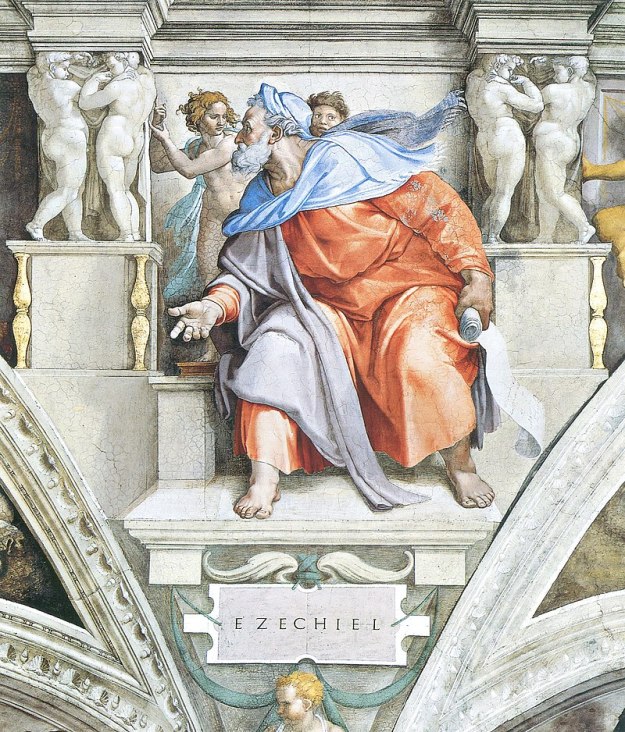


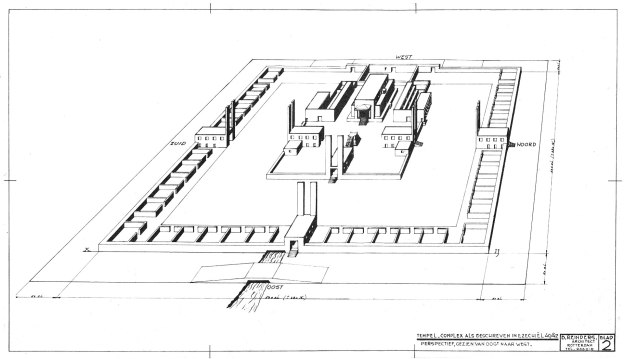


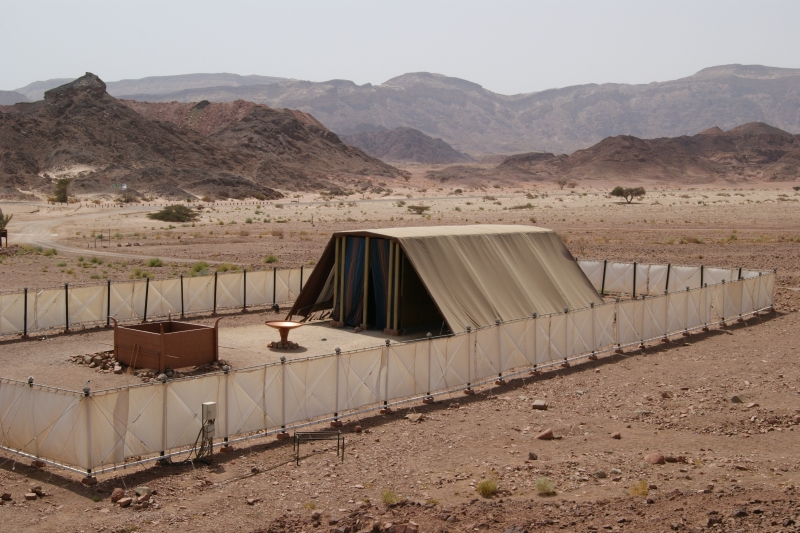



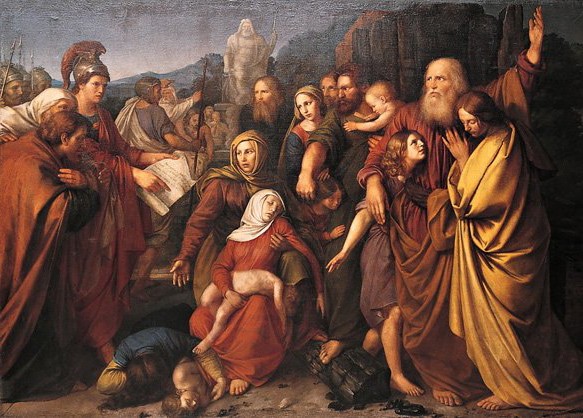

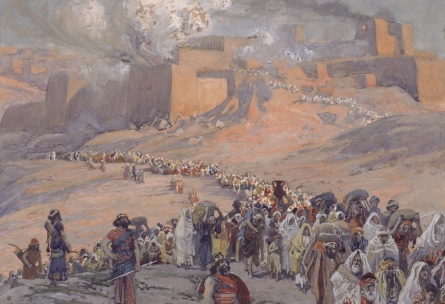
 Sign of the Rose