Tag Archives: Historical Fiction

Review of the Girl in the Tower by Katherine Arden (2018)

Five Star Book Review

Katherine Arden, The Girl in the Tower

For me a five-star book is something that either I want to read again or something that is so profound it makes an immediate impact. There are lots of ways that books can be compelling: a unique idea, an interesting set of characters, a complex plot, an artistic use of the English language and more. Reading is also a subjective experience, so what appeals to me as a reader may be very different for you. I read a lot for both pleasure and work, but these short reviews are a way for me to show my appreciation for the work and the craft of the author of the reviewed work.

The Girl in the Tower is the middle book of the Winternight Trilogy, and it picks up in the aftermath of The Bear and the Nightingale. Vasya and her magnificent horse Solovey now set off to travel away from her home of Lesnaya Zemla where her father can no longer protect her from being viewed as a witch. She sets off on a journey as a traveler but quickly finds herself rescuing girls stolen by bandits and reunited with her brother Sasha who is a monk, a renowned warrior, and a trusted advisor of the crown prince of Moscow. She disguises herself as a boy and her brother, and later her sister Olya in Moscow, are caught up in this deception. From pursuing bandits raiding small villages in the woods to the world of court in Moscow and the appearance of the strange noble Kasyan this is a story with an even richer world than The Bear and the Nightingale. One of the things I appreciate about this story is that it is honest about the danger of Vasya as a woman attempting to navigate a different path where the only two options available for women are marriage and the convent.  

Katherine Arden does a remarkable job of portraying the world of this story. A time where Russia still owed allegiance to the Tatars but is beginning to yearn for independence, when the Russian Orthodox church reigns supreme in Moscow but the old practices and myths still have a hold in the rural areas. It is a winter story, but it is also a story of winter losing its hold to spring. For Vasya it is also a coming-of-age story and I appreciate the tension in the relationship between Vasya and the Winter King Morosko, but that there is an acknowledgement that this cannot be a simple love story. In the words of the characters:

                “Love?” he (Mososko) retorted. “How? I am a demon and a nightmare; I die every spring, and I will live forever.”

                She waited.

                “But yes,” he said wearily. “As I could, I loved you. Now will you go? Live.”

                “I, too,” she said. “In a childish way, as girls love heroes that come in the night, I loved you.” (336)

Even in a world that still has a little magic in it, maidens do not easily surrender their hearts to myths nor do inhuman ‘gods’ warm quickly to the maiden. Yet, Katherine Arden does a remarkable job of creating the tension which is formed by their bond. I really enjoy this mixture of fantasy with historical fiction and myths and folk stories of medieval Russia. I wrote in my review of The Bear and the Nightingale that the story felt like returning to a home I never knew, and the characters and environment made me feel at home with them once again in this second book of the Winternight trilogy. I look forward to returning to The Winter of the Witch later this year.  
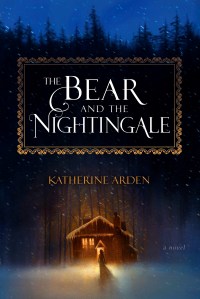
Review of The Bear and the Nightingale by Katherine Arden

Five Star Book Review

Katherine Arden, The Bear and the Nightingale

For me a five-star book is something that either I want to read again or something that is so profound it makes an immediate impact. There are lots of ways that books can be compelling: a unique idea, an interesting set of characters, a complex plot, an artistic use of the English language and more. Reading is also a subjective experience, so what appeals to me as a reader may be very different for you. I read a lot for both pleasure and work, but these short reviews are a way for me to show my appreciation for the work and the craft of the author of the reviewed work.

The Bear and the Nightingale feels like a story told around an oven in a home snowed in for the winter, a story of magical creatures and grown ups who cannot see the magic of the world any longer. Vasya, the main protagonist, is both mischievous and kind and has a strong enough will to resist the machinations of her stepmother and father. There are many of the classic elements you find in fairy tales, for example a wicked stepmother, but I enjoyed the interweaving of distinctive Russian elements to the story: from the Russian orthodox painting of an iconostasis by Father Kostantin to the domovoy, rusalka, leshy, and other elements of eastern European folk stories. Although Morozko and his brother Medved, who the conflict of the story rotates around, have the classic good verses evil polarity, Morozko is not simply good and Medved is more animalistic hunger than evil. It is a story of family, of faith both in the sense of religion and in the sense of magic, and for the main character it is the beginning of a coming-of-age story for a woman who will determine her own course in a world where women do not write their own stories.

I read the entire Winternight trilogy several years ago, and I was deeply impressed with Katherine Arden’s debut novels. Returning to this novel was like returning to a home I never knew. The characters are great, but I think it was the way she narrated the atmosphere of the story that invited me in to dwell in this magical world for a time. This is a work of historical fantasy, so the magical events are caught up in the history of the Russian people and I really appreciated the way she allowed me to live a snapshot of an imaginary life in a magic infused slice of this world defined by winter. I look forward to continuing through the remainder of this series with Vasya, Morozko, and the rest.

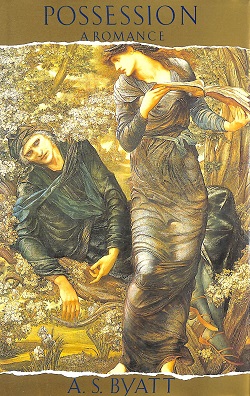
Review of Possession by A. S. Byatt

Time Magazine Top 100 Novels

Book 73: Possession by A. S. Byatt (1990)

This is a series of reflections reading through Time Magazine’s top 100 novels as selected by Lev Grossman and Richard Lacayo published since 1923 (when Time magazine was founded). For me this is an attempt to broaden my exposure to authors I may not encounter otherwise, especially as a person who was not a liberal arts major in college. Time’s list is alphabetical, so I decided to read through in a random order, and I plan to write a short reflection on each novel.

S. Byatt’s Possession is exactly the type of treasure I hoped to discover when I embarked on reading through the Time Magazine top 100 novel list, a truly gorgeous work in its use of the English language, method of telling the story, and its truly rich characters. There were several times I would stop and remark how beautiful a poem, letter, or dialogue was. I could identify with almost all the characters in this book and see a portion of myself reflected in each of them. It is a novel of stories within stories that is often told by the imagined writing and correspondence between the characters. It begins when Roland Mitchell, an underemployed scholar of the fictional poet Randolph Henry Ash, discovers in a volume Ash used two drafts of a letter to an unknown woman. Roland retains the letter and begins his quest to discover who this unknown woman is and to see if their relationship, whatever it may be, sheds any light on the work of Ash. Once his investigation leads him to the poet Christabel LaMott he is introduced to Maud Bailey, a feminist scholar with a keen interest in LaMott both as a writer and as a distant relative. Together they discover a collection of letters between these two poets which leads them into a re-evaluation of the lives of both the poets the study and themselves as they both become captured in this quest to uncover the story of this previously unknown but highly impactful relationship. Although Roland and Maud have not published their discovery, rumors begin which also brings Maud’s former lover and scholar Fergus Wolf, English Ash scholar and Roland’s boss James Blackadder, American Ash scholar and collector Mortimer Cropper, American feminist and Cristabel LaMott scholar Leonora Stern, and a scholar who studied Ellen Ash, Randolph’s wife, Beatrice Nest into the pursuit of the correspondence, Maud and Roland who disappear for a time, and the truth of this previously unknown relationship.

Possession is a phenomenal story, but the creation of the poetry of both Randolph Henry Ash and Christabel LaMott as well as a beautiful set of letters between them is incredible. This was a joy to read. The narration evoked a rich sense of the people and the landscapes they encountered. Some of the best use of descriptive language I have ever read. The correspondence was frequently as poetic as the actual poems created and it made me wish I could read more of both poets. There were surprises all the way to the end of the book and I was awestruck with this incredible piece of literary artwork. I loved this book.

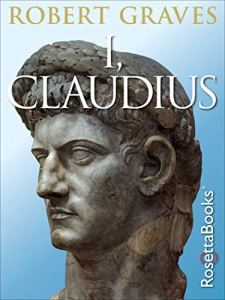
Review of I, Claudius by Robert Graves

Time Magazine Top 100 Novels

Book 46: I, Claudius by Robert Graves

This is a series of reflections reading through Time Magazine’s top 100 novels as selected by Lev Grossman and Richard Lacayo published since 1923 (when Time magazine was founded). For me this is an attempt to broaden my exposure to authors I may not encounter otherwise, especially as a person who was not a liberal arts major in college. Time’s list is alphabetical, so I decided to read through in a random order, and I plan to write a short reflection on each novel.

I, Claudius is a fascinating first-person narration of the life of Tiberius Claudius Caesar Augustus Germanicus (or Claudius) who would become the fourth emperor of Rome. The novel takes the historical backdrop of Rome under emperors Augustus, Tiberius, and Caligula and portrays the world of the elites of the Roman empire. Claudius is often overlooked because of his lameness and his stuttering, but he learns to use his sharp mind as a historian. He is despised initially by Augustus and his wife Livia but late in his life Augustus realizes that his evaluation of Claudius has been mistaken. The novel portrays Claudius, presumably late in his reign as emperor, setting down an honest history of the Roman empire complete with assassinations, the debauchery of those in power, and the dangerous world that those in proximity to the Caesars must navigate.

As a person with some familiarity of the early Roman empire the book was a fascinating interweaving of fact and conjecture. Robert Graves gives a personality to these figures so often portrayed in statues and shows the humanity and sometimes the depravity of these men who will be viewed as deities throughout the empire. Livia occupies a major place in the narrative and is portrayed as a ruthless manipulator of Augustus and Tiberius. Yet, after her death it also becomes clear how she has kept the worst tendencies of Tiberius under control. Claudius is presented as a character who it is easy to empathize with, who endures the loss of his brothers, his first love, and is constantly at risk of being eliminated by Livia, Tiberius, and eventually Caligula. Yet, he survives all of them and to his dismay is eventually named the emperor of Rome.

This is a great example of early twentieth century historical fiction. Graves does a masterful job of inviting the reader into the time of Augustus, Tiberius, and Caligula without expecting the reader to be well versed in the history of the first century, but remains believable by a reader who is familiar with it. I look forward to reading more from Robert Graves and will probably read Claudius the God the sequel next.