Tag Archives: Hebrew Bible

2 Kings 15 The Stability of Judah in Contrast to the Instability of Samaria

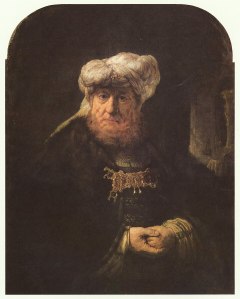
The King Uzziah Stricken with Leprosy, by Rembrandt, 1635.

2 Kings 15: 1-7 King Azariah (Uzziah) of Judah

 1In the twenty-seventh year of King Jeroboam of Israel, King Azariah son of Amaziah of Judah began to reign. 2He was sixteen years old when he began to reign, and he reigned fifty-two years in Jerusalem. His mother’s name was Jecoliah of Jerusalem. 3He did what was right in the sight of the Lord, just as his father Amaziah had done. 4Nevertheless, the high places were not taken away; the people still sacrificed and made offerings on the high places. 5The Lord struck the king so that he had a defiling skin disease to the day of his death and lived in a separate house. Jotham the king’s son was in charge of the palace, governing the people of the land. 6Now the rest of the acts of Azariah and all that he did, are they not written in the Book of the Annals of the Kings of Judah? 7Azariah slept with his ancestors; they buried him with his ancestors in the city of David; his son Jotham succeeded him.

King Azariah, also known as King Uzziah, has a long and successful reign over Judah. Uzziah and Azariah are used interchangeably in scriptures and even in this chapter and Uzziah was likely the name he assumed as king of Judah. His fifty-two-year reign begins in the middle of the forty-one year reign of Jeroboam II and both kings enjoy a period of military success and national resurgence. Azariah’s long and stable reign contrasts with his two predecessors (Joash and Amaziah) who saw the royal and temple treasuries diminished and in their political or military weakness were ultimately assassinated by those who served them. The stability during the time of Azariah in Judah also contrasts sharply with the instability in Samaria after the death of Jeroboam II.

Although 2 Kings does not spend a lot of time on the reign of Azariah/Uzziah his story is greatly expanded in 2 Chronicles 26. According to 2 Chronicles Azariah/Uzziah is a successful military leader who wins victories over Philistia, Ammon and extends Judah’s trade and military influence over the region. 2 Kings 14:22 gives a small window into the king’s success when it notes, “He rebuilt Elath and restored it to Judah after King Amaziah slept with his ancestors.” This small note indicates a large accomplishment only shared by Solomon, Jehoshaphat and Hezekiah. This gave Judah a port on the Mediterranean but also required them to control not only the port but the wilderness between. Alex Israel notes that he controls both major highways between Egypt and Mesopotamia, a lucrative trade route and source of income for the nation. (Israel, 2019, p. 227) 2 Chronicles also notes that King Uzziah strengthened the city walls of Jerusalem and increased the agricultural output of the land by his improvements and built up the army.

2 Kings’ brief account of this king who did what was right in the sight of the LORD ends with the jarring note that the LORD struck the king with ‘a defiling skin disease.’ This skin disease was traditionally rendered leprosy in most translations although we now believe that Hanson’s disease (which is what we call leprosy today) did not exist in the Middle East during this time. Yet, this affliction was normally associated with a judgment from God, and 2 Chronicles tells of the king entering the temple to offer incense, the job of the priests, and being struck with ‘leprosy’ as a punishment. Ultimately in 2 Chronicles the king is punished for overstepping his responsibility, attempting to fulfill both the kingly and the priestly role and ends his life separated from the palace and his responsibilities were assumed by his son Jotham until he died.

It is interesting that 2 Kings does not go into the success and fall of Azariah/Uzziah in the same manner as 2 Chronicles. Perhaps the narrator of 2 Kings doesn’t want to focus on the military success of Azariah in contrast to the lack of success by Joash and Amaziah who are both evaluated as kings who did what was right in the site of the LORD and at the same time does not want to focus on the act that leads to the king’s affliction. Despite the short narration of Azariah’s lengthy reign it is a consequential time as Judah remains stable as Northern Israel becomes chaotic and is one generation from collapse. This is also a time of prophetic voices and Isaiah (first Isaiah), Amos, Hosea, and Micah all give voice to this time in Israel and Judah.

2 Kings 15: 8-12 The Brief Reign of Zechariah King of Israel and the End of the Jehu Dynasty

  8 In the thirty-eighth year of King Azariah of Judah, Zechariah son of Jeroboam reigned over Israel in Samaria six months. 9 He did what was evil in the sight of the Lord, as his ancestors had done. He did not depart from the sins of Jeroboam son of Nebat that he caused Israel to sin. 10 Shallum son of Jabesh conspired against him and struck him down in Ibleam and killed him and reigned in place of him. 11 Now the rest of the deeds of Zechariah are written in the Book of the Annals of the Kings of Israel. 12 This was the promise of the Lord that he gave to Jehu, “Your sons shall sit on the throne of Israel to the fourth generation.” And so it happened.

The message of the LORD to Jehu after the destruction of the Omri dynasty indicated that his line would continue for four generations (2 Kings 10:30) and now after the death of Jeroboam II, the fourth generation, the Jehu dynasty collapses six months later. Jehu’s line ruled in Samaria for ninety-two years and it was enjoying a period of success under Jeroboam II, but the public murder of Zechariah ignites a power for struggle that will be violent and ultimately weaken Northern Israel as the Assyrian empire under Tiglath-Pileser III ascends. Zechariah is the first of a group of inconsequential kings in Samaria whose cumulative impact is very consequential in weakening Israel in a dangerous world.

2 Kings 15: 13-31 A Tumultuous Period in Israel

  13Shallum son of Jabesh began to reign in the thirty-ninth year of King Uzziah of Judah; he reigned one month in Samaria. 14Then Menahem son of Gadi came up from Tirzah and came to Samaria; he struck down Shallum son of Jabesh in Samaria and killed him; he reigned in place of him. 15Now the rest of the deeds of Shallum, including the conspiracy that he made, are written in the Book of the Annals of the Kings of Israel. 16At that time Menahem sacked Tiphsah, all who were in it and its territory from Tirzah on; because they did not open it to him, he sacked it. He ripped open all the pregnant women in it.

  17
In the thirty-ninth year of King Azariah of Judah, Menahem son of Gadi began to reign over Israel; he reigned ten years in Samaria. 18He did what was evil in the sight of the Lord; he did not depart all his days from any of the sins of Jeroboam son of Nebat that he caused Israel to sin. 19King Pul of Assyria came against the land; Menahem gave Pul a thousand talents of silver, so that he might help him confirm his hold on the royal power. 20Menahem exacted the silver from Israel, that is, from all the wealthy, fifty shekels of silver from each one, to give to the king of Assyria. So the king of Assyria turned back and did not stay there in the land. 21Now the rest of the deeds of Menahem and all that he did, are they not written in the Book of the Annals of the Kings of Israel? 22Menahem slept with his ancestors, and his son Pekahiah succeeded him.

  23
In the fiftieth year of King Azariah of Judah, Pekahiah son of Menahem began to reign over Israel in Samaria; he reigned two years. 24He did what was evil in the sight of the Lord; he did not turn away from the sins of Jeroboam son of Nebat that he caused Israel to sin. 25Pekah son of Remaliah, his captain, conspired against him with fifty of the Gileadites and attacked him in Samaria, in the citadel of the palace along with Argob and Arieh; he killed him and reigned in place of him. 26Now the rest of the deeds of Pekahiah and all that he did are written in the Book of the Annals of the Kings of Israel.

  27
In the fifty-second year of King Azariah of Judah, Pekah son of Remaliah began to reign over Israel in Samaria; he reigned twenty years. 28He did what was evil in the sight of the Lord; he did not depart from the sins of Jeroboam son of Nebat that he caused Israel to sin.
  29
In the days of King Pekah of Israel, King Tiglath-pileser of Assyria came and captured Ijon, Abel-beth-maacah, Janoah, Kedesh, Hazor, Gilead, and Galilee, all the land of Naphtali, and he carried the people captive to Assyria. 30Then Hoshea son of Elah made a conspiracy against Pekah son of Remaliah, attacked him, and killed him; he reigned in place of him, in the twentieth year of Jotham son of Uzziah. 31Now the rest of the acts of Pekah and all that he did are written in the Book of the Annals of the Kings of Israel.

Shallum son of Jabesh, Menahem son of Gadi, Pekahiah son of Menahem and Peka son of Remaliah all struggle for power during the stable reign of Azariah/Uzziah and (during Pekah’s reign in Samaria) the transition to Azariah’s son Jothan. Shallum reigns only for a month before he is overthrown by Menahem. Menahem assumes power in a violent manner and his description of sacking Tiphsah and tearing open the wombs of pregnant women describes him like the worst oppressors of Israel[1] and it is the violent ones who have ascended to power. Menahem may reign for ten years in Samaria but the large tribute payment[2] to Assyria under Tiglath-Pileser III[3] that he extracts from the gibbor hahayil (NRSVue ‘wealthy’)[4] likely means he is ruling with the political and even possibly military support of Assyria. When he dies his son is only to reign for two years. There are likely factions looking to align the nation with Assyria or Egypt as Hosea states:

Ephraim has become like a dove,
silly and without sense;
they call upon Egypt, they go to Assyria. (Hosea 7:11)

This is conjecture, but if Peka son of Remaliah ended the alliance with Assyria it would make sense of Tiglath-Pileser III seizing territory as well as dragging the captured people into exile. Records from Assyria indicate that there was a campaign against Israel in 733-732 BC and they took 13,520 people into exile. (Israel, 2019, p. 238) The Assyrian were known for taking exiles and displacing them to where they are totally dependent on Assyria and forced to blend into the larger Assyrian world. (Cogan, 1988, p. 177) The enemy has been within Samaria with this string of strongmen seizing power but now they face a much larger threat which is penetrating their borders and capturing the people and Israel appears powerless to resist.

2 Kings 15: 32-38 King Jothan of Judah


  32
In the second year of King Pekah son of Remaliah of Israel, King Jotham son of Uzziah of Judah began to reign. 33He was twenty-five years old when he began to reign, and he reigned sixteen years in Jerusalem. His mother’s name was Jerusha daughter of Zadok. 34He did what was right in the sight of the Lord, just as his father Uzziah had done. 35Nevertheless, the high places were not removed; the people still sacrificed and made offerings on the high places. He built the upper gate of the house of the Lord. 36Now the rest of the acts of Jotham and all that he did, are they not written in the Book of the Annals of the Kings of Judah? 37In those days the Lord began to send King Rezin of Aram and Pekah son of Remaliah against Judah. 38Jotham slept with his ancestors and was buried with his ancestors in the city of David, his ancestor; his son Ahaz succeeded him.

In contrast to the bloody and dangerous instability of Samaria, Judah continues to function under another king of the Davidic line who does what is right in the sight of the LORD. 2 Chronicles 27 indicates that Jothan continues to build up the walls and defenses of Judah, and the king is likely aware of the growing threat to the north in Assyria. Again, 2 Chronicles portrays Jothan as a militarily successful king and in 2 Kings we have indication of both Aram and Samaria/Northern Israel attacking Judah (possibly as agents of Assyria) yet we do not have any indication that Judah is losing territory. Resin and Pekah may be attempting to raid for resources in their own struggles against the rising might of Assyria, but for the moment the threat to stable Judah is significantly less than it appears to be for Northern Israel.


[1] See for example Elisha’s description of what Hazael will do in 2 Kings 8:12, the accusations against Edom in Amos 1:13, or the judgement oracle of Hosea 13:16.

[2] Roughly seventy five thousand pounds of silver.

[3] King Pul is a nickname in late sources for Tiglath-Pileser III, and the use of this title in 2 Kings indicated the familiarity of the narrator with this leader of Assyria. (Israel, 2019, p. 238)

[4] Gibbor hahayil is often rendered mighty ones and often this was assumed to have military connotations. This term is common in the book of Judges, but it also can refer to landowners like Boaz in the book of Ruth. Wealthy may be the proper translation, but with Menahem being a warrior leader, it may also indicate something like warlords who are maintaining power beneath him.
2 Kings 11 The Overthrow of Athaliah in Judah and the Beginning of the Reign of King Joash

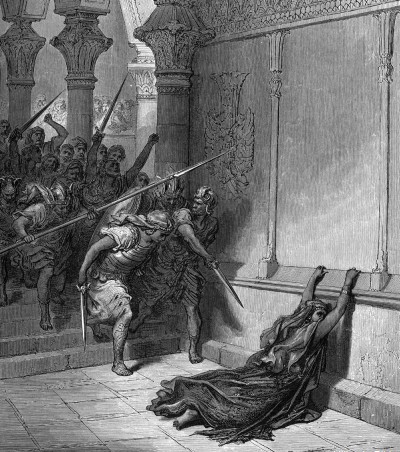
Gustave DoréThe Death of Athaliah

2 Kings 11

  1Now when Athaliah, Ahaziah’s mother, saw that her son was dead, she set about to destroy all the royal family. 2But Jehosheba, King Joram’s daughter, Ahaziah’s sister, took Joash son of Ahaziah and stole him away from among the king’s children who were about to be killed; she put him and his nurse in a bedroom. Thus she hid him from Athaliah, so that he was not killed; 3he remained with her six years, hidden in the house of the LORD, while Athaliah reigned over the land.

  4
But in the seventh year Jehoiada summoned the captains of the Carites and of the guards and had them come to him in the house of the LORD. He made a covenant with them and put them under oath in the house of the LORD; then he showed them the king’s son. 5He commanded them, “This is what you are to do: one-third of you, those who go off duty on the Sabbath and guard the king’s house 6(another third being at the gate Sur and a third at the gate behind the guards), shall guard the palace, 7and your two divisions that come on duty in force on the Sabbath and guard the house of the LORD 8shall surround the king, each with weapons in hand, and whoever approaches the ranks is to be killed. Be with the king in his comings and goings.”
  9
The captains did according to all that the priest Jehoiada commanded; each brought his men who were to go off duty on the Sabbath, with those who were to come on duty on the Sabbath, and came to the priest Jehoiada. 10The priest delivered to the captains the spears and shields that had been King David’s, which were in the house of the LORD; 11the guards stood, every man with his weapons in his hand, from the south side of the house to the north side of the house, around the altar and the house, to guard the king on every side. 12Then he brought out the king’s son, put the crown on him, and gave him the covenant; they proclaimed him king and anointed him; they clapped their hands and shouted, “Long live the king!”

  13
When Athaliah heard the noise of the guard and of the people, she went into the house of the Lord to the people; 14when she looked, there was the king standing by the pillar, according to custom, with the captains and the trumpeters beside the king, and all the people of the land rejoicing and blowing trumpets. Athaliah tore her clothes and cried, “Treason! Treason!” 15Then the priest Jehoiada commanded the captains who were set over the army, “Bring her out between the ranks and kill with the sword anyone who follows her.” For the priest said, “Let her not be killed in the house of the Lord.” 16So they laid hands on her; she went through the horses’ entrance to the king’s house, and there she was put to death.
  17
Jehoiada made a covenant between the LORD and the king and people, that they should be the LORD’s people; also between the king and the people. 18Then all the people of the land went to the house of Baal and tore it down; his altars and his images they broke in pieces, and they killed Mattan, the priest of Baal, in front of the altars. The priest posted guards over the house of the LORD. 19He took the captains, the Carites, the guards, and all the people of the land; then they brought the king down from the house of the LORD, marching through the gate of the guards to the king’s house. He took his seat on the throne of the kings. 20So all the people of the land rejoiced, and the city was quiet after Athaliah had been killed with the sword at the king’s house.
  21
Jehoash was seven years old when he began to reign.

The final remaining figure of the Omri dynasty is not in Israel but in Judah. Jehu’s bloody revolt in Israel has eliminated both the ruling line in Samaria as well as Ahaziah, the king of Judah, who was linked to the line of Ahab by his mother Athaliah. Jehoram, son of king Jehoshaphat, the father of the recently murdered King Ahaziah was married to Athaliah the daughter of Ahab. Athaliah who holds power in Judah for seven years is not listed in the line of Davidic kings because she is not of the Davidic line. Aside from her violent actions the problem with Ahaziah is not primarily that she is a woman but instead that she is of the line of King Ahab and Jezebel and apparently brings the religious and moral practices of Tyre into Jerusalem.

Athaliah seizes power in the aftermath of her sons death attempting to wipe out any other claimants to the throne. As a person with a tenuous grip on power the elimination of potential claimants to the throne is coldly logical in a world where political power is seized in often bloody manners. To use the logic of George R.R. Martin’s Game of Thrones “when you play the game of thrones (power) you either win or you die.” Although Athaliah is not viewed favorably in either 2 Kings or the parallel telling of this story in 2 Chronicles 22, her seizure of power is likely less bloody than Jehu’s in Samaria. Yet, unlike Jehu her seven years on the throne in Jerusalem pull the people further from the worship of the LORD the God of Israel and she ends up being the only woman in the bible, “to be awarded the moniker: “the Wicked”” in 2 Chronicles 24:7. (Israel, 2019, p. 178) And as Choon-Leong Seow states accurately, “Athaliah is to Judah what Jezebel was to Israel…Like the ruthless Jezebel, Athaliah is willing to commit murder in order to have her way.” (NIB III: 228) She is a mother who seizes power by killing the royal family which likely contains her own children and grandchildren.[1]

Yet, Athaliah’s plot to wipe out the line of David is thwarted by her sister Jehosheba who hides young Joash. 2 Chronicles 22: 10-12 states that Jehosheba is the wife of Jehoida the priest that will play a dominant role in the protection of Joash and the elimination of Athaliah. Yet, 2 Kings does not give us Jehosheba’s motive in saving this child, but she like many of the women in Exodus,[2] are responsible for thwarting the murderous intentions of a ruler. Joash will be hidden and raised in the house of the LORD.

The plot to place Joash on the throne begins in the seventh year of Athaliah’s occupying the throne in Jerusalem. The priest Jehoida summons summons the Carites, which may be the Cherethites mentioned elsewhere as body guards and soldiers of David or a different armed group, and the guards to both swear loyalty to the new king and to act as protection for the moment of the revelation of the king to the people. The exact details of the deployment of these troops may be a challenge for translators to render in an exact format but the overall intent is clear. The full complement of soldiers will be armed and ready in key positions on the day when young Joash is anointed publicly and acclaimed as king.

The king is crowned, anointed and either given an insignia or a covenant document. As Walter Brueggemann states of the term that can be rendered emblem/insignia or covenant,

The term here is not very clear. It may refer to insignia of office. Or it might more precisely refer to a scroll, a written charter delineating both the prerogatives and requirements of power, a document that situates royal power in something like a constitutional frame of reference that precludes royal arbitrariness. (Brueggemann, 2000, p. 409)

If it is a covenant, it probably reflects an understanding of the expectations of a king similar to Deuteronomy 17: 14-20.

 14When you have come into the land that the Lord your God is giving you and have taken possession of it and settled in it, and you say, ‘I will set a king over me, like all the nations that are around me,’ 15you may indeed set over you a king whom the Lord your God will choose. One of your own community you may set as king over you; you are not permitted to put a foreigner over you, who is not of your own community. 16Even so, he must not acquire many horses for himself or return the people to Egypt in order to acquire more horses, since the Lord has said to you, ‘You must never return that way again.’ 17And he must not acquire many wives for himself or else his heart will turn away; also silver and gold he must not acquire in great quantity for himself. 18When he has taken the throne of his kingdom, he shall write for himself a copy of this law on a scroll in the presence of the Levitical priests. 19It shall remain with him, and he shall read in it all the days of his life, so that he may learn to fear the Lord his God, diligently observing all the words of this law and these statutes, 20neither exalting himself above other members of the community nor turning aside from the commandment, either to the right or to the left, so that he and his descendants may reign long over his kingdom in Israel.

This anointed and crowned king now receives the vocal acclamation from the guards and priests, “Long live the king.”

Athaliah hears the commotion and discovers the plot underway. The young king is standing by the pillar, perhaps the pillars at the front of the temple or in the position where Ezekiel envisions the king supervising the offerings. (Ezekiel 48: 2-8)[3]    Athaliah echoes the words of Joram, “Treason! Treason!”[4] but like Joram her realization of the plot afoot is too late to save her life. She is brought out of the temple and killed with the sword. Then the covenant is renewed between the LORD, the king, and the people. The people then destroy the house of Baal, possibly built under Athaliah’s instructions, and Mattan the priest of Baal is also killed. The verbs in 2 Kings on the destruction of the temple of Baal echo the instructions of Deuteronomy 12: 2-3:

2You must demolish completely all the places where the nations whom you are about to dispossess served their gods, on the mountain heights, on the hills, and under every leafy tree. 3Break down their altars, smash their pillars, burn their sacred poles with fire, and cut down the idols of their gods, and thus blot out their name from their places.

In contrast to Jehu’s revolution, the coup enacted by the priest Jehoida is much less violent. Only Athaliah and Mattan are killed and then the city was quiet. As Brueggemann notes about the final phrase about the city being quiet,

The assertion that the “city was quiet” is more important than the simple phrasing might suggest (11:20). The term “quiet” (shaqath) is the same term used in the book of Judges in the recurring phrase “the land had rest” (Judg 3:11, 30; 5:31; 8:28) (Brueggemann, 2000, p. 413)

Joash, or Jehoash, begins his long reign at the age of seven. He is under the influence of Jehoida and yet his reign will be one of the times that 2 Kings views favorably. The covenant between God, the king, and the people is restored, the land has rest, and there is a chance for renewal in Judah after the decline of the house of David over the past two kings.


[1] There were probably other children of Jehoram by wives other than Athaliah as well as others in the line of David.

[2] Exodus 1: 15-2:10

[3] Ezekiel’s words come in the time immediately after the time of the kings and the temple, but his visions are likely informed by his familiarity with the temple practices before its destruction.

[4] 2 Kings 9:23.

2 Kings 6:24-7:20 The Siege and Deliverance of Samaria

Hills Near the Ruins of Samaria By Daniel Ventura – Own work, CC BY-SA 3.0, https://commons.wikimedia.org/w/index.php?curid=32449397

2 Kings 6:24-7:2

24Some time later King Ben-hadad of Aram mustered his entire army; he marched against Samaria and laid siege to it. 25As the siege continued, famine in Samaria became so great that a donkey’s head was sold for eighty shekels of silver and one-fourth of a kab of dove’s dung for five shekels of silver. 26Now as the king of Israel was walking on the city wall, a woman cried out to him, “Help, my lord king!” 27He said, “If the LORD does not help you, where would my help come from? From the threshing floor or from the winepress?” 28But then the king asked her, “What is your complaint?” She answered, “This woman said to me, ‘Give up your son; we will eat him today, and we will eat my son tomorrow.’ 29So we cooked my son and ate him. The next day I said to her, ‘Give up your son, and we will eat him.’ But she has hidden her son.” 30When the king heard the words of the woman he tore his clothes—now since he was walking on the city wall, the people could see that he had sackcloth on his body underneath 31and he said, “So may God do to me and more, if the head of Elisha son of Shaphat stays on his shoulders today.” 32So he dispatched a man from his presence.
  Now Elisha was sitting in his house, and the elders were sitting with him. Before the messenger arrived, Elisha said to the elders, “Are you aware that this murderer has sent someone to take off my head? When the messenger comes, see that you shut the door and hold it closed against him. Is not the sound of his master’s feet behind him?” 33
While he was still speaking with them, the king came down to him and said, “This trouble is from the LORD! Why should I hope in the LORD any longer?”

71But Elisha said, “Hear the word of the LORD: Thus says the Lord: Tomorrow about this time a measure of choice meal shall be sold for a shekel and two measures of barley for a shekel, at the gate of Samaria.” 2Then the captain on whose hand the king leaned said to the man of God, “Even if the LORD were to make windows in the sky, could such a thing happen?” But he said, “You shall see it with your own eyes, but you shall not eat from it.”

The final seven verses of chapter six are connected to the story that continues through the seventh chapter of 2 Kings. The verses and chapters were added at a later point, and the chapter division highlights the prophecy of Elisha by bookending the seventh chapter, but the narrative which evokes the word of the LORD begins at verse twenty-four. One of the Aramean kings named Ben-hadad[1] lays siege to Samaria creating the severe crisis of the story.

Siege warfare works by denying the encircled city the resources it needs to survive while the surrounding army has access to food from the land and if necessary, brought in from the besieging country. The first to feel the impact of the food shortages are the poor and the vulnerable as the cost of the food necessary to survive climbs as the supply dwindles. In our story the cost of once unpalatable foods has reached a point unreachable to all but the wealthiest households. The ‘dove’s dung’ has a couple possible interpretations. It may be the droppings from birds who are able to eat from the grain fields that the population no longer has access to, and this may form a disgusting but necessary source of nutrition for the captured population. Some translations like the NEB and NJPS follow a linguistic trail to translate this as the “seeds of the (false) carob” which is a plant of limited nutritional value. However one translates the ‘dove’s dung,’ the situation in the city has become desperate to the point where hunger is creating an inhumane situation.

The woman at the wall who calls upon the king of Israel for help is met with a pious sounding answer, “If the LORD does not help you, where would my help come from.” To me this resonates like the empty ‘thoughts and prayers’ of a politician who has no interest in resolving the crisis of the individual who comes to them for help. Yet, in Israel there is a tradition of people coming to their kings to judge difficult and life changing matters and the kings of Israel are supposed to be guardians of the vulnerable. This story resonates with Solomon’s judging between the two women fighting over a child in 1 Kings 3: 16-28, but in this story of famine now the women are fighting over children to be eaten in their starvation. The situation echoes the darkest warnings against disobedience in Deuteronomy 28: 52-57:

52 It shall besiege you in all your towns until your high and fortified walls, in which you trusted, come down throughout your land; it shall besiege you in all your towns throughout the land that the LORD your God has given you. 53 In the desperate straits to which the enemy siege reduces you, you will eat the fruit of your womb, the flesh of your own sons and daughters whom the LORD your God has given you. 54 Even the most refined and gentle of men among you will begrudge food to his own brother, to the wife whom he embraces, and to the last of his remaining children, 55 giving to none of them any of the flesh of his children whom he is eating, because nothing else remains to him, in the desperate straits to which the enemy siege will reduce you in all your towns. 56 She who is the most refined and gentle among you, so gentle and refined that she does not venture to set the sole of her foot on the ground, will begrudge food to the husband whom she embraces, to her own son, and to her own daughter, 57 begrudging even the afterbirth that comes out from between her thighs, and the children that she bears, because she is eating them in secret for lack of anything else, in the desperate straits to which the enemy siege will reduce you in your towns.

The woman’s situation in this siege echoes the narration of the later siege of Jerusalem by Babylon in Ezekiel 5:10 and Lamentations 2:20 and 4:10. It is a world where the bond between mother and child has been broken by hunger and people lose their humanity in the horror of the siege. The king who has been sheltered from the worst aspects of the deprivation of the siege is horrified by the woman’s situation and yet still claims no power to alleviate her condition. The stores of grain and wine even for the king are likely depleted and we learn that he is wearing sackcloth, a sign of mourning and repentance, under his clothes which he tears on hearing the woman’s story. In response he rashly declares that he will kill Elisha.

Elisha may be the target of the king’s rage as the representative of the LORD who the king of Israel blames for this unbroken siege, or he may simply be a scapegoat in the king’s powerlessness. Elisha did in the previous chapter deliver into Samaria an Aramean army who he instructed the king to feed and allow them to depart in peace. The peace which Elisha brokered did not endure and the king of Israel may blame the prophet for the situation. It is also possible that the king feels that the prophet, who has provided food miraculously, has not performed a miracle to provide food for the suffering city. If this unnamed king of Israel is Jehoram, as the order of the stories implies, there is a long animosity between the Omri dynasty that Jehoram is a member of and Elijah as well as Elisha. It is possible that the king has never approached the prophet until this point in the siege although it is worth noting that the elders are with the prophet during this scene.

The story becomes a bit confused in verses 32-33 where a messenger arrives and later the king. Mordechai Cogan and Hayim Tadmor point to Josephus’ reconstruction of the events as being as sensible as any:

“But you,” (Elisha) said, “when the man arrives who has been given this order be on guard as he is about to enter, and press him back against the door and hold him there, for the king will follow him and come to me, having changed his mind.” So, when the man came who had been sent by the king to make away with Elisha, they did as he had ordered. But Joram, repenting of his wrath against the prophet and fearing that the man who had been ordered to kill him might already be doing so, hastened to prevent the murder and even save the prophet. Antiquities ix, 69-70. (Cogan, 1988, pp. 80-81)

Despite the king’s earlier murderous words, the king, the prophet, and the elders all share in hearing the word of the LORD that Elisha receives declaring that the crisis will end suddenly in roughly twenty-four hours. The immediate availability of cheap food prophesied is unbelievable to the captain of the king, and Elisha adds a final note that this captain will see the prophecy fulfilled but be unable to partake in it.

2 Kings 7:3-20

  3Now there were four men with a defiling skin disease outside the city gate who said to one another, “Why should we sit here until we die? 4If we say, ‘Let us enter the city,’ the famine is in the city, and we shall die there, but if we sit here, we shall also die. Therefore, let us desert to the Aramean camp; if they spare our lives, we shall live, and if they kill us, we shall but die.” 5So they arose at twilight to go to the Aramean camp, but when they came to the edge of the Aramean camp there was no one there at all. 6For the Lord had caused the Aramean army to hear the sound of chariots and of horses, the sound of a great army, so that they said to one another, “The king of Israel has hired the kings of the Hittites and the kings of Egypt to fight against us.” 7So they fled away in the twilight and abandoned their tents, their horses, and their donkeys, leaving the camp just as it was, and fled for their lives. 8When these diseased men had come to the edge of the camp, they went into a tent, ate and drank, carried off silver, gold, and clothing, and went and hid them. Then they came back, entered another tent, carried off things from it and went and hid them.
  9
Then they said to one another, “What we are doing is wrong. This is a day of good news; if we are silent and wait until the morning light, we will be found guilty; therefore let us go and tell the king’s household.” 10So they came and called to the gatekeepers of the city and told them, “We went to the Aramean camp, but there was no one to be seen or heard there, nothing but the horses tied, the donkeys tied, and the tents as they were.” 11Then the gatekeepers called out and proclaimed it to the king’s household. 12The king got up in the night and said to his servants, “I will tell you what the Arameans have prepared against us. They know that we are starving, so they left the camp to hide themselves in the open country, thinking, ‘When they come out of the city, we shall take them alive and get into the city.’ ” 13One of his servants said, “Let some men take five of the remaining horses, since those left here will suffer the fate of the whole multitude of Israel that have perished already; let us send and find out.” 14So they took two mounted men, and the king sent them after the Aramean army, saying, “Go and find out.” 15So they went after them as far as the Jordan; the whole way was littered with garments and equipment that the Arameans had thrown away in their haste. So the messengers returned and told the king.
  16
Then the people went out and plundered the camp of the Arameans. So a measure of choice meal was sold for a shekel and two measures of barley for a shekel, according to the word of the LORD. 17Now the king had appointed the captain on whose hand he leaned to have charge of the gate; the people trampled him to death in the gate, just as the man of God had said when the king came down to him. 18For when the man of God had said to the king, “Two measures of barley shall be sold for a shekel and a measure of choice meal for a shekel, about this time tomorrow in the gate of Samaria,” 19the captain had answered the man of God, “Even if the LORD were to make windows in the sky, could such a thing happen?” And he had answered, “You shall see it with your own eyes, but you shall not eat from it.” 20It did indeed happen to him; the people trampled him to death in the gate.

The resolution to the crisis begins in the desperation of four men who are unclean and left outside the city. As mentioned above it is the vulnerable, and these four men with an affliction traditionally translated as leprosy would be vulnerable as they are excluded outside the city’s protective walls. In a situation where staying where they are would lead to death and entering the city would lead to death, they make the choice to surrender to the Arameans because the worst they can do is kill them. This decision to give up to the besieging forces sets in motion the deliverance of Samaria.

I have mixed feelings about the NRSVue decision throughout these texts to translate what is traditionally rendered ‘leprosy’ as a ‘defiling skin disease’ or ‘skin disease.’ On the one hand, what we now categorize as leprosy or Hansen’s disease is probably not what is referred to throughout the bible. But I wonder if the more generic skin disease disconnects the average reader from the severity of this diagnosis in the ancient world of Judaism. It is telling that Leviticus thirteen and fourteen are dedicated to the identification, the exclusion of the infected individuals from the community, and the necessary examination to allow their re-inclusion if the skin disorder clears up. These lepers are ‘unclean’ and unable to participate in the life of the community. Yet these outsiders will provide deliverance for the people trapped inside the city.

Before the four men approach the camp, the Arameans flee in panic because they hear the sound of horses and chariots approaching and fear that the king of Israel has paid Egypt and the Hittites to come and break the siege for them. The horses and chariots echo the appearance of the ‘horses and chariots of Israel’ in the previous story (2 Kings 6:15) and now instead of opening the eyes of the servant the LORD in a different manner opens the ears of the Arameans. The panic of the Arameans in the story is enough that they abandon not only their encampment but also their horses and donkey and leave a trail of discarded items in the path of their retreat. There are resources and wealth to feed and equip an army surrounding the city, much of the food likely taken from Israel’s fields, and there waiting to be discovered by the starving city.

The Jewish sages identified the four men with Gehazi and his sons (Israel, 2019, p. 129) which makes sense with this story being between Gehazi having Naaman’s leprosy cling to him and his family (2 Kings 5:27) and Gehazi’s reemergence talking with the king in the upcoming chapter (2 Kings 8: 4-5). This identification while interesting is not necessary for the story as these four men proceed to the camp, find it empty, ate and drank, pillaged some of the wealth they found, and eventually notify the gatekeepers of the situation. These men excluded as outsiders because of their skin condition still consider themselves a part of the people and have an obligation to those suffering inside the city. They appeal through the gatekeeper to the king’s household.

The king initially views this report from the four men as a trap set by the Aramean army to draw him out, but eventually one of his servants convinces the king to send out scouts with horses to examine the situation, lest the remaining horses perish with the people inside the city. Once the messengers return to the king it sets in motion the availability of food promised by the prophecy of Elisha as well as the death of the captain of the king. As mentioned in the previous section, the current chapter divisions highlight the words of Elisha at the beginning and ending of the chapter to demonstrate their fulfillment. A siege which reduced men and women to inhuman actions is now ended by four men whose humanity is compromised by the unclean disease carried on their skin. The God of Israel’s unseen host is now heard by the Aramean causing them to abandon their siege and to provide the food the city needs. The prophet once blamed by the king for the situation inside the city has now accurately predicted the cities deliverance by the LORD the God of Israel.


[1] Mordechai Cogan and Hayim Tadmor note there are at least two and possibly three kings name Ben-Hadad,  whose name means the son of (the God) Hadad, “At least two, if not three persons by this name are known: Ben-hadad, contemporary of Baasha (1 Kgs 15:18); Ben-hadad, foe of Abab (1 Kgs 20: 1; he is identical with mAdad-idri of Assyrian inscriptions…and Ben-hadad, son of Hazael (2 Kgs 13:3).” (Cogan, 1988, p. 78)

2 Kings 2 Elijah’s Departure and Elisha’s Ministry Begins

Elijah the Prophet By Nicholas Roerich – Estonian Roerich Society, Public Domain, https://commons.wikimedia.org/w/index.php?curid=5066171

2 Kings 2: 1-18 A Prophetic Transition

  1Now when the Lord was about to take Elijah up to heaven by a whirlwind, Elijah and Elisha were on their way from Gilgal. 2Elijah said to Elisha, “Stay here, for the Lord has sent me as far as Bethel.” But Elisha said, “As the Lord lives and as you yourself live, I will not leave you.” So they went down to Bethel. 3The company of prophets who were in Bethel came out to Elisha and said to him, “Do you know that today the Lord will take your master away from you?” And he said, “Yes, I know; keep silent.”
  4
Elijah said to him, “Elisha, stay here, for the Lord has sent me to Jericho.” But he said, “As the Lord lives and as you yourself live, I will not leave you.” So they came to Jericho. 5The company of prophets who were at Jericho drew near to Elisha and said to him, “Do you know that today the Lord will take your master away from you?” And he answered, “Yes, I know; keep silent.”
  6
Then Elijah said to him, “Stay here, for the Lord has sent me to the Jordan.” But he said, “As the Lord lives and as you yourself live, I will not leave you.” So the two of them went on. 7Fifty men of the company of prophets also went and stood at some distance from them, as they both were standing by the Jordan. 8Then Elijah took his mantle and rolled it up and struck the water; the water was parted to the one side and to the other, and the two of them crossed on dry ground.
  9
When they had crossed, Elijah said to Elisha, “Tell me what I may do for you before I am taken from you.” Elisha said, “Please let me inherit a double share of your spirit.” 10He responded, “You have asked a hard thing, yet if you see me as I am being taken from you, it will be granted you; if not, it will not.” 11As they continued walking and talking, a chariot of fire and horses of fire separated the two of them, and Elijah ascended in a whirlwind into heaven. 12Elisha kept watching and crying out, “Father, father! The chariots of Israel and its horsemen!” But when he could no longer see him, he grasped his own clothes and tore them in two pieces.
  13
He picked up the mantle of Elijah that had fallen from him and went back and stood on the bank of the Jordan. 14He took the mantle of Elijah that had fallen from him and struck the water. He said, “Where is the Lord, the God of Elijah? Where is he?” He struck the water again, and the water was parted to the one side and to the other, and Elisha crossed over.
  15
When the company of prophets who were at Jericho saw him at a distance, they declared, “The spirit of Elijah rests on Elisha.” They came to meet him and bowed to the ground before him. 16They said to him, “See now, we have fifty strong men among your servants; please let them go and seek your master; it may be that the spirit of the Lord has caught him up and thrown him down on some mountain or into some valley.” He responded, “No, do not send them.” 17But when they urged him to the point of embarrassment, he said, “Send them.” So they sent fifty men who searched for three days but did not find him. 18When they came back to him (he had remained at Jericho), he said to them, “Did I not say to you, ‘Do not go’?”

The well-known imagery of the chariot of fire and the ascension of Elijah into heaven in the whirlwind serves as a transition between the prophetic ministry of Elijah and Elisha. The story is told outside of the framing of time in the succession of kings, likely to enhance the special nature of this moment. As Walter Brueggemann states, “the remarkable moment of prophetic transition is so odd and so exceptional that it cannot be held in royal time or understood in royal rationality.” (Brueggemann, 2000, p. 293) In this moment Elisha beholds that God’s power and might are at work in the world in a way that both reflects the imagery of the kingly power of the day (chariots and horses as the primary military technology of the time) but also transcends it. In addition to the transition between the ministries of Elijah and Elisha it also reminds the readers that God’s work in the world, often unseen, continues and occasionally the faithful servants of God have their eyes opened to see God’s power and presence in surprising ways.

Throughout this journey from Gilgal to Bethel to Jericho and then to the Jordan, a journey of at least twenty-four miles, Elijah tells Elisha three times to “Stay here” and Elisha answers, “As the Lord lives and as you yourself live, I will not leave you.” The story has some resonance with the refusal of Ruth to abandon her mother-in-law Naomi in Ruth 1: 15-17, and there are familial overtones to the Elijah and Elisha narrative as well. Both Ruth and Elisha are not related to the person they are clinging to by blood, but both claim the bond and responsibility of primary relations. This is heightened when one realizes that the word “leave” has the connotation of “abandon” in Hebrew. (Brueggemann, 2000, p. 294) Elisha’s ask of a ‘double share’ of Elijah’s spirit also connects with the ‘double share’ that a first-born heir is to receive according to Deuteronomy 21: 15-17. Elisha is probably not asking to receive twice the spirit endowed charisma as Elijah but instead to be recognized by Elisha and ultimately God as the proper heir to the prophetic ministry of Elijah.

Elisha is aware throughout the narrative of Elijah’s impending departure, a knowledge reinforced by the message of the sons of prophets at each location of their journey. Finally, as Elijah approaches the Jordan River, he utilizes his mantle and causes the waters of the river to be divided. Elijah’s mantle functions in a similar manner to Moses’ staff and Elijah’s authority is the authority promised in Deuteronomy 18:18 of a prophet like Moses. After Elijah’s ascension the same mantle in the hands of Elisha demonstrates that this heir to the prophetic ministry of Elijah is also a prophet with the authority and power that God entrusted to both Elijah and Elisha.

Most religious art depicting the ascension of Elijah pictures the prophet riding in the chariot, but that is not explicit in the text. The chariot of fire and the horses[1] separate Elijah from Elisha. Elisha sees a multitude of chariots, a sight he will later share with his servant in 2 Kings 6:17. Elijah, and presumably the chariots as well, ascend in the whirlwind. The company of prophets who observed this from a distance presumably saw something like the whirlwind but not the chariots of Israel and its horsemen.[2] In their limited vision they press Elisha to allow fifty strong men from their company to seek Elijah’s body to give it a proper burial. Elisha says not to send them but eventually is pressed enough that in embarrassment he allows the fifty to seek Elijah.

Elijah’s influence will continue long beyond his death even though he will only be mentioned one additional time in the Hebrew Bible. Elijah is the forerunner of the day of LORD in Malachi 4: 5-6:

See, I will send you the prophet Elijah before the great and terrible day of the Lord comes.  He will turn the hearts of parents to their children and the hearts of children to their parents, so that I will not come and strike the land with a curse.

Elijah continues to have a role in the practice of both Judaism and Christianity. In Judaism the role of Elijah would be tied to the coming of the messiah and he continues to have a seat at the practice of circumcision, during the Sedar meal, and the prayer at the end of the Sabbath calls for Elijah to come in the coming week. Elijah’s role in Christianity would rest upon John the Baptist and the one who preceded the coming of Jesus and Elijah along with Moses would appear at the transfiguration. Only Elijah and Enoch would not experience death in their stories in the bible, and this allowed both figures to become popular in the stories and hope of later generations.


2 Kings 2: 19-25 A Prophet of Blessing and Curse

  19Now the people of the city said to Elisha, “The location of this city is good, as my lord sees, but the water is bad, and the land is unfruitful.” 20He said, “Bring me a new bowl, and put salt in it.” So they brought it to him. 21Then he went to the spring of water and threw the salt into it and said, “Thus says the Lord: I have made this water wholesome; from now on neither death nor miscarriage shall come from it.” 22So the water has been wholesome to this day, according to the word that Elisha spoke.
  23
He went up from there to Bethel, and while he was going up on the way, some small boys came out of the city and jeered at him, saying, “Go away, baldhead! Go away, baldhead!” 24When he turned around and saw them, he cursed them in the name of the Lord. Then two she-bears came out of the woods and mauled forty-two of the boys. 25From there he went on to Mount Carmel and then returned to Samaria.

The ministry of Elisha as the main prophetic figure of the time begins with two stories that intentionally bring together the potential for blessing and curse in a figure whose life and ministry are closely tied to God. The first story now links Elisha to Moses with a story with multiple parallels to Moses’ making the bitter waters of Marah sweet. Alex Israel identifies the similarities between the two stories:

  • Marah follows the splitting of the Reed Sea. Our Jericho story follows the miraculous parting of the Jordan River.
  • Three Days: Marah followed the crossing of the Reed Sea by three days. Similarly, the events at Jericho transpire three days after the splitting of the Jordan (II Kings 2: 17-18).
  • In both instances, the water is undrinkable. The people voice the problem to the prophet.
  • The water is made drinkable by casting into it (vayashleh) a substance that would seem unrelated to the treatment of water (tree/salt).
  • The proclamation made in God’s name identifies God as their “healer”: At Marah, “I am the Lord, your healer.” (Ex. 15:26) At Jericho, “Thus says the Lord: I have healed this water.” (II Kings 2:21) (Israel, 2019, p. 31)

One could argue, a Choon-Leong Seow does, that Elisha even surpasses the work of Moses by ‘healing’ the waters where Moses only ‘sweetens’ the bitter waters. (NIB III:178) This ministry of blessing in Jericho is now set alongside a curse on the prophet’s journey to Bethel towards the disrespectful small boys.

The second half of these stories cause a fair amount of discomfort for modern readers who view the prophet’s curse and the resulting mauling of the boys as an overreaction to their taunting of the prophet as ‘baldy’ or ‘baldhead.’ Forty-two may be a figure to explain a large number[3] but our modern embarrassment at the mauling of these boys in my view misses the point of the narrative. Elisha, as the prophet of God and speaker of the words of God, is closely tied both to this ministry of Moses and Elijah but more critically to the God of Israel. To disrespect Elisha, for the narrative, is to disrespect God. When the people of entreat Elijah with respect he brings them blessing, when these boys treat the emissary of God with disrespect it brings a curse. A true bearer of God’s message of blessing and curse is a fearful and wonderful thing.

Elisha’s ministry begins by retracing the steps of Elijah from the Jordan to Jericho, from Jericho to Bethel, and finally returning to Mount Carmel. Mount Carmel, as Alex Israel reminds us, is the site of “Elijah’s pièce de resistance” (Israel, 2019, p. 22) where the God of Israel demonstrated victory over the 500 prophets of Baal. (1 Kings 18: 20-40) Now Elisha begins his career by ascending both physically and metaphorically to the zenith of Elijah’s ministry.


[1] The Hebrew word rekeb may refer to a group of chariots (NIB III:176).

[2] This phrase will reappear at the end of Elisha’s ministry in 2 Kings 13: 14-19.

[3] This is also the number of victims slain by Jehu in 2 Kings 10:14

Transitioning Into Exodus

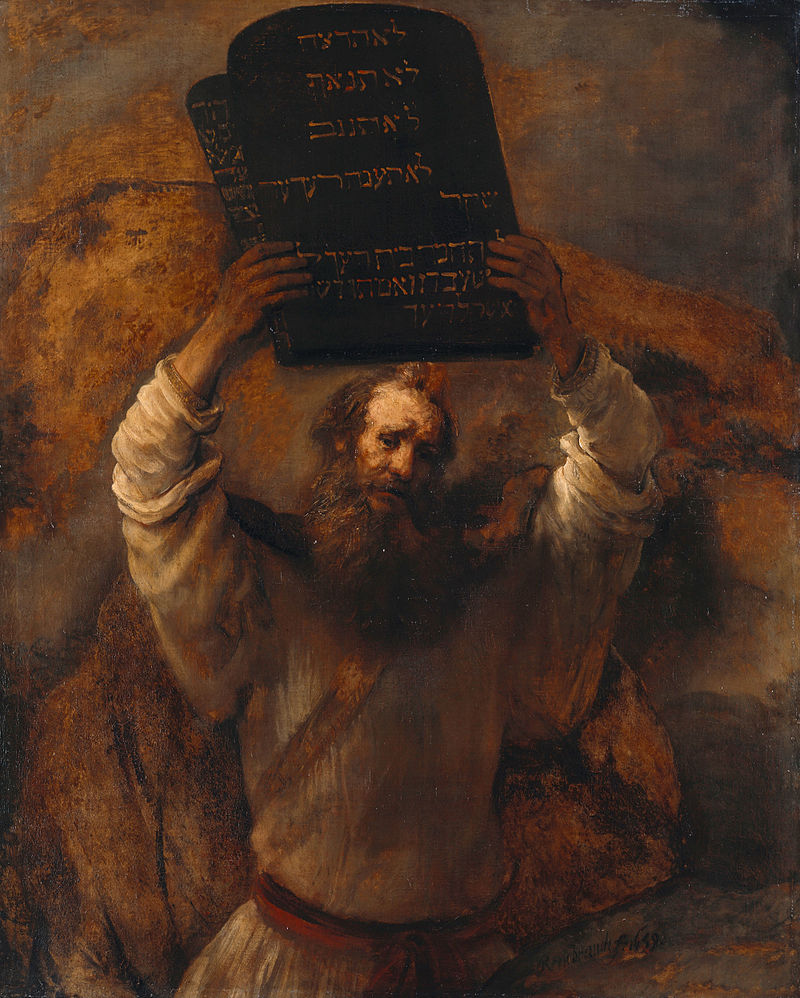
Rembrandt, Moses with the Ten Commandments

Rembrandt, Moses with the Ten Commandments

When I started the biblical reflections portion of this blog almost four years ago, I didn’t realize how much I would learn and how much it would shape my ministry. Many Christians don’t know how to approach the Hebrew Scriptures that many call the Old Testament, and as much as I love the gospels and the letters of Paul I am learning how to hear those writings much more fully as I become more and more familiar with the Psalms, Jeremiah, Deuteronomy, Ecclesiastes, Esther and Haggai. I am understanding more what Dietrich Bonhoeffer meant when he said,

I notice more and more how much I am thinking and perceiving things in line with the Old Testament; thus in recent months I have been reading much more the Old than the New Testament. Only when one knows the name of God may not be uttered may one sometimes speak the name of Jesus Christ. Only when one loves life and the earth so much that with it everything seems lost and at its end may one believe in the resurrection of the dead and a new world. Only when one accepts the law of God as binding for oneself may one perhaps sometimes speak of grace. And only when the wrath and vengeance of God against God’s enemies are allowed to stand can something of forgiveness and love of enemies touch our hearts. Whoever wishes to be and perceive too quickly and too directly in New Testament ways is to my mind no Christian. We have already, discussed this a few times, and every day confirms for me that it is right. One can and must not speak the ultimate word prior to the penultimate. We are living in the penultimate and believe the ultimate. (DBW 8: 213)

As I have wrestled with some difficult pieces of the Bible it has caused me to think about ethics, faith, our current world and so much more. For me this is the more challenging way but it has also been incredibly rewarding. Finishing Psalms 21-30 as a transition between books now I stand ready to begin another large piece. Next will be the book of Exodus, the second of the Pentateuch that I have approached. It is a book that I am more familiar with than I was with Jeremiah or Deuteronomy when I began and it is more of a narrative than any of the books I have done previously. I have two trustworthy companions for the journey. Since this is one of the central books of the Torah and the defining drama of the Jewish people I am delighted to have Rabbi Jonathan Sacks’, Covenant and Conversation: A Weekly Reading of the Jewish Bible as he reads through Exodus: The Book of Redemption as one of my primary dialogue partners. I will also be taking along Carol Meyers commentary on Exodus from the New Cambridge Bible Commentary Series. I have other resources that I have read in the past or that are on my shelf that may also be a part of this journey. With the forty chapters of Exodus the hope is to make the journey in approximately forty weeks, but as journeys go there are often unforeseen stops along the way. I am looking forward to this next exploration as I reenter the journey of the people of Israel from Egypt into the wilderness, from slavery into becoming the people of God and seeing how their journey and faith continue to shape and inform my own.

Ecclesiastes 4- The Things That Steal Our Peace

Ecclesiastes 4

1 Again I saw all the oppressions that are practiced under the sun. Look, the tears of the oppressed– with no one to comfort them! On the side of their oppressors there was power– with no one to comfort them. 2 And I thought the dead, who have already died, more fortunate than the living, who are still alive; 3 but better than both is the one who has not yet been, and has not seen the evil deeds that are done under the sun.

 4 Then I saw that all toil and all skill in work come from one person’s envy of another. This also is vanity and a chasing after wind.
 5 Fools fold their hands and consume their own flesh.
 6 Better is a handful with quiet than two handfuls with toil, and a chasing after wind.

 7 Again, I saw vanity under the sun: 8 the case of solitary individuals, without sons or brothers; yet there is no end to all their toil, and their eyes are never satisfied with riches. “For whom am I toiling,” they ask, “and depriving myself of pleasure?” This also is vanity and an unhappy business.

 9 Two are better than one, because they have a good reward for their toil. 10 For if they fall, one will lift up the other; but woe to one who is alone and falls and does not have another to help. 11 Again, if two lie together, they keep warm; but how can one keep warm alone? 12 And though one might prevail against another, two will withstand one. A threefold cord is not quickly broken.

 13 Better is a poor but wise youth than an old but foolish king, who will no longer take advice. 14 One can indeed come out of prison to reign, even though born poor in the kingdom. 15 I saw all the living who, moving about under the sun, follow that youth who replaced the king; 16 there was no end to all those people whom he led. Yet those who come later will not rejoice in him. Surely this also is vanity and a chasing after wind.

The Hebrew word shalom is only used in Ecclesiastes in the previous chapter in the contrast between war and shalom (peace). Yet, beneath all of the vanity and chasing after the wind is perhaps the search for this concept of shalom, which is far more than an absence of conflict. Shalom has the sense of harmony, balance, living at peace with God’s will for one’s life and world. It is a greeting and a wish for one’s friends and neighbors and for one’s own life and yet then and now it seemed illusive. Qohelet turns his wisdom to the things that rob us of the joy and shalom of how life should be. In the brief verses of chapter four he addresses in a form that moves towards proverbs the issues of oppression, comparison and competition, overwork, isolation and institutional incompetency.

Oppression robs us of our humanity, both the oppressed and the oppressor. For the oppressed it means living in a sick society where their lives and work seem to matter less than those who operate in a more privileged state. For the oppressor it often means unconsciously adopting the views of a sick society that have allowed them to prosper only at the (often unseen) expense of others. Wisdom has opened the eyes of the privileged author of Ecclesiastes and it sickens him. The reality of oppression makes death better than life for him because it is not simply that an oppression can be stated and once brought into the open it dies under the light of day. Oppression involves a lifetime of learned and observed behaviors that require patience, prayer, struggle and dis-ease if the disease is ever to be healed. Oppression can be learned in families, in economic structures and in political systems and they in their own way are demonic. They so weave their ways into the thoughts and actions of ordinary people that they become a part of us. When the demons speak through us they reveal the uglier side of our lives and the inability to see one another as a gift, but instead we begin to see others as people who are to be oppressed or are our oppressor.

In the United States there has been a long struggle among people of color, women and people who because of race, sexuality, economic status, religion (or lack of religion), manner of dress, or numerous other reasons have felt their voices and lives did not matter. While I hope that the struggles of the last several years may eventually lead to a society that moves towards greater equality, for now there is no one to console the tears of the oppressed or the comfort those in power as they deal with the ways privilege has stolen a piece of their humanity as well. Perhaps there may come a day when those who have not been born yet don’t have to wonder if black lives, to use one of the red hot points of struggle in our time, matter less than other lives. There are places where our society is sick and its disease has infected all of us making our lives less human and less worth living. The oppression has possessed the soul of our society in the way it allows us to demonize others and to not see or hear them. The conflict that oppression creates robs our lives and our society of the shalom that wisdom seeks. Ecclesiastes does not offer the cure, only the diagnosis of the thing that steals our joy and peace, both the privileged and the excluded.

Envy is what Ecclesiastes names the second element that steals our joy and peace. This seems to encompass the ways we compare and contrast ourselves with one another. One the one hand toil and skill in work come from learning from and measuring oneself from the work of others. The author of Ecclesiastes can find joy in his labor, yet it can also become a source of anxiety. If our lives are continually measured by the gifts, talents and abilities of others then we will rarely, if ever, be satisfied. Our gifts and talents are not another’s gifts and talents. There is joy in learning to do what one is able with one’s gifts and abilities, for seeking what excellence might look like with one’s talents. Yet, envy of another’s gifts can steal the joy we find in our skills and work.

In a transition it appears that Ecclesiastes pulls from some preexisting form of proverbs about laziness and overwork. There are reasonably close parallels within the book of Proverbs:

A little sleep, a little slumber, a little folding of the hands to rest, and poverty will come upon you like a robber, and want, like an armed warrior. Proverbs 24: 33-34

Do not wear yourself out to get rich, be wise enough to desist. Proverbs 23: 4

Which Amy Plantiga Pauw (Pauw, 2015, p. 162) points out as possible connections with Proverbs, but for the second I actually find Proverbs 17: 1 closer

Better a dry morsel with quiet than a house full of feasting with strife. Proverbs 17:1

Especially when one takes into account the following verse about the slave who deals wisely and the child who acts shamefully in the context of the end of chapter four.

Ecclesiastes looks at the contrast between overwork and strife on the one hand and laziness and poverty on the other. Neither pole holds the answer, the wisdom is to find the balance point in the middle. A person who only applies their wisdom and knowledge in the quest for goods, wealth, and the insatiable quest for more will have to face the injustice that others will use the goods and wealth they have acquired. Overwork leads to an inability to the enjoy the gift of joy that God grants to the worker in their toil. Idleness also leads to a different type of challenge when the person doesn’t have what they need to feel filled or fulfilled. In our society being busy is a mark of success and achievement, as if the work of business is the work of busy-ness. As Ellen Davis can highlight,

“We regard work as primary, while the rest of what we do is “time-off.” But it was the opposite in the ancient world. The Latin word for “business” is neg-otium, literally, “not leisure”; the time when one does not have to work is the norm by which other activities are measured.” (Davis, 2000, p. 191)

There is wisdom in the practice of Sabbath, the practice of resting from one’s labor and toil. There is wisdom in finding joy in one’s work and pleasure in one’s leisure and knowing the balance of both. The wisdom of not wearing oneself out to be rich, of knowing when to desist but also not folding one’s hands only to consume one’s own flesh.

Isolation can also be a source that can rob us of joy. Sharing our labor with another, being able to share in the triumphs and the travails is one of the joys of life. Isolation can take many forms in life, isolation in the home, at work, in our leisure time and in our public time. A life that is driven by competition and envy shatters our community with one another. We were built for lives of partnership in our various vocations to support, strengthen and renew one another. In a world of increasing connection through digital media we face the struggle of maintaining the physical and personal connections that once formed the communities of our ancestors. In an unfair and often unjust world we need our solidarity with one another so that together we might be a cord not easily broken by the injustices and oppression of the world.

Qohelet seems to have little faith in the institutional structures of his day to provide wise, fair and just governance and a place where a life of shalom comes naturally. We live in an age where people have also become wary of the institutional structures of government, religion, and economics. There are some who still wonder, like Jesus’ disciples, that if a rich young man cannot easily enter the kingdom of God, then who can be saved, for the wealthy and powerful were supposed to be the blessed and the wise. Too many times we have seen the wealthy act only out of self-interest, the powerful act foolishly, and those supposed to be righteous commit horrible acts. Wisdom still has its place, even without power or wealth or fame, to navigate the way of the world. In the midst of oppression to find those moments of peace and the solidarity of one another. From the blindness of being the oppressor to cherish those moments, as difficult as they may be, when one’s eyes are opened and we can perhaps see a different future. Wisdom finds the balance between idleness and overwork and can find satisfaction in one’s own abilities and accomplishments. Like all things of shalom, they are transient. The seasons continue to turn and times of conflict do arise. The quest for permanence, security, and a lasting name ultimately give way to mortality and the turning of the seasons. These evanescent moments may not last for long but they are the gift of God that gives meaning to the toil and the struggle.

Mark’s Portrait of Jesus and The World He Lived in Part 4

Mark’s Portrait of Jesus and The World He Lived in Part 4: A Scripture Shaped World

Scroll of the Book of Isaiah

Scroll of the Book of Isaiah

When I originally did my presentation on the Gospel of Mark and the way that it interacts with the world in which Jesus lived and breathed I left out a very important part, the way the Gospel of Mark interacts with the Scriptures (at this time the Hebrew Scriptures or Old Testament most likely in its Greek translation the Septuagint) and uses the language and world of the scriptures to find a way to talk about who Jesus is and what the Kingdom of God means in a world of the Roman empire, Second Temple Judaism and a world where the conflict between good and evil was viewed in terms of conflict between various spiritual forces. Inhabiting a Jewish world where the language of the scriptures would have been a critical part of that world it is not surprising that Mark uses scriptures to help illuminate who Jesus is and to allude to a deeper engagement with the story of the God of Israel and the people of that God.

The question of Mark as a reader of scripture is normally handled by looking at the explicit places where the gospel quotes the scriptures and often without taking some time to examine the broader question of how Mark is using these scriptures to show who Jesus is. Richard B. Hay’s recent work on the way that the gospel authors utilized scriptures is a helpful and generative study of this question in a much more holistic light. In examining the interaction between the way that the Hebrew Scriptures were read by Mark and the way they form a linguistic world that the gospel is able to access Hays argues:

And upon rereading, we discover numerous passages scattered through this Gospel that offer intimations of a disturbing truth: Jesus’ identity with the one God of Israel. Unlike the Gospel of John—which explicitly declares that Jesus is the Logos, the Son who is one with the Father—Mark shies away from overt ontological declarations. Nonetheless, Mark’s Gospel suggests that Jesus is, in some way that defies comprehension, the embodiment of God’s presence. Mark never quite dares to articulate this claim explicitly; it is too scandalous for direct speech. For Mark, the character of God’s presence in Jesus is a mystery that can be approached only by indirection, through riddle-like allusion to the OT. (Hays, 2014, p. 19f.)Emphasis authors.

From the first direct citation in Mark 1: 2-3 which weaves together Malachi 3.1, and Isaiah 40.3, both passages which link back to the LORD, the God of Israel being the one who is coming, Malachi pointing to the LORD coming in judgment and Isaiah who proclaims the LORD God coming with might to rule and to gather together the people of Israel. Right at the very beginning there are the audacious and bold claims about the one who is coming, and yet throughout the narrative of Mark the characters in the story will wonder and will have the secret kept from them who this Jesus is. The demons may know who Jesus is but they are silenced, others may have flashes of who Jesus is but they are also told not to speak to anyone about it, Jesus’ identity is a mystery that is ultimately revealed by his actions and the way these actions resonate with the story of who God is in relation to God’s people.

Many of the conflicts that emerge between Jesus and the Pharisees early in the gospel revolve around Jesus doing things that are reserved for the God of Israel. In Mark 2.1-12, when Jesus heals the paralytic man who is lowered through his roof the accusation is, “Why does this fellow speak in this way? It is blasphemy! Who can forgive sins but God alone?” And the scriptures do highlight in several places that the God of Israel does forgive sins, for example Hays lifts up Exodus 34.6-7:

The LORD, the LORD, a God merciful and gracious, slow to anger, and abounding in steadfast love and faithfulness, keeping steadfast love for the thousandth generation, forgiving iniquity and transgression and sin, yet by no means clearing the guilty, but visiting the iniquity of the parents upon the children and the children’s children to the third and fourth generation.

A similar dynamic is at play with Jesus declaring he is Lord of the Sabbath at the end of chapter 2, where now Jesus is able to interpret what the commands of God mean and becomes an authoritative interpreter of the scriptures. Perhaps this is some of the wonder that Mark records in 1.22 where the crowds are amazed at him teaching as one with authority.  Mark continues, through Jesus’ actions, to invite us to wonder who Jesus is and how he is connected with the God of Israel, from his healings and exorcisms to the walking on water in Mark 4. 35-41 where the disciples wonder, “Who then is this, that even the wind and the sea obey him?” and whether Mark directly evokes Psalm 107 or not, it provides an evocative answer to the question, “Then they cried to the LORD in their trouble, and he brought them out of their distress; he made the storms be still, and the waves of the sea were hushed.” Psalm 107. 28f. Continuing in the story of the feeding of the five thousand with the evoking of the image of the people as sheep without a shepherd there are numerous allusions to the LORD, the God of Israel being the shepherd of the people, most memorably Psalm 23, but more pointedly Ezekiel 34 which rails against the leaders of Ezekiel’s time who have not proved to be faithful shepherd and in response the LORD declares, “I myself will be the shepherd of my sheep, and I will make them lie down, says the LORD God.” Ezekiel 34.15.  We are left to wonder after each event who is this Jesus, and how is he able to speak in ways that reflect God’s speech, how is he able to act in ways that reflect God’s actions and how does he embody the presence of the God of Israel who has drawn near with God’s kingdom. Mark points us continually to the suggestive but never overt answer that Jesus is fulfilling the role that God has promised to fulfill in the scriptures. That Jesus can forgive, can be Lord of Sabbath, can master the elements and the demonic forces that threaten God’s people and can be the faithful shepherd that the people has longed for.

Mark continues to invite those with eyes to see and ears to hear to sit and wonder about who Jesus is and to listen to the frequently allusive way in which the language of scriptures helps to paint this picture in a suggestive way. Yet it is a mystery that Mark invites his readers into, the mystery of the kingdom of God that arrives in parables rather than outright proclamation. Most of Jesus’ overt quotations of scriptures come at the end of the book of Mark where the question of who Jesus is comes to its ironic and sharply contested conclusion. Jesus’ authority is continually questioned by the Sadducees, the Pharisees, the scribes and the chief priests and Jesus continues not only to allude to scripture but to embody it. Whether it is the allusion to Jeremiah’s temple sermon when Jesus enters the temple in Mark 11.17 and contrasting it with the vision of Isaiah in 56.7 and Jesus continuing to embody the role of Jeremiah in conflict with the temple of his day (see the previous post particularly on Jesus and Jeremiah), and the way this plays into the image of the cursed fig tree and the oracle of Jeremiah 8.13. The allusion to Isaiah 5 with both the parable of the wicked tenants in Mark 12. 1-12 and the denunciation of the scribes in Mark 12. 38-40. The language of Daniel 7 forms the answer to the High Priest in the trial where Jesus is accused of blasphemy, but also forms the background for the Son of Man imagery used throughout the gospel.  Mark uses these images poetically and sometime Jesus seems to take on the role of the God of Israel, other times Jesus walks in the place of Israel and is able to cry out to their God, sometimes he is the fulfillment of the hope of Israel and the scriptures, and yet in every place Mark leaves us with the mystery of the kingdom of God. Yet the use of scriptures continually points that somehow, evocatively, in Jesus we in some way encounter the divine presence of the God of Israel. Mark is not interested in explaining how this comes to be but rather inviting us into the journey and experience of the new people of God trying to find the language to explain who this Jesus was and what he did and finding in the language of the Hebrew Scriptures a vast set of hopes and expectations and words that describe the relationship of God to God’s people. And into that web of images the experience of Jesus mysteriously seems to fall and we wonder with the first hearers of the message what that means for our experience of this Jesus Christ the Son of God whose gospel we receive from Mark.

The Ballad of Ruth

The Ballad of Ruth[i]

William Blake, Naomi Entreating Ruth and Orpah

There was no bread in the house of bread[ii] and so from the house of bread the breadless fled

To Moab went Elimelech and Naomi[iii] the sweet with two sons, departing hungry yet full

Foreigners in a foreign land they seek life but find only death and emptiness

A father dies, but leaves two sons behind to watch over the sweet one and to carry the name on

And yet the names of the sons, Mahlon and Chilion, tell a tale all their own and a short tale it is

For Ruth and Orpah marry men whose part in the story seems only to perish, and perish they do[iv]

So in Moab is left Naomi the sweet made bitter, no longer hungry but empty

And yet in the house of bread, bread has returned

In the land of Moab sweet has turned bitter, bitterness has filled Naomi from bone to bile

In a foreign land the blessing of God seems to have turned to a curse, fullness to emptiness

The joy of wedding and the blessing of hope into the dirge of mourning and sons buried too soon

There is no gift for the wives of her children except to send them home to their father’s house

No sons left to give or bear, only a wish for the Lord’s kindness and a new beginning

For with Naomi there is only death, what is left but to return home to die

Breadless, childless, loveless, hopeless and bitter

And yet to the house of bread, Naomi will return

In the land of Moab, Orpah returns home to her father’s home but Naomi will not return home empty

The love of God comes wrapped in an unexpected form, the Moabite wife of her son

She becomes not only the bearer of grace and mercy but as the agent of God’s love[v] for the wounded child

Ruth’s words that, ‘where you go I’ll go, where you live I’ll live, your people will be my people and your God my God. Where you die, I’ll die and there I’ll be buried.’

You asked for the Lord’s blessing in my departure, but may the Lord judge me if I depart

For neither life nor death, nor things present nor things to come will be able to separate Naomi

From the love of God shown in the Moabitess

To the house of bread, Naomi returns with Ruth as her only harvest

To the house of bread came two women, one known and one unknown

The known is Naomi, gone for a decade or more, returning as Mara[vi]

Departed sweet and returned bitter

The other is the Moabitess, the daughter of former oppressors, the alien, the outsider

She is the immigrant, the unprotected, the dangerous defiler, and yet she is Ruth

The outsider bears God’s grace in a way the insiders do not

At harvest time they return to a home long abandoned with empty fields.

Will there be bread in house of bread for the breadless?

Is there a place for the alien, the outcast, the widow, the poor and the weak?

Will the leftovers be enough to fill their emptiness or will they die forgotten?

Will their bodies be sold or taken for free in the reaping fields?

Or will new life begin in the harvest, will life return to the lifeless and bread to the breadless?

What will be gleaned in the barley harvest? Blessing or curse, life or death?

The fields are ripe in the house of bread and the harvest begins

The worthy man extends the blessing of the Lord’s covering[vii] and offers the shelter of his protection

For he has taken notice of the Moabitess working in the fields and knows of the grace she has shown

The outsider is made equal of the servants out in the fields and return home with a bushel of grain

Bread had returned to the breadless, life to the lifeless

Boaz has spoken to the heart[viii] of Ruth, and his words have returned hope to the bitter one

Bless the one who has covered us, who has not forgotten the dead

Bless the one who grants bread from the house of bread

Harvests come and harvests go in the house of bread, and then comes the celebration

The eating and drinking, the festival and feasting for once again the work is done

On the field of the threshing floor lies the worthy man, the fruit has been separated from the chaff

On the floor, covered[ix] lies the man who provided a covering for Ruth and Naomi

Work done, mercy extended, blessing shared…

Yet in the mystery of midnight what will happen to what lies on the threshing floor?

For in the mystery of midnight Ruth comes, perfumed and prepared

On the threshing floor at midnight the man finds himself uncovered and a woman lying at his feet

“I am Ruth, spread your covering over me” Once you wished the Lord’s covering on me, now be that covering

Can you accept the foreigner as one of your own, can your family be my family and your home my home

Your God is already God, may I go where you go, may I die where you die

In the mystery of midnight are the worthy man and the foreigner

Two agents of grace, two who covered others

Will the mystery of midnight on the threshing floor of the house of bread be fruitful?[x]

The worthy man and the kinsman and the elders at the gate must make settlement

Land must be redeemed, a family saved, life will begin anew

A sandal is passed, the deal is done

The worthy man and the foreigner are now one

God’s covering came, life begins anew

A child named Obed in Naomi’s lap grew

And from Obed, Jesse, and from Jesse , David the King

And a foreigner showed grace, a worthy man covered her and life began anew

In the house of bread begins a line of kings

And in ages to come over the house of bread the angels will sing.

purple rose 01 by picsofflowers.blogspot.com


[i] This is taken from the book of Ruth, this is not a translation or paraphrase but I do stay fairly close to the story and try to capture some of it’s patterns

[ii] Ruth plays on the Hebrew word for bread which is lechem, Bethlehem is literally the house of bread

[iii] Naomi one of the meanings of Naomi is sweet one

[iv] Mahlon’s name is similar to one of the Hebrew words for disease while Chilion name is the Hebrew word ‘to perish’

[v] Another of the key words to Ruth is the Hebrew word ‘Hesed’ often translated kindness in Ruth, but most other places it refers to God’s actions of unmerited grace and mercy

[vi] Mara is the name she gives herself which means bitter, the opposite of her former self

[vii] Another of the keywords in Ruth, kanap which can mean wing, covering or garment and will be used playfully from this point on in the story

[viii] Another Hebraism which may mean speaking kindly to or may indicate sweet-talking

[ix] This is again Kanap, as the blessing of the Lord’s covering was  wished on rush, now this covering will become that covering

[x] This scene is pregnant with images that can go either in an innocent or non-innocent way, it is like a movie where the door is closed and what goes on is based largely on assumptions.