This is a list of the major sources I used on this fourteen-month journey through the book of Ezekiel. I selected each resource for a reason and below is a brief evaluation of each source. It is not a comprehensive evaluation of the literature on Ezekiel, but it may be a useful place to start for those interested in learning more about this book of scripture. Ezekiel is a very difficult book to approach from a scholarly perspective and yet I can now see the way some of the imagery of Ezekiel has influenced both later prophets and New Testament authors.

Version 1.0.0
Block, Daniel I. The Book of Ezekiel: Chapters 1-24. (New International Commentary on the Old Testament series) Grand Rapids, MI: William B. Eerdmans Publishing Company, 1997.
_______. The Book of Ezekiel: Chapters 25-48. (New International Commentary on the Old Testament series) Grand Rapids, MI: William B. Eerdmans Publishing Company, 1998.
Daniel Block’s massive two volume commentary on the prophet Ezekiel is probably more information than the casual reader will probably ever want, but it ended up being the source I referenced the most throughout this study. Daniel Block is both a phenomenal interpreter of the Hebrew text and very familiar with both the literature of the surrounding world and the archeological/historical context of the period around the Babylonian exile. I typically try to consult at least one textual commentary that pays attention to translational issues and especially with a text like Ezekiel that is both hard to translate due to unusual words and gaps. This work was highly valuable. Block and a lot of readers of Ezekiel tend to lean a little farther into source criticism that I would prefer, but Ezekiel’s history of interpretation is heavily influenced by that period of Old Testament scholarship.
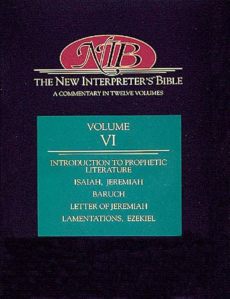 Darr, Katheryn Pfisterer. “The Book of Ezekiel.” In The New Interpreter’s Bible. (New International Commentary on the Old Testament series) Grand Rapids, MI: William B. Eerdmans Publishing Company, 1997.Volume VI. Nashville, Abingdon Press, 1994.
The NIB is a solid all-around commentary on the entire bible and apocrypha. It is designed for pastors and those leading in congregations, so it does not normally engage the textual issues as deeply as the NICOT or Anchor Bible commentaries. Katheryn Pfisterer Darr does a good job of providing textual notes when they are important but remains focused on making Ezekiel intelligible to a reader with some education in the text, but who may not want to wade too deeply into the waters of this rarely utilized book in Christian circles. There are times where you can tell that the author is uncomfortable with Ezekiel’s language as a feminist scholar, but she does a good job of remaining attentive to the text even when the language or content becomes challenging.
 Davis, Ellen F. Swallowing the Scroll: Textuality and the Dynamics of Discourse in Ezekiel’s Prophecy. Sheffield, England: Almond Press, 1989.
Ellen Davis is one of the scholars who I attempt to read anything that they write. This is her doctoral dissertation, and it really focuses on the initial call of Ezekiel and his position as a composer of a written text. I found this text particularly helpful in the early chapters of Ezekiel as I was trying to understand this strange prophet. Most readers are not going to pick up a doctoral dissertation, no matter how well written, but Ellen Davis is a gifted author, and you can see in this early work how she will develop as a patient and generous reader of scripture.
Version 1.0.0
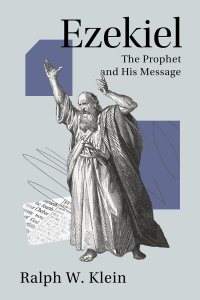
Klein, Ralph W. Ezekiel: The Prophet and His Message. Clemson, SC: University of South Carolina Press, 1988. Reprinted by Minneapolis: Fortress Press, 2024.
Ralph Klien is a Lutheran Old Testament scholar and when I picked this up, I thought it was a new work. I quickly realized that it was a reprint of a work published in 1988 that dealt with Ezekiel in a more introductory manner. This may have been more useful if I was not reading it in conjunction with several other authors discussing Ezekiel, but it was the source I referenced the least once I read through it.
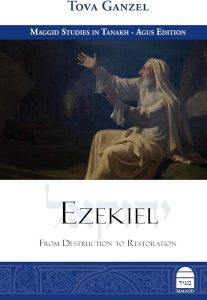 Ganzel, Tova. Ezekiel: From Destruction to Restoration. Maggid Studies in Tanakh. Jerusalem: Maggid Books, 2020.
When I can I attempt to utilize a Jewish scholar when reading the scriptures that we share. The Maggid Studies I have utilized in the past have been approachable but also provide a window into perspectives that most Christian scholars may not explore. This volume was also readable and had some insightful comments.


 Sign of the Rose