Tag Archives: Egyptian Hallel Psalms

Psalm 118 A Reflection on the Steadfast Love of God

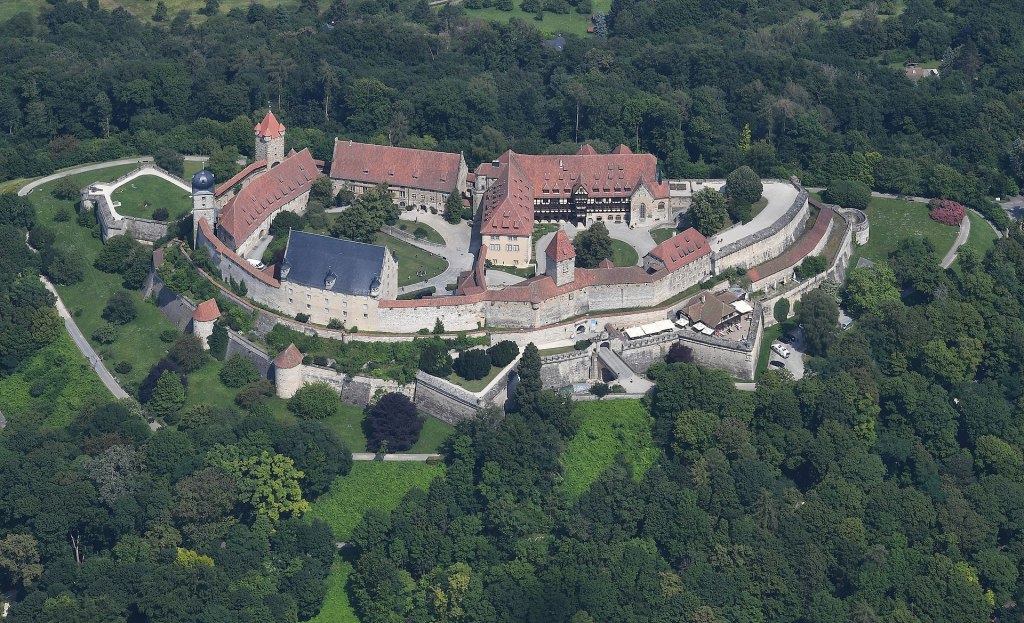
Aerial image of the Coburg Fortress By Carsten Steger – Own work, CC BY-SA 4.0, https://commons.wikimedia.org/w/index.php?curid=108179310

Psalm 118

1 O give thanks to the LORD, for he is good; his steadfast love endures forever!

2 Let Israel say, “His steadfast love endures forever.”

3 Let the house of Aaron say, “His steadfast love endures forever.”

4 Let those who fear the LORD say, “His steadfast love endures forever.”

5 Out of my distress I called on the LORD; the LORD answered me and set me in a broad place.

6 With the LORD on my side I do not fear. What can mortals do to me?

7 The LORD is on my side to help me; I shall look in triumph on those who hate me.

8 It is better to take refuge in the LORD than to put confidence in mortals.

9 It is better to take refuge in the LORD than to put confidence in princes.

10 All nations surrounded me; in the name of the LORD I cut them off!

11 They surrounded me, surrounded me on every side; in the name of the LORD I cut them off!

12 They surrounded me like bees; they blazed like a fire of thorns; in the name of the LORD I cut them off!

13 I was pushed hard, so that I was falling, but the LORD helped me.

14 The LORD is my strength and my might; he has become my salvation.

15 There are glad songs of victory in the tents of the righteous: “The right hand of the LORD does valiantly;

16 the right hand of the LORD is exalted; the right hand of the LORD does valiantly.”

17 I shall not die, but I shall live, and recount the deeds of the LORD.

18 The LORD has punished me severely, but he did not give me over to death.

19 Open to me the gates of righteousness, that I may enter through them and give thanks to the LORD.

20 This is the gate of the LORD; the righteous shall enter through it.

21 I thank you that you have answered me and have become my salvation.

22 The stone that the builders rejected has become the chief cornerstone.

23 This is the LORD’s doing; it is marvelous in our eyes.

24 This is the day that the LORD has made; let us rejoice and be glad in it.

25 Save us, we beseech you, O LORD! O LORD, we beseech you, give us success!

26 Blessed is the one who comes in the name of the LORD. We bless you from the house of the LORD.

27 The LORD is God, and he has given us light. Bind the festal procession with branches, up to the horns of the altar.

28 You are my God, and I will give thanks to you; you are my God, I will extol you.

29 O give thanks to the LORD, for he is good, for his steadfast love endures forever.

Psalm 118 has the flow of a moment of worship with a repetition which easily leads to a responsive feel between the primary speaker and the congregation gathered. This psalm closes the Egyptian hallel psalms used during the Passover meal in the Jewish tradition and is the psalm for both Palm Sunday and Easter in the lectionary for Christians. Although we cannot know how this psalm was used in the time after its composition it does echo in all four gospels as they tell of the entry of Jesus into Jerusalem before the crucifixion as well as numerous other echoes throughout the New Testament. Martin Luther, while he was hiding at Coburg Castle during the Diet of Augsburg inscribed the words of verse seventeen on the wall as a message of confidence and reassurance. (Nancy deClaisse-Walford, 2014, p. 868) This worship like song of praise has shaped the practice and faith of countless generations of both Jewish and Christian faithful.

The opening words of Psalm 118 are words frequently used in gathering people for worship or concluding a prayer in worship in the Hebrew Scriptures. Chronicles uses nearly identical wording to close for David’s first psalm of thanksgiving when the ark of the covenant is brought into the tent of God, Solomon uses it while dedicating the temple, and Jehoshaphat uses these words in his reformation.[1] Both Psalm 106 and 107 have the same words in their opening verse. Particularly with the opening of Psalm 107 which begins book five of the psalter and Psalm 118 beginning and ending with this statement about the goodness of the LORD and the hesed (steadfast love NRSV) of God enduring forever may form both a bookend for the psalm but also for this portion of the psalter. Psalm 118 on its own and this group of psalms (107-118) can be grouped together as a reflection on the goodness and the hesed of God.

Israel, the house of Aaron, and those who fear the LORD are all to declare that the LORD’s hesed endures forever. These are the same trio of groups called upon to trust the LORD in Psalm 115: 9-11 and to the initial readers it was likely an emphatic way of referring to all of Israel, although most modern readers hear the final verse as expanding this trust and proclamation beyond Israel to ‘those who fear the LORD’ throughout the nations. For Psalm 118 the focus in the first four and final verse on the hesed of the LORD prepares the hearer of the psalm to reflect on the verses in between as demonstrating and explaining the unending hesed of the LORD.

The speaker speaks of the LORD’s rescue of them from a tight space. The Hebrew word for distress (mesar) in verse five has the sense of “narrow,” “restricted,” or “tight.” (NIB IV:1154) Knowing this fuller meaning gives a more poetic flow to the verse as the speaker is taken from a tight or narrow space into a broad place. This rescue leads the psalmist to speak in trust in confidence in the LORD’s ability to deliver from anything that mortals and rulers (princes) may array against them. As the apostle Paul will later state to the church in Rome in an echo of this psalm, “If God is for us, who is against us.” (Romans 8:31b) The psalm echoes the common image of God as a refuge against these mortals and princes arrayed against them.

These enemies poetically swarm like bees, blaze like fire among thorns and push hard against the psalmist but the LORD cuts them off and helps the faithful one in distress. The words of verse fourteen through sixteen pulls on the words of the song of Moses in Exodus 15:1-18, ancient songs of faith whose words that become relevant to the psalmist’s experience of delivery. After the ordeal which pushed the psalmist hard but the LORD delivered, they can exclaim that “I shall not die, but I shall live, and recount the deeds of the LORD.”

Throughout the Hebrew scriptures there is a primary testimony that punishment and testing all come from God. Yet, even in that testing and punishment there is mercy where God does not abandon the psalmist and allows them to both endure the moment and enter into this time of praise and triumph. There is the movement through the gates of the righteous into the worship space where the psalmist can lift up his triumphal praise with the congregation of the faithful. Verse twenty-two which speaks of the stone the builders rejected probably referred to the psalmist originally (Nancy deClaisse-Walford, 2014, p. 868) but this psalm is used multiple times in the New Testament as a way of reflecting on the rejection and exaltation of Jesus.[2] This marvelous deliverance from the tight space to the broad place allows the psalmist and those gathered with him to realize that “this is a day that the LORD has made; let us rejoice and be glad in it.”

The psalm closes with what continues to feel like a triumphal procession which continues to seek the favor of the LORD as they celebrate the moment of triumph. As mentioned above, verse twenty-six echoes in the gospel narration of Jesus’ entry into Jerusalem before his crucifixion. Even if we may not fully grasp the specifics of the worship event in the psalm where the festal procession is bound with branches, the movement towards the altar and the temple is clear. The people and the psalmist process in thanksgiving and praise to celebrate the experience of deliverance because of the hesed of God. They continue to worship the God they experience as a good God of unending steadfast love (hesed).


[1] 1 Chronicles 16:34; 2 Chronicles 5:13; 7:2; 20:21.

[2] Mark 12: 10-11; Acts 4: 11; Ephesians 2: 20-21; 1 Peter 2: 4-8.

Psalm 116 The God Who Delivers From Death

The Last Supper by Pascal Adolphe Dagnan-Bouvret

Psalm 116

1 I love the LORD, because he has heard my voice and my supplications.

2 Because he inclined his ear to me, therefore I will call on him as long as I live.

3 The snares of death encompassed me; the pangs of Sheol laid hold on me; I suffered distress and anguish.

4 Then I called on the name of the LORD: “O LORD, I pray, save my life!”

5 Gracious is the LORD, and righteous; our God is merciful.

6 The LORD protects the simple; when I was brought low, he saved me.

7 Return, O my soul, to your rest, for the LORD has dealt bountifully with you.

8 For you have delivered my soul from death, my eyes from tears, my feet from stumbling.

9 I walk before the LORD in the land of the living.

10 I kept my faith, even when I said, “I am greatly afflicted”;

11 I said in my consternation, “Everyone is a liar.”

12 What shall I return to the LORD for all his bounty to me?

13 I will lift up the cup of salvation and call on the name of the LORD,

14 I will pay my vows to the LORD in the presence of all his people.

15 Precious in the sight of the LORD is the death of his faithful ones.

16 O LORD, I am your servant; I am your servant, the child of your serving girl. You have loosed my bonds.

17 I will offer to you a thanksgiving sacrifice and call on the name of the LORD.

18 I will pay my vows to the LORD in the presence of all his people,

19 in the courts of the house of the LORD, in your midst, O Jerusalem. Praise the LORD!

Psalm 116 is the song of praise of one who has been delivered from the power of death. Throughout the psalms the LORD is the one who delivers the life (nephesh)[1] of this faithful one from the power of death. This individual praise has been brought into the practice of the Passover meal where the community now praises the LORD’s rescue of them from their death in Egypt. For Christians this psalm is traditionally read on Maundy Thursday (the Thursday before Easter) in connection with the last supper. In both the religious practice of Jews and Christians this psalm echoes a repeated theme in the psalms of a God who ransoms or save the life of the individual or people from the powers of death.[2]

Even though Deuteronomy 6:5 with its command, “You shall love the LORD your God with all your heart, with all your soul, and with all your might.” is one of the central commandments, and a part of the Shema which the people are to regularly recite, the psalms rarely refer to loving the LORD. J. Clinton McCann highlights three other psalms that reference loving God (Psalm 5:1; 32:23; and 40:16) (NIB IV: 1148) but even Psalm 40:16 refers to “those who love your salvation say continually, “Great is the LORD.” The NRSV and many other translations begin this psalm by stating “I love the LORD, because he has heard my voice and my supplications.” Yet, these translations deviate from the Hebrew which has the LORD as the subject of the verb hear. Nancy-deClaissé-Walford captures this in her translation, “I love because the LORD hears.” (Nancy deClaisse-Walford, 2014, p. 858) The rescued one is able to love because the LORD is one who saves from the time of trouble, who hears and inclines the ear of God to the one who calls upon God throughout their life.

God is the one who sustains life, but death is a constant threat throughout this poem. Death and Sheol are parallel terms for this realm or entity which attempts to lay hold of this faithful one. It is mythologized into a living being or force that can encompass with snares or afflict with pangs. This resonates with Paul usage of a personified death which is the last enemy to be defeated in 1 Corinthians 15:26. The LORD is the one who rescues the life of one who has been pulled close to the realm of death and has restored them to life. Now they walk before the LORD in the land of the living.

Even though this psalmist kept their faith in God in their time of distress other may have viewed this as a judgment from God like Job’s dialogue partners or like the enemies encountered in other psalms of lament. (Bellinger, 2014, p. 501) The psalmist may have had to dispute others who viewed their misfortune as indication of unfaithfulness or sin and who in the psalmist’s words were liars. Instead of receiving compassion from others, this one at death’s door may have received condemnation or even seen others plot to take advantage of his physical distress. Yet the psalmist’s faith was in a God who delivers from the snares of death and returns them to life.

The cup of salvation may have originated as a part of the drink offering or in an offering of thanksgiving for well being[3] but this reference to the cup of salvation likely led to the use of this psalm with the fourth cup at Passover. For Christians the linkage of the Passover with the Last Supper led to this being the traditional psalm on Maundy Thursday. Yet within the psalm this line is a part of the psalmist’s thankful reaction to the deliverance they have received. They pay their vows and the celebrate ritually what God has done for them.

Verse fifteen is a verse that is often used in a way that is opposite to its original intent. The NRSV’s translations Precious in the sight of the LORD is the death of his faithful ones makes it sound like the death of the faithful is something God welcomes when the entire direction of the psalm is about a God who rescues from death. The Hebrew yaqar translated as “precious” also has the meaning of costly or weighty. The NJPS translates this verse as grievous in the LORD’s sight. The word for faithful ones is hasid which are those who practice hesed or those who imitate God’s practice of steadfast love. Throughout the psalm the self-disclosure of God’s character in Exodus 34:6 as merciful and gracious…abounding in steadfast love and faithfulness is echoed in the Hebrew vocabulary of the psalm. For example, in verse five several of these same terms for God echo in this psalmist’s description of God.

For the psalmist the experience of rescue from the snares of death demonstrates the character of God. The psalmist lives in gratitude for the ability to love and live again. The come in worship and exaltation to the house of God and echo the Hallelujah (Praise the LORD) that the hallel psalms are named for. In knowing the deliverance of God, they have come to a fuller appreciation of the character of the God who delivers from death.


[1] The Hebrew nephesh is often translated ‘soul’ (as in verse seven and eight in the NRSV) but the modern concept of soul does not communicate the concept of nephesh. Nephesh is the essence of life or the center of life. Even in this psalm which discusses the place of the dead (Sheol) the contrast is between life and death, not life and afterlife.

[2] Psalm 30:3; 33:19; 49:15; 56:13; and 86:13.

[3] Although the offering of thanksgiving for well-being outlined in Leviticus 7:11-18 does not have a drink element with it.

Psalm 115 Trusting God Above All Things

The Parable of the Talents, depicted by artist Andrei Mironov. Oil on canvas, 2013 Shared under CC-SA 4.0 http://artmiro.ru/blog/creative_commons/2015-07-04-244

Psalm 115

1 Not to us, O LORD, not to us, but to your name give glory, for the sake of your steadfast love and your faithfulness.

2 Why should the nations say, “Where is their God?”

3 Our God is in the heavens; he does whatever he pleases.

4 Their idols are silver and gold, the work of human hands.

5 They have mouths, but do not speak; eyes, but do not see.

6 They have ears, but do not hear; noses, but do not smell.

7 They have hands, but do not feel; feet, but do not walk; they make no sound in their throats.

8 Those who make them are like them; so are all who trust in them.

9 O Israel, trust in the LORD! He is their help and their shield.

10 O house of Aaron, trust in the LORD! He is their help and their shield.

11 You who fear the LORD, trust in the LORD! He is their help and their shield.

12 The LORD has been mindful of us; he will bless us; he will bless the house of Israel; he will bless the house of Aaron;

13 he will bless those who fear the LORD, both small and great.

14 May the LORD give you increase, both you and your children.

15 May you be blessed by the LORD, who made heaven and earth.

16 The heavens are the LORD’s heavens, but the earth he has given to human beings.

17 The dead do not praise the LORD, nor do any that go down into silence.

18 But we will bless the LORD from this time on and forevermore. Praise the LORD!

Martin Luther when talking about the first commandment explained the commandment on having no other gods by stating, “We are to fear, love, and trust God above all things.” Psalm 111 ended with “the fear of the LORD is the beginning of wisdom.” Now Psalm 115 centers on trusting the LORD. Chris Tomlin’s contemporary Christian song “Not to us” takes the first verse of this song and constructs a song around the first half of the verse, but if we were to construct a modern song based on the central idea of this psalm it would use verses nine through eleven as the chorus. Structurally this psalm centers on the call for Israel, the house of Aaron, and those who fear the LORD to trust the LORD who will help and protect them.

The psalm begins with a call for the name of the LORD to be given its proper glory, honor, and respect. On the one hand, this does reflect the proper posture of humility for the worshipper of the LORD and calling on the actions of God and the actions of the worshipping community to be solely for God’s glory. On the other hand, throughout the Hebrew Scriptures when the people call upon God to act for the sake of God’s name they have frequently been unfaithful and unworthy of God’s redemption and rescue. The argument is frequently made by the people that the disaster that has come upon them has brought dishonor to the reputation of God. The psalmist knows that the LORD is a God of steadfast love (hesed) and faithfulness. Yet the nations look at Israel and wonder where is their God? They may be looking upon the disaster that has occurred among the people and wonder if the LORD is absent or impotent. The psalmist protests that God is able to do whatever God pleases and that God rules from the heavens and unlike their neighbors in Canaan or Babylon they do not need, nor are they allowed to create, images of silver or gold.

The faith of Israel was centered on the God who forbade the constructions of images that would attempt to capture the image of God. The mocking of idols here resonates with Isaiah’s taunts in Isaiah 44: 9-20 which come from the time of the Babylonian exile. The faith of Jewish, Christian, and Muslim creates a worship space that looks very different from many other religions. My congregation sits next to a large Hindu temple and their worship space is configured around the images that are central to their practice. The world of both Canaan and Babylon (and oftentimes the practice inside Israel and Judah) were filled with alternative ‘gods’ and alternative ways of worship and practice. These practices of worshipping other gods also led to a different way of relating to the world and the neighbor. For the Jewish people their faith was a faith tied to the law (Torah) which envisioned a very different society than most societies we are aware of in the ancient world.

The polemic against idols is, as James Mays reminds us, “to chastise and correct the congregation itself in support of the first and second commandment.” (Mays, 1994, p. 367) The congregation of Israel was to focus on its own practices and be an example for the nations. Yet, Israel just like people of faith of all times struggled to trust in the LORD above all things. The psalm takes the people back to the heart of their faith, trusting the LORD who helps and protects them. There will always been temptations to trust in one’s acquired wealth, work, alliances, connections, or physical or military strength. Israel was never a world power with a large enough military to stand against the Egyptian, Assyrian, Babylonian, Greek, or Roman empires in their times. Throughout their history they were looked upon as an oddity. Both Jews and early Christians were sometimes viewed as atheists because they had no images for their God and they refrained from the practices of their neighbors to attempt to remain faithful to their God.

The heavens are the LORD’s but the earth has been given as a gift to human beings. One of the aspects of biblical faith is the understanding of the earth and our place within it as a gift. The God who created the earth continues to provide for not only the faithful ones but all the people and creatures of the earth. Those who fear the LORD know trust that they will experience God’s blessing of provision in both their fields and their families.

The psalm closes with the note that the dead do not praise the LORD. Throughout most of the Hebrew Scriptures (Old Testament) there is no view of the dead going to heaven or hell. When a place of the dead is mentioned, it is often utilized to bargain with God because the dead cannot praise God.[1] The focus of the Hebrew Scriptures is on life being lived in covenant with God and trusting that God will provide for that life.

This psalm is about trust and praise being directed toward the God of Israel. From the perspective of the scriptures this is the way of a wise life. Those who follow idols and their ways are foolish. It is a call for those who have directed their trust and praise elsewhere to repent and return to the path of wisdom. Idols do not need to be the creations of gold and silver that the psalmist references. In the United States we are taught in multiple ways to ensure our security through wealth, power, fame, education, and work. None of these things are evil, but when our trust relies on these things instead of the LORD our faith is misplaced. The psalm shares a similar concern with Joshua at the end of his time leading the people where he challenges the people to choose which path and which gods they will follow. “As for me and my household, we will serve the LORD.” (Joshua 24:15) was Joshua’s challenge which the people answered that they also would serve the LORD. The people of Israel as well as the church continually has to remind itself that serving the LORD is very different from the alternative visions of faith present in the world. The psalm reminds me that we are to fear, love, and trust God above all things.


[1] See also Psalm 6:5.

Psalm 114 The Awesome God of the Exodus

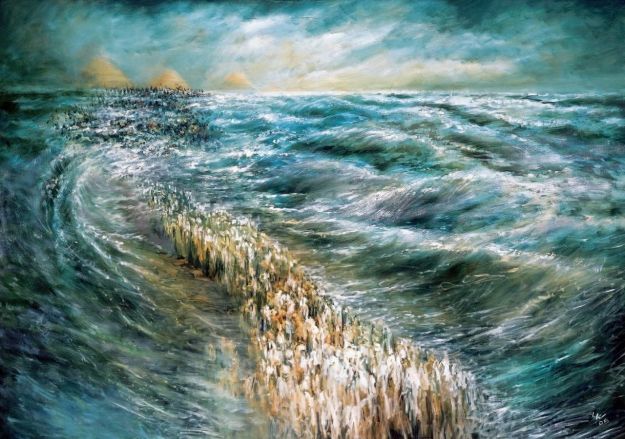
Dr. Lidia Kozenitzky, Painting of the Splitting of the Red Sea (2009) available from http://commons.wikipedia.org/wiki/User:Effib

Psalm 114

1When Israel went out from Egypt, the house of Jacob from a people of strange language,
2
Judah became God’s sanctuary, Israel his dominion.
3
The sea looked and fled; Jordan turned back.
4
The mountains skipped like rams, the hills like lambs.
5
Why is it, O sea, that you flee? O Jordan, that you turn back?
6
O mountains, that you skip like rams? O hills, like lambs?
7
Tremble, O earth, at the presence of the Lord, at the presence of the God of Jacob,
8
who turns the rock into a pool of water, the flint into a spring of water.

This second “Egyptian Hallel” psalm[1] praises the power of the LORD the God of Israel’s being. Throughout this short poem the nations, the waters, and the land all respond and tremble at the LORD’s presence. Nowhere in the poem does God act, except indirectly in the final verse. The background of the poem is the exodus narrative and the creation narrative. The LORD is the God of creation with power over the waters and the mountains, but also the God of the exodus who brought the people out of Egypt and into the promised land.

The poem is built on parallel expressions: Israel/house of Jacob; Judah/Israel; sea/Jordan; mountains/hills; and rock/flint. Each line doubles the reaction using these parallel expressions and intensifies the effect of the poem’s praise. The people’s experience of the power of the LORD goes back to the experience of God taking the people out of Egypt and making them into a sanctuary (Hebrew qados– devoted, set apart) (Nancy deClaisse-Walford, 2014, p. 851) and dominion. The exodus narrative is the obvious reference alluded to throughout the poem and yet in poetic function the event becomes transformed to the creation’s reaction to the presence of the LORD among God’s people.

The opening verse informed the reader of the poem that the reference was the exodus and now in verse three the poet uses a set of parallels to bracket the biblical narrative of the exodus event. The sea which looks and flees from God references the crossing of the Red Sea in Exodus 14 while the crossing of the Jordan once it has turned back references the end of the journey in Joshua 3. The sea and river become things that flee[2] from the LORD’s presence among the people of Israel. The God who exercised control over the deep in creation is now feared by these waters which bracket the story of the exodus.

The mountains and hills, unmoving and permanent, now become like rams and lambs in their rapid motion. Psalm 29 used a similar image of Lebanon and Sirion fleeing before the LORD, even using the same term ‘skip’ although in that psalm the metaphor is a calf and a wild ox. Habakuk also utilizes a similar image of the hills and mountains being shattered and sinking at the appearance of the LORD.[3] This reaction of both the waters and the immovable rock of mountains and hills is caused by the presence of the LORD. The earth models the proper response by trembling.[4] Creation itself models that “The fear of the LORD is the beginning of wisdom” (Psalm 111:10).

Although it should be clear throughout the poem that the people, the waters and the mountains are all responding to the God of Jacob, God is mentioned explicitly for the first time in verse seven.[5] The poem concludes by bringing the imagery of rock and water together with an allusion to God’s provision of water via Moses striking the rock at Rephidim in Exodus 17:1-7. The God who moved over the depths in creation and formed the seas, the rivers, the rocks, hills and mountains becomes known to God’s people who come to know God’s impact on the world as God brings them out of Egypt, providing water in the wilderness, and passing them through the waters of the Jordan into the promised land. The people and the earth tremble before the fearful presence of the LORD in their midst.


[1] Psalm 113-118 are often called the Egyptian Hallel psalms because they are recited on the Passover meal on the eighth day of Passover. They are the psalms used to celebrate God’s actions to take their ancestors out of Egypt.

[2] Psalm 77:16 uses a similar imagery.

[3] Habakkuk 3:6.

[4] Psalm 97:4 also has the earth trembling in reaction to the LORD’s lightning.

[5] In the NRSV in verse 2 God is mentioned in verse 2 when Judah became God’s sanctuary, but the Hebrew is simply Judah became his sanctuary (the third person singular pronoun is attached to qados the word for sanctuary.