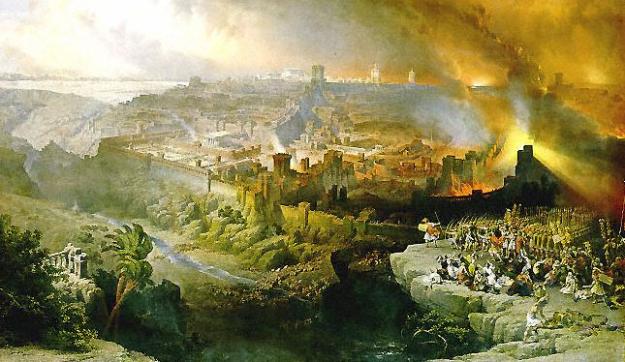
The Siege and Destruction of Jerusalem by Romans Under the Command of Titus, A.D. 70 by David Roberts 1850
Psalm 89
<A Maskil of Ethan the Ezrahite.>
1 I will sing of your steadfast love, O LORD, forever; with my mouth I will proclaim your faithfulness to all generations.
2 I declare that your steadfast love is established forever; your faithfulness is as firm as the heavens.
3 You said, “I have made a covenant with my chosen one, I have sworn to my servant David:
4 ‘I will establish your descendants forever, and build your throne for all generations.'” Selah
5 Let the heavens praise your wonders, O LORD, your faithfulness in the assembly of the holy ones.
6 For who in the skies can be compared to the LORD? Who among the heavenly beings is like the LORD,
7 a God feared in the council of the holy ones, great and awesome above all that are around him?
8 O LORD God of hosts, who is as mighty as you, O LORD? Your faithfulness surrounds you.
9 You rule the raging of the sea; when its waves rise, you still them.
10 You crushed Rahab like a carcass; you scattered your enemies with your mighty arm.
11 The heavens are yours, the earth also is yours; the world and all that is in it — you have founded them.
12 The north and the south — you created them; Tabor and Hermon joyously praise your name.
13 You have a mighty arm; strong is your hand, high your right hand.
14 Righteousness and justice are the foundation of your throne; steadfast love and faithfulness go before you.
15 Happy are the people who know the festal shout, who walk, O LORD, in the light of your countenance;
16 they exult in your name all day long, and extol your righteousness.
17 For you are the glory of their strength; by your favor our horn is exalted.
18 For our shield belongs to the LORD, our king to the Holy One of Israel.
19 Then you spoke in a vision to your faithful one, and said: “I have set the crown on one who is mighty, I have exalted one chosen from the people.
20 I have found my servant David; with my holy oil I have anointed him;
21 my hand shall always remain with him; my arm also shall strengthen him.
22 The enemy shall not outwit him, the wicked shall not humble him.
23 I will crush his foes before him and strike down those who hate him.
24 My faithfulness and steadfast love shall be with him; and in my name his horn shall be exalted.
25 I will set his hand on the sea and his right hand on the rivers.
26 He shall cry to me, ‘You are my Father, my God, and the Rock of my salvation!’
27 I will make him the firstborn, the highest of the kings of the earth.
28 Forever I will keep my steadfast love for him, and my covenant with him will stand firm.
29 I will establish his line forever, and his throne as long as the heavens endure.
30 If his children forsake my law and do not walk according to my ordinances,
31 if they violate my statutes and do not keep my commandments,
32 then I will punish their transgression with the rod and their iniquity with scourges;
33 but I will not remove from him my steadfast love, or be false to my faithfulness.
34 I will not violate my covenant, or alter the word that went forth from my lips.
35 Once and for all I have sworn by my holiness; I will not lie to David.
36 His line shall continue forever, and his throne endure before me like the sun.
37 It shall be established forever like the moon, an enduring witness in the skies.” Selah
38 But now you have spurned and rejected him; you are full of wrath against your anointed.
39 You have renounced the covenant with your servant; you have defiled his crown in the dust.
40 You have broken through all his walls; you have laid his strongholds in ruins.
41 All who pass by plunder him; he has become the scorn of his neighbors.
42 You have exalted the right hand of his foes; you have made all his enemies rejoice.
43 Moreover, you have turned back the edge of his sword, and you have not supported him in battle.
44 You have removed the scepter from his hand, and hurled his throne to the ground.
45 You have cut short the days of his youth; you have covered him with shame. Selah
46 How long, O LORD? Will you hide yourself forever? How long will your wrath burn like fire?
47 Remember how short my time is — for what vanity you have created all mortals!
48 Who can live and never see death? Who can escape the power of Sheol? Selah
49 Lord, where is your steadfast love of old, which by your faithfulness you swore to David?
50 Remember, O Lord, how your servant is taunted; how I bear in my bosom the insults of the peoples,
51 with which your enemies taunt, O LORD, with which they taunted the footsteps of your anointed.
52 Blessed be the LORD forever. Amen and Amen.
The approach to Psalm 89 will be different than my approach to most of the other psalms because it evokes for me an important question that continues to be wrestled with in communities of faith. This psalm likely originates in the collapse of the Davidic line of kings in the aftermath of Babylon’s destruction of Jerusalem in 587 BCE and wrestles with the contrast between the psalmist’s understanding of God’s promises and their present experience. It is plausible that Psalm 89 may be a combination of one (or more) psalms which expressed the royal theology of the Davidic kings with the tough questions of verse thirty-eight onward. Like Psalm 88 it takes us into the darkness of the psalmist’s experience where no light appears on the horizon, but unlike the previous psalm this is the experience of the community of the faithful questioning how the God’s faithfulness proved unfaithful. The psalm is still processing the anger, grief, and the disillusionment over the loss of institutions they thought would continue perpetually.
The language of Psalm 89 weaves together the kingdom of God and the monarchy of David into a common tapestry. Psalm 89 is built upon the words through the prophet Nathan to David in 2 Samuel 7: 8-17, but the rough edges of this prophecy where the ‘seeds of arrogance’ (Nancy de Claisse-Walford, 2014, p. 681) seen in David are smoothed out. Like Psalm 2 the strength of the Davidic kings is directly linked to the strength of the LORD. Their victories are the LORD’s victories, their enemies are the LORD’s enemies, their unfaithfulness is punished but they are never separated from God’s steadfast love and faithfulness (unlike King Saul or the Kings of Northern Israel). The first seventy percent of the psalm weaves God’s reign which is founded on steadfast love and faithfulness into experience of life under David’s descendants. The royal theology is expressed through the temple, and the temple, Jerusalem, and the Davidic kings all become important symbols of God’s reign on earth. The covenant language of Psalm 89 leaves no space for God to change God’s mind despite the unfaithfulness of many of the kings in Jerusalem. Yet, when the seam holding God’s reign and the Davidic king’s reign unravels in verse thirty-eight, the psalmist now takes God to task for renouncing the covenant. The situation of humiliation that the people experience now moves the psalmist to the dangerous and perhaps blasphemous conclusion that God whose reign is built on steadfast love and faithfulness has now proven unfaithful. God who was once Father and Rock who exalted David’s horn and strengthened his arm now strengthens the arms of the foes of the people, has rejected God’s children, and has renounced the covenant.
Moving beyond the psalm for the moment, the close alliance of God’s kingdom with any individual or government always presents the danger of idolatry. King David occupies an almost mythical role in the story of Israel as the ‘once and future king’ who was a man after God’s own heart. The narrative of David in First and Second Samuel, and the experience of the Davidic kings in First and Second Kings is often disconnected from the interwoven theology which connects the stability of the kings in Jerusalem with a larger vision of God’s cosmic reign over the forces of creation and the nations of the world. When the destruction of Jerusalem by Babylon occurs and the Davidic line of kings seems to be a stump which is cutdown and never to rise again the Jewish people would have to reckon with their relationship with God in a new way and to discover their new identity as a people of God in exile without king, temple, or land. They would have to reimagine the role of David within their life of faith and to reexamine how the hopes of 2 Samuel 7 and Psalm 89: 1-36 ended in the desolation of 2 Kings 25 and Psalm 89: 37-51.
Although the United States there is the concept of the ‘separation of the church and the state’ there is also a semi-religious understanding of manifest destiny and exceptionalism which exists within the political language of the country. Recently there has been a strong movement among both individuals and churches towards a Christian nationalism which weaves these ideas of manifest destiny and exceptionalism into a religious retelling of the story of the United States which ignores many aspects of the country’s past and present. This Christian nationalism has coalesced around the Republican Party in the United States and is still wielded by former President Trump to link his presidency with the faith of many of his followers. The almost messianic fervor that some have placed upon him and the sharp polarization between adherents and opponents highlights the danger of this interweaving of God’s reign and any individual or political group.
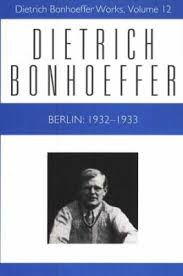
As an heir of the Lutheran reformation, I am a part of what is sometimes referred to as the magisterial reformation. The magisterial reformation includes the Lutheran, Reformed, and Anglican reform movements that still believed that secular authority should be followed (in contrast to the radical reformers who rejected any secular authority). Yet, the Lutheran (as well as Reformed and Catholic churches) in Germany had to struggle with the demands for loyalty from the National Socialist party as they assumed power in the 1930s. Many prominent Lutheran scholars, like Paul Althaus,[1] welcomed the rise of the National Socialist and Althaus viewed the government of the state as an order of God’s creation which was given by God. If the government of the state was an order of creation it was not subject to critique by the church, but there were others in the church who would criticize the National Socialist. Dietrich Bonhoeffer is the most well known of these resisters to the demands of loyalty. For Bonhoeffer he viewed the government as a vessel God uses to preserve life and when the government fails in its responsibility the church has a responsibility to speak. Many in Germany in the 1930s were able to combine their practice of Christianity with the demands of the state. Looking back upon this time it is easy to wonder how many people of faith were able to participate in or tolerate actions which seem antithetical to the scriptures, yet it is amazing how malleable peoples’ interpretation of scripture can be to fit their political dispositions.
Within Psalm 89 the kingdom of God and the reign of the Davidic kings is woven together until the tapestry is ripped apart by the experience of the present. There were Christians during the Third Reich who viewed Adolf Hitler as God’s gift to Christianity[2] and I fear there are many Christians in the United States making a similar mistake today. Unfortunately for many in Germany and in the United States participation in these movements has drowned out critical voices that questioned this interweaving of God and nationalism. For Judaism the crisis of exile in Babylon led to a reexamination of their faith in light of their new situation. I fear that for many Christians the eventual collapse of Christian nationalism will lead to an abandonment of their faith.
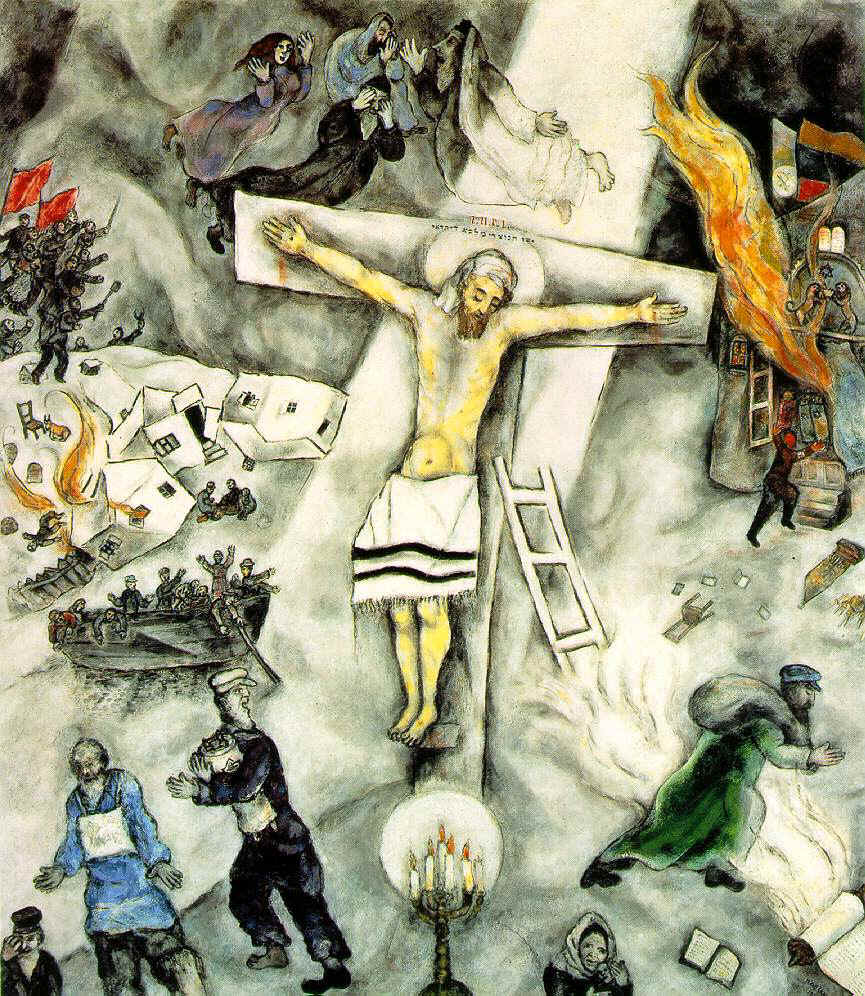
For me the conclusion of this psalm in verse fifty-two is also a moment of hope. It closes the third book of the psalter and brings this open question into the continued act of praise. Even when there are no easy answers for shattered symbols, broken communities, and even a broken nation there is a community that sits in the discomfort and still brings these questions into the blessing of their God. It closes with a double ‘amen’ which acknowledges the still unanswered questions of the prayers while allowing them to be lifted up to the God who may be Father, may be opponent but still remains connected to the community of the faithful. Elie Wiesel in his memoirs All Rivers Run to the Sea captures the relationship of these faithful crying out to God when he says of his own experience of the Holocaust:
I have never renounced my faith in God. I have risen against His justice, protested His silence and sometimes His absence, but my anger rises up within faith, not outside of it. (Wiesel, 1994, p. 84)
[1] Paul Althaus was not an isolated example, but he was in the 1930s viewed as the leading scholar on Luther’s theology. When I was studying in seminary in the early 2000s his works The Theology of Martin Luther and The Ethics of Martin Luther were still used.
[2] Paul Althaus in 1933 stated, “Our Protestant churches have greeted the turning point of 1933 as a gift and miracle of God” (Ericksen, 2012, p. 37)


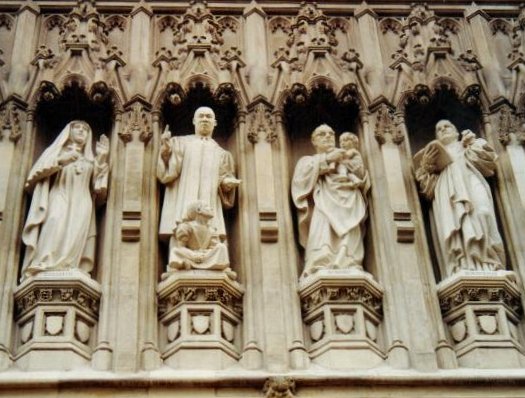
 Sign of the Rose